


Plant Profile & Key Characteristics
Overview: Miltoniopsis (pansy orchid) is an evergreen epiphytic orchid growing 20–60 cm (8–24 in) tall, cultivated for its flat, pansy-shaped flowers. It is grown outdoors only in frost-free subtropics and otherwise as a houseplant.
Quick Specifications
| Specification | Attribute |
|---|---|
| Plant Type / Life Cycle | Perennial (evergreen) |
| Foliage Type | Evergreen |
| Mature Size | 20–60 cm (8–24 in) |
| Growth Rate | Slow to moderate |
| Root System | Epiphytic aerial roots |
| Toxicity | Non-toxic (orchid) |
| Hardiness | USDA zones 11–12 |
Growth Form & Structure
- Height & Spread: 20–60 cm (8–24 in); grown in a small, transparent pot in a bark or cork mix.
- Growth Habit & Form: Sympodial epiphytic orchid with fleshy leaves and pseudobulbs.
- Lifespan & Maturity: Long-lived; blooms mainly spring to autumn.
Anatomy & Physical Features
- Leaves & Foliage: Green, oval, fleshy leaves.
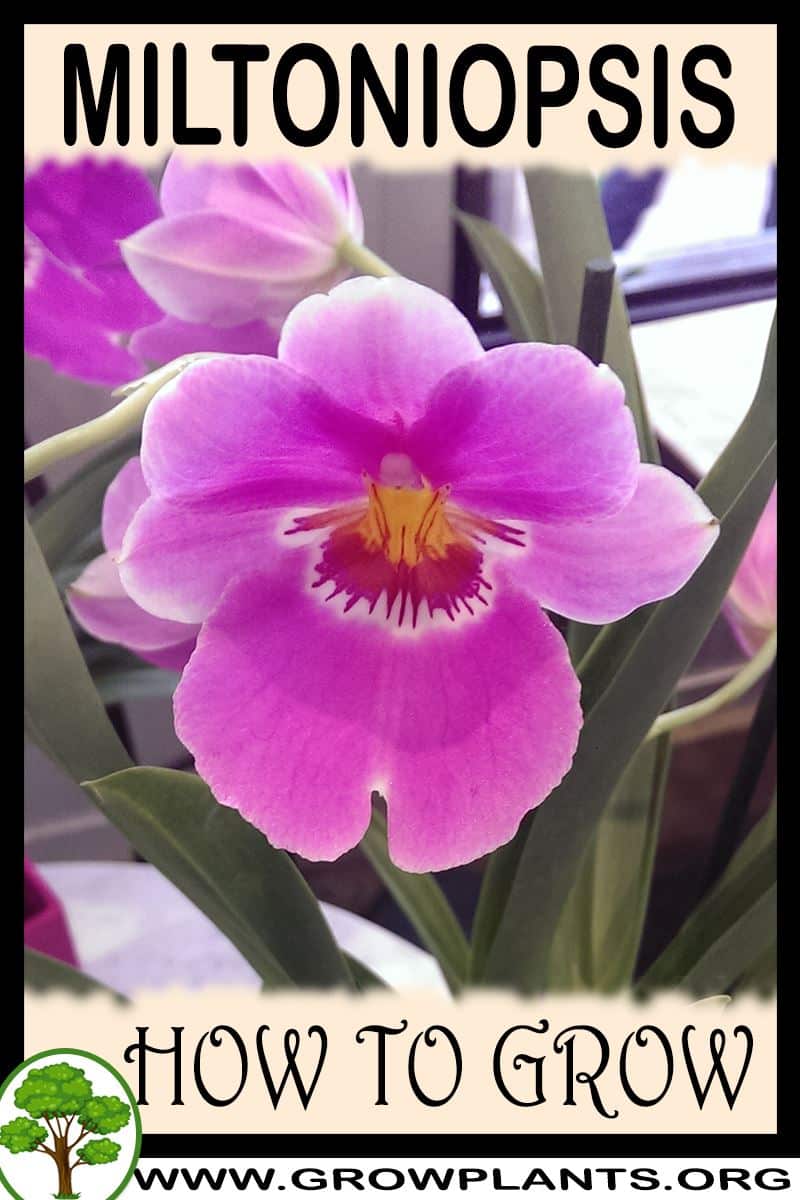
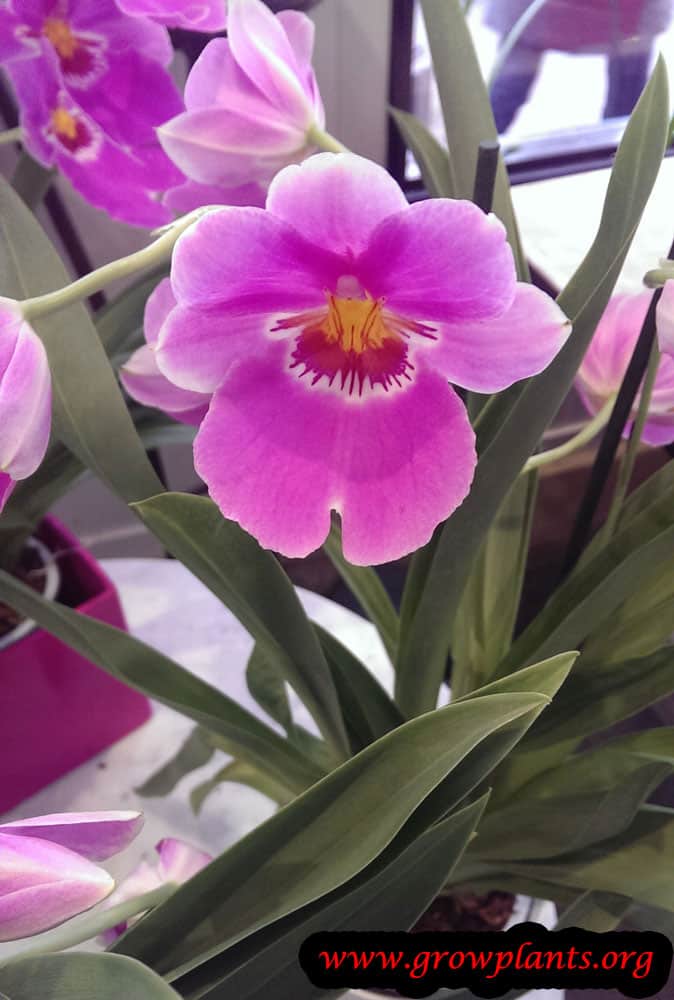
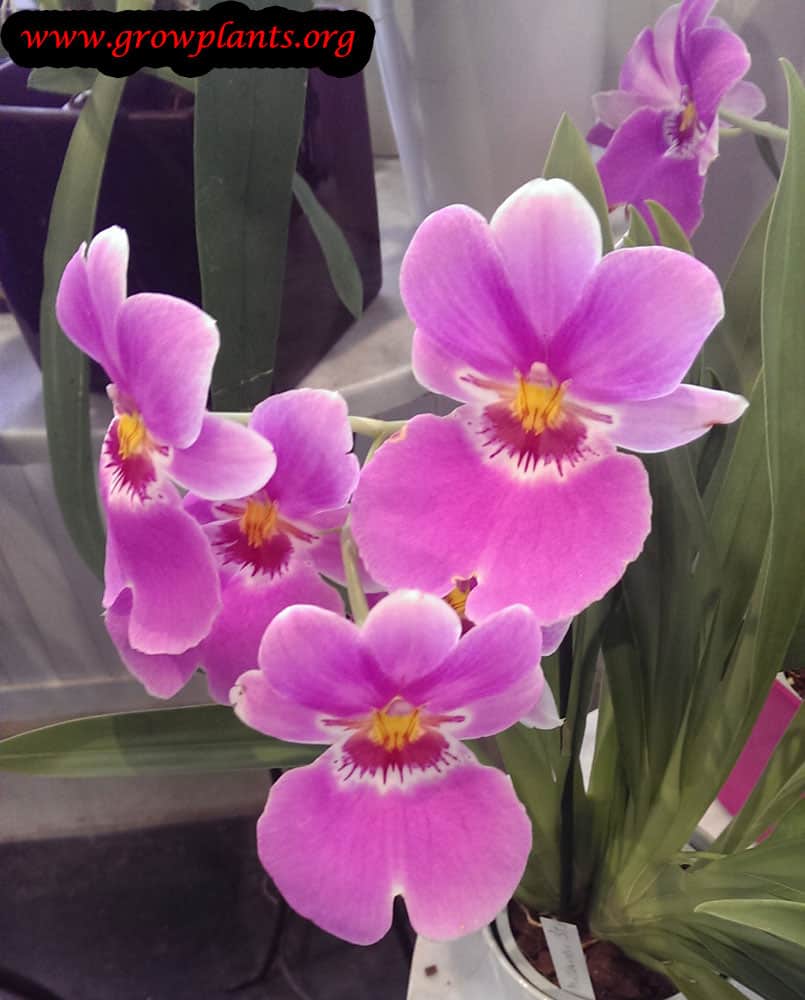
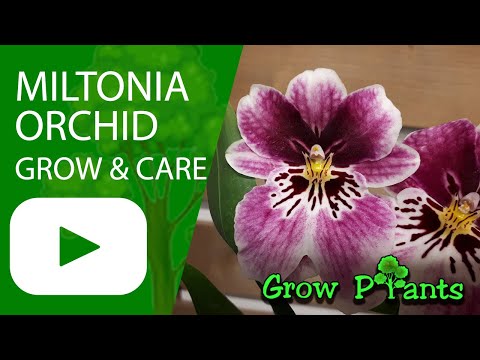
- Flower Characteristics: Flat, pansy-shaped flowers in many colours (white, red, pink, cream, purple, magenta or yellow), often patterned. (See the Bloom accordion for detail.)
Primary Uses & Landscape Value
- Functional & Ornamental Roles: Ornamental flowering houseplant, cut flower and shade-house specimen.
Note: Benefits from repotting roughly once a year as roots fill the pot — avoid jumping to an oversized pot.
Care Guide: Planting, Soil & Watering
Overview: Pansy orchids are epiphytic orchids that grow best in bright shade with high (over 50%) humidity and cool-to-mild temperatures. Rather than garden soil they need an open, fast-draining bark-based medium kept lightly and evenly moist at all times.
Quick Care Requirements
| Requirement | Ideal Condition |
|---|---|
| Planting Season | Spring to autumn (during active growth) |
| Growth Rate | Slow to moderate |
| Soil Type | Open orchid medium of bark or cork chips (not garden soil) |
| Water Need | Moderate; keep the medium lightly moist with clean or rain water, never soggy |
Planting & Establishment
- Best Planting Season: Repot or establish plants in spring through autumn, while they are in active growth.
- How to Plant:
- Hole Preparation: Choose a snug, transparent pot only slightly larger than the root ball (about 20-40% bigger) with plenty of drainage holes.
- Soil Amendments: Use bark chips or cork as the medium; a little styrofoam mixed in adds air around the roots.
- Planting Depth: Seat the plant so its base sits at the surface of the medium, and trim away any dead roots when repotting.
- Growth Speed & Expectations: Slow to moderate, reaching about 20-60 cm; repot every couple of years before the medium breaks down.
Soil, Watering & Drainage Care
- Soil Mix & Drainage Needs: A chunky, airy bark or cork medium is essential; replace it before it decomposes and turns acidic, and make sure the pot drains freely to prevent root rot.
- Watering Schedule & Technique:
- Young / Newly Planted: Keep the medium lightly moist while the plant re-roots after potting.
- Established: Water regularly with clean or rain water at room temperature so the medium never dries out completely nor stays waterlogged.
- Seasonal Adjustments: More during warm, active growth and less in cool spells; maintain high humidity year-round.
Climate, Light & Hardiness
Miltoniopsis (pansy orchid) is a subtropical epiphytic orchid grown outdoors in mild climates or as a houseplant, preferring bright but indirect light and consistently high humidity. It has no meaningful outdoor cold tolerance and needs stable, moderate temperatures year-round.
Quick Climate Specifications
| Climate Zones | Subtropical, or houseplant |
| USDA Hardiness Zones | 11–12 |
| Optimal Temp Range | Day approximately 22–27°C (71–81°F); night approximately 13–19°C (55–66°F) |
| Frost Tolerance | None |
| Light Conditions | Full Shade (bright, indirect light) |
Sunlight & Light Exposure
Optimal Light Setup
Bright, indirect light rather than direct sun.
Temperature Extremes & Hardiness
USDA Hardiness & Regional Limits
Zone 11–12 reflects a subtropical orchid with no outdoor cold tolerance; grown as a houseplant or greenhouse subject outside consistently warm, frost-free climates.
Frost Sensitivity
No frost tolerance.
Wind, Humidity & Microclimate
Humidity Preferences
Needs high humidity, above 50%, along with consistent moisture.
Microclimate Recommendations
A humid greenhouse or bright window away from cold drafts suits it well; avoid letting the container sit wet, and refresh the bark/cork growing medium periodically.
Growing in Pots, Balconies & Indoors
Miltoniopsis (pansy orchid) (Miltoniopsis) is a compact orchid (about 20-60 cm) and a genuine houseplant – the grower confirms it grows well indoors, and orchids are almost always grown in a pot rather than open ground. Give it bright, indirect light near a window and it makes a rewarding, long-flowering indoor plant. It also wants high humidity, so a bright bathroom, a humidity tray or regular misting helps.
Quick Details
- Container Size: A pot only about 20-40% larger than the root ball – orchids like to be snug
- Indoor Suitability: Yes – a true houseplant in bright, indirect light
- Best Spot: Bright, indirect light – a well-lit spot out of direct sun
- Soil & Drainage: Never ordinary potting soil – use a coarse, open orchid medium (bark or cork chips) with lots of drainage holes
- Watering in Pots: Water moderately – water when the medium is nearly dry, then let it drain; let excess drain away and never leave the pot standing in water
Indoors & On the Windowsill
- A true houseplant: The grower confirms it thrives indoors – keep it near a bright window but out of harsh, direct midday sun.
- Windowsill growing: An east or shaded-south window is ideal; a clear pot lets you watch the roots and see when to water. It also wants high humidity, so a bright bathroom, a humidity tray or regular misting helps.
- Overwintering: As a tropical plant it is happiest indoors year round in cool climates – keep it warm, bright and away from cold draughts and frost.
On a Balcony or Patio
- Summering outdoors: It can spend warm spells on a shaded, sheltered balcony or patio in bright but indirect light – protect it from direct sun, drying wind and any chill. It also wants high humidity, so a bright bathroom, a humidity tray or regular misting helps. Pots and open orchid media dry quickly, so check moisture often.
Choosing the Pot, Soil & Long-Term Care
- Pot & drainage: A snug pot with many holes; a transparent pot is useful for watching the roots. Never let it sit in standing water – the fastest route to rot.
- Medium: A coarse, free-draining orchid mix of bark or cork chips (some more terrestrial types appreciate a little added coir or humus), not garden soil.
- Feeding & water quality: Feed with a dilute orchid fertiliser a few times a year; where possible use rain or distilled water, which orchids prefer.
- Repotting: Refresh the medium about every two years – bark breaks down and loses structure over time – and pot on when roots fill the container.
Fertilizing & Feeding
A light feeder, closely related to Miltonia and grown the same way: steady, weak feeding through its long growing season suits it better than a single strong dose, since it can bloom several times across the year and relies on consistent light feeding rather than concentrated fertilizer to keep flowering well.
Quick Fertilizing Specs
| Feeding Level | Light feeder |
|---|---|
| Main Nutrient Priority | Weak, balanced feeding kept steady through the growing season, since this orchid can flower repeatedly |
| Best Feeding Period | Spring through autumn, whenever active growth or a new flowering flush is underway |
| Organic Options | A diluted organic liquid feed made for container or epiphytic plants can substitute for a synthetic fertilizer |
| Micronutrients | Usually supplied by a complete, weak fertilizer formulated for orchids or container plants |
| Soil pH | Grown in a well-drained bark-based mix rather than soil; refresh the medium before it breaks down and turns acidic |
Feeding by Growth Stage
Active growth
Support new leaf and pseudobulb growth on this pansy orchid as it grows, mainly from spring through autumn.
| Nutrient direction | A weak, balanced fertilizer suited to epiphytic, bark-grown plants. |
|---|---|
| Timing | Spring through autumn, whenever new growth is visible. |
| Frequency | Light, regular feeding through the growing season; steady light feeding works better here than one strong dose. |
| Fertilizer types | A weak, balanced fertilizer diluted for container-grown orchids, A fertilizer suited to bark or bark-chip mixes |
| Routine trace nutrients | iron, manganese |
| Precautions | Keep fertilizer weak – this orchid’s fine roots are easily damaged by salt buildup from over-concentrated feeding. |
Repeat flowering
Support this orchid’s showy, pansy-shaped flowers, which can appear repeatedly from spring through autumn rather than in one single flush.
| Nutrient direction | Continue the same weak, balanced fertilizer through each bloom; avoid switching to a high-phosphorus bloom product. |
|---|---|
| Timing | Mostly spring through autumn, whenever new flower spikes appear. |
| Frequency | Maintain the same light, regular feeding through flowering; frequent blooming is supported by consistent balanced feeding rather than extra-strength fertilizer. |
| Fertilizer types | The same weak, balanced fertilizer used during vegetative growth, Avoid high-phosphorus bloom-booster products |
| Routine trace nutrients | iron, manganese |
| Precautions | Do not increase fertilizer strength to try to prolong flowering – steady balanced feeding through the growing season supports repeat blooms better. |
Winter slowdown
Let growth and flowering ease through the coolest, lowest-light part of the year.
| Nutrient direction | None – withhold fertilizer while growth has slowed. |
|---|---|
| Timing | The coldest, lowest-light months. |
| Frequency | No feeding at this stage. |
| Fertilizer types | No feeding at this stage; feeding begins again as active growth picks up. |
| Precautions | Do not fertilize while growth is slow; keep humidity up and avoid letting the medium dry out completely. |
Nutrient Deficiency Signs & Corrections
New growth comes in smaller than earlier pseudobulbs and older leaves fade toward pale yellow-green.
| Possible causes | long stretches without feeding in a plant that flowers repeatedly and draws on its reserves often, low light limiting overall growth and nutrient demand, root loss from past overwatering or medium breakdown limiting uptake |
|---|---|
| Appears first on | older leaves and the size of new pseudobulbs |
| What to check | feeding history and consistency, root condition, medium age |
| Possible correction | Resume steady, weak, balanced feeding spread through the growing season. |
Leaf tips and margins show yellowing or scorch-like browning, and flowering is sparser or shorter-lived than expected.
| Possible causes | a feeding program low in potassium relative to nitrogen over time, salt buildup in the medium interfering with nutrient balance, root damage limiting overall nutrient uptake |
|---|---|
| Appears first on | older leaf margins and tips |
| What to check | fertilizer balance and feeding history, signs of salt buildup on the medium surface, root condition |
| Possible correction | Switch to a balanced fertilizer that supplies adequate potassium and flush the medium periodically to prevent salt buildup. |
New leaves emerge pale yellow while the veins stay noticeably greener than the surrounding tissue.
| Possible causes | a medium or water source that has pushed the root zone outside the range this orchid prefers, waterlogged or poorly aerated medium limiting root function, an extended period without micronutrient feeding |
|---|---|
| Appears first on | newest leaves |
| What to check | medium drainage and aeration, water quality, recent feeding history |
| Possible correction | Address drainage first, then apply a chelated iron product per its label if chlorosis persists. |
Pruning, Training & Seasonal Maintenance
Miltoniopsis, like its relative Miltonia, flowers from newly matured pseudobulbs rather than old growth, so pruning is limited to removing the spent flower spike, fading leaves and rotten roots — there is no structural shaping. This genus is markedly cool-growing and heat-sensitive compared to many orchids, so beyond the usual per-spike timing, any cutting or repotting is best avoided during hot spells, since the added stress compounds with heat stress the plant is already prone to.
Quick Pruning & Maintenance Specs
| Pruning Tolerance | Low |
| Primary Pruning Window | As each flower spike finishes (mainly spring-autumn bloom) |
| Secondary Maintenance Window | Root trimming at repotting |
| Typical Frequency | Per-spike; division only when the plant is clearly pot-bound |
| Main Objective | Redirect energy from a spent spike into the next pseudobulb without adding heat/root stress |
| Young Plant Priority | Let new pseudobulbs bulk up before any division |
| Mature Plant Priority | Remove spent spikes promptly; divide only at cool, stable times of year |
| Best Tool Type | Precision snips |
| Avoid Heavy Pruning During | Hot weather stretches, and while a spike still carries flowers |
Pruning by Plant Age & Size
Newly Established
A newly potted division should only have dead/rotten roots removed at potting; avoid further cutting while it settles, since this genus recovers from stress more slowly than heat-tolerant orchids.
Young / Formative
No structural training applies. Let each new pseudobulb fully harden before it is allowed to flower or be divided.
Mature / Established
Groom spike-by-spike after each bloom; keep firm leafless backbulbs in place for stored energy, and time any division for cooler, stable weather rather than during a heat spell.
Seasonal Pruning Schedule
| Stage | Objective | Remove | Do Not Remove | Expected Response / Flowering Impact |
| Post-Flowering | Redirect energy to new growth | Spent flower spike, cut roughly 2 cm above the node it arose from | The pseudobulb and leaves | Miltoniopsis does not rebloom from an old spike, so removing it costs nothing; energy goes into the next pseudobulb |
| Ongoing Sanitary | General hygiene | Fully yellowed leaves; rotten roots at repotting | Green leaves and firm backbulbs | Backbulbs left intact continue supporting the clump |
Special Growth to Remove
- Spent flower spike, cut roughly 2 cm above the node once flowering is fully finished
- Fully yellowed leaves
- Rotten root tissue, trimmed at repotting
- Backbulbs retained unless being separated for propagation
Container & Small-Space Pruning
Pot only slightly larger than the root ball, matching this genus’s need for good drainage and airflow at the roots. Repot and divide as needed rather than on a fixed cycle, and schedule that root work for mild weather to avoid stacking heat stress on top of root disturbance.
Tools
- precision snips — spikes, leaves, root trimming
Tool Hygiene & Disease Risk
High-risk. Orchid viruses spread readily via cutting tools and have no cure; disinfect blades between plants and between cuts.
Cut Placement & Technique
Cut the spike cleanly above a node, leaving a short stub rather than cutting into the pseudobulb. Trim roots back to firm tissue only.
Heavy Pruning & Rejuvenation
Miltoniopsis does not tolerate hard cutting-back of pseudobulbs or foliage. Rejuvenate via division at repotting, choosing a cool, stable period rather than the heat of summer, since this genus is notably heat-sensitive and slow to recover from combined stresses.
Post-Pruning Care
Let root cuts dry briefly before repotting. Keep the plant out of heat stress and direct hot sun while it recovers from any root work; hold off on fertilizer until new root growth appears.
Common Pruning Mistakes
- Dividing or repotting during a hot spell, compounding root stress with this genus’s heat sensitivity
- Cutting the flower spike flush into the pseudobulb instead of leaving a short stub above a node
- Removing firm backbulbs rather than keeping them for stored energy or division
When NOT to Prune
Avoid cutting a spike while it still carries flowers, and avoid any root work or division during hot weather, given this genus’s low heat tolerance.
Recommended Tools (by task)
- precision_snips — spike removal, leaf trimming and root trimming, the only cuts this plant needs
- blade_disinfectant — to prevent virus transmission between plants and cuts
Propagation Guide
Miltoniopsis is propagated by dividing established clumps into separate daughter growths; the site does not list seed as a starting option for this genus, and states vegetative reproduction is needed to keep the exact flower color and shape. Difficulty is Moderate, with extra care needed post-division since the site flags this genus as fussy about repotting and pot size.
Quick Propagation Specs
| Best Propagation Method | Division of pseudobulb clumps into daughter growths |
| Alternative Methods | None commonly used – most Miltoniopsis in cultivation are named hybrids best kept true by division |
| Propagation Difficulty | Moderate |
| Vegetative True-to-Type | Yes |
| Best Propagation Season | Spring through autumn, ideally once new growth is underway |
Division, Offsets & Pups
Separate a daughter growth from the mother plant once it has developed several roots of its own, taking care to minimize root damage during separation.
Because the site flags this genus as needing careful repotting and disliking oversized pots, use a snug, well-draining container after division rather than sizing up. Keep the division in the genus’s preferred stable, moderate temperature range and higher humidity (around 50% or more, per the site’s care data) while new roots establish, avoiding heat stress.
Bloom & Flower Guide
Quick Details
- Bloom Season: Can appear year-round, mostly spring through autumn
- Flower Appearance: Large, flat, pansy-like flowers in white, red, pink, cream, purple, magenta or yellow – usually multi-colored with stripes, dots or spots
- Edibility: Ornamental orchid – not eaten
Detailed Blooming Overview
Miltoniopsis, the pansy orchid, earns its name from broad, flat, velvety flowers patterned much like garden pansies. Blooms can come at almost any time but peak from spring through autumn, and many carry a light fragrance.
Flower Characteristics
- Six segments arranged like a pansy: a broad butterfly- or heart-shaped lower lip, two oval side petals, and three upper segments set like a crown
- Colors include white, red, pink, cream, purple, magenta and yellow, usually blended with stripes, dots or spots
Bloom Care & Thinning
- Cool and steady: Pansy orchids flower best with cool nights, steady moisture and bright light without harsh sun.
- After flowering: Cut the spent flower spike back once the last bloom fades.
Bloom Health & Protection
- In damp, still air the petals can spot with grey mould (botrytis); good airflow and keeping water off the open flowers helps.
Pests, Diseases & Troubleshooting
Overview: Miltoniopsis is a pansy orchid whose troubles are largely cultural and rot-related rather than insect-driven: pleated leaves and root rot from irregular watering or stale media are the classic complaints, alongside black and bacterial rots in cold, wet, stagnant conditions. Sap-suckers – aphids, spider mite, scale, mealybug and thrips – are the main pests. Manage with clean tools, fresh media, even watering and good airflow.
Quick Troubleshooting Overview
| Issue / Pest | Main Symptom | Primary Solution |
|---|---|---|
| Pleated leaves | New leaves emerge concertina-folded | Even watering & humidity, healthy roots |
| Black / bacterial rot | Soft blackening leaves or bulbs | Cut to clean tissue, airflow, keep crown dry |
| Root rot | Mushy roots in old soggy mix | Repot yearly in fresh open mix |
| Scale / mealybug | Bumps or cottony masses, honeydew | Alcohol swab, oil/soap, repeat weekly |
| Spider mite / thrips | Silvery stippling; streaked flowers | Raise humidity, sticky traps, soap |
Common Pests & Management
- Aphids (Myzus / Aphis spp.):
- Symptoms: Colonies on flower spikes, buds and tender new growth, deforming blooms and leaving sticky honeydew (listed in the source); they also spread orchid viruses.
- Prevention & Control: Rinse off with water or wipe away; encourage natural predators; insecticidal soap on affected growth; check incoming plants, as aphids often arrive on buds.
- Spider Mites & False Spider Mites (Tetranychus / Brevipalpus spp.):
- Symptoms: Fine silvery stippling, a sunken pitted or silvery sheen on leaf undersides and light webbing in warm, dry, low-humidity air (listed in the source).
- Prevention & Control: Raise humidity and sponge the leaves regularly; isolate affected plants; encourage predatory mites; a soap or light horticultural oil spray, repeated, in bad cases.
- Scale Insects (Coccus / Diaspididae):
- Symptoms: Brown or white bumps along leaves, pseudobulbs and flower stems, with honeydew and sooty mould and gradual weakening.
- Prevention & Control: Wipe or scrape off and dab with alcohol on a cotton bud; repeat weekly to catch crawlers; horticultural oil or a soap spray for heavier infestations; inspect leaf bases and bulb sheaths where scale hides.
- Mealybugs (Pseudococcus / Planococcus spp.):
- Symptoms: White cottony masses in leaf axils, sheaths and among the roots, with honeydew and stunting.
- Prevention & Control: Dab with alcohol and wash off with a soap spray; repot and clean the roots if root mealybug is present; repeat treatments to break the cycle.
- Thrips (order Thysanoptera):
- Symptoms: Silvery streaking and browning of petals, deformed and short-lived flowers, and pale flecking on leaves.
- Prevention & Control: Use blue sticky traps; remove spent flowers; isolate affected plants; insecticidal soap or spinosad for persistent infestations.
- Fungus Gnats & Slugs (Sciaridae / Deroceras spp.):
- Symptoms: Small black flies over constantly wet media (larvae nibble roots) and slugs chewing new roots, buds and flowers with slime trails.
- Prevention & Control: Let the surface dry between waterings and use yellow sticky traps for gnats; hand-pick slugs after dark and use iron-phosphate bait; keep the growing area clean.
Diseases & Fungal Issues
- Black Rot (Pythium / Phytophthora spp.):
- Symptoms: Rapidly spreading soft, blackened, water-soaked rot on leaves, pseudobulbs or roots that can kill the plant within days, worst in cold, wet, stagnant conditions.
- Treatment & Management: Cut well back into clean green tissue with a sterile blade and dust with cinnamon or a fungicide; improve airflow and reduce watering; keep water off the crown and never leave the plant cold and wet.
- Bacterial Soft & Brown Rot (Acidovorax / Erwinia spp.):
- Symptoms: Soft, sunken, water-soaked spots on leaves that spread fast and smell foul, especially in warm, wet, still air.
- Treatment & Management: Cut out infected tissue with a sterile tool, keep foliage dry, improve airflow, and isolate the plant; a copper bactericide can help halt spread.
- Botrytis Petal Blight (Botrytis cinerea):
- Symptoms: Small brown or pinkish spots on the flowers in cool, damp, still conditions, shortening bloom life.
- Treatment & Management: Improve airflow and lower humidity around open flowers; remove spotted blooms; avoid wetting the flowers when watering.
- Fungal Leaf Spot & Viruses:
- Symptoms: Dark or ringed leaf spots from various fungi, or mottling, streaking and colour-break in flowers from mosaic viruses spread by sap and tools.
- Treatment & Management: Remove spotted leaves and improve airflow; there is no cure for viruses, so destroy confirmed virused plants and always sterilise cutting tools between plants to prevent spread.
Growing Difficulties & Abiotic Problems
- Pleated / Accordion Leaves:
- Cause & Symptoms: New leaves emerge concertina-pleated rather than smooth – the classic sign of irregular watering, low humidity or root loss, especially in the more delicate pansy orchids.
- Correction Strategy: Keep watering and humidity even and never let the roots dry out and re-wet erratically; raise humidity around the plant; healthy roots produce smooth leaves.
- Root Rot from Stale / Old Media:
- Cause & Symptoms: Blackened, mushy roots and decline as the bark mix breaks down and stays soggy – the source notes these orchids resent old media and need regular repotting.
- Correction Strategy: Repot yearly into fresh, open orchid mix as the plant makes new roots; use a container that drains freely; water to keep roots moist but never waterlogged.
- Leaf-Tip Dieback / Salt Burn:
- Cause & Symptoms: Blackened, dying leaf tips from fertiliser-salt build-up or hard, chlorinated water.
- Correction Strategy: Flush the mix periodically with plain water; feed weakly and regularly (“weakly, weekly”); use rain or low-salt water where possible.
- Sunburn & Heat / Cold Stress:
- Cause & Symptoms: Bleached or scorched patches from too much direct sun, or reddening and stalling from unsuitable temperatures.
- Correction Strategy: Give bright but filtered light; keep cool to intermediate and evenly humid (Miltoniopsis are the true cool-growing Colombian pansy orchids and dislike heat); avoid sudden extremes and cold draughts on wet foliage.
What Helps – Products & Tools
For these orchids reach for insecticidal soap and horticultural oil (for scale, mealybug, mite and aphid), rubbing alcohol on cotton buds for spot-treating scale and mealybug, blue/yellow sticky traps for thrips and fungus gnats, iron-phosphate slug bait, cinnamon or a fungicide on rot cuts, and a copper bactericide for bacterial rot – with sterile tools, fresh media and even watering as the foundation.