Plant Profile & Key Characteristics
Overview: Bamboo orchid is an evergreen tropical terrestrial orchid forming clumps of slender cane-like stems 0.5-1.5 m (20-60 in) tall. This perennial is grown as an ornamental for its fragrant, colourful flowers and works well as a cut flower.
Quick Specifications
| Specification | Attribute |
|---|---|
| Plant Type / Life Cycle | Perennial (evergreen orchid) |
| Foliage Type | Evergreen |
| Mature Size | 0.5-1.5 m tall (20-60 in) |
| Growth Rate | Moderate |
| Hardiness | USDA zone 12+ (tropical) |
Growth Form & Structure
- Height & Spread: 0.5-1.5 m (20-60 in) tall, forming a clump of upright canes; grows well in containers with an orchid mix, repotted about every two years.
- Growth Habit & Form: Clumping reed-stem orchid; the grass-like leaves are borne along tall cane-like stems that may need support in bloom.
- Lifespan & Maturity: Long-lived perennial that expands its clump each season.
Anatomy & Physical Features
- Leaves & Foliage: Green elliptic leaves with pointed tips, arranged along the cane-like stems.
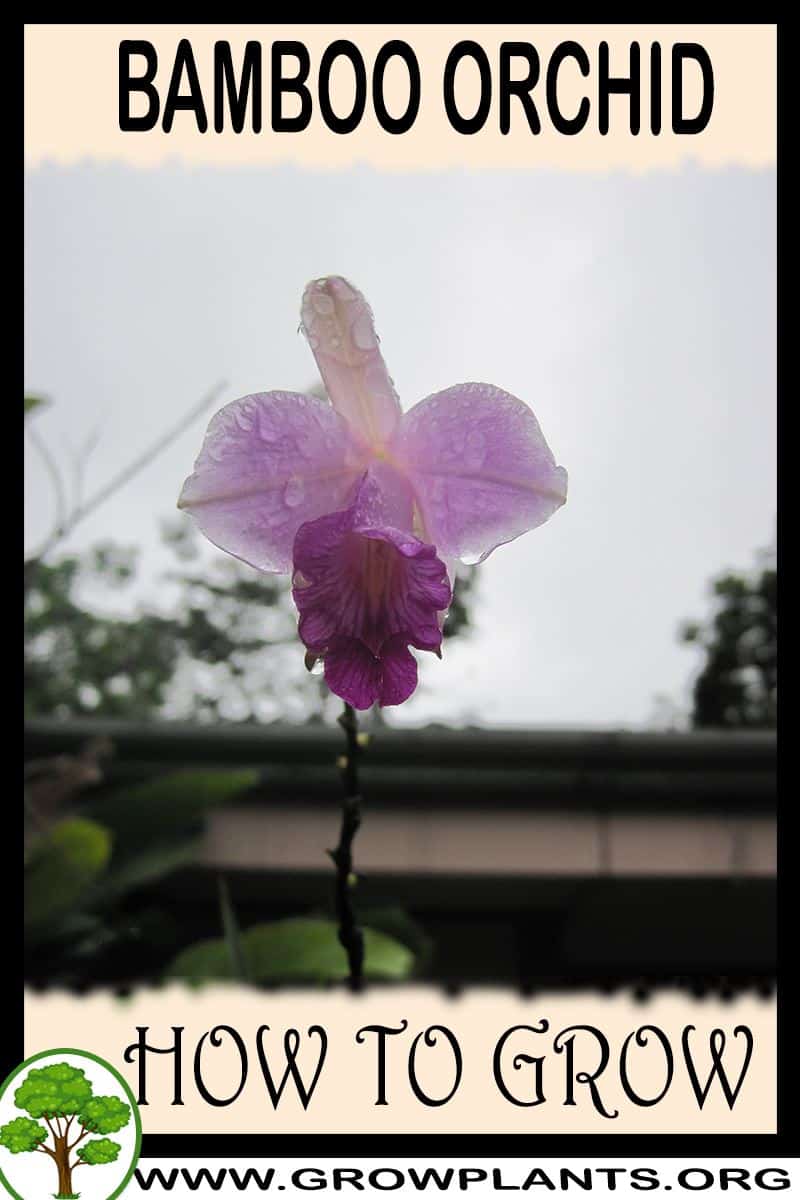
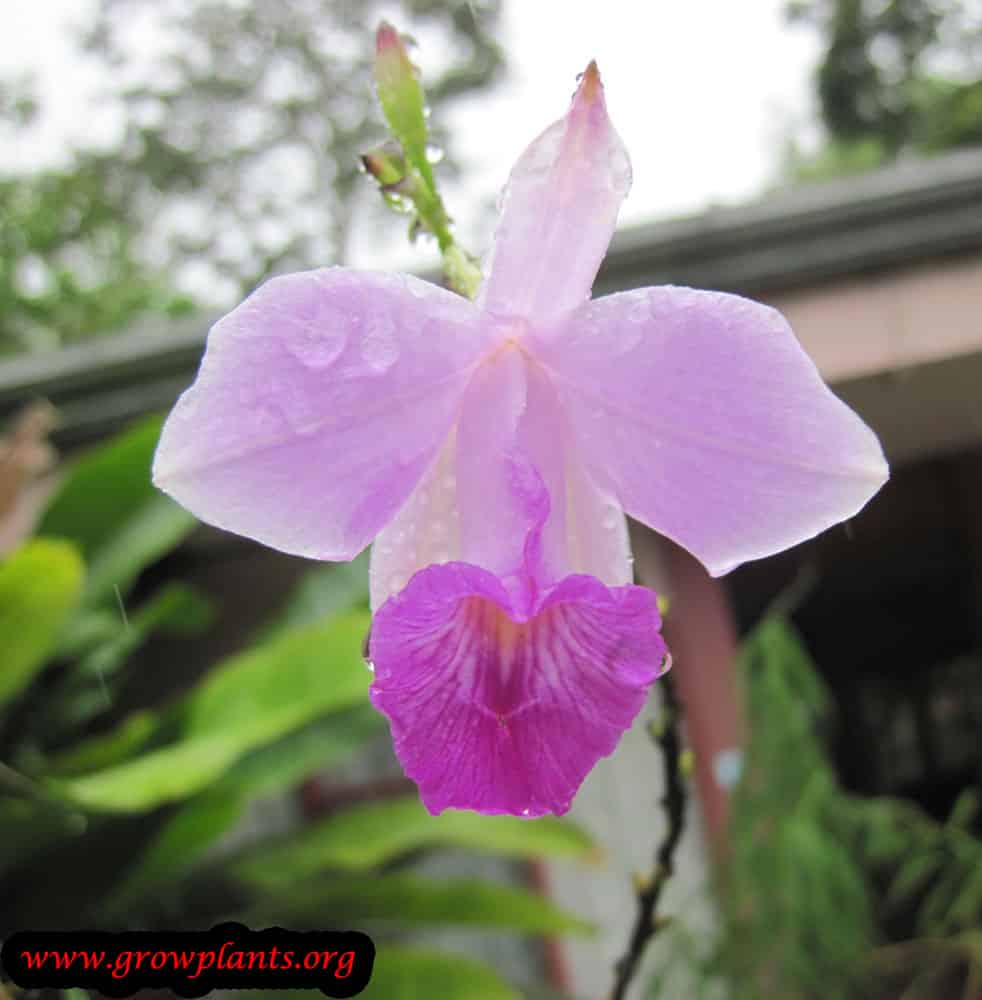
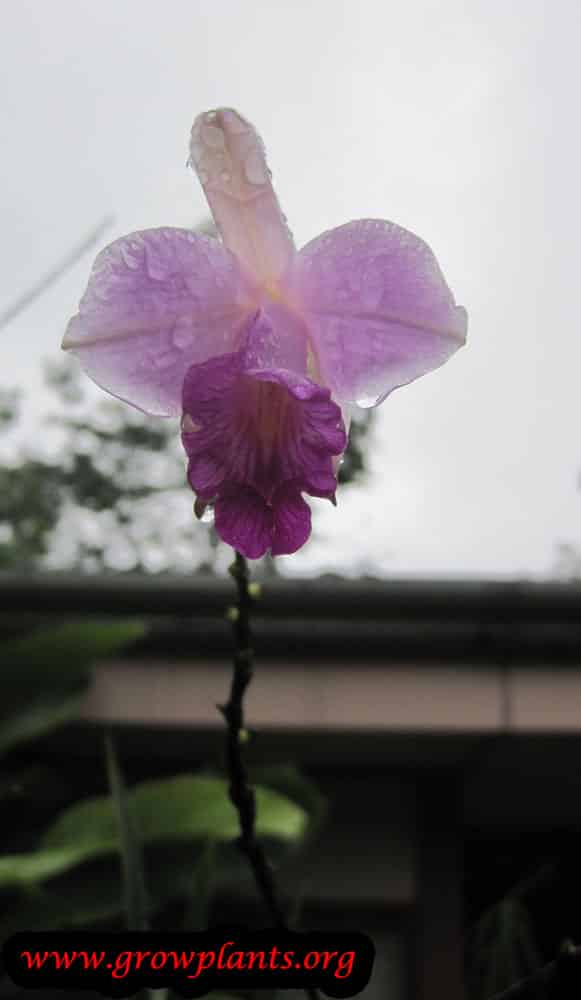
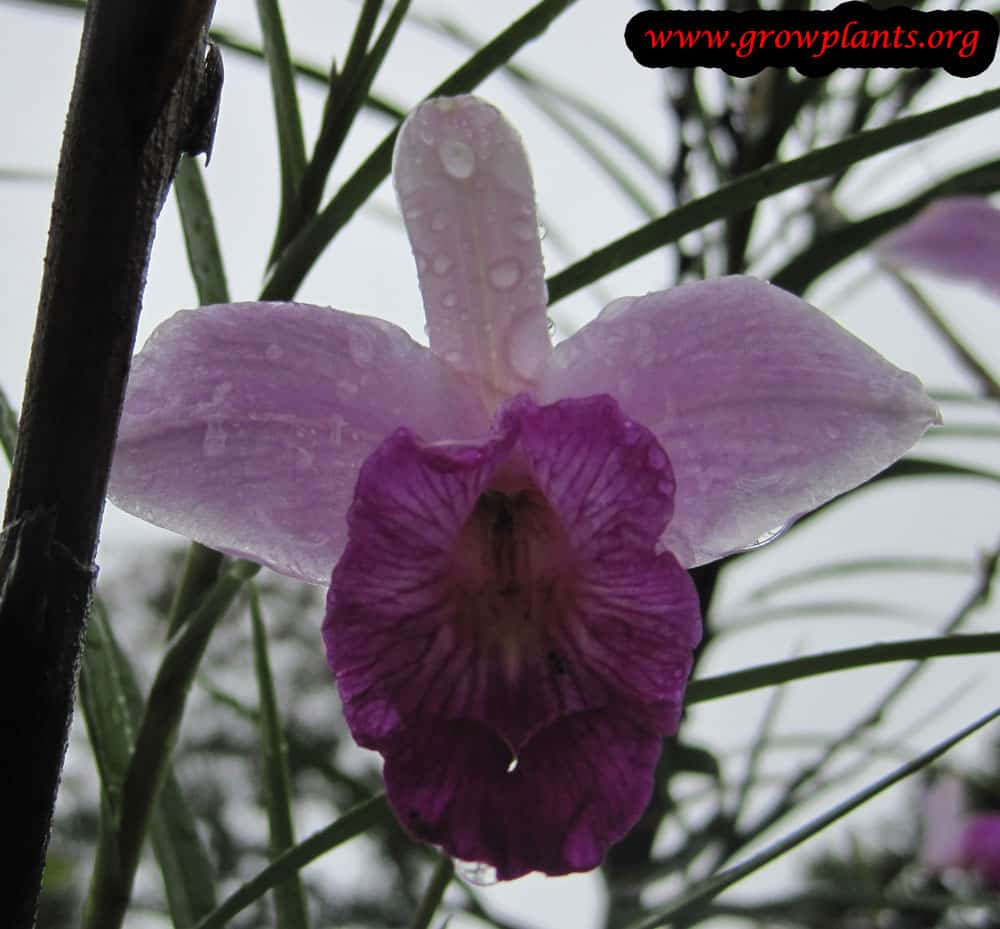
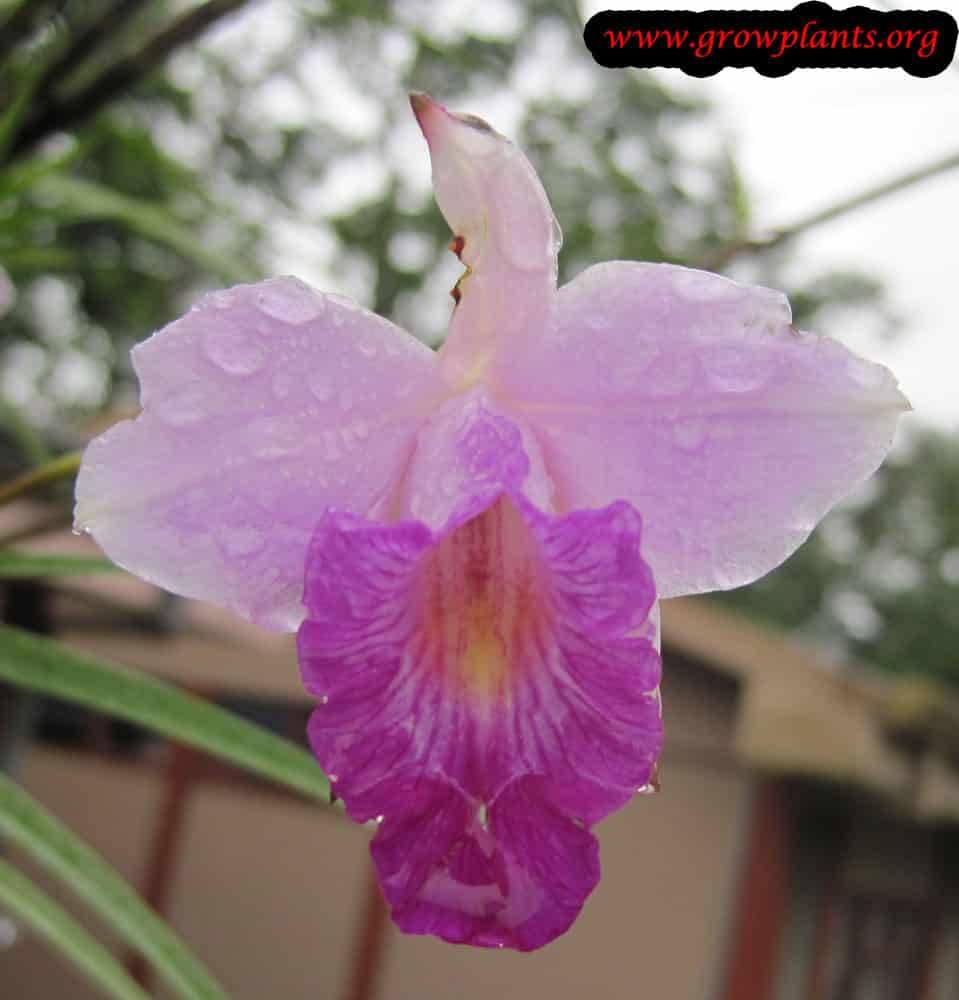
- Flower Characteristics: Showy fragrant flowers in purple, white or pink, sometimes striped or spotted, with three petals around an inner trumpet-shaped lip (see Bloom guide).
Primary Uses & Landscape Value
- Functional & Ornamental Roles: Ornamental flowering plant and fragrant cut flower for tropical gardens and containers.
Care Guide: Planting, Soil & Watering
Overview: The bamboo orchid is a moisture-loving tropical orchid (hardiness zone 12+) that thrives in full sun with high humidity and consistently moist but sharply drained, airy soil. It needs a loose, bark- or cork-rich medium rather than ordinary garden soil, and is often grown in an orchid mix.
Quick Care Requirements
| Requirement | Ideal Condition |
|---|---|
| Planting Season | Year-round in a warm, frost-free climate |
| Growth Rate | Moderate |
| Soil Type | Loose, airy, sharply drained bark/cork-based orchid medium |
| Water Need | High with high humidity – keep moist but never waterlogged |
Planting & Establishment
- Best Planting Season: Plant year-round in a warm, humid, frost-free climate.
- How to Plant:
- Hole Preparation: Set it into a loose, freely draining planting pocket; when potted, use a transparent pot only slightly larger than the roots so the medium can dry between waterings.
- Soil Amendments: Build the medium from bark, bark chips or cork, adding pieces of Styrofoam to keep it airy; refresh it before it breaks down and turns acidic.
- Planting Depth: Plant shallowly, keeping the base of the cane at the surface; support tall flowering canes with a stake so they do not snap.
- Growth Speed & Expectations: Expect moderate growth to a clump 0.5–1.5 m tall.
Soil, Watering & Drainage Care
- Soil Mix & Drainage Needs: An airy, fast-draining bark or cork medium is essential; the roots need oxygen and rot in dense, waterlogged soil. In containers change the medium every couple of years and cut away dead roots.
- Watering Schedule & Technique:
- Young / Newly Planted: Keep newly planted or repotted plants in moist medium with high humidity; use clean, room-temperature water (rainwater is ideal).
- Established: Water generously and often to keep the medium moist, always letting excess drain away freely.
- Seasonal Adjustments: In nature it takes heavy seasonal rains; water more in warm active growth and ease off when growth slows.
Climate, Light & Hardiness
Bamboo orchid is a true tropical species that, unlike most orchids, wants full sun rather than shade, and it needs consistent warmth and high humidity to thrive. It has essentially no frost tolerance and is best suited to warm, frost-free climates outdoors.
Quick Climate Specifications
| Factor | Detail |
|---|---|
| Climate Zones | Tropical |
| USDA Hardiness Zones | 12+ |
| Optimal Temp Range | Approximately 22–30°C (71–85°F) by day, 13–16°C (55–60°F) at night |
| Frost Tolerance | None |
| Light Conditions | Full sun |
| Wind Tolerance | Low |
Sunlight & Light Exposure
Optimal Light Setup
Full sun is preferred – this is one of the few orchids in cultivation that flowers best with strong, direct light rather than shade.
Direct Sun Requirement
Direct sun through most of the day supports the strongest cane growth and flowering; too little light leads to weak, floppy stems.
Shade & Heat Management
Because it is sited in full sun, consistent soil moisture and high humidity are important to offset heat stress, especially in the hottest part of summer.
Best Exposure/Orientation
A fully open, sunny position outdoors in warm climates suits it best; the site notes it is not suited to growing as an indoor houseplant, so bright, unshaded conditions are needed.
Temperature Extremes & Hardiness
USDA Hardiness & Regional Limits
Site data places Bamboo orchid in hardiness zone 12 and warmer, meaning it needs a consistently warm, essentially frost-free tropical climate to grow well outdoors year-round.
Cold Damage & Winter Protection
No specific cold-damage threshold is given, but as a tropical species it should be protected whenever night temperatures fall well below the preferred 13–16°C (55–60°F) range.
Frost Sensitivity
Frost sensitive with no established survival minimum in the source data; treat frost exposure as damaging to fatal.
Extreme Heat Tolerance
Good, given ample water and humidity; the species handles daytime heat up to around 30°C (85°F) and beyond as long as the roots and canes do not dry out.
Wind, Humidity & Microclimate
Humidity Preferences
High humidity is important for healthy growth and flowering.
Dry-Air Tolerance
Low; dry air combined with strong sun increases water stress, so humidity and consistent moisture should be maintained together.
Wind Tolerance
Low; the tall, cane-like stems can break in strong wind, and the plant sometimes needs staking when in bloom to prevent this.
Rainfall & Seasonal Moisture
Adapted to a consistently rainy, humid tropical climate with regular moisture rather than a long dry season.
Microclimate Recommendations
A warm, sunny, humid spot with shelter from strong wind and consistently moist (but well-drained) soil suits Bamboo orchid best; container-grown plants need more frequent watering than in-ground plantings because their root zone dries out faster in full sun.
Growing in Pots, Balconies & Indoors
The bamboo orchid is a tall, reed-like terrestrial orchid that loves full sun and abundant water. The grower says it is not suited to growing indoors, but it grows well in a large container on a sunny patio or balcony in warm climates.
Quick Details
- Container Size: 0.5-1.5 m (20-60 in) tall – needs a large, deep container
- Indoor Suitability: Not an indoor plant – it needs full sun a window rarely provides
- Best Spot: Full sun outdoors
- Soil & Drainage: Orchid mix or a suitable free-draining blend; keep it moist
- Watering in Pots: Big amount of water with high humidity – keep the mix moist; a large pot buffers drying
Indoors & On the Windowsill
- Not a houseplant: The grower is clear it does not grow well indoors – it demands full sun and constant moisture that ordinary rooms and windows cannot supply.
- Windowsill: Even the sunniest sill is usually too dim and dry for this sun-loving reed orchid; grow it outdoors instead.
- Overwintering: In cold climates move the pot into a bright, frost-free greenhouse or conservatory over winter, as it is tender.
On a Balcony or Patio
- Light & water: Give it the sunniest, most open spot on the balcony or patio. It is thirsty and likes humidity, so water generously and never let a large pot dry out – reflected heat from walls speeds drying.
- Practicalities: The tall canes catch wind; use a heavy, stable pot and shelter exposed positions.
Choosing the Pot, Soil & Long-Term Care
- Pot & drainage: A large, deep pot with good drainage holes; it likes plenty of water but the medium must still drain, never turning to stagnant sludge.
- Potting mix: The grower uses an orchid mix or a purpose-made free-draining blend; in the wild it grows where heavy rains drain away quickly.
- Feeding: Feed regularly through the growing season – a big, fast-growing plant in a pot uses nutrients quickly.
- Changing the soil: The grower changes the mix every two years as it breaks down.
Fertilizing & Feeding
A more vigorous grower than most orchids in this group: its cane-like stems and full-sun habit call for moderate, regular feeding through active growth, easing off once the season’s canes mature and growth slows.
Quick Fertilizing Specs
| Feeding Level | Moderate feeder, more vigorous than a typical epiphytic orchid |
|---|---|
| Main Nutrient Priority | Nitrogen-leaning while new canes are extending, shifting to balanced as flowering approaches |
| Best Feeding Period | Through active cane growth in the warm season, into flowering |
| Organic Options | Compost or a diluted organic liquid feed suits a terrestrial-style planting |
| Reduce/Stop Feeding | Ease off as canes mature after flowering and growth slows in cooler weather |
| Micronutrients | Usually supplied by a complete fertilizer; correct only a diagnosed shortage |
| Soil pH | Grows well in a humus-rich, free-draining mix on the slightly acidic side |
Feeding by Growth Stage
Active cane growth
Fuel the extension of new bamboo-like canes through the growing season.
| Nutrient direction | A nitrogen-leaning balanced fertilizer supports vigorous new cane and leaf growth. |
|---|---|
| Timing | Through the warm season as new canes are actively extending. |
| Frequency | Regular light-to-moderate feeding through this vigorous growth. |
| Fertilizer types | A nitrogen-leaning balanced complete fertilizer, Compost or a diluted organic liquid feed |
| Routine trace nutrients | iron, manganese |
| Precautions | This is a thirstier, hungrier grower than most orchids here, but still avoid overly concentrated feeding. |
Flowering
Support flower production at the cane tips through the bloom period.
| Nutrient direction | A balanced feed suits the plant better once flowering is underway. |
|---|---|
| Timing | As flowers begin opening at the cane tips, through the bloom period. |
| Frequency | Continue regular light-to-moderate feeding through flowering. |
| Fertilizer types | A balanced complete fertilizer |
| Routine trace nutrients | iron, manganese |
| Precautions | Avoid a sudden nitrogen-heavy dose during bloom; it favors leafy growth over flowers. |
Cool-season slowdown
Let the canes mature and the plant rest as growth naturally slows.
| Nutrient direction | No feeding is needed while growth has slowed for the season. |
|---|---|
| Timing | Through cooler weather or any period without active new cane growth. |
| Frequency | No feeding during this slowdown; resume when active growth returns. |
| Fertilizer types | No feeding at this stage; hold off fertilizing until active growth resumes. |
| Precautions | Do not fertilize a plant that has stopped actively growing; it wastes nutrients and risks salt buildup. |
Nutrient Deficiency Signs & Corrections
Canes come in noticeably thinner and older leaves fade to pale yellow-green.
| Possible causes | too little nitrogen for this vigorous grower’s needs, heavy watering leaching nitrogen from the mix, underfeeding relative to the plant’s fast growth rate |
|---|---|
| Appears first on | older leaves and new cane growth |
| What to check | feeding history relative to the plant’s vigor, how often heavy watering or rain flushes the mix, organic matter content of the growing medium |
| Possible correction | Step up to a nitrogen-leaning balanced fertilizer while the canes are actively extending. |
Interveinal yellowing shows on older leaves while veins remain green.
| Possible causes | low magnesium relative to this plant’s fast growth and heavy watering needs, frequent leaching through a very free-draining mix, a fertilizer program leaning heavily toward potassium |
|---|---|
| Appears first on | older leaves |
| What to check | fertilizer balance being used, watering frequency and drainage, whether a high-potassium product has been favored |
| Possible correction | Apply a labeled magnesium source at a light rate and keep the overall feeding balanced. |
Leaf tips brown and root growth looks stunted despite this plant’s heavy watering needs.
| Possible causes | fertilizer salts concentrating between the plant’s large water needs and its feeding schedule, mineral-rich water adding to the salt load, not enough plain-water flushing given how often this plant is watered |
|---|---|
| Appears first on | leaf tips and root tips |
| What to check | water source and mineral content, how the feeding schedule interacts with heavy watering, recent fertilizer strength |
| Possible correction | Flush the growing medium with plain water regularly, favor rain or low-mineral water, and keep fertilizer dilute. |
Pruning, Training & Seasonal Maintenance
Bamboo orchid grows as a clump of upright, cane-like reed stems that flower successively at their tips over spring and autumn, so pruning is chiefly renewal management of those canes rather than any pseudobulb or spike-only logic. It tolerates moderate cutting: spent flowering tips and fully dead canes can be removed, but a cane still opening new buds should be left alone. Because full-grown canes can reach 0.5–1.5 m and the plant’s own care notes flag a need for staking while in bloom, structure and support are as much a part of maintenance here as cutting.
Quick Pruning & Maintenance Specs
| Pruning Tolerance | Moderate |
| Primary Pruning Window | After a cane’s flower succession finishes (summer/autumn) |
| Secondary Maintenance Window | Any time, for dead leaves or fully spent canes |
| Typical Frequency | Per-cane, as each finishes flowering or declines |
| Main Objective | Renew the clump; keep flowering canes upright and supported |
| Young Plant Priority | Let new canes establish; stake tall growth early |
| Mature Plant Priority | Remove old/declining canes at the base to make room for fresh ones |
| Best Tool Type | Bypass secateurs or precision snips |
| Avoid Heavy Pruning During | While a cane is still actively producing new flower buds |
Pruning by Plant Age & Size
Newly Established
Minimal – remove only damaged growth; let the first canes establish before any cutting.
Young / Formative
No leader/vase training applies; instead, stake or cane-support new upright shoots as they gain height so wind and the weight of flowers don’t snap them, exactly as the plant’s own care guidance notes.
Mature / Established
Manage the clump by cane: allow vigorous canes to keep producing their extended succession of terminal flowers, and cut fully spent or weakening older canes to the base to make room for fresh basal growth and keep the clump from becoming congested.
Seasonal Pruning Schedule
Post-Flowering
Objective: tidy a cane once its flower succession is completely finished (unless seed pods are wanted). Remove: the spent flowering tip and dead flowers on that cane; fully dead or collapsed old canes at the base. Do not remove: a cane that is still opening new flowers, or healthy green canes not yet flowered. Expected response: removing an old cane at the base encourages fresh basal cane production. Flowering impact: cutting a still-blooming cane sacrifices its remaining flower succession; cutting only after it is truly spent has no cost.
Ongoing Sanitary
Strip old yellow leaves from lower stem sections as canes mature.
Structural Pruning & Training
Height and spread control matter here since canes can reach 1.5 m: stake individual canes rather than shearing the clump, and thin overcrowded old canes at the base periodically so light reaches new basal shoots.
Special Growth to Remove
Spent flower stems (retain briefly if seed pods are wanted per the plant’s own propagation notes); fully collapsed old canes; dead lower leaves.
Container & Small-Space Pruning
In containers the clump needs its growing mix refreshed roughly every two years; height control is best achieved by removing whole old canes at the base to make room for shorter new ones rather than heading back a tall cane mid-stem, which leaves an unsightly stub since it won’t re-branch like a woody shrub.
Tools
Bypass secateurs for cane removal at the base; precision snips for spent flower tips and leaf trims; soft ties or stakes for support.
Tool Hygiene & Disease Risk
Routine – use clean, sharp tools; no specific elevated pathogen risk noted for this species beyond general orchid sanitation.
Cut Placement & Technique
Cut spent flower tips just above the last viable node on the cane; remove whole old canes at the base, close to the clump crown, rather than partway up.
Heavy Pruning & Rejuvenation
The plant tolerates rejuvenation at the clump level (cutting out multiple old canes over time to force a flush of new basal growth), but not a single hard cutback of all canes at once, which would remove all current flowering potential simultaneously – stagger old-cane removal across a season instead.
Post-Pruning Care
Keep support stakes in place for remaining canes after thinning; maintain the high humidity and consistent moisture this species needs, since cut canes are removed at the base rather than needing wound care.
Common Pruning Mistakes
Cutting a cane back mid-stem instead of removing it fully at the base (leaves a stub that won’t reflower); removing a cane still in active bloom; skipping staking and losing canes to wind/flower weight.
When NOT to Prune
While a cane is still opening new flowers in its succession; if seed pods are being collected, delay removal until pods are harvested.
Recommended Tools (by task)
- bypass_secateurs – clean base cuts on semi-firm old canes.
- precision_snips – spent flower tips and leaf trims.
- soft_ties_stakes – the plant’s own care notes call for support during bloom to prevent canes snapping.
Propagation Guide
Bamboo orchid is most easily propagated vegetatively – by cane cuttings, basal daughter plants (offsets), or ground layering of a bent cane – since the site’s own data confirms it is very hard to start from seed. Vegetative methods are also the practical way to keep a particular flower color true, and they are comparatively easy thanks to the plant’s reed-like, freely branching canes.
Quick Propagation Specs
| Best Propagation Method | Ground layering of a cane, or separation of daughter plants |
| Alternative Methods | Cane cuttings |
| Propagation Difficulty | Easy to Moderate by vegetative methods; Specialist by seed |
| Seed True-to-Type | Variable |
| Vegetative True-to-Type | Yes |
| Best Propagation Season | All year, in line with the plant’s year-round planting season |
Stem Cuttings
Established clumps naturally produce basal daughter plants (offshoots) that can be separated once they have their own roots and potted on independently. Cane cuttings can also be taken from healthy stems and rooted; keep them warm and humid, matching the plant’s normal high-humidity requirement, until new roots and growth appear.
Air & Ground Layering
The site’s own method: bend a healthy cane over and lightly cover the joint (node) with soil where it touches the ground. After a few months, check the covered joint for roots; once roots have formed, cut the stem free from the mother plant on the parent side of the new roots. Let the newly rooted section settle for about another month before transplanting it, or, if the whole plant is already growing in a pot, wait about a week before relocating it.
Bloom & Flower Guide
Quick Details
- Bloom Season: Summer into autumn
- Flower Appearance: Cattleya-like flowers with three outer petals forming a crown around an inner trumpet-shaped lip; purple, white or pink, sometimes patterned, and lightly fragrant
- Edibility: Ornamental — grown for its flowers, not eaten (orchid foliage and flowers are generally non-toxic)
Detailed Blooming Overview
The Bamboo Orchid is a tall, terrestrial orchid with slender, cane-like stems and grassy leaves that give it its name. The grower describes an inner trumpet-shaped lip framed by three outer petals that form a crown, in purple, white or pink, sometimes marked with stripes, dots or blotches. Flowers open in succession at the tips of the canes through summer and autumn, each fairly short-lived but followed by more, so a clump flowers over a long stretch.
Flower Characteristics
- Three outer petals forming a crown around an inner trumpet-shaped lip (grower’s description).
- Colours are purple, white and pink, sometimes multicoloured with stripes, dots or blotches.
- Flowers open at the tips of the bamboo-like canes, a few at a time in succession.
Bloom Care & Thinning
- Triggering bloom: Warm, bright, humid conditions and a mature clump of canes give the best flowering.
- After flowering: Remove faded flowers; the canes continue to produce new buds from the tip.
- While in bloom: Keep it well watered and warm, as this tropical orchid dislikes drying out in growth.
Bloom Health & Protection
- Botrytis petal blight can spot open flowers with small brown or translucent marks in cool, damp, still air — better ventilation and keeping water off the blooms is the first line of defence, with a fungicide only if it spreads.
- Aphids, scale and mealybugs are drawn to soft buds and flower spikes — wiping them off or treating with neem oil or insecticidal soap keeps the flowers clean.
- Bud blast (buds yellowing and dropping before they open) is usually a stress response to sudden changes in temperature, light or humidity, or to dry air — steady conditions while the plant is in spike prevent it.
Pests, Diseases & Troubleshooting
Overview: The bamboo orchid (Arundina graminifolia) is a hardy, reed-stemmed terrestrial orchid that is easier than most, but still attracts common orchid sap-suckers and rots quickly if kept cold and wet. The bamboo orchid is a tough, reed-like terrestrial orchid that is far more forgiving than most epiphytes, yet its soft canes and flowers still attract common sap-suckers, and its fleshy tissue rots quickly if kept cold and wet. Grow it warm, bright and airy with a freely draining mix, keep water off the growing points at night, and rely on inspection and hygiene before reaching for any spray.
Quick Troubleshooting Overview
| Issue / Pest | Main Symptom | Primary Solution |
|---|---|---|
| Aphids & thrips | Distorted new growth, streaked or spotted flowers, sticky residue | Rinse off, use sticky traps, spot-treat with insecticidal soap/neem |
| Spider mites | Fine stippling and silvery webbing on leaves in dry heat | Raise humidity, rinse foliage, apply horticultural oil/miticide |
| Scale & mealybugs | Waxy bumps or cottony tufts on canes and leaf bases | Wipe off with alcohol, treat with horticultural oil |
| Snails & slugs | Chewed new shoots, roots and flower buds, slime trails | Handpick at night, use traps/barriers or iron-phosphate bait |
| Black / soft rot | Water-soaked, blackening, foul-smelling cane or crown | Cut out to clean tissue, dry off, improve airflow, copper drench |
Common Pests & Management
- Aphids (Aphis / Myzus spp.):
- Symptoms: Clusters of soft green, black or brown insects on new shoots, buds and flower spikes; curled, sticky, distorted growth and possible virus spread.
- Prevention & Control: Rinse colonies off with water, squash small outbreaks, and encourage ladybirds; treat persistent groups with insecticidal soap or neem, focusing on tender buds and spikes.
- Two-spotted spider mite (Tetranychus urticae):
- Symptoms: Fine pale stippling and a dull, silvery cast on leaves, with delicate webbing on undersides in hot, dry air.
- Prevention & Control: Raise humidity and rinse foliage regularly; isolate affected plants; apply horticultural oil or a miticide to leaf undersides, repeating to catch newly hatched mites.
- Scale insects (Coccus / Diaspididae spp.):
- Symptoms: Brown, tan or waxy bumps along canes, leaf bases and midribs; sticky honeydew and sooty mould with soft scale.
- Prevention & Control: Wipe off with an alcohol-dipped swab or soft cloth, then smother remaining crawlers with horticultural oil; repeat every couple of weeks until clear.
- Mealybugs (Pseudococcus spp.):
- Symptoms: White cottony tufts hidden in leaf axils, sheaths and around new growth, with honeydew and sooty mould.
- Prevention & Control: Dab colonies with an alcohol swab, keep new plants isolated on arrival, and treat lingering populations with horticultural or neem oil; control ants that spread them.
- Thrips (Thrips / Frankliniella spp.):
- Symptoms: Silvery streaking and tiny black dots (frass) on leaves and petals, deformed buds and flowers that fail to open cleanly.
- Prevention & Control: Use blue sticky traps to monitor, remove spent and infested flowers, and treat with insecticidal soap, spinosad or neem, repeating to break the life cycle.
- Snails & slugs (Helicidae, Limacidae):
- Symptoms: Ragged holes in new shoots and flower buds, chewed root tips, and tell-tale slime trails, worst in damp, shaded conditions.
- Prevention & Control: Handpick after dark, remove hiding places and debris, and use copper barriers, traps or iron-phosphate bait around the pot or clump.
Diseases & Fungal Issues
- Fungal leaf spot (Cercospora / Phyllosticta spp.):
- Symptoms: Yellow, brown or black spots that enlarge and may develop yellow halos, mainly on older, crowded leaves in stagnant humid air.
- Treatment & Management: Remove and destroy spotted leaves, improve air movement and spacing, keep foliage dry going into night, and apply a copper fungicide if it spreads.
- Black rot (Phytophthora / Pythium spp.):
- Symptoms: Water-soaked black patches spreading rapidly through leaves and into the crown, causing collapse in cool, waterlogged conditions.
- Treatment & Management: Cut well back into clean green tissue with a sterile blade, let cuts dry, reduce watering, and drench with a copper or phosphonate fungicide; improve drainage.
- Bacterial soft rot (Erwinia / Dickeya spp.):
- Symptoms: Soft, wet, translucent, foul-smelling spots that spread fast, often after overhead watering or injury in warm humid weather.
- Treatment & Management: Excise infected tissue immediately, keep the plant dry and well ventilated, avoid overhead watering, and isolate it; sanitise tools between cuts.
- Botrytis petal blight (Botrytis cinerea):
- Symptoms: Small water-soaked flecks and brown spots on flowers that turn to grey fuzzy mould in cool, damp, still conditions.
- Treatment & Management: Remove affected flowers promptly, increase airflow and lower humidity around blooms, and avoid wetting flowers when watering.
Growing Difficulties & Abiotic Problems
- Root/crown rot from overwatering:
- Cause & Symptoms: Yellowing canes, mushy roots and collapse where the mix stays soggy or drainage is poor.
- Correction Strategy: Use an open, free-draining orchid/terrestrial mix, water thoroughly then allow partial drying, and never leave the pot standing in water.
- Leaf-tip dieback:
- Cause & Symptoms: Browning, dying leaf tips from salt build-up, hard water or letting roots dry out too far.
- Correction Strategy: Flush the mix periodically with clean water to leach salts, keep moisture steady, and use rain or low-mineral water where possible.
- Bud blast & poor flowering:
- Cause & Symptoms: Buds yellowing and dropping before opening, or shy flowering, from sudden environmental change, deep shade or cold drafts.
- Correction Strategy: Keep light bright and conditions stable, avoid moving the plant while in bud, and protect from cold drafts and chilling.
- Sunburn / cold damage:
- Cause & Symptoms: Bleached scorched patches in fierce sun, or blackened tissue after chilling below its comfort range.
- Correction Strategy: Acclimatise gradually to strong light, provide light shade at midday in hot climates, and keep it warm and frost-free.
What Helps – Products & Tools
Cultural care carries this orchid: good airflow, an open free-draining mix, careful watering that keeps crowns dry, and prompt removal of rotting or infested tissue. Useful products are insecticidal soap, neem and horticultural oil for aphids, mite, scale, mealybug and thrips; blue/yellow sticky traps; iron-phosphate slug bait or copper barriers; and copper or phosphonate fungicides for the leaf spots and rots. Treat in the cool evening and test any spray on a small area first.
Frequently Asked Questions
What is a bamboo orchid?
Bamboo orchid (Arundina graminifolia) is a tall, reed-like terrestrial orchid grown for its fragrant, Cattleya-like pink and purple flowers, used ornamentally and as a cut flower. It is an evergreen tropical perennial that forms clumps of slender, cane-like stems 0.5-1.5 m (20-60 in) tall.
How do you care for a bamboo orchid?
Give it full sun with high humidity and a consistently moist but sharply drained, airy medium, such as an orchid mix of bark or cork rather than ordinary garden soil. Water generously and often so the medium stays moist, always letting the excess drain away freely.
What do bamboo orchid flowers look like?
Bamboo orchid produces Cattleya-like flowers with three outer petals forming a crown around an inner trumpet-shaped lip, in purple, white or pink and sometimes patterned, with a light fragrance. Flowers open in succession at the tips of the canes through summer and autumn, so a clump blooms over a long stretch.
Can you grow a bamboo orchid indoors?
No – it is not suited to growing indoors, since it needs full sun that a window rarely provides. It does best in a large container on a sunny outdoor patio or balcony in a warm climate.
How do you propagate bamboo orchid?
Bamboo orchid is most easily propagated vegetatively, by cane cuttings, separating rooted basal daughter plants, or ground layering a bent cane, since it is very hard to start from seed. For ground layering, bend a healthy cane over and lightly cover the joint (node) with soil where it touches the ground; after a few months check the covered joint for roots, and once roots have formed, cut the stem free from the mother plant on the parent side of the new roots.
Does bamboo orchid need staking?
Yes – its tall, cane-like stems can break in strong wind, so support tall flowering canes with a stake so they do not snap, especially while a cane is in bloom.