

Plant Profile & Key Characteristics
Overview: Masdevallia is a genus of cool-growing evergreen epiphytic orchids, 20-50 cm, grown for their distinctive triangular, often long-tailed flowers in an exceptional range of colours.
Quick Specifications
| Specification | Attribute |
|---|---|
| Plant Type / Life Cycle | Perennial (evergreen orchid) |
| Foliage Type | Evergreen |
| Mature Size | 20-50 cm (8-20 in) |
| Growth Rate | Moderate |
| Root System | Epiphytic, rhizomatous (fleshy roots) |
| Toxicity | Non-toxic |
| Hardiness | USDA 10b-11a (cool-growing) |
Growth Form & Structure
- Height & Spread: 20-50 cm (8-20 in); grown in open, well-holed pots of sphagnum and bark, indoors or in a cool greenhouse.
- Growth Habit & Form: Clumping epiphytic orchid with fleshy linear leaves on a short rhizome (no pseudobulbs).
- Lifespan & Maturity: Long-lived perennial with moderate growth.
Anatomy & Physical Features
- Leaves & Foliage: Fleshy, linear green leaves on fleshy stems.
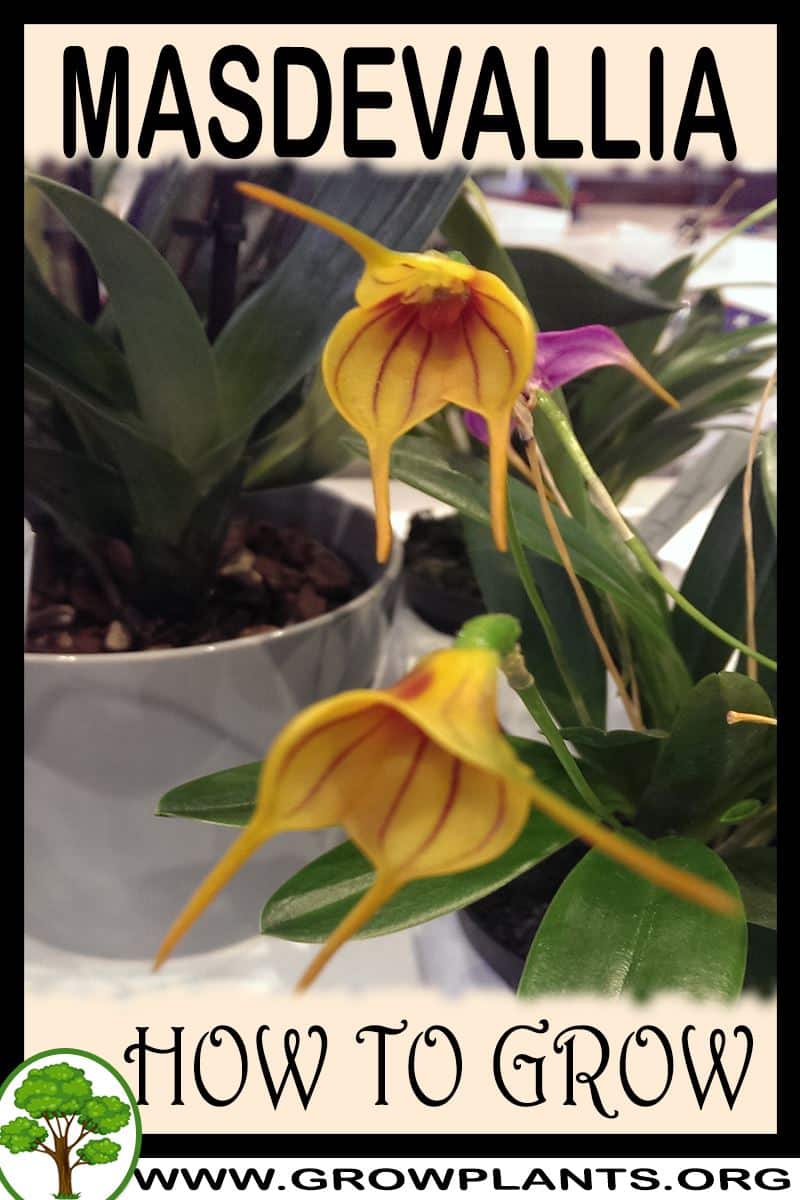
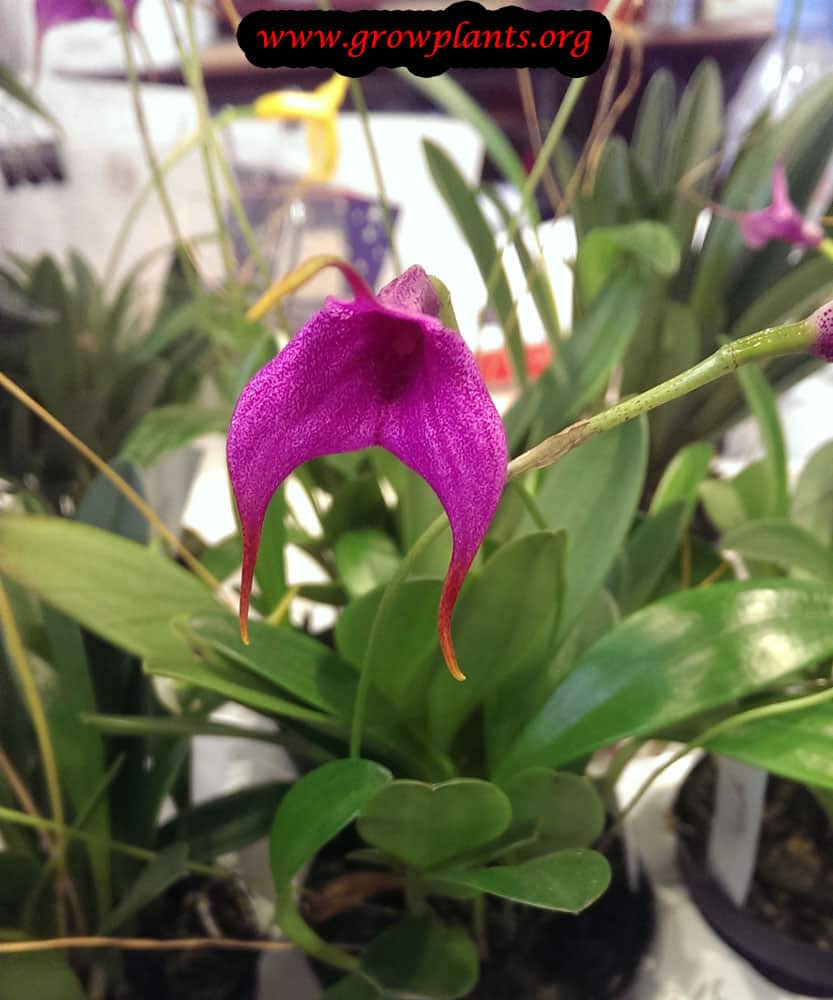
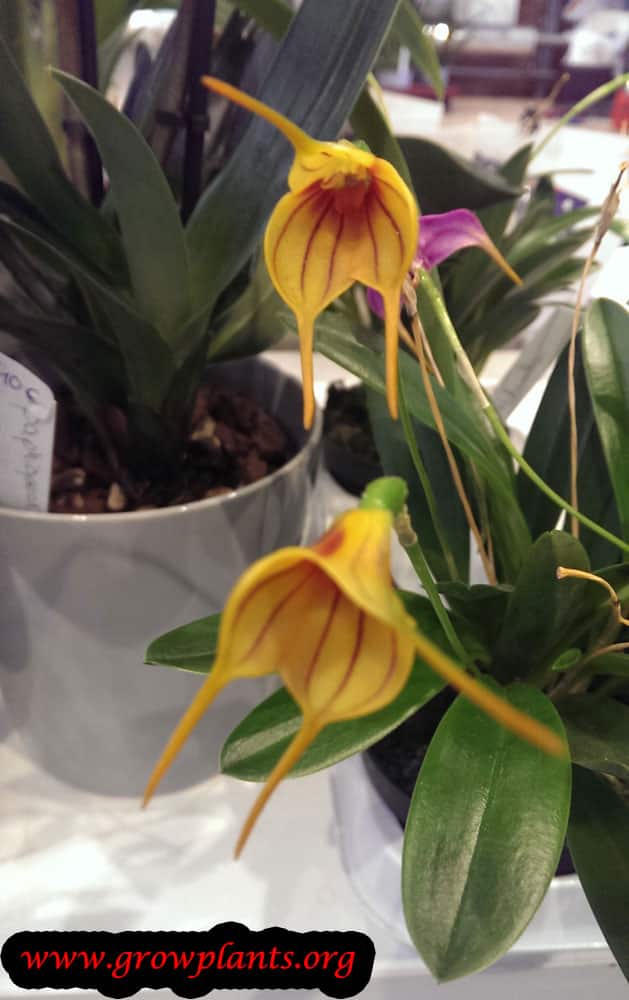
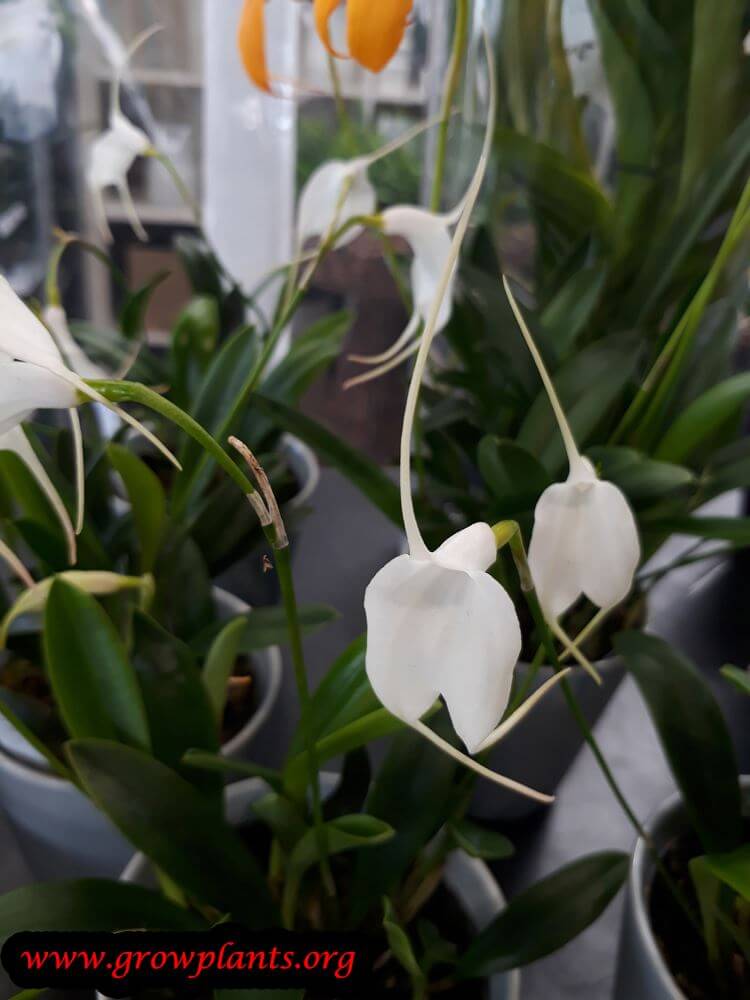
- Flower Characteristics: Triangular, three-lobed flowers often with tail-like tips, in almost any colour or pattern (see Bloom guide).
Primary Uses & Landscape Value
- Functional & Ornamental Roles: Ornamental flowering orchid for cool, humid, shaded conditions; specialist houseplant or greenhouse subject.
Care Guide: Planting, Soil & Watering
Overview: Masdevallia is a cool-growing epiphytic orchid (zone 10b–11a) that needs shade with bright light, high humidity (65%+) and cool temperatures (about 6–8°C at night, 20°C by day, no hot summers). It is grown not in ordinary soil but in an open, airy sphagnum-moss mix, kept constantly moist.
Quick Care Requirements
| Requirement | Ideal Condition |
|---|---|
| Planting Season | Year-round |
| Growth Rate | Moderate |
| Soil Type | Sphagnum moss with a little bark (not garden soil) |
| Water Need | High — keep the mix constantly moist with good airflow |
Planting & Establishment
- Best Planting Season: Can be potted year-round in the right cool, humid conditions.
- How to Plant:
- Hole Preparation: Use an open pot with large holes so air and roots move freely and blooms can emerge.
- Soil Amendments: Pot into sphagnum moss with a little bark rather than soil.
- Planting Depth: Nestle the roots into the moss so the base of the growth sits at the surface, not buried.
- Growth Speed & Expectations: Moderate — forms a compact clump about 20–50 cm (8–20 in) tall.
Soil, Watering & Drainage Care
- Soil Mix & Drainage Needs: Sphagnum moss with a little bark in an open, well-ventilated pot with large holes keeps the roots moist yet airy and prevents rot.
- Watering Schedule & Technique:
- Young / Newly Planted: Keep the moss evenly moist and humidity high while roots establish.
- Established: Water generously and often so the mix never dries out, using soft water and good airflow to keep it from staying stagnant.
- Seasonal Adjustments: Maintain moist, humid, cool conditions year-round; guard against hot, dry air.
Climate, Light & Hardiness
Masdevallia is a cool-growing epiphytic orchid, unlike many of its warmth-loving relatives - it wants cool nights, mild days, and specifically dislikes hot summer weather. It needs consistently high humidity and shade, and has no outdoor frost tolerance despite its cool-growing preference.
Quick Climate Specifications
| Climate Zones | Subtropical, or greenhouse/houseplant |
| USDA Hardiness Zones | 10b–11a |
| Optimal Temp Range | Night approximately 6–8°C (43–46°F); day approximately 20°C (68°F) - a distinctly cool-growing orchid that does not want a hot summer |
| Frost Tolerance | None |
| Light Conditions | Full Shade |
Sunlight & Light Exposure
Optimal Light Setup
Shade with gentle, filtered light; not a sun-loving orchid.
Temperature Extremes & Hardiness
USDA Hardiness & Regional Limits
Zone 10b–11a reflects a subtropical-climate orchid, but unlike most others in this group it is a genuinely cool-growing species that specifically dislikes hot summer conditions - a distinction worth noting since its zone range alone does not convey that heat, not just cold, is a limiting factor.
Cold Damage & Winter Protection
Its comfortable night range (roughly 6–8°C / 43–46°F) is genuinely cool by orchid standards, but this is not the same as frost tolerance; protect from actual freezing.
Frost Sensitivity
No frost tolerance despite preferring cool conditions.
Extreme Heat Tolerance
Poor - hot summer weather is explicitly noted as unfavorable for this species, unusual among warmth-loving epiphytic orchids.
Wind, Humidity & Microclimate
Humidity Preferences
Needs high humidity, 65% or more.
Microclimate Recommendations
A cool, shaded, consistently humid spot (many growers use a cool greenhouse, shaded porch, or air-conditioned room in hot climates) suits it far better than a typical warm orchid setup; pot in an open medium (sphagnum moss with a little bark) in a container with generous drainage holes.
Growing in Pots, Balconies & Indoors
Masdevallia (Masdevallia) is a compact orchid (about 20-50 cm) and a genuine houseplant – the grower confirms it grows well indoors, and orchids are almost always grown in a pot rather than open ground. Give it bright, indirect light near a window and it makes a rewarding, long-flowering indoor plant. It also wants high humidity, so a bright bathroom, a humidity tray or regular misting helps.
Quick Details
- Container Size: A pot only about 20-40% larger than the root ball – orchids like to be snug
- Indoor Suitability: Yes – a true houseplant in bright, indirect light
- Best Spot: Bright but shaded light – cool and never in direct sun
- Soil & Drainage: Never ordinary potting soil – use a coarse, open orchid medium (bark or cork chips) with lots of drainage holes
- Watering in Pots: Keep the medium consistently moist and humid – don’t let it dry out fully; let excess drain away and never leave the pot standing in water
Indoors & On the Windowsill
- A true houseplant: The grower confirms it thrives indoors – keep it near a bright window but out of harsh, direct midday sun.
- Windowsill growing: An east or shaded-south window is ideal; a clear pot lets you watch the roots and see when to water. It also wants high humidity, so a bright bathroom, a humidity tray or regular misting helps.
- Overwintering: As a tropical plant it is happiest indoors year round in cool climates – keep it warm, bright and away from cold draughts and frost.
On a Balcony or Patio
- Summering outdoors: It can spend warm spells on a shaded, sheltered balcony or patio in bright but indirect light – protect it from direct sun, drying wind and any chill. It also wants high humidity, so a bright bathroom, a humidity tray or regular misting helps. Pots and open orchid media dry quickly, so check moisture often.
Choosing the Pot, Soil & Long-Term Care
- Pot & drainage: A snug pot with many holes; a transparent pot is useful for watching the roots. Never let it sit in standing water – the fastest route to rot.
- Medium: A coarse, free-draining orchid mix of bark or cork chips (some more terrestrial types appreciate a little added coir or humus), not garden soil.
- Feeding & water quality: Feed with a dilute orchid fertiliser a few times a year; where possible use rain or distilled water, which orchids prefer.
- Repotting: Refresh the medium about every two years – bark breaks down and loses structure over time – and pot on when roots fill the container.
Fertilizing & Feeding
A light, steady feeder: this cool-growing, pseudobulb-less orchid has no dormant reserve to draw on, so it does best with frequent, well-diluted balanced feeding rather than a single heavy application.
Quick Fertilizing Specs
| Feeding Level | Light feeder |
|---|---|
| Main Nutrient Priority | A dilute, balanced complete orchid fertilizer rather than a high-phosphorus bloom formula |
| Best Feeding Period | Year-round while new leaves and roots are actively developing in cool, humid conditions |
| Micronutrients | A complete orchid fertilizer generally covers routine needs; correct only a diagnosed deficiency |
| Reduce/Stop Feeding | Not a hard stop – feeding is scaled back, not withheld, whenever growth slows |
Feeding by Growth Stage
Active leaf and root growth
Support the fleshy leaves, stems, and fine roots this rhizomatous, pseudobulb-less orchid continually produces in cool, consistently humid conditions.
| Nutrient direction | A dilute, nitrogen-leaning balanced fertilizer supports steady new growth without pushing soft tissue that struggles under this species’ cool, humid requirements. |
|---|---|
| Timing | Whenever new leaf or root growth is visibly underway. |
| Frequency | Regular light feedings suit this continuously growing, cool-growing species better than infrequent heavy ones. |
| Fertilizer types | A balanced, complete orchid fertilizer diluted well below label strength for regular container feeding, An occasional plain-water flush through the sphagnum and bark mix to prevent salt buildup |
| Routine trace nutrients | iron, manganese |
| Precautions | Flush the mix with plain water periodically to prevent salt buildup, since this species needs consistently high humidity and a generous amount of water. |
Flowering
Support the distinctive triangular, long-tailed blooms this species can produce throughout the year when its cool, humid needs are met.
| Nutrient direction | Keep to the same balanced fertilizer used during growth, with adequate potassium; a high-phosphorus ‘bloom booster’ is not needed to trigger flowering. |
|---|---|
| Timing | Whenever a flower is developing or open, which can occur intermittently across the year. |
| Frequency | Continue the same light, regular feeding used for growth through the bloom period. |
| Fertilizer types | A balanced, complete orchid fertilizer at the same dilute strength used during active growth |
| Routine trace nutrients | iron, manganese |
| Precautions | Avoid switching to a high-phosphorus ‘bloom booster’ product; balanced feeding and stable cool, humid conditions are what drive flowering. |
Reduced feeding when growth slows
Match feeding to a slower growth rate rather than force growth when conditions temporarily fall outside this species’ narrow cool, humid comfort range.
| Nutrient direction | A weaker, low-nitrogen balanced fertilizer applied less often is usually enough while growth is slow; feed sparingly rather than at the full rate used in active growth. |
|---|---|
| Timing | During periods when no new leaf or root growth is visibly developing. |
| Frequency | Minimal feeding – a light application only occasionally until active growth resumes. |
| Fertilizer types | A balanced, complete orchid fertilizer diluted further than during active growth, applied sparingly |
| Precautions | Prioritize restoring cool temperatures and high humidity, then return to regular light feeding once growth resumes. |
Nutrient Deficiency Signs & Corrections
New leaves emerge pale and undersized, and overall growth is noticeably slow even under otherwise good conditions.
| Possible causes | insufficient nitrogen during active growth, fertilizer diluted too far or applied too infrequently, fine roots reduced by a waterlogged or broken-down mix |
|---|---|
| Appears first on | newest leaves |
| What to check | feeding routine and dilution during active growth, drainage and condition of the sphagnum and bark mix, root health |
| Possible correction | Resume regular light feeding with a balanced fertilizer while growth is active, and refresh the mix if it has broken down. |
Leaf and root tips brown or blacken, which is easily confused with this species’ general sensitivity to heat and low humidity.
| Possible causes | fertilizer salts accumulating in the mix from regular feeding without flushing, irrigation water high in dissolved minerals, a mix that stays too wet without adequate drainage |
|---|---|
| Appears first on | root tips and leaf tips |
| What to check | frequency of plain-water flushing between feedings, water source used for irrigation, drainage of the pot and open mix |
| Possible correction | Flush the mix thoroughly with plain water between feedings and confirm the pot drains freely given this species’ need for an open, humid root run. |
Flowers are weak-stemmed or short-lived, and older leaves show yellowing and browning starting at the tips and margins.
| Possible causes | insufficient potassium reaching developing growths, fertilizer imbalance skewed heavily toward nitrogen, poor root function limiting overall nutrient uptake |
|---|---|
| Appears first on | older leaves and developing flowers |
| What to check | balance of the fertilizer used during growth, root health and mix condition, overall feeding consistency |
| Possible correction | Use a balanced fertilizer with adequate potassium during active growth and address any underlying root problems. |
Pruning, Training & Seasonal Maintenance
Masdevallia is unusual among orchids in having no pseudobulb: it grows as a tufted clump of single leaves on a creeping rhizome, with each thin, wiry flower stem rising individually from the base of a leaf. Because a single mature leaf/growth can go on to produce further flower stems over an extended period, pruning here means removing only fully dead leaves and individually spent flower stems — never cutting back a whole growth as "finished" the way a pseudobulb spike is treated in other orchids. This can be done year-round as material naturally fades, with no single dormant pruning season.
Quick Pruning & Maintenance Specs
| Pruning Tolerance | Low |
| Primary Pruning Window | Year-round, as individual leaves/flower stems fade |
| Secondary Maintenance Window | Root trimming at repotting |
| Typical Frequency | Light, continuous grooming |
| Main Objective | Remove only dead tissue while preserving every live leaf, since each can rebloom repeatedly |
| Young Plant Priority | Let new leaf growths establish undisturbed before expecting flowers |
| Mature Plant Priority | Deadhead spent pedicels close to the leaf base; divide the rhizome only once crowded |
| Best Tool Type | Precision snips |
| Avoid Heavy Pruning During | Not season-bound, but avoid disturbing a leaf that is actively producing a new flower stem |
Pruning by Plant Age & Size
Newly Established
A newly potted or divided plant should have only dead or rotten roots removed at potting; avoid cutting leaves while new growths establish.
Young / Formative
No structural training applies — this genus has no cane, spike or trainable framework. A young leaf fan simply needs time to mature before it begins producing flower stems.
Mature / Established
Established clumps are groomed by removing individually spent flower stems and any fully dead, browned leaves; the rhizome is divided only once growths are crowding each other, keeping several leaves per division since this genus resents being split too small.
Seasonal Pruning Schedule
| Stage | Objective | Remove | Do Not Remove | Expected Response / Flowering Impact |
| Ongoing Sanitary | Continuous grooming, no fixed season | Individually spent flower pedicels once fully withered; fully dead/browned leaves | The leaf/growth that produced the flower — it can send up further flower stems later | Removing a faded pedicel does not affect that growth’s ability to flower again; cutting the leaf itself would |
Special Growth to Remove
- Individually spent flower stems/pedicels, cut close to their base once fully withered
- Fully dead, browned leaves
- Rotten root tissue, trimmed at repotting
Container & Small-Space Pruning
Grown in a small, open, well-draining pot with generous holes (source care notes call for an open pot to suit this genus’s high humidity and airflow needs); repot and divide only when the rhizome is visibly crowding the container, keeping multiple leaves per division rather than splitting to single growths.
Tools
- precision snips — the only tool this thin-stemmed, no-pseudobulb genus needs, for pedicels, dead leaves and root trimming
Tool Hygiene & Disease Risk
High-risk. Orchid viruses spread via cutting tools and have no cure; disinfect blades between plants and between cuts, which matters even more here given this genus’s constant high humidity (65%+), a condition that also favors fungal/bacterial entry at any fresh wound.
Cut Placement & Technique
Cut spent pedicels close to their point of origin at the leaf base without nicking the leaf tissue itself. Trim roots back to firm tissue only.
Heavy Pruning & Rejuvenation
Masdevallia does not tolerate hard cutting-back — there is no cane or pseudobulb to renew from, and removing healthy leaves permanently loses that growth’s future flowering. Rejuvenation instead comes from dividing an overcrowded rhizome at repotting, keeping generous leaf counts per section.
Post-Pruning Care
Given this genus’s constant high humidity and cool growing conditions, let any cut dry briefly and avoid trapping excess moisture directly on fresh wounds, since rot risk is elevated compared to drier-growing orchids. No extra feeding is needed after routine grooming.
Common Pruning Mistakes
- Cutting back a whole leaf/growth after it flowers, assuming it is "spent" like a pseudobulb spike — this genus can reflower the same growth
- Dividing the rhizome into single-leaf pieces, which struggle to re-establish
- Skipping tool disinfection given how humid, close-grown conditions favor disease spread between cuts
When NOT to Prune
Avoid cutting a leaf/growth that is actively pushing a new flower stem, and avoid unnecessary root disturbance beyond obviously dead tissue, since this genus is sensitive to disruption of its specific growing requirements.
Recommended Tools (by task)
- precision_snips — the only cuts this thin-stemmed, pseudobulb-less genus needs: pedicels, dead leaves, root trimming
- blade_disinfectant — especially important given this genus’s constant high humidity, which favors disease spread at fresh cuts
Propagation Guide
Masdevallia is propagated by dividing sections of its rhizome, each with attached growths (fans) and roots, since it forms no pseudobulbs and the site states vegetative reproduction is necessary because seed is really hard to start. Division is Moderate to Difficult since the lack of pseudobulb water/energy reserves makes divisions more delicate than in typical epiphytic orchids, while seed remains a rarely-used specialist technique.
Quick Propagation Specs
| Best Propagation Method | Division of clumps (rhizome sections with attached growths and roots) |
| Alternative Methods | Seed (really hard per site data; specialist technique) |
| Propagation Difficulty | Moderate to Difficult (division); Specialist (seed) |
| Seed True-to-Type | Hybrid offspring vary – many Masdevallia in cultivation are hybrids or selections |
| Vegetative True-to-Type | Yes |
| Best Propagation Season | Cooler months during active growth; the site specifically notes this genus dislikes hot summer conditions |
| Seed Germination Time | Not detailed by the site beyond being really hard; general orchid seed germinates over weeks to months under sterile conditions if attempted |
| Germination Temperature | No reliable species-specific figure; sterile flask culture is typically run around 20–25°C (68–77°F) |
| Seed Sowing Depth | Not applicable – fine orchid seed is surface-sown on sterile medium, not soil |
Division, Offsets & Pups
Because Masdevallia has no pseudobulbs to store water or energy, divisions dry out and stress more easily than in pseudobulbous orchids – include several growths (fans) with roots attached in each division rather than splitting down to single fragile growths.
Pot promptly after dividing, and keep in the cool, shaded, high-humidity conditions (65% or more per the site’s care data) this genus needs, avoiding hot summer conditions, which the site specifically flags as a problem for this plant, until the division re-establishes.
Bloom & Flower Guide
Quick Details
- Bloom Season: Possible year-round
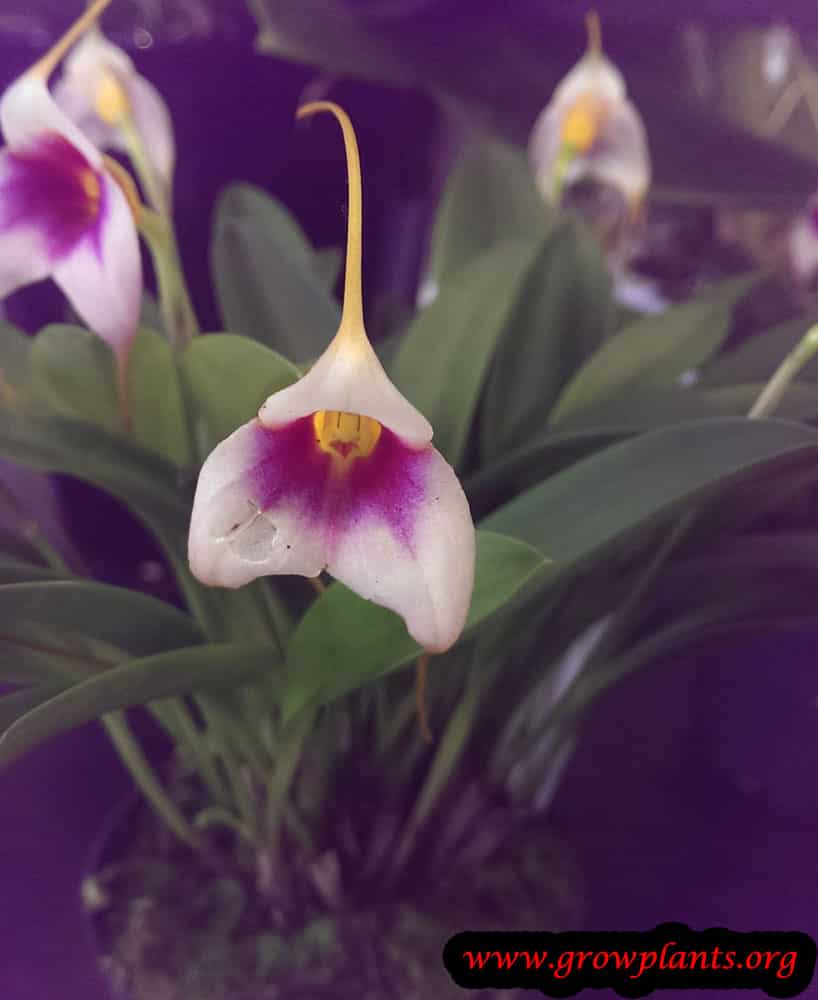
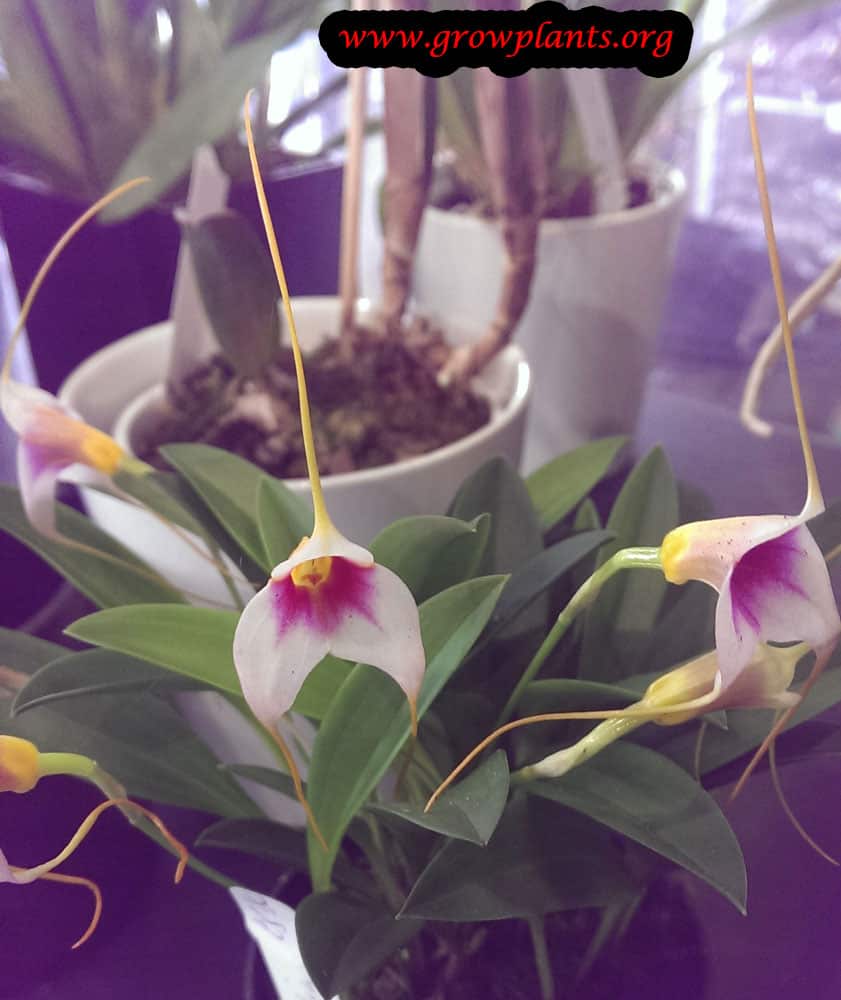
- Flower Appearance: Triangular, three-lobed flowers, often with slender tails at the tips; black, purple, red, blue, pink, white, orange, yellow, brown or green, sometimes patterned
- Edibility: Ornamental — grown for its flowers, not eaten (orchid foliage and flowers are generally non-toxic)
Detailed Blooming Overview
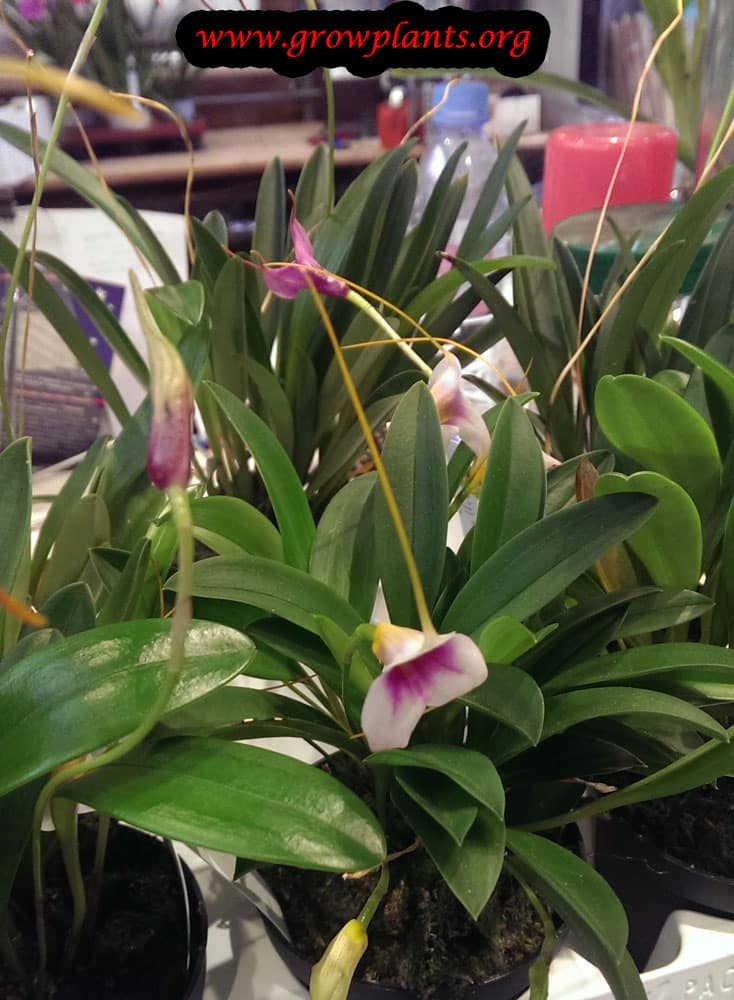
Masdevallia is a cool-growing orchid whose flowers are unlike almost any other. The grower describes a triangular, three-lobed shape, with the upper lobe sometimes smaller than the others and slender spike-like tails at the points. The tiny true petals are all but hidden — it is the fused, colourful sepals that make the show. Flowers can appear at any time of year, held singly on wiry stems just above the tuft of fleshy leaves.
Flower Characteristics
- Triangular, three-lobed flowers, the upper lobe sometimes smaller, often ending in fine tails (grower’s description).
- Colours span black, purple, red, blue, pink, white, orange, yellow, brown and green, sometimes striped, spotted or plain.
- Flowers are usually carried one to a stem, close above the compact, fleshy foliage.
Bloom Care & Thinning
- Triggering bloom: These are cool-loving orchids — steady cool, humid, airy conditions are the key to good flowering.
- After flowering: Remove the spent flower stem; many types rebloom from the same growth over time.
- While in bud: Avoid heat and dryness, which quickly cause buds to shrivel on this genus.
Bloom Health & Protection
- Botrytis petal blight can spot open flowers with small brown or translucent marks in cool, damp, still air — better ventilation and keeping water off the blooms is the first line of defence, with a fungicide only if it spreads.
- Aphids, scale and mealybugs are drawn to soft buds and flower spikes — wiping them off or treating with neem oil or insecticidal soap keeps the flowers clean.
- Bud blast (buds yellowing and dropping before they open) is usually a stress response to sudden changes in temperature, light or humidity, or to dry air — steady conditions while the plant is in spike prevent it.
Pests, Diseases & Troubleshooting
Overview: Masdevallia are cool-growing, moisture-loving orchids with no pseudobulbs, so they are unusually intolerant of heat and drying out — their worst enemies are bacterial and fungal rots that strike in warm, stagnant, wet conditions, alongside sap-suckers such as aphids, scale, spider mites and thrips. Cool temperatures, constant fresh moving air and clean water are the heart of keeping them healthy.
Quick Troubleshooting Overview
| Issue / Pest | Main Symptom | Primary Solution |
|---|---|---|
| Aphids | Clusters on flower buds, spikes and new growth; distortion, honeydew | Rinse off, insecticidal soap or neem; isolate blooming plants |
| Scale & mealybugs | Brown bumps or white fluff on leaves, sheaths and rhizome | Alcohol swab, horticultural oil; repeat |
| Spider mites | Silvery stippling and fine webbing on leaves in warm dry air | Increase humidity/airflow, rinse, insecticidal soap or miticide |
| Thrips | Silvery streaks and speckled, deformed buds and flowers | Blue sticky traps, insecticidal soap or spinosad |
| Bacterial soft rot | Fast-spreading soft, wet, foul-smelling translucent patches on leaves | Cut out to clean tissue, dry, cool airy conditions; copper/sanitation |
| Heat / dry stress | Leaf tips blacken and die back; plant sulks and rots | Keep cool, shaded, humid, evenly moist with fresh air |
Common Pests & Management
- Aphids (Aphis / Myzus spp.):
- Symptoms: Green, black or peach clusters mass on the developing flower buds, thin spikes and soft new leaves, sucking sap so buds distort or blast, and leaving sticky honeydew that fosters sooty mould and can carry virus.
- Prevention & Control: Rinse them off with a gentle spray of water, then treat with insecticidal soap or neem oil, taking care around delicate blooms; repeat until clear. Inspect new plants and buds regularly, as aphids are the classic problem on this genus.
- Scale insects (Diaspididae / Coccidae):
- Symptoms: Small brown, tan or grey bumps cling to the leaves, leaf undersides, sheaths and along the creeping rhizome, with honeydew from soft scale; foliage yellows and weakens under heavy loads.
- Prevention & Control: Wipe off with a cloth or cotton bud dipped in alcohol, then apply a light horticultural oil to smother survivors, repeating every couple of weeks. Good airflow and quarantine of new plants prevent build-up.
- Mealybugs (Pseudococcus / Planococcus spp.):
- Symptoms: White cottony masses hide in leaf axils, under sheaths and among the roots, with sticky honeydew; they debilitate the plant and are easily spread through a collection.
- Prevention & Control: Spot-treat with 70% alcohol on a cotton bud, then spray with insecticidal soap or horticultural oil, covering hidden crevices and repeating weekly. Check the rootball at repotting for root mealybugs.
- Spider mites (Tetranychus / Brevipalpus spp.):
- Symptoms: Warm, dry, still air brings silvery or pale stippling on the leaves and fine webbing; the thin soft leaves of this genus scar and yellow quickly. Their appearance often signals conditions are too warm and dry for the plant.
- Prevention & Control: First correct the environment — cooler, more humid, moving air; rinse the foliage. Treat with insecticidal soap or a labelled miticide, covering leaf undersides, and repeat to break the cycle.
- Thrips (Thysanoptera):
- Symptoms: Silvery streaks, flecking and tiny black faecal specks on leaves, with deformed, discoloured or streaked buds and flowers; thrips also transmit virus.
- Prevention & Control: Hang blue sticky traps to monitor and reduce adults, remove damaged blooms, and spray insecticidal soap or a spinosad product, repeating to catch newly hatched thrips.
Diseases & Fungal Issues
- Bacterial soft rot & brown spot (Erwinia (Pectobacterium) / Pseudomonas / Acidovorax):
- Symptoms: Soft, water-soaked, translucent patches that spread alarmingly fast in warm humid stagnant air, often foul-smelling, collapsing leaves within a day or two. The most dangerous problem for this genus.
- Treatment & Management: Act immediately: cut well back into clean firm tissue with a sterile blade, dust the cut, and move the plant to cooler, drier, brightly ventilated conditions; avoid water sitting in the crown overnight. A copper bactericide and strict sanitation help; prevention lies in cool temperatures and constant fresh air.
- Fungal leaf spot & anthracnose (Colletotrichum / Cercospora / Phyllosticta):
- Symptoms: Brown or black spots and blotches, sometimes ringed or sunken, spreading from leaf tips and margins in humid, poorly ventilated conditions.
- Treatment & Management: Remove affected leaf portions, improve air movement and avoid prolonged leaf wetness; a fungicide such as a copper product or a labelled orchid fungicide can be applied if spread is active.
- Black rot / root & crown rot (Pythium / Phytophthora):
- Symptoms: Blackening, watery rot at the base, crown or roots, especially in soggy, warm, airless conditions; roots turn brown and mushy and the plant collapses.
- Treatment & Management: Keep the medium open and evenly moist but never waterlogged, use fresh media, and repot rotting plants after cutting away dead tissue; a phosphonate or copper drench can be used on valuable plants. Cool, airy, well-drained culture is the real fix.
Growing Difficulties & Abiotic Problems
- Heat and desiccation stress:
- Cause & Symptoms: Blackened, dying leaf tips, sudden leaf drop and general sulking — these pseudobulb-less orchids cannot store water and quickly decline when too warm or dried out.
- Correction Strategy: Grow cool with strong air movement, keep humidity high and the medium evenly moist, and shade from heat; a cooler, damper spot instantly reduces both stress and secondary rot.
- Salt / fertiliser burn:
- Cause & Symptoms: Blackened leaf tips and a whitish crust on the medium and pot from accumulated salts or over-strong feed.
- Correction Strategy: Feed weakly (“weakly, weekly”), water with low-mineral water, and flush the medium regularly with plain water to leach salts.
- Bud blast:
- Cause & Symptoms: Buds yellow and drop before opening due to sudden temperature swings, dry air, or stress.
- Correction Strategy: Keep conditions stable, cool and humid while in spike, avoiding draughts, heat spikes and letting the medium dry out.
What Helps – Products & Tools
Environment is the main tool here — cool temperatures, moving air, high humidity and clean low-mineral water. Supporting products are insecticidal soap and neem or horticultural oil for aphids, scale, mealybugs and mites, a spinosad product and blue sticky traps for thrips, a labelled miticide for spider mite, and a copper bactericide/fungicide plus sterile cutting tools for soft rot and leaf spot.