Plant Profile & Key Characteristics
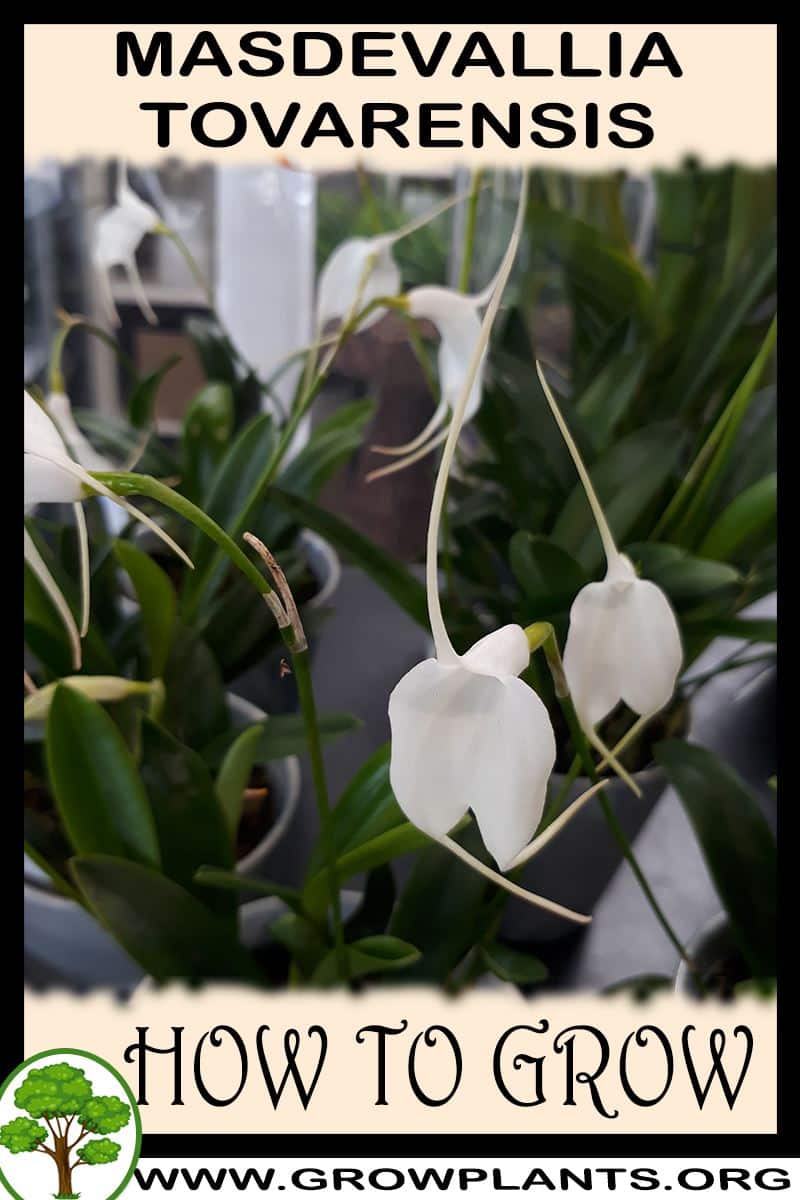
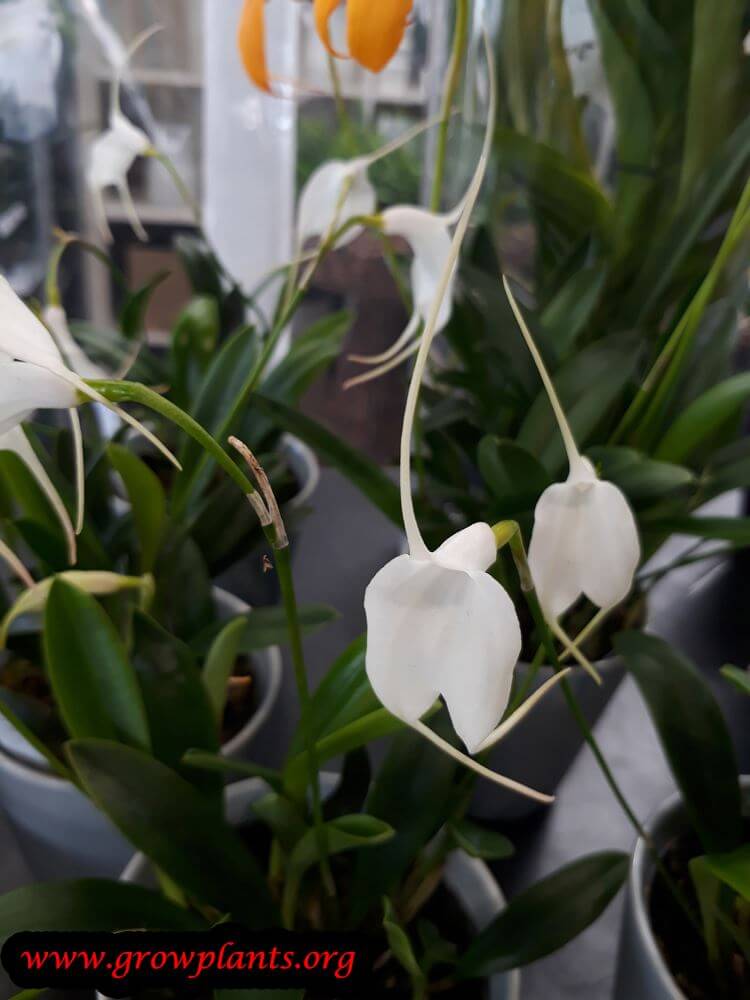
Overview: Masdevallia tovarensis is a cool-growing evergreen epiphytic orchid, 20-50 cm, grown for its crisp white, triangular flowers.
Quick Specifications
| Specification | Attribute |
|---|---|
| Plant Type / Life Cycle | Perennial (evergreen orchid) |
| Foliage Type | Evergreen |
| Mature Size | 20-50 cm (8-20 in) |
| Growth Rate | Moderate |
| Root System | Epiphytic, rhizomatous (fleshy roots) |
| Toxicity | Non-toxic |
| Hardiness | USDA 10b-11a (cool-growing) |
Growth Form & Structure
- Height & Spread: 20-50 cm (8-20 in); grown in open, well-holed pots of sphagnum and bark, indoors or in a cool greenhouse.
- Growth Habit & Form: Clumping epiphytic orchid with fleshy linear leaves on a short rhizome (no pseudobulbs).
- Lifespan & Maturity: Long-lived perennial with moderate growth.
Anatomy & Physical Features
- Leaves & Foliage: Fleshy, linear green leaves on fleshy stems.
- Flower Characteristics: White, triangular three-lobed flowers, the upper petal smaller and sometimes tail-tipped (see Bloom guide).
Primary Uses & Landscape Value
- Functional & Ornamental Roles: Ornamental flowering orchid for cool, humid, shaded conditions; specialist houseplant or greenhouse subject.
Care Guide: Planting, Soil & Watering
Overview: Masdevallia tovarensis is a cool-growing epiphytic orchid (zone 10b–11a) that needs shade with bright light, high humidity (65%+) and cool temperatures (about 6–8°C at night, 20°C by day, no hot summers). It is grown not in ordinary soil but in an open, airy sphagnum-moss mix, kept constantly moist.
Quick Care Requirements
| Requirement | Ideal Condition |
|---|---|
| Planting Season | Year-round |
| Growth Rate | Moderate |
| Soil Type | Sphagnum moss with a little bark (not garden soil) |
| Water Need | High — keep the mix constantly moist with good airflow |
Planting & Establishment
- Best Planting Season: Can be potted year-round in the right cool, humid conditions.
- How to Plant:
- Hole Preparation: Use an open pot with large holes so air and roots move freely and blooms can emerge.
- Soil Amendments: Pot into sphagnum moss with a little bark rather than soil.
- Planting Depth: Nestle the roots into the moss so the base of the growth sits at the surface, not buried.
- Growth Speed & Expectations: Moderate — forms a compact clump about 20–50 cm (8–20 in) tall.
Soil, Watering & Drainage Care
- Soil Mix & Drainage Needs: Sphagnum moss with a little bark in an open, well-ventilated pot with large holes keeps the roots moist yet airy and prevents rot.
- Watering Schedule & Technique:
- Young / Newly Planted: Keep the moss evenly moist and humidity high while roots establish.
- Established: Water generously and often so the mix never dries out, using soft water and good airflow to keep it from staying stagnant.
- Seasonal Adjustments: Maintain moist, humid, cool conditions year-round; guard against hot, dry air.
Climate, Light & Hardiness
Masdevallia tovarensis is a cool-growing cloud-forest epiphytic orchid that needs steady, moderate temperatures with little day-to-night or seasonal swing, high humidity, and shaded, filtered light. It has very limited cold hardiness and no tolerance for hot summers, so in almost all climates it is grown under protection rather than in the open garden.
Quick Climate Specifications
| Climate Zones | Subtropical (cool, cloud-forest-type conditions); grown under protection in most climates |
|---|---|
| USDA Hardiness Zones | Approximately 10b–11a (site data) |
| Optimal Temp Range | Approximately 6–8°C (43–46°F) at night and around 20°C (68°F) by day, with no hot summer period (site data) |
| Cold Damage Begins | Below approximately 5–6°C (41–43°F) sustained |
| Frost Tolerance | None |
| Light Conditions | Full Shade (bright, filtered light) |
Sunlight & Light Exposure
Optimal Light Setup
Bright, filtered light similar to a forest canopy suits this orchid best; direct sun is not part of its natural conditions.
Shade & Heat Management
Shade serves double duty here - it supplies the right light level and helps keep the plant from overheating, since this species specifically dislikes hot conditions.
Best Exposure / Orientation
A bright north- or east-facing window, or a shaded bench in a cool greenhouse, kept away from hot afternoon sun.
Temperature Extremes & Hardiness
USDA Hardiness & Regional Limits
Site data places this species in zones 10b–11a, meaning true outdoor, year-round culture is realistic only in cool, frost-free highland or subtropical climates; nearly everywhere else it needs a climate-controlled cool greenhouse or indoor spot.
Cold Damage & Winter Protection
Keep nights no colder than roughly 6–8°C (43–46°F) per site data, and protect fully from any frost.
Frost Sensitivity
Frost sensitive with no meaningful frost tolerance.
Extreme Heat Tolerance
Poor; site data explicitly notes this species needs “not hot summer” conditions, and sustained heat above its comfortable daytime range can stress or weaken it more than mild cold does.
Wind, Humidity & Microclimate
Humidity Preferences
High - site data specifies 65%+ humidity as essential for healthy growth.
Dry-Air Tolerance
Poor; dry indoor air from heating or air conditioning will stress the plant and should be offset with misting, humidity trays, or greenhouse culture.
Rainfall & Seasonal Moisture
Adapted to a consistently moist cloud-forest climate with no pronounced dry season; the open, airy sphagnum-and-bark growing mix called for in site data reflects a need for constant moisture alongside good airflow around the roots.
Microclimate Recommendations
A cool, humid greenhouse or a humidity-controlled indoor space with good air movement best mimics native cloud-forest conditions; keep well away from heat sources and warm rooms.
Growing in Pots, Balconies & Indoors
This is a cool-growing miniature orchid that the grower confirms suits indoor and pot culture. Grown in a pot on a bright, sun-free windowsill with steady moisture and humidity, it makes a rewarding houseplant; it dislikes hot, dry air and strong direct sun.
Quick Details
- Container Size: A small orchid pot, only a little larger than the root mass – orchids resent over-potting
- Indoor Suitability: A good houseplant for a bright, cool, humid spot out of direct sun
- Best Spot: Bright shade / diffused light – never hot direct sun, which the grower notes burns the leaves
- Soil & Drainage: An open orchid medium – fine to medium bark, or bark with perlite/sphagnum, in a well-drained pot – a ready-made orchid potting mix and bark blend covers this
- Watering in Pots: Keep constantly, evenly moist (the grower calls for a big amount of water); never let it dry out, but never let it sit in stagnant water
Indoors & On the Windowsill
- A real houseplant: The grower confirms indoor growing. It thrives on a bright, cool, humid windowsill in an open bark mix, watered often.
- Windowsill growing: Choose a bright but sun-free sill; add humidity with a pebble tray or grouping, and keep it away from hot, dry heater air.
- Cool grower: This orchid prefers cool, buoyant conditions – avoid overheating in summer, which is the main cause of failure indoors.
On a Balcony or Patio
- Light & shelter: Outdoors it wants a shaded, sheltered, humid spot with good air movement – never full sun. Small pots dry quickly, so check moisture daily in warm weather. A drip irrigation kit with a timer can take over that watering check automatically.
- Practicalities: Keep it off hot, reflective surfaces and out of drying wind; bring it under cover before cold snaps.
Choosing the Pot, Soil & Long-Term Care
- Pot & drainage: Use a well-drained orchid pot with plenty of holes and no standing-water saucer; stale, waterlogged medium rots the roots.
- Potting mix: An open, airy orchid medium of bark (with perlite or a little sphagnum for moisture); it holds water yet drains freely.
- Feeding: Feed a dilute orchid fertiliser regularly through growth – weak and frequent, since bark holds few nutrients and pots leach fast.
- Repotting: Repot into fresh medium every year or two as the bark breaks down, before it turns soggy and airless.
Growing this plant in a greenhouse
A greenhouse can give masdevallia tovarensis frost protection, cold protection, humidity control and extra warmth. Under warm enough conditions it can keep growing well beyond the normal outdoor season and potentially be maintained year-round - though continuous cropping is not guaranteed and depends on temperature and light.
Greenhouse at a glance
| Greenhouse suitability | Excellent - a major practical advantage |
|---|---|
| Main benefits | frost protection, cold protection, humidity control, extra warmth |
| Outdoor protection advisable below | about 6°C |
| Maintain greenhouse minimum | around 6°C for active growth |
| Suitable types | heated greenhouse, glass greenhouse, mini greenhouse |
| Heating | Heating is recommended in cold climates for continuous growth. |
Related greenhouse guides
- Greenhouses: How to Choose the Right Greenhouse
- Best Greenhouse Heaters
- Greenhouse Climate Control: Temperature, Ventilation and Humidity
- Best Mini Greenhouses
Fertilizing & Feeding
A cool-growing epiphytic orchid potted in an open, fast-draining mix; it needs only a light, dilute feed applied often rather than infrequent strong doses, since its fine roots are easily damaged by concentrated fertilizer salts.
Quick Fertilizing Specs
| Feeding Level | Light |
|---|---|
| Main Nutrient Priority | Balanced, fully soluble orchid feed rather than any single-nutrient emphasis |
| Best Feeding Period | Through the warmer months when new growths and flower spikes are actively forming; this species can flower nearly year-round |
| Organic Options | Not typically used in bark or moss mixes; a soluble mineral orchid fertilizer is the standard approach |
| Soil pH | Not grown in soil; the sphagnum moss and bark mix is naturally on the acidic side |
| Reduce/Stop Feeding | Cut back whenever night temperatures turn consistently cool and new growth visibly slows |
Feeding by Growth Stage
Establishment After Repotting or Dividing
Let new roots establish into the fresh sphagnum-and-bark mix before asking the plant to take up fertilizer
| Nutrient direction | None – withhold fertilizer while new roots form |
|---|---|
| Timing | Immediately after repotting or dividing, until clear new root growth is visible |
| Frequency | No feeding at this stage |
| Fertilizer types | No feeding at this stage; water only until new roots are established |
| Precautions | Do not fertilize freshly divided or repotted plants; damaged roots are especially prone to fertilizer burn |
Active Growth and Near Year-Round Bloom
Support continuous new leaf, root, and flower spike production typical of this frequently blooming species
| Nutrient direction | A dilute, balanced orchid-formulated feed, applied lightly and often rather than as an occasional strong dose |
|---|---|
| Timing | Whenever the plant is putting out visible new growth and night temperatures stay on the mild side |
| Frequency | Light feedings worked into the regular watering routine through the active growing period |
| Fertilizer types | A fully soluble, balanced orchid fertilizer diluted well below full label strength for regular use |
| Precautions | Never apply fertilizer to a dry mix; water first, then feed, to avoid concentrated salts contacting the roots |
Cool-Temperature Rest
Match feeding to this cool-growing species’ need for cooler night temperatures, when growth naturally slows
| Nutrient direction | None – withhold fertilizer while the plant is resting in cooler conditions |
|---|---|
| Timing | During any stretch of consistently cool nights when growth visibly pauses |
| Frequency | No feeding at this stage |
| Fertilizer types | No feeding at this stage; plain water only until active growth resumes |
| Precautions | Do not fertilize during a cool rest period; resume light feeding only once new growth is clearly active again |
Nutrient Deficiency Signs & Corrections
Thin, pale-green leaves, weak new growths, and reduced flowering compared with a normally vigorous plant
| Possible causes | Feeding too infrequently or too dilute for the plant’s active growth rate, An old, broken-down bark or moss mix no longer holding any nutrients, Root loss from rot limiting uptake, Insufficient light reducing the plant’s ability to use available nutrients |
|---|---|
| Appears first on | Newest leaves and growths |
| What to check | Age and condition of the potting mix, Root health when the plant is unpotted, Recent feeding frequency and dilution |
| Possible correction | Resume light, regular feeding with a dilute balanced orchid fertilizer once roots are confirmed healthy, and repot if the mix has broken down |
Blackened root tips and brown, dry patches at leaf tips or margins
| Possible causes | Fertilizer applied at too strong a concentration, Mineral buildup from hard tap water without periodic flushing, Fertilizing a dry mix instead of watering first, General root damage making roots more sensitive to salts |
|---|---|
| Appears first on | Root tips first, then leaf tips and margins |
| What to check | Fertilizer dilution rate against label guidance, Water source and mineral hardness, How often the mix is flushed with plain water |
| Possible correction | Flush the mix thoroughly with plain water, reduce fertilizer concentration, and always water before feeding |
General decline, poor new growth, and reduced flowering despite regular feeding, with roots that look blackened or mushy when checked
| Possible causes | Overwatering or a mix that stays too wet for this species’ need for airflow, A broken-down mix holding excess moisture around the roots, Fungal or bacterial rot pathogens, A pot without enough drainage holes for this open-growing epiphyte |
|---|---|
| Appears first on | Roots first, then reflected in overall vigor and new growth |
| What to check | Root color and firmness when unpotted, Drainage of the current pot and mix, Watering frequency relative to how quickly the mix dries |
| Possible correction | Repot into fresh, open mix in a well-draining pot, trim away rotted roots, and hold off feeding until new roots establish |
Pruning, Training & Seasonal Maintenance
Masdevallia tovarensis is a cool-growing epiphytic orchid with no woody stem or pseudobulbs, so ‘pruning’ is limited to grooming: removing dead leaves and, once fully spent and dried, the old flower stem. It tolerates this light grooming at any time of year, and the goal is simply plant health and tidiness – cutting has no bearing on next season’s blooms, since each new leaf-fan produces its own flower from its own base rather than from older growth.
Quick Pruning & Maintenance Specs
| Pruning Tolerance | Low (grooming only) |
| Primary Pruning Window | All year, as needed |
| Typical Frequency | Occasional, whenever a leaf or flower stem fully dies back |
| Main Objective | Remove dead leaves and spent, dried flower stems |
| Young Plant Priority | Leave leaves untouched to build up the fan/rhizome |
| Mature Plant Priority | Remove dead leaves and old flower stems as they fully dry |
| Best Tool Type | Precision snips |
| Avoid Heavy Pruning During | N/A – there is no heavy pruning stage for this orchid |
Pruning by Plant Age & Size
Newly Established
Avoid removing any leaves; let a newly potted division settle in and build its leaf fan and root system undisturbed.
Young / Formative
No structural training applies to this rhizomatous epiphyte; simply ensure the open, well-drained pot noted in its care requirements allows new growths room to develop.
Mature / Established
Remove individual leaves only once they are fully yellow or brown and clearly dead; trim the flower stem only after the bloom has completely faded and the stem itself has dried, not while it is still green.
Special Growth to Remove
- Fully dead, brown or yellowed leaves
- Spent flower stems, once completely dried – removing a still-green stem too early can waste the plant’s stored energy
Container & Small-Space Pruning
Grown in an open, well-draining pot as noted in its care requirements; grooming (dead leaf/stem removal) is the same whether potted or mounted, but check more often in a pot for any rot at the base given this species’ preference for high humidity and constant moisture.
Tools
- Precision snips for all leaf and flower-stem removal
Tool Hygiene & Disease Risk
High-risk: orchids as a group are well known to transmit viruses (such as Cymbidium mosaic and Odontoglossum ringspot virus) via cutting tools moved between plants – flame-sterilize or disinfect snips before and after each cut, especially when working across multiple orchids.
Cut Placement & Technique
Remove dead leaves at their base where they meet the stem/rhizome, and cut spent flower stems down to their point of origin once fully dry; avoid tearing tissue away, which can injure the rhizome.
Post-Pruning Care
Maintain the species’ required high humidity (65%+) and consistent moisture after grooming; watch the cut point for any signs of rot given how moisture-loving this orchid is, and keep air moving around the plant.
Common Pruning Mistakes
- Cutting a flower stem while it is still green, before it has finished dying back naturally
- Removing leaves that are only partly yellowing rather than fully dead
- Reusing an unsterilized blade between orchids, risking virus spread
When NOT to Prune
Avoid cutting a flower stem or leaf that is still green and functional; there is no season to avoid grooming, since only fully dead material is ever removed.
Recommended Tools (by task)
- precision_snips – small, clean cuts for dead leaf and spent flower-stem removal on this fine-textured epiphyte
- blade_disinfectant – sterilizing between cuts/plants given orchids’ well-documented virus transmission risk via tools
Propagation Guide
Masdevallia tovarensis is propagated almost entirely by dividing the clump, since the site notes seed germination is genuinely difficult to achieve at home (orchid seed generally needs a symbiotic fungus or sterile flask/lab sowing, not open-air sowing). Division is a moderate-difficulty task best timed to active growth, while seed raising should be considered a specialist, not a home, technique.
Quick Propagation Specs
| Best Propagation Method | Clump division |
| Alternative Methods | None practical for home growers |
| Propagation Difficulty | Moderate (division); Specialist (seed) |
| Seed True-to-Type | Yes for species seed, but germination requires a symbiotic fungus or sterile in-vitro (flask) sowing – not practical outside a lab |
| Vegetative True-to-Type | Yes |
| Best Propagation Season | All year (site notes an all-year planting season), though division is generally most successful when timed to a flush of new root growth |
Growing from Seed
Not a practical home method for this orchid – the site notes it is really hard to start from seed. Orchid seed of this kind typically requires specialised sterile (flask) sowing with a compatible fungal symbiont, which is outside normal home propagation.
Division, Offsets, Pups & Suckers
This orchid forms clustered fan-like growths rather than true pseudobulbs, so propagation is by dividing the clump into sections. Each division should keep several growths together along with their roots intact – single, isolated growths establish far less reliably than a small cluster. Handle roots gently when separating sections, and reset the divisions into the same kind of open, airy mix the plant is already grown in (sphagnum moss with a little bark, in a pot with large drainage holes), since good aeration around the roots is important for this species. Keep newly divided plants in the cool, humid conditions this orchid needs while they re-establish.
Bloom & Flower Guide
Quick Details
- Bloom Season: Can flower at any time of year, with a main flush in the cooler months
- Flower Appearance: Crisp white flowers of triangular, three-lobed form, the segments sometimes drawn out into fine points
- Edibility: Grown as an ornamental orchid; the flowers are not eaten
Detailed Blooming Overview
This cool-growing orchid produces pure white flowers with an elegant, geometric shape – broadly triangular with three lobes, sometimes tipped with slender points. A lovely quirk of this species is that a single flower spike often carries several flowers in succession and then blooms again in the following seasons, so the old spike should be left in place rather than cut off after flowering.
Flower Characteristics
- White flowers with a triangular, three-lobed shape.
- The upper segment can be smaller, and the tips are sometimes extended into fine points.
Bloom Care & Thinning
- Managing the bloom: Do not remove the flower spike after the blooms fade – it can flower again the next season.
- Conditions: Keep it cool, shaded and evenly moist to encourage repeat flowering.
Pests, Diseases & Troubleshooting
Overview: Masdevallia are cool-growing, moisture-loving orchids with no pseudobulbs, so they are unusually intolerant of heat and drying out — their worst enemies are bacterial and fungal rots that strike in warm, stagnant, wet conditions, alongside sap-suckers such as aphids, scale, spider mites and thrips. Cool temperatures, constant fresh moving air and clean water are the heart of keeping them healthy.
Quick Troubleshooting Overview
| Issue / Pest | Main Symptom | Primary Solution |
|---|---|---|
| Aphids | Clusters on flower buds, spikes and new growth; distortion, honeydew | Rinse off, insecticidal soap or neem; isolate blooming plants |
| Scale & mealybugs | Brown bumps or white fluff on leaves, sheaths and rhizome | Alcohol swab, horticultural oil; repeat |
| Spider mites | Silvery stippling and fine webbing on leaves in warm dry air | Increase humidity/airflow, rinse, insecticidal soap or miticide |
| Thrips | Silvery streaks and speckled, deformed buds and flowers | Blue sticky traps, insecticidal soap or spinosad |
| Bacterial soft rot | Fast-spreading soft, wet, foul-smelling translucent patches on leaves | Cut out to clean tissue, dry, cool airy conditions; copper/sanitation |
| Heat / dry stress | Leaf tips blacken and die back; plant sulks and rots | Keep cool, shaded, humid, evenly moist with fresh air |
Common Pests & Management
- Aphids (Aphis / Myzus spp.):
- Symptoms: Green, black or peach clusters mass on the developing flower buds, thin spikes and soft new leaves, sucking sap so buds distort or blast, and leaving sticky honeydew that fosters sooty mould and can carry virus.
- Prevention & Control: Rinse them off with a gentle spray of water, then treat with insecticidal soap or neem oil, taking care around delicate blooms; repeat until clear. Inspect new plants and buds regularly, as aphids are the classic problem on this genus.
- Scale insects (Diaspididae / Coccidae):
- Symptoms: Small brown, tan or grey bumps cling to the leaves, leaf undersides, sheaths and along the creeping rhizome, with honeydew from soft scale; foliage yellows and weakens under heavy loads.
- Prevention & Control: Wipe off with a cloth or cotton bud dipped in alcohol, then apply a light horticultural oil to smother survivors, repeating every couple of weeks. Good airflow and quarantine of new plants prevent build-up.
- Mealybugs (Pseudococcus / Planococcus spp.):
- Symptoms: White cottony masses hide in leaf axils, under sheaths and among the roots, with sticky honeydew; they debilitate the plant and are easily spread through a collection.
- Prevention & Control: Spot-treat with 70% alcohol on a cotton bud, then spray with insecticidal soap or horticultural oil, covering hidden crevices and repeating weekly. Check the rootball at repotting for root mealybugs.
- Spider mites (Tetranychus / Brevipalpus spp.):
- Symptoms: Warm, dry, still air brings silvery or pale stippling on the leaves and fine webbing; the thin soft leaves of this genus scar and yellow quickly. Their appearance often signals conditions are too warm and dry for the plant.
- Prevention & Control: First correct the environment — cooler, more humid, moving air; rinse the foliage. Treat with insecticidal soap or a labelled miticide, covering leaf undersides, and repeat to break the cycle.
- Thrips (Thysanoptera):
- Symptoms: Silvery streaks, flecking and tiny black faecal specks on leaves, with deformed, discoloured or streaked buds and flowers; thrips also transmit virus.
- Prevention & Control: Hang blue sticky traps to monitor and reduce adults, remove damaged blooms, and spray insecticidal soap or a spinosad product, repeating to catch newly hatched thrips.
Diseases & Fungal Issues
- Bacterial soft rot & brown spot (Erwinia (Pectobacterium) / Pseudomonas / Acidovorax):
- Symptoms: Soft, water-soaked, translucent patches that spread alarmingly fast in warm humid stagnant air, often foul-smelling, collapsing leaves within a day or two. The most dangerous problem for this genus.
- Treatment & Management: Act immediately: cut well back into clean firm tissue with a sterile blade, dust the cut, and move the plant to cooler, drier, brightly ventilated conditions; avoid water sitting in the crown overnight. A copper bactericide and strict sanitation help; prevention lies in cool temperatures and constant fresh air.
- Fungal leaf spot & anthracnose (Colletotrichum / Cercospora / Phyllosticta):
- Symptoms: Brown or black spots and blotches, sometimes ringed or sunken, spreading from leaf tips and margins in humid, poorly ventilated conditions.
- Treatment & Management: Remove affected leaf portions, improve air movement and avoid prolonged leaf wetness; a fungicide such as a copper product or a labelled orchid fungicide can be applied if spread is active.
- Black rot / root & crown rot (Pythium / Phytophthora):
- Symptoms: Blackening, watery rot at the base, crown or roots, especially in soggy, warm, airless conditions; roots turn brown and mushy and the plant collapses.
- Treatment & Management: Keep the medium open and evenly moist but never waterlogged, use fresh media, and repot rotting plants after cutting away dead tissue; a phosphonate or copper drench can be used on valuable plants. Cool, airy, well-drained culture is the real fix.
Growing Difficulties & Abiotic Problems
- Heat and desiccation stress:
- Cause & Symptoms: Blackened, dying leaf tips, sudden leaf drop and general sulking — these pseudobulb-less orchids cannot store water and quickly decline when too warm or dried out.
- Correction Strategy: Grow cool with strong air movement, keep humidity high and the medium evenly moist, and shade from heat; a cooler, damper spot instantly reduces both stress and secondary rot.
- Salt / fertiliser burn:
- Cause & Symptoms: Blackened leaf tips and a whitish crust on the medium and pot from accumulated salts or over-strong feed.
- Correction Strategy: Feed weakly (“weakly, weekly”), water with low-mineral water, and flush the medium regularly with plain water to leach salts.
- Bud blast:
- Cause & Symptoms: Buds yellow and drop before opening due to sudden temperature swings, dry air, or stress.
- Correction Strategy: Keep conditions stable, cool and humid while in spike, avoiding draughts, heat spikes and letting the medium dry out.
What Helps – Products & Tools
Environment is the main tool here — cool temperatures, moving air, high humidity and clean low-mineral water. Supporting products are insecticidal soap and neem or horticultural oil for aphids, scale, mealybugs and mites, a spinosad product and blue sticky traps for thrips, a labelled miticide for spider mite, and a copper bactericide/fungicide plus sterile cutting tools for soft rot and leaf spot.