


Plant Profile & Key Characteristics
Overview: A tropical evergreen orchid of the Vanda group, forming fleshy-leaved stems 30-70 cm (12-28 in) tall and prized for large, brilliantly coloured, often multicoloured flowers. It is grown as an ornamental and cut-flower orchid rather than a soil plant.
Quick Specifications
| Specification | Attribute |
|---|---|
| Plant Type / Life Cycle | Evergreen perennial orchid (epiphytic) |
| Foliage Type | Evergreen |
| Mature Size | 30-70 cm (12-28 in) tall |
| Growth Rate | Moderate to slow |
| Root System | Thick aerial roots typical of epiphytic orchids; grown mounted or in open bark rather than ordinary soil |
| Hardiness | USDA zones 11 and warmer |
Growth Form & Structure
- Height and Spread: Upright fleshy stems 30-70 cm (12-28 in) tall; not grown in the ground but in slatted baskets or open containers that expose the roots to air.
- Growth Habit and Form: Monopodial epiphytic orchid climbing on a single stem, clinging by aerial roots and needing constant humidity.
- Lifespan and Maturity: A long-lived evergreen orchid of moderate-to-slow growth that flowers repeatedly once established.
Anatomy & Physical Features
- Leaves and Foliage: Green, fleshy, cylindrical (terete) leaves arranged along the stem.
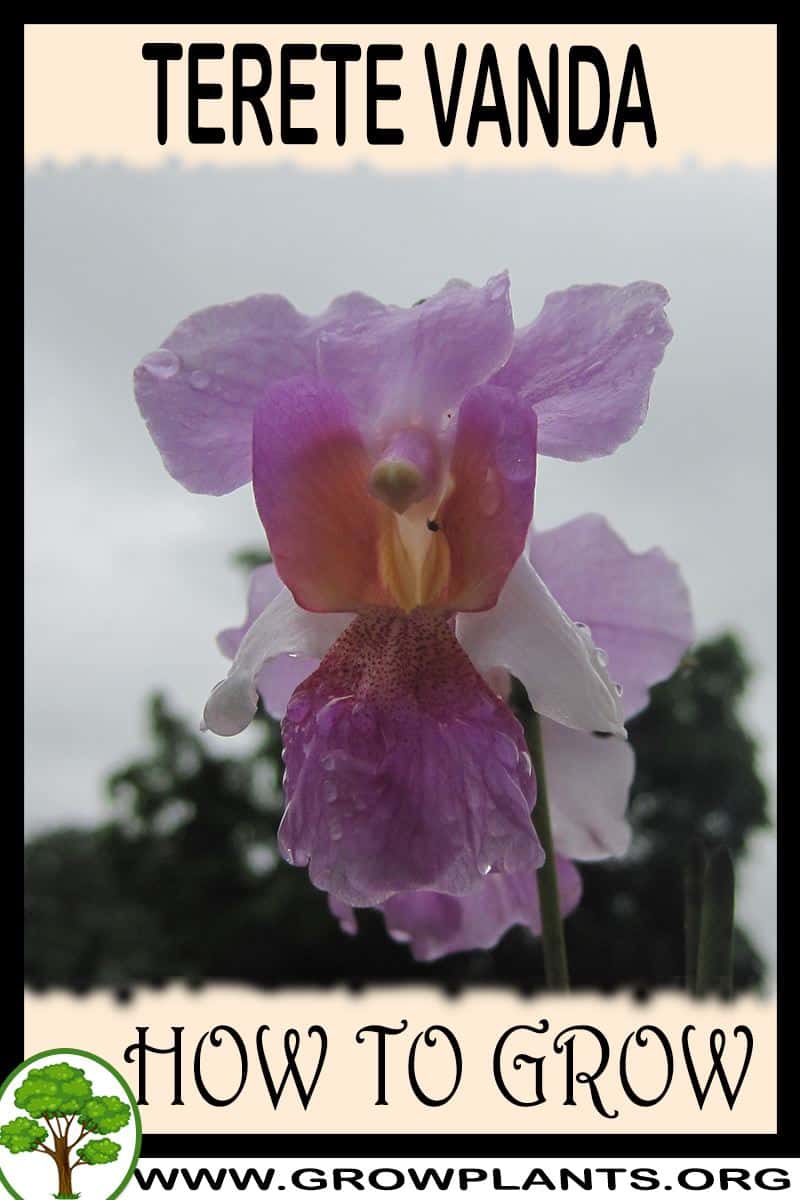
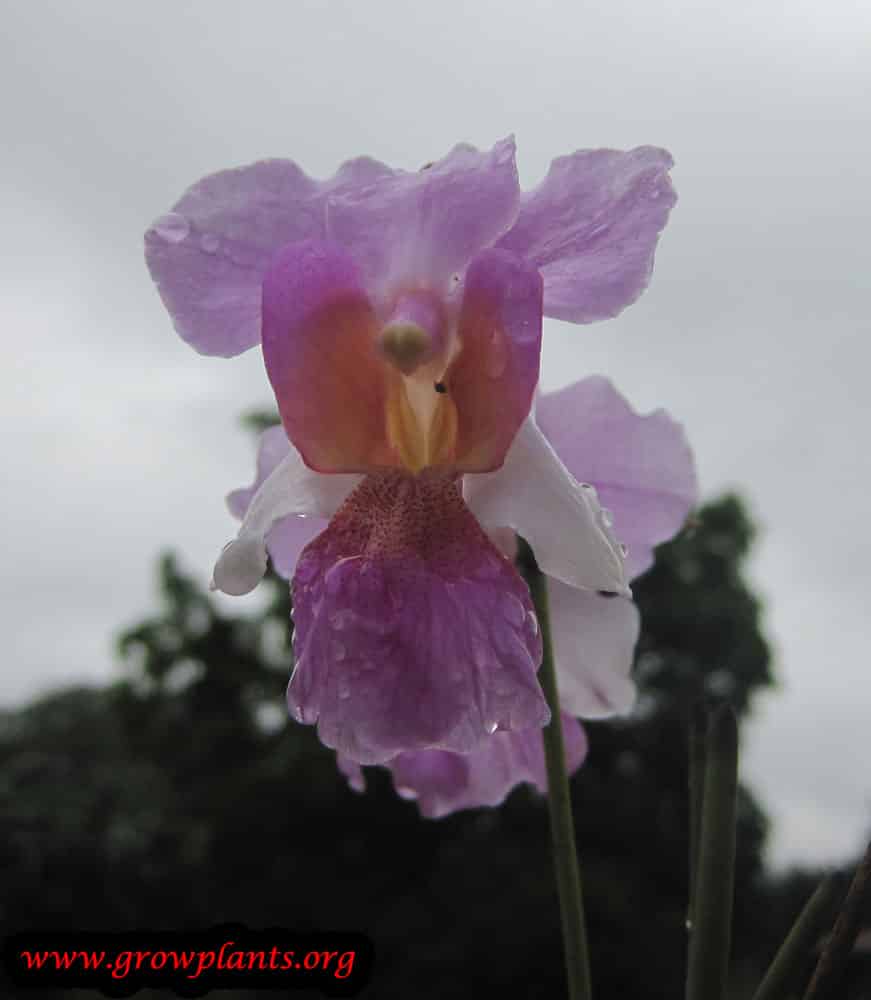
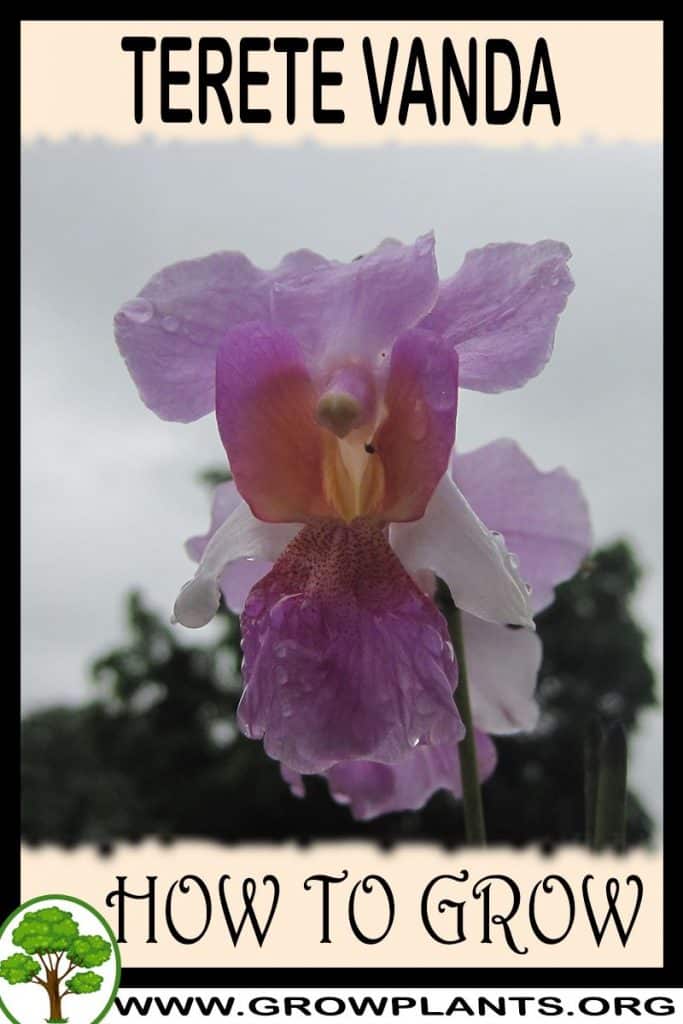
- Flower Characteristics: Large, showy flowers in purple, orange, red, pink or yellow, often multicoloured with stripes or spots and five broad petals.
Primary Uses & Landscape Value
- Functional and Ornamental Roles: Ornamental flowering orchid and long-lasting cut flower for tropical and subtropical collections; typically grown in baskets, on mounts or under glass.
Care Guide: Planting, Soil & Watering
Overview: Terete Vanda is an epiphytic tropical orchid (hardiness zone 11 and up) that is grown in open bark or cork chips rather than soil, in warm, very humid conditions of around 80% humidity. Its roots must stay consistently moist yet airy, so it needs frequent watering with clean water and free-draining, open media.
Quick Care Requirements
| Requirement | Ideal Condition |
|---|---|
| Planting Season | Year-round in warm, humid conditions |
| Growth Rate | Slow to moderate |
| Soil Type | No garden soil — coarse bark or cork chips in an open, transparent pot |
| Water Need | High — keep the roots consistently moist with clean, room-temperature water |
Planting & Establishment
- Best Planting Season: It can be started year-round in warm, humid, frost-free conditions; keep it above about 11°C (52°F).
- How to Plant:
- Soil Amendments: Pot into coarse bark, cork or bark chips rather than soil, using a transparent pot that lets light reach the roots; adding pieces of Styrofoam helps keep air around them.
- Planting Depth: Seat the plant so the crown sits above the medium and the roots anchor in the bark; when repotting, trim away any dead roots and refresh the bark before it breaks down and turns acidic.
- Growth Speed & Expectations: Grows slowly to moderately; steady warmth and humidity keep it healthy and blooming for much of the year.
Soil, Watering & Drainage Care
- Soil Mix & Drainage Needs: Use an open, fast-draining bark or cork medium in a pot with plenty of airflow — ordinary potting soil suffocates and rots the roots — and refresh the medium before it decomposes.
- Watering Schedule & Technique:
- Young / Newly Planted: Keep the roots and medium consistently moist, watering frequently with clean, room-temperature water (rainwater is ideal).
- Established: Water often enough that the roots never dry out, maintaining high humidity around 80%; always use clean water and let excess drain away freely.
- Seasonal Adjustments: Ease off slightly in cooler weather but never let the plant dry out, and protect it from cold, keeping it above about 11°C (52°F).
Climate, Light & Hardiness
Terete Vanda is a warmth-loving, full-sun orchid suited to tropical, subtropical, and Mediterranean climates, and it needs consistently high humidity to thrive. Unlike some Vanda types it is not suited to growing indoors, and it has essentially no frost tolerance.
Quick Climate Specifications
| Factor | Detail |
|---|---|
| Climate Zones | Tropical, subtropical, or Mediterranean |
| USDA Hardiness Zones | 11+ |
| Optimal Temp Range | Around 15°C (60°F) or warmer by day |
| Approx. Survival Minimum | Around 11°C (52°F) briefly – site notes up to 35°C (95°F) is also survivable but neither extreme is recommended for regular growing conditions |
| Frost Tolerance | None |
| Light Conditions | Full sun |
| Wind Tolerance | Low |
Sunlight & Light Exposure
Optimal Light Setup
Full sun is preferred for this cylindrical-leaved (terete) type, more so than for many broader-leaved Vanda cultivars.
Direct Sun Requirement
Strong, direct light through most of the day supports healthy growth and flowering; too little light results in weak, leggy stems.
Shade & Heat Management
Because it is grown in full sun, generous watering and high humidity are needed to offset heat stress, particularly in peak summer.
Best Exposure/Orientation
A fully open, sunny outdoor position in warm climates suits it best; the site notes it is not recommended as an indoor houseplant.
Temperature Extremes & Hardiness
USDA Hardiness & Regional Limits
Site data places Terete Vanda in hardiness zone 11 and warmer, so a consistently warm, essentially frost-free climate is needed for outdoor growth year-round.
Cold Damage & Winter Protection
Growth and flowering suffer well before the lower survival threshold is reached; protect the plant once temperatures fall much below the roughly 15°C (60°F) daytime baseline.
Frost Sensitivity
Frost sensitive; the site notes a brief survival minimum around 11°C (52°F), a stress threshold rather than a comfortable growing temperature, and true frost should be avoided entirely.
Extreme Heat Tolerance
The site notes it can survive up to around 35°C (95°F), but this is described as not recommended for sustained conditions; ample water and humidity are essential if heat runs this high.
Wind, Humidity & Microclimate
Humidity Preferences
Very high humidity is important, with the site recommending around 80%.
Dry-Air Tolerance
Low; combined with full-sun exposure, dry air quickly stresses the exposed root system typical of this type.
Wind Tolerance
Low to moderate; gentle air movement is beneficial, but strong or persistently drying wind is stressful, especially given the plant's need for a large amount of water.
Rainfall & Seasonal Moisture
Adapted to a humid, regularly moist environment rather than a long dry season, and the site notes a big water requirement overall.
Microclimate Recommendations
A warm, sunny, very humid spot with generous, consistent watering suits Terete Vanda best; a bright greenhouse or open, humid outdoor position outside its native tropical range works well.
Growing in Pots, Balconies & Indoors
Terete Vanda is a pencil-leaved, sun-loving orchid. The grower says it is not suited to growing indoors – it needs full sun that windows rarely provide – but it grows well in a container or basket outdoors in a warm, very sunny spot.
Quick Details
- Container Size: 30-70 cm (12-28 in)
- Indoor Suitability: Not an indoor plant – it demands full sun
- Best Spot: Full sun outdoors
- Soil & Drainage: Coarse orchid medium or a slatted basket; roots like air and fast drainage
- Watering in Pots: Big amount of water and high humidity; the mix must still drain freely
Indoors & On the Windowsill
- Not a houseplant: The grower is clear it will not do well indoors – terete Vandas need the strong full sun that even bright windows cannot match.
- Windowsill: Too dim indoors; grow it outside in full sun instead.
- Overwintering: Tender – in cold climates keep it in a bright, warm, frost-free greenhouse over winter.
On a Balcony or Patio
- Light & water: Give it the sunniest, most open position. It is thirsty and loves humidity, so water often; baskets and warm walls dry fast.
- Bring it in: Protect it from cold nights.
Choosing the Pot, Soil & Long-Term Care
- Basket or mount: Grow it in a slatted basket or coarse, chunky orchid medium so the roots get maximum air; never let it stand in water.
- Feeding: Feed little and often with a dilute orchid fertiliser through the growing season.
- Refresh: Renew the medium about every two years as it breaks down.
Fertilizing & Feeding
The most vigorous, full-sun member of this group: its heavy water needs and lack of a buffering growing medium call for frequent but well-diluted feeding through active growth, scaled back in its slower cooler period.
Quick Fertilizing Specs
| Feeding Level | Moderate feeder, fed often given its heavy water use and bare-root style of growing |
|---|---|
| Main Nutrient Priority | Balanced feeding through active growth, with adequate potassium supporting bloom |
| Best Feeding Period | Through most of the year while active growth and flowering continue in full sun |
| Organic Options | A diluted organic liquid feed can be alternated with synthetic fertilizer |
| Reduce/Stop Feeding | Scale back through the cooler months when growth and flowering slow |
| Micronutrients | Usually supplied by a complete orchid fertilizer; correct only a diagnosed shortage |
| Soil pH | Grown with essentially no medium, so water quality matters far more than soil pH |
Feeding by Growth Stage
Active growth in full sun
Support vigorous root and leaf growth under this orchid’s demanding full-sun, heavy-water conditions.
| Nutrient direction | A dilute, balanced fertilizer applied frequently suits the heavy watering this plant needs. |
|---|---|
| Timing | Through most of the year whenever active growth is underway. |
| Frequency | Frequent but always dilute feeding, timed to this plant’s heavy watering needs. |
| Fertilizer types | A dilute, balanced complete orchid fertilizer applied frequently, An occasional diluted organic liquid feed |
| Routine trace nutrients | iron, manganese |
| Precautions | Heavy watering washes nutrients away quickly, but concentrated fertilizer can still scorch exposed roots; keep it dilute. |
Flower spike and bloom
Support flower spike formation and bloom under continued full-sun growing conditions.
| Nutrient direction | Continue balanced feeding, with attention to adequate potassium as spikes develop. |
|---|---|
| Timing | As flower spikes emerge and through the bloom period. |
| Frequency | Maintain the same frequent, dilute feeding rhythm through bloom. |
| Fertilizer types | A dilute, balanced complete orchid fertilizer with attention to potassium as spikes form |
| Routine trace nutrients | iron, manganese |
| Precautions | Keep concentration low through bloom; there is no medium here to buffer excess fertilizer salts. |
Cooler-season pause
Let the plant rest through its slower, cooler period.
| Nutrient direction | No feeding is needed while active growth has slowed for the season. |
|---|---|
| Timing | Through the coolest months when growth and flowering both ease off. |
| Frequency | No feeding during this pause; resume as active growth returns. |
| Fertilizer types | No feeding at this stage; hold off fertilizing until active growth resumes. |
| Precautions | Do not fertilize while growth is paused; with no medium to buffer it, unused salt reaches the roots directly. |
Nutrient Deficiency Signs & Corrections
Leaves fade to a pale, washed-out green and new growth is visibly slower than expected for this vigorous grower.
| Possible causes | feeding not keeping pace with this plant’s heavy watering, an extended gap since the last feeding, nutrients washing away quickly with no medium to retain them |
|---|---|
| Appears first on | older leaves |
| What to check | feeding frequency relative to how often the plant is watered, time since the last feeding, overall growth rate compared with earlier seasons |
| Possible correction | Increase the frequency of dilute, balanced feeding to match this plant’s heavy watering. |
New leaves emerge pale yellow while their veins stay distinctly green.
| Possible causes | alkaline or hard water shifting nutrient availability, insufficient light for a plant that needs full sun to grow well, reduced root function from inconsistent watering |
|---|---|
| Appears first on | newest leaves |
| What to check | water pH and mineral content, light levels the plant is actually receiving, consistency of the watering routine |
| Possible correction | Check water quality, confirm the plant is getting enough direct sun, and apply a chelated iron product per its label if new growth stays pale. |
Root tips blacken and leaf tips scorch even with this plant’s heavy watering schedule.
| Possible causes | fertilizer applied too concentrated for exposed, unbuffered roots, mineral-rich water adding to the salt load despite frequent watering, not enough plain-water rinsing between feedings |
|---|---|
| Appears first on | root tips |
| What to check | fertilizer concentration relative to watering frequency, water source and mineral content, how often the roots are rinsed with plain water |
| Possible correction | Rinse thoroughly with plain water after feeding, favor rain or low-mineral water, and keep fertilizer well diluted. |
Pruning, Training & Seasonal Maintenance
Terete-leaved Vanda is a vigorous, full-sun scrambling grower that in cultivation is almost always trained up a post or trellis rather than left to sprawl, and its own facts confirm it is grown outdoors rooted in an open bed rather than as an indoor houseplant. Like other Vandas it is monopodial with a single main growing point per stem, but its scrambling vigor means growers regularly top a long stem to control height and propagate a new plant from the cutting — a technique this type tolerates far better than a compact strap-leaf Vanda. Routine maintenance otherwise stays grooming-based: spent spikes and dead roots removed as they occur, since this species blooms most of the year outside winter in cooler climates with no single fixed pruning season.
Quick Pruning & Maintenance Specs
| Pruning Tolerance | Moderate – tolerates deliberate topping/renewal better than strap-leaf Vanda |
| Primary Pruning Window | Any time for grooming; topping best timed to active growth (spring/summer) |
| Secondary Maintenance Window | Ongoing, for dead roots and leaves |
| Typical Frequency | Spike/root grooming as needed; topping only occasionally, as height dictates |
| Main Objective | Keep the vine trained to its support and within reachable height |
| Young Plant Priority | Establish a strong tie to the post/trellis early |
| Mature Plant Priority | Top and re-root an overly long stem; keep support secure |
| Best Tool Type | Sterile bypass secateurs or precision snips |
| Avoid Heavy Pruning During | Active flower bud development |
Pruning by Plant Age & Size
Newly Established
Secure the young stem to its post or trellis immediately; remove only dead or damaged root tissue.
Young / Formative
Formal training here means tying the stem to its support as it climbs, not shaping a canopy – keep ties loose enough not to girdle the thickening stem.
Mature / Established
Once a stem has grown very tall and become bare-based, top it back to a section with healthy aerial roots and re-root that top as a new plant; this is the main structural decision for a mature specimen, and unlike strap-leaf Vanda it is a standard, repeatable renewal technique for this vigorous type rather than a last-resort propagation move.
Seasonal Pruning Schedule
Ongoing Sanitary
Objective: keep the vine free of spent or decaying tissue through its extended bloom period. Remove: flower spikes once entirely finished; brown, hollow, or mushy roots; fully yellow leaves. Do not remove: firm roots, healthy leaves, or the active growing tip unless deliberately topping for renewal. Expected response: continued upward climb along the support. Flowering impact: grooming has none; topping sacrifices further flowering from that stem section until the new top re-establishes.
Structural Pruning & Training
Training to a post or trellis is the core structural task for this scrambling type, plus periodic topping of overly long stems for height control and propagation.
Special Growth to Remove
Dead aerial roots; spent flower spikes; fully dead lower leaves along the older, bare part of the stem.
Container & Small-Space Pruning
Not suited to small containers or indoor culture per its own facts – this type needs full sun and an open, gravelly rooting bed at the base of a tall support, so height/size management relies on topping rather than root or canopy restriction.
Tools
Sterile bypass secateurs for the firmer, thicker stem when topping; precision snips for spikes, leaves, and root trims; ties or stakes to keep the stem secured to its support.
Tool Hygiene & Disease Risk
High-risk – as with other orchids, mechanically transmissible viruses spread via shared cutting tools without early visible symptoms; sterilize between plants, especially before a topping cut used for propagation.
Cut Placement & Technique
When topping, cut cleanly below a node bearing active aerial roots so the severed top can be re-rooted; cut spent spikes close to the stem.
Heavy Pruning & Rejuvenation
Tolerated in the specific form of topping an overgrown stem – this both controls height and rejuvenates the planting via a fresh-rooted top, though it does sacrifice near-term flowering from the cut stem.
Post-Pruning Care
After topping, let the cut end callus before setting the new top into its rooting medium; keep the remaining basal stem’s cut dry to avoid rot; maintain full sun and consistent large water once new growth resumes.
Common Pruning Mistakes
Tying the stem too tightly to its support as it thickens; topping without leaving a rooted section to establish the cutting; growing it indoors or in a small pot against its full-sun, open-bed needs.
When NOT to Prune
Avoid topping or removing spikes while buds are actively developing; hold off major cuts during establishment right after planting.
Recommended Tools (by task)
- bypass_secateurs – the firmer stem tissue involved in topping this vigorous scrambler.
- precision_snips – spike, leaf, and root grooming.
- soft_ties_stakes – essential for training this climbing type to its post/trellis.
Propagation Guide
Terete-leaved Vanda types are scandent, monopodial orchids grown much like other Vanda, and are propagated vegetatively – by keikis or by rooting a cut stem top with its own aerial roots – since the site confirms vegetative reproduction is necessary. Their long, vining canes (often trellised outdoors in full sun) make top cuttings an especially practical method once a stem has become leggy.
Quick Propagation Specs
| Best Propagation Method | Top (stem) cuttings taken above a section with aerial roots |
| Alternative Methods | Keikis (offset plantlets) |
| Propagation Difficulty | Moderate |
| Vegetative True-to-Type | Yes |
| Best Propagation Season | Warm months, during active growth |
Stem Cuttings
Because the cane can grow quite long and vining, an overgrown stem is commonly shortened by taking a top cutting: cut below a point where at least two aerial roots have formed, and grow that section on with the same full-sun, constantly-moist regime as the mature plant. The remaining base usually resprouts new growth.
Division, Offsets, Pups & Suckers
Keikis along the stem should be left to form their own roots before being separated and mounted or potted independently.
Bloom & Flower Guide
Quick Details
- Bloom Season: Most of the year; in cooler places it pauses in winter
- Flower Appearance: Flat, wedge-to-elliptic petals, in some cultivars with an apron- or vest-like lip; purple, orange, red, pink or yellow, often patterned
- Edibility: Ornamental — grown for its flowers, not eaten (orchid foliage and flowers are generally non-toxic)
Detailed Blooming Overview
The terete Vandas have slender, pencil-like round leaves and are among the most sun-loving of all orchids, often grown outdoors in the full tropical sun. The grower describes five wedge-to-elliptic petals, sometimes with a central apron- or vest-like lip, in purple, orange, red, pink or yellow, frequently marked with stripes, dots or blotches. Given enough light and warmth they flower over most of the year, pausing in winter only where it turns cool.
Flower Characteristics
- Five wedge-to-elliptic petals, in some cultivars with an apron- or vest-like lip (grower’s description).
- Colours are purple, orange, red, pink and yellow, often multicoloured with stripes, dots or blotches.
- Flowers are flat and long-lasting, carried on upright spikes above the terete foliage.
Bloom Care & Thinning
- Triggering bloom: These are the most sun-hungry Vandas — full, bright light is essential for good flowering.
- After flowering: Cut the spent spike to the base and keep the plant warm, bright and well fed.
- While in spike: Maintain high light and humidity together so buds do not stall.
Bloom Health & Protection
- Botrytis petal blight can spot open flowers with small brown or translucent marks in cool, damp, still air — better ventilation and keeping water off the blooms is the first line of defence, with a fungicide only if it spreads.
- Aphids, scale and mealybugs are drawn to soft buds and flower spikes — wiping them off or treating with neem oil or insecticidal soap keeps the flowers clean.
- Bud blast (buds yellowing and dropping before they open) is usually a stress response to sudden changes in temperature, light or humidity, or to dry air — steady conditions while the plant is in spike prevent it.
Pests, Diseases & Troubleshooting
Overview: Terete-leaved Vandas are sun-loving tropical orchids grown with bare roots and high humidity; their pests are the classic orchid sap-suckers – thrips, spider mites, scale, mealybugs and aphids – while their most dangerous problems are the wet-weather rots (black rot and crown/root rot) in stagnant, over-wet conditions.
Quick Troubleshooting Overview
| Issue / Pest | Main Symptom | Primary Solution |
|---|---|---|
| Thrips | Silvery flecking on leaves/flowers | Sticky traps, soap/oil |
| Spider mites | Stippling, webbing in dry heat | Raise humidity, hose, oil |
| Scale / mealybug | Bumps or white fluff on leaves/roots | Alcohol dabs, oil |
| Black rot | Spreading wet black patches | Cut out, copper, dry airy spot |
| Root/crown rot | Soft rotted roots or crown | Improve airflow, ease watering |
Common Pests & Management
- Thrips (Thysanoptera):
- Symptoms: Silvery-white flecking and stippling on leaves and petals, often with tiny black faecal specks; slender pale insects hide in buds and folds. Distorted new growth results, and some thrips spread viruses.
- Prevention & Control: Use blue or yellow sticky traps to monitor, and remove spent flowers and debris that shelter them. Encourage predatory mites and minute pirate bugs. Where needed, apply insecticidal soap or horticultural/neem oil, targeting buds and shoot tips and repeating at short intervals.
- Spider Mites (Tetranychus urticae):
- Symptoms: Fine pale stippling or bronzing of leaves, with delicate silken webbing on undersides and between stems; worst in hot, dry, dusty conditions. Heavily fed leaves dry, curl and drop.
- Prevention & Control: Raise humidity and hose foliage regularly to break the dry microclimate mites favour. Remove and destroy the worst leaves, and conserve predatory mites and other natural enemies. Treat with insecticidal soap or horticultural/neem oil, thoroughly wetting leaf undersides and repeating every 5-7 days to catch new hatchlings.
- Scale Insects (Coccoidea):
- Symptoms: Small immobile brown, tan or waxy white bumps clamped to stems, twigs and leaf undersides. They exude honeydew that blackens with sooty mould; heavy infestations cause yellowing, dieback and reduced vigour.
- Prevention & Control: Scrub off light infestations with a soft brush or a cotton bud dipped in dilute alcohol, and prune out badly encrusted twigs. Conserve predatory ladybirds and parasitic wasps. Smother the vulnerable crawler stage with horticultural oil, timing repeat sprays for when young scales are active.
- Mealybugs (Pseudococcidae):
- Symptoms: White cottony masses tucked in leaf axils, growing points and along veins; feeding weakens the plant and leaves sticky honeydew followed by sooty mould. Some species also attack roots.
- Prevention & Control: Dab visible colonies with a cotton bud dipped in dilute alcohol and isolate affected plants. Avoid over-feeding with nitrogen. Encourage predators such as the mealybug destroyer ladybird, and treat with insecticidal soap or horticultural/neem oil, repeating until clear.
- Aphids (Aphidoidea):
- Symptoms: Clusters of tiny soft-bodied green, black or grey insects on new shoots, flower buds and leaf undersides. Feeding causes puckered, curled or yellowing young growth, and a sticky honeydew that fosters sooty mould and attracts ants.
- Prevention & Control: Knock colonies off with a firm jet of water and pinch out badly infested tips. Encourage ladybirds, lacewings and hoverflies, and avoid excess nitrogen that pushes soft sappy growth. For persistent outbreaks apply insecticidal soap or a light horticultural/neem oil, coating leaf undersides and spraying in the cool of evening to protect pollinators.
Diseases & Fungal Issues
- Black Rot (Phytophthora / Pythium spp.):
- Symptoms: Water-soaked black or purplish rot spreading through leaves and the crown, soft and wet, that can move fast and kill an orchid within days in warm, wet, stagnant conditions.
- Treatment & Management: Cut well past the rot with a sterile blade into clean tissue, dust cuts, and move the plant to a dry, airy spot with reduced watering. Improve air circulation and avoid water lodging in the crown; a copper fungicide protects the remaining healthy tissue.
- Fusarium Wilt (Fusarium oxysporum):
- Symptoms: Yellowing, shrivelling and dieback with a tell-tale purplish ring visible when an infected rhizome or stem is cut; a slow, systemic decline.
- Treatment & Management: Remove and destroy infected tissue with sterile tools, cutting back to clean growth, and improve drainage and airflow. Avoid reusing contaminated mounts or media; keep plants unstressed and well-spaced.
- Bacterial Soft/Brown Rot (Erwinia / Pseudomonas spp.):
- Symptoms: Fast-spreading water-soaked, soft, foul-smelling brown patches on leaves in warm, wet, stagnant air.
- Treatment & Management: Cut well past the rot with a sterile blade, keep foliage dry, and move the plant to bright, airy conditions. Reduce overhead watering and water lodging in the crown; copper can protect remaining tissue.
Growing Difficulties & Abiotic Problems
- Overwatering & Root Rot:
- Cause & Symptoms: Yellowing lower leaves, wilting despite wet soil, and a soft, foul-smelling root ball or stem base result from waterlogged, airless soil that suffocates and rots the roots.
- Correction Strategy: Let the soil dry appropriately between waterings, plant in free-draining media, and ensure pots have working drainage holes. Ease off water in cool or dormant periods and never leave the plant standing in a saucer of water.
- Sunscald / Leaf Scorch:
- Cause & Symptoms: Bleached, tan or brown dead patches on the most exposed leaves or bark, appearing after a sudden move into strong sun, intense heat, or reflected heat, especially on soft or previously shaded growth.
- Correction Strategy: Acclimatise plants gradually to stronger light, provide light shade during fierce afternoon heat, and keep roots evenly moist so the plant can transpire. Site sensitive plants where they escape the harshest midday and reflected sun.
- Salt & Fertiliser Burn:
- Cause & Symptoms: Brown, scorched leaf edges and tips and a white crust on the soil surface, caused by salt build-up from over-feeding, hard water or de-icing/coastal salt.
- Correction Strategy: Flush containers and beds periodically with plenty of clean water to leach salts, feed at modest rates, and avoid fertilising stressed or dry plants. Where salt spray or run-off is the source, screen or resite the plant.
What Helps – Products & Tools
For orchid sap-suckers, insecticidal soap and horticultural/neem oil, plus alcohol dabs for scale and mealybug, are the mainstays, with sticky traps to monitor thrips. The rots are managed culturally – sterile cutting tools, good airflow and a copper fungicide to protect cut tissue. Never let water sit in the crown overnight.