

Plant Profile & Key Characteristics
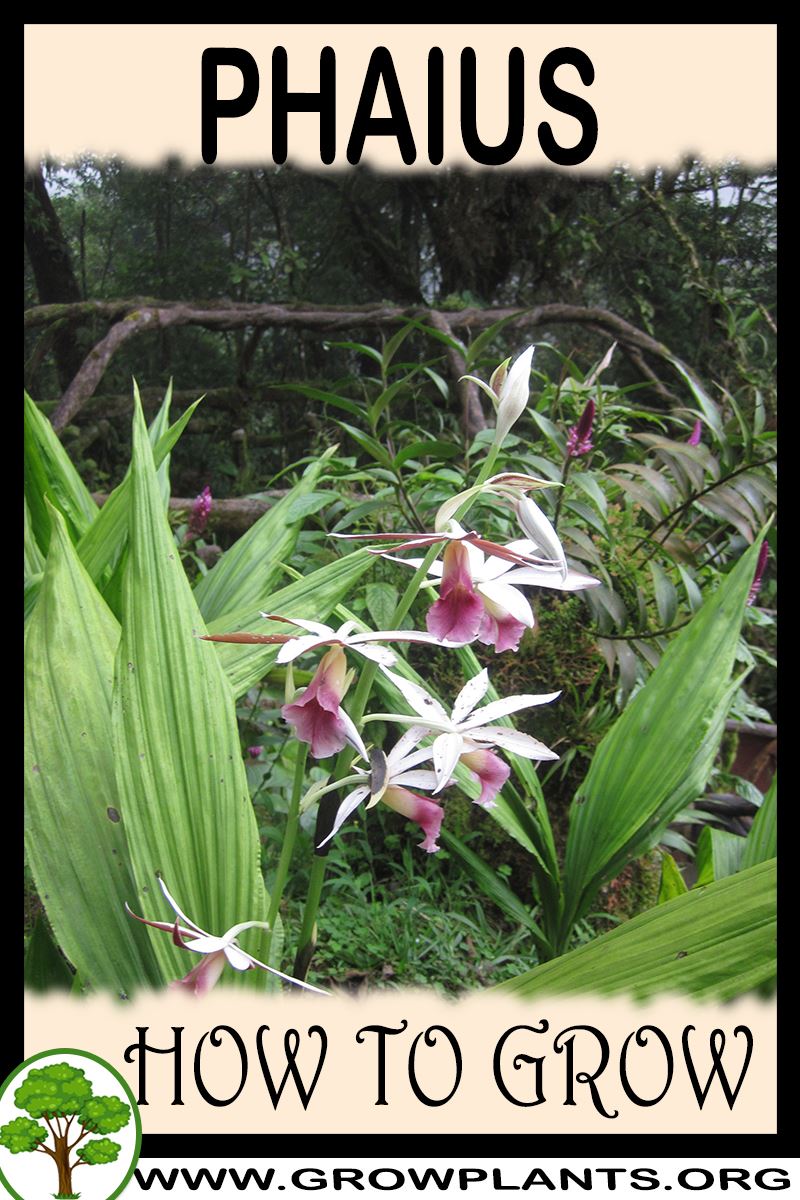
Overview: A terrestrial evergreen orchid 30-60 cm (12-24 in) tall, forming clumps of broad pleated leaves from underground pseudobulbs. It is grown as an ornamental and long-lasting cut-flower plant, valued for tall spikes of large, month-long blooms.
Quick Specifications
| Specification | Attribute |
|---|---|
| Plant Type / Life Cycle | Perennial (terrestrial orchid) |
| Foliage Type | Evergreen |
| Mature Size | 30-60 cm (12-24 in) tall |
| Growth Rate | Moderate to slow |
| Root System | Terrestrial orchid with pseudobulbs and fleshy roots |
| Hardiness | USDA zones 10+; grown indoors elsewhere |
Growth Form & Structure
- Height & Spread: Forms leafy clumps around 30-60 cm (12-24 in), with flower spikes rising well above the foliage; grown in pots indoors or in sheltered shade outdoors in warm climates.
- Growth Habit & Form: Clump-forming terrestrial orchid; broad, pleated leaves arise from short pseudobulbs, and the plant is repotted roughly yearly as new growth develops.
- Lifespan & Maturity: A long-lived perennial that increases into larger clumps over the years, each mature pseudobulb capable of throwing a flower spike.
Anatomy & Physical Features
- Leaves & Foliage: Large, broad, strongly pleated green leaves borne on short stem-like pseudobulbs.
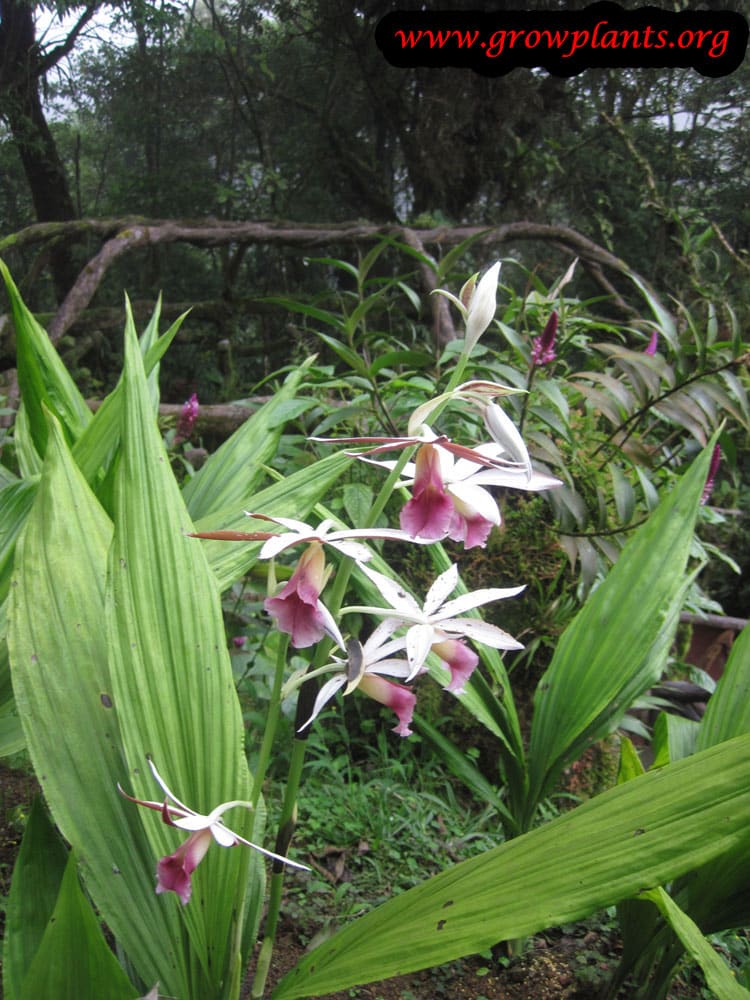
- Flower Characteristics: Trumpet-centred flowers with five narrow pointed petals, richly multi-coloured with spots, dots and stripes, each bloom lasting up to a month.
Primary Uses & Landscape Value
- Functional & Ornamental Roles: Grown as an ornamental flowering pot plant and as a long-lasting cut flower; a popular shade and greenhouse orchid.
Care Guide: Planting, Soil & Watering
Overview: The nun’s orchid is a terrestrial orchid that grows best in bright shade with warmth and humidity above 50%, in a rich but loose, sharply drained medium. It likes steady moisture at moderate temperatures (about 15–25°C by day) and clean, room-temperature water.
Quick Care Requirements
| Requirement | Ideal Condition |
|---|---|
| Planting Season | Spring to summer outdoors; year-round when grown indoors |
| Growth Rate | Slow to moderate |
| Soil Type | Loose, airy, well-drained bark/cork-enriched orchid medium |
| Water Need | Moderate — keep evenly moist with high humidity, never waterlogged |
Planting & Establishment
- Best Planting Season: Plant or repot in spring or summer during active growth; indoor plants can be started year-round.
- How to Plant:
- Hole Preparation: Use a pot only a little larger than the roots — it dislikes being placed straight into an oversized container; refresh the medium and roots about once a year.
- Soil Amendments: Build an open medium from bark or cork chips with some humus so it holds moisture yet drains and stays aerated.
- Planting Depth: Set the base of the growths at the medium surface; do not bury the crown, which encourages rot.
- Growth Speed & Expectations: Expect slow-to-moderate growth to a clump around 30–60 cm tall.
Soil, Watering & Drainage Care
- Soil Mix & Drainage Needs: The roots need air and rot in dense, soggy soil, so keep the medium open and free-draining; when repotting, trim away any dead roots.
- Watering Schedule & Technique:
- Young / Newly Planted: Keep newly potted plants evenly moist in a humid spot, using clean, room-temperature water (rainwater is ideal).
- Established: Water regularly to keep the medium lightly moist, letting excess drain freely each time.
- Seasonal Adjustments: Water more in warm active growth and ease off when growth slows in cooler conditions.
Climate, Light & Hardiness
Phaius is a terrestrial orchid suited to tropical, subtropical, and Mediterranean climates, tolerating a wider temperature range than many epiphytic orchids. It prefers half to full shade with plenty of ambient light and, while frost sensitive, an established plant can briefly survive close to freezing.
Quick Climate Specifications
| Factor | Detail |
|---|---|
| Climate Zones | Tropical, subtropical, or Mediterranean; also grown as a houseplant |
| USDA Hardiness Zones | 10+ |
| Optimal Temp Range | Approximately 15–25°C (60–75°F) by day, 10–20°C (50–68°F) at night |
| Approx. Survival Minimum | Around 1°C (34°F) briefly for an established plant |
| Frost Tolerance | Very low |
| Light Conditions | Half shade to full shade with plenty of light |
| Wind Tolerance | Low |
Sunlight & Light Exposure
Optimal Light Setup
Bright, filtered shade suits Phaius best; it wants strong ambient light without direct, scorching sun.
Shade & Heat Management
Provide shade during the hottest hours; the plant can tolerate brief spells above 30°C (86°F) but grows and flowers best without prolonged heat stress.
Best Exposure/Orientation
A bright but shaded patio spot, greenhouse bench, or an east- or north-facing window indoors all work well.
Temperature Extremes & Hardiness
USDA Hardiness & Regional Limits
Site data places Phaius in hardiness zone 10 and warmer, so reliable year-round outdoor growth needs a mild, largely frost-free climate; in cooler regions it is best grown indoors or under cover.
Cold Damage & Winter Protection
Growth slows and damage risk rises as temperatures fall well below the preferred 10–20°C (50–68°F) night range; bring container plants under cover before cold snaps.
Frost Sensitivity
Very frost sensitive, though the site notes an established plant may briefly survive temperatures around 1°C (34°F) – this is a short-term survival threshold, not a comfortable growing condition, and young or newly potted plants are more vulnerable.
Extreme Heat Tolerance
Good for an orchid; the site notes it can tolerate temperatures above 30°C (86°F), though consistently strong heat combined with dry air will still stress the plant without adequate humidity and shade.
Wind, Humidity & Microclimate
Humidity Preferences
High humidity is important, with the site recommending more than 50%.
Dry-Air Tolerance
Low; dry air should be offset with misting, a humidity tray, or grouping with other humidity-loving plants.
Wind Tolerance
Low; shelter the plant from strong or drying wind, which can damage the broad, thin leaves.
Rainfall & Seasonal Moisture
Adapted to consistently moist, humid conditions rather than a pronounced dry season.
Microclimate Recommendations
A warm, humid, lightly shaded spot with good but gentle air circulation – a greenhouse, covered patio, or humid indoor room – suits Phaius well outside its native tropical-to-Mediterranean range.
Growing in Pots, Balconies & Indoors
Phaius (nun’s orchid) is a handsome terrestrial orchid and a good houseplant – the grower confirms it grows indoors and in pots. It likes bright shade rather than direct sun, so a bright window out of harsh light suits it, and it does well in a container on a shaded patio in warm weather.
Quick Details
- Container Size: 30-60 cm (12-24 in) – a medium container
- Indoor Suitability: A good houseplant in bright but indirect light
- Best Spot: Half shade / full shade with plenty of light – bright, no scorching sun
- Soil & Drainage: Rich but free-draining terrestrial-orchid mix (bark with coir/peat and perlite)
- Watering in Pots: Keep evenly moist in growth; let the surface dry slightly, never waterlogged
Indoors & On the Windowsill
- A real houseplant: Phaius grows well indoors in bright, indirect light – avoid direct midday sun on the leaves. Average room warmth and humidity suit it.
- Windowsill growing: A bright window with filtered light is ideal; give the tall flower spikes a little room.
- Overwintering: Not frost-hardy – keep it indoors over winter in cold climates.
On a Balcony or Patio
- Light & shelter: Outdoors keep it in bright shade, sheltered from strong sun and wind. Pots dry fast against warm walls, so check moisture regularly.
- Bring it in: Move it back indoors before cold nights arrive.
Choosing the Pot, Soil & Long-Term Care
- Pot & drainage: A medium pot with strong drainage holes; unlike most orchids Phaius is terrestrial, but it still must never sit in water.
- Potting mix: A rich yet open terrestrial-orchid mix – fine bark with coir or peat plus perlite for drainage.
- Feeding: Feed with a dilute orchid fertiliser through the growing season; potted plants leach nutrients faster.
- Repotting: Refresh the mix and pot on every couple of years, dividing crowded clumps then.
Fertilizing & Feeding
A more moderate feeder than the epiphytic orchids in this group: this bigger, semi-terrestrial grower takes regular light feeding through active growth and bloom, then a real rest once its leaves finish for the season.
Quick Fertilizing Specs
| Feeding Level | Moderate feeder for an orchid, given its larger, leafier habit |
|---|---|
| Main Nutrient Priority | Balanced feeding with adequate nitrogen through leaf growth, shifting to support bloom as flower spikes form |
| Best Feeding Period | Through active growth in the warmer months leading into and through bloom |
| Organic Options | Compost or a diluted organic liquid feed can supplement a complete fertilizer in a terrestrial-style mix |
| Reduce/Stop Feeding | Taper off as leaves mature after bloom and the plant heads into its cooler, quieter period |
| Micronutrients | Generally supplied by a complete fertilizer; correct only a diagnosed shortage |
| Soil pH | Grows in a humus-rich, free-draining mix that leans slightly acidic |
Feeding by Growth Stage
Warm-season leaf growth
Build the season’s new leafy growth ahead of flowering.
| Nutrient direction | A balanced fertilizer with adequate nitrogen supports vigorous new leaf growth. |
|---|---|
| Timing | As new growth resumes in the warmer months. |
| Frequency | Regular light feeding through this active growth. |
| Fertilizer types | A balanced complete fertilizer, Compost or a diluted organic liquid feed worked in |
| Routine trace nutrients | iron, manganese |
| Precautions | Keep feeding proportionate to the pot; this plant still resents a heavy, concentrated dose. |
Flower spike and bloom
Support flower spike development and the bloom that follows.
| Nutrient direction | Continue a balanced feed as flower spikes form and open. |
|---|---|
| Timing | As flower spikes emerge and through the bloom period. |
| Frequency | Maintain regular light feeding through flowering. |
| Fertilizer types | A balanced complete fertilizer |
| Routine trace nutrients | iron, manganese |
| Precautions | Avoid a sudden nitrogen-heavy dose now; it can push leafy growth at the expense of good flowering. |
Cool-season rest
Let the plant coast through cooler weather once the season’s growth and bloom are finished.
| Nutrient direction | No feeding is needed while the plant is not producing active new growth. |
|---|---|
| Timing | Through the cooler months or any period of little active growth. |
| Frequency | No feeding during this rest; resume with the return of warm-season growth. |
| Fertilizer types | No feeding at this stage; hold off fertilizing until active growth resumes. |
| Precautions | Withhold fertilizer now; feeding an idle plant only invites salt buildup around the roots. |
Nutrient Deficiency Signs & Corrections
Older leaves turn a uniform pale yellow and overall new growth slows.
| Possible causes | too little nitrogen in recent feeding, nitrogen leaching from generous watering, a thin, low-organic-matter growing mix |
|---|---|
| Appears first on | older, lower leaves |
| What to check | recent feeding history, organic matter content of the mix, watering and drainage pattern |
| Possible correction | Apply a balanced fertilizer with adequate nitrogen and refresh organic matter in the mix. |
New leaves come in pale yellow while the veins stay distinctly green.
| Possible causes | a mix staying too wet and low in oxygen, alkaline water shifting nutrient availability, compacted or aging potting mix |
|---|---|
| Appears first on | newest leaves |
| What to check | drainage and mix condition, water pH and mineral content, how long since the mix was refreshed |
| Possible correction | Improve drainage, refresh an old mix, and apply a chelated iron product per its label if new growth stays pale. |
Flower stems come in weak or floppy and older leaf margins show a scorched look.
| Possible causes | a fertilizer program too heavy on nitrogen relative to potassium, potassium leaching from frequent watering, overall underfeeding through the growth period |
|---|---|
| Appears first on | flower stems and older leaf margins |
| What to check | balance of the fertilizer used through the season, watering frequency and drainage, overall feeding consistency |
| Possible correction | Shift toward a more balanced or potassium-adequate fertilizer as flower spikes develop. |
Pruning, Training & Seasonal Maintenance
Phaius tolerates only light grooming – like other sympodial orchids it stores its growth in pseudobulbs, so pruning is about sanitation, not shaping. The main jobs are removing the tall flower stem once its month-long display finishes and trimming off leaves as they yellow, since this terrestrial orchid’s broader, soft linear leaves tear and discolor more readily than a thick-leaved epiphyte’s. The safest window is right after each spike finishes (spring/summer normally, into autumn in warm climates), and pruning has no direct effect on next season’s bloom – that comes from the next pseudobulb to mature – but prompt removal of spent tissue prevents rot working back toward the base.
Quick Pruning & Maintenance Specs
| Pruning Tolerance | Low – grooming/sanitation only |
| Primary Pruning Window | Immediately after the flower spike finishes |
| Secondary Maintenance Window | Any time, for yellowed/torn leaves and dead roots |
| Typical Frequency | One spike removal plus occasional leaf trims per bloom cycle |
| Main Objective | Prevent rot; keep foliage tidy; divide crowded clumps at repot |
| Young Plant Priority | Establish roots undisturbed; minimal cutting |
| Mature Plant Priority | Manage pseudobulb/backbulb reserve; divide when crowded |
| Best Tool Type | Sterile precision snips or single-edge blade |
| Avoid Heavy Pruning During | While the spike is still green/flowering, or during active root growth |
Pruning by Plant Age & Size
Newly Established
Remove only visibly damaged or rotted tissue at planting; otherwise let the first roots and pseudobulb settle in undisturbed – this species needs its pot/root system re-established only about once a year.
Young / Formative
No structural training applies. The only formative task is trimming leaf tips that brown or tear as new growth matures.
Mature / Established
Track pseudobulb count; once the clump crowds its container, divide at repotting, keeping several pseudobulbs (including an active lead) per division.
Seasonal Pruning Schedule
Post-Flowering
Objective: remove the spent flower stem before it decays back toward the crown. Remove: cut the flower stem near its base once all flowers on it have faded; strip fully yellow leaves. Do not remove: green pseudobulbs or healthy leaves. Expected response: the plant channels reserves into its next developing growth. Flowering impact: none on the current cycle; sanitation mainly protects the plant from rot that could otherwise weaken the next lead.
Ongoing Sanitary
Trim torn or badly yellowed leaf tissue and remove dead roots whenever repotting.
Structural Pruning & Training
None beyond division – there is no branch or leader to select. Divide an overcrowded clump with a sterile blade between pseudobulbs to restore vigor and airflow.
Special Growth to Remove
Old flower stems left standing after bloom; fully yellow or torn leaves; shriveled non-viable backbulbs.
Container & Small-Space Pruning
Grown as a houseplant/container terrestrial, this orchid needs its pot and root mass refreshed roughly annually rather than hard height control – avoid oversizing the pot, which keeps mix wet longer than the roots want.
Tools
Precision snips or a clean single-edge blade for the flower stem and leaf trims.
Tool Hygiene & Disease Risk
Increased risk – as with other orchids, mechanically transmissible viruses can spread on shared cutting tools even without visible symptoms, so sterilize the blade between individual plants.
Cut Placement & Technique
Cut the flower stem near its base once flowering is fully finished, not mid-stem while buds remain. Remove leaves at their base rather than tearing them off.
Heavy Pruning & Rejuvenation
Not tolerated – there is no canopy to cut back. Renewal comes from dividing a tired, overcrowded clump rather than cutting the plant down.
Post-Pruning Care
Avoid water sitting in the crown after cutting; after division let cuts callus briefly before repotting into fresh mix and hold fertilizer until new roots are active.
Common Pruning Mistakes
Cutting the flower stem while it is still budded; letting a spent stem rot in place instead of removing it; over-potting after division.
When NOT to Prune
While the flower stem is still actively blooming; during the plant’s main root-growth push unless removing clearly dead tissue.
Recommended Tools (by task)
- precision_snips – all cuts on this plant (flower stem, leaf trims) are soft, non-woody cuts.
- blade_disinfectant – genuine orchid virus transmission risk via shared tools warrants sterilizing between plants.
Propagation Guide
Phaius orchids are propagated mainly by dividing their pseudobulb clumps, which is far more reliable than growing from seed – the site data itself notes that starting from seed is difficult. Vegetative division is the preferred method for keeping a particular flower form true, and it is a moderately easy technique once the plant has formed a multi-growth clump.
Quick Propagation Specs
| Best Propagation Method | Division of the pseudobulb clump |
| Alternative Methods | Backbulb propagation; occasional plantlets (keikis) on old flower spikes in some Phaius, especially Phaius tankervilleae |
| Propagation Difficulty | Moderate by division; Specialist by seed |
| Seed True-to-Type | Variable |
| Vegetative True-to-Type | Yes |
| Best Propagation Season | Spring, at the start of new growth, in line with the plant’s spring/summer planting season |
Growing from Seed
As with most orchids, Phaius seed is extremely fine and needs sterile flask culture with a suitable nutrient or symbiotic-fungus medium to germinate; without lab conditions, germination is essentially unworkable at home, consistent with the site’s own “hard to start from seeds” note.
Division, Offsets, Pups & Suckers
Divide established clumps when repotting, keeping at least two to three pseudobulbs with a live growing point per division so the new piece has enough reserves to resume growth. Older leafless backbulbs can be potted on their own as a slower way to raise additional plants. In some Phaius, most notably the widely grown Phaius tankervilleae, small plantlets can also form along the nodes of a spent flower spike; if this happens, let the plantlet grow a few roots of its own before detaching and potting it separately. Keep new divisions and plantlets humid and lightly watered until fresh roots take hold.
Bloom & Flower Guide
Quick Details
- Bloom Season: Spring and summer, and in warm climates sometimes again in autumn
- Flower Appearance: Tall spikes of large flowers with five narrow, pointed petals and a trumpet-shaped, richly marked lip; colours include red, yellow, white, orange, purple, maroon, brown, and pink, usually multicoloured with spots, dots, or stripes; each bloom can last about a month
- Edibility: Grown as an ornamental cut-flower orchid; the flowers are not eaten
Detailed Blooming Overview
Phaius, the Nun’s Orchid, sends up stately flower spikes packed with large, long-lasting blooms – individual flowers can hold for around a month, giving a long display. The showy trumpet-shaped lip, patterned with spots and stripes, sits at the centre of five slender pointed petals.
Flower Characteristics
- Five narrow, pointed petals surrounding a decorated, trumpet-like lip.
- Wide colour range, mostly multicoloured with spots, dots, or stripes.
- Long-lasting – each flower can survive about a month.
Bloom Care & Thinning
- Encouraging bloom: Bright, indirect light and a cool spell help trigger the flower spikes.
- Managing the bloom: Support the tall spikes and cut them back once the last flower fades.
- Handling: Sap from cut stems can irritate sensitive skin, so wash hands after trimming.
Pests, Diseases & Troubleshooting
Overview: The nun orchid is a large terrestrial orchid with soft, broad, pleated leaves that are more prone to spider mite, aphids and thrips than the leathery epiphytes, while its fleshy roots still rot in soggy conditions. Grown in a humus-rich but well-drained mix with good light and airflow, it is vigorous and forgiving; most problems trace back to dry air (mites) or overwatering (rot).
Quick Troubleshooting Overview
| Issue / Pest | Main Symptom | Primary Solution |
|---|---|---|
| Spider mite | Silvery stippling, webbing on big soft leaves | Raise humidity, rinse foliage, horticultural oil |
| Aphids | Clusters on flower spikes and new leaves | Water jet, insecticidal soap |
| Thrips | Silvery streaked flowers and leaves | Blue sticky traps, remove spent blooms |
| Mealybugs / scale | White fluff or brown bumps on stems | Alcohol swab, horticultural oil |
| Root rot | Soft roots, yellowing pseudobulbs | Well-drained mix, water then drain |
Common Pests & Management
- Two-spotted spider mite (Tetranychus urticae):
- Symptoms: Fine pale stippling on leaves, faint webbing on undersides and leaf axils, and a dusty bronzed look in warm dry conditions. Tiny moving specks visible with a hand lens.
- Prevention & Control: Raise humidity and hose foliage regularly, as mites thrive in hot dry air; introduce predatory mites (Phytoseiulus persimilis) under cover. Treat hotspots with insecticidal soap or horticultural oil, ensuring thorough coverage of leaf undersides.
- Aphids (Aphidoidea spp.):
- Symptoms: Small soft-bodied green, black or grey insects clustered on flower spikes and unfurling leaves; causes curled, distorted foliage, sticky honeydew and sooty mould. Look-alikes: whitefly (which flies up when disturbed).
- Prevention & Control: Encourage ladybirds, lacewings and parasitic wasps; blast colonies off with a firm jet of water; remove badly infested tips. Persistent outbreaks respond to insecticidal soap or a light horticultural oil applied to leaf undersides in the cool of the evening to protect pollinators.
- Thrips (Thysanoptera spp.):
- Symptoms: Silvery streaks and flecking on leaves and petals, black frass specks, and distorted new growth; slender fast-moving insects.
- Prevention & Control: Use blue sticky traps for monitoring; remove weeds and spent flowers that harbour them; encourage predatory mites and pirate bugs. Spot-treat with insecticidal soap or spinosad-type products following the label.
- Mealybugs (Pseudococcidae spp.):
- Symptoms: White cottony masses in leaf axils, on stems and around the crown; feeding causes yellowing, stunting and honeydew with sooty mould.
- Prevention & Control: Dab individual colonies with a cotton bud dipped in surgical spirit; isolate affected plants; keep humidity moderate. For wider spread use insecticidal soap or horticultural oil, repeating every 7–10 days to catch newly hatched crawlers.
- Scale insects (Coccidae & Diaspididae spp.):
- Symptoms: Immobile brown or tan bumps along stems and leaf veins, often with sticky honeydew and sooty mould; slow decline and yellowing.
- Prevention & Control: Scrape off light infestations by hand or with a soft toothbrush; prune out heavily encrusted stems. Smother remaining scale with horticultural oil, targeting the mobile crawler stage with repeat applications.
- Slugs & snails (Gastropoda spp.):
- Symptoms: Ragged holes in the large soft leaves, buds and new shoots, with slime trails, worst in the damp shady conditions this orchid enjoys.
- Prevention & Control: Hand-pick at night, trap under boards or citrus rinds, and keep the surface tidy; iron-phosphate pellets where pressure is high.
Diseases & Fungal Issues
- Root & rhizome rot (Pythium / Phytophthora spp.):
- Symptoms: Soft brown roots, yellowing pseudobulbs and a plant that loosens in the pot, from a waterlogged or broken-down mix.
- Treatment & Management: Grow in a rich but freely draining mix, water thoroughly then let it drain, and repot when the medium collapses; trim rotten roots with a sterile blade.
- Fungal leaf spot & anthracnose (Colletotrichum / Cercospora spp.):
- Symptoms: Brown or black spots and blotches, sometimes with yellow halos, on the broad leaves in humid, stagnant air.
- Treatment & Management: Improve airflow, keep foliage dry, and remove affected leaves; copper fungicide for stubborn cases.
- Botrytis flower spotting (Botrytis cinerea):
- Symptoms: Small brown or translucent spots on flowers in cool damp conditions.
- Treatment & Management: Improve ventilation and avoid wetting the blooms; remove spent flowers promptly.
Growing Difficulties & Abiotic Problems
- Root rot (overwatering):
- Cause & Symptoms: Waterlogged, airless roots in a soggy or collapsed potting mix lead to soft brown roots, wilting despite wet soil, yellowing lower leaves and collapse; Pythium and Phytophthora water-moulds move in.
- Correction Strategy: Let the top of the mix dry before rewatering; improve drainage and use a free-draining medium; never leave the pot standing in water. Repot into fresh gritty mix, trimming away any blackened roots.
- Leaf-tip browning:
- Cause & Symptoms: Dry air, salt build-up or erratic watering scorches the tips of the large soft leaves.
- Correction Strategy: Raise humidity, flush the mix to remove salts, ease off feeding and keep watering even.
- Sunburn / leaf scorch:
- Cause & Symptoms: Sudden exposure to intense sun after shade, or reflected heat, causes bleached, papery or brown patches on the most exposed leaves.
- Correction Strategy: Acclimatise plants gradually to brighter positions; provide light shade during the fiercest midday sun; keep roots evenly moist so foliage is not additionally heat-stressed.
What Helps – Products & Tools
Manage the nun orchid mainly through culture – humidity, airflow and a well-drained rich mix. Use horticultural oil or insecticidal soap for mites, aphids, thrips, mealybugs and scale; iron-phosphate pellets for slugs; and a copper fungicide only for persistent leaf spot. Keep sprays light on the soft foliage and treat in cool, shaded conditions.