

Plant Profile & Key Characteristics
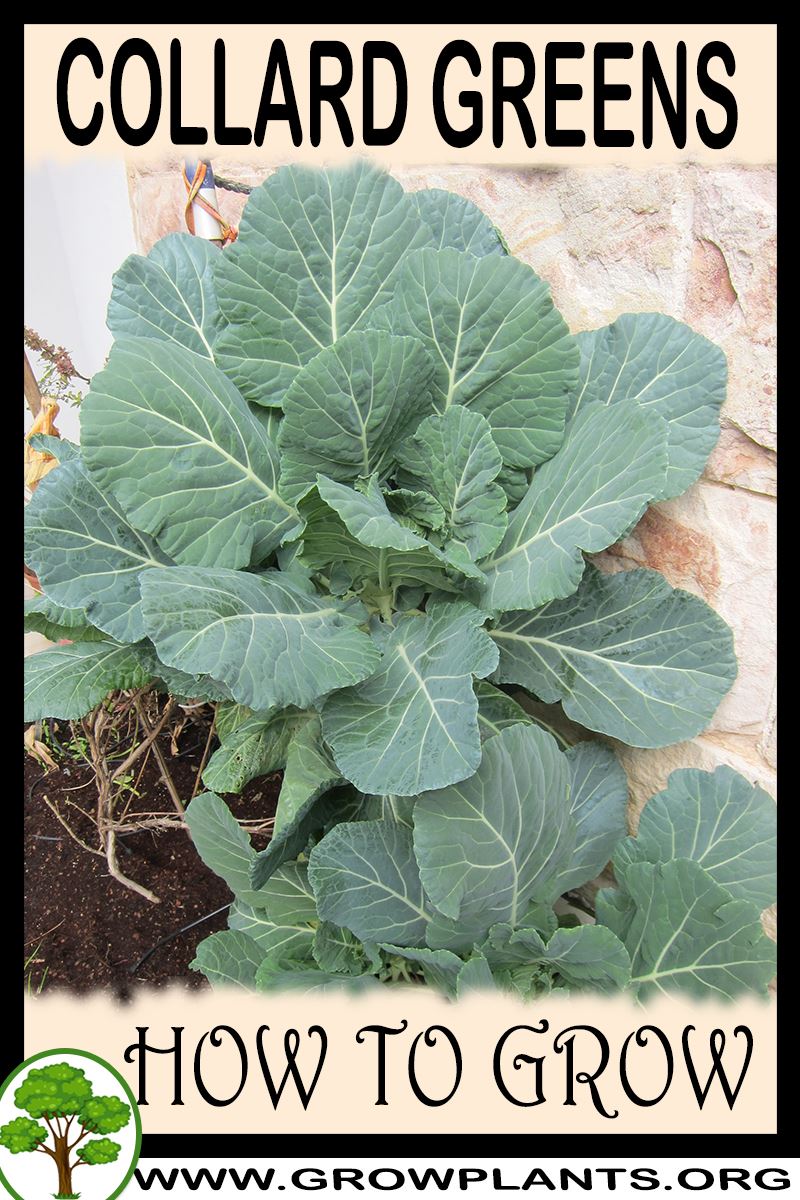
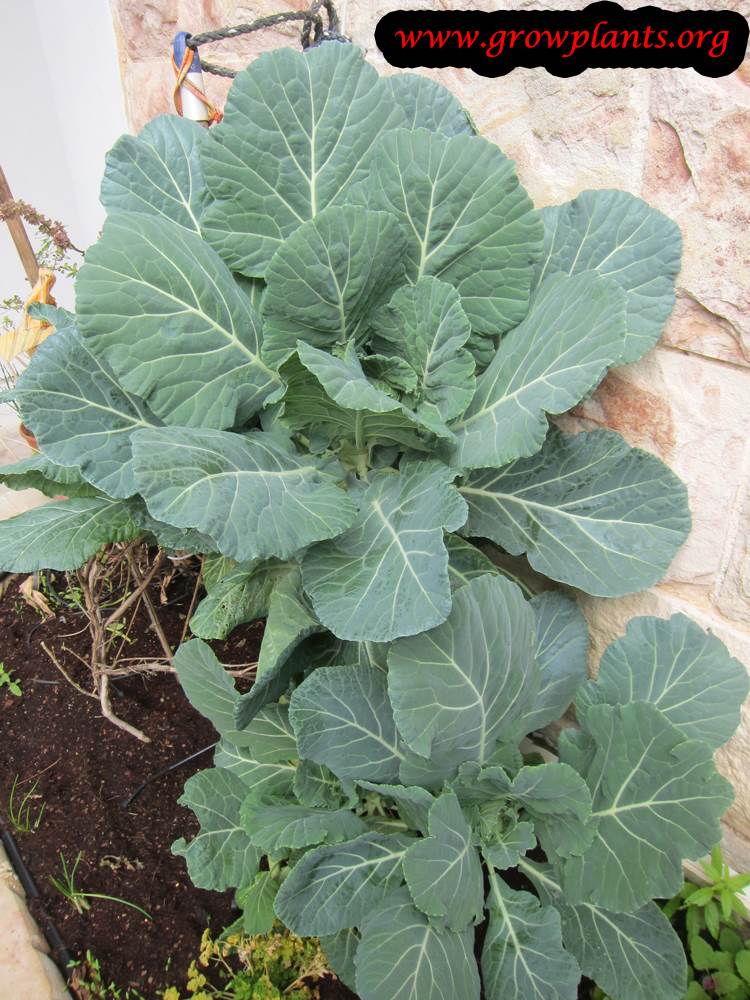
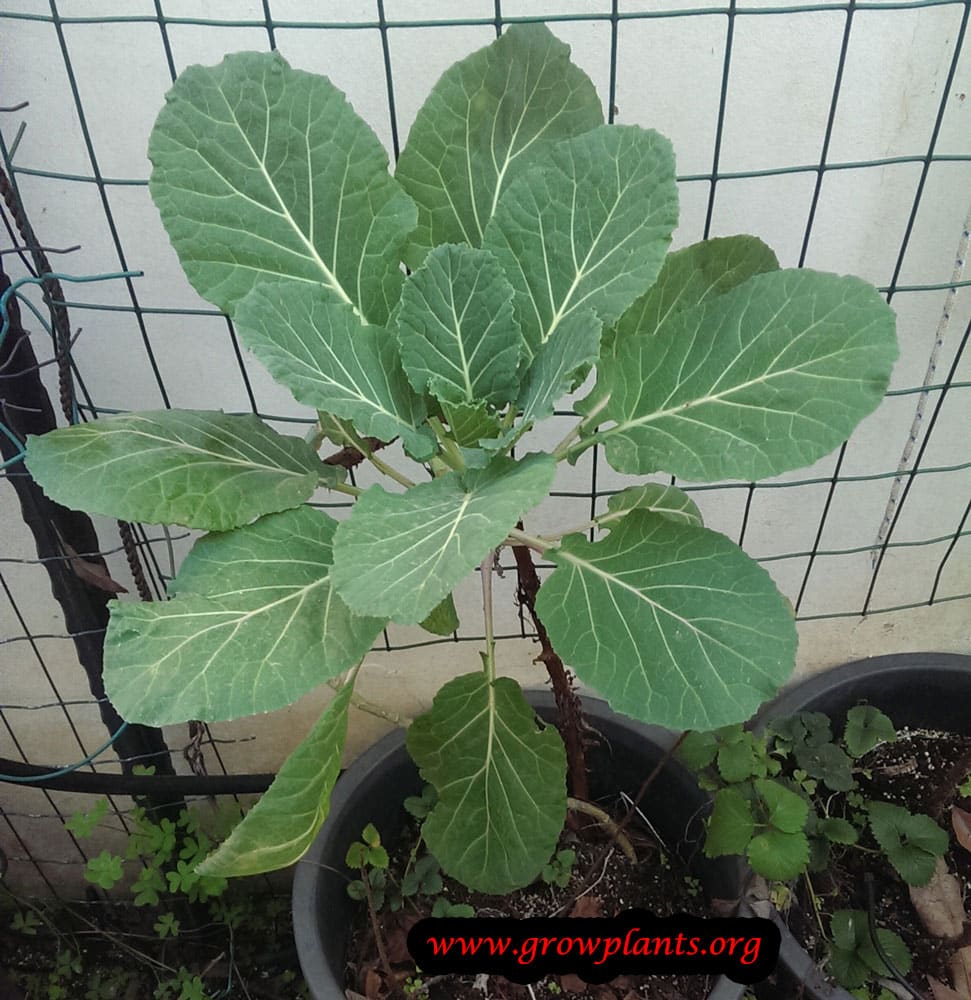
Overview: Collard greens is a leafy Brassica grown as an annual to perennial for its edible leaves, and sometimes as an ornamental. The perennial ‘collard tree’ form can reach about 2 m and is grown only from cuttings.
Quick Specifications
| Specification | Attribute |
|---|---|
| Plant Type / Life Cycle | Annual to perennial (biennial to flower) |
| Foliage Type | Semi-evergreen (persistent leaves in mild climates) |
| Mature Size | 0.3-2 m (12-80 in) |
| Growth Rate | Fast to moderate |
| Toxicity | Non-toxic / edible |
| Hardiness | USDA zones 2-10a (spring), 10a-11 (autumn planting) |
Growth Form & Structure
- Height & Spread: 0.3-2 m; the ‘collard tree’ type reaches about 2 m; also grown in containers.
- Growth Habit & Form: Upright leafy stem; tall plants sometimes need physical support.
- Lifespan & Maturity: Annual to perennial (the tree form is propagated by cuttings); fast to reach leaf harvest.
Anatomy & Physical Features
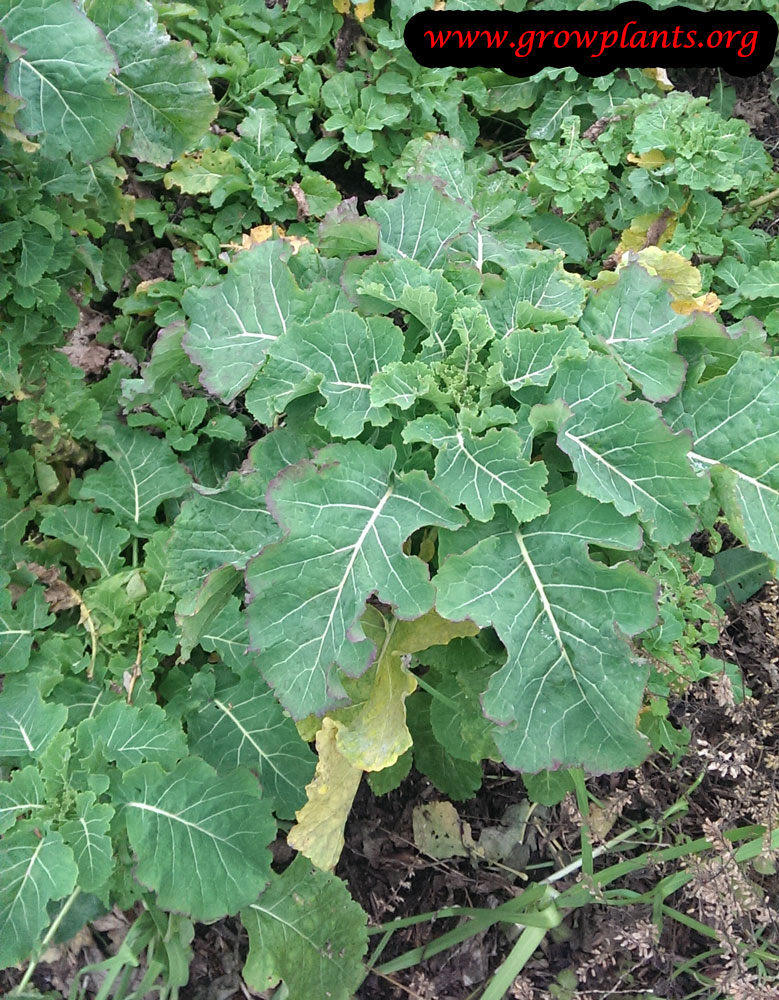
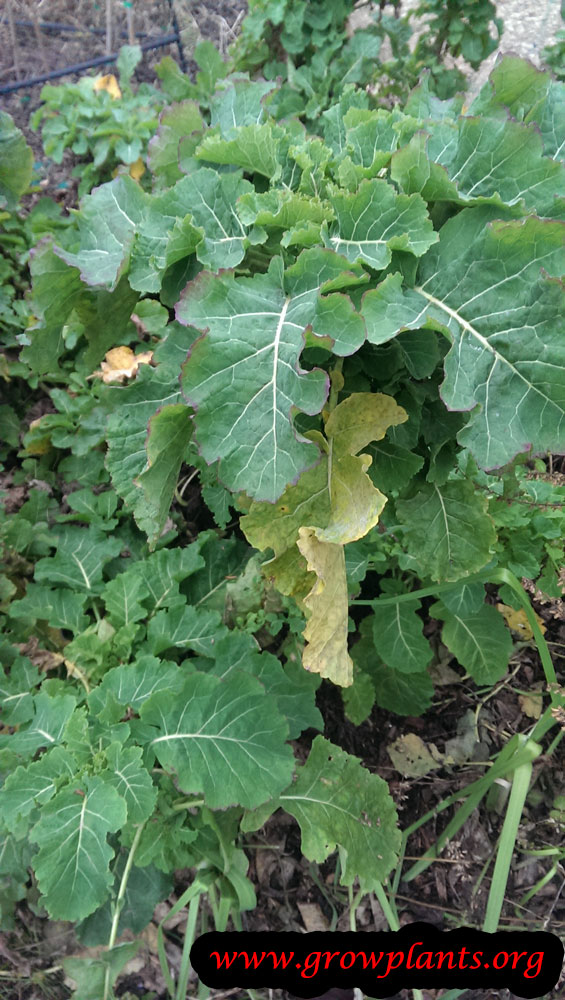
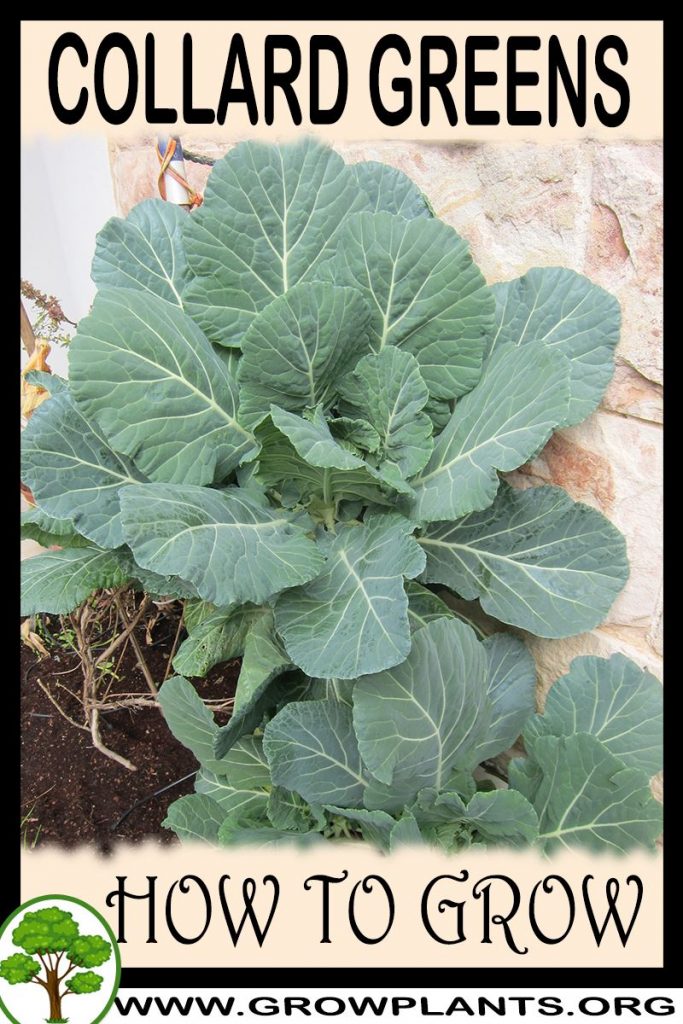
- Leaves & Foliage: Wavy oval leaves in green, blue-green or purple; can turn slightly bitter in summer heat.
- Flower Characteristics: Small yellow flowers in inflorescences (in the second year); bee- and butterfly-pollinated.
Primary Uses & Landscape Value
- Edible Uses: Leaves eaten in salad, cooked or stir-fried.
- Functional & Ornamental Roles: Ornamental foliage; containers; cut-and-come-again leaf crop.
Care Guide: Planting, Soil & Watering
Overview: Collard greens are a cool-season leafy brassica grown for their edible leaves, thriving in full sun to part shade in rich, fertile soil. They like steady, generous moisture and turn bitter in summer heat.
Quick Care Requirements
| Requirement | Ideal Condition |
|---|---|
| Planting Season | Cool season – spring, autumn or winter |
| Growth Rate | Moderate to Fast |
| Soil Type | Rich, fertile, well-drained soil |
| Soil pH | 6.0-7.0 (near neutral) |
| Water Need | Moderate to High – keep evenly moist |
Planting & Establishment
- Best Planting Season: Plant in the cool season – spring in cooler zones, autumn to winter in warm ones – to avoid summer heat.
- How to Plant:
- Hole Preparation: Prepare a rich, firm bed; sow seed about 1-2 cm deep and 20-30 cm apart, or set transplants firmly.
- Soil Amendments: Work in plenty of compost and organic matter; brassicas are hungry feeders.
- Planting Depth: Sow about 1-2 cm deep; set transplants at their original soil level and firm them in, as tall plants may need support.
- Growth Speed & Expectations: A moderate-to-fast grower reaching 0.3-2 m; harvest the outer leaves and the plant keeps producing.
Soil, Watering & Drainage Care
- Soil Mix & Drainage Needs: Wants rich, moisture-retentive but well-drained soil; grows in large containers. Keep it evenly moist.
- Watering Schedule & Technique:
- Young / Newly Planted: Keep the soil consistently moist for steady leaf growth from the start.
- Established: Water regularly and generously; dry stress toughens and embitters the leaves.
- Seasonal Adjustments: More in warm, dry weather; leaves are sweetest in cool conditions and after light frost.
Climate, Light & Hardiness
Collard greens are a hardy, cool-season leafy brassica grown across temperate, Mediterranean and subtropical climates, and among the most frost-tolerant of the cabbage family. It grows in full sun to half shade and is a cold-hardy leafy green whose leaves often sweeten after frost; heat - which turns the leaves bitter and triggers bolting - is the real limiting factor, so it is grown in the cool season.
Quick Climate Specifications
| Climate Zones | Temperate, Mediterranean and subtropical – a cool-season crop |
| USDA Hardiness Zones | Site lists zone 2–10a for spring planting and 10a–11 for autumn planting. |
| Optimal Temp Range | Cool conditions of roughly 15–20 °C (59–68 °F) |
| Cold Damage Begins | Light frost is tolerated and often sweetens the leaves; damage comes only in hard freezes |
| Approx. Survival Minimum | Mature plants tolerate frost and brief hard freezes, roughly to −7 to −10 °C (19 to 14 °F); varies with variety, plant age and conditions |
| Frost Tolerance | High |
| Light Conditions | Full sun to half shade |
Sunlight & Light Exposure
Optimal Light Setup
Full sun in the cool season gives the fastest, sturdiest leafy growth; half shade is useful to slow bolting and reduce bitterness as the weather warms.
Shade & Heat Management
In warm climates or late in the season, afternoon shade keeps leaves tender and delays bolting; the site notes sensitivity to hot temperatures.
Best Exposure / Orientation
An open, sunny bed for autumn-to-spring growing in mild climates, or spring-to-autumn where summers are cool.
Temperature Extremes & Hardiness
USDA Hardiness & Regional Limits
Site lists zone 2–10a for spring planting and 10a–11 for autumn planting. This wide range reflects a plant grown as a cool-season crop: sown for spring in colder zones and for autumn-through-winter harvest in mild-winter zones. Cold does not usually kill it - summer heat does the practical damage by making leaves bitter and forcing flowering.
Cold Damage & Winter Protection
Collards are among the hardiest brassicas: mature plants shrug off frost and even hard freezes, with flavour improving after cold. Severe, prolonged freezing (roughly below −7 to −10 °C / 19 to 14 °F) will eventually damage the leaves, and young plants are less tough than established ones.
Frost Sensitivity
Frost-tolerant - light and moderate frosts are an asset, improving flavour rather than harming the plant.
Extreme Heat Tolerance
Its weak point: hot weather makes leaves bitter and prone to bolting, so quality falls sharply in summer heat.
Wind, Humidity & Microclimate
Humidity Preferences
It grows well in a range of humidity; steady moisture and cool air keep leaves tender.
Wind Tolerance
Sturdy overall, though tall or top-heavy plants may need support in exposed, windy sites.
Microclimate Recommendations
A cool, bright, sheltered spot extends the useful season at both ends; light shade in warm spells preserves leaf quality.
Growing in Pots, Balconies & Indoors
Collard greens grow very well in large, deep containers on a sunny balcony or patio, cropping leaf after leaf. They are not houseplants – they need full sun and open air – but pots make them easy to grow close to the kitchen.
Quick Details
- Container Size: Large and deep – about 20-40 L (5-10 gal); one plant per big pot
- Indoor Suitability: Not a houseplant – needs full sun and open air; hardy, so grow it outdoors
- Best Spot: Full sun to light shade
- Soil & Drainage: Rich, moisture-retentive but free-draining mix
- Watering in Pots: Keep steadily moist – brassicas are thirsty and pots dry fast; do not let them dry out
Indoors & On the Windowsill
- Not a houseplant: The grower marks it ‘no’ – it needs full sun and open air to leaf up properly, and indoors grows thin and drawn.
- Grow it outside: A bright, sunny sill can start young seedlings, but they must move to a large, sunny outdoor pot to crop. Being frost-hardy – and often sweeter after a touch of frost – it is happiest left outdoors, not brought in.
On a Balcony or Patio
- Light & wind: Give them full sun and cool, fresh air; tall types catch the wind and rock, so stake them and use a large, heavy pot. Pots dry fast in sun and wind, so water often.
- Practicalities: A balcony makes it easy to net plants against cabbage caterpillars and pigeons; large tubs are heavy when wet and drain freely, so protect the floor from runoff.
Choosing the Pot, Soil & Long-Term Care
- Pot & drainage: A 20-40 L pot with strong drainage holes; skip a standing-water saucer to avoid root rot, but keep the mix consistently moist. A large, heavy tub also stays put under tall, top-heavy plants.
- Potting mix: A rich, moisture-retentive but free-draining mix – a quality potting mix with plenty of added organic matter such as compost or well-rotted manure.
- Feeding: Brassicas are hungry plants and pots leach quickly – feed regularly through the season with a balanced or nitrogen-rich liquid feed to keep leaves growing strongly.
- Longevity: Most are grown for a single crop – refresh the mix and replant for the next sowing; if you hold a plant longer, pot it on so the hungry, thirsty roots have room.
Fertilizing & Feeding
A hungry leafy crop that responds to rich soil and steady nitrogen; feed generously but evenly through the cool growing season for tender, non-bitter leaves. A fertilizer formulated for tomatoes and vegetables supports that feeding pattern through harvest.
Quick Fertilizing Specs
| Feeding Level | heavy |
|---|---|
| Main Nutrient Priority | Nitrogen-forward for continuous tender leaf production |
| Best Feeding Period | Through the cool growing and harvest season |
| Reduce/Stop Feeding | Ease off if plants bolt to flower |
| Soil pH | Fertile, well-drained soil around neutral |
| Organic Options | Compost and aged manure worked into the bed, with nitrogen side-dressing |
| Micronutrients | Usually met by rich soil and a complete fertilizer |
Feeding by Growth Stage
Establishment
Get transplants or seedlings rooted and into steady leaf growth.
| Nutrient direction | A balanced complete fertilizer, or compost-enriched soil, to establish roots and early leaves. |
|---|---|
| Timing | At transplanting or once seedlings are established. |
| Frequency | An initial feeding worked into rich, well-prepared soil. |
| Fertilizer types | Balanced complete fertilizer, Compost or aged manure worked into the bed |
| Precautions | Avoid concentrated fertilizer against tender young roots. |
Leafy growth
Drive fast, tender leaf production.
| Nutrient direction | Nitrogen-forward complete feeding to push abundant leafy growth. |
|---|---|
| Timing | Through the main leaf-growing season in cool weather. |
| Frequency | Regular light feeding as the leaves expand. |
| Fertilizer types | Nitrogen-rich complete fertilizer, Side-dressing with compost or a nitrogen source |
| Precautions | Keep moisture even; hot weather turns leaves bitter regardless of feeding. |
Ongoing harvest
Replace nutrients as leaves are picked over a long harvest.
| Nutrient direction | Continue nitrogen-leaning complete feeding to sustain new leaves after each picking. |
|---|---|
| Timing | Across the extended leaf-harvest period. |
| Frequency | Light feeding repeated as harvesting continues. |
| Fertilizer types | Nitrogen-rich complete fertilizer, Compost side-dressing |
| Precautions | Ease off nitrogen if plants start to bolt, and observe any harvest interval on the product label. |
Nutrient Deficiency Signs & Corrections
Older leaves turn pale green to yellow and plants grow slowly.
| Possible causes | Low soil nitrogen, Nitrogen leached by heavy watering or rain, Cold soil slowing uptake |
|---|---|
| Appears first on | Older, lower leaves |
| What to check | Feeding history, Soil moisture and temperature, Overall growth rate |
| Possible correction | Side-dress with a nitrogen-rich complete fertilizer and keep the soil evenly moist. |
Leaf margins brown or die back on rapidly growing leaves.
| Possible causes | Calcium reaching leaf tips poorly under uneven watering, Salt stress from overfeeding, Rapid growth outpacing water uptake |
|---|---|
| Appears first on | Margins of young, expanding leaves |
| What to check | Watering consistency, Feeding rate, Weather swings |
| Possible correction | Even out watering and avoid overfeeding, since calcium moves with steady moisture. |
New leaves yellow between the veins.
| Possible causes | High soil pH limiting iron or manganese, Waterlogged roots, Cold soils |
|---|---|
| Appears first on | New leaves |
| What to check | Soil pH, Drainage |
| Possible correction | Correct pH and drainage; if it persists, apply a chelated micronutrient product per its label. |
Pruning, Training & Seasonal Maintenance
Collard greens (Brassica oleracea, Acephala Group) are grown for their leaves, so “pruning” here is really ongoing leaf harvest and the timely removal of the flowering (bolting) stalk rather than any woody framework work. The plant carries a single upright growing point above a lengthening stem, and it tolerates heavy, repeated picking of the lower leaves. The main objective is to keep that growing point pushing tender new leaves for as long as possible and to cut out the bolt before it turns the plant bitter and stops good leaf production.
Pruning & the Edible Harvest
Because the crop is the leaf, correct harvest and bolt removal strongly affect both how much you pick and for how long. Harvesting the mature lower leaves while leaving the central crown keeps new edible leaves coming, and pinching out the emerging flower stalk delays bolting and extends the leaf season. This plant has more than one edible part – if you instead let it bolt, the tender flower shoots and buds are edible like a mild broccoli raab and you can save seed, but leaf quality collapses once flowering begins, so you are choosing leaves or shoots/seed, not both.
Quick Pruning & Maintenance Specs
| Pruning Tolerance | High for leaf removal – but the single growing tip must never be cut |
| Primary Pruning Window | Ongoing through cool growth (autumn–spring in warm climates; spring–autumn in cold) |
| Secondary Maintenance Window | At the first sign of a bolt in warm weather |
| Typical Frequency | Weekly leaf harvest during active growth |
| Main Objective | Prolong tender leaf production; remove bolting stalk |
| Young Plant Priority | Let it build a full rosette before any harvest |
| Mature Plant Priority | Bottom-up leaf harvest; remove bolt, old and pest-eaten leaves |
| Best Tool Type | Precision snips or a clean knife (bypass secateurs for thick collard-tree stems) |
| Avoid Heavy Pruning During | Heat waves and drought stress |
Pruning by Plant Age & Size
Newly Established
Do not harvest yet. Let a transplant or seedling build a rosette of roughly 8–10 healthy leaves so it has enough leaf area to power regrowth; only remove yellowing or caterpillar-chewed leaves.
Young / Formative
No structural training is needed – collards are not shaped to a framework. Begin cut-and-come-again harvest of the oldest lower leaves, working from the base upward and always leaving the central crown of young leaves and the growing tip intact.
Mature / Established
Continue bottom-up leaf harvest and cut the flowering stalk out as soon as it emerges to hold the plant in leaf. The tall “collard tree” type (to about 2 m, grown from cuttings) develops a long bare stem as lower leaves are taken, so stake it to stop it toppling under a top-heavy head.
Seasonal Pruning Schedule
Cool-Season Growth (main harvest)
Objective: maximum tender-leaf production. Remove mature outer leaves regularly; do not strip the top rosette or growing tip. Expect steady new leaves from the crown.
Warm-Season / Bolt Watch
Objective: delay the end of the leaf crop. Remove any emerging flower stalk at its base; do not remove the healthy young leaves feeding the plant. Leaves turn a little bitter in heat, and long days plus warmth trigger bolting, so shade or a cool-season resow may be better than fighting it.
Ongoing Sanitary
Objective: pest and disease reduction on the crop. Remove Pieris (cabbage-white) and Spodoptera chewed leaves and yellowing lower leaves, which also strips out eggs and larvae. Do not remove sound green leaves.
Structural Pruning & Training
Structural pruning is minimal – there is no canopy to thin. The only real training issue is support: as lower leaves are harvested the stem lengthens and goes bare, and the tall collard-tree form in particular needs staking to carry its top-heavy leafy head.
Special Growth to Remove
The single most important cut for a leaf grower is the bolting inflorescence: pinch or cut it at its base as it appears to keep the plant vegetative. Also remove yellowing, senescent lower leaves and any Pieris/Spodoptera-damaged foliage. There are no suckers or watersprouts to manage. Remember the tradeoff – leaving the bolt gives edible flower shoots, buds and seed but ends good leaf production.
Container & Small-Space Pruning
In a pot, favour a compact (non-tree) type, harvest outer leaves to keep the plant balanced over its limited roots, and never let a container plant bolt unnoticed. A restricted root run means less runaway height and little need for staking, but pot nutrients deplete faster, so a light feed after each heavy harvest keeps new leaves coming.
Tools
Use precision snips or a clean sharp knife to sever leaf petioles cleanly at the stem. For the thick main stem of a mature collard tree, bypass secateurs are better. No saw, loppers or hedge shears are appropriate – every cut here is selective.
Tool Hygiene & Disease Risk
Routine: a clean, sharp blade is enough for normal leaf harvest. Increased: if black rot or a leaf-spot disease is present, avoid harvesting wet foliage and wipe the blade between affected plants to limit spread. This is not a graft-transmissible high-risk situation, so blanket sterilising between every cut is unnecessary.
Cut Placement & Technique
Cut each leaf at the base of its petiole close to the stem without gouging the stem tissue. Never cut or damage the central growing tip, and always leave at least the top rosette of young leaves so the plant can keep photosynthesising and regrow.
Heavy Pruning & Rejuvenation
Annual collards are not rejuvenated – they are simply harvested out and replaced. The perennial collard-tree type does tolerate being cut back: a leggy old plant can be topped and will resprout side shoots from the stem, and those prunings root readily as cuttings to renew the planting.
Post-Pruning Care
After a heavy leaf harvest a light nitrogen feed and steady moisture support the next flush – feeding is warranted here because the leaves are the crop, not a woody framework being forced. Watch the fresh soft growth for cabbage-white caterpillars, which target the tender new leaves.
Common Pruning Mistakes
- Cutting or damaging the central growing tip, which stops the plant producing.
- Stripping every leaf at once and starving the plant of the leaf area it needs to recover.
- Letting the plant bolt unnoticed in heat, so leaves turn bitter and production ends.
- Harvesting in hot midday, which wilts leaves and accentuates bitterness.
When NOT to Prune
Avoid hard harvesting during heat waves or drought, when leaves are bitter and the plant is stressed; just after transplanting, before the rosette is built; and when you deliberately want the plant to flower for edible shoots or seed.
Recommended Tools (by task)
- precision_snips – clean, close cuts on leaf petioles and the soft bolting stalk, the everyday harvest tool.
- bypass_secateurs – for the thicker woody stem and side shoots of a mature collard-tree type.
- blade_disinfectant – only when a brassica leaf disease (e.g. black rot) is present, to wipe the blade between affected plants.
Pruning Troubleshooting
| Problem | Possible Cause | What to Check | Corrective Action |
| Premature bolting | Heat and long days | Temperatures and day length; plant age | Cut out the bolt, provide shade, or resow for the cool season |
| Leaves turn bitter | Summer heat | Season and time of day harvested | Harvest in cool weather/early morning; remove any bolt |
| Plant stops producing after harvest | Growing tip cut or over-harvested | Central crown and remaining leaf area | Leave the top rosette intact, feed lightly, allow recovery |
| Holes and stripped leaves | Pieris/Spodoptera larvae | Leaf undersides for caterpillars and eggs | Remove affected leaves with the pests, then monitor new growth |
Propagation Guide
Common collards are grown from seed, which germinates quickly but crosses freely with other Brassica oleracea crops, so saved seed is variable. The perennial tree collard sets little usable seed and is grown only from stem cuttings; propagation is easy either way.
Quick Propagation Specs
| Best Propagation Method | Seed (common collards) |
| Alternative Methods | Stem cuttings (tree collard) |
| Propagation Difficulty | Easy |
| Seed True-to-Type | Variable – cross-pollinates readily with other B. oleracea; tree collard does not come true from seed |
| Vegetative True-to-Type | Yes |
| Best Propagation Season | Sow spring or autumn; take cuttings spring or winter |
| Seed Germination Time | 3–20 days |
| Cutting Rooting Time | 2–5 weeks |
| Germination Temperature | 15–25°C (59–77°F) |
| Seed Sowing Depth | 1–2 cm (0.4–0.8 in) |
Growing from Seed
Seed Handling & Viability
The seed is small and black; store it dry and cool. Note the tree collard is best not sown, because seedlings will not reproduce the parent.
Sowing Season
Sow in spring or autumn.
Sowing Depth & Spacing
Sow about 1–2 cm deep; space or thin seedlings to roughly 20–30 cm.
Germination Conditions & Time
Keep in moist, well-drained soil that is not too warm; germination takes about 3–20 days.
Seedling Care
Grow on in fertile ground with light shade, regular watering and cool temperatures.
Stem Cuttings
Why Cuttings
The tree collard is propagated only from cuttings, since its seed will not come true.
Best Timing
Take cuttings in spring or winter; established plants can be struck through much of the year, least readily in summer.
Cutting Preparation & Rooting Setup
Root a stem cutting in water changed frequently, or in moist, shaded soil.
Rooting Hormone
Beneficial – site practice uses a rooting hormone with the soil method.
Rooting Time
Roots form in about 2–5 weeks.
Bloom & Edible Flower Guide
Quick Details
- Bloom Season: Late spring to summer, when the plant bolts
- Time to First Bloom: Usually in its second year, or sooner when heat and long days trigger bolting
- Flower Appearance: Small four-petalled yellow flowers on upright spikes (racemes)
- Edibility: The yellow flowers and unopened flower buds are edible, sweet and broccoli-like
Detailed Blooming Overview
Collards (Brassica oleracea) "bolt" and run up to flower as heat and long days arrive. Once flowering, the leaves turn bitter, but the sweet yellow blooms and buds are a tasty bonus.
Flower Characteristics
- Small four-petalled yellow flowers on tall spikes, opening from the bottom up.
- Buds and open flowers are edible, with a mild, sweet broccoli-like flavour.
Bloom Care & Thinning
- Managing the bloom: Unless you want seed, remove the flower stalks as they appear to keep the leaves tender and prolong the harvest.
- Pollination: An excellent bee and butterfly plant; it cross-pollinates readily with other Brassica oleracea, so isolate plants if you want true seed.
Bloom Health & Protection
- Cabbage aphids often mass on the flower stalks and buds. What helps: a strong jet of water, an insecticidal soap or neem oil.
Fruit & Uses
Collard greens are a leaf vegetable grown for their large, wavy leaves, which are eaten raw in salads or cooked. The leaves can be harvested through most of the year, and are usually best outside the heat of summer, when they can turn slightly bitter.
Quick Edible Specs
| Edible Parts | Leaves (green, blue-green or purple, wavy and oval) |
|---|---|
| Main Use(s) | Culinary – salad and cooked dishes such as stir-fry |
| Eaten Raw or Cooked | Both – young leaves in salad, larger leaves cooked |
| Preparation Required | None special – wash the leaves; tougher summer leaves are better cooked |
| Harvest Season | All year, with less picking in summer |
| Time to First Harvest | Leaves can be taken once the plant is well established – see the growing/care notes |
| Storage | Best used fresh; refrigerate the picked leaves and use within a few days |
Leaves & Greens
The wavy, oval leaves – green, blue-green or purple depending on variety – are the edible part. Younger, tender leaves are milder and good raw, while larger leaves are usually cooked. Leaves picked in the summer heat can become a little bitter, so the best-quality harvest is generally outside the hottest months. Letting the plant run up to flower (bolt) also turns the plant’s energy to seed, so pick before or during early flowering unless you want to save seed.
Harvesting
Harvest the leaves through the year (less in summer) by trimming each leaf at its base, next to the stem. Taking the lower, outer leaves first lets the plant keep growing and producing new leaves over a long season.
Preparation, Uses & Safety
Wash the leaves and use young ones raw in salad, or cook larger leaves – for example in a stir-fry. Cooking helps soften tougher or slightly bitter summer leaves. No special preparation or detoxing is required.
Pests, Diseases & Troubleshooting
Collards share the full brassica pest line-up – cabbage-white and other caterpillars are the worst, backed by aphids, flea beetles and root fly – and the same soil-borne diseases led by clubroot. As a leafy, open kale-type the caterpillars have easy access, so exclusion netting and Bt do most of the work; heat is its main abiotic weakness, pushing it to bolt and toughen.
Quick Troubleshooting Overview
| Issue / Pest | Main Symptom | Primary Solution |
|---|---|---|
| Cabbage caterpillars | Ragged holes, stripped leaves, frass | Mesh cover, hand-pick, Bt spray |
| Cabbage aphid | Waxy grey colonies in leaf folds | Hose off, beneficials, insecticidal soap |
| Flea beetles | Shot-hole pitting on young leaves | Mesh, keep watered, neem/DE |
| Clubroot | Swollen roots, wilting, stunting | Rotate, lime soil, resistant varieties |
| Bolting in heat | Premature flower stalk, bitter tough leaves | Grow in cool seasons, mulch, water steadily |
Common Pests & Management
- Cabbage white butterflies (Pieris rapae & Pieris brassicae):
- Symptoms: Velvety green or yellow-and-black caterpillars chew ragged holes and can strip leaves to the ribs, leaving wet green-black droppings; you will see the white adults fluttering and clusters of yellow eggs under the leaves.
- Prevention & Control: Cover crops with fine insect mesh from planting to exclude the egg-laying butterflies, and check leaf undersides to rub off egg clusters and hand-pick caterpillars. Encourage parasitic wasps and birds; spray Bacillus thuringiensis (Bt) on young caterpillars – it is specific and bee-safe.
- Cabbage moth & armyworms (Mamestra brassicae / Spodoptera spp.):
- Symptoms: Green-brown caterpillars (the ‘prodenia’/armyworm and cabbage-moth type) bore into hearts and chew leaves at night, fouling them with frass and tunnelling into the head where they are hard to reach.
- Prevention & Control: Scout at dusk and hand-pick, keep beds weed-free, and encourage natural enemies. Bt or spinosad sprayed into the crown catches young larvae; mesh covers keep the moths off.
- Diamondback moth (Plutella xylostella):
- Symptoms: Small, wriggling pale-green caterpillars that graze the underside leaving ‘windowpane’ patches and shot-holes; fast-breeding and prone to insecticide resistance.
- Prevention & Control: Rotate, cover with mesh, and encourage parasitic wasps; Bt or spinosad works on young larvae. Avoid repeated use of any one product to slow resistance.
- Cabbage aphid (Brevicoryne brassicae):
- Symptoms: Grey-green, mealy-waxy aphid colonies packed into leaf hearts and undersides, stunting and distorting growth and contaminating edible parts.
- Prevention & Control: Squash or hose off early colonies, encourage ladybirds and hoverflies, and remove old brassica stumps that carry them over. Insecticidal soap or neem oil works but must be forced into the sheltered clusters; mesh keeps winged migrants out.
- Flea beetles (Phyllotreta spp.):
- Symptoms: Tiny beetles that jump when disturbed and pepper leaves – especially seedlings – with small round ‘shot-hole’ pits, checking growth in warm dry weather.
- Prevention & Control: Cover seedlings with mesh, keep them well watered and growing fast through the vulnerable stage, and use yellow sticky traps; a light neem or diatomaceous-earth application helps under heavy attack.
- Cabbage root fly (Delia radicum):
- Symptoms: White maggots eat the roots, so plants wilt, go bluish and grow poorly; young transplants may collapse and lift easily to reveal tunnelled, rotting roots.
- Prevention & Control: Fit collars of card or felt around stems at soil level, or cover with mesh, to stop the fly laying; rotate brassicas and firm transplants in well. Encourage ground beetles that eat the eggs.
Diseases & Fungal Issues
- Clubroot (Plasmodiophora brassicae):
- Symptoms: Swollen, distorted, club-like roots with stunting, wilting in warm afternoons and poor hearting; the soil-borne spores persist for many years, worst on acid, wet ground.
- Treatment & Management: Rotate brassicas as widely as possible, raise soil pH with lime, improve drainage, and grow resistant varieties. Raise sturdy transplants in clean modules and never move infested soil around; remove and destroy affected roots.
- Downy mildew (Hyaloperonospora brassicae):
- Symptoms: Yellow blotches on the upper leaf with a greyish-white fuzzy growth beneath, mainly on seedlings and in cool, damp, crowded conditions.
- Treatment & Management: Sow thinly, space for airflow and avoid overhead watering; remove affected leaves. Resistant varieties and, if necessary, a copper fungicide keep it in check.
- Black rot (Xanthomonas campestris pv. campestris):
- Symptoms: Yellow V-shaped lesions spreading in from the leaf margins with blackened veins; a bacterial disease that rots heads and is spread by seed, water-splash and handling wet plants.
- Treatment & Management: Start from clean, hot-water-treated seed, rotate, avoid working among wet plants, and destroy infected material; there is no spray cure, so hygiene and resistant varieties are essential.
- Alternaria leaf spot (Alternaria brassicae / A. brassicicola):
- Symptoms: Dark brown spots with concentric target-like rings, sometimes with a yellow halo, on leaves and heads in warm, wet weather.
- Treatment & Management: Rotate, use clean seed, space for airflow and clear debris; copper fungicide protects valued crops under persistent wet.
Growing Difficulties & Abiotic Problems
- Bolting & toughening in heat:
- Cause & Symptoms: Collards are sensitive to hot weather, which triggers premature flowering (bolting) and makes the leaves tough and bitter.
- Correction Strategy: Grow as a cool-season crop, keep the soil evenly moist and mulched, provide light afternoon shade in heat, and harvest lower leaves regularly to keep plants productive.
- Tip burn / nutrient issues:
- Cause & Symptoms: Brown, scorched young-leaf margins come from calcium not reaching fast-growing tissue during erratic watering; purpling can signal phosphorus lock-up in cold soil.
- Correction Strategy: Water steadily, avoid feast-and-famine feeding, and keep pH and calcium in balance; wait for soil to warm before expecting strong growth.
What Helps – Products & Tools
Bacillus thuringiensis (Bt) is the mainstay against cabbage-white and other caterpillars, and is harmless to bees; insecticidal soap and neem or horticultural oil deal with aphids and whitefly; fine insect mesh or crop covers exclude butterflies, root fly and flea beetles from the start. Yellow sticky traps monitor whitefly, and iron-phosphate pellets handle slugs safely. For disease, rely on rotation, resistant varieties and clean debris removal, with copper fungicide only for stubborn downy mildew or leaf spot.
Varieties & Cultivars
- Collard tree: Big collard, can grow up to 2 m tall, with large green or purple leaves; propagated only from cuttings. — Shop Collard tree on Amazon
- Collard Vates: Light green and tender leaves. — Shop Collard Vates on Amazon
- Georgia Collard: Green-blue leaves, soft texture. — Shop Georgia Collard on Amazon
- Champion Collards: White stems, dark green leaves.