
GrowPlants is reader-supported. When you buy through links on this page we may earn an affiliate commission, at no extra cost to you. Product suggestions are pulled from live listings — always check the current label, price and reviews before buying.
Tomatoes and most vegetables are hungry, fast-growing crops. The right fertilizer — used at the right time — is the difference between lush leaves and a heavy, well-flavoured harvest. This guide explains which nutrients matter, how the main fertilizer types differ, and how to choose and apply feed for tomatoes and vegetables in beds or containers.
What nutrients matter for tomatoes and vegetables
Every complete fertilizer lists three numbers — the N-P-K ratio:
- Nitrogen (N) drives leafy, green growth. Essential early on, but too much later gives you a leafy plant with few fruits.
- Phosphorus (P) supports roots, flowering and fruit set — important as plants begin to bloom.
- Potassium (K) governs fruit quality, ripening and disease resistance. Fruiting crops like tomatoes, peppers and squash have a high potassium demand.
Two secondary nutrients matter more for vegetables than many gardeners realise: calcium (its shortage in the fruit is linked to blossom-end rot in tomatoes, peppers and zucchini) and magnesium (a component of chlorophyll). Many tomato-specific fertilizers add calcium and magnesium for this reason. For an in-depth breakdown of the numbers, see our guide to NPK and fertilizer types.
Leafy crops vs fruiting crops
Match the feed to what you are growing:
- Leafy greens (lettuce, spinach, kale, chard) benefit from a higher-nitrogen, balanced feed to keep foliage tender and fast.
- Fruiting crops (tomatoes, peppers, cucumbers, squash) do best on a lower-nitrogen, higher-potassium feed once flowering starts — this is why dedicated “tomato” fertilizers are formulated the way they are.
- Root crops (carrots, beets, radish) want moderate nitrogen and steady potassium; excess nitrogen produces tops at the expense of roots.
Recommended tomato & vegetable fertilizers


Fertilizer types: liquid vs granular vs slow-release
The same nutrients come in several delivery formats, and the format changes how you use them.
| Type | How it works | Best for | Trade-off |
|---|---|---|---|
| Liquid / water-soluble | Fast-acting, fed through the watering can every 1–2 weeks | Containers, fruiting crops in peak season, quick corrections | Washes out fast — needs regular reapplication |
| Granular | Dry pellets worked into soil; release over several weeks | In-ground beds, feeding at planting | Slower to act; uneven if not watered in |
| Slow / controlled-release | Coated granules that meter out nutrients for months | Busy gardeners, containers, a “feed once” approach | Less control over timing; higher up-front cost |
| Organic amendments | Compost, worm castings, fish/seaweed, blood & bone feed soil life | Long-term soil health, in-ground beds | Nutrient levels vary; act more slowly |
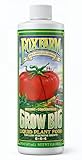
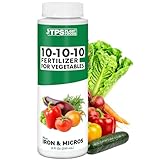
Liquid feeds for peak season

How to choose
- Growing in containers? Favour a liquid feed (easy to control) or a slow-release granule mixed into the potting mix.
- Growing in the ground? A granular feed at planting plus a liquid boost during fruiting is a reliable combination.
- Prefer organic? Build the bed with compost and use fish/seaweed or an approved organic tomato feed in season.
- Worried about blossom-end rot? Choose a tomato feed that includes calcium and, just as importantly, water consistently — erratic watering is the usual trigger.
Application timing
- At planting: work compost or a balanced granular feed into the soil or mix.
- Early growth: a balanced feed supports leaf and root development.
- From first flowers: switch fruiting crops to a higher-potassium tomato feed, applied on the schedule shown on the label.
- Through harvest: keep feeding fruiting crops — they draw down nutrients quickly while cropping.
Always follow the dose and frequency printed on your product; concentrations differ between brands, so there is no single universal rate.
Container vs in-ground
Container vegetables rely entirely on you for nutrients — potting mixes hold little reserve and frequent watering flushes feed out, so little-and-often liquid feeding (or a slow-release granule) works best. In-ground beds have a nutrient buffer from the soil and compost, so they can be fed less often with granular products.
Common mistakes to avoid
- Too much nitrogen on fruiting crops — you get a jungle of leaves and few tomatoes.
- Feeding seedlings at full strength — young plants burn easily; start dilute.
- Ignoring calcium and watering — the pair behind most blossom-end rot.
- Fertilizing dry soil — water first, then feed, to avoid root scorch.
- Guessing the dose — more is not better; over-feeding harms plants and soil life.
Safety and label-first guidance
Fertilizers are concentrated chemicals, whether synthetic or organic. Store them out of reach of children and pets, keep them in the original labelled container, and observe any “days to harvest” interval the label states for edible crops. Wear gloves with concentrated products and never exceed the labelled rate.
Useful related guides
- All plant fertilizers & nutrition
- NPK explained & fertilizer types
- Soil & growing media — the foundation your feed builds on
- Best fertilizer for roses & flowering plants
- Best fertilizer for indoor & houseplants
Quick questions
What is the best NPK for tomatoes? Once fruiting begins, a feed with relatively lower nitrogen and higher potassium suits tomatoes; balanced feeds are fine earlier in the season. Follow the label rate.
Can I use tomato fertilizer on other vegetables? Yes — high-potassium tomato feeds also suit peppers, cucumbers, squash and other fruiting crops. Leafy greens prefer a more balanced or higher-nitrogen feed.
How often should I feed? Container and fruiting crops in peak season often need feeding every 1–2 weeks with a liquid feed; in-ground beds fed with granular or slow-release products need it less often. Always defer to the product label.