
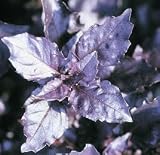



Plant Profile & Key Characteristics
Overview: Osmin purple basil is a moderate-growing herbaceous annual reaching 20-40 cm (8-16 in), grown as an edible culinary herb for its aromatic dark purple leaves. Its glossy colouring also makes it a valued ornamental for beds and containers.
Quick Specifications
| Specification | Attribute |
|---|---|
| Plant Type / Life Cycle | Annual (herbaceous) |
| Mature Size | 20-40 cm (8-16 in) tall |
| Growth Rate | Moderate |
| Toxicity | Non-toxic / edible (culinary herb) |
| Hardiness | USDA zones 5+ |
Growth Form & Structure
- Height & Spread: Reaches 20-40 cm (8-16 in) tall; in containers use a 5-12 L (1.5-3 gallon) pot with well-drained, organic-rich mix.
- Growth Habit & Form: Compact, bushy herb with glossy dark purple foliage.
- Lifespan & Maturity: Grown for a single warm season; leaves can be harvested once the plant reaches full size.
Anatomy & Physical Features
- Leaves & Foliage: Ovate leaves with serrated edges, mostly purple, sometimes green-purple, on purple stems.
- Flower Characteristics: Small purple flowers borne on an inflorescence.
Primary Uses & Landscape Value
- Edible Uses: Leaves used for pesto and as a spice.
- Functional & Ornamental Roles: Ornamental purple-leaved culinary herb; well suited to containers and edging.
Care Guide: Planting, Soil & Watering
Overview: Osmin purple basil thrives in warm weather with full sun to part shade, growing best in rich, well-draining soil that is kept steadily moist. Give it fertile ground enriched with organic matter and never let it dry out in heat, while still ensuring sharp drainage so the roots never sit in waterlogged soil.
Quick Care Requirements
| Requirement | Ideal Condition |
|---|---|
| Planting Season | In spring, once the soil is warm and all danger of frost has passed |
| Growth Rate | Moderate |
| Soil Type | Rich, well-draining soil high in organic matter |
| Water Need | Moderate to High – keep the soil consistently moist, watering more during heat |
Planting & Establishment
- Best Planting Season: Plant in spring, once nights are reliably warm and all danger of frost has passed – basil resents cold soil and will not tolerate frost.
- How to Plant:
- Hole Preparation: Dig a hole a little wider than the root ball and about the same depth, loosening the surrounding soil.
- Soil Amendments: Work in compost or well-rotted organic matter, and in heavy soil add perlite or vermiculite to open up drainage.
- Planting Depth: Set the transplant at the same level it grew in its pot, keeping the crown at soil level – do not bury the stem.
- Growth Speed & Expectations: Growth is moderate in warm, bright conditions, filling out steadily over the season. This cultivar is somewhat sensitive to heat and excess moisture, so prioritise good drainage and airflow and give it a little space from neighbouring plants. Source notes it prefers not-too-hot, not-too-moist conditions with space around it.
Soil, Watering & Drainage Care
- Soil Mix & Drainage Needs: Basil demands sharp drainage and airy soil. In the ground, amend heavy clay to keep it open; in containers use a rich potting or peat-based mix lightened with perlite or vermiculite, always in a pot with drainage holes rather than a standing saucer of water, which invites root rot.
- Watering Schedule & Technique:
- Young / Newly Planted: Keep the soil consistently moist while young plants establish, watering whenever the surface starts to dry.
- Established: Water deeply and regularly so the plant never wilts, increasing frequency noticeably through hot summer weather.
- Seasonal Adjustments: Water more during heat and dry spells; as an annual the plant naturally finishes at the first frost, so watering tapers off as the season ends.
Climate, Light & Hardiness
Osmin purple basil is a warm-season, frost-tender annual that grows best in full sun to half shade with steady warmth, though the site data specifically warns against conditions that are too hot or too moist. It has no cold hardiness and is killed outright by frost, so its USDA zone rating simply marks a suitably long, warm growing season.
Quick Climate Specifications
| Climate Zones | Tropical, subtropical, Mediterranean, temperate |
|---|---|
| USDA Hardiness Zones | 5+ (frost-tender warm-season annual; the zone marks growing-season suitability, not winter survival) |
| Optimal Temp Range | approximately 20–30°C (68–86°F), avoiding extreme heat per the site's care guidance |
| Cold Damage Begins | approximately below 10°C (50°F) - basil is prone to chilling injury well above freezing |
| Approx. Survival Minimum | killed outright at or near 0°C (32°F) |
| Frost Tolerance | None |
| Light Conditions | Full Sun / Half Shade |
| Wind Tolerance | Low–Moderate |
| Salt / Coastal Tolerance | Low |
Sunlight & Light Exposure
Optimal Light Setup
Full sun to half shade both work per the site data; avoid siting it where conditions become excessively hot.
Direct Sun Requirement
Direct sun is fine for most of the day, but ease off toward half shade in very hot climates.
Shade & Heat Management
Site data specifically warns against conditions that are too hot or too moist, so give this cultivar good drainage, airflow, and some relief from the most intense afternoon sun in hot regions.
Best Exposure / Orientation
A warm but not scorching, well-ventilated spot suits it best.
Temperature Extremes & Hardiness
USDA Hardiness & Regional Limits
Site data lists hardiness zone 5+, but as a frost-killed annual this describes zones with a growing season warm and long enough to raise it, not winter survival.
Cold Damage & Winter Protection
Basil suffers chilling injury well before actual frost; bring containers indoors or plan to replace the plant once nights turn cool in autumn.
Frost Sensitivity
Fully frost-tender at every growth stage; the site data also flags it as a generally sensitive plant.
Extreme Heat Tolerance
Moderate - the site data cautions against conditions that are too hot, so extra water and some shade in peak summer heat help.
Frost-Free Growing Season
Needs a full frost-free stretch of warm weather; sow in spring per the site's recommended planting season.
Wind, Humidity & Microclimate
Humidity Preferences
Moderate humidity suits it, but the site data also warns against overly moist conditions, so good drainage and airflow matter.
Dry-Air Tolerance
Moderate; hot, dry, windy conditions can cause wilting without extra water.
Wind Tolerance
Low to Moderate; soft, tender growth benefits from shelter.
Coastal / Salt Tolerance
Low; not adapted to salt spray or saline soils.
Rainfall & Seasonal Moisture
Needs consistent but not excessive moisture through the warm season.
Microclimate Recommendations
Give it good airflow and avoid overly hot, muggy pockets of the garden; move container plants indoors before any risk of frost.
Growing in Pots, Balconies & Indoors
Osmin purple basil is a first-rate container herb for a balcony, patio or sunny windowsill rather than a deep-indoor houseplant – it needs strong, direct light to stay compact and full of flavour, which a room’s interior rarely supplies. Like most basils, it also adapts well to a hydroponic system (DWC or NFT) – the strong light it already needs translates easily into grow-light setups, and basil is one of the most forgiving herbs for a hydroponic beginner.
Quick Details
- Container Size: 5-12 L (1.5-3 gal)
- Indoor Suitability: Not a deep-indoor houseplant; thrives on a bright, sunny windowsill with direct light
- Best Spot: Full sun to half shade; the sunniest balcony, patio or windowsill you have
- Soil & Drainage: Well-aerated, organic-rich mix (potting mix or peat/coir with perlite or vermiculite); must drain freely
- Watering in Pots: Keep the mix moist (not waterlogged) and let excess drain away; pots dry fast in heat
Indoors & On the Windowsill
- Houseplant limits: The grower does not rate it as a deep-indoor houseplant – away from a window the light is too weak and growth turns leggy and less flavourful.
- Windowsill growing: On a bright, sunny sill with direct light it does well – pick a compact plant, turn the pot now and then for even growth, and pinch out the tips.
- Overwintering indoors: Basil is tender, so in cold climates a big reason to pot it is to bring it inside before frost – keep it on a bright sill in the cold season to carry it over or extend the harvest.
On a Balcony or Patio
- Light & warmth: Give it the sunniest, most sheltered corner. Walls and paving reflect heat, which basil enjoys, but that also dries pots quickly – check moisture daily in hot weather and water more on warm days. A drip irrigation kit with a timer can take over that watering check automatically.
- Wind & practicalities: Shelter it from strong wind, which shreds soft leaves and dries the mix; make sure the pot drains freely and sits where run-off will not stain the floor.
Choosing the Pot, Soil & Long-Term Care
- Pot & drainage: The grower suggests a 5-12 L (1.5-3 gal) container with strong drainage holes. Skip a standing-water saucer under the pot to avoid root rot; terracotta breathes and dries faster, while glazed or plastic pots hold moisture longer.
- Potting mix: Use a well-aerated, organic-rich mix – potting compost, or peat/coir blended with perlite or vermiculite for drainage.
- Feeding: Potted herbs need feeding more often than those in the ground, as nutrients leach out with each watering – a light, regular feed through the growing season keeps the leaves coming.
- Repotting: Where it is kept as a perennial, the grower advises refreshing all or part of the mix about every two years; pot up if roots fill the container.
Growing this plant in a greenhouse
A greenhouse can give osmin purple basil frost protection, cold protection, humidity control and extra warmth.
Greenhouse at a glance
| Greenhouse suitability | Conditional - depends on your climate |
|---|---|
| Main benefits | frost protection, cold protection, humidity control, extra warmth |
| Season extension | earlier spring & later autumn |
| Outdoor protection advisable below | about 10°C |
| Maintain greenhouse minimum | around 10°C for active growth |
| Suitable types | heated greenhouse, polycarbonate greenhouse |
| Heating | Heating is recommended in cold climates for continuous growth. |
Related greenhouse guides
- Greenhouses: How to Choose the Right Greenhouse
- Best Greenhouse Heaters
- Greenhouse Climate Control: Temperature, Ventilation and Humidity
- Polycarbonate Greenhouses: What to Look for Before Buying
Fertilizing & Feeding
A light feeder: this sensitive, deep-purple-leaved basil is grown as much for color as for flavor, so restrained, balanced feeding in well-spaced, airy conditions keeps growth steady without pushing soft growth prone to stress.
Quick Fertilizing Specs
| Feeding Level | Light feeder |
|---|---|
| Main Nutrient Priority | Light, balanced feeding that supports steady growth without forcing soft tissue on this sensitive cultivar |
| Best Feeding Period | Through the spring and summer growing season |
| Organic Options | Compost or organic matter worked into well-drained soil |
| Reduce/Stop Feeding | Feeding stops naturally when cold weather ends the growing season for this annual |
| Micronutrients | Usually adequate from a complete fertilizer and organic matter |
| Soil pH | Tolerates a range of well-drained soil |
Feeding by Growth Stage
Establishment after planting
Help a newly planted osmin purple basil establish roots before it pushes new colored foliage.
| Nutrient direction | A balanced fertilizer supports steady root establishment as the plant settles in. |
|---|---|
| Timing | At planting in spring. |
| Frequency | A light feeding at planting is usually enough while roots establish. |
| Fertilizer types | A balanced complete fertilizer, Compost or organic matter worked into the planting soil |
| Precautions | This is noted as a sensitive plant; keep it spaced from other plants for airflow and avoid overfeeding tender young roots. |
Active growth and leaf harvest
Maintain steady production of this variety’s deep purple, pesto-grade leaves without forcing soft, stress-prone growth.
| Nutrient direction | Light, balanced feeding suits this sensitive cultivar; it is not noted to be a heavy feeder like a fast-growing green basil. |
|---|---|
| Timing | Through the active growing season while harvesting leaves. |
| Frequency | Occasional light feeding is usually enough for an established plant. |
| Fertilizer types | A balanced complete fertilizer, used sparingly, Compost or organic matter as a light top-dressing |
| Precautions | Avoid conditions that are too hot or overly moist, and keep plants spaced for airflow; overfeeding adds further stress to this sensitive cultivar. |
Nutrient Deficiency Signs & Corrections
New growth is thin and pale rather than the expected vigorous deep purple.
| Possible causes | low available soil nitrogen, leaching from watering in hot conditions, thin, low-organic-matter soil |
|---|---|
| Appears first on | older, lower leaves |
| What to check | recent feeding history, soil organic matter, watering and drainage |
| Possible correction | Apply a light, balanced fertilizer; avoid overcorrecting on this sensitive cultivar. |
New leaves look faded or unusually dull for this variety’s normally deep purple color, sometimes with pale veins.
| Possible causes | high soil pH limiting iron availability, waterlogged soil from overly moist conditions, compacted or poorly drained soil restricting roots |
|---|---|
| Appears first on | newest leaves |
| What to check | soil pH and drainage, standing water after watering, root health |
| Possible correction | Improve drainage and soil pH balance; because the purple pigment can mask early chlorosis, check new growth closely and apply a chelated iron product per its label if the issue persists. |
Leaf margins brown or scorch despite regular watering.
| Possible causes | fertilizer salt buildup, especially in container-grown plants, under-watering that concentrates salts, feeding more heavily than this light-feeding, sensitive cultivar tolerates |
|---|---|
| Appears first on | leaf margins and tips |
| What to check | recent fertilizer amounts, watering consistency, container or soil drainage |
| Possible correction | Ease off feeding, water thoroughly to flush salts, then resume lighter feeding. |
Pruning, Training & Seasonal Maintenance
Osmin purple basil is a sensitive, deep-purple-leaved sweet-basil selection whose own care notes specifically call for thinning out thin/weak branches in addition to removing bloom stems, rather than just pinching for general bushiness. It tolerates regular light pruning but, being noted as sensitive, responds poorly to heavy cuts. Its bloom season runs summer into autumn – longer than most basils in this batch – so flower-spike removal is a longer-running task here than for the earlier-finishing cultivars.
Quick Pruning & Maintenance Specs
| Pruning Tolerance | Moderate (sensitive plant) |
| Primary Pruning Window | Spring through autumn (extended by this cultivar’s longer bloom season) |
| Typical Frequency | Every 1–2 weeks |
| Main Objective | Remove thin/weak interior branches and flower spikes; keep foliage colour and density even |
| Young Plant Priority | Early tip-pinch for branching, done gently given sensitivity |
| Mature Plant Priority | Thin weak spindly stems; pinch flower buds through a long bloom window |
| Best Tool Type | Fingers or precision snips |
| Avoid Heavy Pruning During | Any stress period – sensitive plant |
Pruning by Plant Age & Size
Newly Established
Remove only damaged growth; go gently given this cultivar’s noted sensitivity.
Young / Formative
A light tip-pinch above a leaf-node pair builds early branching; avoid pinching hard or often at this stage since the plant is sensitive to stress.
Mature / Established
Thin out thin, weak branches specifically – this cultivar’s own care note calls this out as necessary, distinct from ordinary tip-pinching, likely because purple-leaved selections can throw spindly, poorly coloured interior shoots that compete with the stronger, more richly coloured stems.
Seasonal Pruning Schedule
Ongoing (spring–autumn): objective is to keep the plant filled with strong, well-coloured stems and out of premature bloom; remove weak/thin branches and flower spikes as they appear; because bloom runs later into the season here than in most of this batch, keep checking for buds into early autumn; response is continued branching from the remaining strong stems.
Structural Pruning & Training
No formal training system; the main structural task is thinning out weak branches specifically, which both improves airflow (useful for a sensitive plant) and keeps the ornamental purple colour concentrated on the vigorous stems.
Special Growth to Remove
Thin, weak side-branches and flower spikes are both explicitly called out for removal in this cultivar’s own care guidance.
Container & Small-Space Pruning
In a 5–12 L pot, thin weak branches promptly since a sensitive plant in a container has less reserve capacity to support unproductive growth; keep the canopy open for airflow given the plant’s sensitivity to stress.
Tools
Fingers or precision snips – all growth is soft.
Tool Hygiene & Disease Risk
Routine, though err toward extra care with clean tools given this cultivar’s noted sensitivity – a stressed plant is more vulnerable to opportunistic fungal issues than a vigorous one.
Cut Placement & Technique
Cut weak branches back to their point of origin at a stronger stem; pinch flower buds and stem tips just above a leaf-node pair.
Heavy Pruning & Rejuvenation
Not tolerated – this is a herbaceous annual and a self-described sensitive plant, so no hard rejuvenation; keep cuts light and frequent rather than infrequent and heavy.
Post-Pruning Care
Water normally; avoid pruning in extreme heat given the plant’s sensitivity, and don’t combine a pruning session with fertilising, transplant shock, or a heat spike.
Common Pruning Mistakes
Skipping the weak-branch thinning this cultivar specifically calls for and only pinching flowers; over-pruning a plant already flagged as sensitive; letting the extended summer-to-autumn bloom window go unchecked.
When NOT to Prune
Avoid pruning during heat stress, right after transplant, and during any period this sensitive plant shows wilting or stress signs.
Recommended Tools (by task)
- precision_snips – thinning weak branches, pinching flower spikes and harvesting stems.
Propagation Guide
Osmin purple basil, valued for its deep purple leaves and stems, is easy to start from seed, and stems root just as reliably when placed in water. As an open-pollinated purple type, keep it away from green basil varieties when saving seed if you want the purple color to stay true; propagation by either method is easy.
Quick Propagation Specs
| Best Propagation Method | Seed |
| Alternative Methods | Stem cuttings, rooted in water |
| Propagation Difficulty | Easy |
| Seed True-to-Type | Usually true to the purple type when isolated from green or other basil varieties (basil cross-pollinates readily) |
| Vegetative True-to-Type | Yes – guarantees the exact purple clone |
| Best Propagation Season | Spring, after the last frost (cuttings: spring – early summer) |
| Seed Germination Time | 5–17 days |
| Cutting Rooting Time | 1–2 weeks |
| Germination Temperature | 20–30°C (68–86°F), better around 25°C (77°F) |
| Seed Sowing Depth | 0.4–0.6 cm |
Growing from Seed
Seed Handling & Viability
Store seed at room temperature in a dry location until sowing.
Sowing Season
Spring, after the last frost.
Sowing Depth & Orientation
Sow at 0.4–0.6 cm. For direct sowing, space plants roughly 15–25 cm apart.
Germination Conditions
Moist soil in a warm, almost full-sun spot, at 20–30°C (68–86°F), ideally closer to 25°C (77°F). Give average to generous water.
Germination Time
5–17 days.
Seedling Care
Grow seedlings on in well-drained soil.
Stem Cuttings
Cutting Type
Stem (tip) cuttings.
Best Timing
Spring through early summer.
Cutting Preparation
Take a firm, non-flowering stem tip a few inches long and strip off the lower leaves before rooting.
Rooting Setup
Place cuttings in a glass of water, changing the water every few days, until roots form.
Rooting Hormone
Unnecessary – basil stems root readily on their own.
Rooting Time
1–2 weeks.
Bloom & Edible Flower Guide
Quick Details
- Bloom Season: Summer into autumn
- Time to First Bloom: An annual herb – it runs up to flower in its first summer, once the heat and long days arrive
- Flower Appearance: Small purple flowers carried in a slender spike at the stem tips
- Edibility: Edible – basil flowers taste like a gentler version of the leaf and make a nice garnish, though pinching them off keeps the foliage tender
Detailed Blooming Overview
Osmin purple basil pairs deep-purple foliage with slender purple flower spikes from midsummer into autumn. Once it flowers the plant slows its leaf production, so most growers pinch out the spikes as they form to keep the plant bushy and productive – though the dark spikes are handsome enough that some leave a few for show and for the bees.
Flower Characteristics
- Small purple flowers arranged in a slender terminal spike above the dark foliage.
- Open a few at a time from the base of the spike upward.
- Lightly fragrant and a good nectar source for bees and other pollinators.
Bloom Care & Thinning
- Pinching the bloom: Pinch or thin the flower spikes as soon as they appear – the plant pours all its strength into flowering, and removing them keeps the leaf harvest going.
- Pollination: Pollinated by bees and other pollinators.
- If you let it bloom: Leave a few spikes for pollinators, knowing leaf flavour will fade as the plant matures.
Bloom Health & Protection
- Aphids: They favour the soft flowering tips – a spray of water or insecticidal soap, or a little neem oil, keeps them down.
Fruit & Uses
Osmin purple basil is grown for its deep-purple (occasionally green-purple) leaves, which carry classic basil flavor along with a striking color. The leaves are eaten fresh as a culinary herb, in pesto (which takes on a purple tint), and as a general spice.
Quick Edible Specs
| Edible Parts | Leaves |
| Main Use(s) | Culinary – pesto, spice; also valued for garnish/color |
| Eaten Raw or Cooked | Raw or cooked |
| Preparation Required | None |
| Harvest Season | All season, once the plant is fully grown |
| Time to First Harvest | Once the plant is fully grown, typically a number of weeks after transplanting |
| Storage | Best used fresh; can be dried for longer storage |
Leaves & Greens
Leaves are mostly purple, sometimes a mixed green-purple, oval with a serrated (toothed) edge, carried on purple stems. They are used in pesto, which takes on the leaf’s purple color, and as a general spice or herb. Once the plant is fully grown, harvest by trimming branches back, leaving a few buds per branch so it keeps producing; letting it flower heavily diverts energy from leaf growth, so pinching out blooms as they start (see Pruning) helps keep leaf production going.
Preparation, Uses & Safety
Typically used fresh; no cooking or special preparation is required. Standard, safe culinary herb with no specific safety caution in normal food use.
Pests, Diseases & Troubleshooting
Overview: Basil is a tender, soft-leaved annual herb prized by a fairly small but persistent group of sap-suckers and leaf-chewers, while its single most serious problem is fungal — basil downy mildew. Because the leaves are eaten, management leans hard on prevention: good airflow, dry foliage, resistant types, and hand or organic controls rather than harsh sprays. ‘Osmin Purple’ is a deep purple sweet basil; like other purple types it is somewhat tender and no more resistant to downy mildew than green basil.
Quick Troubleshooting Overview
| Issue / Pest | Main Symptom | Primary Solution |
|---|---|---|
| Downy mildew | Yellowing between veins; grey-purple fuzz on leaf underside | Airflow, dry foliage, resistant varieties; remove & destroy infected plants |
| Aphids | Clusters on tips & undersides; sticky, curled growth | Hose off; insecticidal soap / neem; encourage ladybirds |
| Armyworms / loopers (“prodenia”) | Chewed, ragged leaves; caterpillars & frass | Hand-pick; Bt (B. thuringiensis) spray |
| Slugs & snails | Large holes, slime trails on seedlings | Hand-pick at night; traps; iron-phosphate bait; barriers |
| Japanese beetles | Skeletonised leaves in warm season | Hand-pick into soapy water; row cover |
| Fusarium wilt | Sudden one-sided wilt; brown streaks in stem | No cure — remove; grow resistant strains & rotate |
Common Pests & Management
- Aphids (Aphis spp. / Myzus persicae):
- Symptoms: Soft green, black or grey clusters on growing tips, flower spikes and leaf undersides; sticky honeydew, sooty mould and curled, stunted new growth. They also spread viruses.
- Prevention & Control: Knock them off with a firm water spray, then treat undersides with insecticidal soap or neem oil, repeating every few days. Encourage ladybirds, lacewings and hoverflies; avoid heavy nitrogen that pushes soft, aphid-prone growth. Because leaves are eaten, prefer soap/neem and rinse before use.
- Armyworms, cutworms & loopers (Spodoptera spp. — the source’s “prodenia”):
- Symptoms: Ragged holes and chewed leaf margins, sometimes whole seedlings felled at the base; green or brown caterpillars and dark frass pellets, feeding mostly at night.
- Prevention & Control: Hand-pick caterpillars in the evening and clear weedy egg-laying sites. Spray Bacillus thuringiensis (Bt), a selective organic caterpillar control safe on edibles; protect young plants with collars against cutworms.
- Slugs & snails (Deroceras / Cornu spp.):
- Symptoms: Large irregular holes in tender leaves and shredded seedlings, with tell-tale silvery slime trails; worst in cool, damp weather and overnight.
- Prevention & Control: Hand-pick after dark, set beer or shelter traps, and ring plants with copper tape, grit or crushed shell. Iron-phosphate pellets are a pet-safe organic bait. Water in the morning so foliage is dry by night.
- Japanese beetles & other leaf beetles (Popillia japonica):
- Symptoms: Skeletonised leaves left as lacy veins in warm months, with metallic beetles feeding in groups.
- Prevention & Control: Hand-pick into soapy water in the cool of the morning; use fine row cover over vulnerable plants. Neem oil deters feeding. Site lure traps well away from the plants, not among them.
- Whiteflies, thrips & spider mites (hot/dry or indoors):
- Symptoms: Tiny white flies rising in clouds when disturbed (whitefly); silvery flecking and distorted leaves (thrips); fine stippling and webbing in hot, dry air (mites).
- Prevention & Control: Yellow/blue sticky traps for monitoring, insecticidal soap or neem on leaf undersides, and better humidity/airflow. Rinse foliage and keep plants unstressed; these are mostly greenhouse and indoor problems.
Diseases & Fungal Issues
- Basil downy mildew (Peronospora belbahrii):
- Symptoms: The most damaging basil disease. Diffuse yellowing on the upper leaf, often blocked by the veins, with a tell-tale grey-to-purple fuzzy growth on the underside; leaves brown and drop. Spreads fast in warm, humid, still conditions.
- Treatment & Management: Prevention-led: grow resistant varieties, space widely for airflow, water at the base in the morning, and never crowd or work wet plants. Scout leaf undersides constantly; remove and destroy (do not compost) infected foliage or whole plants. Copper-based products give only limited help — resistance and culture matter far more.
- Fusarium wilt (Fusarium oxysporum f. sp. basilici):
- Symptoms: Sudden wilting, often on one side, with yellowing, stunting, and brown streaks in the stem; leaf drop and death. Soil- and seed-borne and long-lived in soil.
- Treatment & Management: There is no cure — pull and destroy affected plants. Grow certified clean seed and Fusarium-resistant varieties, rotate away from basil and mint-family crops for several years, and use fresh sterile mix for pots.
- Gray mould (Botrytis cinerea) & bacterial leaf spot (Pseudomonas cichorii):
- Symptoms: Fuzzy grey mould on cut or damaged tissue in cool damp air (Botrytis); dark, water-soaked, angular black spots and streaks that follow the veins, often after overhead watering (bacterial leaf spot).
- Treatment & Management: Improve airflow and light, avoid overhead watering and working wet plants, and remove affected leaves. Both are managed by sanitation and dry foliage; a copper product helps suppress the bacterial spot. Use clean tools and disease-free seed.
- Damping-off (Pythium / Rhizoctonia spp.):
- Symptoms: Seedlings collapse at the soil line with a pinched, water-soaked stem and fail to establish.
- Treatment & Management: Sow in fresh sterile mix, avoid overwatering and cold soil, give good light and airflow, and do not sow too thickly.
Growing Difficulties & Abiotic Problems
- Cold / chilling injury:
- Cause & Symptoms: Basil is very frost-tender — leaves blacken, turn translucent or develop dark blotches after cold nights, often below roughly 10°C even without frost.
- Correction Strategy: Keep it warm; plant out only in settled warmth, protect from cold snaps, and never refrigerate cut basil. Grow indoors in a bright warm spot in cool seasons.
- Bolting / premature flowering:
- Cause & Symptoms: Flower spikes form and leaves turn smaller and more bitter as the plant runs to seed under heat, long days or stress.
- Correction Strategy: Pinch out flower spikes and harvest regularly from the tips to keep the plant leafy and productive; provide even moisture and avoid stress.
- Leaf scorch / sunburn:
- Cause & Symptoms: Bleached, papery or brown patches on leaves in fierce sun and heat, especially on container plants that dry out.
- Correction Strategy: Keep the root zone evenly moist, offer light afternoon shade in extreme heat, and acclimatise indoor plants before moving them outside.
- Overwatering / root rot & nutrient issues:
- Cause & Symptoms: Yellowing lower leaves and wilting from soggy soil (root rot), or overall paleness from starved, water-logged roots.
- Correction Strategy: Use free-draining soil, water when the top of the mix begins to dry, and feed lightly with a balanced fertiliser for steady leafy growth — avoid heavy nitrogen, which dilutes aroma and invites aphids.
What Helps — Products & Tools
Because the leaves go on the plate, favour food-safe organic tools: insecticidal soap and neem oil for aphids, whitefly, thrips and mites; Bacillus thuringiensis (Bt) for caterpillars; iron-phosphate slug bait, copper tape and sticky traps for monitoring; and a copper fungicide only as limited backup against bacterial spot and downy mildew. Your strongest “products” are actually resistant varieties, wide spacing, morning base-watering and clean tools. Always rinse harvested leaves and follow label and pollinator-safety guidance.