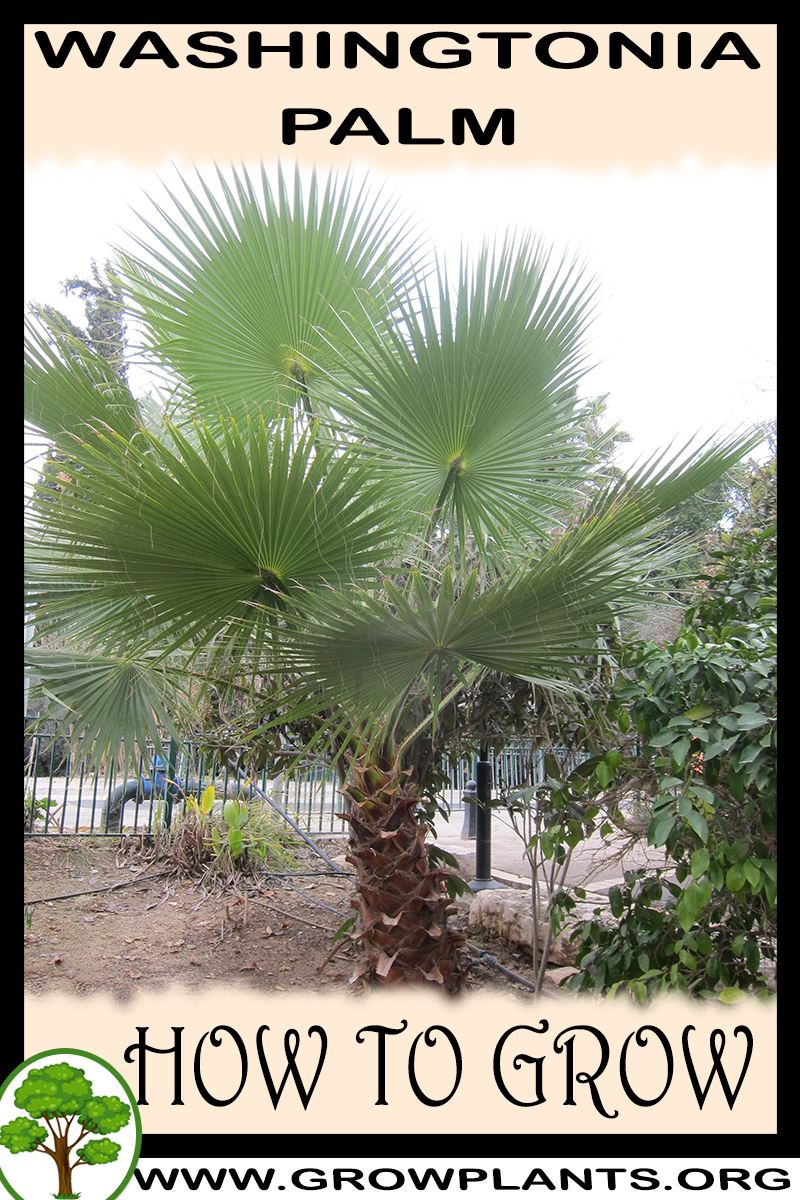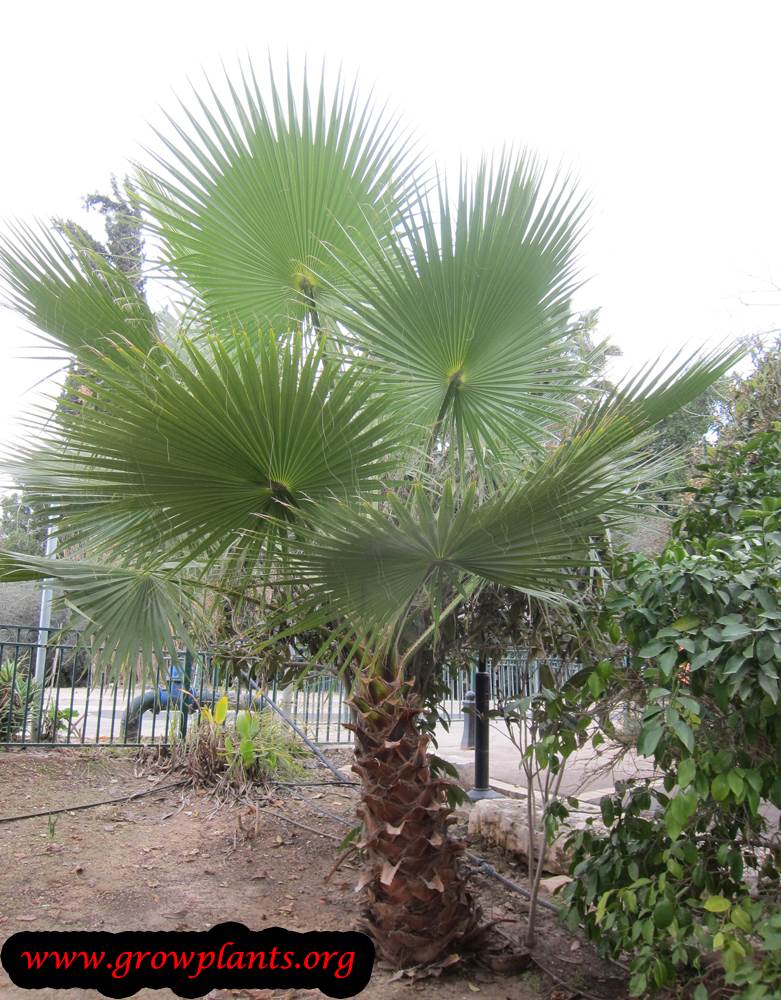




Care Guide: Planting, Soil & Watering
Overview: The Mexican fan palm is a tough, drought-tolerant palm that thrives in full sun and well-draining soil of almost any type. Once established it needs only occasional deep watering, though young plants appreciate more regular moisture.
Quick Care Requirements
| Requirement | Ideal Condition |
|---|---|
| Planting Season | Year-round in frost-free (zone 9+) climates |
| Growth Rate | Moderate |
| Soil Type | Well-draining soil; tolerates sandy and poor ground once established |
| Water Need | Low to Moderate — water young palms regularly, then let established trees dry between deep, occasional soakings |
Planting & Establishment
- Best Planting Season: Plant at almost any time in frost-free regions (zone 9 and warmer); give it a warm, open, sunny position with room for its eventual height.
- How to Plant:
- Hole Preparation: Dig a hole about twice the width of the root ball and the same depth, loosening the surrounding soil so the roots can spread easily.
- Soil Amendments: Improve heavy ground with grit or coarse sand for sharp drainage; this palm is not fussy about fertility but hates waterlogging.
- Planting Depth: Set the palm at the same depth it grew in its container, with the root collar level with the soil surface — do not bury the trunk base.
- Growth Speed & Expectations: Growth is moderate and steadier once established; the palm can ultimately reach 10–25 m, so allow plenty of space.
Soil, Watering & Drainage Care
- Soil Mix & Drainage Needs: Any free-draining soil suits it, including sandy and rocky ground; sharp drainage is the priority, as standing water rots the roots.
- Watering Schedule & Technique:
- Young / Newly Planted: Water young palms regularly to build a strong root system.
- Established: Once established the palm is highly drought tolerant — water deeply but infrequently, letting the soil dry well between soakings.
- Seasonal Adjustments: Water a little more during prolonged summer heat and cut right back in cool, wet weather.
Climate, Light & Hardiness
Washingtonia palm (Mexican fan palm) is an adaptable, drought-tolerant palm suited to a very broad range of climates - Mediterranean, desert, subtropical, temperate, and tropical - listed for USDA zone 9 and warmer. It requires full sun and well-drained soil, and needs only modest watering once established.
Quick Climate Specifications
| Climate Zones | Mediterranean, desert, subtropical, temperate, tropical |
|---|---|
| USDA Hardiness Zones | 9+ |
| Frost Tolerance | Moderate |
| Light Conditions | Full sun |
Sunlight & Light Exposure
Optimal Light Setup
Needs full sun for healthy, upright growth.
Temperature Extremes & Hardiness
USDA Hardiness & Regional Limits
One of the more widely adaptable palms on the site, growing across five different climate types from USDA zone 9 upward.
Wind, Humidity & Microclimate
Dry-Air Tolerance
Its suitability to desert climates and modest watering needs indicate good tolerance of dry air and drought once established.
Growing in Pots, Balconies & Indoors
Washingtonia palm (Mexican fan palm) is a drought-tolerant palm that reaches 10-25 m. The grower does not rate it as a houseplant. The grower advises against long-term container growing – it is a large palm that needs open ground to develop and fruit.
Quick Details
- Container Size: Not suited to long-term pots – a large tree; a big pot only holds a young plant for a while
- Indoor Suitability: Not a houseplant – far too large; a young plant can sit in a bright spot only briefly
- Best Spot: Full sun
- Soil & Drainage: Free-draining mix while young in a pot
- Watering in Pots: Keep a potted young palm’s mix moist – pots dry fast in sun; never waterlogged
Indoors & On the Windowsill
- Houseplant limits: The grower marks it as not a houseplant. It grows into a 10-25 m palm and needs full sun, so it cannot be kept as an indoor plant beyond the seedling stage.
- While young: A young plant may live in a large pot in a bright, sunny position for a few years, but it must eventually go into open ground.
On a Balcony or Patio
- Light & weight: While young it can stand on a sunny balcony or patio in a large, heavy, well-drained pot; pots dry fast in sun, so water often, and account for the considerable weight.
- Long term: As it grows it becomes too tall and heavy for a balcony and needs planting out.
Choosing the Pot, Soil & Long-Term Care
- Pot & drainage: A large pot with strong drainage holes for a young plant; empty any standing saucer so the roots never sit in water and rot.
- Potting mix: Well-aerated, free-draining mix – a good potting mix, or peat/coir blended with perlite or vermiculite and some organic matter.
- Feeding: Potted plants use up nutrients faster because watering leaches them out, so feed a little more often than plants in open ground; a potted palm benefits from a palm-suitable feed in the growing season.
- Moving on: Pot up as it grows and plan to plant it in open ground before it becomes root-bound and top-heavy.
Fertilizing & Feeding
A light feeder: this large, drought-tolerant landscape palm is grown mainly for its tall, arching canopy rather than for its fruit, so it needs only modest feeding to stay healthy and does not benefit from heavy inputs.
Quick Fertilizing Specs
| Feeding Level | Light feeder |
|---|---|
| Main Nutrient Priority | A balanced palm-formulated fertilizer with potassium and magnesium supports canopy health without over-feeding this drought-tolerant, mainly ornamental palm |
| Best Feeding Period | Through the warm growing season |
| Organic Options | A modest amount of organic matter worked into well-drained soil at planting |
| Reduce/Stop Feeding | Feeding stays light and eases off further as growth slows in cooler months |
| Micronutrients | A palm-formulated fertilizer carrying manganese and magnesium as routine trace nutrients supports healthy fronds |
| Soil pH | Tolerates a wide range of well-drained soil |
Feeding by Growth Stage
Establishment after planting
Help a newly planted Washingtonia palm establish roots before it grows into its tall, fast-arching canopy.
| Nutrient direction | A balanced fertilizer at a modest rate supports root establishment in this drought-tolerant palm. |
|---|---|
| Timing | At planting, during the warm growing season. |
| Frequency | A light feeding at planting is usually enough while roots establish. |
| Fertilizer types | A balanced complete fertilizer at a light rate, A modest amount of organic matter worked into well-drained soil |
| Precautions | Give this palm full sun and well-drained soil, and avoid overwatering once established since it tolerates lower water once its roots are in. |
Established canopy maintenance
Maintain this large, mainly ornamental palm’s canopy health as it matures, since its fruit is edible but a minor feature compared with its landscape role.
| Nutrient direction | A palm-formulated fertilizer with potassium and magnesium, applied at a light-to-moderate rate, keeps fronds healthy without over-feeding this naturally drought-tolerant palm; routine manganese and magnesium in a complete palm product help prevent common frond problems. |
|---|---|
| Timing | Through the warm growing season. |
| Frequency | Light, infrequent feeding is usually enough for this drought-tolerant palm once established. |
| Fertilizer types | A palm-formulated fertilizer with potassium and magnesium, at a light rate, Organic matter as an occasional top-dressing |
| Routine trace nutrients | manganese, magnesium |
| Precautions | Leave dead fronds in place rather than cutting at the trunk, since they help protect it, and watch nearby areas since this palm can self-seed and naturalize where fruit drops. |
Nutrient Deficiency Signs & Corrections
Older, lower fronds show yellow-to-orange spotting and necrotic leaflet tips.
| Possible causes | low soil potassium, common in palms grown without a palm-formulated fertilizer, sandy or fast-draining soil that leaches potassium, a long gap since the last palm-appropriate feeding |
|---|---|
| Appears first on | oldest fronds |
| What to check | recent fertilizer type and whether it is palm-formulated, frond age pattern of symptoms, soil drainage |
| Possible correction | Switch to a palm-formulated fertilizer supplying potassium and magnesium, applied per its label. |
New emerging fronds appear frizzled, weak, or discolored.
| Possible causes | low soil manganese, especially in high-pH or poorly drained soil, a fertilizer program lacking routine manganese, root stress limiting nutrient uptake |
|---|---|
| Appears first on | newest emerging fronds |
| What to check | soil pH and drainage, fertilizer history for manganese content, overall root and trunk health |
| Possible correction | Apply a chelated manganese product per its label and switch to a complete palm fertilizer that includes manganese. |
Frond tips brown or fronds look stressed despite adequate watering, especially after feeding more than usual.
| Possible causes | fertilizer salt buildup from feeding more heavily than this drought-tolerant palm needs, under-watering that concentrates salts in the root zone, a watering routine mismatched with this palm’s naturally low water demand |
|---|---|
| Appears first on | frond tips and margins |
| What to check | recent fertilizer amount relative to this palm’s light feeding needs, watering consistency, soil drainage |
| Possible correction | Reduce feeding to match this palm’s naturally light needs and water thoroughly to flush any salt buildup. |
Pruning, Training & Seasonal Maintenance
Washingtonia palm tolerates only dead-frond sanitation – it carries a single trunk with one permanent growing point (the apical bud) for its entire life, so no heading, thinning or crown-reduction cut is ever appropriate. As fronds die they are normally left to form a hanging "skirt" below the green crown; many landscapes trim this skirt back to bare trunk for appearance, sightlines or fire/rodent-harborage concerns, but this is a site-specific choice rather than a horticultural necessity – the skirt itself does not harm the palm and helps protect the trunk beneath it. Pruning here has no effect on flowering; the recorded safe window for frond removal is autumn.
Quick Pruning & Maintenance Specs
| Pruning Tolerance | Low – dead-frond sanitation only |
| Primary Pruning Window | Autumn |
| Typical Frequency | As needed, once individual fronds are fully brown/dead |
| Main Objective | Remove dead fronds; optionally manage the retained frond skirt for site reasons |
| Young Plant Priority | No green-frond removal – the single young crown needs full leaf area to build trunk caliper |
| Mature Plant Priority | Dead-frond removal per season; case-by-case skirt-trimming decision on tall specimens |
| Best Tool Type | Pruning saw for frond bases; pole pruner once the crown is elevated on a mature specimen |
| Avoid Heavy Pruning During | Always – no crown or green-frond pruning is tolerated at any age |
Pruning by Plant Age & Size
Newly Established
Remove only clearly dead material; keep every green frond while the young palm is still building trunk diameter.
Young / Formative
No structural training applies – this species has one growing point and cannot be shaped by cutting. The only task is periodic dead-frond removal as the lowest, oldest fronds senesce.
Mature / Established
Remove fully dead fronds each season, cutting to leave the base stub rather than flush against the trunk. On tall landscape specimens, decide whether to trim the accumulated skirt back to the trunk (common where fire load, rodent harborage, or sightlines are a concern) or leave it in place, which does not damage the palm.
Structural Pruning & Training
There is no thinning, heading or renewal cut available on this species – the single trunk carries one growing point for life, and any wound to that crown is permanent and potentially fatal. Height and spread cannot be controlled by pruning; they are fixed by the palm’s own growth habit.
Special Growth to Remove
- Fully dead, brown fronds – cut leaving the fibrous base stub, never flush to the trunk.
- Spent flower/fruit stalks, particularly on mature fruiting specimens over walkways or parking, where falling fruit clusters become litter.
- The retained dead-frond skirt, only where a site-specific reason (fire, rodent harborage, visibility) calls for it – not required for the palm’s health.
Tools
- Pruning saw – cutting through tough, fibrous frond bases.
- Pole pruner – reaching the crown once it is well elevated on a mature, 10–25m specimen.
Tool Hygiene & Disease Risk
Increased risk. This species is a host of the red palm weevil (Rhynchophorus ferrugineus), which can enter through fresh pruning wounds; keep cuts to a minimum and disinfect blades between palms where the weevil is active locally.
Cut Placement & Technique
Cut leaving the frond base stub intact rather than flush-cutting into the trunk. Never use climbing spikes/spurs to ascend the trunk – as a monocot, this palm has no vascular cambium to callus over wounds, so spike punctures are permanent, weaken the trunk, and can become long-term entry points for pests and rot; access the crown from a lift or pole tool instead.
Heavy Pruning & Rejuvenation
Not tolerated at any age. The single growing point cannot be cut back and regrown; removing green fronds only reduces the palm’s photosynthetic capacity and, on a very over-pruned ("pineapple-cut") specimen, weakens trunk taper and increases wind-throw risk in storms.
Post-Pruning Care
No feeding or extra watering is tied to routine dead-frond removal; periodically check cut stubs for pest entry, especially where red palm weevil is a local concern.
Common Pruning Mistakes
- Over-pruning green, healthy fronds for a "clean" look ("pineappling"/hurricane-cutting), which weakens the crown and raises storm-failure risk.
- Using climbing spikes on the trunk, leaving permanent, non-healing wounds.
- Flush-cutting frond bases instead of leaving the protective stub.
When NOT to Prune
- Never remove living, green fronds – only fully dead ones.
- Avoid unnecessary wounding during periods of known local red palm weevil activity.
Pruning Troubleshooting
| Problem | Possible Cause | What to Check | Corrective Action |
| Thinning, sparse-looking crown | Habitual over-removal of green fronds | Frond count and pruning history relative to crown size | Stop removing anything but fully dead fronds and allow the crown to rebuild |
| Trunk wounds or soft/rotting patches | Climbing-spike damage or flush-cut frond bases | Trunk surface for puncture marks or exposed cut faces | Avoid spikes; leave frond base stubs; monitor wounds for pest or fungal entry |
| Leaning or failure risk in storms | Chronic over-pruning has thinned crown mass and trunk taper | Recent pruning history and crown density | Discontinue heavy skirting/pineappling; let the crown fill back in over seasons |
Recommended Tools (by task)
- pruning_saw – cutting tough, fibrous dead-frond bases.
- pole_pruner – reaching the crown on a mature, tall specimen without climbing spikes.
- blade_disinfectant – reduces the risk of introducing red palm weevil or pathogens through pruning wounds.
Propagation Guide
Washingtonia palm is propagated from seed; site data confirms grafting or vegetative propagation is not necessary, and like most single-trunked palms it produces no offsets to divide. Compared with many other palms, Washingtonia seed germinates relatively easily and comparatively quickly, making this one of the more approachable palms to start from seed.
Quick Propagation Specs
| Best Propagation Method | Seed |
| Propagation Difficulty | Easy (for a palm) |
| Best Propagation Season | Matches the plant’s year-round planting season; ideally in warm months |
| Seed Germination Time | Often within a matter of weeks under warm conditions, faster than many other palm species |
| Germination Temperature | Warm, roughly 24-32°C (75-90°F) |
| Seed Sowing Depth | Sown shallow, with the seed lightly covered |
Growing from Seed
Seed Handling & Viability
Use clean, fully ripe seed with the fruit pulp removed; fresher seed germinates faster and more evenly.
Sowing Depth & Orientation
Sow shallow, with the seed lightly covered.
Germination Conditions
A warm, well-drained growing medium.
Germination Time
Comparatively quick for a palm, often within a few weeks under consistently warm conditions.
Seedling Care
Grow on in full sun once established, matching the mature plant’s light needs. Expect an initial period of below-ground root establishment, typical of palm seedlings, before top growth speeds up.
Bloom & Flower Guide
Quick Details
- Bloom Season: Spring
- Time to First Bloom: After several years, once the palm matures
- Flower Appearance: Small creamy-white flowers (sometimes tinged pink or yellow) on long, arching branched clusters
- Edibility: The flowers themselves are not eaten
Detailed Blooming Overview
The Mexican fan palm flowers in spring once mature, sending out long, arching branched clusters that reach well beyond the leaves and carry many small creamy-white flowers. Unlike the date and doum palms, its flowers are bisexual – each flower has both male and female parts – so a single tree can set seed on its own.
Flower Characteristics
- Small creamy-white flowers, sometimes tinged pink or yellow, borne in large numbers.
- Carried on long, arching branched clusters that extend past the foliage.
- The flowers are bisexual (each has both male and female parts).
Bloom Care & Thinning
- Managing the bloom: No thinning is needed; a single tree can produce seed without a partner.
- Pollination: The open flowers are worked by bees and other insects.
Fruit & Uses
Washingtonia Palm (fan palm) produces a small edible fruit, but it is grown almost entirely as an ornamental – the fruit is a minor, thin-fleshed food source rather than a cultivated crop. The pulp is eaten raw, mostly around a large central seed.
Quick Edible Specs
| Edible Parts | Fruit (thin pulp around a large seed) |
| Main Use(s) | Minor culinary – eaten fresh, historically dried and ground into a meal for cakes |
| Eaten Raw or Cooked | Raw, or dried |
| Preparation Required | None to eat fresh; drying and grinding for meal/cakes |
| Harvest Season | Autumn |
| Time to First Harvest | Several years from planting; harder to pick as the palm grows taller |
| Storage | Dried fruit/meal keeps considerably longer than fresh fruit |
| Safety/Toxicity Caveat | None noted for the thin pulp; the large hard seed is not eaten |
Fruit
The fruit is purple-black and roughly round, with only a thin layer of pulp around a large seed, ripening in autumn. Picking is easiest on young palms and becomes progressively harder as the crown rises with age; birds and bats also compete for the small crop.
Preparation, Uses & Safety
The site’s listed uses for this fruit (‘cakes, dry, juice, jam and frozen’) are identical to boilerplate text reused on other palms in this dataset. Given how thin the pulp is on this species, juice, jam, and freezing are not well-supported uses. What is genuinely documented is eating the ripe pulp fresh, and drying and grinding the fruit into a meal historically used for simple cakes. Treat this as a minor foraged food, not a cultivated fruit crop; no toxicity is noted for the edible pulp.
Pests, Diseases & Troubleshooting
Overview: Washingtonia fan palms are big, tough, drought-hardy palms with relatively few pests, but they are vulnerable to a handful of serious, potentially lethal problems – palm weevils, Fusarium wilt spread on dirty pruning tools, and bud rots in cool wet weather. Because these can kill a mature palm, sanitation and early recognition matter far more than routine spraying.
Quick Troubleshooting Overview
| Issue / Pest | Main Symptom | Primary Solution |
|---|---|---|
| Palm weevils / borers | Wilting crown, oozing holes, collapse | Sanitation; avoid wounding; targeted control |
| Fusarium wilt | One-sided frond death, dark rachis streak | Disinfect tools; no cure – remove infected palm |
| Scale & mealybugs | Bumps/cottony tufts; sooty mold | Horticultural oil; ant control |
| Spider mites | Stippling on fronds in dry heat | Hose fronds; horticultural oil |
| Bud / pink rot | Rotting spear, collapsing new growth | Improve drainage; copper fungicide to bud |
| Frizzle top | Weak, frizzled new fronds | Correct manganese deficiency |
Common Pests & Management
- Palm weevils & palm borer (Rhynchophorus / Dinapate wrightii):
- Symptoms: Large weevil larvae and borers tunnel into the crown and trunk; you see wilting or collapsing new fronds, oozing or chewed holes, a fermenting smell, and eventually a toppled crown. Damage is often advanced before it is noticed.
- Prevention & Control: Avoid unnecessary wounding and over-pruning, which attract egg-laying adults, and remove and destroy dead or infested palms that breed them. Use pheromone traps to monitor and targeted approved treatments where weevils are established; act at the first sign, as a hollowed crown cannot be saved.
- Palm scale & mealybugs (Diaspididae / Pseudococcus spp.):
- Symptoms: Brown or white waxy scales and cottony mealybug clusters on fronds and leaf bases, with yellowing, stippling, and sticky honeydew that blackens into sooty mold.
- Prevention & Control: Wash and wipe accessible fronds, control the ants that farm them, and encourage natural predators. Horticultural oil smothers both; repeat coverage of frond undersides and leaf bases as needed.
- Spider mites (Tetranychus / Oligonychus spp.):
- Symptoms: Fine yellow stippling and a dull, dusty look on fronds, with light webbing during hot, dry, dusty conditions.
- Prevention & Control: Hose the fronds to knock down mites and dust, keep the palm unstressed and watered, and encourage predatory mites. Horticultural oil treats persistent infestations.
- Giant palm weevil (South American / red) (Rhynchophorus palmarum / ferrugineus):
- Symptoms: Where present, these large weevils are the most dangerous palm pest; grubs destroy the growing point, causing the central fronds to wilt and the whole crown to collapse.
- Prevention & Control: Monitor with pheromone traps in known areas, avoid fresh wounds, and remove infested palms promptly to break the cycle. Follow regional programs and approved trunk treatments; prevention and early detection are essential.
Diseases & Fungal Issues
- Fusarium wilt (Fusarium oxysporum f. sp. canariensis):
- Symptoms: One-sided death of fronds, with leaflets browning along half the rachis and a distinctive dark reddish-brown stripe down the frond stalk; the palm declines over months. It spreads on contaminated pruning saws.
- Treatment & Management: There is no cure. Disinfect pruning tools between every palm, avoid over-pruning green fronds, and remove and destroy infected palms without replanting a susceptible palm in the same spot. Prevention through tool hygiene is the only real control.
- Pink rot / bud rot (Nalanthamala (Gliocladium) / Phytophthora / Thielaviopsis):
- Symptoms: Rotting of the spear and emerging fronds, with the new growth pulling out easily, sometimes pinkish spore masses; favored by cool, wet weather and stressed or damaged palms.
- Treatment & Management: Improve drainage and avoid crown injury and overwatering, keep the palm vigorous, and remove rotted tissue. Drench the bud with a copper fungicide early; severe bud rot that kills the single growing point is fatal.
- Ganoderma butt rot (Ganoderma zonatum):
- Symptoms: General decline, wilting, and a conk (bracket fungus) forming at the base of the trunk as the lower trunk rots internally; the palm is dead from the inside.
- Treatment & Management: There is no cure and no chemical control. Remove affected palms and their stumps, do not replant a palm in the same location, and avoid trunk wounds that admit the fungus.
- Diamond scale (Sphaerodothis / Phaeochoropsis neowashingtoniae):
- Symptoms: Shiny black, diamond-shaped fruiting bodies on fronds of Washingtonia in cool, humid, coastal climates, browning and killing fronds prematurely.
- Treatment & Management: Improve air movement, remove badly infected fronds, and keep the palm vigorous with proper feeding. It is largely cosmetic on healthy palms and rarely needs fungicide.
Growing Difficulties & Abiotic Problems
- Manganese deficiency (frizzle top):
- Cause & Symptoms: New fronds emerge weak, yellow, and frizzled with dead streaks and reduced size, from manganese shortage in cold, wet, or alkaline soils.
- Correction Strategy: Apply a manganese sulfate soil or foliar treatment and correct waterlogging and pH; catch it early, as severely affected buds may not recover.
- Potassium deficiency:
- Cause & Symptoms: Older fronds develop translucent yellow-orange spotting and necrotic, frizzled tips while newer fronds stay greener.
- Correction Strategy: Feed with a slow-release palm fertilizer that includes potassium and magnesium, and avoid removing yellowing older fronds too soon, as the palm draws nutrients from them.
- Cold damage:
- Cause & Symptoms: Browning of fronds and, in hard freezes, damage to the crown; Washingtonia robusta especially is only moderately cold-hardy.
- Correction Strategy: Site in a warm, sheltered spot in marginal climates, avoid feeding late in the warm season, and protect the crown during hard freezes; do not cut cold-damaged fronds until new growth confirms survival.
What Helps – Products & Tools
For fan palms the priorities are sanitation and nutrition, not routine insecticide: disinfect pruning tools against Fusarium, use pheromone traps to monitor weevils, and feed a complete slow-release palm fertilizer with manganese, potassium, and magnesium to prevent frizzle top and spotting. Horticultural oil handles scale, mealybugs, and mites, and a copper fungicide addresses bud and pink rot early. Follow the label and protect pollinators.