

Plant Profile & Key Characteristics
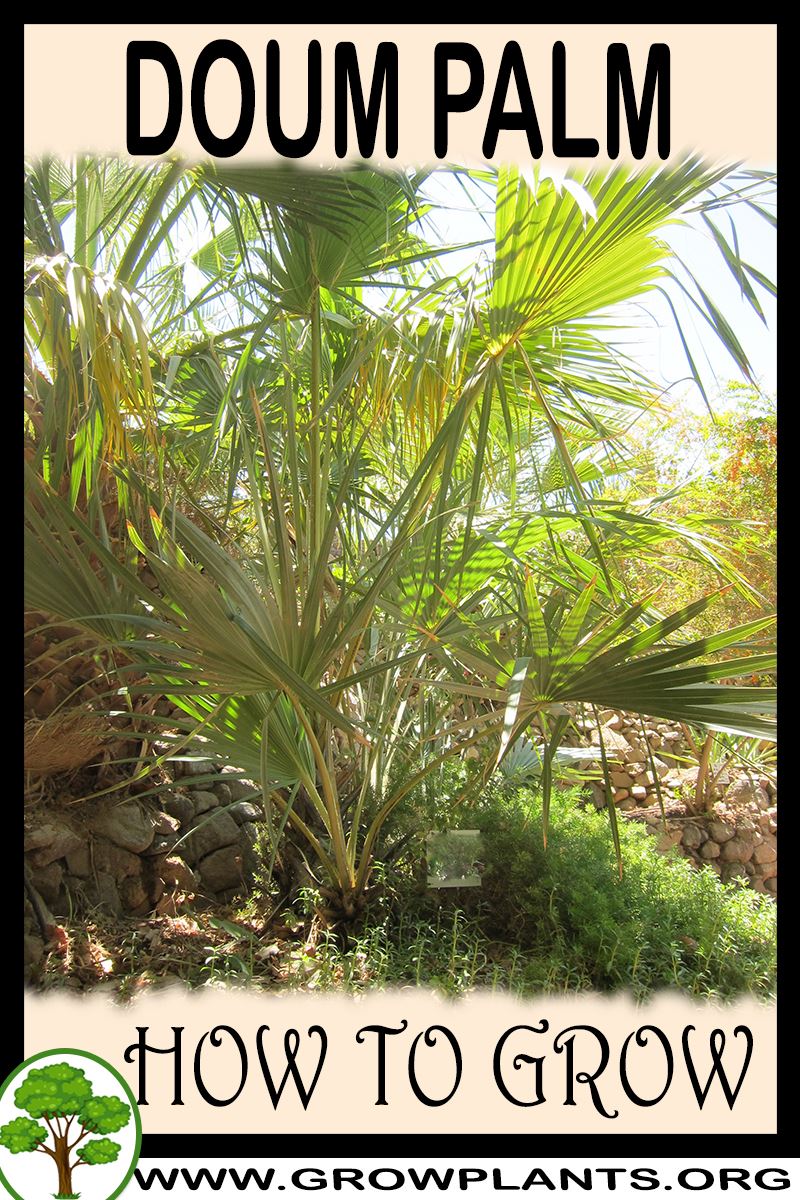
Overview: A large, drought-hardy evergreen desert palm reaching 10-15 m (30-45 ft), unusual for its forking (dichotomously branched) trunk. Grown for its edible gingerbread-flavoured fruit and as an ornamental and medicinal plant.
Quick Specifications
| Specification | Attribute |
|---|---|
| Plant Type / Life Cycle | Perennial (palm tree) |
| Foliage Type | Evergreen |
| Mature Size | 10-15 m tall (30-45 ft) |
| Growth Rate | Slow to Moderate |
| Root System | Fibrous (typical palm root system) |
| Toxicity | Non-toxic / edible fruit |
| Hardiness | USDA zones 10-12 |
Growth Form & Structure
- Height & Spread: Reaches 10-15 m (30-45 ft) in the ground; not suited to container growing.
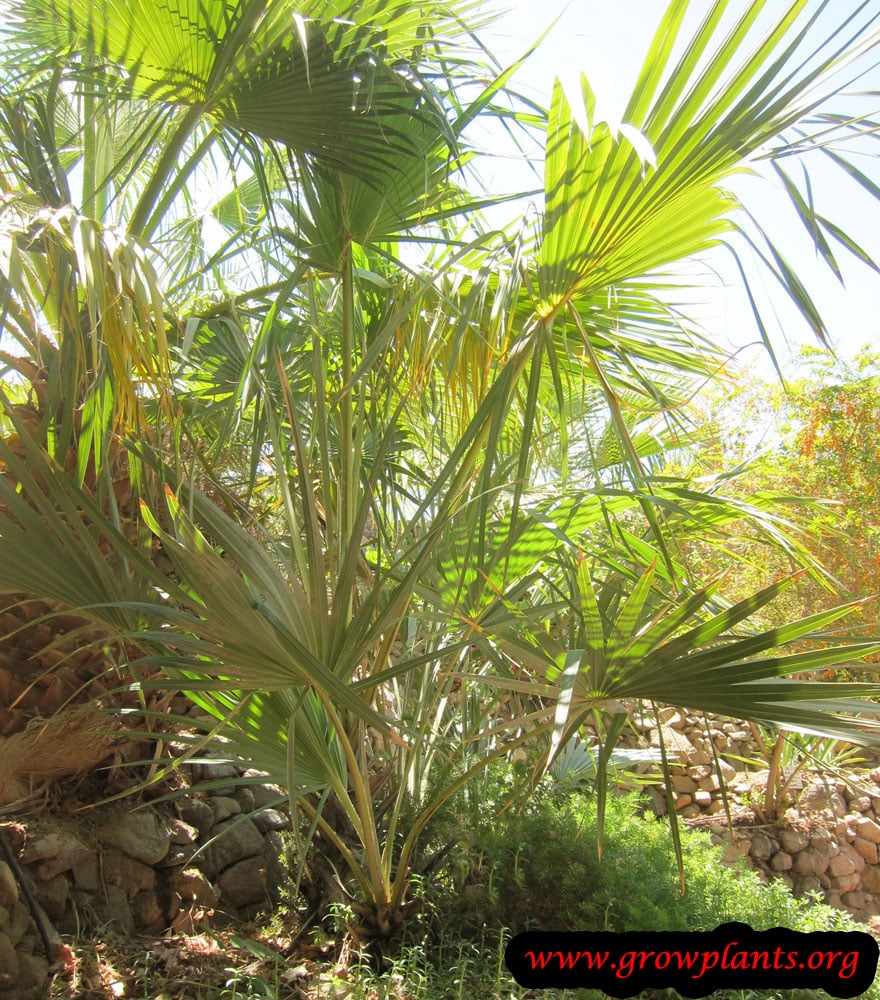
- Growth Habit & Form: Unusual among palms in branching repeatedly by forking, producing several fan-leaf crowns on one plant.
- Lifespan & Maturity: Very long-lived; slow to establish and begins bearing fruit only after about 7-10 years (see the Fruit guide).
Anatomy & Physical Features
- Trunk & Bark: Grey, forking trunks; old leaf bases are retained and protect the stem.
- Leaves & Foliage: Green, fan-shaped (palmate) fronds 1-2 m long, stiff and sword-like when young.
- Flower Characteristics: Yellow flowers on branched clusters; dioecious, with male and female flowers on separate plants (see the Bloom guide).
- Fruit Profile: Rounded, red-brown fruit with a dry, sweet gingerbread-flavoured rind (see the Fruit guide).
Primary Uses & Landscape Value
- Edible Uses: Fruit eaten raw or dried and used in cakes, juice, jam and frozen preparations.
- Functional & Ornamental Roles: Drought-tolerant ornamental and shade palm for desert climates; also has traditional medicinal uses.
Care Guide: Planting, Soil & Watering
Overview: The doum palm is a desert palm for full sun in hot, arid climates (zone 10–12). It is drought tolerant and needs sharply drained soil, disliking any waterlogging around its roots.
Quick Care Requirements
| Requirement | Ideal Condition |
|---|---|
| Planting Season | Spring, summer or autumn (warm season) |
| Growth Rate | Slow to Moderate |
| Soil Type | Sharply drained, sandy desert soil |
| Water Need | Moderate – drought tolerant |
Planting & Establishment
- Best Planting Season: Plant in warm weather – spring, summer or autumn.
- How to Plant:
- Hole Preparation: Dig a hole about twice the width of the root ball in free-draining ground.
- Soil Amendments: Add coarse sand or grit to heavy soils to sharpen drainage rather than heavy organic matter.
- Planting Depth: Plant at the same depth it grew previously, keeping the trunk base above the soil line.
- Growth Speed & Expectations: A slow to moderate grower, especially while young.
Soil, Watering & Drainage Care
- Soil Mix & Drainage Needs: Free-draining soil is essential; this desert palm resents wet roots and is not suited to container culture.
- Watering Schedule & Technique:
- Young / Newly Planted: Water regularly while young to help it establish, keeping the soil lightly moist but never soggy.
- Established: Once established it is drought tolerant – water moderately and let the soil dry between waterings.
- Seasonal Adjustments: Water more in extreme summer heat and very little in cool weather.
Climate, Light & Hardiness
Doum palm (Hyphaene thebaica) is a drought-tolerant desert palm restricted to hot, dry climates, listed for USDA zone 10–12. It requires full sun and well-drained soil.
Quick Climate Specifications
| Climate Zones | Desert |
|---|---|
| USDA Hardiness Zones | 10–12 |
| Frost Tolerance | Very Low |
| Light Conditions | Full sun |
Sunlight & Light Exposure
Optimal Light Setup
Needs full sun for healthy growth.
Temperature Extremes & Hardiness
USDA Hardiness & Regional Limits
Confined to a genuinely hot, largely frost-free desert climate range, USDA zone 10–12.
Wind, Humidity & Microclimate
Dry-Air Tolerance
Well adapted to the low-humidity, dry-air conditions of desert climates.
Growing in Pots, Balconies & Indoors
Doum palm (Hyphaene thebaica) is a drought-tolerant desert palm that reaches 10-15 m. The grower does not rate it as a houseplant. The grower advises against long-term container growing – it is a large palm that needs open ground to develop and fruit.
Quick Details
- Container Size: Not suited to long-term pots – a large tree; a big pot only holds a young plant for a while
- Indoor Suitability: Not a houseplant – far too large; a young plant can sit in a bright spot only briefly
- Best Spot: Full sun
- Soil & Drainage: Free-draining mix while young in a pot
- Watering in Pots: Keep a potted young palm’s mix moist – pots dry fast in sun; never waterlogged
Indoors & On the Windowsill
- Houseplant limits: The grower marks it as not a houseplant. It grows into a 10-15 m palm and needs full sun, so it cannot be kept as an indoor plant beyond the seedling stage.
- While young: A young plant may live in a large pot in a bright, sunny position for a few years, but it must eventually go into open ground.
On a Balcony or Patio
- Light & weight: While young it can stand on a sunny balcony or patio in a large, heavy, well-drained pot; pots dry fast in sun, so water often, and account for the considerable weight.
- Long term: As it grows it becomes too tall and heavy for a balcony and needs planting out.
Choosing the Pot, Soil & Long-Term Care
- Pot & drainage: A large pot with strong drainage holes for a young plant; empty any standing saucer so the roots never sit in water and rot.
- Potting mix: Well-aerated, free-draining mix – a good potting mix, or peat/coir blended with perlite or vermiculite and some organic matter.
- Feeding: Potted plants use up nutrients faster because watering leaches them out, so feed a little more often than plants in open ground; a potted palm benefits from a palm-suitable feed in the growing season.
- Moving on: Pot up as it grows and plan to plant it in open ground before it becomes root-bound and top-heavy.
Fertilizing & Feeding
A light feeder: this naturally slow-growing, drought-tolerant desert palm needs only modest nutrition, since heavier feeding would outpace a growth habit that is already unhurried by nature.
Quick Fertilizing Specs
| Feeding Level | Light feeder |
|---|---|
| Main Nutrient Priority | A balanced palm-formulated fertilizer with potassium and magnesium supports this slow-growing, drought-tolerant palm without pushing growth beyond what its desert-adapted habit calls for |
| Best Feeding Period | During its warm growing season |
| Organic Options | A modest amount of organic matter worked into well-drained soil at planting |
| Reduce/Stop Feeding | Feeding stays light and eases off further once growth visibly slows, in keeping with this slow-growing species |
| Micronutrients | A palm-formulated fertilizer carrying manganese and magnesium as routine trace nutrients supports healthy fronds |
| Soil pH | Tolerates a range of well-drained soil typical of desert plantings |
Feeding by Growth Stage
Establishment after planting
Help a newly planted doum palm establish roots in well-drained desert soil before its characteristically slow, branching growth gets underway.
| Nutrient direction | A balanced fertilizer supports root establishment without over-feeding this naturally slow-growing, drought-adapted palm. |
|---|---|
| Timing | At planting, during the warm growing season. |
| Frequency | A light feeding at planting is usually enough while roots establish; this slow grower rarely needs more. |
| Fertilizer types | A balanced complete fertilizer at a light rate, A modest amount of organic matter worked into well-drained soil |
| Precautions | Ensure sharp drainage since this desert-adapted palm dislikes waterlogged soil, and keep feeding light so it does not outpace this palm’s naturally slow growth habit. |
Established growth and fruiting
Maintain this slow-growing doum palm’s health and support its edible fruit once a female tree is established near a male pollinator.
| Nutrient direction | A palm-formulated fertilizer with potassium and magnesium, applied sparingly, suits this drought-tolerant, slow grower; routine manganese and magnesium in a complete palm product help prevent common frond problems. |
|---|---|
| Timing | Through the warm growing season. |
| Frequency | Infrequent, light feeding is usually enough for this slow-growing, desert-adapted palm. |
| Fertilizer types | A palm-formulated fertilizer with potassium and magnesium, at a light rate, Organic matter as an occasional root-zone top-dressing |
| Routine trace nutrients | manganese, magnesium |
| Precautions | Keep drainage sharp year-round, and note that its unusual forked, branching trunk and clustered fruit can be difficult to reach for harvest as the tree matures. |
Nutrient Deficiency Signs & Corrections
New emerging fronds appear frizzled, stunted, or weakly formed.
| Possible causes | low soil manganese in alkaline desert soil, a fertilizer program lacking routine manganese, root stress limiting nutrient uptake |
|---|---|
| Appears first on | newest emerging fronds |
| What to check | soil pH and drainage, fertilizer history for manganese content, overall root and trunk health |
| Possible correction | Apply a chelated manganese product per its label and switch to a complete palm fertilizer that includes manganese. |
Older fronds show yellow-orange spotting and leaflet tip dieback.
| Possible causes | low soil potassium, common where a palm-formulated fertilizer has never been used, fast-draining desert soil that leaches nutrients quickly, competing demand from fruit development |
|---|---|
| Appears first on | oldest fronds |
| What to check | recent fertilizer type, frond age pattern of symptoms, soil drainage |
| Possible correction | Switch to a palm-formulated fertilizer supplying potassium and magnesium, applied per its label. |
New growth emerges pale yellow between the veins.
| Possible causes | high soil pH common in desert or calcareous soils, limiting iron availability, low organic matter typical of desert soil, root stress from poor establishment |
|---|---|
| Appears first on | newest growth |
| What to check | soil pH, recent fertilizer and organic matter history, root establishment and overall vigor |
| Possible correction | Apply a chelated iron product per its label if the yellowing persists. |
Pruning, Training & Seasonal Maintenance
Doum palm tolerates only dead-frond sanitation, never structural pruning – and unlike most palms it is dichotomously branching, forking into multiple independent crowns as it matures rather than keeping a single growing point. The objective is simply removing fully dead fronds from each crown; the recorded safe window is autumn, in line with this desert-climate palm’s growth rhythm. Pruning has no effect on flowering, and since this is a dioecious species, sex is fixed per plant regardless of any pruning.
Quick Pruning & Maintenance Specs
| Pruning Tolerance | Low – sanitation only, per crown |
| Primary Pruning Window | Autumn |
| Typical Frequency | As needed, once fronds on a given crown are fully dead |
| Main Objective | Remove dead fronds without disturbing any of the branch crowns |
| Young Plant Priority | No green-frond removal – before branching begins, the single early crown needs full leaf area to establish |
| Mature Plant Priority | Treat each branch crown independently for dead-frond removal |
| Best Tool Type | Pruning saw for frond bases; pole pruner once crowns are elevated on a mature 10–15m specimen |
| Avoid Heavy Pruning During | Always – no crown or green-frond pruning is tolerated |
Pruning by Plant Age & Size
Newly Established
Before the trunk has forked, the young palm has a single crown; remove only clearly dead fronds and leave all green growth intact to build reserves.
Young / Formative
No training cut can induce or influence this palm’s forking habit – the dichotomous branching pattern is a developmental trait of the species, not a response to pruning. Maintenance stays limited to dead-material removal.
Mature / Established
As the trunk forks into multiple crowns over time, treat each branch as carrying its own independent growing point: remove only fully dead fronds on each crown separately, leaving the fibrous base stub attached to protect the trunk beneath it.
Structural Pruning & Training
Because this species branches naturally, a single branch’s growing point can be damaged or die without killing the whole palm the way it would on a solitary-trunk species – the other forked crowns typically continue growing independently. This does not mean damage is acceptable, but it changes how a problem on one crown should be assessed relative to the rest of the plant.
Special Growth to Remove
- Fully dead, brown fronds on any crown – remove leaving the base stub intact.
- Spent flower stalks once fully finished, if desired for tidiness.
Tools
- Pruning saw – tough, fibrous frond bases.
- Pole pruner – reaching crowns once they are elevated on a mature specimen; note that multiple crowns at different heights/angles from the fork may need separate access points.
Tool Hygiene & Disease Risk
Increased risk. This species is a host of the red palm weevil (Rhynchophorus ferrugineus), and pruning wounds are a known entry point; minimize cuts per crown and disinfect blades between palms where the weevil is present locally.
Cut Placement & Technique
Cut leaving the frond base stub rather than flush against the trunk, and never cut into or damage a crown’s growing point.
Heavy Pruning & Rejuvenation
Not tolerated on any individual crown – each growing point cannot regenerate lost tissue. Removing green fronds only reduces that crown’s vigor.
Post-Pruning Care
No special watering or feeding response is needed; periodically inspect cut stubs on each crown for pest entry.
Common Pruning Mistakes
- Removing green fronds for tidiness, weakening an individual crown.
- Flush-cutting frond bases and losing the trunk-protecting stub.
- Assuming damage to one crown threatens the whole palm and over-cutting neighboring healthy crowns as a precaution.
When NOT to Prune
- Never remove living, green fronds from any crown.
- Avoid unnecessary wounding during periods of known local red palm weevil activity.
Pruning Troubleshooting
| Problem | Possible Cause | What to Check | Corrective Action |
| One branch crown declining while others look healthy | Localized damage, over-pruning, or weevil activity on that crown | That crown specifically for boring holes, frass, or excess frond removal history | Address the affected crown; unaffected forked crowns usually do not need intervention |
| Overall reduced vigor across the palm | Habitual green-frond removal across crowns | Frond counts vs. pruning history | Stop all green-frond removal and allow crowns to rebuild |
Recommended Tools (by task)
- pruning_saw – tough frond bases at each crown.
- pole_pruner – reaching elevated crowns on a mature, forked specimen.
- blade_disinfectant – reduces risk of introducing pests/pathogens at pruning wounds given red palm weevil pressure.
Propagation Guide
Doum palm is propagated mainly from seed; site data lists vegetative reproduction as an available option but notes it is not necessary, so seed remains the standard, practical method for home growers. This species is unusual among palms for its dichotomously branching trunk, but that habit does not provide an easy division method. Germination is naturally slow, consistent with this desert-adapted palm’s tough, hard seed coat.
Quick Propagation Specs
| Best Propagation Method | Seed |
| Propagation Difficulty | Moderate (slow, sometimes erratic germination) |
| Best Propagation Season | Spring through autumn |
| Seed Germination Time | Typically slow, often taking several months |
| Germination Temperature | Warm, roughly 24-32°C (75-90°F) |
| Seed Sowing Depth | Sown shallow, with the seed lightly covered |
Growing from Seed
Seed Handling & Viability
Doum palm seed has a very hard, woody outer shell; fresh seed tends to germinate more readily than seed that has dried out or been stored a long time.
Dormancy & Pre-Sowing Treatment
Soaking the seed for a day or two, or lightly nicking/scarifying the hard seed coat, can help water penetrate and speed up germination – a common approach for thick-coated palm seed.
Sowing Depth & Orientation
Sow shallow, with the seed lightly covered rather than deeply buried.
Germination Conditions
A warm, well-drained medium suited to this desert-climate palm; avoid waterlogging.
Germination Time
Slow, often several months, and can be uneven.
Seedling Care
Grow on in full sun once established, matching the species’ light preference. Avoid disturbing the developing root system, as with most palm seedlings.
Bloom & Flower Guide
Quick Details
- Bloom Season: Spring
- Time to First Bloom: After several years, once the palm matures
- Flower Appearance: Small yellow flowers on branched clusters; male and female on separate trees
- Edibility: The flowers themselves are not eaten
Detailed Blooming Overview
The doum palm flowers in spring once it reaches maturity. Like the date palm it is dioecious, so male and female flowers appear on separate trees, each carrying dozens of small yellow flowers on branched clusters. For seed to set, both a male and a female tree need to be growing within reach of one another.
Flower Characteristics
- Small yellow flowers, dozens to a branch, on branched clusters.
- Male and female flowers are borne on separate trees (dioecious).
Bloom Care & Thinning
- Managing the bloom: No thinning is needed; because the trees are single-sexed, both sexes must be present nearby for pollination and seed set.
- Pollination: The small flowers rely on natural pollination once the palm matures.
Pests, Diseases & Troubleshooting
Overview: The doum palm shares the palm-family profile: sap-sucking scale and mealybugs, spider mites in dry heat, and — most seriously in affected regions — boring weevils, while its ‘diseases’ are often really nutrient deficiencies (potassium, manganese) plus a few lethal rots. Good nutrition, drainage, and prompt removal of infested tissue keep it healthy.
Quick Troubleshooting Overview
| Issue / Pest | Main Symptom | Primary Solution |
|---|---|---|
| Red palm weevil | Wilting crown, oozing holes, hollowed trunk | Prompt reporting, pheromone traps, systemic drench |
| Mealybugs | White cottony masses, honeydew, sooty mold | Wash off, oil/soap, control ants |
| Spider mites | Fine stippling and webbing in dry heat | Hose fronds, raise humidity, miticidal oil |
| Palm scale | Yellow flecking, brown/white bumps on fronds | Horticultural oil, prune worst fronds |
| Potassium deficiency | Orange/necrotic spotting, frizzled older frond tips | K-Mg palm fertilizer, correct slowly |
| Ganoderma butt rot | Conks at trunk base, wilting, no cure | Remove plant, do not replant palms in spot |
Common Pests & Management
- Palm scale (armored & soft) (Diaspididae / Coccidae):
- Symptoms: Rows of immobile white, grey, or brown bumps along the frond midrib and leaflets, causing yellow flecking, chlorotic patches, and honeydew with sooty mold.
- Prevention & Control: Prune and destroy the most heavily encrusted fronds, wash light infestations, and apply horticultural oil to smother crawlers, repeating to catch successive hatches.
- Mealybugs (Pseudococcus / Planococcus spp.):
- Symptoms: White cottony masses in the crown, leaf bases, and among roots, with sticky honeydew, sooty mold, and stunted new growth.
- Prevention & Control: Hose off colonies, wipe with alcohol, release predators, and treat with insecticidal soap or horticultural oil; always bait the ants that farm them.
- Spider mites (Tetranychus urticae):
- Symptoms: Fine pale stippling and a dusty bronzed look on fronds with fine webbing underneath, worst in hot, dry, sheltered conditions (and indoors).
- Prevention & Control: Raise humidity, hose fronds regularly, keep the palm unstressed, and treat undersides with insecticidal soap or a light horticultural oil.
- Red palm weevil (Rhynchophorus ferrugineus):
- Symptoms: Larvae bore into the crown and trunk, causing wilting or collapsing central fronds, oozing fermented-smelling holes, chewing sounds, and eventual death of the growing point.
- Prevention & Control: This is a serious, sometimes reportable pest: use pheromone traps for monitoring, avoid unnecessary trunk wounds, remove and destroy infested palms, and apply approved systemic or preventive treatments where the weevil is present.
- Palm aphids / caterpillars (Cerataphis / various Lepidoptera):
- Symptoms: Aphids cluster on new spear and frond bases with honeydew; caterpillars skeletonize or roll leaflets.
- Prevention & Control: Hose aphids off and control ants; hand-pick or use Bacillus thuringiensis for caterpillars, reserving broader sprays for heavy outbreaks.
Diseases & Fungal Issues
- Ganoderma butt rot (Ganoderma zonatum):
- Symptoms: Older fronds wilt and droop, growth declines, and shelf-like (conk) mushrooms form at the trunk base; the internal trunk rots.
- Treatment & Management: There is no cure: remove and destroy affected palms including the stump, and do not replant a palm in the same spot, as the fungus persists in soil.
- Fusarium wilt / bud rot (Fusarium, Phytophthora, Thielaviopsis):
- Symptoms: One-sided frond death or a rotting, foul-smelling spear/bud that pulls out easily, often after wounds, storms, or waterlogging.
- Treatment & Management: Use clean, disinfected pruning tools, avoid trunk and bud injury, improve drainage, and apply copper to the bud after damage; remove palms that lose the growing point.
- Leaf spot & false smut (Graphiola, Pestalotiopsis, others):
- Symptoms: Small oily or black spots, sometimes with wart-like fruiting bodies (false smut), coalescing on fronds in humid conditions.
- Treatment & Management: Space for airflow, avoid wetting fronds, remove badly spotted leaves, and use a copper fungicide only under sustained humid pressure.
- Lethal yellowing-type decline (phytoplasma, regional):
- Symptoms: Premature fruit drop, blackened flower spikes, and a rapid yellowing/browning of fronds from oldest to youngest in susceptible areas.
- Treatment & Management: Manage the leafhopper vector where relevant, remove and destroy affected palms, and plant resistant species; antibiotic trunk injection is used in high-value settings.
Growing Difficulties & Abiotic Problems
- Potassium deficiency:
- Cause & Symptoms: The classic palm disorder: translucent yellow-orange or necrotic spotting and frizzled, curled, dead tips on the OLDEST fronds first.
- Correction Strategy: Apply a controlled-release palm fertilizer with a balanced N-P-K plus magnesium (avoid correcting K without Mg, which worsens Mg deficiency); recovery is slow, judged on new fronds.
- Manganese deficiency (‘frizzle top’):
- Cause & Symptoms: New emerging fronds are weak, yellow, and frizzled with necrotic streaking, seen on the YOUNGEST growth, common in high-pH or cold, wet soil.
- Correction Strategy: Apply manganese sulfate to soil or as a foliar feed and correct soil pH and drainage; severe cases can kill the bud if untreated.
- Magnesium deficiency:
- Cause & Symptoms: Broad yellow bands along the margins of older fronds while the center stays green.
- Correction Strategy: Apply magnesium sulfate (or a palm fertilizer containing Mg) and keep potassium and magnesium in balance.
- Cold, transplant & water stress:
- Cause & Symptoms: Browning frond tips and margins, general decline from cold snaps, root disturbance at transplanting, or salt/drought and waterlogging.
- Correction Strategy: Protect from cold, transplant with minimal root loss and steady aftercare, flush salts with deep irrigation, and ensure the site drains freely.
What Helps — Products & Tools
Lead with cultural care and horticultural oil or insecticidal soap for scale, mealybugs, and mites, plus pheromone traps and, where the weevil is active, an approved systemic. Most ‘disease’ symptoms are really nutrition — a quality controlled-release palm fertilizer with magnesium and manganese sulfate corrects the common deficiencies. Copper fungicide handles leaf spots and protects wounded buds.