

Plant Profile & Key Characteristics
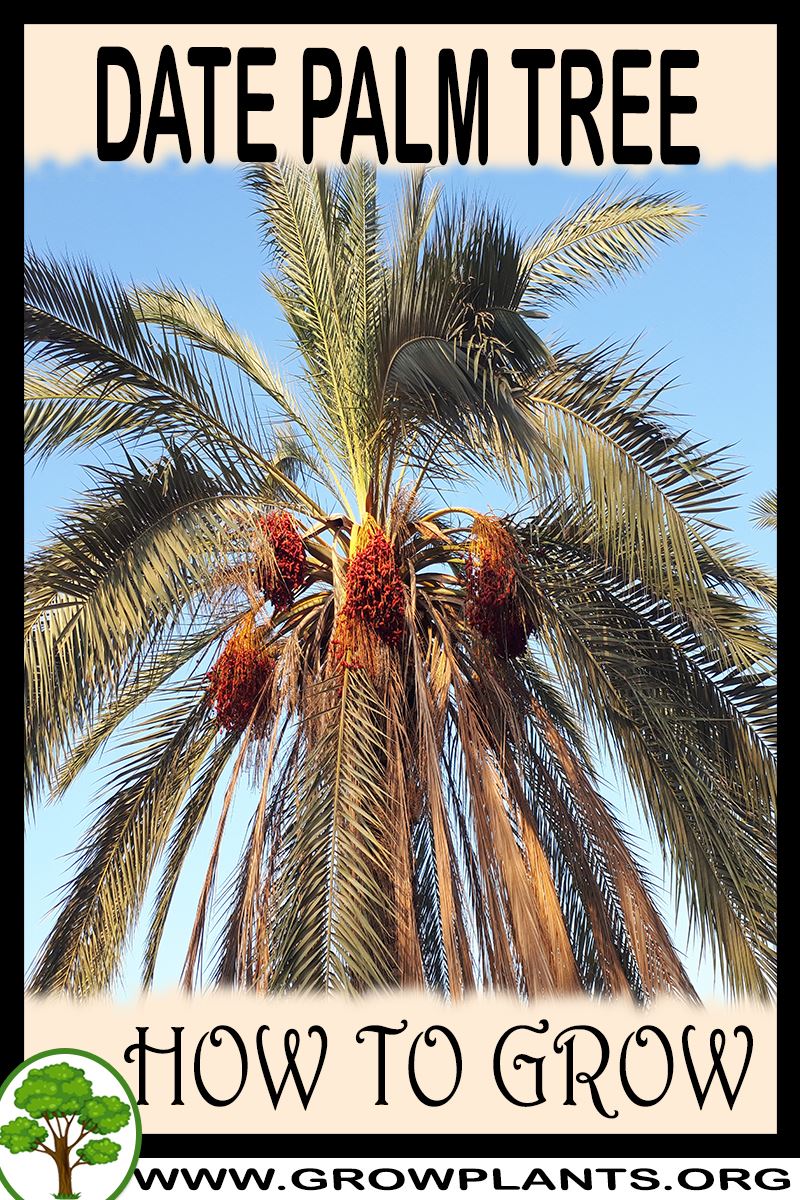
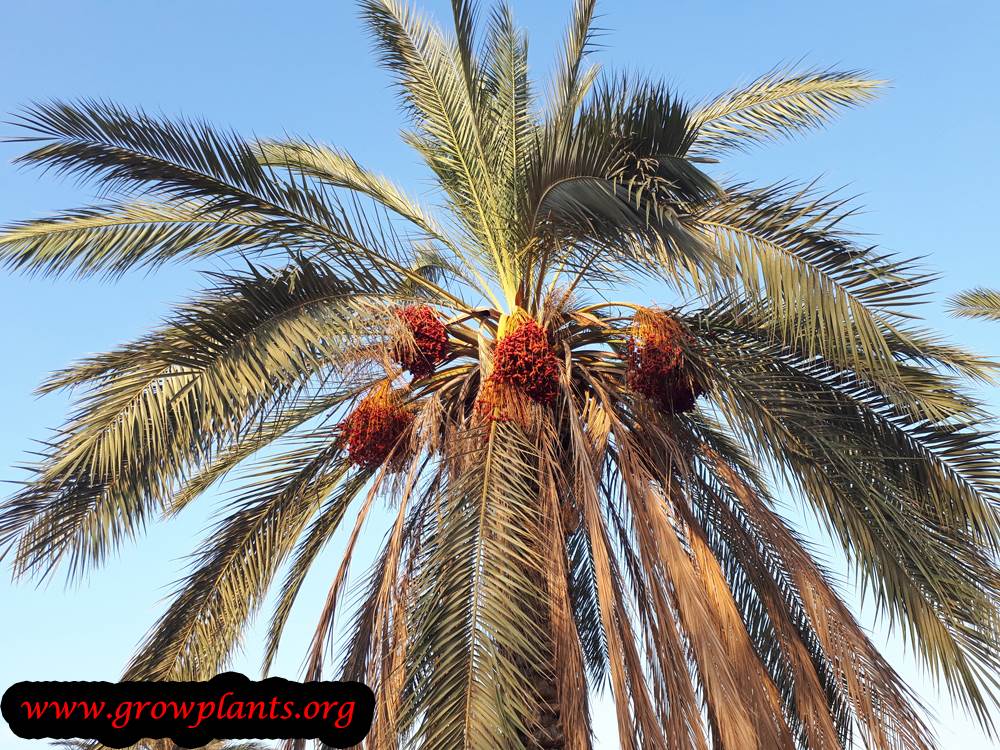
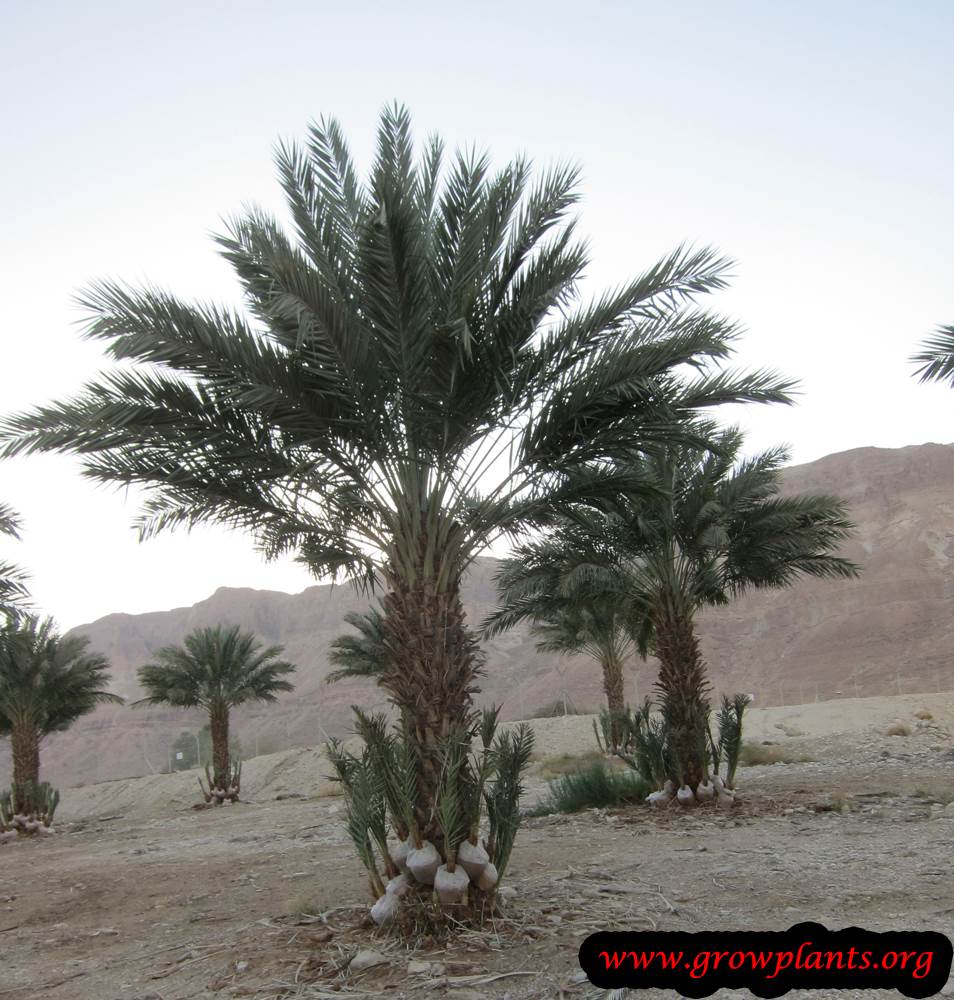
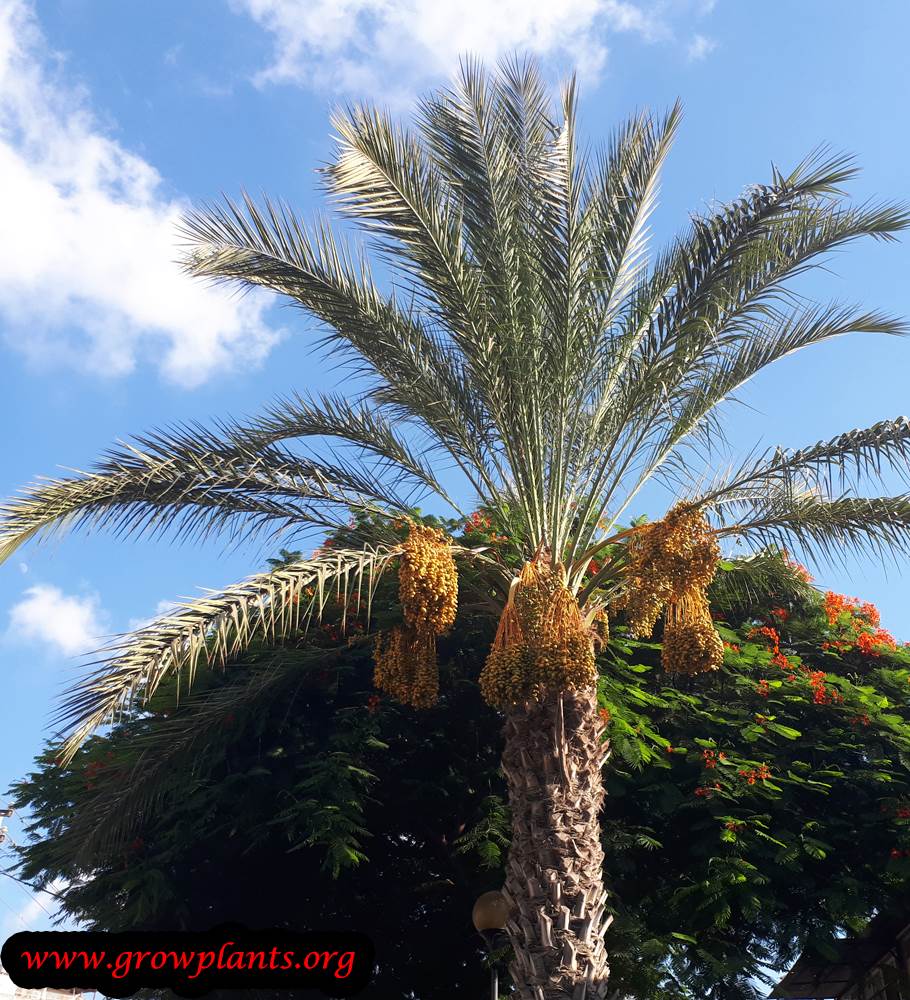
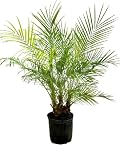
Overview: A tall evergreen palm reaching 7-20 m (23-65 ft), with a slender trunk crowned by long feathery fronds. It is grown both as an ornamental landscape palm and as a commercial fruit tree for its sweet dates, bearing after 7-10 years.
Quick Specifications
| Specification | Attribute |
|---|---|
| Plant Type / Life Cycle | Perennial tree (palm) |
| Foliage Type | Evergreen |
| Mature Size | 7-20 m (23-65 ft) tall |
| Growth Rate | Moderate |
| Root System | Fibrous (adventitious) root system, no taproot |
| Toxicity | Non-toxic — dates are an edible fruit |
| Hardiness | USDA zones 8b-12 |
Growth Form & Structure
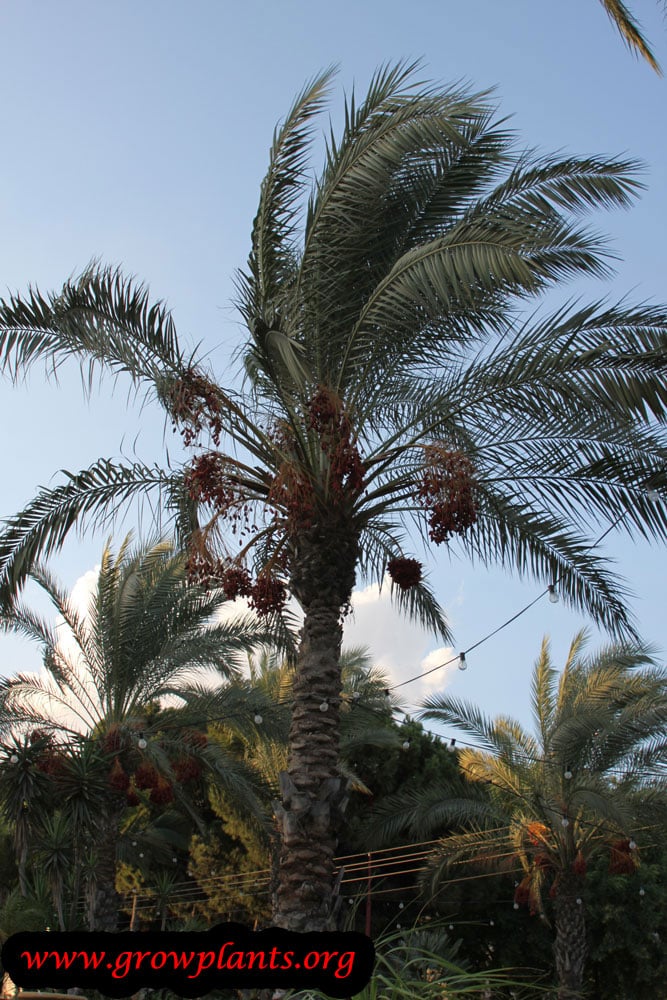
- Height & Spread: A large palm 7-20 m (23-65 ft) tall with a spreading crown of arching fronds; too large for containers and grown as a landscape or orchard tree.
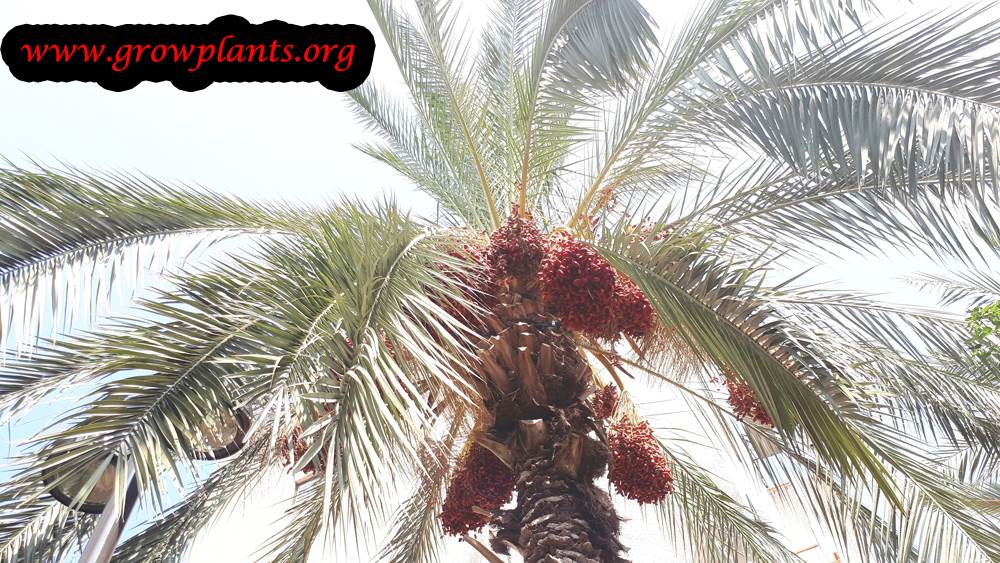
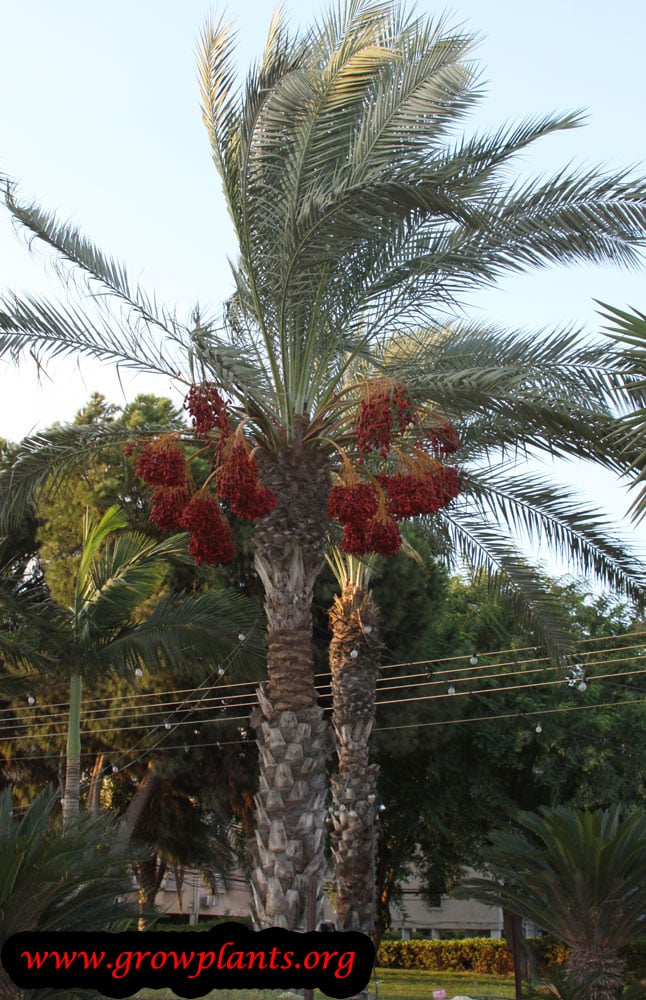
- Growth Habit & Form: Single upright trunk clothed in old leaf-bases, topped by a rounded crown of long, feather-shaped fronds.
- Lifespan & Maturity: A very long-lived palm; trees begin bearing dates about 7-10 years from planting and remain productive for decades.
Anatomy & Physical Features
- Leaves & Foliage: Long feathery (pinnate) fronds 1-3 m (3-10 ft) long with sharp spines near the base.
- Flower Characteristics: Small yellow flowers in large branched sprays; trees are male or female and are wind-pollinated (usually hand-pollinated in cultivation).
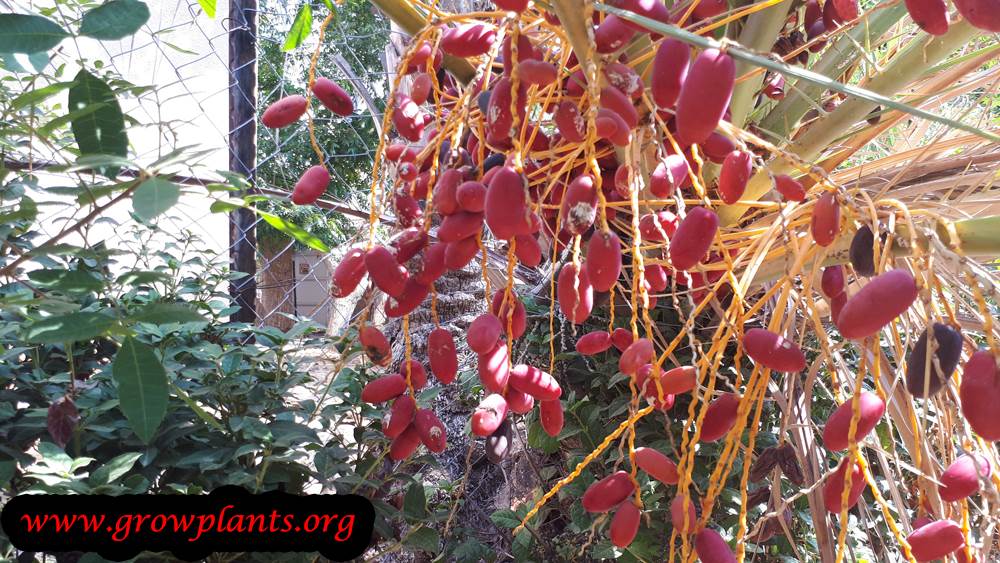
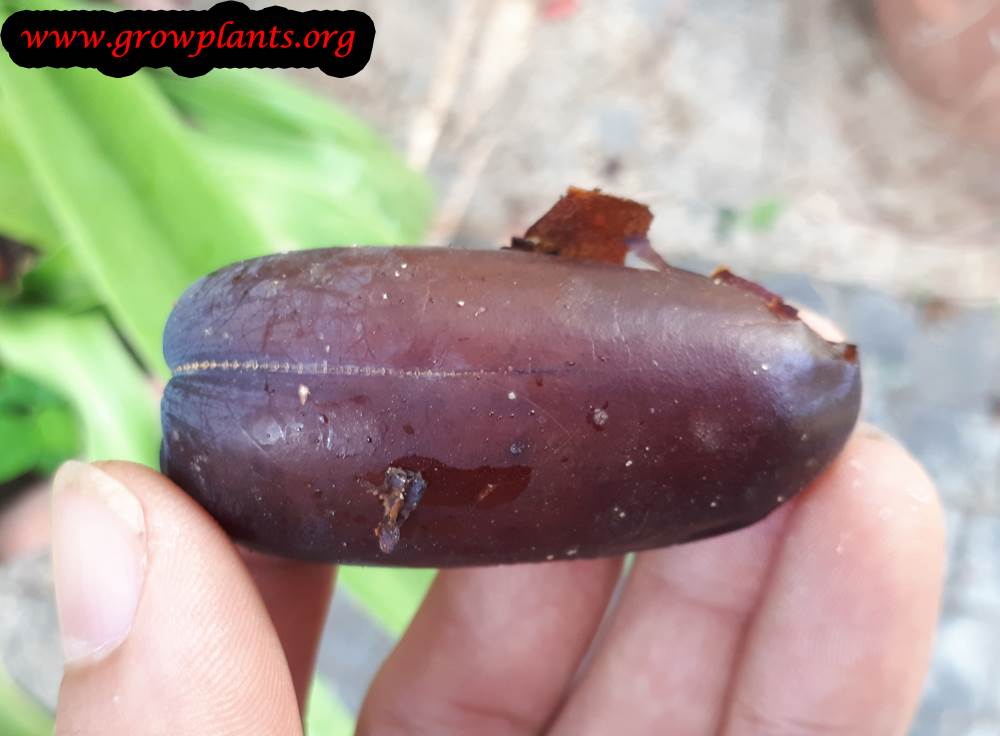
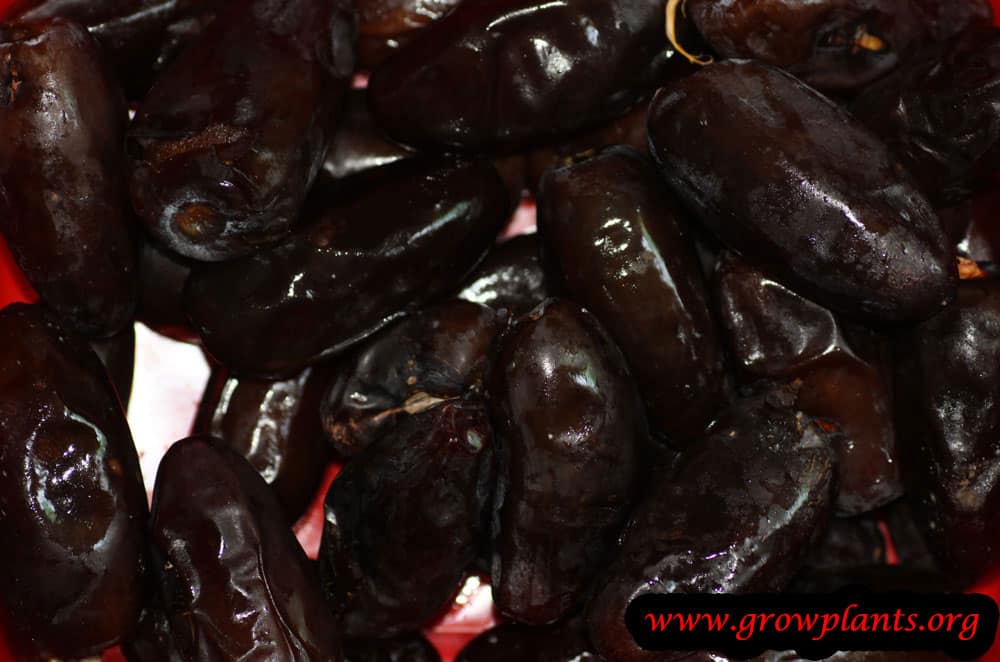
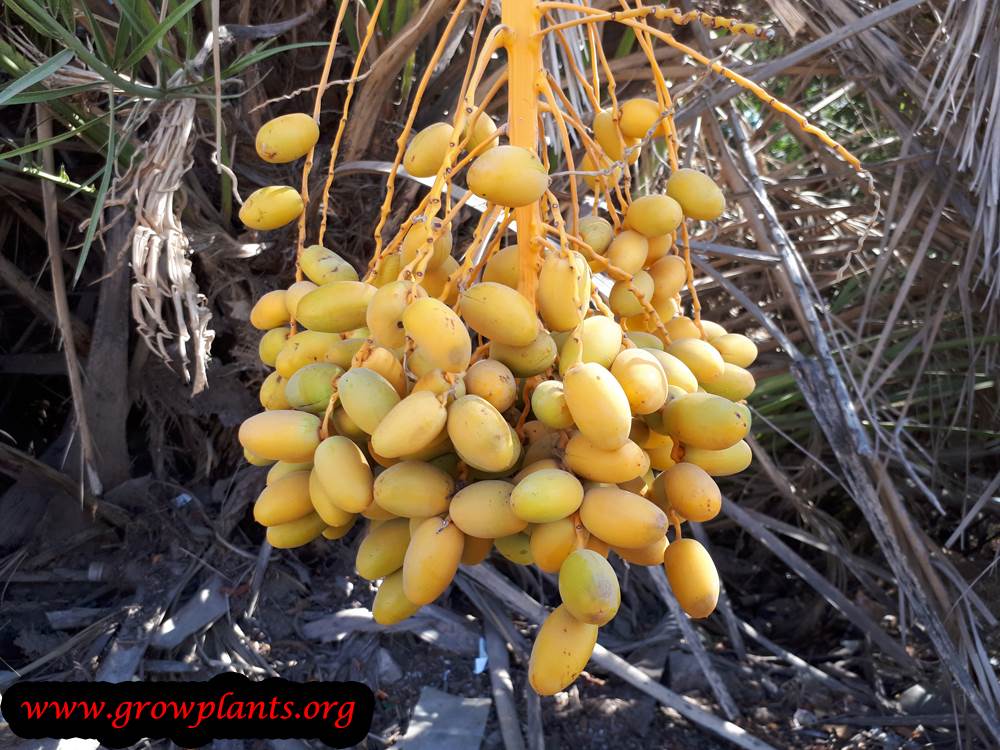
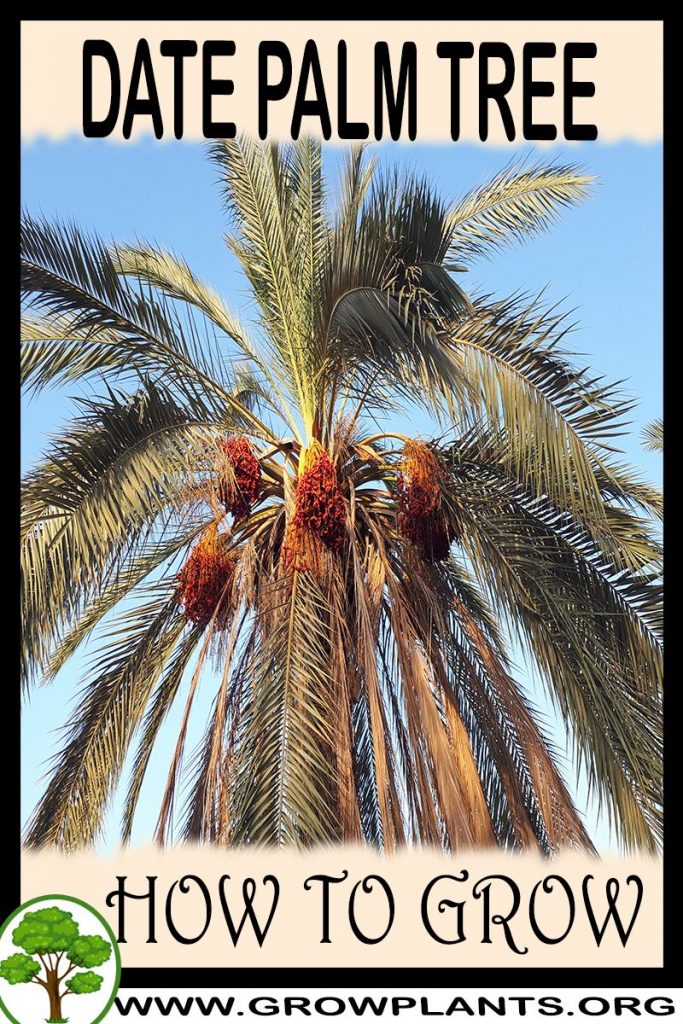
- Fruit Profile: Oblong dates ripening yellow to red-black, sweet-fleshed; the seed is also used ground for a spice or beverage.
Primary Uses & Landscape Value
- Edible Uses: Dates eaten fresh or dried, and used in cakes, juice, jam and frozen; the seed can be processed into a spice or drink.
- Functional & Ornamental Roles: A commercial fruit tree and a stately ornamental and avenue palm for hot, dry climates.
Care Guide: Planting, Soil & Watering
Overview: The date palm is a large desert palm that thrives in full sun and intense heat in deep, well-drained soil, tolerating dry and saline conditions. Despite its desert home it drinks heavily — abundant water is needed for good fruiting — and it withstands cold down to about −10°C.
Quick Care Requirements
| Requirement | Ideal Condition |
|---|---|
| Planting Season | Spring, summer or autumn in the warm season |
| Growth Rate | Moderate |
| Soil Type | Deep, sandy, well-drained; tolerates dry and saline soil |
| Water Need | High — deep, generous watering, especially for fruit |
Planting & Establishment
- Best Planting Season: Plant in spring, summer or autumn during the warm season.
- How to Plant:
- Hole Preparation: Dig a deep, wide hole to accommodate the root system on a freely draining site with room for the large trunk.
- Soil Amendments: Improve heavy ground with sand or grit for drainage; the palm is not fussy about fertility and tolerates poor, salty soil.
- Planting Depth: Set the base of the trunk at soil level, keeping the growing crown well above the surface; do not bury the trunk.
- Growth Speed & Expectations: Expect moderate growth to a tall palm 7–20 m; a male and a female plant are needed to set fruit.
Soil, Watering & Drainage Care
- Soil Mix & Drainage Needs: Deep, free-draining soil is best — the classic saying is ‘feet in water, head in fire.’ It is a large tree unsuited to containers.
- Watering Schedule & Technique:
- Young / Newly Planted: Water young palms deeply and regularly to establish the deep root system.
- Established: Water deeply and generously; consistent, abundant moisture at the roots is what produces heavy date crops.
- Seasonal Adjustments: Water most through the hot fruiting season and reduce it in cool winter weather.
Climate, Light & Hardiness
Date palm is a heat-loving, sun-hungry tree well adapted to hot Mediterranean, desert, subtropical, and tropical climates, listed for USDA zone 8b–12. It requires full sun and, per the site's own data, tolerates brief cold above roughly −10°C (14°F).
Quick Climate Specifications
| Climate Zones | Mediterranean, desert, subtropical, tropical |
|---|---|
| USDA Hardiness Zones | 8b–12 |
| Approx. Survival Minimum | Approximately −10°C (14°F), briefly |
| Frost Tolerance | Low |
| Light Conditions | Full sun |
Sunlight & Light Exposure
Optimal Light Setup
Full sun is essential; the site notes it can survive without full sun but will not fruit reliably.
Temperature Extremes & Hardiness
USDA Hardiness & Regional Limits
Suited to hot climates across USDA zone 8b–12; fruiting reliability drops outside the hotter, sunnier end of that range.
Cold Damage & Winter Protection
An established palm briefly tolerates cold down to around −10°C (14°F); younger palms should be treated as more cold-sensitive than this figure.
Growing in Pots, Balconies & Indoors
Date palm (Phoenix dactylifera) is a large fruiting palm that reaches 7-20 m. The grower does not rate it as a houseplant. The grower advises against long-term container growing – it is a large palm that needs open ground to develop and fruit.
Quick Details
- Container Size: Not suited to long-term pots – a large tree; a big pot only holds a young plant for a while
- Indoor Suitability: Not a houseplant – far too large; a young plant can sit in a bright spot only briefly
- Best Spot: Full sun
- Soil & Drainage: Free-draining mix while young in a pot
- Watering in Pots: Keep a potted young palm’s mix moist – pots dry fast in sun; never waterlogged
Indoors & On the Windowsill
- Houseplant limits: The grower marks it as not a houseplant. It grows into a 7-20 m palm and needs full sun, so it cannot be kept as an indoor plant beyond the seedling stage.
- While young: A young plant may live in a large pot in a bright, sunny position for a few years, but it must eventually go into open ground.
On a Balcony or Patio
- Light & weight: While young it can stand on a sunny balcony or patio in a large, heavy, well-drained pot; pots dry fast in sun, so water often, and account for the considerable weight.
- Long term: As it grows it becomes too tall and heavy for a balcony and needs planting out.
Choosing the Pot, Soil & Long-Term Care
- Pot & drainage: A large pot with strong drainage holes for a young plant; empty any standing saucer so the roots never sit in water and rot.
- Potting mix: Well-aerated, free-draining mix – a good potting mix, or peat/coir blended with perlite or vermiculite and some organic matter.
- Feeding: Potted plants use up nutrients faster because watering leaches them out, so feed a little more often than plants in open ground; a potted palm benefits from a palm-suitable feed in the growing season.
- Moving on: Pot up as it grows and plan to plant it in open ground before it becomes root-bound and top-heavy.
Fertilizing & Feeding
A moderate feeder: this long-lived, large fruiting palm needs steady nutrition to sustain its canopy over many years, with feeding especially worthwhile once a male pollinator is present and fruit set is underway.
Quick Fertilizing Specs
| Feeding Level | Moderate feeder |
|---|---|
| Main Nutrient Priority | A balanced palm-formulated fertilizer with potassium and magnesium supports canopy health and, once pollinated, fruit development on this long-lived fruiting palm |
| Best Feeding Period | Through the warm growing season |
| Organic Options | Organic matter worked into the root zone, particularly useful in poor or sandy desert soils |
| Reduce/Stop Feeding | Feeding eases off as growth slows in cooler weather |
| Micronutrients | A palm-formulated fertilizer carrying manganese and magnesium as routine trace nutrients supports healthy fronds |
| Soil pH | Tolerates a wide range of soil provided drainage is adequate |
Feeding by Growth Stage
Establishment after planting
Help a newly planted date palm establish its root system in full sun before it matures toward fruit-bearing size.
| Nutrient direction | A balanced fertilizer supports root establishment in this slow-to-mature, long-lived palm. |
|---|---|
| Timing | At planting, during the warm growing season. |
| Frequency | A light feeding at planting is usually enough while roots establish. |
| Fertilizer types | A balanced complete fertilizer, Organic matter worked into the planting area, especially in sandy or desert soils |
| Precautions | Give this palm full sun and consistent water while establishing, and keep in mind that it is allelopathic, so avoid crowding it with sensitive underplantings nearby. |
Established growth and fruiting
Support this long-lived date palm’s canopy and, once a male pollinator is available, its sweet fruit production.
| Nutrient direction | A palm-formulated fertilizer with potassium and magnesium supports frond health and fruit development; routine manganese and magnesium in a complete palm product help prevent common frond problems in this species. |
|---|---|
| Timing | Through the warm growing season, once the palm is established. |
| Frequency | Regular feeding through the growing season suits this moderate feeder. |
| Fertilizer types | A palm-formulated fertilizer with potassium and magnesium, Organic matter as a root-zone top-dressing |
| Routine trace nutrients | manganese, magnesium |
| Precautions | Handle pruning carefully around the spiny leaf edges, and leave dead fronds in place rather than cutting them at the trunk, since they help protect it. |
Nutrient Deficiency Signs & Corrections
Older fronds show yellow-orange leaflet tip and margin scorch.
| Possible causes | low soil potassium relative to fruiting demand, sandy or fast-draining desert soil that leaches potassium, a fertilizer program not formulated for palms |
|---|---|
| Appears first on | oldest fronds |
| What to check | fertilizer type and potassium content, soil drainage and texture, frond age pattern of symptoms |
| Possible correction | Switch to a palm-formulated fertilizer supplying potassium and magnesium, applied per its label. |
Older fronds show broad yellow banding while the leaflet base near the midrib stays green.
| Possible causes | low soil magnesium, leaching from irrigation in fast-draining desert soil, heavier potassium feeding without balancing magnesium |
|---|---|
| Appears first on | oldest fronds |
| What to check | frond banding pattern, recent fertilizer balance, irrigation and soil drainage |
| Possible correction | Apply a labeled magnesium source and use a palm fertilizer that carries magnesium as a routine component. |
New fronds emerge pale yellow to nearly white between the veins.
| Possible causes | high soil pH common in desert or calcareous soils, limiting iron availability, poor drainage or waterlogging around the root zone, low organic matter typical of desert soil |
|---|---|
| Appears first on | newest fronds |
| What to check | soil pH, drainage around the root zone, recent fertilizer history |
| Possible correction | Apply a chelated iron product per its label and consider soil amendments to gradually address high pH. |
Pruning, Training & Seasonal Maintenance
A date palm has a single growing point — the crown at the top of one trunk — so it is never pruned for shape and cannot be rejuvenated by cutting back; removing the crown kills the palm. Maintenance is limited to removing fully dead, brown fronds, cleaning off old fruit stalks, and (for fruit growers) thinning and managing the bunches. Green fronds are left in place because they feed the palm and their bases protect the trunk. The main clean-up is done in autumn.
Pruning & the Edible Harvest
The edible crop is the date. Pruning proper — removing fully dead fronds and old fruit stalks — has little direct effect on the harvest, and over-pruning green fronds actively harms it, since those fronds subtend and feed the bunches. The productive lever is not frond removal but bunch management: thinning and bagging the fruit clusters sets date size and quality.
Quick Pruning & Maintenance Specs
| Pruning Tolerance | Very Low — remove only dead fronds; never over-prune |
| Primary Pruning Window | Autumn (remove the season’s fully dead fronds and old fruit stalks) |
| Secondary Maintenance Window | Remove hazardous dead or broken fronds any time |
| Typical Frequency | Once a year at most |
| Main Objective | Remove dead fronds only; protect the single growing point and trunk |
| Young Plant Priority | Minimal — retain fronds; do not cut into the crown |
| Mature Plant Priority | Dead-frond removal, old fruit-stalk clean-up, bunch management |
| Best Tool Type | Pruning saw / loppers for tough frond bases; disinfectant between palms |
| Avoid Removing | Green (living) fronds and leaf bases that shield the trunk |
Pruning by Plant Age & Size
Newly Established
Do not prune — every frond is needed; simply remove a frond that is completely dead.
Young / Formative
No training exists — the palm builds one trunk from one apical bud; retain all green fronds and never top or head it.
Mature / Established
Remove only fully dead, brown, hanging fronds; leave green and even partly-green fronds; keep the intact leaf-base collar on the trunk unless it must go for safe access; and manage fruit bunches (thinning or bagging) at fruiting.
Seasonal Pruning Schedule
Autumn Clean-Up
Objective: remove the year’s dead fronds and spent fruit stalks. Remove fully brown fronds and old bunch stalks. Do NOT remove green fronds or the protective leaf-base tissue. Response: a tidy crown with no loss of vigour; over-removal, by contrast, weakens the palm.
Flowering & Fruiting Wood
Dates are borne on current-season inflorescences from the leaf axils on a dioecious palm (separate male and female trees; wind-pollinated, so a male is needed for fruit). This is not fruiting “wood” to prune — the relevant point is that green fronds subtend and feed the bunches, so keeping the full green canopy directly supports the crop. Fruit size is managed by thinning the bunches, never by removing fronds.
Special Growth to Remove
Date palms produce basal offshoots (suckers) that are the normal means of propagation; leave them if you want new plants, or remove them to concentrate energy in the main trunk — a genuine choice, not automatic removal. Remove old dead fruit stalks after harvest.
Tools
A sharp pruning saw or heavy loppers for the tough, fibrous frond bases, a long-reach pole saw for a tall trunk, and thornproof gauntlets and eye protection (the leaf bases are viciously spined). Hedge shears and fine secateurs are wrong for this heavy material.
Tool Hygiene & Disease Risk
Risk level: High-risk. Fusarium wilt of palms is spread on contaminated pruning tools and can be fatal, and fresh cuts attract the red palm weevil (Rhynchophorus ferrugineus, a listed pest). Disinfect saws and loppers between palms, prune in the drier, cooler part of the year to reduce weevil attraction, and avoid unnecessary wounding.
Cut Placement & Technique
Cut dead fronds a short distance out from the trunk, leaving the base collar rather than skinning the trunk; do not cut into the crown or the soft growing point; and make clean cuts that minimise the fresh wounds that invite weevils and disease.
Heavy Pruning & Rejuvenation
Not tolerated. A palm has one apical meristem and cannot resprout from the trunk, so it cannot be cut back, topped or rejuvenated. Over-pruning green fronds (the so-called “hurricane cut”) starves and stresses the palm and exposes it to pests — never do it.
Post-Pruning Care
Remove and destroy cut fronds and stalks for weevil sanitation, monitor fresh cuts and the crown for weevil entry, and keep the palm well watered so it maintains a full canopy.
Common Pruning Mistakes
- Over-pruning or “hurricane-cutting” green fronds, starving the palm and exposing the crown.
- Skinning the trunk of its protective leaf bases.
- Cutting into the growing point, which kills the palm.
- Using un-disinfected tools (spreading Fusarium wilt) or pruning in warm, weevil-active weather.
When NOT to Prune
Do not remove green fronds at all, do not prune in hot, weevil-active weather, and never cut the crown; delay non-essential work on a stressed palm.
Recommended Tools (by task)
- pruning_saw — tough dead-frond bases and old fruit stalks.
- loppers — smaller dead fronds and stalks.
- blade_disinfectant — sterilise between palms against tool-borne Fusarium wilt.
Pruning Troubleshooting
| Problem | Possible Cause | What to Check | Corrective Action |
| General decline and yellowing after pruning | Green fronds over-removed | How many living fronds were taken | Retain all green fronds; let the canopy recover |
| Weeping holes, wilting or collapsing crown | Red palm weevil entering fresh cuts | Oozing, tunnels, chewed crown tissue | Treat/report promptly; avoid wounding in weevil season |
| Rapid one-sided frond death | Fusarium wilt spread by tools | One-sided dieback; tool history | Do not reuse tools; disinfect; remove and destroy debris |
| No fruit despite a healthy female | No male pollinator or poor wind pollination (not pruning-related) | Presence of a male; pollination method | Provide/hand-pollinate from a male palm |
Propagation Guide
Date palm is dioecious and does not come true from seed, so a named cultivar is reproduced only from basal offshoots (suckers) taken from the base of a young palm — these are clones and keep the cultivar and its known sex. Offshoots are heavy, limited in number and slow to establish, and being a palm it cannot be grafted, so propagation is Difficult.
Quick Propagation Specs
| Best Propagation Method | Separation of rooted basal offshoots (suckers) |
| Alternative Methods | Tissue culture (commercial); seed (variable, sex unknown — breeding or rootstock only) |
| Propagation Difficulty | Difficult |
| Seed True-to-Type | No — the palm is dioecious, seedlings vary and about half are male, with sex unknown until first flowering |
| Vegetative True-to-Type | Yes — offshoots are clones of the parent and of known sex |
| Best Propagation Season | Warm season — spring, summer or autumn |
| Germination Temperature | Sustained warmth, roughly 30–35°C (86–95°F) |
Growing from Seed
True-to-Type Note
Because date palm is dioecious and out-crossing, seedlings are variable, roughly half turn out to be non-fruiting males, and the sex is not revealed until the palm first flowers years later. Seed is therefore used only for breeding or for raising generic palms, never to reproduce a fruiting cultivar.
Seed Handling & Germination
Clean seed germinates with sustained warmth of roughly 30–35°C (86–95°F) in a moist medium; a pre-soak helps. Germination is often slow and staggered rather than uniform.
Division, Offsets, Pups & Suckers
Why Offshoots Are Used
Offshoots reproduce the cultivar exactly and carry its known sex, which seed cannot. This is the only practical way to multiply a selected date palm.
Which Offshoots Are Viable
A palm produces offshoots only during its juvenile years and only a limited number over its life. Take low, well-rooted offshoots that have formed their own roots against the parent; high offshoots without roots will not survive on their own.
Separation & Establishment
Sever a sizeable, rooted offshoot with its roots intact, reduce its leaves to cut water loss, and plant it in the warm season. Offshoots are heavy and re-establish slowly, needing careful watering and support until they are growing on their own.
Bloom & Flower Guide
Quick Details
- Bloom Season: Summer
- Time to First Bloom: After several years, once the palm reaches maturity
- Flower Appearance: Small cream-yellow flowers on a large branched cluster from a woody sheath; male and female flowers on separate trees
- Edibility: The flowers themselves are not eaten
Detailed Blooming Overview
Date palms are dioecious – individual trees are either male or female – and each carries small cream-yellow flowers on a large, densely branched cluster that bursts from a woody sheath. Flowering begins only once a palm is mature, after several years of growth. Because the sexes are separate, growers often hand-pollinate the female flowers to ensure a good set.
Flower Characteristics
- Small cream to yellow flowers, dozens to a branch, on a large branched cluster.
- The cluster emerges from a woody sheath (spathe).
- Male and female flowers are borne on separate trees (dioecious).
Bloom Care & Thinning
- Managing the bloom: Because trees are single-sexed, growers commonly transfer pollen from male to female flowers by hand at flowering time.
- Pollination: Naturally wind-pollinated.
Fruit & Uses
Date Palm is grown for its fruit, the date, one of the most widely eaten palm fruits in the world; the seeds (pits) are also edible in a minor, secondary use. Fresh dates are eaten raw, but the crop is most famous dried, which is how the great majority of the harvest is consumed.
Quick Edible Specs
| Edible Parts | Fruit, seeds |
| Main Use(s) | Culinary – fresh and dried fruit, baking, juice/syrup, jam; seeds as a coffee-substitute/spice beverage |
| Eaten Raw or Cooked | Raw (fruit); seeds are roasted before use as a beverage |
| Preparation Required | None for fresh fruit; drying/curing for storage; roasting and grinding for the seeds |
| Harvest Season | Autumn |
| Time to First Harvest | Several years from planting; picking gets harder as the palm grows taller |
| Storage | Dried dates store for a long time at room temperature; fresh dates keep only briefly and are best refrigerated |
| Safety/Toxicity Caveat | None for the flesh; the hard seed itself is not chewed/swallowed whole, only used roasted and ground |
Fruit
Dates ripen yellow or deep red-black in an oblong shape, with a sweet flavor. They are harvested in autumn; on young palms fruit is easy to reach, but picking becomes progressively harder as the tree grows taller. Some cultivars need an additional ripening/curing step (including freezing) after picking before they reach their best eating quality. The fruit is eaten fresh, but is most widely used dried, and is also baked into cakes, pressed into juice/syrup, made into jam, or frozen for storage.
Seeds, Pods & Nuts
The seed (pit) inside each date is also edible in a secondary, traditional use: roasted and ground, it has been used as a caffeine-free coffee substitute and spice, and steeped as a beverage. This is a minor use compared to the fruit itself.
Preparation, Uses & Safety
Fresh and dried dates are eaten as-is or used in baking, jam, and juice; the seeds require roasting before being used as a coffee-substitute beverage. No toxicity applies to the fruit; birds and bats competing for the ripening crop is the main practical issue noted, not a food-safety one.
Pests, Diseases & Troubleshooting
Overview: Phoenix palms are hardy, drought- and salt-tolerant, but they face one truly serious threat – the red palm weevil, which bores unseen into the crown and can kill a mature palm before symptoms show – plus date palm scale, mites and, on fruiting trees, birds and bats after the ripening dates. Bayoud disease and rots are the key diseases. Vigilant crown inspection, orchard hygiene and prompt removal of infested tissue are essential.
Quick Troubleshooting Overview
| Issue / Pest | Main Symptom | Primary Solution |
|---|---|---|
| Red palm weevil | Wilting/collapsing crown, oozing tunnels, frass | Inspect crown, pheromone traps, remove & destroy infested palms |
| Date palm scale | White/grey crust on leaves and fruit | Prune infested fronds, horticultural oil |
| Spider mites | Dusty webbing, scarred fruit and leaflets | Rinse, horticultural oil, encourage predators |
| Birds & bats | Pecked/eaten ripening dates | Net or bag bunches before ripening |
| Bayoud disease | One-sided frond death, wilting fronds | Resistant varieties, remove & destroy, sanitation |
| Fruit rot / spotting | Rotting, spotted dates in humid/wet weather | Bag bunches, thin, harvest promptly |
Common Pests & Management
- Red palm weevil (Rhynchophorus ferrugineus):
- Symptoms: The most dangerous palm pest: large reddish weevils lay eggs in crown wounds and leaf bases, and grubs tunnel unseen through the heart. Early signs are chewed, holed or drooping young fronds, oozing brown fluid and fermenting frass, then sudden crown collapse – often fatal before it is noticed.
- Prevention & Control: Inspect the crown regularly, avoid unnecessary frond wounds (a key entry point) and seal any cuts; use pheromone mass-trapping around the planting. Remove and destroy heavily infested palms to protect neighbours, and follow local quarantine and treatment programmes – this pest usually needs coordinated, professional management.
- Date palm scale (parlatoria scale) (Parlatoria blanchardi):
- Symptoms: White, grey or brown crusty scale encrusting leaflets, rachis and fruit, weakening the palm and downgrading the dates.
- Prevention & Control: Prune out and burn heavily infested fronds, keep palms vigorous, and encourage natural enemies such as ladybirds; horticultural oil smothers scale on accessible fronds, targeting the crawler stage.
- Two-spotted spider mite (Tetranychus urticae):
- Symptoms: Fine pale stippling on leaves, faint webbing on undersides and leaf axils, and a dusty bronzed look in warm dry conditions. Tiny moving specks visible with a hand lens.
- Prevention & Control: Raise humidity and hose foliage regularly, as mites thrive in hot dry air; introduce predatory mites (Phytoseiulus persimilis) under cover. Treat hotspots with insecticidal soap or horticultural oil, ensuring thorough coverage of leaf undersides.
- Rhinoceros / longhorn stem borers (Oryctes spp. / Cerambycidae):
- Symptoms: Beetles and grubs bore into the crown, frond bases and trunk, leaving holes, tunnels and weakened growth that can invite the red palm weevil.
- Prevention & Control: Keep the palm clean of rotting frond bases and debris where beetles breed, remove and destroy infested material, and use light traps or pheromone traps where available.
- Birds & bats (fruit) (various):
- Symptoms: Ripening dates are pecked, eaten and fouled by birds and fruit bats, causing direct loss and opening fruit to rot.
- Prevention & Control: Bag or net the fruit bunches with fine mesh or paper sleeves before ripening; this also keeps out insects and reduces rot. Harvest promptly as bunches ripen.
Diseases & Fungal Issues
- Bayoud disease (Fusarium oxysporum f. sp. albedinis):
- Symptoms: A lethal soil-borne wilt: fronds die one side at a time, leaflets whitening and drying from the tip along one half before the whole frond and then the palm dies. A major disease of date palms in affected regions.
- Treatment & Management: No cure – plant resistant varieties in known areas, use clean planting stock and tools, remove and destroy affected palms, and practise strict sanitation to avoid spreading the fungus on soil, water and offshoots.
- Graphiola false smut (Graphiola phoenicis):
- Symptoms: Small black, wart-like spore bodies scattered over leaflets in humid conditions, yellowing and weakening fronds.
- Treatment & Management: Improve air circulation, avoid overhead watering, remove badly affected fronds, and grow tolerant varieties; copper fungicide where humidity keeps it active.
- Fruit rot & inflorescence rot (Khamedj) (Mauginiella / Thielaviopsis spp.):
- Symptoms: Rotting, browning flower spathes and rotting, spotted fruit in damp or wet weather, especially when rain hits ripening dates.
- Treatment & Management: Bag bunches to shield from rain, thin fruit for airflow, remove infected material, and harvest promptly; copper sprays at flowering in wet regions.
- Crown & trunk rots (Thielaviopsis / Ganoderma spp.):
- Symptoms: Soft rotting or bleeding of the crown or trunk, and shelf-like brackets at the base with Ganoderma butt rot.
- Treatment & Management: Avoid crown and trunk wounds, keep the base dry and clean, and remove palms with advanced butt rot; there is no cure for Ganoderma.
Growing Difficulties & Abiotic Problems
- Frizzle top / micronutrient deficiency:
- Cause & Symptoms: Manganese (and sometimes potassium) deficiency, common in poor or alkaline soils, gives weak, frizzled, necrotic new fronds and yellowing older leaves.
- Correction Strategy: Correct with a palm-specific fertiliser containing manganese, potassium and magnesium; treat manganese deficiency with a soil or foliar manganese application and correct soil pH.
- Salt & drought stress:
- Cause & Symptoms: Though tolerant, extreme salinity or prolonged drought browns leaflet tips and thins the canopy.
- Correction Strategy: Leach salts with deep irrigation, and water deeply but infrequently to keep the palm vigorous and better able to resist the weevil.
- Fruit cracking & poor set:
- Cause & Symptoms: Rain or erratic water on ripening dates causes cracking and rot, while poor pollination gives few fruit.
- Correction Strategy: Hand-pollinate for reliable set, thin and bag bunches, and manage irrigation to steady moisture as fruit ripens.
What Helps – Products & Tools
For Phoenix palms the priorities are red-palm-weevil pheromone traps and vigilant crown inspection, plus fruit bunch bags/nets against birds, bats, insects and rot. Horticultural oil handles scale and mites; copper fungicide covers false smut and wet-weather fruit rots; and a manganese-rich palm fertiliser corrects frizzle top. Serious weevil or Bayoud outbreaks need coordinated, often professional, action.