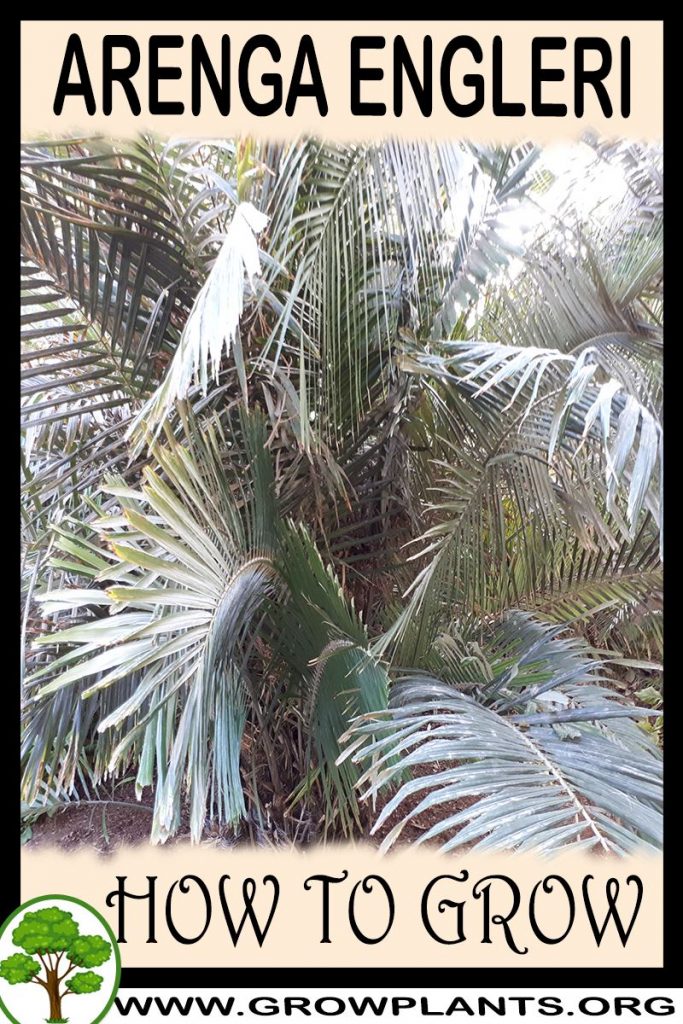
Plant Profile & Key Characteristics
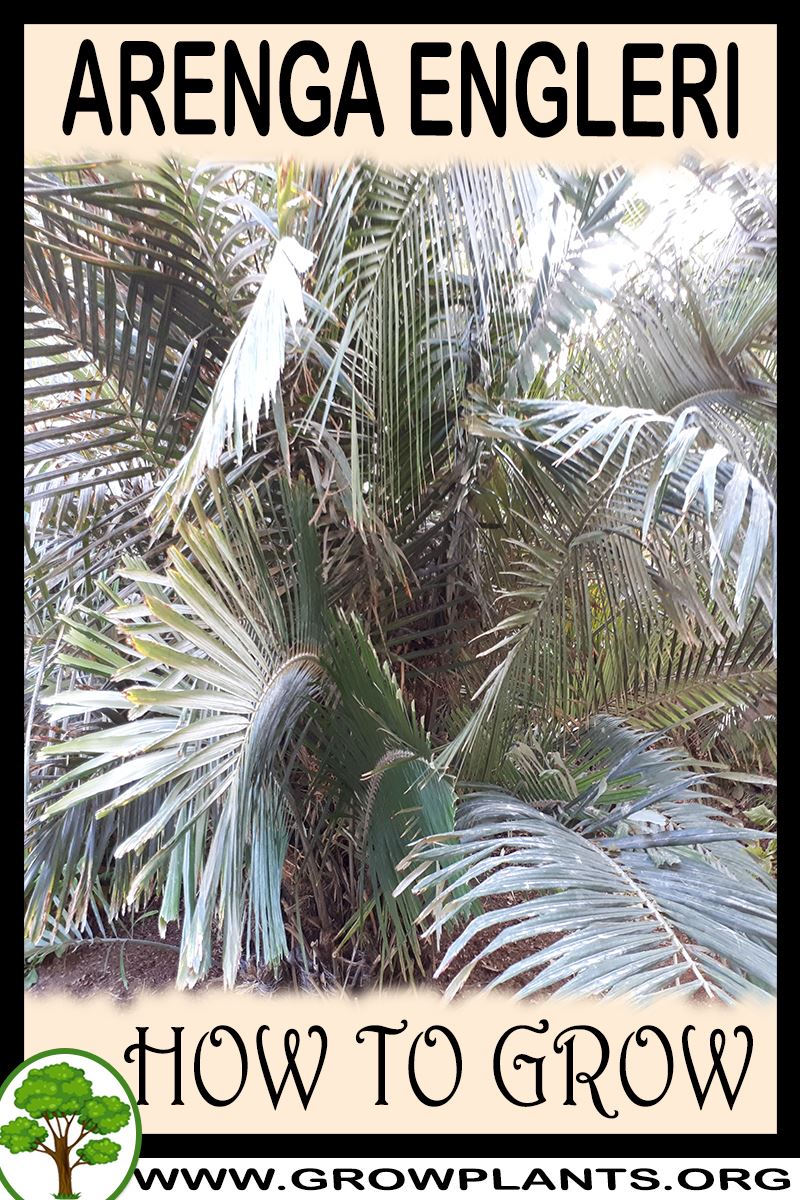
Overview: The Formosa or dwarf sugar palm (Arenga engleri) is a clumping evergreen palm reaching 2-4 m, grown as an ornamental and appreciated for its drought tolerance and fragrant flowers. It forms a multi-stemmed clump of arching feather-shaped fronds.
Quick Specifications
| Specification | Attribute |
|---|---|
| Plant Type / Life Cycle | Perennial |
| Foliage Type | Evergreen |
| Mature Size | 2-4 m tall (6-12 ft) |
| Growth Rate | Moderate |
| Root System | Fibrous (palm root system); clump-forming |
| Toxicity | Fruit pulp is a skin and mucous-membrane irritant (calcium oxalate) – handle with care |
| Hardiness | USDA zones 9-11 |
Growth Form & Structure
- Height & Spread: 2-4 m (6-12 ft) tall, spreading into a broad clump; best grown in the ground rather than long-term in pots.
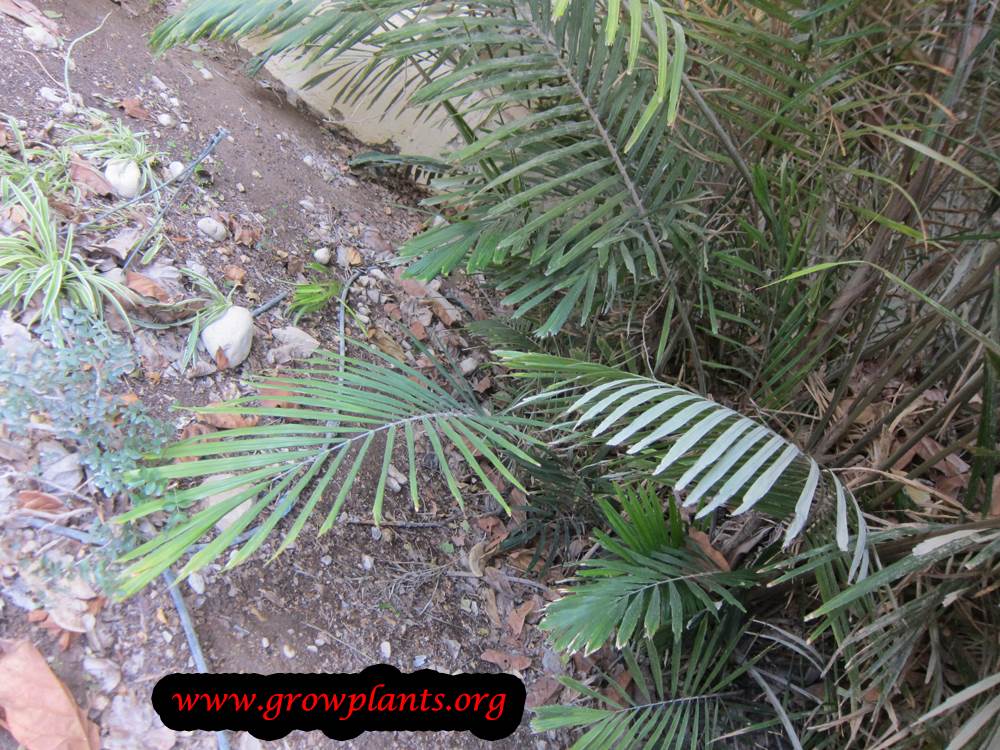
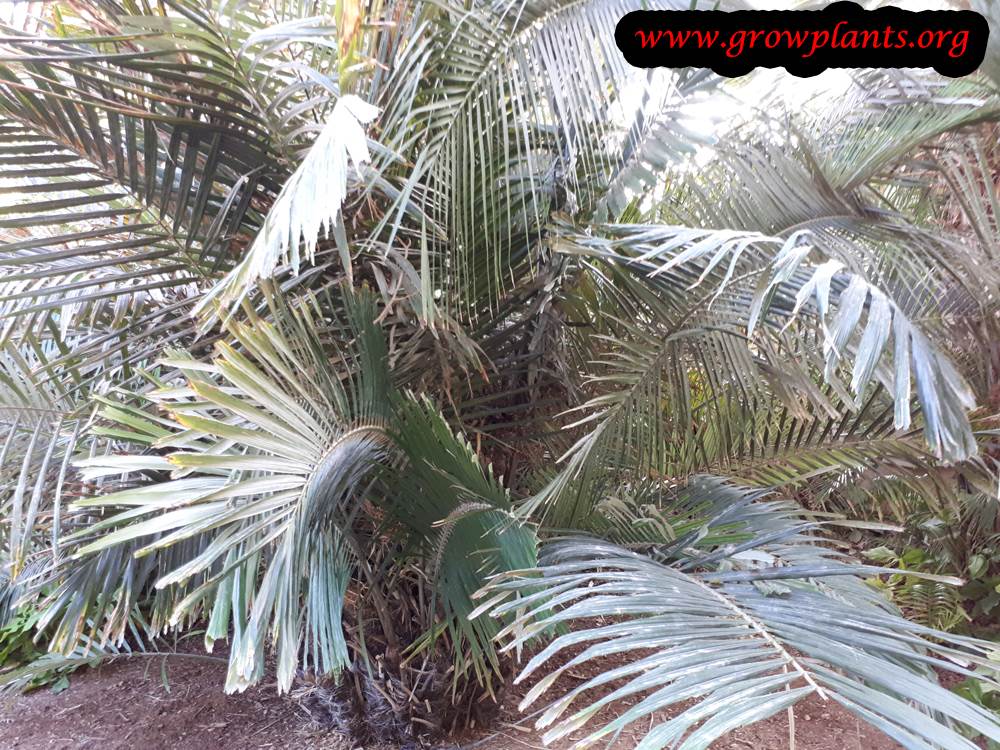
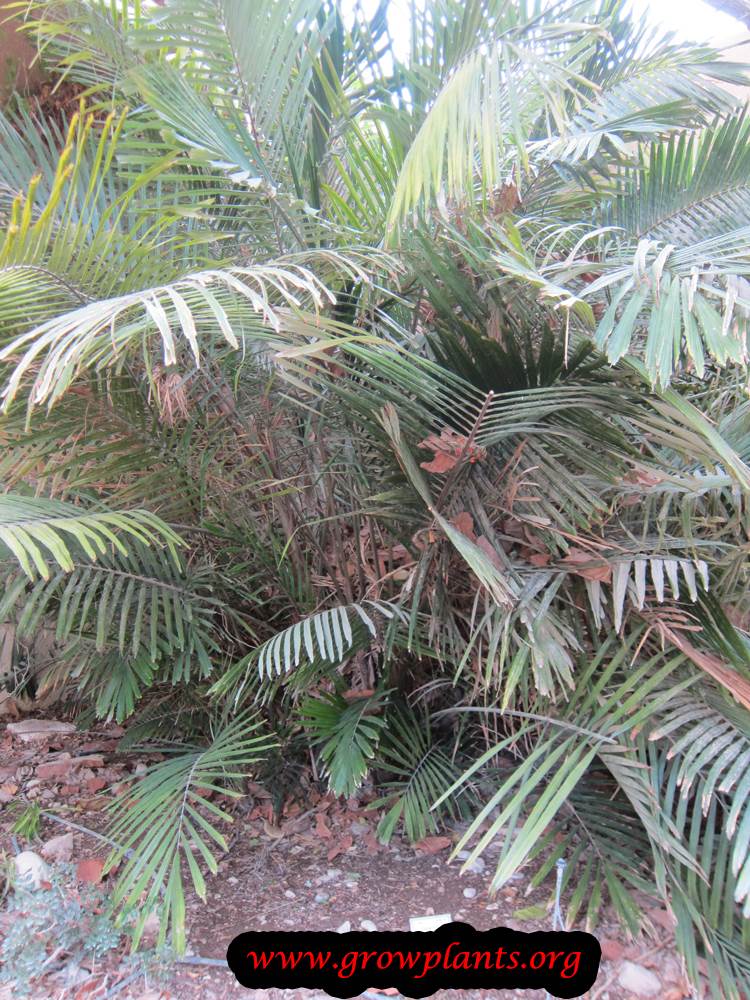
- Growth Habit & Form: Multi-stemmed clumping palm with arching, deeply divided (feather) fronds.
- Lifespan & Maturity: Long-lived evergreen palm; the main clump is monocarpic-flowering stems die after fruiting while the clump continues.
Anatomy & Physical Features
- Leaves & Foliage: Green pinnate fronds that are deeply shredded into many narrow leaflets, silvery beneath.
- Flower Characteristics: Small yellow-to-orange flowers borne along the stems and noticeably fragrant.
Primary Uses & Landscape Value
- Functional & Ornamental Roles: Ornamental clumping palm for shade to part shade, useful in subtropical and Mediterranean gardens and as a container/indoor accent when young; drought tolerant.
Care Guide: Planting, Soil & Watering
Overview: The Formosa palm is a clumping, shade-tolerant palm that prefers rich, moist but well-drained soil. It grows in half to full shade and likes steady moisture through the warm season.
Quick Care Requirements
| Requirement | Ideal Condition |
|---|---|
| Planting Season | In spring through autumn during the warm season |
| Growth Rate | Moderate |
| Soil Type | Rich, moist and well-draining |
| Water Need | Moderate to High; keep evenly moist |
Planting & Establishment
- Best Planting Season: Plant in spring through autumn while the soil is warm.
- How to Plant:
- Hole Preparation: Dig a hole twice as wide as the root ball and as deep, loosening the sides, in a sheltered, partly shaded spot.
- Soil Amendments: Enrich the soil generously with compost or well-rotted organic matter to feed the palm and hold moisture.
- Planting Depth: Set the top of the root ball level with the surface; do not plant a palm deeper than it grew.
- Growth Speed & Expectations: A moderate grower forming a clump 2-4 m (6-12 ft) tall over time.
Soil, Watering & Drainage Care
- Soil Mix & Drainage Needs: Provide rich, moisture-retentive but well-drained soil. It can be grown indoors in a large container using a fertile, free-draining potting mix.
- Watering Schedule & Technique:
- Young / Newly Planted: Keep the soil consistently moist while the palm establishes.
- Established: Water regularly and deeply so the soil stays evenly moist, especially in heat, and avoid letting it dry out fully.
- Seasonal Adjustments: Water more in summer and ease back in cool winter weather.
Climate, Light & Hardiness
Arenga engleri thrives in warm, humid, subtropical-to-tropical conditions and grows best as an understory palm in filtered or partial shade rather than harsh sun. It has moderate cold tolerance for a palm, generally suited to USDA zone 9–11, with established clumps able to take occasional light frost while young plants remain far more vulnerable.
Quick Climate Specifications
| Climate Zones | Subtropical, Mediterranean, desert (with shade/irrigation), temperate (marginal), or grown as a houseplant |
|---|---|
| USDA Hardiness Zones | Approximately 9–11 |
| Frost Tolerance | Low – established clumps may tolerate brief, light frost; young plants are frost-tender |
| Light Conditions | Half shade to full shade; performs poorly in intense, unfiltered sun |
Sunlight & Light Exposure
Optimal Light Setup
Grow in dappled or filtered light, such as under taller trees or a shade structure, mimicking its natural understory habitat.
Shade & Heat Management
Full shade is tolerated, though growth is naturally slower there; in hot desert-type climates, afternoon shade helps prevent leaf scorch.
Best Exposure / Orientation
A shaded exposure protected from harsh midday sun suits this palm best outdoors, or a bright but indirect window when grown as a houseplant.
Temperature Extremes & Hardiness
USDA Hardiness & Regional Limits
Reliable outdoors in USDA zone 9–11; in colder regions it is best grown in a container that can be moved indoors before frost.
Cold Damage & Winter Protection
Frost can burn or blacken the foliage; in marginal zones, protect the crown with mulch or frost cloth during cold snaps and give extra protection to young or newly planted specimens.
Frost Sensitivity
Sensitive to hard freezes; even where established plants persist, sustained or heavy frost is likely to cause significant damage.
Extreme Heat Tolerance
Handles subtropical and desert heat well when given some shade and adequate soil moisture, and is naturally drought tolerant once established.
Growing in Pots, Balconies & Indoors
Arenga engleri (dwarf sugar palm) is a clumping, shade-loving palm the grower rates as a houseplant. He does not recommend it for outdoor planters, but in a pot indoors, in bright indirect light, it makes a lush, feathery foliage plant that stays a manageable size for years.
Quick Details
- Container Size: A deep, snug pot; pot up gradually as the clump fills out
- Indoor Suitability: A good houseplant for a bright, warm, humid room
- Best Spot: Half to full shade – bright, indirect light, no harsh direct sun
- Soil & Drainage: Free-draining palm or potting mix that stays lightly moist
- Watering in Pots: Average to generous – evenly moist, never soggy
Indoors & On the Windowsill
- Houseplant: A genuine indoor palm. Give it bright, indirect light, warmth and humidity; the arching, split leaflets make a soft, tropical clump.
- Keeping it in scale: In a pot with moderate light it grows slowly and stays well within its outdoor size for a long time.
- Safety: Its ripe fruit can cause skin and mouth irritation – avoid handling the fruit and keep it away from children and pets; never eat it.
On a Balcony or Patio
- Not for permanent planters: The grower does not recommend it for outdoor planters; if stood out in warm weather, keep it in bright shade, sheltered from wind, and bring it in before cold.
- Practicalities: Turn the pot for even growth and keep humidity up to stop the leaflets browning.
Choosing the Pot, Soil & Long-Term Care
- Pot & drainage: A deep pot with strong drainage holes and no standing saucer; avoid over-potting.
- Potting mix: A free-draining palm or houseplant mix with bark or perlite for air.
- Feeding: Potted plants use up their food faster because frequent watering leaches nutrients away – feed a little more often through the growing season than plants in open ground.
- Repotting: Pot up every couple of years when roots fill the pot; it prefers to be slightly snug.
Fertilizing & Feeding
A moderate feeder: this clumping palm relies on a complete, palm-specific fertilizer supplying magnesium and potassium alongside nitrogen through establishment and ongoing growth, tapering off once cooler weather slows it down.
Quick Fertilizing Specs
| Feeding Level | Moderate feeder |
|---|---|
| Main Nutrient Priority | A complete, palm-specific fertilizer with magnesium and potassium matters more than nitrogen alone |
| Best Feeding Period | The active growing season, tapering off in cooler months |
| Organic Options | Compost worked into moist, rich soil |
| Micronutrients | Manganese and magnesium are routinely supplied by a complete palm fertilizer; correct specific deficiencies only when diagnosed |
| Soil pH | Prefers moist, rich soil; avoid highly alkaline conditions, which can limit iron availability |
| Reduce/Stop Feeding | Taper off feeding once growth naturally slows in cooler months |
Feeding by Growth Stage
Establishment after planting
Support new root development as a young or newly planted Arenga engleri settles into moist, rich soil.
| Nutrient direction | A balanced fertilizer formulated for palms to support steady root and frond growth. |
|---|---|
| Timing | The period after planting, before the palm has reached its typical drought tolerance. |
| Frequency | Light, regular feeding through the growing season while roots establish. |
| Fertilizer types | A balanced, palm-specific fertilizer, Compost worked into moist, rich soil |
| Routine trace nutrients | manganese, magnesium |
| Precautions | Keep soil consistently moist while the palm is young; the drought tolerance this species is known for develops only once a mature root system is established. |
Established ongoing growth
Sustain steady frond and offset production on an established, clumping Arenga engleri.
| Nutrient direction | A complete, palm-specific fertilizer that supplies magnesium and potassium alongside nitrogen. |
|---|---|
| Timing | Through the active growing season for an established palm. |
| Frequency | Regular light feedings through the growing season, tapering off in cooler months when growth slows. |
| Fertilizer types | A complete, palm-specific fertilizer formulated with magnesium and potassium |
| Routine trace nutrients | manganese, magnesium |
| Precautions | Use a fertilizer formulated for palms rather than a generic garden feed to avoid the frond discoloration common with incomplete formulas; wear gloves when handling old fronds or fruit, since the fruit on this species can irritate skin. |
Nutrient Deficiency Signs & Corrections
Newly emerging fronds are weak, frizzled, and streaked with yellow or necrotic spots (“frizzle top”).
| Possible causes | low manganese availability, common in high-pH or poorly draining soil, waterlogged soil limiting nutrient uptake, use of a generic fertilizer lacking manganese |
|---|---|
| Appears first on | the newest, still-emerging fronds |
| What to check | soil pH and drainage, type of fertilizer being used, overall root health |
| Possible correction | Switch to a complete palm-specific fertilizer, and correct with a manganese product per its label if symptoms persist. |
Older fronds develop yellow-to-orange spotting and premature necrosis along the tips and margins.
| Possible causes | low soil potassium, common in sandy or leached soil, an incomplete fertilizer lacking adequate potassium, heavy rainfall or irrigation leaching nutrients |
|---|---|
| Appears first on | the oldest fronds first |
| What to check | type and completeness of recent fertilizer, soil texture and drainage, age and pattern of frond discoloration |
| Possible correction | Switch to a complete, potassium-inclusive palm fertilizer; this is one of the most common deficiencies in landscape palms. |
New fronds emerge yellow while the veins stay green, most common in alkaline or poorly draining soil.
| Possible causes | high soil pH limiting iron availability, waterlogged, poorly aerated soil, root stress in compacted soil |
|---|---|
| Appears first on | the newest fronds |
| What to check | soil pH and drainage, root health, recent watering |
| Possible correction | Improve drainage and organic matter; correct with a chelated iron product per its label if chlorosis persists. |
Pruning, Training & Seasonal Maintenance
Arenga engleri is a clustering, understory feather palm whose individual canes are monocarpic – each stem flowers and fruits once, over a period of years, then dies back, while the clump itself persists and renews through basal suckers. Pruning therefore works at two levels: routine removal of fully dead fronds (never green ones, as with any palm), and periodically removing whole canes once they have finished their once-in-a-lifetime flowering/fruiting cycle and died. The fruit and its sap are also a genuine handling hazard, recorded as causing skin irritation, so any contact with spent fruit clusters calls for gloves.
Quick Pruning & Maintenance Specs
| Pruning Tolerance | Low – sanitation and spent-cane removal only |
| Primary Pruning Window | Any time a frond is fully dead (recorded as year-round) |
| Secondary Maintenance Window | Removal of exhausted, post-fruiting canes as they die, whenever noticed |
| Typical Frequency | A few times a year on an established clump |
| Main Objective | Remove only dead material; let new basal suckers replace canes that have finished flowering |
| Young Plant Priority | None – new canes need every frond to establish |
| Mature Plant Priority | Remove dead fronds at the base and clear spent, post-fruiting canes to make room for suckers |
| Best Tool Type | Loppers/pruning saw for fibrous fronds and canes; gloves for fruit and sap |
| Avoid Heavy Pruning During | Never remove green fronds; avoid handling ripening fruit without gloves |
Pruning by Plant Age & Size
Newly Established
No pruning needed.
Young / Formative
Remove only fully dead lower fronds as new canes grow; no structural training is possible or needed for a palm.
Mature / Established
Selectively remove entirely dead or spent (post-flowering, dying) canes at the base to keep the clump renewing itself with vigorous young suckers, and continue removing only fully dead fronds from live canes.
Structural Pruning & Training
The main structural task on this species is managing the clump over time: once an individual cane has completed its multi-year flowering/fruiting cycle and dies – a normal, expected event for this genus, not a sign of disease – remove it at the base to free up space and light for the younger suckers that keep the clump going.
Special Growth to Remove
- Fully dead fronds, cut at the base
- Entire canes once they finish their once-per-stem flowering/fruiting cycle and die back, distinct from disease dieback
- Spent fruit clusters and sap, always handled with gloves, since the fruit is recorded as causing skin irritation
Container & Small-Space Pruning
Source data notes this species is grown indoors as a houseplant but is not typically listed as suited to small pots – it is more often grown in a large bed or roomy planter/conservatory setting. Where it is containerized, treat it the same as in-ground (dead-material-only pruning), and expect slower cane replacement given restricted root room.
Tools
- Loppers and a pruning saw for the fibrous dead fronds and spent canes
- Sturdy gloves, essential here specifically because of the fruit/sap irritant, more so than for most other palms
Tool Hygiene & Disease Risk
Routine to Increased – clean cutting tools between plants as general palm practice. No specific pathogen is flagged in the source data, but any pruning wound on a palm crown is a potential entry point, so avoid unnecessary cuts near the growing point of still-living canes.
Cut Placement & Technique
Cut dead fronds at the base of the leaf; remove a spent, dead cane at or near ground level, taking care not to damage neighboring live suckers.
Heavy Pruning & Rejuvenation
Not tolerated in the usual sense – there is no cutting-back-to-force-regrowth for a palm. The clump instead renews itself naturally through basal suckers as older canes complete their lifecycle and are removed.
Post-Pruning Care
No special aftercare beyond normal watering; avoid unnecessary handling of the fruit or sap without gloves even outside of pruning tasks.
Common Pruning Mistakes
- Mistaking a normal post-flowering cane die-back for disease and over-reacting by cutting into the healthy clump
- Removing green fronds from young or actively growing canes
- Handling fruit or old flower/fruit stalks without gloves
When Not to Prune
Never remove green fronds; avoid disturbing new basal suckers when clearing out an old, spent cane nearby.
Recommended Tools (by task)
- loppers – fibrous frond removal
- pruning_saw – removing whole spent canes at the base on a mature clump
Pruning Troubleshooting
| Problem | Possible Cause | What to Check | Corrective Action |
| An individual cane yellows, flowers heavily, then dies over a season or two | Normal monocarpic (once-flowering) behavior of this species’ individual stems, not disease | Whether the rest of the clump and new suckers remain healthy | Remove the spent cane at the base once fully dead; leave the rest of the clump undisturbed |
| Skin irritation after handling fruit or fallen fruit debris | Contact with the fruit’s irritant compounds (recorded allergy risk) | Whether gloves were used during cleanup | Always wear gloves when clearing spent fruit/flower stalks or fallen fruit |
| Reduced sucker production, thinning clump | Overcrowded planting or removal of too many canes at once | Recent pruning history, light levels at the clump base | Remove spent canes gradually, not all at once, and ensure adequate light reaches the clump base |
Propagation Guide
Arenga engleri is generally raised from seed, which the site indicates is sufficient on its own without needing vegetative propagation, though this clustering palm can also be increased by dividing its basal offsets. Because the fruit pulp can cause skin irritation (as the site notes under growing difficulties), handle and clean the seed with gloves. Overall this palm is Moderate to propagate, mainly because palm seed germination takes patience.
Quick Propagation Specs
| Best Propagation Method | Seed |
| Alternative Methods | Division of rooted basal offsets/suckers |
| Propagation Difficulty | Moderate |
| Seed True-to-Type | Usually true-to-type for the species |
| Vegetative True-to-Type | Yes |
| Best Propagation Season | Spring through autumn, matching the plant’s planting season |
| Seed Germination Time | Often slow and uneven, commonly a couple of months or more |
| Germination Temperature | Warm, roughly 24–29°C (75–85°F), typical for subtropical palm seed |
| Seed Sowing Depth | Shallow – just cover the seed |
Growing from Seed
Seed Handling & Viability
Wear gloves when cleaning the fruit pulp from the seed, since contact with it can cause skin irritation/allergic reaction, as noted for this plant. Sow the cleaned seed fresh, since palm seed of this type tends to lose viability if dried out for long.
Germination Conditions
Warm temperatures and consistent moisture and humidity favor germination, matching this palm’s preference for moist, rich soil and shade.
Germination Time
Germination is often slow and irregular, commonly taking a couple of months or longer.
Seedling Care
Grow seedlings on in half to full shade with steady moisture until well established.
Division, Offsets, Pups & Suckers
As a clustering palm, Arenga engleri produces offsets/suckers from the base. A well-rooted offset can be separated from the clump and potted on, though establishment can be slower than with seed-grown palms; keep divisions warm, shaded, and humid while they recover.
Bloom & Flower Guide
Quick Details
- Bloom Season: Summer
- Time to First Bloom: Only once the palm is well established and mature
- Flower Appearance: Small yellow to orange flowers carried closely along the flower stems
- Edibility: Not eaten – grown as an ornamental palm
Detailed Blooming Overview
Arenga engleri (Formosa or Taiwan sugar palm) is a compact, clumping, drought-tolerant palm that flowers in summer once mature. It suits subtropical, Mediterranean, desert and milder temperate gardens, or a large container, across roughly zones 9-11.
Flower Characteristics
- Small yellow to orange flowers held densely along the branched flower stems.
- Notably fragrant – the blooms carry a sweet scent that is one of this palm’s charms.
Bloom Care & Thinning
- Position: A warm, sheltered spot encourages the fragrant summer bloom.
- Managing the bloom: Flower stems can be left to enjoy the scent or tidied away once they fade.
Fruit & Uses
Like its relative the sugar palm, Arenga engleri can be tapped at the flower stalk for sweet sap that is boiled down into palm sugar or fermented into palm wine; this is the plant’s only genuine food use. The fruit itself is not edible – the site notes it “causes allergies,” reflecting the irritating calcium oxalate crystals in the pulp, so fruit should never be eaten and is best handled with gloves.
Quick Edible Specs
| Edible Parts | Sap only (tapped from the flower stalk); fruit is NOT edible |
| Main Use(s) | Palm sugar and palm wine (toddy) production, as in other Arenga “sugar palms” |
| Eaten Raw or Cooked | Sap can be drunk fresh, boiled down into sugar, or left to ferment into wine |
| Preparation Required | Sap: tapping the flower stalk, then boiling (for sugar) or natural fermentation (for wine). Fruit: none – not for eating, avoid handling bare-handed |
| Harvest Season | Sap is tapped once the palm produces a flowering stalk, mainly in the warmer growing season |
| Time to First Harvest | Only possible once the palm reaches flowering maturity, which takes a number of years (see Care for growth-rate details) |
| Storage | Fresh sap ferments quickly and is best used within a day or processed promptly; boiled-down sugar stores well when kept dry |
| Safety/Toxicity Caveat | Fruit pulp contains irritating calcium oxalate crystals and causes allergic skin/mouth irritation (per site data); never eat the fruit, and wear gloves when handling it or the seeds |
Pseudostem / Cane / Sap
The sweet sap is obtained by tapping an emerging, unopened flower stalk, in the same way sugar is traditionally harvested from the related sugar palm (Arenga pinnata). The collected sap can be boiled down into a solid or syrupy palm sugar, or left to ferment naturally into a mild palm wine (toddy). Because Arenga engleri is a smaller, clustering palm, yields per stalk are modest compared with large sugar-palm species.
Harvesting
Tapping is only possible once a stalk begins to flower, so harvest depends on the palm reaching flowering size rather than following a fixed calendar; a stalk is typically tapped over a period while it continues to exude sap. This is a specialist technique best learned from an experienced grower rather than attempted casually.
Preparation, Uses & Safety
Safety caveat first: the fruit is not food – its pulp contains sharp calcium oxalate crystals that irritate skin and mucous membranes on contact, matching the site’s own note that the fruit “causes allergies,” so it should never be eaten and should be handled with gloves. The sap, by contrast, is the plant’s genuine edible product: it can be consumed fresh, reduced by boiling into palm sugar, or fermented into palm wine, mirroring traditional uses of other Arenga sugar palms. Because sap-tapping for this particular species is not documented on the growing guide itself, treat it as a general genus-level use rather than a guaranteed practice for every Arenga engleri palm.
Pests, Diseases & Troubleshooting
Overview: Dwarf sugar palm is a clumping, shade-tolerant feather palm that is generally hardy, but like all palms it is troubled chiefly by scale, mites and mealybugs on the fronds and by a set of serious soil- and trunk-borne rots. Its worst threats are Ganoderma butt rot and bud rot, both effectively untreatable once established. Sound culture — good drainage, correct feeding, and never wounding the trunk — is the whole game.
Quick Troubleshooting Overview
| Issue / Pest | Main Symptom | Primary Solution |
|---|---|---|
| Scale insects | Brown/white bumps on fronds, honeydew | Wipe/prune, horticultural oil |
| Spider mites | Fine speckling, webbing in dry air | Raise humidity, hose fronds, oil |
| Mealybugs | White cottony tufts on frond bases | Alcohol dab, insecticidal soap, oil |
| Palm leaf skeletonizer / caterpillars | Chewed fronds, frass webbing | Remove, Bt spray, prune damage |
| Ganoderma butt rot | Conks at trunk base, wilting fronds | No cure — remove, do not replant palms |
| Leaf-spot / false smut | Spots or black dots on fronds | Airflow, dry foliage, copper fungicide |
Common Pests & Management
- Scale insects (Diaspididae / Coccidae):
- Symptoms: Armoured or soft waxy bumps — brown, grey or white — lined up along the frond midribs, leaflets and undersides. Soft scales drip honeydew and breed sooty mould; heavy scale yellows and weakens the fronds.
- Prevention & Control: Wipe or scrub light scale off the fronds and cut out badly encrusted leaflets. Protect the parasitic wasps and ladybirds that attack scale. Spray horticultural or neem oil to smother crawlers and adults, coating both surfaces and repeating to catch successive generations.
- Spider mites (Tetranychus / Oligonychus spp.):
- Symptoms: Fine pale stippling and a dull, bronzed cast to the fronds, with delicate webbing on the undersides in hot, dry air or dry indoor conditions; severe mite bring frond browning.
- Prevention & Control: Raise humidity, mist and hose the fronds (especially undersides) to knock mites off, and avoid drought and dry drafts. Protect predatory mites. Horticultural oil or insecticidal soap controls persistent infestations.
- Mealybugs (Pseudococcidae):
- Symptoms: White cottony waxy masses tucked into frond bases, crownshafts and leaf axils, with honeydew and sooty mould and weakened new growth.
- Prevention & Control: Dab with a cotton bud of rubbing alcohol and rinse the plant. Treat with insecticidal soap or horticultural oil, thoroughly wetting the crevices where they hide, and repeat until clear.
- Palm leaf skeletonizer & caterpillars (Homaledra sabalella):
- Symptoms: Chewed, skeletonised patches on the fronds covered in a tell-tale mat of frass and silk webbing, plus leaf-eating caterpillars notching the leaflets.
- Prevention & Control: Prune out and destroy heavily skeletonised fronds with their frass tunnels, and hand-pick caterpillars. Bacillus thuringiensis (Bt) controls caterpillar outbreaks selectively; keep the palm vigorous to outgrow minor damage.
- Palm aphids (Cerataphis / Aphididae):
- Symptoms: Colonies of soft aphids on new spear leaves and flower stalks, with honeydew and sooty mould, mainly on soft young growth.
- Prevention & Control: Hose them off, encourage natural predators, and use insecticidal soap or neem on the affected growth if colonies persist.
Diseases & Fungal Issues
- Ganoderma butt rot (Ganoderma zonatum):
- Symptoms: A lethal trunk-base rot: fronds wilt, yellow and collapse from the lower canopy up, growth stalls, and shelf-like, varnished, reddish-brown conks (brackets) appear on the lower trunk. Internally the trunk base is rotted.
- Treatment & Management: There is no cure and no effective fungicide. Remove and destroy affected palms including as much of the stump and root as possible, and do NOT replant another palm in the same spot, as the fungus persists in the soil. Avoid wounding trunk bases, which are entry points.
- Bud (heart) rot (Phytophthora / Thielaviopsis):
- Symptoms: The newest spear leaf discolours, wilts and pulls out easily with a foul-smelling rotted base, while the growing point (bud) turns to soft brown mush — often after storms, wounding or cold, wet weather. Fatal if the bud dies.
- Treatment & Management: Improve drainage and avoid water sitting in the crown; protect the bud from injury and cold. Caught very early, drenching the crown with a copper or phosphonate fungicide may save the palm, but a fully rotted bud cannot be recovered.
- Leaf spot & false smut (Graphiola / Exserohilum / Helminthosporium):
- Symptoms: Small brown, grey or black spots and blotches on the fronds (leaf spot), or tiny raised black wart-like fruiting bodies scattered over the leaflets (Graphiola false smut), worst in warm, humid, crowded conditions.
- Treatment & Management: Remove badly spotted fronds, improve air movement, and keep foliage dry by watering at the base. These blemishes rarely threaten an established palm; where severe, a copper fungicide gives preventive control.
- Pink rot (Nalanthamala vermoesenii):
- Symptoms: Rotting of wounded or stressed frond bases and new growth, often with a pinkish spore mass, attacking palms already weakened by cold, injury or poor nutrition.
- Treatment & Management: Keep the palm healthy and unwounded, correct nutrient deficiencies, and remove infected tissue. It is largely a disease of stressed palms; good culture is the main defence, with fungicide as a support on valued specimens.
Growing Difficulties & Abiotic Problems
- Nutrient deficiencies (K, Mg, Mn):
- Cause & Symptoms: Palms are prone to potassium deficiency (yellow-orange spotting and frizzled older-leaf tips), magnesium deficiency (broad yellow bands on older fronds) and manganese deficiency (‘frizzletop’ — weak, frizzled, deformed new growth), especially on poor or alkaline soils.
- Correction Strategy: Feed with a proper controlled-release palm fertiliser carrying magnesium and manganese plus micronutrients, following palm-specific rates. Correct soil pH where manganese is locked up, and never remove yellowing older fronds too early, as the palm reclaims nutrients from them.
- Cold damage:
- Cause & Symptoms: This subtropical palm suffers leaf burn, spotting and, in hard cold, bud injury when exposed to frost or prolonged cold, wet conditions.
- Correction Strategy: Site in a sheltered, warm microclimate, protect during cold snaps, and keep it on the dry side in cold weather to reduce bud-rot risk. Do not cut off cold-damaged fronds until new growth confirms the bud survived.
- Leaf-tip burn (salts / drought):
- Cause & Symptoms: Fertiliser salt build-up, saline or fluoridated water, or drought stress scorches the frond tips and margins brown.
- Correction Strategy: Leach pots and soil periodically with plenty of clean water, avoid over-fertilising, and keep soil evenly moist (but well drained). Use rainwater where tap water is very hard or fluoridated.
- Overwatering / root rot & sunburn:
- Cause & Symptoms: Constantly waterlogged soil rots the roots and predisposes the palm to bud rot, while a shade-adapted plant moved abruptly into full sun scorches its fronds.
- Correction Strategy: Grow in free-draining soil, water deeply but let the surface dry between times, and acclimatise gradually to brighter light; give dappled shade in the hottest positions.
What Helps — Products & Tools
For the fronds, use horticultural / neem oil for scale, mites and mealybugs, rubbing alcohol for spot-treating mealybugs, insecticidal soap for palm aphids, and Bacillus thuringiensis (Bt) for caterpillars and skeletonizer. Copper (or phosphonate) fungicide is the tool for leaf spot and early bud rot, but there is NO product for Ganoderma butt rot — prevention by avoiding trunk wounds is everything. A magnesium- and manganese-rich palm fertiliser corrects the deficiencies that plague palms.