


Plant Profile & Key Characteristics
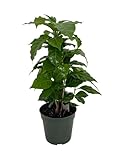
Overview: An evergreen shrub to small tree reaching 3-10 m (usually kept smaller in cultivation), grown for its glossy foliage, fragrant white flowers and red cherries whose seeds are roasted as coffee. It makes a popular container and house plant.
Quick Specifications
| Specification | Attribute |
|---|---|
| Plant Type / Life Cycle | Perennial (evergreen small tree / shrub) |
| Foliage Type | Evergreen |
| Mature Size | 3-10 m (10-30 ft); usually kept smaller in cultivation |
| Growth Rate | Moderate to slow |
| Root System | Taproot with shallow feeder roots |
| Toxicity | Fruit and seeds edible (the coffee bean); all parts contain caffeine and are toxic to cats and dogs |
| Hardiness | USDA zone 10b+ |
Growth Form & Structure
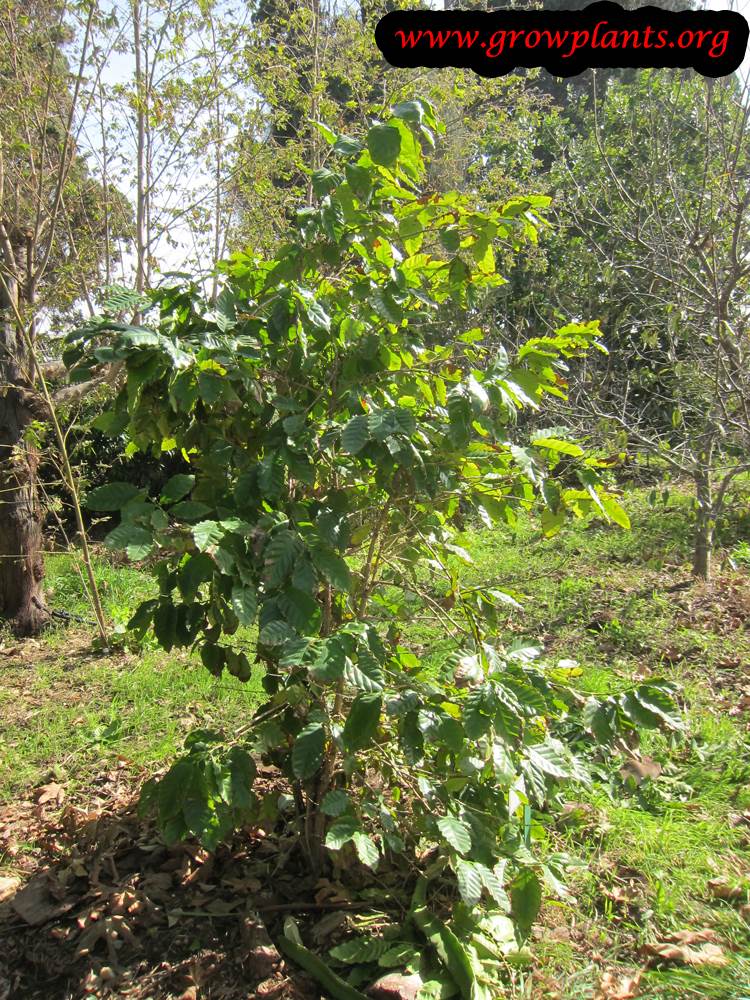
- Height & Spread: 3-10 m (10-30 ft) in the ground; readily kept as a container plant or houseplant
- Growth Habit & Form: Evergreen shrub to small tree with glossy foliage and tiered branches
- Lifespan & Maturity: Long-lived; begins bearing fruit in about 3-8 years
Anatomy & Physical Features
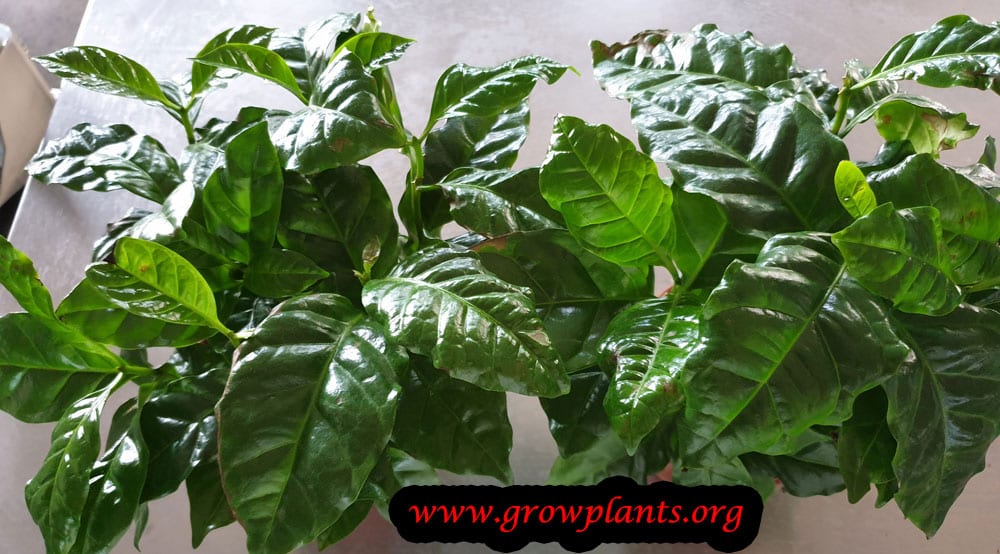
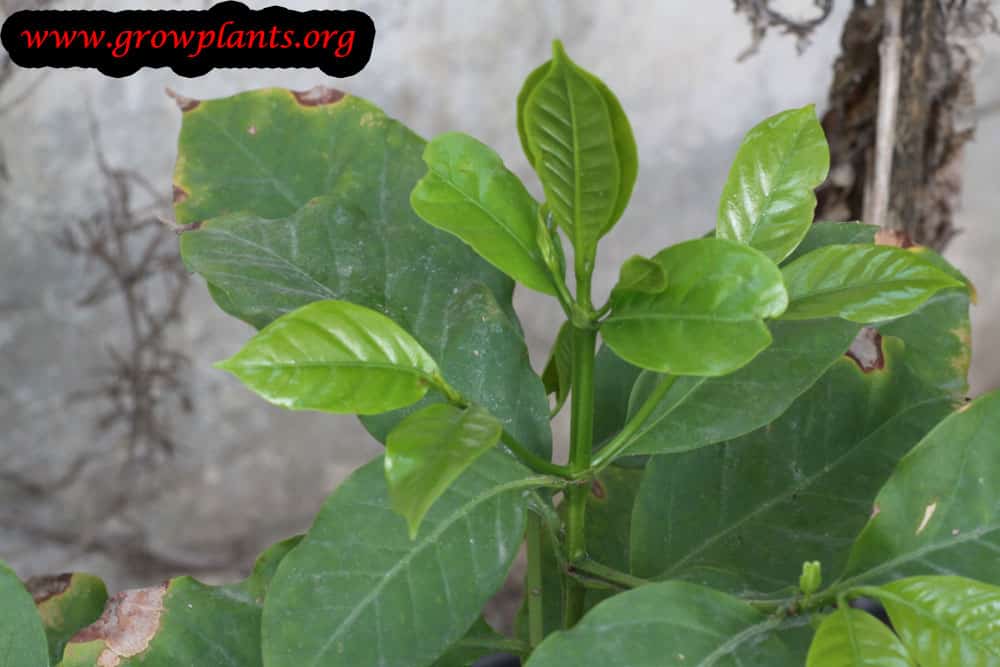
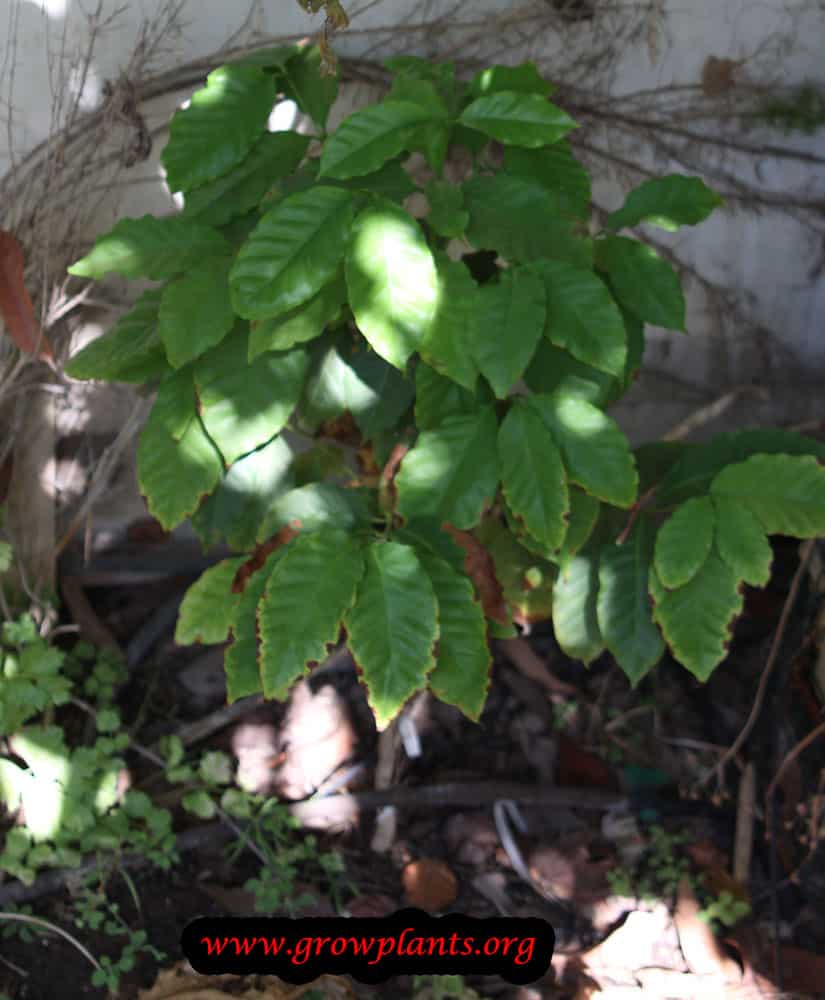
- Leaves & Foliage: Glossy dark-green leaves
- Flower Characteristics: Small white five-petalled fragrant flowers borne in clusters
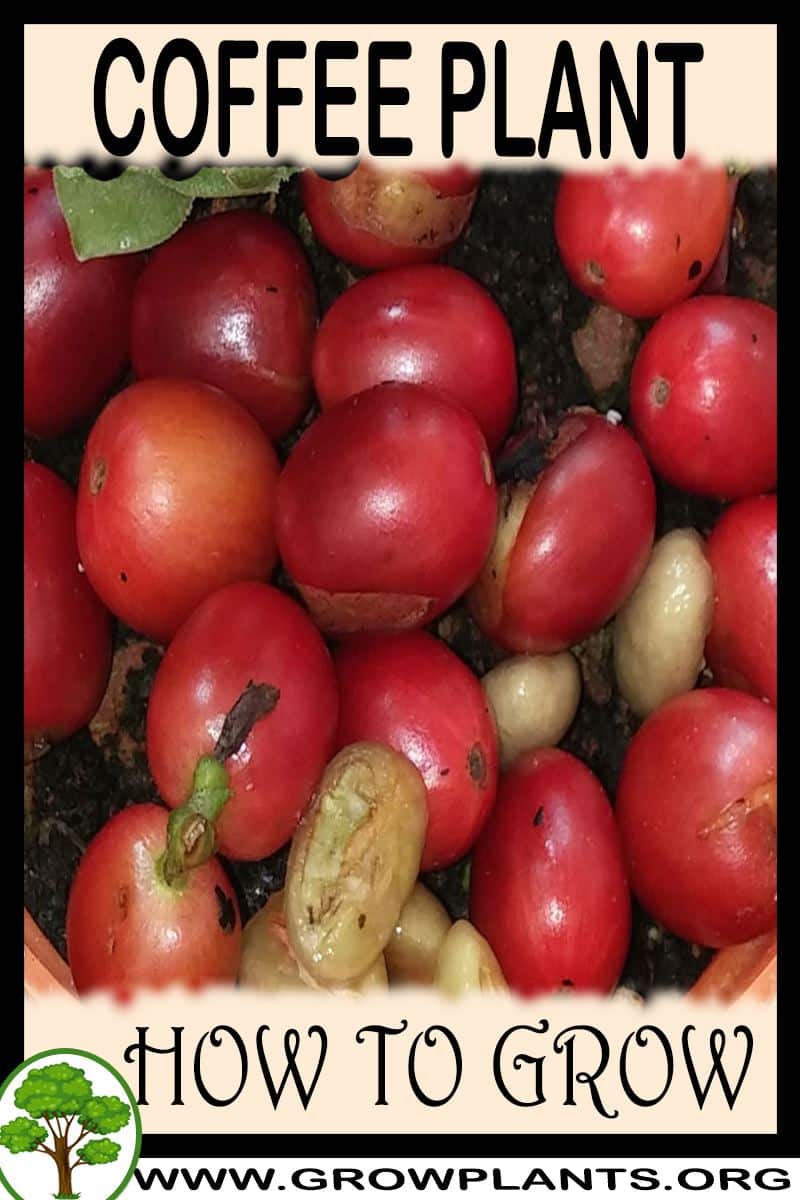
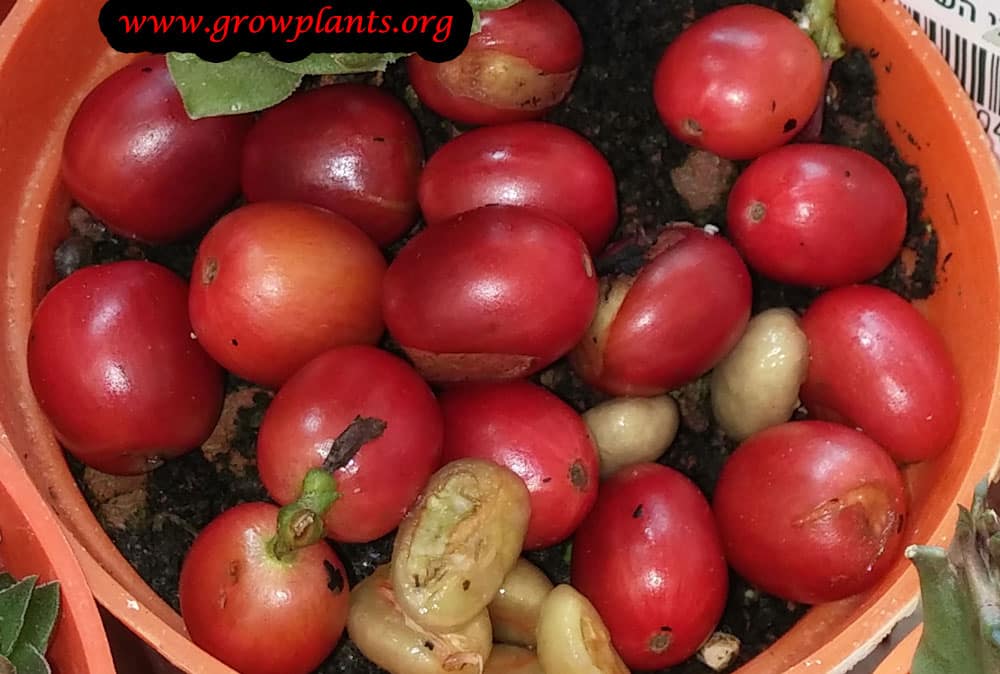
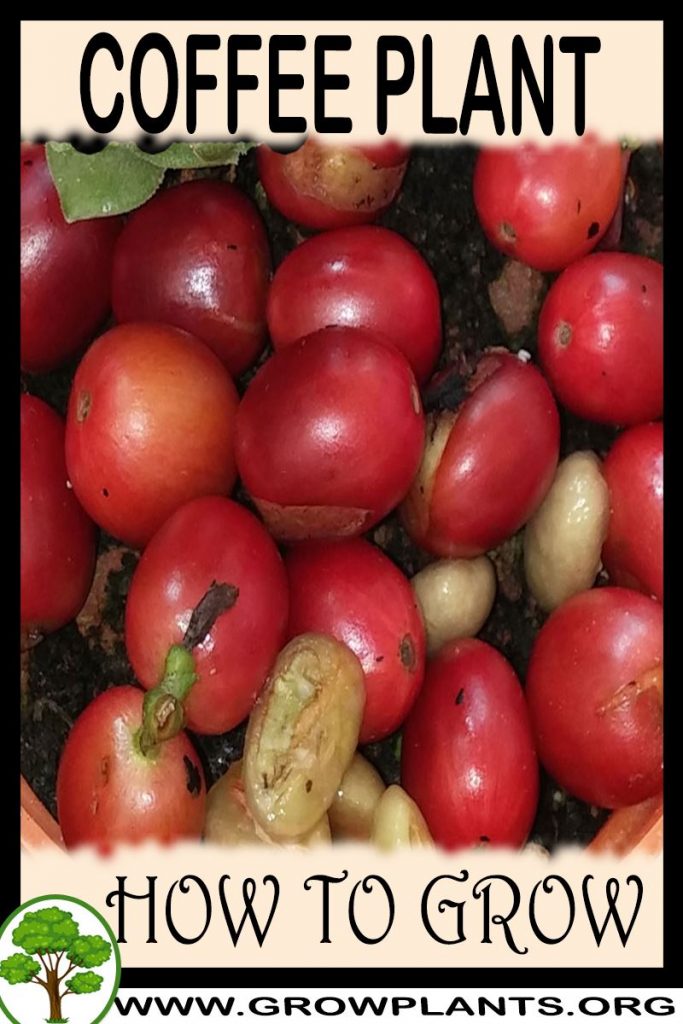
- Fruit Profile: Small glossy red “cherries” 1.5-3 cm, sweet, each holding the two seeds roasted as coffee
Primary Uses & Landscape Value
- Edible Uses: Ripe cherries eaten fresh or made into jam and juice; seeds roasted to make coffee
- Functional & Ornamental Roles: Ornamental evergreen and popular indoor / container plant; an economic crop
Care Guide: Planting, Soil & Watering
Overview: Coffee is a moderate-to-slow-growing evergreen tree (hardy to about zone 10b) that prefers half to full shade, humidity and warmth. It needs rich, acidic, well-draining soil kept evenly moist and protection from frost.
Quick Care Requirements
| Requirement | Ideal Condition |
|---|---|
| Planting Season | In spring to early summer |
| Growth Rate | Slow to Moderate |
| Soil Type | Rich, humus-rich, well-draining |
| Soil pH | Acidic (about 5.0–6.5) |
| Water Need | Moderate to High – keep evenly moist |
Planting & Establishment
- Best Planting Season: Plant in spring to early summer once frost has passed; coffee is frost-tender.
- How to Plant:
- Hole Preparation: Dig a hole wider than the root ball and loosen the surrounding soil.
- Soil Amendments: Blend in plenty of compost and organic matter to build a rich, moisture-holding, acidic soil.
- Planting Depth: Set the root collar level with the soil surface and firm gently.
- Growth Speed & Expectations: A slow-to-moderate grower reaching 3–10 m (10–30 ft); it is often kept smaller in cultivation and as a houseplant.
Soil, Watering & Drainage Care
- Soil Mix & Drainage Needs: Rich, acidic, free-draining soil is ideal; indoors use an acidic potting mix and keep humidity high.
- Watering Schedule & Technique:
- Young / Newly Planted: Keep young plants evenly moist and shaded while they establish.
- Established: Water regularly so the soil stays moist but never waterlogged; coffee dislikes both drought and standing water.
- Seasonal Adjustments: More in warm, active growth; reduce slightly in cooler months while keeping the soil from drying out.
Climate, Light & Hardiness
Coffee plant is a frost-tender tropical/subtropical evergreen tree, hardy outdoors only from USDA zone 10b and warmer, and widely grown as a houseplant elsewhere. It naturally grows as a shaded forest understory plant, so half shade to full shade suits it better than open, direct sun, and it needs consistently frost-free conditions with good humidity.
Quick Climate Specifications
| Climate Zones | tropical, Mediterranean, or subtropical climates; commonly grown as a houseplant |
|---|---|
| USDA Hardiness Zones | 10b+ |
| Optimal Temp Range | warm, humid, frost-free conditions typical of tropical understory environments |
| Cold Damage Begins | chilling injury can start well above freezing in cold-sensitive tropical foliage |
| Approx. Survival Minimum | needs frost-free conditions; the site data specifies frost-free as a core requirement rather than giving a survival minimum |
| Frost Tolerance | Very Low |
| Light Conditions | Half Shade / Full Shade |
| Wind Tolerance | Low |
Sunlight & Light Exposure
Optimal Light Setup
Bright, filtered light or partial shade mimics its natural understory habitat; indoors, a bright spot out of direct midday sun works well.
Shade & Heat Management
Prefers shade from strong direct sun, which can scorch the leaves; consistent warmth without harsh direct exposure is ideal.
Best Exposure/Orientation
Outdoors, an understory position beneath taller trees; indoors, an east-facing or otherwise bright-but-indirect window.
Temperature Extremes & Hardiness
USDA Hardiness & Regional Limits
Reliable outdoors year-round only from zone 10b and warmer; in any cooler climate it must be grown as a container/houseplant and brought under cover before frost.
Cold Damage & Winter Protection
The site data explicitly calls out frost-free conditions as essential care; even brief, light frost can seriously damage or kill this plant.
Frost Sensitivity
Very frost sensitive – a classic tender tropical.
Extreme Heat Tolerance
Tolerates warm tropical/subtropical heat, but needs shade and consistent moisture rather than hot, dry, direct-sun conditions.
Wind, Humidity & Microclimate
Humidity Preferences
High – the site data lists humidity as a core care requirement, consistent with its tropical understory origin.
Dry-Air Tolerance
Poor; dry indoor air (especially near heating or air conditioning) can stress the foliage.
Wind Tolerance
Low; as an understory plant it isn't adapted to strong, drying wind exposure.
Rainfall & Seasonal Moisture
Adapted to consistently moist, humid tropical conditions rather than a pronounced dry season.
Microclimate Recommendations
A warm, humid, sheltered, partially shaded microclimate – whether a tropical understory planting or an indoor spot away from cold drafts and heating vents.
Growing in Pots, Balconies & Indoors
Coffee (Coffea) is a classic houseplant – the grower rates it Yes for both indoors and containers, and unusually it actually prefers part shade to full sun, which suits life in a room. Its glossy evergreen leaves look good year-round, with fragrant flowers and berries once mature.
Quick Details
- Container Size: Medium pot to start, potting up as it grows into a small tub
- Indoor Suitability: A good houseplant – happy in bright, indirect light
- Best Spot: Half to full shade – bright, indirect light indoors; avoid harsh direct sun
- Soil & Drainage: Rich, well-aerated, slightly acidic mix that drains freely
- Watering in Pots: Average to generous – keep evenly moist and never bone-dry; pots dry fast
Indoors & On the Windowsill
- As a houseplant: One of the better indoor trees. Give it bright, indirect light (an east or lightly shaded window), steady warmth and some humidity, and keep the mix evenly moist.
- Growth: It can reach ceiling height over years, but tolerates pruning to keep it shapely and roomy for indoors.
- Overwintering: Frost-tender – it lives indoors year-round in cold climates and must stay warm (never let it chill below a cool room temperature).
- Safety: All parts contain caffeine and the beans and leaves are toxic if eaten – keep them away from children and pets.
On a Balcony or Patio
- Light & wind: Outdoors in summer it wants dappled shade, not full sun, and shelter from wind, which tatters the leaves. Pots dry fast in warmth – check moisture often.
- Practicalities: Move it back indoors well before any cold; it resents sudden temperature swings.
Choosing the Pot, Soil & Long-Term Care
- Pot & drainage: Strong drainage holes and no standing-water saucer, to avoid root rot. Terracotta breathes and dries faster, glazed or plastic holds moisture longer.
- Potting mix: A rich, well-aerated, slightly acidic mix – peat or coir with perlite and organic matter.
- Feeding: Potted plants need feeding more often than those in the ground, since watering leaches nutrients from the mix – a balanced feed through the growing season keeps them productive.
- Repotting: Refresh the top of the mix and pot up about every couple of years; on established plants, lightly root- and top-prune to keep them in balance with the pot.
Fertilizing & Feeding
A moderate feeder that prefers acidic, humus-rich soil: nitrogen-forward feeding supports leafy growth in its shaded setting, shifting toward balanced, potassium-supported feeding as cherries develop.
Quick Fertilizing Specs
| Feeding Level | Moderate feeder |
|---|---|
| Main Nutrient Priority | Nitrogen-forward for foliage, shifting to balanced and potassium-supported feeding as fruit (cherries) develop |
| Best Feeding Period | Warm active growing season |
| Organic Options | Compost, humus, and other acidic organic matter worked into the root zone |
| Reduce/Stop Feeding | Ease off in cooler weather or when light and growth slow indoors |
| Micronutrients | Correct only diagnosed deficiencies; acidic soil generally keeps most micronutrients available |
| Soil pH | Prefers rich, humid, acidic soil |
Feeding by Growth Stage
Newly planted / establishment
Help the young plant establish roots in humid, acidic, humus-rich soil.
| Nutrient direction | Minimal feeding is usually enough while roots establish; acidic organic matter does most of the early work. |
|---|---|
| Timing | The first months after planting or potting, during the warm season. |
| Frequency | Feeding is rarely needed until fresh new growth confirms the roots have taken hold. |
| Fertilizer types | A diluted, balanced complete fertilizer formulated for acid-loving plants once new growth appears, Compost or other acidic organic matter worked around the root zone |
| Precautions | Avoid feeding right at planting or repotting; concentrated fertilizer can injure fresh roots. |
Young plant – active vegetative growth
Build a full, leafy canopy in the plant’s shaded to part-shaded setting.
| Nutrient direction | A nitrogen-forward, acid-formulated complete fertilizer supports steady leafy growth. |
|---|---|
| Timing | Through the warm growing season while the plant is young and not yet bearing. |
| Frequency | Regular light feedings through the growing season, tapering off as growth slows. |
| Fertilizer types | A nitrogen-forward fertilizer formulated for acid-loving plants, Compost or other acidic organic matter maintained around the root zone |
| Precautions | Keep feeding light in low-light or shaded spots, since weak light limits how much growth the plant can use. |
Established, pre-bearing
Maintain steady, balanced growth as the plant matures toward its first cherries.
| Nutrient direction | A balanced, acid-formulated fertilizer supports continued growth without forcing excess soft foliage. |
|---|---|
| Timing | Through the warm growing season in the years before the plant first fruits. |
| Frequency | Periodic balanced feedings spaced through the active growing season. |
| Fertilizer types | A balanced complete fertilizer formulated for acid-loving plants, Compost or other organic matter worked into the root zone |
| Precautions | In containers, feed a little more often since a limited soil volume holds fewer reserves. |
Mature, fruit-bearing
Support flowering and the development of ripening cherries.
| Nutrient direction | A balanced, acid-formulated fertilizer with adequate potassium supports bloom and cherry development. |
|---|---|
| Timing | Through the growing season, timed around spring bloom and cherry ripening into summer. |
| Frequency | Periodic feedings through the growing season, tapering off as cherries near ripeness. |
| Fertilizer types | A balanced, acid-formulated fertilizer with adequate potassium, Compost or other acidic organic matter renewed around the root zone |
| Precautions | Avoid excess nitrogen while cherries are ripening, which favors leafy growth over fruit quality. |
Nutrient Deficiency Signs & Corrections
Older leaves turn pale green to yellow and overall growth slows.
| Possible causes | low available soil nitrogen, leaching from frequent watering in a humid, well-drained mix, roots restricted in a small container |
|---|---|
| Appears first on | older, lower leaves |
| What to check | recent feeding history, container size and root crowding, watering and drainage |
| Possible correction | Apply a nitrogen-forward, acid-formulated fertilizer and refresh organic matter in the root zone. |
Older leaves show interveinal yellowing with a green band that persists along the midrib and veins.
| Possible causes | low soil magnesium, heavy potassium feeding competing with magnesium uptake, leaching in light, fast-draining container mixes |
|---|---|
| Appears first on | older, lower leaves |
| What to check | soil or potting mix magnesium status, how potassium-heavy recent feeding has been, drainage and leaching pattern |
| Possible correction | Apply a labeled magnesium source such as Epsom salt or a dolomitic amendment and rebalance feeding. |
New leaves emerge pale to yellow with the veins staying distinctly green.
| Possible causes | soil or potting mix that has drifted away from the plant’s preferred acidic range, waterlogged or poorly aerated roots, hard, alkaline irrigation water used over time |
|---|---|
| Appears first on | newest leaves |
| What to check | soil or water pH history, drainage and root health, whether new growth or old growth is affected first |
| Possible correction | Correct soil acidity and drainage, and apply a chelated iron product per its label if needed. |
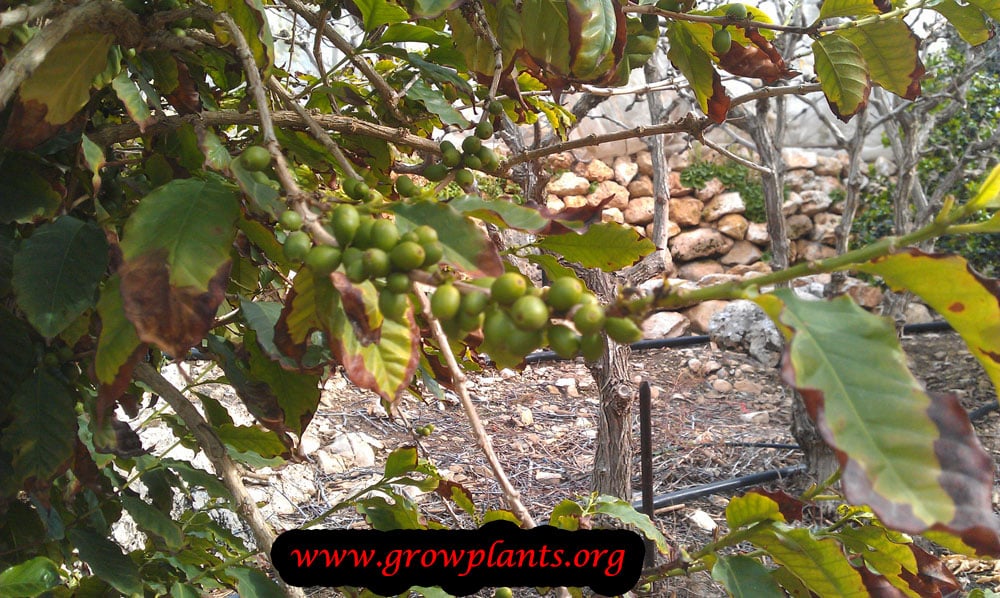
Leaf margins and tips brown or scorch despite regular watering.
| Possible causes | fertilizer salts accumulating in a container with limited soil volume, under-watering that concentrates salts, over-fertilizing a young or recently repotted plant |
|---|---|
| Appears first on | leaf margins and tips |
| What to check | recent fertilizer amounts and frequency, container drainage and watering consistency, time since the last full watering-through |
| Possible correction | Ease off feeding, water thoroughly to flush accumulated salts, then resume lighter feeding. |
Pruning, Training & Seasonal Maintenance
Coffee is naturally a large understory shrub or small tree, but because it’s grown at a manageable height for repeated hand-picking, pruning here is as much about keeping the plant to a workable size as about plant health. Flowers, and later fruit (‘cherries’), form at leaf nodes along lateral branches, and any one node fruits only once, so renewing older, spent laterals matters more than heavy structural cuts. The recorded safe window is autumn/winter, outside the main spring bloom and summer fruit-development period.
Quick Pruning & Maintenance Specs
| Pruning Tolerance | Moderate |
| Primary Pruning Window | Autumn/Winter |
| Main Objective | Remove dead wood; control height for easy picking; renew old, unproductive laterals |
| Young Plant Priority | Allow the main stem to establish; top only once a manageable picking height is reached |
| Mature Plant Priority | Height maintenance; remove dead/spent lateral wood; thin crowded interior growth |
| Best Tool Type | Bypass secateurs / precision snips – this is fine, shrubby wood, not saw-scale |
| Avoid Heavy Pruning During | Spring bloom or while cherries are developing/ripening |
Pruning by Plant Age & Size
Newly Established
Minimal – let the young plant build height and leaf area before any topping.
Young / Formative
Once the plant nears a comfortable picking height, top the main stem to encourage lateral branching – a widely used coffee-growing practice that keeps the plant productive and pickable rather than letting it run toward its natural 3–10 m height. No formal leader/scaffold system is needed beyond this.
Mature / Established
Each dormant season, remove dead wood and clearly spent lateral growth (a lateral that has already fruited will not fruit again at that same point), and re-top any regrowth that has outgrown the desired picking height.
Seasonal Pruning Schedule
| Stage | Objective | What to Remove | Flowering/Fruiting Impact |
| Dormant (Autumn/Winter) | Main structural and renewal pruning | Dead wood; spent laterals; overgrown regrowth | Done after that year’s cherries are picked and ahead of spring bloom, so it doesn’t strip developing flowers or fruit |
Flowering & Fruiting Wood
Flowers, and later cherries, form at leaf axils on lateral branches; each node fruits once and does not refruit at the same spot. Productivity depends on the plant continuing to push new lateral growth rather than on preserving old wood – this is why removing spent laterals, rather than protecting them, is the right renewal move here, unlike on a spur-fruiting tree.
Structural Pruning & Training
Topping controls height and pushes the branching habit that makes hand-harvest practical. Thin an overly dense interior occasionally to keep light reaching the lower, shaded laterals, which otherwise stop fruiting well.
Special Growth to Remove
- Dead branches – this plant’s own recorded guidance.
- Spent laterals that have already fruited and aren’t pushing new growth.
Container & Small-Space Pruning
This species is explicitly grown as a houseplant/container specimen. In a pot, size control is the dominant concern: top and pinch more assertively than an in-ground plant needs, to keep it in scale with the space, and expect less overall fruiting than a full-size outdoor specimen given the reduced light most indoor spots provide (this plant naturally prefers half-to-full shade, which helps container growing but still limits vigor compared to a farmed hedge row).
Tools
Bypass secateurs for laterals and dead-wood removal; precision snips for fine pinching on young or container plants; loppers only occasionally, for an old, thickened main stem on a long-grown outdoor specimen.
Tool Hygiene & Disease Risk
Routine – coffee’s well-known disease pressures (leaf rust, berry disease) are airborne or splash-spread fungal issues rather than tool-transmitted, so clean, sharp tools are sufficient.
Cut Placement & Technique
Top the main stem just above a healthy node to force branching. Remove spent laterals back to their point of origin rather than leaving stubs.
Heavy Pruning & Rejuvenation
An old, leggy, or over-tall specimen tolerates a fairly hard cutback/re-topping to force fresh lateral growth from lower on the plant; expect a season with little to no fruit while it rebuilds its lateral framework.
Post-Pruning Care
Normal watering; no extra feeding specifically to force regrowth. Keep an eye on light levels for container plants after a hard prune opens up the canopy, since this is a shade-preferring species.
Common Pruning Mistakes
- Letting the plant grow to its full unpruned height and losing easy access to cherries.
- Never renewing old spent laterals, letting productivity drift toward the outer canopy only.
- Over-pruning a container specimen already light-limited by an indoor spot.
When NOT to Prune
Not during the spring bloom or while cherries are actively developing/ripening, since that removes or stresses the current crop.
Recommended Tools (by task)
| Task | Tool Category | Why |
| Lateral renewal, dead-wood removal | bypass_secateurs | Standard clean cuts for this shrubby wood |
| Pinching young growth, container/houseplant detail | precision_snips | Fine control for compact, indoor-scale plants |
Pruning Troubleshooting
| Problem | Possible Cause | What to Check | Corrective Action |
| Reduced fruiting over time | Old laterals never renewed; nodes exhausted | Laterals that have fruited repeatedly without renewal | Cut back spent laterals to push new fruiting wood |
| Leggy, hard-to-pick plant | Not topped while young, or regrowth not re-topped | Plant height versus picking reach | Top the main stem/regrowth to the desired height |
| Sparse fruiting on a container plant | Insufficient indoor light | Light exposure | Move to the brightest available half-shade spot; moderate pruning to match reduced vigor |
Propagation Guide
Coffee plants can be propagated without grafting; grafting is not required for routine propagation.
Quick Propagation Specs
| Preferred Method | Seed and stem cuttings |
| Grafting | Not required for routine propagation unless specifically used for a named cultivar |
Vegetative Propagation
Use healthy vegetative material appropriate to the plant, such as cuttings, offsets, suckers or divisions where naturally available. Establish propagules in a clean, free-draining growing medium.
Seed
Where seed is biologically appropriate, it may be used to raise new plants, but seedlings of named cultivars may vary.
Bloom & Flower Guide
Quick Details
- Bloom Season: Spring
- Time to First Bloom: Plants generally start flowering in about three to four years
- Flower Appearance: Small white, five-petalled flowers with prominent stamens, borne in clusters along the branches
- Edibility: Not eaten – coffee is grown for the beans, and the flowers are not used as food
Detailed Blooming Overview
Coffee (Coffea) blooms in spring, lining its branches with clusters of small white flowers. They are sweetly jasmine-scented and short-lived, often lasting only a few days before fading, so the show is brief but memorable. Each cluster of flowers marks where the berries will later form.
Flower Characteristics
- Small white flowers with five petals and prominent stamens.
- Carried in tight clusters where leaves meet the stem, with a jasmine-like fragrance.
Bloom Care & Thinning
- Pollination: Largely self-pollinating, and also visited by bees and beetles.
Fruit & Uses
Coffee gives two edible parts on the same small, glossy red fruit: the sweet outer flesh, which can be eaten fresh or turned into jam or juice, and the seeds inside (the coffee beans), which are the part actually grown for, and are dried and roasted before being brewed as coffee.
Quick Edible Specs
| Edible Parts | Fruit (pulp) and seeds (beans) |
|---|---|
| Main Use(s) | Fruit: culinary – fresh eating, jam, juice. Seeds: beverage (roasted and brewed as coffee) |
| Eaten Raw or Cooked | Fruit pulp: raw or cooked into jam/juice. Seeds: technically edible raw, but normally dried and roasted before use |
| Preparation Required | Fruit: none for fresh eating, cooking for jam/juice. Seeds: remove from the pulp, dry, then roast before brewing |
| Harvest Season | Spring to summer, for both the fruit and the seed inside it |
| Time to First Harvest | A multi-year wait from planting before the tree first bears (see Propagation) |
| Storage | Fresh fruit is perishable; dried, roasted seeds (coffee beans) store well and are the practical way to keep a harvest |
| Safety/Toxicity Caveat | Seeds contain caffeine; no other safety concerns noted for normal culinary/beverage use |
Fruit
The fruit (“coffee cherry”) is small, around 1.5-3cm, ripening to a glossy red with sweet flesh that carries a hint of the seed’s flavour. Ripe cherries can be eaten out of hand or made into jam or juice when harvested in quantity, though most growers pick primarily for the seeds inside rather than the pulp.
Seeds, Pods & Nuts
The two seeds inside each cherry are the coffee beans and the main reason the plant is grown. They are technically edible raw, but the standard preparation is to remove them from the pulp, dry them, and roast them before brewing as coffee. Roasting is what develops the familiar coffee flavour and aroma.
Harvesting
Both the fruit and its seeds ripen together in spring through summer. Birds are the main pest to watch for on the ripening cherries, so timely picking or protective measures help secure the crop.
Preparation, Uses & Safety
For pulp use, ripe cherries need no preparation for fresh eating, or can be cooked down for jam or pressed for juice. For the seeds, pulp the cherries to extract the beans, dry them thoroughly, then roast before grinding and brewing. As with any caffeinated seed, moderation applies to how much brewed coffee is consumed, but no other safety issues apply to normal use.
Pests, Diseases & Troubleshooting
Overview: Coffee grown as a crop faces specialist pests and the notorious coffee leaf rust, while as a houseplant it mostly battles scale, mealybugs and mites in dry indoor air. Its glossy leaves show stress quickly – scorch, browning and chlorosis from light, water or nutrient problems. Good humidity, bright indirect light and clean foliage prevent most issues.
Quick Troubleshooting Overview
| Issue / Pest | Main Symptom | Primary Solution |
|---|---|---|
| Coffee leaf rust | Yellow-orange powdery spots on leaf undersides; defoliation | Remove leaves, airflow, resistant varieties, copper |
| Scale | Brown/green bumps on stems and midribs; honeydew, sooty mold | Scrape off, horticultural oil |
| Mealybugs | White cottony masses on stems and roots | Alcohol dab, insecticidal soap, oil |
| Coffee berry borer | Small holes in berries; damaged beans | Sanitation, remove infested berries, traps |
| Spider mites | Stippling and dull leaves in dry indoor air | Raise humidity, hose, horticultural oil |
| Leaf scorch | Brown, crispy leaf edges | Bright indirect light, steady moisture, humidity |
Common Pests & Management
- Green/soft scale (Coccus viridis / Saissetia spp.):
- Symptoms: Signature indoor pest: green or brown flat bumps along stems, midribs and leaf undersides with copious honeydew and sooty mold, weakening the plant.
- Prevention & Control: Scrape off and wipe leaves; horticultural oil to smother, repeated; prune out badly encrusted growth; conserve/encourage predators and ants management.
- Mealybugs (Planococcus citri):
- Symptoms: White cottony masses on stems, leaf axils and roots with honeydew and stunting.
- Prevention & Control: Spot-treat with alcohol, insecticidal soap or oil; check roots at repotting; isolate new plants.
- Coffee berry borer (Hypothenemus hampei):
- Symptoms: Signature crop pest: tiny beetles bore into ripening berries near the tip, tunneling the beans and leaving small holes; damaged beans rot or drop.
- Prevention & Control: Strip and destroy all leftover/fallen berries after harvest (sanitation is key), use alcohol/water traps to monitor, and apply Beauveria bassiana biocontrol; timely harvesting.
- Coffee leaf miner (Leucoptera coffeella):
- Symptoms: Irregular brown blotch mines between leaf surfaces where larvae feed, causing leaf browning and drop in hot, dry crop conditions.
- Prevention & Control: Conserve parasitic wasps and predators, avoid broad-spectrum sprays, remove badly mined leaves; maintain shade and vigour.
- Two-spotted spider mite (Tetranychus urticae):
- Symptoms: Fine stippling and a dull cast to leaves in dry indoor air, with fine webbing.
- Prevention & Control: Raise humidity and hose foliage; horticultural or neem oil; avoid drought stress.
Diseases & Fungal Issues
- Coffee leaf rust (Hemileia vastatrix):
- Symptoms: Signature disease: yellow-orange powdery spots on leaf undersides with matching yellow patches above, leading to heavy defoliation and yield loss.
- Treatment & Management: Grow resistant varieties, improve airflow and light, avoid leaf wetness, remove affected leaves; copper fungicides preventively in crop settings; keep plants well-nourished.
- Coffee berry disease (Colletotrichum kahawae):
- Symptoms: Dark sunken lesions on green berries that rot and mummify, mainly a highland-Africa crop disease.
- Treatment & Management: Remove and destroy affected berries, improve airflow, and use copper fungicides and resistant varieties in affected regions.
- Brown eye spot / Cercospora (Cercospora coffeicola):
- Symptoms: Brown spots with pale centres and yellow halos on leaves and berries, worse on stressed, under-fed plants.
- Treatment & Management: Improve nutrition and shade, avoid overhead watering, remove affected leaves; copper fungicide if severe.
- Root rot (Pythium / Phytophthora):
- Symptoms: Wilting, yellowing and collapse from waterlogged mix; roots dark and soft.
- Treatment & Management: Use free-draining mix, water when the surface dries, and never leave pots standing in water.
Growing Difficulties & Abiotic Problems
- Leaf scorch & browning:
- Cause & Symptoms: Direct sun, dry air or salt build-up browns and crisps the glossy leaf edges.
- Correction Strategy: Give bright indirect light, raise humidity, keep moisture steady, and flush salts occasionally.
- Chlorosis:
- Cause & Symptoms: Yellowing between veins from iron deficiency in alkaline soil, or general nutrient shortage.
- Correction Strategy: Use an acidic-leaning feed, apply chelated iron, and correct pH; feed regularly in the growing season.
- Leaf drop:
- Cause & Symptoms: Cold, drafts, or over/underwatering trigger leaf drop.
- Correction Strategy: Keep warm and draft-free with even moisture; avoid sudden changes and cold windows.
- Fluoride/hard-water tip burn:
- Cause & Symptoms: Sensitive to fluoride and salts, showing brown tips.
- Correction Strategy: Use low-salt/filtered water where possible and avoid over-fertilizing.
What Helps – Products & Tools
Cultural care leads – bright indirect light, humidity, clean foliage and strict harvest sanitation. When needed, horticultural/neem oil and insecticidal soap manage scale, mealybug and mites, Beauveria and sanitation address berry borer, and copper fungicide plus resistant varieties handle leaf rust and other leaf/berry diseases; chelated iron corrects chlorosis.