Plant Profile & Key Characteristics
Overview: African medlar is a deciduous shrub or small tree growing 3-8 m (10-24 ft) tall, valued for its sweet-sour edible brown fruits and drought tolerance. It is a slow-growing perennial for warm climates (USDA zones 9-11).
Quick Specifications
| Specification | Attribute |
|---|---|
| Plant Type / Life Cycle | Perennial (deciduous shrub / small tree) |
| Foliage Type | Deciduous |
| Mature Size | 3-8 m (10-24 ft) tall |
| Growth Rate | Slow |
| Toxicity | Non-toxic / edible fruit |
| Hardiness | USDA zones 9-11 |
Growth Form & Structure
- Height & Spread: 3-8 m (10-24 ft) tall as a shrub or small tree; can also be container-grown.
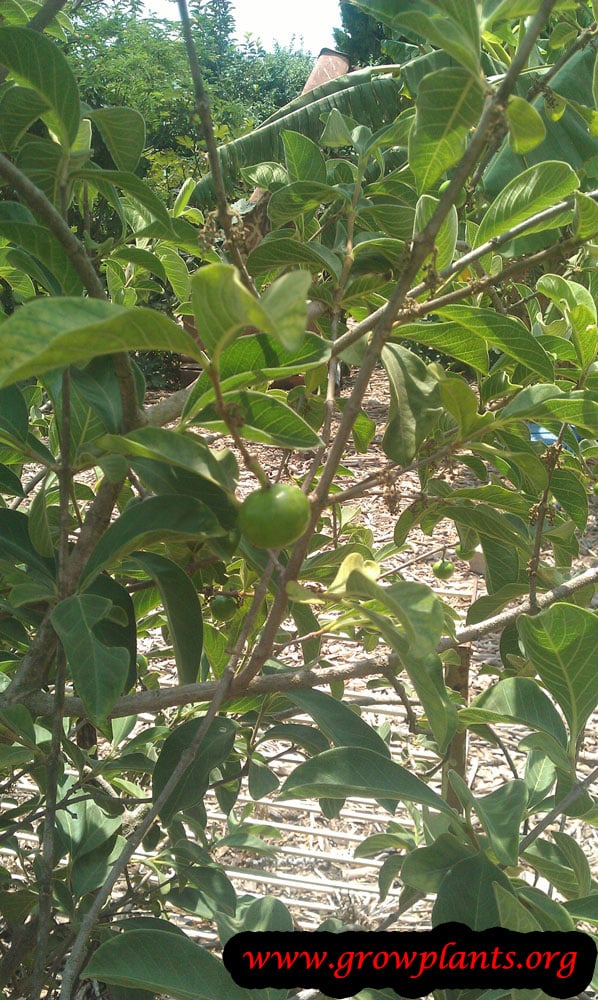
- Growth Habit & Form: Multi-stemmed deciduous shrub or small tree.
- Lifespan & Maturity: Bears fruit in about 2-4 years.
Anatomy & Physical Features
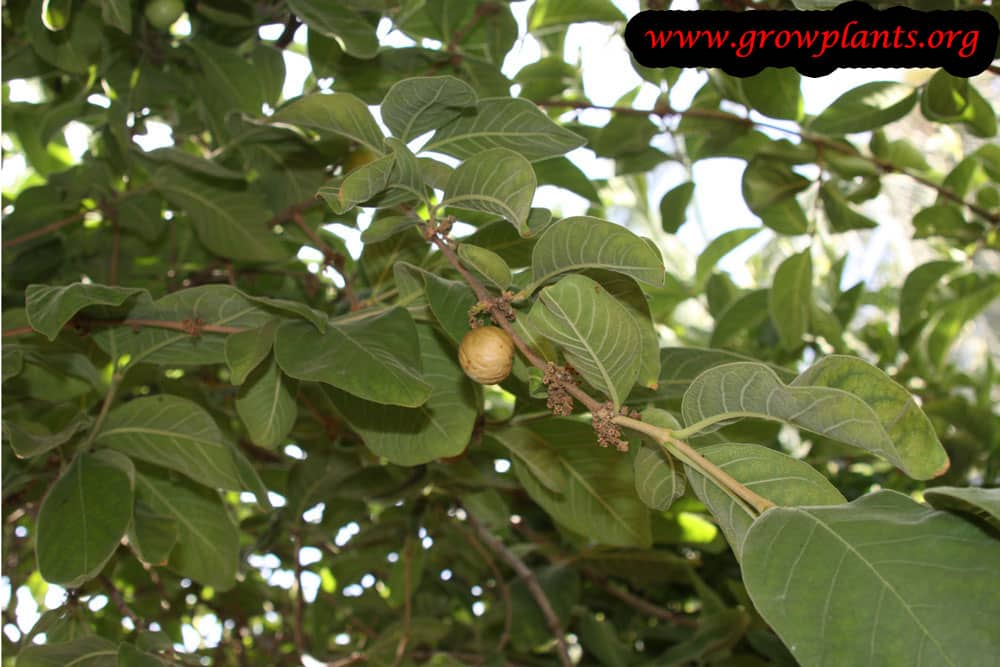
- Leaves & Foliage: Green, elliptic leaves.
- Flower Characteristics: Tiny green flowers (1-2 mm) borne in clusters.
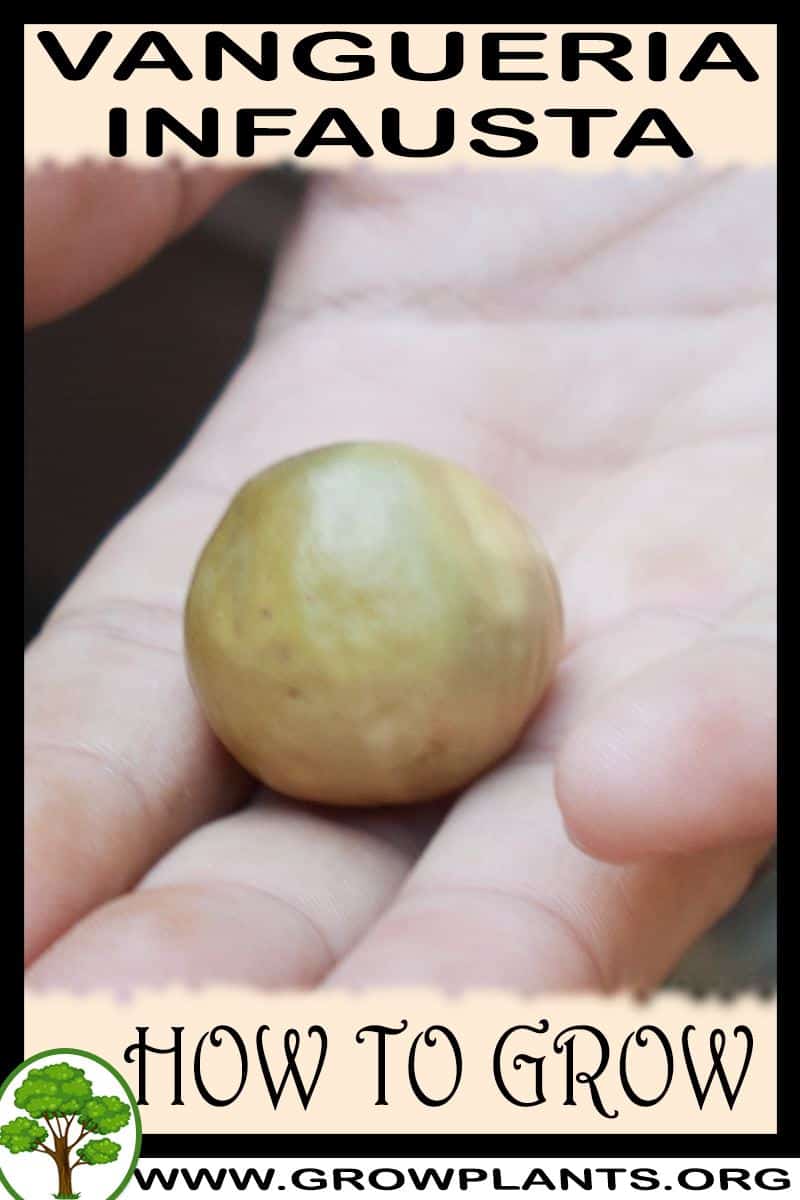
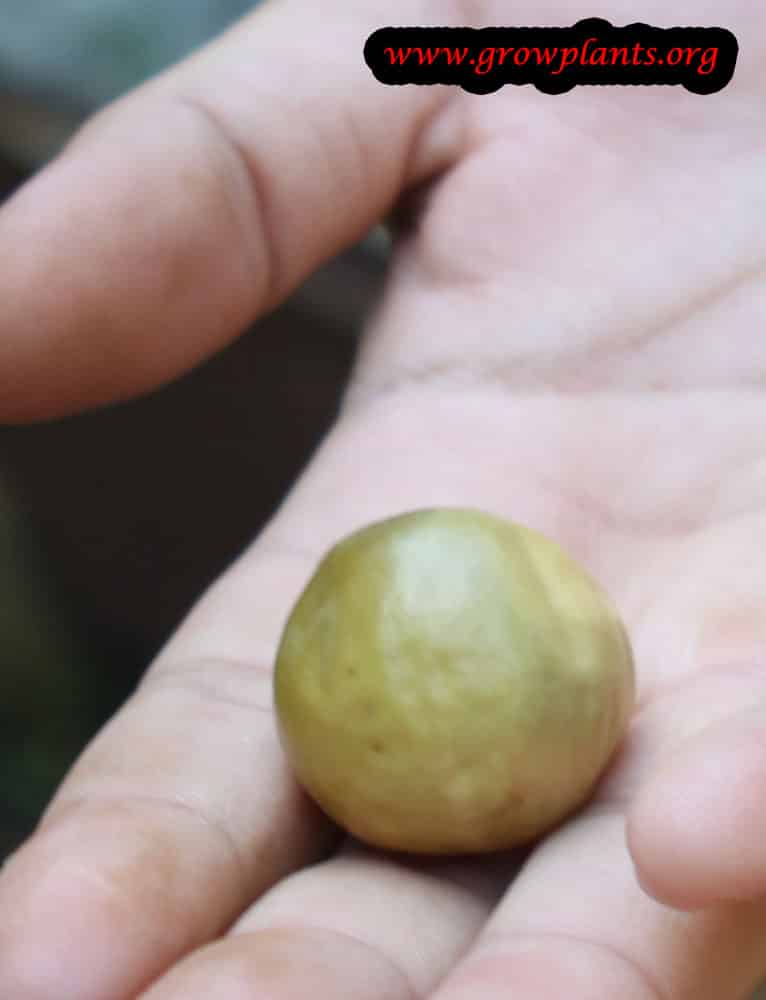
- Fruit Profile: Round brown fruit with a sweet-sour, apple-like flavour.
Primary Uses & Landscape Value
- Edible Uses: Fruit eaten raw or dried, and made into beverages including alcoholic drinks.
- Functional & Ornamental Roles: Drought-tolerant ornamental and fruit tree for warm, dry gardens.
Care Guide: Planting, Soil & Watering
Overview: Vangueria infausta (African medlar) is a drought-tolerant deciduous shrub or small tree (zone 9-11) for full sun. It is easygoing about soil as long as it drains freely, and needs only modest water once established.
Quick Care Requirements
| Requirement | Ideal Condition |
|---|---|
| Planting Season | In the cooler seasons – autumn through spring |
| Growth Rate | Slow |
| Soil Type | Well-draining |
| Water Need | Low to Moderate |
Planting & Establishment
- Best Planting Season: Plant during the cooler part of the year, autumn through spring, so roots settle before summer heat.
- How to Plant:
- Hole Preparation: Dig a hole a little wider than the root ball in loosened, free-draining ground.
- Soil Amendments: Work some compost or organic matter into the backfill to get it started; sharp drainage matters more than richness.
- Planting Depth: Set the root ball level with the surrounding soil and keep the stem base at its original depth.
- Growth Speed & Expectations: A slow grower that eventually reaches 3-8 m (10-24 ft).
Soil, Watering & Drainage Care
- Soil Mix & Drainage Needs: Give it well-drained soil; being drought tolerant it dislikes wet feet, so avoid heavy, waterlogged spots.
- Watering Schedule & Technique:
- Young / Newly Planted: Water regularly through the first season to establish the roots.
- Established: Once settled it needs only occasional deep watering and tolerates dry spells.
- Seasonal Adjustments: Water a little more in summer heat and hold back in the cool, wet season.
Climate, Light & Hardiness
Vangueria infausta (African medlar) is a deciduous, drought-tolerant shrub or small tree suited to subtropical, Mediterranean, desert, and temperate climates in full sun. Its winter deciduous habit and desert/temperate range give it comparatively good cold tolerance among the fruiting species in this group.
Quick Climate Specifications
| Climate Zones | Subtropical, Mediterranean, Desert, Temperate |
|---|---|
| USDA Hardiness Zones | approximately 9–11 |
| Approx. Survival Minimum | approximately −6.7°C (20°F) at the zone 9 boundary, for an established, dormant plant |
| Frost Tolerance | Moderate |
| Light Conditions | Full Sun |
Sunlight & Light Exposure
Optimal Light Setup
Full sun for best growth.
Direct Sun Requirement
Yes.
Best Exposure / Orientation
An open, sunny site.
Temperature Extremes & Hardiness
USDA Hardiness & Regional Limits
Zone 9–11 spans genuinely cooler winters than most of the tropical fruit trees in this group, consistent with its deciduous, temperate-to-desert-adapted habit.
Cold Damage & Winter Protection
As a deciduous shrub it tolerates winter cold reasonably well while dormant; young plants still benefit from a sheltered start.
Frost Sensitivity
Moderate; more frost-tolerant than the tropical species in this group but not fully hardy.
Extreme Heat Tolerance
Very good, reflecting its desert and dry-subtropical range; notably drought tolerant.
Wind, Humidity & Microclimate
Dry-Air Tolerance
High – well adapted to arid, desert-fringe conditions.
Rainfall & Seasonal Moisture
Naturally suited to the seasonal, sometimes sparse rainfall of savanna, desert-fringe, and dry-temperate climates.
Microclimate Recommendations
A warm, open, well-drained, sunny site suits it well across its range.
Growing in Pots, Balconies & Indoors
Vangueria infausta (wild medlar) is a small tree of 3-8 m (10-24 ft). The grower confirms it can be grown in a container but is not a houseplant – keep it outdoors in full sun on a patio or balcony.
Quick Details
- Container Size: A roomy tub (30-50 L / 8-13 gal) sized up as it grows
- Indoor Suitability: Not a houseplant; grow it outdoors
- Best Spot: Full sun
- Soil & Drainage: Free-draining mix; it is fairly drought-tolerant
- Watering in Pots: Small to average – let the top of the mix dry between waterings
Indoors & On the Windowsill
- Houseplant limits: Not a houseplant – it needs full sun that indoor rooms cannot provide.
- Overwintering: In a cold climate a potted plant can be moved to a bright, frost-free spot for the cool season, which is a good reason to keep it in a container.
On a Balcony or Patio
- Light & exposure: Give it the sunniest position. Walls and paving reflect heat and pots dry fast, so check moisture regularly, though this species copes well with drier conditions.
Choosing the Pot, Soil & Long-Term Care
- Pot & drainage: Use a pot with plenty of drainage holes; skip a standing water saucer to avoid root rot. Terracotta breathes and dries faster, while glazed or plastic pots hold moisture longer.
- Potting mix: A well-aerated, organic-rich mix – peat or coir blended with perlite or vermiculite for drainage.
- Feeding: Potted plants need feeding more often than those in the ground, as nutrients leach out with each watering – feed lightly through the active growing season.
- Repotting: Refresh the mix or pot up about every two years; for an established specimen, replace part of the soil and lightly prune the roots and top growth.
Fertilizing & Feeding
Vangueria infausta (African medlar) is a slow-growing, drought-tolerant small tree that does well on well-drained soil with only light, occasional feeding rather than a heavy fertilizing program.
Quick Fertilizing Specs
| Feeding Level | Light; this drought-tolerant tree is naturally a low-input, slow grower. |
|---|---|
| young_feeding | Light, balanced feeding supports establishment without pushing soft growth this slow grower doesn’t need. |
| mature_feeding | Light, balanced feeding through the growing season, with attention to potassium as the sweet-tart fruit develops. |
| Main Nutrient Priority | Balanced, restrained nutrition overall; this species does not need heavy feeding to perform well. |
| Best Feeding Period | During the active growing season. |
| Organic Options | Working organic matter into well-drained soil suits this species better than routine synthetic feeding. |
| Reduce/Stop Feeding | Ease off or skip feeding entirely once the tree is established, since it is naturally adapted to lean, well-drained soil. |
Feeding by Growth Stage
Newly planted
Help a newly planted Vangueria infausta root into well-drained soil without encouraging soft, drought-vulnerable growth.
| Nutrient direction | Light, balanced nutrition focused on root establishment rather than pushing top growth. |
|---|---|
| Timing | In the weeks and months after planting, while the young tree is still becoming established. |
| Frequency | A single light feeding at planting is usually enough for this naturally low-input species. |
| Fertilizer types | A balanced complete fertilizer used sparingly, Organic matter worked into well-drained soil at planting |
| Precautions | Avoid overwatering or overfeeding this drought-tolerant species, since it is adapted to lean soil and can suffer in soggy, over-rich conditions. |
Young, non-bearing tree
Support gradual canopy development on a young, slow-growing Vangueria infausta before it begins bearing fruit.
| Nutrient direction | Light, balanced nutrition; this slow-growing species rarely needs a nitrogen-heavy push. |
|---|---|
| Timing | Through the active growing season as the young tree slowly puts on new growth. |
| Frequency | Light feeding is usually enough during the growing season for this slow, drought-adapted grower. |
| Fertilizer types | A balanced complete fertilizer used lightly, Organic matter to build soil fertility without over-enriching well-drained soil |
| Precautions | Keep feeding light and infrequent; this species is naturally adapted to lean soil and does not reward heavy fertilizing with faster growth. |
Mature, fruit-bearing
Support a mature Vangueria infausta through flowering and the development of its round, sweet-tart brown fruit.
| Nutrient direction | Light, balanced nutrition through flowering, with attention to potassium as fruit develops. |
|---|---|
| Timing | Through the active growing season, spanning flowering and fruit development. |
| Frequency | Light, occasional feeding through the growing season supports flowering and fruit development on this naturally low-input tree. |
| Fertilizer types | A balanced to potassium-conscious complete fertilizer used lightly, Organic matter maintained around the root zone |
| Precautions | Resist the urge to feed heavily even during fruiting; this drought-tolerant species performs best on comparatively lean, well-drained soil. |
Nutrient Deficiency Signs & Corrections
Leaves look pale and new growth is even slower and sparser than this species’ normally unhurried pace.
| Possible causes | A general nutrient shortage on very poor or eroded soil, Waterlogged soil stressing roots adapted to well-drained conditions, Insufficient light for a tree grown too far into shade |
|---|---|
| Appears first on | New growth across the canopy. |
| What to check | Soil drainage and recent watering, Light exposure, Overall soil fertility |
| Possible correction | Confirm drainage and light are adequate before assuming a nutrient problem; if pale growth persists, a light balanced feeding is usually enough to correct it. |
Leaves yellow between the veins while the veins themselves stay green.
| Possible causes | High soil pH limiting iron or manganese availability, Waterlogged soil restricting root uptake in this drought-adapted species, A genuine iron or manganese shortage in the soil |
|---|---|
| Appears first on | New growth toward the branch tips. |
| What to check | Soil pH and drainage, Whether only the newest leaves are affected, Recent watering practices |
| Possible correction | Correct soil pH and drainage first, since this species is intolerant of soggy soil; if yellowing persists, apply a chelated iron or manganese product per its label. |
Pruning, Training & Seasonal Maintenance
African medlar is a slow-growing, drought-tolerant deciduous shrub-to-small-tree, and its pruning needs are correspondingly light — the plant’s own guidance is simply to remove dead, weak, and weeping branches. The safest window is autumn to winter, which lines up with the plant’s natural leaf-drop, so cuts are made while it is leafless and not actively pushing new growth.
Quick Pruning & Maintenance Specs
| Pruning Tolerance | Low–Moderate (slow growth means light, infrequent pruning is normal) |
| Primary Pruning Window | Autumn–Winter (dormant, leafless period) |
| Typical Frequency | Light, as-needed — not an annual heavy regime given the slow growth rate |
| Main Objective | Remove dead, weak, and weeping/drooping branches |
| Young Plant Priority | Minimal intervention — allow the naturally slow growth to establish structure on its own |
| Mature Plant Priority | Sanitary removal of dead/weak/weeping wood |
| Best Tool Type | Bypass secateurs/loppers |
| Avoid Heavy Pruning During | Spring–summer bloom and fruit development into the late-summer/autumn harvest |
Pruning by Plant Age & Size
Newly Established
Minimal; remove only damaged growth.
Young / Formative
Little structural training is needed or indicated for this species — let it develop its natural shrub-to-small-tree form, correcting only weak or weeping growth as it appears.
Mature / Established
Periodic removal of dead, weak, and weeping branches.
Seasonal Pruning Schedule
Dormant/Winter (Autumn–Winter)
Objective: remove dead, weak, and weeping wood, matching the plant’s stated pruning season and its deciduous leaf-off period. Because this is also before the spring–summer bloom, it does not remove the coming season’s flowering growth.
Flowering & Fruiting Wood
Flowers are small (1–2mm, borne in clusters) and appear in spring–summer after the plant leafs out. Dormant-season pruning, done before this leafing/flowering flush, is unlikely to sacrifice the coming bloom, though exact wood age isn’t specified — keep any heavier cuts cautious and prefer removing only dead/weak/weeping wood rather than general framework cuts.
Structural Pruning & Training
Weeping/drooping branches are specifically flagged for removal in the plant’s own guidance. No formal training system (central leader, vase, etc.) is indicated or needed for this slow-growing species.
Special Growth to Remove
Dead wood, weak branches, and weeping (drooping) branches, per the plant’s own care notes.
Container & Small-Space Pruning
This species can be grown in a container. Because it is naturally slow-growing, container specimens need only light, infrequent pruning to stay in scale — avoid over-pruning a plant that already grows slowly on its own.
Tools
- bypass_secateurs — dead/weak twig removal, the main recurring task.
- loppers — occasional thicker weeping-branch removal.
Tool Hygiene & Disease Risk
Routine — clean, sharp tools. The recorded pest issue (gall) is not indicated as spread by pruning tools.
Cut Placement & Technique
Thinning cuts at the branch origin for dead, weak, or weeping wood, just outside the branch collar.
Heavy Pruning & Rejuvenation
Not indicated. This slow-growing species has no stated tolerance for hard rejuvenation cuts in its own facts; stick to light, corrective pruning rather than cutting back hard.
Post-Pruning Care
Routine watering appropriate to this drought-tolerant plant’s normal light watering needs; no special feeding tied to pruning.
Common Pruning Mistakes
- Over-pruning a naturally slow-growing plant that doesn’t need or benefit from a heavy annual regime.
- Leaving weeping/weak branches unattended until they break.
When NOT to Prune
Avoid pruning during the spring–summer bloom and through fruit development into the late-summer/autumn harvest.
Recommended Tools (by task)
- Removing dead, weak, or weeping twigs and small branches: bypass_secateurs — suits the light, infrequent corrective pruning this slow-growing species needs.
- Removing occasional thicker weeping branches: loppers — for the larger-diameter cuts that arise less often on a slow-growing plant.
Pruning Troubleshooting
| Problem | Possible Cause | What to Check | Corrective Action |
| Branches breaking under their own weight | Weeping branches left unremoved | Branches with a pronounced downward droop | Remove weeping branches during the autumn–winter dormant prune, per the plant’s own guidance |
Propagation Guide
Vangueria infausta is grown from seed; the site gives no detailed sowing instructions and lists no requirement for grafting or vegetative propagation, so seed is both the simplest and the standard route for this species. Difficulty is best rated Moderate, since detailed germination guidance is limited here and site data for this species is thin.
Quick Propagation Specs
| Best Propagation Method | Seed |
| Propagation Difficulty | Moderate (limited site detail) |
| Vegetative True-to-Type | Yes, if vegetative propagation is used, though the site does not detail a method |
| Best Propagation Season | Autumn, winter or spring (the site’s general planting season) |
Growing from Seed
Seed Handling & Viability
The site gives no specific seed-handling instructions for this species. As a general, cautious note not stated by the site itself, cleaning the pulp from the seed before sowing is standard practice for fleshy-fruited trees of this kind.
Sowing Season
The site’s planting season – autumn, winter and spring – is the best available guide for timing, though it is not stated specifically as a sowing season.
Germination Conditions & Time
The site gives no specific germination temperature, depth or timeframe for this species. Treat germination timing as undocumented rather than assume a specific figure.
Bloom & Flower Guide
Quick Details
- Bloom Season: Spring to summer
- Flower Appearance: Tiny green flowers, 1-2 mm, in clusters
- Edibility: The flower is not eaten; the plant is grown for its edible fruit (African medlar)
Detailed Blooming Overview
The African medlar bears small, inconspicuous green flowers in clusters ahead of its edible fruit. The bloom is modest, but it is the reliable start of the season’s crop.
Flower Characteristics
- Tiny green flowers, 1-2 mm, borne in clusters.
Bloom Care & Thinning
- Pollination: Mainly bees.
Fruit & Uses
Vangueria infausta (African medlar) is grown for its round, brown, sweet-sour fruit, eaten fresh out of hand once ripe. Beyond fresh eating, the fruit is also dried or fermented into a traditional beverage.
Quick Edible Specs
| Edible Parts | Fruit |
|---|---|
| Main Use(s) | Fresh eating, drying, traditional alcoholic and non-alcoholic beverages |
| Eaten Raw or Cooked | Raw; also dried or fermented |
| Preparation Required | Deseed – spit out the hard internal seeds rather than swallowing them |
| Harvest Season | End of summer to autumn |
| Time to First Harvest | A few years after planting – see Propagation |
| Storage | Fruit can be dried for longer storage rather than kept fresh |
| Safety/Toxicity Caveat | None specific; just avoid the hard seeds inside |
Fruit
The fruit is round and brown with a sweet-sour flavour. It is picked by hand once fully coloured and ripe. Like other medlar-type fruits, it contains several hard seeds in the centre that are not eaten – the surrounding flesh is what’s eaten.
Preparation, Uses & Safety
Ripe fruit is eaten fresh, discarding the hard seeds, or dried for later use. It is also traditionally fermented into an alcoholic drink or used to make a non-alcoholic beverage. There are no toxicity concerns with the ripe flesh.
Pests, Diseases & Troubleshooting
Overview: Wild medlar is a warm-climate African fruit tree that is not widely documented for pests; likely issues are the general sap-suckers (aphids, scale, mealybug), fruit flies on the ripening fruit, and common fungal leaf spots and root rot in poor drainage. Treat this section as a well-reasoned general guide and confirm local specifics.
Quick Troubleshooting Overview
| Issue / Pest | Main Symptom | Primary Solution |
|---|---|---|
| Aphids & scale | Honeydew, sooty mould on shoots | Beneficials; oil/soap |
| Fruit flies | Maggoty, dropping fruit | Sanitation; bagging; bait traps |
| Fungal leaf spot | Brown spots, early leaf drop | Sanitation; airflow; copper if needed |
| Powdery mildew | White coating on leaves | Airflow; sulfur/bicarbonate |
| Root rot | Wilting, decline in wet soil | Improve drainage; avoid waterlogging |
Common Pests & Management
- Aphids (Aphidoidea):
- Symptoms: Clusters of small soft-bodied green, black or grey insects on new shoots, buds and leaf undersides; curled or distorted young growth, sticky honeydew and a black sooty mould film; ants farming the colonies. Look-alikes include whitefly nymphs (flat, static) and psyllids.
- Prevention & Control: Encourage and protect ladybirds, lacewings, hoverflies and parasitic wasps; knock colonies off with a strong jet of water and pinch out badly infested tips. Avoid excess nitrogen, which drives soft aphid-prone growth. If numbers stay high, treat with insecticidal soap or a horticultural/neem oil, spraying leaf undersides in the cool of the evening to protect pollinators.
- Scale insects (Coccoidea):
- Symptoms: Immobile brown, tan or waxy-white bumps along stems and leaf veins; yellowing, weak growth, honeydew and sooty mould with soft (unarmoured) scales. Hard scales sit tight and do not wipe off easily.
- Prevention & Control: Rub off light infestations by hand or with a soft brush; prune out heavily encrusted stems. Conserve parasitic wasps and predatory beetles that keep scale in check. For active crawlers, apply horticultural oil to smother them, repeating as new crawlers emerge; oils give the best organic control against the protective waxy shell.
- Fruit flies (Ceratitis / Bactrocera spp.):
- Symptoms: Maggots tunnelling in the ripening fruit, which softens, oozes and drops early; small punctures (‘stings’) on the skin where females lay eggs. A common problem on tropical and subtropical fruit.
- Prevention & Control: Harvest fruit promptly and clear fallen fruit to break the breeding cycle, and bag developing fruit where practical. Hang protein-bait and pheromone fruit-fly traps to monitor and reduce numbers; encourage natural enemies and keep the ground clean beneath the tree.
- Mealybugs (Pseudococcidae):
- Symptoms: White, cottony, waxy tufts tucked into leaf axils, stem joints and along veins; sticky honeydew, sooty mould and slow, distorted growth. Heavy infestations weaken the plant.
- Prevention & Control: Isolate affected plants; dab visible colonies with a cotton bud dipped in horticultural oil or diluted alcohol; wash off honeydew. Support natural enemies such as ladybirds and lacewings, and the mealybug destroyer beetle under cover. Persistent cases respond to repeated horticultural oil or insecticidal soap, reaching hidden crevices where the females shelter.
Diseases & Fungal Issues
- Fungal leaf spot (Cercospora / Septoria etc.):
- Symptoms: Round to angular brown or purple-bordered spots on the leaves, sometimes merging into blotches; heavy spotting causes yellowing and early leaf drop in warm, wet conditions.
- Treatment & Management: Remove and destroy spotted leaves and fallen debris, water at the base to keep foliage dry, and space plants for airflow. Rotate annual plantings. A copper fungicide gives protection where the disease is persistent, but sanitation is the first line of defence.
- Powdery mildew (Erysiphales):
- Symptoms: White to greyish powdery patches on upper leaf surfaces, stems and sometimes buds; leaves may yellow, distort and drop in severe cases. Worst in warm days, cool nights and crowded, shaded plantings.
- Treatment & Management: Improve airflow with correct spacing and thinning, site in good light, and avoid wetting foliage late in the day; water at the roots. Remove and destroy affected leaves and clean up debris. Resistant varieties help. Organic sprays of potassium bicarbonate, sulfur or a diluted horticultural oil check spread if applied early and repeated.
- Root and crown rot (Phytophthora / Pythium spp.):
- Symptoms: Wilting despite moist soil, yellowing lower leaves, dark soft roots and a blackened crown; general decline and collapse. Waterlogged or poorly drained soil is the trigger.
- Treatment & Management: Prevention is decisive: plant in free-draining soil or raised beds, avoid overwatering, and never let containers stand in water. Remove and destroy badly affected plants. Improve drainage and let the surface dry between waterings; biological drenches (Trichoderma) can help protect healthy roots.
Growing Difficulties & Abiotic Problems
- Cold and frost sensitivity:
- Cause & Symptoms: Leaf and shoot-tip damage or dieback after frost; these are warm-climate (African/tropical) trees intolerant of hard cold.
- Correction Strategy: Grow in a frost-free position or protect young trees over cold spells; site in a warm, sheltered spot and establish well before any cool season.
- Drought and establishment stress:
- Cause & Symptoms: Wilting, leaf drop and poor fruiting in young or newly planted trees during dry spells.
- Correction Strategy: Water regularly while establishing and mulch to conserve moisture; mature trees are more drought-hardy but crop better with steady water during fruit development.
What Helps — Products & Tools
As a lesser-grown fruit tree, rely on general tools: horticultural/neem oil and insecticidal soap for aphids, scale and mealybug, protein-bait fruit-fly traps and fruit bagging for the fruit flies, and copper fungicide plus good sanitation and airflow for leaf spots. Verify the exact local pests with a regional source.