

Plant Profile & Key Characteristics
Mature Size: variable by climate and treatment - kept small (60-90cm/2-3ft) where grown as an annual, but can reach 3-4.5m (10-15ft) as a perennial shrub in frost-free climates.
Care Guide: Planting, Soil & Watering
Overview: Firebush is a vigorous evergreen shrub or small tree that thrives in warmth and full sun to part shade. It is adaptable about soil but grows best in fertile, well-draining ground kept moderately moist, and appreciates a mulch to conserve moisture.
Quick Care Requirements
| Requirement | Ideal Condition |
|---|---|
| Planting Season | Spring through autumn in the warm season (year-round in the tropics) |
| Growth Rate | Moderate to vigorous |
| Soil Type | Fertile, well-draining soil (adaptable) |
| Water Need | Moderate to high — keep evenly moist during growth, allowing the surface to dry slightly between waterings once established |
Planting & Establishment
- Best Planting Season: Plant during the warm season, from spring through autumn, so the shrub establishes before any cool weather; in frost-free tropical areas it can be planted year-round.
- How to Plant:
- Hole Preparation: Dig a hole about twice the width of the root ball and the same depth, loosening the sides so the roots can spread.
- Soil Amendments: Mix compost or organic matter into the backfill of poorer soils to boost fertility and drainage, and apply a mulch around the base to retain moisture and suppress weeds.
- Planting Depth: Set the plant at the same depth it grew in its pot, with the root collar level with the surrounding soil — do not bury the stem.
- Growth Speed & Expectations: Growth is moderate to vigorous; given warmth and water it can quickly make a large shrub, so allow it room, as it can spread enthusiastically.
Soil, Watering & Drainage Care
- Soil Mix & Drainage Needs: Firebush tolerates a range of soils but does best in fertile, free-draining ground; make sure water drains away and use mulch to keep the root zone evenly moist.
- Watering Schedule & Technique:
- Young / Newly Planted: Water regularly to keep the soil evenly moist while the shrub establishes its roots.
- Established: Water deeply but less often once established, letting the top few centimetres dry between waterings; it takes moderate to generous water but is fairly drought-tolerant once settled.
- Seasonal Adjustments: Water more in hot, dry weather and reduce in cool or rainy periods.
Climate, Light & Hardiness
Hamelia patens (firebush) is a heat-loving evergreen shrub suited to mediterranean, desert, subtropical, temperate, and tropical climates, hardy in USDA zone 8 and warmer. It grows best in full sun to half shade, and at the cooler end of its range it often behaves as a root-hardy perennial, dying back in winter and resprouting from the base in spring.
Quick Climate Specifications
| Climate Zones | Mediterranean, desert, subtropical, temperate, tropical |
|---|---|
| USDA Hardiness Zones | 8+ |
| Frost Tolerance | Low to Moderate (top growth frost-sensitive; root system hardier) |
| Light Conditions | Full sun to half shade |
Sunlight & Light Exposure
Optimal Light Setup
Full sun for the best flowering and fruiting; half shade is also tolerated.
Direct Sun Requirement
Thrives in strong direct sun.
Shade & Heat Management
Handles heat well; half shade is an option rather than a requirement.
Best Exposure / Orientation
An open, sunny site gives the strongest flowering and fruit set.
Temperature Extremes & Hardiness
USDA Hardiness & Regional Limits
Hardy from zone 8 upward. Toward the cooler end of this range it commonly dies back to the ground in winter and resprouts from the roots in spring, while in zone 9/10 and warmer it stays evergreen year-round.
Cold Damage & Winter Protection
Frost damages or kills top growth; mulching the root zone in zone 8–9 helps protect the rootstock through winter.
Frost Sensitivity
Low to moderate for top growth; the root system is more cold tolerant.
Extreme Heat Tolerance
Strong; well suited to the heat of desert, subtropical, and tropical climates.
Wind, Humidity & Microclimate
Rainfall & Seasonal Moisture
Grown with an average to large amount of water; benefits from consistent moisture rather than prolonged drought.
Microclimate Recommendations
A warm, sunny site; in zone 8, a sheltered spot and mulch improve the odds of the rootstock surviving winter.
Growing in Pots, Balconies & Indoors
Hamelia patens (firebush) is a vigorous tropical shrub grown for its fiery tubular flowers. The grower confirms it is not a houseplant; it can reach around 3 m but takes well to a large, sunny patio container when kept pruned, and a pot lets you overwinter it in cold climates.
Quick Details
- Container Size: Large – a big, stable pot for a 2-3 m shrub, kept in scale by regular pruning.
- Indoor Suitability: No – not a houseplant.
- Best Spot: Full sun to part shade – fullest flowering in strong sun.
- Soil & Drainage: Rich, free-draining mix.
- Watering in Pots: Even, moderate to generous moisture through the warm season.
Indoors & On the Windowsill
- Not a houseplant: The grower says no – it is a big, sun-hungry shrub that will not thrive in a room’s light.
- Sunny patio shrub: Grow it in a large container in full sun on a patio or balcony, pruning hard to keep it in bounds.
- Overwintering: It is frost-tender – in cold climates move the pot to a bright, frost-free spot for the cold season and cut it back.
On a Balcony or Patio
- Sun, wind and heat: Give it your sunniest, most open spot; walls and railings throw back heat and wind dries pots fast, so check moisture daily in hot weather and stake tall stems on an exposed balcony. A drip irrigation kit with a timer can take over that watering check automatically.
- Weight and stability: A large shrub in a big pot is heavy and top-heavy – use a sturdy container and site it out of strong wind.
Choosing the Pot, Soil & Long-Term Care
- Pot & drainage: Choose a pot with strong drainage holes and skip a standing-water saucer, which invites root rot; terracotta breathes and dries quickly, while glazed or plastic hold moisture longer.
- Potting mix: Fill with a well-aerated, organic-rich medium – a good potting mix, or peat/coir blended with perlite or vermiculite for drainage.
- Feeding: Container plants run through nutrients fast because watering washes them out, so feed a little more often through the growing season than you would in open ground.
- Repotting: Refresh the mix and root-prune every couple of years, cutting the top back hard to keep it a manageable patio size.
Fertilizing & Feeding
A vigorous flowering shrub to small tree grown for its long bloom display, hedging, and pollinator value: moderate, balanced feeding through the growing season builds strong structure and flowering, easing off as growth slows.
Quick Fertilizing Specs
| Feeding Level | Moderate feeder |
|---|---|
| Main Nutrient Priority | Balanced overall; no need to favor phosphorus for bloom |
| Best Feeding Period | Through the main growing and flowering season, spring into autumn |
| Organic Options | Mulch and organic matter worked into the root zone |
| Micronutrients | Usually adequate from a complete fertilizer; correct specific issues only when diagnosed |
| Soil pH | Tolerates a wide range of garden soils without a strict pH requirement noted |
Feeding by Growth Stage
Spring growth and structural development
Build a strong framework of new growth for this shrub-to-small-tree, especially useful where it is grown as a hedge.
| Nutrient direction | A balanced, complete fertilizer with adequate nitrogen to support vigorous new growth. |
|---|---|
| Timing | From planting or as new growth resumes in spring, extending through the tropics year-round where frost-free. |
| Frequency | Regular light-to-moderate feeding as new growth extends. |
| Fertilizer types | A balanced complete fertilizer for flowering shrubs, Mulch and organic matter worked around the root zone |
| Precautions | Avoid pushing excess nitrogen on a plant that can already grow assertively, since it may become leggy or, in some settings, spread more than wanted. |
Repeat flowering and fruit set
Sustain the long summer-to-autumn bloom display that attracts pollinators, alongside the small edible fruits that follow.
| Nutrient direction | Continue balanced feeding rather than shifting toward extra phosphorus; steady overall nutrition supports repeat flowering. |
|---|---|
| Timing | Through the summer and autumn flowering period. |
| Frequency | Regular light feedings through the bloom period. |
| Fertilizer types | A balanced complete fertilizer for flowering shrubs, A diluted liquid feed for container-grown plants |
| Precautions | Keep feeding moderate rather than heavy; overly lush growth from excess nitrogen can come at the expense of flowering and fruiting. |
Cool-season rest
Let the plant rest where cooler winters slow growth, ahead of the autumn-to-winter pruning window.
| Nutrient direction | None – withhold fertilizer while growth is minimal outside the tropics. |
|---|---|
| Timing | Autumn through winter in climates with a cool season. |
| Frequency | No feeding at this stage. |
| Fertilizer types | No feeding at this stage – allow the plant to rest without fertilizer. |
| Precautions | Do not fertilize while growth is minimal; resume light feeding once active growth clearly restarts. |
Nutrient Deficiency Signs & Corrections
Older leaves fade to pale green or yellow and overall growth and flowering slow.
| Possible causes | low available soil nitrogen, nutrients leaching from heavy watering or rainfall, insufficient feeding for a fast-growing shrub |
|---|---|
| Appears first on | older, lower leaves |
| What to check | recent feeding history, watering and drainage, overall plant vigor and flowering |
| Possible correction | Resume a balanced complete fertilizer on a regular light-to-moderate schedule. |
New growth turns pale to yellow while the leaf veins stay green.
| Possible causes | high soil pH tying up available iron, waterlogged or poorly drained soil, root stress limiting nutrient uptake |
|---|---|
| Appears first on | newest leaves |
| What to check | soil drainage, soil pH if known, recent root disturbance |
| Possible correction | Improve drainage and work toward a more favorable soil pH, then apply a chelated iron product per its label if the pattern persists. |
Leaf margins yellow or scorch on older leaves and flowering or fruiting is reduced.
| Possible causes | low soil potassium, leaching in sandy or frequently watered soils, heavy nitrogen feeding relative to potassium |
|---|---|
| Appears first on | older leaf margins |
| What to check | soil potassium status, recent feeding balance, flowering and fruiting performance |
| Possible correction | Rebalance feeding toward adequate potassium alongside nitrogen and avoid over-fertilizing with nitrogen alone. |
Pruning, Training & Seasonal Maintenance
Hamelia patens is a fast-recovering shrub to small tree that flowers on new growth almost continuously through summer and autumn in warm climates, so pruning is mainly about shaping and renewing that flowering wood rather than following a strict dormant-season schedule. It tolerates moderate to fairly hard cutting back well, and where it is used as a hedge or grown at the cooler edge of its range and cut back by frost, an annual cutback in late winter is the most effective single prune, forcing a flush of new, floriferous growth for the coming season.
Quick Pruning & Maintenance Specs
| Pruning Tolerance | Moderate to High – recovers and reflowers readily after cutting back |
| Primary Pruning Window | Autumn/winter, into early spring before new growth accelerates |
| Typical Frequency | Once a year for shaping/renewal; light touch-ups through the growing season if used as a hedge |
| Main Objective | Renew flowering wood and control size (this species can reach 2–10ft/50–300cm) |
| Young Plant Priority | Pinch or tip-prune to build a well-branched, bushy framework early |
| Mature Plant Priority | Annual shaping/renewal cut to keep flowering wood fresh and size in check |
| Best Tool Type | Bypass secateurs and loppers for stems; hedge shears only where grown as a clipped hedge |
| Avoid Heavy Pruning During | Peak flowering, when pollinators are actively using the blooms |
Pruning by Plant Age & Size
Newly Established
Remove only damaged growth in the first season and pinch tips lightly to encourage branching; avoid a hard structural prune before the plant is well rooted.
Young / Formative
No formal leader-training system is needed – repeated tip-pinching builds a dense, multi-stemmed shrub; where grown as a hedge, begin light shearing once the plant has filled out.
Mature / Established
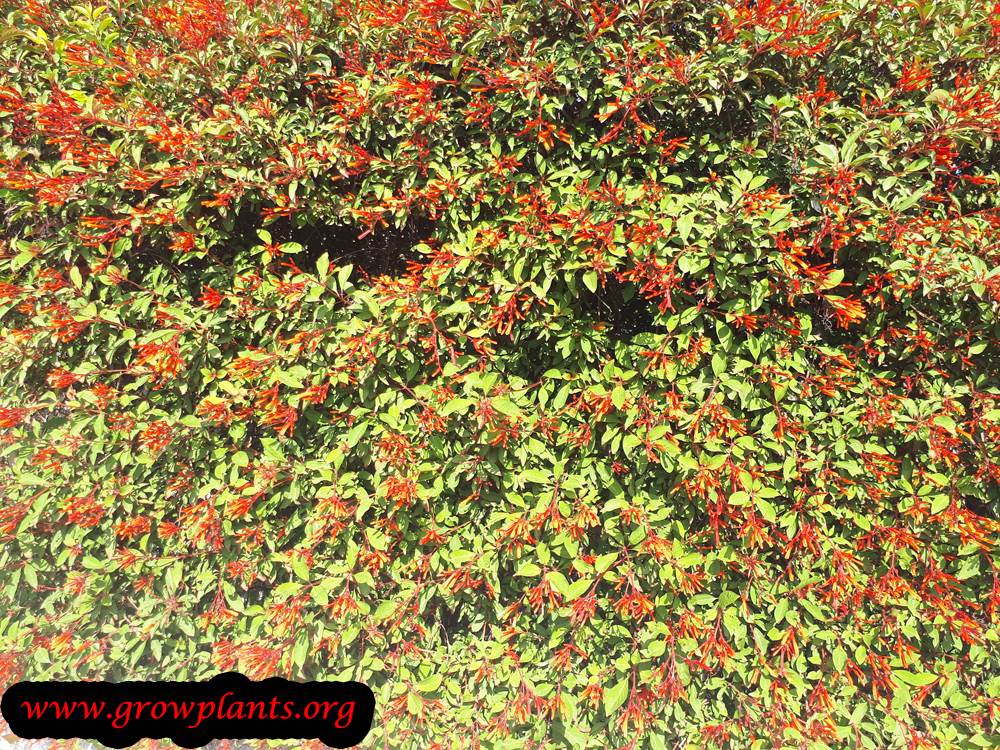
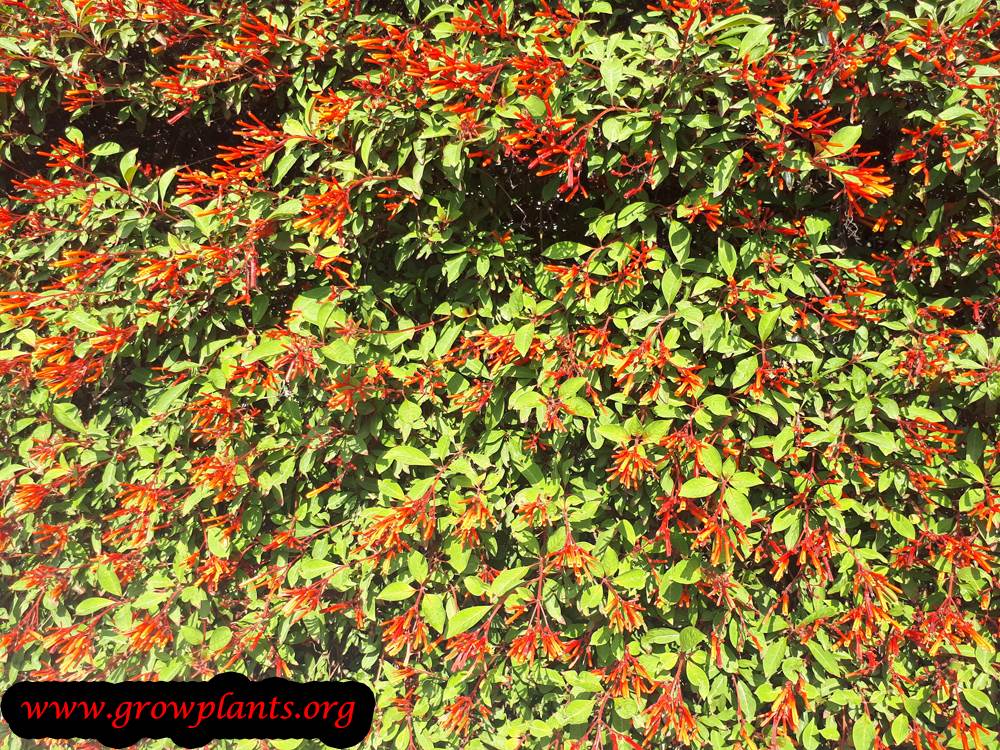
As a specimen shrub or small tree, thin crowded interior stems and head back leggy growth annually to keep flowering dense; as a hedge, shear to the desired outline through the growing season.
Flowering & Fruiting Wood
Flowers form in clusters on new growth, so cutting back in late winter/early autumn before the main growth flush does not sacrifice the coming season’s bloom – it stimulates the fresh growth that carries it. Avoid heavy cutting during an active bloom flush, since that removes flowers and developing fruit clusters outright rather than promoting more.
Structural Pruning & Training
- Remove crossing or rubbing branches to keep an open, well-lit framework.
- Head back leggy or overly tall stems to control height and encourage denser branching.
- Thin crowded interior growth on older specimens so light reaches lower branches and flowering isn’t pushed only to the canopy surface.
Container & Small-Space Pruning
In containers, prune more assertively for compactness than an in-ground specimen, since Hamelia can reach small-tree size (up to 3m) if left unchecked; regular tip-pinching and an annual size-control cut keep it in scale with the pot.
Tools
- Bypass secateurs for stem-tip and shaping cuts.
- Loppers for thicker basal stems on an older shrub.
- Hedge shears only where the plant is being grown and clipped as a formal hedge, not for selective shaping cuts on a specimen.
Tool Hygiene & Disease Risk
Routine – clean, sharp tools are sufficient; no major pruning-transmissible disease is noted for this species.
Cut Placement & Technique
Make heading cuts just above an outward-facing bud to direct new growth away from the plant’s center; remove whole stems at their point of origin (thinning cuts) rather than shearing indiscriminately, except on plants maintained as a formal hedge.
Heavy Pruning & Rejuvenation
Tolerates a hard cutback well – an overgrown or frost-damaged plant can be cut back by a third to a half in late winter and will typically reflush and reflower within the same growing season.
Post-Pruning Care
Water well after a heavier cutback to support fast regrowth; watch for a temporary dip in flowers (and the pollinators/hummingbirds that visit them) until new growth matures.
Common Pruning Mistakes
- Shearing the whole plant into a tight ball as if it were a formal hedge when it isn’t being grown as one, which sacrifices its natural clustered flowering habit.
- Hard-pruning during peak bloom, cutting off flowers and developing fruit that pollinators and birds rely on.
- Letting it go unpruned for years, leading to a leggy, sparsely flowering framework that then needs a more severe renewal cut.
When NOT to Prune
Avoid heavy pruning while the plant is in full flower, since the flowers (and the fruit that follows) are the main ornamental and wildlife value of this species.
Recommended Tools (by task)
- bypass_secateurs – routine shaping, tip-pinching, and flowering-wood renewal.
- loppers – thicker basal stems on a mature shrub-form plant.
- hedge_shears – only when maintained as a clipped hedge rather than a specimen shrub.
Propagation Guide
Hamelia patens is most easily propagated from stem cuttings, which root readily and keep a particular form true-to-type, while seed is a very easy alternative since the plant self-sows readily – consistent with the site’s own note that it can become invasive. Propagation overall is easy.
Quick Propagation Specs
| Best Propagation Method | Stem cuttings |
| Alternative Methods | Seed |
| Propagation Difficulty | Easy |
| Seed True-to-Type | Usually true-to-type; cultivar-dependent for named selections such as dwarf forms |
| Vegetative True-to-Type | Yes |
| Best Propagation Season | Spring through summer; year-round in truly tropical climates |
| Seed Germination Time | Typically a few weeks under warm conditions |
| Cutting Rooting Time | Typically a few weeks under warm, humid conditions |
| Germination Temperature | About 21–27°C (70–80°F) |
| Seed Sowing Depth | Shallow; barely cover the small seed |
Growing from Seed
Seed Handling & Viability
Seed comes from the small red-to-black berries; clean it from the pulp before sowing and use it fresh where possible – this species self-seeds readily in the garden, which is consistent with the site’s note that it can be invasive.
Sowing Season
Spring through summer, matching the plant’s general planting season (year-round in truly tropical, frost-free climates).
Sowing Depth & Orientation
Sow shallowly, just barely covering the small seed.
Germination Conditions
Warm, around 21–27°C (70–80°F), consistently moist and bright.
Germination Time
Typically a few weeks.
Seedling Care
Thin or space seedlings as they grow; because this species can self-seed and spread, deadheading spent flowers helps limit unwanted seedlings if that’s a concern.
Stem Cuttings
Cutting Type
Softwood or semi-hardwood tip cuttings.
Best Timing
Spring through summer, during active growth.
Cutting Preparation
Take healthy, non-flowering shoot tips and remove the lower leaves before inserting.
Rooting Setup
Insert into a moist, well-draining mix and keep warm and in bright indirect light or the half shade this plant tolerates.
Rooting Hormone
Optional; may improve rooting speed and consistency.
Rooting Time
Typically a few weeks under warm, humid conditions.
Bloom & Flower Guide
Quick Details
- Bloom Season: Summer into autumn, and longer in mild climates
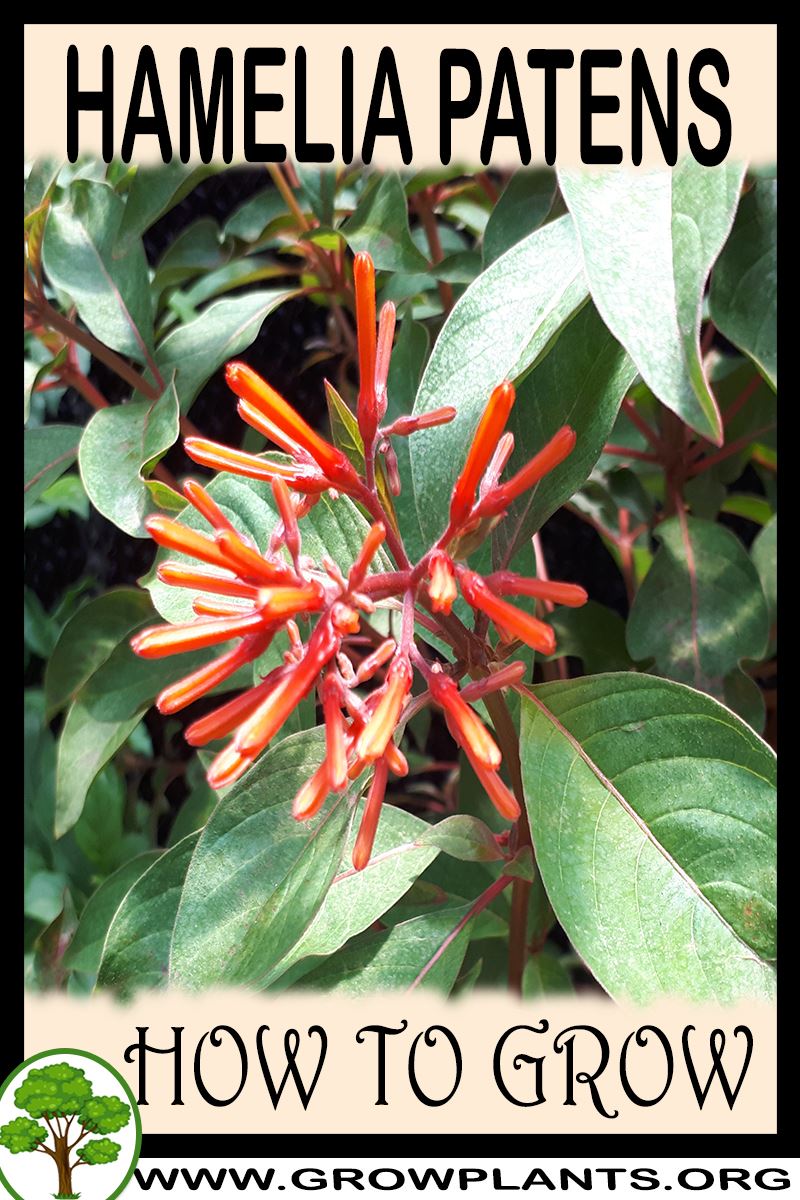
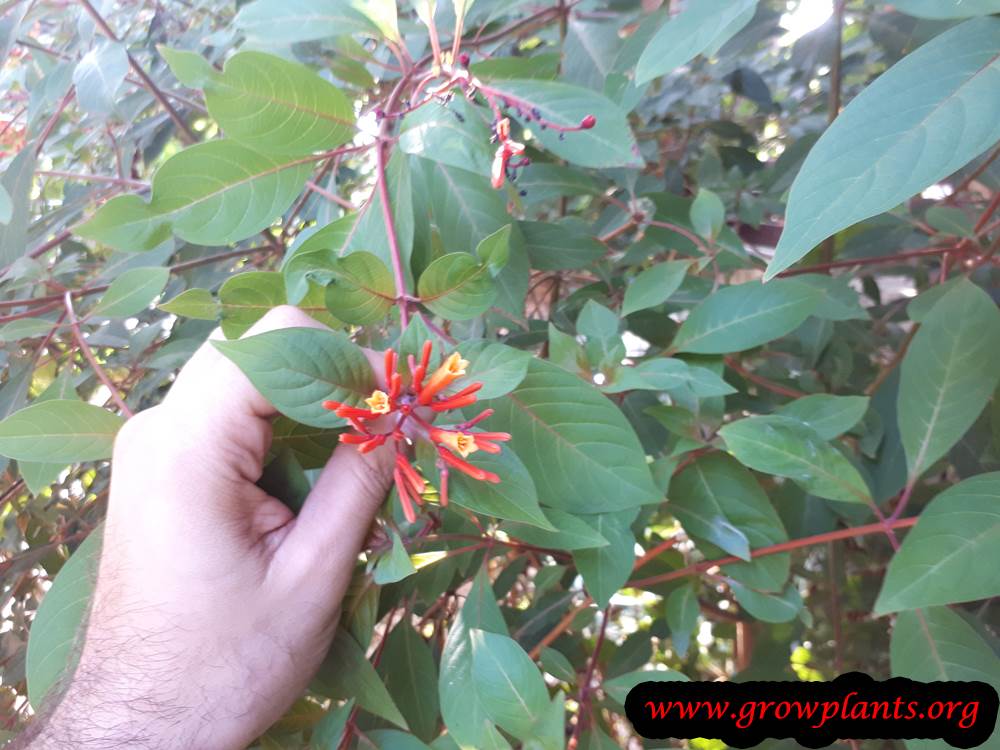
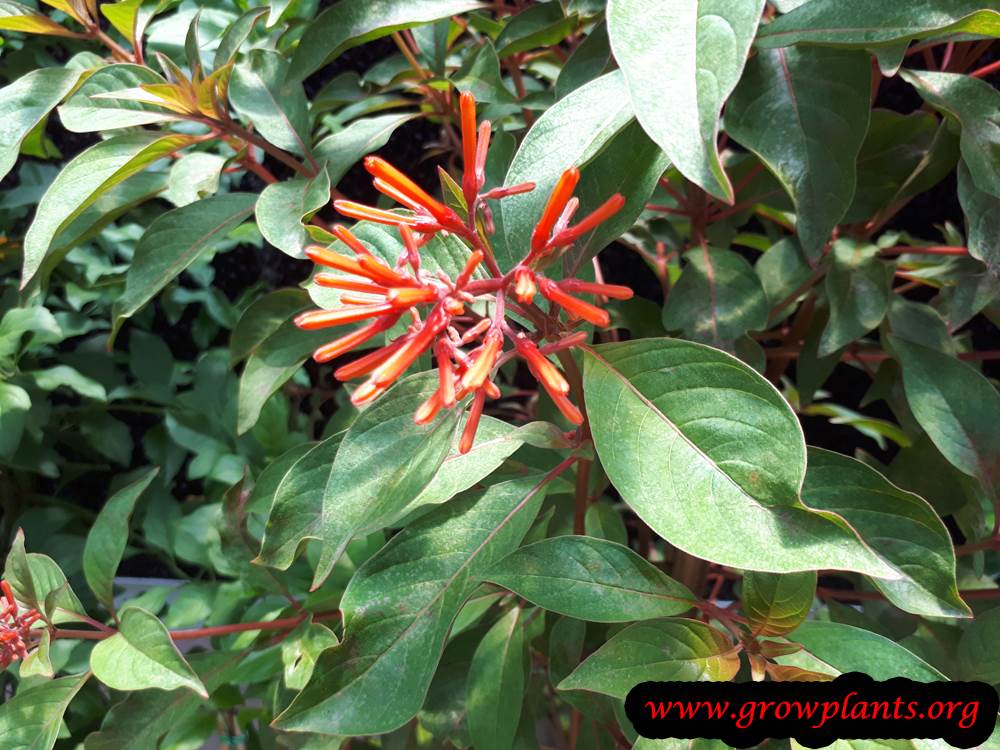
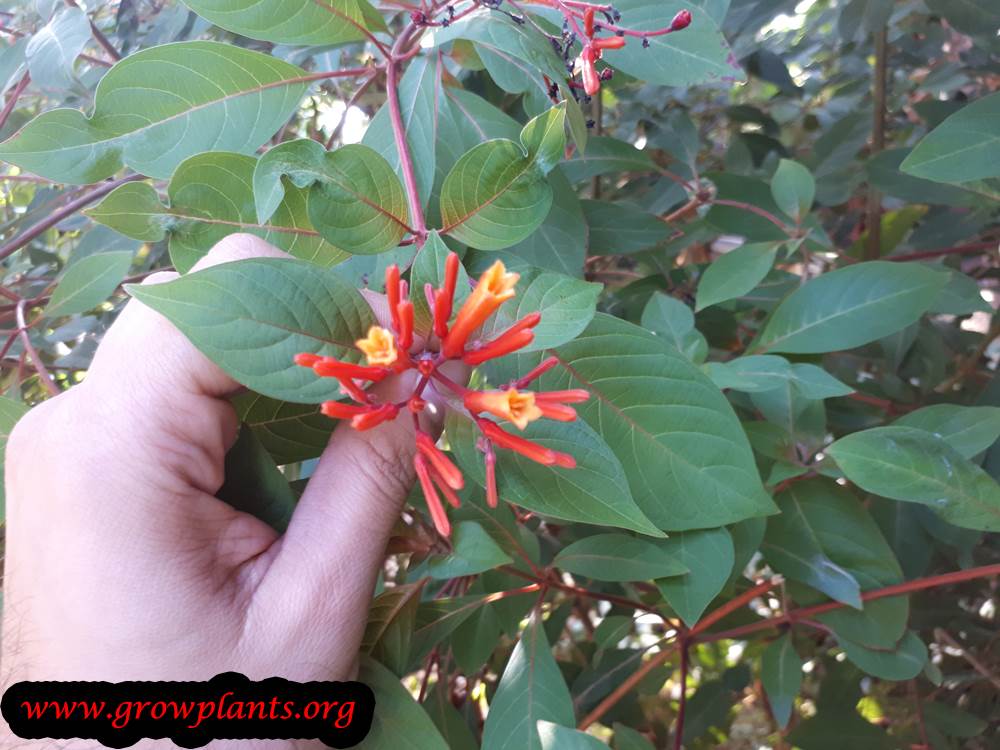
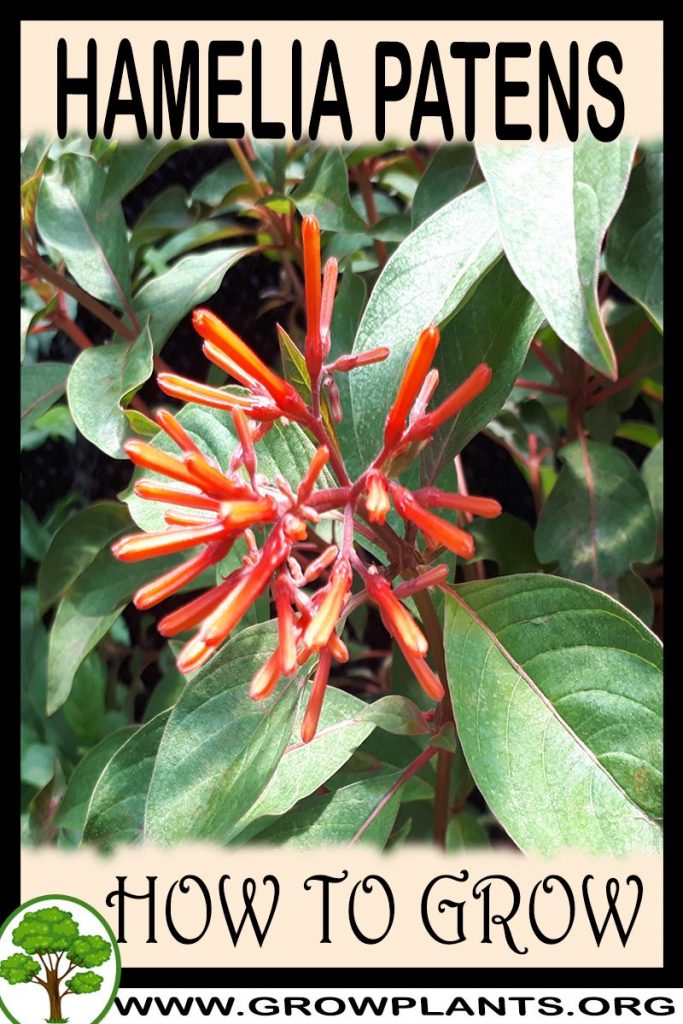
- Flower Appearance: Slender red-orange tubular flowers in clusters at the branch tips
- Edibility: Grown as an ornamental and pollinator plant; the flowers themselves are not eaten
Detailed Blooming Overview
Firebush more than lives up to its name, throwing out clusters of narrow red-orange tubular flowers through the warm season. It is one of the best hummingbird and butterfly plants going, alive with wings whenever it is in bloom.
Flower Characteristics
- Narrow, tubular flowers in red to orange.
- Carried in bright clusters at the ends of the branches.
Bloom Care & Thinning
- Pollination and wildlife: The tubular flowers are a magnet for hummingbirds and butterflies drawn to their nectar.
- Managing the bloom: It flowers on new growth, so light pruning to shape actually encourages more blooms.
Fruit & Uses
Firebush (Hamelia patens) produces small berry-like fruits that are edible once fully ripe, eaten fresh off the plant. The flowers and foliage are otherwise grown mainly for ornamental and pollinator-attracting purposes, not as food.
Quick Edible Specs
| Edible Parts | Fruit |
|---|---|
| Main Use(s) | Culinary (fresh eating); leaves have a traditional, non-food medicinal use |
| Eaten Raw or Cooked | Raw |
| Preparation Required | None beyond letting the fruit fully ripen before eating |
| Harvest Season | Summer to autumn, following the bloom season, as fruits develop after flowering |
| Time to First Harvest | Fruits form after each flowering flush; the site does not give an exact bearing age |
| Storage | Best eaten fresh; not typically stored |
| Safety/Toxicity Caveat | Only the fully ripe (red to black) fruit is described as edible – unripe fruit should be avoided |
Fruit
The small fruits change from red to black as they fully ripen, and it is only at this fully ripe, dark stage that they are considered edible. They are picked by hand directly from the clusters and eaten fresh, similar to other small wild berries. Because the shrub flowers over an extended summer–autumn period, ripe fruit can typically be found intermittently rather than in one single harvest.
Preparation, Uses & Safety
The ripe fruit is eaten raw with no cooking or processing needed. The leaves of Hamelia patens have a history of traditional, non-culinary medicinal use in some regions, but this is a traditional-use note only, not a health claim, and the leaves are not eaten as food. As with any wild-picked fruit, only fully ripe berries should be consumed.
Pests, Diseases & Troubleshooting
Overview: Firebush (Hamelia patens) is a vigorous, sun-loving tropical shrub that is famously tough and largely pest-free, drawing hummingbirds and butterflies rather than trouble. When problems do appear they are minor sap-feeders (mites, whitefly, scale, aphids) and the occasional caterpillar, with root-knot nematodes and root rot in poor wet soil the main real concerns; management is overwhelmingly cultural.
Quick Troubleshooting Overview
| Issue / Pest | Main Symptom | Primary Solution |
|---|---|---|
| Spider mites | Fine stippling, dull bronzed leaves in hot dry spells | Rinse, raise humidity, soap/oil |
| Whitefly & aphids | Honeydew, sooty mould, tiny flies or soft colonies | Soap/oil, sticky traps, encourage predators |
| Scale insects | Waxy bumps on stems, sooty mould | Prune, horticultural oil on crawlers |
| Caterpillars | Chewed leaves (often specialist moth larvae) | Tolerate/hand-pick; Bt only if severe |
| Root-knot nematode / root rot | Stunting, wilting, galled roots or rot in wet soil | Improve soil/drainage; healthy stock |
Common Pests & Management
- Spider mites (Tetranychus spp.):
- Symptoms: Fine pale stippling and a dull, bronzed cast to the leaves, with fine webbing in hot, dry, dusty conditions or on stressed plants.
- Prevention & Control: Hose down the foliage, keep the plant well-watered and unstressed, and treat outbreaks with insecticidal soap or light horticultural oil, covering leaf undersides.
- Whitefly & aphids:
- Symptoms: Clouds of tiny white flies or soft green/black aphid colonies on new growth, with honeydew and sooty mould; usually light on a healthy firebush.
- Prevention & Control: Encourage the abundant predators firebush attracts, rinse off colonies, use yellow sticky traps for whitefly, and spray insecticidal soap only if numbers build.
- Scale insects (Coccidae / Diaspididae):
- Symptoms: Brown or waxy bumps on stems and leaf undersides, with yellowing and sooty mould from soft scales.
- Prevention & Control: Prune out heavily infested wood, scrape light infestations, and apply horticultural oil to smother crawlers.
- Caterpillars (incl. specialist moth larvae such as Pseudosphinx/sphinx and Sphingidae):
- Symptoms: Chewed leaves and defoliated shoots from caterpillars; firebush is a larval host, so some feeding is part of its wildlife value.
- Prevention & Control: Tolerate light feeding on this fast-recovering shrub, hand-pick if needed, and reserve a targeted Bacillus thuringiensis (Bt) spray for heavy defoliation of young plants.
Diseases & Fungal Issues
- Root-knot nematodes (Meloidogyne spp.):
- Symptoms: Stunting, poor vigour, wilting in heat, and galls/swellings on the roots in warm sandy soils.
- Treatment & Management: Plant in healthy soil enriched with organic matter, keep plants vigorous, and avoid moving infested soil; there is no simple cure, so prevention and good culture are key.
- Root & collar rot (Phytophthora, Pythium):
- Symptoms: Wilting, yellowing and dieback in poorly drained, waterlogged soil, with dark decayed roots and base.
- Treatment & Management: Grow in free-draining soil, avoid overwatering (firebush is drought-tolerant once established), and remove badly affected plants.
- Leaf spot (minor fungal):
- Symptoms: Occasional brown or dark leaf spots in humid weather; largely cosmetic on a vigorous plant.
- Treatment & Management: Improve airflow, avoid overhead watering, and remove affected leaves; fungicide is rarely needed.
Growing Difficulties & Abiotic Problems
- Cold / frost damage:
- Cause & Symptoms: As a tropical shrub it is cut back or killed by frost, with blackened foliage and dieback.
- Correction Strategy: Grow in a warm, frost-free spot or treat as a die-back perennial that regrows from the base; mulch the roots in marginal areas.
- Overwatering / poor drainage:
- Cause & Symptoms: Yellowing and root rot in constantly wet soil; firebush prefers it on the drier side once established.
- Correction Strategy: Plant in well-drained soil, water to establish then reduce, and avoid soggy sites.
- Sparse bloom / legginess (too much shade):
- Cause & Symptoms: Fewer flowers and leggy, open growth in shade.
- Correction Strategy: Grow in full sun for the best flowering and colour, and prune to keep it bushy.
What Helps — Products & Tools
Firebush needs very little: insecticidal soap and light horticultural oil for occasional mites, whitefly, aphids and scale, yellow sticky traps for whitefly, and Bt for heavy caterpillar attack on young plants. Organic matter and good drainage guard against nematodes and root rot – the plant’s vigour and pollinator appeal do the rest.