Plant Profile & Key Characteristics
Overview: Anacamptis (green-winged orchid group) is a genus of deciduous perennial geophyte orchids reaching 10-50 cm (4-20 in). It is grown as an ornamental for its winged, spotted blooms.
Quick Specifications
| Specification | Attribute |
|---|---|
| Plant Type / Life Cycle | Perennial (herbaceous geophyte orchid) |
| Foliage Type | Deciduous |
| Mature Size | 10-50 cm (4-20 in) tall |
| Growth Rate | Slow |
| Root System | Tuberous geophyte |
| Hardiness | USDA zone 5-10 |
Growth Form & Structure
- Height & Spread: 10-50 cm (4-20 in) tall in the ground; can also be grown in planters and containers
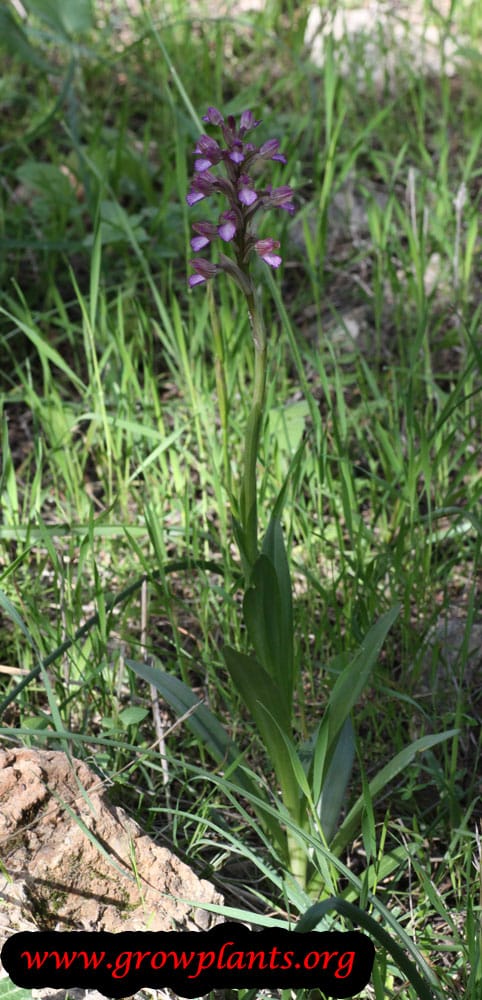
- Growth Habit & Form: Low terrestrial orchid forming a basal leaf rosette and a single upright flower spike from an underground tuber
- Lifespan & Maturity: Slow-growing perennial; hard to establish away from its native habitat
Anatomy & Physical Features
- Leaves & Foliage: Green, linear leaves growing connected from the tuber
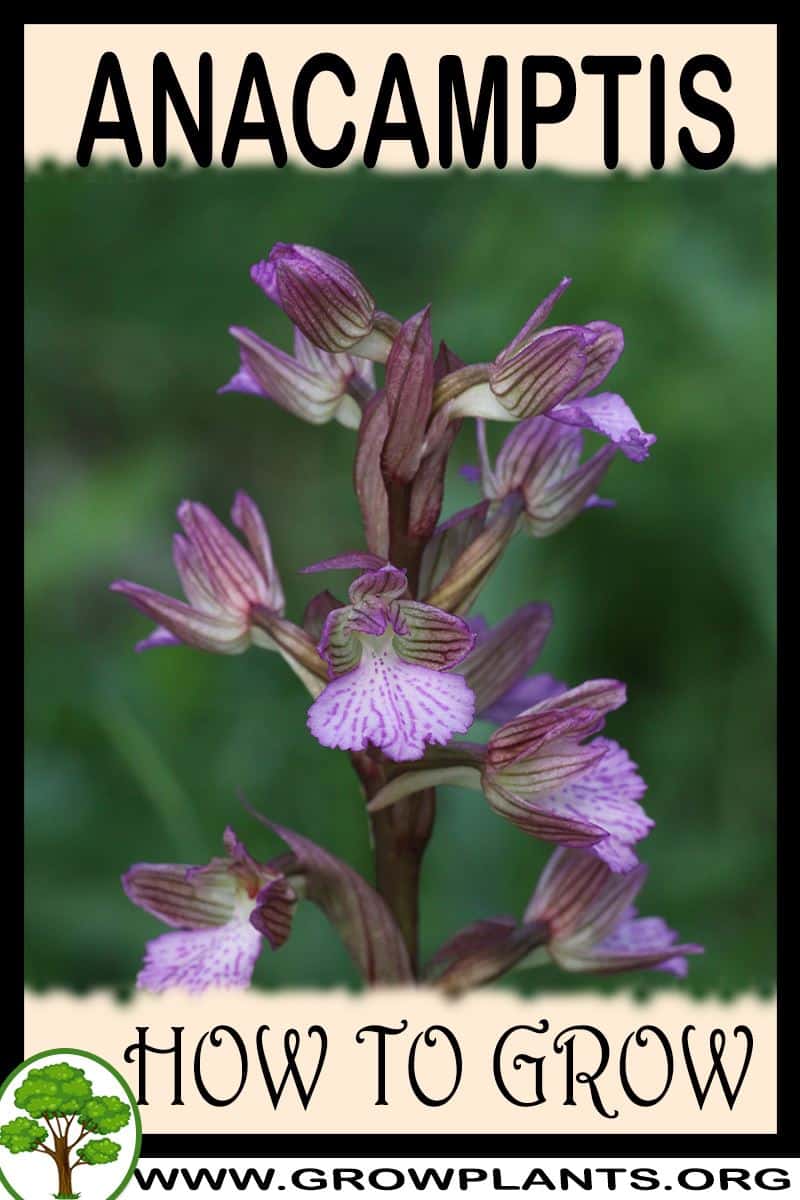
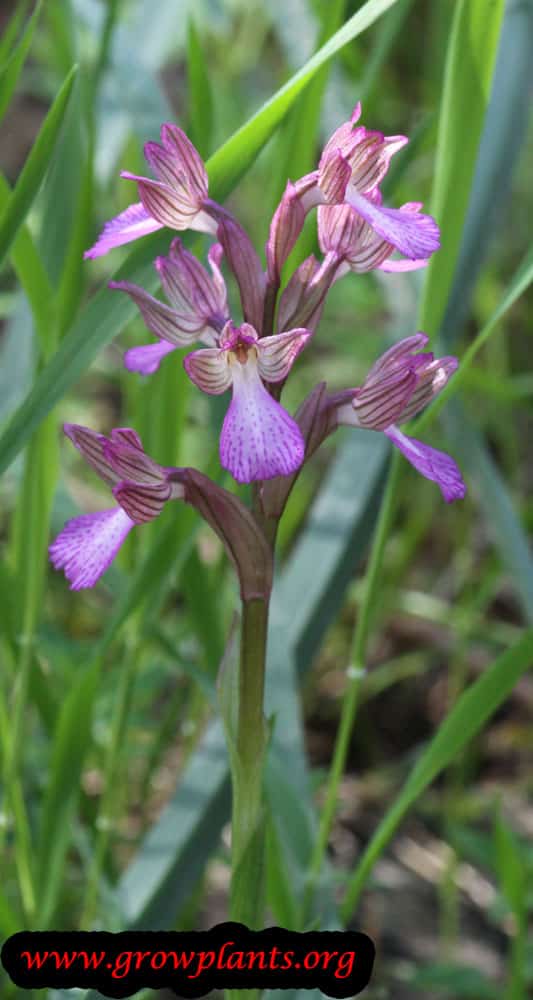
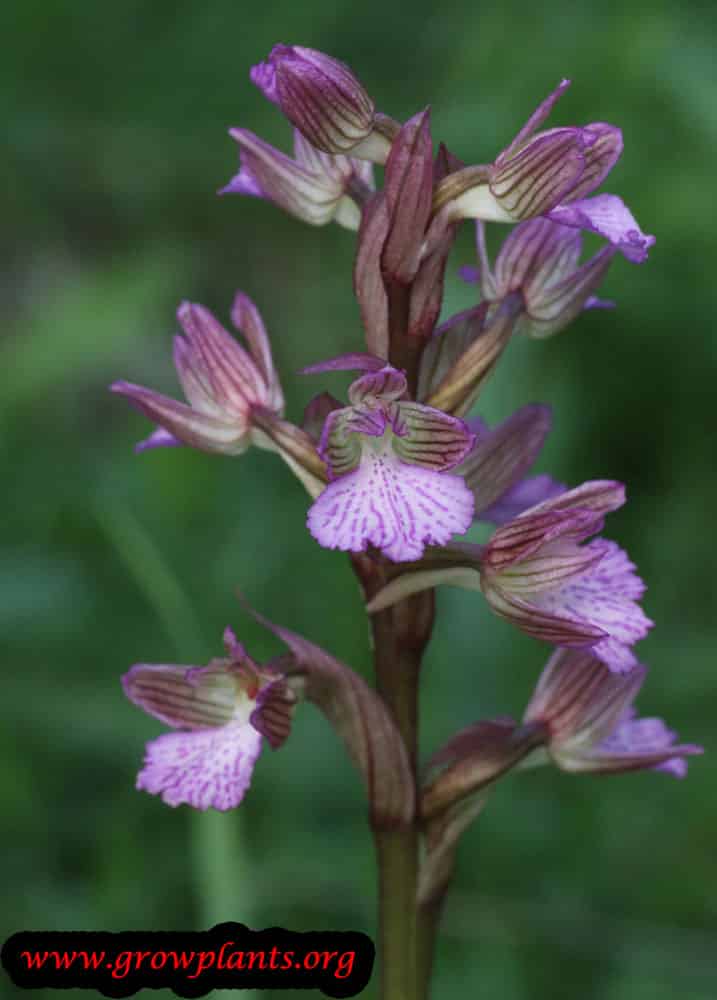
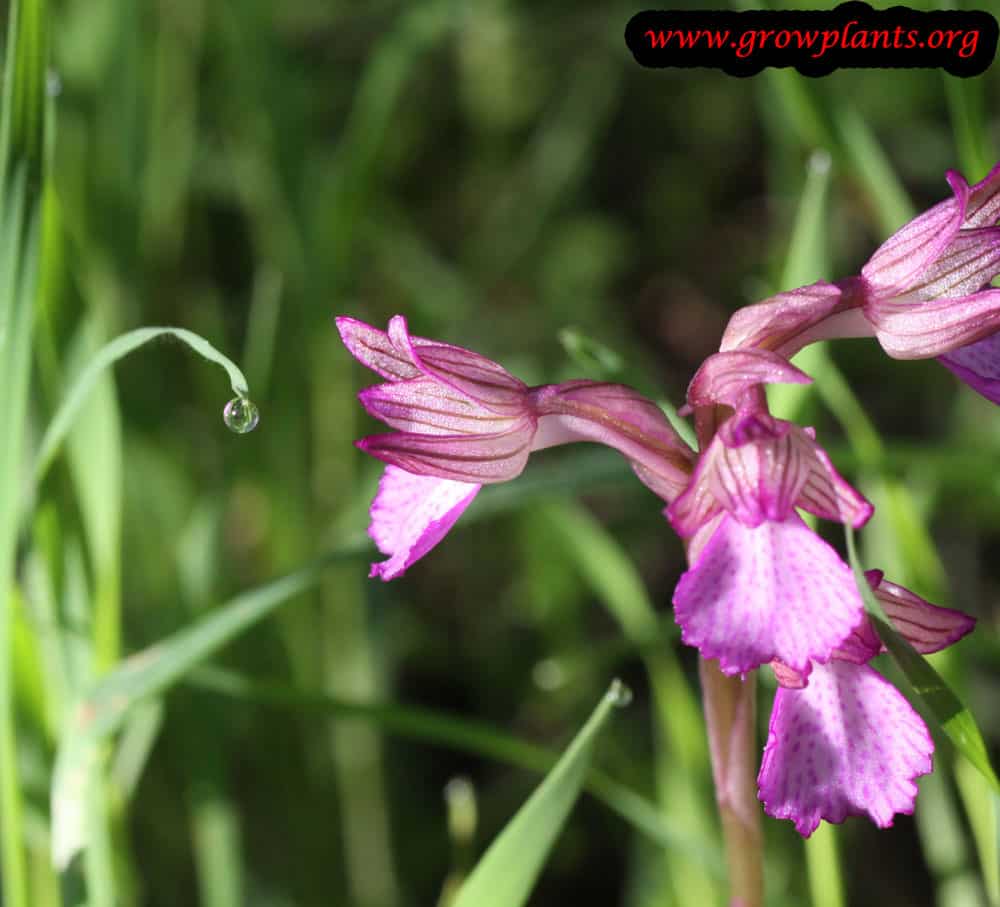
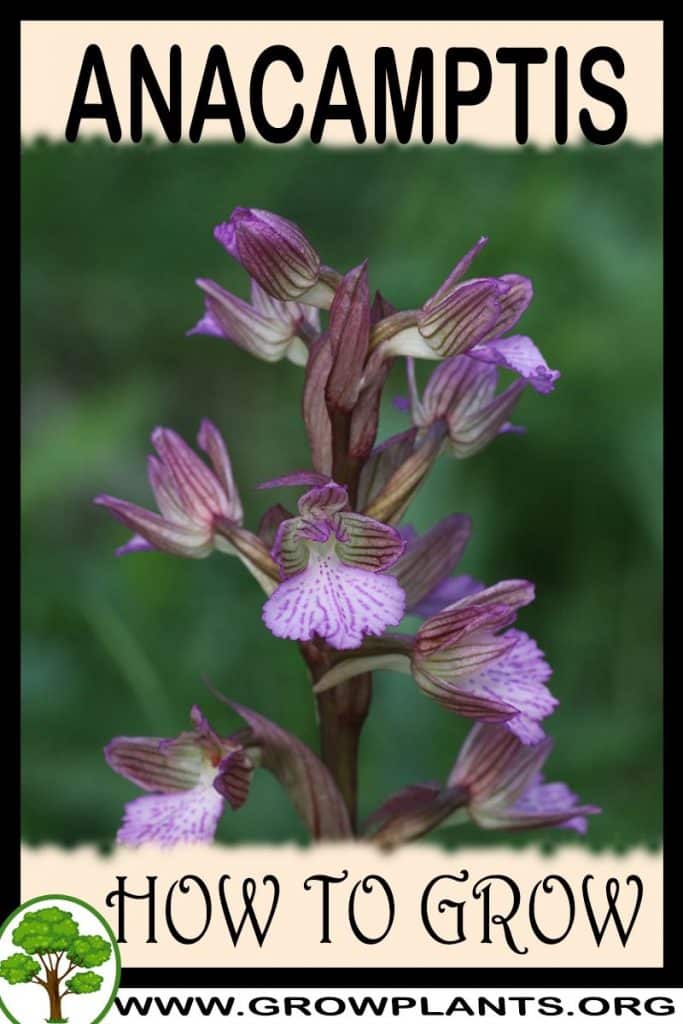
- Flower Characteristics: Purple, pink, white or red blooms with dots and stripes, shaped like a small winged figure, on an upright spike (see the Bloom guide)
Primary Uses & Landscape Value
- Functional & Ornamental Roles: Ornamental terrestrial orchid for specialist and naturalistic plantings
Care Guide: Planting, Soil & Watering
Overview: Anacamptis (green-winged orchid, Orchis morio) is a slow-growing terrestrial orchid of Mediterranean-type climates (hardiness zone 5-10), happiest in full sun to light shade. It needs slightly alkaline, well-draining soil that is moist during flowering but dry when the tuber is dormant, and it is notoriously difficult to establish outside its wild habitat.
Quick Care Requirements
| Requirement | Ideal Condition |
|---|---|
| Planting Season | Autumn or spring |
| Growth Rate | Slow |
| Soil Type | Lean, well-draining soil |
| Soil pH | Slightly alkaline |
| Water Need | Low to Moderate – moist while in growth and bloom, dry during dormancy |
Planting & Establishment
- Best Planting Season: Plant the tuber in autumn or spring, ahead of its growth and flowering period.
- How to Plant:
- Hole Preparation: Dig a modest hole in gritty, free-draining ground; these orchids resent disturbance and heavy, wet soil.
- Soil Amendments: Aim for a lean, slightly alkaline, sharply-draining mix rather than a rich one.
- Planting Depth: Set the tuber shallowly, just covered by soil, keeping the growing point near the surface.
- Growth Speed & Expectations: A slow grower reaching 10-50 cm; be aware it is hard to keep going in cultivation, so match wild conditions as closely as you can.
Soil, Watering & Drainage Care
- Soil Mix & Drainage Needs: A well-draining, slightly alkaline soil is key; in frost-prone areas lift the tuber and keep it somewhere dry over winter.
- Watering Schedule & Technique:
- Young / Newly Planted: Keep the soil lightly moist as growth begins.
- Established: Provide modest moisture while the plant is in leaf and flower, letting the surface dry between waterings.
- Seasonal Adjustments: Keep it dry during summer dormancy, as the tuber rots if kept wet while resting.
Climate, Light & Hardiness
Anacamptis is a terrestrial, tuberous orchid genus spanning Mediterranean, subtropical, and temperate climates, going dormant and dying back seasonally rather than growing year-round. It wants full sun to half shade and, despite reasonably wide in-ground cold tolerance for an orchid, growers in frost-prone areas are advised to lift and store the tuber dry over winter.
Quick Climate Specifications
| Factor | Detail |
|---|---|
| Climate Zones | Mediterranean, subtropical, or temperate |
| USDA Hardiness Zones | 5–10 |
| Frost Tolerance | Low to moderate |
| Light Conditions | Full sun to half shade |
Sunlight & Light Exposure
Optimal Light Setup
Full sun to half shade suits this genus, similar to the open meadow and scrub habitats it grows in naturally.
Best Exposure/Orientation
An open, sunny to lightly shaded position with well-drained, slightly alkaline soil suits it well.
Temperature Extremes & Hardiness
USDA Hardiness & Regional Limits
Site data places Anacamptis in hardiness zone 5–10, a notably wider and cooler range than many orchids, reflecting the dormant tuber's ability to survive cold winters in the ground across much of this range.
Cold Damage & Winter Protection
In frost-prone areas the site specifically recommends lifting the tuber and storing it in a dry location over winter rather than leaving it in frozen or waterlogged ground, since cold, wet soil around a dormant tuber is more damaging than cool air alone.
Frost Sensitivity
The tuber tolerates cold better than most orchids within its hardiness range, but foliage present during active growth is frost-tender, and prolonged hard freezes combined with wet soil are still risky.
Wind, Humidity & Microclimate
Rainfall & Seasonal Moisture
Needs moist soil while in active growth and bloom, but well-drained, slightly alkaline conditions overall; like many Mediterranean and temperate geophytes it is adapted to a wetter growth period followed by drier dormancy, so avoid keeping the dormant tuber constantly wet.
Microclimate Recommendations
A sunny to lightly shaded spot with sharp drainage suits it best; where winters bring hard, prolonged frost or heavy, waterlogged soil, lifting and storing the tuber dry until replanting protects it more reliably than leaving it in the ground.
Growing in Pots, Balconies & Indoors
Anacamptis is a small hardy terrestrial orchid of open, sunny grassland. The grower says it is not a houseplant – it needs full sun and a natural seasonal cycle – but it can be grown in a pot outdoors for those who want to try these specialist ground orchids.
Quick Details
- Container Size: 10-50 cm (4-20 in) – a modest but deep pot for the tubers
- Indoor Suitability: Not a houseplant – it needs full sun and a cold dormant season
- Best Spot: Full sun to half shade, outdoors
- Soil & Drainage: Very free-draining, gritty, low-fertility mix (loam with plenty of grit/sand)
- Watering in Pots: Small to average water while growing; keep it drier and undisturbed during summer dormancy
Indoors & On the Windowsill
- Not a houseplant: The grower is clear it does not grow indoors – these are sun-loving wild ground orchids that need real seasons and a dormant rest, which rooms cannot give.
- Windowsill: Not suitable indoors; grow it outside in a pot or bed instead.
- Hardiness: Unlike the tropical orchids, this is a hardy species – it can stay outdoors, going dormant underground after flowering.
On a Balcony or Patio
- Light & care: Give it a sunny, open spot. Water while it is in leaf and flower, then let the pot dry and keep it undisturbed through its summer dormancy.
- Specialist plant: These terrestrial orchids depend on soil fungi and can be tricky – keep the mix lean and free-draining rather than rich.
Choosing the Pot, Soil & Long-Term Care
- Pot & drainage: A deep pot with strong drainage holes for the tubers; these orchids hate sitting wet, so drainage is everything.
- Potting mix: A gritty, free-draining, low-fertility mix – loam with plenty of coarse sand or grit; avoid rich composts.
- Feeding: Feed very sparingly if at all; these lean-soil orchids resent strong fertiliser.
- Dormancy & repotting: Let the pot dry as the plant dies back after flowering; repot only when dormant, handling the tubers gently.
Fertilizing & Feeding
Anacamptis is a genus of terrestrial geophyte orchids that is notoriously difficult to establish outside the wild, so feeding should stay minimal – well-drained, organically rich soil generally serves this genus better than routine fertilizer.
Quick Fertilizing Specs
| Feeding Level | Light |
|---|---|
| Main Nutrient Priority | Minimal, low-nitrogen feeding at most, favoring soil organic matter over routine fertilizing |
| Best Feeding Period | Only during active leaf growth before flowering, if fed at all |
| Organic Options | Working well-rotted compost or organic matter into the soil rather than relying on synthetic fertilizer |
| Soil pH | Prefers slightly alkaline, well-drained soil |
Feeding by Growth Stage
Active leaf growth before flowering
Support the season’s leaf growth that will lead into flowering, without disturbing the plant’s sensitive root and soil relationships
| Nutrient direction | At most a very light, low-nitrogen feeding; many growers of terrestrial orchids in this genus avoid supplemental fertilizer altogether and rely on organically rich, well-drained soil instead |
|---|---|
| Timing | During active leaf growth in the cooler part of the growing season, before and during flowering |
| Frequency | If fed at all, feed sparingly and infrequently |
| Fertilizer types | A well-rotted compost top-dressing worked lightly into the soil surface, A very dilute, low-nitrogen liquid feed only if the soil is notably poor |
| Precautions | Avoid concentrated synthetic fertilizer near the root zone; roots and associated soil fungi in this genus are easily damaged by fertilizer salts |
Post-bloom dormancy
Let the plant die back and rest undisturbed after flowering, storing energy in its underground rootstock
| Nutrient direction | None – withhold fertilizer once flowering finishes and the plant begins to die back |
|---|---|
| Timing | After flowering, once foliage begins to yellow and die back |
| Frequency | No feeding at this stage |
| Fertilizer types | No feeding at this stage – allow the plant to go fully dormant undisturbed |
| Precautions | Do not fertilize or disturb the soil around a dormant plant; in colder or frost-prone areas the underground rootstock may need extra winter protection or storage |
Nutrient Deficiency Signs & Corrections
Weak, sparse leaf growth or failure to reappear the following season
| Possible causes | Loss of the soil fungal relationship this genus depends on, Poorly drained or overly rich soil unsuited to the species, Fertilizer salt damage to sensitive roots |
|---|---|
| Appears first on | Whole plant, most obviously as absent or weak regrowth |
| What to check | Soil drainage and general fertility level, Any recent fertilizer applications near the root zone, Whether the site otherwise matches the species’ native conditions |
| Possible correction | Improve drainage, avoid concentrated fertilizer near the roots, and favor organic matter over synthetic feeding |
Unusually lush, soft leaf growth with weak or absent flowering
| Possible causes | Excess nitrogen from over-rich soil or fertilizer, Insufficient light, Immature plant not yet established enough to bloom |
|---|---|
| Appears first on | New leaf growth |
| What to check | Soil fertility and any recent feeding, Light exposure at the site, Age and establishment of the planting |
| Possible correction | Reduce or stop supplemental feeding and avoid over-enriching the soil |
Yellowing and collapse of foliage that resembles a nutrient problem but does not respond to feeding
| Possible causes | Waterlogged or poorly drained soil causing root rot, Fertilizer salt injury to fine roots, Underlying loss of the soil fungal relationship |
|---|---|
| Appears first on | Whole plant, often starting with the lower leaves |
| What to check | Soil drainage and moisture around the root zone, Recent fertilizer history, Overall site conditions versus the species’ native habitat |
| Possible correction | Improve drainage first and avoid fertilizing until root health is confirmed |
Pruning, Training & Seasonal Maintenance
Anacamptis is a tuberous terrestrial orchid with no woody or persistent structure, so it tolerates essentially no pruning in the conventional sense. The only maintenance cut is removing the spent flower stem and, later, the dying foliage once it yellows on its own in the middle of summer as the plant enters its dormant, leafless resting phase. Timing is the whole game here: cutting green leaves early removes the plant’s only means of recharging the underground tuber, directly reducing next year’s flowering.
Quick Pruning & Maintenance Specs
| Pruning Tolerance | Very Low (sanitary only, no shaping or structural cuts) |
| Primary Pruning Window | Mid-summer, once foliage has yellowed and collapsed naturally |
| Typical Frequency | Once per year, at the end of the growth cycle |
| Main Objective | Tidy removal of spent, non-functional tissue – never to shape or control size |
| Avoid Heavy Pruning During | Spring through early summer while leaves are still green and photosynthesizing |
Seasonal Pruning Schedule
Post-Dieback (Mid-Summer)
Objective: sanitation only. Remove foliage that has fully yellowed and gone limp; do not pull or cut leaves that are still green, even partially, since they are still feeding the tuber. Expected response: none required – the plant is already moving into dormancy on its own schedule. Flowering impact: none if timed correctly; premature removal weakens next season’s bloom.
Special Growth to Remove
- Spent flower stem – can be cut once flowering has fully finished; leaving it briefly to set seed does no harm if naturalizing is wanted.
- Fully yellowed/collapsed leaves – remove at the base once dead; leave any leaf with green tissue remaining.
Container & Small-Space Pruning
Anacamptis can be grown in a pot as well as in the ground; the same rule applies regardless of container – do not remove foliage until it has died back on its own. In containers it is easier to accidentally disturb the resting tuber while tidying, so leave the pot undisturbed once leaves start to fade rather than digging around it.
Tools
- Precision snips – the only tool needed; all cuts are on soft, dead leaf and flower-stem tissue.
Tool Hygiene & Disease Risk
Routine – clean, sharp snips are sufficient; no elevated transmissible-disease risk is documented for this genus.
Cut Placement & Technique
Cut the flower stem near its base once flowering is over. Remove dead leaves at the point where they meet the base of the plant, taking care not to nick the crown or expose the resting tuber underneath.
Common Pruning Mistakes
- Removing green leaves early for tidiness – starves the tuber and reduces next year’s flowering.
- Disturbing or cutting into the crown/tuber area while removing old leaves.
When NOT to Prune
Do not remove any leaf tissue that is still green and upright – wait until it has yellowed and collapsed on its own in mid-summer. Avoid disturbing the plant at all once it has gone fully dormant.
Recommended Tools (by task)
- precision_snips – for removing the spent flower stem and fully dead leaves; no other cut type is needed on this non-woody geophyte.
Propagation Guide
Anacamptis is best increased by lifting and replanting its paired root-tuberoids during dormancy, since the site’s own notes confirm vegetative propagation is much easier than raising it from seed. Seed keeps the true species characteristics, but like nearly all terrestrial orchids it is extremely difficult to germinate outside specialist laboratory conditions, so overall propagation ranges from Difficult (division) to Specialist (seed).
Quick Propagation Specs
| Best Propagation Method | Division of root-tuberoids |
| Alternative Methods | Seed (specialist, symbiotic germination) |
| Propagation Difficulty | Difficult (division) / Specialist (seed) |
| Seed True-to-Type | Yes |
| Vegetative True-to-Type | Yes |
| Best Propagation Season | Autumn to Spring, matching the plant’s own dormant-season planting window |
Growing from Seed
Seed Handling & Viability
Orchid seed of this type is dust-like and carries almost no food reserve, so it depends on a compatible soil fungus to germinate and feed the young seedling — this is a main reason the site notes Anacamptis is hard to grow outside the wild.
Germination Conditions
Reliable germination normally requires either symbiotic sowing with the correct mycorrhizal fungus or sterile flask (asymbiotic) culture; open-ground sowing at home rarely succeeds and is not a realistic method for most growers.
Division, Offsets, Pups & Suckers
Each year the plant forms a new pair of underground root-tuberoids — one nourishes the current season’s growth and shrivels away, the other is the plump replacement tuberoid for next year. Propagation is done by carefully lifting the dormant clump after the foliage dies back, in autumn or before spring growth resumes, and separating the firm new tuberoid(s) with their growing point intact; shrivelled, soft or damaged tuberoids should be discarded. Replant promptly at the original depth in free-draining, slightly alkaline soil, since tuberoids dry out and lose viability quickly once lifted.
Bloom & Flower Guide
Quick Details
- Bloom Season: Spring into summer; in hot climates the display shifts earlier, to winter and spring
- Flower Appearance: Small, angel-like flowers packed onto an upright spike; colours purple, pink, white or red, often more than one colour and marked with dots and stripes
- Edibility: Ornamental only – grown as a garden orchid, not eaten
Detailed Blooming Overview
This terrestrial orchid grows from an underground tuber and sends up a short, dense spike of little “paper angel” flowers in spring. It is a seasonal performer: after flowering and setting seed it dies back and rests below ground through the drier months, returning from the tuber the following season.
Flower Characteristics
- Little angel-shaped flowers carried in an upright inflorescence.
- Colours purple, pink, white or red – often more than one colour, with dots and stripes.
Bloom Care & Thinning
- Encouraging bloom: Give it a bright, open position and a well-drained soil that stays lean; rich, wet ground works against a good spike.
- Pollination & seed set: Pollinated by visiting insects such as bumblebees; leave a few spikes if you want it to set seed and naturalise.
- After flowering: Let the spike and leaves die back naturally as the plant enters its dormant rest – this feeds next year’s tuber.
Fruit & Uses
Anacamptis orchids (a genus that includes the green-winged orchid Anacamptis morio, formerly known as Orchis morio, along with A. papilionacea and other Mediterranean species) are grown and valued almost entirely as ornamental wildflowers, but they belong to the classic group of terrestrial orchids whose paired underground tuberoids have long been dried and ground into a starchy flour called salep. The tuber is never eaten fresh or raw – it must be boiled and fully dried before it can be ground into powder for hot beverages, ice cream, and baking.
Quick Edible Specs
| Edible Parts | Underground tuberoid (the storage “bulb”/rhizome noted in the site’s own care and propagation facts) |
|---|---|
| Main Use(s) | Traditional flour/starch (salep) for hot drinks, ice cream, and baked goods |
| Eaten Raw or Cooked | Cooked/processed only – never raw |
| Preparation Required | Boil or scald briefly to stop sprouting and soften raw bitterness, then dry fully, then grind to powder |
| Harvest Season | As the plant dies back after flowering and seed-set |
| Storage | Dried, ground salep powder keeps well in a sealed, dry container |
| Safety/Toxicity Caveat | Not toxic once properly processed, but see the conservation caveat below before ever considering harvest |
Roots & Tubers
Species in this genus produce a pair of small underground tuberoids each season: one fuels the current year’s growth while a replacement forms alongside it for the following year (the site’s own care note already advises lifting this storage organ ahead of frost in cold areas). Only the tuber is used for salep. It is traditionally lifted just as the plant dies back after flowering and setting seed, then washed, briefly boiled to stop it sprouting, dried hard, and ground into the pale flour historically used across parts of the Mediterranean and Middle East. Because removing the tuber also removes the bud for the following year’s growth, this is a one-time, destructive harvest from any individual plant, not a repeatable one, and exact species within the genus vary in how widely they were traditionally collected.
Preparation, Uses & Safety
Salep flour made from Anacamptis and related wild orchid tuberoids has traditionally been stirred into hot milk or water as a thick, mildly sweet drink, used to make Turkish-style stretchy ice cream (dondurma), and used as a thickener in some regional breads and desserts; no health or medicinal claims should be assumed beyond this traditional food use. The tuber must always be boiled and fully dried before grinding – it is not eaten fresh. The more important caveat is ecological and legal rather than toxicological: the site itself notes these orchids are already hard to grow outside the wild, and demand for salep has measurably reduced wild terrestrial-orchid populations across the Mediterranean and Middle East, with many Anacamptis species now protected or harvest-restricted. For that reason this genus should be treated strictly as ornamental wildflowers in cultivation, not a home food source – do not lift the tuber of any garden-grown or wild plant for salep.
Pests, Diseases & Troubleshooting
Overview: Anacamptis is a hardy terrestrial (ground-growing) orchid of Mediterranean and European grasslands, grown from tubers and dependent on soil mycorrhizal fungi. It has relatively few insect pests – mainly aphids, slugs and snails, and tuber-feeding grubs and rodents – but is very vulnerable to tuber and root rot if kept wet during its summer dormancy. Successful care mimics its wild cycle: lean, sharply drained soil, moisture in growth and a dry summer rest.
Quick Troubleshooting Overview
| Issue / Pest | Main Symptom | Primary Solution |
|---|---|---|
| Slugs & snails | Grazed shoots, flowers and buds; slime | Hand-pick at night, iron-phosphate bait, barriers |
| Aphids | Sticky, distorted flower spikes and buds | Water-blast, beneficials, insecticidal soap |
| Vine weevil (larvae) | Notched leaves; grubs eat tubers/roots | Check roots, biological nematodes, remove grubs |
| Rodents / voles | Tubers dug up and eaten in dormancy | Wire baskets, gritty planting, deterrents |
| Tuber / root rot | Soft tubers, no reshoot after dormancy | Sharp drainage, dry summer rest, avoid wet soil |
| Botrytis | Grey mould on flowers/leaves in damp cool | Airflow, remove spent tissue, keep foliage dry |
Common Pests & Management
- Slugs & snails (Deroceras / Helix spp.):
- Symptoms: Grazed, ragged shoots, leaves, buds and flowers with silvery slime trails; they can destroy the whole above-ground plant of these low orchids, especially at emergence.
- Prevention & Control: Hand-pick after dark, remove hiding places, use iron-phosphate bait and copper or grit barriers around clumps, and keep the crown area open and drier.
- Aphids (Aphis / Myzus spp.):
- Symptoms: Soft insects on flower spikes, buds and young leaves causing distortion, honeydew and, potentially, virus spread (matching the source note).
- Prevention & Control: Wash off gently with water, conserve ladybirds and lacewings, and use insecticidal soap sparingly on the delicate spikes if needed.
- Vine weevil (Otiorhynchus sulcatus):
- Symptoms: Adults notch leaf margins, but the real damage is from cream-coloured C-shaped larvae that eat roots and tunnel into the tuber, causing sudden collapse.
- Prevention & Control: Check the rootball for grubs when repotting, water in beneficial nematodes (Steinernema/Heterorhabditis) as a biological control, and remove any larvae found.
- Rodents & voles (Various):
- Symptoms: Fleshy tubers are dug up and eaten, especially during the dormant summer rest, leaving gaps where plants fail to reappear.
- Prevention & Control: Plant tubers in wire mesh baskets, surround with sharp grit, and use humane deterrents in pots and beds where rodents are active.
- Thrips (Thrips spp.):
- Symptoms: Silvery flecking and distortion of flowers and leaves from tiny slender insects hiding in the blooms.
- Prevention & Control: Monitor with sticky traps, remove weeds, and use insecticidal soap in the evening only if pressure is high.
Diseases & Fungal Issues
- Tuber and root rot (Pythium / Phytophthora / Fusarium / Rhizoctonia spp.):
- Symptoms: Soft, brown, decayed tubers and roots and failure to reshoot after dormancy; caused by wet, airless soil, especially during the summer dormant rest.
- Treatment & Management: Grow in lean, very sharply drained, gritty soil, keep the tuber dry during its summer dormancy, avoid overwatering at all times, and discard rotten tubers; do not disturb the mycorrhizal soil more than necessary.
- Grey mould (Botrytis) (Botrytis cinerea):
- Symptoms: Fuzzy grey mould and collapse of flowers and leaves in cool, damp, still air.
- Treatment & Management: Provide airflow, remove spent flowers and dead leaves, keep foliage dry, and avoid overcrowding.
- Virus (Orchid mosaic / mixed viruses):
- Symptoms: Mottling, streaking and distortion of leaves and flowers, spread by aphids and not curable.
- Treatment & Management: Control aphids, use clean tools, and remove and destroy plants showing clear virus symptoms.
Growing Difficulties & Abiotic Problems
- Rot from summer watering:
- Cause & Symptoms: Watering during the dormant summer rest, when the tuber wants to be dry, is the commonest cause of loss.
- Correction Strategy: Reduce watering sharply as leaves die down, keep the tuber dry and warm through summer dormancy, and resume watering only as autumn growth begins.
- Loss of mycorrhizal partner:
- Cause & Symptoms: These orchids rely on specific soil fungi; sterile or disturbed soil, or being lifted into unsuitable media, causes slow decline.
- Correction Strategy: Grow in undisturbed, appropriate soil, avoid heavy fertiliser and fungicide drenches that harm the fungi, and disturb established clumps as little as possible.
- Wrong moisture / drainage:
- Cause & Symptoms: Heavy, wet soil in winter or drought in the growing season both weaken the plant.
- Correction Strategy: Provide free-draining, gritty soil with steady moisture during active growth, and mimic the natural wet-winter/dry-summer cycle.
What Helps – Products & Tools
Cultural care dominates: sharp drainage, a dry dormancy and undisturbed mycorrhizal soil matter far more than sprays. Keep iron-phosphate slug bait and copper/grit barriers for molluscs, beneficial nematodes for vine-weevil grubs, insecticidal soap for occasional aphids or thrips, and a fungicide only for clear Botrytis. Avoid routine chemical drenches that could harm the symbiotic soil fungi. Follow all labels.