Plant Profile & Key Characteristics
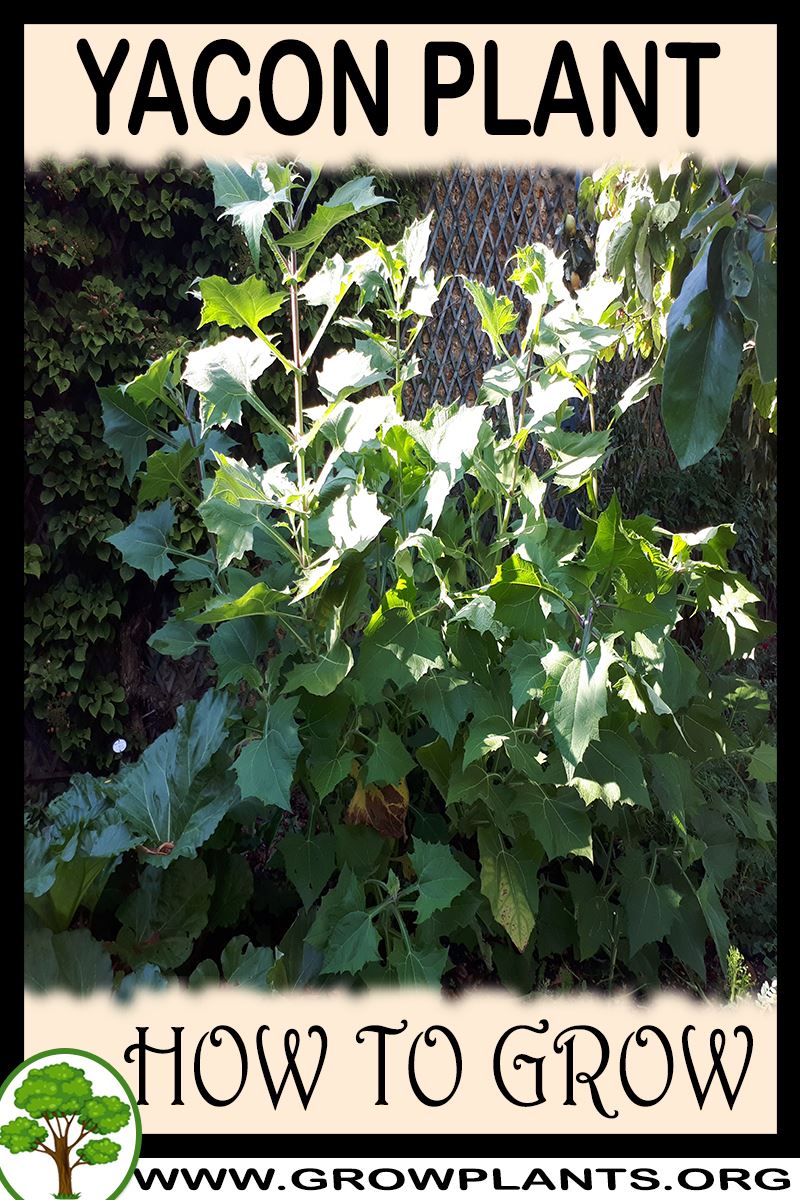
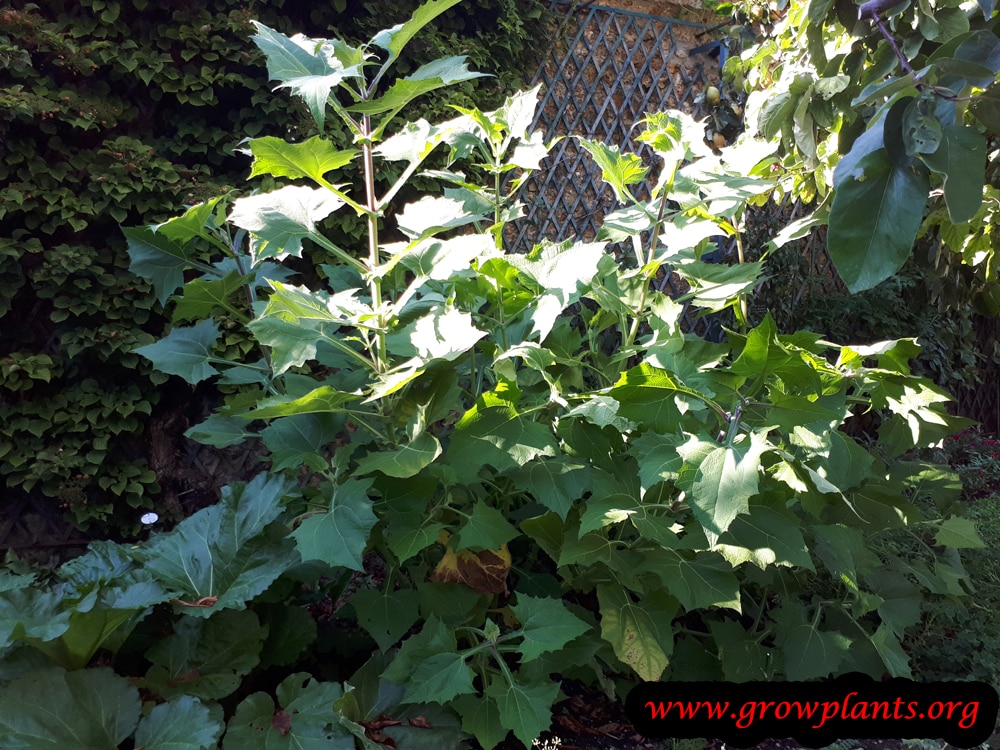
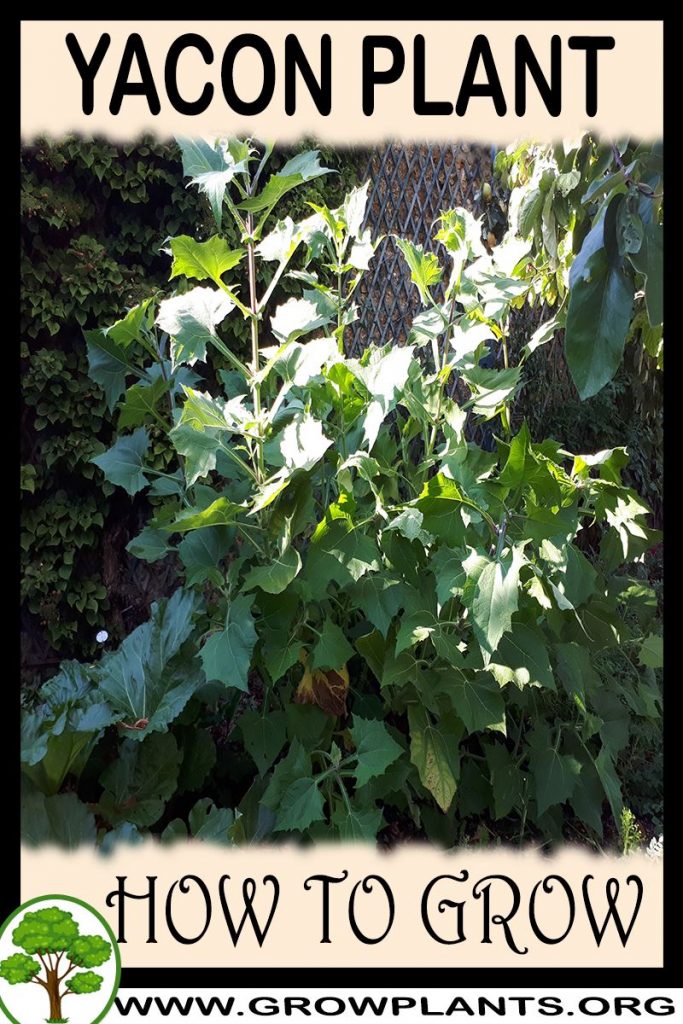
Overview: A large, tuberous perennial 1-2 m (3-6.5 ft) tall (grown as an annual in cold areas) with big arrowhead leaves and yellow daisy flowers. Grown mainly for its sweet, crunchy edible storage tubers, and also for edible leaves, ornament and cut flowers.
Quick Specifications
| Specification | Attribute |
|---|---|
| Plant Type / Life Cycle | Herbaceous perennial (tuberous; grown as an annual in cold zones) |
| Foliage Type | Evergreen in mild areas, deciduous where cool – dies back |
| Mature Size | 1-2 m (3-6.5 ft) |
| Growth Rate | Fast |
| Root System | Fleshy edible storage tubers / rhizomes |
| Toxicity | Non-toxic / edible (tubers and leaves) |
| Hardiness | USDA zone 8+ (7 with winter protection; lift and store tubers in zones 4-7) |
Growth Form & Structure
- Height & Spread: A tall, leafy clump 1-2 m (3-6.5 ft) high in a single season; can be grown in a 10-30 L (2.5-8 gal) container.
- Growth Habit & Form: Upright, bushy herbaceous perennial arising from a crown of storage tubers; dies back and re-sprouts each cycle.
- Lifespan & Maturity: Fast-growing; produces a harvest of tubers in a single 5-6 month season, then can regrow from the crown.
Anatomy & Physical Features
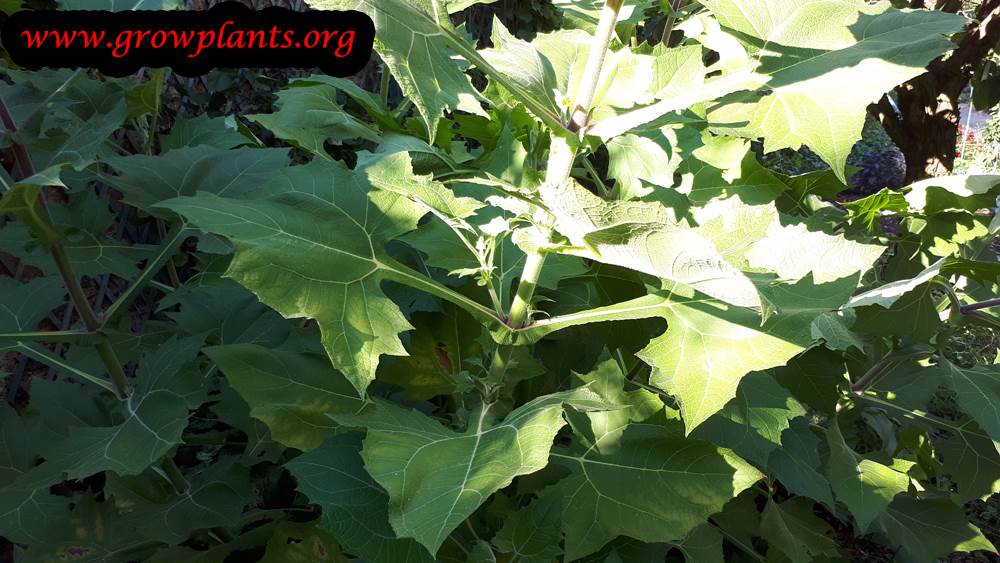
- Leaves & Foliage: Large, arrowhead-shaped leaves, purplish when young and maturing green.
- Flower Characteristics: Small, yellow, daisy-like flowers.
Primary Uses & Landscape Value
- Edible Uses: Sweet, juicy, crunchy tubers eaten raw or cooked (they sweeten further if sun-cured for a couple of weeks after harvest); young leaves are used cooked or as a beverage/tea.
- Functional & Ornamental Roles: An edible root crop, plus an ornamental daisy and cut flower.
Care Guide: Planting, Soil & Watering
Overview: Yacon (Smallanthus sonchifolius) is a fast-growing, frost-tender rhizome crop that grows best in full sun to part shade with rich, well-drained soil. It needs steady moisture through its long growing season but the rhizomes rot in cold, waterlogged ground.
Quick Care Requirements
| Requirement | Ideal Condition |
|---|---|
| Planting Season | In spring once frost has passed, through summer and autumn |
| Growth Rate | Fast |
| Soil Type | Rich, well-drained soil high in organic matter |
| Water Need | Moderate — keep the soil moist but never flooded |
Planting & Establishment
- Best Planting Season: Plant the rhizome in spring after all frost has passed; it is hardy in zone 8 and warmer, and in colder zones it is grown as an annual with the rhizomes lifted and stored over winter (it needs 5–6 months to crop).
- How to Plant:
- Hole Preparation: Dig a hole as deep as the rhizome plus an extra 200–400% of that depth, so there is loosened, enriched soil beneath it.
- Soil Amendments: Fill the base with organic matter, humus and dried leaves mixed with soil, then top with mulch after planting to keep the soil moist.
- Planting Depth: Cover the rhizome with at least 3 cm of soil, firming gently but not hard so the plant stays anchored as it grows.
- Growth Speed & Expectations: Fast growth into a 1–2 m leafy plant; the edible rhizomes swell through the season and are dug in autumn after the tops are cut back.
Soil, Watering & Drainage Care
- Soil Mix & Drainage Needs: Provide rich, well-ventilated, well-drained soil; in containers (10–30 L) use a mix of potting or peat soil with perlite or vermiculite, keeping it moist while letting excess water drain away.
- Watering Schedule & Technique:
- Young / Newly Planted: After planting, water every day (best in the morning) for the first two weeks to establish the rhizome, keeping the mulched soil moist.
- Established: Water regularly to keep the soil consistently moist through the growing season, but never let it flood, as the rhizomes rot in standing water.
- Seasonal Adjustments: Water more in summer heat; as the plant dies back in early winter, stop watering and keep the dormant rhizomes dry and cool.
Climate, Light & Hardiness
Yacon is a frost-tender tropical-to-subtropical rhizome that needs a long frost-free season and does best in half shade; it cannot tolerate freezing and is usually dug up and stored indoors over winter outside its warm hardiness range.
Quick Climate Specifications
| Climate Zones | Tropics, Mediterranean, subtropics, temperate |
|---|---|
| USDA Hardiness Zones | Approximately 8+ left in the ground; possible in zone 7 with careful overwinter protection; commonly grown as an annual (rhizomes lifted and stored indoors) in zones 4–7, provided there are at least 5–6 months of growing season |
| Approx. Survival Minimum | Growers report the plant can die at around 3°C (37°F), well above an actual freeze |
| Frost Tolerance | None - frost-free conditions are required |
| Light Conditions | Half shade |
Sunlight & Light Exposure
Optimal Light Setup
Half shade is the preferred exposure for this species.
Temperature Extremes & Hardiness
USDA Hardiness & Regional Limits
Reliable outdoors year-round only in roughly zone 8 and warmer; zone 7 is possible with attentive overwinter care. In colder zones (4–7) it is grown as an annual, with the rhizome dug up in autumn/winter and stored indoors before replanting in spring, as long as at least 5–6 months of frost-free growing time is available.
Cold Damage & Winter Protection
This plant needs frost-free conditions and, per grower reports, can die at temperatures around 3°C (37°F) - well above freezing - so protection is needed well before an actual frost arrives.
Frost Sensitivity
High. Difficulties commonly reported for this species include sensitivity to cold as well as to waterlogged soil.
Growing in Pots, Balconies & Indoors
Yacon is a large 1-2 m plant grown for its sweet, crunchy rhizomes. The grower notes it can be kept indoors with plenty of light, but it stays much smaller, will not bloom and yields only a small rhizome – so realistically it is a bright-spot container crop grown outdoors for a proper harvest.
Quick Details
- Container Size: 10-30 L (2.5-8 gal), depending on the cultivar (grower’s value)
- Indoor Suitability: Possible indoors with strong light (grower’s note), but it stays small, will not bloom and yields little – best on a very bright spot or outdoors
- Best Spot: Part shade to bright light; a warm, sheltered outdoor spot for a real crop
- Soil & Drainage: Well-ventilated mix with good drainage, rich in organic matter – potting mix or peat with perlite or vermiculite (grower’s spec)
- Watering in Pots: Keep the soil moist with average watering and let the excess drain out; the grower advises not to use a saucer under the pot
Indoors & On the Windowsill
- Indoors is possible but limited: The grower notes yacon can be grown indoors, but only with a lot of light – and even then it stays small, does not flower and produces a much smaller rhizome.
- Bright light is essential: Give it the brightest window you have if grown inside; for a worthwhile harvest, grow it outdoors in a large container.
On a Balcony or Patio
- Light, wind & heat: Part sun to part shade suits it best – a spot with morning sun and afternoon shade is ideal. Reflected heat from walls and paving dries pots fast, so check moisture often and shelter from drying wind.
- Practicalities: A full pot is heavy once watered – make sure the balcony can take the load and that drainage runoff has somewhere to go.
Choosing the Pot, Soil & Long-Term Care
- Pot & drainage: Use a pot with strong drainage holes and skip a standing-water saucer to avoid root rot. Terracotta breathes and dries faster; glazed or plastic pots hold moisture longer.
- Potting mix: A well-aerated, organic-rich mix – potting mix or peat/coir blended with perlite or vermiculite for free drainage.
- Feeding: Potted plants need feeding more often than those in open ground, as nutrients leach out with each watering – feed regularly through the growing season.
- Long-term care: Every couple of years refresh the top of the mix or pot up; divide congested clumps and lightly trim roots to keep the plant vigorous.
- As a perennial (grower’s spec): Every two years switch out the soil (or part of it) and prune back part of the roots and top growth to keep it productive.
Grower’s Container Tip
- Grower’s container spec: Use a 10-30 L pot (size to the cultivar); keep the mix moist with average watering and let water drain freely – do not stand the pot on a saucer/base. Use a well-ventilated, free-draining, organic-rich mix (potting mix or peat with perlite or vermiculite). Grown as a perennial, refresh the soil and prune part of the roots and plant every two years.
Fertilizing & Feeding
A moderate feeder grown for its edible rhizomes: balanced feeding at planting, nitrogen while the canopy builds, then a shift to potassium as rhizomes bulk, with feeding stopped as the plant heads into dormancy.
Quick Fertilizing Specs
| Feeding Level | Moderate feeder |
|---|---|
| young_feeding | A balanced starter feeding with organic matter worked into the planting hole |
| mature_feeding | Shift toward potassium as rhizomes bulk, then stop before harvest |
| Best Feeding Period | From establishment through rhizome bulking |
| Main Nutrient Priority | Balanced early, nitrogen for canopy growth, then potassium for bulking |
| Soil pH | Prefers well-drained soil |
| Organic Options | Compost, humus, or aged organic matter mixed into the planting hole |
| Reduce/Stop Feeding | Stop feeding as the growing season ends or frost approaches |
Feeding by Growth Stage
Establishment after planting
Help newly planted rhizomes root in and send up top growth.
| Nutrient direction | A balanced complete fertilizer with organic matter worked into the planting hole. |
|---|---|
| Timing | At planting, once the soil is reliably frost-free. |
| Frequency | A modest starter feeding as young shoots establish. |
| Fertilizer types | Balanced complete fertilizer, Compost, humus, or aged organic matter mixed into the planting hole |
| Precautions | This plant is sensitive to cold and to waterlogged soil; keep the planting site well drained. |
Canopy growth
Build the tall stems and edible arrowhead-shaped foliage that power rhizome formation later.
| Nutrient direction | A nitrogen-forward complete fertilizer to drive leafy top growth. |
|---|---|
| Timing | During the main warm-season growth period. |
| Frequency | Feed moderately while the canopy is actively expanding. |
| Fertilizer types | Complete fertilizer with a nitrogen emphasis |
| Precautions | Harvest leaves sparingly so canopy growth is not set back, and avoid excess late nitrogen, which favors leaves over rhizome development. |
Rhizome bulking
Support sizing of the developing edible rhizomes underground.
| Nutrient direction | Shift toward potassium with a complete fertilizer as rhizomes bulk. |
|---|---|
| Timing | As the season progresses toward summer and autumn rhizome development. |
| Frequency | Feed moderately through the bulking period. |
| Fertilizer types | Complete fertilizer with a potassium emphasis |
| Precautions | Keep soil evenly moist but not waterlogged; excess moisture around forming rhizomes invites rot. |
Maturation before harvest
Let rhizomes finish sizing and sweetening before lifting.
| Nutrient direction | None – withhold fertilizer as the plant heads into dormancy. |
|---|---|
| Timing | As the growing season ends, ahead of harvest or the first frost. |
| Frequency | No feeding at this stage. |
| Fertilizer types | No feeding at this stage – the plant is not taking up nutrients as it winds down. |
| Precautions | Do not fertilize until active growth resumes the following season. |
Nutrient Deficiency Signs & Corrections
Older, lower leaves turn uniformly pale green to yellow and overall growth slows.
| Possible causes | Low available nitrogen in the soil, Cold or waterlogged soil limiting root uptake, Nitrogen leached away after heavy watering |
|---|---|
| Appears first on | Older, lower leaves. |
| What to check | Recent feeding history, Soil moisture and drainage, Whether paling starts on old lower leaves |
| Possible correction | Apply a balanced complete fertilizer at a light rate and improve drainage. |
Older leaves show yellowing and browning along their margins.
| Possible causes | Low available potassium in the soil, Sandy soils that hold few nutrients, Drought stress limiting uptake during bulking |
|---|---|
| Appears first on | Older, lower leaves, starting at the margins. |
| What to check | Leaf margins on older leaves, Soil type and organic matter, Watering consistency during rhizome bulking |
| Possible correction | Apply a complete fertilizer that also supplies potassium and keep the soil evenly moist. |
General decline or rotting rhizomes despite otherwise normal care.
| Possible causes | Waterlogged or poorly drained soil, Rhizomes exposed to moisture while dormant or in storage, Root or rhizome rot pathogens favored by soggy soil |
|---|---|
| Appears first on | Rhizomes and the lower stem. |
| What to check | Soil drainage, Recent watering amounts, Storage conditions if rhizomes were held over winter |
| Possible correction | Improve drainage, avoid overwatering, and store harvested rhizomes in a dry, cool, dark place. |
Pruning, Training & Seasonal Maintenance
Yacon is a tall, soft-stemmed rhizome crop whose top growth dies back with cold, and its own facts give a specific pruning window – the beginning of winter – for cutting out all the dry leaves and stems, unlike some related tuber crops that need little or no pruning at all. It also carries two genuinely pruning-relevant facts of its own: thinning the flowers is noted as beneficial for the plant’s growth (redirecting energy toward the rhizomes rather than seed production), and taking too many leaves during the season is specifically flagged as harmful to rhizome development.
Quick Pruning & Maintenance Specs
| Pruning Tolerance | Low to Moderate – tolerates end-of-season stem removal well, but heavy mid-season defoliation harms rhizome growth |
| Primary Pruning Window | Beginning of winter, once top growth has dried/died back |
| Secondary Maintenance Window | Summer, for light flower thinning |
| Typical Frequency | One seasonal stem/leaf cutback; occasional flower thinning through summer bloom |
| Main Objective | Clear dry top growth for the season; redirect the plant’s energy into rhizome bulking |
| Young Plant Priority | None – let young plants build full top growth undisturbed |
| Mature Plant Priority | Thin some summer flowers; cut all dry leaves and stems at the beginning of winter |
| Best Tool Type | Bypass secateurs for the soft-but-substantial stems; garden spade for rhizome division |
| Avoid Heavy Pruning During | Active summer growth – removing significant leaf area then is specifically noted to reduce rhizome size |
Pruning by Plant Age & Size
Newly Established
Leave a newly planted rhizome’s top growth entirely alone while it establishes; no pinching or cutting.
Young / Formative
No formal training applies to this soft-stemmed rhizome crop. If any light leaf trimming is done for edible use, keep it minimal – the plant’s own data warns that taking too many leaves affects rhizome growth, so formative-stage plants should be left especially undisturbed while they build the top growth that feeds the rhizome.
Mature / Established
Through summer, flowers can be thinned out, which the plant’s own data notes is beneficial for growth – likely because it reduces the energy spent on seed production in favour of the rhizome. At the beginning of winter, once the plant has died back, cut out all the dry leaves and stems.
Seasonal Pruning Schedule
Summer (bloom): objective is redirecting the plant’s energy toward rhizome bulking; thin out a portion of the yellow daisy-like flowers rather than removing them all; don’t strip all foliage at the same time, since active leaves are what’s building the rhizome; response is improved rhizome development per the plant’s own data.
Beginning of Winter (die-back): objective is seasonal clean-up ahead of dormancy/harvest; cut out all the now-dry leaves and stems; don’t cut while stems are still green and the plant is actively growing; response is a cleared bed with the rhizomes ready to be lifted or left to overwinter, depending on climate.
Special Growth to Remove
Dry, dead leaves and stems at the beginning of winter (a direct, specific fact for this plant, distinct from a generic autumn tidy-up); a portion of summer flowers, thinned rather than left to all mature to seed, per the plant’s own growth-benefit note. Leaf removal for eating should stay light through the season, since heavy defoliation is specifically flagged as reducing rhizome growth here.
Container & Small-Space Pruning
Grows in containers of 10–30 litres; in a pot the caution against over-removing leaves matters even more, since a container plant has a smaller root/rhizome volume to draw on if its leaf area is reduced. Follow the same beginning-of-winter cutback once top growth dies down.
Tools
Bypass secateurs for cutting the dry stems and leaves at the winter cutback – substantial enough by season’s end to need more than fine snips; a garden spade for lifting and dividing rhizomes at harvest/propagation time, separate from any above-ground cut.
Tool Hygiene & Disease Risk
Routine – no disease is flagged in the available data; ordinary clean-tool practice is sufficient. Watch for slugs and aphids (the noted pests) rather than treating this as a tool-transmitted risk.
Cut Placement & Technique
Cut dry stems back near the base once they’ve died back naturally at the start of winter, rather than cutting green stems earlier. When thinning flowers in summer, cut individual flower stems rather than shearing across the whole plant, to leave the remaining bloom and foliage undisturbed.
Heavy Pruning & Rejuvenation
Not applicable in the classic sense – this rhizome crop doesn’t respond to hard pruning with denser regrowth; renewal instead comes from dividing and replanting healthy rhizomes each cycle.
Post-Pruning Care
After the winter cutback, no feeding is needed; if rhizomes are being left in the ground over winter, keep the site from becoming waterlogged, since the plant’s rhizomes are noted as sensitive to rot in moist conditions. Through summer, water normally after flower thinning.
Common Pruning Mistakes
Removing too many leaves during the growing season for kitchen use, which the plant’s own data links directly to smaller rhizomes; cutting stems back while they’re still green instead of waiting for the natural beginning-of-winter die-back; leaving all flowers to mature to seed instead of thinning some for better rhizome growth.
When NOT to Prune
Don’t remove significant leaf area during active summer growth – this directly reduces rhizome size per the plant’s own data; don’t cut stems back before they’ve naturally dried at the start of winter.
Recommended Tools (by task)
- Beginning-of-winter removal of dry leaves and stems: bypass_secateurs – suited to the substantial dry stem material at season’s end.
- Summer flower thinning: precision_snips – clean, targeted cuts on individual flower stems.
- Dividing rhizomes at harvest/propagation: garden_spade – for below-ground division, not an above-ground cut.
Pruning Troubleshooting
| Problem | Possible Cause | What to Check | Corrective Action |
| Small or reduced rhizome size at harvest | Over-removal of leaves during the growing season | How much foliage was harvested/cut back mid-season | Reduce mid-season leaf removal; let top growth build fully until the winter die-back |
| Poor rhizome development despite good foliage | Flowers left unthinned, diverting energy to seed production | Whether summer flowers were thinned | Thin a portion of the summer flowers as the plant’s own care guidance recommends |
| Rhizome rot after winter | Waterlogged soil around dry, cut-back top growth | Soil drainage and moisture at the planting site | Improve drainage or lift and store rhizomes in a dry, dark, cool place instead of leaving them in wet soil |
Propagation Guide
Yacon is propagated almost entirely by dividing and replanting its storage rhizomes, since true seed is rare, sometimes sold fraudulently, and slower and less certain to establish. Vegetative propagation from rhizome crowns is fast – new roots typically begin forming within just a few days of planting – and is essentially required to grow this plant reliably.
Quick Propagation Specs
| Best Propagation Method | Rhizome (crown) division |
| Alternative Methods | Seed (rare, and only where genuine seed can be sourced) |
| Propagation Difficulty | Easy by rhizome division; seed propagation is comparatively Difficult given scarce, sometimes fake seed and slow, uneven germination |
| Seed True-to-Type | Variable – seed-grown plants are not guaranteed to match the parent |
| Vegetative True-to-Type | Yes |
| Best Propagation Season | Lift and divide rhizomes in autumn/winter, then plant divisions in spring; sow seed spring to summer |
| Seed Germination Time | 4–10 weeks |
| Germination Temperature | Above 26°C (78°F), with high humidity |
| Seed Sowing Depth | 1–2 cm (0.5–1 inch) |
Growing from Seed
Seed Handling & Viability
Seed is rare and hard to find in trade; be aware that a notable share of seed sold as yacon is reportedly fake, so source carefully. Store viable seed in a dry, dark location at room temperature.
Sowing Season
Spring to summer.
Sowing Depth & Orientation
Sow 1–2 cm (0.5–1 inch) deep. Individual pots are preferred; if sowing in open ground, space roughly 30 × 40 cm (12 × 16 inches) apart.
Germination Conditions
Needs consistently moist, rich soil, a sunny location, and high humidity above about 26°C (78°F). Water generously and do not let the soil dry out.
Germination Time
4–10 weeks.
Seedling Care
Seedlings are sensitive to wind, so protect them; keep soil moist with high humidity as they establish.
Rhizomes, Tubers, Bulbs & Corms
Rhizome Division – Lift and divide the storage rhizome clumps in autumn or winter as top growth dies back, then hold divisions and replant them in spring. Each division should include at least one healthy crown growth point/eye. Plant at least 3 cm (about 1¼ inches) underground. The rhizomes are sensitive to overly wet soil, which can cause them to rot, so avoid waterlogged conditions when replanting divisions. Once planted, give divisions the same routine care as an established plant; new roots typically begin forming within just a few days.
Bloom & Flower Guide
Quick Details
- Bloom Season: Summer, often late in the season
- Time to First Bloom: Needs a long growing season; where seasons are short it may flower only late, or not at all before frost
- Flower Appearance: Small yellow daisy-like heads with narrow petals
- Edibility: The flowers are ornamental; the edible crop is the underground rhizome, not the bloom
Detailed Blooming Overview
Yacon is grown mainly for its sweet, crisp rhizomes, but the tall plant also produces cheerful little daisy flowers late in summer. The yellow heads are modest and daisy-like, useful as cut flowers and welcome to pollinators. Because they appear so late, gardeners in cooler regions often see foliage and tubers long before they ever see a flower.
Flower Characteristics
- Small yellow heads with narrow, slightly spidery ray petals.
- Held in clusters atop the tall, leafy stems.
- Modest but pretty, and useful as a cut flower.
Bloom Care & Thinning
- Thinning the bloom: As the grower advises, thinning the flowers is better for the plant, redirecting its energy into building up the rhizomes.
- Season: Flowering is late, so in short-season areas the priority is the tuber harvest before frost rather than the bloom.
- Pollination: The open daisies attract bees and other pollinators.
Fruit & Uses
Yacon is grown for its large, sweet-tasting storage roots (referred to on this site as rhizomes), which are eaten fresh and raw as well as cooked, and for its young leaves, which are used as a cooked vegetable or brewed into a beverage. The roots become sweeter after a period of curing in the sun, while heavy leaf picking comes at the expense of root growth.
Quick Edible Specs
| Edible Parts | Storage roots ("rhizomes") and young leaves |
|---|---|
| Main Use(s) | Culinary – fresh fruit-like snack and cooked root vegetable; leaves as a cooked green or beverage; traditionally also used medicinally |
| Eaten Raw or Cooked | Roots: raw or cooked (baked); Leaves: cooked or steeped as a beverage |
| Preparation Required | Roots: wash/peel, optional sun-curing to increase sweetness; Leaves: cook or steep |
| Harvest Season | Roots: summer to autumn; Leaves: spring to summer |
| Time to First Harvest | Roots bulk up over a full growing season, lifted once mature (see Propagation for planting timing) |
| Storage | Cured roots keep best in a cool, dark, dry place; sensitive to rot if left in overly wet soil |
| Safety/Toxicity Caveat | None known for normal culinary use |
Roots & Tubers
The edible storage roots (called rhizomes on this site) have thin brown skin and crisp white flesh, ranging roughly from about 100 g up to 2 kg each. Young roots are reddish before turning brown as they mature; both stages are usable, though the reddish young roots are more delicate to handle. The roots are naturally sweet and are often cured in the sun for about two weeks after digging, which increases their sweetness further. They can be eaten fresh and raw, sliced like fruit, or cooked (baked). Because the roots are prone to rot in waterlogged soil, good drainage while growing and a cool, dry, dark spot after harvest both help keep them in good condition.
Leaves & Greens
The arrowhead-shaped leaves – purplish when young, turning green with maturity – are also edible and are used cooked or steeped as a beverage. Leaves are harvested by trimming from the tip end during spring and summer; take them lightly, since removing too much foliage reduces the plant’s energy for root growth.
Harvesting
Roots are lifted in summer to autumn; leaves are picked more lightly through spring and summer as a secondary crop, keeping in mind that heavy leaf harvest competes with root development.
Preparation, Uses & Safety
Roots are the main crop, eaten raw as a sweet, crunchy snack or cooked (baked); sun-curing after digging is a traditional step to boost sweetness before eating. Leaves are used cooked or made into a beverage. No specific toxicity or required detoxifying preparation is noted for this species.
Pests, Diseases & Troubleshooting
Overview: Yacon is a vigorous, large-leaved Andean tuber crop in the daisy family that is remarkably healthy and pest-resistant; its main threats are slugs and aphids on foliage, root-knot nematodes and rot on the storage tubers, and frost, which cuts down the tops. Good drainage, spacing and careful harvest and storage matter more than spraying.
Quick Troubleshooting Overview
| Issue / Pest | Main Symptom | Primary Solution |
|---|---|---|
| Slugs & snails | Ragged holes in leaves; slime; seedling damage | Hand-pick; grit/iron-phosphate bait |
| Aphids | Colonies on leaves/shoots; honeydew, virus risk | Hose off; insecticidal soap |
| Root-knot nematodes | Stunting, wilting; galled/knotty roots & tubers | Rotate; add organic matter; resistant sites |
| Cutworms / caterpillars | Chewed leaves; severed seedlings at soil | Collars; hand-pick; Bt |
| Tuber rot | Soft, brown, rotting storage tubers | Cure & store cool-dry; handle gently; drainage |
| Frost damage | Blackened, collapsed tops after cold | Harvest before hard frost; mulch crowns |
Common Pests & Management
- Slugs & snails (Gastropoda):
- Symptoms: Ragged holes and grazed patches in the large soft leaves and slime trails, worst in damp, mild conditions and on young plants and emerging shoots; established plants tolerate a good deal of feeding.
- Prevention & Control: Hand-pick after dark, keep the base clear of debris, and protect young plants with grit, copper barriers, or iron-phosphate pellets (wildlife-safer). Vigorous mature plants generally outgrow mollusc damage.
- Aphids (Aphis / Myzus / Uroleucon spp.):
- Symptoms: Green or black colonies on the shoot tips and leaf undersides, sucking sap, leaving honeydew and sooty mould, and potentially transmitting viruses to this vegetatively propagated crop.
- Prevention & Control: Hose off colonies and use insecticidal soap for heavier numbers; avoid excess nitrogen and encourage ladybirds, hoverflies and lacewings. Rogue out any plants showing virus-like mottling or distortion, and propagate only from healthy stock.
- Root-knot nematodes (Meloidogyne spp.):
- Symptoms: Stunting, yellowing and wilting in warm weather with knotty galls and swellings on the roots and storage tubers, reducing yield and quality; a soil-borne pest favoured by warm, sandy soils and continuous cropping.
- Prevention & Control: Rotate to a fresh site, incorporate plenty of organic matter to support nematode-antagonistic soil life, and grow biofumigant or marigold cover crops between crops. Avoid replanting yacon or other susceptible crops in infested ground, and keep plants well watered and mulched to mask damage.
- Cutworms & caterpillars (Noctuidae / Lepidoptera):
- Symptoms: Chewed leaves from various caterpillars, and cutworms that sever young shoots and seedlings at soil level overnight; damage is mainly to establishing plants.
- Prevention & Control: Fit collars around young plants, keep the soil surface clear, and hand-pick or search out cutworms at the base of wilted seedlings. Bacillus thuringiensis (Bt) controls leaf-feeding caterpillars selectively; birds and ground beetles help.
Diseases & Fungal Issues
- Root & tuber rot (Sclerotium / Fusarium / Pythium / Phytophthora spp.):
- Symptoms: Soft, brown, decaying storage tubers and basal rot of the crown in wet, poorly drained soil or from damage at harvest; rot also develops in storage on bruised or wet tubers.
- Treatment & Management: Grow on free-draining soil or ridges, avoid waterlogging, and lift the tubers carefully to avoid cuts and bruises. Cure the harvested tubers in a warm, airy place to toughen the skin, then store cool, dry and unbruised, discarding any damaged ones.
- Powdery mildew & leaf spots (Erysiphe / Cercospora / Alternaria spp.):
- Symptoms: White powdery patches (mildew) or brown leaf spots and blotches on the foliage late in the season in humid, crowded conditions; largely cosmetic and late enough not to affect the tuber yield much.
- Treatment & Management: Space plants for airflow, avoid overhead watering late in the day, and remove badly affected lower leaves. Sanitation and airflow usually suffice; a sulphur or copper fungicide is rarely justified on a crop whose value is below ground.
- Viral diseases (various mosaic/mottle viruses):
- Symptoms: Mottling, mosaic, yellowing or leaf distortion that can build up in vegetatively propagated stock over time, gradually reducing vigour and yield.
- Treatment & Management: Propagate only from healthy, vigorous crowns, rogue out symptomatic plants, and control aphid vectors. Sourcing clean planting material periodically keeps stock productive.
Growing Difficulties & Abiotic Problems
- Frost damage:
- Cause & Symptoms: The large soft tops are blackened and collapsed by frost; while a touch of frost after the tops die can improve tuber sweetness, hard freezing damages exposed tubers.
- Correction Strategy: Grow through the frost-free season, mulch the crowns, and lift the tubers around the first frosts — before the ground freezes hard. Store the propagation crowns frost-free over winter.
- Tuber cracking & poor sizing:
- Cause & Symptoms: Storage tubers crack or size poorly with irregular water supply, very heavy or stony soil, or a short season.
- Correction Strategy: Grow in deep, loose, fertile, free-draining soil with steady moisture, give the crop a long season, and avoid drought followed by heavy watering. Earthing up and mulching help produce clean, well-sized tubers.
- Sweetening in storage:
- Cause & Symptoms: Freshly dug tubers are starchy and bland; they need time to convert to their characteristic sweet, crisp texture, which is sometimes mistaken for a problem.
- Correction Strategy: Cure and rest the harvested tubers in warmth and sun for a week or two (or after a light frost on the tops) to develop sweetness before eating. This is a normal ripening process, not a fault.
What Helps – Products & Tools
Yacon needs very little chemistry: iron-phosphate pellets or grit for slugs, insecticidal soap for aphids, Bacillus thuringiensis (Bt) for caterpillars, and marigold or biofumigant cover crops plus organic matter to suppress root-knot nematodes. Disease is managed by drainage, spacing, careful harvest and good curing and storage rather than fungicide. The key ‘tools’ are a fork for gentle lifting, deep free-draining soil, and a cool, dry, airy store for the tubers.