Plant Profile & Key Characteristics
Overview: Amorphophallus konjac (konjac) is a perennial geophyte reaching 1-2 m (3-6 ft), grown from a large underground corm. It is grown for its edible processed tuber (source of konjac flour) and as a curiosity ornamental.
Quick Specifications
| Specification | Attribute |
|---|---|
| Plant Type / Life Cycle | Perennial (herbaceous geophyte) |
| Foliage Type | Deciduous (dies back to the corm in dormancy) |
| Mature Size | 1-2 m (3-6 ft) tall |
| Growth Rate | Slow to fast, depending on conditions |
| Root System | Large underground corm (geophyte) |
| Toxicity | Corm edible only after processing; raw tissue contains calcium oxalate and is an irritant |
| Hardiness | USDA zone 6+ |
Growth Form & Structure
- Height & Spread: 1-2 m (3-6 ft) tall in the ground; also grown in containers and as a houseplant
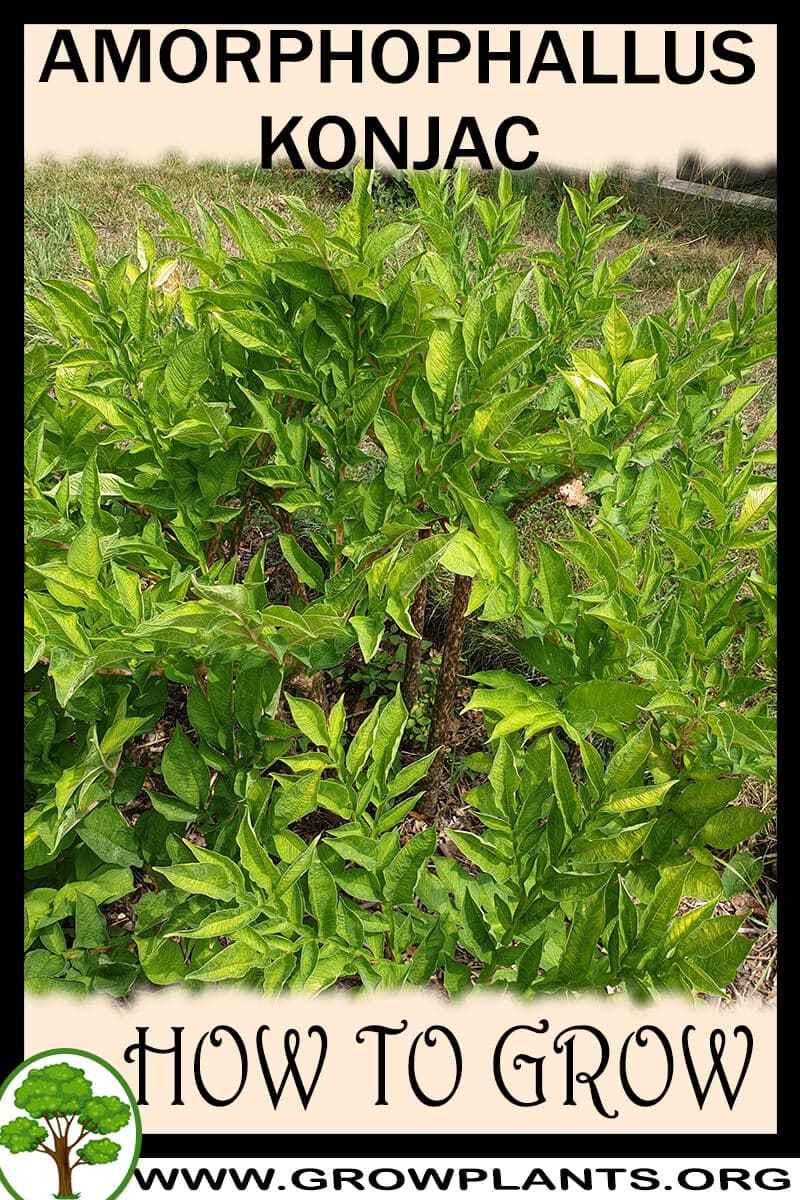
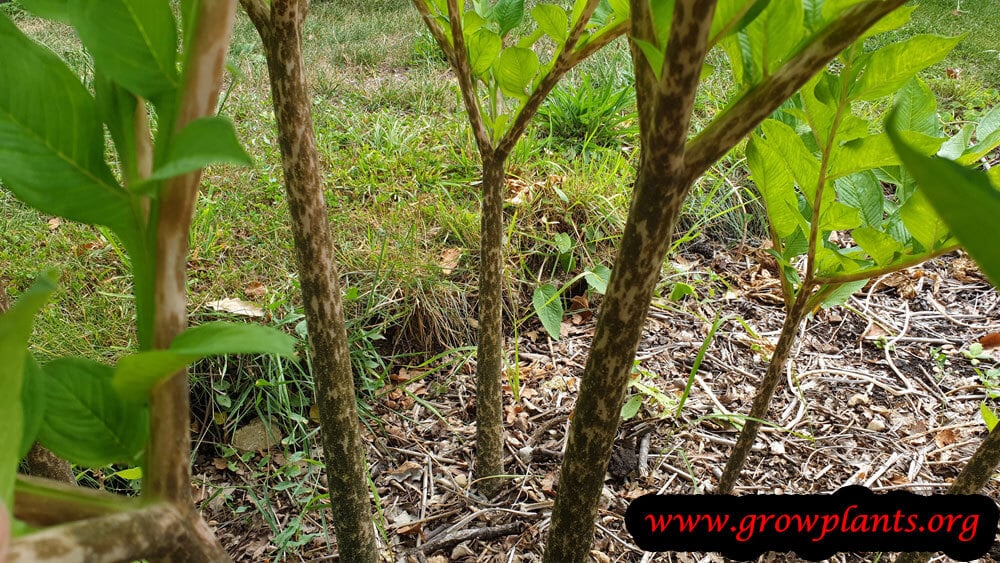
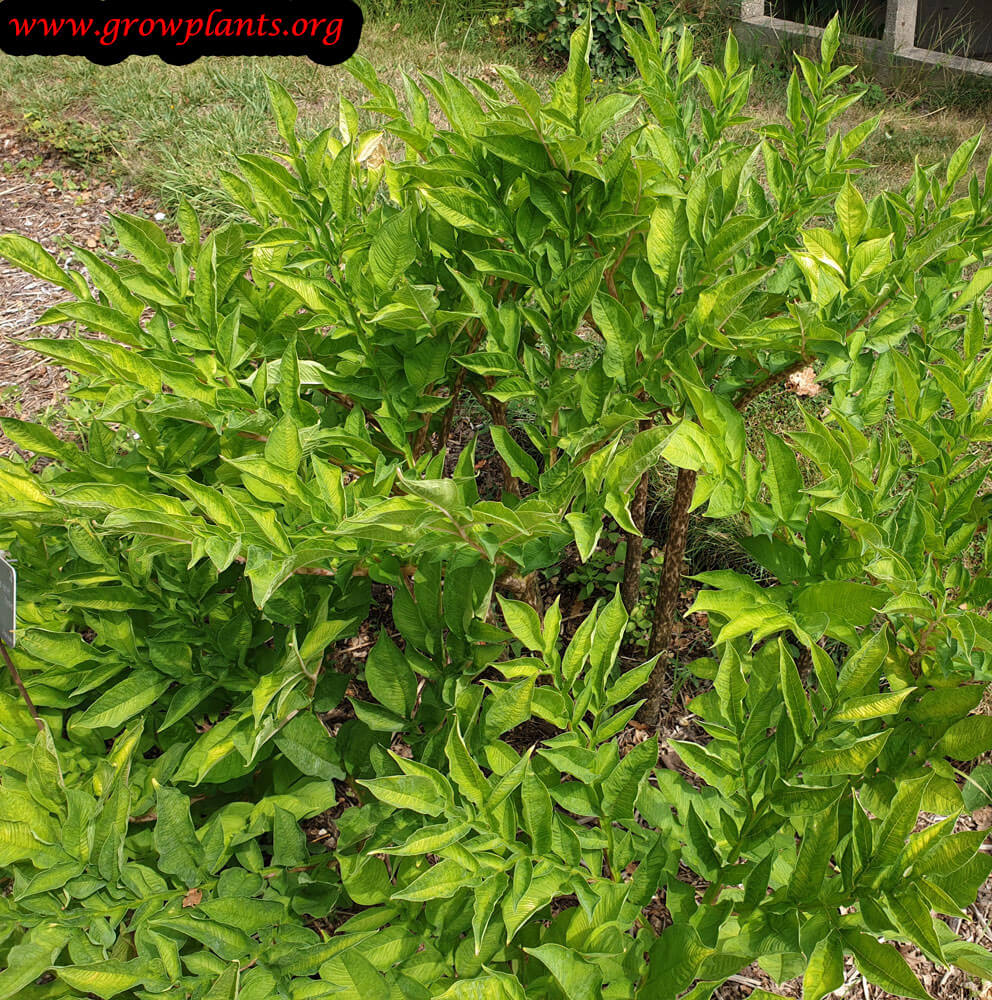
- Growth Habit & Form: A single tall, dark-speckled stalk (petiole) topped by one large divided leaf, arising from a dormant corm
- Lifespan & Maturity: Long-lived corm that enlarges each season; the tuber is harvested in autumn or winter
Anatomy & Physical Features
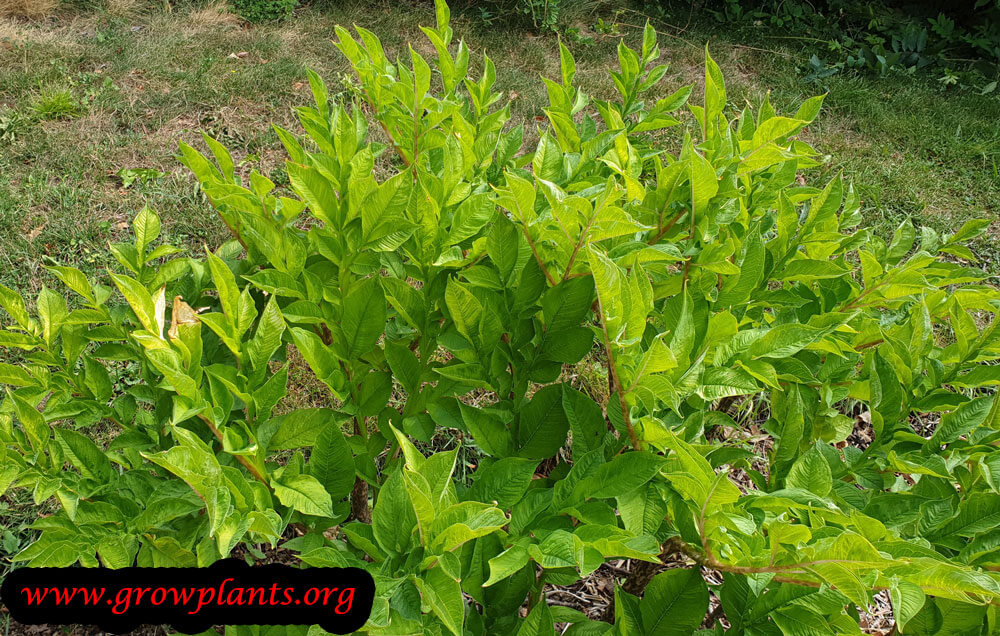
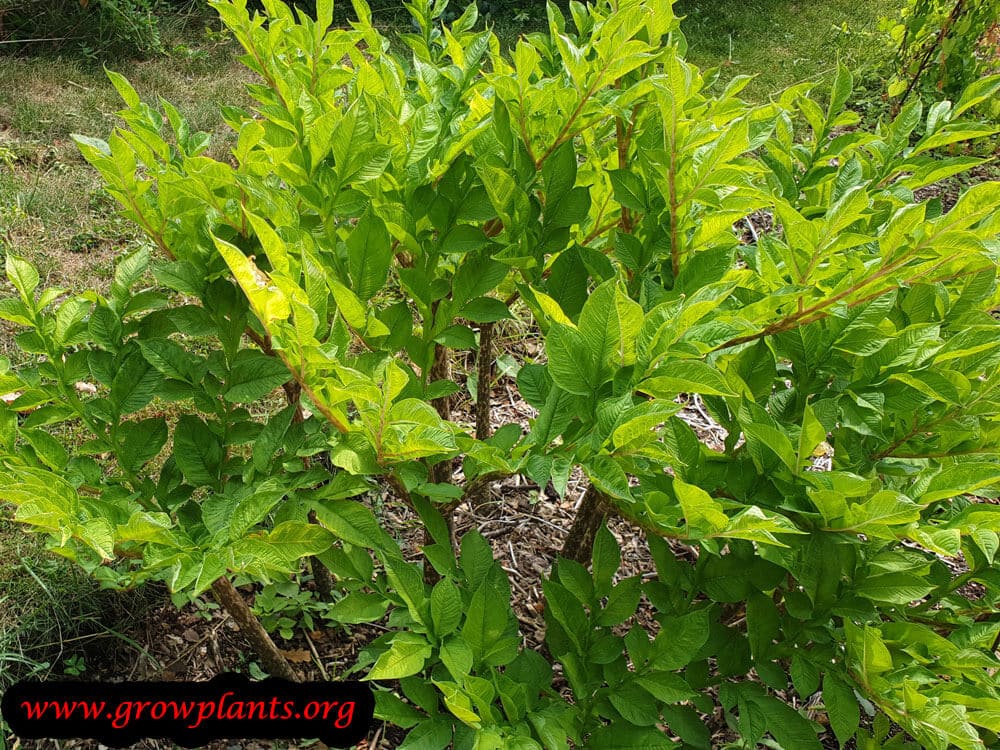
- Leaves & Foliage: Green, elliptic leaflets on a black-spotted stem
- Flower Characteristics: A single purple-to-brown spadix (ice-pop-like structure) wrapped by a bract (see the Bloom guide)
- Fruit Profile: Drop-shaped tuber with brown skin and white flesh (see the Fruit / Edible guide)
Primary Uses & Landscape Value
- Edible Uses: Processed tuber cooked and made into konjac noodles, jelly and flour
- Functional & Ornamental Roles: Unusual ornamental foliage plant, also grown indoors as a houseplant
Care Guide: Planting, Soil & Watering
Overview: Amorphophallus konjac (konjac) is a tuberous perennial grown for its edible corm and dramatic foliage, suited to warm climates or indoor culture (hardiness zone 6+) in full sun through to light shade. It grows best in rich, well-draining soil kept moist through the active season, with a drier rest once the tuber goes dormant.
Quick Care Requirements
| Requirement | Ideal Condition |
|---|---|
| Planting Season | In spring to summer, as the tuber starts into growth |
| Growth Rate | Moderate (varies with conditions) |
| Soil Type | Rich, well-draining soil |
| Water Need | Moderate – keep evenly moist in growth, drier during dormancy |
Planting & Establishment
- Best Planting Season: Plant the tuber in spring to summer as it begins its growth cycle.
- How to Plant:
- Hole Preparation: Dig a hole comfortably wider than the tuber in loosened, free-draining ground.
- Soil Amendments: Work in compost and organic matter to enrich the soil while keeping it open and well-drained.
- Planting Depth: Set the tuber with its growing tip uppermost, covered by a few centimetres of soil; do not bury it deeply in wet ground.
- Growth Speed & Expectations: Growth rate varies with conditions, but the plant can reach 1-2 m in a season, sending up a single large leaf from the corm before dying back.
Soil, Watering & Drainage Care
- Soil Mix & Drainage Needs: Use rich, well-aerated soil with reliable drainage; in containers a free-draining potting mix suits it and makes lifting the tuber easy.
- Watering Schedule & Technique:
- Young / Newly Planted: Keep the soil moist as the tuber roots and the leaf emerges.
- Established: Water regularly to maintain even moisture through the active growing season, allowing the surface to dry slightly between waterings.
- Seasonal Adjustments: Reduce watering as the foliage yellows and stop once the tuber is dormant in autumn and winter, keeping it barely moist.
Climate, Light & Hardiness
Amorphophallus konjac is an unusually cold-hardy aroid for its tropical-looking foliage, capable of surviving winters as a dormant underground corm down into USDA zone 6. It adapts to a wide range of light from full sun to fairly deep shade, and it dies back to dormancy every winter regardless of climate, re-sprouting from the corm the following season.
Quick Climate Specifications
| Climate Zones | Subtropical, tropical, temperate Mediterranean, desert (or as a houseplant) |
|---|---|
| USDA Hardiness Zones | 6+ |
| Light Conditions | Full sun to full shade (some light needed in deep shade) |
| Frost Tolerance | Moderate (as a dormant corm; foliage is frost-tender) |
Sunlight & Light Exposure
Optimal Light Setup
Adaptable – grows in anything from full sun to full shade, though in deep shade it still needs some ambient light to perform well.
Shade & Heat Management
In hotter, sunnier climates a little shade during the peak of the day helps protect the large leaf from scorch and reduces soil moisture loss around the corm.
Best Exposure / Orientation
Filtered woodland-edge light or morning sun with afternoon shade suits it particularly well; full sun is fine where soil moisture is reliably maintained.
Temperature Extremes & Hardiness
USDA Hardiness & Regional Limits
Notably cold-hardy for the genus – the dormant corm typically survives winter underground from about zone 6 upward, provided the site is well-drained (waterlogged, cold soil is more likely to rot the corm than cold air alone). Below that, it is best grown as a houseplant or lifted and stored like a dahlia tuber.
Cold Damage & Winter Protection
The single leaf and any flower stalk are frost-tender and collapse with the first real autumn/winter cold – this is normal dormancy, not necessarily plant loss. A dry winter mulch over the dormant corm improves cold and wet protection at the colder end of its range.
Frost Sensitivity
Foliage: high (collapses with frost as part of normal dormancy). Dormant corm: reasonably tolerant where the site drains well.
Wind, Humidity & Microclimate
Humidity Preferences
Grows best with reliably moist, humus-rich soil through the active growing season; ambient humidity is less critical than consistent soil moisture.
Microclimate Recommendations
A sheltered spot with well-drained, humus-rich soil suits it best – good drainage matters more for winter survival than warmth alone.
Growing in Pots, Balconies & Indoors
Konjac (voodoo lily / devil’s tongue) is a tuberous aroid that sends up a single large, umbrella-like leaf on a mottled stalk (to about 1-2 m / 3-6 ft) and then dies back to a dormant tuber. The grower rates it as a houseplant and container plant, and it is very well suited to pot culture, tolerating anything from full sun to shade.
It is an easy, dramatic potted plant, but like other aroids it is toxic if chewed, so keep it away from children and pets.
Quick Details
- Container Size: A pot a size or two larger than the tuber, with depth for the roots.
- Indoor Suitability: A good, dramatic houseplant; goes dormant and rests as a bare tuber each year.
- Best Spot: Full sun to full shade with light; bright indirect light indoors.
- Soil & Drainage: Light, rich, free-draining mix; kept moist in growth, dry when dormant.
- Watering in Pots: Water freely while in leaf (small to generous needs); keep the tuber almost dry during dormancy.
Indoors & On the Windowsill
- Genuine houseplant: Yes – it grows well in a pot indoors in bright, indirect light and is happy in a range of light levels.
- Safety: As an aroid it contains calcium oxalate and is toxic if chewed – keep the tuber and leaf away from children and pets.
- Dormancy: Expect it to die back and rest as a bare tuber for part of the year; keep the pot barely moist and warm until it resprouts.
On a Balcony or Patio
- Light & shelter: In warm weather it enjoys a bright, sheltered balcony; its single big leaf catches wind, so shelter and, if needed, stake the stalk.
- Overwintering: It is frost-tender – lift or move the potted tuber somewhere frost-free and dry for its winter rest.
Choosing the Pot, Soil & Long-Term Care
- Pot & drainage: A pot a size or two wider than the tuber, with good depth and drainage. Give it strong drainage holes and skip a standing-water saucer to avoid root rot; terracotta breathes and dries faster, while glazed or plastic pots hold moisture longer.
- Potting mix: A light, aerated, organic-rich mix – potting soil, or peat/coir with perlite, enriched with a little humus or compost.
- Feeding: Potted plants use up their food faster because nutrients wash out with every watering, so feed lightly but more regularly than plants growing in open ground.
- Repotting: Repot the tuber into fresh mix each dormant season; it grows larger each year, so move up a pot size as it swells.
Fertilizing & Feeding
A moderate feeder while the canopy is up: balanced feeding at planting shifts toward nitrogen for canopy growth, then toward potassium as the tuber bulks, with feeding stopping entirely once the leaf dies back.
Quick Fertilizing Specs
| Feeding Level | Moderate feeder during the growing season |
|---|---|
| Main Nutrient Priority | Nitrogen for canopy growth, shifting to potassium as the tuber bulks |
| Best Feeding Period | Spring emergence through summer canopy growth |
| Organic Options | Compost or well-rotted organic matter worked into rich, well-drained soil |
| Reduce/Stop Feeding | Feeding stops as the canopy yellows and dies back toward dormancy |
| Micronutrients | Usually supplied by a complete fertilizer; correct only a diagnosed deficiency |
| Soil pH | Prefers rich, well-drained soil; avoid waterlogged or poorly aerated ground |
Feeding by Growth Stage
Establishment after planting the tuber
Support early root and shoot development as the tuber breaks dormancy and sends up its leaf.
| Nutrient direction | A balanced, moderate feeding as the shoot emerges gets the plant off to a steady start. |
|---|---|
| Timing | At planting and as the single shoot first emerges in spring. |
| Frequency | A light feeding at planting, worked into rich, well-drained soil. |
| Fertilizer types | A balanced complete fertilizer worked into the planting area, Compost or organic matter mixed into the soil |
| Precautions | Keep soil well-drained; the tuber is prone to rot in waterlogged conditions, especially before the shoot is established. |
Vegetative canopy growth
Fuel the single large leaf canopy that photosynthesizes and feeds the developing tuber below.
| Nutrient direction | A nitrogen-forward feeding supports vigorous canopy growth through the summer. |
|---|---|
| Timing | Through spring into summer as the canopy expands to full size. |
| Frequency | Regular light feedings through the active canopy-growth months. |
| Fertilizer types | A nitrogen-forward balanced fertilizer, Organic matter maintained around the root zone |
| Routine trace nutrients | manganese |
| Precautions | Keep drainage good even while feeding; waterlogged soil remains a risk to the tuber throughout growth. |
Tuber bulking
Shift the plant’s energy toward building up the underground tuber as the canopy matures.
| Nutrient direction | A potassium-leaning feeding supports tuber bulking as the season progresses. |
|---|---|
| Timing | Mid-to-late summer once the canopy is fully developed and the tuber is actively enlarging. |
| Frequency | Continue light feeding, shifting emphasis toward potassium as summer progresses. |
| Fertilizer types | A potassium-leaning fertilizer, Organic matter maintained around the root zone |
| Precautions | Ease back on nitrogen relative to potassium now; excess nitrogen late in the season favors leaf growth over tuber bulking. |
Dieback and dormancy
Let the canopy die back naturally and the tuber mature and harden off before harvest or winter dormancy.
| Nutrient direction | None – feeding stops as the canopy senesces and the tuber matures. |
|---|---|
| Timing | Autumn into winter as the leaf yellows and collapses. |
| Frequency | No feeding at this stage; the plant is directing reserves into the tuber, not new growth. |
| Fertilizer types | No feeding at this stage; withhold fertilizer as the canopy dies back. |
| Precautions | Do not fertilize a dying-back canopy; stop feeding well ahead of harvest or dormancy so the tuber can mature and harden. |
Nutrient Deficiency Signs & Corrections
The single leaf emerges pale or undersized for the season and overall vigor is weak.
| Possible causes | low available soil nitrogen, insufficient light reducing overall vigor, a small or immature tuber with limited stored reserves |
|---|---|
| Appears first on | the leaf blade and petiole coloring |
| What to check | recent feeding history, light exposure at the planting site, tuber size and condition at planting |
| Possible correction | Apply a balanced, nitrogen-forward fertilizer and confirm the planting site gets adequate light. |
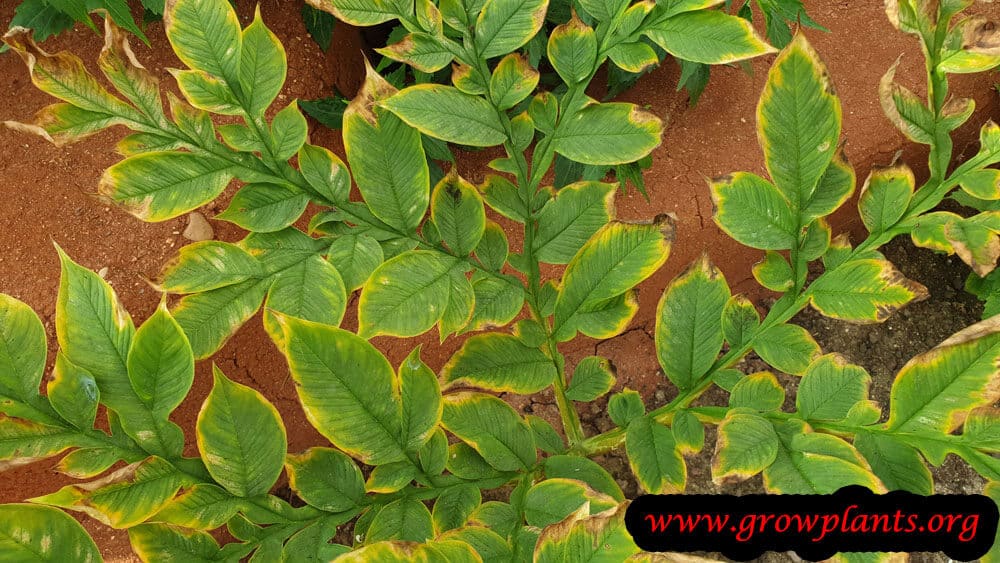
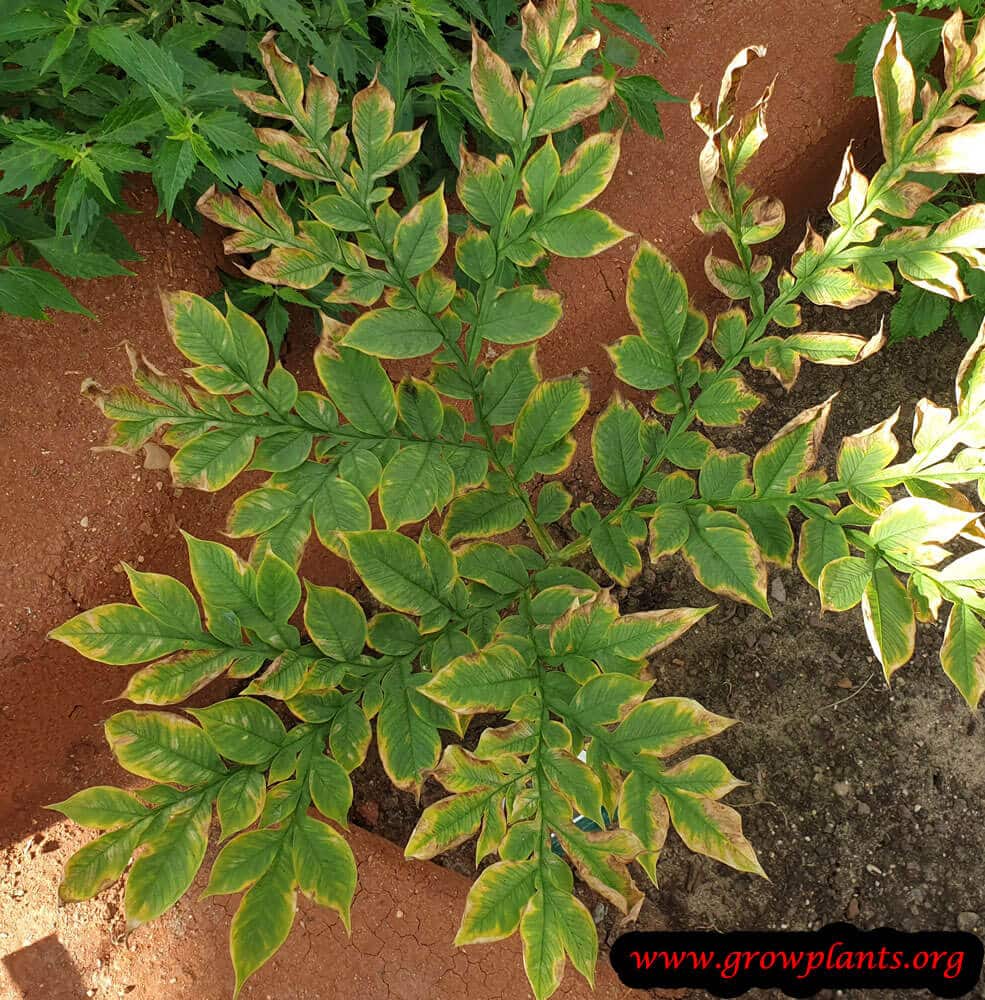
Leaf margins scorch or yellow late in the season and the harvested tuber is smaller than expected.
| Possible causes | low available soil potassium during bulking, drought stress during canopy growth, nitrogen feeding out of balance with potassium late in the season |
|---|---|
| Appears first on | leaf margins on the mature canopy |
| What to check | feeding balance through the bulking stage, soil moisture consistency, overall canopy size relative to the growing season |
| Possible correction | Shift toward a potassium-leaning fertilizer during bulking and maintain even soil moisture. |
Interveinal yellowing appears on the leaf while veins stay green, sometimes with early leaf collapse.
| Possible causes | manganese deficiency, often in high-pH or waterlogged soil, waterlogged or poorly drained soil stressing the roots and tuber, root or tuber rot from excess moisture |
|---|---|
| Appears first on | the leaf blade, especially between veins |
| What to check | soil drainage and recent watering, soil pH, the tuber and roots for soft or rotten tissue |
| Possible correction | Improve drainage first, then apply a chelated manganese product per its label only if a true deficiency is confirmed. |
Pruning, Training & Seasonal Maintenance
Konjac is a tuberous geophyte that produces a single large, umbrella-like compound leaf on a tall mottled petiole each season rather than any branching canopy, so there is essentially no shaping or structural pruning to do. The only real cutting task is removing that leaf/petiole (and the separate flower stalk, when one appears instead of a leaf) once it has fully collapsed and dried at the end of the season – the safest window is autumn into winter, after natural dieback, since the leaf is feeding the underground corm right up until it yellows.
Quick Pruning & Maintenance Specs
| Pruning Tolerance | Low – no routine pruning, only removal of spent growth |
| Primary Pruning Window | Autumn to winter, once the leaf has fully died back |
| Typical Frequency | Once per year, at natural dieback |
| Main Objective | Tidy up collapsed foliage/flower stalk without disturbing the corm |
| Young Plant Priority | Leave the single leaf untouched to build up corm size |
| Mature Plant Priority | Remove the fully dried petiole and spent flower stalk at the base |
| Best Tool Type | Precision snips or bypass secateurs at the base |
| Avoid Heavy Pruning During | Any time the leaf is still green and upright |
Pruning by Plant Age & Size
Newly Established
Do not remove anything from a young corm’s first leaf – a bigger, longer-lived leaf builds a bigger corm for next season. Only trim off genuinely damaged or rotting tissue.
Young / Formative
No structural training applies – konjac grows a single leaf/petiole per cycle with no branches, canes or leader to select.
Mature / Established
Each year, once the leaf has yellowed and collapsed on its own, cut the dried petiole down near ground level. If a flower stalk was produced instead of a leaf that season, cut its spent stalk out once it has fully browned.
Seasonal Pruning Schedule
Dormant / Winter: objective is simply clearing spent growth. Remove only the fully dried, collapsed petiole or flower stalk at the base; do not cut into the corm. Leave the corm undisturbed and dry through dormancy. There is no flowering/fruiting impact since the leaf and flower are already finished for the season.
Special Growth to Remove
Remove the spent inflorescence stalk after it has fully faded (unless seed is being saved), and the old leaf petiole once it has collapsed and dried. There are no suckers, watersprouts or side shoots to manage on this single-leaf geophyte.
Container & Small-Space Pruning
Grown as a houseplant or in a pot, the same rule applies: let the leaf die back completely before removing it, then let the corm rest dry until the next leaf emerges. No pinching or size-control pruning is used or needed.
Tools
Precision snips or bypass secateurs are sufficient for cutting the dried petiole or flower stalk at the base; nothing heavier is ever needed.
Tool Hygiene & Disease Risk
Increased. Konjac corms are prone to rot, and any cut into fresh, still-green tissue (rather than fully dried growth) creates an entry point for rot pathogens. Only cut fully dried material, and keep the blade clean.
Cut Placement & Technique
Cut the dead petiole or flower stalk close to ground level without nicking the corm underneath.
Heavy Pruning & Rejuvenation
Not applicable – the corm produces one fresh leaf each cycle on its own; there is no framework to renovate and no benefit to cutting back green growth.
Post-Pruning Care
After removing the spent petiole, keep the corm on the dry side until new growth resumes; do not feed a dormant corm.
Common Pruning Mistakes
- Cutting the leaf or petiole while it is still green, which starves the corm and produces a smaller leaf (and tuber) the following year.
- Cutting into or nicking the corm while trimming the base of the old petiole.
When NOT to Prune
Never remove the leaf while it is still green and upright – wait for it to yellow and collapse fully on its own.
Recommended Tools (by task)
- precision_snips – clean removal of the dried petiole or flower stalk at the base without disturbing the corm.
Propagation Guide
Amorphophallus konjac is most reliably propagated by dividing its underground storage organ – called a tuber on this site, though botanically it is a corm – into sections, or by separating the small offset cormels that form around it; each division needs at least one growth point. Seed propagation is possible, since the site notes grafting or vegetative reproduction is not required, but it is uncommon in cultivation because flowering needs specific pollinators and seedlings take years to reach a usable size, so division is Easy while seed propagation is considerably more Difficult.
Quick Propagation Specs
| Best Propagation Method | Corm (tuber) division / offset separation |
| Alternative Methods | Seed (uncommon in cultivation) |
| Propagation Difficulty | Easy (division) / Difficult (seed) |
| Seed True-to-Type | Usually true-to-type |
| Vegetative True-to-Type | Yes |
| Best Propagation Season | During dormancy, autumn through early spring, before new growth resumes |
Growing from Seed
Seed Handling & Viability
Where seed is available, it is best sown reasonably fresh rather than stored for long periods.
Germination Conditions
Warm, humid conditions with a moist but well-drained mix.
Seedling Care
Seedlings are slow to build a corm large enough to flower or harvest, often taking several years.
Rhizomes, Tubers, Bulbs & Corms
The storage organ (referred to as a tuber on this site) is best divided during dormancy, in autumn or before new growth begins in spring. Each section should include at least one visible growth point/eye. Small offset cormels that form around the main corm can also be separated and grown on individually. Letting cut surfaces dry and callus briefly before replanting can help reduce rot risk in the moist growing mix.
Bloom & Flower Guide
Quick Details
- Bloom Season: Summer into autumn
- Flower Appearance: A dramatic aroid inflorescence – a tall purple-to-brown spadix wrapped in a deep spathe
- Edibility: Not edible – the raw plant contains calcium oxalate; the flower is not a food
Detailed Blooming Overview
Konjac (Amorphophallus konjac) produces one of the more theatrical blooms in the plant world. What looks like a single “flower” is really an aroid inflorescence: a tall, dark purple-to-brown spadix rising from a deep, wrapped spathe – the “ice-pop” hood the grower describes. The bloom is short-lived and emits a strong carrion-like odour that draws in flies to pollinate it.
Flower Characteristics
- A tall purple-to-brown spadix carrying the tiny true flowers.
- Wrapped in a deep spathe (a modified leaf, not petals) that forms the hood.
- Strongly scented of carrion, which attracts fly pollinators.
Bloom Care & Thinning
- Understanding the bloom: The corm flowers only once it is large enough, often before the single leaf emerges; the bloom is brief and best given plenty of ventilation because of its scent.
- Safety: The raw plant and corm contain calcium oxalate and are irritant – the flower is not edible, and the corm becomes a food only after thorough processing.
Fruit & Uses
Amorphophallus konjac is grown for its large underground corm (commonly called the konjac tuber), the source of konjac flour used to make gel noodles, jellies and other processed foods. The raw corm is not eaten as-is – it must be peeled and processed, traditionally cooked and combined with an alkaline agent, before it is safe and palatable.
Quick Edible Specs
| Edible Parts | Corm (tuber) |
| Main Use(s) | Culinary – source of konjac flour/glucomannan for noodles (shirataki), jellies and thickeners |
| Eaten Raw or Cooked | Cooked/processed only – never eaten raw |
| Preparation Required | Peel, cook, and process (traditionally simmered then set with an alkaline solution) to remove irritant compounds |
| Harvest Season | Autumn to winter |
| Time to First Harvest | The corm needs several growing seasons to bulk up before it is worth lifting; see Care/Propagation for growth rate |
| Storage | Cured whole corms can be kept dry and cool like other geophyte corms; once processed into flour or jelly, konjac keeps well |
| Safety/Toxicity Caveat | Raw corm contains needle-like calcium oxalate crystals that irritate the skin, mouth and throat – never eat raw or under-processed |
Roots & Tubers
The edible part is the underground corm: drop-shaped, with a brown peel and white flesh inside. It is lifted in autumn to winter, once the plant has died back for the season. After harvest the corm is peeled and processed rather than used fresh – traditionally cooked down and set with an alkaline solution (such as limewater) to produce konjac jelly or konjac noodles (shirataki), a starch-like, glucomannan-rich food.
Preparation, Uses & Safety
Raw or insufficiently processed corm contains calcium oxalate raphides that cause intense irritation of the mouth, throat and skin, so it must never be eaten raw. Proper preparation – peeling, cooking, and traditional processing into konjac flour, jelly or noodles – is required to make it safe and palatable. Once processed, konjac is used mainly as a low-calorie, high-fibre noodle or jelly base in East Asian cooking; it is not used for its foliage or flowers, which are ornamental/functional only. This module covers edible use only – see Care and Propagation for how the plant itself is grown and the corm is lifted.
Pests, Diseases & Troubleshooting
Overview: Amorphophallus konjac (konjac / voodoo lily) is a tuberous Araceae grown for its dramatic single leaf and, in konjac, its edible corm. It is fairly pest-tolerant but attracts aphids, spider mites, mealybugs and thrips on the soft leaf, while its real danger is corm/tuber soft rot in wet or poorly drained soil, especially during dormancy. Dry, airy dormant storage and free-draining soil are the heart of management.
Quick Troubleshooting Overview
| Issue / Pest | Main Symptom | Primary Solution |
|---|---|---|
| Aphids | Curled, sticky leaflets and sooty mould | Water-blast, beneficials, insecticidal soap |
| Spider mites | Stippling and webbing on the leaf in heat | Raise humidity, predatory mites, horticultural oil |
| Mealybugs | White tufts on petiole and corm | Alcohol swab, wash off, horticultural oil |
| Thrips | Silvery flecking on the leaf blade | Sticky traps, predators, insecticidal soap |
| Corm / tuber soft rot | Mushy, foul corm; leaf collapse | Dry storage, free-draining soil, discard rot |
| Leaf spot | Brown spots on the leaf in humidity | Airflow, dry foliage, remove affected leaves |
Common Pests & Management
- Aphids (Aphis / Myzus spp.):
- Symptoms: Soft insects clustering on the emerging leaf and petiole, causing curling, honeydew and sooty mould; they can also spread mosaic virus.
- Prevention & Control: Wash off with water, conserve ladybirds and lacewings, control ants, and use insecticidal soap or neem for stubborn colonies.
- Two-spotted spider mite (Tetranychus urticae):
- Symptoms: Fine pale stippling and bronzing of the leaf with faint webbing in hot, dry air, especially on plants under cover.
- Prevention & Control: Raise humidity, mist and hose the foliage, release predatory mites (Phytoseiulus), and apply horticultural oil or insecticidal soap.
- Mealybugs (Pseudococcus / Planococcus spp.):
- Symptoms: White cottony waxy masses on the petiole, leaf bases and on stored corms, with honeydew and weakened growth (matching the source ‘mealybug’ note).
- Prevention & Control: Dab with an alcohol swab, wash plants and clean corms before storage, introduce mealybug destroyer (Cryptolaemus), and use horticultural oil.
- Thrips (Thrips / Frankliniella spp.):
- Symptoms: Silvery streaking and pale flecking on the leaf blade with distorted new growth.
- Prevention & Control: Monitor with blue sticky traps, remove weeds, introduce predatory mites, and use insecticidal soap or spinosad in the evening if severe.
- Root-knot nematode (Meloidogyne spp.):
- Symptoms: Stunting, poor vigour and heat-of-day wilting; roots and corm show galls or knots when lifted (matching the source ‘nematode’ note).
- Prevention & Control: Plant in fresh, free-draining or solarised soil, build up organic matter, avoid moving infested soil, and discard heavily galled corms.
Diseases & Fungal Issues
- Corm / tuber soft rot (Erwinia (Pectobacterium) / Pythium spp.):
- Symptoms: Soft, wet, foul-smelling decay of the corm, often starting at wounds or in waterlogged soil; leaves yellow, collapse and pull away easily – the main killer of konjac.
- Treatment & Management: Plant in free-draining soil, never waterlog, keep corms dry and airy during dormancy, handle gently to avoid wounds, dust cut surfaces, and discard any soft or rotten corms.
- Southern blight / sclerotial rot (Sclerotium rolfsii):
- Symptoms: Wilting with white fungal threads and small tan sclerotia at the soil line in hot, wet, humid conditions.
- Treatment & Management: Improve drainage and airflow, remove infected plants with surrounding soil, avoid mulch piled against the petiole, and rotate planting sites.
- Leaf spot (Fungal (various)):
- Symptoms: Brown to grey spots on the leaf blade in humid, crowded or overhead-watered conditions.
- Treatment & Management: Improve airflow, keep water off the foliage, remove affected leaves, and use a copper fungicide only if spread is severe.
- Mosaic virus (Dasheen mosaic virus / konjac mosaic virus):
- Symptoms: Yellow mosaic, streaking and leaf distortion, reduced vigour; spread by aphids and not curable.
- Treatment & Management: Use clean, virus-free corms, control aphids, disinfect tools, and rogue out and destroy infected plants.
Growing Difficulties & Abiotic Problems
- Corm rot from overwatering in dormancy:
- Cause & Symptoms: Watering the pot while the plant is leafless and dormant rots the corm.
- Correction Strategy: Withhold water once the leaf yellows and dies back, store the corm dry and cool, and resume watering only when new growth appears.
- Poor drainage:
- Cause & Symptoms: Heavy, waterlogged soil suffocates the corm and invites soft rot.
- Correction Strategy: Grow in a gritty, free-draining mix or raised bed and use containers with ample drainage.
- Leaf sunburn:
- Cause & Symptoms: Sudden strong direct sun scorches the large, soft leaf.
- Correction Strategy: Give bright, dappled light or morning sun with afternoon shade, and acclimatise gradually to brighter positions.
- Dormancy confusion:
- Cause & Symptoms: The plant naturally dies down to a bare corm each year; gardeners often assume it has died and overwater it.
- Correction Strategy: Recognise the annual dormancy as normal, keep the corm dry and warm while resting, and expect the leaf to return the following season.
What Helps – Products & Tools
Management leans on cultural care: free-draining soil, dry dormant storage and clean corms. Useful products are insecticidal soap and horticultural/neem oil for aphids, mites, mealybugs and thrips; blue sticky traps for thrips; and a copper fungicide plus sulphur dust on cut corm surfaces to guard against rot and leaf spot. There is no cure for soft rot or virus, so prevention and roguing are essential. Spray oils in the evening to protect pollinators and follow the label.