Plant Profile & Key Characteristics
Also known as: Brachycome multifida, Brachyscome daisy, Cut leaf daisy, Swan River daisy (also refer to other species of Brachyscome)
Overview: Brachyscome multifida (cut-leaved daisy) is a low herbaceous subshrub, about 10-40 cm tall, grown as an ornamental groundcover and treated as a perennial in mild climates or an annual in colder ones. It carries masses of small daisy flowers over fine, feathery foliage.
Quick Specifications
| Specification | Attribute |
|---|---|
| Plant Type / Life Cycle | Perennial or annual (herbaceous subshrub) |
| Foliage Type | Evergreen (where grown as a perennial) |
| Mature Size | 10-40 cm tall (4-16 in) |
| Growth Rate | Moderate |
| Hardiness | USDA zones 10b-11 as a perennial; 4-10a as an annual |
Growth Form & Structure
- Height & Spread: 10-40 cm (4-16 in), spreading as a groundcover; well suited to containers and hanging baskets.
- Growth Habit & Form: Low, mounding to spreading herbaceous subshrub used as a groundcover.
- Lifespan & Maturity: Short-lived perennial in mild zones; grown as an annual where winters are cold.
Anatomy & Physical Features
- Leaves & Foliage: Green, needle-like leaves that are soft and feathery.
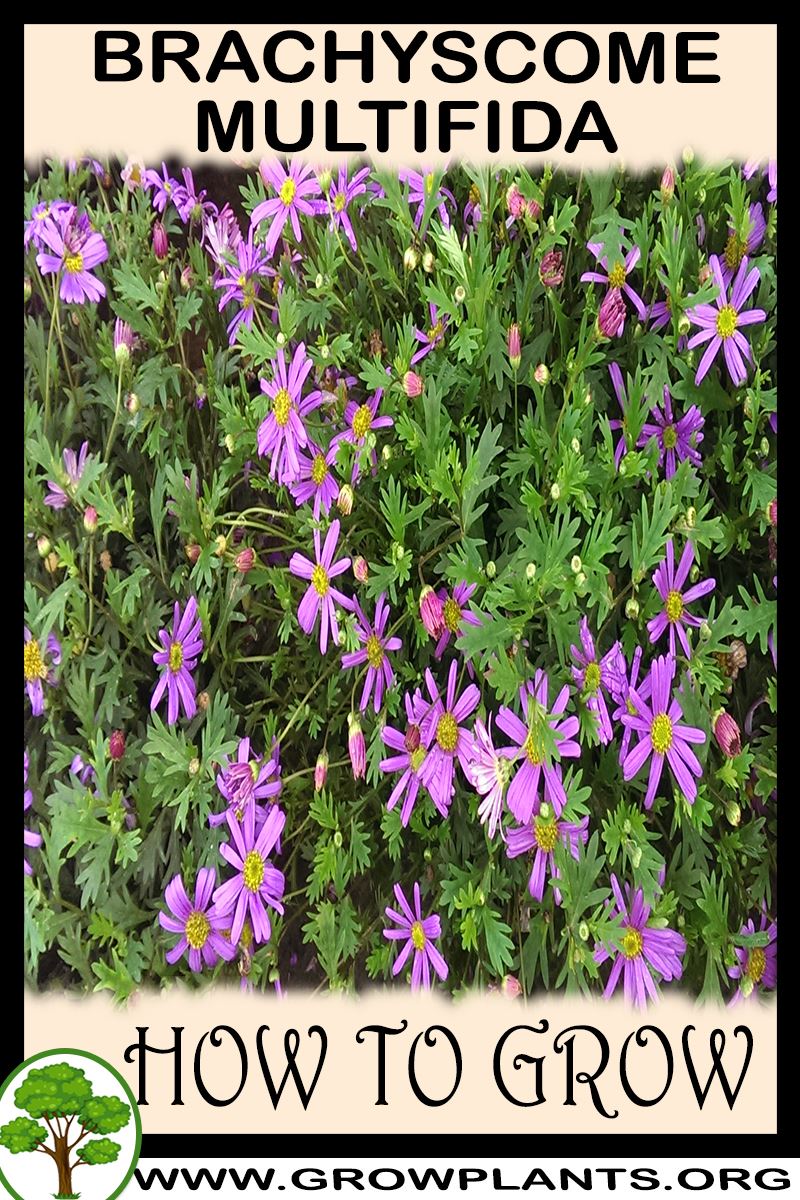
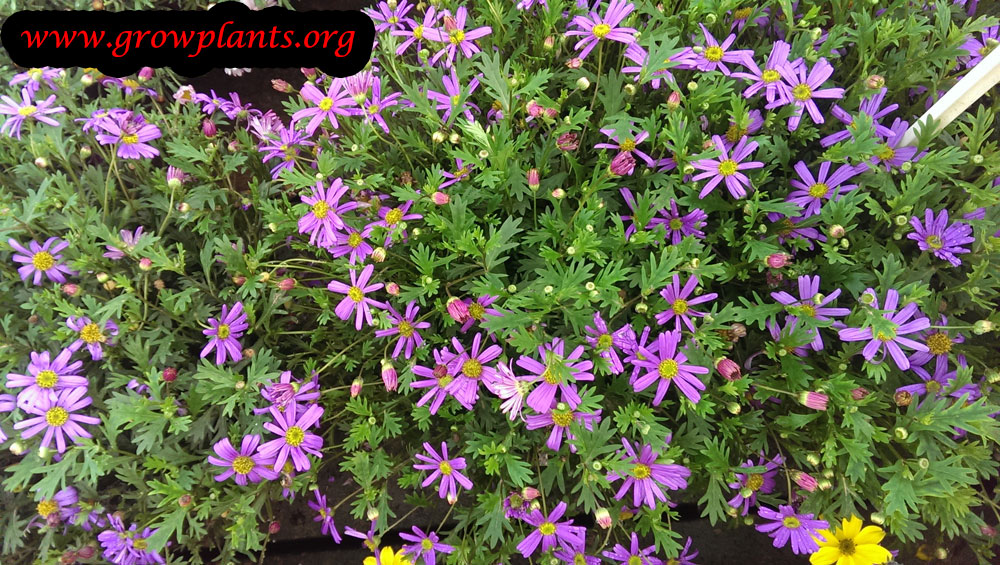
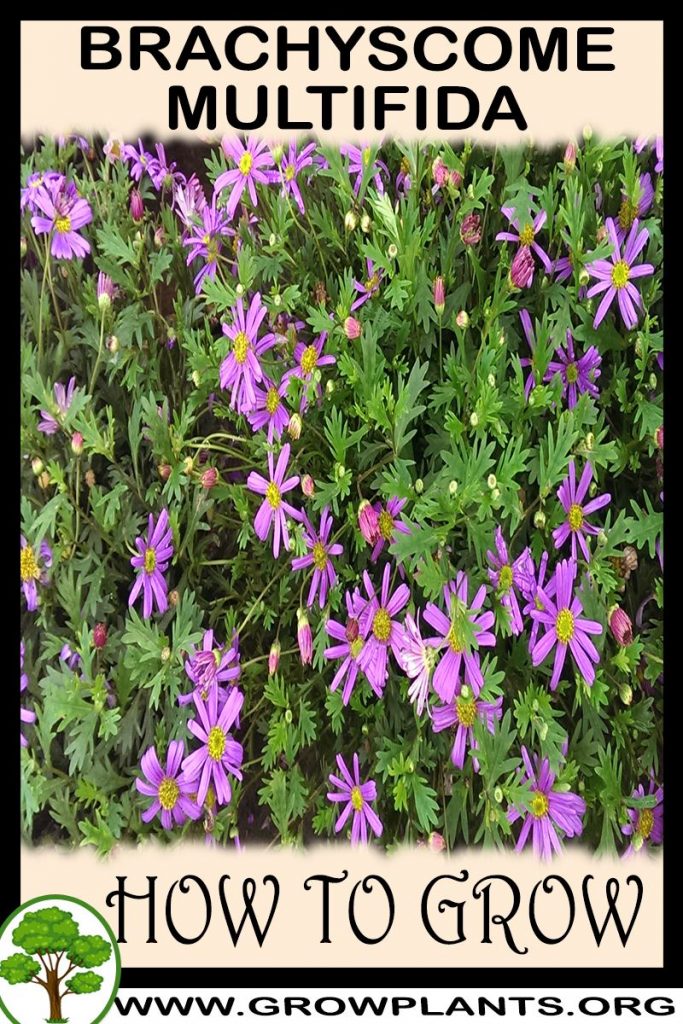
- Flower Characteristics: Daisy-like flowers with 14-20 petals in blue, purple, pink or white (summary only – see the Bloom guide).
Primary Uses & Landscape Value
- Functional & Ornamental Roles: Ornamental groundcover for borders, edging, rockeries, containers and hanging baskets.
Care Guide: Planting, Soil & Watering
Overview: Brachyscome multifida (cut-leaved daisy) is a low, spreading ground-cover perennial (grown as an annual in colder zones) that flowers best in cool weather, in full sun in mild-summer areas or part shade where summers are hot. It wants well-drained soil kept lightly moist – neither bone-dry nor waterlogged.
Quick Care Requirements
| Requirement | Ideal Condition |
|---|---|
| Planting Season | Spring to autumn as a perennial; after the last frost where grown as an annual |
| Growth Rate | Moderate |
| Soil Type | Well-drained soil |
| Water Need | Moderate – keep lightly moist, avoid drying out or waterlogging |
Planting & Establishment
- Best Planting Season: Plant from spring to autumn in mild zones (10b-11), or in late winter to spring after the last frost where it is grown as an annual.
- How to Plant:
- Hole Preparation: Dig a hole the depth of the rootball into loosened soil, spacing plants roughly 20 x 30 cm for ground cover.
- Soil Amendments: Work in a little compost and, on heavy ground, some grit to keep drainage free.
- Planting Depth: Set the crown at soil level so it is neither buried nor left proud.
- Growth Speed & Expectations: Moderate, spreading into a low mat of about 10-40 cm.
Soil, Watering & Drainage Care
- Soil Mix & Drainage Needs: Free-draining soil is best; in containers use a potting mix or peat-and-perlite blend and refresh it every couple of years if kept as a perennial.
- Watering Schedule & Technique:
- Young / Newly Planted: Keep the soil evenly moist while the young plant establishes.
- Established: Water regularly and moderately, letting the surface just dry between waterings – do not let it dry out completely or sit wet.
- Seasonal Adjustments: More in warm, dry spells and less in cool, wet weather.
Climate, Light & Hardiness
Cut-leaved daisy is a mounding, feathery-leaved daisy for mediterranean, subtropical, temperate, or desert gardens that actually prefers cooler weather to bloom well. Light needs shift with climate: full sun where summers are cool and rainy, but half shade where summers run hot and dry.
Quick Climate Specifications
| Climate Zones | Mediterranean, subtropics, temperate, desert |
|---|---|
| USDA Hardiness Zones | Perennial in zones 10b–11; grown as an annual in zones 4–10a |
| Optimal Temp Range | Cool to mild conditions favor best flowering |
| Cold Damage Begins | Approaching freezing |
| Frost Tolerance | Low to moderate |
| Light Conditions | Full sun in cool-summer/rainy climates; half shade in hot-summer (desert) climates |
Sunlight & Light Exposure
Optimal Light Setup
In cool, rainy-summer regions, full sun is required; in hot desert-summer regions, half shade helps the plant avoid heat stress.
Shade & Heat Management
Extreme summer heat (well above roughly 40°C/104°F) suppresses growth and seed germination; afternoon shade helps in the hottest climates.
Temperature Extremes & Hardiness
USDA Hardiness & Regional Limits
Only reliably perennial in the mildest, frost-free zones (10b–11); elsewhere (zones 4–10a) it is grown as an annual since winter cold kills it back.
Cold Damage & Winter Protection
Frost damages or kills top growth; in its perennial range, a sheltered, well-drained site helps it come through winter.
Wind, Humidity & Microclimate
Humidity Preferences
Appreciates consistently moist (not waterlogged) soil and does best with some humidity or regular moisture; very hot, dry conditions slow it down.
Growing in Pots, Balconies & Indoors
Cut-leaf daisy (Brachyscome multifida) is a low, spreading sun daisy that is superb in pots, troughs and hanging baskets – not a houseplant, but tailor-made for a sunny balcony, and a compact clump can flower on a very bright sill.
Quick Details
- Container Size: A small-to-medium pot, about 5-15 L (1.5-4 gal), or a trough/hanging basket, for a plant of 10-40 cm (4-16 in)
- Indoor Suitability: Not a room houseplant (the grower marks it “No”); a bright, sunny windowsill is the only realistic indoor spot
- Best Spot: Full sun where summers are cool and rainy; light afternoon shade in hot, desert-like summers
- Soil & Drainage: Potting mix or peat soil with perlite – the grower’s own recommendation; must drain freely
- Watering in Pots: Keep the soil lightly moist – do not let it dry out or waterlog it (the grower’s own note)
Indoors & On the Windowsill
- Houseplant limits: The grower marks it as not a room houseplant; without strong light it grows thin and shy to flower.
- Windowsill growing: On the sunniest sill, with several hours of direct light, a compact plant will trail and bloom.
- Overwintering: It is tender to hard frost; where winters are cold, bring the pot into a bright, cool, frost-free spot and grow it on as a short-lived perennial.
On a Balcony or Patio
- Light & wind: A brilliant edge or basket plant for a sunny balcony; in very hot, exposed spots give a little afternoon shade. Small pots and baskets dry fast, so check moisture daily in heat.
- Practicalities: Its trailing habit spills nicely over the rim; ensure baskets drain freely so roots never sit wet.
Choosing the Pot, Soil & Long-Term Care
- Pot & drainage: A 5-15 L pot or basket with strong drainage holes; skip a standing water saucer to avoid root rot.
- Potting mix: Potting mix or peat soil with perlite, as the grower advises – light and free-draining.
- Feeding: Potted plants leach nutrients with every watering, so feed lightly and regularly through the growing season for continued flowering.
- Repotting: The grower notes that when kept on as a perennial the soil should be switched every two years; pot up or refresh the mix then.
Grower’s Container Tip
- Soil & moisture: Use a potting mix or peat soil with perlite; if you keep it on as a perennial, change the soil every two years, and keep the soil lightly moist at all times – never let it dry out and never overwater.
Fertilizing & Feeding
As a fine-textured groundcover daisy, Brachyscome multifida is a light feeder – it flowers reliably from modest, steady nutrition rather than heavy fertilizing, and container specimens need more attention than garden-grown plants because their soil is refreshed less often.
Quick Fertilizing Specs
| Feeding Level | Light |
|---|---|
| Main Nutrient Priority | Balanced feeding to support foliage and its long cool-season bloom |
| Best Feeding Period | Through active growth in the cooler part of the growing season when the plant is heading toward bloom |
| Organic Options | Peat-based potting mix with perlite for container plants; compost worked into garden soil |
| Soil pH | Tolerant of a range of well-drained soils |
Feeding by Growth Stage
Establishment after planting
Help new plants or rooted cuttings settle in and build a spreading root system
| Nutrient direction | Balanced feeding at modest strength to support root and foliage development |
|---|---|
| Timing | From planting through the first phase of active growth |
| Frequency | Light, infrequent feeding while roots establish |
| Fertilizer types | Balanced complete fertilizer at a light rate, Compost or organic matter worked into the bed or potting mix |
| Precautions | Keep feeding light while roots are still developing; overfeeding a fine-rooted groundcover can do more harm than good |
Active growth and cool-season bloom
Sustain the mounding foliage and support the plant’s characteristically long bloom period
| Nutrient direction | Balanced feeding, kept light, to support flowering without pushing excess soft growth |
|---|---|
| Timing | Through the main growing and flowering period, which in this species runs longest during cooler weather |
| Frequency | Feed sparingly through active growth and bloom |
| Fertilizer types | Balanced complete fertilizer suited to flowering groundcovers, applied at a light rate |
| Routine trace nutrients | iron |
| Precautions | Container-grown plants dry out and use up soil nutrients faster than garden plants, so refresh the potting mix periodically rather than relying only on fertilizer |
Hot-weather slowdown
Let the plant coast through its least active period without pushing new growth
| Nutrient direction | None – withhold fertilizer while growth and flowering slow in hot conditions |
|---|---|
| Timing | During the hottest part of the summer in warm-summer regions |
| Frequency | No feeding at this stage |
| Fertilizer types | No feeding at this stage – allow the plant to rest through heat stress |
| Precautions | Do not fertilize a heat-stressed plant; focus on adequate watering instead and resume feeding once growth picks back up |
Nutrient Deficiency Signs & Corrections
General pale or yellowish foliage and reduced flowering vigor
| Possible causes | Nitrogen deficiency, Depleted container potting mix that has not been refreshed, Poor drainage limiting root uptake |
|---|---|
| Appears first on | Older foliage lower in the mound |
| What to check | Age and condition of the potting mix if container-grown, Drainage in the root zone, Recent feeding history |
| Possible correction | Refresh potting mix or amend garden soil with compost, then resume light balanced feeding |
Yellowing between the veins of new leaves while veins remain green
| Possible causes | Iron deficiency, Alkaline soil or potting mix reducing iron availability, Waterlogged roots |
|---|---|
| Appears first on | Newest leaves |
| What to check | Soil or potting mix pH, Drainage and watering routine, Whether only new growth is affected |
| Possible correction | Improve drainage, correct pH where confirmed by testing, and apply a chelated iron product per its label if needed |
Wilting, yellowing, and weak growth that resembles a nutrient deficiency but does not respond to feeding
| Possible causes | Overwatering and root rot, Poorly drained soil or a container without adequate drainage, Nutrient deficiency |
|---|---|
| Appears first on | Whole plant, often starting with lower stems and leaves |
| What to check | Soil moisture and drainage before assuming a nutrient problem, Root condition if the plant can be inspected, Container drainage holes |
| Possible correction | Improve drainage and adjust watering first; only address feeding once root health is confirmed |
Pruning, Training & Seasonal Maintenance
Brachyscome multifida (cut-leaved/Swan River daisy) is a low, spreading, soft-stemmed groundcover with fine, needle-like foliage. It tolerates a fairly hard shear, and this plant’s own facts point to summer as the pruning window with a bloom season running through autumn/winter in warm climates (or spring–autumn where colder) – consistent with a plant that flowers on new growth and benefits from a rejuvenating cut once the main bloom flush is finishing. The main objective is preventing the mat from thinning or going bare in the middle as it spreads outward, and encouraging a fresh, dense flush of foliage and repeat bloom.
Quick Pruning & Maintenance Specs
| Pruning Tolerance | Moderate–High (shears well when kept within soft growth) |
| Primary Pruning Window | Summer, after the main bloom flush tapers |
| Secondary Maintenance Window | Light deadheading through the bloom season |
| Typical Frequency | One rejuvenating shear per year plus ongoing deadheading |
| Main Objective | Prevent a thin, bare-centered mat; refresh foliage and rebloom |
| Young Plant Priority | Light tip-pinching to thicken the spreading mat early |
| Mature Plant Priority | Shear back by roughly one-third in summer; deadhead in between |
| Best Tool Type | Precision snips / hand shears |
| Avoid Heavy Pruning During | Extreme summer heat (above the ~40°C stress point noted in its own sowing facts) and winter cold |
Pruning by Plant Age & Size
Newly Established
Let new plants spread and fill in; pinch tips lightly to encourage a denser mat rather than cutting back hard while the plant is still establishing.
Young / Formative
No formal training applies to this trailing groundcover – formative work is limited to tip-pinching so the mat thickens evenly instead of running thin and stringy.
Mature / Established
Shear back by about one-third in summer as the main bloom flush tapers, to renew dense foliage and trigger a fresh round of flowering; deadhead lightly in between.
Seasonal Pruning Schedule
Summer Canopy Management
Objective: refresh a mat that has thinned, sprawled, or gone bare in the center after its main flowering flush. Remove: about one-third of the growth across the whole mat, staying within leafy stems. Do not remove: so much growth that bare soil is left fully exposed in hot, dry conditions. Expected response: a dense new flush of fine foliage and renewed flowering. Flowering impact: positive – this cut is what resets the plant for its next bloom cycle rather than costing flowers.
Ongoing Sanitary
Objective: tidiness and continued bloom between the summer shear. Remove: spent flower heads and any dead patches in the mat. Do not remove: healthy unopened buds.
Structural Pruning & Training
- Canopy density: as a spreading groundcover it can thin and open up in the middle over time – the summer shear directly counters this.
- Height & spread control: shearing keeps the low ~10–40cm habit tidy and stops the mat from becoming stringy at the edges.
Special Growth to Remove
- Spent flower heads (deadhead to prolong bloom).
- Dead or thinned-out sections of the mat.
Container & Small-Space Pruning
Brachyscome does well in containers (per facts, with soil refreshed every two years if grown as a perennial there). In a pot, shear a little more conservatively than in the ground since a container mat has less reserve to regrow from, and keep the soil evenly moist rather than letting it dry out or stay soggy after cutting back.
Tools
Precision snips or hand shears for both the summer rejuvenation cut and routine deadheading – stems are soft and fine, so loppers or a saw are never appropriate.
Tool Hygiene & Disease Risk
Routine: clean tools are sufficient. Watch for aphids (per this plant’s own pest facts) on the soft new growth that follows the summer shear.
Cut Placement & Technique
Shear evenly across the mat to just above a leafy node; deadhead individual spent flowers back to the next leaf pair rather than pulling stems, which can uproot this shallow-spreading plant.
Post-Pruning Care
Keep the soil lightly moist after the summer shear to support regrowth, avoiding both drought stress and waterlogging (per its own care facts); no extra feeding is needed to push regrowth.
Common Pruning Mistakes
- Never shearing back and letting the mat go thin, stringy, and bare-centered.
- Shearing hard during extreme summer heat rather than as the flush tapers.
- Pulling rather than cutting spent flowers, which can dislodge the shallow-rooted mat.
When NOT to Prune
Avoid a hard shear during periods of extreme heat (above roughly 40°C, per this plant’s own sowing-heat note) or during winter cold, when the plant cannot push reliable new growth.
Recommended Tools (by task)
- precision_snips – for deadheading and light shaping through the bloom season.
- hedge_shears – for the once-a-year all-over rejuvenation shear across the spreading mat, which is faster and more even than snipping stem by stem.
Propagation Guide
Brachyscome multifida is easy to start from stem cuttings, which root reliably and are the surest way to keep a named colour form (such as Amethyst or Break o’Day) true to type; seed is also a practical, well-documented route, especially for the plain species. Overall propagation difficulty is easy either way.
Quick Propagation Specs
| Best Propagation Method | Stem cuttings |
| Alternative Methods | Seed |
| Propagation Difficulty | Easy |
| Seed True-to-Type | Cultivar-dependent – the plain species is reasonably true from seed, but named colour cultivars are best kept true by cuttings |
| Vegetative True-to-Type | Yes |
| Best Propagation Season | Spring to autumn as a perennial in hardiness zone 10b–11; late winter (frost-free) or spring (after last frost) as an annual |
| Seed Germination Time | 1–4 weeks |
| Cutting Rooting Time | Not specified by the source; generally roots within a few weeks |
| Seed Sowing Depth | 0.5–1 cm (0.25–0.5 inches) |
Growing from Seed
Seed Handling & Viability
Store saved seed in a dry, dark location.
Sowing Season
Possible spring to autumn in hardiness zone 11; spring to summer in zone 10b (avoiding the hottest days if summer runs above roughly 40°C/104°F); as an annual, spring is best, with early summer also possible.
Sowing Depth & Orientation
Sow 0.5–1 cm (0.25–0.5 inches) deep, spacing plants around 20 x 30 cm (8 x 12 inches).
Germination Conditions
Needs full sun, warm conditions, humidity and moist soil; water an average amount.
Germination Time
1–4 weeks.
Seedling Care
Keep the soil moist and grow seedlings on in full sun.
Stem Cuttings
Cutting Type
Stem cuttings; also useful for reproducing named colour cultivars true to type.
Best Timing
Within the plant’s active growing period – spring to autumn where grown as a perennial, or from late winter/spring where grown as an annual.
Rooting Setup
Can be rooted in water, but the water needs changing at least once a day; better results come from rooting directly in soil kept moist at all times, in half shade with high humidity around the cutting.
Rooting Hormone
Not specified as necessary; the site notes cuttings and stem care are not hard, so hormone is optional rather than required.
Rooting Time
Not specified by the source; generally roots within a few weeks under the moist, humid conditions described above.
Bloom & Flower Guide
Quick Details
- Bloom Season: Autumn and winter in warm climates; spring to autumn in cooler areas
- Time to First Bloom: Fast – a quick, free-flowering ground cover that blooms within its first season
- Flower Appearance: Small daisy flowers with fourteen to twenty petals in blue, purple, pink or white around a yellow center
- Edibility: Ornamental; not eaten
Detailed Blooming Overview
The cut-leaved daisy is a fine-textured carpeting plant that covers itself in dainty daisies for a long season. It is excellent for edging, containers and spilling over walls, and bees appreciate the steady supply of small blooms.
Flower Characteristics
- Masses of small, many-rayed daisies over soft, feathery, deeply cut foliage.
Bloom Care & Thinning
- Managing the bloom: Largely self-cleaning; a light shear after the main flush rejuvenates the plant and brings on more flowers.
- Pollination: Pollinated by bees.
Pests, Diseases & Troubleshooting
Overview: The cut-leaf / Swan River daisy (Brachyscome multifida) is a low, fine-foliaged Australian daisy-family groundcover grown for its long display of small daisies. It is fairly easy but soft, so it attracts the usual tender-plant pests – aphids, thrips, whitefly, spider mites and slugs/snails – and suffers powdery mildew and root/stem rot in humid or poorly drained conditions. Good drainage, airflow, sun and a trim to keep it dense prevent most trouble.
Quick Troubleshooting Overview
| Issue / Pest | Main Symptom | Primary Solution |
|---|---|---|
| Aphids | Clustered soft new tips, distortion, honeydew | Hose off; insecticidal soap |
| Thrips | Silvery flecking and distorted buds/flowers | Sticky traps, remove affected buds; spinosad if severe |
| Slugs & snails | Holes and slime trails on soft foliage | Traps, barriers, iron-phosphate pellets |
| Spider mites | Fine stippling and webbing in hot dry air | Hose foliage; miticidal oil |
| Powdery / downy mildew | White powder or greyish mould on leaves | Improve airflow; avoid overhead water |
| Root / stem rot | Wilting, blackened collapse in wet soil | Sharp drainage; do not overwater |
Common Pests & Management
- Aphids (Myzus persicae / Aphis spp.):
- Symptoms: Colonies of small green or black aphids on the soft new shoots, buds and flower stalks, causing curling, distortion, sticky honeydew and sooty mould, and sometimes transmitting viruses.
- Prevention & Control: Blast off with water and encourage the ladybirds, hoverflies and lacewings the daisies attract. Treat persistent colonies with insecticidal soap or an evening neem application on the tips and undersides. Avoid over-feeding with nitrogen.
- Thrips (Frankliniella / Thrips spp.):
- Symptoms: Tiny slender insects that rasp the foliage and flowers, causing silvery flecking, streaking and stippling, distorted buds and discoloured, deformed blooms; they can also spread viruses.
- Prevention & Control: Monitor with blue or yellow sticky traps and remove infested buds and spent flowers. Encourage predatory mites and lacewings. For outbreaks use spinosad or insecticidal soap in the evening, repeating to catch new generations.
- Slugs and snails (Gastropoda):
- Symptoms: Irregular holes and ragged edges in the soft foliage and flowers, with tell-tale slime trails; damage appears overnight, worst on lush growth in damp weather.
- Prevention & Control: Hand-pick at night, use beer traps and copper or grit barriers, keep mulch from staying soggy, and apply iron-phosphate pellets (pet- and wildlife-safer) where pressure is high.
- Spider mites (Tetranychus urticae):
- Symptoms: Fine pale stippling, a dull bronzed cast and delicate webbing on the fine foliage in hot, dry, sheltered conditions.
- Prevention & Control: Keep plants well watered and hose the foliage in hot spells to knock mites back and remove dust; encourage predatory mites. Treat outbreaks with insecticidal soap or a miticidal oil, covering the undersides.
- Whitefly (Trialeurodes vaporariorum):
- Symptoms: Clouds of tiny white flies rising from the foliage when disturbed, clustering on leaf undersides with honeydew and sooty mould; common under cover and in warm, sheltered spots.
- Prevention & Control: Hang yellow sticky traps and encourage parasitic wasps (Encarsia). Hose off and treat persistent infestations with insecticidal soap or horticultural oil on the undersides, repeating regularly to break the cycle.
Diseases & Fungal Issues
- Powdery mildew (Erysiphe / Golovinomyces spp.):
- Symptoms: A white powdery film on leaves and stems in warm, humid or crowded, still conditions, causing yellowing and reduced vigour.
- Treatment & Management: Space and trim plants for airflow, grow in sun, and water at the base rather than overhead. Remove affected growth; a sulfur or potassium-bicarbonate spray controls a bad outbreak.
- Downy mildew (Peronospora / Plasmopara spp.):
- Symptoms: Yellowish blotches on the upper leaf surface with a greyish, downy mould beneath in cool, wet, humid weather, causing leaf yellowing and drop.
- Treatment & Management: Improve airflow and drainage, avoid overhead watering, and remove infected leaves. A copper-based fungicide can help in a persistently wet spell, but ventilation and dry foliage are the real controls.
- Root, stem & crown rot (Rhizoctonia / Pythium / Phytophthora):
- Symptoms: Wilting, blackening and collapse at the stem base and roots in wet, heavy or overwatered soil – a common way these soft groundcovers are lost, and they can also fade after a soggy winter.
- Treatment & Management: Grow in free-draining soil, avoid overwatering and waterlogging, and do not crowd. Remove collapsed plants and improve drainage before replanting. Prevention through drainage is the only reliable control.
- Botrytis (grey mould) (Botrytis cinerea):
- Symptoms: Greyish fuzzy mould and browning on spent flowers and soft foliage in cool, damp, still conditions.
- Treatment & Management: Deadhead spent flowers, improve air movement, and avoid overhead watering. Remove mouldy material promptly; fungicide is rarely needed if sanitation and airflow are good.
Growing Difficulties & Abiotic Problems
- Root rot from overwatering / poor drainage:
- Cause & Symptoms: As a fine-rooted, sun-loving daisy, Brachyscome quickly rots and collapses in wet, heavy or overwatered soil, especially over a damp winter.
- Correction Strategy: Plant in free-draining soil or raised beds and containers with good drainage, water only when the surface dries, and site in full sun. Err on the dry side once established.
- Legginess & woody, bare centres:
- Cause & Symptoms: Over a season the mat can become open, leggy and woody in the middle, with fewer flowers, especially if unpruned or grown too soft.
- Correction Strategy: Shear or trim the plant back by up to a third after the main flush to promote dense, floriferous regrowth; divide or replace tired old plants, which are naturally short-lived.
- Frost tenderness / short life:
- Cause & Symptoms: Brachyscome is frost-tender and often behaves as a short-lived perennial or annual in colder areas, dying back or out over winter.
- Correction Strategy: Grow as an annual or overwinter under protection in cold climates, take cuttings to renew stock, and provide a sheltered, sunny, well-drained position.
- Reduced flowering in shade / over-rich soil:
- Cause & Symptoms: In too much shade or over-fertile soil the plant makes soft leafy growth and flowers poorly, and becomes more disease- and pest-prone.
- Correction Strategy: Give it full sun and lean-to-moderate soil for the best flowering and toughest growth, and avoid heavy nitrogen feeding.
What Helps – Products & Tools
Keep insecticidal soap and horticultural / neem oil for aphids, mites and whitefly, spinosad for thrips, blue/yellow sticky traps for thrips and whitefly, and iron-phosphate slug pellets for slugs and snails. For disease, a sulfur or potassium-bicarbonate spray handles powdery mildew and a copper fungicide covers downy mildew in wet spells – but airflow and sharp drainage are the real fixes. Spray oils in the evening to protect the many pollinators these daisies attract.
Varieties & Cultivars
- Amethyst: Light to pale purple flowers.
- Breakoday: Purple flowers.
- Surdaisy white: White flowers.
- White delight: White flowers in daisy shape.
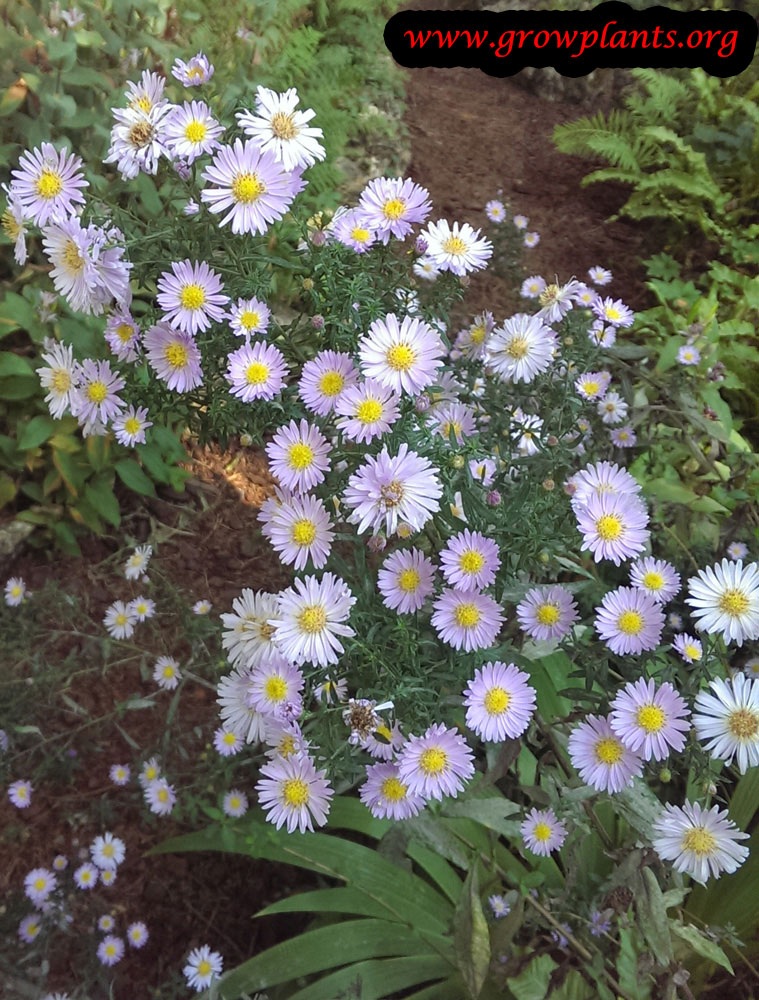
- Blue and white mix: Mostly blue flower with some white.