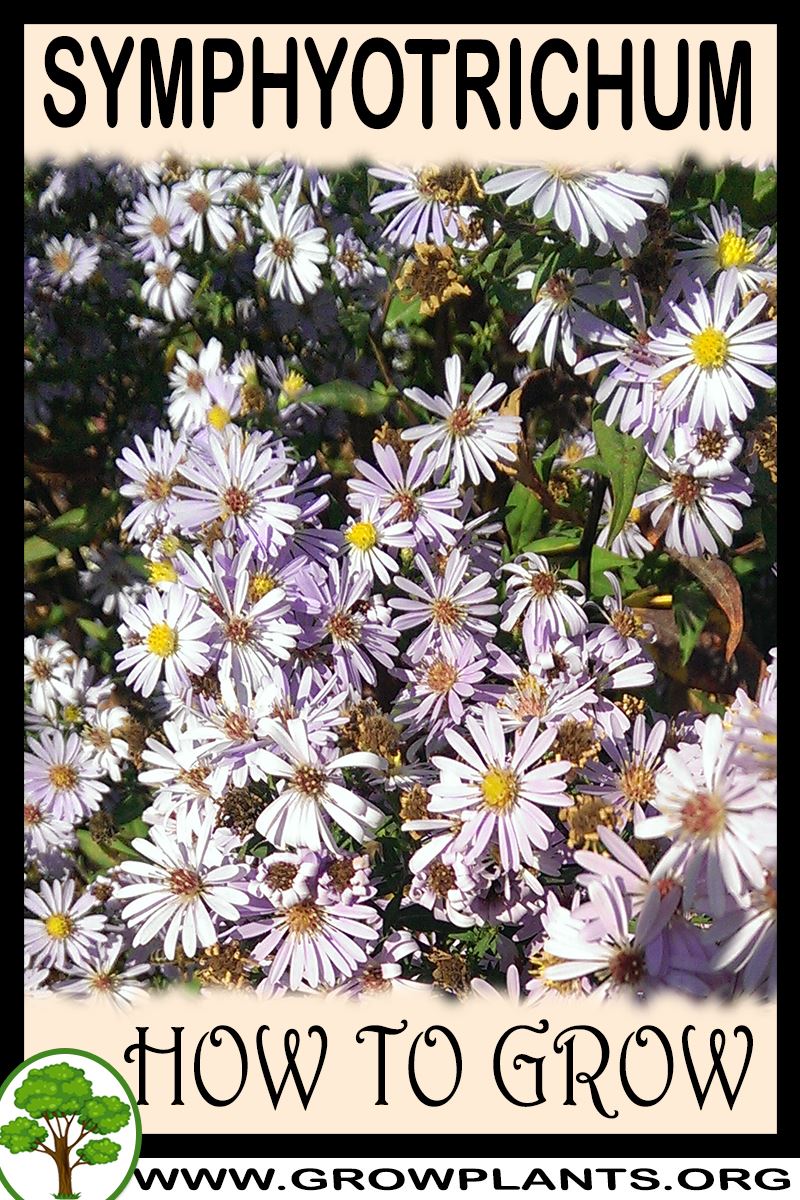
Plant Profile & Key Characteristics
Overview: Aster (Symphyotrichum) is a clump-forming herbaceous perennial 0.6-1.2 m tall, grown for its daisy-form late-season flowers. It is a drought-tolerant, pollinator-friendly cut flower for temperate to subtropical gardens.
Quick Specifications
| Specification | Attribute |
|---|---|
| Plant Type / Life Cycle | Perennial (some grown as annual) |
| Foliage Type | Semi-evergreen (herbaceous; evergreen in mild climates) |
| Mature Size | 0.6-1.2 m (24-48 in) |
| Growth Rate | Moderate to fast |
| Toxicity | Non-toxic |
| Hardiness | USDA zones 3-9 |
Growth Form & Structure
- Height & Spread: 0.6-1.2 m (24-48 in); grows well in a container.
- Growth Habit & Form: Clump-forming herbaceous perennial that can spread and become invasive.
- Lifespan & Maturity: Fast to establish; spreads over time and is long-lived.
Anatomy & Physical Features
- Leaves & Foliage: Green linear leaves.
- Flower Characteristics: Daisy-form flowers in purple, white, pink or magenta with yellow, orange or pink centres, late in the season (full detail in the Bloom guide).
Primary Uses & Landscape Value
- Functional & Ornamental Roles: Ornamental border and cut flower; drought tolerant and attracts pollinators.
Care Guide: Planting, Soil & Watering
Overview: Symphyotrichum (aster) is a fast- to moderate-growing perennial that thrives in full sun to light shade with moist yet well-draining soil. It is drought-tolerant once established but flowers best with steady, moderate watering, and it dislikes soggy ground.
Quick Care Requirements
| Requirement | Ideal Condition |
|---|---|
| Planting Season | Spring to summer |
| Growth Rate | Fast to moderate |
| Soil Type | Moist, fertile, well-draining soil |
| Water Need | Low to moderate – keep evenly moist in growth, drought-tolerant once settled |
Planting & Establishment
- Best Planting Season: Plant in spring or summer once the soil has warmed; suited to hardiness zones 3–9, it establishes readily during the growing season.
- How to Plant:
- Hole Preparation: Dig a hole about twice the width of the root ball and the same depth, loosening the surrounding soil.
- Soil Amendments: Work compost or well-rotted organic matter into the backfill to enrich the soil and help it hold moisture while draining freely.
- Planting Depth: Set the plant at the same level it grew in its pot, keeping the crown at the surface; do not bury the stems.
- Growth Speed & Expectations: Growth is fast to moderate, and clumps spread readily – lift and divide every few years to keep them vigorous, as they can be invasive.
Soil, Watering & Drainage Care
- Soil Mix & Drainage Needs: Provide fertile, moisture-retentive but well-draining soil; in containers use a good potting mix with free drainage so the roots stay moist but never waterlogged.
- Watering Schedule & Technique:
- Young / Newly Planted: Water regularly after planting to keep the soil evenly moist while the clump establishes.
- Established: Water moderately, letting the surface dry between waterings; established plants tolerate short dry spells.
- Seasonal Adjustments: Water more in hot, dry weather, especially around flowering; reduce watering as growth dies back in autumn and winter.
Climate, Light & Hardiness
Symphyotrichum is a cold-hardy, drought-tolerant fall-blooming perennial for temperate, Mediterranean, and subtropical gardens, grown in full sun to half shade. It tolerates a wide range of winter cold without special protection.
Quick Climate Specifications
| Climate Zones | Temperate, Mediterranean, subtropical |
|---|---|
| USDA Hardiness Zones | Zones 3–9 |
| Frost Tolerance | High |
| Light Conditions | Full sun / half shade |
Sunlight & Light Exposure
Optimal Light Setup
Full sun gives the sturdiest stems and heaviest bloom; half shade is tolerated with somewhat looser growth.
Temperature Extremes & Hardiness
USDA Hardiness & Regional Limits
Reliably hardy through zones 3–9; top growth dies back with autumn frost as part of its normal cycle and the crown resprouts each spring.
Growing in Pots, Balconies & Indoors
Symphyotrichum (New World aster) is a tall, late-flowering perennial covered in daisies – a border and large-pot plant, not a houseplant, and one that needs full sun and a natural winter rest outdoors.
Quick Details
- Container Size: A roomy pot, about 20-35 L (5-9 gal), for a clump of 0.6-1.2 m (24-48 in)
- Indoor Suitability: Not a houseplant (the grower marks it “No”) – a full-sun hardy perennial
- Best Spot: Full sun to half shade; fullest sun gives the sturdiest, most floriferous plants
- Soil & Drainage: Rich, free-draining mix that holds some moisture
- Watering in Pots: Low to moderate – keep evenly moist in growth; it dislikes drying out at flowering
Indoors & On the Windowsill
- Houseplant limits: The grower marks it as not suitable indoors. As a tall hardy perennial it needs full outdoor light and a cold winter dormancy that a warm room cannot provide.
- Overwintering: Hardy – it dies back and reshoots each spring; the pot stays outside, sheltered in the hardest frost.
On a Balcony or Patio
- Light & wind: A glorious autumn balcony plant for a big, sunny pot; the tall stems flop in shade or wind, so give full sun and some shelter or support. Pots dry faster than the border – check them in summer.
- Practicalities: A larger, heavier pot keeps it stable; ensure water drains away freely.
Choosing the Pot, Soil & Long-Term Care
- Pot & drainage: A 20-35 L pot with strong drainage holes; skip a standing water saucer to avoid root rot.
- Potting mix: A rich, well-aerated organic mix that still drains.
- Feeding: Feed through the growing season, as potted perennials leach nutrients with watering.
- Repotting: Refresh the mix and divide the clump every couple of years to keep it vigorous; cut back after flowering.
Fertilizing & Feeding
A light to moderate feeder: balanced feeding through spring supports strong stems, with only occasional feeding needed through the late-season bloom and none once the plant goes dormant.
Quick Fertilizing Specs
| Feeding Level | Light to moderate feeder |
|---|---|
| Main Nutrient Priority | Balanced feeding with adequate nitrogen; extra phosphorus is not needed for bloom |
| Best Feeding Period | Spring through the late-summer and autumn bloom period |
| Organic Options | Compost or aged organic matter worked into the bed |
| Reduce/Stop Feeding | Hold off once bloom finishes and the plant heads into dormancy |
| Micronutrients | Rarely an issue in average garden soil; correct only if diagnosed |
| Soil pH | Tolerates a wide range but prefers evenly moist, well-drained soil |
Feeding by Growth Stage
Spring growth
Build strong stems and foliage as new growth emerges in spring.
| Nutrient direction | A balanced, complete fertilizer with adequate nitrogen supports steady spring growth. |
|---|---|
| Timing | As new shoots emerge in spring. |
| Frequency | A light feeding at the start of spring growth is usually enough. |
| Fertilizer types | A balanced complete fertilizer, Compost or aged organic matter worked into the bed |
| Precautions | Avoid heavy nitrogen, which can produce tall, weak stems prone to flopping. |
Summer-to-autumn bloom
Support the late-season flush of daisy-like flowers prized in the garden and as cut flowers.
| Nutrient direction | Continue light, balanced feeding through summer; more phosphorus is not needed to increase bloom – steady balanced nutrition is what drives flowering. |
|---|---|
| Timing | Through summer into the autumn bloom period. |
| Frequency | Light, occasional feeding through bloom is enough. |
| Fertilizer types | A balanced complete fertilizer used sparingly |
| Precautions | Ease off nitrogen as buds form so stems stay sturdy and don’t flop, especially for cutting. |
Dormancy after bloom
Let the plant die back and rest through winter without pushing new growth.
| Nutrient direction | None – withhold fertilizer once bloom finishes and the plant heads into dormancy. |
|---|---|
| Timing | After autumn bloom and through winter. |
| Frequency | No feeding at this stage; resume only when spring growth restarts. |
| Fertilizer types | No feeding at this stage; hold off fertilizing until spring growth resumes. |
| Precautions | Do not fertilize dormant plants; cut back dead stems instead. |
Nutrient Deficiency Signs & Corrections
Older leaves fade to pale green or yellow and stems stay short with reduced budding.
| Possible causes | low available soil nitrogen, nitrogen leaching from moist, well-drained soil, thin, low-organic-matter garden soil |
|---|---|
| Appears first on | older, lower leaves |
| What to check | recent feeding history, soil organic matter, watering and drainage |
| Possible correction | Apply a balanced fertilizer with nitrogen and work in organic matter, then water evenly. |
Interveinal yellowing on older leaves while the veins themselves stay green.
| Possible causes | low soil magnesium, heavy potassium feeding competing with magnesium uptake, leaching in light, well-drained soils |
|---|---|
| Appears first on | older, lower leaves |
| What to check | soil magnesium status, how potassium-heavy recent feeding has been, soil texture and leaching |
| Possible correction | Apply a labeled magnesium source such as Epsom salt or a dolomitic amendment and rebalance overall feeding. |
Weak, floppy stems and browning along older leaf margins, with smaller or fewer flowers.
| Possible causes | low soil potassium, potassium leaching from sandy or heavily watered soil, a feeding routine skewed heavily toward nitrogen |
|---|---|
| Appears first on | margins of older leaves |
| What to check | recent fertilizer balance, soil texture and drainage, overall stem strength and flower size |
| Possible correction | Switch to a more balanced fertilizer rather than a nitrogen-heavy one, correcting the overall feeding mix. |
Pruning, Training & Seasonal Maintenance
Symphyotrichum (aster) is a herbaceous perennial that dies back to a basal crown each year, so it tolerates being cut hard to the ground without any loss of long-term structure. Because it flowers on the current season’s growth, cutting back after bloom finishes in autumn/winter does not remove next year’s flowers; the main uses of pruning are shaping the clump earlier in the season and tidying spent growth once flowering (summer/autumn) is over.
Quick Pruning & Maintenance Specs
| Pruning Tolerance | High – resprouts freely from the crown |
| Primary Pruning Window | Autumn/Winter, after bloom finishes and top growth browns |
| Secondary Maintenance Window | Late spring – early summer, for shaping/pinching |
| Typical Frequency | One full cutback per year, plus occasional deadheading through bloom |
| Main Objective | Remove spent top growth, limit self-seeding, keep the clump compact |
| Young Plant Priority | Pinch stem tips once or twice in late spring for bushier growth |
| Mature Plant Priority | Post-bloom cutback; lift and divide congested clumps every 2–3 years |
| Best Tool Type | Hand snips or light bypass secateurs (soft to semi-fibrous stems) |
| Avoid Heavy Pruning During | Active budding and bloom (summer/autumn) |
Pruning by Plant Age & Size
Newly Established
In the first season, avoid pinching or cutting back hard; just remove any damaged stems so the new crown can establish undisturbed.
Young / Formative
From the second year, pinch the stem tips once or twice between late spring and early summer (stop well before flower buds form) to build a bushier, more self-supporting clump. No staking or structural training is needed – this is purely a pinching regime.
Mature / Established
Once flowering is fully spent in autumn/winter, cut the whole clump back to a few centimetres above the crown. Every 2–3 years, lift and divide the clump in early spring as its main form of renewal.
Seasonal Pruning Schedule
Late Spring – Early Summer: objective is a compact, sturdier clump; pinch the top 2–5cm of each stem once or twice; don’t remove more than the tips; the response is more, shorter flowering stems and less flopping, with no reduction in bloom.
Summer/Autumn (bloom period): objective is tidiness and limiting self-seeding, since this genus is flagged as invasive/aggressive here; remove spent flower heads only, cutting back to the next leaf; don’t cut into green, still-flowering stems.
Autumn/Winter (post-bloom): objective is seasonal clean-up; once foliage has browned, cut all top growth back near the crown; don’t disturb the crown or roots; fresh growth resumes from the base next spring with no impact on next year’s flowering.
Special Growth to Remove
Spent flower stems – deadhead through the bloom season to tidy the clump and reduce self-seeding, since this genus is noted as invasive/aggressive in cultivation. There are no suckers or woody watersprouts to manage on this herbaceous perennial.
Container & Small-Space Pruning
In a pot, pinch more assertively in late spring since the restricted root run already limits vigour; one or two pinches keeps a container clump proportional. Refresh the potting mix at the same time as the autumn/winter cutback if the clump has filled its container.
Tools
Precision snips or light bypass secateurs for pinching and deadheading soft stems; bypass secateurs also handle the coarser base-of-clump material at the autumn cutback.
Tool Hygiene & Disease Risk
Routine – clean, sharp tools are sufficient. No systemic disease is flagged for this genus in the available data, though aphids (a noted pest) often cluster on fresh regrowth after cutting back, so check new shoots.
Cut Placement & Technique
Pinch just above a leaf node to direct branching. Deadhead by cutting the flower stem back to the next leaf or bud. The final autumn cutback should leave a short stub above the crown rather than cutting flush into it.
Heavy Pruning & Rejuvenation
The annual autumn/winter cutback is itself the routine hard prune for this plant, and it fully resprouts from the crown. If a clump thins out or goes bare in the centre after several years, division – not heavier pruning – is the fix.
Post-Pruning Care
No feeding is needed after the autumn cutback going into dormancy. Watch spring regrowth for aphid clusters. Water new growth normally; there is no wound care needed on herbaceous stems.
Common Pruning Mistakes
Pinching too late in the season, which delays or removes the current year’s bloom; cutting the autumn clump down in a way that damages the crown; skipping deadheading on a genus flagged as invasive/self-seeding and letting it spread further.
When NOT to Prune
Avoid a hard cutback while the plant is actively budding or in bloom (summer–autumn); wait until flowering is fully spent.
Recommended Tools (by task)
- Pinching young stems / deadheading spent blooms: precision_snips – clean, small cuts on soft herbaceous stems.
- Full autumn cutback of the clump: bypass_secateurs – handles the slightly tougher base-of-stem material at season’s end.
Propagation Guide
Symphyotrichum asters are most reliably increased by dividing established clumps or by rooting basal stem cuttings in spring, since many garden asters are hybrids or named cultivars whose seed will not reproduce the parent exactly. Propagation by division, cuttings, or seed is generally easy for a home gardener.
Quick Propagation Specs
| Best Propagation Method | Division of the clump |
| Alternative Methods | Basal or stem cuttings; seed (species types) |
| Propagation Difficulty | Easy |
| Seed True-to-Type | Variable – species may come fairly true, hybrids and named cultivars usually do not |
| Vegetative True-to-Type | Yes |
| Best Propagation Season | Spring for division and cuttings; spring or autumn for sowing |
| Seed Germination Time | Usually a few weeks at room temperature; a month of cold, moist stratification often improves and evens out germination |
| Cutting Rooting Time | Typically a few weeks under warm, humid conditions |
| Germination Temperature | Around 18–21°C (65–70°F) |
| Seed Sowing Depth | Surface-sow or barely cover – the fine seed germinates best with some light |
Growing from Seed
Seed Handling & Viability
Seed is small and lightweight; keep it cool and dry if not sowing right away.
Dormancy & Pre-Sowing Treatment
Fresh seed of hardy species often germinates without treatment, but about a month of cold, moist stratification is commonly used to improve and even out germination from seed that has been stored dry.
Sowing Season
Sow in spring after stratification, or outdoors in autumn so winter cold does the stratifying naturally.
Sowing Depth & Orientation
Surface-sow or cover only very lightly.
Germination Conditions
Keep the seed bed consistently moist at cool room temperature; germination can be uneven across a batch.
Seedling Care
Grow seedlings on in bright light and pot up once they have a couple of true leaves; expect some variability in flower color from open-pollinated or hybrid seed.
Stem Cuttings
Cutting Type
Basal shoots taken low on the plant in spring, or soft tip cuttings from non-flowering growth.
Best Timing
Spring, as new growth emerges and before flower buds form.
Cutting Preparation
Take a 7–10 cm (3–4 inch) piece, strip the lower leaves, and cut just below a node.
Rooting Setup
Insert into a moist, free-draining cutting mix and keep the humidity high until roots form.
Rooting Hormone
Not required, but a rooting hormone can speed rooting and make it more even.
Rooting Time
Usually within a few weeks under warm, humid conditions.
Division, Offsets, Pups & Suckers
Asters form spreading, often vigorous clumps and are easiest to increase by lifting and dividing in early spring or right after flowering. Replant only the vigorous outer sections with good roots and discard the older, woody center. Dividing every year or two keeps plants vigorous and helps manage their naturally spreading, potentially invasive habit.
Bloom & Flower Guide
Quick Details
- Bloom Season: Summer into autumn
- Time to First Bloom: Typically blooms in its first season, filling out in following years
- Flower Appearance: Daisy-form heads with purple, white, pink or magenta rays around a yellow, orange or pink centre
- Edibility: Ornamental only – not eaten
Detailed Blooming Overview
Asters are among the great late-season performers, carrying sheets of daisy flowers just as many summer plants fade. Each head is a ring of slender ray florets around a contrasting central disc, and a well-grown clump can be smothered in bloom from summer well into autumn. Their timing makes them one of the most valuable nectar sources for late bees and butterflies.
Flower Characteristics
- Classic daisy heads with rays in purple, white, pink or magenta.
- Central disc in yellow, orange or pink, giving each flower a bright eye.
- Borne in profusion on branching, leafy stems.
Bloom Care & Thinning
- More and better bloom: Pinch the growing tips in early summer for bushier, more floriferous plants.
- Upkeep: Deadhead spent heads and divide congested clumps every few years to keep them vigorous.
- Pollination: A magnet for bees and butterflies late in the season.
Bloom Health & Protection
- Powdery mildew: A common white film on leaves and flower stems in humid, crowded conditions; good spacing and airflow, or a sulfur-based fungicide, keeps it in check.
- Aphids on buds: Sap-suckers can cluster on flower buds; a strong water jet or an insecticidal soap or neem oil usually clears them.
Pests, Diseases & Troubleshooting
Overview: Asters (Symphyotrichum) are hardy daisy-family perennials whose defining problems are foliar – powdery mildew above all – together with sap-sucking aphids and mites and the leafhoppers that spread aster yellows. Good spacing, airflow, division and mildew-resistant selections prevent most trouble, keeping sprays to a minimum on these pollinator-friendly plants.
Quick Troubleshooting Overview
| Issue / Pest | Main Symptom | Primary Solution |
|---|---|---|
| Powdery mildew | White powdery film on leaves, lower-leaf drop | Resistant cultivars, airflow, thin and divide clumps |
| Aphids | Curled sticky new growth, clustered insects | Water blast, insecticidal soap, encourage beneficials |
| Spider mites | Fine stippling and webbing in hot dry spells | Rinse, avoid drought stress, miticidal soap |
| Lace bugs | Pale stippled leaves, dark specks beneath | Insecticidal soap on undersides, tolerate light damage |
| Aster yellows | Yellowed, distorted, greened deformed flowers | Rogue infected plants, control leafhoppers, weed |
| Flopping / legginess | Tall stems splay open, bare bases | Pinch early, divide, site in full sun, avoid excess N |
Common Pests & Management
- Aphids (Macrosiphoniella, Uroleucon, Myzus spp.):
- Symptoms: Dense clusters of soft green, brown or blackish insects on shoot tips, flower buds and leaf undersides; growth curls, becomes sticky with honeydew, and sooty mould follows.
- Prevention & Control: Dislodge with a firm water spray, conserve lady beetles, lacewings, hoverflies and parasitic wasps, and use insecticidal soap on heavy colonies. Avoid excess nitrogen and broad-spectrum sprays that harm the pollinators asters are grown to support.
- Spider mites (Tetranychus urticae):
- Symptoms: Fine pale stippling and a dull bronzed look with fine webbing on leaf undersides, worst in hot, dry, drought-stressed conditions; leaves yellow and drop from the bottom up.
- Prevention & Control: Keep plants watered and mulched to avoid drought stress, hose down foliage to knock off mites, and treat outbreaks with miticidal soap or light horticultural oil on the undersides; conserve predatory mites.
- Lace bugs (Corythucha spp.):
- Symptoms: Pale, finely stippled and bleached upper-leaf surfaces with tiny dark shiny faecal specks and cast skins on the undersides, where the lacy-winged adults and spiny nymphs feed.
- Prevention & Control: Tolerate light damage on this vigorous perennial, encourage predators, and spray insecticidal soap or neem oil onto the leaf undersides where the insects actually feed, repeating as needed.
- Leafhoppers (Macrosteles and others) – aster yellows vector:
- Symptoms: Small wedge-shaped insects that hop and fly readily; their feeding is minor, but they transmit the aster yellows phytoplasma that deforms the plant (see diseases).
- Prevention & Control: Manage weeds that host both leafhopper and pathogen, use floating row cover on valued plantings during peak leafhopper activity, and remove infected plants promptly; controlling the vector is more about limiting disease spread than the feeding itself.
- Slugs and snails:
- Symptoms: Ragged holes and slime trails on young shoots and lower leaves in mild, damp conditions, especially on spring growth.
- Prevention & Control: Use iron-phosphate bait, remove hiding places and debris, and hand-collect after dark; protect emerging shoots, which are most vulnerable.
Diseases & Fungal Issues
- Powdery mildew (Golovinomyces / Erysiphe cichoracearum):
- Symptoms: A white to grey powdery coating spreading over leaves and stems, causing yellowing, browning and early drop of the lower foliage – the signature and most damaging aster disease, worst in crowded, humid, still conditions.
- Treatment & Management: Choose mildew-resistant cultivars, space and divide clumps for airflow, site in full sun, and avoid overhead watering and drought stress. Cut back and destroy infected foliage; a sulphur, potassium-bicarbonate or neem fungicide gives preventive control on susceptible plants.
- Aster yellows (phytoplasma):
- Symptoms: Yellowed, stunted, distorted growth with witches’-brooms and deformed, greenish, sterile flowers that never colour properly; spread by leafhoppers.
- Treatment & Management: There is no cure – dig up and destroy affected plants immediately to stop spread, control the leafhopper vector, and manage broadleaf weeds that harbour the phytoplasma; use row cover on prized plantings.
- Rust (Coleosporium asterum):
- Symptoms: Orange to reddish-brown powdery pustules on leaf undersides with yellow spots above, in humid conditions.
- Treatment & Management: Remove affected leaves and improve spacing and airflow, avoid wetting foliage, and clear debris in autumn; a sulphur fungicide helps where rust is chronic.
- Leaf spots & wilts (Septoria, Alternaria, Fusarium, Verticillium):
- Symptoms: Brown to black leaf spots (Septoria/Alternaria) or yellowing, wilting and vascular browning that kills stems (wilts), often on stressed or overcrowded plants.
- Treatment & Management: Remove spotted leaves and improve airflow for leaf spots; for the soil-borne wilts, rogue affected plants, avoid replanting asters in the same spot, and keep plants vigorous, as there is no cure.
- Grey mould (Botrytis):
- Symptoms: Fuzzy grey mould on flowers and soft tissue in cool, damp, crowded conditions.
- Treatment & Management: Deadhead and remove faded flowers and dead material, improve airflow, and avoid overhead watering late in the day.
Growing Difficulties & Abiotic Problems
- Flopping / legginess:
- Cause & Symptoms: Tall stems splay open and the plant goes bare at the base, especially in rich soil, shade or after a dry spell.
- Correction Strategy: Pinch or cut back the stems by about a third in early growth to promote bushier, self-supporting plants, grow in full sun, divide clumps every few years, and avoid excess nitrogen; stake tall selections if needed.
- Lower-leaf browning / drop:
- Cause & Symptoms: Bare, browned lower stems from drought stress or mildew.
- Correction Strategy: Water evenly and mulch to prevent drought stress, keep air moving, and address mildew early; some lower-leaf loss is normal late in the season.
- Poor flowering:
- Cause & Symptoms: Few blooms in too much shade or over-rich soil.
- Correction Strategy: Grow in full sun in moderate soil, divide overcrowded clumps to restore vigour, and avoid heavy nitrogen that favours leaves over flowers.
- Crown rot in wet winters:
- Cause & Symptoms: Crowns rot and plants fail to return where soil stays wet and cold over winter.
- Correction Strategy: Plant in well-drained soil, avoid waterlogged sites, and divide periodically to keep crowns healthy and vigorous.
What Helps – Products & Tools
Asters are managed mostly by good culture plus soft products: insecticidal soap and light horticultural oil for aphids, mites and lace bugs, iron-phosphate slug bait, and a sulphur, potassium-bicarbonate or neem fungicide for powdery mildew and rust. Row cover limits leafhopper-spread aster yellows. The best ‘products’ are mildew-resistant cultivars, division and spacing.