

Plant Profile & Key Characteristics
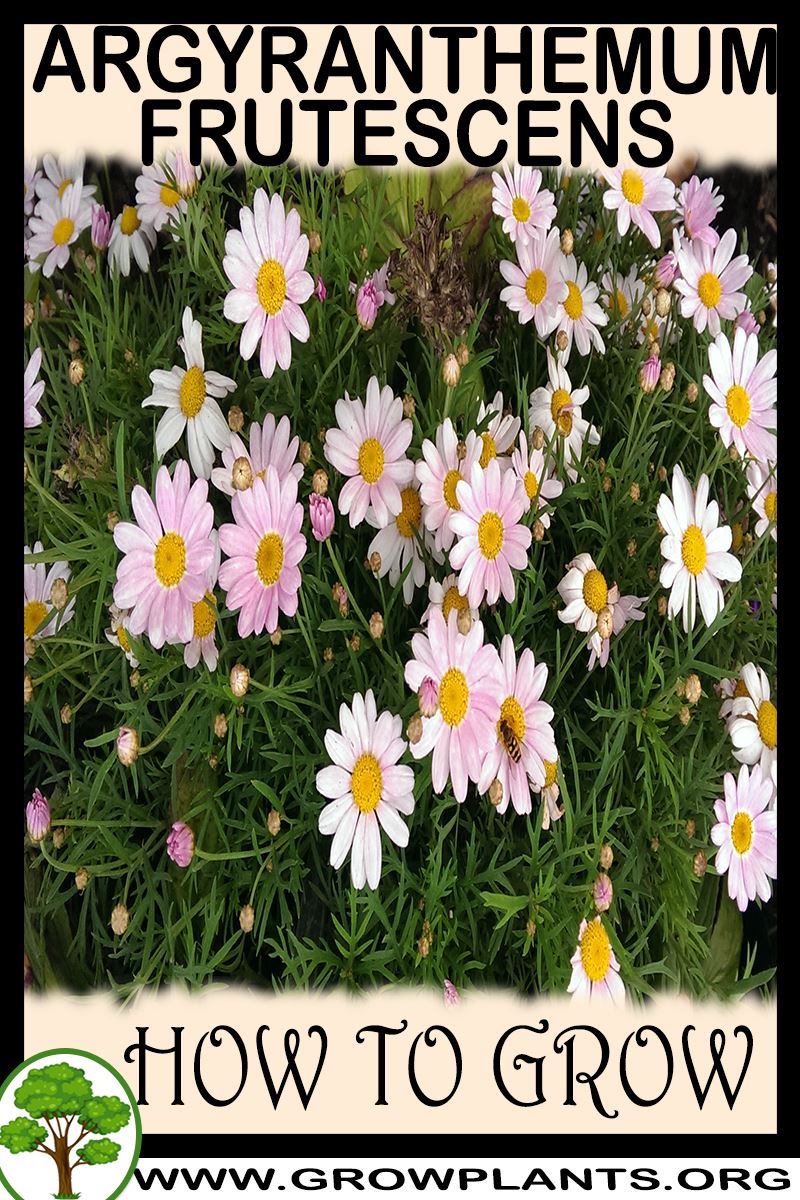
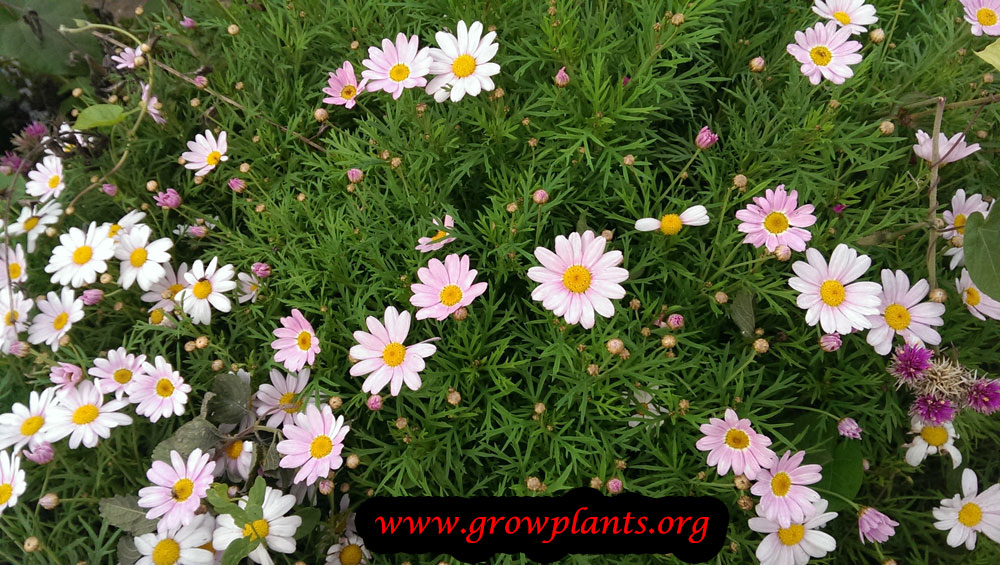
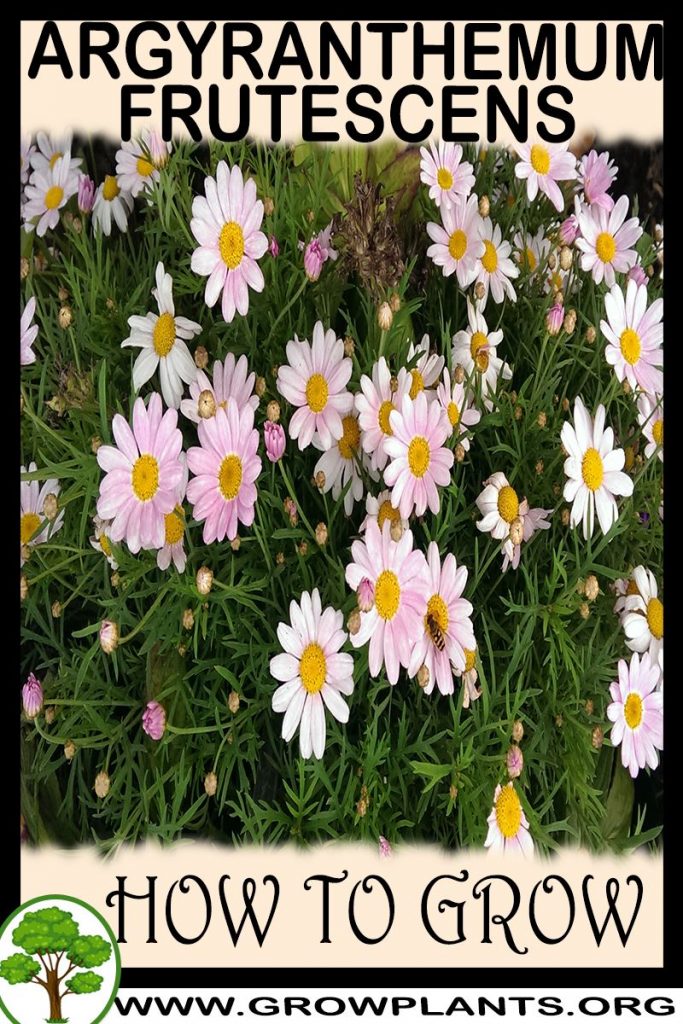
Overview: Marguerite daisy (Argyranthemum frutescens) is an evergreen subshrub growing 30-50 cm, treated as a perennial in mild climates and an annual where winters are cold. It flowers profusely with daisy blooms in many colours and is used as an ornamental groundcover and bedding plant.
Quick Specifications
| Specification | Attribute |
|---|---|
| Plant Type / Life Cycle | Perennial (grown as an annual in cold climates) |
| Foliage Type | Evergreen |
| Mature Size | 30-50 cm tall (12-20 in) |
| Growth Rate | Fast to moderate |
| Hardiness | USDA zones 9 and warmer |
Growth Form & Structure
- Height & Spread: 30-50 cm (12-20 in) tall, forming a rounded mound.
- Growth Habit & Form: Bushy evergreen subshrub with soft, semi-woody stems forming a dense mound.
- Lifespan & Maturity: Short-lived evergreen perennial; fast to reach flowering size, best refreshed every few years.
Anatomy & Physical Features
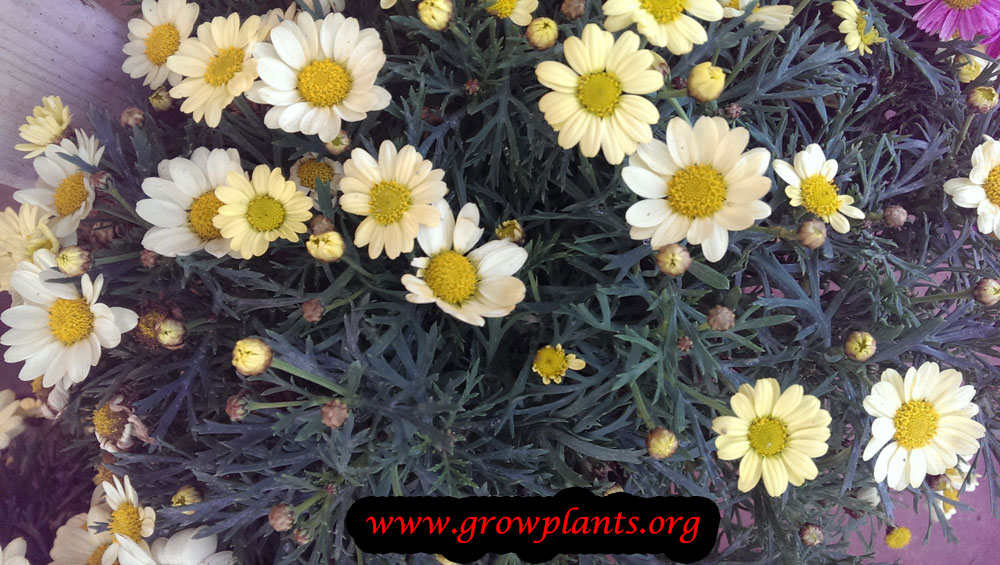
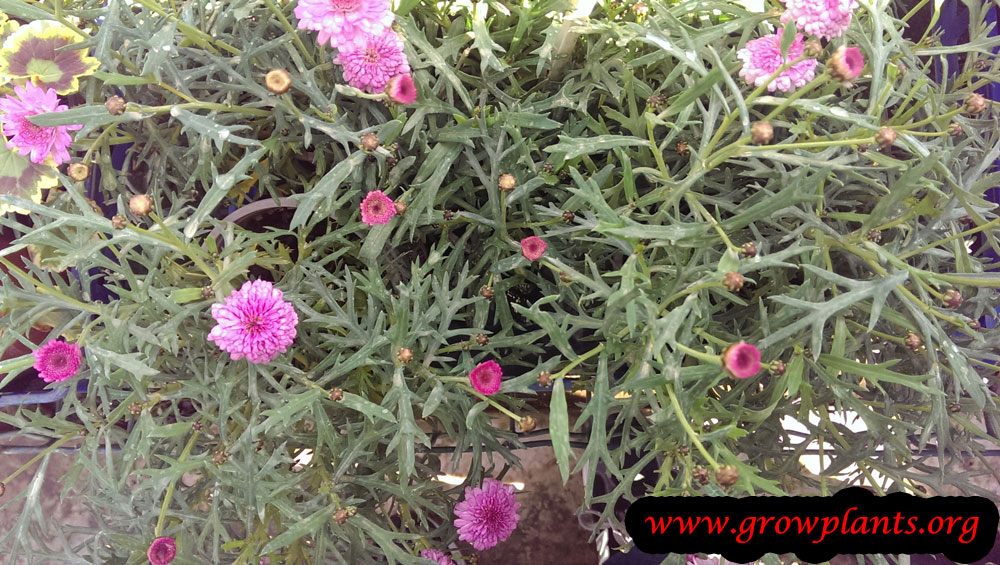
- Leaves & Foliage: Green, deeply lobed leaves shredded like teeth.
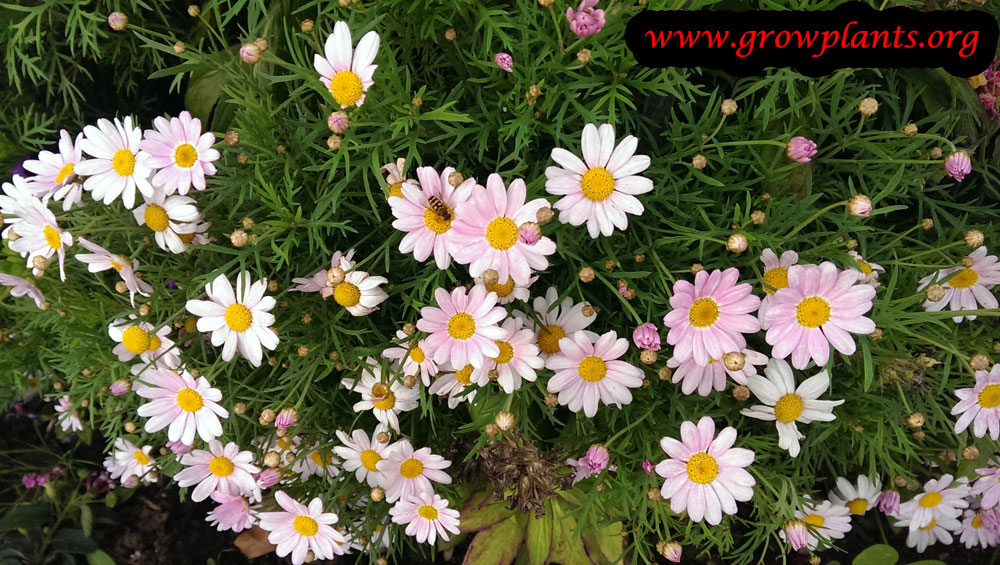
- Flower Characteristics: Daisy flowers in yellow, white, pink, purple or red, in single or double forms.
Primary Uses & Landscape Value
- Functional & Ornamental Roles: Ornamental bedding, border and groundcover plant grown for its long, colourful daisy display in full sun; can spread and become invasive in mild climates.
Care Guide: Planting, Soil & Watering
Overview: The marguerite daisy is a free-flowering sun-lover that prefers light, well-drained soil and moderate moisture. It blooms best in full sun and dislikes soggy roots.
Quick Care Requirements
| Requirement | Ideal Condition |
|---|---|
| Planting Season | In spring, summer or autumn |
| Growth Rate | Fast |
| Soil Type | Light, well-draining |
| Water Need | Moderate; keep lightly moist, letting the surface dry between waterings |
Planting & Establishment
- Best Planting Season: Plant in spring, summer or autumn in a warm, sunny position.
- How to Plant:
- Hole Preparation: Dig a hole a little wider than the root ball and loosen the soil in a free-draining, sunny spot.
- Soil Amendments: Work in some compost to enrich light soil, and add grit to heavy ground for better drainage.
- Planting Depth: Set the root ball level with the surface and keep the crown at soil level.
- Growth Speed & Expectations: A fast grower forming a rounded mound 30-50 cm (12-20 in) and flowering generously.
Soil, Watering & Drainage Care
- Soil Mix & Drainage Needs: Give it light, well-drained soil; sharp drainage keeps the roots healthy and prevents rot.
- Watering Schedule & Technique:
- Young / Newly Planted: Keep the soil lightly moist while the plant establishes.
- Established: Water moderately, letting the surface dry between waterings, and deep-water in dry spells to keep it blooming.
- Seasonal Adjustments: Water more in summer heat and reduce in cool or wet weather.
Climate, Light & Hardiness
Marguerite daisy is a mild-climate, full-sun subshrub native to warm coastal conditions, at its best in tropical, Mediterranean, desert, subtropical, or temperate gardens. It is reliably perennial only where winters stay frost-free, becoming an annual anywhere colder.
Quick Climate Specifications
| Climate Zones | Tropics, Mediterranean, desert, subtropics, temperate |
|---|---|
| USDA Hardiness Zones | Zone 9 and warmer as a perennial; grown as an annual in colder zones |
| Optimal Temp Range | Mild, frost-free warmth is preferred; heavy summer heat can slow flowering |
| Cold Damage Begins | Frost and near-freezing temperatures damage foliage and flowers |
| Frost Tolerance | Low |
| Light Conditions | Full sun |
Sunlight & Light Exposure
Optimal Light Setup
Needs full sun for compact growth and continuous flowering; shaded plants become sparse and bloom poorly.
Temperature Extremes & Hardiness
USDA Hardiness & Regional Limits
Persists as a woody perennial subshrub only in frost-free or near frost-free climates (roughly zone 9 and up); anywhere colder it is grown as a warm-season annual.
Frost Sensitivity
Frost-sensitive at any age - even established plants are killed back or killed outright by freezing temperatures.
Growing in Pots, Balconies & Indoors
Marguerite daisy (Argyranthemum frutescens) is a sun-loving, shrubby daisy that flowers for months. In this grower’s record it is marked as neither a houseplant nor a container plant – so its real home is the open ground in full sun, rather than a long-term pot or a room indoors.
Quick Details
- Container Size: The grower does not list it as a container plant – grow it in open ground for best, lasting results
- Indoor Suitability: Not a houseplant – it needs full sun and open air
- Best Spot: Full sun, in the ground
- Soil & Drainage: Free-draining, fertile garden soil
- Watering in Pots: Not recommended for pots by the grower; in the ground, keep evenly moist
Indoors & On the Windowsill
- Houseplant limits: It needs strong, direct sun to flower, so it won’t succeed as a room plant.
- Windowsill growing: Too vigorous and sun-hungry for a sill – grow it outdoors in full sun.
On a Balcony or Patio
- Grower’s guidance: The grower does not mark this as a container plant, so for a healthy, long-lived plant give it a sunny spot in open ground.
- If you do try a pot: As a general practice, marguerites can be used in a large pot for a single sunny season, but expect to plant them out or renew them rather than keep them long-term in a container.
Choosing the Pot, Soil & Long-Term Care
- In the ground: Choose a full-sun position with free-draining, reasonably fertile soil; deadhead regularly to keep the flowers coming.
- Note on containers: Because the grower does not recommend it for pots, treat any container use as seasonal only, with strong drainage and a light, aerated mix.
Fertilizing & Feeding
A moderate feeder: this vigorous, spreading subshrub blooms almost continuously from spring through autumn, and balanced feeding sustains that long flower display – though as a naturally fast-spreading, ground-covering plant it does not need or benefit from heavy feeding.
Quick Fertilizing Specs
| Feeding Level | Moderate feeder |
|---|---|
| Main Nutrient Priority | Balanced feeding to sustain the long bloom season, without pushing this already vigorous, spreading subshrub into excess growth |
| Best Feeding Period | Spring growth through the long spring-to-autumn bloom season |
| Organic Options | Compost worked into the bed at planting |
| Micronutrients | Usually supplied by a complete fertilizer; correct specific issues only when diagnosed |
| Soil pH | Prefers well-drained soil; tolerates a range of pH |
Feeding by Growth Stage
Spring growth and branching
Support fresh foliage and branching growth as the subshrub resumes active growth.
| Nutrient direction | A balanced, general-purpose fertilizer applied at a moderate rate. |
|---|---|
| Timing | Spring as new growth begins. |
| Frequency | A feeding at the start of active spring growth supports the season’s bloom. |
| Fertilizer types | A balanced, general-purpose fertilizer, Compost worked into the bed at planting |
| Precautions | This is a vigorous, spreading grower – avoid overfeeding, which can push even faster spread and floppy growth without adding much to the flower display. |
Extended spring-to-autumn flowering
Sustain the long daisy-flower display that runs from spring through summer and into autumn.
| Nutrient direction | Continue light, balanced feeding to keep the extended bloom cycle going. |
|---|---|
| Timing | Spring through summer and into autumn while flowering continues. |
| Frequency | Occasional light feeding through the long bloom season helps maintain flower production. |
| Fertilizer types | A balanced, general-purpose fertilizer used at moderate rates through the bloom season |
| Precautions | Avoid heavy nitrogen feeding, which favors leafy spread over flowering in this already vigorous grower. |
Winter slowdown or end of cycle
Let growth slow through the coolest part of the year, or let frost end the cycle where grown as an annual.
| Nutrient direction | None – withhold fertilizer while growth is slow or stopped. |
|---|---|
| Timing | Winter in mild climates where the subshrub persists, or after frost where grown as an annual. |
| Frequency | No feeding at this stage. |
| Fertilizer types | No feeding at this stage; resume light feeding when spring growth resumes, or replant where grown as an annual. |
| Precautions | Do not fertilize during winter dormancy or after frost has ended the plant’s growth. |
Nutrient Deficiency Signs & Corrections
Pale leaves and reduced flowering.
| Possible causes | low soil nitrogen, poor sandy soil, an extended period without feeding |
|---|---|
| Appears first on | older, lower leaves |
| What to check | feeding history, soil quality, overall plant vigor |
| Possible correction | Apply a balanced, general-purpose fertilizer. |
Yellowing between veins on new growth.
| Possible causes | high soil pH limiting iron availability, waterlogged or compacted soil restricting root uptake, naturally alkaline soil |
|---|---|
| Appears first on | newest leaves |
| What to check | soil pH, drainage, recent watering pattern |
| Possible correction | Correct soil pH toward neutral, improve drainage, and, if confirmed, apply a chelated iron product per its label. |
Lush, leafy spread with comparatively fewer flowers.
| Possible causes | excess nitrogen from overfeeding, naturally rich soil, insufficient light reducing the flower-to-leaf ratio |
|---|---|
| Appears first on | overall plant habit and spread |
| What to check | recent feeding rate, soil richness, sun exposure |
| Possible correction | Reduce feeding, favor a balanced product, and confirm the planting gets full sun. |
Pruning, Training & Seasonal Maintenance
Argyranthemum frutescens (marguerite daisy) is a fast-growing evergreen subshrub with a woody base and soft, leafy new growth. It tolerates a fairly hard annual cutback, but like other soft Mediterranean-climate subshrubs it resprouts far better from stems that still carry leaves than from bare old wood, so heavy pruning has to be timed and placed carefully. The main objective is preventing the classic marguerite problem of the center going bare and woody while flowering retreats to the outer tips, and keeping up repeat bloom by deadheading. The safest and most effective period for the hard structural cut is the mild dormant-ish winter window given in this plant’s own facts (consistent with its zone 9+ frost-free growing range), with light deadheading and shape-tidying continuing through the spring–autumn bloom season; because flowers form on the current season’s new growth, the winter cutback does not sacrifice the coming season’s bloom – it produces it.
Quick Pruning & Maintenance Specs
| Pruning Tolerance | Moderate–High (tolerates a firm annual cutback; avoid cutting into bare wood) |
| Primary Pruning Window | Winter (mild/frost-free climate, before spring growth flush) |
| Secondary Maintenance Window | Spring through autumn, deadheading after each bloom flush |
| Typical Frequency | One firm winter cutback per year plus ongoing deadheading |
| Main Objective | Prevent a bare, woody center; sustain repeat flowering |
| Young Plant Priority | Pinch tips repeatedly in the first season to build a bushy, multi-stemmed base |
| Mature Plant Priority | Annual winter cutback by roughly one-third to one-half + regular deadheading |
| Best Tool Type | Hand shears / precision snips |
| Avoid Heavy Pruning During | Summer heat and the peak of a flowering flush |
Pruning by Plant Age & Size
Newly Established
Remove only damaged growth in the first season; do not hard-prune a young plant before it has built a full branching framework.
Young / Formative
Pinch the growing tips repeatedly through the first season. Marguerites left unpinched grow tall and single-stemmed with sparse low branching, so this stage is purely bushiness-building rather than a leader/vase system.
Mature / Established
Cut back by roughly one-third to one-half each winter, staying within stems that still hold leaves, to renew compact shape and refresh flowering wood; deadhead through the growing season.
Seasonal Pruning Schedule
Dormant / Winter
Objective: renew a compact, densely branched shape and refresh flowering wood ahead of spring. Remove: roughly one-third to one-half of the current growth, cutting to a point with visible leaves or leaf buds; remove any obviously dead or woody unproductive stems. Do not remove: stems back to completely bare, leafless wood, which may fail to resprout. Expected response: a dense flush of new leafy shoots in spring. Flowering impact: none – this cut is what produces the coming season’s flowering growth.
Ongoing Sanitary
Objective: sustain repeat bloom and tidy appearance through the flowering season. Remove: spent flower heads, cutting to the next leaf node. Do not remove: healthy foliage or developing buds. Expected response: continued flower production instead of the plant shifting energy to seed.
Structural Pruning & Training
- Canopy density / legginess: without an annual cutback this subshrub becomes leggy and hollow in the center, with flowers only at the branch tips – the winter cut directly addresses this.
- Height & spread control: the winter cutback keeps the plant near its mature ~30–50cm size and prevents it from sprawling with its fast/medium growth rate.
Special Growth to Remove
- Spent flower heads (deadhead to sustain bloom).
- Woody, unproductive stems that have stopped flowering well.
Container & Small-Space Pruning
Facts indicate this species is not typically grown in containers/pots, so container-specific advice does not apply here; treat as a garden/bedded groundcover subshrub.
Tools
Precision snips or hand shears for both the winter cutback and season-long deadheading – stems are soft-wooded and thin, so loppers or a saw are never needed.
Tool Hygiene & Disease Risk
Routine: clean, sharp tools are sufficient. Watch for aphids and spider mites (per this plant’s own pest facts) on new post-cutback growth, which is soft and attractive to both.
Cut Placement & Technique
Cut to just above a leaf or leaf bud, never into fully bare wood, since regrowth from old leafless stems is unreliable on this subshrub.
Heavy Pruning & Rejuvenation
A firm annual cutback (about one-third to one-half of growth) is well tolerated and is in fact the standard way to keep this plant from declining, but true rejuvenation into old bare wood is not reliable – a badly overgrown, hollow-centered plant is generally better replaced or restarted from cuttings than hard-cut into leafless wood.
Post-Pruning Care
Water normally after the winter cutback; because this plant is described as fast/medium growing and can become invasive-vigorous (per its own facts), avoid extra feeding that would push even more soft growth than the plant can support structurally.
Common Pruning Mistakes
- Never cutting back and letting the plant go bare-centered and floppy.
- Cutting into completely leafless old wood expecting regrowth.
- Skipping deadheading, which lets the plant shift energy into seed instead of continued flowering.
When NOT to Prune
Avoid a hard structural cutback during summer heat or in the middle of a heavy bloom flush if flowers are wanted for display – save the firm cut for the winter window and use light deadheading in between.
Pruning Troubleshooting
| Problem | Possible Cause | What to Check | Corrective Action |
| Bare, woody center with flowers only at branch tips | Cutback skipped for one or more seasons | How long since the last hard cutback | Resume the annual winter cutback; if severely bare, propagate fresh plants from tip cuttings instead of forcing regrowth from old wood |
| Stems fail to resprout after cutting | Cut made into completely leafless old wood | Whether any leaves/leaf buds remained below the cut | In future, always cut back to a point with live leaves; do not repeat the same low cut on this stem |
| Sparse flowering despite regular pruning | Deadheading not keeping pace, or aphid/mite stress | Presence of spent flowers left in place; underside of leaves for pests | Increase deadheading frequency; treat aphids/spider mites if found |
Recommended Tools (by task)
- precision_snips – for routine deadheading and shaping cuts on soft new growth.
- bypass_secateurs – for the firmer winter cutback through slightly thicker basal stems.
Propagation Guide
Argyranthemum frutescens (Marguerite daisy) is most practically increased from softwood or semi-hardwood stem cuttings, which root easily and are the standard way to reproduce a specific flower colour or form true to the parent; seed is a viable alternative for the species but, as with most garden marguerites, is not needed and won’t guarantee a particular named colour form. Overall propagation is easy.
Quick Propagation Specs
| Best Propagation Method | Softwood/semi-hardwood stem cuttings |
| Alternative Methods | Seed |
| Propagation Difficulty | Easy |
| Seed True-to-Type | Cultivar-dependent – species types reasonably true, named colour cultivars best kept true by cuttings |
| Vegetative True-to-Type | Yes |
| Best Propagation Season | Spring, summer and autumn, matching the plant’s planting season |
| Seed Germination Time | Typically a few weeks |
| Cutting Rooting Time | Usually roots within a few weeks in warm, bright conditions |
| Germination Temperature | Around room temperature, roughly 18–22°C (64–72°F) |
| Seed Sowing Depth | Surface sow or barely cover; the seed is fine |
Growing from Seed
Sowing Season
Sow in spring, in line with the plant’s spring–summer–autumn planting season.
Sowing Depth & Orientation
Sow on the surface and press in lightly rather than burying, since the seed is fine.
Germination Conditions
Keep the medium lightly moist, warm and in bright light.
Germination Time
Typically a few weeks; expect some variability in emergence.
Seedling Care
Grow on in well-drained soil in full sun once established.
Stem Cuttings
Cutting Type
Softwood or semi-hardwood tip cuttings, taken from non-flowering shoots.
Best Timing
Spring through late summer, within the plant’s spring–summer–autumn planting season.
Cutting Preparation
Trim just below a node and remove the lower leaves before inserting.
Rooting Setup
Insert into a well-drained mix, matching the plant’s preference for well-drained soil; keep humid and in bright, indirect light until rooted.
Rooting Hormone
Optional – beneficial for faster, more even rooting but not essential.
Rooting Time
Usually a few weeks under warm, humid conditions.
Bloom & Flower Guide
Quick Details
- Bloom Season: Spring through autumn (much of the year in mild climates)
- Time to First Bloom: Free-flowering – it blooms quickly and almost continuously through the growing season
- Flower Appearance: Classic daisy flowers in yellow, white, pink, purple or red
- Edibility: Ornamental; not eaten
Detailed Blooming Overview
The marguerite daisy is a tireless bloomer, smothering itself in cheerful daisies for months on end. It is ideal for pots and the front of a border, and its long season makes it a steady source of nectar for bees.
Flower Characteristics
- Neat, single to semi-double daisies with a yellow eye, in a soft range of colors.
Bloom Care & Thinning
- Managing the bloom: Deadhead or lightly shear to keep the flush going, and pinch young plants for a bushier shape.
- Pollination: Pollinated by bees.
Pests, Diseases & Troubleshooting
Overview: This is an easy, fast-growing daisy that is largely trouble-free in sun and sharp drainage, but its soft foliage and abundant flowers attract sap-sucking insects, and it is prone to mildews, grey mould and — above all — root rot in wet or heavy soil. Argyranthemum frutescens (marguerite / Paris daisy) is a woody-based perennial daisy that flowers heavily; besides the usual daisy pests it is specifically prone to chrysanthemum white rust and, like its relatives, resents wet feet and stops blooming in extreme heat. Full sun, free drainage and restrained watering prevent nearly every problem.
Quick Troubleshooting Overview
| Issue / Pest | Main Symptom | Primary Solution |
|---|---|---|
| Aphids | Sticky, distorted new growth and buds | Water jet, beneficials, insecticidal soap |
| Thrips | Silvery flecking on leaves and petals | Sticky traps, spinosad, remove old blooms |
| Leaf miners | Pale winding tunnels in leaves | Pick mined leaves, conserve parasitic wasps |
| Whitefly | White clouds when disturbed, honeydew | Yellow sticky traps, insecticidal soap |
| Downy / powdery mildew | Yellow patches or white coating on leaves | Airflow, base watering, sulfur / copper |
| Root rot | Wilting in wet soil, blackened crown | Free drainage, cut watering, raised beds |
Common Pests & Management
- Aphids (Aphis / Myzus / Macrosiphum spp.):
- Symptoms: Clusters of soft green, grey or black aphids on new shoots, buds and flower stems, causing distorted growth, sticky honeydew, sooty mould and, importantly, the spread of plant viruses.
- Prevention & Control: Hose colonies off with water and squash small groups. Encourage ladybirds, lacewings and hoverflies, which thrive around daisies. Where numbers build, use insecticidal soap or neem, focusing on shoot tips and buds; avoid broad-spectrum sprays that kill the aphids’ predators.
- Thrips (Thysanoptera (Frankliniella spp.)):
- Symptoms: Silvery streaking and flecking on leaves and petals, browning or distorted buds, and black frass specks. Thrips also spread tospoviruses, making them more than a cosmetic pest.
- Prevention & Control: Monitor with blue or yellow sticky traps and remove spent blooms where thrips shelter. Encourage predatory mites and minute pirate bugs. Treat hotspots with spinosad or insecticidal soap, targeting buds and growing points.
- Leaf miners (Liriomyza spp.):
- Symptoms: Pale, winding serpentine tunnels mined within the leaves by small fly larvae, giving foliage a scribbled, blotched appearance and reducing vigour when heavy.
- Prevention & Control: Pick off and destroy mined leaves to kill the larvae inside, and hang sticky traps for the adult flies. Conserve the parasitic wasps that naturally control them by avoiding harsh insecticides; spinosad helps in severe cases.
- Whitefly (Trialeurodes / Bemisia spp.):
- Symptoms: Clouds of tiny white moth-like insects that fly up when foliage is disturbed, plus honeydew, sooty mould and weakening of the plant. Worst in warm, sheltered, humid sites.
- Prevention & Control: Use yellow sticky traps to monitor and reduce adults, and encourage Encarsia parasitic wasps and lacewings. Spray insecticidal soap or horticultural oil onto leaf undersides in the evening, repeating to catch new generations.
- Spider mites (Tetranychus urticae):
- Symptoms: Fine pale stippling giving a dull, bleached look, with delicate webbing on leaf undersides during hot, dry conditions; leaves may bronze and drop.
- Prevention & Control: Raise humidity and hose the foliage, avoid drought stress, and protect predatory mites. Insecticidal soap or horticultural oil controls persistent infestations.
- Caterpillars & loopers (Noctuidae):
- Symptoms: Chewed leaves, notched petals and ragged buds, with green or brown caterpillars and dark droppings, especially on lush spring growth.
- Prevention & Control: Hand-pick in the evening and encourage birds and predatory wasps. Spray Bacillus thuringiensis (Bt) for outbreaks; it is selective and safe for bees visiting the flowers.
Diseases & Fungal Issues
- Downy mildew (Peronosporaceae (Plasmopara / Bremia)):
- Symptoms: Yellow, angular patches on the upper leaf surface with a greyish or purplish downy mould beneath, developing in cool, wet, humid weather and causing leaves to yellow and collapse.
- Treatment & Management: Improve air circulation and drainage, water at the base and never in the evening, and remove infected foliage. Space plants well. Copper fungicide gives preventive cover in damp climates where downy mildew recurs.
- Powdery mildew (Golovinomyces cichoracearum):
- Symptoms: A white powdery coating on the upper leaves and stems, worst on crowded plants in warm days with cool, humid nights; leaves yellow and dry out.
- Treatment & Management: Thin and space plants for airflow, cut back crowded growth, and avoid excess nitrogen. Apply sulfur, potassium bicarbonate or neem at first signs; these keep daisies clean without harming beneficials.
- Botrytis (grey mould) (Botrytis cinerea):
- Symptoms: Fuzzy grey-brown mould on ageing flowers, buds and crowded lower foliage in cool, damp, still conditions, with soft rotting of tissue and a dusty spore cloud when disturbed.
- Treatment & Management: Deadhead spent flowers promptly, remove faded and rotting material, and open up the planting for air movement and quicker drying. Avoid overhead watering; where it persists, a targeted fungicide can help in wet spells.
- Root & crown rot (Pythium / Phytophthora / Rhizoctonia):
- Symptoms: Wilting despite moist soil, blackened roots and a soft, collapsing crown, especially in heavy, wet, poorly drained ground — the main killer of these otherwise easy daisies.
- Treatment & Management: Grow in free-draining soil or raised beds, water only when the surface dries, and never let plants sit waterlogged. Remove and destroy rotted plants and improve drainage; no spray replaces good drainage.
- Chrysanthemum white rust (Puccinia horiana):
- Symptoms: Pale yellow-green spots on the upper leaf with distinctive raised buff-to-pinkish-white pustules directly beneath them; a serious, notifiable disease in some regions that can defoliate the plant.
- Treatment & Management: Buy clean, certified stock and inspect leaf undersides regularly. Remove and destroy infected leaves or whole plants immediately, improve airflow, and avoid leaf wetness. Where legal and needed, use an appropriate rust fungicide; in regulated areas report suspected outbreaks.
- Aster yellows (phytoplasma (leafhopper-vectored)):
- Symptoms: Yellowing, stunted, distorted growth with green, deformed or leafy ‘witches-broom’ flowers that fail to colour properly; spread by leafhoppers.
- Treatment & Management: There is no cure — remove and destroy affected plants promptly to stop spread. Control leafhoppers and weedy hosts, and use floating row cover on valuable plantings. Buy healthy stock.
Growing Difficulties & Abiotic Problems
- Root rot from overwatering / wet soil:
- Cause & Symptoms: These South African and Mediterranean daisies evolved in sharp-draining, sunny sites; heavy or constantly wet soil suffocates roots, causing wilting, yellowing and collapse.
- Correction Strategy: Plant in gritty, free-draining soil or raised beds in full sun, water deeply but let the surface dry between times, and ease off in cool, wet weather.
- Poor flowering & legginess:
- Cause & Symptoms: Too little sun, excess nitrogen or lack of deadheading gives lush leaves but few flowers and lax, sprawling growth.
- Correction Strategy: Site in full sun, feed lightly with a balanced (not high-nitrogen) fertiliser, deadhead regularly, and pinch or trim to keep plants compact and blooming.
- Chlorosis in cold, wet soils:
- Cause & Symptoms: Cold, waterlogged or very alkaline soils lock up nutrients and yellow the foliage, often with poor root function underneath.
- Correction Strategy: Improve drainage and warmth, hold off feeding until active growth resumes, and use a balanced feed; chelated iron helps if alkalinity is the cause.
What Helps — Products & Tools
Rely on gentle tools: a water jet and insecticidal soap or neem for aphids, whitefly and mites; spinosad for thrips and leaf-miner outbreaks; blue and yellow sticky traps for monitoring; and sulfur, potassium bicarbonate or neem for powdery mildew, with copper fungicide for downy mildew in damp weather. The decisive control for these daisies is cultural — full sun and sharp drainage to keep root rot away.