![Greenwood Nursery: Live Perennial Plants - Aster ‘Grape Crush’ + Novae‑Angliae - [Qty: 2X Pint Pots] - (Click for Other Available Plants/Quantities)](https://m.media-amazon.com/images/I/61uqre-7MzL._SL160_.jpg)


Plant Profile & Key Characteristics
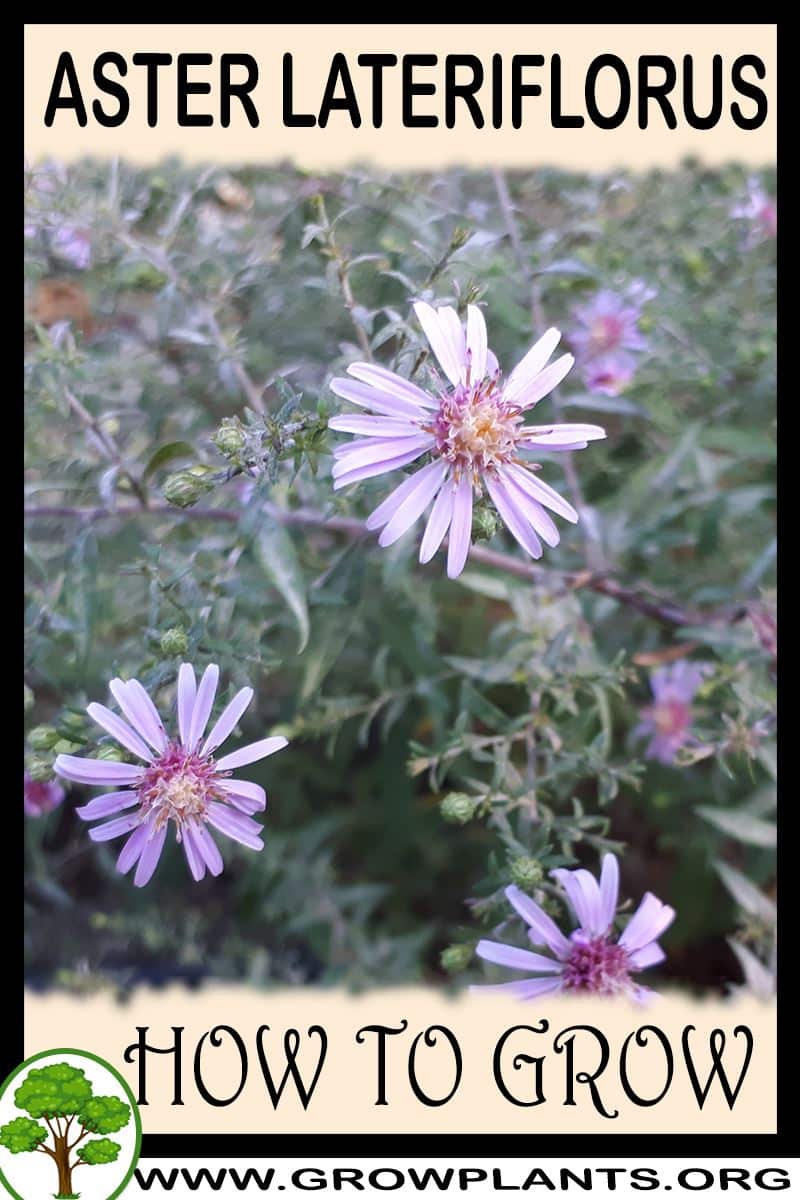
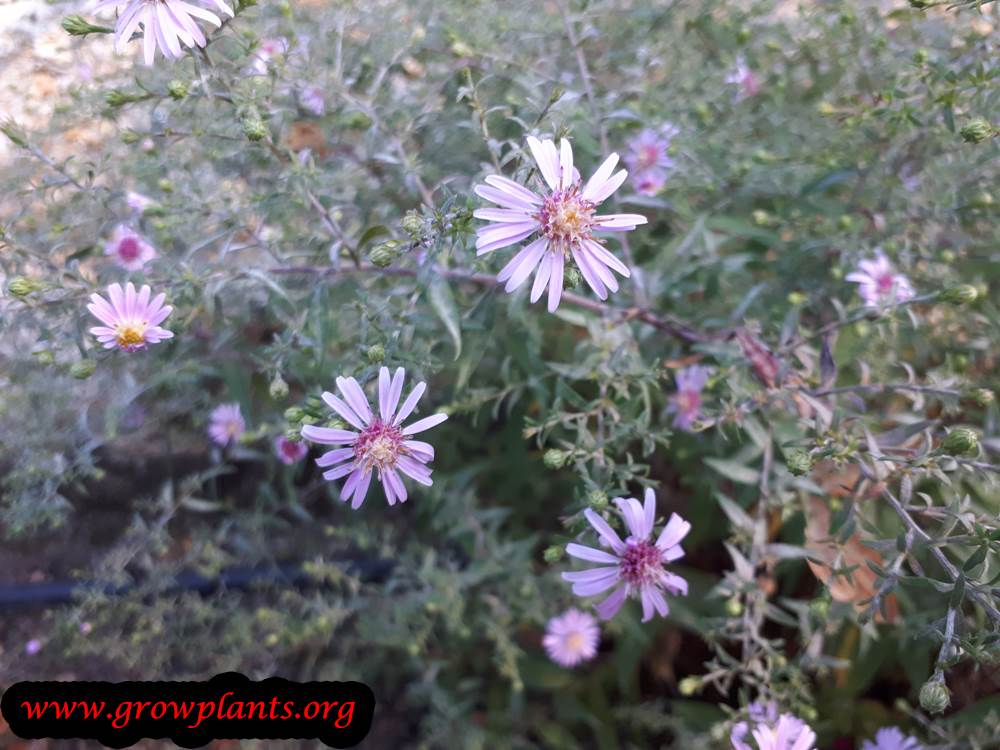
Overview: Calico aster (Aster lateriflorus / Symphyotrichum lateriflorum) is a bushy herbaceous perennial reaching 0.6-1.2 m, smothered in small daisy flowers in late season. It is drought tolerant, spreads by rhizomes, and draws pollinators.
Quick Specifications
| Specification | Attribute |
|---|---|
| Plant Type / Life Cycle | Perennial (sometimes grown as an annual) |
| Foliage Type | Semi-evergreen (deciduous in cold climates) |
| Mature Size | 0.6-1.2 m (24-48 in) tall |
| Growth Rate | Fast to Moderate |
| Root System | Rhizomatous, spreading |
| Toxicity | Non-toxic |
| Hardiness | USDA zones 3-10a |
Growth Form & Structure
- Height & Spread: 0.6-1.2 m (24-48 in) tall as a spreading clump; also grown in containers.
- Growth Habit & Form: Upright, bushy herbaceous perennial branching into masses of small flowers.
- Lifespan & Maturity: Perennial that spreads by rhizomes; blooms from summer into autumn.
Anatomy & Physical Features
- Leaves & Foliage: Small, green, linear to lance-shaped leaves.
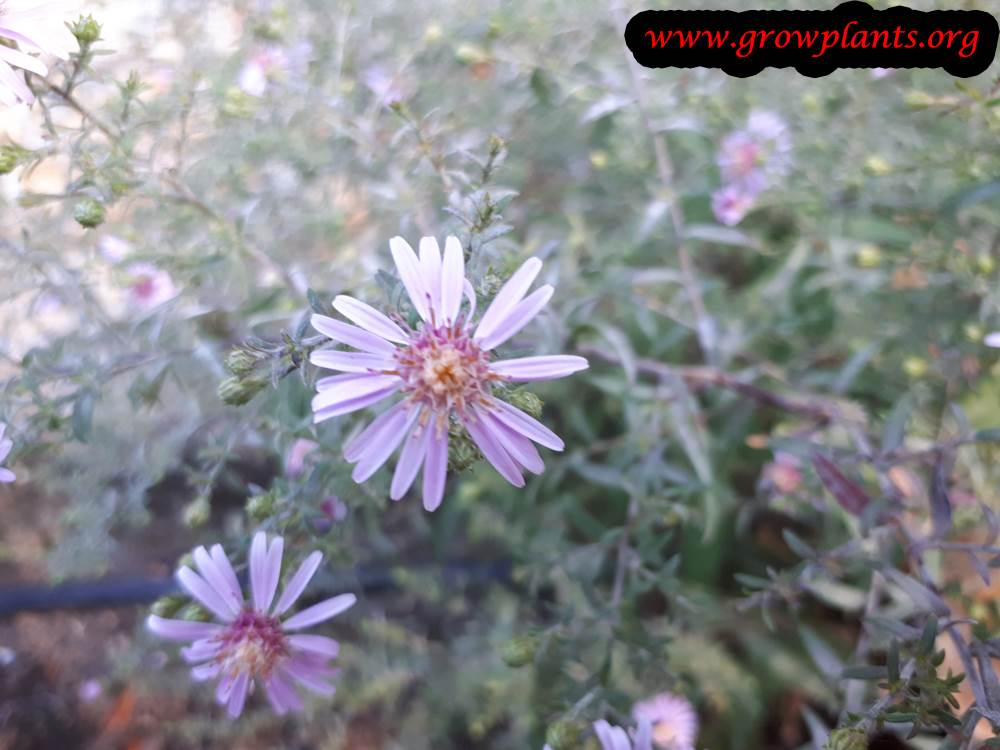
- Flower Characteristics: Small daisy flowers in white, purple or pink with a contrasting purple or pink centre.
Primary Uses & Landscape Value
- Functional & Ornamental Roles: Ornamental border and cottage-garden plant, cut flower, and pollinator/wildlife support.
Care Guide: Planting, Soil & Watering
Overview: Calico aster is a tough, adaptable perennial that grows best in full sun to part shade in moist but well-drained soil. It is fairly drought-tolerant once established and can spread vigorously, so give it room and moderate, even moisture.
Quick Care Requirements
| Requirement | Ideal Condition |
|---|---|
| Planting Season | In spring and summer, after the last frost |
| Growth Rate | Moderate to Fast |
| Soil Type | Moist but well-drained soil; adaptable |
| Water Need | Low to Moderate — tolerates some dryness once established |
Planting & Establishment
- Best Planting Season: Plant in spring or summer once the soil has warmed and frost has passed, giving roots time to establish before winter.
- How to Plant:
- Hole Preparation: Dig a hole about twice the width of the root ball to loosen the surrounding soil.
- Soil Amendments: Work a little compost into the backfill; the plant is not fussy but appreciates decent, free-draining soil.
- Planting Depth: Set the crown level with the soil surface — not buried — then firm and water in.
- Growth Speed & Expectations: Moderate to fast, forming a bushy clump 0.6–1.2 m tall that can spread, so divide or contain it to keep it in check.
Soil, Watering & Drainage Care
- Soil Mix & Drainage Needs: Provide moist, well-drained soil; good drainage prevents rot while a little moisture retention supports steady growth.
- Watering Schedule & Technique:
- Young / Newly Planted: Water regularly to keep the soil evenly moist while young plants establish.
- Established: Water moderately, letting the top of the soil dry between waterings; established plants tolerate short dry spells.
- Seasonal Adjustments: Water more in summer heat; reduce in autumn and winter as growth slows.
Climate, Light & Hardiness
Aster lateriflorus (Calico aster), botanically Symphyotrichum lateriflorum, is a drought-tolerant perennial suited to temperate, Mediterranean, and subtropical climates. It flowers well in full sun to half shade and is winter-hardy across a wide range of cold-winter zones.
Quick Climate Specifications
| Climate Zones | Temperate, Mediterranean, subtropical |
|---|---|
| USDA Hardiness Zones | 3–10a |
| Light Conditions | Full sun to half shade |
Sunlight & Light Exposure
Optimal Light Setup
Full sun to half shade both work well; more sun generally means denser, more floriferous growth.
Temperature Extremes & Hardiness
USDA Hardiness & Regional Limits
Hardy as a perennial across USDA zones 3–10a, tolerating cold winters in temperate climates.
Cold Damage & Winter Protection
Dies back to the crown in cold winters and regrows in spring; may stay evergreen in milder zones.
Wind, Humidity & Microclimate
Dry-Air Tolerance
Drought tolerant once established, though a regular water supply keeps growth denser and more floriferous.
Growing in Pots, Balconies & Indoors
Calico aster (Aster lateriflorus) is a sun-loving perennial and, as the grower notes, not a houseplant – indoor light is far too weak for it. It grows well, though, in a container on a sunny balcony or patio.
Quick Details
- Container Size: A roomy pot suited to its size (about 0.6-1.2 m (24-48 in))
- Indoor Suitability: Not a houseplant – grow it outdoors in good light
- Best Spot: Full sun to half shade
- Soil & Drainage: Well-aerated organic mix – peat or coir with perlite/vermiculite; strong drainage holes
- Watering in Pots: Keep evenly moist – pots dry faster than open ground; avoid waterlogging
Indoors & On the Windowsill
- Not a houseplant: The grower confirms it will not grow indoors – it needs more light than a room provides.
- Windowsill: Even a bright sill is generally too weak for a good display; grow it outside.
On a Balcony or Patio
- Light & wind: Give it the sunniest spot; on exposed balconies stake or shelter taller growth from wind.
- Watering: Walls and paving reflect heat, so the pot dries quickly – check moisture regularly and make sure it drains freely.
Choosing the Pot, Soil & Long-Term Care
- Pot & drainage: A pot with strong drainage holes to match its size; skip a standing-water saucer to avoid root rot.
- Potting mix: A well-aerated organic mix – peat or coir with perlite or vermiculite.
- Feeding: Feed potted plants more often than those in the ground, as watering leaches nutrients away.
- Repotting: Refresh the mix or pot on about every couple of years (for perennials, with a light root and top prune).
Fertilizing & Feeding
Also known as starved aster for how well it tolerates lean ground, this drought-tolerant native perennial is a light feeder: a modest balanced feeding as spring growth resumes is usually enough, with feeding held off once it dies back for winter.
Quick Fertilizing Specs
| Feeding Level | Light feeder |
|---|---|
| Main Nutrient Priority | Light, balanced feeding; this species tolerates lean soil well and rarely needs much more |
| Best Feeding Period | As spring growth resumes, ahead of summer-to-autumn bloom |
| Organic Options | A light amount of compost or organic matter worked into moist, well-drained soil |
| Reduce/Stop Feeding | Stop feeding once the plant dies back for its winter rest |
| Micronutrients | Rarely an issue in ordinary garden soil; correct only a diagnosed problem |
| Soil pH | Grows well in ordinary moist, well-drained garden soil without needing a particular pH |
Feeding by Growth Stage
Spring growth
Support fresh foliage and stem growth as the perennial breaks dormancy in spring.
| Nutrient direction | A light, balanced feeding is enough; this species tolerates lean soil naturally and does not need rich feeding to perform well. |
|---|---|
| Timing | As new growth emerges in spring. |
| Frequency | A single light feeding at the start of spring growth is usually all this species needs for the season. |
| Fertilizer types | A light-strength, balanced complete fertilizer, A light amount of compost worked into the soil |
| Precautions | Avoid rich or frequent feeding; overfeeding this naturally lean-adapted species tends to produce weak, floppy stems rather than better flowering. |
Late-season bloom
Support the small white, purple, or pink daisy flowers that cover this species from summer into autumn.
| Nutrient direction | Minimal further feeding is usually needed; this species flowers reliably from spring reserves and lean, well-drained soil. |
|---|---|
| Timing | As flowers open through summer and into autumn. |
| Frequency | Feeding is rarely needed at this stage beyond what was applied in spring; add a light feeding only if growth looks weak. |
| Fertilizer types | A light-strength, balanced complete fertilizer, used sparingly if at all |
| Precautions | Do not switch to a high-phosphorus “bloom booster”; this species blooms well without heavy feeding of any kind. |
Winter dormancy
Let the plant rest through winter after it dies back to the ground.
| Nutrient direction | None – withhold fertilizer once the plant has died back for winter. |
|---|---|
| Timing | From autumn dieback through winter, until new growth resumes the following spring. |
| Frequency | No feeding at this stage. |
| Fertilizer types | No feeding at this stage; hold off fertilizing until spring growth resumes. |
| Precautions | Do not fertilize dormant-season soil; the plant cannot use the nutrients while it is not in active growth. |
Nutrient Deficiency Signs & Corrections
Foliage looks unusually pale and growth is noticeably stunted, beyond this species’ normal lean-soil habit.
| Possible causes | very depleted soil nitrogen even for a lean-adapted species, nitrogen leaching from heavy rain, root competition from surrounding invasive spread |
|---|---|
| Appears first on | older, lower leaves |
| What to check | recent feeding history, soil organic matter, crowding from the plant’s own spread |
| Possible correction | Apply a single light, balanced feeding and thin overcrowded stems if the planting has become invasive. |
Stems grow tall, weak, and floppy, sometimes falling over before or during bloom.
| Possible causes | overfeeding a species naturally adapted to lean soil, too much shade encouraging stretched, weak growth, overcrowded stems competing for light and support |
|---|---|
| Appears first on | whole-plant effect, most visible in tall, leaning stems |
| What to check | recent fertilizer amount, light exposure, stem density and crowding |
| Possible correction | Reduce or stop supplemental feeding, improve light exposure, and thin crowded stems for better support. |
Leaf margins brown or scorch and growth stalls despite adequate watering.
| Possible causes | fertilizer salt buildup from feeding a lean-adapted species too heavily, under-watering that concentrates salts, excessive feeding rate for this species |
|---|---|
| Appears first on | leaf margins and tips |
| What to check | recent fertilizer amounts, watering consistency, soil drainage |
| Possible correction | Ease off feeding, water thoroughly to flush accumulated salts, then avoid further feeding unless growth looks genuinely weak. |
Pruning, Training & Seasonal Maintenance
Aster lateriflorus (calico aster) is a herbaceous perennial with no persistent woody growth, so pruning is limited to light seasonal tidying rather than shaping a framework. It tolerates cutting back well and the source describes autumn/winter cutting as mainly cosmetic (“for design”) rather than being required for the plant’s health. The main practical task is cutting the spent top growth down once the plant has finished for the season; since it is noted as spreading/invasive in good conditions, keeping the clump’s edges in check is also a reasonable part of seasonal maintenance.
Quick Pruning & Maintenance Specs
| Pruning Tolerance | High |
| Primary Pruning Window | Autumn/winter, after the clump dies back |
| Typical Frequency | One annual cutback; occasional tidying during the season |
| Main Objective | Tidy dead top growth; keep the spreading clump within bounds |
| Young Plant Priority | Let the clump establish before any cutback |
| Mature Plant Priority | Annual cutback of dead growth; edge-trim to control spread |
| Best Tool Type | Precision snips |
| Avoid Heavy Pruning During | Active summer/autumn bloom |
Pruning by Plant Age & Size
Newly Established
No cutback needed; remove only damaged foliage while the clump roots in.
Young / Formative
No structural training – the plant forms its own low mounding, spreading habit. No pinching or staking is required.
Mature / Established
Cut dead top growth back once the clump finishes for the season; trim the clump’s spreading edges if it is encroaching on neighboring plants.
Seasonal Pruning Schedule
Dormant/Winter
Objective: tidy the clump for the coming season. Remove: fully dead, collapsed stems and foliage once bloom and growth have finished. Do not remove: any live basal growth. Expected response: clean regrowth from the crown in spring. Flowering impact: none, since this season’s flowering is already over.
Special Growth to Remove
- Dead top growth – cut back once the plant has fully died down for the season.
- Spreading runners/clump edges – trim back where the plant is noted to spread more than wanted, since it is described as invasive in favorable conditions.
Container & Small-Space Pruning
Suits a planter or pot, which also naturally limits its spreading tendency. In containers, the annual cutback can be a little lower/tighter than an in-ground clump since there’s less room for the crown to expand.
Tools
Precision snips are sufficient for both seasonal deadheading/tidying and the annual cutback of soft herbaceous stems.
Tool Hygiene & Disease Risk
Routine – clean, sharp tools are enough; the only noted pest (aphids) is not spread by pruning cuts.
Cut Placement & Technique
Cut dead stems down close to the crown without damaging emerging basal foliage; trim spreading edges back to a clean line at the clump’s desired boundary.
Post-Pruning Care
Water normally; no extra feeding is needed in response to the cutback.
Common Pruning Mistakes
- Cutting back hard while the plant is still actively flowering, losing bloom for no benefit.
- Letting the clump’s spread go unchecked, since it is noted to be invasive in good growing conditions.
When NOT to Prune
Avoid cutting back the clump while it is still green and flowering – wait for natural late-season die-back.
Recommended Tools (by task)
- precision_snips – sufficient for all routine cutting on this soft-stemmed herbaceous perennial.
Propagation Guide
Calico Aster is most easily propagated by dividing an established clump, which is fast and keeps the plant true; it also self-seeds readily in the garden, consistent with the site’s note that it can be invasive. Vegetative propagation is not required but is the simplest route, making this an Easy plant to propagate.
Quick Propagation Specs
| Best Propagation Method | Division of established clumps |
| Alternative Methods | Seed (self-sows readily); softwood stem cuttings |
| Propagation Difficulty | Easy |
| Seed True-to-Type | Variable – open-pollinated asters can cross and vary |
| Vegetative True-to-Type | Yes |
| Best Propagation Season | Spring for division; self-sown seed germinates the following spring |
Growing from Seed
This species self-seeds freely once established, consistent with the site’s note that it can become invasive. Like many native asters, seed may germinate more evenly after a period of cold, moist conditions (for example sowing outdoors in autumn, or refrigerating moist seed for several weeks before spring sowing), though the site itself gives no specific treatment or timing for this species.
Stem Cuttings
Softwood cuttings taken from actively growing shoots in spring or early summer can also be rooted in moist, humid conditions, as is common practice for garden asters generally; the site gives no species-specific detail on this method.
Division, Offsets, Pups & Suckers
Lift and divide clumps in spring as new growth emerges, or immediately after flowering in areas with mild autumns. Replant divisions promptly and keep them consistently moist while they establish. Because this species can spread readily (noted by the site as potentially invasive), periodic division also helps keep the clump in bounds.
Bloom & Flower Guide
Quick Details
- Bloom Season: Summer to autumn
- Time to First Bloom: Established plants flower in late summer of the same season; young plants from spring settle in to bloom by their first autumn
- Flower Appearance: Small daisy-shaped flowers, white through purple to pink, often with a purple or pink centre
- Edibility: Ornamental only – grown as a cut flower and to attract pollinators, not for eating
Detailed Blooming Overview
Aster lateriflorus (Calico aster) is a late-season workhorse, smothering itself in small daisy flowers as summer turns to autumn. The blooms open white, purple or pink, and the little central discs often deepen to purple or pink, giving the calico effect that names it. It is a magnet for late pollinators when little else is in flower.
Flower Characteristics
- Masses of small daisy-shaped flowers in white, purple or pink.
- The central disc often shades to purple or pink, contrasting with the petals.
Bloom Care & Thinning
- Encouraging bloom: Full sun and a pinch or light trim in early summer builds a bushier, more floriferous plant.
- After flowering: Leave some spent flowers for seed and birds, or cut back to tidy the clump.
- Pollination: Freely visited by bees, hoverflies and butterflies late in the season.
Bloom Health & Protection
- Powdery mildew: A common late-season issue on asters that dulls foliage around the flowers; good spacing and airflow help, and a sulfur- or potassium-bicarbonate-based fungicide can be used if it takes hold.
- Aster yellows: A leafhopper-spread disease that distorts and greens the flowers; the practical response is to remove affected plants promptly and keep leafhoppers in check.
Pests, Diseases & Troubleshooting
Overview: Calico aster is a tough native perennial whose defining problems are powdery mildew in crowded, dry-rooted plantings and aster yellows spread by leafhoppers, alongside the usual aphids and mites. Give it good airflow, even moisture at the root, and regular division, and remove any yellows-infected plants promptly, and it stays healthy and floriferous.
Quick Troubleshooting Overview
| Issue / Pest | Main Symptom | Primary Solution |
|---|---|---|
| Powdery mildew | White powdery bloom on leaves in dry, crowded sites | Divide/space for airflow; even moisture; sulphur/bicarbonate |
| Aster yellows | Yellowed, deformed, greenish ‘stringy’ flowers, stunting | Remove & destroy infected plants; control leafhoppers; weed |
| Aphids | Sticky curled shoot tips; may spread virus | Rinse off; insecticidal soap; conserve predators |
| Lace bugs | Yellow stippling above, dark spots beneath leaves | Soap/oil on leaf undersides; conserve predators |
| Spider mites | Fine speckling and bronzing in hot dry spells | Raise moisture; hose foliage; light soap if severe |
| Legginess/flop | Bare lower stems and sprawling clumps | Divide every 2–3 yrs; pinch early; site in full sun |
Common Pests & Management
- Aphids (Aphidoidea):
- Symptoms: Soft green or black aphids cluster on shoot tips, leaf undersides and flower buds, curling growth and leaving sticky honeydew and sooty mould; they can spread aster viruses.
- Prevention & Control: Rinse colonies off with water and conserve ladybirds, lacewings and hoverflies. Insecticidal soap handles heavier colonies; avoid heavy nitrogen feeding that fuels soft, aphid-prone growth.
- Aster leafhopper (Macrosteles quadrilineatus):
- Symptoms: Small wedge-shaped green-yellow hoppers on leaves cause light stippling, but their real importance is transmitting the aster yellows phytoplasma as they feed, spreading it plant-to-plant.
- Prevention & Control: Because they vector aster yellows, manage weeds (which host both hopper and disease), remove infected plants promptly, and monitor with sticky traps; targeted soap or an approved spray is used where yellows pressure is high.
- Lace bugs (Corythucha spp.):
- Symptoms: The upper leaf surface develops a coarse yellow-white stippling while the undersides carry shiny dark excrement spots and the lacy-winged bugs; foliage looks bleached and tired in heavy attacks.
- Prevention & Control: Conserve predators and spray leaf undersides – where the bugs feed – with insecticidal soap or a light oil in the evening; keep plants well-watered, as stressed plants suffer most.
- Two-spotted spider mite (Tetranychus urticae):
- Symptoms: Fine pale stippling and a dull bronze cast to the leaves in hot, dry weather, with fine webbing on the undersides in bad cases and early leaf drop.
- Prevention & Control: Keep the root zone evenly moist and hose down foliage in hot spells, and conserve predatory mites. A light soap is used only if bronzing spreads.
- Cyclamen / tarsonemid mite (Phytonemus pallidus):
- Symptoms: Microscopic mites distort and blacken the growing tips and flower buds, stunting new growth in a way easily mistaken for disease.
- Prevention & Control: Remove and destroy badly distorted tips, avoid moving mites on hands and tools, and isolate affected plants; hot-water treatment of dormant divisions and, if needed, an approved miticide help on valued stock.
Diseases & Fungal Issues
- Powdery mildew (Erysiphe / Golovinomyces cichoracearum):
- Symptoms: A white-to-grey powdery bloom coats the leaves and stems, worst on crowded plants with dry roots and poor airflow; leaves yellow, brown and drop from the base up. This is the classic aster disease.
- Treatment & Management: Divide congested clumps and space plants for airflow, keep the roots evenly moist (drought stress worsens it), and remove infected lower leaves. Sulphur, potassium bicarbonate or an approved fungicide keeps it in check; choose mildew-resistant selections where possible.
- Rust (Coleosporium / Puccinia spp.):
- Symptoms: Yellow spots on the upper leaf surface with powdery orange-brown pustules beneath; heavy infection yellows and drops the foliage and weakens the clump.
- Treatment & Management: Remove and destroy infected leaves, improve airflow, and avoid wetting foliage. An approved fungicide controls severe cases; some rusts alternate with pine, so nearby hosts matter.
- Aster yellows (Aster yellows phytoplasma):
- Symptoms: A systemic disease spread by leafhoppers: plants are stunted and bushy, foliage yellows, and flowers become deformed, greenish and ‘leafy’ or fail to develop normally; it does not recover.
- Treatment & Management: There is no cure – dig up and destroy infected plants immediately to remove the reservoir, control the leafhopper vector, and manage weeds (many host the phytoplasma). Do not propagate from affected plants.
- Septoria / Botrytis leaf spot (Septoria / Botrytis spp.):
- Symptoms: Angular brown-to-grey leaf spots (Septoria) or grey fuzzy rot of ageing flowers and crowded foliage (Botrytis) in damp, crowded conditions.
- Treatment & Management: Improve airflow, avoid overhead watering, and remove spotted leaves and spent flowers. Good hygiene usually suffices; a fungicide is rarely needed on a robust perennial.
- Verticillium / Fusarium wilt (Verticillium / Fusarium spp.):
- Symptoms: Wilting and yellowing that often starts on one side or lower leaves, with browning of the internal stem tissue and gradual dieback, caused by soil-borne fungi.
- Treatment & Management: Remove affected plants, avoid replanting asters in the same spot, and improve soil health and drainage. There is no cure, so prevention and resistant, vigorous stock are the main tools.
Growing Difficulties & Abiotic Problems
- Legginess & flopping:
- Cause & Symptoms: Old, congested clumps go bare and woody at the base and sprawl open in the centre, and rich soil or shade makes plants leggy and floppy.
- Correction Strategy: Divide every two to three years, grow in full sun on average soil, and pinch or cut back by a third in early growth to make bushier, self-supporting plants.
- Drought stress:
- Cause & Symptoms: Dry roots cause lower-leaf browning and drop and greatly worsen powdery mildew on these moisture-appreciating perennials.
- Correction Strategy: Keep the root zone evenly moist with mulch and watering in dry spells, which both improves vigour and reduces mildew.
- Poor flowering in shade:
- Cause & Symptoms: Too little sun gives weak, leggy growth and sparse bloom.
- Correction Strategy: Grow in full sun for the best flowering and sturdiest, most mildew-resistant growth.
What Helps – Products & Tools
For asters, sulphur or potassium bicarbonate is the mainstay against powdery mildew, with insecticidal soap for aphids, lace bugs and mites and an approved fungicide for rust. There is no product for aster yellows – roguing infected plants and managing leafhoppers and weeds is the only control. Even watering, division and airflow do more than any spray.