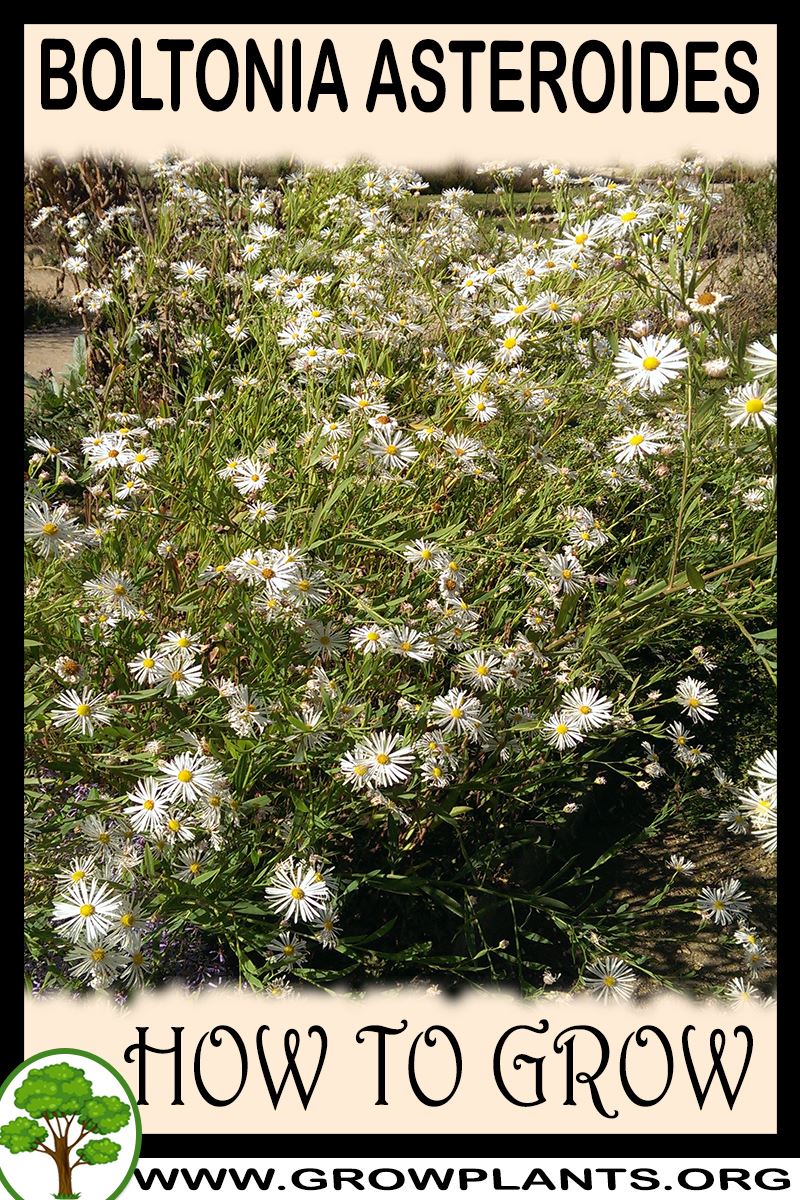
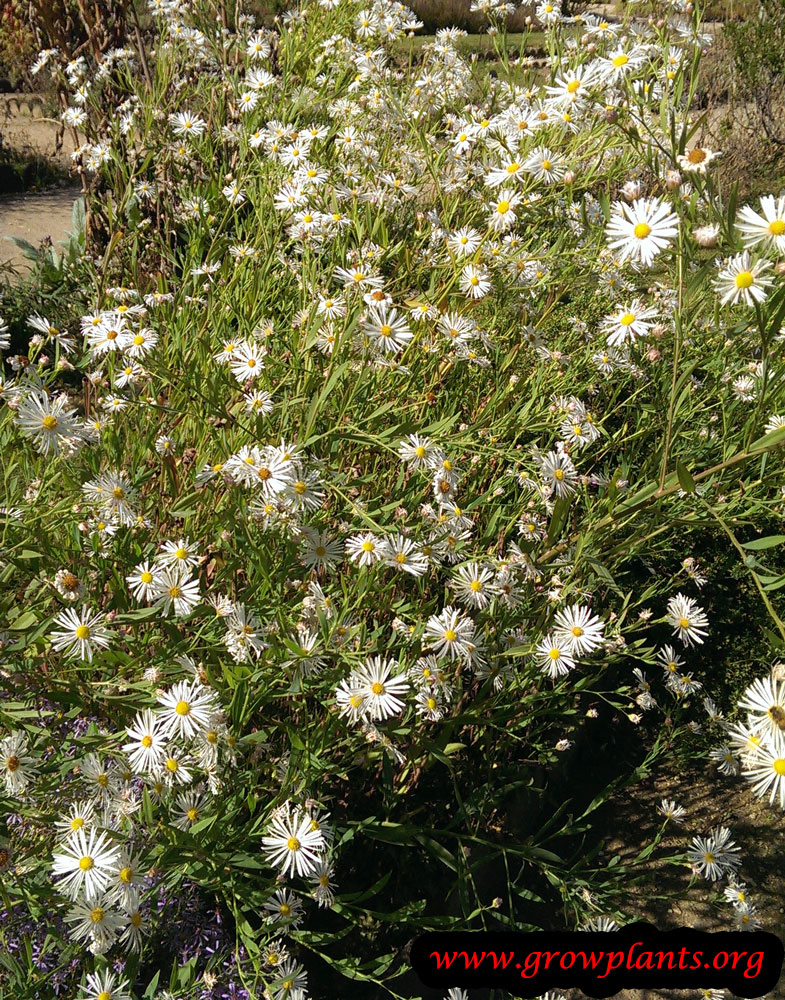
Plant Profile & Key Characteristics
Overview: A tall herbaceous perennial 0.3-1.2 m (12-48 in) tall, spreading by rhizomes, grown as an ornamental for its masses of small aster-like daisies. It is evergreen to semi-deciduous depending on climate.
Quick Specifications
| Specification | Attribute |
|---|---|
| Plant Type / Life Cycle | Perennial |
| Foliage Type | Evergreen to semi-deciduous |
| Mature Size | 0.3-1.2 m (12-48 in) tall |
| Growth Rate | Moderate |
| Root System | Rhizomatous (with stolons) |
| Hardiness | USDA zone 4-10 |
Growth Form & Structure
- Height & Spread: 0.3-1.2 m (12-48 in) tall, spreading by rhizomes and stolons; can be container grown.
- Growth Habit & Form: Upright, clump-forming perennial that spreads to form colonies.
- Lifespan & Maturity: Moderate-growing; establishes a spreading clump over a few seasons.
Anatomy & Physical Features
- Leaves & Foliage: Green, linear leaves.
- Flower Characteristics: Small daisy flowers in white, pink or purple with a yellow centre, in clusters (full detail in the Bloom section).
Primary Uses & Landscape Value
- Functional & Ornamental Roles: Late-season border and meadow ornamental; attracts pollinators.
Care Guide: Planting, Soil & Watering
Overview: Boltonia asteroides (false aster) is an easy, sun-loving perennial that grows in a well-drained soil and tolerates a range of conditions. It has low to moderate water needs and can spread aggressively by stolons.
Quick Care Requirements
| Requirement | Ideal Condition |
|---|---|
| Planting Season | Through the growing season – spring, summer or autumn |
| Growth Rate | Moderate |
| Soil Type | Well-draining (tolerates average soils) |
| Water Need | Low to moderate – water when the top of the soil dries |
Planting & Establishment
- Best Planting Season: Plant in spring, summer or autumn during the growing season, in full sun.
- How to Plant:
- Hole Preparation: Dig a hole about twice the width of the root ball.
- Soil Amendments: A little compost helps, but it does not need rich soil; ensure the ground drains freely.
- Planting Depth: Set the crown at soil level; do not bury it.
- Growth Speed & Expectations: Moderate; forms a tall 0.3–1.2 m (12–48 in) clump that spreads by stolons, so allow room or divide regularly.
Soil, Watering & Drainage Care
- Soil Mix & Drainage Needs: Prefers well-drained soil; tolerates moisture but not constant waterlogging.
- Watering Schedule & Technique:
- Young / Newly Planted: Keep evenly moist while establishing.
- Established: Water moderately, letting the soil dry between waterings; fairly drought-tolerant once settled.
- Seasonal Adjustments: More in summer heat; less in cool, wet weather.
Climate, Light & Hardiness
False aster is a cold-hardy, rhizomatous perennial for temperate, Mediterranean, and subtropical gardens, grown in full sun. It tolerates a wide winter-cold range without special protection.
Quick Climate Specifications
| Climate Zones | Temperate, Mediterranean, subtropics |
|---|---|
| USDA Hardiness Zones | Zones 4–10 |
| Frost Tolerance | High |
| Light Conditions | Full sun |
Sunlight & Light Exposure
Optimal Light Setup
Needs full sun for upright, sturdy growth and best flowering; shade leads to floppier stems.
Temperature Extremes & Hardiness
USDA Hardiness & Regional Limits
Reliably perennial across a broad range, zones 4–10, tolerating both cold-temperate winters and milder subtropical ones.
Growing in Pots, Balconies & Indoors
Boltonia asteroides (false aster) is a tall, airy native perennial smothered in small daisies – it is a border and large-container plant, not a houseplant, and really wants full sun and a natural winter rest outdoors.
Quick Details
- Container Size: A roomy pot, about 20-35 L (5-9 gal), for a clump reaching 0.3-1.2 m (12-48 in)
- Indoor Suitability: Not a houseplant (the grower marks it “No”) – a full-sun hardy perennial
- Best Spot: Full sun for the best, self-supporting growth
- Soil & Drainage: Any decent, free-draining mix; it is easy-going and tolerates moist soils
- Watering in Pots: Low to moderate – fairly drought-tolerant once established, but keep pots from drying out
Indoors & On the Windowsill
- Houseplant limits: The grower marks it as not suitable indoors. It is a tall, sun-loving perennial that needs a cold winter dormancy – a warm room and a windowsill cannot sustain it.
- Overwintering: Hardy – it dies back and reshoots each spring; the pot stays outside, sheltered against a wall in the hardest frost.
On a Balcony or Patio
- Light & wind: A cloud of late daisies for a big, sunny balcony pot; in shade or wind the tall stems flop, so give it full sun and some shelter or support. Pots dry faster than the border – check them in summer.
- Practicalities: A larger, heavier pot keeps it stable; ensure water drains away freely.
Choosing the Pot, Soil & Long-Term Care
- Pot & drainage: A 20-35 L pot with strong drainage holes; skip a standing water saucer to avoid root rot.
- Potting mix: A general, well-aerated organic mix.
- Feeding: Feed through the growing season, as potted perennials leach nutrients with each watering.
- Repotting: Refresh the mix and divide the clump every couple of years; cut back spent stems after flowering.
Fertilizing & Feeding
Boltonia asteroides is a vigorous, spreading perennial that can become aggressive in rich conditions – it is best kept a light feeder, since lean-to-moderate soil helps control its spread while still supporting good summer and autumn bloom.
Quick Fertilizing Specs
| Feeding Level | Light |
|---|---|
| Main Nutrient Priority | Balanced feeding to support foliage and its summer-into-autumn bloom |
| Best Feeding Period | Spring through summer, ahead of and during its bloom period |
| Organic Options | Compost worked into well-drained soil at planting |
| Soil pH | Adaptable to a range of well-drained soils |
Feeding by Growth Stage
Spring growth
Support fresh shoot growth as the plant breaks dormancy in spring
| Nutrient direction | Balanced feeding at a light rate to support healthy spring growth without encouraging excess spread |
|---|---|
| Timing | Spring, as new growth emerges |
| Frequency | Light, infrequent feeding through the spring flush |
| Fertilizer types | Balanced complete fertilizer at a light rate, Compost worked into the soil at planting |
| Precautions | This plant spreads by stolons and can become aggressive – avoid rich, heavily fertilized soil that would encourage even more vigorous spread |
Summer-to-autumn bloom
Support the plant’s late-season flower display
| Nutrient direction | Balanced feeding kept light through the bloom period |
|---|---|
| Timing | Summer into autumn, through the main flowering period |
| Frequency | Feed sparingly through active bloom |
| Fertilizer types | Balanced complete fertilizer for flowering perennials, applied lightly |
| Routine trace nutrients | iron |
| Precautions | Tall stems can flop in overly rich, over-fertilized soil – keep feeding light to help the plant stay self-supporting |
Winter dormancy
Allow the plant to rest through its winter dormant period
| Nutrient direction | None – withhold fertilizer while the plant is dormant or semi-dormant through winter |
|---|---|
| Timing | Winter, once active growth has stopped |
| Frequency | No feeding at this stage |
| Fertilizer types | No feeding at this stage – resume once spring growth begins |
| Precautions | Do not fertilize dormant plants; wait for visible spring growth before feeding again |
Nutrient Deficiency Signs & Corrections
Pale foliage and reduced flowering despite the plant’s normally vigorous growth
| Possible causes | Nitrogen deficiency, Poor soil fertility, Overcrowding from the plant’s own spreading habit |
|---|---|
| Appears first on | Older, lower leaves |
| What to check | Soil fertility and organic matter, Clump density and whether division is needed, Recent feeding history |
| Possible correction | Amend soil with compost, thin overcrowded clumps, and resume light balanced feeding |
Interveinal yellowing on new leaves while veins remain green
| Possible causes | Iron deficiency, Alkaline soil limiting iron availability, Waterlogged, poorly drained soil |
|---|---|
| Appears first on | Newest growth |
| What to check | Soil pH, Drainage around the roots, Whether yellowing is limited to new leaves |
| Possible correction | Improve drainage, correct soil pH where testing confirms an issue, and apply a chelated iron product per its label if a true deficiency is confirmed |
Stippled, dull, or discolored foliage that resembles a nutrient problem
| Possible causes | Spider mite or aphid feeding damage, Nutrient deficiency, Water stress |
|---|---|
| Appears first on | Leaves throughout the plant, often starting on the undersides |
| What to check | Undersides of leaves for pests before assuming a nutrient cause, Watering consistency, Overall plant vigor |
| Possible correction | Address any pest issue first, since aphids and spider mites are common on this plant and can mimic nutrient deficiency symptoms |
Pruning, Training & Seasonal Maintenance
Boltonia asteroides is a rhizomatous, clump-forming perennial (0.3–1.2 m) that blooms in late summer to autumn. Because it spreads by stolons and is flagged as an aggressive spreader, ongoing management is as much about controlling spread as it is about shaping. Two cuts genuinely apply here: deadheading through and after the summer-autumn bloom to tidy the display, and – for the taller end of its size range – an optional early-season pinch to reduce ultimate height and the flopping this size of stem is prone to, without sacrificing the autumn bloom.
Quick Pruning & Maintenance Specs
| Pruning Tolerance | Moderate–High |
| Primary Pruning Window | Late spring/early summer (formative pinch on taller plants) and post-bloom (deadhead) |
| Secondary Maintenance Window | Late winter/early spring foliage cutback before new growth |
| Typical Frequency | 1–2 times per year plus ongoing spread control |
| Main Objective | Control height/flop and manage aggressive spread while preserving the autumn bloom |
| Young Plant Priority | None – let the clump establish |
| Mature Plant Priority | Spring pinch for height control, post-bloom deadhead, rhizome containment |
| Best Tool Type | Bypass secateurs / precision snips |
| Avoid Heavy Pruning During | Active autumn bloom |
Pruning by Plant Age & Size
Newly Established
No pruning – allow the clump to establish.
Young / Formative
For taller plants nearing the top of the 0.3–1.2 m range, an optional pinch or cutback of stem tips by about a third in late spring reduces final height and stem flop without materially delaying bloom; omit this step for compact plants that stay low and self-supporting.
Mature / Established
Deadhead spent flower heads to tidy (the source data lists this directly as the plant’s pruning purpose); periodically dig out and remove spreading rhizomes at the clump edge to keep the flagged aggressive spread contained.
Seasonal Pruning Schedule
Pre-Growth/Early-Spring
Objective: control mature height and reduce flopping. Remove: pinch/cut back the tips of new shoots by about a third once spring growth is underway. Avoid removing: don’t cut into old crowns. Response: bushier, shorter, sturdier stems with a slightly later but still reliable autumn bloom.
Post-Flowering
Objective: tidy the spent display and limit self-seeding. Remove: faded flower heads down to a leaf junction. Response: neater winter appearance; no impact on next year’s bloom, since it flowers on new growth from the crown each year.
Dormant / Winter
Objective: clear collapsed or tattered top growth. Remove: dead stems, cut back to the crown. Avoid removing: healthy evergreen basal foliage where present, since this species can be semi-evergreen. Response: clean framework for spring regrowth.
Structural Pruning & Training
The main structural concerns are height/flop control via the optional spring pinch and spread containment via rhizome removal – no framework training applies to this clump-forming herbaceous perennial.
Special Growth to Remove
- Spent flower heads
- Encroaching rhizomes/stolons beyond the desired clump footprint, matching the ‘aggressive, stolons’ difficulty noted for this plant
Container & Small-Space Pruning
Containers naturally limit the rhizome spread that is a problem in open ground, which is an advantage for this species. Still deadhead as usual and consider the spring pinch for a compact pot specimen; expect more frequent repotting or division as the clump fills the container.
Tools
- Bypass secateurs – deadheading and the spring pinch on firmer stems
- Precision snips – soft new tip growth
- Garden spade – dividing or removing spreading rhizome sections at the clump edge
Tool Hygiene & Disease Risk
Routine – clean, sharp tools; aphids and spider mites are the noted pests, not a specific pruning-transmitted disease risk.
Cut Placement & Technique
Pinch or cut spring shoot tips just above a leaf node. Deadhead spent flowers down to the next side bud or leaf junction. When removing spreading rhizomes, cut or dig cleanly at the clump edge rather than tearing.
Heavy Pruning & Rejuvenation
An overgrown, sparse-centred clump can be lifted and divided every few years to rejuvenate vigour and simultaneously control the aggressive spread, with full recovery the following season.
Post-Pruning Care
Water normally after the spring pinch and after dividing; no extra feeding is needed given this species’ already vigorous, aggressive growth habit.
Common Pruning Mistakes
- Skipping the early pinch on tall specimens and ending up with floppy, splayed stems by autumn
- Letting spreading rhizomes go unchecked, allowing the clump to invade nearby plantings
When NOT to Prune
Avoid the formative pinch too late in the season, since a late cutback can delay or reduce the autumn bloom. Avoid hard cutting while the plant is in full flower.
Recommended Tools (by task)
- bypass_secateurs – the spring height-control pinch and post-bloom deadheading
- garden_spade – lifting/dividing the clump and removing invasive rhizome spread at the edges
Propagation Guide
Boltonia asteroides is a rhizomatous perennial that spreads on its own by stolons, so division of the clump is the easiest and fastest way to propagate it, even though it is not strictly necessary since the species also grows well from seed. Both methods are easy.
Quick Propagation Specs
| Best Propagation Method | Division of the rhizome/clump |
| Alternative Methods | Seed |
| Propagation Difficulty | Easy |
| Seed True-to-Type | Usually true-to-type |
| Vegetative True-to-Type | Yes |
| Best Propagation Season | Spring, or after flowering in autumn |
Growing from Seed
Sowing Season
Spring.
Germination Conditions & Time
Germinates at normal outdoor spring temperatures within a few weeks; as with many hardy asters, germination can be somewhat uneven.
Division, Offsets, Pups & Suckers
Clump/Rhizome Division
In spring as new growth emerges, or after flowering in autumn, lift the clump and separate rooted sections of the spreading rhizome, then replant promptly. Because the plant is noted as an aggressive spreader, dividing every couple of years also helps keep it in bounds.
Runners & Stolons
Boltonia asteroides naturally produces stolons that root as they spread outward from the parent clump; these self-rooted sections can simply be severed from the parent once they have their own roots and replanted or potted up.
Bloom & Flower Guide
Quick Details
- Bloom Season: Summer and autumn
- Time to First Bloom: As a perennial it usually flowers from the second year; established clumps bloom late in the season
- Flower Appearance: Masses of small flat daisies in white, pink or purple with a yellow center, carried in large clusters
- Edibility: Native ornamental; not eaten
Detailed Blooming Overview
False aster is a tall, airy native that erupts into clouds of small daisies in late summer and autumn, when it becomes a valuable nectar source at a time many other flowers are fading. It brings a soft, misty finish to the back of a border.
Flower Characteristics
- Great sprays of small, flat, yellow-centered daisies, aster-like but more profuse.
Bloom Care & Thinning
- Managing the bloom: Pinch or cut the plant back by about a third in early summer for a bushier, self-supporting habit with even more blooms; leave the seed heads for birds.
- Pollination: Pollinated by bees and butterflies.
Pests, Diseases & Troubleshooting
Overview: Boltonia (false aster) is a tough, native-type perennial daisy (Asteraceae) that is notably trouble-free. Powdery mildew is its most likely disease in humid, crowded plantings, with aphids and spider mites the main insects and occasional rust, leaf spot or aster yellows. Its chief ‘fault’ is really abiotic – tall stems that flop without airflow, sun and division. Good spacing and lean growing prevent almost everything.
Quick Troubleshooting Overview
| Issue / Pest | Main Symptom | Primary Solution |
|---|---|---|
| Powdery mildew | White powdery coating on the leaves | Divide and space for airflow, avoid overhead water, sulphur |
| Aphids | Curled shoot tips and honeydew | Water blast, insecticidal soap, predators |
| Spider mites | Stippling and webbing in hot, dry spells | Hose foliage, insecticidal soap or oil |
| Rust / leaf spot | Pustules or dark spots on leaves | Remove affected leaves, airflow, sanitation |
Common Pests & Management
- Aphids (Aphis / Uroleucon spp.):
- Symptoms: Clusters on shoot tips, flower stalks and leaf undersides curl new growth and leave honeydew and sooty mould.
- Prevention & Control: Knock them off with water, spray insecticidal soap or neem, and encourage ladybirds, lacewings and hoverflies.
- Spider mites (Tetranychus urticae):
- Symptoms: Fine stippling, bronzing and webbing on leaf undersides in hot, dry conditions.
- Prevention & Control: Hose foliage, maintain even moisture, and treat undersides with insecticidal soap or horticultural oil.
- Leafhoppers (Cicadellidae):
- Symptoms: Pale stippling from sap feeding, and transmission of aster yellows phytoplasma.
- Prevention & Control: Manage weeds, remove infected plants promptly, and support natural predators.
- Lace bugs / thrips (Corythucha spp. / Thysanoptera):
- Symptoms: Chrysanthemum lace bug and thrips cause pale stippling and speckling of the leaves with dark specks of frass beneath.
- Prevention & Control: Hose foliage, encourage predators, and treat with insecticidal soap on undersides if numbers build.
Diseases & Fungal Issues
- Powdery mildew (Golovinomyces / Erysiphe spp.):
- Symptoms: A white powdery film on the leaves in humid, crowded or shaded conditions, usually later in the season – the most common Boltonia disease.
- Treatment & Management: Divide congested clumps, space and thin for airflow, avoid overhead watering, remove affected leaves, and spray sulphur or potassium bicarbonate.
- Rust (Coleosporium / Puccinia spp.):
- Symptoms: Orange to brown powdery pustules on leaf undersides with yellow flecking above.
- Treatment & Management: Remove infected leaves, avoid wetting foliage, improve airflow, and use sulphur to slow spread.
- Aster yellows (phytoplasma (leafhopper-vectored)):
- Symptoms: Yellowed, stunted, distorted growth with green, deformed flowers.
- Treatment & Management: There is no cure – remove and destroy infected plants, control leafhoppers, and manage weed hosts.
- Septoria leaf spot (Septoria spp.):
- Symptoms: Small dark spots that enlarge and merge on the lower leaves in wet weather.
- Treatment & Management: Remove spotted leaves, water at the base, and improve airflow.
Growing Difficulties & Abiotic Problems
- Flop / legginess:
- Cause & Symptoms: The tall stems sprawl in rich soil, shade or without support, especially after rain.
- Correction Strategy: Grow in full sun on lean soil, pinch or cut back by a third in early growth, divide every few years, and stake tall types if needed.
- Chlorosis in wet soil:
- Cause & Symptoms: Waterlogged or poor soil yellows the foliage.
- Correction Strategy: Improve drainage, avoid overwatering, and feed lightly.
- Crowding decline:
- Cause & Symptoms: Congested old clumps flower poorly and mildew more.
- Correction Strategy: Divide every two to three years to renew vigour and airflow.
What Helps – Products & Tools
For Boltonia keep insecticidal soap or neem for aphids and mites and a sulphur or potassium-bicarbonate fungicide for powdery mildew and rust. This is a naturally robust plant, so division, spacing and full sun – not sprays – are the main tools.