Plant Profile & Key Characteristics
Overview: A tender shrubby nightshade (Ethiopian eggplant) grown as an annual to short-lived perennial, reaching 0.5–1 m (20–40 in) tall. It is grown for its edible fruit, harvested while unripe and used cooked.
Quick Specifications
| Specification | Attribute |
|---|---|
| Plant Type / Life Cycle | Tender perennial grown as an annual |
| Foliage Type | Herbaceous, evergreen while growing (frost-tender) |
| Mature Size | 0.5–1 m (20–40 in) |
| Growth Rate | Moderate |
| Root System | Taproot with fibrous laterals |
| Toxicity | Fruit edible when cooked; the foliage and green parts are toxic nightshade tissue |
| Hardiness | USDA zones 10b+ as a perennial; grown as a warm-season annual from zone 5+ |
Growth Form & Structure
- Height & Spread: Reaches 0.5–1 m (20–40 in) in the ground and grows well in a container.
- Growth Habit & Form: Bushy, branching sub-shrub; heavy fruit loads sometimes need support.
- Lifespan & Maturity: Fruiting begins about 1–2.5 months after transplanting, with harvest from roughly 120 days after sowing.
Anatomy & Physical Features
- Leaves & Foliage: Large, soft, lobed green leaves.
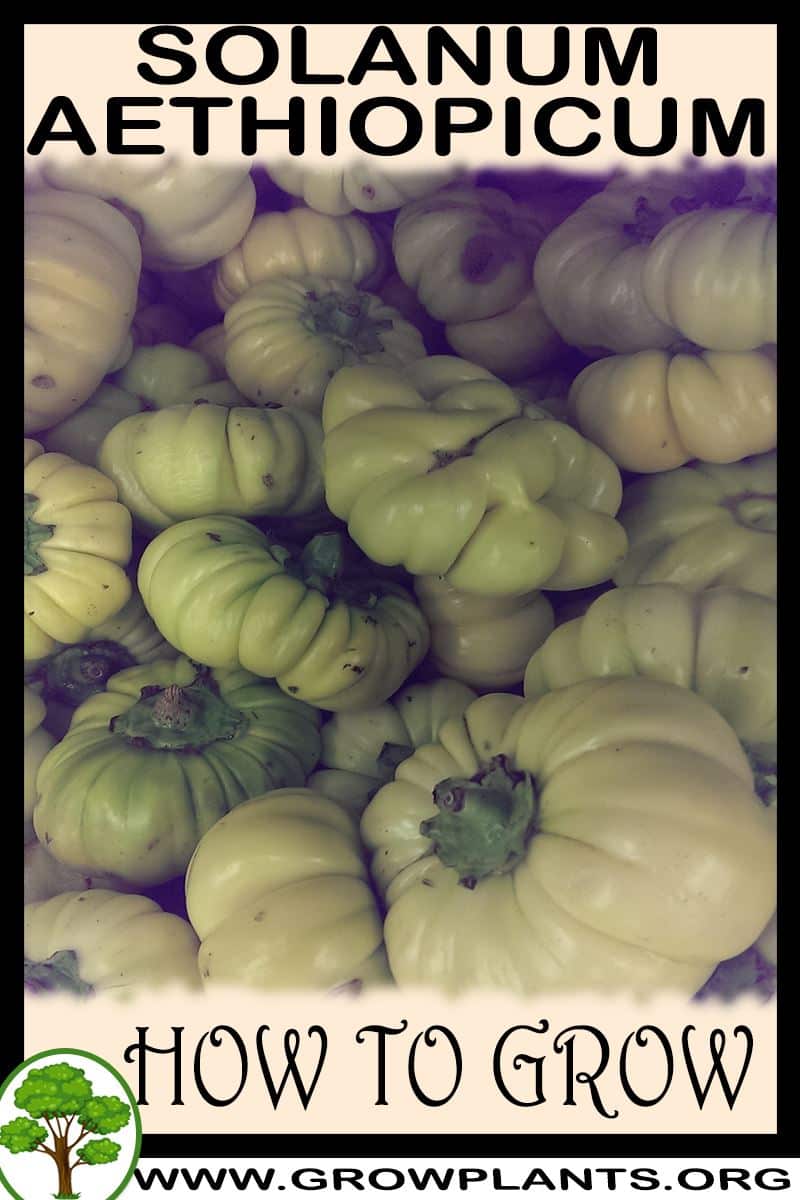
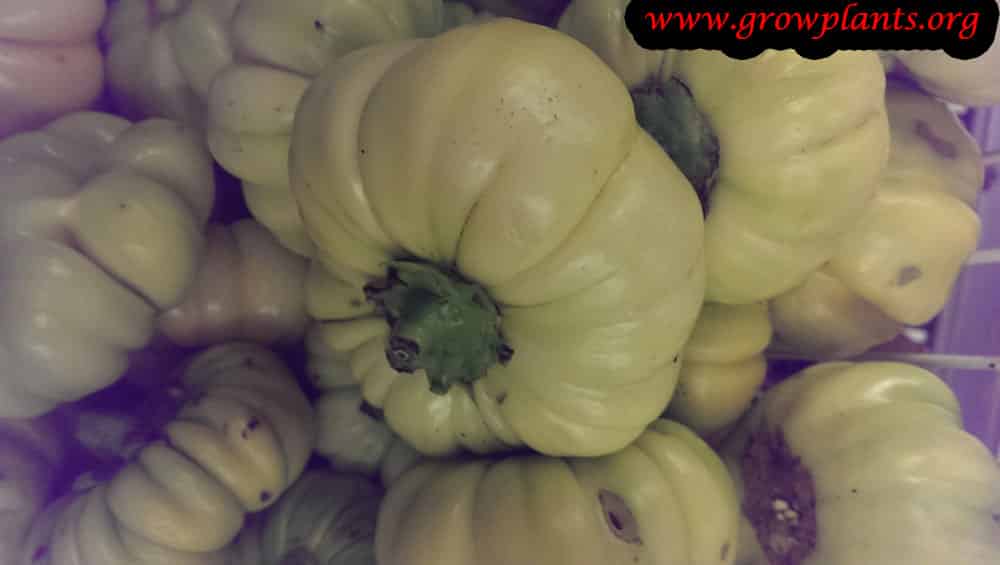
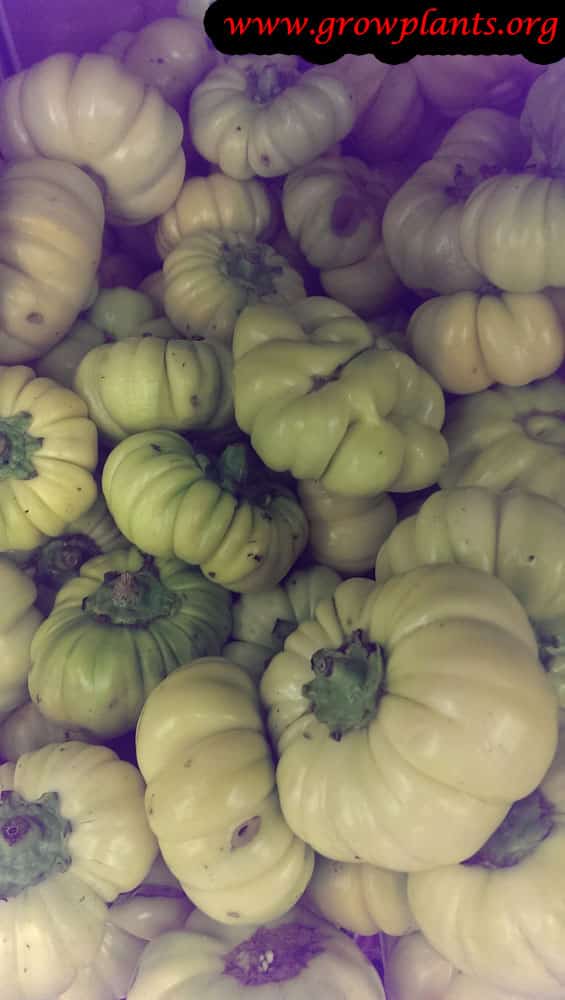
- Fruit Profile: Round or lobed fruit with red, white or yellow (sometimes striped) skin and white to pale-green flesh, picked while unripe.
Primary Uses & Landscape Value
- Edible Uses: The fruit is cooked in stews and sauces; the plant is also used as a leafy vegetable in its native range.
- Functional & Ornamental Roles: A warm-season vegetable-garden and container crop.
Care Guide: Planting, Soil & Watering
Overview: Ethiopian eggplant is a warm-climate vegetable that thrives in full sun and nutrient-rich ground. It needs steady moisture through the warm season, so keep the soil evenly moist.
Quick Care Requirements
| Requirement | Ideal Condition |
|---|---|
| Planting Season | In spring after the last frost |
| Growth Rate | Moderate |
| Soil Type | Rich, nutrient-packed and well-draining |
| Soil pH | 6.0–7.0 (near neutral) |
| Water Need | Moderate to high; keep the soil evenly moist |
Planting & Establishment
- Best Planting Season: Plant in spring after the last frost, once the soil has warmed.
- How to Plant:
- Hole Preparation: Loosen a hole slightly wider than the root ball in fertile ground.
- Soil Amendments: Blend in organic matter to feed the plant and improve structure.
- Planting Depth: Set the root ball level with the surrounding soil and firm gently; add support for heavy fruit.
- Growth Speed & Expectations: A moderate grower reaching about 50–100 cm; stake it so the fruit stays clear of the ground.
Soil, Watering & Drainage Care
- Soil Mix & Drainage Needs: Give it well-draining soil rich in organic matter; it also grows well in a container with good potting mix.
- Watering Schedule & Technique:
- Young / Newly Planted: Keep the soil evenly moist while establishing.
- Established: Water regularly and deeply to keep the soil moist.
- Seasonal Adjustments: More in summer heat, less in cool weather; protect from winter frost.
Climate, Light & Hardiness
Ethiopian eggplant is a warm-season, full-sun crop that performs across Mediterranean, desert, subtropical, temperate and tropical climates. It is frost-sensitive - perennial only in essentially frost-free areas (roughly USDA zone 10b and warmer) and grown as a summer annual from about zone 5 upward wherever winters freeze.
Quick Climate Specifications
| Climate Zones | Mediterranean, desert, subtropical, temperate and tropical (warm-season growing) |
|---|---|
| USDA Hardiness Zones | Perennial in zone 10b+; grown as an annual from about zone 5 upward |
| Optimal Temp Range | Warm conditions; germination and growth best around 20–25 °C (68–77 °F) and warmer |
| Cold Damage Begins | Chilling stress and stalled growth below roughly 10–15 °C (50–59 °F) |
| Approx. Survival Minimum | Near 0 °C (32 °F); frost is generally fatal to unprotected plants |
| Frost Tolerance | None (frost-sensitive) |
| Light Conditions | Full sun |
| Wind Tolerance | Low–Moderate (heavy fruit benefits from support) |
Sunlight & Light Exposure
Optimal Light Setup
Grow in full sun; like other eggplants it needs plenty of light and warmth to flower and set its fruit well.
Direct Sun Requirement
A full-sun crop - direct sun through the day drives growth and cropping.
Shade & Heat Management
The plant is heat-tolerant, but under the most intense desert sun very light afternoon shade can reduce leaf scorch during heat spikes.
Best Exposure / Orientation
A warm, sheltered, sun-facing position supplies the heat this crop needs while airflow limits foliar disease.
Temperature Extremes & Hardiness
USDA Hardiness & Regional Limits
The site data lists this species as perennial in zone 10b and warmer and grown as an annual from about zone 5 upward. Hardiness reflects winter cold survival, not heat preference - where winters freeze it is grown as a warm-season annual and replaced each year.
Cold Damage & Winter Protection
As a perennial the plant suffers or dies in winter cold; the site notes cuttings or greenhouse-kept seedlings are used to carry quality plants to the next season. Protect from cold snaps in marginal areas.
Frost Sensitivity
Frost-sensitive: frost damages foliage and near 0 °C (32 °F) is generally fatal to unprotected plants. Transplant only after the last expected frost.
Extreme Heat Tolerance
A warm-climate crop that copes well with heat; very high, prolonged temperatures with strong sun can still reduce flowering and set, buffered by light shade and steady soil moisture. Response varies with conditions.
Frost-Free Growing Season
As a frost-tender crop it needs a long, warm, frost-free season - roughly four months from sowing to first fruit - so in short-season regions start under protection and set out only after frost has passed.
Wind, Humidity & Microclimate
Humidity Preferences
Warm, moderately humid conditions suit growth; seedlings like warmth and steady moisture.
Dry-Air Tolerance
Established plants tolerate dry air when soil moisture is maintained, though hot, dry winds during flowering can reduce fruit set.
Wind Tolerance
The fruit is heavy for the plant, so support and a sheltered spot help - especially in containers, whose root zones heat, cool and dry faster and are more wind-exposed.
Rainfall & Seasonal Moisture
Suits a warm season with moderate moisture; prolonged wet, humid weather favours foliar disease, so a drier, warm cropping period benefits quality.
Microclimate Recommendations
A sunny wall, raised bed or reflected heat extends the warm season in cooler areas and gives this heat-lover the warmth it needs.
Growing in Pots, Balconies & Indoors
Ethiopian eggplant (Solanum aethiopicum) is a warm-season crop, not a houseplant – it needs strong sun to grow and fruit well, so deep indoors it will not thrive. In a large, free-draining container it does well on a sunny patio or balcony, and a compact plant can fruit on a very bright, sunny windowsill. Expect roughly 50-100 cm (20-40 in) in good conditions.
Quick Details
- Container Size: About 20-40 L (5-10 gal) for a full-size plant with strong drainage holes (general guidance – the grower simply notes containers work well)
- Indoor Suitability: Not a houseplant; only a bright, sunny windowsill will do, and a patio or balcony is better still
- Best Spot: Full sun
- Soil & Drainage: Well-aerated, organic-rich mix (potting mix, or peat/coir with perlite or vermiculite); must drain freely
- Watering in Pots: Keep evenly moist – pots dry fast, so mulch the surface; never waterlogged
Indoors & On the Windowsill
- Houseplant limits: The grower’s answer is no – it wants full sun that a room’s interior cannot give, so it stays weak and shy to fruit away from a window.
- Windowsill growing: The best indoor option is the brightest, sunniest sill you have; keep the plant compact so it and its fruit get direct light.
- Overwintering: In cold regions grow it as an annual, or overwinter a potted plant in a bright, frost-free spot.
- Safety: Only the ripe fruit is edible – the leaves, stems and unripe green fruit are in the nightshade family and contain solanine, so keep an indoor plant out of reach of children and pets.
On a Balcony or Patio
- Light & wind: Give it the sunniest spot. Walls and paving reflect heat and dry pots fast, so check moisture daily in summer and mulch; shelter a tall plant from wind and stake it if it gets top-heavy. A drip irrigation kit with a timer can take over that watering check automatically.
- Practicalities: A filled large pot is heavy – position it before filling, and keep drainage runoff off the balcony floor.
Choosing the Pot, Soil & Long-Term Care
- Pot & drainage: About 20-40 L (5-10 gal) for a full-size plant with strong drainage holes (general guidance – the grower simply notes containers work well) Skip a standing-water saucer, which keeps the roots wet and invites rot. Terracotta breathes and dries faster; glazed or plastic pots hold moisture longer.
- Potting mix: Well-aerated and organic-rich – a quality potting mix, or peat/coir with perlite or vermiculite for drainage.
- Feeding: Potted plants need feeding more often than those in the ground, since frequent watering leaches nutrients away – feed through the growing season with a balanced, organic-rich fertilizer.
- Repotting: Every couple of years refresh the mix and pot on a size; for perennials, lightly prune the root ball and top growth at the same time to keep them vigorous.
Growing this plant in a greenhouse
A greenhouse can give solanum aethiopicum frost protection, cold protection, a longer growing season and controlled production. Under warm enough conditions it can keep growing well beyond the normal outdoor season and potentially be maintained year-round - though continuous cropping is not guaranteed and depends on temperature and light.
Greenhouse at a glance
| Greenhouse suitability | Excellent - a major practical advantage |
|---|---|
| Main benefits | frost protection, cold protection, a longer growing season, controlled production |
| Season extension | potentially year-round |
| Outdoor protection advisable below | about 15°C |
| Maintain greenhouse minimum | around 15°C for active growth |
| Suitable types | heated greenhouse, polycarbonate greenhouse, lean-to |
| Heating | Heating is recommended in cold climates for continuous growth. |
Related greenhouse guides
- Greenhouses: How to Choose the Right Greenhouse
- Best Greenhouse Heaters
- Greenhouse Climate Control: Temperature, Ventilation and Humidity
- Best Lean-To Greenhouses
Fertilizing & Feeding
A hungry feeder that likes rich, well-fed soil: start light at transplanting, favor nitrogen while building leafy growth, then feed balanced with adequate potassium through flowering and fruiting, keeping moisture even. A fertilizer formulated for tomatoes and vegetables supports that feeding pattern through harvest.
Quick Fertilizing Specs
| Feeding Level | Heavy feeder |
|---|---|
| Main Nutrient Priority | Nitrogen while building the plant, then balanced feeding with adequate potassium at fruiting |
| Best Feeding Period | Through the warm active growing and fruiting season |
| Organic Options | Compost, aged manure, and humus worked into the bed |
| Reduce/Stop Feeding | Ease back on nitrogen as flowering begins; feeding tapers as the plant finishes for the season |
| Micronutrients | Usually supplied by a complete fertilizer and organic matter; correct only diagnosed problems |
| Soil pH | Slightly acidic to near neutral |
Feeding by Growth Stage
Establishment after transplanting
Help young transplants settle in and build roots before heavy growth begins.
| Nutrient direction | A balanced complete fertilizer plus plenty of organic matter worked into the planting area to get roots established. |
|---|---|
| Timing | At transplanting and through the first weeks in the ground or container. |
| Frequency | A light feeding at planting, supported by organic matter in the soil. |
| Fertilizer types | A balanced complete fertilizer, Compost, humus, and organic matter worked into the bed |
| Precautions | Keep early feeding light; too much nitrogen now pushes soft growth at the expense of roots. |
Leafy vegetative growth
Build a strong, well-branched frame of stems and leaves before flowering.
| Nutrient direction | Lean toward nitrogen to drive vigorous stems and foliage while the plant is still building its frame. |
|---|---|
| Timing | Through the active growing weeks before flowers set. |
| Frequency | Regular light feedings while the plant is putting on leafy growth. |
| Fertilizer types | A nitrogen-forward complete fertilizer, Compost or aged manure as a top-dressing |
| Precautions | Support and mulch the plant as it grows, and ease back on nitrogen as flowering approaches so bloom is not delayed. |
Flowering and fruiting
Support steady flower set and fruit development through the harvest period.
| Nutrient direction | Shift to a balanced feed with good potassium to support fruit set and filling, easing back on high nitrogen. |
|---|---|
| Timing | From first flowering through the fruiting and harvest period. |
| Frequency | Steady light feedings that continue while fruit is setting and maturing. |
| Fertilizer types | A balanced complete fertilizer with adequate potassium, A potassium-inclusive fruiting-vegetable fertilizer |
| Precautions | Keep watering even during fruiting; erratic moisture plus salt buildup encourages blossom-end rot and cracking. |
Nutrient Deficiency Signs & Corrections
Older, lower leaves fade to pale green or uniform yellow and overall growth slows.
| Possible causes | low available soil nitrogen, nitrogen leaching from heavy watering or rain, thin, low-organic-matter soil |
|---|---|
| Appears first on | older, lower leaves |
| What to check | recent feeding history, soil organic matter, watering and drainage |
| Possible correction | Apply a nitrogen-containing complete fertilizer and build soil organic matter, then water evenly. |
A sunken, dark, leathery rot develops at the blossom end of developing fruit.
| Possible causes | locally low calcium reaching the developing fruit, irregular or inconsistent watering, root stress or salt buildup limiting calcium uptake |
|---|---|
| Appears first on | the blossom (bottom) end of young fruit |
| What to check | watering consistency and mulch, soil moisture swings, soil calcium and salt status |
| Possible correction | Steady the moisture supply with even watering and mulch, correct pH and calcium availability, and avoid over-applying nitrogen. |
Interveinal yellowing on older leaves while the veins themselves stay green.
| Possible causes | low soil magnesium, high potassium feeding competing with magnesium uptake, leaching in light, sandy soils |
|---|---|
| Appears first on | older, lower leaves |
| What to check | soil magnesium status, how potassium-heavy recent feeding has been, soil texture and leaching |
| Possible correction | Apply a labeled magnesium source such as Epsom salt or a dolomitic amendment and rebalance feeding. |
Pruning, Training & Seasonal Maintenance
Solanum aethiopicum (Ethiopian or scarlet eggplant) is a frost-tender subshrub in the same group as common eggplant, grown as a warm-season annual and cropped for its round red-to-yellow fruit (and, in some types, its leaves). It asks for very little cutting: an optional shaping pinch, an open well-lit base, and light in-season sanitary work. Fruit sets continuously on new growth, so pruning is about vigour and health rather than saving flower buds, and it can be done at any point through the season as growth dictates.
Quick Pruning & Maintenance Specs
| Pruning Tolerance | Low–Moderate (bushy; little cutting needed) |
| Primary Pruning Window | Through the growing season as needed (no fixed dormant prune) |
| Typical Frequency | Occasional light passes |
| Main Objective | Open bushy frame, well-lit fruit, healthy foliage |
| Young Plant Priority | Optional tip-pinch on leggy seedlings to force branching |
| Mature Plant Priority | Clean the base, remove dead/diseased leaves, support heavy fruit |
| Best Tool Type | Precision snips; bypass secateurs for the semi-woody base |
| Avoid Heavy Pruning During | Flowering and fruit set, heat spikes, before frost outdoors |
Pruning by Plant Age & Size
Newly Established
After transplanting remove only damaged leaves; do not shape a plant still settling in, and set any support at planting.
Young / Formative
No leader system—it forms a rounded bush. A single early tip-pinch on a tall single-stemmed seedling forces low branching; a naturally branched plant needs nothing. Where the leaves are being picked as a vegetable, light regular tip-harvest itself keeps the plant bushy.
Mature / Established
Strip shoots and leaves below the first fruiting fork for airflow and to keep fruit off the soil, remove dead or infested lower leaves, and thin lightly only where inner fruit is deeply shaded. Support the plant once the fruit weight builds.
Seasonal Pruning Schedule
Summer Canopy & Base Management
Objective: light and dry air at the base. Remove: low shoots below the first fork, shaded infested growth, dead wood. Do NOT strip healthy outer canopy—exposed fruit scalds in strong heat.
Ongoing Sanitary
Objective: limit aphids, leaf miners and the family wilts. Remove mottled, mined or dead leaves and spoiled fruit as they appear, working with dry foliage.
Flowering & Fruiting Wood
Fruit is carried on current-season growth, flowering in the axils of new shoots through the warm months. Pruning does not remove a future crop stored on old wood—new flowering shoots simply replace what is cut—so cutting timing is driven by plant health and light, not by bloom protection.
Structural Pruning & Training
Minimal: remove crossing or inward branches that crowd the centre and support the bush so laden branches stay off the ground. Thin only for genuine interior shading.
Special Growth to Remove
Clear shoots and leaves below the first fork to open the base; remove dead, yellowing or infested lower leaves. Grown on its own roots, so there are no rootstock suckers, and the upper laterals are fruiting branches to keep, not strip.
Container & Small-Space Pruning
In a pot an early pinch builds a compact plant and base-cleaning matters more in still patio air. Keep the plant to a size the roots can carry; support laden branches; avoid heavy feeding straight after any hard cut.
Tools
Precision snips for soft tips and leaves; bypass secateurs for the semi-woody base. No loppers, saw, pole pruner or hedge shears—every cut here is selective.
Tool Hygiene & Disease Risk
Classification: Increased. As a nightshade it hosts the soil-borne wilts and mechanically spread mosaic viruses of the family. Use clean tools and wash hands before moving from any mottled or one-sidedly wilting plant; bin diseased prunings; routine cuts on healthy plants need no between-cut sterilising.
Cut Placement & Technique
Pinch soft tips by hand; cut firmer wood cleanly just above a node, angled to shed water, leaving no long stub. Work with dry foliage so soft-stem wounds seal quickly.
Heavy Pruning & Rejuvenation
Grown as an annual there is no rejuvenation cycle—the plant is replaced each spring. Where it is truly frost-free it behaves like eggplant and tolerates a hard cutback to the woody base to force an earlier second-year flush.
Post-Pruning Care
Guard newly exposed fruit and stems from sunscald in fierce heat, keep soil evenly moist, and avoid a nitrogen push straight after cutting.
Common Pruning Mistakes
- Stripping side-shoots like a tomato—the upper forks are the fruiting branches.
- Over-thinning in heat and scalding the fruit.
- Growing without support so laden branches touch the soil.
- Cutting mottled or wilting plants without cleaning tools.
When NOT to Prune
Skip pruning just after transplanting, during flowering and fruit set, in heat spikes, and before frost while outdoors—tender regrowth then is wasted.
Recommended Tools (by task)
- precision_snips — soft tips, thin leaves and leaf-harvest cuts.
- bypass_secateurs — the semi-woody base and any end-of-season cutback.
- soft_ties_stakes — support heavy fruiting branches.
Pruning Troubleshooting
| Problem | Possible Cause | What to Check | Corrective Action |
| Leggy plant, sparse branches | No tip-pinch; low light | Tip branching; sun hours | Pinch to force forking; move to full sun |
| Scalded fruit in heat | Canopy over-thinned | Remaining shading foliage | Stop thinning; shade in peak heat |
| One-sided wilt after cutting | Family wilt, not the cut | Vascular streaking in a cut stem | Remove affected growth, sterilise tools, rotate beds |
Propagation Guide
Ethiopian eggplant is most practically grown from seed, which germinates easily in warmth; soft stem cuttings root quickly and reproduce a chosen plant exactly. Propagation is easy.
Quick Propagation Specs
| Best Propagation Method | Seed |
| Alternative Methods | Softwood stem cuttings; simple (ground) layering |
| Propagation Difficulty | Easy |
| Seed True-to-Type | Open-pollinated landraces come mostly true; seed from mixed plantings can vary |
| Vegetative True-to-Type | Yes – cuttings keep the parent’s fruit type |
| Best Propagation Season | Sow late winter to early spring; take cuttings spring to early summer |
| Seed Germination Time | About 1–2 weeks |
| Cutting Rooting Time | About 1–2 weeks |
| Germination Temperature | Best around 20–25°C (68–77°F) |
| Seed Sowing Depth | 5–10 mm (about 0.25–0.5 in) |
Growing from Seed
Seed Handling & Viability
Seed is undemanding and germinates freely. Extract it from ripe fruit and store it somewhere cold and dry until sowing.
Sowing Season
Sow at the end of winter into early spring; in warm zones the season is longer.
Sowing Depth & Spacing
Sow about 5–10 mm deep – deep burial is not needed – and space or thin plants to about 20–40 cm.
Germination Conditions & Time
Give full sun and evenly moist soil at about 20–25°C (68–77°F); seedlings usually appear in about 1–2 weeks.
Seedling Care
Keep seedlings warm (above about 20°C / 68°F) and protect the tender sprouts from insects early on.
Stem Cuttings
Cutting Type, Setup & Timing
Take soft stem cuttings in the warm season, spring to early summer. Root them in a glass of water changed every couple of days, or in moist soil, keeping them warm and humid.
Rooting Time
Roots usually form in about 1–2 weeks.
Air & Ground Layering
A low branch pressed down and covered with soil will root where buried and can then be separated from the parent.
Bloom & Flower Guide
Quick Details
- Bloom Season: Through the warm season – spring, summer and autumn
- Time to First Bloom: About 30-50 days after planting
- Flower Appearance: Small purple or white star-shaped flowers with yellow stamens, in groups of 3-5
- Edibility: Ornamental only – the flower is not eaten, and the leaves and green parts are toxic
Detailed Blooming Overview
The Ethiopian eggplant flowers much like its close relative the common eggplant, opening small purple or white stars along the stems through the warm months. Each pollinated bloom becomes one of the plant’s colorful fruits, so a steady bloom in warm weather sets a good crop.
Flower Characteristics
- Purple or white star-shaped flowers with a central cone of yellow stamens.
- Borne in small groups of three to five.
- Nodding and modest in size.
Bloom Care & Thinning
- If flowers drop: Check the roots and keep watering even, and try hand-pollinating in dull or cool spells.
- Pollination: Self-fertile and buzz-pollinated; bees release the pollen by vibrating the flowers, and a gentle shake helps in their absence.
Bloom Health & Protection
- Thrips and aphids can gather on buds and flowers; insecticidal soap or neem oil helps.
Fruit & Uses
Solanum aethiopicum (Ethiopian eggplant) is grown mainly for its edible fruit, which is picked while immature and eaten fresh or cooked; in some cultivar groups the young leaves are also cooked and eaten as a leafy green. Both the fruit and the leaves are used, but as with other nightshades the leaves are cooked, not eaten raw.
Quick Edible Specs
| Edible Parts | Fruit; young leaves (in leaf-type cultivar groups) |
|---|---|
| Main Use(s) | Culinary – fruit eaten fresh, cooked, in sauces and juice; leaves cooked as greens |
| Eaten Raw or Cooked | Fruit raw or cooked; leaves cooked |
| Preparation Required | Pick fruit while immature; cook leaves |
| Harvest Season | Summer and autumn |
| Time to First Harvest | A few months from planting (see growing notes) |
| Storage | Best used fresh |
| Safety/Toxicity Caveat | Leaves are cooked, not eaten raw; harvesting leaves competes with fruiting, so heavy leaf-picking reduces the crop of fruit |
Fruit
The fruit is picked when unripe, before it is fully grown; the rind may be red, white or yellow, sometimes striped, and the shape is round or round-lobed, with white to light-green flesh inside. Harvest while the skin is glossy and the fruit still firm; left too long it softens, colours fully and the seeds harden.
Leaves & Greens
In the leaf-type cultivar groups of this species the young, tender leaves and shoots are picked and cooked as a green vegetable, a common use across parts of Africa. Pick young growth and cook it (boiled or stewed); do not eat the leaves raw. Note that repeatedly stripping leaves reduces the plant’s flowering and fruiting, so leaf and fruit harvests compete.
Harvesting
Cut fruit with a short piece of stem; heavy fruit may need support. Pick fruit and any leaf harvest through summer and autumn while growth is active.
Preparation, Uses & Safety
The fruit is eaten fresh or cooked and made into sauces and juice; the young leaves are cooked as greens. Cook the leaves before eating — nightshade foliage is not eaten raw. Only the fruit and the young leaves are used.
Pests, Diseases & Troubleshooting
Overview: The Ethiopian eggplant (Solanum aethiopicum) is a warm-season nightshade that, like its tomato and potato relatives, draws flea beetles, sap-sucking insects and the soil-borne wilts. Manage it culturally with rotation, row cover on young plants, even watering and resistant varieties, using organic sprays only when monitoring warrants. As a close eggplant relative it shares the same pest and disease set.
Quick Troubleshooting Overview
| Issue / Pest | Main Symptom | Primary Solution |
|---|---|---|
| Flea beetles | Tiny shot-holes riddling leaves, worst on seedlings | Row cover, kaolin clay, keep vigorous |
| Aphids & whiteflies | Honeydew, sooty mould, curling; virus spread | Soap/neem, reflective mulch, beneficials |
| Spider mites | Stippling and webbing in hot dry air | Rinse foliage, oil/soap, predatory mites |
| Colorado potato beetle | Striped beetles and grubs stripping leaves | Hand-pick, rotate, spinosad if severe |
| Leaf miners | Winding pale tunnels inside leaves | Remove mined leaves, encourage parasitoids |
| Verticillium wilt | One-sided yellowing/wilt; browned stem | Resistant varieties, long rotation, rogue plants |
Common Pests & Management
- Flea beetles (Epitrix spp.):
- Symptoms: Countless tiny round shot-holes across leaves; seedlings can be severely stunted or killed while established plants tolerate more damage.
- Prevention & Control: Protect young plants with floating row cover, keep them growing fast, dust with kaolin clay, and rotate away from other nightshades; spinosad helps in heavy pressure.
- Aphids (Myzus persicae, Aphis spp.):
- Symptoms: Soft green/black clusters on shoot tips and undersides with honeydew, leaf curl and virus transmission.
- Prevention & Control: Blast off with water, encourage ladybirds and lacewings, use reflective mulch, and spot-treat with insecticidal soap or neem.
- Whiteflies (Bemisia tabaci, Trialeurodes vaporariorum):
- Symptoms: Clouds of tiny white insects rising when disturbed; honeydew, sooty mould, yellowing and virus spread, worst under cover.
- Prevention & Control: Yellow sticky traps, reflective mulch, Encarsia parasitoids, and insecticidal soap or neem on leaf undersides.
- Colorado potato beetle (Leptinotarsa decemlineata):
- Symptoms: Yellow-and-black striped beetles and humped red grubs that rapidly defoliate plants; orange egg clusters on undersides.
- Prevention & Control: Hand-pick beetles, grubs and eggs, rotate crops, mulch heavily, and use Bt (tenebrionis strain) or spinosad on young larvae.
- Spider mites (Tetranychus urticae):
- Symptoms: Fine yellow stippling, a bronzed dusty cast and fine webbing under leaves in hot, dry weather.
- Prevention & Control: Keep plants watered and un-stressed, rinse foliage, release predatory mites, and use insecticidal soap or oil.
- Leaf miners (Liriomyza spp.):
- Symptoms: Winding pale serpentine tunnels mined within the leaf tissue by tiny larvae, reducing vigour.
- Prevention & Control: Remove and destroy mined leaves, encourage parasitic wasps, use sticky traps, and avoid broad-spectrum sprays that kill their natural enemies.
- Slugs & snails (Gastropoda):
- Symptoms: Ragged holes in leaves and grazed seedlings overnight, with slime trails.
- Prevention & Control: Hand-pick at night, clear debris, use iron-phosphate bait and copper barriers.
Diseases & Fungal Issues
- Verticillium & Fusarium wilt (Verticillium dahliae, Fusarium oxysporum):
- Symptoms: Yellowing and wilting that often starts on one side or lower leaves, with brown streaking inside the stem; soil-borne and persistent.
- Treatment & Management: Choose resistant varieties, rotate for several years away from nightshades, remove affected plants, and improve soil health.
- Phomopsis blight (Phomopsis vexans):
- Symptoms: Sunken tan spots on fruit that rot, plus leaf and stem lesions in warm humid weather.
- Treatment & Management: Use clean seed and resistant varieties, rotate, remove infected debris, and apply a protectant fungicide in wet spells.
- Early blight (Alternaria solani):
- Symptoms: Dark target-ring spots with yellow halos on lower leaves, spreading upward.
- Treatment & Management: Rotate, mulch to stop soil splash, space for airflow, remove affected leaves, and use copper preventively.
- Bacterial wilt (Ralstonia solanacearum):
- Symptoms: Sudden wilting without yellowing in hot climates; a cut stem oozes milky bacterial streams in water.
- Treatment & Management: No cure – use resistant/grafted plants, rotate, improve drainage, and remove infected plants promptly.
Growing Difficulties & Abiotic Problems
- Blossom-end rot:
- Cause & Symptoms: Uneven watering and calcium delivery cause a sunken brown-black leathery patch on the fruit’s blossom end.
- Correction Strategy: Water evenly and deeply, mulch, and keep soil pH near 6.5.
- Poor fruit set:
- Cause & Symptoms: Temperatures too cold or excessively hot, or low light, cause flowers to drop before setting.
- Correction Strategy: Plant in warm conditions in full sun, feed with balanced fertiliser, and avoid heavy nitrogen.
- Sunscald & bitterness:
- Cause & Symptoms: Over-exposed fruit develops pale scorched patches; over-mature or stressed fruit turns bitter and seedy.
- Correction Strategy: Maintain leaf cover, water consistently, and harvest fruit young and glossy.
What Helps – Products & Tools
For the Ethiopian eggplant the useful kit is: floating row cover and kaolin clay for flea beetles, Bt and spinosad for beetles and caterpillars, insecticidal soap and neem/horticultural oil for aphids, whiteflies and mites, yellow/reflective mulch and sticky traps for flying pests, and resistant varieties plus rotation, mulch and copper for the wilt and blight complex.