Plant Profile & Key Characteristics
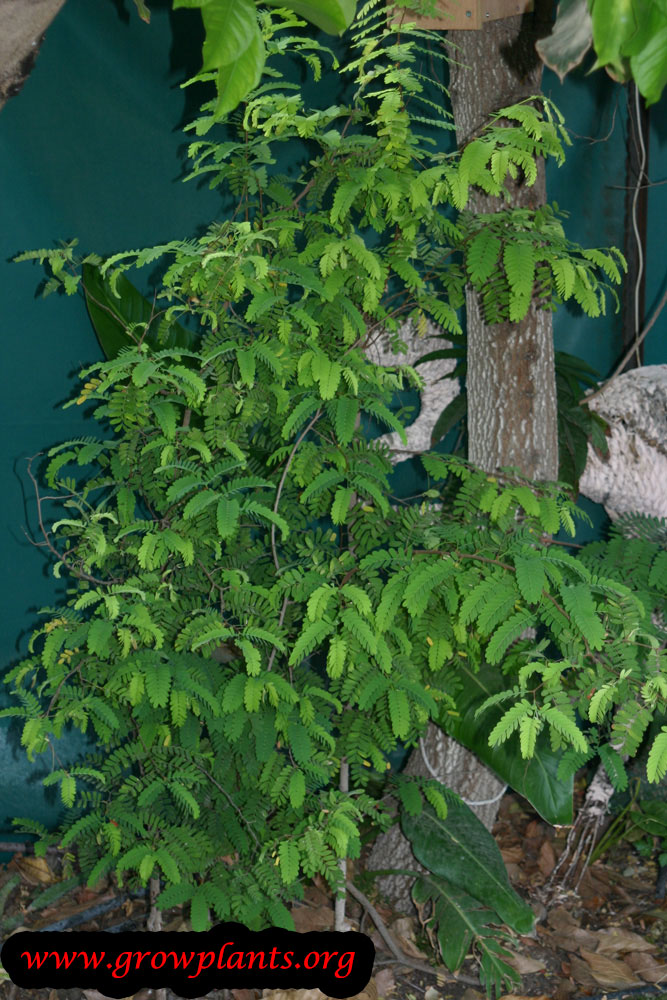
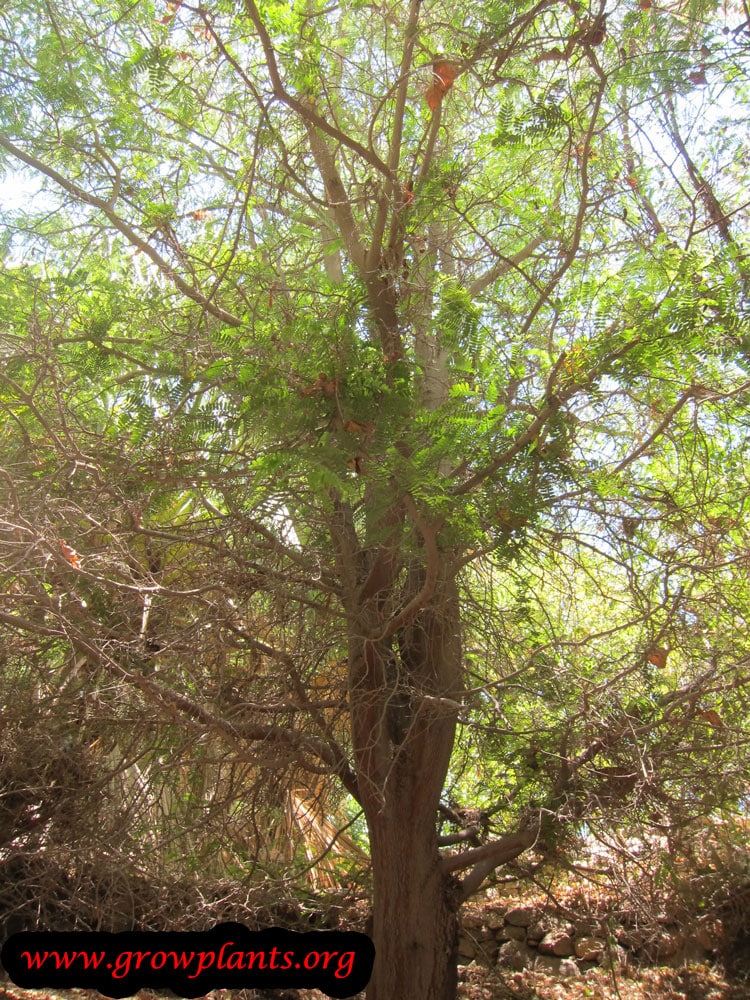
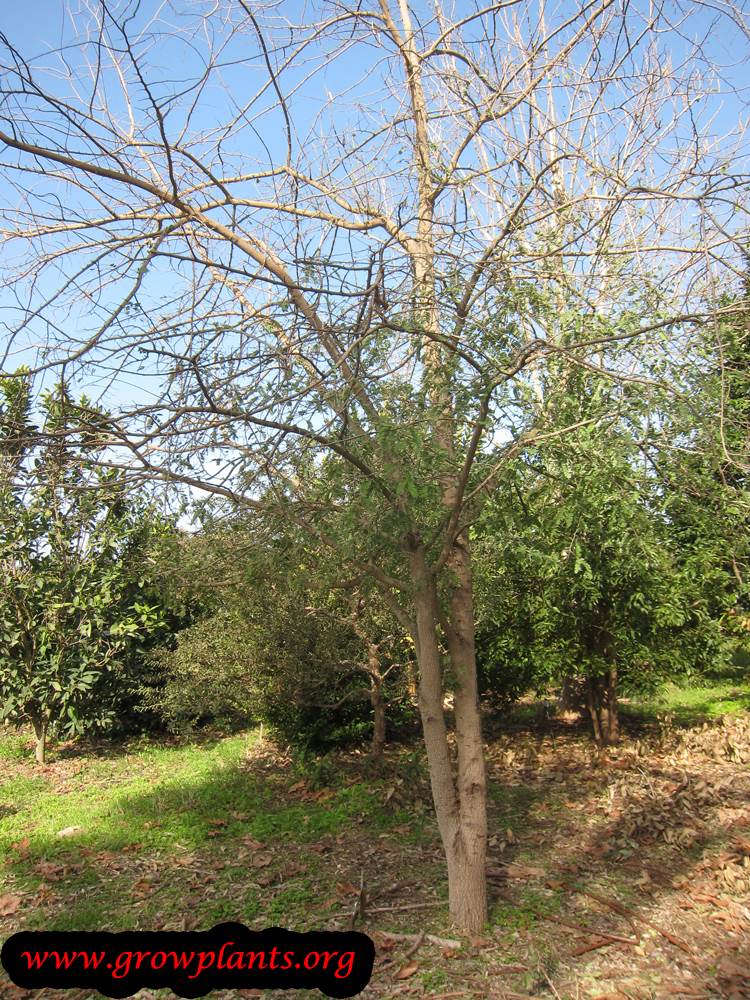
Overview: A large tropical tree reaching 4-10 m (12-30 ft), evergreen in warmth and briefly deciduous where cold, grown for its edible tangy pods and as a shade or bonsai tree. It has fine feathery foliage and a deep, wind-firm taproot.
Quick Specifications
| Specification | Attribute |
|---|---|
| Plant Type / Life Cycle | Evergreen tree (woody perennial; semi-deciduous in cold) |
| Foliage Type | Evergreen, becoming semi-deciduous in cold weather |
| Mature Size | 4-10 m (12-30 ft) tall |
| Growth Rate | Moderate |
| Root System | Deep taproot (making the tree notably wind-firm) |
| Toxicity | Non-toxic / edible (pulp is eaten) |
| Hardiness | USDA zone 10b+ (10a with careful overwintering) |
Growth Form & Structure
- Height & Spread: In the ground 4-10 m (12-30 ft) tall with a broad, spreading crown. It grows in a container but rarely fruits when potted, so pots suit foliage or bonsai use only.
- Growth Habit & Form: Upright tree with a dense, rounded, spreading canopy of fine foliage; also trained as bonsai.
- Lifespan & Maturity: Very long-lived; begins to bear fruit about 4-6 years from planting.
Anatomy & Physical Features
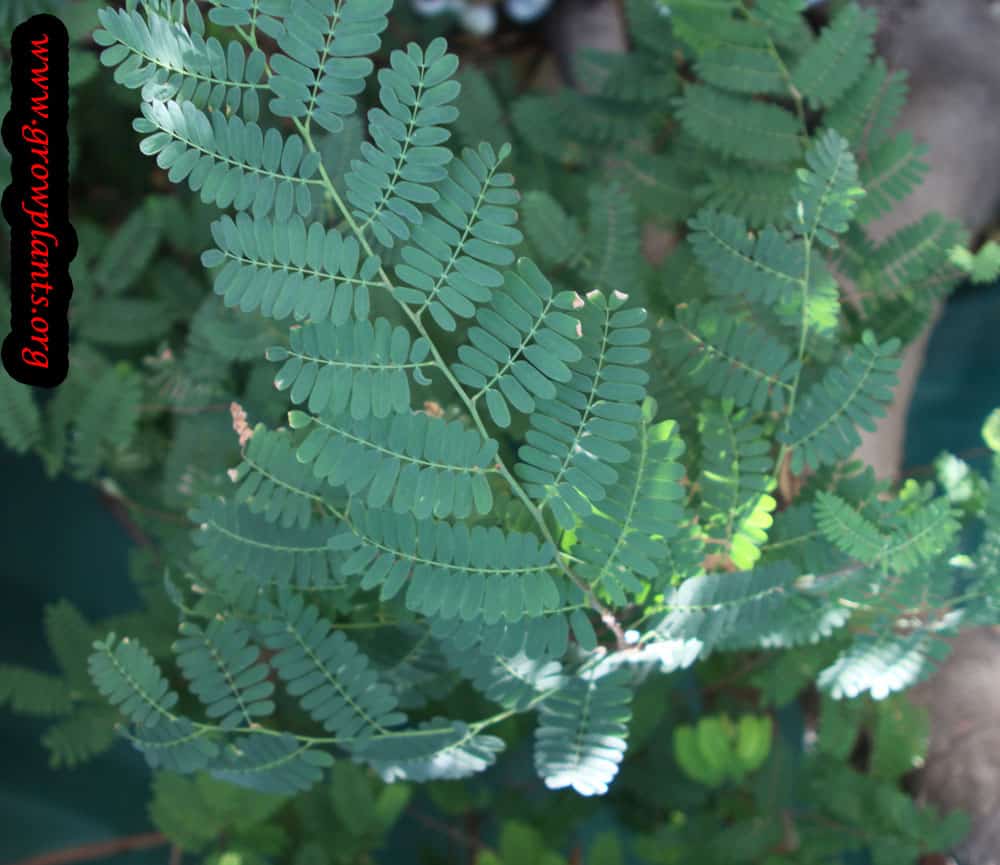
- Leaves & Foliage: Fine, feathery, pinnate green leaves.
- Flower Characteristics: Small yellow flowers veined with red, opening from red buds.
- Fruit Profile: Curved brown pods with sticky, sweet-and-sour purple-brown pulp, similar in taste to dates.
Primary Uses & Landscape Value
- Edible Uses: Pulp eaten fresh and used in jams, dried, made into fruit leather and as a cooking paste.
- Functional & Ornamental Roles: Shade and ornamental tree; also grown as bonsai.
Care Guide: Planting, Soil & Watering
Overview: Tamarind (Tamarindus indica) is a slow-to-moderate tropical/subtropical tree (hardiness zone 10b+, 10a with care) that loves full sun, warmth and humidity. It grows in rich soil and, once established, is fairly drought-tolerant, needing only low to moderate water.
Quick Care Requirements
| Requirement | Ideal Condition |
|---|---|
| Planting Season | Spring in zone 10a; spring to summer in zone 10b; spring to autumn in zone 11; year-round in zone 12+ |
| Growth Rate | Moderate |
| Soil Type | Rich, well-drained soil |
| Water Need | Low to Moderate — drought-tolerant once established; keep young trees moist |
Planting & Establishment
- Best Planting Season: Plant in the warm season — spring in cooler zone 10a, extending to summer and autumn in warmer zones, and year-round in zone 12+. For good-quality fruit it wants warmth above about 7°C and high humidity, though it can survive light frost.
- How to Plant:
- Hole Preparation: Dig a hole as deep as the root ball and about half again as wide, loosening the surrounding soil so roots settle in easily.
- Soil Amendments: Enrich the backfill with organic matter and mulch (dead leaves or other organic material) to build the rich soil tamarind prefers.
- Planting Depth: Set the root collar level with the soil surface, firm gently and water in; do not bury the stem. Mulch to help hold moisture.
- Growth Speed & Expectations: Expect a moderate pace; tamarind is a long-lived tree that takes several years (4–6) to begin bearing.
Soil, Watering & Drainage Care
- Soil Mix & Drainage Needs: Give it rich, well-drained soil and mulch to conserve moisture. It resents waterlogging; containers rarely fruit and are not recommended.
- Watering Schedule & Technique:
- Young / Newly Planted: Keep young trees’ soil moist and humid while they establish — they are more sensitive to drying out early on.
- Established: Established trees are fairly drought-tolerant; water deeply but only occasionally, letting the soil dry between soakings.
- Seasonal Adjustments: Water more through hot, dry spells; reduce in cool weather when growth slows.
Climate, Light & Hardiness
Tamarind grows in tropical, Mediterranean, and subtropical climates in full sun, and is drought tolerant while also able to survive brief frost – unusually resilient among the tropical/subtropical fruit trees in this group. Fruit quality is best kept above about 7°C (45°F).
Quick Climate Specifications
| Climate Zones | Tropical, Mediterranean, Subtropical |
|---|---|
| USDA Hardiness Zones | 10b+, and 10a with overwinter care |
| Optimal Temp Range | for good fruit quality, generally above approximately 7°C (45°F) |
| Cold Damage Begins | below approximately 7°C (45°F), affecting fruit quality |
| Frost Tolerance | Low to Moderate (can survive brief frost, per source data) |
| Light Conditions | Full Sun |
Sunlight & Light Exposure
Optimal Light Setup
Full sun for best growth and fruiting.
Direct Sun Requirement
Yes.
Best Exposure / Orientation
An open, sunny site.
Temperature Extremes & Hardiness
USDA Hardiness & Regional Limits
Reliable from zone 10b upward, with zone 10a workable given care.
Cold Damage & Winter Protection
Fruit quality declines below roughly 7°C (45°F); the tree itself is comparatively cold-tolerant for a tropical species and can survive brief frost, but young plants still benefit from protection near the cold edge of the range.
Frost Sensitivity
Low to moderate – more frost-tolerant than most of the true tropicals in this group, though not reliably frost-hardy.
Extreme Heat Tolerance
Very good; tamarind is a classic hot-climate tree.
Wind, Humidity & Microclimate
Humidity Preferences
Prefers relatively high humidity and consistently moist soil.
Dry-Air Tolerance
Generally drought tolerant once established, though it favors more humid conditions for best growth.
Rainfall & Seasonal Moisture
Adapted to tropical, Mediterranean, and subtropical rainfall patterns; tolerates dry spells well.
Microclimate Recommendations
A warm, sunny, sheltered site suits it across its range.
Growing in Pots, Balconies & Indoors
Tamarind (Tamarindus indica) is a long-lived tree of 4-10 m (12-30 ft). The grower is clear that it is not a houseplant, and while it can be kept in a pot it will very likely never bear fruit that way – so treat container culture as temporary or ornamental only.
Quick Details
- Container Size: A large tub (40 L+ / 10 gal+) for a young tree; not a lasting home
- Indoor Suitability: Not suitable indoors
- Best Spot: Full sun, outdoors in a warm climate
- Soil & Drainage: Free-draining mix; it tolerates drier soil than most tropicals
- Watering in Pots: Small to average – let the top of the mix dry between waterings
Indoors & On the Windowsill
- Houseplant limits: Not a houseplant – it needs full sun and grows into a substantial tree.
- Overwintering: Tamarind wants warmth for good fruit but can take light frost; in a cold climate a potted young tree can overwinter in a bright, frost-free spot.
On a Balcony or Patio
- Young tree in sun: A young specimen can spend warm seasons on a sunny patio. Pots against reflective walls dry fast – check moisture regularly, though tamarind is more drought-tolerant than most.
Choosing the Pot, Soil & Long-Term Care
- Pot & drainage: Use a pot with plenty of drainage holes; skip a standing water saucer to avoid root rot. Terracotta breathes and dries faster, while glazed or plastic pots hold moisture longer.
- Potting mix: A well-aerated, organic-rich mix – peat or coir blended with perlite or vermiculite for drainage.
- Feeding: Potted plants need feeding more often than those in the ground, as nutrients leach out with each watering – feed lightly through the active growing season.
- Repotting: Refresh the mix or pot up about every two years; for an established specimen, replace part of the soil and lightly prune the roots and top growth.
Growing this plant in a greenhouse
A greenhouse can give tamarind tree frost protection, cold protection, humidity control and extra warmth. In the right climate it may also be kept growing through winter, depending on how much warmth and light are provided.
Greenhouse at a glance
| Greenhouse suitability | Conditional - depends on your climate |
|---|---|
| Main benefits | frost protection, cold protection, humidity control, extra warmth |
| Season extension | earlier spring & later autumn |
| Outdoor protection advisable below | about 7°C |
| Maintain greenhouse minimum | around 7°C for active growth |
| Suitable types | heated greenhouse, glass greenhouse, polycarbonate greenhouse |
| Heating | Heating is optional - useful mainly for winter growing in cold areas. |
Related greenhouse guides
- Greenhouses: How to Choose the Right Greenhouse
- Best Greenhouse Heaters
- Greenhouse Climate Control: Temperature, Ventilation and Humidity
- Polycarbonate Greenhouses: What to Look for Before Buying
Fertilizing & Feeding
Tamarind is a long-lived tree that grows well in rich, mulched soil; steady, moderate feeding while young supports the canopy that eventually carries its brown, tangy pods.
Quick Fertilizing Specs
| Feeding Level | Moderate; does best in rich soil built up with mulch and organic matter. |
|---|---|
| young_feeding | A nitrogen-forward approach supports the canopy development a young, non-bearing tree needs. |
| mature_feeding | Balanced feeding through flowering, shifting toward potassium-conscious feeding as the pods fill out. |
| Main Nutrient Priority | Balanced nutrition overall, with extra nitrogen while the canopy is developing and attention to potassium during pod fill. |
| Best Feeding Period | Through the warm, active growing season. |
| Organic Options | Mulch and other organic matter worked into rich soil suit this tree well. |
| Reduce/Stop Feeding | Ease off feeding as growth slows toward the cooler part of the year. |
Feeding by Growth Stage
Newly planted
Help a newly planted tamarind root into rich soil and begin producing its first bi-pinnate leaves.
| Nutrient direction | Light, balanced nutrition focused on root establishment rather than pushing top growth. |
|---|---|
| Timing | In the weeks and months after planting, while the young tree is still becoming established. |
| Frequency | A light feeding at planting, with further light feedings only once new growth confirms the tree has rooted in. |
| Fertilizer types | A balanced complete fertilizer used lightly, Mulch and organic matter worked into the planting area |
| Precautions | Keep the root zone consistently moist and mulched while the young tree establishes, and avoid heavy feeding right at planting. |
Young, non-bearing tree
Build a strong branch framework and dense canopy on a young tamarind before it begins bearing pods.
| Nutrient direction | A nitrogen-forward feeding approach to encourage steady vegetative growth. |
|---|---|
| Timing | Through the active growing season as the young tree puts on new growth. |
| Frequency | Several light feedings spread through the growing season suit a young, actively growing tree better than one heavy application. |
| Fertilizer types | A nitrogen-forward complete fertilizer for young trees, Mulch and organic matter to build soil fertility |
| Routine trace nutrients | iron, manganese, zinc |
| Precautions | Keep mulch pulled slightly back from the trunk, and pair feeding with consistently moist soil while the tree is still young. |
Established, pre-bearing
Support a maturing, grafted tamarind as it builds toward its first flowering and pod set.
| Nutrient direction | Shift toward balanced feeding that supports continued canopy growth alongside the onset of flowering. |
|---|---|
| Timing | Through the active growing season as the tree matures toward its first crop. |
| Frequency | Regular light-to-moderate feedings through the growing season support a tree maturing toward its first harvest. |
| Fertilizer types | A balanced complete fruit-tree fertilizer, Mulch and organic matter maintained around the root zone |
| Routine trace nutrients | iron, manganese, zinc |
| Precautions | Avoid pushing excessive late-season nitrogen, which can favor leafy growth over the flowering the tree needs to begin bearing. |
Mature, pod-bearing
Support a mature, grafted tamarind through flowering and the development of well-filled pods, since poorly fed trees are prone to disappointingly small pods.
| Nutrient direction | Balanced nutrition through flowering, shifting toward potassium-conscious feeding as pods fill and mature. |
|---|---|
| Timing | Through the active growing season, spanning flowering and pod development. |
| Frequency | Regular, moderate feedings through the growing season support flowering and pod fill better than a single heavy application. |
| Fertilizer types | A balanced to potassium-conscious complete fruit-tree fertilizer, Mulch and organic matter maintained around the root zone |
| Routine trace nutrients | iron, manganese, zinc |
| Precautions | Keep feeding consistent rather than heavy and infrequent, and ease off as pods approach harvest. |
Nutrient Deficiency Signs & Corrections
Leaflets yellow between the veins while the veins themselves stay dark green.
| Possible causes | High soil pH limiting iron or manganese availability, Waterlogged or compacted soil restricting root uptake, A genuine iron or manganese shortage in the soil |
|---|---|
| Appears first on | New growth toward the branch tips. |
| What to check | Soil pH and drainage, Whether only the newest leaves are affected, Recent watering and root health |
| Possible correction | Correct soil pH and drainage first; if yellowing persists, apply a chelated iron or manganese product per its label. |
The tree bears pods, but they stay noticeably small rather than filling out.
| Possible causes | The tree grown from seed rather than being grafted, which tends to produce smaller pods, A general nutrient shortage during pod development, Water stress while pods are filling |
|---|---|
| Appears first on | The developing pods themselves. |
| What to check | Whether the tree is a grafted selection or a seedling, Feeding history through the pod-fill period, Soil moisture consistency while pods are filling |
| Possible correction | Favor grafted trees for reliable pod size, and keep feeding and watering consistent through pod development. |
Overall leaf color is pale and new growth stays sparse rather than filling out the canopy.
| Possible causes | A general nitrogen shortage in poor soil, Insufficient soil moisture for a tree that prefers steady moist conditions, Root competition or crowding from nearby plants |
|---|---|
| Appears first on | New growth across the canopy. |
| What to check | Recent feeding history and soil fertility, Soil moisture consistency, Root zone competition |
| Possible correction | Confirm moisture and root conditions are adequate, then step up to a nitrogen-forward feeding if pale, sparse growth continues. |
Pruning, Training & Seasonal Maintenance
Tamarind is an evergreen tropical tree that keeps growing year-round, so it tolerates pruning across the whole year rather than needing a strict dormant window — the plant’s own facts list the pruning season simply as “all year.” The main task is corrective: removing downward-drooping branches and, while the tree is young, thinning excess branch density so a strong framework develops. Because fruiting quality depends on the graft (seedling trees often produce small, low-quality pods), watching for rootstock growth on a grafted tree also matters.
Quick Pruning & Maintenance Specs
| Pruning Tolerance | Moderate–High (tolerates cutting at any time of year) |
| Primary Pruning Window | Any time; concentrate structural work outside the spring–summer bloom into summer–autumn harvest window |
| Typical Frequency | As-needed, with a concentrated thinning pass while young |
| Main Objective | Remove downward/weak growth; thin dense young growth for a sound framework |
| Young Plant Priority | Thin out overly dense branching early |
| Mature Plant Priority | Remove downward-growing and weak branches |
| Best Tool Type | Loppers/pruning saw (this becomes a substantial 4–10m tree) |
| Avoid Heavy Pruning During | Spring–summer bloom into summer–autumn harvest |
Pruning by Plant Age & Size
Newly Established
Minimal pruning.
Young / Formative
Thin dense young branching to leave well-spaced, strongly-attached scaffold limbs — directly reflects the plant’s own care notes about cutting back high-density young growth.
Mature / Established
Ongoing removal of downward-drooping and weak branches.
Seasonal Pruning Schedule
Ongoing Sanitary (year-round)
Objective: remove drooping/downward branches and thin weak growth whenever seen, matching the “all year” pruning tolerance in the plant’s own facts. Because the tree flowers spring–summer and fruits summer–autumn, avoid concentrating heavy structural cuts in that window so the developing pod crop isn’t disturbed.
Structural Pruning & Training
Downward-growing/drooping branches are specifically flagged for removal in the plant’s own guidance. Thinning excess density in young trees builds a stronger, more open framework and is called out directly in the source care information.
Special Growth to Remove
Rootstock suckers below the graft union — tamarind is usually grafted to ensure good pod size, so vigorous growth arising below the graft should be removed before it out-competes the fruiting scion.
Container & Small-Space Pruning
Container growing is possible, but the plant’s own facts warn there is a high chance it will never bear fruit this way. If grown in a container, treat it as an ornamental or bonsai-style specimen and prune primarily for compactness rather than for crop structure.
Tools
- loppers — mid-size branch and drooping-limb removal.
- pruning_saw — larger structural cuts as the tree matures to 4–10m.
- bypass_secateurs — fine thinning cuts on young growth.
Tool Hygiene & Disease Risk
Routine — clean, sharp tools. Recorded pest pressure is ants and aphids, not a major transmissible disease documented for this species.
Cut Placement & Technique
Use thinning cuts at the branch origin for drooping or weak limbs, just outside the branch collar. Avoid heading cuts on young scaffold branches, which would encourage even denser regrowth on a tree that already needs thinning while young.
Heavy Pruning & Rejuvenation
Not indicated — the plant’s own guidance is corrective and thinning, not hard rejuvenation. Avoid removing large amounts of canopy at once given the tree’s eventual size and the crop-timing considerations above.
Post-Pruning Care
Routine watering; no special feeding tied to pruning. Watch new cuts for the ants and aphids already noted as this species’ pest pressure.
Common Pruning Mistakes
- Leaving young growth too dense instead of thinning it early, producing a crowded, weak-branched framework.
- Letting rootstock suckers grow unchecked below the graft on a grafted tree.
- Pruning heavily right through the bloom-to-harvest window.
When NOT to Prune
Avoid heavy cuts through the spring–summer bloom and summer–autumn fruiting window to protect the developing crop.
Recommended Tools (by task)
- Thinning dense young branch growth: bypass_secateurs — for the smaller-diameter wood typical of a young tree being thinned.
- Removing downward-drooping or crossing limbs on an established tree: loppers — matches the mid-size branch wood this recurring task involves.
- Structural removal of large limbs on a mature tree: pruning_saw — for the bigger cuts a 4–10m tree eventually needs.
Pruning Troubleshooting
| Problem | Possible Cause | What to Check | Corrective Action |
| Small, low-quality pods | Tree grown from seed rather than grafted, or rootstock suckers out-competing the scion | Origin of the tree and growth below the graft union | Remove rootstock suckers promptly; note that ungrafted seedlings inherently produce smaller pods |
| Dense, weak young branching | No thinning done while the tree was young | Branch spacing and attachment strength | Thin out excess branches now to reduce future limb breakage |
Propagation Guide
Tamarind is easily grown from seed, which germinates quickly with a simple overnight soak, but the site notes that grafting is important because seedling-grown trees can produce noticeably small pods. Overall difficulty is Easy for simply starting a tree from seed; grafting or air layering for pod quality takes more skill.
Quick Propagation Specs
| Best Propagation Method | Seed (fast, easy germination); grafting is recommended to ensure good pod size |
| Alternative Methods | Air layering |
| Propagation Difficulty | Easy by seed; grafting is more advanced |
| Seed True-to-Type | Variable – seedling trees can produce noticeably small pods |
| Vegetative True-to-Type | Yes |
| Best Propagation Season | Spring to summer is best for sowing; possible year-round in hardiness zone 12+ |
| Seed Germination Time | 1–3 weeks |
| Seed Sowing Depth | 2–5 cm (1–2 in) |
Growing from Seed
Seed Handling & Viability
Use fresh seed where possible; store seed in a dry, dark location until sowing.
Dormancy & Pre-Sowing Treatment
Soak seeds in water for 24 hours before sowing.
Sowing Season
Spring to summer is best; possible year-round in hardiness zone 12.
Sowing Depth & Orientation
Sow 2–5 cm (1–2 in) deep in a mix that includes vermiculite to help hold moisture. The site recommends starting in individual pots rather than sowing directly; where sown directly at final spacing, allow about 5×4 m (15×12 ft). In colder climates, seed can be started indoors over winter.
Germination Conditions
Sunny location, high humidity, rich soil, and don’t let the soil dry out.
Germination Time
1–3 weeks.
Seedling Care
Keep soil moist with high humidity as seedlings establish.
Grafting & Budding
Why Grafting Is Used
The site states grafting is important for tamarind because ungrafted seedling trees can produce noticeably small pods.
Air & Ground Layering
Air layering is named by the site as tamarind’s vegetative propagation method (alongside grafting). The site does not detail the specific technique – branch selection, girdling, medium or timing are not given, so no specific steps are stated here beyond noting it is a recognized method for this species.
Bloom & Edible Flower Guide
Quick Details
- Bloom Season: Spring to summer
- Time to First Bloom: Slow from seed, often several years (commonly six or more); grafted trees flower sooner
- Flower Appearance: Yellow flowers veined with red or orange, opening from reddish buds
- Edibility: Yes – the flowers (and young leaves) are edible and are cooked as a vegetable or added to soups and salads in parts of Asia and Africa; they are not usually eaten raw
Detailed Blooming Overview
Tamarind has one of the prettier blooms among the tropical fruit trees: yellow petals streaked with red, opening from reddish buds and carried in small clusters. Beyond their looks, the flowers and young leaves are gathered as food in several cuisines, where they are cooked rather than eaten raw.
Flower Characteristics
- Yellow flowers veined with red or orange.
- Reddish buds before the flowers open.
- Borne in small clusters (racemes).
Bloom Care & Thinning
- Pollination: Mainly bees.
Fruit & Uses
Tamarind is grown for the tangy-sweet pulp inside its brown seed pods, which is eaten fresh, dried, or cooked into jams, sauces and fruit leather. The pulp’s flavour is often compared to date palm, and the seeds inside the pod are set aside rather than eaten with the pulp.
Quick Edible Specs
| Edible Parts | Pod pulp (fruit); seeds are separated out |
|---|---|
| Main Use(s) | Fresh eating, jams, drying, fruit leather, culinary souring agent |
| Eaten Raw or Cooked | Raw pulp eaten out of hand; also dried or cooked into jams/leather |
| Preparation Required | Crack the pod, remove the brittle outer shell and fibrous strands, separate pulp from seeds |
| Harvest Season | Summer to autumn |
| Time to First Harvest | Several years after planting; grafted trees are grown specifically to avoid undersized pods – see Propagation |
| Storage | The pulp keeps well dried or as a dense paste, which is the traditional long-term storage form |
| Safety/Toxicity Caveat | None for the pulp; picking can be awkward as pods are noted to be hard to harvest |
Fruit (Pods)
The fruit grows as a brown pod with a brittle shell; inside, the pulp is purple-brown and tastes like a tangy, date-palm-like sweetness. Pods are picked once the shell has dried and browned; picking is noted as one of the trickier tasks with this tree, since pods can be scattered through a dense canopy.
Seeds, Pods & Nuts
The hard seeds embedded in the pulp are removed before eating the pulp fresh. In some cuisines the seeds themselves are eaten after roasting or boiling to soften the tough seed coat, but this is a secondary, less common use compared with the pulp.
Preparation, Uses & Safety
The ripe pod is cracked open, the brittle shell and stringy fibres peeled away, and the sticky pulp separated from the seeds. The pulp is eaten fresh, dried for storage, or cooked into jams and fruit leather; it is also widely used as a souring ingredient in cooking. There are no toxicity concerns with the ripe pulp.
Pests, Diseases & Troubleshooting
Tamarind is a large, hardy, drought-tolerant tropical tree with relatively few serious pests, but its pods and seeds attract storage and fruit borers, and sap-sucking scale, mealybug and aphids (tended by ants) bring sooty mould onto the foliage. Sound orchard hygiene – prompt harvest, clearing fallen pods, and encouraging natural enemies – keeps most problems minor.
Quick Troubleshooting Overview
| Issue / Pest | Main Symptom | Primary Solution |
|---|---|---|
| Tamarind seed/pod borer | Bored, holed pods; larvae in seeds | Harvest promptly, clear fallen pods, store dry/sealed |
| Scale & mealybug | Bumps/white fluff, sticky sap, sooty mould | Horticultural oil, band trunks against ants |
| Aphids | Curled new shoots, honeydew, ants | Water jet, soap, encourage ladybirds |
| Sooty mould | Black film on leaves | Control the honeydew-producing insects |
| Powdery mildew / leaf spot | White film or brown spots on foliage | Airflow, remove debris, sulfur or copper |
Common Pests & Management
- Tamarind seed / pod borer (groundnut bruchid) (Caryedon serratus):
- Symptoms: The key pest: beetle larvae bore into ripening and stored pods and tunnel through the seeds, leaving holes and powdery frass; infestation continues and worsens in storage, ruining the crop.
- Prevention & Control: Harvest promptly at maturity and do not leave ripe pods hanging or lying on the ground. Clean up fallen pods, dry the harvest thoroughly, and store in sealed, cool, dry containers. Solar heating or freezing of stored pods kills larvae; keep the store clean and separate from old stock.
- Scale insects (Aonidiella / Coccidae spp.):
- Symptoms: Brown, waxy or shell-like bumps encrust twigs and leaf veins; feeding weakens shoots and soft scales excrete honeydew that blackens foliage with sooty mould. Ants signal their presence.
- Prevention & Control: Prune out heavily encrusted twigs and apply horticultural oil to smother scale, repeating for later generations. Band trunks with a sticky barrier to stop ants farming them, and protect parasitic wasps and lady beetles.
- Mealybugs (Planococcus / Ferrisia spp.):
- Symptoms: Cottony white tufts gather on shoot tips, leaf axils and developing pods, sucking sap, stunting growth and producing honeydew and sooty mould.
- Prevention & Control: Dislodge with a strong water spray and dab with soap or oil solution. Control attending ants, avoid over-feeding, and encourage mealybug destroyers (Cryptolaemus) and lacewings.
- Aphids (Aphis craccivora):
- Symptoms: Soft green-black insects crowd tender new shoots and flower clusters, curling growth and leaving sticky honeydew; ants tend and spread them.
- Prevention & Control: Hose off colonies and squash early arrivals; encourage ladybirds and hoverflies and band trunks against ants. Insecticidal soap or light oil handles persistent groups – spray in the evening to spare pollinators.
Diseases & Fungal Issues
- Sooty mould (Capnodium spp.):
- Symptoms: A black film coats leaves and twigs, growing on honeydew from scale, mealybug and aphids rather than infecting the tree directly; it dulls foliage and reduces photosynthesis.
- Treatment & Management: It clears once the sap-sucking insects and their ants are controlled. Rinse foliage to speed recovery; no direct fungicide needed.
- Powdery mildew (Oidium spp.):
- Symptoms: A white powdery coating develops on leaves and shoots in crowded or humid conditions, dulling and yellowing foliage.
- Treatment & Management: Prune to open the canopy for airflow, clear debris, and apply sulfur or a horticultural-oil-based fungicide at the first sign.
- Leaf spot & anthracnose / root rot (Colletotrichum / Pestalotiopsis spp. / Phytophthora):
- Symptoms: Brown angular or target-like leaf spots and shoot blight in warm, wet weather; in waterlogged soil, root and collar rot cause yellowing, wilting and dieback.
- Treatment & Management: Improve drainage and avoid overhead watering; remove and destroy spotted leaves and fallen debris and prune dead wood. A copper spray checks foliar spots; correct drainage to prevent root rot.
Growing Difficulties & Abiotic Problems
- Waterlogging / root rot:
- Cause & Symptoms: Though drought-tolerant, tamarind will not tolerate soggy ground – roots suffocate and rot, causing yellowing and dieback.
- Correction Strategy: Plant in deep, free-draining soil, avoid low wet spots, and water deeply but infrequently once established.
- Cold / frost damage:
- Cause & Symptoms: As a tropical tree, young plants are frost-tender; cold snaps blacken and kill new growth.
- Correction Strategy: Site in a warm, sheltered position and protect young trees from frost; mature trees tolerate brief cool spells but not hard freezes.
- Nutrient chlorosis:
- Cause & Symptoms: Yellowing foliage on poor or alkaline soils indicates iron or general nutrient deficiency.
- Correction Strategy: Feed established trees with a balanced fertiliser and add chelated iron or organic matter where interveinal yellowing appears.
What Helps – Products & Tools
Useful tools are horticultural / neem oil and insecticidal soap (scale, mealybug, aphids), a sticky trunk band against ants, sealed/dry storage and solar or freezer treatment for the seed borer, sulfur fungicide (powdery mildew) and copper fungicide (leaf spot/anthracnose). Emphasise orchard hygiene and prompt harvest first.