

Plant Profile & Key Characteristics
Also known as: Golden shower tree, Purging cassia, Indian laburnum, Pudding-pipe tree
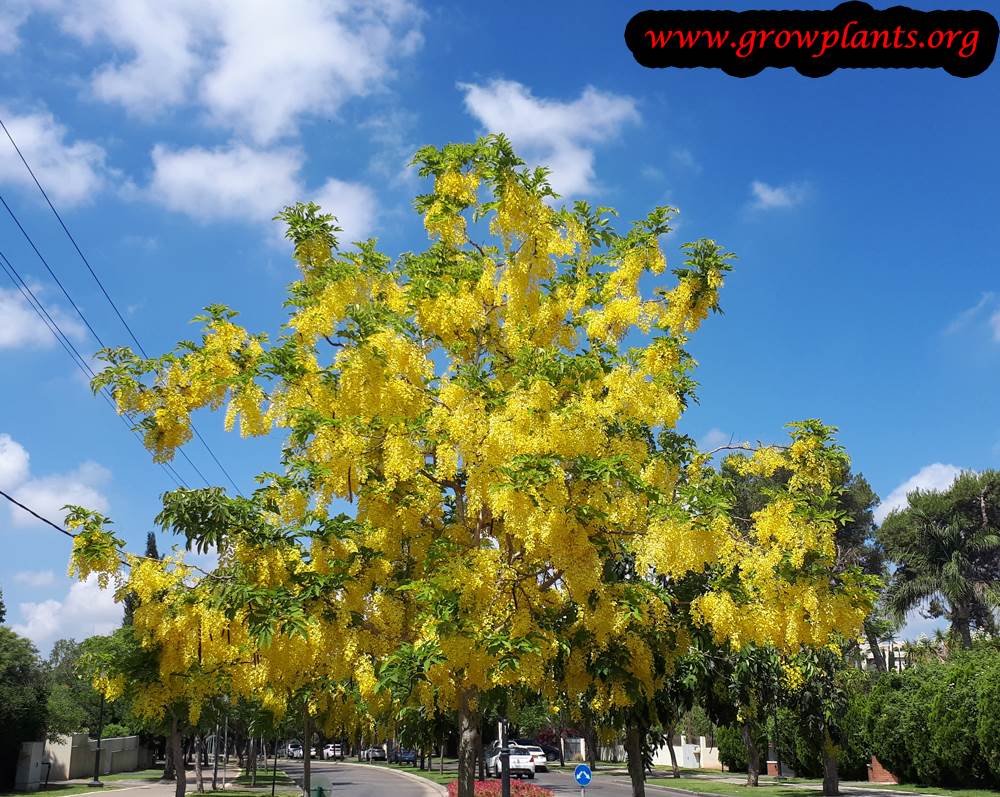
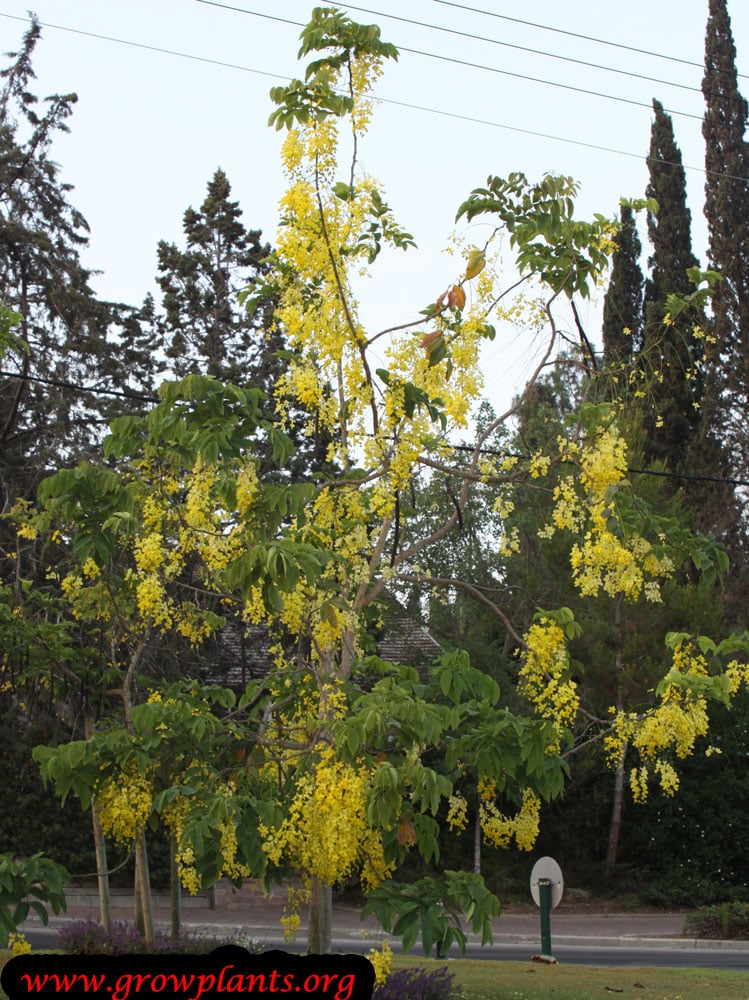
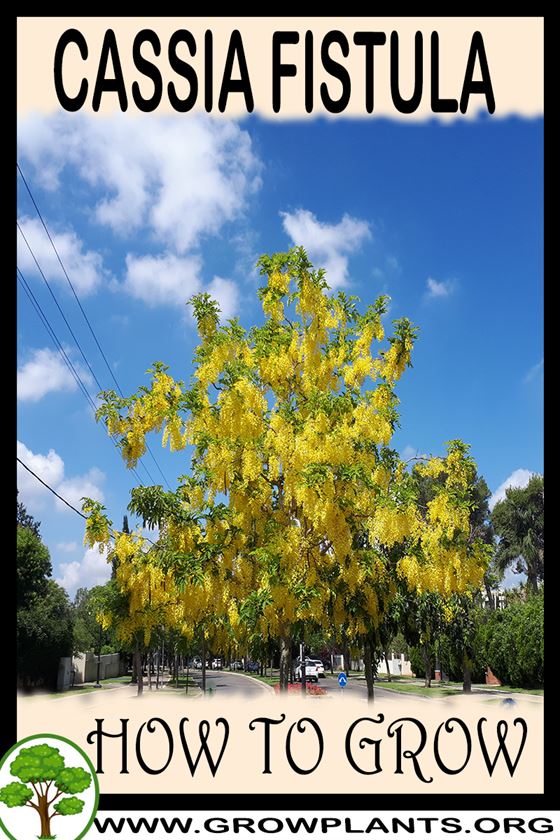
A spreading tree reaching about 6-12 m (20-40 ft), spectacular in bloom with cascading racemes of golden-yellow flowers. A perennial grown chiefly as a flowering ornamental (also as a bonsai); its long brown pods contain a medicinal, laxative pulp.
Quick Specifications
| Specification | Attribute |
|---|---|
| Plant Type / Life Cycle | Perennial |
| Foliage Type | Deciduous to semi-evergreen |
| Mature Size | 6-12 m tall (20-40 ft); dwarf forms 2-3 m |
| Growth Rate | Moderate (fast with feeding) |
| Toxicity | Pod pulp is a strong laxative (purgative) – medicinal, not a casual food |
| Hardiness | USDA zone 10a-10b+ |
Growth Form & Structure
- Height & Spread: 6-12 m (20-40 ft); can be kept as a 2-3 m dwarf or grown as a bonsai/container tree
- Growth Habit & Form: Spreading tree with an open crown and pendulous flower clusters
- Lifespan & Maturity: Bears pods about 2-4 years from planting
Anatomy & Physical Features
- Leaves & Foliage: Large pinnate compound leaves
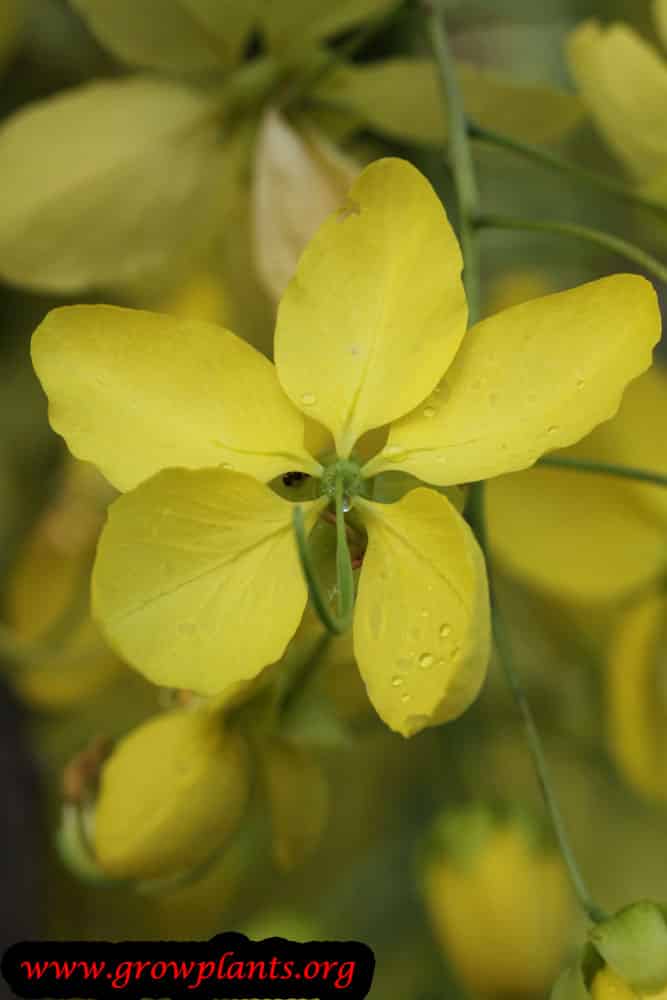
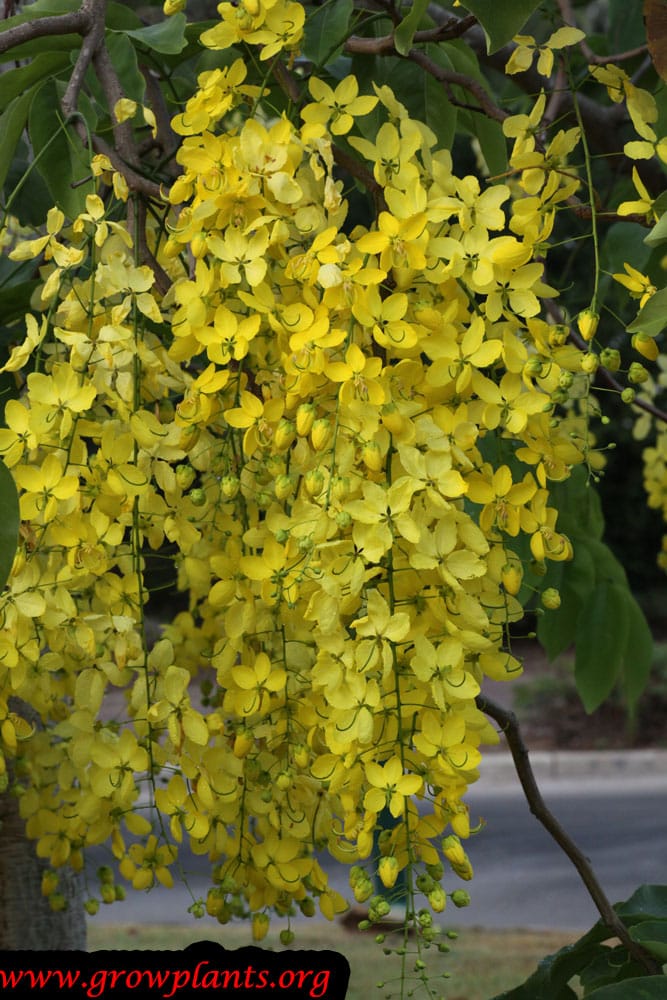
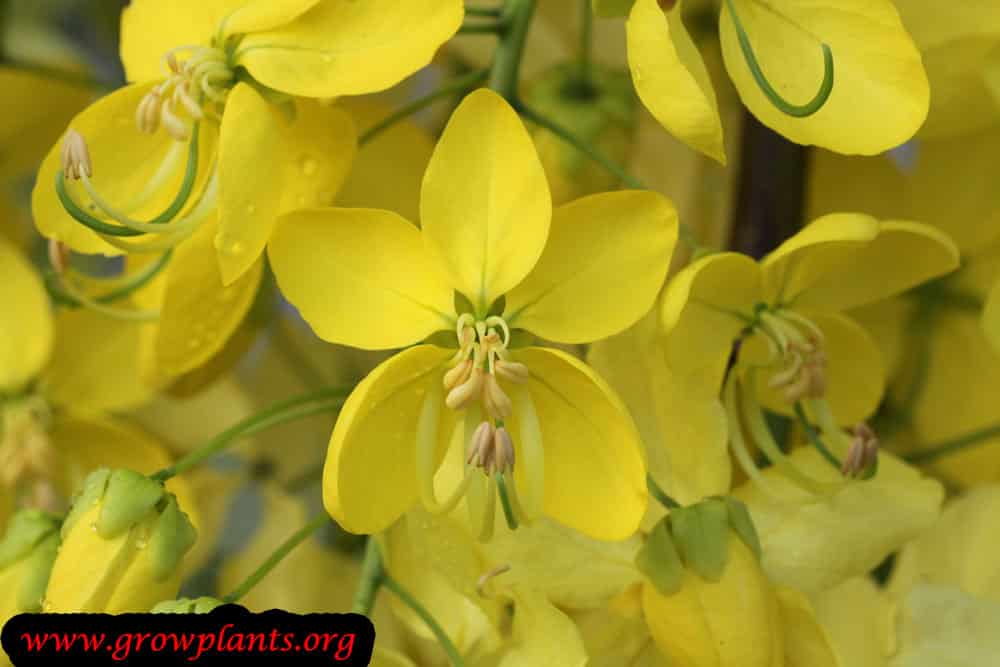
- Flower Characteristics: Fragrant golden-yellow flowers in long, weeping racemes (dozens per cluster); bee-pollinated
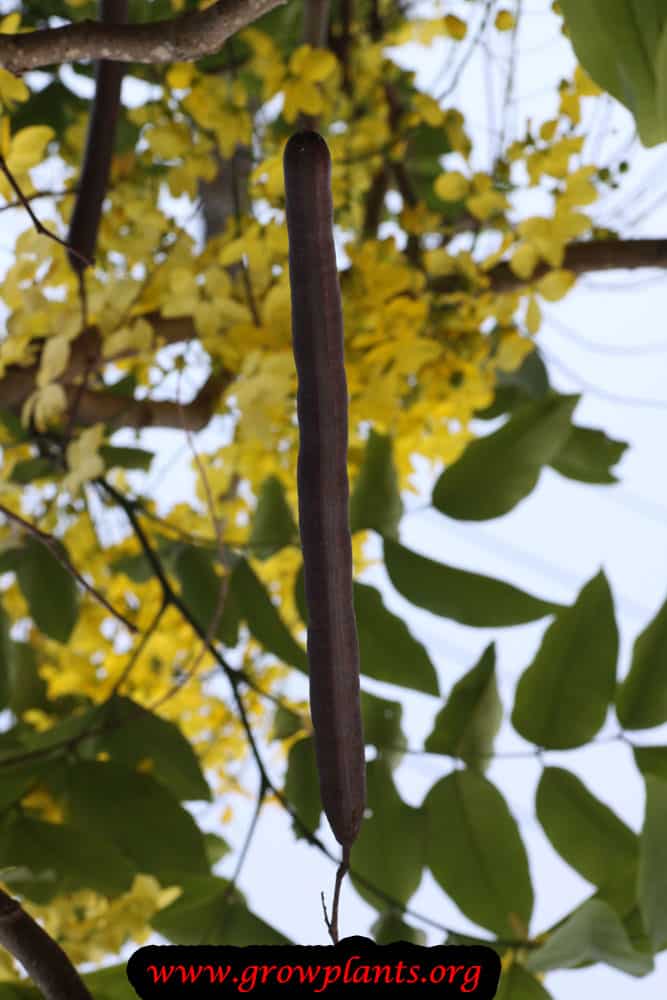
- Fruit Profile: Long cylindrical brown pods 30-70 cm holding 10-30 seeds set in dark pulp
Primary Uses & Landscape Value
- Edible & Medicinal Uses: Pod pulp used medicinally as a laxative and to make beverages – a purgative, not an everyday food
- Functional & Ornamental Roles: Premier ornamental flowering shade and street tree; bonsai subject; drought-tolerant
Care Guide: Planting, Soil & Watering
Overview: A moderate-to-fast-growing flowering tree for full sun and rich, well-drained soil topped with mulch. Drought-tolerant once established, it flowers best with regular water and feeding.
Quick Care Requirements
| Requirement | Ideal Condition |
|---|---|
| Planting Season | Spring–summer in zone 10a; spring–autumn in 10b–11; year-round in 12+ |
| Growth Rate | Moderate (fast with feeding) |
| Soil Type | Rich and well-draining |
| Water Need | Low to moderate – drought-tolerant but prefers regular water |
Planting & Establishment
- Best Planting Season: Plant across the warm season into warm soil, using the zone timing above.
- How to Plant:
- Hole Preparation: Dig a hole as deep as the root ball and 50–100% wider.
- Soil Amendments: Mix organic matter, humus and dead leaves into the backfill, then mulch the surface.
- Planting Depth: Set the root collar at soil level, loosen the outer roots, and mulch to hold moisture.
- Growth Speed & Expectations: Moderate, and fast with adequate fertiliser; reaches 6–12 m, or 2–3 m as a dwarf.
Soil, Watering & Drainage Care
- Soil Mix & Drainage Needs: Rich, well-drained soil topped with mulch; grows in large containers if kept small or trained as bonsai.
- Watering Schedule & Technique:
- Young / Newly Planted: Water every day for the first two weeks, ideally in the morning.
- Established: Water moderately; it tolerates drought but flowers best with regular deep watering.
- Seasonal Adjustments: More in heat, less in the cool season.
Climate, Light & Hardiness
The golden shower tree is a tropical to warm-subtropical tree - evergreen in the warmest climates and briefly deciduous where winters are cooler - that flowers best in full sun and steady heat. It is frost-tender, suited to roughly USDA zone 10b and warmer, with zone 10a possible only with careful placement and winter protection.
Quick Climate Specifications
| Climate Zones | Tropical, subtropical, warm mediterranean (frost-free) |
|---|---|
| USDA Hardiness Zones | Approximately 10b and warmer; 10a with careful winter protection |
| Optimal Temp Range | Approximately 24–35°C (75–95°F) |
| Cold Damage Begins | Foliage and young growth suffer near 3–5°C (37–41°F) |
| Approx. Survival Minimum | An established tree may briefly survive close to 0°C (32°F); varies by cultivar, age, exposure duration, and conditions |
| Frost Tolerance | Very low |
| Light Conditions | Full sun (tolerates less, but blooms less) |
| Wind Tolerance | Moderate |
Sunlight & Light Exposure
Optimal Light Setup
Give it full sun. The spectacular hanging yellow bloom depends on strong light; in shade the canopy thins and flowering drops off.
Direct Sun Requirement
Direct sun is needed for a full display - it will grow in lighter shade but flower far less.
Best Exposure / Orientation
An open, warm exposure with sun reaching the whole crown gives the most even flowering.
Temperature Extremes & Hardiness
USDA Hardiness & Regional Limits
Winter cold sets its limit: it needs a frost-free winter, and the outdoor planting season runs from spring only in cooler zone 10a up to year-round in tropical zone 12 and warmer.
Cold Damage & Winter Protection
Temperatures below about 5°C (41°F) slow it and can scorch soft growth. In cool-marginal spots choose a warm microclimate and shelter young trees through their first winters.
Frost Sensitivity
Frost damages foliage and shoots; young trees are markedly more tender than established ones, and cold hardiness varies between cultivars.
Extreme Heat Tolerance
It thrives in prolonged tropical heat, which supports strong growth and bloom.
Wind, Humidity & Microclimate
Humidity Preferences
Warm, moderately humid to humid air suits its tropical background.
Wind Tolerance
Shelter from strong wind protects the long flower chains and the somewhat brittle branches.
Microclimate Recommendations
A warm, sun-facing, wind-sheltered position helps at the cool edge of its range. Container-grown trees chill faster at the roots and should be moved to shelter in cold snaps.
Growing in Pots, Balconies & Indoors
The golden shower tree is a spectacular big flowering tree – not a houseplant – but the grower says it can be container-grown if kept small as a dwarf or bonsai (it even has naturally dwarf forms at 2-3 m). A young tree flowers well in a large pot.
Quick Details
- Container Size: Minimum around 30 L (7 gal), better 100 L (20 gal) – start 50-100% bigger than the root ball and pot up
- Indoor Suitability: No – grow it outdoors
- Best Spot: Full sun
- Soil & Drainage: Peat with perlite (or potting mix) and lava grit in the base for drainage
- Watering in Pots: Small to average – drought tolerant but prefers more; water, then let it dry the same day
Indoors & On the Windowsill
- Not a houseplant: Too large and too sun-hungry for indoors – grow it outside.
- Overwintering: Tender to hard frost when young; in marginal climates a potted young tree can shelter in a bright, frost-free spot over winter.
On a Balcony or Patio
- Sun & size: A young or dwarf tree gives a sunny balcony a burst of gold flower; give it full sun and shelter, but plan to plant it out or keep it dwarfed as it grows.
- Weight & wind: A big pot is heavy and a leafy young tree catches wind – stake it and site it securely.
Choosing the Pot, Soil & Long-Term Care
- Pot & potting-up: Keep it small as a dwarf or bonsai. Start in a pot 50-100% bigger than the root ball and pot up as it fills – minimum around 30 L (7 gal), better 100 L (20 gal).
- Drainage & mix: Use peat with perlite (or potting mix) and some lava grit in the base; sit it on a saucer and, when watering, let it fill but dry the same day.
- Feeding: Container trees need more feeding and added organic matter than trees in the ground.
- Refresh in dormancy: Once it is big, replace part of the soil and cut back the tree and roots in the dormant season to keep it in scale.
Growing this plant in a greenhouse
A greenhouse can give cassia fistula frost protection, cold protection, humidity control and extra warmth.
Greenhouse at a glance
| Greenhouse suitability | Conditional - depends on your climate |
|---|---|
| Main benefits | frost protection, cold protection, humidity control, extra warmth |
| Season extension | earlier spring & later autumn |
| Outdoor protection advisable below | about 10°C |
| Maintain greenhouse minimum | around 15°C for active growth |
| Suitable types | heated greenhouse, polycarbonate greenhouse |
| Heating | Heating is recommended in cold climates for continuous growth. |
Related greenhouse guides
- Greenhouses: How to Choose the Right Greenhouse
- Best Greenhouse Heaters
- Greenhouse Climate Control: Temperature, Ventilation and Humidity
- Polycarbonate Greenhouses: What to Look for Before Buying
Fertilizing & Feeding
A light to moderate feeder. As a nitrogen-fixing legume it supplies much of its own nitrogen, so it needs only modest, balanced feeding through spring and the flowering season; heavy nitrogen produces leaves at the expense of flowers.
Quick Fertilizing Specs
| Feeding Level | Light to moderate |
|---|---|
| Main Nutrient Priority | Balanced nutrition; go easy on nitrogen |
| Best Feeding Period | Spring through the flowering season |
| Organic Options | Compost, aged manure or leaf mulch |
| Soil pH | Adapts to a wide range; needs well-drained soil |
| Reduce/Stop Feeding | Ease off as growth slows into dormancy |
Feeding by Growth Stage
Spring flush and canopy growth
Support the new season’s shoot and leaf growth so the plant enters bloom in good health.
| Nutrient direction | A balanced complete fertilizer; because this is a nitrogen-fixing legume it needs only gentle nitrogen, so favour a light balanced feed over a heavy nitrogen push. |
|---|---|
| Timing | As growth resumes in spring. |
| Frequency | A few light feedings spread through the active growing season. |
| Fertilizer types | A balanced granular or slow-release complete fertilizer, Compost or other organic matter worked into the surface |
| Precautions | Keep fertilizer off the trunk and avoid overfeeding nitrogen, which pushes foliage at the expense of flowers. |
Flowering
Sustain flowering without forcing excessive leafy growth.
| Nutrient direction | Continue a balanced complete fertilizer; adequate overall nutrition, not high phosphorus, drives good bloom. |
|---|---|
| Timing | Through the flowering period. |
| Frequency | Light, steady feeding during bloom. |
| Fertilizer types | A balanced complete fertilizer |
| Precautions | Avoid high-phosphorus bloom-booster products; balanced, light nutrition suits this plant better. |
Dormancy or winter rest
Let the plant rest as growth and nutrient demand fall away in the cool season.
| Nutrient direction | None – withhold fertilizer while the plant is dormant. |
|---|---|
| Timing | Autumn into winter, as growth slows. |
| Frequency | No feeding at this stage. |
| Fertilizer types | No feeding at this stage while the plant is dormant. |
| Precautions | Do not fertilize until active growth resumes in spring. |
Nutrient Deficiency Signs & Corrections
Older, lower leaves turn uniformly pale or yellow and overall growth is weak.
| Possible causes | Low soil nitrogen or poor root-nodule activity on this legume, Waterlogged or compacted roots limiting uptake, Very sandy, low-fertility soil |
|---|---|
| Appears first on | Older, lower leaves |
| What to check | How wet the root zone stays and whether the soil drains freely, Whether the plant has been fed at all this season, General soil fertility and organic matter |
| Possible correction | Improve drainage, work in organic matter, and apply a balanced complete fertilizer at a modest rate. |
New leaves are pale or yellow between green veins while the veins stay green.
| Possible causes | High (alkaline) soil pH locking up iron, Waterlogged or cold soil reducing root uptake, A genuine iron shortage in the soil |
|---|---|
| Appears first on | Youngest leaves at the shoot tips |
| What to check | Soil pH and whether the soil is chalky or alkaline, How well the soil drains and whether symptoms follow wet spells, Whether only the new growth is affected |
| Possible correction | Correct soil pH where possible and apply a chelated iron product according to its label; improve drainage. |
Older leaves develop browning, scorched margins.
| Possible causes | Potassium shortage in the soil, Fertilizer or soil salt build-up in the root zone, Drought stress between waterings |
|---|---|
| Appears first on | Margins of older leaves |
| What to check | Recent fertilizer use and any salt crust on the soil surface, Soil moisture and the watering pattern, Whether only leaf edges, not whole leaves, are affected |
| Possible correction | Water thoroughly to rinse excess salts through, even out watering, and use a balanced fertilizer with adequate potassium at a modest rate. |
Pruning, Training & Seasonal Maintenance
Pruning & the Edible Harvest
Pods form after the spring/summer bloom and opening the canopy for light supports flowering, but the pulp is a purgative used medicinally rather than eaten as food, so pruning has minimal edible-harvest relevance.
Cassia fistula (golden shower tree) is a deciduous flowering legume of 6–12 m, grown for its spectacular hanging chains of yellow flowers and its long cylindrical pods; it is also a classic bonsai subject. Like other shower trees it blooms on new season’s growth, so pruning aims to build a sound scaffold when young and then keep the crown open and sunlit for full bloom, cutting once a year after flowering or after the pods form. Structural work is best done in the warm season, as the tree is frost-tender.
Quick Pruning & Maintenance Specs
| Pruning Tolerance | Moderate — responds well to thinning; very amenable to bonsai training |
| Primary Pruning Window | Once a year, after the bloom or after the pods form (warm season) |
| Secondary Maintenance Window | Remove deadwood and crossing limbs as noticed |
| Typical Frequency | Annual (more often for bonsai/container) |
| Main Objective | Open the canopy so all branches get sun for full bloom; sound structure |
| Young Plant Priority | Establish a leader and well-spaced scaffold branches; clear a trunk |
| Mature Plant Priority | Thin for light; remove crossing, inward, dead and weak wood |
| Best Tool Type | Bypass secateurs, loppers and a pruning saw by branch size; pole pruner for height |
| Avoid Heavy Pruning During | Cold snaps (frost-tender) and drought stress |
Pruning by Plant Age & Size
Newly Established
Remove only damaged shoots after planting; let the tree root in and build leaf area before formative cuts.
Young / Formative
Train to a leader with well-spaced scaffold limbs at strong, wide angles, removing narrow included-bark unions that would later split, and clear the lower trunk to the desired canopy height. Early formative pruning determines the frame of a graceful specimen tree.
Mature / Established
Maintain by thinning: open the crown so light reaches all branches for maximum flowering, and remove crossing, inward, dead and weak wood. Prefer thinning cuts to branch origins over heading cuts, which cause dense regrowth and fewer flowers.
Seasonal Pruning Schedule
After Bloom or After Pods (warm season) — Structural thinning
Objective: shape and open the canopy without removing flower wood. Take out crossing and congested limbs and reduce over-long branches. What NOT to remove: healthy new shoots that will bear next season’s flowers. Flowering impact: pruning after the display protects the following year’s bloom.
Ongoing — Sanitary
Objective: keep the tree sound. Remove deadwood, broken and diseased limbs as noticed.
Flowering & Fruiting Wood
The pendent yellow flower chains form on new growth of the current season in spring–summer, followed by long brown pods (30–70 cm) holding many seeds. Because flowering is on new wood, an open, well-lit crown blooms most heavily; time major cuts after the flowers or pods so you shape the tree without sacrificing the wood about to bloom. Very hard cutting forces vegetative regrowth at the expense of the next season’s flowers.
Structural Pruning & Training
Select and space scaffold limbs, remove crossing/rubbing/inward growth, and thin the crown for light; control height and spread by reducing to strong laterals. An open interior is essential — a shaded, congested crown flowers poorly.
Special Growth to Remove
Remove watersprouts and any basal or root suckers that drain energy and clutter the frame; on a grafted tree, remove shoots below the graft union. Clear spent pods where they are a litter nuisance.
Container & Small-Space Pruning
This is a favourite bonsai and large-container subject, so container pruning is a distinct discipline: frequent pinching and reduction of the top to hold a small, ramified canopy, combined with dormant-season root pruning to balance roots and shoots when repotting. The aim is compact restraint, not the open-crown-for-bloom target used on a full-size tree.
Tools
Match tool to branch size: bypass secateurs for twigs and shoots (and for bonsai work), loppers for intermediate branches, and a pruning saw for scaffold limbs. On a tall tree a pole pruner reaches high branches from the ground. Hedge shears are never used — all cuts are selective.
Tool Hygiene & Disease Risk
Routine to increased. Clean, sharp tools are enough for normal cuts; disinfect the blade when cutting out dead or diseased wood. Aphids are the usual pest and are not spread by pruning.
Cut Placement & Technique
Cut just outside the branch collar, avoiding flush cuts and long stubs; use thinning cuts to branch origins for an open crown, and remove large limbs with a three-cut method to prevent bark tearing.
Heavy Pruning & Rejuvenation
Moderately tolerated: reduce an overgrown tree over two or three seasons rather than in a single hard cut, which would trigger watersprout thickets and cost a season’s bloom. Always cut back to strong laterals and spread the work across years.
Post-Pruning Care
Water deeply (drought-tolerant but better with moisture), keep mulch topped up, and watch newly exposed bark for sunburn after opening the canopy. Avoid feeding merely to force regrowth — a reduced tree reshoots readily on its own.
Common Pruning Mistakes
- Heading or shearing the crown, causing dense regrowth and poor flowering.
- One-off hard cutting that provokes watersprout thickets.
- Pruning heavily into cold weather on a frost-tender tree.
- Leaving a shaded, congested interior that blooms sparsely.
When NOT to Prune
Avoid heavy pruning before cold weather, during drought stress, and just before the bloom flush when you would cut off the flowering wood.
Recommended Tools (by task)
- bypass_secateurs — shoots, watersprouts, formative and bonsai cuts.
- loppers — intermediate branches and crossing limbs.
- pruning_saw — scaffold-sized limbs and deadwood.
- pole_pruner — high branches on a mature 6–12 m tree from the ground.
Pruning Troubleshooting
| Problem | Possible Cause | What to Check | Corrective Action |
| Poor flowering | Shaded canopy or wood removed before bloom | Interior light; timing of last prune | Thin for light; prune after bloom or after pods |
| Upright watersprout thicket | Over-hard or heading cuts | Vertical shoot clusters at cuts | Thin to the best few; use thinning cuts |
| Dieback at cuts | Stubs, flush cuts, or cold/drought stress | Cut placement and season | Cut to the collar; prune in the warm, unstressed season |
| Weak crotches splitting | Poor scaffold selection when young | Branch union angles | Remove narrow, included-bark limbs during formative pruning |
Propagation Guide
Golden shower tree is easiest and most commonly raised from seed, which the site notes is not difficult; the hard legume coat germinates far more evenly once soaked or scarified. Cuttings are possible but slower and less reliable. Seedlings are reasonably uniform.
Quick Propagation Specs
| Best Propagation Method | Seed |
| Alternative Methods | Semi-hardwood cuttings (harder) |
| Propagation Difficulty | Easy (from seed) |
| Seed True-to-Type | Mostly uniform (some variation) |
| Best Propagation Season | Spring to summer (site) |
| Seed Germination Time | About 3–7 weeks (site) |
| Germination Temperature | 26–30°C (79–86°F) (site) |
| Seed Sowing Depth | About 2–4 cm (1–1.8 in) (site) |
Growing from Seed
Seed Handling & Viability
Break open mature brown pods and collect the seed; store in a dry, dark place (site). Fresh seed germinates most readily.
Dormancy & Pre-Sowing Treatment
The hard seed coat benefits from a hot-water soak or light scarification before sowing to trigger even germination.
Sowing Season
Spring to summer (site).
Sowing Depth & Spacing
About 2–4 cm (1–1.8 in) deep, best into individual pots; if sowing in place the site allows about 3 × 3 m spacing (site).
Germination Conditions
Moist, well-drained, sunny soil at about 26–30°C (79–86°F) (site).
Germination Time
About 3–7 weeks (site); may be uneven.
Seedling Care
Grow on in full sun with regular watering (site).
Stem Cuttings
The site strikes cuttings from early spring, or at around 26°C (79°F), in moist peat-based medium under high humidity with a rooting hormone and an enclosed/greenhouse setup; it notes cuttings are harder than seed.
Bloom & Flower Guide
Quick Details
- Bloom Season: Spring to summer
- Flower Appearance: Bright golden-yellow flowers in long, pendent (hanging) clusters
- Edibility: Ornamental – the flowers are not commonly eaten
Detailed Blooming Overview
The golden shower tree is famous for its cascades of bright yellow flowers hanging in long clusters through late spring and summer. It is very attractive to bees.
Flower Characteristics
- Yellow, five-petaled flowers.
- Borne in long, hanging clusters (racemes).
Bloom Care & Thinning
- Pollination: By bees (large bees are the main visitors).
- Enjoying the bloom: Spectacular but fairly brief – the tree can be almost leafless and covered in gold at its peak.
Fruit & Uses
Caution: the pulp inside Cassia fistula (golden shower / ‘purging cassia’) pods is a traditional purgative — a laxative, not an everyday food — and the seeds are toxic. The site notes the tree is grown mostly as an ornamental and only sometimes for the pod pulp.
Quick Edible Specs
| Edible Parts | Pod pulp only, and only in small, traditional amounts. The seeds are not eaten (toxic). |
|---|---|
| Main Use(s) | The site records a beverage use; the pulp is chiefly a traditional laxative rather than a food. |
| Eaten Raw or Cooked | Not an everyday food; any use is small-quantity and processed. |
| Preparation Required | Break open the long pods and collect the dark pulp from around the seeds; discard the seeds. |
| Harvest Season | Summer / autumn. |
| Safety/Toxicity Caveat | The pulp is a strong laxative; the seeds are toxic. Not suitable as a regular food. |
Seeds, Pods & Nuts
The cylindrical brown pods are long (30–70 cm) and hold 10–30 seeds embedded in dark pulp, ripening in summer to autumn. The pods are broken open and the pulp collected from around the seeds; the seeds are discarded and are not eaten.
Preparation, Uses & Safety
The pod pulp is traditionally used for digestive complaints (constipation, and folk uses noted on the site such as diarrhea and heartburn) — recorded here only as a traditional use, not as health advice or dosing. Because the pulp acts as a purgative and the seeds are toxic, this is not a food to eat freely. The tree is best grown as an ornamental.
Pests, Diseases & Troubleshooting
Overview: The golden shower tree (Cassia fistula) is a hardy, largely trouble-free tropical flowering tree whose most notable pest is the caterpillar of sulphur/emigrant butterflies, for which Cassia is a favored host, alongside the usual aphid, mealybug, scale and whitefly complex. Its diseases — leaf spot, powdery mildew, dieback and algal red rust — are mostly minor and weather-related, so management leans on tolerance of light caterpillar feeding, good drainage, structural pruning and conserving natural enemies rather than routine spraying.
Quick Troubleshooting Overview
| Issue / Pest | Main Symptom | Primary Solution |
|---|---|---|
| Sulphur butterfly caterpillars | Rapid defoliation of foliage on young trees | Tolerate light feeding, hand-pick, Bt if heavy |
| Aphids / mealybug / scale | Honeydew, sooty mold, curled or stunted new growth | Water wash, beneficials, insecticidal soap or oil |
| Leaf spot / red rust | Angular or rusty felty leaf spots in humid weather | Airflow, remove fallen leaves, copper fungicide |
| Powdery mildew | White coating on leaves and shoots | Prune for light/airflow, sulfur or bicarbonate spray |
| Root rot / dieback | Canopy thinning and wilt in wet soil, branch dieback | Free-draining soil, water less, prune to healthy wood |
| Brittle limbs / chlorosis | Split branches; yellow leaves with green veins | Structural pruning; fix drainage and chelated iron |
Common Pests & Management
- Sulphur/emigrant butterfly caterpillars (Catopsilia pomona / Catopsilia pyranthe):
- Symptoms: Green-to-yellowish caterpillars that feed voraciously on the foliage — Cassia and Senna are their preferred host plants — and can rapidly defoliate young trees during population peaks.
- Prevention & Control: Tolerate light feeding (it supports these attractive butterflies); hand-pick caterpillars on small trees and encourage birds and parasitic wasps. For heavy defoliation of young trees, a Bt spray targets the caterpillars selectively while sparing beneficials.
- Aphids (Aphis / Acyrthosiphon spp.):
- Symptoms: Colonies of soft insects on tender shoots, flower stalks and leaf undersides causing curling, honeydew and sooty mold; heaviest on the spring growth flush.
- Prevention & Control: Hose off colonies; conserve ladybirds, lacewings and hoverflies. Insecticidal soap or neem oil treats persistent infestations.
- Mealybugs (Planococcus / Pseudococcus spp.):
- Symptoms: White cottony masses on shoots, leaf axils and flower clusters, with honeydew and sooty mold and some stunting of new growth.
- Prevention & Control: Wash off with water or wipe with alcohol swabs; remove badly infested tips; encourage natural enemies. Neem or horticultural oil and insecticidal soap control colonies.
- Scale insects (Coccidae / Diaspididae):
- Symptoms: Brown, gray or white bumps on twigs and branches that do not rub off; twig dieback, yellowing and honeydew with sooty mold from soft scales.
- Prevention & Control: Prune out heavily encrusted twigs; conserve parasitic wasps and lady beetles. Horticultural oil smothers scale and crawlers — repeat as needed.
- Whiteflies (Aleyrodidae):
- Symptoms: Tiny white flying insects on leaf undersides with honeydew and sooty mold; a warm-climate nuisance rather than a tree-threatening pest.
- Prevention & Control: Yellow sticky traps and natural enemies usually suffice; wash foliage and treat with insecticidal soap or oil if numbers build.
Diseases & Fungal Issues
- Leaf spot (Cercospora / Phyllosticta / Alternaria spp.):
- Symptoms: Brown, gray or purplish angular spots on the leaflets, sometimes with yellow halos, merging in wet weather to yellow and drop foliage; mostly cosmetic on an established tree.
- Treatment & Management: Rake and remove fallen infected leaves; improve airflow with pruning; avoid overhead watering. Copper fungicide checks spread during prolonged wet spells if defoliation becomes severe.
- Powdery mildew (Erysiphe / Oidium spp.):
- Symptoms: White powdery coating on leaves and young shoots in warm, humid conditions; distorts and yellows affected foliage.
- Treatment & Management: Space and prune for airflow and light; remove badly affected shoots. Sulfur, potassium bicarbonate or horticultural oil sprays control it where needed.
- Root rot and dieback (Phytophthora / Fusarium / Botryosphaeria):
- Symptoms: Branch dieback, canopy thinning and wilting from root and collar rot in wet, poorly drained soil, or canker-related dieback of stressed limbs.
- Treatment & Management: Plant in well-drained soil and avoid overwatering and deep planting; keep mulch off the trunk. Prune out dead and cankered wood to healthy tissue with sterile tools; improve drainage and vigor.
- Red rust (algal leaf spot) (Cephaleuros virescens):
- Symptoms: Slightly raised orange-to-rust-colored felty spots on leaves (and sometimes twigs) in warm, humid, high-rainfall areas; usually minor.
- Treatment & Management: Improve airflow and light penetration; avoid crowding and overhead wetting. Copper sprays give control where it becomes significant.
Growing Difficulties & Abiotic Problems
- Root rot from waterlogging:
- Cause & Symptoms: Yellowing, canopy dieback and decline when this adaptable but drought-hardy tree is grown in heavy, poorly drained or overwatered soil.
- Correction Strategy: Plant in free-draining soil and water deeply but infrequently once established; avoid low, waterlogged spots and do not overwater mature trees, which are quite drought-tolerant.
- Brittle wood and limb breakage:
- Cause & Symptoms: Branches can split in storms or under their own fast growth, and the tree is prone to weak, narrow crotches if unpruned; heavy flowering and pods add load.
- Correction Strategy: Train young trees to strong, well-spaced scaffold branches; remove crossing and narrow-angled limbs; prune for a sound structure while the tree is young.
- Iron chlorosis and cold sensitivity:
- Cause & Symptoms: Yellow leaves with green veins on alkaline or waterlogged soils; and leaf drop or tip damage from cold, since this tropical/subtropical tree is frost-tender.
- Correction Strategy: Correct drainage and apply chelated iron for chlorosis; site in a warm, frost-protected spot and protect young trees from cold. Established trees are deciduous and naturally drop leaves in the dry/cool season, which is normal.
What Helps — Products & Tools
For Cassia fistula, keep Bt for heavy caterpillar defoliation of young trees, plus insecticidal soap and neem or horticultural oil for aphids, mealybug, scale and whitefly. Copper fungicide addresses leaf spot and algal red rust, sulfur or potassium bicarbonate handles powdery mildew, and chelated iron corrects chlorosis on alkaline soils. Above all, good drainage and early structural pruning to strong scaffolds prevent root rot and limb breakage; established trees are drought-hardy and need little intervention.
Frequently Asked Questions
What is Cassia fistula?
Cassia fistula, commonly called the golden shower tree, is a tropical ornamental prized for its dramatic cascades of fragrant yellow blossoms. It is a spreading perennial tree reaching about 6-12 m (20-40 ft), spectacular in bloom with cascading racemes of golden-yellow flowers, grown chiefly as a flowering ornamental (also as a bonsai); its long brown pods contain a medicinal, laxative pulp.
Is Cassia fistula toxic, and are the pods safe to eat?
Cassia fistula pods should not be treated as food. The pulp inside the pods is a traditional purgative — a laxative, not an everyday food — and the seeds themselves are toxic, so the tree is best grown and enjoyed purely as an ornamental.
How do you grow Cassia fistula from seed?
Cassia fistula is easiest to grow from seed. The hard seed coat benefits from a hot-water soak or light scarification before sowing to trigger even germination, then seed is sown about 2–4 cm (1–1.8 in) deep, best into individual pots, in moist, well-drained, sunny soil at about 26–30°C (79–86°F). Germination takes about 3–7 weeks and may be uneven, after which seedlings should be grown on in full sun with regular watering.
Can Cassia fistula be grown in a pot or as a bonsai?
Yes. Although Cassia fistula is a spectacular big flowering tree and not a houseplant, it can be container-grown if kept small as a dwarf or bonsai, and it even has naturally dwarf forms at 2-3 m. Start with a pot sized minimum around 30 L (7 gal), better 100 L (20 gal) — 50-100% bigger than the root ball and potted up as it grows — and expect container growing to mean frequent pinching and top reduction plus dormant-season root pruning to keep a small, ramified canopy.
When should you prune Cassia fistula?
Prune once a year, timed after flowering or after the pods have formed, since the tree blooms on new season’s growth and cutting at this point protects the coming year’s flowering wood. Do structural work in the warm season, as the tree is frost-tender, and avoid heavy pruning before cold weather, during drought stress, or just before the bloom flush when you would cut off the flowering wood.
What pests commonly affect Cassia fistula?
Cassia fistula is largely trouble-free, but its most notable pest is the caterpillar of sulphur/emigrant butterflies, for which Cassia is a favored host, alongside the usual aphid, mealybug, scale and whitefly complex. These green-to-yellowish caterpillars feed voraciously on the foliage and can rapidly defoliate young trees during population peaks; tolerate light feeding, hand-pick caterpillars on small trees, and encourage birds and parasitic wasps, reserving a Bt spray for heavy defoliation of young trees.