Plant Profile & Key Characteristics
Also known as: Ice cream fruit tree, Pacay fruit, Inga beans, Icecream bean fruit
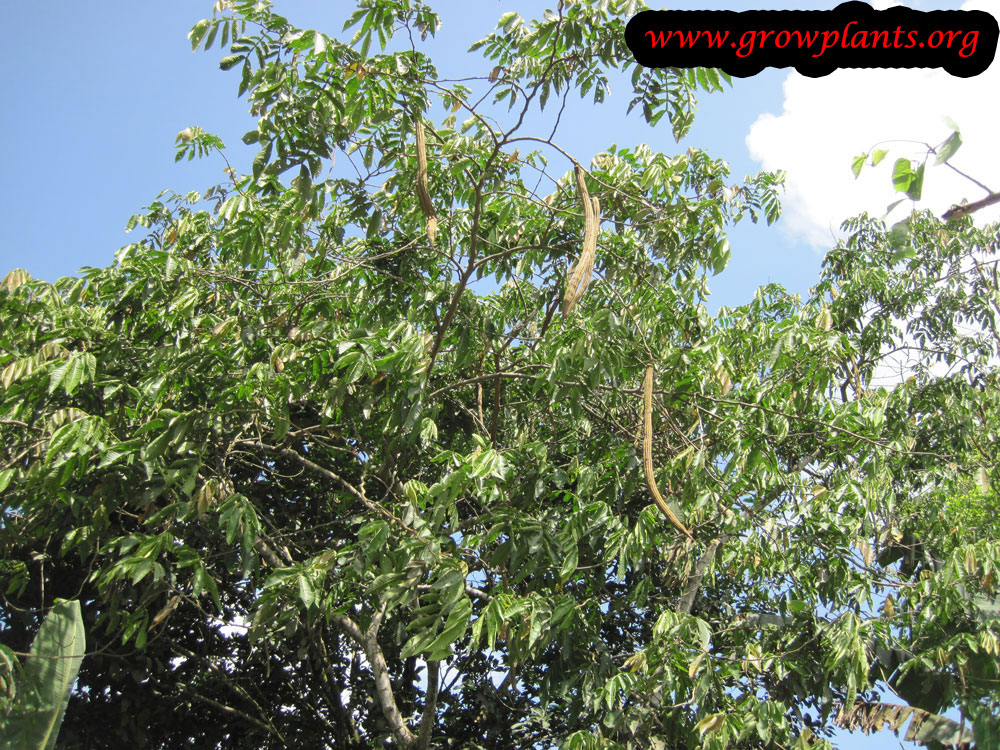
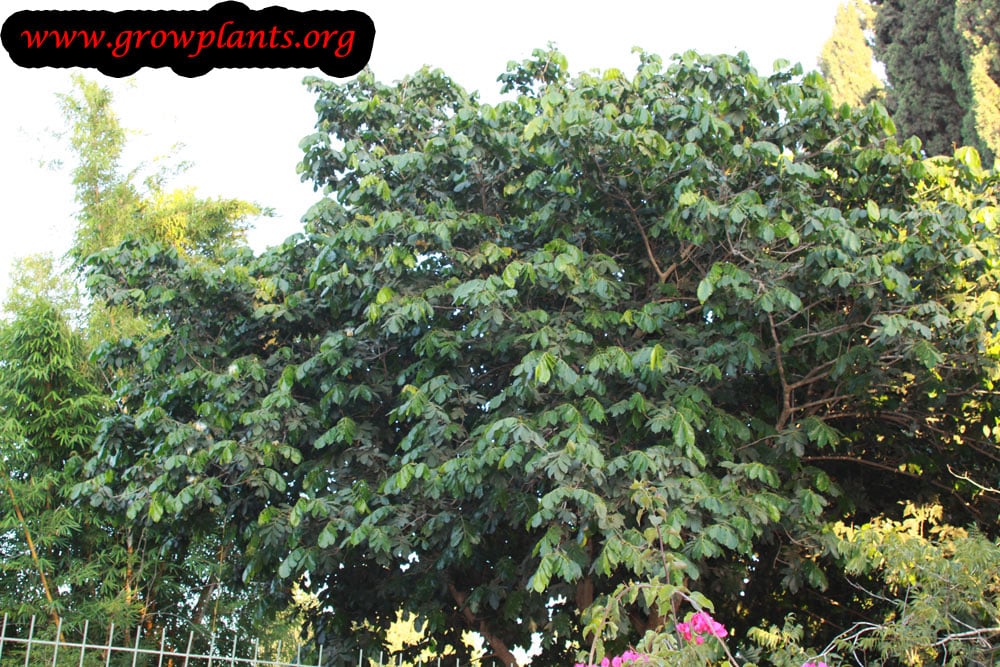
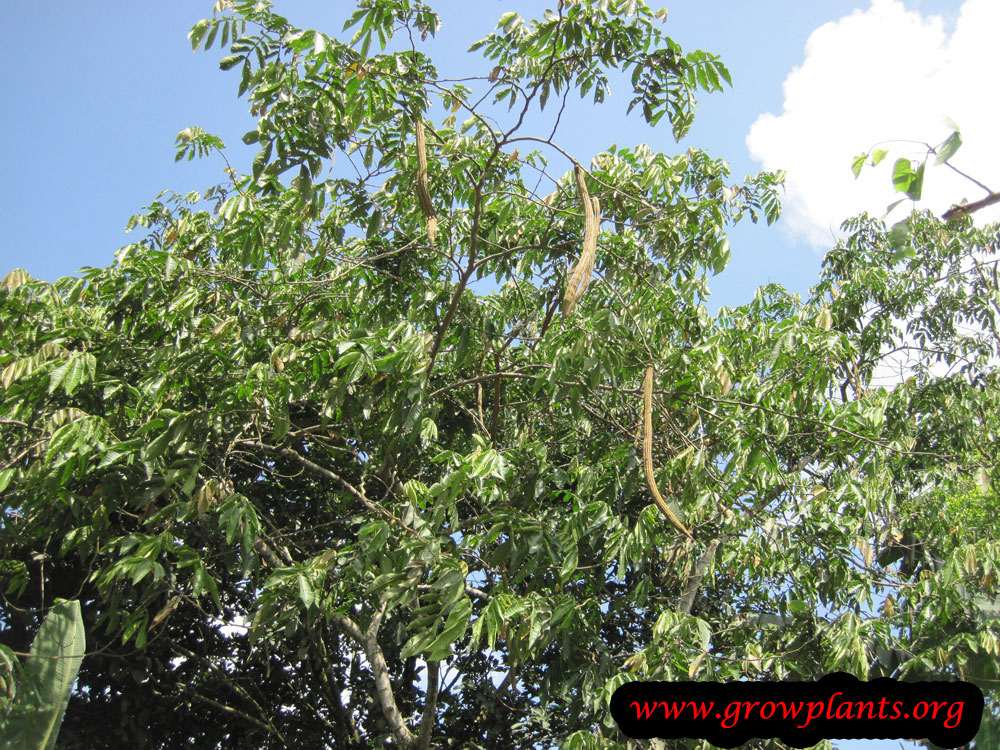
Overview: A fast-growing evergreen tree of 7-20 m (21-60 ft), grown for its edible ice-cream-flavoured bean pods and as a shade and nitrogen-fixing tree. A tender tropical legume.
Quick Specifications
| Specification | Attribute |
|---|---|
| Plant Type / Life Cycle | Perennial (evergreen tree) |
| Foliage Type | Evergreen |
| Mature Size | 7-20 m tall (21-60 ft) |
| Growth Rate | Fast |
| Root System | Taproot with nitrogen-fixing root nodules (legume) |
| Toxicity | Non-toxic / edible fruit pulp |
| Hardiness | USDA zone 10b+ (10a with winter care) |
Growth Form & Structure
- Height & Spread: Reaches 7-20 m (21-60 ft) in the ground with a broad spreading canopy; not suited to container growing.
- Growth Habit & Form: Fast, spreading tree with weeping branches; needs early training to develop an upright framework.
- Lifespan & Maturity: Long-lived perennial that begins bearing fruit about 2-6 years from planting (see the Fruit guide).
Anatomy & Physical Features
- Leaves & Foliage: Green compound (pinnate) leaves typical of the legume family.
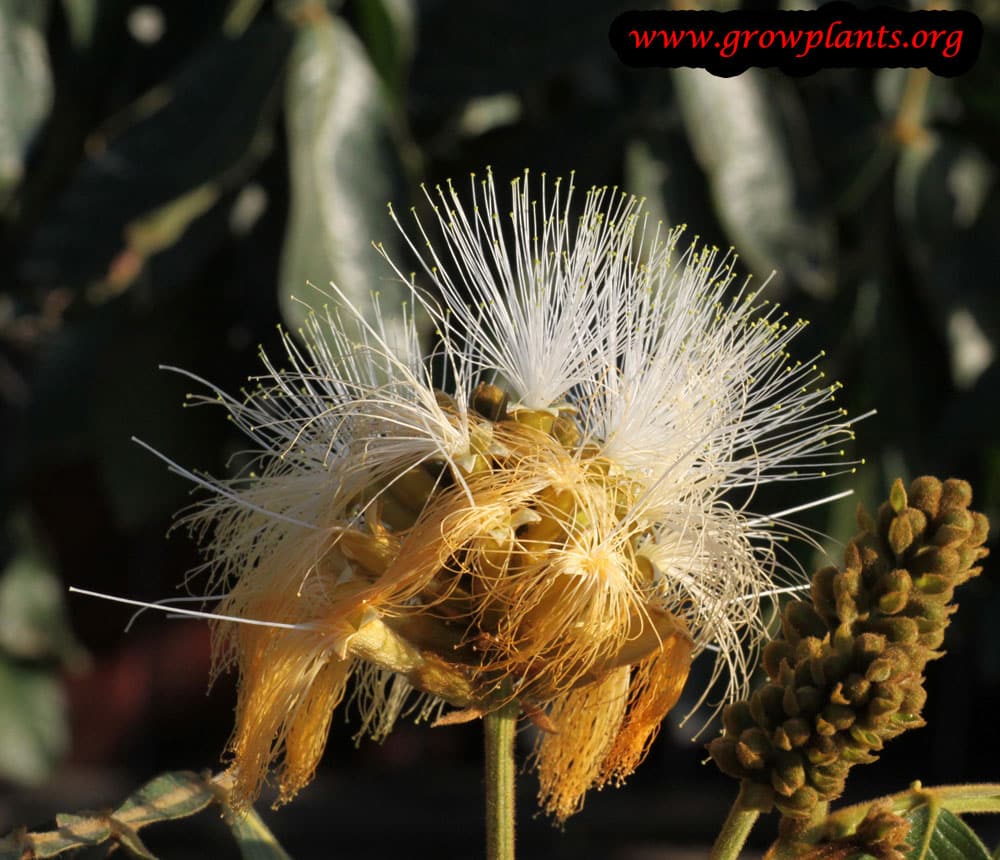
- Flower Characteristics: White flowers with numerous long, string-like stamens, borne in clusters (see the Bloom guide).
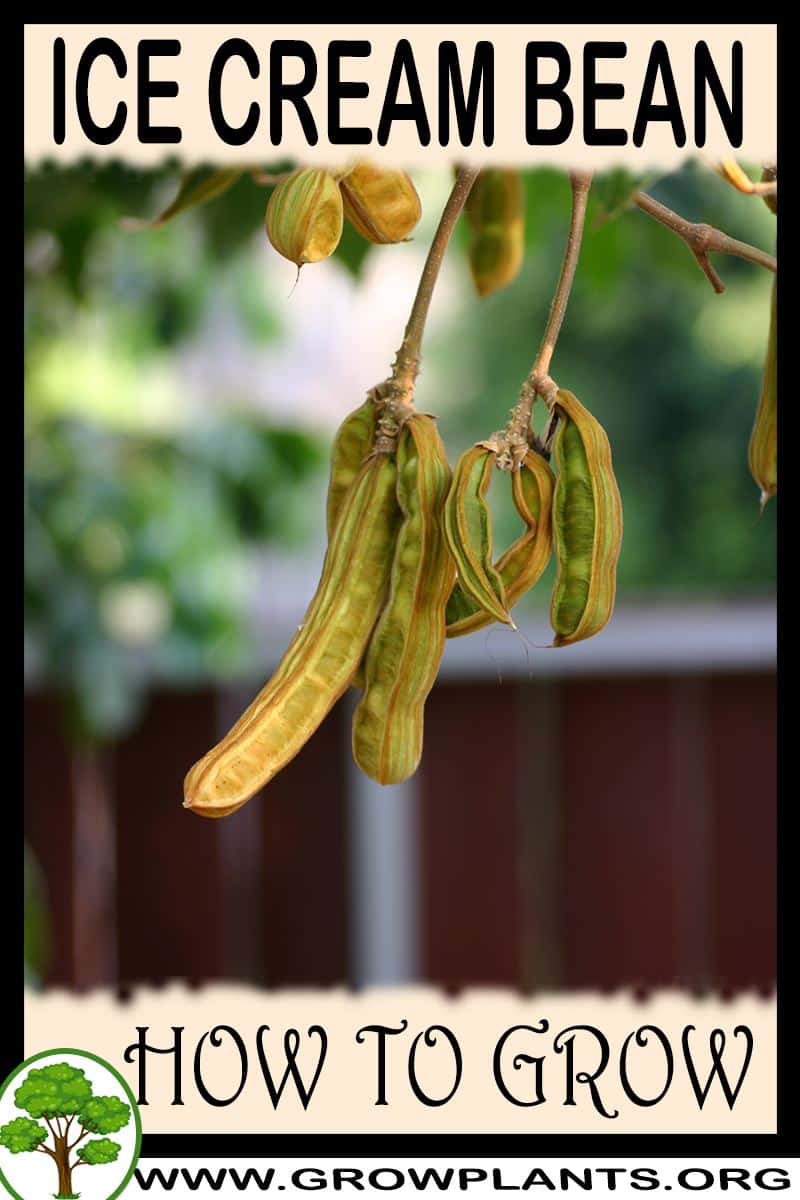
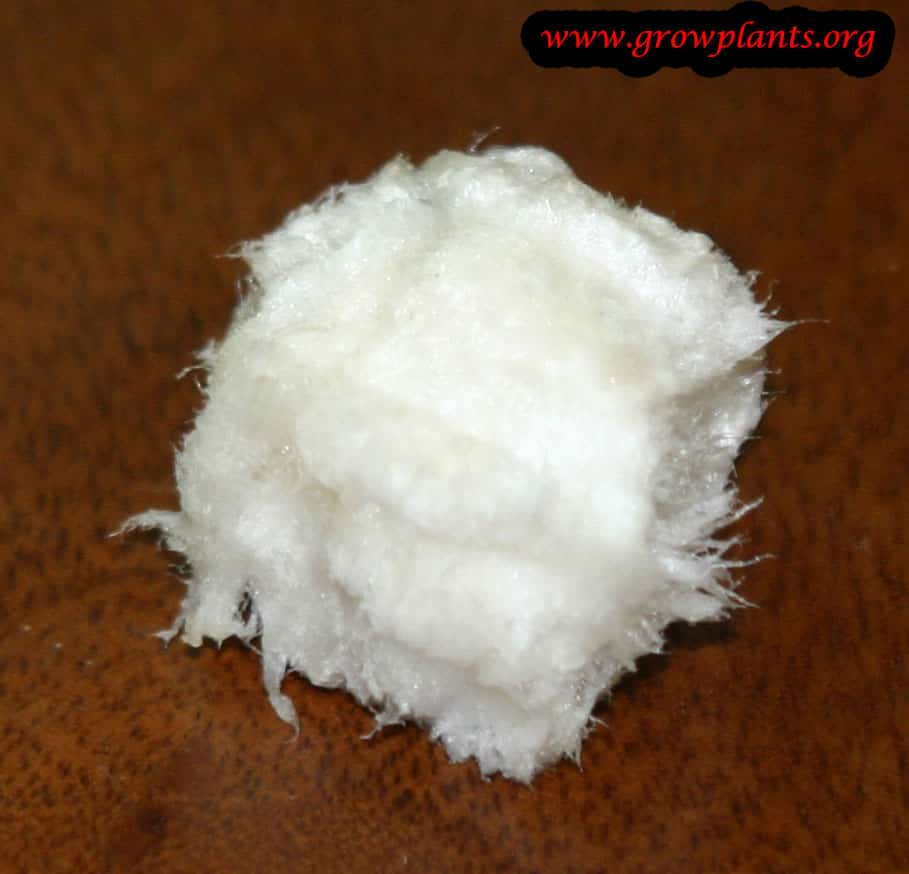
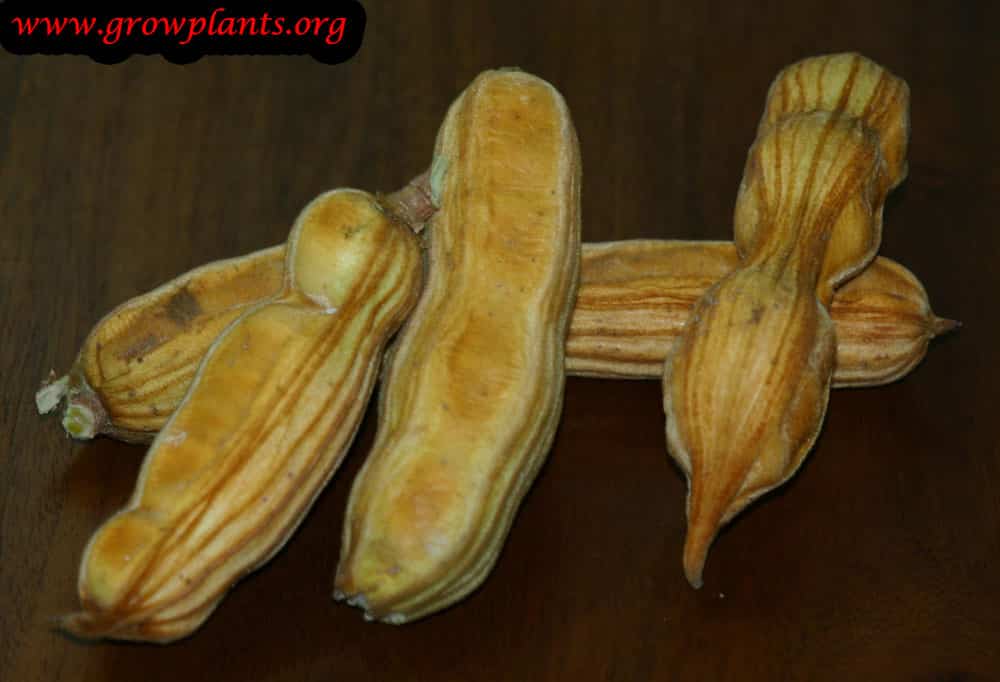
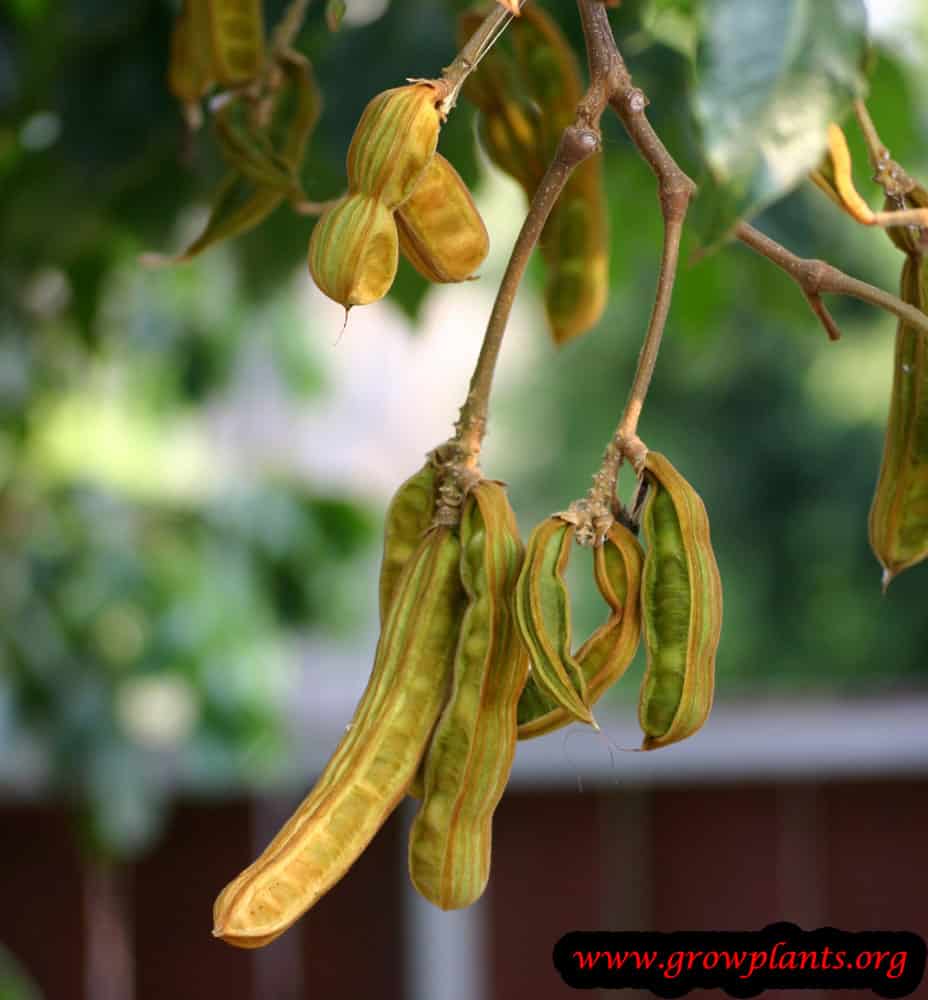
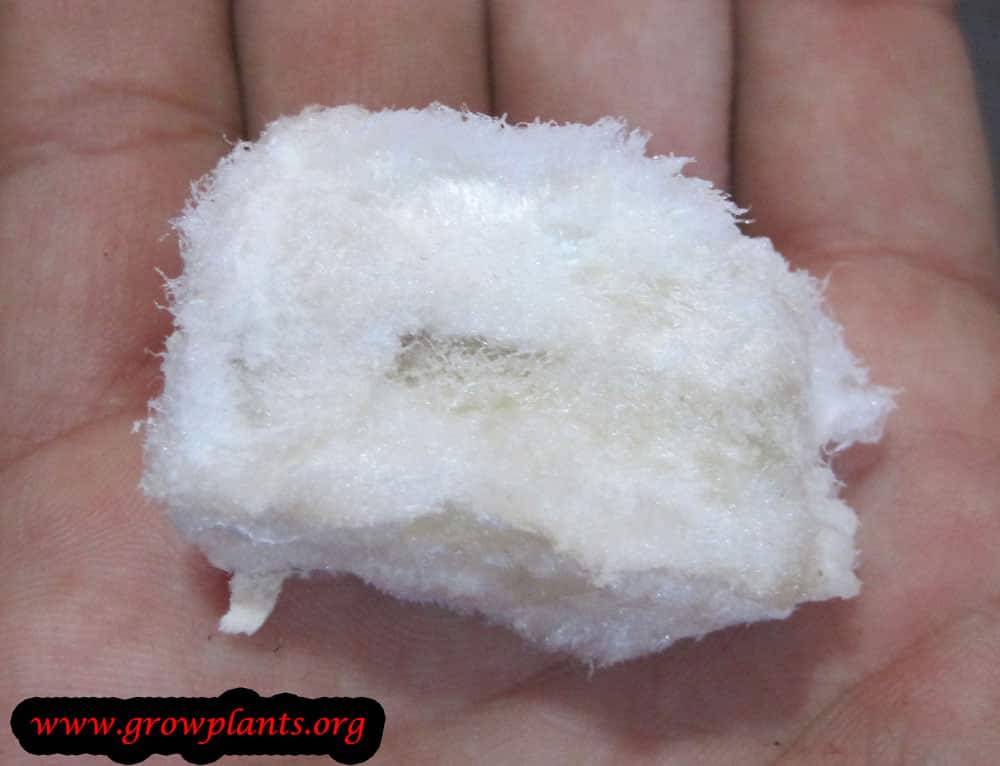
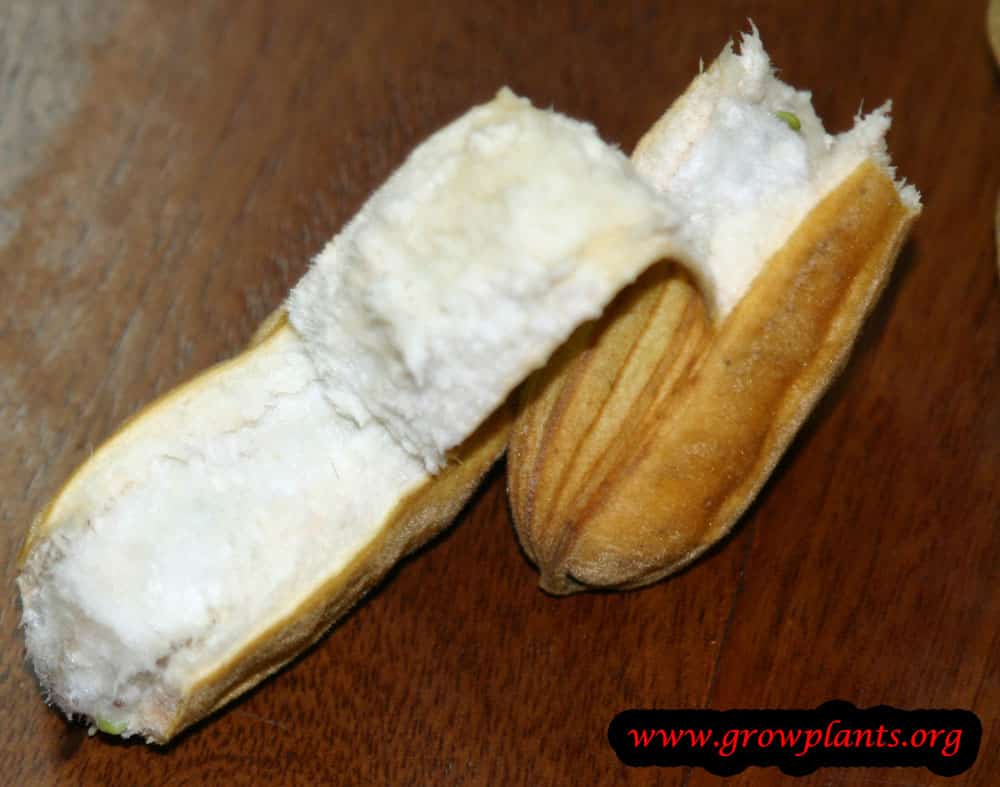
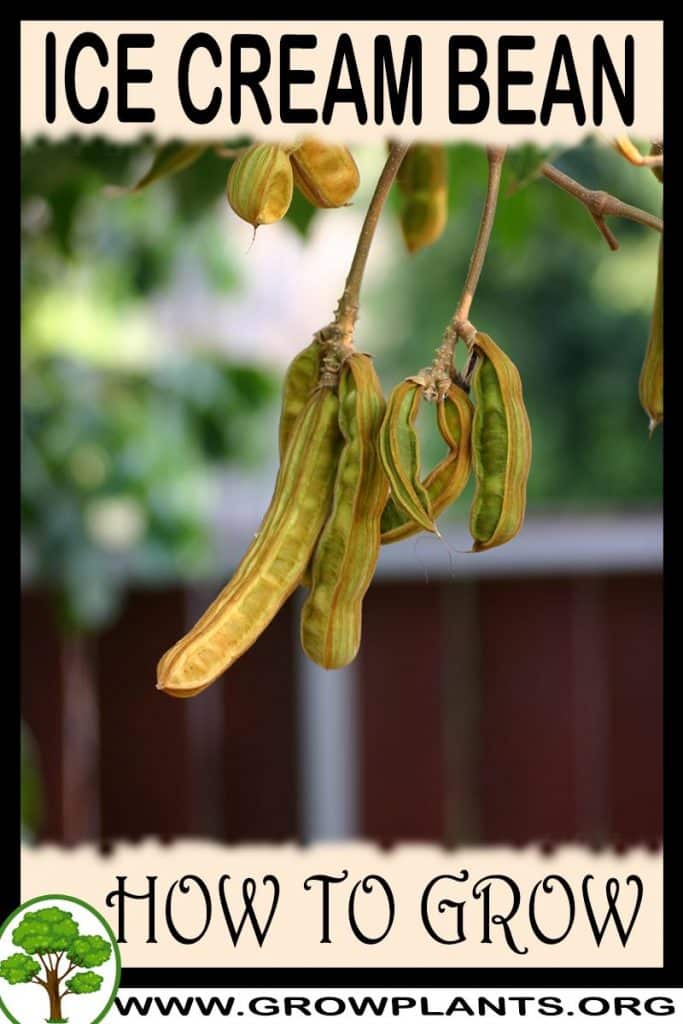
- Fruit Profile: Long green-to-yellow pods (5-100 cm) holding several seeds wrapped in sweet, white, cotton-like edible pulp (see the Fruit guide).
Primary Uses & Landscape Value
- Edible Uses: Sweet fruit pulp eaten fresh, juiced or used in ice cream.
- Functional & Ornamental Roles: Shade tree and nitrogen-fixing tree used in agroforestry; also ornamental.
Care Guide: Planting, Soil & Watering
Overview: Ice cream bean is a fast-growing tropical to subtropical shade tree (zone 10b and up) for full sun to half shade. It thrives in deep, moisture-retentive but well-ventilated soil and enjoys plentiful water.
Quick Care Requirements
| Requirement | Ideal Condition |
|---|---|
| Planting Season | Spring to autumn depending on zone (warm season) |
| Growth Rate | Fast |
| Soil Type | Deep, moisture-retentive but well-ventilated soil; tolerates poorer soils |
| Water Need | Moderate to High – enjoys plentiful water and even tolerates wet roots |
Planting & Establishment
- Best Planting Season: Plant in the warm season – spring to summer in zone 10a, and spring to autumn in zone 10b–11; year-round in zone 12+.
- How to Plant:
- Hole Preparation: Dig a generous hole wider than the root ball; young trees benefit from staking and training upward early on.
- Soil Amendments: Mix in peat or other moisture-holding, well-aerated material and organic matter to enrich the soil.
- Planting Depth: Set the top of the root ball level with the soil surface; do not bury the trunk.
- Growth Speed & Expectations: A fast grower that quickly makes a broad shade canopy.
Soil, Watering & Drainage Care
- Soil Mix & Drainage Needs: Deep, water-retentive but well-ventilated soil is ideal; as a nitrogen-fixer it tolerates poorer ground, and it is not suited to container culture.
- Watering Schedule & Technique:
- Young / Newly Planted: Water generously and regularly while the young tree establishes, keeping the soil moist.
- Established: Water deeply and often; it enjoys abundant moisture and its roots even tolerate standing water.
- Seasonal Adjustments: Water more in summer heat and reduce in cool weather.
Climate, Light & Hardiness
The ice cream bean is a fast tropical evergreen tree that wants full sun to light shade, steady warmth and humid air, and it is intolerant of cold. The site data places it at roughly USDA zone 10b and warmer, with zone 10a possible only with careful winter care in a warm microclimate.
Quick Climate Specifications
| Climate Zones | Tropical, subtropical, warm mediterranean (frost-free) |
|---|---|
| USDA Hardiness Zones | Approximately 10b and warmer; 10a with winter care (site data) |
| Optimal Temp Range | Approximately 22–33°C (72–91°F) |
| Cold Damage Begins | Foliage and young growth suffer near 3–5°C (37–41°F) |
| Approx. Survival Minimum | An established tree may briefly survive close to 0°C (32°F); varies by age, exposure duration, and conditions |
| Frost Tolerance | Very low |
| Light Conditions | Full sun to half shade |
| Wind Tolerance | Low to moderate |
Sunlight & Light Exposure
Optimal Light Setup
Full sun gives the strongest growth and cropping, but it also grows well in half shade - useful as a fast nurse or shade tree over other crops.
Shade & Heat Management
Its dense, weeping canopy casts useful shade and tolerates full tropical sun without scorching.
Best Exposure / Orientation
A warm, bright, sheltered site suits it best.
Temperature Extremes & Hardiness
USDA Hardiness & Regional Limits
It is a true tropical/subtropical tree: essentially frost-free winters are required, and outdoor planting runs from spring only in cooler zone 10a to year-round in the tropics.
Cold Damage & Winter Protection
Cool spells below about 5°C (41°F) check it and brown soft growth; young trees are much more tender than mature ones and need protection through cool winters at the edge of its range.
Frost Sensitivity
Highly frost-sensitive - even a light frost damages foliage.
Extreme Heat Tolerance
Excellent; it thrives in constant tropical heat.
Wind, Humidity & Microclimate
Humidity Preferences
Prefers high humidity, matching its humid-tropics origin.
Dry-Air Tolerance
Limited - hot, dry air stresses it, so it needs shelter and moisture in drier mediterranean settings.
Wind Tolerance
Fast, brittle growth is vulnerable to strong wind; give it a sheltered position.
Microclimate Recommendations
A warm, humid, wind-sheltered pocket best suits it; container plants chill quickly at the roots and must be kept warm in winter.
Growing in Pots, Balconies & Indoors
Ice-cream bean is a large, fast tropical tree – neither a houseplant nor, per the grower, a container plant. It needs open ground; pots suit it only as a young seedling.
Quick Details
- Container Size: Only short-term – a deep nursery pot for a seedling
- Indoor Suitability: No
- Best Spot: Full sun to half shade
- Soil & Drainage: Moisture-retentive but draining – the roots even take standing water
- Watering in Pots: Average to plenty – it is thirsty
Indoors & On the Windowsill
- Not for indoors or pots: Too big and too thirsty for a container; keep it for open ground.
On a Balcony or Patio
- Young trees only: A seedling can spend its first season in a big pot before being planted out; keep it well watered while potted, as it drinks heavily.
Choosing the Pot, Soil & Long-Term Care
- Short-term potting: If raised in a pot, use a deep container with a rich, moisture-retentive mix and plant out before it becomes root-bound; feed while potted.
Growing this plant in a greenhouse
A greenhouse can give ice cream bean frost protection, cold protection, humidity control and extra warmth.
Greenhouse at a glance
| Greenhouse suitability | Conditional - depends on your climate |
|---|---|
| Main benefits | frost protection, cold protection, humidity control, extra warmth |
| Season extension | earlier spring & later autumn |
| Outdoor protection advisable below | about 10°C |
| Maintain greenhouse minimum | around 15°C for active growth |
| Suitable types | heated greenhouse, polycarbonate greenhouse |
| Heating | Heating is recommended in cold climates for continuous growth. |
Related greenhouse guides
- Greenhouses: How to Choose the Right Greenhouse
- Best Greenhouse Heaters
- Greenhouse Climate Control: Temperature, Ventilation and Humidity
- Polycarbonate Greenhouses: What to Look for Before Buying
Fertilizing & Feeding
A moderate feeder that responds to steady, balanced feeding while young and only light feeding once mature; as a nitrogen-fixing legume it needs little added nitrogen, and a complete fruit-tree fertilizer covers the minor nutrients.
Quick Fertilizing Specs
| Feeding Level | Moderate |
|---|---|
| young_feeding | Steady, balanced feeding through the growing season |
| mature_feeding | Light feeding, leaning to potassium around fruiting |
| Main Nutrient Priority | Balanced nutrition; potassium as fruit develops |
| Best Feeding Period | Spring through fruit development |
| Organic Options | Compost, aged manure, mulch |
| Soil pH | Adapts to a wide range; needs well-drained soil |
| Micronutrients | A complete fruit-tree fertilizer usually supplies iron, manganese and zinc |
| Reduce/Stop Feeding | Ease off as the tree matures and after harvest |
Feeding by Growth Stage
Newly planted
Help the young tree establish its roots after planting.
| Nutrient direction | Go easy at planting; rely on organic matter and a light balanced feed after the tree settles in rather than heavy fertilizer. |
|---|---|
| Timing | At and just after planting. |
| Frequency | Minimal feeding at first; let the roots establish. |
| Fertilizer types | Organic matter or compost mixed into the planting area, A light balanced complete fertilizer after growth begins |
| Precautions | Avoid strong fertilizer against fresh roots, which can scorch them. |
Young, pre-bearing tree
Build a strong framework of trunk and branches in the years before fruiting.
| Nutrient direction | A balanced complete fertilizer supports steady growth; as a nitrogen-fixing legume this tree makes much of its own nitrogen, so added nitrogen can stay modest. |
|---|---|
| Timing | Through the active growing season in the young years. |
| Frequency | Light, regular feeding across the growing season. |
| Fertilizer types | A balanced complete fertilizer, Compost or other organic matter |
| Precautions | Do not overfeed nitrogen; lush soft growth is weak and delays fruiting. |
Established tree approaching bearing
Keep the maturing tree in steady health as it nears fruit production.
| Nutrient direction | A balanced complete fertilizer with the minor nutrients a fruit-tree blend usually supplies. |
|---|---|
| Timing | During the active growing season. |
| Frequency | Steady, moderate feeding through the season. |
| Fertilizer types | A balanced complete fruit-tree fertilizer, Compost or other organic matter |
| Routine trace nutrients | iron, manganese, zinc |
| Precautions | Watch for pale new leaves that can signal a micronutrient shortage such as iron. |
Mature, fruit-bearing tree
Support flowering and fruit while keeping the tree in balance.
| Nutrient direction | A balanced complete fertilizer, leaning toward potassium as fruit develops; a settled mature tree needs only light feeding. |
|---|---|
| Timing | From before flowering through fruit development. |
| Frequency | Light, well-timed feeding around the fruiting period. |
| Fertilizer types | A balanced complete fertilizer with adequate potassium, Compost or other organic matter |
| Routine trace nutrients | iron, manganese, zinc |
| Precautions | Excess nitrogen at this stage favours leaves over fruit; keep feeding moderate. |
Nutrient Deficiency Signs & Corrections
New leaves are pale or yellow between green veins while the veins stay green.
| Possible causes | High (alkaline) soil pH locking up iron, Waterlogged or cold soil reducing root uptake, A genuine iron shortage in the soil |
|---|---|
| Appears first on | Youngest leaves at the shoot tips |
| What to check | Soil pH and whether the soil is chalky or alkaline, How well the soil drains and whether symptoms follow wet spells, Whether only the new growth is affected |
| Possible correction | Correct soil pH where possible and apply a chelated iron product according to its label; improve drainage. |
Older, lower leaves turn uniformly pale or yellow and overall growth is weak.
| Possible causes | Low soil nitrogen or poor root-nodule activity on this legume, Waterlogged or compacted roots limiting uptake, Very sandy, low-fertility soil |
|---|---|
| Appears first on | Older, lower leaves |
| What to check | How wet the root zone stays and whether the soil drains freely, Whether the plant has been fed at all this season, General soil fertility and organic matter |
| Possible correction | Improve drainage, work in organic matter, and apply a balanced complete fertilizer at a modest rate. |
Older leaves develop browning, scorched margins.
| Possible causes | Potassium shortage in the soil, Fertilizer or soil salt build-up in the root zone, Drought stress between waterings |
|---|---|
| Appears first on | Margins of older leaves |
| What to check | Recent fertilizer use and any salt crust on the soil surface, Soil moisture and the watering pattern, Whether only leaf edges, not whole leaves, are affected |
| Possible correction | Water thoroughly to rinse excess salts through, even out watering, and use a balanced fertilizer with adequate potassium at a modest rate. |
Pruning, Training & Seasonal Maintenance
Ice cream bean is a fast-growing evergreen tropical fruit tree, and its decisive pruning happens early: a young tree grown in the open, without a neighbouring tree to draw it upward, tends to sprawl low with weeping branches, so the formative task is to select and hold a dominant vertical leader and remove the low, weeping shoots that will not rise. Once a framework is set, the mature tree needs only light thinning and height control. Fruit forms on new growth, so cool-season pruning after harvest does not cost the next crop.
Pruning & the Edible Harvest
Ice cream bean is grown for the sweet white pulp inside its pods, which forms on current-season growth — so cool-season and post-harvest pruning does not remove the coming crop. The real harvest payoff from pruning is training a single upright leader when young and controlling height later, both of which keep the pods within reach; hard heading only forces leafy regrowth and delays fruiting.
Quick Pruning & Maintenance Specs
| Pruning Tolerance | High — vigorous, resprouts strongly, tolerates pollarding |
| Primary Pruning Window | Autumn–Winter / after harvest (cool, dry) |
| Typical Frequency | Frequent when young for training; occasional when mature |
| Main Objective | Establish an upright leader; then thin and control height for harvest |
| Young Plant Priority | Select a leader, stake if solitary, remove low weeping branches |
| Mature Plant Priority | Thin crowded/weeping wood; keep fruit within reach |
| Best Tool Type | Secateurs and loppers when young; saw and pole pruner when tall |
| Avoid Heavy Pruning During | The active growth flush if you want fruit; on young transplants |
Pruning by Plant Age & Size
Newly Established
Remove damaged growth only, but begin thinking about form: a solitary young tree should be staked so a leader can be trained upward rather than allowed to weep sideways.
Young / Formative
This is the critical stage. Choose one strong vertical leader and progressively remove the low, weeping laterals that will not grow up, so the tree builds height and a usable trunk. Left untrained, it forms a permanent low, spreading, weeping bush.
Mature / Established
Thin crowded and weeping wood, remove crossing branches, and reduce height so pods stay within reach. Keep cuts modest to avoid triggering a mass of vegetative regrowth.
Seasonal Pruning Schedule
Autumn–Winter / Post-Harvest (main window)
Objective: training on young trees, light thinning and height reduction on mature ones. Remove weeping/low laterals, crossing wood and excess height. Do NOT strip the productive new growth on a bearing tree. Expected response is vigorous regrowth (it is fast); flowering/fruiting impact is small if you thin lightly, but heavy heading pushes leaf at the expense of pods.
Flowering & Fruiting Wood
Ice cream bean flowers and fruits on the current season’s growth, in axillary clusters along new shoots. Light thinning does not remove next season’s crop, but hard heading forces a flush of vegetative regrowth and delays cropping. For a bearing tree, prune after harvest and keep cuts light.
Structural Pruning & Training
Beyond the early leader work, manage a fast, somewhat brittle, aggressive tree by removing crossing limbs and raising the canopy for harvest access. In agroforestry it is often pollarded to a framework for shade and mulch and tolerates this well, resprouting strongly.
Special Growth to Remove
Remove the low weeping shoots that resist training, and thin watersprouts after any heavy cut. Because the tree tolerates coppicing/pollarding, cut-back stumps regrow with many shoots — thin these to the strongest.
Container & Small-Space Pruning
Not suited to containers as a fruiting tree — it is large and vigorous. In a confined space it must be kept as a leader-trained, height-reduced tree rather than allowed to sprawl.
Tools
Match tool to cut: bypass secateurs and loppers for training young wood, a pruning saw for larger limbs, and a pole pruner for height reduction and thinning on a tall tree. Hedge shears are not appropriate.
Tool Hygiene & Disease Risk
Routine. The main pests are ants, aphids and mealybug (often ant-tended) rather than a pruning-borne disease; cut out and dispose of heavily infested tips and keep tools clean.
Cut Placement & Technique
Cut to the branch collar and to outward/upward buds when training the leader; use the three-cut method on heavier limbs to avoid bark tear; make pollard cuts back to the same knuckles each cycle.
Heavy Pruning & Rejuvenation
Well tolerated — the tree coppices and pollards readily and resprouts vigorously (this is exploited in agroforestry). But a fruiting tree pollarded hard loses that cycle’s crop while it rebuilds, so reserve heavy reduction for shade/mulch use or staged renewal.
Post-Pruning Care
Do not force feeding — it already regrows strongly. Thin the crowded resprouts after any hard cut, watch for ants and mealybug on the soft flush, and shade newly exposed limbs in strong sun.
Common Pruning Mistakes
- Failing to train the young tree, leaving a permanent low, weeping, sprawling shrub-form.
- Hard-heading a bearing tree and delaying fruiting with a flush of leafy regrowth.
- Leaving a thicket of resprouts after pollarding instead of thinning to the strongest.
When NOT to Prune
Avoid heavy pruning during the active growth flush if you want fruit, and on recently transplanted young trees still establishing.
Recommended Tools (by task)
- bypass_secateurs — training cuts and removal of weeping laterals on young wood.
- loppers — branches a few centimetres thick during formative and thinning work.
- pruning_saw — larger limb removal and pollarding cuts on a mature tree.
- pole_pruner — height reduction and thinning to keep pods within reach on a tall, fast tree.
Pruning Troubleshooting
| Problem | Possible Cause | What to Check | Corrective Action |
| Tree stays low and weeping, never gains height | No early leader training; grown solitary without support | Whether a dominant leader was selected and staked | Stake and train one leader; progressively remove low weeping laterals |
| Lots of leafy regrowth but delayed/poor fruiting | Heavy heading forced vegetative growth | Severity of recent cuts vs the new-growth fruiting habit | Switch to light thinning after harvest; stop hard heading |
| Dense thicket of shoots after cutting back | Pollard/coppice resprouting not thinned | Number of shoots per cut stump | Thin to one or a few strong shoots per site |
| Sticky, ant-covered, sooty new growth | Aphids/mealybug tended by ants on the soft flush | New shoots and shoot tips for colonies | Cut out badly infested tips; manage ants; keep tools clean |
Propagation Guide
Ice cream bean is grown mainly from its large, recalcitrant seed, which must be sown fresh — it has a very short shelf life, will not tolerate drying, and often begins sprouting inside the pod. Sown fresh it germinates readily and fast, so seed is the easy, practical method; cuttings are possible, and grafting is used only to correct fruit quality in selected trees.
Quick Propagation Specs
| Best Propagation Method | Fresh seed (sown immediately) |
| Alternative Methods | Cuttings; grafting (for selected fruit quality) |
| Propagation Difficulty | Easy (with fresh seed) |
| Seed True-to-Type | Mostly uniform; graft selected trees for fruit quality |
| Best Propagation Season | Spring to summer; year-round in the tropics (site) |
| Seed Germination Time | About 2–4 weeks (faster when seed is fresher) (site) |
| Seed Sowing Depth | 3–5 cm (1–2 in) over the seed (site) |
Growing from Seed
Seed Handling & Viability
The seed is recalcitrant and short-lived — do NOT dry or store it; sow at once. If it must be held briefly, the site keeps seed in damp (well-wrung) peat, wrapped in plastic and then aluminium foil (site).
Sowing Season
Year-round in the tropics; otherwise spring to summer, always with fresh seed — in cool zones sow straight into a greenhouse (site).
Sowing Depth & Spacing
Cover with 3–5 cm (1–2 in) of a water-holding yet well-ventilated medium; the site sows into separate pots and transplants at about 50 × 50 cm (20 × 20 in) (site).
Germination Conditions
Moist soil, high humidity and full sun, but keep it well-drained — seedlings are sensitive to over-watering (site).
Germination Time
About 2–4 weeks; older seed is slower (site).
Stem Cuttings
The site lists cuttings as an alternative for this fast-growing tree; they are secondary to fresh seed.
Grafting & Budding
Used only in specific cases — to correct poor taste, seedy or very small fruit — by grafting a selected clone; otherwise seedlings are grown directly (site).
Bloom & Flower Guide
Quick Details
- Bloom Season: Spring to summer
- Flower Appearance: White, powderpuff-like flowers made of many long, thread-like stamens, in fragrant clusters
- Edibility: The flower is not eaten – it is the sweet white pulp around the seeds (the fruit) that gives this tree its name
Detailed Blooming Overview
A fast-growing tropical legume whose clusters of white, brush-like flowers – really a mass of long stamens – appear from spring into summer. They are fragrant and nectar-rich, drawing bees and, in the tropics, moths and hummingbirds.
Flower Characteristics
- White powderpuff or brush-like flowers.
- Many long, string-like stamens, borne in clusters.
Bloom Care & Thinning
- Pollination: By bees, and by moths and hummingbirds in tropical settings.
- Enjoying the bloom: Fragrant and full of nectar – a lively spot for pollinators.
Fruit & Uses
The ice cream bean is grown for the sweet, white, cotton-like pulp that surrounds the seeds inside its long pods; it is eaten fresh straight from the pod. The pulp tastes of vanilla and is prized as a raw snack, in drinks and in ice-cream.
Quick Edible Specs
| Edible Parts | Fruit — the soft white pulp (aril) around each seed. The seeds themselves are not eaten raw. |
|---|---|
| Main Use(s) | Culinary — eaten raw, juiced, and made into ice-cream. |
| Eaten Raw or Cooked | Raw; the pulp needs no preparation. |
| Preparation Required | Split the pod and eat the pulp off the seeds; discard the seeds. |
| Harvest Season | Spring / summer. |
| Time to First Harvest | A few years from planting (see the growing notes for bearing age). |
| Storage | Best eaten fresh; the pulp is perishable and does not keep long. |
| Safety/Toxicity Caveat | The pulp is safe to eat raw; the seeds are not eaten raw. |
Fruit
The pods are green to yellow and can be very long (the site notes more than 5–100 cm), holding many segments — up to several dozen seeds — each wrapped in white fluffy pulp. Pick pods when they are full and have begun to colour; in some cultivars the pod peels open easily. Split the pod lengthwise and eat the sweet pulp; the seeds are discarded (or saved for planting, as they are short-lived).
Preparation, Uses & Safety
No preparation is needed — the pulp is eaten raw, blended into juices, or churned into ice-cream. Only the pulp is eaten; the seeds are not consumed raw. Because the pulp is perishable, use the fruit soon after opening.
Pests, Diseases & Troubleshooting
Overview: Ice cream bean is a vigorous tropical nitrogen-fixing legume tree that is generally robust and pest-tolerant; its most consistent issues are sap-suckers (aphids, mealybugs, scale) tended by ants, plus caterpillars and borers, with fungal leaf spots in humid conditions. Detailed pest records for this species are limited, so the profile is drawn at the genus/legume-family level.
Quick Troubleshooting Overview
| Issue / Pest | Main Symptom | Primary Solution |
|---|---|---|
| Aphids | Sticky curled new growth, sooty mold, ants | Water jet, insecticidal soap, control ants |
| Ants (+ farming) | Trails tending aphids/mealybugs/scale | Bait trails, band trunks |
| Mealybugs / scale | Cottony or bumpy masses, honeydew, sooty mold | Oil/soap, prune worst wood |
| Caterpillars / borers | Chewed leaves; tunneled, wilting shoots | Hand-pick, Bt; cut out borers |
| Leaf spot | Brown/black spots and blotches in humid weather | Airflow, sanitation, copper if severe |
| Frost / cold damage | Blackened tender growth after cold | Protect from frost; tropical only |
Common Pests & Management
- Aphids (Aphis / Aphididae spp.):
- Symptoms: Soft insects clustering on tender new growth and flower stalks with sticky honeydew and sooty mold; ants farm and spread them.
- Prevention & Control: Blast with water, encourage predators, bait the attending ants to break the cycle, and use insecticidal soap or neem on heavy colonies in the evening.
- Mealybugs & scale (Pseudococcidae / Coccoidea):
- Symptoms: White cottony masses and immobile brown or waxy bumps on stems, leaf undersides, and pods, with honeydew, sooty mold, and weakened growth.
- Prevention & Control: Wipe or hose off colonies, prune heavily infested wood, apply horticultural oil to smother crawlers, and control ants that protect them.
- Ants (Formicidae (incl. leaf-cutter Atta spp.)):
- Symptoms: Trails farming sap-suckers for honeydew; in the tropics leaf-cutter ants can also strip foliage, carrying leaf pieces away.
- Prevention & Control: Bait and band trunks to block access, disrupt sap-sucker colonies they tend, and target leaf-cutter nests directly where they defoliate young trees.
- Caterpillars & shoot/pod borers (Lepidoptera larvae):
- Symptoms: Chewed, skeletonized, or rolled leaves and tunneled, wilting shoots or damaged pods and seeds from boring larvae.
- Prevention & Control: Hand-pick where reachable, encourage parasitic wasps and birds, use Bacillus thuringiensis for leaf-feeders, and prune out and destroy borer-infested shoots.
Diseases & Fungal Issues
- Fungal leaf spot & anthracnose (Colletotrichum, Cercospora spp.):
- Symptoms: Brown to black spots, blotches, and blighting on leaves, sometimes with dieback of shoot tips in warm, humid, wet conditions.
- Treatment & Management: Improve airflow by thinning, clear fallen litter, avoid overhead wetting, and apply a copper fungicide only under sustained humid pressure.
- Powdery mildew & rust (occasional):
- Symptoms: White powdery film or orange rust pustules on leaves in humid or crowded conditions.
- Treatment & Management: Prune for light and airflow, remove affected leaves, and use sulfur (mildew) or a labelled fungicide (rust) only if it becomes significant.
- Root rot (Phytophthora, Fusarium):
- Symptoms: Decline, yellowing, and dieback with decayed roots in waterlogged soil.
- Treatment & Management: Plant in free-draining soil, avoid waterlogging, and as a legume it needs little extra nitrogen; correct drainage before replanting.
Growing Difficulties & Abiotic Problems
- Frost & cold sensitivity:
- Cause & Symptoms: Blackening and dieback of tender growth, or death of young trees, at low temperatures — this is a strictly tropical/subtropical tree.
- Correction Strategy: Grow only in frost-free climates or protect young trees from cold; damaged growth can be pruned back once warmth returns.
- Fruit loss to wildlife:
- Cause & Symptoms: Ripening pods pecked or eaten by birds and other animals drawn to the sweet pulp.
- Correction Strategy: Bag or net choice pods near ripeness if fruit protection is needed; this is a harvest-window issue.
- Aggressive, weak-wooded growth:
- Cause & Symptoms: Very fast, somewhat brittle growth that can spread and shade out neighbors or drop limbs.
- Correction Strategy: Site with room to spread, prune to build strong structure, and use its fast growth deliberately (shade/soil improvement) where space allows.
What Helps — Products & Tools
This tough legume rarely needs much: insecticidal soap or neem and horticultural oil for aphids, mealybugs, and scale, ant baits to break the honeydew-farming cycle, and Bacillus thuringiensis for caterpillars. Copper fungicide covers humid-season leaf spots. Because documented pest records for this species are thin, watch new problems and identify them before treating.
Frequently Asked Questions
What does ice cream bean fruit taste like, and how do you eat it?
The long pods hold a sweet, white, cotton-like pulp around the seeds that tastes of vanilla. It is eaten raw straight from the pod — split the pod lengthwise and eat the pulp off the seeds — and is also used in juices and ice cream. Only the pulp is eaten; the seeds are not consumed raw.
How do you grow ice cream bean from seed?
Sow the seed fresh — it is recalcitrant and short-lived and must not be dried or stored. Cover it with 3–5 cm (1–2 in) of a water-holding yet well-ventilated medium, and keep conditions moist, humid and in full sun but well-drained, since seedlings are sensitive to over-watering. Fresh seed germinates in about 2–4 weeks, and older seed is slower.
How big does the ice cream bean tree grow, and can it be grown in a pot?
Ice cream bean is a fast-growing evergreen tree that reaches 7-20 m (21-60 ft) tall with a broad spreading canopy, and it is not suited to container growing. It needs open ground; a pot works only short-term for a young seedling, which can spend its first season potted before being planted out.
How much cold can an ice cream bean tree tolerate?
Ice cream bean is highly frost-sensitive — even a light frost damages foliage — and needs a roughly USDA zone 10b and warmer climate, with zone 10a possible only with careful winter care in a warm microclimate. Cool spells below about 5°C (41°F) check it and brown soft growth, and an established tree may briefly survive close to 0°C (32°F), varying by age, exposure duration and conditions.