Plant Profile & Key Characteristics
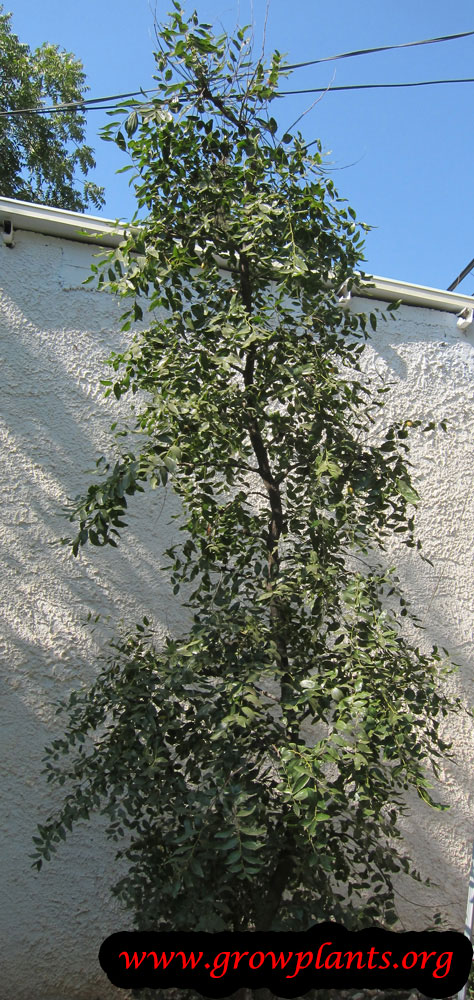
Overview: Jujube (Ziziphus jujuba, Chinese date) is a deciduous, thorny shrub to small tree of 3-10 m (10-33 ft), grown for its edible red-brown fruit and also as an ornamental hedge. It is drought-tolerant and hardier than the tropical Indian jujube.
Quick Specifications
| Specification | Attribute |
|---|---|
| Plant Type / Life Cycle | Perennial (shrub / small tree) |
| Foliage Type | Deciduous (rarely evergreen) |
| Mature Size | 3-10 m tall (10-33 ft) |
| Growth Rate | Slow to moderate |
| Root System | Deep taproot, produces basal suckers |
| Toxicity | Non-toxic / edible |
| Hardiness | USDA zones 6-11 |
Growth Form & Structure
- Height & Spread: Reaches 3-10 m (10-33 ft) in the ground and can also be grown in large containers, where it is best kept small.
- Growth Habit & Form: Thorny, sometimes suckering shrub or small tree; often pruned to keep it compact for easy fruit picking.
- Lifespan & Maturity: Long-lived; starts bearing fruit about 2-3 years from planting (grafting improves fruit size).
Anatomy & Physical Features
- Trunk & Bark: Woody, thorn-bearing branches; tends to throw up basal shoots.
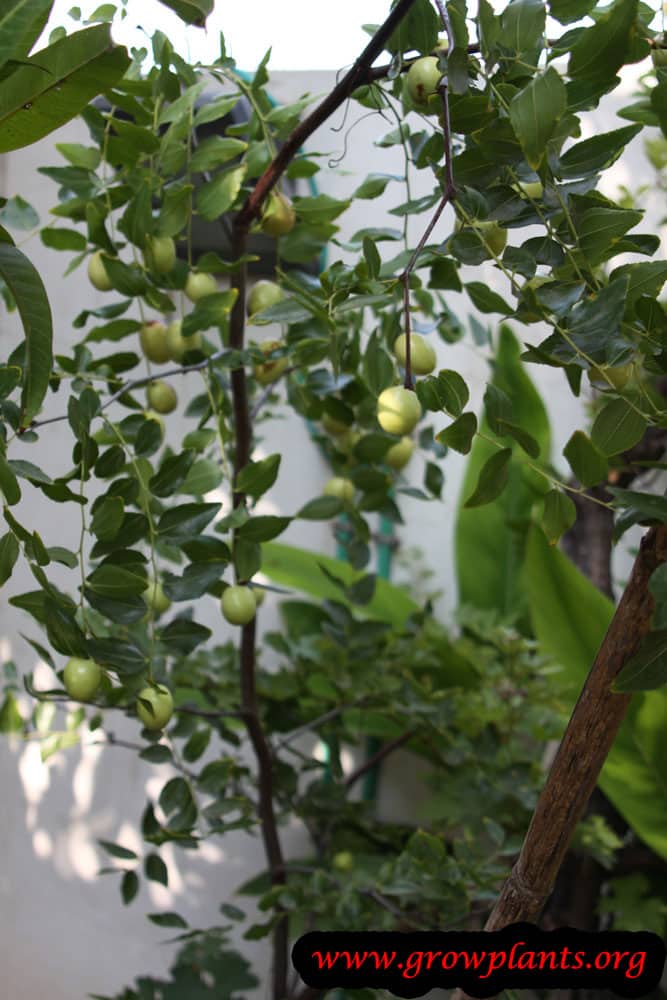
- Leaves & Foliage: Glossy green deciduous foliage.
- Flower Characteristics: Small yellow to white-green flowers 1-2 mm across in clusters on young stems; bee-pollinated and self-fertile in some varieties.
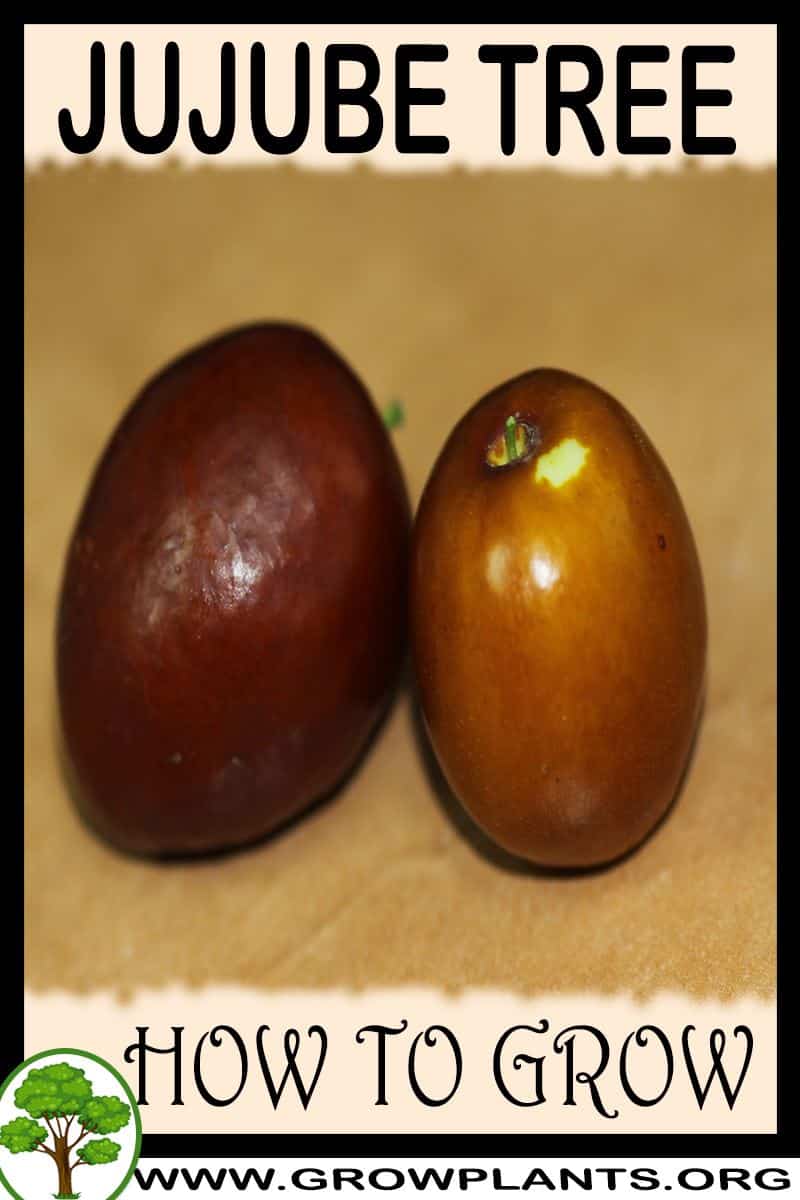
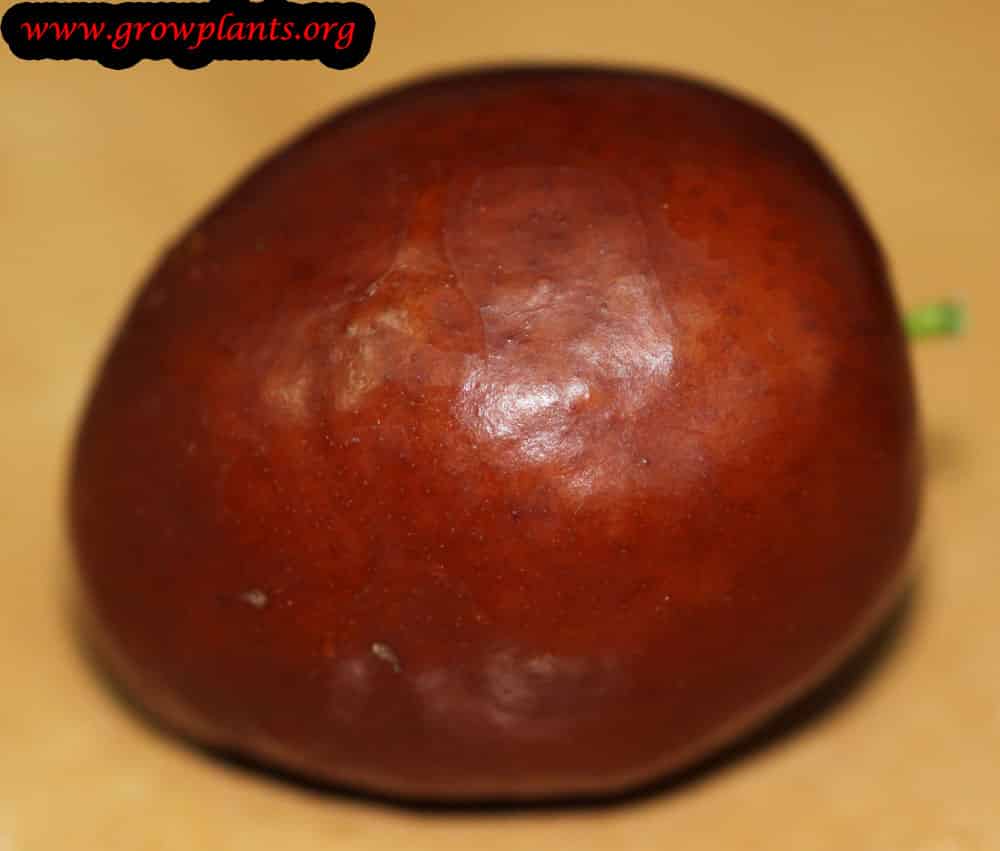
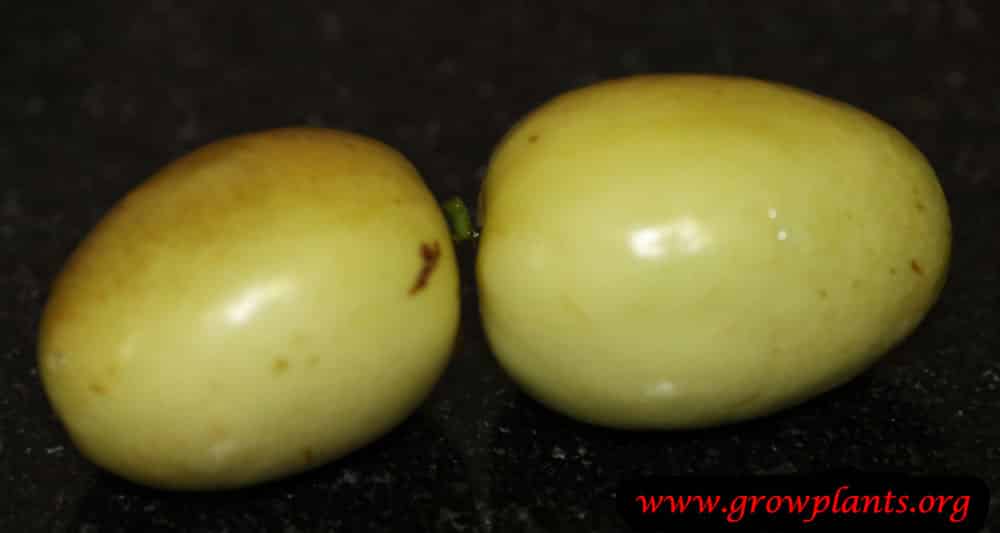
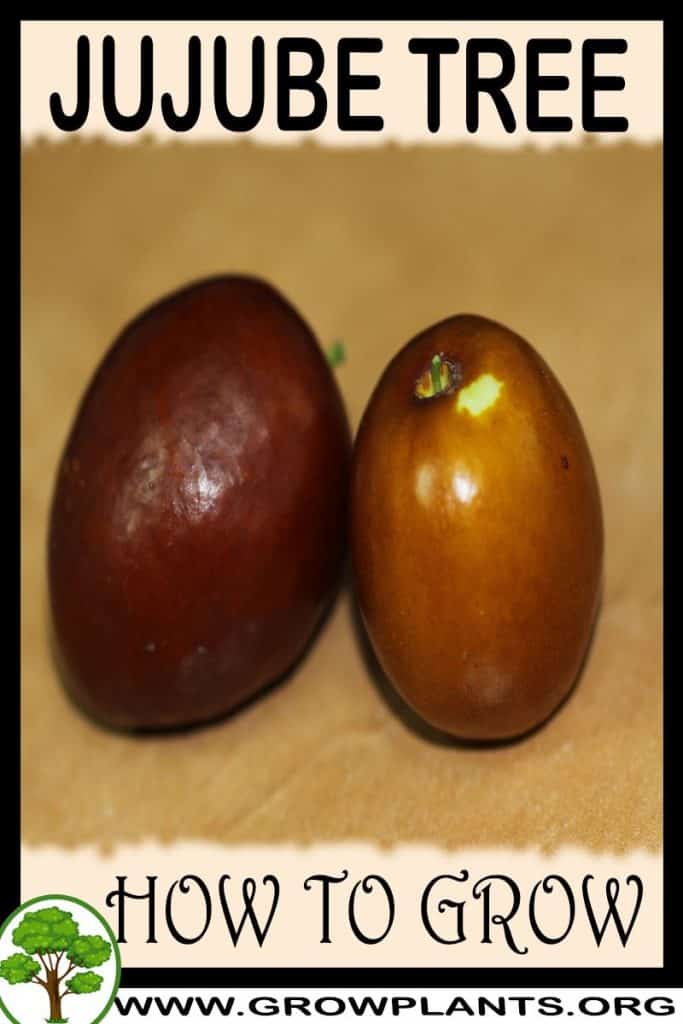
- Fruit Profile: Round to oval fruit 2-5 cm, ripening red-purple, eaten fresh or dried.
Primary Uses & Landscape Value
- Edible Uses: Fruit eaten raw, dried, or used in beverages.
- Functional & Ornamental Roles: Fruit tree and ornamental; its thorny habit suits a defensive hedge.
Care Guide: Planting, Soil & Watering
Overview: The jujube (Chinese date) is a hardy, sun-loving fruit tree that needs a cool winter to fruit well and thrives in well-drained soil. It is drought-tolerant once established, needing only low to moderate water.
Quick Care Requirements
| Requirement | Ideal Condition |
|---|---|
| Planting Season | In the warm season (winter to summer), ideally while dormant |
| Growth Rate | Slow to Moderate |
| Soil Type | Well-drained soil, adaptable |
| Water Need | Low to Moderate – let soil dry between waterings |
Planting & Establishment
- Best Planting Season: Plant in the dormant or cooler part of the warm season; it needs winter chill and suits zone 6-11.
- How to Plant:
- Hole Preparation: Dig a hole about twice the width of the root ball and as deep, loosening the base for the roots.
- Soil Amendments: Mix a little compost or organic matter into the backfill and make sure the site drains freely.
- Planting Depth: Keep the graft union (where present) and root collar above soil level; do not bury the trunk.
- Growth Speed & Expectations: A slow-to-moderate grower reaching 3-10 m; grafted trees fruit sooner and larger, usually bearing within about 2-3 years.
Soil, Watering & Drainage Care
- Soil Mix & Drainage Needs: Wants well-drained soil and can be grown in a large container if kept pruned. Avoid waterlogged ground.
- Watering Schedule & Technique:
- Young / Newly Planted: Water regularly during the first year to settle the roots.
- Established: Water moderately once established, letting the soil dry between waterings.
- Seasonal Adjustments: Water more in summer while fruiting and keep dry over the dormant winter.
Climate, Light & Hardiness
Jujube tree is a deciduous, thorny fruiting tree of subtropical, desert, Mediterranean, and temperate climates, hardy across USDA zone 6–11 – notably more cold-hardy than its relative Ziziphus mauritiana. It grows in full sun to half shade and, as a temperate deciduous fruit tree, benefits from a distinct cool winter for good fruit size and quality.
Quick Climate Specifications
| Climate Zones | subtropical, desert, Mediterranean, or temperate climates |
|---|---|
| USDA Hardiness Zones | 6–11 |
| Optimal Temp Range | warm growing-season conditions with a distinct cool winter dormancy |
| Cold Damage Begins | late hard frosts can injure new spring growth and flowers; dormant wood is well cold-hardened |
| Approx. Survival Minimum | established trees typically tolerate brief cold consistent with zone 6, roughly −23 to −18°C (−10 to 0°F) |
| Frost Tolerance | Moderate–High (dormant season) / Low (new spring growth) |
| Light Conditions | Full Sun / Half Shade |
| Wind Tolerance | Moderate |
Sunlight & Light Exposure
Optimal Light Setup
Full sun gives the best fruiting; half shade is tolerated with some trade-off in fruit yield.
Direct Sun Requirement
Direct sun benefits fruiting, though the tree is more flexible about light than most fruiting trees.
Shade & Heat Management
Handles hot summers well once established.
Best Exposure/Orientation
An open, sunny site away from frost pockets.
Temperature Extremes & Hardiness
USDA Hardiness & Regional Limits
Hardy across zones 6–11, a broad range that spans cool temperate winters through warm subtropical and desert climates – noticeably more cold-tolerant than Ziziphus mauritiana (zone 8+).
Cold Damage & Winter Protection
Dormant, established trees need no winter protection within this range; young trees benefit from mulch their first winter, especially at the cooler end of the range.
Frost Sensitivity
Dormant wood is well cold-hardened; new spring growth and flowers are more frost-sensitive.
Extreme Heat Tolerance
Very good – comfortable in hot desert and subtropical summers with small to average water.
Chilling Requirement
The site data notes a cool winter improves fruit size, indicating a low-to-moderate chilling requirement typical of jujube; no specific chill-hour figure is given. Grafted selections are often used to help ensure fruit quality.
Wind, Humidity & Microclimate
Humidity Preferences
Adaptable across arid, Mediterranean, and more humid subtropical conditions.
Dry-Air Tolerance
Good; grows with small to average irrigation and is drought tolerant once established.
Wind Tolerance
Moderate; a tough, thorny tree that copes reasonably well with exposed sites.
Rainfall & Seasonal Moisture
Well adapted to low-to-moderate rainfall climates with a defined dry season.
Microclimate Recommendations
Toward the cool edge of its range, a warm, sheltered site helps protect spring growth from late frost.
Growing in Pots, Balconies & Indoors
The jujube (Ziziphus jujuba) is ultimately a full-size tree (3-10 m (10-33 ft)), so a pot suits it only while young – the grower confirms it is not a houseplant. Kept in a large tub on a sunny patio or balcony it grows happily for a few years before it needs the open ground or ever-bigger pots.
Quick Details
- Container Size: Large tub (40-60 L+ while young), stepped up over time
- Indoor Suitability: Not a houseplant – too large and too light-hungry for indoors
- Best Spot: Full sun to a little afternoon shade
- Soil & Drainage: Aerated, organic-rich mix that drains freely
- Watering in Pots: A modest to average amount of water – potted trees dry fast, so check often
Indoors & On the Windowsill
- Houseplant limits: Not an indoor plant – it grows into a sizeable tree and needs far more light than a room can give; a bright window is no substitute for open sun.
- Overwintering: Hardy once established; a young potted tree in a very cold area can still be given a sheltered spot for its first winters.
On a Balcony or Patio
- Light & wind: Give it the sunniest spot; stake a young tree against wind, and remember walls and paving reflect heat so pots dry quickly – check moisture daily in hot spells.
- Weight & drainage: A filled tub is heavy – use a stable, wide container and make sure a balcony can take the load and drain the run-off.
Choosing the Pot, Soil & Long-Term Care
- Pot & drainage: A large, heavy tub while young (think 40-60 L and up), stepped up as it grows; strong drainage holes, and skip a standing-water saucer to avoid root rot. Terracotta breathes and dries faster, glazed or plastic holds moisture longer.
- Potting mix: A well-aerated, organic mix – peat or coir with perlite (and a little vermiculite) – giving roots both moisture and air.
- Feeding: Potted plants need feeding more often than those in the ground, since watering leaches nutrients from the mix – a balanced feed through the growing season keeps them productive.
- Holding its size: To keep a tree small in a pot for longer, root- and top-prune every year or two (a bonsai-style approach) and refresh part of the mix.
Fertilizing & Feeding
A moderate feeder: this hardy, deciduous, thorny tree takes nitrogen-forward feeding while young, shifts to balanced, potassium-supported feeding as it fruits, and needs no feeding once it drops its leaves for winter dormancy.
Quick Fertilizing Specs
| Feeding Level | Moderate feeder |
|---|---|
| Main Nutrient Priority | Nitrogen-forward while young, shifting to balanced and potassium-supported feeding as fruit develops |
| Best Feeding Period | The warm growing season, from spring leaf-out through summer |
| Organic Options | Compost or other organic matter worked into the root zone |
| Reduce/Stop Feeding | Stop feeding as leaves color and drop heading into the tree’s cool winter dormancy |
| Micronutrients | Correct only diagnosed deficiencies; a complete fruit-tree fertilizer usually supplies routine trace needs |
| Soil pH | Tolerant of a wide range of well-drained soils |
Feeding by Growth Stage
Newly planted / establishment
Help the young tree establish roots after planting, in-ground or in a container.
| Nutrient direction | Minimal feeding is usually enough while roots establish; this tough, hardy species needs little help early on. |
|---|---|
| Timing | The first months after planting, during the warm season. |
| Frequency | Feeding is rarely needed until fresh new growth shows the roots have taken hold. |
| Fertilizer types | A diluted, balanced complete fertilizer once new growth appears, Compost or other organic matter worked around the root zone |
| Precautions | Avoid feeding right at planting; concentrated fertilizer can injure fresh roots, and watch for basal suckers that compete with the main plant. |
Young tree – active vegetative growth
Build a strong branch framework, especially where the tree has been grafted for larger fruit.
| Nutrient direction | A nitrogen-forward complete fertilizer supports vigorous leafy growth through the growing season. |
|---|---|
| Timing | From spring leaf-out through the warm growing season while the tree is young and not yet bearing. |
| Frequency | Regular light feedings through the growing season, tapering off as summer ends. |
| Fertilizer types | A nitrogen-forward complete fertilizer formulated for young fruit trees, Compost or other organic matter maintained around the root zone |
| Routine trace nutrients | iron, manganese, zinc |
| Precautions | Stop feeding well before autumn so growth can harden off ahead of winter dormancy, and keep fertilizer away from the thorny base. |
Established, pre-bearing
Maintain steady, balanced growth as the tree matures toward its first crop of fruit.
| Nutrient direction | A balanced complete fertilizer supports continued structural growth without pushing excess soft foliage. |
|---|---|
| Timing | From spring leaf-out through the warm growing season in the years before the tree first sets fruit. |
| Frequency | Periodic balanced feedings spaced through the active growing season. |
| Fertilizer types | A balanced complete fertilizer, Organic matter or compost worked into the root zone |
| Routine trace nutrients | iron, manganese, zinc |
| Precautions | Avoid heavy nitrogen pushes late in the season, which can delay the tree’s shift toward bearing and hardening off for winter. |
Mature, fruit-bearing
Support flowering and fruit development through summer into autumn harvest.
| Nutrient direction | A balanced fertilizer with adequate potassium supports fruit development and quality. |
|---|---|
| Timing | From spring bloom through summer-to-autumn fruit development. |
| Frequency | Periodic feedings through the growing season, stopping well before fruit ripens and leaves begin to color. |
| Fertilizer types | A balanced fruit-tree fertilizer with adequate potassium, Compost or other organic matter renewed around the root zone, Container-grown trees may need a little more frequent feeding given the limited soil volume |
| Routine trace nutrients | iron, manganese, zinc |
| Precautions | Avoid excess nitrogen while fruit is developing and stop feeding well ahead of autumn dormancy. |
Nutrient Deficiency Signs & Corrections
Older leaves fade to pale green or yellow and overall growth slows.
| Possible causes | low available soil nitrogen, leaching from irrigation or rainfall, limited soil volume for container-grown trees |
|---|---|
| Appears first on | older, lower leaves |
| What to check | recent feeding history, soil or container mix organic matter, watering and drainage |
| Possible correction | Apply a nitrogen-forward complete fertilizer suited to the tree’s stage and build soil organic matter. |
Older leaf margins scorch or turn brown while the leaf center stays green, and fruit quality can suffer.
| Possible causes | low soil potassium relative to fruiting demand, leaching in well-drained soils or containers, competing uptake from heavy nitrogen feeding |
|---|---|
| Appears first on | older leaves, starting at the margins |
| What to check | recent fertilizer balance, soil or container drainage, fruit load relative to tree size |
| Possible correction | Shift toward a fertilizer with a stronger potassium component and correct any leaching or drainage issue. |
New leaves emerge small and narrow, clustered in a rosette, with shortened stem growth.
| Possible causes | alkaline or sandy soil limiting zinc availability, cold soil temperatures slowing uptake in early spring, heavy phosphorus feeding interfering with zinc |
|---|---|
| Appears first on | newest growth at shoot tips |
| What to check | soil pH and texture, recent fertilizer history, leaf size pattern on new growth |
| Possible correction | Correct soil pH where feasible and apply a chelated zinc product per its label. |
Leaf margins and tips brown or scorch even though the tree is watered normally.
| Possible causes | fertilizer salts accumulating in a container with limited soil volume, under-watering that concentrates salts, over-fertilizing a young tree |
|---|---|
| Appears first on | leaf margins and tips |
| What to check | recent fertilizer amounts and frequency, container or soil drainage, watering consistency |
| Possible correction | Ease off feeding, water deeply to help move salts through the root zone, then resume lighter feeding. |
Pruning, Training & Seasonal Maintenance
Jujube is a thorny, deciduous, often-grafted small tree whose own data flags two linked issues: it throws vigorous basal shoots, and – because larger, better fruit comes from grafted scion wood – those basal shoots are frequently rootstock suckers rather than the wanted variety. Its own recorded guidance is to prune to keep the plant small given the thorns, and winter dormancy is both the recorded and biologically sound window, since jujube’s small fruiting side-branchlets are commonly shed naturally each autumn along with the leaves.
Quick Pruning & Maintenance Specs
| Pruning Tolerance | Moderate |
| Primary Pruning Window | Winter (dormant) |
| Main Objective | Keep the plant to a manageable, thorn-safe size; remove rootstock suckers on grafted trees |
| Young Plant Priority | Establish the scion framework clearly above the graft union; remove any rootstock growth immediately |
| Mature Plant Priority | Size/height control; ongoing rootstock-sucker removal; thin crowded thorny growth |
| Best Tool Type | Loppers/bypass secateurs; saw for older wood on a neglected specimen |
| Avoid Heavy Pruning During | Spring, while the current season’s fruiting branchlets are forming from the perennial framework |
Pruning by Plant Age & Size
Newly Established
Minimal – remove only damaged growth; immediately remove any shoots arising from below the graft union, since these are rootstock, not the fruiting variety.
Young / Formative
Build a modest, well-spaced framework, keeping it deliberately smaller than an unpruned tree would grow – this plant’s own guidance, given the thorns – rather than training a large central-leader tree.
Mature / Established
Annual dormant thinning to hold the plant at a manageable, thorn-safe size; continued vigilance for rootstock suckers, which this species is explicitly recorded as prone to throwing.
Seasonal Pruning Schedule
| Stage | Objective | What to Remove | Flowering/Fruiting Impact |
| Dormant / Winter | Structural and size-control pruning | Overgrown framework wood; rootstock suckers | Done before spring growth (and its short-lived fruiting branchlets) begins, so it doesn’t sacrifice a crop |
Flowering & Fruiting Wood
Flowers form on young growth that appears alongside older wood each spring. Jujube is commonly documented as producing small, deciduous fruiting branchlets each season from its perennial framework branches – these carry the year’s flowers and fruit, then are shed naturally with the leaves in autumn, so there is no old fruiting wood to protect or renew. Dormant winter pruning of the permanent framework doesn’t sacrifice a crop, since the actual fruiting growth regenerates fresh from that framework the following spring.
Structural Pruning & Training
Because the species is recorded as thorny and prone to basal/root suckering, structural work here is really about restraint: keep the permanent framework modest in size and count, and treat any vigorous basal growth as suspect – check whether it’s above or below the graft – rather than assuming it’s welcome new structure.
Special Growth to Remove
- Rootstock suckers – this plant’s data explicitly notes grafting is used for better fruit and separately flags basal shoots as a recorded difficulty, so any growth from below the graft union or the root zone should be removed at its source as soon as seen.
- Thorny interior crossing growth that blocks access.
Container & Small-Space Pruning
Container growing is noted as possible for this species; it reinforces the same size-restraint objective already needed given the thorns, with root pruning at repotting to match.
Tools
Loppers for framework thinning and thicker sucker growth; bypass secateurs for smaller shoots and detail work near thorns; a pruning saw only for old wood on a long-neglected specimen.
Tool Hygiene & Disease Risk
Routine – no major transmissible pathogen is recorded for this species; clean, sharp tools are sufficient, with care taken given the thorns.
Cut Placement & Technique
Remove rootstock suckers flush at their point of origin (at or below the graft/root zone). Use thinning cuts on the permanent framework rather than heading cuts, to keep the deliberately restrained size this species calls for.
Heavy Pruning & Rejuvenation
Tolerates a fairly hard size-reduction cut in winter if the tree has outgrown its space, consistent with its own guidance to keep it small; expect vigorous regrowth, including a likely flush of basal/rootstock suckers that will need follow-up removal.
Post-Pruning Care
Minimal; watch closely for the rootstock suckers and basal shoots this species is prone to throwing after any hard cut, and remove them promptly before they establish.
Common Pruning Mistakes
- Letting rootstock suckers grow unchecked until they compete with or overtake the grafted variety.
- Letting the thorny canopy grow larger than manageable instead of maintaining the recorded ‘keep it small’ approach.
- Confusing normal seasonal shedding of fruiting branchlets in autumn with dieback.
When NOT to Prune
Avoid cutting the permanent framework hard in spring once the season’s fruiting branchlets are actively developing.
Recommended Tools (by task)
| Task | Tool Category | Why |
| Framework thinning, thicker basal growth | loppers | Handles mid-size thorny wood |
| Rootstock suckers, smaller thorny shoots | bypass_secateurs | Precise cuts at the sucker’s point of origin |
| Old wood on a neglected specimen | pruning_saw | Needed for thick overgrown framework |
Pruning Troubleshooting
| Problem | Possible Cause | What to Check | Corrective Action |
| Vigorous unwanted shoots from the base | Rootstock suckers below the graft union | Whether shoots originate above or below the graft | Remove suckers at their point of origin as soon as seen |
| Grafted variety being crowded out | Rootstock suckers left unchecked long-term | Foliage/fruit differing from the named variety | Remove all rootstock growth promptly; consider reworking a badly overtaken tree |
| Plant outgrowing its space among thorns | Framework not restrained per this species’ recommended approach | Size against the intended footprint | Dormant winter size-reduction cuts, done regularly rather than left to become drastic |
Propagation Guide
Grafting a named cultivar onto seedling rootstock is the best method for jujube – the source itself notes that grafting is used to get bigger fruit and states it is necessary. Seed is possible and is the simplest way to start a basic tree, but seedling jujubes tend to be more variable and produce smaller fruit than a grafted selection; difficulty is Easy from seed and Moderate for grafting.
Quick Propagation Specs
| Best Propagation Method | Grafting a named cultivar onto seedling rootstock, for bigger, more reliable fruit |
| Alternative Methods | Seed, for a basic tree; root suckers, with the caution noted below |
| Propagation Difficulty | Moderate (Easy from seed; grafting takes more skill) |
| Seed True-to-Type | Variable – seedlings tend to produce smaller, less consistent fruit than the parent, which is why the source recommends grafting |
| Vegetative True-to-Type | Yes |
| Best Propagation Season | Winter, spring or summer for planting, matching the source; grafting is typically done in the dormant winter season, matching the source’s stated pruning season |
Growing from Seed
Seed Handling & Viability
Not detailed by the source. As with other Ziziphus species, the seed sits inside a hard, stony pit, and the source notes this plant prefers a cool winter, so a period of cold, moist conditions before spring may help even out germination.
Sowing Season
Winter, spring or summer, matching the source’s stated planting season.
Germination Conditions
Full sun to half shade, consistent with the source’s stated light preference; small to average watering while establishing.
Seedling Care
Full sun to half shade with small to average watering, matching the source’s stated water needs. Seedling-grown trees typically produce smaller, more variable fruit than the parent, which is why the source recommends grafting for bigger fruit.
Grafting & Budding
Why Grafting Is Used
Per the source, grafting is used specifically to obtain bigger fruit and is described as necessary.
Rootstock
Seedling Ziziphus jujuba rootstock.
Scion Selection
Scion wood chosen from a known, good-fruiting named cultivar.
Best Grafting Season
Likely best during the dormant season (winter), consistent with the source’s stated winter pruning season.
Graft Aftercare
Protect the graft union, and remove any competing rootstock suckers or basal shoots that arise below it.
Division, Offsets, Pups & Suckers
The source notes this plant produces basal shoots as one of its difficulties, alongside thorns and an aggressive habit. On an own-root plant, these root suckers can potentially be dug up and transplanted to propagate the same plant. On a grafted tree, however, suckers arising below the graft union will be of the rootstock, not the named fruiting cultivar, and are usually removed rather than propagated unless the rootstock itself is being deliberately multiplied.
Bloom & Flower Guide
Quick Details
- Bloom Season: Spring
- Time to First Bloom: Often within two to three years of planting
- Flower Appearance: Tiny yellow to greenish-white flowers, only 1–2 mm across, in small clusters
- Edibility: Not eaten – the flowers are inconspicuous and the tree is grown for its fruit
Detailed Blooming Overview
Jujube (Ziziphus jujuba) flowers in spring with tiny yellow to greenish-white blooms, each just a millimetre or two wide. They appear in small clusters where the new season’s growth meets the older wood. Individually easy to overlook, they are rich in nectar and open in generous numbers.
Flower Characteristics
- Very small yellow to greenish-white flowers, 1–2 mm across.
- Borne in clusters on young stems beside the older branches.
Bloom Care & Thinning
- Pollination: Nectar-rich and visited by bees; some varieties are self-pollinating.
Fruit & Uses
Jujube (Chinese date) is grown for its round-to-oval, red-purple fruit, which is eaten fresh with a crisp, apple-like texture, or dried for storage and later use in tea and other beverages. No cooking is required to eat it fresh.
Quick Edible Specs
| Edible Parts | Fruit |
|---|---|
| Main Use(s) | Culinary – fresh eating, drying, beverage (dried fruit steeped as tea) |
| Eaten Raw or Cooked | Raw; dried fruit is also steeped rather than cooked |
| Preparation Required | None for fresh eating; drying for the dried/beverage form |
| Harvest Season | Summer to autumn |
| Time to First Harvest | A few years from planting to first fruit; grafted plants are typical for good fruit quality (see Propagation) |
| Storage | Fresh fruit keeps only briefly; dried jujubes (the familiar “red dates”) store for a long time |
| Safety/Toxicity Caveat | None noted; this is a standard fresh-eating and dried fruit |
Fruit
Fruit is round to oval, 2-5cm, ripening to a red-purple colour with crisp, apple-like flesh when fresh. It can be picked while still partly green and ripened at home, or left to colour fully on the tree. Fresh fruit is eaten out of hand; a large share of the harvest is traditionally dried into the wrinkled “red dates” used in tea, soups and other dishes.
Harvesting
Harvest runs summer into autumn. Fruit fly and birds are the main pests on the ripening crop, so traps or netting are worth using, especially as fruit approaches full colour.
Preparation, Uses & Safety
Fresh fruit needs no preparation beyond washing. For the dried form, fruit is sun-dried or dehydrated whole; dried jujubes are then used as a snack or steeped for tea and other beverages. No safety caveats apply to normal use.
Pests, Diseases & Troubleshooting
Overview: Jujube/ber (Ziziphus jujuba) is a tough, drought-hardy fruit tree whose troubles concentrate on the crop: fruit fly and fruit borer inside the fruit, powdery mildew and fruit rot on it, and birds after it. The tree itself is remarkably pest-resistant. Orchard sanitation – clearing fallen and mummified fruit – and mildew control around fruit-set do most of the work.
Quick Troubleshooting Overview
| Issue / Pest | Main Symptom | Primary Solution |
|---|---|---|
| Fruit fly | Maggoty, soft, early-dropping fruit; sting marks | Destroy fallen fruit, bag/net, bait traps, prompt harvest |
| Fruit / stone borer | Frass-plugged holes in fruit, rot and drop | Remove bored fruit, open canopy, well-timed spray |
| Powdery mildew | White bloom on shoots and fruit; russeting, cracking | Tolerant cultivars, airflow, sulfur/bicarbonate at fruit-set |
| Scale / mealybug | Encrustations, honeydew, sooty mould | Prune out, horticultural oil, beneficials |
| Birds | Pecked and stripped ripe fruit | Netting, bagging, prompt harvest, moving deterrents |
| Fruit cracking / root rot | Split fruit; decline in wet soil | Even moisture, mulch, free-draining soil |
Common Pests & Management
- Fruit Fly (Carpomya vesuviana / Bactrocera spp.):
- Symptoms: The key ber/jujube pest: maggots tunnel the ripening fruit, which softens, discolours, drops early and is riddled inside; egg-laying punctures dot the skin.
- Prevention & Control: Sanitation is central – collect and destroy fallen and infested fruit to break the cycle, and bag choice fruit. Hang protein-bait or methyl-eugenol traps to monitor and mass-trap; spot-treat with bait sprays only if pressure is high. Harvest promptly.
- Fruit / Stone Borer (Meridarchis scyrodes and allies):
- Symptoms: Caterpillars bore into developing fruit near the stone, leaving frass-plugged holes; fruit rots and drops. Often confused with fruit-fly damage.
- Prevention & Control: Remove and destroy bored fruit, prune to open the canopy, and monitor at fruit-set. Encourage parasitic wasps; a well-timed spray at early fruit development helps in heavy years.
- Scale Insects & Mealybugs (Parlatoria / Ceroplastes / Planococcus spp.):
- Symptoms: Encrusting scales and cottony mealybugs on twigs, leaf axils and fruit stalks; sticky honeydew and black sooty mould coat the foliage and reduce vigour.
- Prevention & Control: Prune out heavily encrusted wood, encourage lady beetles and parasitic wasps, and wash off honeydew. Horticultural-oil sprays smother scale crawlers and mealybugs; treat in the cooler part of the day.
- Aphids & Leaf-eating Caterpillars (Aphis spp. / Lepidoptera):
- Symptoms: Aphids curl young shoots with honeydew and sooty mould; various caterpillars chew and skeletonise leaves, defoliating shoots in bad years.
- Prevention & Control: Encourage natural enemies and hose off aphids; hand-pick or Bt-spray caterpillars while young. Keep trees vigorous so light feeding is shrugged off.
- Birds (Aves):
- Symptoms: Ripening fruit is pecked, torn and stripped, especially by parrots and mynas as sugars rise; heavy losses near harvest.
- Prevention & Control: Net choice trees or bag clusters before ripening, harvest promptly at maturity, and use visual/audio deterrents that are moved often so birds do not habituate.
Diseases & Fungal Issues
- Powdery Mildew (Oidium / Podosphaera spp.):
- Symptoms: A whitish powdery bloom on young leaves, shoots and especially developing fruit, which then russets, cracks, stops growing and drops. One of the most damaging jujube diseases.
- Treatment & Management: Choose tolerant cultivars, prune for light and airflow, and remove mummified fruit and infected shoots. Sulfur, potassium bicarbonate or a suitable fungicide from flowering through early fruit-set gives good protection.
- Fruit Rot / Anthracnose (Colletotrichum gloeosporioides / Alternaria):
- Symptoms: Sunken dark spots on maturing and stored fruit that expand into soft, rotten patches; blossom and twig blight in humid weather.
- Treatment & Management: Harvest at proper maturity, handle fruit gently, and store cool and dry. Orchard sanitation and a protectant fungicide during wet fruit development reduce losses.
- Jujube Witches’-Broom (Ca. Phytoplasma ziziphi (leafhopper-vectored)):
- Symptoms: A serious, often lethal disease of Chinese jujube: dense brooms of small, pale, upright shoots, yellowing, phyllody (flowers reverting to leaves) and gradual dieback over several years.
- Treatment & Management: No cure – manage by planting resistant/tolerant cultivars and clean, tested stock, removing and destroying infected trees, and controlling leafhopper vectors. Do not propagate from symptomatic trees.
Growing Difficulties & Abiotic Problems
- Fruit Cracking:
- Cause & Symptoms: Uneven soil moisture – a wet spell or heavy irrigation after dry conditions as fruit ripens – splits the skin, inviting rot and flies.
- Correction Strategy: Keep soil moisture even with mulch and measured irrigation, especially through fruit development; avoid sudden heavy watering near harvest.
- Root Rot from Overwatering:
- Cause & Symptoms: Jujube is extremely drought-hardy and resents wet feet; heavy, poorly drained or over-irrigated soil rots the roots.
- Correction Strategy: Plant in free-draining soil, water deeply but infrequently once established, and never leave the root zone waterlogged.
- Excess Suckering:
- Cause & Symptoms: Jujube trees, especially grafted ones, throw up vigorous thorny root suckers that sap energy and spread away from the tree.
- Correction Strategy: Remove suckers promptly at the root, mow or mulch to suppress them, and avoid damaging surface roots which triggers more suckering.
What Helps – Products & Tools
A jujube kit centres on fruit protection: protein-bait or methyl-eugenol fruit-fly traps, fruit bags and bird netting, sulfur or potassium-bicarbonate (or a labelled fungicide) for powdery mildew at fruit-set, horticultural oil for scale and mealybug, and Bt for leaf caterpillars. Sanitation of dropped fruit is the cheapest, most effective tool.