Plant Profile & Key Characteristics
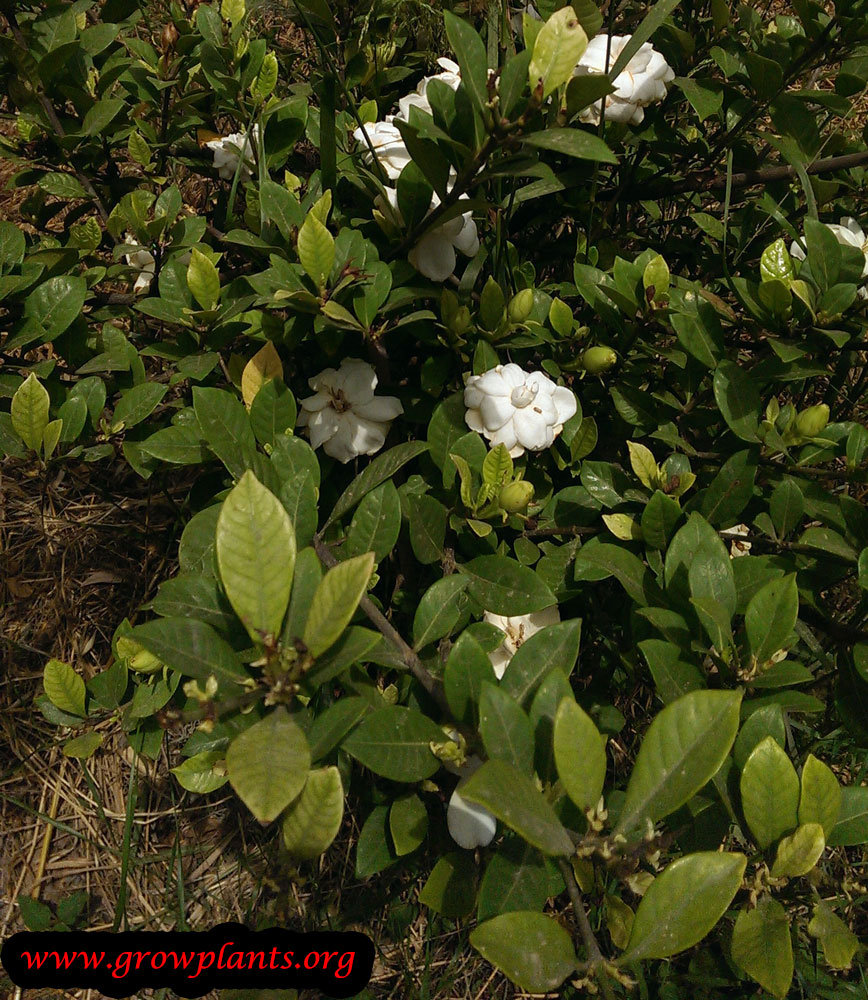
Overview: A compact evergreen shrub, about 0.9–1.2 m tall and wide, with glossy dark-green foliage. Grown for its intensely fragrant white flowers, it serves as an ornamental hedge, container or houseplant.
Quick Specifications
| Specification | Attribute |
|---|---|
| Plant Type / Life Cycle | Perennial (evergreen shrub) |
| Foliage Type | Evergreen |
| Mature Size | 0.9–1.2 m (3–4 ft) tall, with a similar spread |
| Growth Rate | Slow to moderate |
| Toxicity | Mildly toxic to cats and dogs (can cause vomiting or diarrhoea if eaten) |
| Hardiness | USDA zone 8 and warmer |
Growth Form & Structure
- Height & Spread: Bushy shrub around 0.9–1.2 m tall and wide; widely grown in containers and as an indoor plant.
- Growth Habit & Form: Dense, rounded evergreen shrub with a compact, well-branched habit.
- Lifespan & Maturity: A slow-to-moderate, long-lived shrub.
Anatomy & Physical Features
- Leaves & Foliage: Glossy, dark-green, oval, leathery leaves.
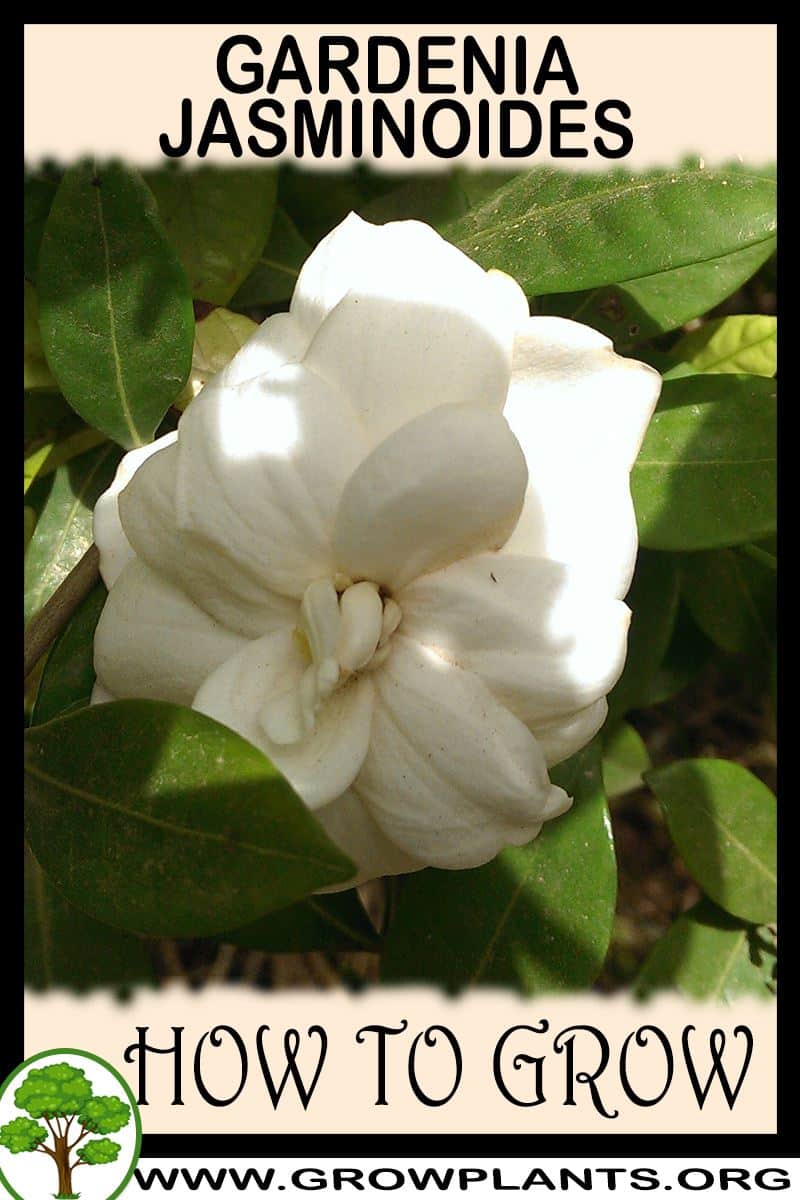
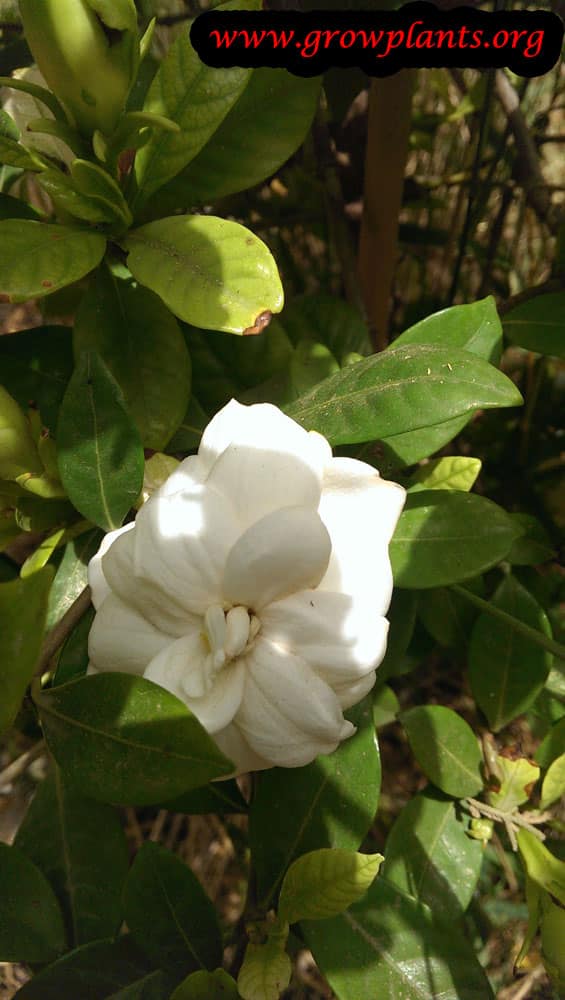
- Flower Characteristics: Highly fragrant white flowers, single to fully double with 6 or more petals and yellow stamens.
Primary Uses & Landscape Value
- Functional & Ornamental Roles: Fragrant ornamental for hedges, borders, containers and as a houseplant; a good cut flower, and the fruit is used medicinally and as a natural yellow dye.
Care Guide: Planting, Soil & Watering
Overview: Gardenia jasminoides (cape jasmine) is a fragrant evergreen shrub that prefers moist, acidic, humus-rich soil and part to full shade in warm climates. It needs steady, moderate moisture and dislikes both drying out and waterlogging.
Quick Care Requirements
| Requirement | Ideal Condition |
|---|---|
| Planting Season | Spring through autumn (warm season) |
| Growth Rate | Slow to Moderate |
| Soil Type | Rich, humus-rich, moist and acidic, but well-draining |
| Soil pH | Acidic to neutral (about 5.0–6.5) |
| Water Need | Moderate — keep evenly moist, never waterlogged |
Planting & Establishment
- Best Planting Season: Plant from spring through autumn during the growing season.
- How to Plant:
- Hole Preparation: Dig a hole about twice the width of the root ball to loosen the surrounding soil.
- Soil Amendments: Blend in acidic organic matter such as compost with peat or pine bark to keep the soil rich and on the acidic side; avoid adding lime.
- Planting Depth: Set the root collar level with the soil surface and do not bury the stem.
- Growth Speed & Expectations: A slow-to-moderate grower forming a rounded shrub about 0.9–1.2 m (3–4 ft) tall.
Soil, Watering & Drainage Care
- Soil Mix & Drainage Needs: Use rich, acidic, humus-rich soil that stays moist yet drains freely; for containers choose an ericaceous (acid) potting mix. Poor drainage or alkaline soil leads to yellowing leaves.
- Watering Schedule & Technique:
- Young / Newly Planted: Keep the soil evenly moist while the shrub establishes.
- Established: Water regularly to maintain steady moisture; letting the soil dry out can cause bud drop, but never leave it waterlogged. Soft or rainwater is best.
- Seasonal Adjustments: Water more in heat and reduce in winter, keeping the soil just moist.
Climate, Light & Hardiness
Gardenia jasminoides is a warmth-loving evergreen shrub hardy to roughly zone 8 and warmer across subtropical, tropical, and Mediterranean climates (or grown as a houseplant elsewhere); it prefers half to full shade and consistently moist, acidic-to-neutral soil.
Quick Climate Specifications
| Climate Zones | Subtropics, tropics, Mediterranean; also grown as a houseplant |
|---|---|
| USDA Hardiness Zones | Approximately 8+ |
| Light Conditions | Half shade; full shade |
Sunlight & Light Exposure
Shade & Heat Management
Does best out of intense direct sun, especially in hot climates; strong midday sun can stress the foliage and flowers.
Temperature Extremes & Hardiness
USDA Hardiness & Regional Limits
Hardy to about zone 8; below that, it is best grown as a houseplant with bright, indirect light.
Wind, Humidity & Microclimate
Humidity Preferences
Being native to subtropical and tropical climates, it generally appreciates higher humidity; indoors, dry heated air can stress the plant, especially around flowering time.
Growing in Pots, Balconies & Indoors
Gardenia is a genuine houseplant – the grower confirms it can be grown indoors as well as in containers. Prized for its glossy leaves and intensely fragrant white flowers, it does best in bright, indirect light with humidity, and it also makes a lovely potted shrub for a shaded patio in warm climates.
Quick Details
- Container Size: A pot of about 10-20 L (2.6-5 gal) for a mature shrub; pot up gradually as it grows
- Indoor Suitability: A good houseplant in bright, indirect light with humidity and cool nights
- Best Spot: Bright indirect light indoors, or half to full shade on a warm, sheltered patio
- Soil & Drainage: Acidic (ericaceous) mix that stays evenly moist yet drains freely
- Watering in Pots: Keep evenly moist with soft or rainwater; never let it dry out or sit soggy
Indoors & On the Windowsill
- A true houseplant: The grower confirms it as an indoor plant. Give it bright, indirect light near a window, steady warmth, and raise humidity with a pebble tray or grouping – dry air and cold draughts cause bud drop.
- Care indoors: Water with soft or rainwater to protect its acid-loving roots, and keep it away from radiators and hot, dry spots.
- Overwintering: It is frost-tender, so in cold climates it lives indoors or moves inside for winter – a key reason to keep it potted.
- Safety: Gardenia is mildly toxic to cats and dogs if eaten – keep it out of their reach.
On a Balcony or Patio
- Light & shelter: In warm climates it enjoys a bright, sheltered spot out of harsh midday sun; pots against warm walls dry quickly, so check moisture often.
- Practicalities: Allow for the weight of a filled pot and for drainage runoff onto the balcony below – stand pots on feet or a tray you can empty.
Choosing the Pot, Soil & Long-Term Care
- Pot & drainage: A 10-20 L pot with strong drainage; terracotta dries fast, so glazed or plastic helps keep the moisture this plant likes. Use strong drainage holes and skip a standing water saucer, which invites root rot; terracotta breathes and dries fast, while glazed or plastic pots hold moisture longer.
- Potting mix: An acidic (ericaceous) mix – lime-free, with added coir and perlite for moisture and air.
- Feeding: Feed with an acidic/ericaceous fertiliser through the growing season, more often than a ground plant since pots leach nutrients.
- Repotting: Pot on or refresh the mix about every two years, keeping it lime-free.
Fertilizing & Feeding
A moderate feeder: an acid-forming, balanced fertilizer through spring into the bloom period keeps this acid-loving shrub healthy, then feeding eases off as growth slows for the season.
Quick Fertilizing Specs
| Feeding Level | Moderate feeder |
|---|---|
| Main Nutrient Priority | Balanced feeding formulated for acid-loving shrubs |
| Best Feeding Period | Spring through the summer bloom period |
| Organic Options | Acidic compost, pine bark, or other organic mulch worked into the root zone |
| Reduce/Stop Feeding | Ease off feeding as the bloom period ends and growth slows |
| Micronutrients | An acid-forming shrub fertilizer supplies iron; correct chlorosis only if diagnosed |
| Soil pH | Acidic to near neutral |
Feeding by Growth Stage
Spring growth flush
Build strong new growth heading into the bloom season.
| Nutrient direction | A balanced, acid-forming fertilizer formulated for acid-loving shrubs. |
|---|---|
| Timing | Early spring as new growth begins. |
| Frequency | Light feeding as spring growth resumes. |
| Fertilizer types | A balanced, acid-forming shrub fertilizer, Acidic compost or pine bark mulch worked in |
| Precautions | Keep soil consistently moist and acidic; alkaline soil ties up iron even with regular feeding. |
Flowering period
Support a full flush of fragrant white blooms.
| Nutrient direction | Continue a balanced, acid-forming fertilizer through the bloom period. |
|---|---|
| Timing | Through spring and summer flowering. |
| Frequency | Light, steady feeding through bloom. |
| Fertilizer types | A balanced, acid-forming shrub fertilizer |
| Precautions | Avoid heavy or sudden feeding changes during bloom, which can trigger bud drop. |
Cool-season rest
Let the shrub rest through the cooler, slow-growth part of the year.
| Nutrient direction | None – withhold fertilizer once active growth slows for the season. |
|---|---|
| Timing | Autumn into winter as growth stops. |
| Frequency | No feeding at this stage. |
| Fertilizer types | No feeding at this stage; do not fertilize a gardenia that has stopped active growth. |
| Precautions | Do not fertilize now; feeding a resting shrub can push tender growth that cold weather easily damages. |
Nutrient Deficiency Signs & Corrections
Young leaves turn yellow between dark green veins, giving a netted look.
| Possible causes | high soil alkalinity that ties up iron, poorly drained or overly wet roots, naturally low iron availability in the soil |
|---|---|
| Appears first on | new, young leaves |
| What to check | soil pH and alkalinity, drainage around the roots, whether new leaves are affected first |
| Possible correction | Lower soil pH with an acid-forming fertilizer or soil amendment, and apply a chelated iron product if needed. |
Older leaves fade to pale green or yellow and overall growth slows.
| Possible causes | low available soil nitrogen, nitrogen leaching from heavy watering, thin soil low in organic matter |
|---|---|
| Appears first on | older, lower leaves |
| What to check | recent feeding history, soil organic matter, watering routine |
| Possible correction | Apply a balanced acid-forming fertilizer and build organic matter into the root zone. |
Leaf margins brown or scorch even with regular watering.
| Possible causes | fertilizer salt buildup in the root zone, under-watering that concentrates salts, overly frequent feeding |
|---|---|
| Appears first on | leaf margins and tips |
| What to check | recent fertilizer amounts, watering consistency, drainage around the root zone |
| Possible correction | Ease off feeding and water deeply to flush salts, then return to lighter feeding. |
Pruning, Training & Seasonal Maintenance
Gardenia jasminoides is a slow-to-medium growing evergreen shrub that tolerates moderate pruning but is unusually timing-sensitive: it sets next year’s flower buds on new growth produced in the summer following the current bloom, so pruning too late removes those buds before they ever open. The main objective is light shaping and deadheading to keep the plant tidy without sacrificing next season’s fragrant flowers, and the only safe structural-pruning window is a short one right after flowering finishes.
Quick Pruning & Maintenance Specs
| Pruning Tolerance | Moderate |
| Primary Pruning Window | Immediately after bloom finishes, in summer, before new flower buds set later that same summer |
| Secondary Maintenance Window | Ongoing deadheading of spent blooms through the Spring/Summer flowering period |
| Typical Frequency | Once a year for shaping, plus routine deadheading |
| Main Objective | Maintain shape and remove spent flowers/dead wood without cutting into next year’s bud-bearing growth |
| Young Plant Priority | Light pinching/shaping to encourage a bushy, multi-branched habit while the plant is still small (0.9-1.2m mature size) |
| Mature Plant Priority | Selective thinning for shape and light penetration; deadhead spent flowers; remove dead or weak wood |
| Best Tool Type | Bypass secateurs for shaping cuts; precision snips for deadheading |
| Avoid Heavy Pruning During | Autumn and winter, and again from late summer once next year’s buds have set |
Pruning by Plant Age & Size
Newly Established
Remove only damaged growth after planting; light pinching of soft tips in the first couple of seasons encourages branching without removing much foliage from a plant still establishing its acid-soil root system.
Young / Formative
Multi-leader/open shrub form – pinch or lightly tip-prune young stems just after a bloom flush to build a bushy framework rather than a single dominant stem. No central-leader or vase training is used on this species.
Mature / Established
Selective thinning of crowded or crossing interior branches right after bloom, to maintain shape and let light reach interior growth, which supports flowering the following year.
Seasonal Pruning Schedule
| Post-Flowering | Objective: shape the plant and remove spent blooms while it is safe to do so. Remove: faded flowers, crossing/weak stems, up to a light structural trim. Do not remove: healthy new growth once it appears, since buds for next year form on it. Response: plant pushes new growth that will carry next year’s flowers. Flowering impact: correctly timed, none; delayed past roughly midsummer, next year’s bloom is reduced. |
| Ongoing Sanitary | Objective: remove dead, diseased or damaged wood as it appears, any time of year. Remove: clearly dead stems, damaged tips. Do not remove: healthy live wood outside the main pruning window. Response: reduces disease entry points. Flowering impact: none. |
Flowering & Fruiting Wood
Gardenia jasminoides blooms on new growth that develops during the current Spring/Summer season, but that growth is largely produced and its flower buds set in the summer following the prior bloom. In practice this means pruning acts like an old-wood/spring-bloomer rule even though the flowers appear on new shoots: prune too late (autumn, winter, or after roughly midsummer) and the buds already forming on that season’s new wood are cut away, resulting in a green but flower-light shrub the following year.
Structural Pruning & Training
Thin crossing or rubbing interior branches to improve air circulation, since dense, poorly ventilated growth is more prone to fungal issues on this species. Control height and spread with the same post-bloom trim rather than shearing, which would remove developing flower buds unevenly across the canopy.
Special Growth to Remove
- Spent flowers, removed as they fade to tidy the plant and prevent seed formation
- Dead or weak twiggy growth, removable at any time
Container & Small-Space Pruning
Grows well in containers and as a houseplant. In a pot, keep shaping light and frequent-but-small right after each bloom flush rather than one hard annual cut, since a confined root system recovers more slowly from heavy pruning; watch for legginess toward available light and pinch to compact rather than hard-heading.
Tools
- Bypass secateurs for most shaping and thinning cuts on this size shrub
- Precision snips for deadheading individual spent flowers
Tool Hygiene & Disease Risk
Increased – Gardenia is susceptible to canker and dieback on stems, and to aphids/mealybugs (its known pests) that can spread along a cutting blade. Disinfect secateurs between plants, and always cut back to clean healthy wood when removing any dead or canker-affected stem.
Cut Placement & Technique
Use thinning cuts back to a lateral branch or bud rather than indiscriminate heading cuts, to preserve natural form and avoid stimulating a flush of dense regrowth that shades out flower buds. Deadhead just below the spent flower, above the first healthy leaf.
Heavy Pruning & Rejuvenation
Tolerated in moderation: a leggy or overgrown plant can be cut back by up to about a third right after bloom, in the same safe summer window. Expect a lighter bloom the following year as the plant redirects energy into regrowth; for a severely overgrown shrub, spread rejuvenation over two seasons rather than cutting hard all at once.
Post-Pruning Care
Water consistently after pruning, since Gardenia is sensitive to moisture swings, but do not fertilize immediately after a hard cut-back – the plant is already being pushed into regrowth. Watch newly exposed interior stems for sunscald if a significant amount of canopy was opened at once, and keep an eye out for aphids or mealybugs colonizing soft new growth.
Common Pruning Mistakes
- Pruning in autumn or winter, which removes flower buds already set for next year
- Shearing into a formal hedge shape, which cuts flower buds unevenly and encourages dense growth prone to fungal problems
- Hard-pruning a container plant on the same schedule as an in-ground shrub, stressing its smaller root system
When NOT to Prune
Avoid pruning from roughly late summer through winter, once next year’s flower buds have set on the new growth – cutting in this window is the single biggest cause of a gardenia that fails to flower. Also avoid pruning while the plant is actively blooming, beyond simple deadheading.
Recommended Tools (by task)
- bypass_secateurs – clean, precise cuts for shaping and thinning without crushing stems, better suited to this bloom-sensitive shrub than shearing
- precision_snips – for deadheading individual flowers
- blade_disinfectant – to limit spread of canker and stem dieback between cuts
Pruning Troubleshooting
| Problem | Possible Cause | What to Check | Corrective Action |
| Little or no flowering the following year | Pruned too late (after mid-to-late summer), removing already-set flower buds | Date of last pruning relative to bloom finish | Shift pruning to immediately after bloom next year, and stop cutting once new growth resumes in late summer |
| Sparse flowers, mostly on the outer canopy | Over-shearing into a formal hedge shape, shading the interior | Canopy density and light penetration to interior branches | Switch to selective hand-thinning of interior crossing stems instead of shearing |
| Dieback at cut ends | Canker or fungal infection entering through pruning wounds, often from unclean tools or pruning in wet weather | Browning/sunken bark at and below cuts | Prune in dry weather, disinfect blades, and cut back further into clean healthy wood |
Propagation Guide
Gardenia jasminoides is most practically propagated from semi-hardwood stem cuttings, which reliably reproduce the exact flower form (important for double-flowered varieties that do not come true from seed); seed is possible but seed set in cultivation is inconsistent and germination can be slow, so it is a secondary option rather than the everyday method. Rooting cuttings takes a bit of patience and steady warmth/humidity, making this a moderately easy plant to propagate.
Quick Propagation Specs
| Best Propagation Method | Semi-hardwood stem cuttings |
| Alternative Methods | Seed; air layering (occasionally, for larger specimens) |
| Propagation Difficulty | Moderate |
| Seed True-to-Type | Variable – double-flowered forms will not come true from seed |
| Vegetative True-to-Type | Yes |
| Best Propagation Season | Take cuttings from firm new growth in late spring to summer |
| Cutting Rooting Time | Typically several weeks to a couple of months under warm, humid conditions |
Growing from Seed
Sow fresh seed in a moist, acid-to-neutral, well-drained mix; keep warm. Germination can be slow and uneven, and seedlings will not reproduce a specific double-flowered or named form.
Stem Cuttings
Cutting Type
Semi-hardwood tip cuttings from healthy, non-flowering shoots.
Best Timing
Late spring to summer, when new growth has begun to firm up.
Cutting Preparation
Take a cutting a few inches long, remove the lower leaves, and trim just below a node.
Rooting Setup
Insert into a moist, acid-to-neutral, well-drained rooting mix; keep humidity high (a propagation dome or misting helps) and provide warmth and bright, indirect light.
Rooting Hormone
Not strictly required but beneficial – a rooting hormone can improve and speed up rooting consistency.
Rooting Time
Typically several weeks to a couple of months; keep humidity steady throughout.
Bloom & Flower Guide
Quick Details
- Bloom Season: Late spring into summer
- Time to First Bloom: Established shrubs usually flower within a year or two
- Flower Appearance: Waxy white flowers, single to fully double, with yellow stamens, ageing to cream
- Edibility: Grown for its fragrance, not as a food crop
Detailed Blooming Overview
Gardenia is grown above all for its intensely perfumed flowers. The thick, waxy white blooms open against glossy dark-green leaves and slowly age to cream, filling the air with scent through the warm months.
Flower Characteristics
- White, waxy, richly fragrant flowers ranging from six petals to fully double.
- Yellow stamens; blooms fade to cream with age.
Bloom Care & Thinning
- Deadheading: Pinch off browning flowers to keep the shrub looking fresh.
Bloom Health & Protection
- Bud drop: Gardenia buds fall before opening when watering is uneven or the plant meets cold draughts or sudden temperature swings – keeping moisture and warmth steady is the best prevention.
- Aphids and mealybugs: These cluster on buds and the sticky honeydew leads to sooty mould – insecticidal soap or neem oil helps clean them up.
Fruit & Uses
The ripe fruit (a hard, orange-red, ridged pod) is the only part of Gardenia jasminoides with a genuine non-ornamental use. It is not eaten out of hand as a fresh food – it is bitter and fibrous – but it is dried and used to extract a natural yellow-orange dye for colouring foods, and separately as a traditional herbal ingredient.
Quick Edible Specs
| Edible Parts | Ripe dried fruit (as a colorant/herb, not a fresh food) |
|---|---|
| Main Use(s) | Natural food colorant (yellow-orange dye); traditional medicinal use as a dried herb |
| Eaten Raw or Cooked | Not eaten raw or as a dish on its own – fruit is dried, then the pigment/extract is infused into other foods, or the dried fruit is simmered as a tea/decoction |
| Preparation Required | Dry the fruit fully before use; steep or simmer in water to release the yellow-orange pigment or the herbal infusion |
| Harvest Season | Autumn, once fruit has ripened to orange-red and fully hardened on the plant (after the spring/summer bloom – see Blooming for flower timing) |
| Time to First Harvest | Only mature plants that have flowered and set fruit will produce usable pods; cross-reference plant maturity rather than an exact age here |
| Storage | Store the dried, whole fruit in a cool, dry, dark place; keeps well once fully dried |
| Safety/Toxicity Caveat | Not intended for eating as a food in quantity; used only as a dye/flavouring agent or occasional herbal tea. Consult a qualified practitioner before any medicinal use – this is not a health claim |
Fruit
The fruit is a distinctive ridged, oval pod that turns from green to deep orange-red as it ripens and dries on the shrub. Once fully dry and firm it is picked, and either used whole (simmered in water to release its yellow-orange pigment, which is added to rice, pickles, noodles or other dishes as a natural colorant in East Asian cooking) or kept as a dried herb. The dye is valued because it is plant-derived and free of synthetic colorants, but the fruit itself is not palatable to eat directly.
Harvesting
Harvest in autumn once fruit is fully coloured and firm; leave on the plant to finish ripening rather than picking green, since colour development continues as the fruit matures. A single harvest per fruiting cycle is typical; dry thoroughly after picking before storage or use.
Preparation, Uses & Safety
Culinary use is limited to extracting the natural yellow-orange pigment by soaking or simmering the dried fruit in water, then using the coloured liquid (not the fruit itself) to tint rice, dumplings, pickles or other dishes. The dried fruit is also traditionally used as an herbal infusion; it is traditionally used medicinally in East Asian herbal practice, but this is not a health claim and no dosing guidance is given here – seek qualified advice before any medicinal use. Do not eat the raw or dried fruit directly as a snack; it is bitter and is not established as a safe whole food.
Pests, Diseases & Troubleshooting
Overview: Gardenia jasminoides is beautiful but famously demanding, and most of its troubles are a package deal: sap-sucking pests (whitefly above all) feeding alongside sooty mould, plus two signature cultural problems – iron chlorosis on alkaline soil and bud drop from any sudden change. Keep it in acidic, evenly moist, well-drained soil in warmth and stable conditions, and manage pests organically before they build. Healthy, unstressed plants shrug off most of this.
Quick Troubleshooting Overview
| Issue / Pest | Main Symptom | Primary Solution |
|---|---|---|
| Whitefly | Clouds of tiny white flies; sticky leaves, sooty mould | Yellow sticky traps, insecticidal soap/oil, beneficials |
| Aphids, scale & mealybugs | Honeydew, sooty mould, distorted new growth | Wash off, horticultural oil, control ants |
| Spider mites | Stippled, bronzed leaves and webbing in dry heat | Raise humidity, hose foliage, miticidal oil |
| Root-knot nematode | Stunting, yellowing, galled roots despite good care | Improve soil health; resistant rootstock; solarise |
| Iron chlorosis | Yellow leaves with green veins on new growth | Acidify soil; iron chelate; check pH and drainage |
| Bud drop | Flower buds yellow and fall before opening | Stabilise water, humidity and temperature; no moving |
Common Pests & Management
- Whitefly (Trialeurodes vaporariorum / Dialeurodes citri):
- Symptoms: The signature gardenia pest: tiny white moth-like flies rise in a cloud when the plant is disturbed, with scale-like nymphs on leaf undersides. They excrete honeydew that coats leaves in sticky black sooty mould, and heavy feeding yellows and weakens foliage.
- Prevention & Control: Catch them early with yellow sticky traps, which also monitor numbers. Hose down and wash leaf undersides. Release Encarsia formosa parasitic wasps under glass. Spray insecticidal soap or horticultural/neem oil thoroughly on undersides, repeating every 5-7 days to break the life cycle. Avoid over-feeding with nitrogen, which fuels lush, whitefly-friendly growth.
- Aphids (Aphis / Myzus spp.):
- Symptoms: Clusters of soft green, black or brown insects on tender shoots and buds, causing curled, distorted new growth plus honeydew and sooty mould.
- Prevention & Control: Blast off with water, encourage ladybirds and lacewings, and pinch out badly infested tips. Insecticidal soap or neem oil clears the rest; control the ants that protect them.
- Mealybugs & scale (Planococcus citri, Coccus / Saissetia spp.):
- Symptoms: White cottony tufts in leaf axils (mealybugs) or brown/black limpet-like bumps on stems and leaves (scale), both with honeydew and sooty mould. Common on indoor and greenhouse plants.
- Prevention & Control: Dab mealybugs with alcohol, scrape off scale, and wipe leaves clean. Control ants. Coat thoroughly with horticultural or neem oil to smother crawlers, repeating; release predatory beetles under glass.
- Spider mites (Tetranychus urticae):
- Symptoms: Fine pale stippling, dull bronzed leaves and delicate webbing on undersides, worst in the hot, dry air of heated rooms and greenhouses.
- Prevention & Control: Raise humidity, mist and hose the foliage, and keep the plant unstressed. Introduce predatory mites (Phytoseiulus persimilis) under glass; treat outbreaks with miticidal oil, covering undersides.
- Root-knot nematode (Meloidogyne spp.):
- Symptoms: A classic hidden gardenia problem in warm soils: unexplained stunting, yellowing and wilting despite good care, with knotty galls swelling the roots when you lift the plant.
- Prevention & Control: There is no simple spray. Grow in clean, high-organic-matter soil or fresh potting mix, keep plants vigorous, and add beneficial fungi/compost. In beds, solarise soil and rotate; use nematode-resistant stock where available. Discard heavily galled plants and their soil.
Diseases & Fungal Issues
- Phytophthora root rot & stem canker (Phytophthora spp., Rhizoctonia):
- Symptoms: Wilting and yellowing despite moist soil, dark rotted roots and sometimes cankered, sunken stem bases. Driven by heavy, wet, poorly drained soil.
- Treatment & Management: Prevent by planting in raised, free-draining acidic soil and never letting roots waterlog. Water in the morning, keep mulch off the stem, and remove badly affected plants. Phosphonate or copper drenches help protect valued specimens once drainage is fixed.
- Leaf spot & bacterial spot (Cercospora, Xanthomonas):
- Symptoms: Brown or dark spots and blotches on leaves, sometimes with yellow halos, leading to yellowing and leaf drop; worse in warm, wet, crowded conditions.
- Treatment & Management: Remove spotted and fallen leaves, improve airflow, and avoid wetting foliage – water at the base. Copper fungicide checks fungal and bacterial leaf spots when applied early.
- Sooty mould (Capnodium spp.):
- Symptoms: A black, soot-like coating over leaves and stems. It is harmless in itself but grows on the honeydew of whitefly, scale, mealybugs and aphids, and blocks light.
- Treatment & Management: Control the sap-sucking insect producing the honeydew and the mould stops spreading. Wipe or gently wash off the black film; horticultural oil helps loosen it.
- Powdery mildew (Erysiphe / Oidium):
- Symptoms: White powdery patches on leaves and buds in warm, humid, still air, sometimes distorting new growth.
- Treatment & Management: Improve airflow and light, avoid crowding, and remove affected parts. Potassium bicarbonate, sulfur or a horticultural-oil spray manages outbreaks.
Growing Difficulties & Abiotic Problems
- Iron chlorosis (lime-induced):
- Cause & Symptoms: The classic gardenia symptom: new leaves turn yellow while the veins stay green (interveinal chlorosis), caused by high soil pH locking up iron (and often magnesium) – gardenias are acid-lovers.
- Correction Strategy: Keep soil acidic (pH ~5.0-6.5) with elemental sulfur or an ericaceous/acid mix, and use rain water rather than hard tap water. Apply chelated iron (and Epsom salts for magnesium) for a quick green-up, but fix the underlying pH and drainage for a lasting cure.
- Bud drop:
- Cause & Symptoms: The other classic complaint: flower buds yellow and drop before opening, triggered by sudden change – moving the plant, temperature swings, low humidity, drafts, or letting the soil dry out or stay soggy while buds form.
- Correction Strategy: Keep everything stable while budding: consistent moisture (never bone-dry or waterlogged), 50%+ humidity, warm nights, and no relocating or cold drafts. Steady care is the whole fix.
- Cold damage & leaf yellowing:
- Cause & Symptoms: Cold snaps, cold drafts or waterlogged winter roots cause overall leaf yellowing and drop; older-leaf yellowing can also signal magnesium or nitrogen shortage.
- Correction Strategy: Protect from frost and cold drafts, keep above ~10°C, ensure drainage, and feed with an acid-plant fertiliser containing micronutrients through the growing season.
What Helps – Products & Tools
For sap-suckers, insecticidal soap, horticultural and neem oils are the mainstays, backed by yellow sticky traps for whitefly monitoring and beneficials such as Encarsia wasps and predatory mites under glass. Diseases respond to copper fungicide (leaf and bacterial spots), potassium bicarbonate or sulfur (powdery mildew) and phosphonate drenches (root rot). Crucially, keep an acidifying/ericaceous feed, elemental sulfur and chelated iron on hand for the chlorosis and bud-drop that define gardenia care. Follow the label and spray oils in the evening to protect pollinators.