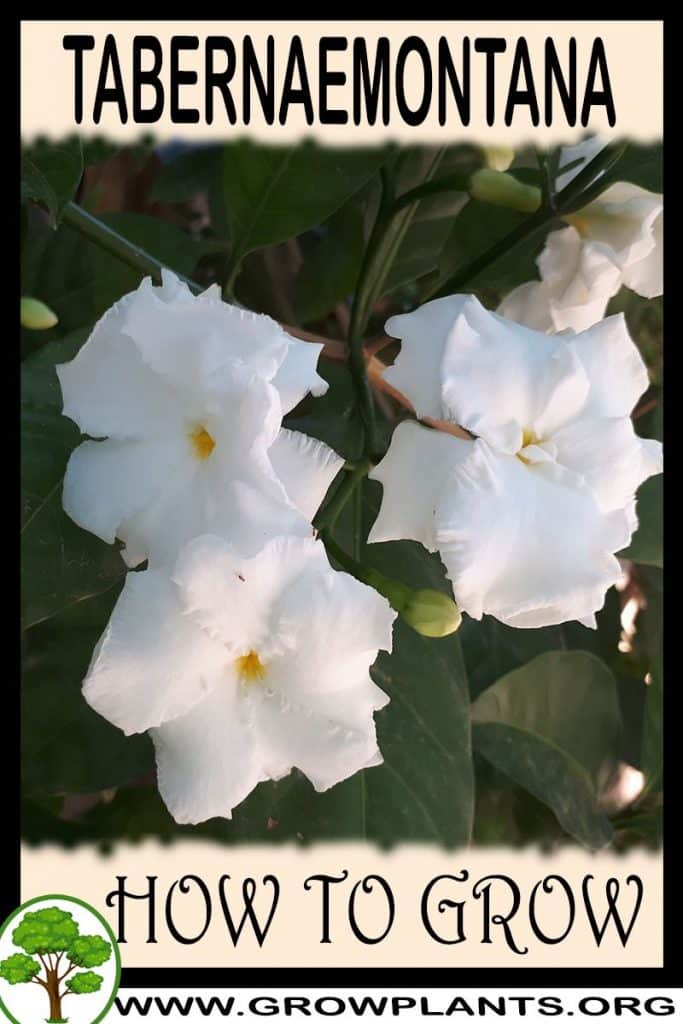
Plant Profile & Key Characteristics
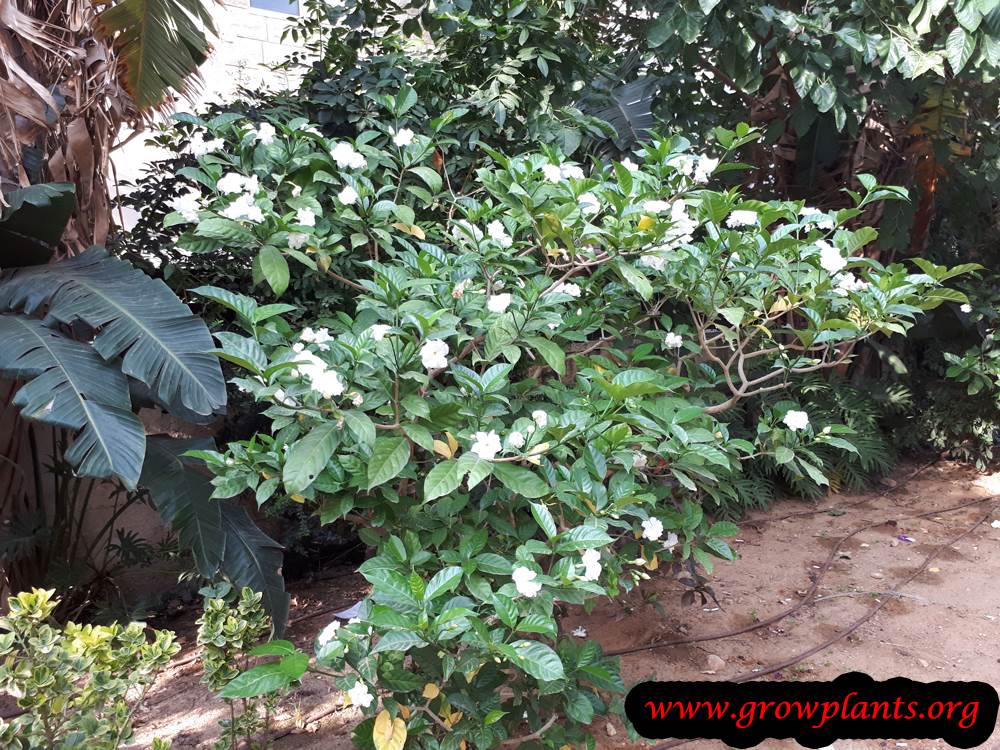
Overview: An evergreen ornamental shrub reaching 1-3 m (3-10 ft), grown for its glossy foliage and fragrant white flowers. It is widely used as a flowering hedge.
Quick Specifications
| Specification | Attribute |
|---|---|
| Plant Type / Life Cycle | Evergreen flowering shrub (woody perennial) |
| Foliage Type | Evergreen |
| Mature Size | 1-3 m (3-10 ft) tall |
| Growth Rate | Moderate |
| Hardiness | USDA zone 10+ |
Growth Form & Structure
- Height & Spread: In the ground 1-3 m (3-10 ft) tall with a comparable spread; stays more compact in a container.
- Growth Habit & Form: Rounded, bushy, multi-stemmed evergreen shrub; stems exude a milky sap when cut.
- Lifespan & Maturity: Long-lived evergreen shrub that flowers over a long season once established.
Anatomy & Physical Features
- Leaves & Foliage: Glossy dark-green oval leaves.
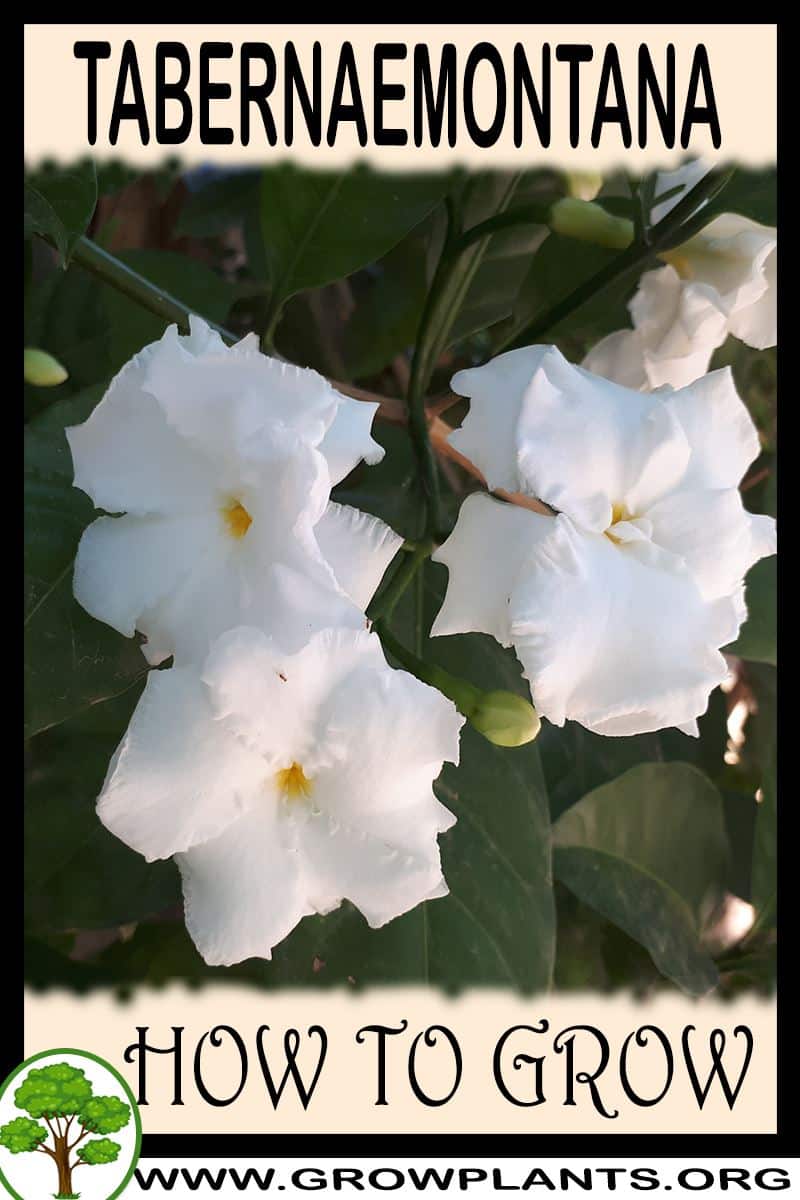
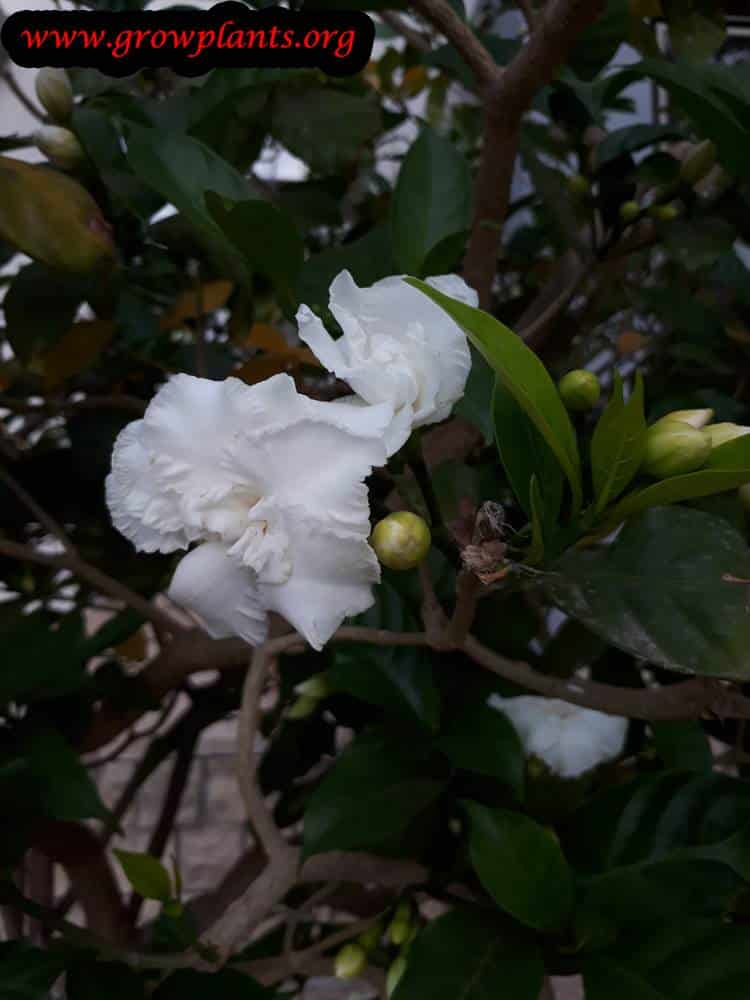
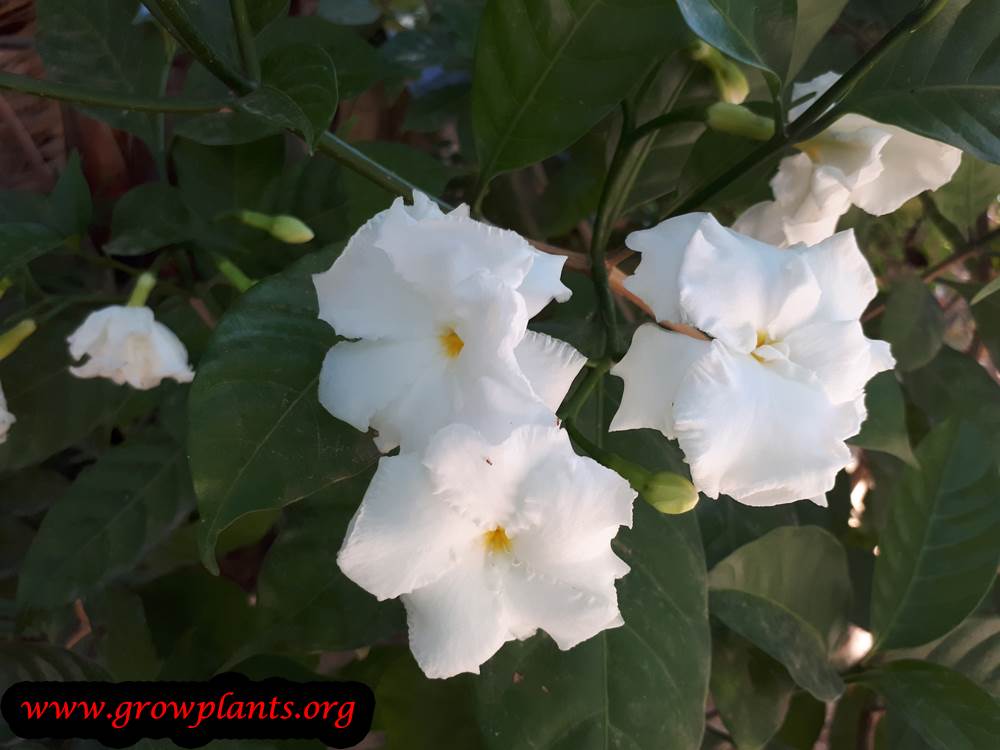
- Flower Characteristics: Fragrant white flowers of flat, pinwheel form, with five to many petals.
Primary Uses & Landscape Value
- Functional & Ornamental Roles: Fragrant flowering hedge, screen or border shrub, and a good container plant for warm climates.
Care Guide: Planting, Soil & Watering
Overview: Tabernaemontana (Milkwood) is a subtropical-to-tropical evergreen shrub for full sun to part shade (hardiness zone 10+). It likes well-drained soil and moderate, even moisture, growing at a steady, moderate pace into a fragrant flowering hedge.
Quick Care Requirements
| Requirement | Ideal Condition |
|---|---|
| Planting Season | Warm season — spring through autumn |
| Growth Rate | Moderate |
| Soil Type | Well-drained soil enriched with organic matter |
| Water Need | Low to Moderate — let the top few cm dry between waterings; it dislikes soggy soil |
Planting & Establishment
- Best Planting Season: Plant during the warm season, from spring through autumn, so it establishes in warm soil.
- How to Plant:
- Hole Preparation: Dig a hole as deep as the root ball and about twice as wide, loosening the surrounding soil.
- Soil Amendments: Blend compost or other organic matter into the backfill to enrich the soil and keep it free-draining.
- Planting Depth: Set the root collar level with the surrounding soil, firm gently and water in; do not bury the stem.
- Growth Speed & Expectations: Expect steady, moderate growth; regular light feeding in the warm season keeps foliage lush and flowering strong.
Soil, Watering & Drainage Care
- Soil Mix & Drainage Needs: Provide well-drained soil that holds some moisture; avoid waterlogging. In containers use a free-draining potting mix with good drainage holes.
- Watering Schedule & Technique:
- Young / Newly Planted: Water new plants regularly to keep the root zone evenly moist while they establish.
- Established: Once established, water moderately — let the top few centimetres dry, then water deeply.
- Seasonal Adjustments: Water more through summer heat; cut back in cool weather when growth slows.
Climate, Light & Hardiness
Tabernaemontana (Milkwood) is a warm-climate evergreen shrub for tropical, subtropical and mild Mediterranean gardens, happiest in bright light with steady warmth. It is frost tender, so year-round outdoor growing is limited to essentially frost-free areas.
Quick Climate Specifications
| Climate Zones | Tropical, subtropical, mild Mediterranean |
|---|---|
| USDA Hardiness Zones | 10+ (site data) |
| Optimal Temp Range | Approx. 20–32°C (68–90°F) |
| Cold Damage Begins | Around 5°C (41°F); foliage and soft shoots suffer first |
| Approx. Survival Minimum | Brief exposure near 0°C (32°F) for an established plant |
| Frost Tolerance | Very Low |
| Light Conditions | Full sun to half shade |
Sunlight & Light Exposure
Optimal Light Setup
Full sun to half shade both work; light shade in the hottest climates keeps foliage glossy and flowering steady.
Shade & Heat Management
In intense summer heat, part-day shade reduces leaf scorch; deep shade thins the plant and cuts flowering.
Best Exposure / Orientation
A warm, sheltered exposure encourages the near year-round bloom this shrub is grown for.
Temperature Extremes & Hardiness
USDA Hardiness & Regional Limits
Site data places the genus in zone 10 and warmer - essentially frost-free. Outside those zones it is grown in containers and sheltered from cold.
Cold Damage & Winter Protection
Cool weather slows growth and drops flowering; sustained chill below about 5°C (41°F) marks leaves and tender shoots. Site and exposure duration matter, and young plants are more sensitive than established ones.
Frost Sensitivity
Frost tender: only brief, light frost near 0°C (32°F) is survivable, and foliage burn is likely.
Extreme Heat Tolerance
Good in tropical heat with adequate soil moisture and some midday shade in the hottest, driest regions.
Wind, Humidity & Microclimate
Humidity Preferences
Enjoys moderate to high humidity typical of tropical and subtropical settings.
Dry-Air Tolerance
Moderate; very dry air may dull the foliage but is tolerated with adequate watering.
Wind Tolerance
Moderate - a sheltered spot protects the soft new growth and keeps the shrub dense.
Microclimate Recommendations
A warm, wind-protected corner extends the flowering season and buffers occasional cold nights.
Growing in Pots, Balconies & Indoors
Tabernaemontana is a tropical evergreen shrub, 1-3 m, with fragrant white flowers and milky sap. The grower does not list it as a houseplant, but being shade-tolerant and tender it is often kept in a bright indoor spot in cold climates, and it makes a fine pot plant for a shaded-to-sunny patio.
Quick Details
- Container Size: A pot of about 15-30 L (4-8 gal), potting up as it grows (general guide)
- Indoor Suitability: Not listed as a houseplant, but tolerable in a bright room while young
- Best Spot: Full sun to half shade; bright, warm and frost-free
- Soil & Drainage: Rich, free-draining mix
- Watering in Pots: Keep lightly moist; average needs, less in cool spells
Indoors & On the Windowsill
- Houseplant: The grower marks it No, but as a shade-tolerant, tender shrub it is often grown in a bright indoor room in cold climates – give it bright, indirect to direct light and warmth.
- Windowsill growing: A young plant suits a bright window; it will eventually need a larger, bright indoor corner.
- Overwintering: Frost-tender – keep the pot indoors in a bright, warm spot over winter in cool regions.
On a Balcony or Patio
- Light & wind: Give it sun to part shade in a warm, sheltered spot; shelter it from cold wind. Pots in sun dry fast, so check moisture in summer.
- Practicalities: A stable pot suits the bushy shrub; move it under cover before frost.
Choosing the Pot, Soil & Long-Term Care
- Pot & drainage: Use a pot with strong drainage holes and skip a standing-water saucer to avoid root rot; terracotta breathes and dries out faster, while glazed or plastic pots hold moisture longer.
- Potting mix: Fill with a well-aerated, organic-rich medium – a quality potting mix, or peat/coir blended with perlite or vermiculite for free drainage.
- Feeding: Potted plants use up their soil quickly because watering leaches nutrients away, so feed a little more often than plants in open ground through the growing season.
- Repotting: Top up fresh mix each season and renew the soil or pot up about every couple of years, lightly trimming the root ball and top growth of established plants.
- Safety: The milky sap is toxic if eaten – keep it away from children and pets and avoid contact with the sap.
Growing this plant in a greenhouse
A greenhouse can give tabernaemontana frost protection, cold protection, humidity control and extra warmth. In the right climate it may also be kept growing through winter, depending on how much warmth and light are provided.
Greenhouse at a glance
| Greenhouse suitability | Conditional - depends on your climate |
|---|---|
| Main benefits | frost protection, cold protection, humidity control, extra warmth |
| Season extension | earlier spring & later autumn |
| Outdoor protection advisable below | about 10°C |
| Maintain greenhouse minimum | around 15°C for active growth |
| Suitable types | heated greenhouse, polycarbonate greenhouse, lean-to |
| Heating | Heating is recommended in cold climates for continuous growth. |
Related greenhouse guides
- Greenhouses: How to Choose the Right Greenhouse
- Best Greenhouse Heaters
- Greenhouse Climate Control: Temperature, Ventilation and Humidity
- Best Lean-To Greenhouses
Fertilizing & Feeding
A moderate feeder: balanced feeding through spring and the bloom season supports flowering, with feeding eased off during cool-season rest. Balanced nutrition beats high-phosphorus bloom boosters.
Quick Fertilizing Specs
| Feeding Level | Moderate feeder |
|---|---|
| Main Nutrient Priority | Balanced feeding with adequate nitrogen and potassium; not high phosphorus |
| Best Feeding Period | Spring through the flowering season |
| Organic Options | Compost and other organic matter |
| Reduce/Stop Feeding | Ease off feeding during cool-season rest |
| Micronutrients | Usually met by a complete fertilizer; correct only diagnosed issues such as iron chlorosis in alkaline soil |
| Soil pH | Slightly acidic to near neutral; tolerates a range |
Feeding by Growth Stage
Spring flush of growth
Fuel the spring flush of stems and foliage that will carry the season’s flowers.
| Nutrient direction | A balanced complete fertilizer with adequate nitrogen to build healthy growth ahead of bloom. |
|---|---|
| Timing | As new growth resumes in spring. |
| Frequency | A feeding as growth begins, repeated lightly as the flush continues. |
| Fertilizer types | A balanced complete fertilizer, Compost or other organic matter worked into the root zone |
| Precautions | Favor steady, balanced feeding over pushing lush growth, which can come at the expense of flowers. |
Flowering period
Support a long, healthy bloom without forcing soft growth.
| Nutrient direction | Continue balanced feeding; adequate nitrogen and potassium support flowering better than a high-phosphorus bloom booster. |
|---|---|
| Timing | Through the main flowering period in the warm season. |
| Frequency | Light, steady feedings across the bloom period. |
| Fertilizer types | A balanced complete fertilizer, A light organic top-dressing |
| Precautions | Skip high-phosphorus bloom products; balanced nutrition and good light drive flowering. |
Cool-season rest
Let the plant rest through cool weather without pushing tender growth.
| Nutrient direction | None – withhold fertilizer while the plant is not in active growth. |
|---|---|
| Timing | During cool-season dormancy or slowed winter growth. |
| Frequency | No feeding at this stage. |
| Fertilizer types | No feeding at this stage; hold off fertilizing until active growth resumes. |
| Precautions | Do not fertilize a resting plant; wait until active growth returns in spring. |
Nutrient Deficiency Signs & Corrections
Older, lower leaves fade to pale green or uniform yellow and overall growth slows.
| Possible causes | low available soil nitrogen, nitrogen leaching from heavy watering or rain, thin, low-organic-matter soil |
|---|---|
| Appears first on | older, lower leaves |
| What to check | recent feeding history, soil organic matter, watering and drainage |
| Possible correction | Apply a nitrogen-containing complete fertilizer and build soil organic matter, then water evenly. |
The youngest leaves turn pale or yellow between green veins while older leaves stay greener.
| Possible causes | high or alkaline soil pH locking up iron, waterlogged or poorly aerated roots, genuinely low available iron |
|---|---|
| Appears first on | new, youngest leaves |
| What to check | soil pH, drainage and root health, whether symptoms favor the newest growth |
| Possible correction | Correct soil pH toward the plant’s preferred range and apply a chelated iron product per its label. |
Leaf margins brown or scorch and growth stalls despite adequate watering.
| Possible causes | fertilizer salt buildup in the root zone, under-watering that concentrates salts, excessive or too-frequent feeding |
|---|---|
| Appears first on | leaf margins and tips |
| What to check | recent fertilizer amounts, watering consistency, drainage, especially in containers |
| Possible correction | Ease off feeding, water thoroughly to flush accumulated salts, then return to lighter feeding. |
Pruning, Training & Seasonal Maintenance
Tabernaemontana (Milkwood) is a fragrant, glossy-leaved evergreen shrub often used as an ornamental hedge. It is a naturally bushy, rounded evergreen that takes light pruning well and reblooms readily, because it flowers on the current season’s new growth. Shape it after a bloom flush or in late winter, keep cuts light, and note the milky latex when you work.
Quick Pruning & Maintenance Specs
| Pruning Tolerance | Moderate to High — reshoots and reblooms after trimming |
| Primary Pruning Window | Late winter to early spring, before the main flush |
| Secondary Maintenance Window | Light shaping after a bloom flush; ongoing deadheading |
| Typical Frequency | Light, once or twice a year plus tidying |
| Main Objective | Density, shape and continued bloom |
| Young Plant Priority | Tip-pinch to build a bushy multi-stem framework |
| Mature Plant Priority | Shape, remove leggy or dead wood, light thinning |
| Best Tool Type | Bypass secateurs; precision snips for deadheading |
| Avoid Heavy Pruning During | Peak bloom and before any cold snap (tender) |
Pruning by Plant Age & Size
Newly Established
Remove only damaged shoots and let it settle; a young plant needs foliage to build.
Young / Formative
Pinch the growing tips to encourage a dense, multi-stemmed, rounded framework. This early branching is what gives an even, well-clothed shrub later.
Mature / Established
Shape lightly, remove dead or leggy shoots, and thin only enough to keep the interior healthy. It holds a good natural form, so heavy work is seldom needed.
Seasonal Pruning Schedule
Late winter / early spring (pre-growth): the main light shaping, done before the flush so the new flowering wood is stimulated.
After a bloom flush: light tidy and deadhead to prompt the next round of flowers.
Ongoing sanitary: remove spent blooms and dead twigs; avoid heavy cuts during peak bloom since it flowers much of the year in warmth.
Flowering & Fruiting Wood
Flowers are borne on the current season’s new shoots, so light pruning actually encourages more flowering by promoting branching. A hard cutback delays bloom only until the new wood matures. Blooms range from single five-petalled to multi-petalled forms, all on the new wood.
Structural Pruning & Training
Remove crossing, inward and leggy shoots and lightly thin. It is dense enough to hedge lightly, but its fragrant flowers are best shown on a naturally shaped plant. For the best flower display, favour selective cuts over shearing.
Special Growth to Remove
- Spent flowers and dead twigs. The plant bleeds milky latex from cuts — not harmful to the plant, but wear gloves. There are no suckers to manage.
Container & Small-Space Pruning
An excellent patio and container shrub: pinch regularly to keep it compact and floriferous. Container plants respond to the same light tip pruning rather than hard cuts.
Tools
Bypass secateurs for shaping and precision snips for deadheading. Hedge shears only if it is deliberately grown as a low formal hedge; otherwise selective cuts preserve the flowers.
Tool Hygiene & Disease Risk
Routine: a clean, sharp blade is enough — this shrub carries low pruning-disease risk. Wipe latex off the blades after working.
Cut Placement & Technique
Cut just above an outward-facing node; combine light heading (for density) with occasional thinning. Deadhead back to the next bud or leaf pair.
Heavy Pruning & Rejuvenation
Moderate rejuvenation is tolerated — a leggy old plant can be cut back harder and will reshoot, with a temporary loss of flowers until new wood forms. Do this in late winter, not going into cold.
Post-Pruning Care
Water normally; a light feed is worthwhile only after a genuine rejuvenation cut, not after routine tidying.
Common Pruning Mistakes
- Shearing a plant grown for its individual flowers, which removes the very shoots about to bloom.
- Hard-pruning in the middle of the flowering period.
- Cutting just before a cold snap on a tender, zone-10 shrub.
When NOT to Prune
Do not prune heading into cold weather, and avoid heavy cuts during peak bloom if you want to keep the flowers.
Recommended Tools (by task)
- bypass_secateurs — light shaping and thinning of woody shoots.
- precision_snips — deadheading and tip-pinching for density and rebloom.
Pruning Troubleshooting
| Problem | Possible Cause | What to Check | Corrective Action |
| Leggy, sparse shrub | No early tip-pinching | Branching density and shoot length | Pinch tips through the growing season to rebuild density |
| Few flowers after trimming | Sheared off developing new-wood shoots | When and how it was cut | Switch to light selective cuts before the flush; avoid shearing |
| Dieback of shoots | Cold damage on a tender shrub | Recent low temperatures | Delay pruning until frost risk passes; cut back to live wood |
Propagation Guide
Tabernaemontana is most easily propagated from semi-hardwood stem cuttings, which root readily and come into flower quickly; fresh seed also germinates but is slower and less uniform. Air layering suits thicker branches, and propagation is easy to moderate overall.
Quick Propagation Specs
| Best Propagation Method | Semi-hardwood stem cuttings |
| Alternative Methods | Seed, air layering |
| Propagation Difficulty | Easy |
| Seed True-to-Type | Mostly uniform for the species (selected forms vary) |
| Vegetative True-to-Type | Yes |
| Best Propagation Season | Warm months (spring–autumn) |
| Cutting Rooting Time | Typically several weeks in warm, humid conditions |
Stem Cuttings
Cutting Type
Semi-hardwood shoots, about 10–15 cm, each with one or more nodes.
Best Timing
During the warm growing season.
Cutting Preparation
Remove the lower leaves; as an Apocynaceae the plant bleeds milky latex, so let the cut end dry briefly before insertion.
Rooting Setup
Insert into a well-drained medium kept warm and humid.
Rooting Hormone
Optional and beneficial, not essential.
Rooting Time
Typically several weeks under warm, humid conditions.
Growing from Seed
Seed Handling & Viability
Sow fresh seed extracted from the ripe paired pods; freshness improves germination.
Germination Conditions
Keep warm and moist.
Germination Time
Germination is often slow and irregular.
Air & Ground Layering
Useful on thicker branches: wound or girdle a section, wrap in moist medium, and separate once roots form, usually after several weeks to a couple of months.
Bloom & Flower Guide
Quick Details
- Bloom Season: Spring, summer and autumn
- Time to First Bloom: Once the shrub is established (evergreen perennial)
- Flower Appearance: Fragrant white flowers, flat-faced, with five to many petals
- Edibility: Not eaten – grown as an ornamental (milky sap)
Detailed Blooming Overview
Milkwood is a fragrant evergreen shrub that carries flat, white flowers – from simple five-petalled to fuller multi-petalled forms – across spring, summer and autumn.
Flower Characteristics
- Flat white flowers, five-petalled to multi-petalled, sweetly fragrant.
Bloom Care & Pollination
- Pollination: The fragrance, strongest in the evening, draws night-flying pollinators such as moths.
Pests, Diseases & Troubleshooting
Crape jasmine is a robust, largely trouble-free evergreen shrub whose milky latex deters many chewing pests; its problems are almost all sap-suckers – mealybugs, scale, aphids, whitefly and spider mites – and the sooty mould that follows their honeydew. A healthy, well-watered plant with good light shrugs most of these off, so the strategy is monitoring, hosing and encouraging beneficial insects before reaching for sprays.
Quick Troubleshooting Overview
| Issue / Pest | Main Symptom | Primary Solution |
|---|---|---|
| Mealybugs | White cottony tufts in leaf axils, sticky sap | Water jet, dab with soap/oil, control ants |
| Scale insects | Brown/waxy bumps on stems and leaves | Prune, horticultural oil, band against ants |
| Aphids & whitefly | Curled tips, honeydew, clouds of white flies | Soap/oil, yellow sticky traps, predators |
| Spider mites | Fine stippling and webbing in hot dry air | Raise humidity, hose foliage, miticidal oil |
| Sooty mould | Black film on leaves | Control the honeydew-producing insects |
Common Pests & Management
- Mealybugs (Planococcus / Pseudococcus spp.):
- Symptoms: Cottony white masses collect in leaf axils, on stems and under leaves, sucking sap and coating the plant in honeydew; growth slows and sooty mould follows. Ants often tend them.
- Prevention & Control: Wash off colonies with a firm water spray and dab clusters with an insecticidal-soap or oil solution. Control attending ants with a trunk band, avoid over-feeding, and encourage mealybug destroyers (Cryptolaemus) and lacewings.
- Scale insects (Coccidae / Diaspididae):
- Symptoms: Brown, waxy or shell-like bumps stud stems and leaf undersides; soft scales excrete honeydew and blacken foliage with sooty mould, while heavy loads cause yellowing and dieback.
- Prevention & Control: Scrub off light infestations or prune out encrusted twigs. Apply horticultural oil to smother scale, repeating for later generations, and stop ants from farming them. Preserve parasitic wasps and lady beetles.
- Aphids (Aphis spp.):
- Symptoms: Soft green or black insects cluster on soft new shoots and flower buds, curling growth and leaving sticky honeydew.
- Prevention & Control: Blast off with water and squash early colonies; encourage ladybirds and hoverflies. Insecticidal soap or light oil handles persistent groups – spray in the evening to protect pollinators.
- Whitefly (Bemisia / Trialeurodes spp.):
- Symptoms: Tiny white flies rise in clouds when the plant is disturbed; their nymphs suck sap on the leaf undersides, yellowing leaves and adding to honeydew and sooty mould.
- Prevention & Control: Hang yellow sticky traps to monitor and catch adults, hose the leaf undersides, and encourage Encarsia wasps and lacewings. Insecticidal soap or oil on the undersides reduces nymphs.
- Spider mites (Tetranychus urticae):
- Symptoms: In hot, dry, dusty conditions leaves become finely stippled, dull and bronzed, with fine webbing on the undersides; mites are just visible as moving dots.
- Prevention & Control: Raise humidity and hose down the foliage, especially the undersides, to disrupt them. Avoid dusty, drought-stressed conditions; encourage predatory mites, and use a horticultural-oil or soap miticide if needed.
Diseases & Fungal Issues
- Sooty mould (Capnodium spp.):
- Symptoms: A black film coats leaves and stems, growing on honeydew from mealybugs, scale, aphids and whitefly rather than infecting the plant itself; it dulls the foliage and blocks light.
- Treatment & Management: It disappears once the underlying sap-suckers and their ants are controlled. Wipe or rinse leaves to speed recovery; no direct fungicide needed.
- Leaf spot (Cercospora / Colletotrichum spp.):
- Symptoms: Brown or blackish spots and blotches appear on leaves in warm, wet, crowded conditions, sometimes causing early leaf drop.
- Treatment & Management: Improve airflow and avoid overhead watering; remove and bin spotted leaves and fallen debris. A copper spray checks persistent outbreaks.
- Root & collar rot (Phytophthora / Pythium spp.):
- Symptoms: Overwatered or poorly drained plants yellow, wilt and collapse as roots and the stem base rot.
- Treatment & Management: Plant in free-draining soil, let the surface dry between waterings, and never let pots stand in water. Remove badly affected plants; improving drainage is the only real cure.
Growing Difficulties & Abiotic Problems
- Overwatering / poor drainage:
- Cause & Symptoms: Soggy soil causes yellowing lower leaves, leaf drop and root suffocation.
- Correction Strategy: Water only when the top few centimetres of soil dry; use a free-draining mix and ensure pots drain freely.
- Chlorosis / nutrient deficiency:
- Cause & Symptoms: Yellowing between the veins of newer leaves, often from alkaline soil, waterlogging or a hungry container plant.
- Correction Strategy: Feed with a balanced fertiliser in the growing season, correct drainage, and apply chelated iron or magnesium if interveinal yellowing persists.
- Cold / low-light stress:
- Cause & Symptoms: As a tropical-to-subtropical shrub it drops leaves, stalls and fails to flower in cold draughts or deep shade.
- Correction Strategy: Give bright light and shelter from cold; keep it frost-free in cool climates and move container plants to a warm, bright spot over winter.
What Helps – Products & Tools
The useful kit is insecticidal soap and horticultural / neem oil (mealybug, scale, aphids, whitefly, mites), yellow sticky traps (whitefly monitoring), a sticky trunk band against ants, copper fungicide for leaf spot, and chelated iron for chlorosis. Cultural controls and beneficial insects come first; spray oils in the evening to protect bees.