

Plant Profile & Key Characteristics
Overview: A fast-growing annual, sprawling herbaceous plant 1-2 m (3.3-6.5 ft) across, grown as a curiosity for its fruits that burst explosively when ripe. All parts are poisonous.
Quick Specifications
| Specification | Attribute |
|---|---|
| Plant Type / Life Cycle | Annual |
| Foliage Type | Herbaceous (dies back at end of season) |
| Mature Size | 1-2 m spread (3.3-6.5 ft) |
| Growth Rate | Fast |
| Toxicity | Poisonous – all parts, including the fruit and sap |
| Hardiness | USDA zone 4+ (grown as an annual) |
Growth Form & Structure
- Height & Spread: Sprawls 1-2 m (3.3-6.5 ft); can be grown in a large container of at least 10 L (2.5 gal) with sharp drainage.
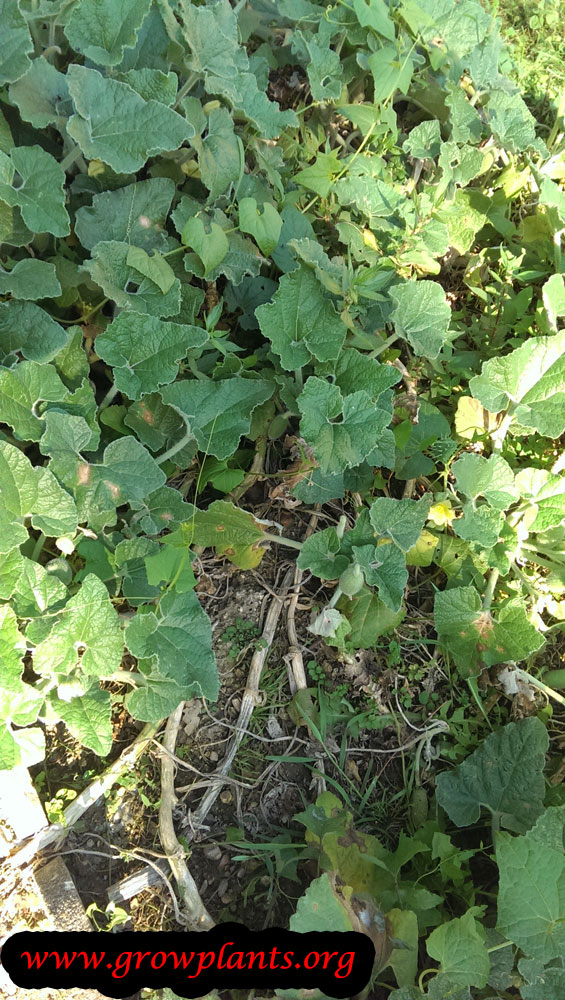
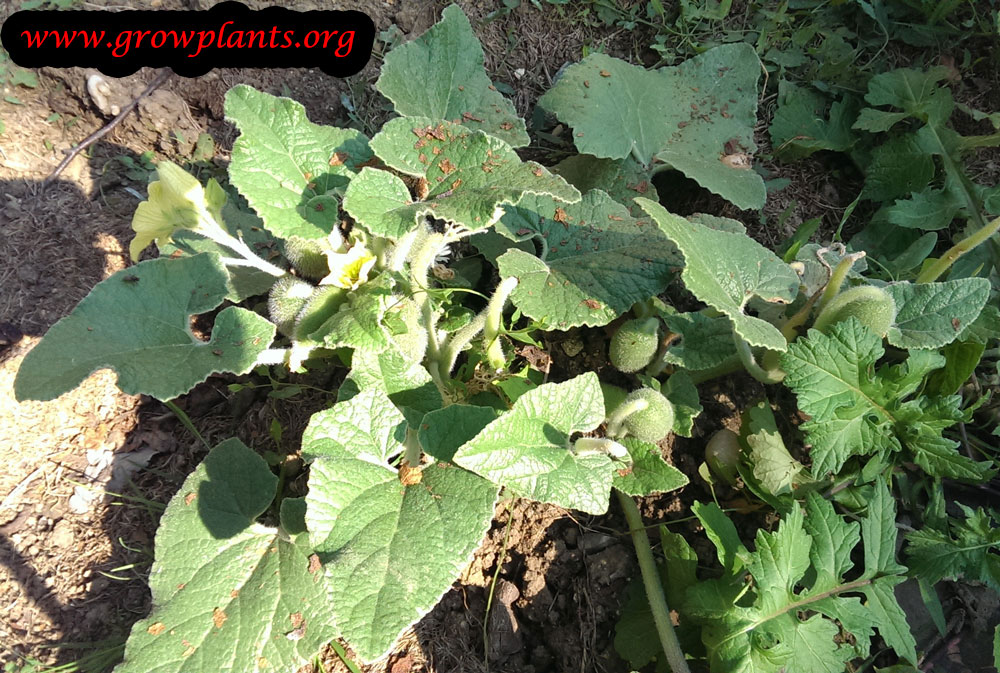
- Growth Habit & Form: Trailing, coarse herbaceous vine that scrambles along the ground or a trellis.
- Lifespan & Maturity: Annual; fast to mature, bearing fruit roughly 30-60 days after planting.
Anatomy & Physical Features
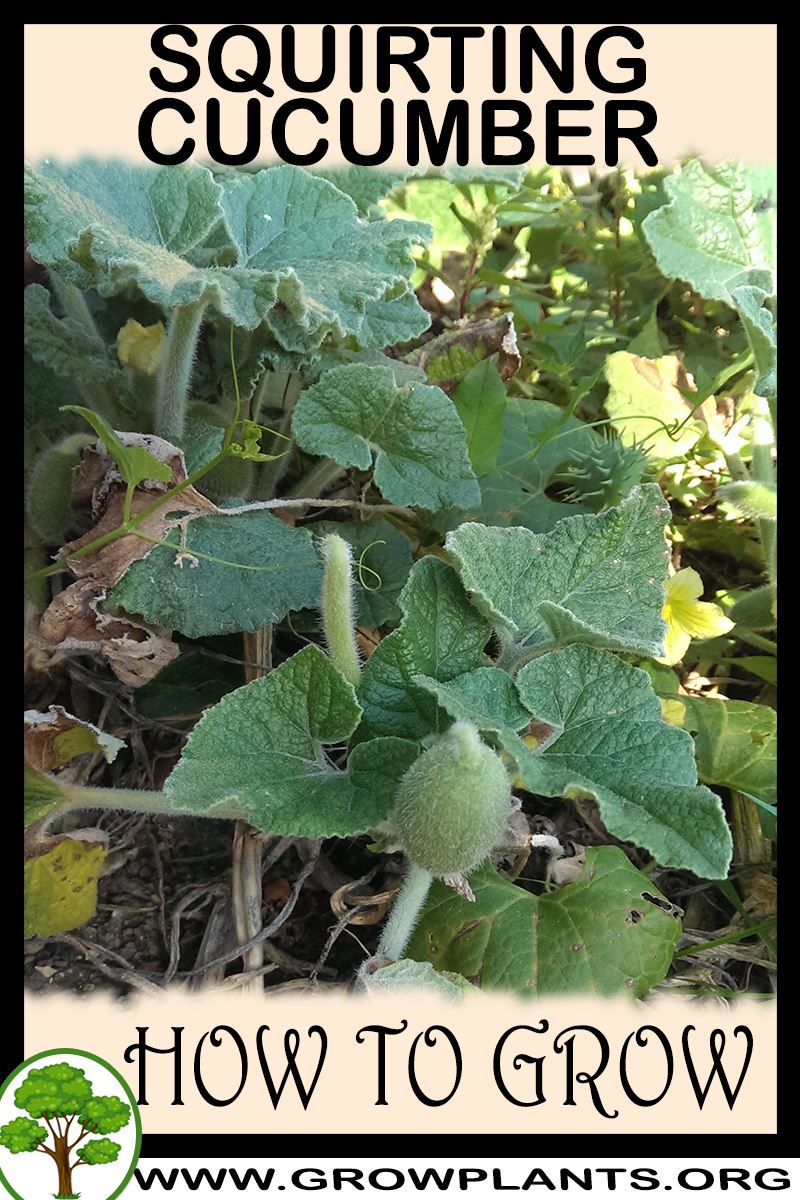
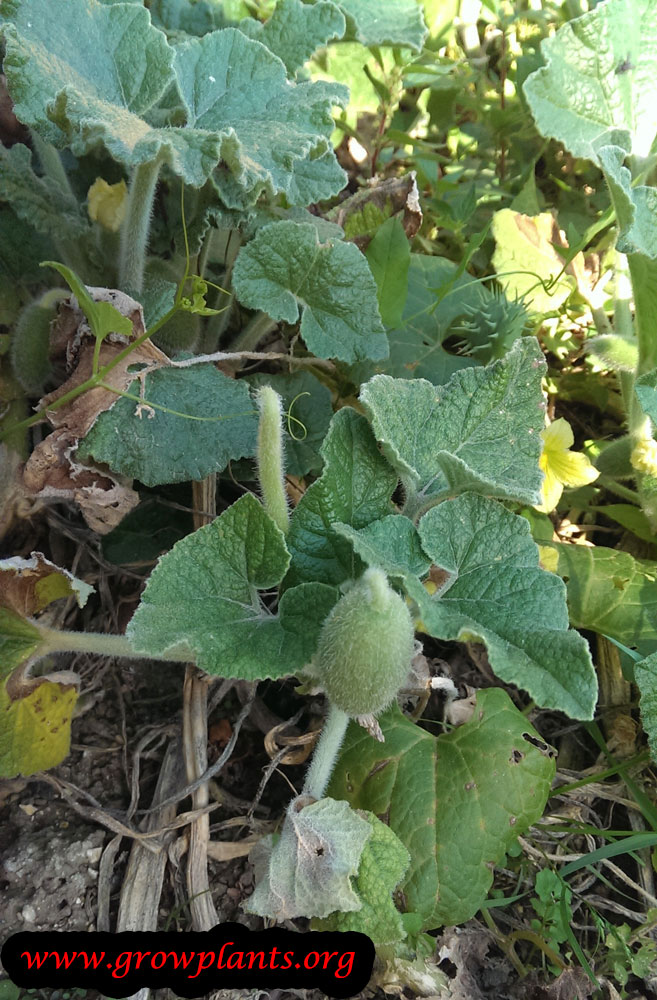
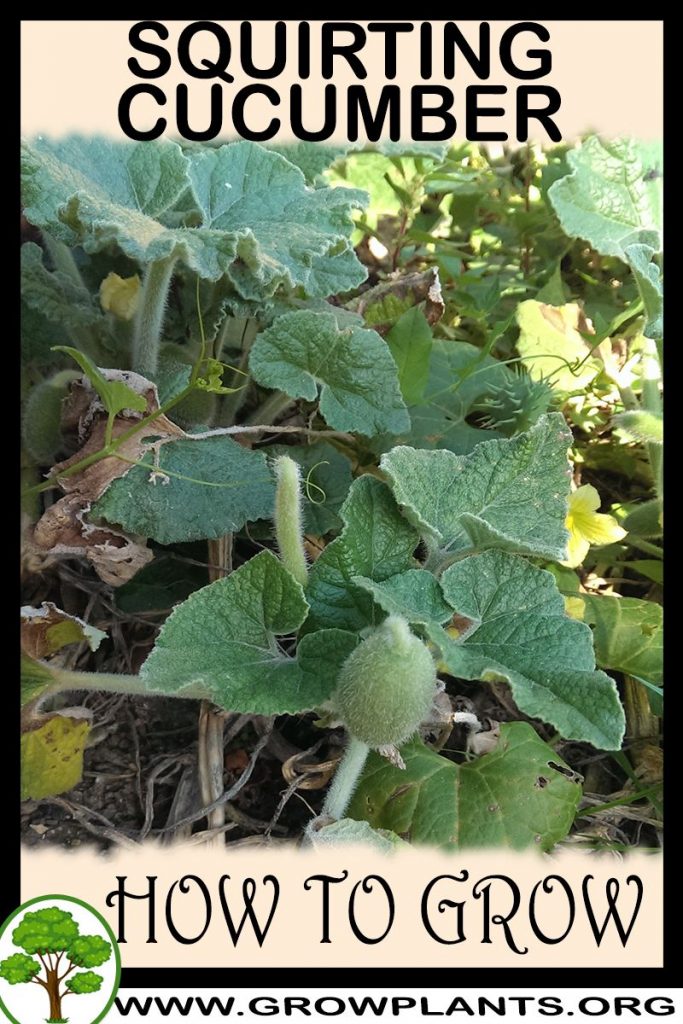
- Leaves & Foliage: Dark green, hairy, wavy triangular lobed leaves.
- Flower Characteristics: Small yellow flowers with five petals.
- Fruit Profile: Small green hairy cucumber-shaped fruit that bursts to squirt out its seeds; not edible and poisonous.
Primary Uses & Landscape Value
- Functional & Ornamental Roles: Grown as an ornamental novelty for its exploding fruits; not for consumption.
Care Guide: Planting, Soil & Watering
Overview: Squirting cucumber (Ecballium elaterium) is a fast-growing annual vine for full sun to part shade that thrives in warm weather and well-drained soil. It is fairly drought-tolerant, needing only modest water, and dislikes soggy ground.
Quick Care Requirements
| Requirement | Ideal Condition |
|---|---|
| Planting Season | Spring once the weather warms (from late winter in mild areas through summer) |
| Growth Rate | Fast |
| Soil Type | Well-draining, well-ventilated soil |
| Water Need | Low — let the top of the soil dry between waterings |
Planting & Establishment
- Best Planting Season: Plant or transplant in spring after the weather warms; in mild climates it can be started from late winter, as it needs a stretch of warm weather to grow.
- How to Plant:
- Hole Preparation: Loosen the soil and dig a hole a little larger than the root ball so young roots spread easily.
- Soil Amendments: Ensure sharp drainage; lighten heavy soil with grit or compost, as the plant reacts badly to waterlogging.
- Planting Depth: Set the seedling so its root collar sits at soil level; don’t bury the stem.
- Growth Speed & Expectations: Fast — as an annual it sprawls quickly and completes its cycle within the warm season.
Soil, Watering & Drainage Care
- Soil Mix & Drainage Needs: Give it well-drained, well-ventilated soil. In a container (at least ~10 L / 2.5 gallons) use a free-draining potting or peat-and-perlite mix with plenty of drainage holes, and don’t leave it standing in a saucer of water.
- Watering Schedule & Technique:
- Young / Newly Planted: Keep the soil lightly moist to establish the seedling, without overwatering.
- Established: Water modestly, letting the top of the soil dry between waterings; the plant tolerates dry conditions better than wet.
- Seasonal Adjustments: Water more in peak summer heat; as an annual it finishes with the warm season.
Climate, Light & Hardiness
Squirting (exploding) cucumber is a tough Mediterranean wild cucurbit adapted to hot, dry summers and cool winters, in full sun to part shade. It is far more heat- and drought-hardy than cultivated melons, though its top growth is still frost-tender, and every part is poisonous.
Quick Climate Specifications
| Climate Zones | Mediterranean, desert, subtropical, and temperate |
| USDA Hardiness Zones | Grown from about zone 4 upward (site data) |
| Optimal Temp Range | Approximately 18–30 °C (65–86 °F) |
| Cold Damage Begins | Chilling stress below roughly 10–13 °C (50–55 °F) |
| Approx. Survival Minimum | No frost tolerance - killed at or near 0 °C (32 °F) |
| Frost Tolerance | None |
| Light Conditions | Full sun (light part shade tolerated) |
| Wind Tolerance | Moderate to high |
| Salt / Coastal Tolerance | Moderate |
Sunlight & Light Exposure
Optimal Light Setup
Full sun - give at least 6–8 hours of direct light a day for strong growth, good flowering, and well-ripened fruit. Shade reduces yield and delays or prevents ripening. It also accepts light or part shade, though fruiting and sweetness are best in full sun.
Direct Sun Requirement
Yes - a genuinely sun-demanding crop. Too little direct sun gives leggy growth, weak fruit set, and fruit that fails to ripen.
Shade & Heat Management
In extreme desert heat, light afternoon shade or shade cloth during the hottest hours protects leaves and flowers and helps prevent heat-related blossom drop.
Best Exposure & Orientation
In cool-summer regions a warm south- or west-facing aspect that banks heat gives the best ripening; in very hot desert areas an east-facing aspect with light afternoon shade eases heat stress.
Temperature Extremes & Hardiness
USDA Hardiness & Regional Limits
The site lists it from about USDA zone 4 upward. This is a tough Mediterranean wild cucurbit adapted to hot, dry summers and cool winters; it is hardier and far more drought-tolerant than cultivated melons, though its top growth is still frost-tender. It is grown as an annual (or short-lived) plant and self-seeds readily. All parts are poisonous, so site it away from where children or pets browse.
Cold Damage & Winter Protection
Growth slows sharply and chilling injury - pitting, yellowing, stalled growth - appears below roughly 10–13 °C (50–55 °F). There is no winter to protect against in outdoor culture: the plant is grown only through the frost-free season, and young seedlings are especially cold-sensitive, so wait until nights are reliably warm before transplanting out.
Frost Sensitivity
None - frost tolerance is nil. Even a light frost at or near 0 °C (32 °F) kills leaves and vines, so all outdoor growth must fall within the frost-free window.
Extreme Heat Tolerance
High - thrives in summer heat and full sun. Very high temperatures above about 35 °C (95 °F) can still cause blossom drop and poorer fruit set, particularly under moisture stress.
Frost-Free Growing Season
Fruits fast, in roughly 30–60 days, and fits a Mediterranean pattern of hot dry summer and cool winter. In colder areas start indoors; it is far less demanding of season length than melons.
Wind, Humidity & Microclimate
Humidity Preferences
Prefers warm, relatively dry air. High humidity and prolonged leaf wetness encourage powdery mildew and other fungal disease, a recurring problem for this crop.
Dry-Air Tolerance
High - naturally adapted to dry air and dry-summer climates.
Wind Tolerance
Moderate to fairly high - a tough, wiry plant that stands up to wind better than cultivated cucurbits, though strong gusts can still batter foliage.
Coastal / Salt Tolerance
As a Mediterranean plant of dry, sunny, often coastal ground it takes some salt exposure and coastal conditions; tolerance of direct salt spray is separate from tolerance of saline irrigation water.
Rainfall & Seasonal Moisture
Adapted to hot, dry-summer climates and intolerant of prolonged wet; damp, humid conditions encourage powdery mildew. This describes climate adaptation, not a watering schedule.
Microclimate Recommendations
A warm, sheltered, sun-facing spot - for example a south-facing wall or slope in cooler climates - traps heat and lengthens the effective warm season, and dark mulch or plastic warms the soil early. Container root-zones heat, dry, and chill faster and are more wind- and frost-exposed, so shelter pots in extreme weather.
Growing in Pots, Balconies & Indoors
Squirting cucumber is a sprawling, sun-loving plant that thrives in full sun, so it is not a houseplant – but grown in a large, free-draining pot it does well on a sunny balcony, patio or terrace.
Quick Details
- Container Size: 10 L (2.5 gal)
- Indoor Suitability: Not an indoor houseplant – it needs full sun; at most a compact cultivar on the very sunniest windowsill
- Best Spot: Full sun – the brightest, warmest spot on a balcony or patio
- Soil & Drainage: Well-drained, well-ventilated mix (potting mix, or peat/coir with perlite) with plenty of drainage holes
- Watering in Pots: Keep evenly moist but never waterlogged – it dislikes overwatering, and pots dry fast in the sun
Indoors & On the Windowsill
- Not a houseplant: The grower keeps it out of the house – indoor light is far too weak for this sun-loving crop.
- Windowsill limits: Only the very sunniest windowsill could support a compact cultivar; most plants of this size are better off outdoors.
- Annual, so no overwintering: This is a warm-season annual – rather than overwintering it, simply resow when the weather warms.
On a Balcony or Patio
- Light & wind: Give it the sunniest, most sheltered spot; let it sprawl or trail and shelter it from wind; walls and paving reflect a lot of heat, so containers dry quickly – check moisture daily in warm weather. A drip irrigation kit with a timer can take over that watering check automatically.
- Practicalities: A full, wet pot is heavy, so make sure the balcony can take the weight, and manage drainage runoff.
Choosing the Pot, Soil & Long-Term Care
- Pot & drainage: Use a 10 L (2.5 gal) pot with plenty of drainage holes; the grower stresses this crop does not tolerate overwatering, so never leave it standing in water (root rot). Terracotta breathes and dries faster; glazed or plastic holds moisture longer.
- Potting mix: A well-aerated, well-ventilated mix – potting mix, or peat/coir with perlite – as the grower recommends.
- Feeding: Potted plants need feeding more often than those in the ground, since watering leaches nutrients from the mix – feed regularly through the growing season.
Grower’s Container Tip
- Watch the saucer: If you stand the pot on a tray or saucer, make sure it dries out the same day – never let the roots sit in collected water.
Safety: The squirting cucumber is toxic – its sap and the fruit’s forcefully ejected juice are a strong irritant and purgative. Do not eat any part, keep it well away from children and pets, and wash your hands after handling.
Growing this plant in a greenhouse
A greenhouse can give squirting cucumber frost protection, cold protection, a longer growing season and controlled production.
Greenhouse at a glance
| Greenhouse suitability | Excellent - a major practical advantage |
|---|---|
| Main benefits | frost protection, cold protection, a longer growing season, controlled production |
| Season extension | can grow through winter |
| Outdoor protection advisable below | about 13°C |
| Maintain greenhouse minimum | around 15°C for active growth |
| Suitable types | heated greenhouse, polycarbonate greenhouse, lean-to |
| Heating | Heating is recommended in cold climates for continuous growth. |
Related greenhouse guides
- Greenhouses: How to Choose the Right Greenhouse
- Best Greenhouse Heaters
- Greenhouse Climate Control: Temperature, Ventilation and Humidity
- Best Lean-To Greenhouses
Fertilizing & Feeding
A tough, wild Mediterranean annual that thrives on lean soils and needs very little feeding; light attention to soil fertility is plenty and heavy feeding does more harm than good.
Quick Fertilizing Specs
| Feeding Level | Light |
|---|---|
| Main Nutrient Priority | Balanced, kept modest |
| Best Feeding Period | Warm active growing season |
| Organic Options | A little compost is usually all that is needed |
| Soil pH | Tolerates a wide range, favoring well-drained soil |
| Micronutrients | Rarely needed on this undemanding plant |
Feeding by Growth Stage
Establishment of young plants
Settle young plants and encourage a sound root system.
| Nutrient direction | A light, balanced feeding is plenty to get roots and early growth going. |
|---|---|
| Timing | From germination or transplanting through early growth. |
| Frequency | Minimal, light feeding during establishment. |
| Fertilizer types | A small amount of balanced complete fertilizer, A little compost worked into the soil |
| Precautions | This tough wild plant needs little, so feed sparingly and rely mainly on decent soil. |
Active seasonal growth
Sustain healthy leaves and vines through the warm season.
| Nutrient direction | A modest, balanced feeding keeps the plant healthy without forcing lush growth. |
|---|---|
| Timing | Through the warm active growing season. |
| Frequency | Occasional light feeding is usually enough. |
| Fertilizer types | A modest balanced complete fertilizer, Compost as a gentle supplement |
| Precautions | Over-feeding brings soft, sappy growth on a plant that prefers lean conditions. |
End-of-season decline
Let this annual finish its cycle and die back naturally.
| Nutrient direction | None – withhold fertilizer as the annual declines. |
|---|---|
| Timing | Late in the season as growth stops and the plant sets seed and dies back. |
| Frequency | No feeding at this stage. |
| Fertilizer types | No feeding at this stage as the plant finishes its life cycle. |
| Precautions | Do not fertilize a plant that is naturally dying back at season’s end. |
Nutrient Deficiency Signs & Corrections
Older leaves turn pale and overall growth is weak.
| Possible causes | Low soil nitrogen, Cold or waterlogged soil limiting uptake, Poor, exhausted soil |
|---|---|
| Appears first on | Older, lower leaves |
| What to check | Overall vigor and leaf color, Soil condition and drainage, Whether the soil is very poor |
| Possible correction | Apply a light balanced feeding and add a little compost to lift overall fertility. |
New leaves yellow between green veins while older leaves stay greener.
| Possible causes | Iron made unavailable in alkaline soil, High soil pH, Poor drainage restricting root function |
|---|---|
| Appears first on | Youngest leaves |
| What to check | Soil acidity and drainage, Whether yellowing begins on new growth, Recent overwatering |
| Possible correction | Improve drainage and correct high soil pH, and apply a chelated iron product per its label if needed. |
Pruning, Training & Seasonal Maintenance
Squirting cucumber needs essentially no pruning – the source guidance is explicit that none is required. It is grown as an ornamental annual for its explosive seed pods rather than for shape or yield, so the only occasional task is removing dead or diseased growth. The one genuinely species-specific point is safety: the ripe fruit forcibly ejects an irritant juice and seeds when disturbed, so care is needed when working near mature pods.
Quick Pruning & Maintenance Specs
| Pruning Tolerance | Low – none needed |
| Primary Pruning Window | Not applicable; only occasional sanitary removal, any time through the season |
| Main Objective | None – sanitary tidy-up only if dead or diseased tissue appears |
| Best Tool Type | Precision snips (rarely needed) |
| Avoid Heavy Pruning During | Not applicable – the plant is not pruned for growth or shape |
Special Growth to Remove
- Dead or diseased leaves only, if they appear; otherwise leave the plant alone.
Container & Small-Space Pruning
Squirting cucumber can be grown in a container of around 10L; no pruning is needed there either – its size (1–2 m) and sprawling habit are simply left to develop.
Tools
- Precision snips – only if removing an occasional dead or diseased leaf.
Tool Hygiene & Disease Risk
Routine: clean tools are sufficient for the rare sanitary cut this plant needs.
Heavy Pruning & Rejuvenation
Not tolerated or needed – this plant is not cut back for size or renewal.
Common Pruning Mistakes
- Pruning it at all when the source guidance is that no pruning is needed.
- Handling or working near ripe fruit without care – the pods forcibly eject irritant juice and seeds when disturbed, which can be a genuine hazard to eyes and skin.
When NOT to Prune
- Avoid working closely around fruit that is close to ripe, given its explosive seed-dispersal mechanism – this is a handling caution rather than a horticultural pruning restriction.
Recommended Tools (by task)
- precision_snips – only tool needed, for the rare removal of dead or diseased leaves.
Propagation Guide
Squirting cucumber is grown from seed sown directly or started indoors ahead of the warm season; grafting and vegetative propagation are not used. Seed is easy to start, but collecting it requires care, since ripe fruit is poisonous and explodes forcefully to eject its seed when disturbed.
Quick Propagation Specs
| Best Propagation Method | Direct sowing (or indoor seed-starting in cool climates) |
| Propagation Difficulty | Easy |
| Seed True-to-Type | Yes – a wild species with essentially no named cultivars |
| Best Propagation Season | Spring; in cold climates start indoors in winter, since the plant needs at least three months of hot weather |
| Seed Germination Time | 5–20 days |
| Germination Temperature | 21–25°C (70–77°F) |
| Seed Sowing Depth | 1–2 cm (0.5–1 in) |
Growing from Seed
Seed Handling & Viability
The whole plant is poisonous and ripe fruit explodes forcefully to disperse its seed when touched, so handle mature fruit carefully (gloves recommended) when collecting seed. Store seed at room temperature in a dry place until sowing.
Sowing Season
Sow in spring; in cold climates start indoors in winter, since the plant needs at least three months of hot weather to grow well.
Sowing Depth & Orientation
Sow 1–2 cm (0.5–1 in) deep. Space plants 40 x 50 cm (8 x 12 in) apart when trellising; seedlings started in trays can be spaced 5 x 5 cm (2 x 2 in) apart before transplanting.
Germination Conditions
Keep the soil consistently moist in full sun, with an average amount of water.
Germination Time
Typically 5–20 days.
Seedling Care
Seedlings need warm weather, full sun, a generous amount of water, and a trellis or support structure in place as they grow.
Bloom & Flower Guide
Quick Details
- Bloom Season: Spring and summer
- Time to First Bloom: Within the first season, once the sprawling stems are established
- Flower Appearance: Small yellow flowers with five petals
- Edibility: None. The whole plant is poisonous, so the flowers must never be eaten
Detailed Blooming Overview
Squirting cucumber is a sprawling relative of the cucumber grown as a curiosity for its exploding fruit. Its small, five-petalled yellow flowers appear through spring and summer on hairy, greyish stems. Every part of the plant is toxic and the sap can irritate skin, so it is best enjoyed at arm’s length.
Flower Characteristics
- Small yellow flowers with five petals
- Carried on bristly, spreading stems
Bloom Care & Thinning
- Enjoying the bloom: Grown for novelty; the flowers are followed by the famous seed-squirting fruit.
- Safety: All parts are poisonous and the sap can irritate skin, so wear gloves and never treat any part as edible; keep it away from children and pets.
Bloom Health & Protection
- Aphids: Can cluster on buds and shoot tips; a jet of water or insecticidal soap keeps them down.
Pests, Diseases & Troubleshooting
Overview: Squirting cucumber is a tough, drought-hardy Mediterranean cucurbit, and like other cucurbits its main enemies are sap-sucking aphids and whitefly (which also transmit mosaic viruses), spider mites, and the cucurbit fungal diseases led by powdery mildew. It is a vigorous, weedy perennial that rarely needs coddling; the more important cautions are that the whole plant and its explosively squirting fruit are toxic and irritant, so handle with care.
Quick Troubleshooting Overview
| Issue / Pest | Main Symptom | Primary Solution |
|---|---|---|
| Aphids | Curled sticky shoots; spread mosaic viruses | Hose off, soap/neem, beneficials |
| Whitefly | White flies under leaves; honeydew & virus spread | Yellow traps, soap, airflow |
| Spider mites | Fine stippling & webbing in dry heat | Hose foliage, oil/predatory mites |
| Powdery mildew | White powdery coating on leaves | Airflow, sun, sulphur/potassium-bicarbonate |
| Mosaic virus | Mottled, distorted, stunted growth | Control aphids; remove infected plants |
| Toxic squirting fruit | Irritant sap ejected under pressure | Wear gloves/eye protection; keep from children/pets |
Common Pests & Management
- Aphids (Aphis gossypii & Myzus persicae):
- Symptoms: Colonies of small green/black soft insects on shoot tips and leaf undersides, curling and distorting growth with sticky honeydew and sooty mould; crucially, they transmit cucurbit mosaic viruses as they feed.
- Prevention & Control: Hose off colonies and encourage ladybirds, lacewings and hoverflies; control ants. Insecticidal soap or neem on the undersides clears heavy infestations. Because they spread virus, keep numbers low and remove badly virused plants.
- Whitefly (Bemisia tabaci & Trialeurodes vaporariorum):
- Symptoms: Tiny white flies rising in clouds when disturbed, with flat nymphs on leaf undersides; sap-sucking yellows leaves and the honeydew fuels sooty mould, while the insects also vector viruses.
- Prevention & Control: Hang yellow sticky traps, hose foliage, and keep good spacing and airflow; treat undersides with insecticidal soap or neem in the evening and conserve Encarsia and other beneficials.
- Spider mites (Tetranychus urticae):
- Symptoms: Fine pale stippling, bronzing and webbing on leaf undersides in hot, dry conditions, with early leaf drop on stressed plants.
- Prevention & Control: Maintain moisture and hose the foliage to dislodge mites; introduce predatory mites where practical and spot-treat with horticultural oil in bad outbreaks.
- Cucumber beetles / leaf beetles (Diabrotica & Aulacophora spp.):
- Symptoms: Chewed holes in leaves and flowers and gnawed stems from striped/spotted beetles; beyond leaf damage they can spread bacterial and viral diseases of cucurbits.
- Prevention & Control: Hand-pick, use row cover on young plants where relevant, and keep the area weed-free; kaolin clay or neem deters feeding. Tolerate light damage on this vigorous plant.
Diseases & Fungal Issues
- Powdery mildew (Podosphaera / Golovinomyces cucurbitacearum):
- Symptoms: White, powdery patches spreading over leaf surfaces and stems, later yellowing and killing leaves; the commonest and most conspicuous cucurbit disease, favoured by warm days, cool nights and crowding (though it tolerates drier air than most mildews).
- Treatment & Management: Grow in full sun with good airflow and spacing, avoid excess nitrogen, and remove badly affected leaves. Apply sulphur, potassium bicarbonate or a horticultural-oil spray at first signs, repeating as needed and avoiding sulphur in extreme heat.
- Downy mildew (Pseudoperonospora cubensis):
- Symptoms: Angular yellow blotches on the upper leaf bounded by veins, with greyish downy growth on the underside in humid, wet conditions, leading to rapid leaf death.
- Treatment & Management: Improve airflow, keep foliage dry, and remove infected leaves; copper fungicide helps in persistent wet spells. Space plants to dry quickly after rain or dew.
- Mosaic viruses (Cucumber mosaic virus & related):
- Symptoms: Mottled light-and-dark green leaves, puckering, distortion and stunting, often with poor fruiting; spread mainly by aphids and by handling.
- Treatment & Management: There is no cure – control aphid vectors, remove and destroy infected plants, disinfect hands/tools, and manage weeds that host the virus.
- Fusarium / Verticillium wilt & root rot (Fusarium oxysporum / Verticillium spp.):
- Symptoms: Progressive wilting and yellowing, often one side first, with browning of the internal stem and root/crown rot in wet or infested soil.
- Treatment & Management: Ensure free-draining soil, avoid waterlogging, rotate away from cucurbit ground, and remove affected plants; soil-borne wilts are managed culturally rather than sprayed.
Growing Difficulties & Abiotic Problems
- Toxicity & irritant squirting fruit (safety):
- Cause & Symptoms: The entire plant is rich in cucurbitacins and is poisonous; the ripe fruit detaches and ejects a jet of seed-laden juice under pressure that can irritate or damage skin, eyes and mucous membranes and is toxic if ingested. This is the key hazard to manage, not a pest.
- Correction Strategy: Wear gloves and eye protection when handling ripe plants, site away from children, pets and paths, and never taste any part. Remove volunteer seedlings if it self-sows too freely.
- Overwatering / poor drainage:
- Cause & Symptoms: Yellowing, wilting and root rot on a plant adapted to lean, dry Mediterranean ground when it is grown too wet or in heavy soil.
- Correction Strategy: Plant in free-draining soil and water sparingly; this species prefers to run dry between waterings and resents soggy roots.
- Weedy self-seeding:
- Cause & Symptoms: Explosive seed dispersal flings seed metres from the plant, so it readily naturalises and can become an invasive volunteer far from where it was grown.
- Correction Strategy: Deadhead before fruit matures if spread is unwanted, and pull volunteers early (with gloves). Contain it where it is not native.
What Helps – Products & Tools
For squirting cucumber the useful items are aphid/whitefly controls – insecticidal soap, neem, yellow sticky traps and beneficial insects – plus sulphur or potassium-bicarbonate fungicide for powdery mildew and copper for downy mildew in wet spells. Just as important are gloves and eye protection for safe handling of the toxic, squirting fruit.