
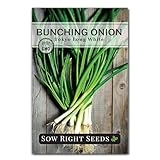


Plant Profile & Key Characteristics
Overview: A hardy herbaceous Allium grown for its edible parts, reaching 10–50 cm (4–20 in). This culinary perennial (its bulb is biennial) is usually cultivated as an annual or biennial for the kitchen.
Quick Specifications
| Specification | Attribute |
|---|---|
| Plant Type / Life Cycle | Herbaceous perennial (usually grown as an annual/biennial) |
| Mature Size | 10–50 cm (4–20 in) |
| Growth Rate | Fast to moderate |
| Root System | Bulbous — fibrous roots from a bulb. |
| Toxicity | Edible for people; toxic to dogs, cats and livestock (onion/garlic toxicity from organosulfur compounds). |
| Hardiness | USDA zones 2–10 |
Growth Form & Structure
- Height & Spread: About 10–50 cm (4–20 in) in the ground; grows well in pots, troughs and window boxes.
- Growth Habit & Form: Clump-forming bulbous herb with upright leaves rising from the base.
- Lifespan & Maturity: Perennial from its bulbs; usually harvested within its first season or two of growth.
Anatomy & Physical Features
- Leaves & Foliage: Slender, hollow, tubular green leaves rising from a slim, barely-swollen white base.
- Flower Characteristics: Small white flowers in a rounded umbel on a hollow stalk; edible. (see the Bloom guide for detail).
Primary Uses & Landscape Value
- Edible Uses: Whole young plant — slim white base and hollow green tops — eaten fresh or cooked; harvested before the bulb swells.
- Functional & Ornamental Roles: Quick, cut-and-come-again culinary crop for the kitchen garden, pots and window boxes.
Care Guide: Planting, Soil & Watering
Overview: Scallion is a hardy, sun-loving allium that grows best in loose, fertile, well-drained soil enriched with organic matter and nitrogen, and kept free of stones. It needs steady, even moisture in an open bed so the roots and bulbs can develop.
Quick Care Requirements
| Requirement | Ideal Condition |
|---|---|
| Planting Season | In autumn in frost-free areas or with cold-hardy cultivars, or in spring in temperate climates |
| Growth Rate | Moderate to Fast |
| Soil Type | Loose, rich, well-drained soil, free of rocks, with added nitrogen |
| Soil pH | Neutral, about 6.0–7.0 |
| Water Need | Moderate — keep the soil evenly moist but never waterlogged |
Planting & Establishment
- Best Planting Season: Plant in autumn in frost-free areas or with cold-hardy cultivars, or in spring in temperate climates; alliums do best sown or set when temperatures suit the chosen cultivar.
- How to Plant:
- Hole Preparation: Work the bed to a loose, rock-free tilth so bulbs and roots can develop without obstruction.
- Soil Amendments: Enrich the bed with compost and a source of nitrogen before planting for strong growth.
- Planting Depth: Set bulbs, cloves or sets with the pointed tip up and about 2–3 cm of soil over them (roughly their own height), leaving the neck near the surface — do not bury them deeply; sow seed more shallowly.
- Growth Speed & Expectations: Expect moderate to fast growth in good conditions.
Soil, Watering & Drainage Care
- Soil Mix & Drainage Needs: Alliums need a light, rich, free-draining bed kept clear of stones so bulbs can swell; in containers use a fertile potting mix with good drainage. Waterlogged soil causes bulb and root rot.
- Watering Schedule & Technique:
- Young / Newly Planted: Keep the soil consistently moist while seedlings, bulbs or cloves establish and root.
- Established: Water regularly and evenly through the growing season, avoiding both drought stress and waterlogging.
- Seasonal Adjustments: As bulbs mature and the tops begin to bend over, ease off watering to let them firm up; water more in warm, dry spells and less in cool, wet weather.
Climate, Light & Hardiness
Scallions grow in Mediterranean, subtropical, and temperate climates and take on a semi-deciduous habit in cooler areas, dying back seasonally depending on the local climate. They need full sun to half shade and are cold-hardy across most of their zone 2–10 range.
Quick Climate Specifications
| Climate Zones | Mediterranean, subtropical, temperate |
|---|---|
| USDA Hardiness Zones | 2–10 |
| Light Conditions | Full sun to half shade |
Sunlight & Light Exposure
Optimal Light Setup
Full sun to half shade both support good growth.
Temperature Extremes & Hardiness
USDA Hardiness & Regional Limits
Hardy from zone 2 through 10, with cold-hardy cultivars plantable in autumn in frost-free areas and spring planting favored in colder temperate zones. In the coldest end of the range (zones 2–5), the bulbs are best lifted from the ground over winter rather than left in place.
Cold Damage & Winter Protection
Top growth is semi-deciduous and may die back seasonally depending on climate; in the coldest zones, lifting or protecting the bulbs over winter avoids losing the planting.
Growing in Pots, Balconies & Indoors
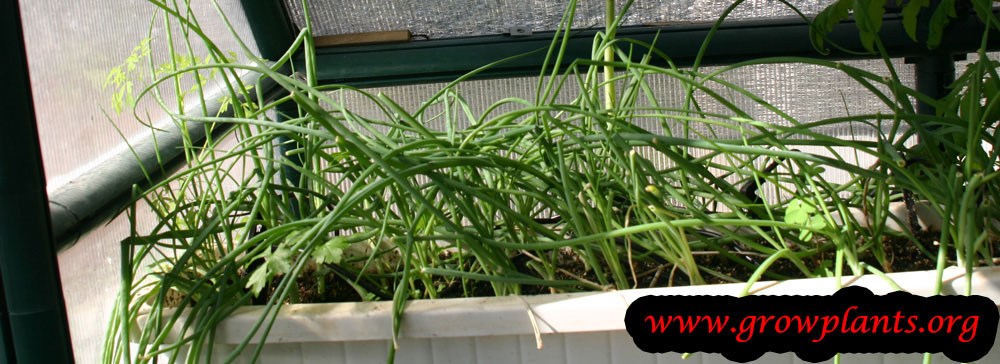
Scallions (green onions) are one of the easiest edibles for a pot indoors – the grower does not class them as a full houseplant, but they regrow readily on a bright, sunny windowsill, so you can keep snipping the green tops.
Quick Details
- Container Size: A pot or planter with free drainage (the grower confirms container growing but gives no set size); a small-to-medium pot is plenty for a bunch
- Indoor Suitability: Not a deep-room houseplant, but excellent on a bright, sunny windowsill
- Best Spot: Full sun to half shade
- Soil & Drainage: Loose, free-draining, organic-rich mix
- Watering in Pots: Average, even moisture; let the pot drain freely.
Indoors & On the Windowsill
- Houseplant note: The grower marks them as not an indoor houseplant in the strict sense, but scallions take very well to a sunny sill.
- Windowsill growing: Grow them in a pot on the sunniest sill and cut the green tops as needed – they regrow quickly from the base; you can even root trimmed white ends in the mix.
- Safety: Onions, garlic and their relatives are toxic to cats and dogs – keep pots out of pets’ reach if you grow them indoors, and never let pets nibble the leaves.
On a Balcony or Patio
- Light and shelter: A sunny balcony or patio suits it well; containers dry quickly, so check moisture often in warm weather.
- Practicalities: Mind the weight of a watered planter and manage drainage runoff with a tray or pot feet.
Choosing the Pot, Soil & Long-Term Care
- Pot and drainage: Choose a pot with strong drainage holes; if you stand it on a saucer, empty the saucer promptly so the roots never sit in water. Terracotta breathes and dries faster, while glazed or plastic pots hold moisture longer.
- Potting mix: Use a well-aerated, organic-rich mix – a good potting soil, or peat/coir blended with perlite or vermiculite for drainage and air.
- Watering: Water regularly to keep the mix evenly moist – pots dry out far faster than open ground, so check often in heat – but never leave it standing wet.
- Feeding: Potted plants run through their soil faster because nutrients leach out with every watering, so feed a little more often than you would in open ground.
Fertilizing & Feeding
Scallions are quick, moderate nitrogen feeders: light, regular feeding keeps the tender green tops coming, especially after each harvest cut.
Quick Fertilizing Specs
| Main Nutrient Priority | Nitrogen to keep leaf growth quick and tender |
|---|---|
| Best Feeding Period | The active growing season, especially right after a harvest cut |
| Soil pH | Prefers soil on the neutral side |
| Reduce/Stop Feeding | Ease off feeding a short while before a planned harvest so growth doesn’t stay overly soft |
| Organic Options | Compost or aged manure worked into the row at planting and as a light side-dress between cuttings |
Feeding by Growth Stage
Establishment After Sowing or Transplanting
Help seedlings or sets root in and start putting out new leaves
| Nutrient direction | Balanced feeding to support root establishment |
|---|---|
| Timing | At planting through early leaf emergence |
| Frequency | A light initial feeding at planting, then minimal feeding until new growth appears |
| Fertilizer types | A balanced, complete fertilizer or finished compost worked into the row |
| Precautions | Keep the rich, well-drained, rock-free soil scallions prefer; avoid concentrated fertilizer against young roots |
Active Leaf Growth
Keep leaves growing quickly and tender through repeated harvests
| Nutrient direction | Nitrogen-forward feeding to keep leaf growth quick and tender |
|---|---|
| Timing | Through the active growing season, especially between cuttings if harvested repeatedly |
| Frequency | Light, regular feedings through the growing season, especially after a harvest cut |
| Fertilizer types | A nitrogen-forward complete fertilizer, or a nitrogen-rich organic feed such as compost or aged manure |
| Routine trace nutrients | iron, manganese |
| Precautions | Keep soil consistently moist alongside feeding; scallions growing in dry, lean soil turn tough and slow |
Nutrient Deficiency Signs & Corrections
Leaves are pale and thin, and regrowth after cutting is slow
| Possible causes | Insufficient nitrogen, especially after repeated harvest cuts, Low soil fertility from continuous cropping without replenishment, Cool soil temperatures slowing nutrient uptake |
|---|---|
| Appears first on | Older leaves and overall regrowth |
| What to check | Soil fertility and recent feeding history, How often the bed has been harvested without replenishing |
| Possible correction | Apply a nitrogen-forward feed after cutting and keep the bed’s fertility topped up with compost |
New leaves emerge pale yellow while veins stay greener
| Possible causes | High soil pH limiting iron availability, Waterlogged soil, Root stress from compacted or rocky soil |
|---|---|
| Appears first on | New, inner leaves |
| What to check | Soil pH and drainage |
| Possible correction | Correct pH toward neutral and improve drainage; a chelated iron product per its label can help persistent cases |
Leaf tips brown and die back, sometimes with streaking, distinct from a uniform pale-plant deficiency pattern
| Possible causes | Thrips or onion fly feeding damage rather than a nutrient issue, Underlying nutrient stress that is making the plant more vulnerable to pests, Drought stress drying leaf tips |
|---|---|
| Appears first on | Leaf tips, often in patches |
| What to check | Signs of thrips or onion fly on the foliage, Watering consistency, Overall plant vigor and feeding history |
| Possible correction | Address the pest issue directly and keep the plant on a steady light feeding and watering routine so it can recover |
Pruning, Training & Seasonal Maintenance
Scallion is grown for its leaves and stem rather than a swollen bulb, so its "pruning" is really a repeated cut-and-come-again leaf harvest, plus removing any flowering stalk that tries to form. Unlike bulb onion, scallion is best cut back in the cooler parts of the year – spring, autumn and winter – since summer heat tends to push the plant toward bolting and tougher, less tender stems. Cutting doesn’t affect any woody framework; it simply determines how much fresh, tender growth is available to harvest next.
Quick Pruning & Maintenance Specs
| Pruning Tolerance | High for leaf harvest – the plant regrows readily from the base after cutting |
| Primary Pruning Window | Spring, autumn and winter |
| Secondary Maintenance Window | Summer only if a flower stalk (bolting) appears – remove it promptly |
| Typical Frequency | Repeated, cut-and-come-again through the cooler growing months |
| Main Objective | Keep a steady supply of tender leaves; stop bolting from toughening the stems |
| Young Plant Priority | Let the clump establish before the first cut |
| Mature Plant Priority | Harvest outer leaves/stems regularly; remove any flower stalk on sight |
| Best Tool Type | Precision snips or clean fingers |
| Avoid Heavy Pruning During | Peak summer heat, when regrowth is slower and bolting risk is higher |
Pruning by Plant Age & Size
Newly Established
No cutting until the plant has several true leaves and a developed base – harvesting too early weakens a young clump.
Young / Formative
No structural training; once established, begin light outer-leaf harvest so the centre keeps producing.
Mature / Established
Harvest outer stems/leaves regularly (individually, or take the whole clump and let it resprout). Remove a flowering stalk at the base as soon as it appears, since bolting toughens the remaining stems and stops leaf production.
Special Growth to Remove
- Flower stalk (scape): remove promptly if it forms – it signals the plant is bolting and diverting energy from leafy growth.
- Yellowing outer leaves: trim away for tidiness and to redirect energy to inner growth.
Container & Small-Space Pruning
Scallion is well suited to containers and can be harvested the same way – take outer stems and leave the centre intact so the clump keeps regenerating in a small footprint.
Tools
Precision snips (or hand-pinching) for both harvest and scape removal – the stems are soft and need only a clean, light cut.
Tool Hygiene & Disease Risk
Routine – keep tools clean and sharp. Onion fly and thrips are the relevant pests; they aren’t spread by cutting, but avoid harvesting from visibly rotten or diseased plants with the same tool used on healthy ones.
Cut Placement & Technique
Cut leaves/stems close to the base, above the growing point, so the clump can resprout; cut a flower stalk right at its point of origin.
Heavy Pruning & Rejuvenation
Not applicable in the woody sense – scallion has no framework to rejuvenate. Cutting the whole clump back hard is tolerated and simply prompts a fresh flush of leaves from the base, best timed outside peak summer heat.
Post-Pruning Care
Water evenly after a hard cut to support quick regrowth; no feeding is required specifically because of pruning.
Common Pruning Mistakes
- Harvesting a very young, unestablished clump too early.
- Letting a bolted flower stalk remain, which toughens the whole plant.
- Cutting hard during summer heat, when regrowth is slow and bolting risk is high.
When NOT to Prune
Avoid a hard harvest cut right after transplanting, before the clump is established, and avoid heavy cutting during summer heat stress when the plant is more prone to bolting.
Recommended Tools (by task)
- precision_snips – for routine leaf/stem harvest and for removing a flower stalk; soft tissue needs only a light, clean cut.
Propagation Guide
Scallion is most commonly started from seed, but this site also lists bulb and general vegetative reproduction as valid ways to begin a plant, reflecting scallion’s tendency to form small clustered bulbs at the base that can be divided or regrown. Overall difficulty is Easy by either route.
Quick Propagation Specs
| Best Propagation Method | Seed |
| Alternative Methods | Basal bulb division / regrowing the rooted base |
| Propagation Difficulty | Easy |
| Seed True-to-Type | Usually true-to-type for isolated open-pollinated types |
| Vegetative True-to-Type | Yes |
| Best Propagation Season | Autumn in frost-free or cold-hardy areas; spring in temperate climates |
| Seed Germination Time | Typically 1-3 weeks, depending on soil temperature |
| Germination Temperature | Roughly 10-24°C (50-75°F) |
Division, Offsets, Pups & Suckers
Scallions readily form clustered bulbs at the base. An established clump can be lifted and separated into individual rooted bulbs for replanting. A harvested stem can also often be regrown if the rooted base end and a small portion of the bulb are left intact and replanted or held in moist conditions until new roots and leaves develop.
Bloom & Edible Flower Guide
Quick Details
- Bloom Season: Spring to summer
- Time to First Bloom: Usually in its second year, or earlier if stressed or cold-shocked
- Flower Appearance: A rounded umbel of small white star-shaped flowers on a hollow stem
- Edibility: Edible – the mild, oniony flowers make a pretty garnish
Detailed Blooming Overview
Scallions are picked young for their slim stems and leaves, so most are eaten long before flowering. If left in the ground they run up a hollow stalk topped with a white flower globe in spring or summer. Flowering toughens the stem, so cut it out for the best eating – or leave a plant or two to bloom for the bees and for edible blossoms.
Flower Characteristics
- Small white star-shaped flowers gathered into a round umbel.
- Carried on a slender, hollow stem above the leaves.
- Attractive to bees and hoverflies.
Bloom Care & Thinning
- Managing the bloom: Thin (remove) the flower stems unless you want the blooms or seed – it keeps the leaves tender.
- Pollination: By bees and flies.
- In the kitchen: Scatter the individual florets over salads and soups for a gentle onion note.
Fruit & Uses
Scallion (green onion) is harvested young and eaten almost whole — both the hollow green leaves and the small, barely-formed bulb are used fresh, raw or cooked, as a mild allium seasoning and garnish.
Quick Edible Specs
| Edible Parts | Leaves, small Bulb |
|---|---|
| Main Use(s) | Culinary (raw, cooked, spice, salad, garnish) |
| Eaten Raw or Cooked | Both |
| Preparation Required | None besides rinsing and trimming the root end |
| Harvest Season | Autumn–winter, shifting to spring/summer in colder climates |
| Time to First Harvest | Fast-growing crop, ready well before a mature bulb onion (see Propagation) |
| Storage | Best used fresh; short shelf life |
| Safety/Toxicity Caveat | Like other Allium plants, scallion is toxic to dogs and cats and should be kept away from pets |
Leaves & Greens
The narrow, hollow leaves grow in linked radial groups. They can be picked together with the bulb or a few at a time, and are eaten raw, cooked, or used as a spice/salad ingredient.
Bulbs, Corms & Rhizomes
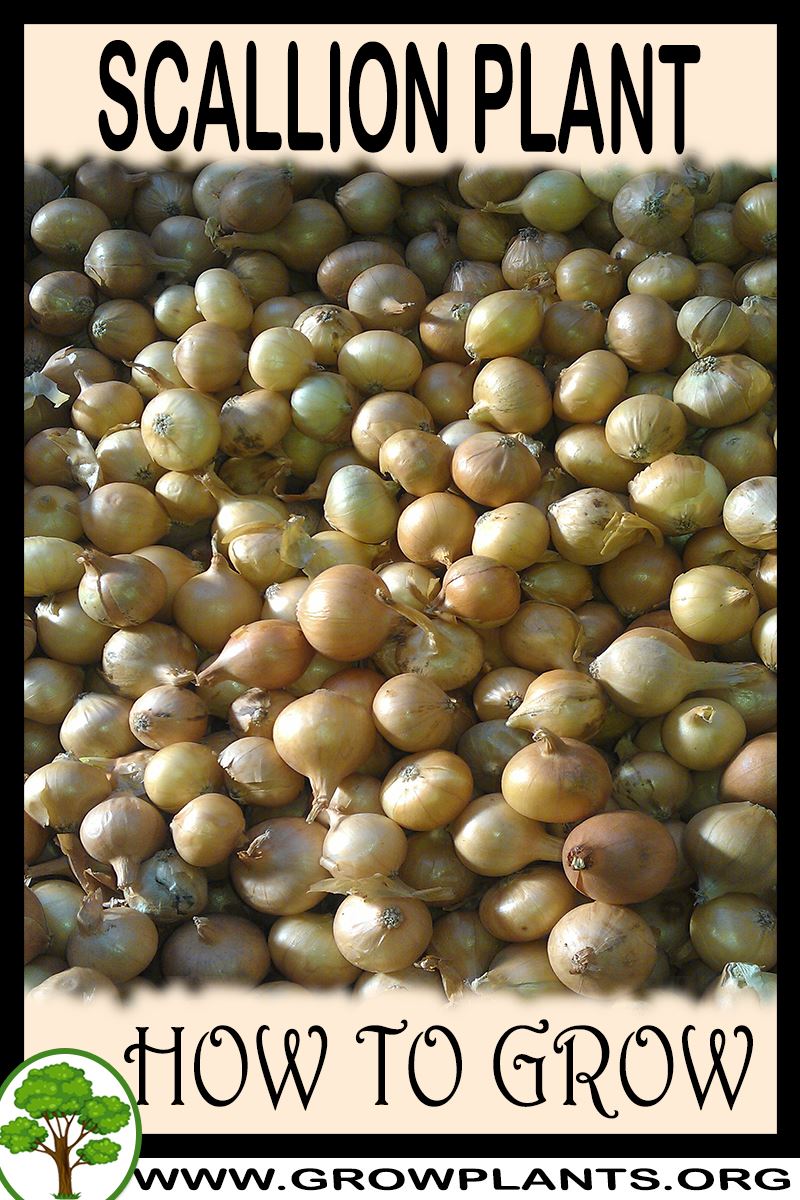
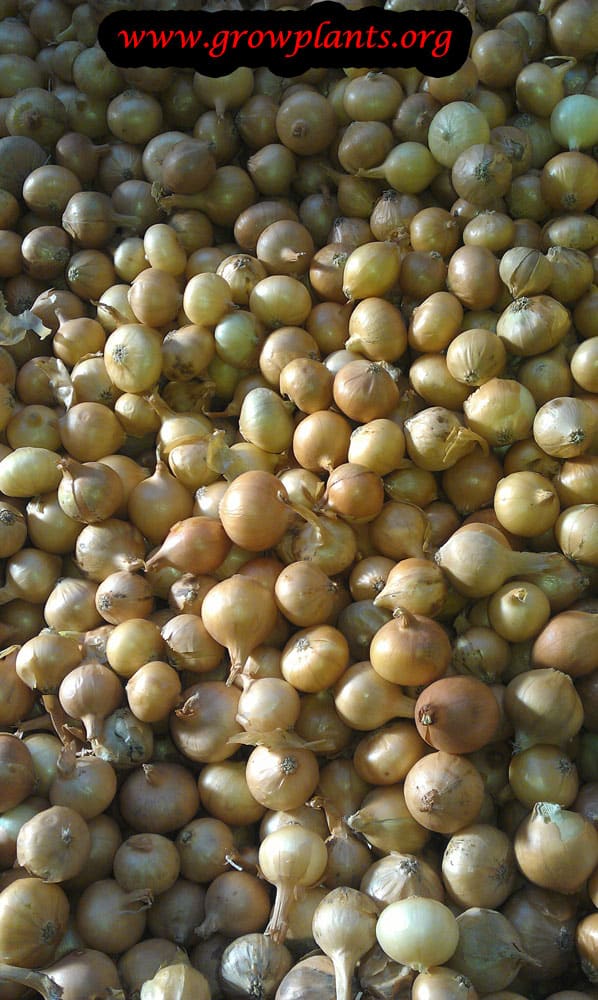
A small, yellow, pointed-top bulb (1–3 cm) forms at the base and is harvested along with the leaves. It is eaten raw, cooked, or used as a spice/salad ingredient, the same way as the leaves.
Harvesting
The whole young plant — leaves and small bulb together — is typically pulled at once, though individual leaves can also be taken over time. Main harvest is autumn–winter, shifting to spring/summer in colder climates.
Preparation, Uses & Safety
Used fresh, raw (chopped as a garnish or in salads) or lightly cooked (stir-fries, garnishes). As with other Allium plants, keep scallion away from dogs and cats.
Pests, Diseases & Troubleshooting
Overview: Scallion / green onion (Allium cepa) (a bunching/green form of onion) is mainly troubled by onion thrips and the soil maggots and leafminers common to all alliums, plus foliar mildews in wet weather. Because it is eaten as fresh leaf and stem, lean on rotation, clean stock, mesh barriers and beneficials rather than heavy spraying, and keep growth steady to avoid stress.
Quick Troubleshooting Overview
| Issue / Pest | Main Symptom | Primary Solution |
|---|---|---|
| Onion thrips | Silver streaks/stippling on leaves | Even watering; soap/spinosad in evening; beneficials |
| Onion fly / maggot | Wilting seedlings; maggots in bulb base | Rotate; insect mesh; remove culls; nematodes |
| Leaf/stem miners & moths | Windowpane mines & tunnels in leaves/shank | Mesh barrier; destroy mined leaves; Bt/spinosad |
| Downy mildew | Grey-violet fuzz; yellow collapsing leaves | Airflow; no evening overhead water; copper |
| Basal / white rot | Rotten basal plate; white mould, black sclerotia | Clean stock; long rotation; destroy infected plants |
| Neck / soft rot (store) | Soft slimy neck; bulb collapses in store | Cure & dry well; store cool, dry, ventilated |
Common Pests & Management
- Onion Thrips (Thrips tabaci):
- Symptoms: Tiny (1 mm) slender straw-yellow insects hiding in the leaf axils and inner leaf bases; feeding rasps the surface leaving silvery-white streaks, blotches and a general silvering that later browns. Worst in hot, dry weather; heavy populations distort growth and cut bulb size. Look-alikes: nutrient streaking (uniform) versus thrips (stippled with black frass specks).
- Prevention & Control: Encourage natural enemies (predatory mites, minute pirate bugs, lacewings); avoid drought stress with even irrigation and mulch, since stressed plants attract thrips. Use reflective/silver mulch and blue sticky traps for monitoring. Rotate away from other alliums. If needed, spray insecticidal soap, spinosad or horticultural oil into the leaf bases in the evening, repeating at 5–7 day intervals; rotate modes of action as thrips resist products quickly.
- Onion Fly / Onion Maggot (Delia antiqua):
- Symptoms: Small white legless maggots tunnel into the base of the bulb and stem; young plants wilt, yellow and collapse, older bulbs rot and are riddled with tunnels that invite secondary soft rot. Adults are grey, house-fly-like. Damage often appears in patches, worst in cool moist springs.
- Prevention & Control: Rotate crops and avoid planting into ground that grew alliums the previous year; remove and destroy culls and thinnings (their smell attracts egg-laying females). Firm the soil around transplants and cover beds with insect mesh/floating row cover at emergence to exclude the fly. Avoid heavy fresh manure. Beneficial nematodes (Steinernema) drenched into the soil help against larvae.
- Allium Leafminer (Phytomyza gymnostoma):
- Symptoms: Adults make neat rows of white feeding punctures down the leaf; larvae mine toward the base and pupate as brown seed-like puparia in the stem and bulb, opening the door to bacterial and fungal rot. Two generations, in spring and autumn.
- Prevention & Control: Exclude adults with insect netting during the spring and autumn flight periods; destroy infested debris and rotate. Delay or time plantings to miss peak flights. Spinosad or a suitable systemic can be used where pressure is high, applied at first sign of the punch-row feeding scars.
- Cutworms (Agrotis spp.):
- Symptoms: Young transplants and seedlings cut off at or near the soil line overnight; fat grey-brown caterpillars curl up just below the surface when exposed.
- Prevention & Control: Keep beds weed-free before planting to deny egg-laying sites; use cardboard/foil collars around transplants. Hand-pick at dusk, apply Bt or beneficial nematodes, and hoe to expose larvae to birds.
- Stem & Bulb Nematode (Ditylenchus dipsaci):
- Symptoms: ‘Onion bloat’ – swollen, distorted, spongy soft bulbs and twisted, bloated leaves; seedlings stunted and killed. Persists many years in soil and is carried in seed, cloves and sets.
- Prevention & Control: Use certified nematode-free seed and planting stock; practise long (3–4 year+) rotations away from alliums, beans and other hosts. Remove and destroy infested plants; control host weeds. Hot-water treatment of garlic seed cloves before planting reduces infestation.
Diseases & Fungal Issues
- Downy Mildew (Peronospora destructor):
- Symptoms: Pale green to yellow oval patches on leaves and stalks, soon covered by a fuzzy grey-violet mould in humid mornings; leaves collapse and die back from the tip, bulbs mature small and soft. Favoured by cool, wet, humid weather.
- Treatment & Management: Space and orient rows for airflow and morning drying; avoid overhead evening irrigation; rotate 3+ years and destroy volunteers and culls. Use resistant varieties where available. Preventive copper or an approved downy-mildew fungicide at the first cool damp spell, on a protectant schedule.
- Purple Blotch (Alternaria porri):
- Symptoms: Small water-soaked spots that enlarge into zonate, purplish-brown lesions with yellow halos on leaves and seed stalks; lesions girdle and collapse the leaf, and can infect bulbs at the neck in storage. Worst in warm, humid weather with dew.
- Treatment & Management: Rotate, space for airflow, avoid prolonged leaf wetness and remove debris. Use tolerant varieties. Protectant fungicides (chlorothalonil, mancozeb or copper) on a schedule during warm humid spells; add a spreader-sticker as waxy allium leaves shed spray.
- Bacterial Soft Rot (Pectobacterium / Burkholderia spp.):
- Symptoms: One or more inner scales turn soft, water-soaked and slimy with a foul smell while the outside may look sound; the bulb collapses in the field or store, usually entering through the neck or through insect and sun-scald wounds.
- Treatment & Management: Avoid bruising and sunscald; cure and dry bulbs well and store cool, dry and ventilated. Do not harvest or handle wet; control neck-rot and maggot wounds that let bacteria in. Discard any soft, weeping bulbs promptly.
- Fusarium Basal Rot (Fusarium oxysporum f.sp. cepae):
- Symptoms: Yellowing and dieback of leaves; the basal plate rots brown and the roots die, so the bulb pulls free easily and decays from the bottom, often continuing in storage. Favoured by warm soils.
- Treatment & Management: Plant clean stock in well-drained soil; avoid basal-plate and root injury and control root maggots/nematodes that create entry wounds. Rotate away from alliums; use tolerant varieties; cure and store bulbs dry and cool.
- Pink Root (Setophoma (Phoma) terrestris):
- Symptoms: Roots turn pink then red and wither, so plants are stunted and bulbs undersized; worst on stressed plants in warm soils and continuous onion ground.
- Treatment & Management: Long rotations and resistant varieties are the main tools; relieve stress with good fertility, drainage and even watering. Solarisation and clean stock reduce inoculum in bad fields.
Growing Difficulties & Abiotic Problems
- Premature Bolting (Flowering):
- Cause & Symptoms: A tough flower stalk shoots up before the bulb sizes, hollowing the neck and stopping bulb growth; triggered by a cold spell after growth starts, oversized transplants/sets, or wide temperature swings.
- Correction Strategy: Use correctly sized sets (about 1–2 cm), the right variety for your daylength/season, and avoid very early exposure to cold. Snap off bolters early and use those bulbs first – they will not store.
- Leaf Tip Burn & Yellowing:
- Cause & Symptoms: Leaf tips brown and die back, older leaves yellow; from drought stress, salinity, or nitrogen/potassium shortage on the shallow allium root system.
- Correction Strategy: Water evenly, mulch to buffer moisture, and feed with a balanced fertiliser matched to a shallow-rooted crop; leach salts in over-fertilised beds and correct deficiencies.
- Poor Bulbing (Daylength Mismatch):
- Cause & Symptoms: Plants grow lush tops but never form a proper bulb, or bulb far too early and small; caused by growing a long-day variety in the south or a short-day variety in the north, or planting at the wrong time.
- Correction Strategy: Choose the correct daylength type for your latitude (short-day, intermediate or long-day) and plant on time so leaves build up before the bulbing trigger; feed and water for strong early leaf growth.
- Cold Damage & Frost Heave:
- Cause & Symptoms: Overwintered chives/leeks/garlic pushed out of the ground by freeze-thaw, or leaf tips burnt by hard frost; loosened roots dry out and die.
- Correction Strategy: Mulch overwintering alliums to buffer soil temperature, firm and re-cover heaved plants, and choose hardy varieties for cold sites.
What Helps – Products & Tools
For allium pests, reach first for insecticidal soap, horticultural/neem oil and spinosad (thrips, leek moth, leafminer), insect mesh/floating row cover as a physical barrier, blue sticky traps for thrips monitoring, reflective mulch, and beneficial nematodes for soil maggots and larvae. For disease, use protectant copper or an approved downy-mildew/purple-blotch/rust fungicide, garden sulfur for rust, a spreader-sticker so spray clings to waxy leaves, and above all clean seed/sets plus long rotations. Cure and store bulbs cool, dry and ventilated to beat neck rot and soft rot.