


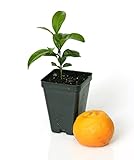

Plant Profile & Key Characteristics
Overview: The satsuma is a small evergreen mandarin-type citrus, 3–6 m (10–20 ft) tall, prized for its seedless, easy-peel fruit and notable cold tolerance. It is a long-lived evergreen perennial for tropical to mild temperate climates.
Quick Specifications
| Specification | Attribute |
|---|---|
| Plant Type / Life Cycle | Perennial (evergreen tree) |
| Foliage Type | Evergreen |
| Mature Size | 3–6 m tall (10–20 ft) |
| Growth Rate | Slow to moderate |
| Root System | Fibrous, relatively shallow and non-invasive |
| Toxicity | Fruit edible / non-toxic to people; peel oils & foliage can irritate cats & dogs |
| Hardiness | USDA zone 9+ |
Growth Form & Structure
- Height & Spread: In the ground 3–6 m (10–20 ft); grown smaller as a dwarf or container tree.
- Growth Habit & Form: Small, thorny evergreen citrus with a rounded, densely branched canopy; can be grown as a single-trunk tree, multi-stem shrub, dwarf tree or bonsai.
- Lifespan & Maturity: Long-lived; a grafted tree usually begins bearing fruit in about 2–3 years.
Anatomy & Physical Features
- Leaves & Foliage: Green, elliptic leaves; the tree carries thorns.
- Flower Characteristics: White flowers with yellow stamens; bee- and self-pollinated (see the Bloom guide).
- Fruit Profile: Seedless, easy-peel orange fruit ~3–6 cm, sweet to sub-acid (see the Fruit guide).
Primary Uses & Landscape Value
- Edible Uses: Fruit eaten fresh, juiced, or made into preserves, fruit leather and candied peel.
- Functional & Ornamental Roles: Ornamental fruit tree; one of the more cold-tolerant citrus and a good patio/container plant.
Care Guide: Planting, Soil & Watering
Overview: The satsuma orange is a subtropical evergreen citrus grown for its edible fruit, happiest in full sun and warm, frost-free conditions. It grows best in deep, well-drained loamy soil enriched with organic matter and mulched to stay evenly moist – especially while fruiting – but it will not tolerate waterlogged roots.
Quick Care Requirements
| Requirement | Ideal Condition |
|---|---|
| Planting Season | Warm season (spring–summer in cooler zones; year-round where frost-free) |
| Growth Rate | Moderate (to slow) |
| Soil Type | Deep, well-drained loamy soil, rich in organic matter, mulched |
| Water Need | Moderate – keep evenly moist, letting the top few cm dry between waterings; more while fruiting |
Planting & Establishment
- Best Planting Season: Plant in spring through summer in cooler citrus zones (about 9–10a), in spring or autumn in zones 10b–11a to avoid the harshest heat and cold, and at any time of year in frost-free zones 11b and above. Avoid setting a young tree out during extreme heat or cold snaps, which can stress or kill it.
- How to Plant:
- Hole Preparation: Dig a hole about twice the width of the root ball and no deeper, loosening the sides so young roots can spread easily.
- Soil Amendments: Work compost, humus and organic matter into the backfill, and add coarse material if the soil drains slowly.
- Planting Depth: Set the root collar at soil level and keep the graft union above the soil line; firm gently, mulch, and water in well.
- Growth Speed & Expectations: A moderate – sometimes slow – grower; expect steady rather than fast growth, adding modest height each year once established.
Soil, Watering & Drainage Care
- Soil Mix & Drainage Needs: Citrus demand sharp drainage. In the ground give them well-drained loamy soil improved with organic matter and topped with mulch; in a pot use a free-draining mix (peat or coir with perlite) in a container with plenty of drainage holes, and never let water stand in the base – soggy soil brings on root and foot rot.
- Watering Schedule & Technique:
- Young / Newly Planted: Water regularly through the first year or two so the root zone stays evenly moist as the tree establishes – deeply, and often enough that it never dries out completely. A mulch layer helps hold that moisture.
- Established: Once established, water deeply but less often – let the top few centimetres dry before watering again. Citrus like a steady supply yet quickly suffer root and foot rot if left standing in wet soil.
- Seasonal Adjustments: Increase watering through hot, dry spells and the fruiting season so fruit doesn’t dry out or split; cut right back in cool, wet winter weather.
Climate, Light & Hardiness
Satsuma orange grows in tropical, subtropical, Mediterranean, and temperate climates in full sun, tolerating half shade with reduced fruiting. Satsuma-type mandarins are generally among the more cold-tolerant true citrus, and the site rates this one to USDA zone 9+.
Quick Climate Specifications
| Climate Zones | Tropical, subtropical, mediterranean, and temperate climates |
|---|---|
| USDA Hardiness Zones | Zone 9+ |
| Optimal Temp Range | approximately 18–29°C (64–84°F) |
| Cold Damage Begins | approximately 0–2°C (32–36°F) |
| Approx. Survival Minimum | approximately −4 to −6°C (21–25°F) briefly, established plant only |
| Frost Tolerance | Moderate |
| Light Conditions | Full sun; tolerates half shade with reduced fruiting |
| Wind Tolerance | Moderate |
| Salt / Coastal Tolerance | Low to Moderate |
Sunlight & Light Exposure
Optimal Light Setup
Full sun gives the strongest growth and fruiting.
Direct Sun Requirement
Several hours of direct sun daily are needed for good fruit set; half shade is tolerated but reduces yield.
Shade & Heat Management
In hot-summer locations the site recommends whitewashing an exposed trunk to prevent sun/heat damage.
Best Exposure / Orientation
A south-facing, wind-sheltered spot suits this citrus, which the site does not recommend as a true houseplant.
Temperature Extremes & Hardiness
USDA Hardiness & Regional Limits
The site rates satsuma to zone 9+. Satsuma mandarins are widely regarded among mandarin-type citrus for relatively good cold tolerance, though the site’s stated zone 9+ floor is the primary figure to follow here; cold tolerance varies by cultivar, plant age, and exposure duration, with young trees more cold-sensitive than mature ones.
Cold Damage & Winter Protection
In marginal zones, mulch the root zone, shelter from cold wind, and be ready to cover the canopy or use a container that can be moved to protection before hard freezes.
Frost Sensitivity
Frost damages flowers and new growth; the fruit itself is seedless and generally holds up reasonably well to brief cool spells before harvest, though hard frost still causes damage.
Extreme Heat Tolerance
Tolerates hot summers well with adequate irrigation.
Chilling Requirement
None - as a subtropical citrus it needs no winter chilling period to flower and fruit.
Wind, Humidity & Microclimate
Humidity Preferences
Prefers moderate to fairly high humidity typical of subtropical citrus regions.
Dry-Air Tolerance
Moderate; sustained hot, dry conditions can stress foliage if watering is not increased.
Wind Tolerance
Moderate; a sheltered site protects fruit-laden branches.
Coastal / Salt Tolerance
Low to moderate - avoid direct salt spray and saline irrigation water.
Rainfall & Seasonal Moisture
Suited to climates with a defined wetter season; the site notes fruit can crack from lack of water, so irrigation should increase if rain is delayed during fruit development.
Microclimate Recommendations
A warm, sheltered, south-facing site extends the usable range toward the cooler edge of this tree’s hardiness.
Growing in Pots, Balconies & Indoors
The satsuma (Citrus unshiu) is a 3-6 m (10-20 ft) evergreen citrus – too large for a windowsill at full size, but an excellent container and patio tree while young or grown as a grafted dwarf. The grower doesn’t class it as a room houseplant: indoor light is usually too weak for good fruiting, though a very sunny window can carry a dwarf tree.
Quick Details
- Container Size: Don’t overpot – start close to the root-ball size and step up every few years; grow a grafted dwarf to keep it manageable.
- Indoor Suitability: Not a deep-room houseplant; a grafted dwarf can grow and slowly fruit at a very sunny window.
- Best Spot: Full sun – a bright patio, balcony, or the sunniest window; half shade is tolerated but gives fewer fruits.
- Soil & Drainage: Free-draining, aerated mix (potting soil, or peat/coir with perlite); never leave the pot standing in water.
- Watering in Pots: Keep evenly moist and water more through the fruiting period so fruit doesn’t dry or split; pots dry fast, but avoid waterlogging.
Indoors & On the Windowsill
- Houseplant reality: The grower doesn’t rate it a room houseplant – indoor light is usually too weak for good fruiting.
- Windowsill growing: Grow a grafted dwarf at the brightest, sunniest window, away from heaters and air vents; expect fruit to take longer than outdoors.
- Overwintering: In cold-winter areas a potted tree can spend winter in a bright, cool but frost-free spot indoors and return outside once frost has passed – a main reason to keep citrus potted.
- Safety: Citrus foliage and peel oils can mildly upset cats and dogs, and stems may be thorny – keep pets from chewing the plant. The ripe fruit itself is edible.
On a Balcony or Patio
- Light & warmth: Give it the sunniest, most sheltered spot; walls and paving reflect heat and dry pots fast, so check moisture often in hot weather, and shelter young trees from strong wind.
- Practicalities: Use a stable pot heavy enough not to topple, and let drainage water escape freely.
Choosing the Pot, Soil & Long-Term Care
- Pot & drainage: Strong drainage holes are essential; skip a standing saucer of water to prevent root rot. Terracotta breathes and dries faster; glazed or plastic holds moisture longer.
- Potting mix: Well-aerated – potting soil, or peat/coir with perlite or vermiculite.
- Feeding: Potted citrus need feeding more often than ground trees as nutrients leach with each watering; use a citrus feed through the growing season.
- Repotting: Refresh the mix and pot up every few years – the grower advises against leaving old, spent soil in the pot; keep a dwarf in shape with light root and top pruning.
Grower’s Container Tip
- Don’t overpot, and grow it dwarf: Plant a small tree straight into its pot; with a large container, start it in a smaller pot rather than one far bigger than the root ball. Change the soil every few years, check that the graft union sits well above the soil, and choose a cultivar you can keep as a dwarf tree or bonsai – even bonsai citrus bear fruit.
Fertilizing & Feeding
A moderate feeder: this compact, self-pollinating, seedless citrus tolerates cooler conditions better than many relatives, and steady feeding through the growing season supports its easy-peel fruit without pushing growth into weather it can’t harden against. A purpose-made citrus and fruit tree fertilizer supplies that steady, season-long nutrition.
Quick Fertilizing Specs
| Feeding Level | Moderate |
|---|---|
| young_feeding | Nitrogen-forward while the tree builds its compact branch framework |
| mature_feeding | Balanced, shifting toward potassium around bloom and fruit development |
| Main Nutrient Priority | Balanced citrus feeding through the growing season |
| Best Feeding Period | Active growing season, tapering off well before cooler weather |
| Soil pH | Prefers well-drained, near-neutral soil; watch for iron chlorosis in alkaline conditions |
| Reduce/Stop Feeding | Taper off well before cool weather so new growth has time to harden – this tree tolerates cooler conditions better than many citrus, but tender new growth is still vulnerable |
| Organic Options | Compost, humus, and mulch worked into the root zone alongside citrus fertilizer |
| Micronutrients | A complete citrus fertilizer supplying iron, manganese, and zinc helps prevent common chlorosis issues |
Feeding by Growth Stage
Newly planted
Help a newly planted Satsuma root in before pushing top growth.
| Nutrient direction | Hold feeding light and let the tree focus on rooting in; organic matter worked into the planting soil is usually enough at first. |
|---|---|
| Timing | At planting and through the first flush of new roots. |
| Frequency | Skip fertilizer right at planting; introduce light feeding only once the tree shows clear new growth. |
| Fertilizer types | Organic matter, compost, or humus worked into the planting hole, A light, balanced citrus fertilizer once new growth confirms the tree has rooted in |
| Precautions | Avoid fertilizing right at the moment of planting; feeding a stressed, unrooted tree can do more harm than good. |
Young, non-bearing tree
Build a compact, thorny branch framework before the tree starts bearing its seedless fruit.
| Nutrient direction | A nitrogen-forward feed supports steady branch and canopy growth, kept moderate rather than pushed hard. |
|---|---|
| Timing | Through the growing season for the first several years before fruiting begins. |
| Frequency | Feed lightly and regularly through the growing season, easing off as growth slows toward the cooler months. |
| Fertilizer types | A nitrogen-forward citrus fertilizer applied through the growing season, Organic matter or compost worked into the root zone |
| Routine trace nutrients | iron, manganese, zinc |
| Precautions | Avoid pushing overly lush, tender new flushes with heavy nitrogen – young trees are especially attractive to citrus leaf miner when producing soft new growth. |
Established tree approaching bearing age
Support the transition from vegetative growth toward flowering; because this tree self-pollinates, thinning flowers in these early years still helps it establish before carrying a full crop.
| Nutrient direction | Shift toward a balanced feed as the tree approaches bearing age. |
|---|---|
| Timing | As the tree matures and begins approaching its first flowering and fruit set. |
| Frequency | Continue steady, moderate feeding through the growing season. |
| Fertilizer types | A balanced citrus fertilizer through the growing season, Organic matter or mulch to maintain steady soil fertility |
| Routine trace nutrients | iron, manganese, zinc |
| Precautions | Keep feeding steady rather than heavy right before bloom, which can favor leafy growth over flowering. |
Mature, fruit-bearing tree
Support healthy flowering, self-set fruit, and development of this tree’s easy-peel, seedless segments.
| Nutrient direction | A balanced feed shifting toward potassium around bloom and fruit development to support fruit and peel quality. |
|---|---|
| Timing | Through the growing season, with particular attention around flowering and fruit development. |
| Frequency | Feed steadily through the growing season, tapering off well before the coolest part of the year, and keep watering consistent as rain patterns shift so fruit doesn’t dry out or split. |
| Fertilizer types | A balanced-to-potassium-leaning citrus fertilizer through the growing and fruiting season, Mulch and organic matter maintained around the root zone |
| Routine trace nutrients | iron, manganese, zinc |
| Precautions | Keep fertilizer away from the trunk and out from the base to avoid root and bark stress on a bearing tree. |
Nutrient Deficiency Signs & Corrections
New leaves turning yellow between dark green veins
| Possible causes | Iron becoming unavailable in alkaline or high-pH soil, Waterlogged, poorly drained soil limiting root uptake, Root damage from overly wet or compacted planting sites |
|---|---|
| Appears first on | Newest leaves and shoot tips |
| What to check | Soil pH, especially in beds with alkaline or limestone-heavy soil, Drainage and how quickly water moves through the root zone, Root health where the soil stays consistently soggy |
| Possible correction | Correct soil pH and drainage first; if chlorosis persists, apply a chelated iron product per its label. |
Interveinal yellowing on older leaves while veins stay green, sometimes worsening toward the end of the fruiting season
| Possible causes | Low soil magnesium, Heavy fruit load drawing down magnesium reserves late in the season, Leaching in light, sandy soils |
|---|---|
| Appears first on | Older, lower leaves |
| What to check | Soil magnesium status, How heavy the current fruit load is relative to the tree’s size, Soil texture and leaching |
| Possible correction | Apply a labeled magnesium source such as Epsom salt or a dolomitic amendment and rebalance feeding. |
Fruit cracking or splitting on the tree, especially as it nears ripeness
| Possible causes | A sudden increase in soil moisture after a dry spell, causing the fruit to swell faster than the rind can stretch, Delayed rains followed by heavy watering or a rain event late in the season, Uneven watering overall through fruit development |
|---|---|
| Appears first on | Ripening fruit |
| What to check | Recent rainfall or watering patterns leading up to when splitting appeared, Whether watering has been consistent through fruit development, Mulch coverage, which helps buffer soil moisture swings |
| Possible correction | Keep watering even through the fruiting season rather than letting the soil swing between dry and saturated, and maintain mulch to buffer moisture changes; this is a watering issue rather than one fertilizer corrects. |
Pruning, Training & Seasonal Maintenance
Satsuma orange needs only light-to-moderate pruning; it is naturally compact and largely self-shaping, so the goal is opening the canopy to light and air and controlling size on grafted, potted, or bonsai-trained trees rather than imposing a strict framework. The safest window is late winter into early spring, after the coldest weather has passed but before the spring bud flush – useful since Satsuma is the most cold-hardy citrus commonly grown, so this window is comparatively wide. Because fruit forms on the new growth that follows the spring flush, pruning in this window does not remove the coming crop, though a hard cut will reduce it for a season or two.
Quick Pruning & Maintenance Specs
| Pruning Tolerance | Low–Moderate |
| Primary Pruning Window | Late winter–early spring, after frost risk and before bud flush |
| Secondary Maintenance Window | Sucker/watersprout removal anytime in the growing season |
| Typical Frequency | One light annual pass |
| Main Objective | Canopy light penetration, size control, remove dead/crossing wood |
| Young Plant Priority | Open, low branching for easy fruit access |
| Mature Plant Priority | Maintain shape; remove rootstock suckers and deadwood |
| Best Tool Type | Bypass secateurs / loppers |
| Avoid Heavy Pruning During | Bloom, fruit set, and hard-frost risk periods |
Pruning by Plant Age & Size
Newly Established
Remove only damaged or dead growth from transplant shock; let the young tree build root and canopy density before any formative cuts.
Young / Formative
Light open-center shaping toward 3–4 well-spaced scaffold branches, kept low for easy hand-picking. Many Satsuma are grown as dwarf trees or bonsai in containers, so formative pruning also sets the desired mature silhouette early, and the graft union should be checked to stay well above the soil line.
Mature / Established
Maintenance only: remove dead, crossing, and inward-growing wood; keep the canopy open enough for sun to reach and color the fruit; thin dense interior growth a little every year rather than one hard clean-out.
Seasonal Pruning Schedule
Pre-Growth / Early-Spring
Objective: shape and sanitation before the flush. Remove dead, diseased, and crossing wood and thin dense growth; do not remove healthy wood that will carry the coming bloom. Expected response is a vigorous new flush and bloom shortly after; impact on fruiting is neutral to positive since the flowers form on the growth that follows.
Ongoing Sanitary
Any time in the growing season: remove rootstock suckers and any obviously dead or diseased twigs. Not a time for structural cuts.
Flowering & Fruiting Wood
Satsuma flowers and fruits on new growth produced in the current season after the spring flush, not on old wood. Late-winter/early-spring pruning removes none of that season’s eventual flowers since they haven’t formed yet, but hard pruning reduces the volume of new flush – and therefore the crop – and very heavy pruning can push the tree back into vegetative growth for a season or two before fruiting resumes.
Structural Pruning & Training
Keep an open-center framework so light reaches interior fruit for color and sweetness; remove crossing and rubbing branches. Keep the canopy low and accessible, since ease of hand-picking is a priority for this species (and on thorny cultivars, reaching deep into the canopy is harder). Height and spread control matters most for potted, dwarf, or bonsai specimens.
Special Growth to Remove
Rootstock suckers below the graft union – every Satsuma sold is grafted, and suckers are more vigorous than the scion and bear inferior or no usable fruit; remove promptly. Watersprouts (vigorous vertical interior shoots) should be thinned, not stripped entirely, since some can be tipped into future fruiting wood.
Container & Small-Space Pruning
Satsuma is one of the few citrus regularly grown as a true dwarf or bonsai subject, so container specimens need more frequent light tipping/pinching to hold a compact form than an in-ground tree. Match canopy reduction to any root pruning done at repotting, and keep the graft union clear of the soil line when top-dressing or upsizing containers.
Tools
Bypass secateurs for twigs and pencil-thick wood; loppers for occasional thicker crossing branches. No saw is normally needed at this size, and no hedge shears – Satsuma is shaped with selective cuts, not sheared.
Tool Hygiene & Disease Risk
Routine: clean, sharp tools between plants. Increase caution (wipe blades) when cutting visibly diseased wood, since citrus gummosis and citrus foot rot are graft-area/soil-level issues that can spread on a contaminated blade if you cut near a canker.
Cut Placement & Technique
Use thinning cuts back to a lateral or the trunk rather than heading cuts that leave stubs; cut just outside the branch collar and avoid flush cuts into the trunk. For interior cuts that expose previously shaded trunk to sun, plan to whitewash (lime paint) that trunk section afterward.
Heavy Pruning & Rejuvenation
Satsuma tolerates a moderate rejuvenation cut-back on an overgrown or frost-damaged tree, but this sets fruiting back a year or more while a new framework regrows. Stage severe cuts over two seasons rather than removing the whole canopy at once.
Post-Pruning Care
Whitewash any trunk section newly exposed to direct summer sun by canopy thinning, to prevent sunscald. Watch the resulting new flush for citrus leaf miner, which targets tender young leaves and is a particular risk on young trees. Don’t add extra fertilizer right after a hard cut – the tree needs to direct energy into regrowth, not more flush.
Common Pruning Mistakes
Shearing the canopy into a ball instead of using selective thinning cuts, which hides fruit in shade; leaving rootstock suckers unchecked until they overtake the grafted scion; pruning hard right as bloom starts and sacrificing a season’s crop for no structural gain; skipping the post-cut whitewash on newly exposed trunk in hot climates.
When NOT to Prune
Avoid major pruning around bloom and fruit set; avoid pruning right before a frost or freeze, since fresh cuts and the tender flush they trigger are more cold-sensitive; avoid heavy pruning during the hottest part of summer, when newly exposed bark is at highest sunscald risk.
Recommended Tools (by task)
| Young formative tree, pencil-to-finger scaffold branches | precision_snips or bypass_secateurs | Clean thinning cuts for scaffold selection without crushing soft new wood |
| Mature tree, crossing or thicker branches (up to ~3–4cm) | loppers | Reach into the canopy for crossing or overcrowded wood beyond secateur capacity |
| Any age, cuts near diseased wood | blade_disinfectant | Wipe blades when cutting near gummosis/foot-rot-affected tissue to avoid spreading infection |
Pruning Troubleshooting
| Problem | Possible Cause | What to Check | Corrective Action |
| Excessive vertical watersprouts after pruning | Over-hard pruning stimulated vegetative regrowth | How much wood was removed in the last cut | Thin (don’t head) the sprouts; prune lighter next round |
| Little to no flowering/fruit following pruning | Pruning done too late (after flush started) or too severe | Timing versus local bloom period; volume removed | Shift to the late-winter/pre-flush window; reduce severity |
| Bark scorch/sunscald on trunk after canopy opened | Newly exposed trunk in hot summer sun | Whether the trunk was whitewashed after heavy interior thinning | Apply whitewash/lime paint promptly; avoid further heavy thinning in summer heat |
| Dieback near old pruning cuts | Gummosis/foot rot entering through poor cuts or contaminated tools | Cut placement (flush cuts, torn bark) and tool cleanliness | Recut cleanly outside the collar; disinfect tools; avoid wounding near the soil line |
Propagation Guide
Satsuma orange fruit is essentially seedless, so grafting is effectively the only practical way to reproduce a true, fruiting Satsuma tree – the site confirms grafting is necessary to guarantee the fruit and its quality. It is usually budded onto a rootstock chosen for disease resistance and soil adaptability, giving Moderate difficulty for a grower comfortable with basic citrus budding.
Quick Propagation Specs
| Best Propagation Method | Grafting/budding onto a rootstock |
| Alternative Methods | None practical for reproducing true fruit – the fruit is essentially seedless |
| Propagation Difficulty | Moderate |
| Vegetative True-to-Type | Yes |
| Best Propagation Season | Spring to summer, while the rootstock is actively growing |
Grafting & Budding
Why Grafting Is Used
Because Satsuma fruit is essentially seedless, grafting/budding is the standard way to reproduce a true-to-type, fruiting tree while combining it with a rootstock suited to local conditions.
Preferred Grafting Methods
T-budding is the standard technique used for citrus.
Rootstock
Choose a disease-free rootstock adapted to local soils, with good drought resistance and graft compatibility.
Scion Selection
Take budwood from a healthy, known, fruiting Satsuma tree.
Best Grafting Season
Spring to summer, while the rootstock is actively growing; the site’s pruning season for this tree (end of winter into early spring) is a useful marker for when growth resumes.
Graft Aftercare
Protect the union from strong sun, keep it moist, and remove any rootstock suckers that appear below the graft.
Bloom & Edible Flower Guide
Quick Details
- Bloom Season: Late winter into spring
- Time to First Bloom: A grafted tree usually begins flowering within its first few years
- Flower Appearance: Fragrant white flowers with yellow stamens
- Edibility: The fragrant white blossoms are edible and aromatic, the classic orange blossom
Detailed Blooming Overview
Satsuma is a cold-hardy, seedless mandarin that opens sweetly scented white flowers with yellow stamens in late winter and spring. It is self-fertile, so a single tree flowers and fruits on its own, with bees assisting; thinning young trees helps them establish.
Flower Characteristics
- White flowers with yellow stamens.
- Sweetly fragrant.
Bloom Care & Thinning
- Thinning: In the first years, thinning the flowers helps a young tree build strength.
- Pollination: Pollinated by bees and self-fertile, so it fruits reliably on its own.
Bloom Health & Protection
- Aphids and thrips: These can gather on the tender buds and new growth; a strong jet of water, insecticidal soap or neem oil keeps them down. Avoid spraying open blossoms so visiting bees are not harmed.
Fruit & Uses
Satsuma orange is grown for its small, easy-to-peel, essentially seedless fruit, eaten fresh or juiced. The pulp is eaten raw, while the peel — also edible but sometimes bitter — is used mainly for its fragrance and flavour rather than eaten plain.
Quick Edible Specs
| Edible Parts | Fruit (pulp and peel) |
| Main Use(s) | Culinary – fresh eating, juice, peel used for fragrance/flavouring, fruit leather, candied (sugary) rind |
| Eaten Raw or Cooked | Pulp eaten raw; peel usually used cooked or candied |
| Preparation Required | Peel (wash rind before use; fruit is essentially seedless so deseeding is rarely needed) |
| Harvest Season | Autumn/Winter |
| Time to First Harvest | A few years on a grafted tree (see Propagation for the typical grafted timeline) |
| Storage | Keeps briefly at room temperature or refrigerated; fruit can also be picked slightly under-ripe and left to finish ripening indoors |
| Safety/Toxicity Caveat | None for the fruit itself; only the fruit is eaten, not leaves or stems |
Fruit
Fruit is round, roughly 3–6 cm (1–2.5 in), ripening mostly orange, and is essentially seedless — one of the traits Satsuma mandarins are best known for. The inner fruit is divided into segments covered by a thin membrane containing juicy pulp, with a flavour that can range from sweet to slightly sour. The orange peel is edible, sometimes a little bitter, and is often used for its fragrance and flavour rather than eaten on its own.
Harvesting
Fruit is harvested in autumn and winter as it ripens. Fruit can also be picked slightly before full ripeness and left to finish ripening indoors.
Preparation, Uses & Safety
Ripe pulp is eaten fresh out of hand (the thin, loose peel makes it easy to segment by hand) or juiced. The peel is used for zest, fragrance, fruit leather, or candied as sugared rind, typically after cooking or drying rather than eaten raw. No toxicity concerns apply to the fruit or peel.
Pests, Diseases & Troubleshooting
Overview: The Satsuma mandarin, like all citrus, is a magnet for sap-sucking insects – scale, mealybugs, aphids and whitefly – whose honeydew brings sooty mould and ants, plus citrus leafminer on new flush and mites in hot dry spells. The most serious threats are diseases: Phytophthora root/foot rot from wet soil, and the incurable, insect-vectored Citrus Greening (HLB) and canker. Satsuma is a cold-hardy, thin-skinned mandarin that splits readily with uneven water and is susceptible to Alternaria brown spot. Manage the tree with good drainage, balanced feeding, clean stock and cultural/organic controls first, saving oils, soaps and copper for when monitoring shows they are needed.
Quick Troubleshooting Overview
| Issue / Pest | Main Symptom | Primary Solution |
|---|---|---|
| Citrus leafminer | Silvery serpentine mines & curled new leaves | Oil on flush; don’t over-feed nitrogen |
| Scale / mealybug / whitefly | Sticky honeydew, black sooty mould, ants | Horticultural oil; control ants; beneficials |
| Aphids | Curled shoot tips; vector of Tristeza virus | Water blast, soap; encourage ladybirds |
| Spider / rust mites | Leaf bronzing, stippling; russeted fruit skin | Hose off dust; oil or sulphur miticide |
| Citrus Greening (HLB) | Blotchy mottle, lopsided bitter fruit | Clean stock; control psyllid; remove infected trees |
| Phytophthora root/foot rot | Gumming bark at base, canopy decline | Improve drainage; keep trunk dry; phosphonate |
| Fruit splitting / drop | Cracked or dropping fruit | Even watering & mulch; steady feeding |
Common Pests & Management
- Citrus leafminer (Phyllocnistis citrella):
- Symptoms: Silvery, snaking (serpentine) mines winding through soft new-flush leaves, which then curl, pucker and roll; a fine dark line of frass runs down the centre of each tunnel. Damage is confined to tender young growth – hardened leaves are safe. Heavy mining stunts young trees and the wounds can be an entry point for citrus canker.
- Prevention & Control: Avoid over-feeding with nitrogen, which drives constant soft flush that the moth loves; pinch out and destroy badly mined shoots. Encourage natural parasitic wasps (Ageniaspis, Cirrospilus) by avoiding broad-spectrum sprays. On young trees, a light horticultural or neem oil coating on emerging flush deters egg-laying; time growth flushes with balanced watering so they harden quickly. Pheromone traps help monitoring.
- Scale insects (Aonidiella aurantii, Coccus hesperidum, Icerya purchasi):
- Symptoms: Immobile limpet-like bumps clamped to twigs, leaf veins and fruit – hard armoured types (California red, purple, Florida red scale) look like tiny discs, while soft scales (brown soft scale) and cottony cushion scale (Icerya purchasi) exude sticky honeydew that blackens with sooty mould. Yellow leaf spots, twig dieback and ant activity are tell-tale signs.
- Prevention & Control: Inspect twigs and leaf undersides regularly; rub off light infestations by hand or prune out crusted twigs. Control the ants that farm scale and protect honeydew (banded trunk barriers, ant baits) so natural enemies – vedalia beetle for cottony cushion scale, Aphytis wasps and lady beetles – can work. Thorough horticultural-oil sprays smother scale; apply in the cool of evening to protect pollinators and avoid leaf burn.
- Mealybugs (Planococcus citri):
- Symptoms: Soft, slow-moving insects coated in white waxy fluff, clustering in leaf axils, on fruit around the button (calyx), and where fruits touch. They ooze honeydew, so black sooty mould and ants follow; heavy loads cause leaf yellowing and fruit drop. Root mealybugs may also infest container soil.
- Prevention & Control: Dislodge colonies with a firm jet of water or dab with a soft brush; keep ants off the tree. Conserve natural predators such as the mealybug destroyer (Cryptolaemus) and lacewings. Spot-treat with insecticidal soap or horticultural oil, ensuring the spray reaches hidden axils and the fruit button. For container plants, drench or repot if root mealybugs appear.
- Aphids (Aphis spiraecola, Toxoptera citricida):
- Symptoms: Dense clusters of green, black or brown soft-bodied insects on new shoots and flower buds, causing curled, distorted young leaves and sticky honeydew with sooty mould. Beyond direct damage, brown citrus aphid (Toxoptera citricida) and others transmit Citrus Tristeza Virus, making aphids a disease concern as much as a pest.
- Prevention & Control: Tolerate low numbers – ladybirds, lacewings and parasitic wasps usually clear them. Blast colonies off with water and pinch out heavily infested tips; avoid excess nitrogen that fuels soft growth. Manage ants. If needed, insecticidal soap or neem oil knocks them down; reserve stronger products so beneficials survive.
- Whitefly (Dialeurodes citri, Aleurothrixus floccosus):
- Symptoms: Tiny white moth-like insects that flutter up in clouds when foliage is disturbed; their flat, scale-like nymphs cling to leaf undersides. Copious honeydew leads to heavy sooty mould that blackens leaves and fruit and reduces vigour. Woolly whitefly nymphs are covered in waxy filaments.
- Prevention & Control: Hang yellow sticky traps to monitor and reduce adults; hose down undersides of leaves. Encourage Encarsia and Cales parasitoids and lady beetles by avoiding dusty conditions and broad-spectrum sprays. Horticultural oil or insecticidal soap on the leaf undersides smothers nymphs; wash off sooty mould once the pest is controlled.
- Spider mites & citrus rust mite (Panonychus citri, Phyllocoptruta oleivora):
- Symptoms: Citrus red mite and two-spotted mite cause fine pale stippling and bronzing of leaves, sometimes with faint webbing, worst in hot, dusty, dry spells. The microscopic citrus rust (silver) mite (Phyllocoptruta oleivora) russets fruit skin – bronze-brown on oranges, silvery-grey on lemons/limes – without harming the flesh.
- Prevention & Control: Mites thrive on dust and drought stress, so hose down foliage and keep trees well watered and mulched. Preserve predatory mites and dust-avoidance. Horticultural oil or sulphur-based miticide gives control (never combine sulphur with oil, and avoid sulphur in high heat); rotate to avoid resistance and treat only when populations climb.
- Fruit flies (Ceratitis capitata, Bactrocera dorsalis):
- Symptoms: Ripening and near-ripe fruit is stung by egg-laying females, leaving small puncture marks; maggots then tunnel the flesh, which softens, discolours and drops prematurely – often the fruit looks fine outside until cut open. A serious quarantine pest in many regions.
- Prevention & Control: Bag or net individual fruit, harvest promptly and never leave fallen or over-ripe fruit on the ground (collect and destroy or solarise it). Hang protein-bait or male-lure (para-pheromone) traps to monitor and mass-trap. Where established, spot spinosad-based bait sprays on foliage; coordinate with area-wide programmes and comply with local quarantine rules.
Diseases & Fungal Issues
- Huanglongbing (HLB) / Citrus Greening (Candidatus Liberibacter asiaticus):
- Symptoms: The most destructive citrus disease worldwide. Blotchy, asymmetric yellow mottling that crosses leaf veins, yellow (“corky”) shoots, twig dieback, and small, lopsided, poorly-coloured fruit that stay green at the bottom and taste bitter. Spread by the Asian citrus psyllid (Diaphorina citri) – tiny aphid-like insects that feed at a 45° angle on new flush.
- Treatment & Management: There is no cure – infected trees decline and die, so prevention is everything. Buy only certified disease-free nursery stock, inspect new flush for psyllids, and control the psyllid vector (oils, and area-wide programmes). Remove and destroy confirmed infected trees promptly to protect neighbours, and report suspected cases to local plant-health authorities where it is a regulated disease.
- Phytophthora gummosis, foot & root rot (Phytophthora citrophthora, P. nicotianae):
- Symptoms: Dark, water-soaked bark lesions near the graft union and trunk base that ooze amber gum and later crack and dry; bark dies in patches, foliage yellows and thins, and feeder roots turn brown and rot. Fruit near the ground may develop brown rot. Worst in heavy, wet, poorly-drained or over-mulched soil.
- Treatment & Management: Prevention is cultural: plant on a mound with excellent drainage, keep the graft union well above soil, and keep mulch, soil and irrigation water away from the trunk. Never let the base sit wet. Cut away diseased bark to clean wood and let it dry; use resistant rootstocks. Phosphonate (phosphorous-acid) treatments or copper drenches help in established infections.
- Citrus canker (Xanthomonas citri subsp. citri):
- Symptoms: Raised, corky, tan-brown lesions with a greasy, water-soaked margin and a yellow halo on leaves, twigs and fruit; severe cases cause defoliation, dieback and blemished fruit. Spread by wind-driven rain and contaminated tools/hands, and worsened by leafminer wounds. A regulated quarantine disease in many areas.
- Treatment & Management: Use certified clean stock and resistant varieties; avoid overhead irrigation and working plants when wet. Control citrus leafminer to reduce entry wounds, disinfect pruning tools, and use windbreaks. Copper-based bactericide sprays on new flush and fruit reduce spread but do not cure. Remove and destroy heavily infected trees and comply with local quarantine rules.
- Citrus Tristeza Virus (CTV) (Citrus tristeza virus):
- Symptoms: A graft- and aphid-transmitted virus. On susceptible rootstock/scion combinations it causes slow or quick decline, sparse yellowing canopy, small fruit, and – in stem-pitting strains – pits and grooves under the bark with stunting. Trees on sour-orange rootstock are especially prone to sudden collapse.
- Treatment & Management: There is no cure. Plant certified virus-free trees on tolerant rootstocks (the standard defence), and control the aphid vectors – especially brown citrus aphid. Avoid propagating from unknown budwood. In endemic areas, mild-strain cross-protection is used commercially; home growers should focus on clean stock and aphid management.
- Greasy spot (Zasmidium citri-griseum):
- Symptoms: Yellow-brown, blister-like spots that appear on the underside of leaves and develop a greasy, olive-black look; infected leaves drop early, thinning the canopy and reducing yield. On fruit it causes a black pin-point speckle (rind blotch). Favoured by warm, humid, wet conditions and leaf litter.
- Treatment & Management: Rake up and remove fallen leaves, which carry the fungus, and prune for good airflow. Time growth so new leaves harden in drier weather. Copper-based fungicide on the leaf undersides during the main infection period gives good control; a single well-timed spray is often enough for home trees.
- Alternaria brown spot (Alternaria alternata pv. citri):
- Symptoms: A key disease of mandarins, tangerines, satsumas and tangelos (Minneola, Orlando, Dancy, Murcott and similar are highly susceptible). Brown-to-black necrotic spots with a yellow halo on young leaves and fruit, often surrounded by a corky lesion; spots on fruit can be large and sunken, causing distortion and heavy premature fruit drop, while blighted shoots die back.
- Treatment & Management: Prune for an open, fast-drying canopy and avoid overhead watering and excess nitrogen flush. Remove fallen infected leaves and fruit. Where the disease is established, protectant copper or strobilurin fungicides on the most susceptible flush and young fruit are used; choosing less-susceptible varieties is the best long-term fix.
- Sooty mould (Capnodium citri):
- Symptoms: A superficial black, soot-like coating on leaves, twigs and fruit. It does not infect the plant directly but grows on the sugary honeydew excreted by scale, mealybugs, whitefly and aphids; heavy films block light, reducing vigour and fouling fruit.
- Treatment & Management: Sooty mould is a symptom – control the underlying sap-sucking pests and the ants that protect them, and the mould stops spreading. Existing deposits can be washed off with a mild soap-and-water solution once the insects are gone; horticultural oil helps loosen it.
Growing Difficulties & Abiotic Problems
- Iron & nutrient chlorosis:
- Cause & Symptoms: Interveinal yellowing (green veins on a yellowing leaf) signals iron deficiency, common in alkaline, cold or waterlogged soil where roots can’t take up iron; magnesium shortage yellows older-leaf margins, and zinc gives a small mottled-leaf pattern.
- Correction Strategy: Correct soil drainage and avoid overwatering (the usual root cause), keep pH slightly acidic, and mulch. Feed with a balanced citrus fertiliser containing trace elements; apply chelated iron (and zinc/manganese foliar sprays) to green up affected leaves, and don’t overwater cold soil.
- Fruit splitting:
- Cause & Symptoms: Fruit skin cracks – usually at the navel or stem end – when a dry spell is followed by heavy watering or rain, so the flesh swells faster than the rind can stretch. Thin-skinned mandarins, satsumas, navel oranges and tangelos are especially prone; split fruit then rots or drops.
- Correction Strategy: Keep soil moisture even with deep, regular watering and a good mulch layer rather than letting the tree dry out and then flooding it. Maintain adequate potassium and calcium and avoid heavy nitrogen late in the season. Thinning a very heavy crop also reduces splitting.
- Blossom & fruit drop:
- Cause & Symptoms: Some natural shedding of flowers and small fruit (“June drop”) is normal. Excessive drop follows stress: irregular watering, sudden heat or cold, drought, waterlogging, root damage or a sharp move in light (common when container trees are shifted).
- Correction Strategy: Water steadily and deeply, feed in balance, and shelter trees from temperature and light shocks. Don’t relocate a flowering/fruiting tree unnecessarily. Accept that a tree naturally sheds most of its flowers – a modest fruit set is normal and healthy.
- Cold, frost & sun damage:
- Cause & Symptoms: Frost bronzes and drops leaves, splits bark and can kill young wood and fruit; conversely, sudden exposure sunburns bark and fruit (pale, leathery patches), and reflected heat scorches leaf edges. Root cold in wet soil also causes leaf drop.
- Correction Strategy: Match variety hardiness to your climate, site in a sheltered warm spot, and protect during cold snaps (fleece, wraps, moving containers under cover). Whitewash or shade exposed trunks, and acclimatise plants gradually when moving them into strong sun.
- Container & indoor problems:
- Cause & Symptoms: Potted and indoor citrus are prone to leaf drop from low light, dry indoor air and cold draughts; salt build-up and hard water burn leaf tips; root-bound or waterlogged pots cause yellowing and root rot; and dry indoor heat encourages spider mites and scale.
- Correction Strategy: Use a free-draining citrus mix in a pot with ample drainage, water thoroughly then let the top few centimetres dry, and flush pots periodically to leach salts. Give the brightest possible light (or grow-light in winter), raise humidity, keep away from heaters and draughts, feed with a citrus fertiliser through the growing season, and repot every couple of years.
- Overwatering & salt burn:
- Cause & Symptoms: Constantly wet, poorly-drained soil suffocates and rots roots, giving overall yellowing, leaf drop and weak growth that mimics disease; saline or hard water and over-fertilising scorch leaf tips and margins brown.
- Correction Strategy: Water deeply but let the soil surface dry between waterings, and never let the tree stand in a saucer of water. Improve drainage, use good-quality water where possible, leach salts with occasional heavy watering, and feed at recommended rates rather than excess.
What Helps – Products & Tools
For citrus, the core toolkit is horticultural (petroleum) spray oil and neem oil for scale, mealybug, leafminer, whitefly and mites; insecticidal soap for soft-bodied pests; copper-based fungicide/bactericide for greasy spot, melanose, canker, anthracnose and Phytophthora; sulphur miticide for mites (never mixed with oil); yellow sticky traps and fruit-fly bait/lure traps for monitoring and mass-trapping; ant baits or trunk barriers to stop ants farming scale; and chelated iron and a trace-element citrus fertiliser to correct chlorosis. Apply oils in the cool of the evening to protect bees and avoid leaf burn.