Plant Profile & Key Characteristics
Also known as: Citrus trifoliate, Trifoliate orange, Flying dragon tree
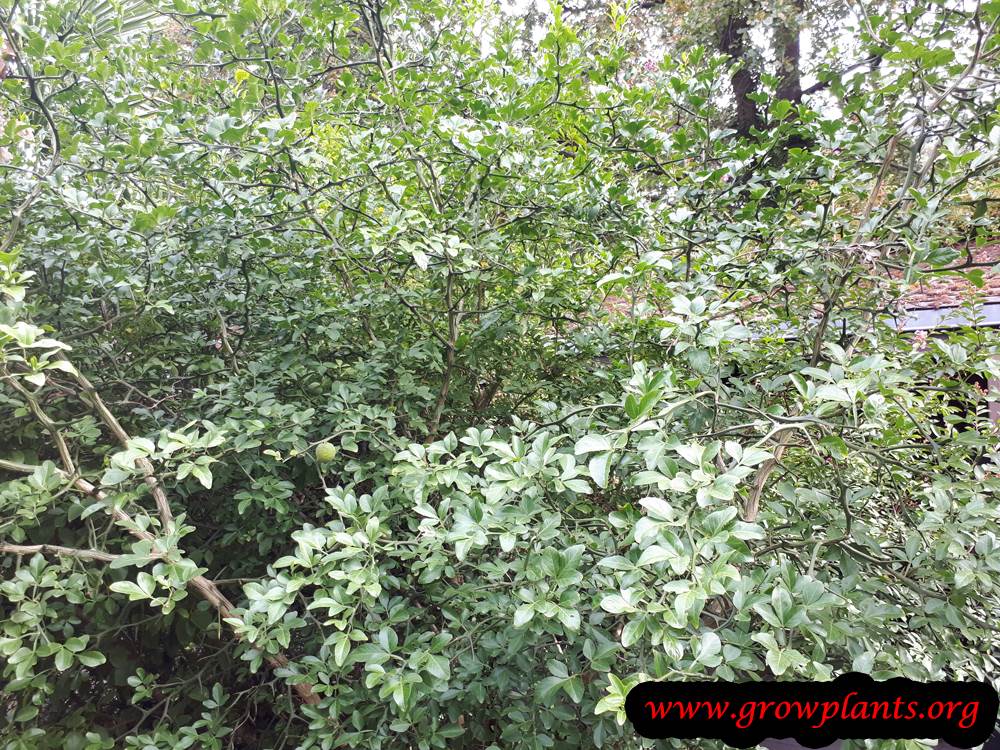
Overview: Poncirus trifoliata (trifoliate orange, or flying dragon) is a deciduous, thorny tree or shrub reaching 3-8 m (10-24 ft) and among the most cold-hardy of all citrus relatives. This moderate- to slow-growing perennial is grown for its edible sour fruit and as an ornamental, hedge or bonsai.
Quick Specifications
| Specification | Attribute |
|---|---|
| Plant Type / Life Cycle | Perennial (tree/shrub) |
| Foliage Type | Deciduous |
| Mature Size | 3-8 m (10-24 ft) |
| Growth Rate | Moderate to slow |
| Toxicity | Non-toxic; fruit is edible (very sour) |
| Hardiness | USDA zone 6+ |
Growth Form & Structure
- Height & Spread: A dense, thorny tree or shrub of 3-8 m (10-24 ft); readily kept small as a dwarf tree, container plant or bonsai.
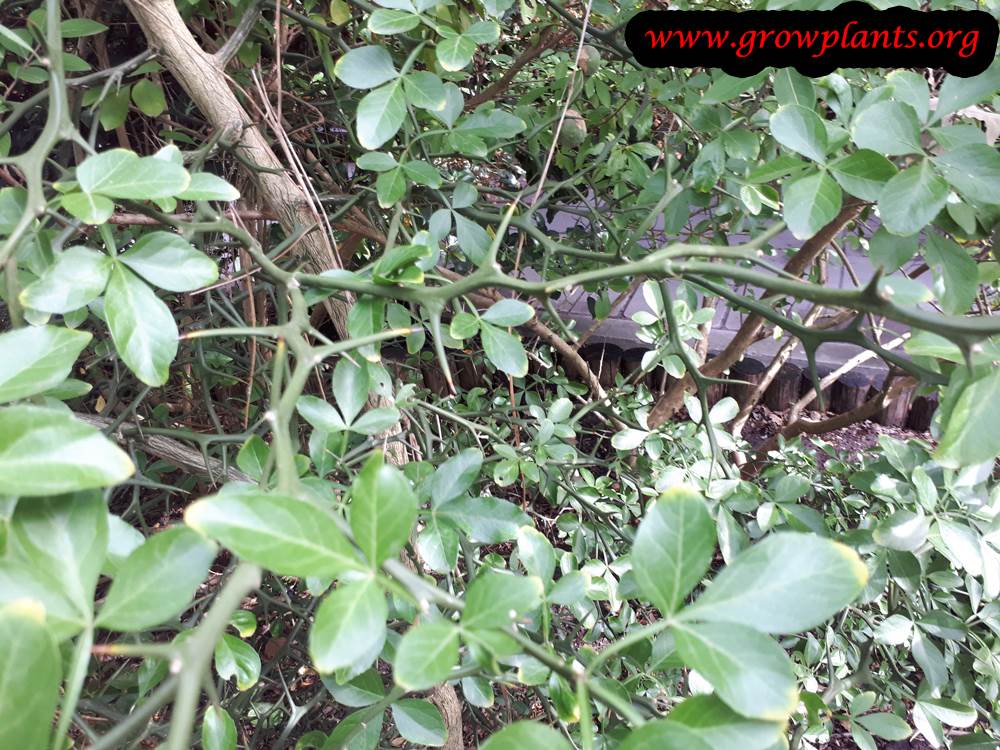
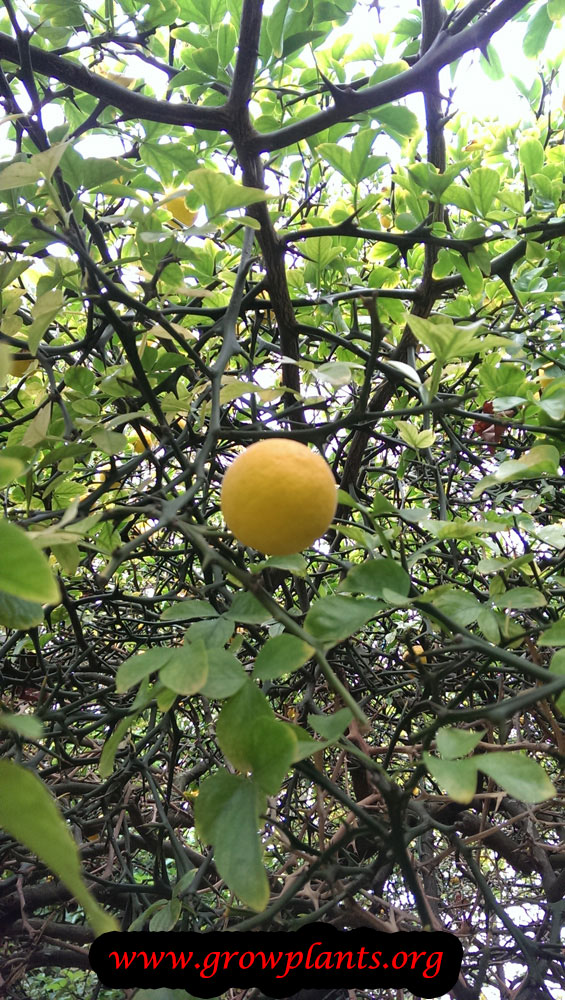
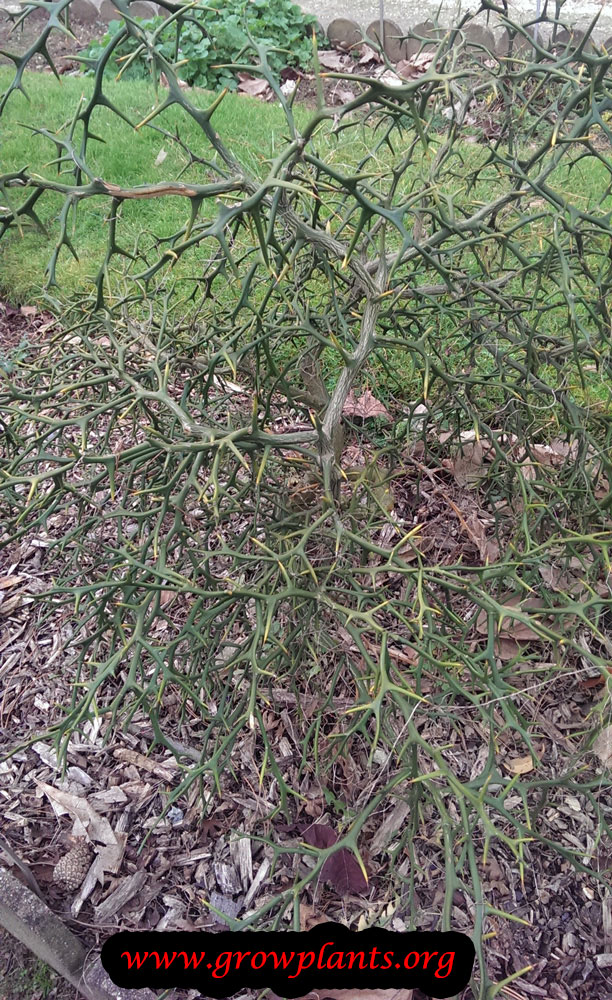
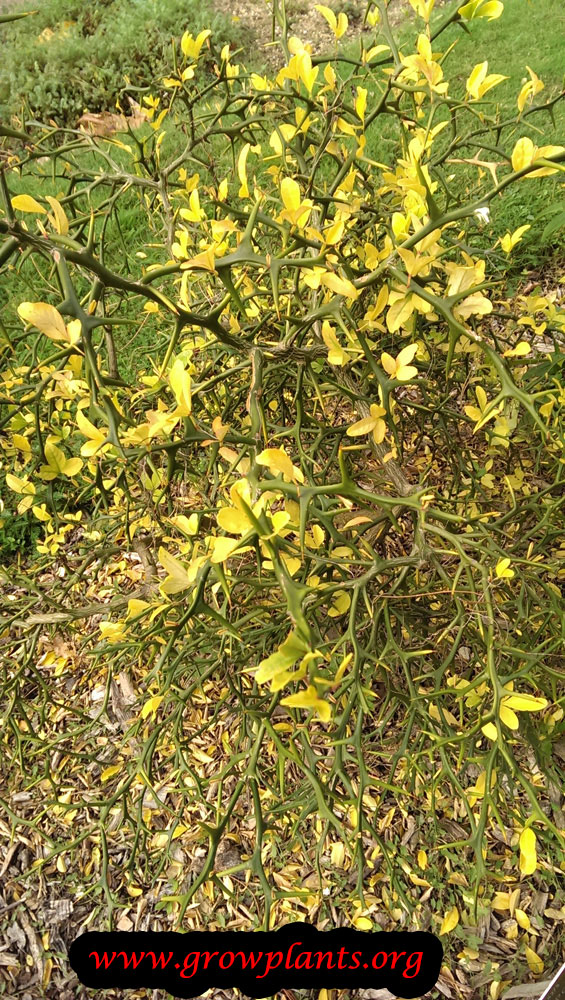
- Growth Habit & Form: Stiff, heavily branched and armed with stout thorns; the ‘Flying Dragon’ form has curiously twisted, contorted stems.
- Lifespan & Maturity: Long-lived; typically begins bearing fruit within about 2-3 years.
Anatomy & Physical Features
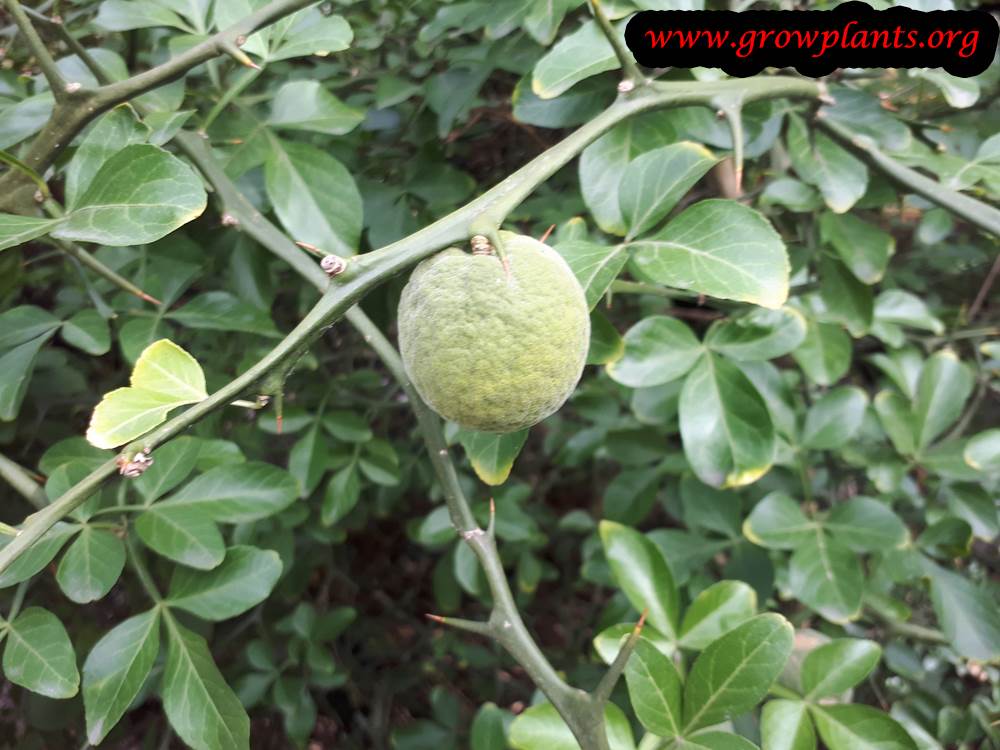
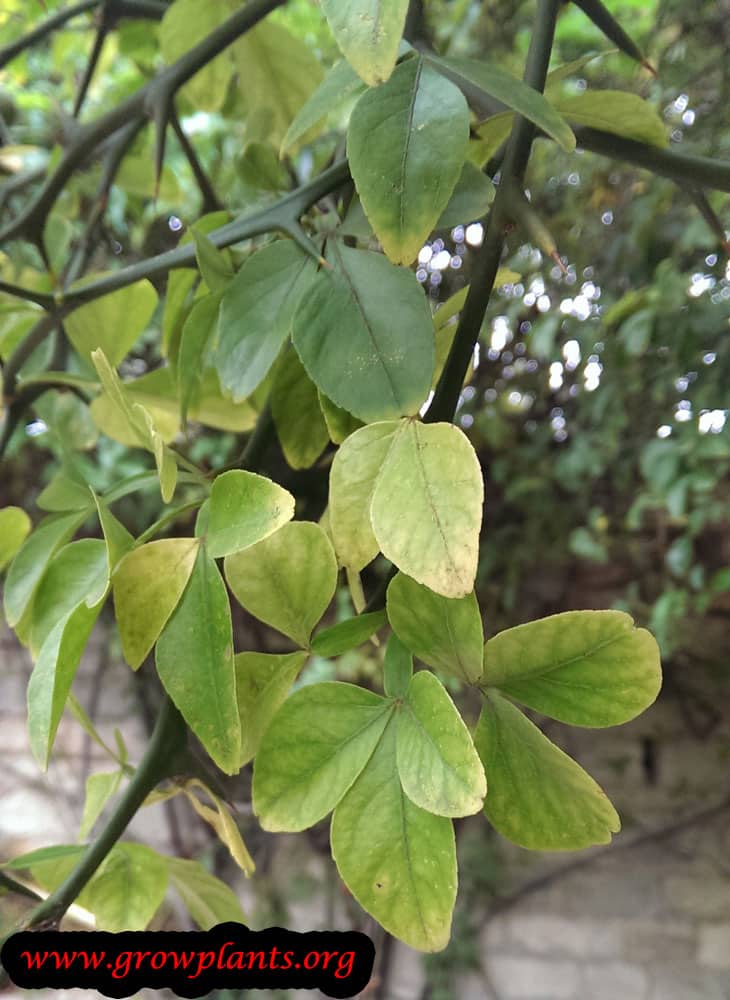
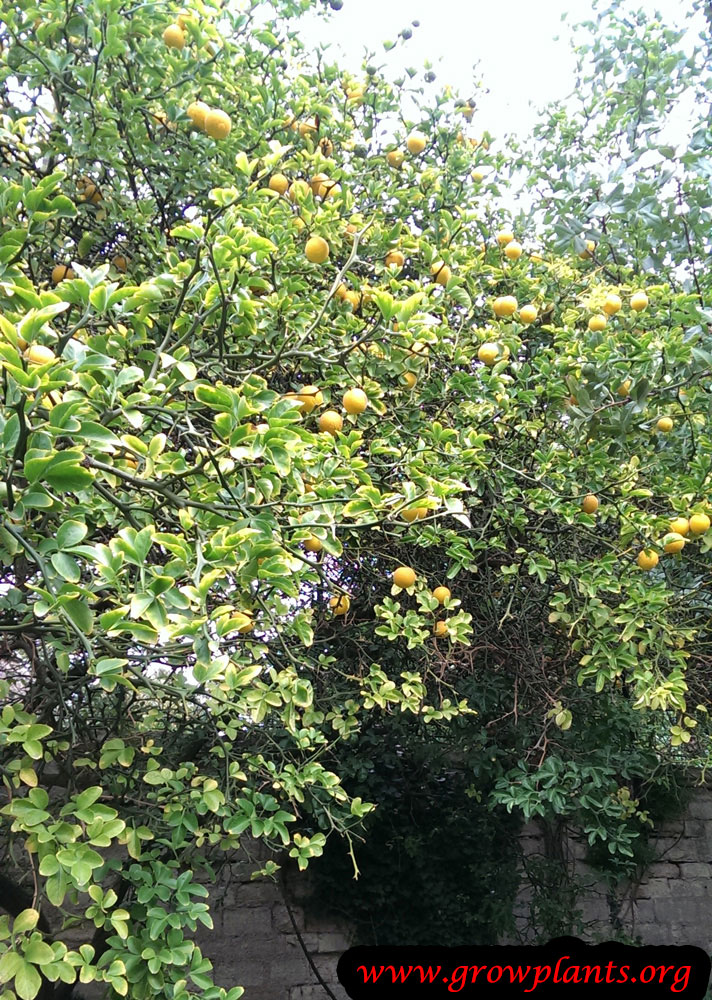
- Leaves & Foliage: Green, elliptic trifoliate leaves on thorny green stems.
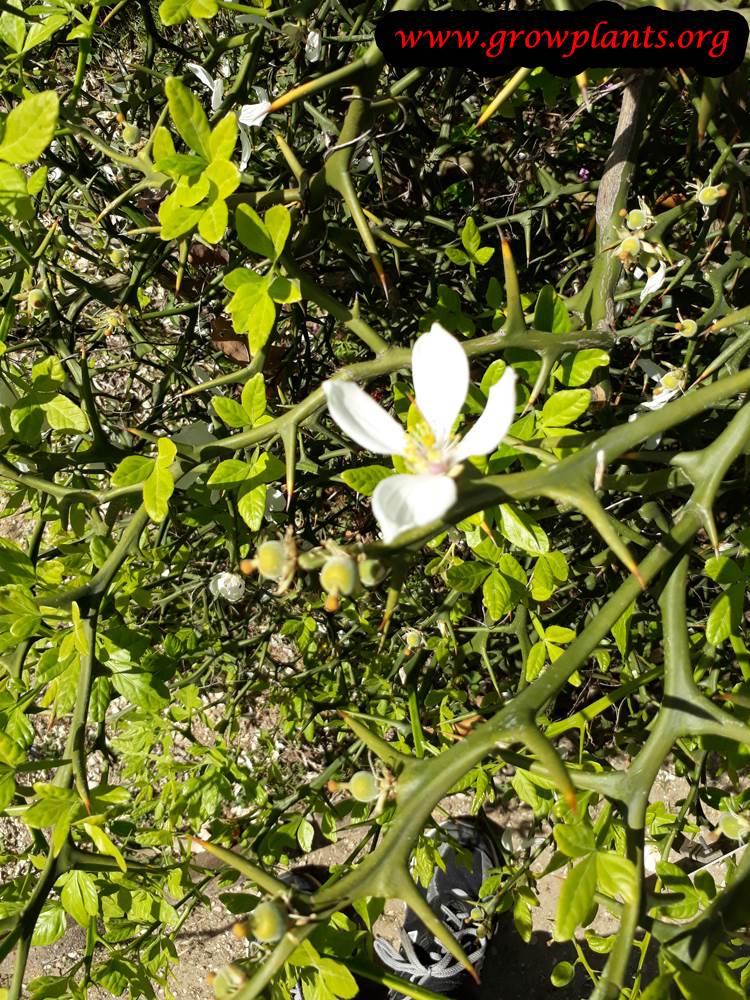
- Flower Characteristics: White flowers borne in clusters in spring and summer.
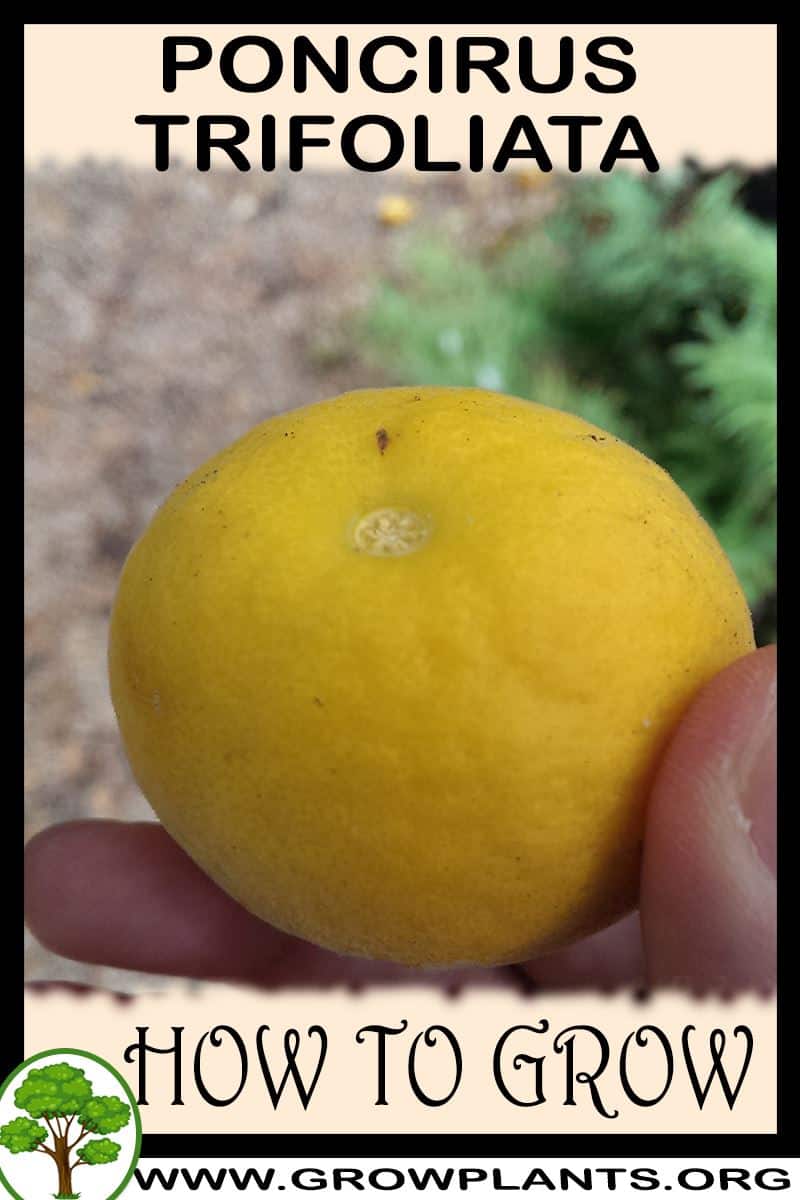
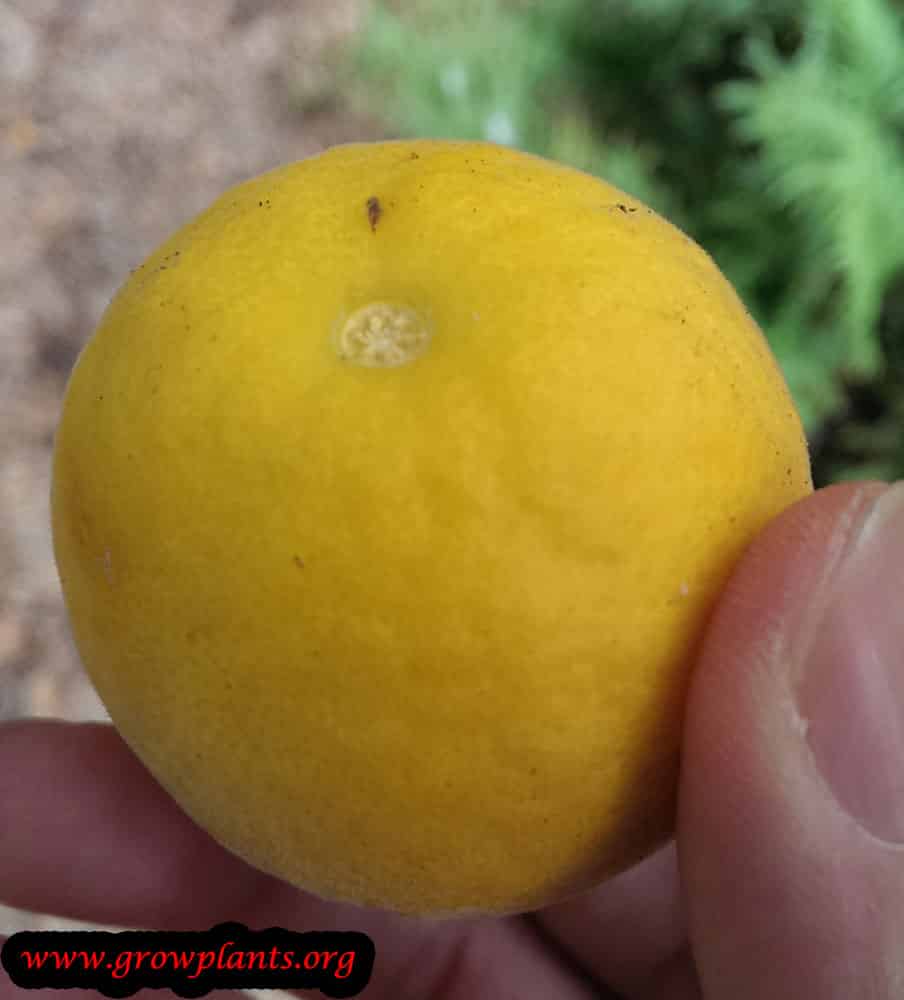
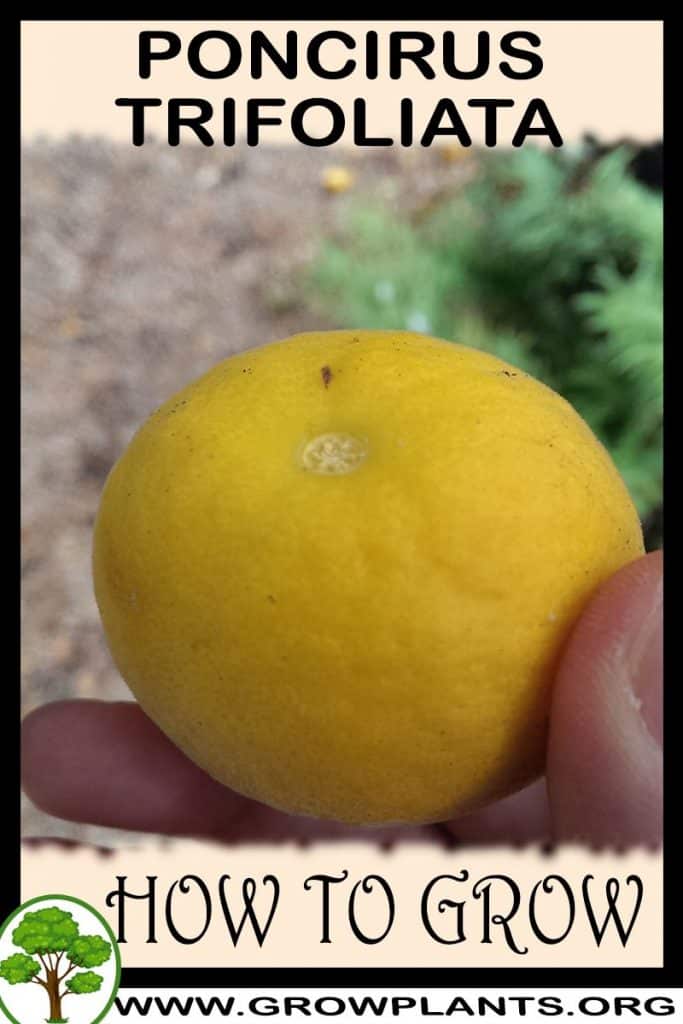
- Fruit Profile: Small yellow fruit about 3-5 cm, segmented inside, with a sour, lemon-to-bitter-orange flavour.
Primary Uses & Landscape Value
- Edible Uses: Fruit eaten and juiced; the fragrant rind is used for fruit leather and candied (sugary) peel.
- Functional & Ornamental Roles: Thorny barrier hedge, ornamental and bonsai subject, and a widely used cold-hardy citrus rootstock.
Care Guide: Planting, Soil & Watering
Overview: Trifoliate orange grows best in full sun in well-draining, slightly acidic soil enriched with organic matter, kept evenly moist especially while fruiting. It takes moderate watering and is one of the hardiest citrus relatives, tolerating cold far better than true citrus.
Quick Care Requirements
| Requirement | Ideal Condition |
|---|---|
| Planting Season | Spring to summer in cooler zones (6–10a); spring or autumn in zones 10b–11a; year-round in zone 11b and warmer |
| Growth Rate | Slow to moderate |
| Soil Type | Well-draining soil enriched with organic matter; mulch to hold moisture |
| Soil pH | Slightly acidic |
| Water Need | Moderate — keep evenly moist, and water more heavily through the fruiting season |
Planting & Establishment
- Best Planting Season: Timing depends on climate: plant spring to summer in colder areas (zones 6–10a), spring or autumn in zones 10b–11a, and at almost any time in zone 11b and warmer. Avoid planting into extreme heat or cold, which can stress or even kill a young tree.
- How to Plant:
- Hole Preparation: Dig a hole about twice as wide as the root ball and no deeper, in full sun, loosening the surrounding soil for the roots to spread.
- Soil Amendments: Work compost, humus and organic matter into the backfill and mulch the surface; in hot-summer sites, whitewash the exposed trunk with lime paint to protect it from sunscald.
- Planting Depth: Set the tree at its original soil level, keeping the root collar at grade and never burying the trunk; on grafted trees, keep the graft union well above the soil.
- Growth Speed & Expectations: A slow to moderate grower that develops into a dense, thorny large shrub or small tree over several years.
Soil, Watering & Drainage Care
- Soil Mix & Drainage Needs: Provide deep, well-draining soil rich in organic matter and mulched to retain moisture; it tolerates a range of soils but resents waterlogging.
- Watering Schedule & Technique:
- Young / Newly Planted: Water regularly after planting to keep the soil evenly moist while the tree establishes its roots.
- Established: Water deeply and regularly, letting the surface dry slightly between waterings, and increase water noticeably during the fruiting season so the fruit does not dry out or split — especially if seasonal rains are late.
- Seasonal Adjustments: Water more in hot, dry weather and during fruiting, and reduce in cool, wet conditions; being cold-hardy, it needs little water in winter.
Climate, Light & Hardiness
Poncirus trifoliata grows across tropical, subtropical, Mediterranean, and temperate climates in full sun, tolerating half shade with reduced fruiting. It is by far the most cold-hardy plant in the citrus family, rated by the site to USDA zone 6+, and its winter leaf drop is a large part of why it survives cold that would kill true evergreen citrus.
Quick Climate Specifications
| Climate Zones | Tropical, subtropical, mediterranean, and temperate climates |
|---|---|
| USDA Hardiness Zones | Zone 6+ |
| Optimal Temp Range | approximately 15–29°C (59–84°F) during the growing season |
| Cold Damage Begins | approximately −10 to −12°C (14–10°F) to dormant wood; earlier for any late growth still active |
| Approx. Survival Minimum | approximately −18 to −20°C (0 to −4°F) briefly, dormant established plant |
| Frost Tolerance | High |
| Light Conditions | Full sun; tolerates half shade with reduced fruiting |
| Wind Tolerance | Moderate to High |
| Salt / Coastal Tolerance | Low to Moderate |
Sunlight & Light Exposure
Optimal Light Setup
Full sun gives the strongest growth and fruiting.
Direct Sun Requirement
Several hours of direct sun daily are needed for good fruit set; half shade is tolerated but reduces yield.
Shade & Heat Management
In hot-summer locations the site recommends whitewashing an exposed trunk to prevent sun/heat damage.
Best Exposure / Orientation
Adaptable to a wide range of exposures given its broad climate range; full sun in any orientation supports the best growth.
Temperature Extremes & Hardiness
USDA Hardiness & Regional Limits
The site rates this species to zone 6+, far exceeding the cold tolerance of true citrus (which the site rates zone 8–10+). This is because, unlike evergreen citrus, Poncirus trifoliata is deciduous and goes fully dormant in winter - a trait that underlies its use as a cold-hardy rootstock for grafting true citrus in marginal climates. Cold tolerance still varies somewhat by cultivar/selection, plant age, and exposure duration.
Cold Damage & Winter Protection
Established, dormant plants tolerate hard freezes with little protection; young, newly planted specimens benefit from mulch through their first winters.
Frost Sensitivity
Frost tolerance is high once the plant is dormant; active new growth in spring or a late-autumn flush remains more frost-sensitive, similar to other deciduous woody plants.
Extreme Heat Tolerance
Tolerates hot summers well within its broad climate range, provided soil moisture is adequate.
Chilling Requirement
Unlike evergreen citrus (which need no winter chill), this deciduous citrus relative goes through a genuine winter dormancy; an exact chilling-hour figure is not established in the source data, so treat it as needing a normal cold-temperate winter rest rather than a specific chill-hour count.
Wind, Humidity & Microclimate
Humidity Preferences
Adaptable to a range of humidity levels given its wide climatic distribution.
Dry-Air Tolerance
Good relative to true citrus, consistent with its temperate-climate hardiness.
Wind Tolerance
Moderate to high; its dense, thorny growth habit also makes it a durable hedge/barrier plant.
Coastal / Salt Tolerance
Low to moderate - general citrus-family sensitivity to salt spray and saline irrigation still applies.
Rainfall & Seasonal Moisture
Suited to climates with a defined wetter season; the site notes extra irrigation is needed during fruit development if rainfall is delayed.
Microclimate Recommendations
Because of its exceptional cold hardiness and deciduous dormancy, it needs none of the frost-protection measures required by evergreen citrus, though the site flags it as thorny and potentially invasive, so siting should account for spread.
Growing in Pots, Balconies & Indoors
The trifoliate or hardy orange (Poncirus trifoliata) is a very thorny, deciduous citrus relative, 3-8 m tall, grown as an ornamental, rootstock and hedge. The grower doesn’t class it a room houseplant, but a dwarf at a very sunny window can grow; unlike true citrus it is extremely cold-hardy.
Quick Details
- Container Size: Don’t overpot – start close to the root-ball size and step up every few years; grow a grafted dwarf to keep it manageable.
- Indoor Suitability: Not a deep-room houseplant; a grafted dwarf can grow and slowly fruit at a very sunny window.
- Best Spot: Full sun – a bright patio, balcony, or the sunniest window; half shade is tolerated but gives fewer fruits.
- Soil & Drainage: Free-draining, aerated mix (potting soil, or peat/coir with perlite); never leave the pot standing in water.
- Watering in Pots: Keep evenly moist and water more through the fruiting period so fruit doesn’t dry or split; pots dry fast, but avoid waterlogging.
Indoors & On the Windowsill
- Houseplant reality: The grower doesn’t rate it a room houseplant – indoor light is usually too weak for good fruiting.
- Windowsill growing: Grow a grafted dwarf at the brightest, sunniest window, away from heaters and air vents; expect fruit to take longer than outdoors.
- Overwintering: Unlike true citrus this species is extremely cold-hardy and deciduous, so a potted plant needs no winter protection – it can stay outdoors through frost.
- Safety: It is very thorny – site it away from paths, children and pets; its small, dry fruits are bitter and used for preserves, not eaten fresh.
On a Balcony or Patio
- Light & warmth: Give it the sunniest, most sheltered spot; walls and paving reflect heat and dry pots fast, so check moisture often in hot weather, and shelter young trees from strong wind.
- Practicalities: Use a stable pot heavy enough not to topple, and let drainage water escape freely.
Choosing the Pot, Soil & Long-Term Care
- Pot & drainage: Strong drainage holes are essential; skip a standing saucer of water to prevent root rot. Terracotta breathes and dries faster; glazed or plastic holds moisture longer.
- Potting mix: Well-aerated – potting soil, or peat/coir with perlite or vermiculite.
- Feeding: Potted citrus need feeding more often than ground trees as nutrients leach with each watering; use a citrus feed through the growing season.
- Repotting: Refresh the mix and pot up every few years – the grower advises against leaving old, spent soil in the pot; keep a dwarf in shape with light root and top pruning.
Grower’s Container Tip
- Don’t overpot, and grow it dwarf: Plant a small tree straight into its pot; with a large container, start it in a smaller pot rather than one far bigger than the root ball. Change the soil every few years, check that the graft union sits well above the soil, and choose a cultivar you can keep as a dwarf tree or bonsai – even bonsai citrus bear fruit.
Fertilizing & Feeding
A moderate feeder: this hardy, thorny relative of citrus is usually grown as an ornamental, hedge, or rootstock plant rather than for its sour fruit, and it doesn’t need to be pushed hard – steady, restrained feeding through the growing season suits its naturally vigorous, adaptable habit.
Quick Fertilizing Specs
| Feeding Level | Moderate |
|---|---|
| young_feeding | Nitrogen-forward while the plant builds its dense, thorny branch structure |
| mature_feeding | Balanced feeding through the growing season; this species needs less forcing than fruit-focused citrus |
| Main Nutrient Priority | Restrained, balanced feeding suited to a naturally hardy, vigorous landscape and hedge plant |
| Best Feeding Period | Active growing season, tapering off well before cooler weather |
| Soil pH | Prefers well-drained, slightly acidic soil |
| Reduce/Stop Feeding | Taper off well before cool weather so growth has time to harden – this species tolerates cold far better than most citrus, but new growth still benefits from time to mature |
| Organic Options | Compost, humus, and mulch worked into the root zone alongside a general fertilizer |
| Micronutrients | A complete fertilizer supplying iron, manganese, and zinc supports healthy foliage, though this species is generally less prone to chlorosis given its preference for slightly acidic soil |
Feeding by Growth Stage
Newly planted
Help a newly planted Poncirus root in before pushing top growth.
| Nutrient direction | Hold feeding light and let the plant focus on rooting in; organic matter worked into the planting soil is usually enough at first. |
|---|---|
| Timing | At planting and through the first flush of new roots. |
| Frequency | Skip fertilizer right at planting; introduce light feeding only once the plant shows clear new growth. |
| Fertilizer types | Organic matter, compost, or humus worked into the planting hole, A light, balanced fertilizer once new growth confirms the plant has rooted in |
| Precautions | Avoid fertilizing right at the moment of planting; feeding a stressed, unrooted plant can do more harm than good. |
Young, non-bearing plant
Build a dense, thorny branch structure – this species is naturally vigorous and, left unmanaged, can spread more than most citrus relatives.
| Nutrient direction | A nitrogen-forward feed supports steady growth, but this naturally vigorous, hardy species needs less encouragement than most citrus and can be kept on the lighter side. |
|---|---|
| Timing | Through the growing season for the first several years before fruiting begins. |
| Frequency | Feed lightly and regularly through the growing season, easing off as growth slows toward the cooler months. |
| Fertilizer types | A nitrogen-forward fertilizer applied through the growing season, used sparingly given this species’ natural vigor, Organic matter or compost worked into the root zone |
| Routine trace nutrients | iron, manganese, zinc |
| Precautions | Avoid overfeeding a species already known for vigorous, sometimes invasive growth; if it’s being kept as a hedge, restrained feeding also means less pruning to manage its dense, thorny growth. |
Established plant approaching bearing age
Support the transition from vegetative growth toward flowering, whether the plant is being grown for its clustered white blooms, as a hedge, or toward eventual fruit.
| Nutrient direction | Shift toward a balanced feed as the plant approaches bearing age; this hardy species needs less forcing than fruit-focused citrus relatives. |
|---|---|
| Timing | As the plant matures and begins approaching its first flowering and fruit set. |
| Frequency | Continue light, restrained feeding through the growing season rather than frequent heavy applications. |
| Fertilizer types | A balanced fertilizer through the growing season, used sparingly, Organic matter or mulch to maintain steady soil fertility without overfeeding |
| Routine trace nutrients | iron, manganese, zinc |
| Precautions | Resist the temptation to feed heavily to speed up an already naturally vigorous, self-sufficient plant, especially where it’s being kept in check as a hedge or rootstock. |
Mature, fruit-bearing plant
Support healthy flowering and development of the small, sour, lemon-scented fruit this species produces, where fruit is wanted.
| Nutrient direction | A balanced feed is generally enough; this species doesn’t need the potassium-forward push that heavier-fruiting citrus benefit from. |
|---|---|
| Timing | Through the growing season, with modest attention around flowering and fruit development. |
| Frequency | Feed lightly through the growing season, tapering off well before the coolest part of the year. |
| Fertilizer types | A balanced fertilizer through the growing and fruiting season, used sparingly, Mulch and organic matter maintained around the root zone |
| Routine trace nutrients | iron, manganese, zinc |
| Precautions | Keep fertilizer away from the base of the plant, and remember that where it’s grown as a hedge or rootstock, restrained feeding helps keep its naturally vigorous, thorny growth manageable. |
Nutrient Deficiency Signs & Corrections
New leaves turning yellow between dark green veins
| Possible causes | Iron becoming unavailable where soil runs more alkaline than this species prefers, Waterlogged, poorly drained soil limiting root uptake, Root damage from overly wet or compacted planting sites |
|---|---|
| Appears first on | Newest leaves and shoot tips |
| What to check | Soil pH – this species does best in slightly acidic soil, so alkaline sites are worth testing, Drainage and how quickly water moves through the root zone, Root health where the soil stays consistently soggy |
| Possible correction | Correct soil pH toward slightly acidic and improve drainage first; if chlorosis persists, apply a chelated iron product per its label. |
Small, narrow leaves with a mottled pattern of yellow between green veins, and shortened new shoots
| Possible causes | Low soil zinc availability, An incomplete feeding program lacking trace elements, Dense, thorny growth outpacing available trace nutrients |
|---|---|
| Appears first on | New leaves and shoot tips |
| What to check | Whether the fertilizer program includes routine trace elements, Soil pH and overall fertility, Overall vigor and shoot length compared with prior seasons |
| Possible correction | Switch to a complete fertilizer that includes zinc, and confirm soil pH stays in the slightly acidic range this species prefers. |
Overall pale, light-green foliage and noticeably reduced new growth on a plant that is normally quite vigorous
| Possible causes | Low available soil nitrogen, Nitrogen leaching from heavy rain or watering, Dense, thorny growth competing for limited available nitrogen |
|---|---|
| Appears first on | Older, lower leaves |
| What to check | Recent feeding history, Soil organic matter, Whether growth has genuinely slowed compared with this species’ usual vigor |
| Possible correction | Resume a light, nitrogen-forward feeding through the growing season and build soil organic matter. |
Pruning, Training & Seasonal Maintenance
Poncirus trifoliata stands apart from the true Citrus species in this batch in several ways that directly shape its pruning: it’s deciduous rather than evergreen, it’s typically grown on its own roots rather than grafted, and its own facts flag it as invasive via suckering. It’s extremely cold-hardy (zone 6+) and thorny, grown variously as an ornamental/bonsai specimen, a barrier hedge, or citrus rootstock, and it tolerates fairly hard pruning. Own data give “spring/summer” as the pruning window – after leaf-out, avoiding the period when a hard freeze could still damage fresh cuts on this otherwise very cold-tolerant plant.
Quick Pruning & Maintenance Specs
| Pruning Tolerance | Moderate to High |
| Primary Pruning Window | Spring into summer, after leaf-out |
| Secondary Maintenance Window | Ongoing root/basal sucker removal through the growing season |
| Typical Frequency | One structural pass yearly; frequent shearing if grown as a hedge |
| Main Objective | Control invasive root suckering; shape as specimen, hedge, or rootstock depending on use |
| Young Plant Priority | Establish intended form early – open specimen, dense hedge, or clean rootstock trunk |
| Mature Plant Priority | Ongoing sucker control; density management if grown as a hedge |
| Best Tool Type | Bypass secateurs/loppers for specimen form; hedge shears only if maintained as a sheared barrier hedge |
| Avoid Heavy Pruning During | Deep winter cold, before leaf-out, when fresh cuts are more exposed to hard freezes |
Pruning by Plant Age & Size
Newly Established
Remove only damaged growth; handle carefully given the thorns.
Young / Formative
Decide the intended use early: for an open ornamental/bonsai specimen, train selectively with an eye to its naturally contorted, thorny branching; for a barrier hedge, encourage dense branching from the base with early tip pruning; if used as rootstock, keep the lower trunk clean.
Mature / Established
Ongoing removal of root and basal suckers is the main recurring task given this species’ documented invasiveness; beyond that, maintenance follows whichever form (specimen vs. hedge) was established when young.
Seasonal Pruning Schedule
Pre-Growth / Early-Spring
Objective: main structural or shaping cuts once the worst cold has passed and the plant is leafing out, per its own pruning-season data. Remove: dead, crossing, and damaged wood; excess root/basal suckers. Do not remove: more than needed if being grown as a rootstock or ornamental specimen with contorted branching as its main appeal. Expected response: strong regrowth typical of this vigorous, cold-hardy species. Flowering/fruiting impact: light structural work has minimal effect on the following spring/summer bloom.
Flowering & Fruiting Wood
Poncirus flowers in spring/summer and fruits on the current season’s growth, similar to true citrus; however, the fruit is very sour and mainly used for marmalade, rootstock propagation, or left ornamentally rather than harvested for fresh eating, so preserving flowering wood matters far less here than shaping the plant for its actual use as a specimen, hedge, or rootstock.
Structural Pruning & Training
Remove crossing/rubbing branches; for hedge use, canopy density is desirable and encouraged rather than thinned; for an ornamental or bonsai specimen, selectively prune to show off the naturally twisted branching (especially on contorted ‘Flying Dragon’-type selections) rather than shearing it into a uniform shape.
Special Growth to Remove
This species is typically grown on its own roots rather than grafted, so there’s no rootstock/graft-union sucker issue – instead, own facts flag it as invasive, meaning root suckers and self-sown seedlings around the base should be removed unless deliberately propagating more plants. Remove basal shoots that spoil an intended specimen form; on a hedge, basal branching is instead encouraged.
Container & Small-Space Pruning
Well suited to bonsai given its naturally small, contorted branching and thorns; use light, selective pruning and root management rather than shearing, and monitor container-grown specimens for basal suckering just as in the ground.
Tools
Bypass secateurs and loppers for selective specimen or rootstock shaping; hedge shears are appropriate only if this plant is specifically being maintained as a sheared barrier hedge, not for specimen or bonsai work.
Tool Hygiene & Disease Risk
Routine: clean, sharp tools are sufficient; keep cuts above soil level given the citrus foot rot and gummosis risk shared with true citrus.
Cut Placement & Technique
For specimen/bonsai work, use thinning cuts that preserve the natural zigzag branch form; cut outside the branch collar; for hedge maintenance, shearing to a uniform outer line is acceptable since dense growth is the goal there.
Heavy Pruning & Rejuvenation
Tolerated well – this is a vigorous, cold-hardy plant that can be cut back hard to renew an overgrown hedge or an old rootstock understock, with strong regrowth expected the following season.
Post-Pruning Care
Standard watering; watch for regrowth of root suckers beyond the intended footprint given the invasiveness noted in its own facts; handle prunings carefully due to the thorns.
Common Pruning Mistakes
Letting root suckers spread unchecked, allowing this species to naturalize beyond where it’s wanted; shearing a specimen/bonsai plant into a uniform shape and losing its distinctive branching; pruning during a hard winter freeze before leaf-out.
When NOT to Prune
During deep winter cold before leaf-out, when fresh wounds are more exposed to hard freezes despite this species’ overall cold hardiness.
Pruning Troubleshooting
| Problem | Possible Cause | What to Check | Corrective Action |
| Unwanted spread beyond the planting site | Root suckers or self-sown seedlings left unmanaged | Perimeter around the base and nearby ground for new shoots/seedlings | Remove suckers/seedlings promptly and consistently |
| Loss of distinctive contorted form | Sheared like a hedge instead of selectively pruned | Whether shears or selective cuts were used on a specimen plant | Switch to selective thinning cuts for specimen/bonsai use |
| Thin, gappy hedge | Not tip-pruned early enough to encourage basal branching | Density at the base versus the top | Tip-prune young plants to force denser low branching |
Recommended Tools (by task)
- bypass_secateurs – selective specimen, bonsai, or rootstock shaping.
- loppers – thicker structural or renewal cuts.
- hedge_shears – only where maintained as a sheared barrier hedge.
Propagation Guide
Poncirus trifoliata is most easily started from seed: the site notes that grafting or vegetative reproduction is not necessary to reproduce this plant, consistent with its use as a citrus rootstock species whose seed tends to grow true. Difficulty is Easy for a home grower, though the ornamental ‘Flying Dragon’ selection (grown for its twisted, contorted branches) will not come true from seed and needs cuttings or budding to keep that trait.
Quick Propagation Specs
| Best Propagation Method | Seed |
| Alternative Methods | Semi-hardwood cuttings or budding (mainly for named selections such as ‘Flying Dragon’) |
| Propagation Difficulty | Easy |
| Seed True-to-Type | Polyembryonic seed may produce nucellar seedlings, generally uniform to the parent |
| Vegetative True-to-Type | Yes |
| Best Propagation Season | Spring to early summer (also possible summer to autumn) |
| Seed Germination Time | 2–4 weeks, sometimes longer |
| Germination Temperature | 20–27°C (68–81°F) |
| Seed Sowing Depth | About 2 cm (~1 in) |
Air layering is also a viable propagation method for this species.
Growing from Seed
Seed Handling & Viability
Keep seed in a dry, dark, room-temperature location until sowing.
Sowing Season
Sow in spring to early summer; sowing in summer to autumn is also possible.
Sowing Depth & Orientation
Sow about 2 cm (~1 in) deep in soil kept moist, covering the seed lightly.
Germination Conditions
Use moist, well-drained, rich soil in a sunny spot at around 20–27°C (68–81°F), and do not let the soil dry out.
Germination Time
Typically 2–4 weeks, though germination can take longer.
Seedling Care
Young seedlings are very sensitive to citrus leaf miner; if leaf miner is present in the area, grow seedlings in a greenhouse or indoors, and mulch the soil around them.
Bloom & Flower Guide
Quick Details
- Bloom Season: Spring, often opening before the leaves fully expand
- Time to First Bloom: Usually within a few years of establishing
- Flower Appearance: White flowers with yellow stamens, borne in clusters on thorny stems
- Edibility: Grown as an ornamental and as a hardy rootstock; the flowers are fragrant but are not used as food
Detailed Blooming Overview
Trifoliate orange is an unusually hardy, deciduous citrus relative. In spring it covers its thorny, still-bare stems with white, sweetly scented flowers before the leaves take over – a striking display. It is grown mainly as an ornamental, a hedge and a cold-hardy rootstock rather than for eating.
Flower Characteristics
- White flowers with yellow stamens, borne in clusters.
- Fragrant, carried on bare, thorny stems before the foliage.
Bloom Care & Thinning
- Thinning: In the first years, thinning the flowers helps a young plant build strength.
- Pollination: Pollinated by bees.
Bloom Health & Protection
- Aphids and thrips: These can gather on the tender buds and new growth; a strong jet of water, insecticidal soap or neem oil keeps them down. Avoid spraying open blossoms so visiting bees are not harmed.
Pests, Diseases & Troubleshooting
Overview: Poncirus trifoliata (trifoliate orange, now Citrus trifoliata) is the exceptionally hardy, deciduous member of the citrus family, prized precisely because it resists many citrus scourges — it is a standard rootstock for its tolerance of Phytophthora foot rot, citrus nematode and tristeza virus. It still hosts the general citrus sap-suckers and citrus leafminer on its flushes, and can catch canker. Manage with airflow, sanitation and organic controls first.
Quick Troubleshooting Overview
| Issue / Pest | Main Symptom | Primary Solution |
|---|---|---|
| Citrus leafminer | Silvery serpentine mines curling new leaves | Protect flush, oil sprays, tolerate on mature plants |
| Aphids | Curled shoot tips, honeydew, sooty mold, ants | Hose off, insecticidal soap, predators |
| Scale & mealybugs | Bumps / white fluff on stems, sooty mold | Horticultural oil, control ants |
| Spider mites | Stippling and bronzing of leaves in heat | Rinse, oil/soap, raise humidity |
| Citrus canker | Raised corky lesions with yellow halos on leaves/fruit | Remove, copper, sanitation, resistant stock |
Common Pests & Management
- Citrus leafminer (Phyllocnistis citrella):
- Symptoms: Silvery, winding serpentine tunnels in tender new leaves, which then curl, distort and pucker; only the soft new flush is attacked.
- Prevention & Control: Tolerate mines on established plants (they rarely harm a vigorous tree), synchronize and protect flushes, and spray horticultural oil or neem to deter egg-laying on young growth; avoid excess nitrogen that pushes soft, attractive flushes, and conserve parasitic wasps.
- Aphids (Aphis spiraecola, Toxoptera spp.):
- Symptoms: Green or black colonies curling soft new shoots and buds, with honeydew, sooty mold and attendant ants; some species also spread citrus tristeza (to which Poncirus itself is tolerant).
- Prevention & Control: Blast off with water, pinch infested tips, and encourage ladybirds, lacewings and hoverflies; insecticidal soap or oil handles heavy flushes. Control ants that protect the aphids.
- Scale & mealybugs (Coccidae, Diaspididae, Planococcus citri):
- Symptoms: Brown, black or white bumps along stems and leaf veins and white cottony masses in crotches, with honeydew and blackening sooty mold.
- Prevention & Control: Prune out and scrape heavy encrustations, spray horticultural oil to smother (timing to the crawler stage), and control ants; encourage parasitoids and predatory beetles.
- Spider mites & citrus rust mite (Tetranychus urticae, Phyllocoptruta oleivora):
- Symptoms: Fine stippling, bronzing and webbing on leaves in hot, dry conditions; rust mites russet leaf and fruit surfaces.
- Prevention & Control: Rinse foliage, keep the tree watered and unstressed, and apply horticultural oil or sulfur (not together, and not in extreme heat); conserve predatory mites.
Diseases & Fungal Issues
- Citrus canker (Xanthomonas citri):
- Symptoms: Raised, corky, tan lesions surrounded by a water-soaked and yellow halo on leaves, stems and fruit, causing defoliation and blemish; spread by wind-driven rain and contaminated tools.
- Treatment & Management: Use clean stock, prune for airflow, avoid working plants when wet, and disinfect tools; remove and bag affected material and apply copper preventively in wet seasons. Follow local quarantine rules where canker is regulated.
- Gummosis / foot rot (Phytophthora citrophthora / P. nicotianae):
- Symptoms: Oozing gum, bark cracking and cankers at the trunk base and crown rot in wet soil — but Poncirus is notably resistant, which is why it is used as a protective rootstock.
- Treatment & Management: Keep the crown dry, plant high with good drainage, avoid trunk injury and deep mulch against the bark, and remove infected bark to clean tissue; a phosphonate protects susceptible grafted scions.
- Citrus scab & black spot (Elsinoë fawcettii / Phyllosticta citricarpa):
- Symptoms: Warty scabby outgrowths (scab) or dark spots (black spot) on leaves and fruit in warm, wet conditions.
- Treatment & Management: Improve airflow, remove fallen leaves and fruit, and apply copper preventively during wet weather on affected trees.
Growing Difficulties & Abiotic Problems
- Thorn hazard:
- Cause & Symptoms: The stems carry large, stiff thorns that can injure during handling and pruning.
- Correction Strategy: Wear thick gloves and long sleeves, prune thoughtfully, and site away from paths; a grower-safety note rather than a health issue.
- Chlorosis:
- Cause & Symptoms: Yellowing between veins on very alkaline soil where iron and manganese uptake falter (though Poncirus tolerates a wider pH than most citrus).
- Correction Strategy: Improve drainage and organic matter and correct with chelated iron/manganese on strongly alkaline sites.
- Winter leaf drop (deciduous habit):
- Cause & Symptoms: Unlike evergreen citrus, trifoliate orange naturally drops its leaves in autumn.
- Correction Strategy: Recognize this as normal deciduous behavior, not disease; the bare green thorny stems are hardy through hard frost.
- Bitter, seedy fruit:
- Cause & Symptoms: The small fuzzy fruits are intensely sour and seedy, disappointing growers expecting edible oranges.
- Correction Strategy: Grow it for ornament, hedging or rootstock; use the fruit only for marmalade or flavoring if at all.
What Helps – Products & Tools
Its natural toughness means minimal spraying. Useful inputs are horticultural/neem oil for leafminer, scale, mealybugs and mites, insecticidal soap for aphids, copper fungicide for canker, scab and black spot in wet weather, sulfur for rust mite, and a phosphonate where grafted scions need Phytophthora protection.
Frequently Asked Questions
How cold-hardy is Poncirus trifoliata?
Poncirus trifoliata is exceptionally cold-hardy for a citrus relative, hardy to USDA zone 6 and above. An established, dormant plant can briefly survive lows of about -18 to -20°C (0 to -4°F), which is far beyond what true citrus can tolerate.
Is the fruit of Poncirus trifoliata edible?
The fruit is non-toxic and technically edible, but it is intensely sour and seedy, which disappoints growers expecting something like a real orange. It’s best used for marmalade or flavoring rather than eaten fresh, and the plant is mainly grown for ornament, hedging, or as a rootstock.
Why is Poncirus trifoliata commonly used as a citrus rootstock?
It’s a standard rootstock because of its tolerance to Phytophthora foot rot, citrus nematode, and tristeza virus. Because it’s deciduous and goes fully dormant in winter, unlike evergreen citrus, it also underlies its use as a cold-hardy rootstock for grafting true citrus in marginal climates.
Does Poncirus trifoliata spread by suckering, and how do you control it?
Yes, its own growth habit is documented as invasive via suckering, so ongoing removal of root and basal suckers is the main recurring maintenance task on established plants, unless you’re deliberately propagating more.
Can Poncirus trifoliata be grown in a pot or indoors?
It can be container-grown as a grafted dwarf, kept in full sun on a patio, balcony, or the sunniest window, though a grafted dwarf can grow and slowly fruit at a very sunny window rather than deep indoors, since indoor light is usually too weak for good fruiting. Because it is extremely cold-hardy and deciduous, a potted plant needs no winter protection and can stay outdoors through frost.