
Plant Profile & Key Characteristics
Overview: A bushy Capsicum pepper reaching 0.5-2 m (20-80 in), grown as a tender perennial but most often as an annual for its edible fruits. It carries small white, cream or purple flowers followed by colourful berries (pepper pods) and thrives in warm, sunny, well-drained conditions.
Quick Specifications
| Specification | Attribute |
|---|---|
| Plant Type / Life Cycle | Tender perennial, usually grown as an annual |
| Foliage Type | Evergreen (in frost-free climates) |
| Mature Height | 0.5-2 m (20-80 in) |
| Growth Rate | Fast to moderate |
| Root System | Taproot with fibrous laterals |
| Toxicity | Fruit edible; the foliage and stems are toxic (nightshade family, Solanaceae), and the capsaicin in hot cultivars is a strong skin and eye irritant |
| Hardiness | USDA zone 10b+ as a perennial; zone 2+ grown as an annual |
Growth Form & Structure
- Height & Spread: Reaches 0.5-2 m (20-80 in) in the ground or a bed; grows well in a 10-30 litre (2-6 gallon) container or on a sunny windowsill.
- Growth Habit & Form: Bushy shrub, woody at the base when kept as a perennial; benefits from staking when the fruits are heavy.
- Lifespan & Maturity: Fast to mature – first fruits about 60-90 days after transplanting; lives for several years where frost-free.
Anatomy & Physical Features
- Leaves & Foliage: Green (sometimes purple), smooth oval-to-elliptic leaves.
- Flower Characteristics: Small, star-like white, cream or purple flowers with about six petals, in clusters of 2-3; self-fertile (see the Bloom guide for detail).
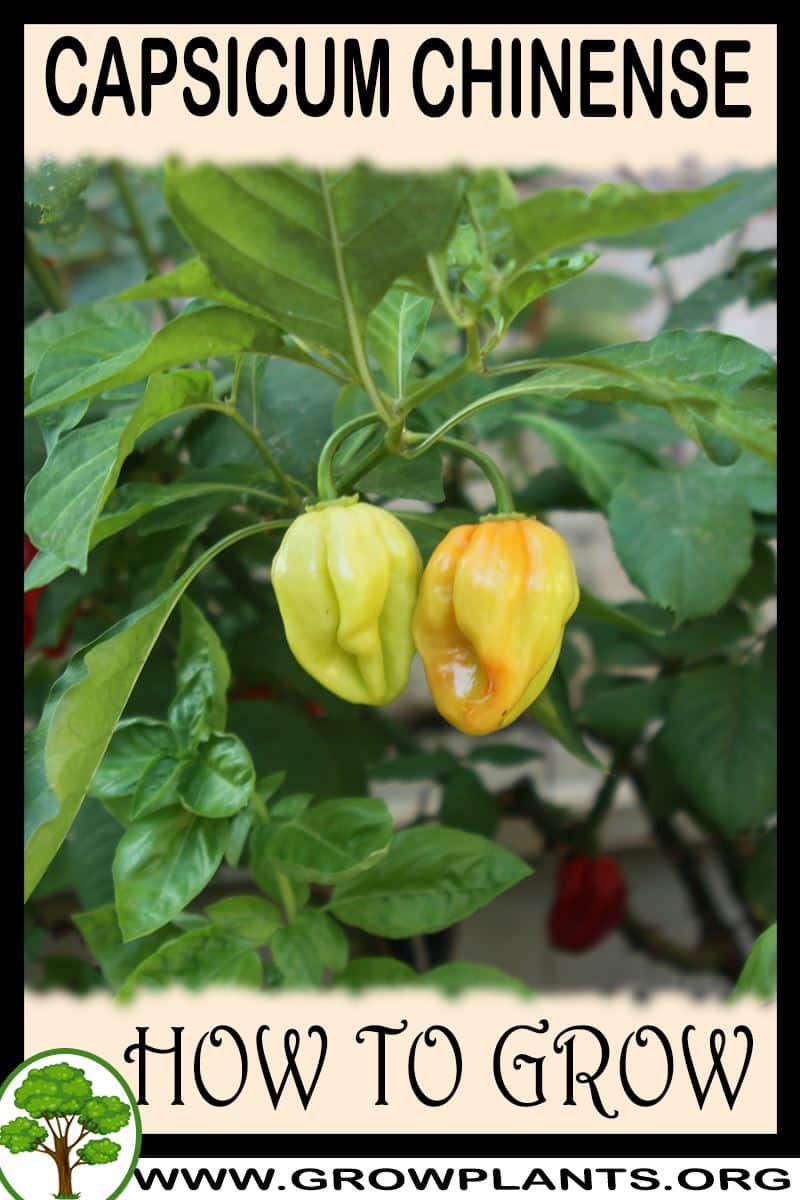
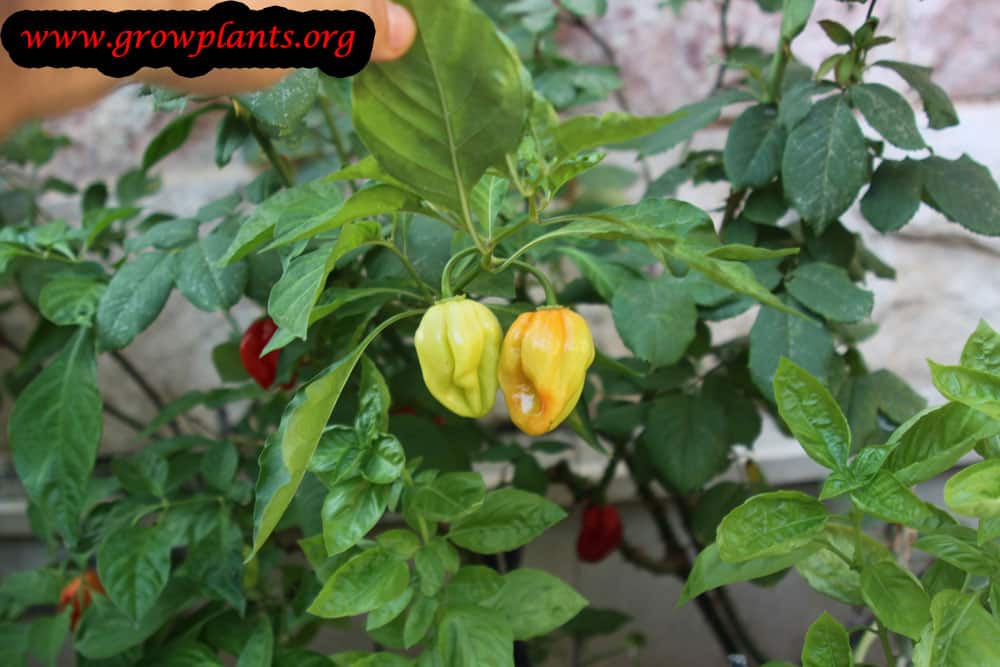
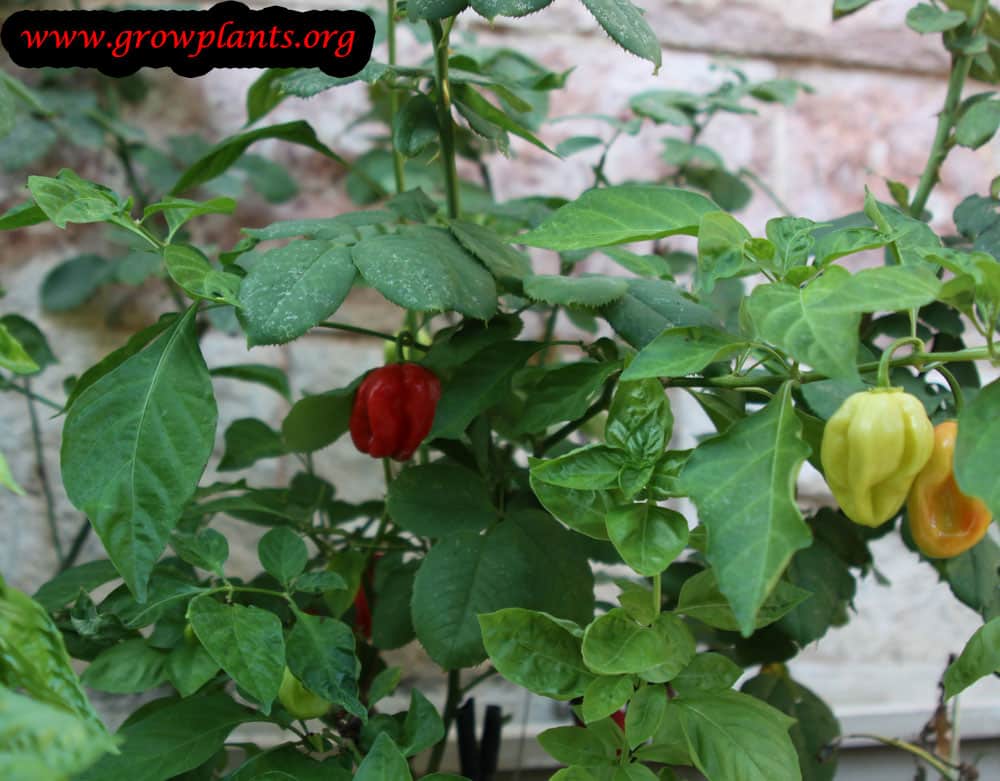
- Fruit Profile: A fleshy berry (pepper pod) in orange, red, purple, yellow, green, white, brown, pink or mustard; heat rating 110,000-2,200,000 SHU (very hot to extreme) (see the Fruit guide for detail).
Primary Uses & Landscape Value
- Edible Uses: Eaten fresh in salads, cooked, pickled, dried and ground as a spice, and used in spreads; also has culinary/medicinal uses.
- Functional & Ornamental Roles: Primarily a culinary crop; also grown ornamentally for its colourful fruits and as a container or windowsill plant.
Care Guide: Planting, Soil & Watering
Overview: Peppers are warm-season plants that need full sun, steady warmth and rich, well-drained soil kept evenly moist. They are frost-tender and dislike both waterlogging and drying out completely, performing best in organic-rich soil with mulch and consistent watering.
Quick Care Requirements
| Requirement | Ideal Condition |
|---|---|
| Planting Season | In spring after the last frost; a longer season in warmer zones (year-round in zone 12+) |
| Growth Rate | Moderate to fast |
| Soil Type | Rich, organic, well-draining |
| Soil pH | Around 6.0–7.0 (neutral to slightly acidic) |
| Water Need | Moderate to high – keep evenly moist, never waterlogged |
Planting & Establishment
- Best Planting Season: Plant out in spring once all danger of frost has passed and the soil is warm; in zones 10b–11 plant from spring into summer or autumn, and in zones 12+ any time of year. Peppers are frost-tender and stall in cold soil.
- How to Plant:
- Hole Preparation: Dig a hole at least 50–100% larger than the root ball and loosen the surrounding soil.
- Soil Amendments: Mix organic matter, dead leaves and humus into the backfill to enrich and open up the soil.
- Planting Depth: Set the plant slightly deeper than it sat in its pot – a few centimetres below soil level – so the base can be re-covered if it ever weakens, and firm gently; add a stake or support, since laden branches are heavy.
- Growth Speed & Expectations: Grows at a moderate to fast pace in warm conditions; if growth is slow, extra organic matter and feeding help it along.
Soil, Watering & Drainage Care
- Soil Mix & Drainage Needs: Use rich, well-aerated soil with good drainage; in containers choose a peat- or potting-mix with perlite or vermiculite and ample drainage holes, and mulch to hold moisture. Waterlogged soil causes root and base rot.
- Watering Schedule & Technique:
- Young / Newly Planted: Water twice on planting day, then daily for about the first two weeks while the plant roots in.
- Established: Water regularly to keep the soil evenly moist – never bone-dry, never sodden – adjusting for heat, wind, drainage and mulch.
- Seasonal Adjustments: Increase watering in hot, dry or windy weather; reduce in cool conditions and protect plants from frost over winter.
Climate, Light & Hardiness
Capsicum chinense is a warm-season, sun-loving crop that grows best in long, warm seasons across tropical, subtropical, Mediterranean, temperate and desert climates. It is frost-sensitive - perennial only in essentially frost-free areas (roughly USDA zone 10b and warmer) and grown as a summer annual from zone 2 upward wherever winters freeze.
Quick Climate Specifications
| Climate Zones | Tropical, subtropical, Mediterranean, temperate and desert (warm-season growing) |
|---|---|
| USDA Hardiness Zones | Perennial in zone 10b+; grown as an annual from zone 2 upward |
| Optimal Temp Range | About 21–26 °C (70–79 °F); tolerable roughly 10–32 °C (50–90 °F) |
| Cold Damage Begins | Growth slows and chilling stress appears below about 10–12 °C (50–54 °F) |
| Approx. Survival Minimum | Near 0 °C (32 °F); frost is generally fatal to unprotected plants |
| Frost Tolerance | None (frost-sensitive) |
| Light Conditions | Full sun (part shade tolerated only when grown on as a perennial, with lower yield) |
| Wind Tolerance | Low–Moderate (brittle, fruit-laden stems benefit from support) |
Sunlight & Light Exposure
Optimal Light Setup
Give full sun for the best growth and yield. Part shade is tolerated only where the plant is carried on as a perennial, and it then bears less - particularly through high summer heat.
Direct Sun Requirement
This is a full-sun crop; an open, unshaded position drives flowering and fruit ripening.
Shade & Heat Management
Under intense desert sun the leaves and fruit can scorch, so reducing midday exposure with light shade cloth protects the crop during peak heat.
Best Exposure / Orientation
A warm, sheltered, sun-facing position gathers the heat these peppers love and helps fruit set and ripen, while airflow limits foliar disease.
Temperature Extremes & Hardiness
USDA Hardiness & Regional Limits
The site data lists this pepper as perennial in hardiness zone 10b and warmer and grown as an annual from zone 2 upward. Hardiness reflects winter cold survival, not heat preference - in colder zones the plant is grown as a warm-season annual and replaced each year, or a favourite cultivar is overwintered indoors and set back out after the last frost.
Cold Damage & Winter Protection
Growth slows below roughly 10–12 °C (50–54 °F), and in zone 10b winters an overwintering plant often suffers or dies from the cold. Protect plants from cold snaps, or keep a cultivar going by taking cuttings or overwintering stems indoors.
Frost Sensitivity
The site data explicitly flags this pepper as frost-sensitive: light frost damages foliage and frost near 0 °C (32 °F) is generally fatal to unprotected plants. Transplant outdoors only after the last expected frost.
Extreme Heat Tolerance
Peppers are heat-loving but not immune to heat stress: in full sun, foliage and fruit can burn above about 44 °C (111 °F), and very high temperatures with intense sun cause sunscald and can trigger blossom drop that reduces fruit set. Heat and cold performance vary by cultivar, plant age, exposure duration and conditions.
Frost-Free Growing Season
As a frost-tender crop, this pepper needs a long, frost-free warm season to flower and ripen fruit. In short-season regions, start seed indoors in late winter and transplant out only after the last frost to give the crop enough warm time to mature.
Wind, Humidity & Microclimate
Humidity Preferences
Germinating seed and young seedlings prefer warm, humid conditions; established plants accept a fairly wide humidity range, with moderate humidity and good airflow being ideal.
Dry-Air Tolerance
Established plants tolerate dry air reasonably well as long as soil moisture is kept up, but hot, dry winds during flowering can cause blossom drop.
Wind Tolerance
Brittle, fruit-laden stems are prone to breaking, so a sheltered spot and support help - especially for container plants, whose root zones heat, cool and dry out faster and are more wind-exposed.
Rainfall & Seasonal Moisture
The crop suits a warm growing season with dry-to-moderate conditions; prolonged wet, humid spells favour fungal problems, so a drier, warm ripening period suits fruit quality.
Microclimate Recommendations
A warm, sheltered microclimate - a sunny wall, raised bed or reflected heat - extends the season in cooler areas, while light shade and airflow ease extreme-heat, desert-type sites.
Growing in Pots, Balconies & Indoors
These Capsicum chinense chilies are first-rate container and balcony plants rather than true houseplants – indoors the light is simply too weak to set fruit unless it is a very sunny sill. In a good-sized, free-draining pot they crop well on a warm, sunny patio or balcony, and because they are naturally tender perennials a potted plant is easy to move under cover and overwinter for a second season. Mature size in the ground is about 0.5-2 m (1.5-6 ft), but a container keeps them compact.
Quick Details
- Container Size: 10-30 L (2-6 gal), depending on whether you grow it as an annual or a perennial
- Indoor Suitability: Not a deep-room houseplant; kept small it can fruit on a bright, sunny windowsill
- Best Spot: Full sun – a warm, south-facing balcony or patio is ideal (in fierce desert sun give a little afternoon shade so fruit and leaves don’t scorch)
- Soil & Drainage: Well-aerated, organic-rich mix (potting mix, or peat/coir with perlite or vermiculite); must drain freely
- Watering in Pots: Keep evenly moist – pots dry fast, so mulch the surface; never leave it waterlogged
Indoors & On the Windowsill
- Houseplant limits: Not a true houseplant – deep in a room the light is too weak to flower and fruit.
- Windowsill growing: Keep the plant small and stand it on the edge of a bright, sunny window; grown this way the plant and its fruit get enough direct sun. Guard against cold drafts, and don’t let it get too cold in winter.
- Overwintering: In cold climates lift the pot indoors to a bright, cool, frost-free spot to carry the plant over as a perennial – it will crop earlier the following season.
- Safety: The ripe fruit is edible, but keep hot-pepper plants out of reach of children and pets on a windowsill – capsaicin in the fruit and sap stings eyes and skin, and the leaves are not for eating.
On a Balcony or Patio
- Light & wind: Give it the sunniest corner you have. Walls and paving reflect heat and dry pots quickly, so check moisture daily in summer and mulch the surface; shelter a tall, laden plant from wind and stake it if needed.
- Practicalities: A filled 10-30 L pot is heavy – set it in its final position first, and make sure drainage runoff won’t stain the balcony floor.
Choosing the Pot, Soil & Long-Term Care
- Pot & drainage: A 10-30 L pot with plenty of drainage holes so water runs straight through. Skip a standing-water saucer, which keeps the roots wet and invites rot. Terracotta breathes and dries faster; glazed or plastic pots hold moisture longer.
- Potting mix: Well-aerated and organic-rich – a quality potting mix, or peat/coir with perlite or vermiculite for drainage.
- Feeding: Potted plants need feeding more often than those in the ground, since frequent watering leaches nutrients away – feed through the growing season with a balanced, organic-rich fertilizer.
- Repotting: Every couple of years refresh the mix and pot on a size; for perennials, lightly prune the root ball and top growth at the same time to keep them vigorous.
Grower’s Container Tip
- Gradual fill: Start the pot with only about 10% of its soil; as the roots fill that soil, keep topping up until the container is full – this builds a stronger, deeper root system.
Growing this plant in a greenhouse
A greenhouse can give capsicum chinense frost protection, cold protection, a longer growing season and controlled production. Under warm enough conditions it can keep growing well beyond the normal outdoor season and potentially be maintained year-round - though continuous cropping is not guaranteed and depends on temperature and light.
Greenhouse at a glance
| Greenhouse suitability | Excellent - a major practical advantage |
|---|---|
| Main benefits | frost protection, cold protection, a longer growing season, controlled production |
| Season extension | potentially year-round |
| Outdoor protection advisable below | about 12°C |
| Maintain greenhouse minimum | around 12°C for active growth |
| Suitable types | heated greenhouse, polycarbonate greenhouse, lean-to |
| Heating | Heating is recommended in cold climates for continuous growth. |
Related greenhouse guides
- Greenhouses: How to Choose the Right Greenhouse
- Best Greenhouse Heaters
- Greenhouse Climate Control: Temperature, Ventilation and Humidity
- Best Lean-To Greenhouses
Fertilizing & Feeding
A moderate feeder: start light at transplanting, lean to nitrogen while building leafy growth, then shift to a balanced, potassium-inclusive feed once flowering and fruiting begin, with even watering throughout.
Quick Fertilizing Specs
| Feeding Level | Moderate feeder |
|---|---|
| Main Nutrient Priority | Nitrogen while building the plant, then balanced feeding with adequate potassium at fruiting |
| Best Feeding Period | Through the warm active growing and fruiting season |
| Organic Options | Compost, aged manure, and humus worked into the bed |
| Reduce/Stop Feeding | Ease back on nitrogen as flowering begins; feeding tapers as the plant finishes for the season |
| Micronutrients | Usually supplied by a complete fertilizer and organic matter; correct only diagnosed problems |
| Soil pH | Slightly acidic to near neutral |
Feeding by Growth Stage
Establishment after transplanting
Help young transplants settle in and build roots before heavy growth begins.
| Nutrient direction | A balanced complete fertilizer plus plenty of organic matter worked into the planting area to get roots established. |
|---|---|
| Timing | At transplanting and through the first weeks in the ground or container. |
| Frequency | A light feeding at planting, supported by organic matter in the soil. |
| Fertilizer types | A balanced complete fertilizer, Compost, humus, and organic matter worked into the bed |
| Precautions | Keep early feeding light; too much nitrogen now pushes soft growth at the expense of roots. |
Leafy vegetative growth
Build a strong, well-branched frame of stems and leaves before flowering.
| Nutrient direction | Lean toward nitrogen to drive vigorous stems and foliage while the plant is still building its frame. |
|---|---|
| Timing | Through the active growing weeks before flowers set. |
| Frequency | Regular light feedings while the plant is putting on leafy growth. |
| Fertilizer types | A nitrogen-forward complete fertilizer, Compost or aged manure as a top-dressing |
| Precautions | Support and mulch the plant as it grows, and ease back on nitrogen as flowering approaches so bloom is not delayed. |
Flowering and fruiting
Support steady flower set and fruit development through the harvest period.
| Nutrient direction | Shift to a balanced feed with good potassium to support fruit set and filling, easing back on high nitrogen. |
|---|---|
| Timing | From first flowering through the fruiting and harvest period. |
| Frequency | Steady light feedings that continue while fruit is setting and maturing. |
| Fertilizer types | A balanced complete fertilizer with adequate potassium, A potassium-inclusive fruiting-vegetable fertilizer |
| Precautions | Keep watering even during fruiting; erratic moisture plus salt buildup encourages blossom-end rot and cracking. |
Nutrient Deficiency Signs & Corrections
Older, lower leaves fade to pale green or uniform yellow and overall growth slows.
| Possible causes | low available soil nitrogen, nitrogen leaching from heavy watering or rain, thin, low-organic-matter soil |
|---|---|
| Appears first on | older, lower leaves |
| What to check | recent feeding history, soil organic matter, watering and drainage |
| Possible correction | Apply a nitrogen-containing complete fertilizer and build soil organic matter, then water evenly. |
A sunken, dark, leathery rot develops at the blossom end of developing fruit.
| Possible causes | locally low calcium reaching the developing fruit, irregular or inconsistent watering, root stress or salt buildup limiting calcium uptake |
|---|---|
| Appears first on | the blossom (bottom) end of young fruit |
| What to check | watering consistency and mulch, soil moisture swings, soil calcium and salt status |
| Possible correction | Steady the moisture supply with even watering and mulch, correct pH and calcium availability, and avoid over-applying nitrogen. |
Interveinal yellowing on older leaves while the veins themselves stay green.
| Possible causes | low soil magnesium, high potassium feeding competing with magnesium uptake, leaching in light, sandy soils |
|---|---|
| Appears first on | older, lower leaves |
| What to check | soil magnesium status, how potassium-heavy recent feeding has been, soil texture and leaching |
| Possible correction | Apply a labeled magnesium source such as Epsom salt or a dolomitic amendment and rebalance feeding. |
Pruning, Training & Seasonal Maintenance
Peppers (Capsicum chinense) are frost-tender subshrubs—woody at the base, soft at the tips—grown as annuals in cold climates but true short-lived perennials where frost is absent. This one is a slow, bushy, long-season species from habaneros to the hottest superhots, with a hot to superhot fruit (Scoville range of 110,000–2,200,000, including the world’s hottest cultivars). Its very long, slow season makes overwintering and an established framework especially valuable for an early crop. Peppers need little cutting overall: the useful interventions are shaping a young plant, keeping the base clean and open, and—where the plant is carried over—a hard cutback before overwintering. Fruit forms continuously on new growth, so timing pruning is about vigour and light, not about protecting next year’s flower buds.
Quick Pruning & Maintenance Specs
| Pruning Tolerance | Moderate |
| Primary Pruning Window | End of season, before overwintering – hard cutback to the main Y-frame |
| Secondary Maintenance Window | In-season sanitary and light shaping |
| Typical Frequency | Occasional light passes in season; one hard cut before overwintering |
| Main Objective | Bushy sturdy frame, open lit base, healthy carry-over |
| Young Plant Priority | Optional topping of leggy seedlings for bushiness; support early |
| Mature Plant Priority | Clean below the first fork, expose fruit to light, remove dead/diseased wood |
| Best Tool Type | Precision snips (soft tips); bypass secateurs for the semi-woody base |
| Avoid Heavy Pruning During | Active flowering/fruit set, heat spikes, and before frost while outdoors |
Pruning by Plant Age & Size
Newly Established
After transplanting, remove only damaged leaves. Peppers resent root disturbance and a check to growth, so do not shape a plant that is still settling. If the base later rots at soil line—common on older plants—you can lay the stem down and mound soil over the healthy part to force new roots rather than cutting the top away.
Young / Formative
Two optional, evidence-debated shaping cuts apply while the plant is young: pinching the growing tip once the seedling has several true leaves to force a bushier, multi-branch plant, and removing the first flower—the “crown” or king bud that forms in the first Y-fork—so the young plant builds size before it commits to fruit. Do both early or not at all; a plant already branching freely gains little from topping. Peppers form a naturally dichotomous (Y-branching) structure—every growing point splits in two—so no leader system is imposed; you are only deciding whether to encourage more branches and how clean to keep the trunk below the first fork.
Mature / Established
Keep the base clean by removing shoots and leaves below the first fork for airflow, take out any dead or aphid-infested lower branches, and thin lightly only if inner fruit is heavily shaded. Heavy-fruited types still need a stake or cage so branches do not bend to the soil.
Seasonal Pruning Schedule
Early Season / Establishment
Objective: build a sturdy branched frame. Remove: nothing structural until established; optional early tip pinch and crown-bud removal as above. Keep: all healthy foliage. Response: bushier growth, stronger later set.
Summer Canopy & Base Management
Objective: light to inner fruit and airflow at the base. Remove: shoots and leaves below the first fork, any aphid-infested shaded lower growth, dead wood. Do NOT remove: healthy outer canopy—peppers and their exposed fruit sunscald badly if you open them up in strong heat. Response: cleaner base, better-lit fruit. Fruiting impact: minimal if light; over-thinning bares fruit to scald.
End of Season / Pre-Overwinter
Objective: prepare the plant to be carried through winter indoors or under cover. Remove: most foliage and cut the branches back hard to the main Y-framework (a few short stubs above each fork); strip remaining leaves to reduce pests moving inside. Response: the plant goes semi-dormant, then reshoots from the retained frame in spring and fruits far earlier than a fresh seedling. This is standard, high-value practice for this slow, long-season species. Fruiting impact: sacrifices late fruit for a big head start next year.
Ongoing Sanitary
Objective: limit aphids, mites, mildew and mosaic virus. Remove: dead, mildewed or virus-mottled leaves and any rotting fruit as they appear, working with dry foliage and clean hands.
Flowering & Fruiting Wood
Peppers flower and fruit on current-season new growth, producing a flower at each new Y-fork continuously through the season—never on spurs or on specific one-year-old wood. Because of this, ordinary pruning does not remove “next year’s flowers” the way it can on woody fruit trees: whatever framework you keep will simply grow new flowering shoots. The one deliberate trade-off is the crown/king flower—removing that very first bloom early channels the young plant into size and ultimately more total fruit, whereas leaving it gives one early pod on a smaller plant. A hard overwintering cutback removes the current fruiting wood but not the plant’s ability to refruit, since next season’s crop comes from entirely new growth off the retained frame.
Structural Pruning & Training
Little structural pruning is needed—the Y-branching habit self-builds a balanced bush. Remove crossing, rubbing or inward branches only where they crowd the centre, and cage or stake heavy-fruited plants so branches stay off the soil. Thinning the canopy helps only when interior fruit is deeply shaded; otherwise it invites sunscald.
Special Growth to Remove
Remove the shoots and leaves that sprout on the main stem below the first fork to keep the base open and dry—these low, shaded shoots are where aphids congregate. Take off dead, yellowing or infested lower leaves and any rotting fruit. Peppers are grown on their own roots (not grafted in the home garden), so there are no rootstock suckers; and unlike tomatoes there is no need to strip every axillary shoot—the upper side-shoots are the fruiting branches and should be kept.
Container & Small-Space Pruning
In a 10–30 litre (2–6 gallon) pot, an early tip pinch to force a compact bushy plant is more useful than in the ground, and keeping the base clean matters more in the still air of a patio. Keep the plant to a size the root ball can support. Containers make overwintering easy: after the season cut the plant hard back to its frame, root-prune and refresh part of the soil, and bring it into a bright frost-free spot to reshoot in spring. Do not feed heavily right after a hard cutback—let new growth call for it.
Tools
Soft growing tips and the crown flower: pinch by hand or use precision snips. The semi-woody main stem and branch bases (notably at the hard overwintering cutback): bypass secateurs. There is no call for loppers, a saw or a pole pruner on a plant this size, and never hedge shears—pepper cuts are selective and shearing would destroy the branch structure.
Tool Hygiene & Disease Risk
Classification: High-risk. Peppers host mechanically transmitted tobamoviruses (Pepper mild mottle virus, Tobacco/Tomato mosaic) that pass plant to plant on hands and blades with no insect vector. Wash hands and wipe or dip snips and secateurs (dilute bleach or 70% alcohol) between plants, and especially before and after any plant showing leaf mottling or distortion. Bin infected prunings rather than composting near the crop. This reflects the genuine disease profile of Capsicum, not a blanket rule.
Cut Placement & Technique
Pinch soft tips and the crown bud with finger and thumb. On firmer wood cut cleanly just above a node or fork, angled so water sheds, leaving no long stub to die back. At the overwintering cutback, cut a short way above each main fork so dormant buds remain to reshoot. Work with dry foliage and clean tools so soft-stem wounds seal before disease enters.
Heavy Pruning & Rejuvenation
Peppers tolerate a hard cutback to the main Y-framework—this is exactly the overwintering technique. Cut most of the top away leaving the fork structure and a few short stubs; the plant reshoots from those buds in spring. This costs the late crop but, for a slow long-season type, delivers a much earlier and larger harvest next year.
Post-Pruning Care
After opening the base or thinning, the main risk is sunscald on newly exposed fruit and stems—shade cloth helps in fierce heat. Keep soil evenly moist (not wet) and hold off on nitrogen: after a hard overwintering cutback the plant should be kept cool, on the dry side and lightly lit until new shoots appear, then eased back into feeding as growth resumes.
Common Pruning Mistakes
- Stripping all side-shoots like a tomato—on peppers the upper forks are the fruiting branches and must be kept.
- Over-thinning the canopy in heat and exposing fruit and stems to sunscald.
- Shearing the plant with hedge shears instead of making selective cuts at the forks.
- Pruning or handling plants with mottled leaves without cleaning tools, spreading mosaic virus.
- Skipping the overwintering cutback on a slow superhot and starting from a seedling every year, forfeiting the early crop an established frame gives.
When NOT to Prune
Avoid pruning right after transplanting (peppers sulk after a check), during active flowering and fruit set (you drop developing pods), in heat spikes (fresh cuts and bared fruit scald), and—while the plant is still outdoors—in the weeks before first frost, since pruning pushes tender regrowth that frost will kill. Time the hard cutback to coincide with moving the plant under cover, not before a cold night outside.
Recommended Tools (by task)
- precision_snips — pinch/cut soft tips, the crown bud and thin lower leaves cleanly without crushing the stem.
- bypass_secateurs — the semi-woody main stem and the hard overwintering cutback to the Y-frame.
- blade_disinfectant — wipe/dip between plants to block mechanical spread of pepper mosaic viruses.
Pruning Troubleshooting
| Problem | Possible Cause | What to Check | Corrective Action |
| Tall leggy plant, few branches | Never tip-pinched; low light | Branching at the growing tips, light levels | Pinch the tip early to force forking; move to full sun |
| Sunscald on fruit (pale sunken patches) | Canopy over-thinned in heat | How much shading foliage remains | Stop thinning; let canopy regrow; use shade cloth in peak heat |
| Aphids and mould at the base | Congested, shaded lower shoots kept on | Growth below the first fork | Clean the stem below the fork; improve airflow; treat pests |
| Overwintered plant slow to reshoot | Kept too cold, wet or dark after cutback | Temperature, moisture, light after the hard cut | Move to bright frost-free warmth, keep just moist, resume light feeding as buds break |
Propagation Guide
Peppers are usually raised from seed, while stem cuttings root in water or soil and — together with overwintering — reproduce a chosen plant exactly and keep these tender perennials going from year to year. Peppers self-pollinate but cross-pollinate readily with nearby peppers, so saved seed may not come true unless isolated, and F1 hybrids will not; because these hot types are also slow and fiddly from seed, cuttings and overwintering are especially useful for keeping a plant exactly. Overall difficulty: Moderate (seed germination is slow and warmth-demanding).
Quick Propagation Specs
| Best Propagation Method | Seed |
| Alternative Methods | Stem cuttings (in water or soil); overwintering plants; grafting is optional |
| Propagation Difficulty | Moderate (seed germination is slow and warmth-demanding) |
| Seed True-to-Type | Self-pollinating but crosses readily with nearby peppers; saved seed may vary and F1 hybrids will not come true |
| Vegetative True-to-Type | Yes – cuttings are clones of the parent |
| Best Propagation Season | Sow late winter to spring; take cuttings spring or autumn in warm areas, potentially year-round |
| Seed Germination Time | 5–20 days but frequently much longer — Capsicum chinense seed germinates slowly and unevenly, sometimes over several weeks |
| Cutting Rooting Time | 2–3 weeks, sometimes less |
| Germination Temperature | 21–26°C (70–79°F), with extra warmth toward 27–32°C (80–90°F) helping; germination is often slow and erratic |
| Seed Sowing Depth | 5–10 mm (0.25–0.5 in) |
| Final Field Spacing | 20×40 cm (8×16 in), varies by cultivar |
The plant can also be overwintered from seed, fed a nitrogen-forward fertilizer to suppress flowering and push stem growth, then used to take several cuttings — a way to raise multiple plants from a single seed.
Growing from Seed
Seed Handling & Viability
Seeds are brown-yellowish. Wash them free of pulp and dry them fully, and save seed only from fully ripe fruit — seed from unripe fruit may not be viable. Store dry and in the dark, refrigerating if kept beyond a year.
Sowing Season
Sow at the end of winter indoors, or in early spring as an annual; in warm zones (10b–11a) spring is best, and grown as a perennial sowing is possible much of the year depending on temperature.
Sowing Depth & Orientation
Sow 5–10 mm (0.25–0.5 in) deep into moist mix.
Germination Conditions
Keep warm, moist and humid — 21–26°C (70–79°F), with extra warmth toward 27–32°C (80–90°F) helping; germination is often slow and erratic. Raise watering a little in hotter conditions so the mix stays evenly moist.
Germination Time
Typically 5–20 days but frequently much longer — Capsicum chinense seed germinates slowly and unevenly, sometimes over several weeks.
Seedling Care
Grow in full sun above about 10°C (50°F), keep the soil moderately moist, and protect the tender seedlings from pests early on. Transplant once they have about 5 leaves, spacing young plants roughly 4–5 cm (1.8–2 in) apart.
Stem Cuttings
Cutting Type
Use healthy stem cuttings; shoots without flowers (including material removed during pruning) root best.
Best Timing
Spring or autumn in warm areas, and potentially year-round under warmth.
Cutting Preparation
Strip the lower leaves so the base is clean before inserting.
Rooting Setup
Root in water or directly in soil. Keep the cutting warm at 20–30°C (68–86°F) — the water must never be cold — with high humidity and light (half) shade. In water, change it every few days; in soil use moist peat and mist regularly.
Rooting Hormone
Beneficial, especially when rooting in soil.
Rooting Time
Roots form in about 2–3 weeks, sometimes less. Overwintering rooted cuttings or whole plants indoors keeps a favoured pepper going as a perennial and preserves its exact fruit.
Air & Ground Layering
A low branch can also be layered: bend it down, cover part of it with soil, keep the buried section moist until roots form, then sever and lift the rooted piece.
Grafting & Budding
Why Grafting Is Used
Grafting is not necessary, but peppers are sometimes grafted onto vigorous, disease-resistant rootstock in intensive or greenhouse production for soil-borne disease resistance and added vigour. Home growers rarely need it.
Bloom & Flower Guide
Quick Details
- Bloom Season: Year-round in frost-free (tropical and subtropical) climates; spring and summer in temperate areas
- Time to First Bloom: About 45 to 70 days from planting
- Flower Appearance: Small white to cream (sometimes purple) star-shaped flowers, usually 5 to 6 petals, in clusters of 2-3
- Edibility: Not eaten – the plant is grown for its peppers (covered in their own section); the foliage and flowers are not used as food
Detailed Blooming Overview
Pepper plants flower freely once they are established and warm, setting small blossoms in clusters of two or three where the stems branch. The flowers are self-fertile and largely self-pollinating, with bees and a light breeze improving fruit set. Each pollinated flower becomes a pepper.
Flower Characteristics
- Small flowers, usually 5 to 6 petals, in white, cream or purple.
- Held in small groups of 2-3 at the leaf joints.
Bloom Care & Thinning
- Thinning the bloom: On young plants that are not yet fully grown, removing some of the first flowers lets the plant build size and strength before it fruits.
- Pollination & fruit set: Flowers are visited by bees and are also self-fertile; a gentle tap of the plant helps set in still air.
Bloom Health & Protection
- Blossom drop: Peppers commonly shed flowers in very hot, dry or cold spells, or when pollination is poor – even watering and shelter from temperature extremes help hold them.
Fruit & Uses
The fruit — the pepper pod — is the edible part of capsicum chinense and is used both raw and cooked. Heat ranges from very hot to extreme (about 110,000-2,200,000 Scoville heat units, the top end including the Carolina Reaper).
Safety first: This species spans very hot to some of the hottest peppers in the world (for example the Carolina Reaper). Eat only a very small, deseeded amount diluted into a dish; do not eat a whole raw pod of the hot cultivars. Always wear gloves when handling or cutting them and keep them away from your eyes, skin and airways. Not suitable for children.
Quick Edible Specs
| Edible Parts | Fruit (the pepper pod, including its seeds) |
|---|---|
| Main Use(s) | Culinary — salads, cooking, pickling, spreads and drying as a spice; also traditionally used medicinally (no health claims made here) |
| Eaten Raw or Cooked | Both |
| Preparation Required | Wash; for hot types deseed and remove the inner white ribs to reduce heat, and handle with care |
| Harvest Season | In tropical and subtropical climates it can crop year-round; in temperate climates it fruits in spring and summer |
| Time to First Harvest | Roughly two to three months from transplanting (qualitative; see the growing notes for exact timing) |
| Storage | Use fresh or refrigerate; surplus can be dried, frozen or pickled |
| Safety/Toxicity Caveat | Many cultivars in this species are extremely hot: use only tiny, deseeded amounts diluted in a dish, and never eat a whole raw superhot pod. |
Fruit
This species includes the habanero and the world’s hottest ‘superhot’ peppers; pods come in orange, red, purple, yellow, green, white, brown, pink or mustard and in many shapes. Pods can be picked while still green or left to develop their full mature colour, which is generally sweeter or, in hot types, hotter. Harvest by cutting the stalk with scissors or secateurs rather than pulling, which can break the brittle branches.
Reported cultivars and forms include:
- Carolina Reaper (red, ~1,569,300 SHU avg, peaks over 2,200,000 – world’s hottest)
- Habanero (100,000-350,000 SHU; many colours)
- Scotch Bonnet (Caribbean; similar to habanero)
- Fatalii (yellow, citrus; ~125,000-400,000 SHU)
- Ghost Pepper / Bhut Jolokia (~850,000-1,000,000 SHU)
- Trinidad Moruga Scorpion (1.2-2 million SHU)
- Naga Viper (~1,382,118 SHU)
- Datil (yellow, 100,000-300,000 SHU)
Harvesting
Pick pods once they reach usable size, either green or fully coloured to taste. Cut each pod off leaving a short stalk. When harvesting hot cultivars, wear gloves and avoid touching your face and eyes.
Preparation, Uses & Safety
Wash the pods before use. The heat of chilli peppers comes from capsaicin, which is concentrated in the seeds and the pale inner ribs, so deseeding and removing the ribs tames the heat; cooking also mellows it. Many cultivars in this species are extremely hot: use only tiny, deseeded amounts diluted in a dish, and never eat a whole raw superhot pod. Peppers are eaten raw in salads, cooked in many dishes, pickled, made into spreads and dried or ground into spice. They are also traditionally used medicinally, but no medical or dosing claims are made here.
Pests, Diseases & Troubleshooting
Overview: Capsicum chinense pepper (Capsicum chinense) faces a broad but well-understood set of problems: sap-sucking aphids, thrips and whiteflies (all virus vectors), fruit-attacking pepper weevil and caterpillars, plus the disease trio of bacterial leaf spot, Phytophthora blight and anthracnose, and the abiotic classics of blossom-end rot and sunscald. This is the super-hot species (habaneros, scotch bonnets and their kin); its long, warm growing season increases exposure to fungal fruit rots and viruses. The winning strategy is prevention — clean disease-free/resistant seed, crop rotation, even watering, good airflow and vigilant vector control — leaning on organic and cultural methods before any spray.
Quick Troubleshooting Overview
| Issue / Pest | Main Symptom | Primary Solution |
|---|---|---|
| Aphids | Sticky, curled new growth; spreads viruses | Water jet, beneficials, insecticidal soap |
| Thrips | Silvery scarring; transmit spotted-wilt virus | Blue sticky traps, spinosad, weed control |
| Whiteflies | White flies under leaves, honeydew, virus spread | Yellow sticky traps, soap, neem |
| Bacterial leaf spot | Water-soaked to brown scabby spots, defoliation | Clean/resistant seed, copper, sanitation |
| Phytophthora blight | Sudden wilt, stem/root and fruit rot in wet soil | Drainage, rotation, avoid waterlogging |
| Blossom-end rot | Sunken dark leathery patch on the fruit base | Even moisture, adequate calcium, mulch |
Common Pests & Management
- Aphids (Myzus persicae, Aphis gossypii):
- Symptoms: Colonies on shoot tips and leaf undersides, curled and stunted growth, sticky honeydew and sooty mould; most importantly they transmit CMV, PVY and other viruses.
- Prevention & Control: Blast off with water, use reflective mulch to deter them, encourage ladybirds, lacewings and parasitic wasps, and treat with insecticidal soap or neem in the evening.
- Thrips (Frankliniella occidentalis):
- Symptoms: Silvery flecking and scarring on leaves and fruit, black frass specks, and distorted growth; they are the vector of tomato spotted wilt virus (TSWV), which is far more damaging than their feeding.
- Prevention & Control: Monitor with blue sticky traps, clear weeds that harbour them, introduce predatory mites or Orius bugs, and spot-treat with spinosad or insecticidal soap.
- Whiteflies (Bemisia tabaci, Trialeurodes vaporariorum):
- Symptoms: Tiny white flies rising in clouds from leaf undersides, yellowing, honeydew, sooty mould and virus transmission.
- Prevention & Control: Hang yellow sticky traps, conserve Encarsia parasitoids, and spray insecticidal soap or neem to the undersides of leaves.
- Pepper Weevil (Anthonomus eugenii):
- Symptoms: In warm regions, adults chew buds and larvae develop inside buds and fruit, causing bud and fruit drop, misshapen fruit and internal darkening.
- Prevention & Control: Remove and destroy fallen buds and fruit promptly to break the cycle, monitor with traps, keep the crop weed-free, rotate away from peppers and nightshade weeds, and treat hotspots with spinosad or neem.
- Spider Mites & Broad Mite (Tetranychus urticae, Polyphagotarsonemus latus):
- Symptoms: Two-spotted mite causes stippling, bronzing and webbing in hot dry spells; broad mite twists, cups and bronzes the youngest leaves and russets the fruit, often mistaken for a virus.
- Prevention & Control: Keep plants watered and humid, hose the undersides, release predatory mites, and use insecticidal soap, sulphur or horticultural oil (sulphur is especially effective on broad mite).
- Hornworms, Fruitworms & Borers (Manduca spp., Helicoverpa/Heliothis, Ostrinia nubilalis):
- Symptoms: Large green hornworms rapidly defoliate plants, while fruitworms and European corn borer chew into the fruit, leaving entry holes, frass and rot.
- Prevention & Control: Hand-pick hornworms (leave any bearing parasitic-wasp cocoons), spray Bacillus thuringiensis or spinosad on young caterpillars, and clear crop debris that shelters borers.
Diseases & Fungal Issues
- Bacterial Leaf Spot (Xanthomonas euvesicatoria / campestris pv. vesicatoria):
- Symptoms: Small water-soaked spots that turn brown, angular and scabby with yellow haloes, causing defoliation and raised scab-like lesions on the fruit; spreads fast in warm, wet, splashy conditions.
- Treatment & Management: Start with certified clean and resistant seed/transplants, rotate, avoid overhead watering and working among wet plants, remove debris, and apply copper (with care, as resistance occurs) preventively in wet spells.
- Phytophthora Blight (Phytophthora capsici):
- Symptoms: Sudden, permanent wilting from dark rot girdling the stem at or below the soil line, root rot, and firm-then-white-mouldy rot of fruit near the ground; explodes in warm, waterlogged soils.
- Treatment & Management: Plant on raised, well-drained beds, never overwater or let water pool, rotate on a long cycle away from cucurbits and solanaceous crops, use resistant varieties, and remove infected plants with surrounding soil.
- Anthracnose / Ripe Fruit Rot (Colletotrichum spp.):
- Symptoms: Sunken, circular, water-soaked lesions on ripening and ripe fruit, developing concentric rings of pink-to-dark spore masses; worst in warm, wet weather.
- Treatment & Management: Use clean seed and resistant varieties, harvest promptly, remove and destroy infected fruit, rotate, mulch to reduce soil splash, and apply copper or an appropriate fungicide in high-risk conditions.
- Powdery Mildew (Leveillula taurica):
- Symptoms: Yellow blotches on the upper leaf surface with a white powdery coating beneath, leading to leaf drop and exposed, sunscald-prone fruit; notably it favours warm conditions and can strike even without high humidity.
- Treatment & Management: Improve airflow, avoid excess nitrogen, remove affected leaves, and treat with sulphur, potassium bicarbonate or neem.
- Virus Complex — TSWV, CMV, Mosaic & PVY:
- Symptoms: Mottling, mosaic patterning, ring spots, yellowing, leaf distortion and stunting, with mottled or deformed fruit; tomato spotted wilt (thrips-borne) and cucumber/pepper mosaic (aphid-borne) are the most common, and none can be cured.
- Treatment & Management: Grow resistant varieties, control the thrips and aphid vectors, use reflective mulch, wash hands and tools (and avoid tobacco around plants for tobamoviruses), and promptly rogue out and destroy infected plants.
Growing Difficulties & Abiotic Problems
- Blossom-End Rot:
- Cause & Symptoms: A sunken, dark, leathery patch at the blossom (bottom) end of the fruit, caused not by a pathogen but by a localised calcium shortage driven by uneven watering, drought stress or excess nitrogen.
- Correction Strategy: Keep soil moisture even with mulch and regular watering, ensure adequate calcium and a suitable pH, and avoid over-feeding with high-nitrogen fertiliser; affected fruit can be removed to redirect energy.
- Sunscald:
- Cause & Symptoms: Pale, papery, blistered patches on fruit shoulders exposed to intense direct sun, especially where disease, pests or over-pruning have thinned the leaf canopy; scalded areas often rot secondarily.
- Correction Strategy: Maintain a healthy leaf canopy to shade the fruit, avoid heavy pruning and defoliation, and use light shade cloth in very intense sun.
- Blossom Drop & Poor Fruit Set:
- Cause & Symptoms: Flowers drop without setting during extreme heat (roughly above the mid-30s°C), cold nights, drought, low humidity or excess nitrogen.
- Correction Strategy: Keep watering even, feed in balance rather than heavy nitrogen, and shade or shelter plants through heat extremes so flowering coincides with milder conditions.
What Helps — Products & Tools
Insecticidal soap and neem cover aphids, whiteflies and mites; spinosad handles thrips and pepper weevil; Bacillus thuringiensis (Bt) targets hornworms and fruitworms; blue and yellow sticky traps monitor thrips and whitefly; copper fungicide manages bacterial leaf spot and anthracnose; and sulphur or potassium bicarbonate checks powdery mildew. For the abiotic troubles, consistent watering, mulch and adequate calcium prevent blossom-end rot, and a healthy canopy prevents sunscald.
Varieties & Cultivars
- Carolina Reaper: A red pepper considered the world's hottest chili, averaging 1,569,300 SHU with peak levels of over 2,200,000.
- Habanero: A well-known chili pepper from Mexico with 100,000-350,000 SHU; comes in orange, red, and less common colors such as white, brown, pink, and mustard. The hottest to date is the Red Savina pepper at 577,000 SHU. — Shop Habanero on Amazon
- Scotch Bonnet: A chili pepper found mainly in the Caribbean islands with heat ratings similar to Habanero; some have a sweeter, more unique flavor that makes them ideal for Caribbean dishes.
- Fatalii: A yellow chili pepper originating from central and southern Africa with a fruity, citrus flavor; heat levels comparable to Habanero, ranging 125,000-400,000 SHU, listed as the seventh hottest pepper in the world.
- Ghost Pepper (Bhut Jolokia): An extremely hot pepper stated to be twice as hot as the former world's hottest pepper, rated at 850,000-1,000,000 SHU.
- Trinidad Moruga Scorpion: An exceptionally hot pepper recognized as the hottest chili pepper in the world in 2012, with 1.2 to 2 million SHU; later dethroned by the Carolina Reaper.
- Naga Viper pepper: Rated at 1,382,118 SHU, one of the hottest peppers in the world.
- Datil: A yellow pepper rated at 100,000-300,000 SHU. — Shop Datil on Amazon