

Plant Profile & Key Characteristics
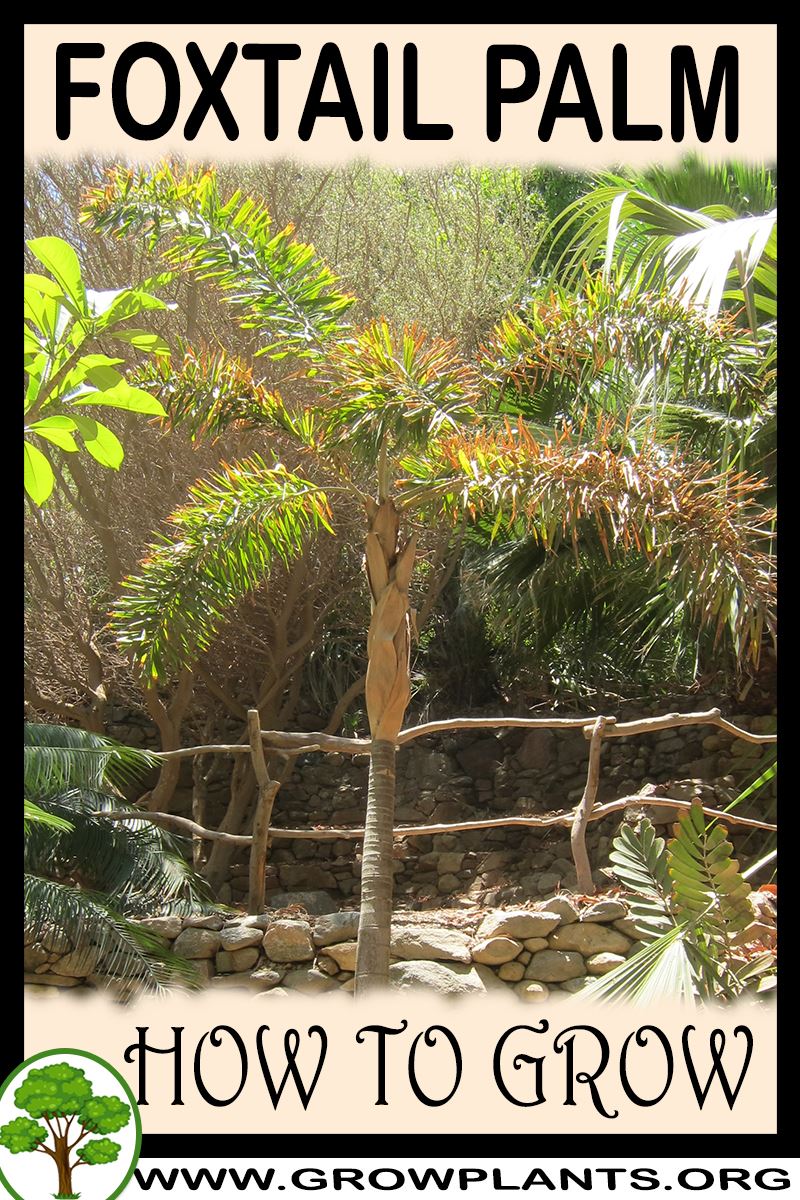
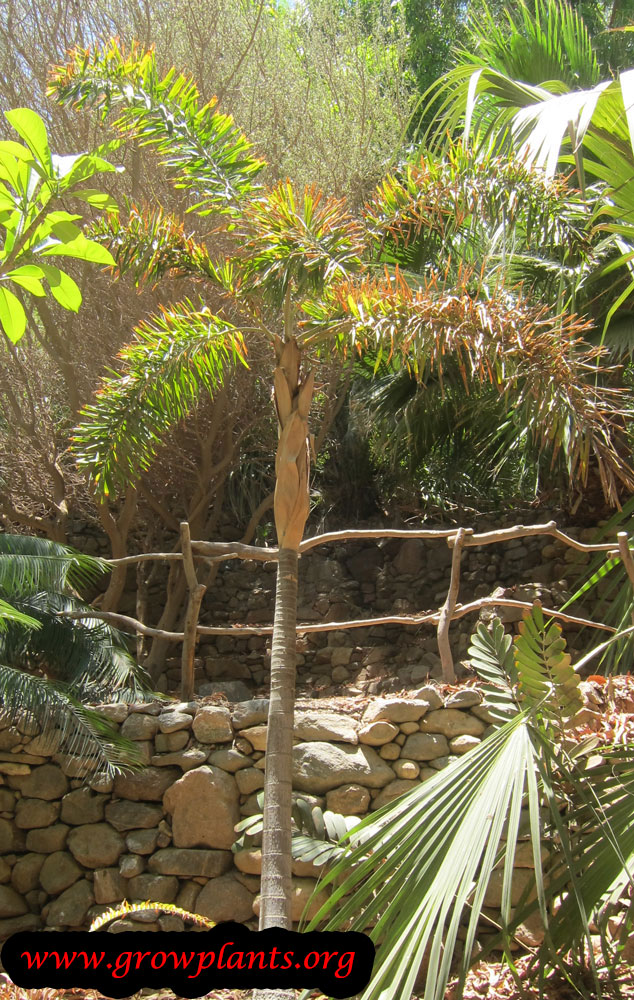
Overview: A fast-growing evergreen feather palm reaching 3-10 m (10-30 ft), named for its plumed, foxtail-like fronds. Grown as an ornamental specimen palm in warm climates.
Quick Specifications
| Specification | Attribute |
|---|---|
| Plant Type / Life Cycle | Perennial (palm tree) |
| Foliage Type | Evergreen |
| Mature Size | 3-10 m tall (10-30 ft) |
| Growth Rate | Moderate to Fast |
| Root System | Fibrous (typical palm root system) |
| Hardiness | USDA zones 10-12 |
Growth Form & Structure
- Height & Spread: Reaches 3-10 m (10-30 ft) in the ground; suitable for a large container while young.
- Growth Habit & Form: Solitary palm with a self-cleaning crown of plumed fronds above a smooth, often bottle-shaped trunk.
- Lifespan & Maturity: Long-lived perennial palm reaching full height over years.
Anatomy & Physical Features
- Trunk & Bark: Smooth grey trunk with a green crownshaft, often slightly swollen.
- Leaves & Foliage: Green, plumose (bushy, multi-ranked) fronds resembling a fox’s tail.
- Flower Characteristics: Small yellow flowers borne in numbers on branched fronds (see the Bloom guide).
Primary Uses & Landscape Value
- Functional & Ornamental Roles: Popular ornamental specimen and avenue palm for subtropical and mild-Mediterranean gardens.
Care Guide: Planting, Soil & Watering
Overview: The foxtail palm is a subtropical to Mediterranean palm for full sun, hardy to about -1°C (zone 10–12). It thrives in well-draining soil with regular, generous watering.
Quick Care Requirements
| Requirement | Ideal Condition |
|---|---|
| Planting Season | Spring, summer or autumn (warm season) |
| Growth Rate | Moderate to Fast |
| Soil Type | Well-draining soil; tolerant and adaptable once established |
| Water Need | Moderate to High – keep the soil evenly moist |
Planting & Establishment
- Best Planting Season: Plant in the warm season – spring, summer or autumn – where temperatures stay above about -1°C.
- How to Plant:
- Hole Preparation: Dig a hole about twice the width of the root ball so roots spread into loosened soil.
- Soil Amendments: Mix compost or organic matter into the backfill to enrich it while keeping drainage free.
- Planting Depth: Plant at the same level it grew in its container, keeping the trunk base above soil; do not bury it.
- Growth Speed & Expectations: A moderate to fast grower given warmth, sun and steady moisture.
Soil, Watering & Drainage Care
- Soil Mix & Drainage Needs: Well-draining soil is essential to prevent root rot; the palm is otherwise adaptable and appreciates plentiful water. It also grows well in large containers.
- Watering Schedule & Technique:
- Young / Newly Planted: Water frequently while the palm establishes, keeping the root zone consistently moist.
- Established: Water regularly and deeply; it enjoys generous moisture but should never sit waterlogged.
- Seasonal Adjustments: Increase watering in summer heat and reduce in cooler months.
Climate, Light & Hardiness
Foxtail palm grows outdoors in subtropical and Mediterranean climates, with USDA hardiness spanning zone 10 through 12. It needs full sun and tolerates only brief cold down to roughly −1°C (30°F).
Quick Climate Specifications
| Climate Zones | Subtropics, Mediterranean |
|---|---|
| USDA Hardiness Zones | 10–12 |
| Approx. Survival Minimum | Established plants may briefly tolerate cold to roughly −1°C (30°F) |
| Frost Tolerance | Low |
| Light Conditions | Full Sun |
Sunlight & Light Exposure
Needs full sun for healthy growth and its characteristic arching, feathery fronds; it is not suited to shaded positions.
Temperature Extremes & Hardiness
USDA Hardiness & Regional Limits
Hardy outdoors from about zone 10 through 12; it is a warm–climate palm best suited to subtropical and mild Mediterranean regions.
Cold Damage & Winter Protection
The site notes it tolerates cold only down to about −1°C (30°F); below this, fronds and the growing point are at risk, so winter protection matters at the cooler edge of its range.
Frost Sensitivity
Tolerates only very brief, light frost; harder or sustained freezes cause serious or fatal damage.
Wind, Humidity & Microclimate
As a palm from humid coastal Australian habitats, it generally appreciates the higher humidity typical of subtropical gardens.
Growing in Pots, Balconies & Indoors
Foxtail palm is a fast, graceful, sun-loving palm that the grower marks as not a houseplant but confirms can be grown in containers. In a large pot it is an elegant feature on a sunny, sheltered patio or balcony.
Quick Details
- Container Size: A large, deep, stable pot
- Indoor Suitability: Not a houseplant – too light-hungry for indoors
- Best Spot: Full sun, warm and open
- Soil & Drainage: Free-draining, sandy mix
- Watering in Pots: Moderate to generous; let the surface dry slightly between waterings
Indoors & On the Windowsill
- Not a houseplant: Marked No – it needs strong direct sun to thrive.
- Windowsill: Too large and too light-hungry for a sill.
On a Balcony or Patio
- Light & shelter: Full sun with shelter from strong wind; use a heavy pot for stability.
- Watering & heat: Pots dry fast in sun – check moisture often in warm weather.
- Overwintering: Frost-tender – bring the container under cover in cold climates.
Choosing the Pot, Soil & Long-Term Care
- Pot & drainage: A large, deep pot with strong drainage holes; skip a standing-water saucer to avoid root rot. Terracotta breathes and dries fast, while glazed or plastic holds moisture longer.
- Potting mix: A well-aerated, organic-rich mix – peat or coir blended with perlite or vermiculite for free drainage.
- Feeding: Potted plants run their soil down fast as nutrients leach out, so feed more often than plants in open ground during active growth.
- Repotting: Refresh the mix or pot up about every two years; on established plants, lightly prune the root ball and top growth to keep them balanced.
Fertilizing & Feeding
A fast-to-medium growing landscape palm that benefits from a steady, moderate feeding program through the warm season to support its relatively quick pace of growth.
Quick Fertilizing Specs
| Feeding Level | Moderate |
|---|---|
| young_feeding | Keep feeding minimal while the palm establishes roots after planting or potting |
| mature_feeding | A steady, moderate program through the active growing season once established |
| Main Nutrient Priority | A complete palm fertilizer with potassium and magnesium to support its comparatively fast growth rate |
| Best Feeding Period | Spring through summer while new fronds are actively expanding |
| Organic Options | Well-rotted compost worked into the surrounding soil supports steady background fertility |
| Micronutrients | Manganese and iron deficiencies can appear in poorly drained or alkaline planting sites |
| Soil pH | Prefers well-drained soil; heavy, waterlogged, or alkaline ground raises deficiency risk |
| Reduce/Stop Feeding | Taper feeding down as growth slows with cooler weather |
Feeding by Growth Stage
Establishment after planting
Let the root system settle into the planting site before introducing fertilizer
| Nutrient direction | Hold feeding back and rely on existing soil fertility while roots establish |
|---|---|
| Timing | The first season after planting in the ground or a large container |
| Frequency | No feeding is needed at this stage while roots are establishing |
| Fertilizer types | No feeding is needed at this stage; prioritize good drainage and consistent watering instead |
| Precautions | Do not fertilize a newly planted palm until clear new frond growth confirms the roots are active |
Established growth
Support this palm’s comparatively fast pace of frond production once it is rooted in
| Nutrient direction | A balanced, complete palm fertilizer with potassium and magnesium to keep pace with active growth |
|---|---|
| Timing | Warm months while the palm is actively pushing new fronds |
| Frequency | A regular, moderate feeding program through the growing season generally keeps pace with this palm’s growth rate |
| Fertilizer types | A complete palm-formulated fertilizer supplying potassium and magnesium alongside nitrogen, Well-rotted compost as a supplemental soil-building option |
| Routine trace nutrients | manganese, magnesium |
| Precautions | Scale feeding back as growth slows in cooler weather; watch for pest pressure such as mealybugs or scale, which can stress the plant alongside nutrient issues |
Nutrient Deficiency Signs & Corrections
New fronds emerge weak, streaked, and undersized with necrotic, frizzled leaflet tips
| Possible causes | Manganese deficiency, Poorly drained or alkaline soil locking out manganese, Root stress from waterlogging |
|---|---|
| Appears first on | Newest emerging fronds and the growing point |
| What to check | Soil drainage and pH, Whether a complete palm fertilizer with manganese has been used, Recent watering or rainfall extremes |
| Possible correction | Improve drainage, switch to a complete palm fertilizer including manganese, and apply a chelated manganese product per its label if severe |
Older, lower fronds develop yellow-orange spotting and necrotic leaflet tips while the newest fronds stay green
| Possible causes | Potassium deficiency, Long-term feeding with a nitrogen-heavy, potassium-poor fertilizer, Rapid growth outpacing available soil potassium |
|---|---|
| Appears first on | Oldest fronds first |
| What to check | Feeding history and fertilizer type used, Overall growth rate relative to feeding program, Whether symptomatic fronds are pruned off too early |
| Possible correction | Switch to a complete palm fertilizer that reliably supplies potassium and avoid removing symptomatic fronds prematurely |
Newest fronds emerge pale yellow to nearly white while older fronds stay a normal green
| Possible causes | Iron deficiency, Alkaline soil limiting iron availability, Waterlogged or compacted planting site |
|---|---|
| Appears first on | Newest emerging fronds |
| What to check | Soil pH and drainage, Recent irrigation or rainfall patterns, Whether the planting site is naturally alkaline |
| Possible correction | Improve drainage, correct pH where practical, and apply a chelated iron product per its label if the pattern persists |
Pruning, Training & Seasonal Maintenance
Foxtail Palm (Wodyetia bifurcata) is a solitary, single-trunk palm valued in part for being strongly self-cleaning: spent fronds and their sheaths typically detach and drop on their own once fully finished, without needing to be cut. In most situations this means no routine pruning is required at all – intervention is limited to the occasional dead frond that fails to release cleanly, or a genuine hazard. A light autumn check is worth doing, but it is a inspection more than a cutting task. The two pests noted for this species, mealybug and palm leaf scale, make that same visit a good opportunity to check the crown, since there is otherwise little routine handling of the plant.
Quick Pruning & Maintenance Specs
| Pruning Tolerance | Low; maintenance need is very low thanks to self-cleaning |
| Primary Pruning Window | Autumn – a light seasonal check, not a mandatory task |
| Main Objective | Remove only a dead frond that fails to self-release; general sanitation is rarely needed |
| Young Plant Priority | No intervention typically needed – self-cleaning applies from a young age |
| Mature Plant Priority | Same – act only on a frond that hangs on despite being fully dead |
| Best Tool Type | Loppers on younger plants; a pruning saw or pole pruner for an occasional stuck frond on a mature trunk (to 10 m) |
| Avoid Heavy Pruning During | Never force off a frond that has not naturally loosened, and never remove a green frond |
Pruning by Plant Age & Size
Newly Established
No intervention needed beyond monitoring; the young plant self-cleans the same way a mature one does.
Young / Formative
No structural training – there is nothing to select or shape on a solitary, self-cleaning palm.
Mature / Established
Stay hands-off by default; step in only to remove an occasional dead frond that has not released on its own, or to address a hazard.
Seasonal Pruning Schedule
Autumn
Objective: confirm no stuck dead fronds or hazards remain after the year’s natural self-cleaning. Remove: only fronds that are fully dead and have not yet released. Do not remove: any green frond, or a frond that is in the process of naturally releasing. Expected response: usually none needed. Flowering impact: none.
Special Growth to Remove
- An occasional stuck dead frond that fails to self-release – otherwise there is nothing routine to remove.
- While checking the crown, inspect for mealybug and palm leaf scale, both listed pests of this species; this doubles as the plant’s main routine inspection since little other handling occurs.
Container & Small-Space Pruning
This species can be grown in a large planter though not typically indoors. The same self-cleaning behavior applies in a container; because there is less routine pruning to prompt a closer look, make a point of checking frond bases in container specimens for the pest pressure noted above.
Tools
Loppers are sufficient for a younger specimen. A pruning saw, or a pole pruner once the crown is out of reach on a specimen approaching its 10 m mature height, handles the occasional stuck dead frond on a larger trunk.
Tool Hygiene & Disease Risk
Routine under normal conditions; treat as Increased when mealybug or scale is present on the material being cut, cleaning tools between plants to avoid spreading either pest.
Cut Placement & Technique
Cut only a fully dead, still-attached frond close to, but not into, the trunk. Never pull or force it – if it hasn’t released on its own, a clean cut is safer than forcing.
Heavy Pruning & Rejuvenation
Not tolerated. This is a solitary palm with a single growing point; there is no rejuvenation pruning.
Post-Pruning Care
Minimal – normal watering and care are enough. Use any pruning visit as an opportunity to inspect for mealybug or scale.
Common Pruning Mistakes
- Routinely stripping green or even just-yellowing fronds out of habit, when this species is specifically valued for self-cleaning – unnecessary cutting does more harm than good here.
- Assuming low pruning need also means no need to inspect, and missing mealybug or scale buildup at frond bases as a result.
When NOT to Prune
Do not force off any frond that has not naturally loosened. Resist tidying a healthy, still-attached frond just for appearance – this species is meant to look after itself.
Recommended Tools (by task)
- loppers – occasional cuts on a younger specimen.
- pruning_saw – a stuck dead frond on a mature trunk.
- pole_pruner – reaching the crown on a tall specimen approaching 10 m.
- blade_disinfectant – when handling material from a mealybug- or scale-infested plant.
Pruning Troubleshooting
| Problem | Possible Cause | What to Check | Corrective Action |
| A dead frond hangs on instead of self-releasing like the rest | Occasional individual fronds fail to detach cleanly even on this normally self-cleaning species | Confirm the frond is fully brown and dead before acting | Cut it cleanly at the base rather than pulling or forcing it off |
| Sticky residue, sooty mold, or scale insects on fronds or crown | Mealybug or palm leaf scale, both listed pests of this species | Frond undersides and crown during a periodic inspection | Treat per standard IPM; unnecessary pruning is not the cause and can add plant stress |
Propagation Guide
Foxtail palm is propagated primarily from seed. Routine propagation by suckers, pups, division, stem cuttings or leaf cuttings is not appropriate for this solitary palm.
Quick Propagation Specs
| Primary Method | Seed |
| Offshoots / Suckers | Not a routine method for this solitary palm |
| Stem or Leaf Cuttings | Not recommended |
Growing from Seed
Use mature, viable seed. Remove fleshy fruit material where present, clean the seed, and sow it in a clean, well-drained propagation medium. Keep the medium evenly moist but not waterlogged and provide warm conditions while germination and early root growth occur.
Seedling Care
Move seedlings carefully once they are established, protect young roots from damage, and increase light gradually as the young palm develops.
Bloom & Flower Guide
Quick Details
- Bloom Season: Spring
- Flower Appearance: Small yellow to cream flowers borne in large numbers along branched flower stalks below the crown
- Edibility: Ornamental – grown for its foliage and form, not eaten
Detailed Blooming Overview
A mature foxtail palm produces a large, branched flower stalk that emerges below the crownshaft and carries dozens upon dozens of small yellow-cream flowers. The same stalk bears both male and female flowers, so a single tree can set its own seed once it begins blooming in spring.
Flower Characteristics
- Small yellow to cream flowers, borne by the dozen on each branched stalk.
- Male and female flowers share the same inflorescence.
Bloom Care & Thinning
- Pollination: Small insects and wind move pollen among the many flowers on the stalk.
- Timing: Only well-established palms flower; blooming begins in spring on trees of flowering size.
Pests, Diseases & Troubleshooting
Overview: The foxtail palm shares the palm-family profile: sap-sucking scale and mealybugs, spider mites in dry heat, and — most seriously in affected regions — boring weevils, while its ‘diseases’ are often really nutrient deficiencies (potassium, manganese) plus a few lethal rots. Good nutrition, drainage, and prompt removal of infested tissue keep it healthy.
Quick Troubleshooting Overview
| Issue / Pest | Main Symptom | Primary Solution |
|---|---|---|
| Palm scale | Yellow flecking, brown/white bumps on fronds | Horticultural oil, prune worst fronds |
| Mealybugs | White cottony masses, honeydew, sooty mold | Wash off, oil/soap, control ants |
| Spider mites | Fine stippling and webbing in dry heat | Hose fronds, raise humidity, miticidal oil |
| Red palm weevil | Wilting crown, oozing holes, hollowed trunk | Prompt reporting, pheromone traps, systemic drench |
| Potassium deficiency | Orange/necrotic spotting, frizzled older frond tips | K-Mg palm fertilizer, correct slowly |
| Ganoderma butt rot | Conks at trunk base, wilting, no cure | Remove plant, do not replant palms in spot |
Common Pests & Management
- Palm scale (armored & soft) (Diaspididae / Coccidae):
- Symptoms: Rows of immobile white, grey, or brown bumps along the frond midrib and leaflets, causing yellow flecking, chlorotic patches, and honeydew with sooty mold.
- Prevention & Control: Prune and destroy the most heavily encrusted fronds, wash light infestations, and apply horticultural oil to smother crawlers, repeating to catch successive hatches.
- Mealybugs (Pseudococcus / Planococcus spp.):
- Symptoms: White cottony masses in the crown, leaf bases, and among roots, with sticky honeydew, sooty mold, and stunted new growth.
- Prevention & Control: Hose off colonies, wipe with alcohol, release predators, and treat with insecticidal soap or horticultural oil; always bait the ants that farm them.
- Spider mites (Tetranychus urticae):
- Symptoms: Fine pale stippling and a dusty bronzed look on fronds with fine webbing underneath, worst in hot, dry, sheltered conditions (and indoors).
- Prevention & Control: Raise humidity, hose fronds regularly, keep the palm unstressed, and treat undersides with insecticidal soap or a light horticultural oil.
- Red palm weevil (Rhynchophorus ferrugineus):
- Symptoms: Larvae bore into the crown and trunk, causing wilting or collapsing central fronds, oozing fermented-smelling holes, chewing sounds, and eventual death of the growing point.
- Prevention & Control: This is a serious, sometimes reportable pest: use pheromone traps for monitoring, avoid unnecessary trunk wounds, remove and destroy infested palms, and apply approved systemic or preventive treatments where the weevil is present.
- Palm aphids / caterpillars (Cerataphis / various Lepidoptera):
- Symptoms: Aphids cluster on new spear and frond bases with honeydew; caterpillars skeletonize or roll leaflets.
- Prevention & Control: Hose aphids off and control ants; hand-pick or use Bacillus thuringiensis for caterpillars, reserving broader sprays for heavy outbreaks.
Diseases & Fungal Issues
- Ganoderma butt rot (Ganoderma zonatum):
- Symptoms: Older fronds wilt and droop, growth declines, and shelf-like (conk) mushrooms form at the trunk base; the internal trunk rots.
- Treatment & Management: There is no cure: remove and destroy affected palms including the stump, and do not replant a palm in the same spot, as the fungus persists in soil.
- Fusarium wilt / bud rot (Fusarium, Phytophthora, Thielaviopsis):
- Symptoms: One-sided frond death or a rotting, foul-smelling spear/bud that pulls out easily, often after wounds, storms, or waterlogging.
- Treatment & Management: Use clean, disinfected pruning tools, avoid trunk and bud injury, improve drainage, and apply copper to the bud after damage; remove palms that lose the growing point.
- Leaf spot & false smut (Graphiola, Pestalotiopsis, others):
- Symptoms: Small oily or black spots, sometimes with wart-like fruiting bodies (false smut), coalescing on fronds in humid conditions.
- Treatment & Management: Space for airflow, avoid wetting fronds, remove badly spotted leaves, and use a copper fungicide only under sustained humid pressure.
- Lethal yellowing-type decline (phytoplasma, regional):
- Symptoms: Premature fruit drop, blackened flower spikes, and a rapid yellowing/browning of fronds from oldest to youngest in susceptible areas.
- Treatment & Management: Manage the leafhopper vector where relevant, remove and destroy affected palms, and plant resistant species; antibiotic trunk injection is used in high-value settings.
Growing Difficulties & Abiotic Problems
- Potassium deficiency:
- Cause & Symptoms: The classic palm disorder: translucent yellow-orange or necrotic spotting and frizzled, curled, dead tips on the OLDEST fronds first.
- Correction Strategy: Apply a controlled-release palm fertilizer with a balanced N-P-K plus magnesium (avoid correcting K without Mg, which worsens Mg deficiency); recovery is slow, judged on new fronds.
- Manganese deficiency (‘frizzle top’):
- Cause & Symptoms: New emerging fronds are weak, yellow, and frizzled with necrotic streaking, seen on the YOUNGEST growth, common in high-pH or cold, wet soil.
- Correction Strategy: Apply manganese sulfate to soil or as a foliar feed and correct soil pH and drainage; severe cases can kill the bud if untreated.
- Magnesium deficiency:
- Cause & Symptoms: Broad yellow bands along the margins of older fronds while the center stays green.
- Correction Strategy: Apply magnesium sulfate (or a palm fertilizer containing Mg) and keep potassium and magnesium in balance.
- Cold, transplant & water stress:
- Cause & Symptoms: Browning frond tips and margins, general decline from cold snaps, root disturbance at transplanting, or salt/drought and waterlogging.
- Correction Strategy: Protect from cold, transplant with minimal root loss and steady aftercare, flush salts with deep irrigation, and ensure the site drains freely.
What Helps — Products & Tools
Lead with cultural care and horticultural oil or insecticidal soap for scale, mealybugs, and mites, plus pheromone traps and, where the weevil is active, an approved systemic. Most ‘disease’ symptoms are really nutrition — a quality controlled-release palm fertilizer with magnesium and manganese sulfate corrects the common deficiencies. Copper fungicide handles leaf spots and protects wounded buds.