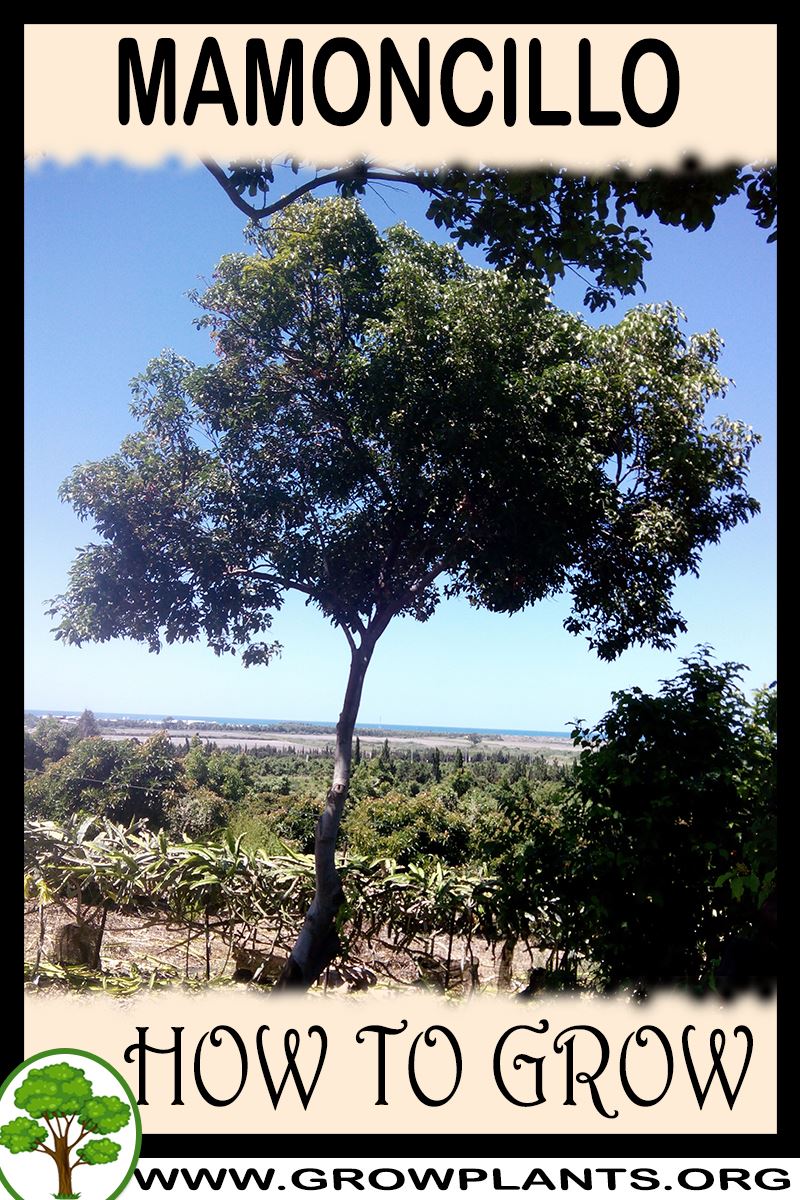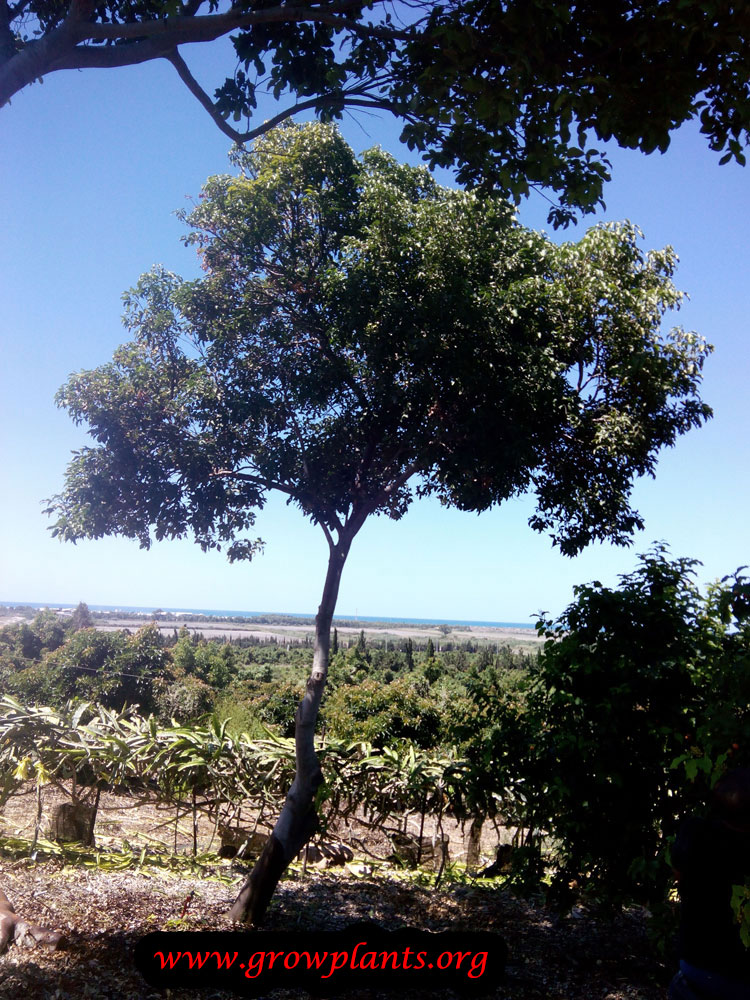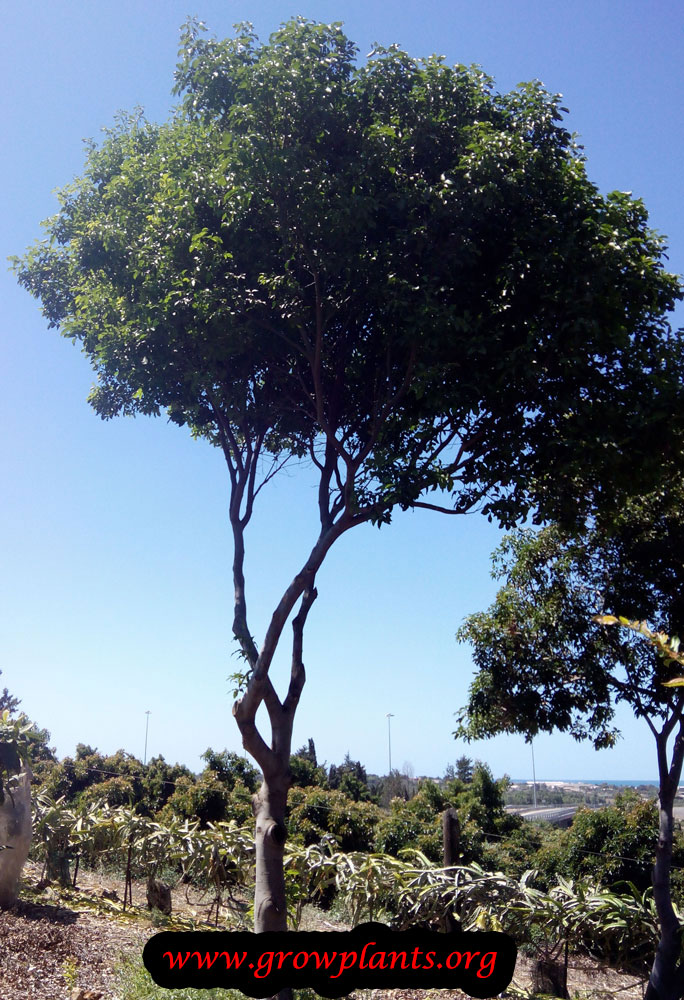
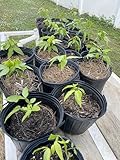




Plant Profile & Key Characteristics
Also known as: Spanish lime, Genip, Guinep, Guinep tree, Quenepa tree, Limoncillo plant
Overview: Mamoncillo (Melicoccus bijugatus, Spanish lime) is a slow-growing, large evergreen-to-semi-deciduous tree reaching 10–25 m (30–75 ft), grown for its sweet-sour edible fruits and as a shade tree.
Quick Specifications
| Specification | Attribute |
|---|---|
| Plant Type / Life Cycle | Perennial (tree) |
| Foliage Type | Evergreen to semi-deciduous |
| Mature Size | 10–25 m (30–75 ft), often kept smaller for harvesting |
| Growth Rate | Slow |
| Toxicity | Non-toxic — fruit and (cooked) seeds edible |
| Hardiness | USDA zones 9+ |
Growth Form & Structure
- Height & Spread: 10–25 m (30–75 ft) with a broad crown; best kept smaller in cultivation to ease picking, and not suited to containers.
- Growth Habit & Form: Large, spreading dioecious tree (separate male and female trees) with a notably wide trunk.
- Lifespan & Maturity: Slow-growing and long-lived; bears fruit about 5–10 years from planting.
Anatomy & Physical Features
- Leaves & Foliage: Green, ovate leaves that emerge red when young.
- Flower Characteristics: Small (1–2 mm) white flowers, usually with male and female borne on separate trees. (See the Bloom accordion for detail.)
- Fruit Profile: Green-skinned fruit 2–4 cm across with juicy pink-white pulp tasting of lime and lychee; the seed is also edible when cooked.
Primary Uses & Landscape Value
- Edible Uses: Fruit eaten fresh and made into jelly, jam and alcoholic drinks; seeds edible when cooked.
- Functional & Ornamental Roles: Fruit tree and shade tree.
Care Guide: Planting, Soil & Watering
Overview: Mamoncillo (Melicoccus bijugatus, Spanish lime) is a very slow-growing tropical fruit tree (zone 9+) that grows best in full sun with rich, slightly acidic soil high in organic matter. It needs moderate watering, with extra water in the first few years to help it establish.
Quick Care Requirements
| Requirement | Ideal Condition |
|---|---|
| Planting Season | Spring to summer |
| Growth Rate | Slow (very slow when young) |
| Soil Type | Rich, organic, well-draining |
| Soil pH | Slightly acidic |
| Water Need | Moderate — more while young to establish |
Planting & Establishment
- Best Planting Season: Plant in spring to summer.
- How to Plant:
- Hole Preparation: Dig a hole wider than the root ball in a sunny position; note that male and female trees (or grafted trees) are needed for fruit.
- Soil Amendments: Work in rich organic matter and use a fertilizer with a high nitrogen ratio.
- Planting Depth: Set the tree at its original depth with the collar at soil level and firm gently.
- Growth Speed & Expectations: Slow — especially when young; reaches 10–25 m (30–75 ft) but can be kept smaller for easier harvesting.
Soil, Watering & Drainage Care
- Soil Mix & Drainage Needs: Rich, organic, slightly acidic soil with good drainage suits it best; it is not suited to container growing.
- Watering Schedule & Technique:
- Young / Newly Planted: Increase watering through the first few years to help the tree establish.
- Established: Water moderately, letting the surface dry slightly between waterings.
- Seasonal Adjustments: More in hot, dry weather and less in cool spells.
Climate, Light & Hardiness
Mamoncillo (Spanish lime) is a tropical-to-subtropical shade tree for tropical, Mediterranean, and subtropical climates, growing best in full sun. It is comparatively cold-tolerant for this group, at roughly zone 9 and warmer.
Quick Climate Specifications
| Climate Zones | Tropical, Mediterranean, Subtropical |
|---|---|
| USDA Hardiness Zones | 9+ |
| Approx. Survival Minimum | approximately −6.7°C (20°F) at the zone 9 boundary, briefly, for an established tree |
| Frost Tolerance | Low to Moderate |
| Light Conditions | Full Sun (young trees tolerate half shade but grow more slowly) |
Sunlight & Light Exposure
Optimal Light Setup
Full sun for best growth; young trees can start in half shade but will take longer to develop.
Direct Sun Requirement
Beneficial, especially for mature growth.
Best Exposure / Orientation
An open, sunny site with room for a shade tree.
Temperature Extremes & Hardiness
USDA Hardiness & Regional Limits
Zone 9+ is comparatively favorable for a tropical-origin fruit/shade tree.
Cold Damage & Winter Protection
Site in a warm, sunny spot; young trees benefit from protection near the cold edge of the range.
Frost Sensitivity
Low to moderate; more cold-tolerant than many strictly tropical species.
Extreme Heat Tolerance
Good in genuinely warm climates.
Wind, Humidity & Microclimate
Rainfall & Seasonal Moisture
Suited to tropical, Mediterranean, and subtropical rainfall patterns.
Microclimate Recommendations
A warm, sunny site suits it well.
Growing in Pots, Balconies & Indoors
Mamoncillo (Melicoccus bijugatus) is a large, very slow-growing tree of 10-25 m (30-75 ft), though it can be kept smaller for easier harvest. The grower confirms it is neither a houseplant nor a container plant and belongs in the open ground.
Quick Details
- Container Size: Only while young – a large tub; it far outgrows any pot
- Indoor Suitability: Not suitable
- Best Spot: Full sun; a young tree can start in half shade but grows more slowly
- Soil & Drainage: Free-draining mix
- Watering in Pots: Average – increase watering for the first few years until the plant is established
Indoors & On the Windowsill
- Houseplant limits: Not a houseplant – it is a large tree that needs full sun.
- Overwintering: Only young potted plants in cool climates need protection – keep them bright, warm and frost-free before planting out.
On a Balcony or Patio
- Young specimen only: A young, slow-growing tree can sit in a large pot in full sun for a few years. Water more freely while it establishes, and watch pots that dry fast against warm walls.
Choosing the Pot, Soil & Long-Term Care
- Pot & drainage: Use a pot with plenty of drainage holes; skip a standing water saucer to avoid root rot. Terracotta breathes and dries faster, while glazed or plastic pots hold moisture longer.
- Potting mix: A well-aerated, organic-rich mix – peat or coir blended with perlite or vermiculite for drainage.
- Feeding: Potted plants need feeding more often than those in the ground, as nutrients leach out with each watering – feed lightly through the active growing season.
- Repotting: Refresh the mix or pot up about every two years; for an established specimen, replace part of the soil and lightly prune the roots and top growth.
Fertilizing & Feeding
Mamoncillo is a very slow-growing, eventually large tree that responds well to nitrogen-forward feeding on rich, slightly acidic soil, and, being a dioecious species with separate male and female trees, needs a compatible pollinator nearby for reliable fruiting regardless of how well it’s fed.
Quick Fertilizing Specs
| Feeding Level | Moderate; a very slow grower that benefits from a steadier nitrogen-forward feed than most fruit trees its size. |
|---|---|
| Main Nutrient Priority | A nitrogen-forward feed on rich, slightly acidic soil through establishment and growth, shifting toward potassium once the tree is fruiting. |
| Best Feeding Period | Through the warm growing season while the tree is actively putting out new growth. |
| Organic Options | Rich soil built up with organic matter suits this tree well. |
| Reduce/Stop Feeding | Ease off as growth slows in cooler weather. |
Feeding by Growth Stage
Newly planted
Root a young Mamoncillo into rich, slightly acidic, organic-matter-amended soil, giving it a strong start given how slowly it will grow from here.
| Nutrient direction | Light, balanced nutrition focused on establishing roots. |
|---|---|
| Timing | In spring, at planting. |
| Frequency | A light feeding at planting is usually enough while the tree establishes. |
| Fertilizer types | A balanced complete fertilizer used lightly, Compost or well-rotted organic matter worked into the planting hole |
| Precautions | Increase watering somewhat during the first years of establishment; this tree’s naturally slow growth is slower still if it’s kept too dry. |
Young tree, nitrogen-forward growth phase
Support canopy and trunk development on a tree that grows notably slowly and will eventually become large, using a nitrogen-forward feed this species responds well to.
| Nutrient direction | A nitrogen-forward feed, leaning more toward nitrogen than is typical for most fruit trees at this stage. |
|---|---|
| Timing | Through each warm-season growth flush, across what is typically a long framework-building period for this slow grower. |
| Frequency | Regular, moderate, nitrogen-forward feedings through the growing season suit this tree’s slow pace better than infrequent heavy doses. |
| Fertilizer types | A nitrogen-forward complete fertilizer, Organic matter worked into the root zone |
| Routine trace nutrients | iron, manganese, zinc |
| Precautions | If fruiting is the goal, plan now for a compatible pollinator tree nearby, since this species produces separate male and female flowers, sometimes on separate trees. |
Established, still some years from bearing
Carry a well-established tree through continued growth as it slowly approaches an age where its small white flowers can set fruit.
| Nutrient direction | A feed still somewhat nitrogen-forward, gradually shifting toward balanced as the tree matures. |
|---|---|
| Timing | Through each warm growing season as the tree matures toward flowering age. |
| Frequency | Steady, moderate feeding through the growing season supports this tree’s long approach to bearing without forcing excess soft growth. |
| Fertilizer types | A balanced to nitrogen-forward complete fertilizer with routine trace elements |
| Routine trace nutrients | iron, manganese, zinc |
| Precautions | Confirm a compatible male and female tree pairing, or a grafted combination, is in place well before fruiting age. |
Mature and bearing
Support a large, mature, fruiting female tree (or a grafted tree bearing both flower types) through its green-skinned fruit crop.
| Nutrient direction | Balanced feeding shifting toward potassium as fruit develops and ripens. |
|---|---|
| Timing | Across the bloom-to-harvest cycle during the warm growing season. |
| Frequency | Moderate, evenly spaced feedings through fruit development suit this tree better than one heavy dose. |
| Fertilizer types | A balanced to potassium-leaning complete fruiting fertilizer |
| Routine trace nutrients | iron, manganese, zinc |
| Precautions | Even with feeding right, fruiting depends on reliable cross-pollination between male and female flowers. |
Nutrient Deficiency Signs & Corrections
Leaves yellow between the veins while the veins stay green.
| Possible causes | High soil pH tying up iron, Waterlogged or compacted soil limiting uptake, A genuine iron shortage |
|---|---|
| Appears first on | New growth toward the shoot tips. |
| What to check | Soil pH and drainage, Whether only new leaves are affected, Recent watering pattern |
| Possible correction | Correct drainage and soil pH first, then apply a chelated iron product per its label if yellowing continues. |
Growth seems very slow, prompting concern about a nutrient shortfall.
| Possible causes | This species’ naturally very slow growth habit, which is normal rather than a sign of deficiency, A genuine general nutrient shortfall on poor soil, Insufficient water during establishment |
|---|---|
| Appears first on | New growth across the tree. |
| What to check | Feeding and watering history, Whether growth, though slow, is still steady and healthy-colored, Soil quality |
| Possible correction | Compare growth against this species’ known slow pace before assuming a deficiency; increase watering and feed lightly if growth is truly stalled rather than just slow. |
The tree flowers but never sets fruit.
| Possible causes | No compatible male tree or pollen source nearby for this dioecious species, A boron shortage affecting fruit set, Excess nitrogen favoring growth over reproduction at a stage where balanced feeding would serve better |
|---|---|
| Appears first on | Overall fruit set across the flowering tree. |
| What to check | Presence of a compatible male tree or grafted pollen source nearby, Recent nitrogen-heavy feeding, Pollinator activity |
| Possible correction | Confirm a compatible pollinator tree is nearby, shift toward balanced feeding at bearing age, and consider a boron-containing product per its label if fruit set stays poor. |
Pruning, Training & Seasonal Maintenance
Mamoncillo is a very slow-growing, dioecious tropical tree that tolerates only light pruning – the goal is almost never to reshape the tree, but to keep an otherwise 10–25 m canopy low enough to harvest and to remove dead or crossing wood. The safest window is shortly after the Summer–Autumn harvest, while the tree is not pushing a new flush; because the species is naturally slow to establish and can take 5–10 years to first bear fruit, pruning intensity should stay conservative on young, non-bearing trees.
Quick Pruning & Maintenance Specs
| Pruning Tolerance | Low–Moderate |
| Primary Pruning Window | Just after harvest (Summer–Autumn) |
| Typical Frequency | Infrequent – light maintenance every 1–2 years once mature |
| Main Objective | Height/reach control for harvest and removal of dead or crossing wood |
| Young Plant Priority | Leave the natural framework alone; correct only damaged growth |
| Mature Plant Priority | Gradual height and spread containment; light interior clean-up |
| Best Tool Type | Pruning saw / loppers for size-reduction limbs, secateurs for small deadwood |
| Avoid Heavy Pruning During | Spring flowering flush; on trees that have not yet begun bearing |
Pruning by Plant Age & Size
Newly Established
No structural pruning. Remove only broken or transplant-damaged growth; the tree is already very slow to establish and any unnecessary cutting further delays its path to first fruit.
Young / Formative
No formal training system is needed – Mamoncillo naturally forms a broad, wide-trunked canopy. If a grafted tree carries a male scion (grafted high, over a female base, so fruit hangs lower), keep the graft union visible and free of competing growth so the intended framework is not lost.
Mature / Established
Begin gradual height-reduction cuts to keep the canopy within picking reach, remove crossing or rubbing limbs, and take out dead or weak wood identified after harvest.
Seasonal Pruning Schedule
Post-Harvest (Autumn)
Objective: shape and size-control without triggering tender new growth ahead of cooler weather in marginal (zone 9) sites. Remove: dead, weak, or crossing branches; one or two size-reduction limbs per season if height control is needed. Do not remove: healthy outer terminal growth that will carry next spring’s bloom. Expected response: slow – regrowth is gradual given the species’ naturally slow growth rate. Fruiting impact: minimal if kept light; heavy cuts push vegetative regrowth instead of flowering wood and can skip a season.
Ongoing Sanitary
Remove storm damage or dead wood as soon as it appears, any time of year.
Flowering & Fruiting Wood
Flowers and fruit form on new terminal growth produced by the tree’s own slow flush cycle. Because flushes are infrequent and the tree is already slow to mature, removing terminal wood in late winter/pre-spring or making heavy cuts on a young or newly bearing tree sacrifices the next flowering flush and further delays the 5–10 year wait to first fruit – keep any structural cuts to the post-harvest window and light in volume.
Structural Pruning & Training
The only structural priority is height and spread containment (the tree is deliberately kept smaller specifically to make picking easier); otherwise limit work to crossing/rubbing branch removal. Interior canopy thinning is not warranted – the species does not need airflow-driven thinning, and over-thinning wastes the very limited pruning this slow grower tolerates.
Special Growth to Remove
On grafted trees (recommended so that both a male and female are present on one tree), remove any rootstock suckers or vigorous shoots arising below the graft union – these can revert to the wrong sex or rootstock type and compete with the intended scion framework.
Tools
Bypass secateurs for small deadwood, loppers for mid-size crossing branches, and a pruning saw for any size-reduction cuts on the larger limbs of an unmanaged, full-size tree.
Tool Hygiene & Disease Risk
Routine – keep tools clean and sharp. No systemic or transmissible disease is noted for this species (its main issues are aphids and termite, which are not spread by pruning cuts).
Cut Placement & Technique
Use thinning cuts (remove a limb back to its point of origin) rather than heading cuts for size control; cut just outside the branch collar and avoid flush cuts or long stubs. For any large limb, stage the cut (undercut, then top cut) to avoid bark tear given the wide trunk and heavy limbs this species develops.
Heavy Pruning & Rejuvenation
Not recommended as a one-time hard cut-back. Because Mamoncillo is very slow growing, hard rejuvenation pruning would take many years to regenerate canopy and would set back an already slow-bearing tree; if significant size reduction is truly needed, spread it over two or more seasons.
Post-Pruning Care
Water consistently through the first post-transplant years to support establishment; on mature trees, avoid feeding specifically to force regrowth after a cut. Monitor large pruning wounds, which will callus slowly given the tree’s naturally slow growth.
Common Pruning Mistakes
Hard-topping a young tree to keep it small early on (this only delays the already-long 5–10 year wait to first fruit); pruning late into the cool season in marginal zone-9 sites, which can push tender growth into a cold snap; assuming a lone, non-fruiting tree needs corrective pruning when the real cause is a missing opposite-sex partner (Mamoncillo is dioecious).
When NOT to Prune
Avoid pruning during the Spring–Summer bloom period, right before a cold snap in hardiness-zone-9 margins, and on any young or newly bearing tree where cuts would remove scarce flowering wood.
Recommended Tools (by task)
- bypass_secateurs – clean removal of small deadwood and twiggy growth after harvest.
- loppers – mid-size crossing or weak branches beyond secateur capacity.
- pruning_saw – size-reduction cuts on large limbs of a mature, full-size tree.
- pole_pruner – reaching upper canopy on a tree left to grow toward its 10–25 m natural height before a height-control program begins.
Pruning Troubleshooting
| Problem | Possible Cause | What to Check | Corrective Action |
| Tree never fruits | Single-sex tree (dioecious species) | Presence of a male tree/graft nearby | Graft in or plant an opposite-sex partner – not a pruning issue |
| Very slow regrowth after cuts | Naturally very slow growth rate | Cut history and season | Avoid repeat heavy cuts; be patient between light maintenance passes |
| Canopy too tall to harvest | No height-control pruning has been done | Current height vs. picking reach | Begin a gradual, multi-season post-harvest height-reduction program |
Propagation Guide
Mamoncillo is best propagated vegetatively – by air layering to get a fruiting tree faster, or by cuttings to guarantee fruit quality, both of which fruit sooner than seed-grown trees. Because flowers are separated onto male and female parts (sometimes on separate trees), grafting is also commonly used to combine both onto one tree; overall difficulty is Moderate given the grafting/layering technique involved and the tree’s naturally slow growth.
Quick Propagation Specs
| Best Propagation Method | Air Layering or Stem Cuttings |
| Alternative Methods | Grafting (to combine male and female wood on one tree); Seed |
| Propagation Difficulty | Moderate |
| Seed True-to-Type | Variable – seedling sex is not guaranteed and fruiting is slower |
| Vegetative True-to-Type | Yes |
| Best Propagation Season | Spring to summer, matching the tree’s active growing/planting season |
Growing from Seed
Seed Handling & Viability
The site does not give specific seed-storage guidance for this plant. As with related Sapindaceae fruit trees, Mamoncillo seed is generally best sown fresh rather than stored dry for long periods, since viability tends to decline once seed dries out.
Sowing & Germination
Sow fresh seed in a warm, humid, well-drained mix and keep consistently moist; germination is usually a matter of several weeks. Because flowers occur as separate male and female types, a seedling’s sex cannot be known until it matures and flowers, which is part of why the site favors vegetative propagation.
Stem Cuttings
The site notes that starting from a cutting helps ensure fruit quality and brings the tree into bearing sooner than a seedling would. Take cuttings from healthy current-season growth during the warm growing season, and root them in a moist, well-drained medium under high humidity; a root-growth hormone can be beneficial though the site does not indicate it is essential.
Grafting & Budding
Why Grafting Is Used
Because Mamoncillo bears separate male and female flowers, grafting is recommended to combine both sexes onto a single tree for reliable pollination. The site specifically suggests grafting the male scion high in the canopy – since the tree grows tall, this keeps the fruit-bearing (female) wood lower and easier to harvest.
Rootstock
A seedling-grown tree is typically used as the rootstock.
Scion Selection
Select scion wood from a known productive female (fruiting) tree, plus a male scion grafted high in the canopy to provide pollen.
Air & Ground Layering
The site identifies air layering as a good way to get a fruiting tree faster than from seed. A healthy branch is wounded or girdled, wrapped in a moist rooting medium, and kept consistently moist until roots develop, after which the rooted section is severed and potted on to establish before planting out.
Bloom & Flower Guide
Quick Details
- Bloom Season: Spring to summer
- Flower Appearance: Small fragrant white flowers, 1-2 mm, in clusters
- Edibility: The flower is not eaten; the tree is grown for its edible fruit (Spanish lime)
Detailed Blooming Overview
Spanish lime bears small, fragrant greenish-white flowers in branched clusters. Trees are often single-sexed, though some carry both male and female flowers, so a nearby pollen source helps a good crop set.
Flower Characteristics
- Small white flowers, 1-2 mm; lightly fragrant.
- Male and female flowers on separate trees, or sometimes on the same tree.
Bloom Care & Thinning
- Pollination: Mainly bees.
- Fruit set: Because many trees are single-sexed, a nearby pollen source improves fruiting.
Fruit & Uses
Mamoncillo’s ripe fruit pulp is eaten fresh out of hand, and in some regions the large seed inside is also eaten as a traditional roasted snack. The fruit flesh is eaten raw; the seed, however, should only be eaten roasted, never raw.
Quick Edible Specs
| Edible Parts | Fruit (flesh); Seed (roasted only, minor traditional use) |
|---|---|
| Main Use(s) | Fresh eating, jelly, jam, alcohol (culinary) |
| Eaten Raw or Cooked | Fruit flesh: raw. Seed: roasted only |
| Preparation Required | Peel skin for the fruit; seed must be roasted, never eaten raw |
| Harvest Season | Summer, autumn |
| Time to First Harvest | Several years after planting (qualitative, see Propagation) |
| Storage | Best eaten fresh |
| Safety/Toxicity Caveat | The large, slippery seed is a choking hazard, especially for children; raw seed is not an established safe food – only roasted seed has traditional use |
Fruit
The edible part is the sweet-tart, white-to-pink flesh surrounding a single large seed, enclosed in thin green skin that peels off easily. The flavor is often described as a cross between lime and lychee. Depending on cultivar, the seed separates from the flesh easily or with difficulty. Fruit is picked from summer into autumn, typically starting from the top of the tree, and can be harvested slightly before it is fully ripe.
Seeds, Pods & Nuts
Safety note: the seed is large and, if eaten, should be roasted first, in the same tradition as related Sapindaceae fruits. Do not give whole mamoncillo fruit or seeds to young children unsupervised – the seed’s size and slippery surface make it a well-documented choking hazard. Raw seed is not established as a safe everyday food; treat any seed-eating as a deliberate, roasted preparation rather than a casual snack.
Preparation, Uses & Safety
Beyond fresh eating, the fruit pulp is used to make jelly, jams, and fermented or alcoholic drinks. If the seed is eaten, it should be roasted first, and children should be supervised around the fruit because of the seed’s choking hazard.
Pests, Diseases & Troubleshooting
Overview: Mamoncillo is a slow-growing tropical fruit tree that is fairly robust once established; its real challenges are its slow, alternate-bearing habit and frost tenderness, plus the sap-sucking scale, mealybug and aphid complex, fruit flies on the crop, and anthracnose in wet tropical weather. Manage it with tree hygiene, good drainage and clean fallen-fruit practice.
Quick Troubleshooting Overview
| Issue / Pest | Main Symptom | Primary Solution |
|---|---|---|
| Scale / mealybug | Bumps or cottony masses, honeydew | Oil sprays, ant control, beneficials |
| Fruit fly | Stung, maggoty, dropping fruit | Bag fruit, bait traps, clear windfalls |
| Termites | Mud tubes, hollow deadwood | Remove deadwood, keep tree vigorous |
| Anthracnose | Dark spots on leaves & fruit | Airflow, remove infected fruit, copper |
| Slow / alternate bearing | Very slow, uneven crops | Patience, steady feeding & watering |
Common Pests & Management
- Scale Insects (Coccus / Aspidiotus spp.):
- Symptoms: Brown, black or armored bumps on twigs, leaf ribs and fruit stalks; honeydew, sooty mould and weak, yellowing growth on heavily infested limbs.
- Prevention & Control: Prune out badly encrusted wood; encourage lady beetles and parasitic wasps; band trunks against ants; spray horticultural oil to smother scale, targeting the crawler stage, on young trees.
- Aphids (Aphis / Toxoptera spp.):
- Symptoms: Colonies on flush growth and flower panicles, curling the youngest leaves and coating them in sticky honeydew (listed in the source).
- Prevention & Control: Hose off with water; prune heavily infested tips; support natural predators; insecticidal soap or light oil only if colonies persist.
- Mealybugs (Planococcus / Pseudococcus spp.):
- Symptoms: White cottony masses in leaf axils, on fruit clusters and around the trunk; honeydew and sooty mould.
- Prevention & Control: Wash off with a soap spray; dab colonies with alcohol on a cotton bud; release mealybug destroyer beetles; oil sprays for stubborn cases.
- Caribbean Fruit Fly (Anastrepha suspensa):
- Symptoms: Females sting ripening fruit; maggots tunnel the pulp, which softens, discolours and drops prematurely.
- Prevention & Control: Bag developing fruit or harvest promptly as it ripens; collect and destroy fallen and infested fruit to break the cycle; hang protein-bait fruit-fly traps; keep the ground beneath the tree clean.
- Termites (order Isoptera):
- Symptoms: Mud tubes on the trunk and hollowed, weakened deadwood; termites attack dead and damaged wood and can undermine old trunks (noted in the source).
- Prevention & Control: Remove dead wood and keep the trunk base clear of mulch and debris; treat only genuine structural infestations; keep the tree vigorous, as termites favour dead and stressed tissue.
Diseases & Fungal Issues
- Anthracnose (Colletotrichum gloeosporioides):
- Symptoms: Dark sunken spots on leaves, flowers and especially fruit, with blossom blight and rotting of fruit in warm wet weather – the main disease of this tropical tree.
- Treatment & Management: Prune for airflow and remove infected leaves and mummified fruit; avoid overhead irrigation; a copper-based fungicide applied from flowering through fruit set protects the crop in wet climates.
- Algal Leaf Spot (Cephaleuros virescens):
- Symptoms: Raised orange-brown to grey-green velvety spots on older leaves and twigs in humid conditions.
- Treatment & Management: Improve airflow and light by pruning; remove badly affected leaves; copper sprays help where it becomes severe.
- Root Rot (Phytophthora / Pythium spp.):
- Symptoms: Canopy thinning, dieback and poor growth where soil is heavy or waterlogged, with dark decayed roots.
- Treatment & Management: Plant in deep, free-draining soil; never waterlog the root zone; improve drainage on heavy sites before planting.
Growing Difficulties & Abiotic Problems
- Very Slow Growth & Alternate Bearing:
- Cause & Symptoms: The tree is naturally very slow to establish and mature (noted in the source), and tends to crop heavily one year and lightly the next.
- Correction Strategy: Be patient – feed and water consistently to build the framework; even out cropping with steady care rather than expecting a heavy crop every year.
- Cold / Frost Sensitivity:
- Cause & Symptoms: A strictly tropical species; young trees are damaged or killed by frost and cold snaps.
- Correction Strategy: Grow only in frost-free climates or large containers that can be protected; site in a warm, sheltered position.
- Root Rot from Overwatering / Poor Drainage:
- Cause & Symptoms: Wilting and decline in wet, compacted soils.
- Correction Strategy: Provide sharp drainage and water deeply but infrequently once established.
- Fruit Loss to Birds & Bats:
- Cause & Symptoms: Ripe fruit is stripped by birds and, in the tropics, bats (noted in the source).
- Correction Strategy: Net accessible branches or bag fruit clusters as they ripen; harvest promptly.
What Helps – Products & Tools
Key tools for this tropical are horticultural / neem oil for scale and mealybug, insecticidal soap for aphids, protein-bait fruit-fly traps and fruit bagging on the crop, copper fungicide for anthracnose and algal leaf spot, and above all patient cultural care – good drainage, warmth and clean fallen-fruit hygiene.