Plant Profile & Key Characteristics
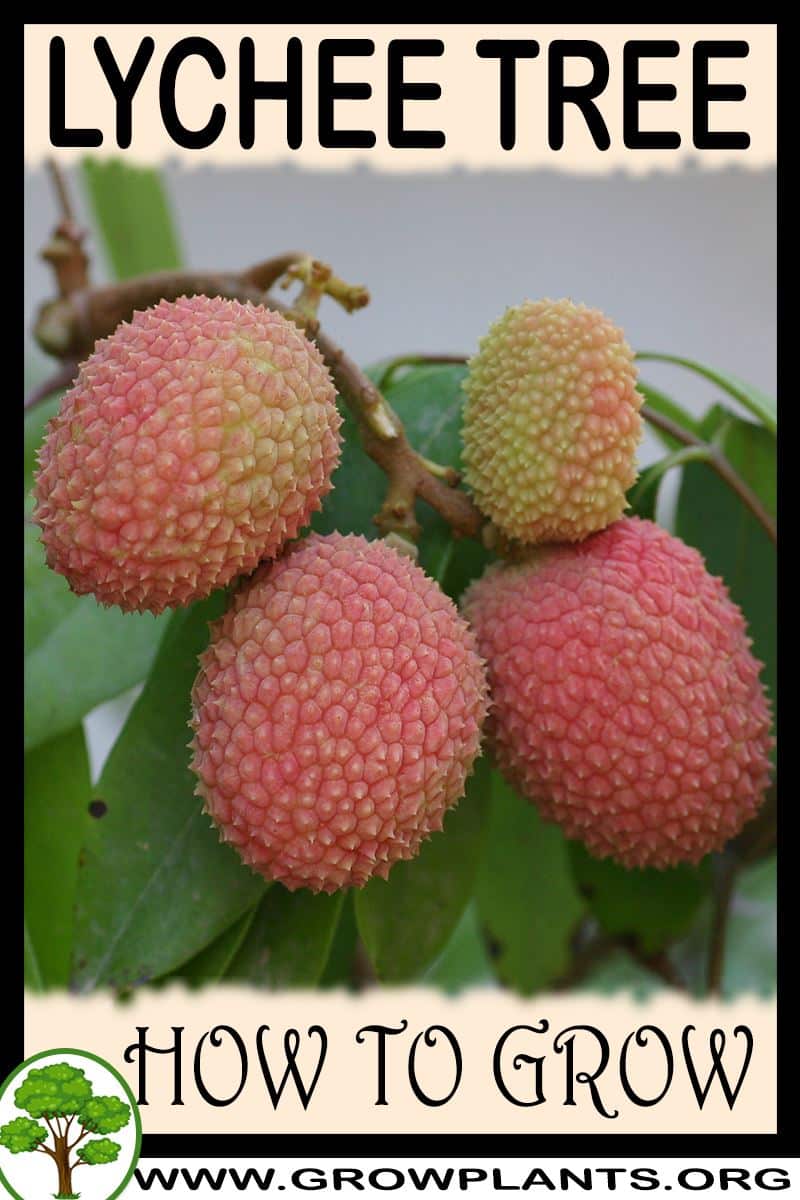
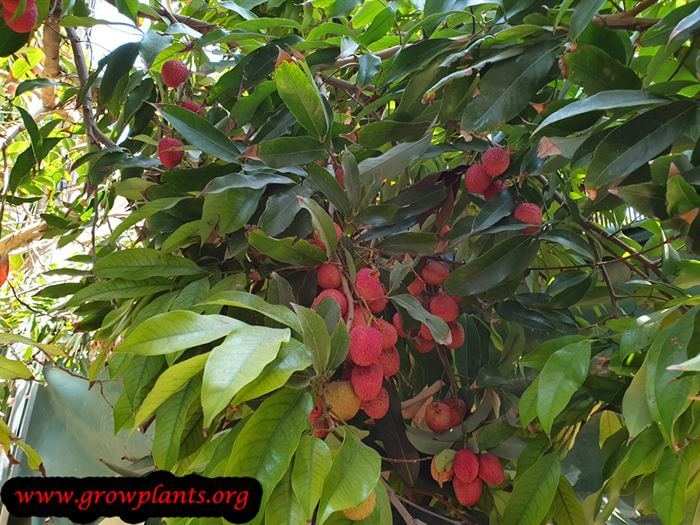
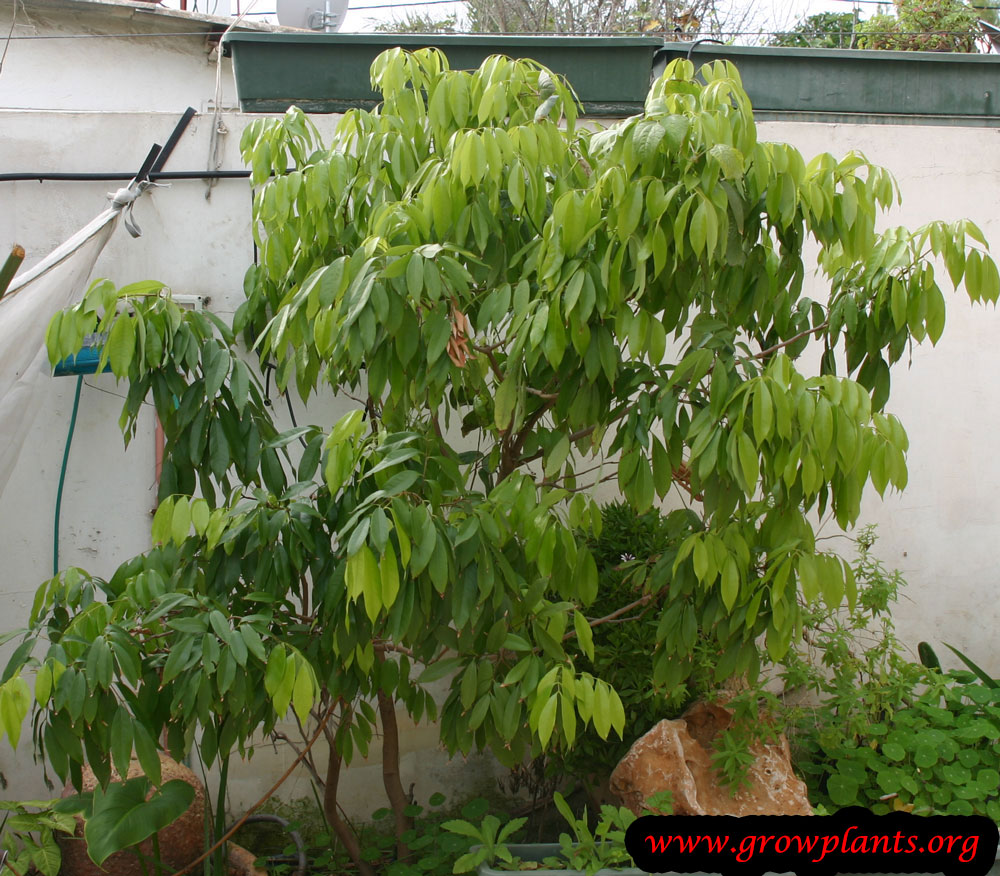
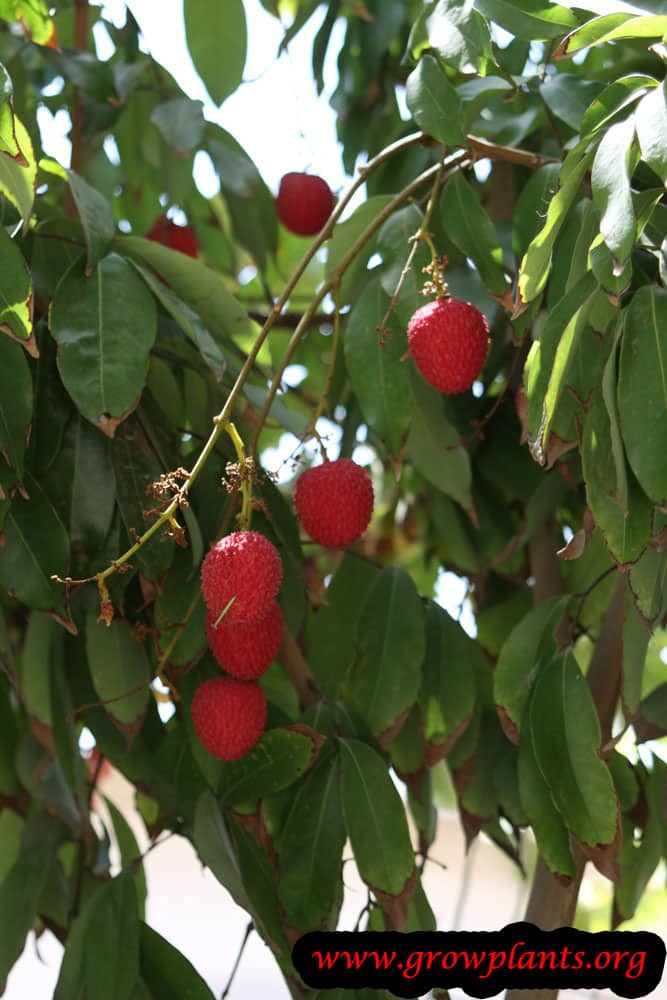
Overview: The Lychee tree (Litchi chinensis) is a dense, evergreen fruit tree that reaches 5-20 m in the tropics and stays smaller in cooler areas. It is grown mainly for its sweet red fruit and also valued as an ornamental for its glossy foliage and handsome trunk.
Quick Specifications
| Specification | Attribute |
|---|---|
| Plant Type / Life Cycle | Perennial (evergreen tree) |
| Foliage Type | Evergreen |
| Mature Size | 5-20 m tall (15-60 ft); smaller outside the tropics |
| Growth Rate | Slow |
| Root System | Shallow, spreading surface roots (wind-sensitive when young) |
| Toxicity | Ripe fruit is edible; eat only fully ripe fruit |
| Hardiness | USDA zone 10+ |
Growth Form & Structure
- Height & Spread: 5-20 m tall in the ground with a broad rounded canopy; only marginally suited to very large containers and may not fruit in pots.
- Growth Habit & Form: Evergreen tree with a dense, rounded canopy on a single sturdy trunk.
- Lifespan & Maturity: Long-lived tree; slow growing, taking about 3-8 years to begin bearing fruit (sooner from air-layered plants).
Anatomy & Physical Features
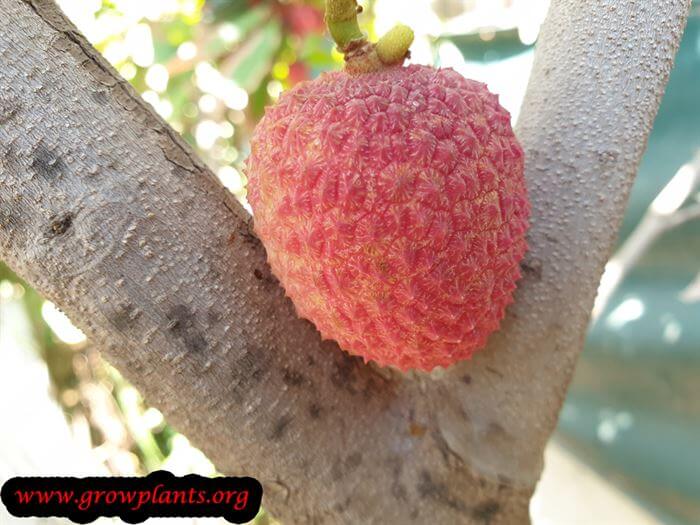
- Trunk & Bark: Attractive trunk and bark, part of the tree’s ornamental appeal.
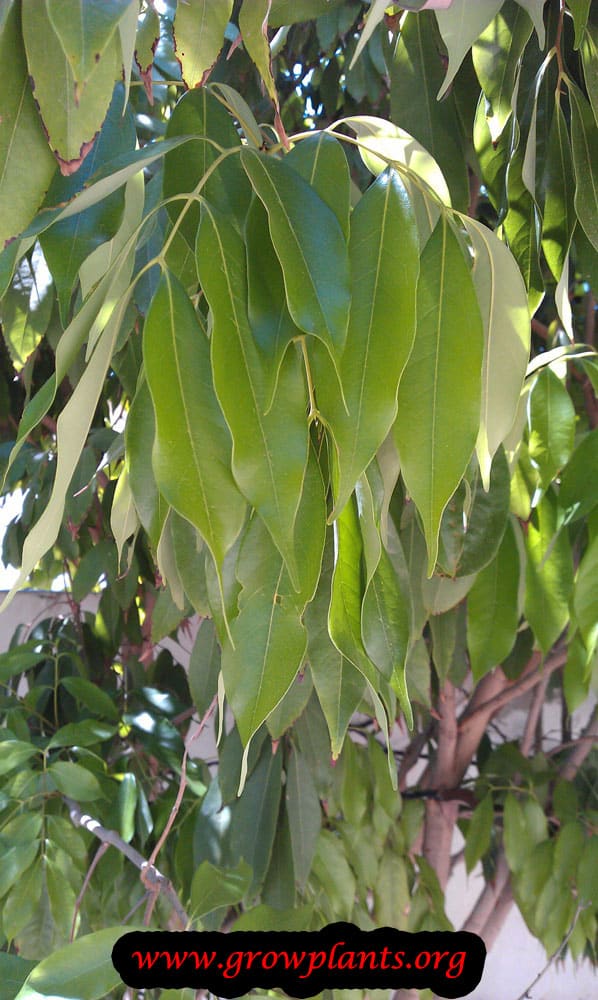
- Leaves & Foliage: Glossy, waxy green compound leaves; new growth flushes red before maturing to green.
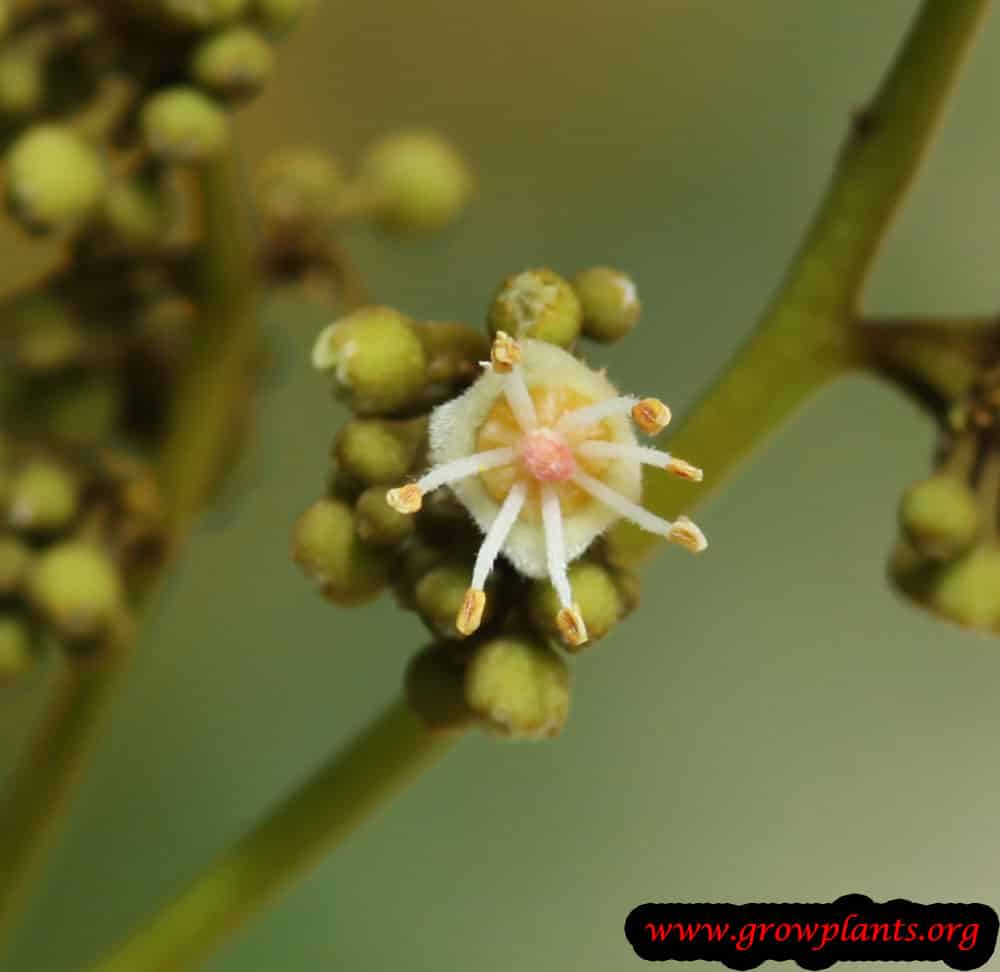
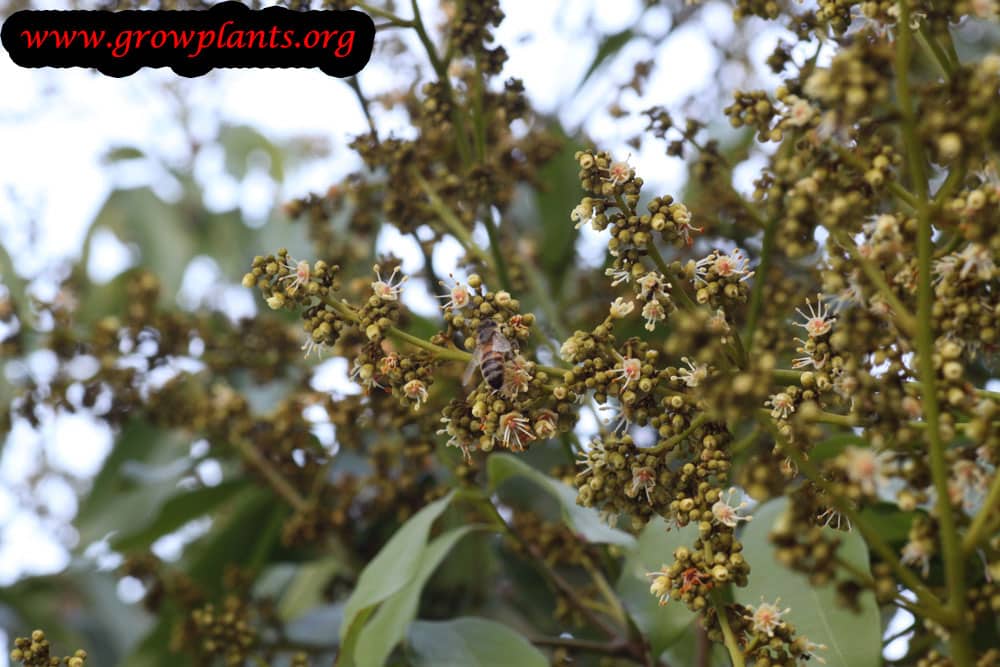
- Flower Characteristics: Tiny white flowers (1-3 mm) borne in large clusters, pollinated by bees.
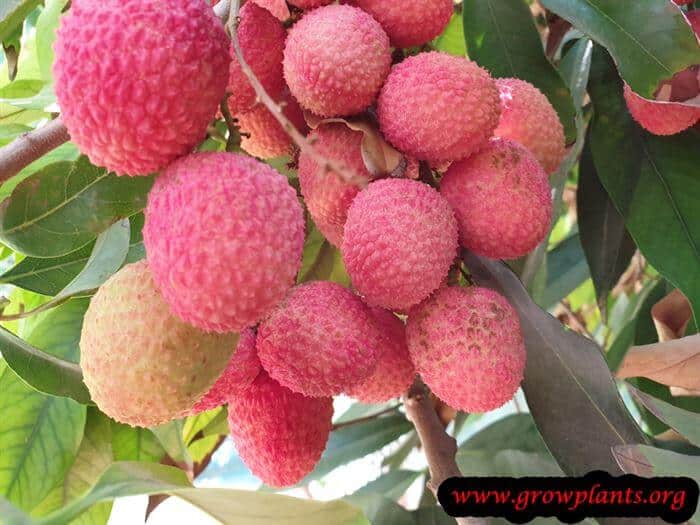
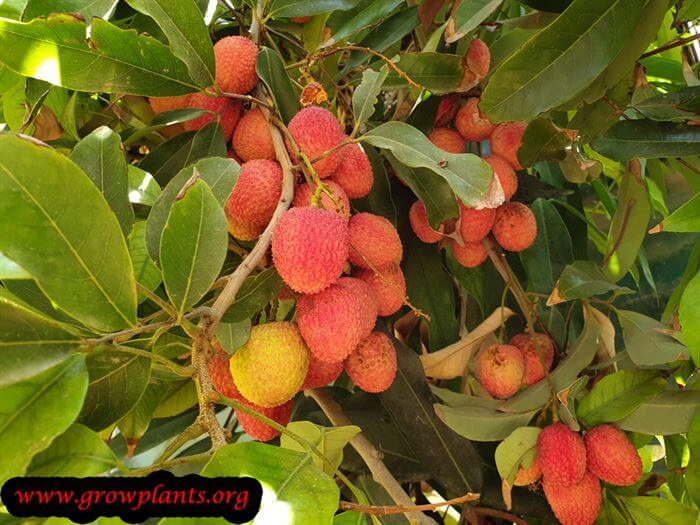
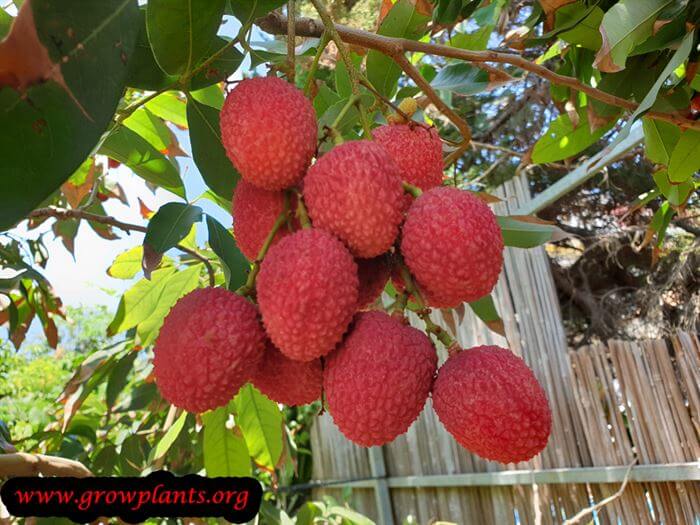
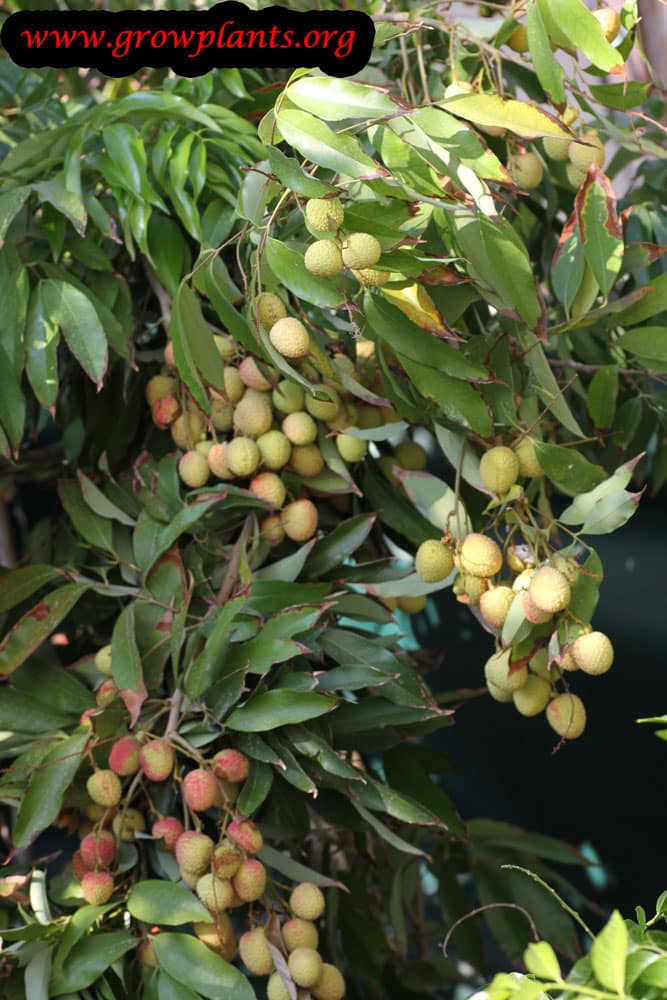
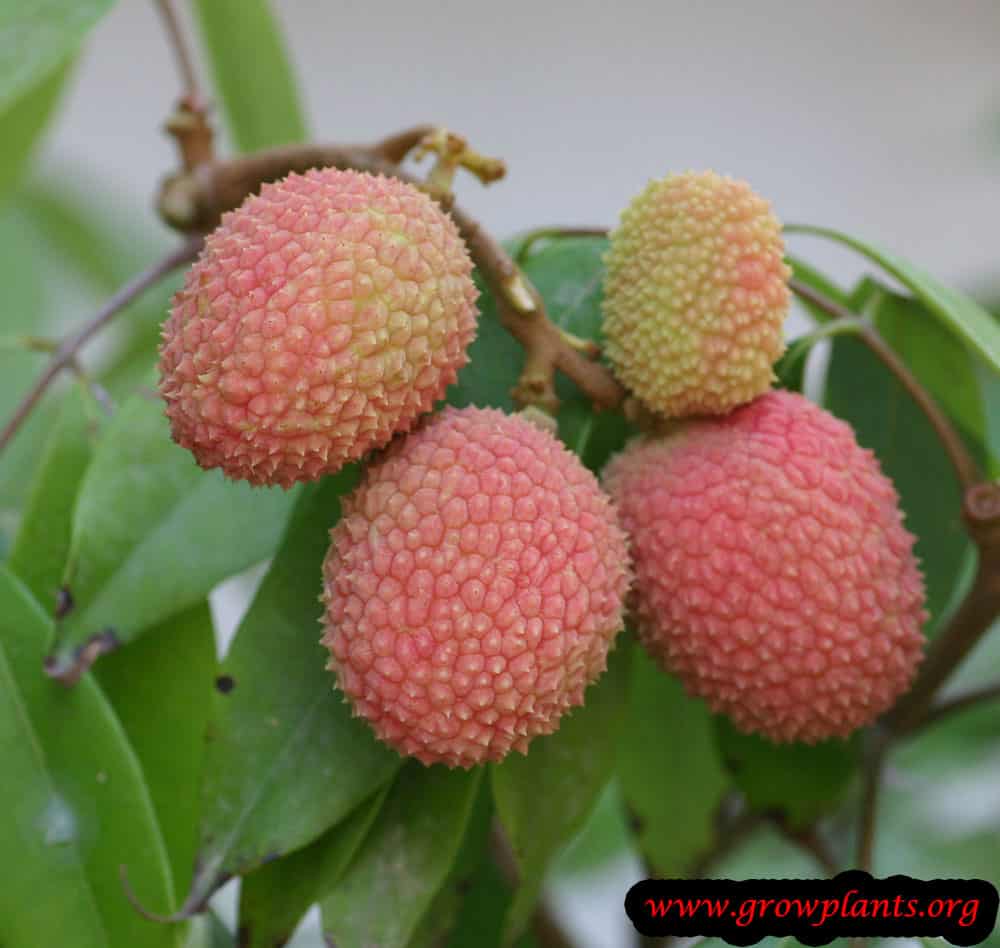
- Fruit Profile: Round fruit with rough red (sometimes yellow-orange) skin that peels easily to reveal sweet, white, translucent flesh around a single seed.
Primary Uses & Landscape Value
- Edible Uses: Fruit eaten fresh, juiced and processed; some cultivars are near-seedless.
- Functional & Ornamental Roles: Grown primarily as a fruit tree and also as an ornamental shade/specimen tree.
Care Guide: Planting, Soil & Watering
Overview: The lychee is a tropical, full-sun evergreen tree that needs deep, rich, slightly acidic and well-drained soil to thrive. It likes generous, steady moisture and organic matter, but young trees must be sheltered from wind and frost and never left waterlogged.
Quick Care Requirements
| Requirement | Ideal Condition |
|---|---|
| Planting Season | In spring to summer in cooler zones; spring to autumn, or year-round, in frost-free tropical zones |
| Growth Rate | Slow |
| Soil Type | Deep, rich, well-draining soil, enriched with organic matter |
| Soil pH | Slightly acidic (around 5.0–5.5) |
| Water Need | Moderate to high — keep the soil consistently moist, but never waterlogged |
Planting & Establishment
- Best Planting Season: Plant in spring to summer in cooler (zone 10) areas, spring to autumn in zone 11–12a, and at any time of year in frost-free tropical zones (12b+).
- How to Plant:
- Hole Preparation: Dig a hole as deep as the current root ball plus about 40% extra, mix organic matter, humus, and dried leaves into the loosened soil, then reduce the hole back to the size of the root ball before planting.
- Soil Amendments: Blend plenty of compost, humus, and organic matter into the backfill, and mulch after planting to keep the soil moist and the roots cool.
- Planting Depth: Set the tree at the level of its root ball, loosen the outside of the root ball slightly, firm the soil so the tree is stable without compacting it hard, and stake young trees with bamboo if they are not steady.
- Growth Speed & Expectations: Expect slow growth, especially in the early years; young trees establish gradually and take several years to bear fruit.
Soil, Watering & Drainage Care
- Soil Mix & Drainage Needs: Plant in deep, rich, well-draining soil; heavy organic matter and mulch keep the roots cool and moist while excess water drains away, as waterlogging harms the roots.
- Watering Schedule & Technique:
- Young / Newly Planted: For the first couple of weeks after planting, water every day (ideally in the morning) to settle the tree, then move to a regular schedule.
- Established: Water deeply and regularly so the soil stays evenly moist, giving more during hot weather while letting the surface dry slightly between waterings.
- Seasonal Adjustments: Increase water in heat, reduce it in cool weather, and protect young trees from frost and wind, which can badly slow their growth.
Climate, Light & Hardiness
Lychee grows in tropical, Mediterranean, and subtropical climates in full sun, and can survive some frost once mature, though young trees need winter protection and shelter from wind. Good flowering typically needs a spell of cool (non-freezing) winter weather, distinguishing it from the strictly tropical species in this batch.
Quick Climate Specifications
| Climate Zones | Tropical, Mediterranean, Subtropical |
|---|---|
| USDA Hardiness Zones | 10+ |
| Approx. Survival Minimum | approximately −1°C (30°F) at the zone 10 boundary, briefly, for an established, mature tree |
| Frost Tolerance | Low to Moderate (mature trees can survive some frost per source data; young trees need protection) |
| Light Conditions | Full Sun |
| Wind Tolerance | Low, especially in the first years |
Sunlight & Light Exposure
Optimal Light Setup
Full sun for best growth and fruiting.
Direct Sun Requirement
Yes.
Best Exposure / Orientation
An open but wind-sheltered, sunny site.
Temperature Extremes & Hardiness
USDA Hardiness & Regional Limits
Zone 10+, with mature trees noticeably hardier than young ones.
Cold Damage & Winter Protection
Protect young trees overwinter; mulch and add organic matter, and shelter from wind, which can otherwise slow growth significantly while the tree is young.
Frost Sensitivity
Low to moderate; mature trees can survive some frost, but young trees are considerably more vulnerable.
Chilling Requirement
Lychee typically needs a period of cool (but non-freezing) winter nights to flower well – a genuine climatic requirement distinct from a formal chill-hour count, and one reason lychee fruits inconsistently in climates with mild, chill-free winters.
Extreme Heat Tolerance
Good in genuinely warm, humid climates.
Wind, Humidity & Microclimate
Wind Tolerance
Low in the first years – site data specifically notes that wind can damage and significantly slow the growth of young trees; shelter is important early on.
Rainfall & Seasonal Moisture
Suited to tropical, Mediterranean, and subtropical rainfall; benefits from consistent moisture and added organic mulch, especially while young.
Microclimate Recommendations
A warm, sunny, wind-sheltered site is especially important for young trees; established trees are more forgiving of both cold and wind.
Growing in Pots, Balconies & Indoors
Lychee (Litchi chinensis) reaches 5-20 m (15-60 ft), staying smaller outside the tropics. The grower says it is not a houseplant, and that container growing is only possible in a very large pot – it may not fruit, and is best started from an air layer.
Quick Details
- Container Size: Only in a very large container, and fruiting is not guaranteed
- Indoor Suitability: Not suitable indoors
- Best Spot: Full sun, outdoors
- Soil & Drainage: Rich, free-draining, slightly acidic mix
- Watering in Pots: Average to generous – keep evenly moist; young plants dislike drying out
Indoors & On the Windowsill
- Houseplant limits: Not a houseplant – it needs full sun and becomes a large tree.
- Overwintering: Young trees are sensitive to wind in their first years; in cold climates a potted young lychee can be sheltered in a bright, frost-free spot for the cool season.
On a Balcony or Patio
- Large pot, sunny & sheltered: If you try it in a container, use the biggest practical pot in full sun and shelter it from wind. Expect it as an ornamental – fruiting in a pot is unreliable, and starting from an air layer gives the best chance.
Choosing the Pot, Soil & Long-Term Care
- Pot & drainage: Use a pot with plenty of drainage holes; skip a standing water saucer to avoid root rot. Terracotta breathes and dries faster, while glazed or plastic pots hold moisture longer.
- Potting mix: A well-aerated, organic-rich mix – peat or coir with perlite or vermiculite; this plant prefers a slightly acidic, humus-rich soil.
- Feeding: Potted plants need feeding more often than those in the ground, as nutrients leach out with each watering – feed lightly through the active growing season.
- Repotting: Refresh the mix or pot up about every two years; for an established specimen, replace part of the soil and lightly prune the roots and top growth.
Fertilizing & Feeding
Lychee grows on rich, slightly acidic soil and is noticeably wind-sensitive while young, needing shelter and mulch to establish well; feeding stays moderate and steady, and this tree is not a reliable container subject for fruiting.
Quick Fertilizing Specs
| Feeding Level | Moderate; a slow, steady grower that fruits well on consistent feeding rather than heavy doses. |
|---|---|
| Main Nutrient Priority | Balanced nutrition on rich, slightly acidic soil, shifting toward potassium as fruit develops. |
| Best Feeding Period | Through the warm growing season while the tree is actively flowering and fruiting. |
| Organic Options | Rich soil built up with organic matter, plus mulch especially while the tree is young, suits this species well. |
| Reduce/Stop Feeding | Ease off as growth slows in cooler weather, especially for young trees that still need some frost protection. |
Feeding by Growth Stage
Newly planted
Establish a young Lychee in rich, slightly acidic soil with mulch around the root zone, staked and sheltered from wind, which can slow this tree’s growth considerably while it’s young.
| Nutrient direction | Light, balanced nutrition focused on rooting in, alongside mulch and wind shelter rather than heavy feeding. |
|---|---|
| Timing | At planting, with attention to a stable, sheltered planting site. |
| Frequency | A light feeding at planting is usually enough while the tree roots in. |
| Fertilizer types | A balanced complete fertilizer used lightly, Organic matter worked into the planting soil, topped with mulch |
| Precautions | Stake and shelter the young tree from wind, and protect it from frost through its first winters; these matter more than extra feeding. |
Young tree, building structure
Build a strong branch framework on a tree that grows slowly, especially where wind or cold has set it back.
| Nutrient direction | A nitrogen-leaning balanced feed to support steady branching and leaf growth. |
|---|---|
| Timing | Through the main warm-season growth period, for the first several years while the tree is still cold-tender. |
| Frequency | Regular light feedings through the growing season suit this slow grower better than infrequent heavy ones. |
| Fertilizer types | A balanced, nitrogen-forward complete fertilizer, Mulch maintained around the root zone to moderate soil temperature and moisture |
| Routine trace nutrients | iron, manganese, zinc |
| Precautions | Continue wind shelter and frost protection for young trees; a tree damaged by wind or cold is easily mistaken for one that’s underfed. |
Established, more cold-tolerant, approaching first fruit
Carry the tree, now more tolerant of occasional cold than when young, from its small white flowers toward its first rough-skinned fruit.
| Nutrient direction | Balanced nutrition supporting both continued canopy growth and the coming fruit set. |
|---|---|
| Timing | From flowering through early fruit development. |
| Frequency | Steady, moderate feeding through this period supports fruit set without forcing excess soft growth. |
| Fertilizer types | A balanced complete fertilizer with routine trace elements, suited to slightly acidic soil |
| Routine trace nutrients | iron, manganese, zinc |
| Precautions | Good pollinator diversity nearby matters for fruit set, since heavy flowering doesn’t always translate into a heavy fruit crop. |
Mature and bearing
Support an established, fruiting Lychee through its rough-skinned, sweet fruit crop.
| Nutrient direction | Balanced feeding shifting toward potassium as fruit ripens. |
|---|---|
| Timing | Across the bloom-to-harvest cycle during the warm growing season. |
| Frequency | Moderate, evenly spaced feedings through fruit development suit this tree better than one heavy dose. |
| Fertilizer types | A balanced to potassium-leaning complete fruiting fertilizer, Mulch maintained around the root zone |
| Routine trace nutrients | iron, manganese, zinc |
| Precautions | Bird and fruit-pest pressure on ripe fruit is best managed with netting, separate from feeding. |
Nutrient Deficiency Signs & Corrections
Leaves yellow between the veins while the veins stay green.
| Possible causes | High soil pH tying up iron, Waterlogged or compacted soil limiting uptake, A genuine iron shortage |
|---|---|
| Appears first on | New growth toward the shoot tips. |
| What to check | Soil pH and drainage, Whether only new leaves are affected, Recent watering pattern |
| Possible correction | Correct drainage and soil pH first, then apply a chelated iron product per its label if yellowing continues. |
New growth looks stunted, browned, or slow to recover, especially on a young tree.
| Possible causes | Wind exposure damaging tender new shoots, Cold or frost injury on a young, still cold-tender tree, A genuine nutrient shortfall being mistaken for weather damage |
|---|---|
| Appears first on | The newest, most exposed shoots. |
| What to check | Recent wind or cold exposure, Whether the tree is staked and sheltered, Feeding history |
| Possible correction | Address wind shelter and frost protection first; resume light balanced feeding once new growth is clearly healthy and unaffected by weather. |
The tree flowers heavily but sets comparatively little fruit.
| Possible causes | Insufficient pollinator diversity nearby, A boron shortage affecting fruit set, Excess nitrogen favoring foliage over fruit |
|---|---|
| Appears first on | Overall fruit set across the flowering clusters. |
| What to check | Pollinator activity and diversity nearby, Recent nitrogen-heavy feeding, Weather during bloom |
| Possible correction | Encourage pollinator activity, ease back on nitrogen, and consider a boron-containing product per its label if light fruit set continues. |
Pruning, Training & Seasonal Maintenance
Lychee tolerates only light pruning – the species’ own guidance is explicitly ‘not to prune too much’ – and, like its close relative longan, it flowers on terminal panicles formed from wood that must mature and then rest through a cool/dry induction period before it will bloom. The most effective and safest window is therefore right after harvest, not autumn/winter: pruning then gives the resulting flush the rest of the warm season to harden before induction, whereas cutting in true autumn/winter risks removing wood that would otherwise flower and disturbing the induction process itself.
Quick Pruning & Maintenance Specs
| Pruning Tolerance | Low–Moderate |
| Primary Pruning Window | Immediately after harvest (spring–summer, depending on cultivar/ripening) |
| Typical Frequency | Light, roughly annual – not heavy |
| Main Objective | Remove dead wood and lightly shape without over-cutting |
| Young Plant Priority | Establish well-angled scaffold branches while wood is small and cheap to correct |
| Mature Plant Priority | Light post-harvest sanitation and shaping only |
| Best Tool Type | Bypass secateurs and loppers for routine work; pruning saw only for occasional larger deadwood |
| Avoid Heavy Pruning During | Autumn/winter (flower induction) and during bloom/fruit development |
Pruning by Plant Age & Size
Newly Established
The species’ own planting guidance stresses stability (staking young trees if needed) and protection from wind; keep pruning at this stage to removing only damaged growth.
Young / Formative
Select well-angled scaffold branches early. This matters more than usual for lychee: at least one popular cultivar (Mauritius) is noted for notably thin wood, and lychee limbs generally are prone to splitting at narrow, weak crotch angles once carrying a heavy fruit load, so choosing wide-angled branches while young avoids future breakage.
Mature / Established
Light, post-harvest maintenance only – remove dead wood and correct any crossing or poorly angled growth; avoid the heavier framework pruning that faster-growing, harder-pruning fruit trees can take.
Seasonal Pruning Schedule
Post-Harvest
Objective: light sanitation and shaping while there is still time for a new flush to mature before induction. Remove: dead wood and poorly placed growth. Do not remove: large volumes of wood – this species specifically does not want heavy pruning. Expected response: a flush that matures into the next season’s flowering wood. Flowering/fruiting impact: positive if done right after harvest; negative (lost bloom, disrupted induction) if delayed into true autumn/winter.
Flowering & Fruiting Wood
Lychee flowers on terminal panicles produced from mature wood that has hardened from the previous flush, following a cool/dry induction period – not on current-season soft growth and not generally on old interior wood. Because harvest technique on some cultivars involves cutting the fruiting branch back to its base (per the species’ own harvesting note for cultivars that ripen unevenly), harvest itself already acts as a form of renewal pruning on those branches; additional structural cutting beyond that is rarely needed.
Structural Pruning & Training
Correct crossing or poorly angled branches while young, prioritizing wide crotch angles given this species’ documented tendency (especially in thin-wooded cultivars like Mauritius) to split under a heavy fruit load. Beyond that early correction, avoid ongoing structural intervention on a species that specifically does not want heavy pruning.
Container & Small-Space Pruning
Lychee is generally not well suited to containers – the species’ own guidance notes that even a large container may not reliably produce fruit. Where container growing is attempted, a naturally compact, slower-growing cultivar (such as Emperor, noted for its compact habit and lower water needs) is a better starting point than a vigorous cultivar, and light, careful pruning (not hard cutting-back) should be used to help hold size.
Tools
Bypass secateurs and loppers for routine light pruning and post-harvest branch removal; a pruning saw only occasionally, for larger deadwood.
Tool Hygiene & Disease Risk
Routine risk – aphids are the only reported pest with no disease-transmission concern noted, so clean, sharp tools are sufficient.
Cut Placement & Technique
Use bypass cuts just outside the branch collar; on cultivars that ripen unevenly, the species’ own harvest technique of cutting a fruited branch back to its base doubles as a legitimate renewal cut, so plan harvest cuts with that structural effect in mind rather than treating harvest and pruning as separate.
Heavy Pruning & Rejuvenation
Not well tolerated – the species’ own guidance is explicitly against heavy pruning, so avoid hard rejuvenation cuts. If size reduction is truly needed, spread it over multiple light, post-harvest sessions rather than attempting it in one pass.
Post-Pruning Care
Water in after pruning (this species takes an average-to-large amount of water); this species benefits from fertilizing 3–4 times a year as routine care, but there’s no need to add an extra feed just to force regrowth from a light post-harvest prune. Continue protecting young trees from wind, as noted in this species’ own care guidance.
Common Pruning Mistakes
- Pruning heavily, against this species’ own explicit guidance to prune lightly.
- Pruning in true autumn/winter and disrupting the cool/dry flower-induction period.
- Choosing narrow-angled scaffold branches when young, setting up future limb splitting under fruit load.
When NOT to Prune
Avoid pruning during the cool/dry flower-induction period and during bloom/fruit development; avoid heavy pruning at any time, consistent with this species’ own explicit guidance.
Recommended Tools (by task)
- bypass_secateurs – routine light post-harvest cuts.
- loppers – medium branch removal, including harvest-related branch cuts.
- pruning_saw – only for occasional larger deadwood.
Pruning Troubleshooting
| Problem | Possible Cause | What to Check | Corrective Action |
| Poor flowering the following season | Pruned during autumn/winter, disturbing induction or removing maturing wood | Timing of last prune relative to harvest and the cool/dry period | Move pruning to immediately after harvest, and keep it light |
| Split or broken limbs under fruit load | Narrow crotch angles retained from formative training, worsened on thin-wooded cultivars | Branch angles and cultivar identity | Correct angles while young in future plantings; support or thin heavy crops on existing narrow-angled limbs |
| Weak regrowth after a hard cut | Heavy pruning applied against this species’ low tolerance for it | Severity of the last pruning session | Return to light, post-harvest maintenance only |
Propagation Guide
Lychee is best propagated vegetatively, and the site notes air layering roots faster and is easier than grafting, making it the preferred method – especially for container-grown trees, which the site says are unlikely to fruit well unless started this way. Seed is straightforward to germinate but will not reproduce named cultivars (such as Sweetheart, Brewster, Mauritius, Emperor or Hak Ip) true-to-type, so overall difficulty is Moderate.
Quick Propagation Specs
| Best Propagation Method | Air Layering |
| Alternative Methods | Grafting; Stem Cuttings; Seed (for seedling/rootstock trees) |
| Propagation Difficulty | Moderate |
| Seed True-to-Type | No – named cultivars do not come true from seed |
| Vegetative True-to-Type | Yes |
| Best Propagation Season | Spring is best; sowing seed directly after the fruit ripens (possible in summer, year-round in hardiness zone 12+) |
| Seed Germination Time | 2–4 weeks |
| Seed Sowing Depth | 3–5 cm (~1–2 in) |
Growing from Seed
Seed Handling & Viability
Store seed in a dry, dark spot at room temperature, but be aware viability is short-lived. The site specifically recommends sowing directly after the fruit if possible, as this best preserves germination potential.
Sowing Season
Spring gives the best results for the tree, though sowing in summer is also possible, and sowing directly after fruiting (which can fall in summer) is recommended to protect seed viability; in hardiness zone 12+ seeds can be sown year-round.
Sowing Depth & Orientation
Sow about 3–5 cm (~1–2 in) deep. Make the planting hole a little larger than the seed and switch in some peat soil or potting mix around it – vermiculite in the mix improves germination.
Germination Conditions
Keep the soil moist in a sunny spot, watering regularly with an average amount of water and never letting it dry out.
Germination Time
Around 2–4 weeks.
Seedling Care
Grow seedlings on in a sunny spot with humidity and moist soil. Raise each seedling in its own pot – since only some will establish well and many are later grafted, separate pots make it easy to select the best tree to move to its final position.
Grafting & Budding
Why Grafting Is Used
Grafting preserves the identity of named cultivars (for example Sweetheart, Brewster, Mauritius or the compact, container-friendly Emperor), which would not come true from seed. The site notes grafting works but is harder and slower to establish than air layering.
Rootstock
Seedling lychee trees, raised individually as described above, are commonly used as rootstock.
Scion Selection
Scion wood is chosen from a known named cultivar matched to the grower’s climate and use – for example a compact cultivar such as Emperor for container growing.
Air & Ground Layering
Air layering is the method the site favors, describing it as easier and faster-rooting than grafting, and effectively necessary for trees intended to fruit well in a container. A healthy branch section is wounded or girdled, wrapped in a moist rooting medium such as sphagnum or peat, and kept consistently moist; commercial air layers are commonly left a period of weeks to a couple of months to develop enough roots before the rooted section is severed and potted on. Stem cuttings are also possible per the site, though air layering is the preferred, faster-rooting route.
Bloom & Flower Guide
Quick Details
- Bloom Season: Spring
- Time to First Bloom: Grafted trees usually begin flowering after a few years; seedlings take considerably longer
- Flower Appearance: Very small (1-3 mm) white to greenish flowers in large branched clusters (panicles)
- Edibility: The flowers are not eaten – lychee is grown for its fruit; the blooms are the start of the crop
Detailed Blooming Overview
Lychee flowers in spring, covering the tree in large branched sprays of tiny white-green flowers. There are a great many of them, and they are a major nectar source (lychee honey is well known), but a heavy bloom does not guarantee a heavy crop – pollination and the tree’s capacity to carry fruit both matter.
Flower Characteristics
- Tiny flowers, about 1-3 mm, white to greenish, in large branched panicles
- Borne in great numbers, though many do not go on to set fruit
Bloom Care & Thinning
- Managing a heavy bloom: A tree can carry far more flowers than it can turn into fruit; if bloom is heavy but fruit set is poor, first make sure the tree is large and established enough to hold a crop.
- Improving fruit set: Growing lychees that flower in the same season nearby helps draw pollinators and improve cross-pollination.
- Pollination: Chiefly by bees.
Fruit & Uses
The lychee’s fruit is the only part eaten – the fragrant, juicy white flesh that surrounds a central seed, wrapped in a rough-textured skin that can be yellow, orange, or (most commonly) red. The flesh is eaten fresh out of hand, and is also juiced or preserved; the seed itself is discarded, not eaten.
Quick Edible Specs
| Edible Parts | Fruit (flesh) |
|---|---|
| Main Use(s) | Fresh eating, juice, preserves (culinary) |
| Eaten Raw or Cooked | Raw |
| Preparation Required | Peel; discard skin and seed |
| Harvest Season | Spring, summer |
| Time to First Harvest | Several years after planting (see Propagation for exact bearing-age) |
| Storage | Best used fresh soon after picking |
| Safety/Toxicity Caveat | The seed is not a food part of this fruit and is not eaten |
Fruit
The edible part is the translucent white flesh around the single central seed, encased in thin, rough skin that peels away easily by hand once the fruit is ripe. The flavor is sweet and floral. Depending on cultivar, the seed separates from the flesh easily or with difficulty, and some cultivars are seedless. Fruit is harvested in spring and summer; it can be picked slightly before full ripeness and left to finish ripening at home. Cultivars that ripen all at once are usually harvested by cutting the whole fruiting branch at its base, which also helps the fruit keep for longer; cultivars that ripen unevenly are picked selectively by cutting individual stems. Netting the tree can protect the ripening crop from birds.
Preparation, Uses & Safety
Lychee flesh is eaten fresh out of hand, or used in juices, desserts, and preserves. No cooking or other preparation is required beyond peeling. The seed is not eaten and should be discarded with the peel.
Pests, Diseases & Troubleshooting
Overview: The lychee (Litchi chinensis) is a subtropical evergreen fruit tree whose signature pest is the lychee erinose mite, alongside fruit borers, scale, mealybugs, aphids, fruit-piercing moths and birds; its most serious diseases are anthracnose and lychee downy blight, plus algal leaf spot and root rot. Because fruit quality is the goal, management combines orchard hygiene, timely pruning and mite/borer control with protection of the ripening crop.
Quick Troubleshooting Overview
| Issue / Pest | Main Symptom | Primary Solution |
|---|---|---|
| Lychee erinose mite | Blister galls with velvety brown felt on leaves | Prune out, miticide/sulphur, clean stock |
| Fruit borer | Tunnelled, frass-filled fruit near stem | Sanitation, bagging, timed sprays |
| Scale & mealybugs | Bumps/white fluff, honeydew, sooty mould | Horticultural oil, control ants |
| Downy blight | Brown rot of fruit and shoots in wet weather | Airflow, sanitation, copper |
| Anthracnose | Dark leaf/fruit spots and rot | Prune, remove debris, copper |
| Birds / fruit-piercing moths | Pecked and drained ripening fruit | Netting, bagging, early harvest |
Common Pests & Management
- Lychee erinose mite (Aceria litchii):
- Symptoms: Raised blister-like galls on leaves lined underneath with a velvety rust-brown felt (erineum); heavy attack distorts leaves, shoots and flower panicles and reduces cropping – the single most damaging lychee pest.
- Prevention & Control: Prune out and destroy infested growth, avoid moving infested planting material, encourage predatory mites, and apply sulphur or a registered miticide to new flushes when the mite is active. Start with clean, mite-free nursery stock.
- Fruit borers (Conopomorpha cramerella / Conomorpha spp.):
- Symptoms: Larvae tunnel into fruit near the stem end, leaving entry holes, frass and rot that ruin the crop from inside.
- Prevention & Control: Keep the orchard floor clean of fallen fruit, prune for an open canopy, bag developing bunches where practical, and time any sprays to egg-laying rather than blanket-spraying; conserve natural enemies.
- Scale insects & mealybugs (Coccidae & Pseudococcus spp.):
- Symptoms: Immobile bumps and cottony white masses on twigs, leaf undersides and fruit stalks, with copious honeydew and blackening sooty mould that dirties fruit.
- Prevention & Control: Apply horticultural oil to smother them, prune heavily infested wood, and control the ants that farm and protect them; encourage lady beetles and parasitoid wasps.
- Aphids (Aphis spp.):
- Symptoms: Colonies on tender new flushes and flower panicles with honeydew, sooty mould and distorted growth.
- Prevention & Control: Hose off, use insecticidal soap or neem on soft growth, and manage ants; natural enemies usually keep them in check on established trees.
- Fruit-piercing moths and birds (Eudocima spp. & birds):
- Symptoms: Ripening fruit is pierced and drained by night-flying moths or pecked and stripped by birds and bats, often just before harvest.
- Prevention & Control: Net or bag ripening bunches, harvest promptly at maturity, and remove overripe fruit that attracts them; lights and deterrents give partial help only.
Diseases & Fungal Issues
- Lychee downy blight (Peronophythora litchii):
- Symptoms: Brown, water-soaked rot of fruit, panicles and young shoots with a whitish downy mould in wet, humid weather; can cause serious pre- and post-harvest fruit loss.
- Treatment & Management: Open the canopy for airflow, remove and destroy infected fruit and debris, avoid overhead wetting, and apply a copper or appropriate fungicide protectively before and during wet flowering and fruiting periods.
- Anthracnose (Colletotrichum gloeosporioides):
- Symptoms: Dark sunken spots on leaves, flower panicles and fruit, blossom blight, and fruit rot that often appears after harvest.
- Treatment & Management: Prune for airflow and light, clear fallen leaves and mummified fruit, avoid injuries, and use copper-based fungicide during wet flowering; cool the fruit quickly after picking to limit post-harvest rot.
- Algal leaf spot (Cephaleuros virescens):
- Symptoms: Circular greenish-grey to orange velvety patches on leaves (and sometimes bark) in warm, humid, still conditions, weakening older foliage.
- Treatment & Management: Improve air movement and light by pruning, reduce humidity around the canopy, and apply copper if it becomes extensive; keep trees vigorous.
- Root and collar rot (Phytophthora spp.):
- Symptoms: Canopy thinning, yellowing and dieback with dark, decayed roots or oozing collar lesions in waterlogged soil.
- Treatment & Management: Plant on well-drained sites or mounds, avoid overwatering and trunk injuries, keep mulch off the collar, and improve drainage; remove severely affected trees.
Growing Difficulties & Abiotic Problems
- Fruit cracking and drop:
- Cause & Symptoms: Irregular watering – drought followed by heavy rain or irrigation as fruit ripens – splits the skin and causes premature drop.
- Correction Strategy: Keep soil moisture even through fruit development with mulch and steady irrigation, and avoid sudden heavy watering near ripening.
- Iron and zinc chlorosis:
- Cause & Symptoms: Alkaline or waterlogged soils lock up micronutrients, yellowing young leaves between green veins and reducing vigour.
- Correction Strategy: Maintain slightly acidic, well-drained soil, mulch with organic matter, and correct deficiencies with iron chelate or zinc foliar sprays.
- Leaf scorch and sunburn:
- Cause & Symptoms: Salty water or soil, drying winds and intense sun brown the leaf margins and scald exposed fruit and bark.
- Correction Strategy: Use low-salt irrigation and leach salts periodically, shelter from harsh wind, and maintain canopy cover to shade fruit and limbs.
What Helps – Products & Tools
For lychee the practical kit includes sulphur or a registered miticide for erinose mite, horticultural oil for scale and mealybugs, insecticidal soap or neem for aphids, copper fungicide for downy blight, anthracnose and algal spot, fruit netting or bags for birds and piercing moths, and iron chelate for chlorosis. Orchard hygiene and canopy pruning underpin all of it. Spray oils in the evening to protect pollinators and always follow the label.
Frequently Asked Questions
How do you grow and plant a lychee tree?
Give it full sun and deep, rich, well-draining soil enriched with organic matter, slightly acidic (around pH 5.0–5.5). Plant in spring to summer in cooler zones, or spring to autumn (year-round in frost-free tropical zones), digging a hole about 40% deeper than the root ball and blending in organic matter and mulch. Water every day for the first couple of weeks to settle the tree, then water deeply and regularly once established, letting the surface dry slightly between waterings, and protect young trees from frost and wind, which can badly slow their growth.
Can you grow a lychee tree from seed, and will it come true to the parent?
Seed germinates fairly easily, in about 2–4 weeks, but it will not reproduce a named cultivar true-to-type — only vegetative propagation preserves the parent. Sow seed fresh, ideally right after the fruit ripens, about 3–5 cm deep; spring gives the best results.
When is lychee fruit season, and how long after planting will a tree bear fruit?
Lychee fruits in spring and summer, and can be picked slightly before full ripeness to finish ripening at home. A tree typically takes about 3-8 years from planting before it begins bearing fruit, sooner from air-layered plants.
How and when should you prune a lychee tree?
Lychee tolerates only light pruning, so prune immediately after harvest, removing dead wood and lightly shaping without over-cutting. Avoid pruning in true autumn or winter: cutting then risks removing wood that would otherwise flower and disturbs the tree’s flowering induction process.
Can you grow a lychee tree in a pot, and will it fruit?
Only marginally — a lychee is not a houseplant, and container growing is only realistic in a very large pot in full sun. Fruiting in a pot is unreliable, so starting the plant from an air layer rather than seed gives the best chance of it fruiting at all.
What is the most damaging pest for lychee trees, and how do you control it?
The lychee erinose mite is the tree’s signature and most damaging pest, causing raised blister-like galls lined with a velvety rust-brown felt on the leaves and distorting leaves, shoots and flower panicles. Control it by pruning out and destroying infested growth, starting with clean, mite-free nursery stock, encouraging predatory mites, and applying sulphur or a registered miticide to new flushes when the mite is active.