

Plant Profile & Key Characteristics
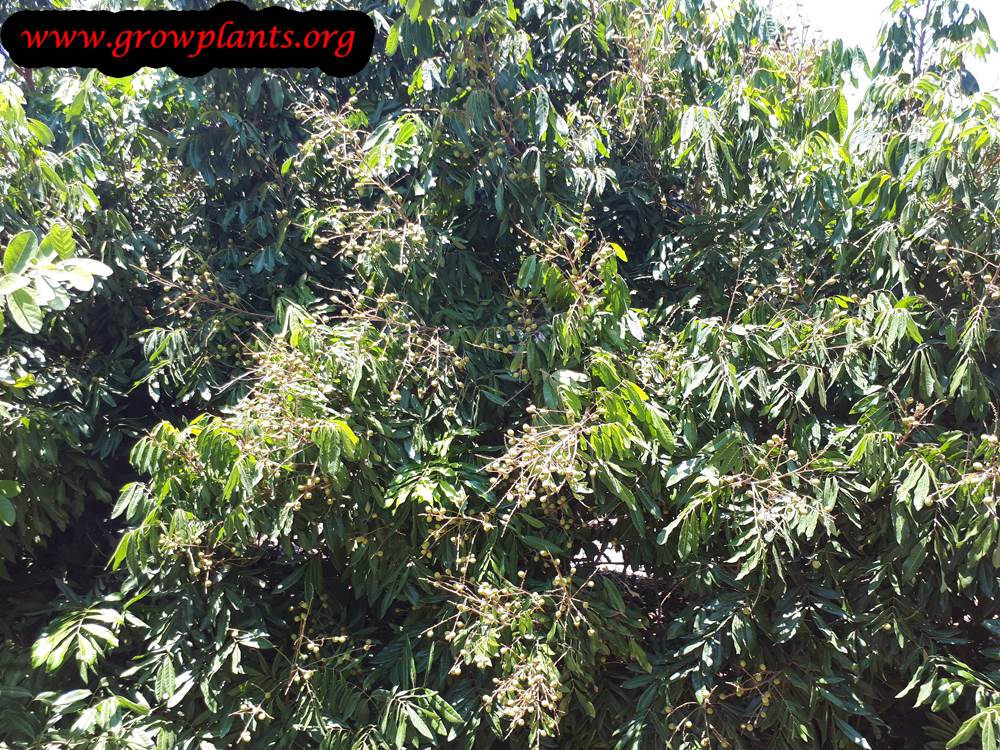
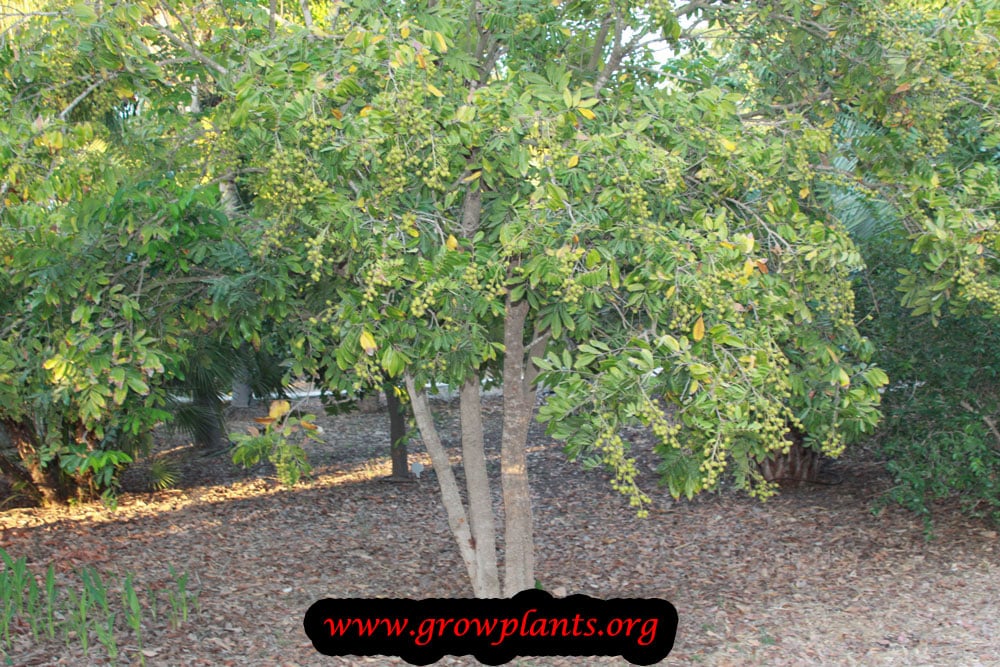
Overview: Evergreen subtropical fruit tree growing 6-12 m tall with a broad, spreading canopy. Grown mainly for its sweet, lychee-like edible fruit, and also as an ornamental shade tree (or dwarfed in a container).
Quick Specifications
| Specification | Attribute |
|---|---|
| Plant Type / Life Cycle | Perennial (evergreen tree) |
| Foliage Type | Evergreen |
| Mature Size | 6-12 m tall (20-40 ft), spreading 8 m (24 ft) or more |
| Growth Rate | Moderate |
| Toxicity | Non-toxic / edible fruit |
| Hardiness | USDA zone 9+ |
Growth Form & Structure
- Height & Spread: 6-12 m (20-40 ft) tall, spreading 8 m (24 ft) or more in the open; can be kept dwarf in a large container.
- Growth Habit & Form: Evergreen tree with a broad, rounded, spreading canopy; usable as a shade tree.
- Lifespan & Maturity: Long-lived; grafted trees bear fruit about 2-3 years from planting.
Anatomy & Physical Features
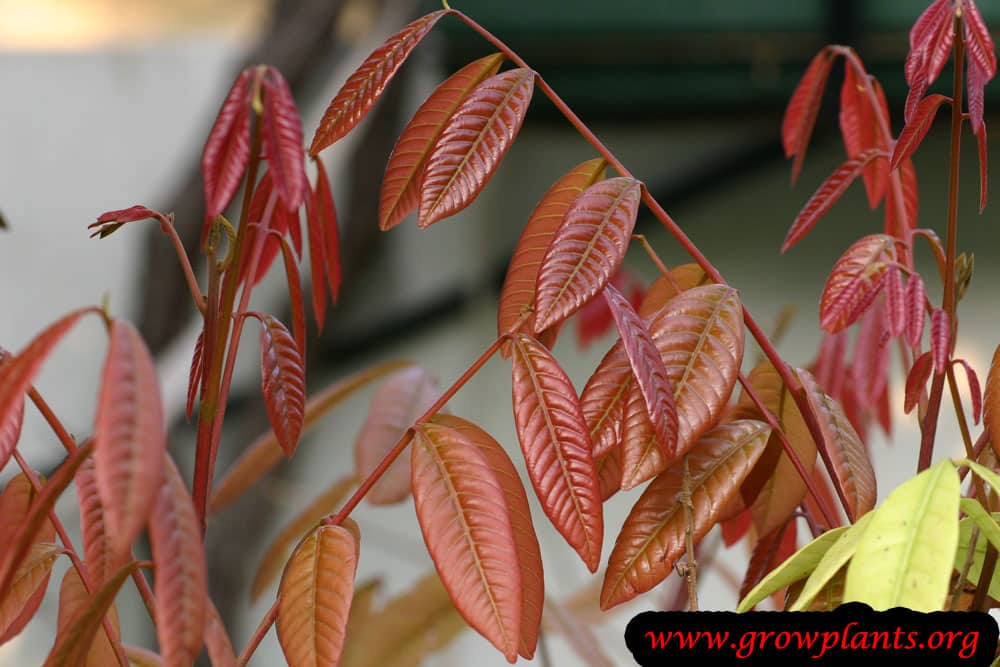
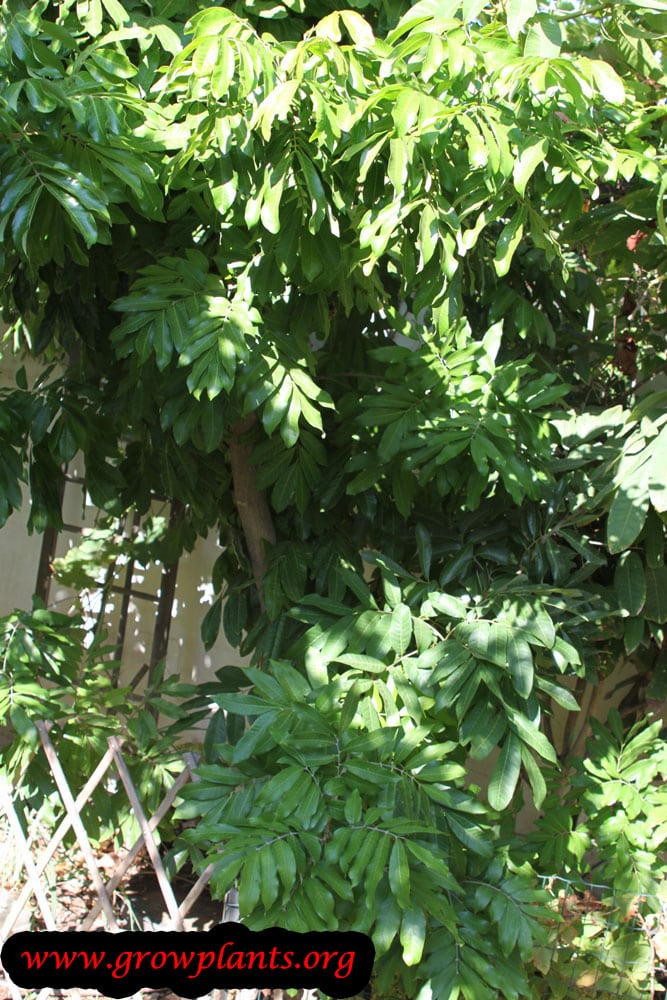
- Leaves & Foliage: Pinnate leaves of elliptic leaflets, glossy green, flushed red when young.
- Flower Characteristics: Small (1-2 mm) yellowish flowers in large panicles; bee-pollinated.
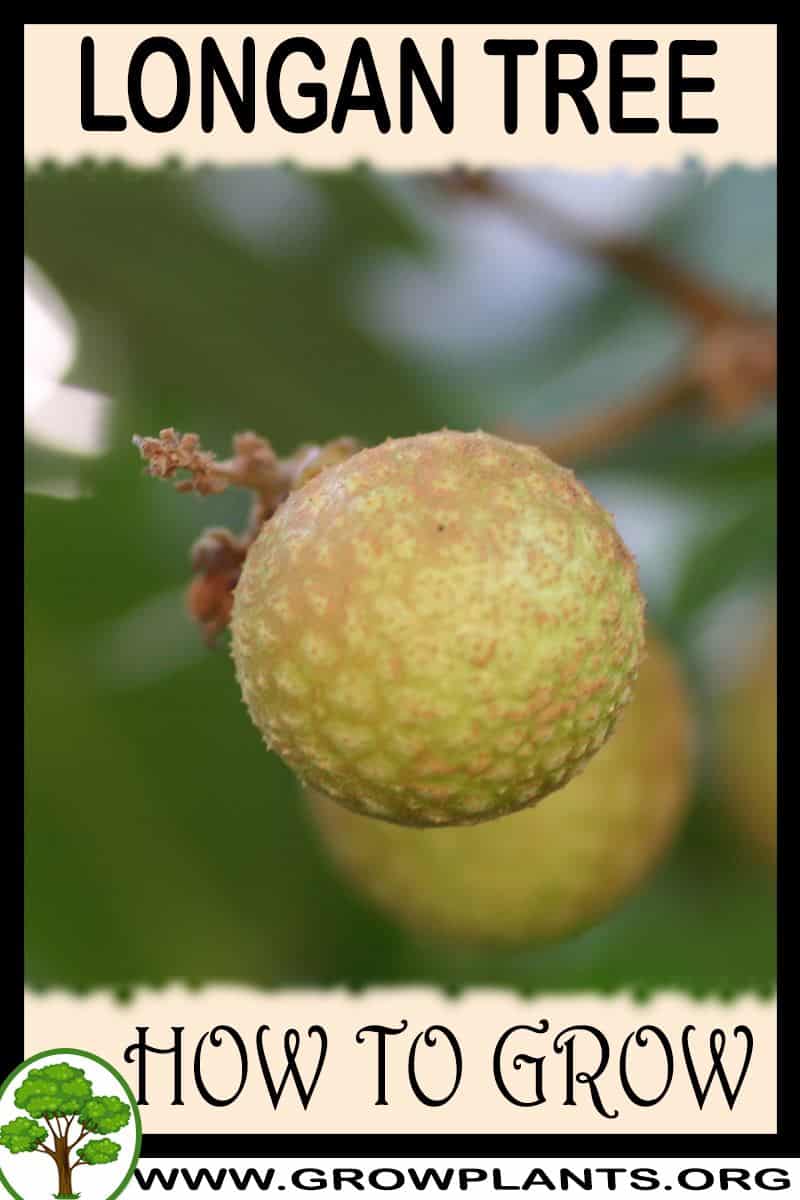
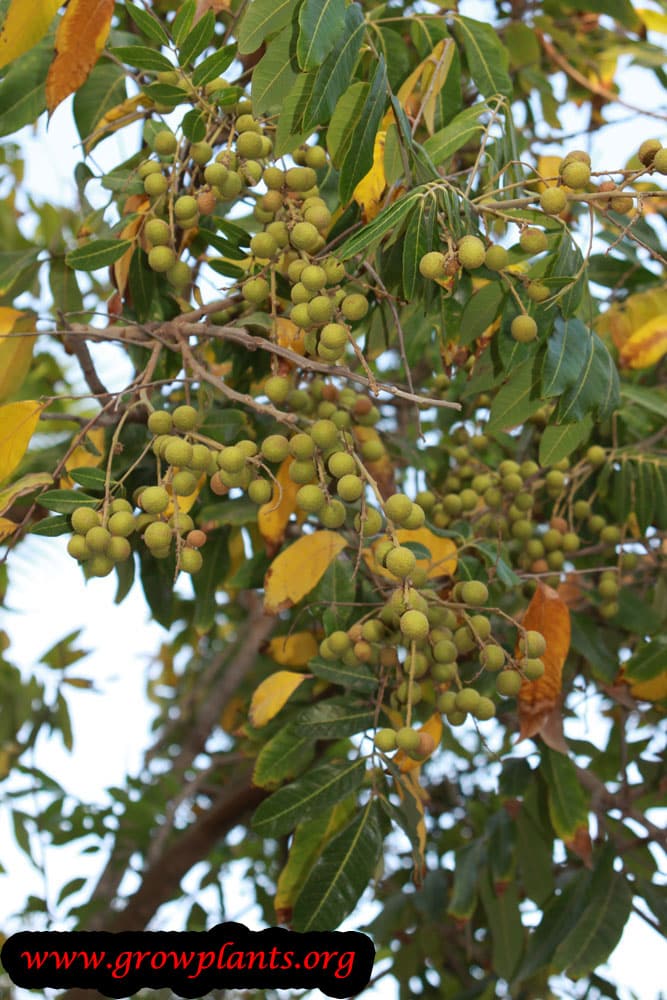
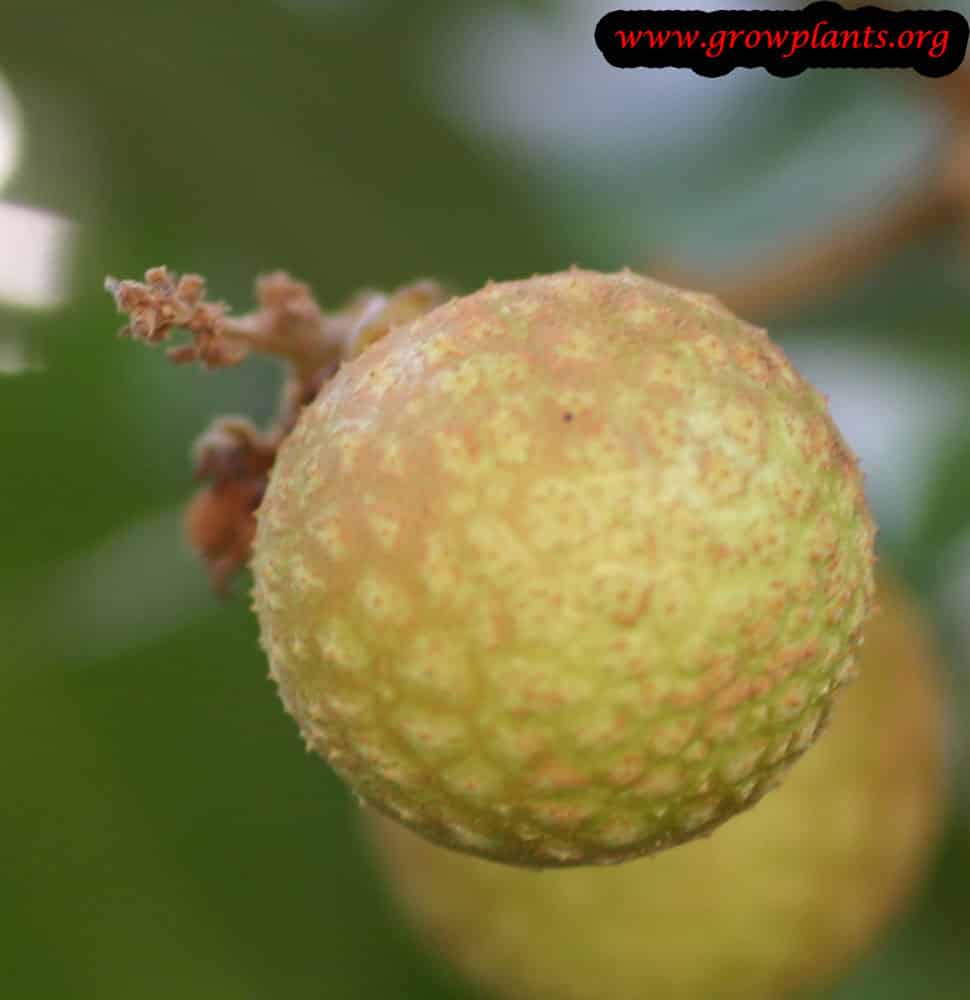
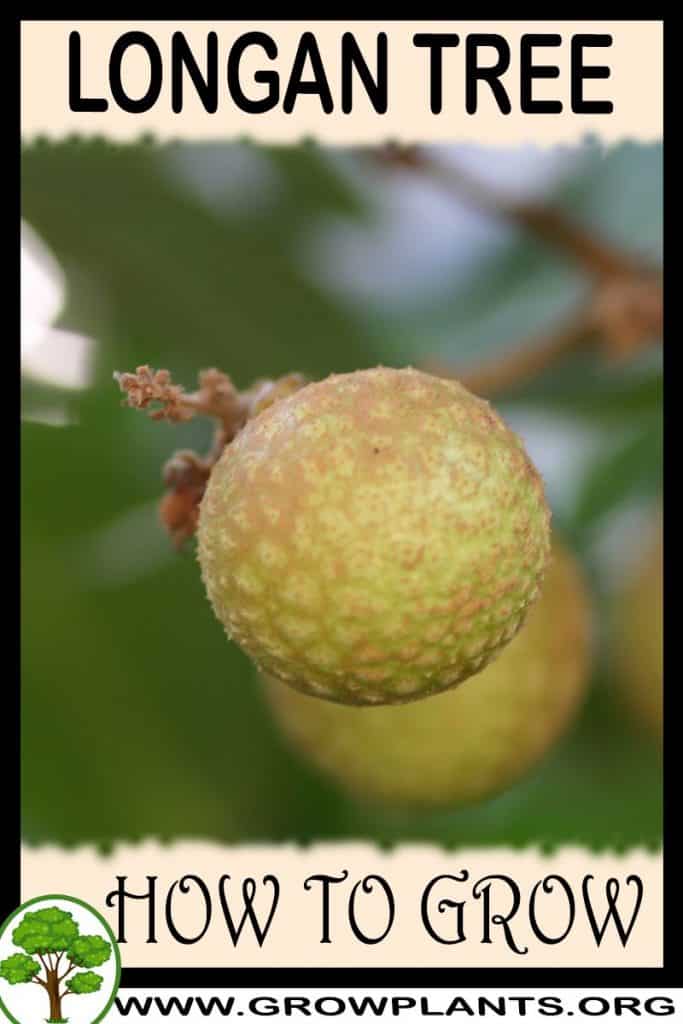
- Fruit Profile: Round fruit with a thin yellow-brown skin peeling to translucent white, juicy flesh around one seed; sweet, lychee-like.
Primary Uses & Landscape Value
- Edible Uses: Fruit eaten fresh, juiced, or made into jelly.
- Functional & Ornamental Roles: Fruit tree; ornamental shade tree; container/dwarf specimen.
Care Guide: Planting, Soil & Watering
Overview: Longan (Dimocarpus longan) is a subtropical fruit tree that grows best in full sun in rich, slightly acidic soil generous in organic matter. It appreciates steady, moderate moisture and good drainage, and resents salty soils.
Quick Care Requirements
| Requirement | Ideal Condition |
|---|---|
| Planting Season | In spring, once the weather has warmed |
| Growth Rate | Moderate |
| Soil Type | Rich, well-draining soil high in organic matter |
| Soil pH | Slightly acidic |
| Water Need | Moderate — keep evenly moist but never waterlogged |
Planting & Establishment
- Best Planting Season: Plant in spring once temperatures are reliably warm, choosing a sunny, sheltered position; in zone 12 and warmer it can be planted year-round.
- How to Plant:
- Hole Preparation: Dig a hole wider than the root ball in a sunny spot, loosening the surrounding soil so young roots spread easily.
- Soil Amendments: Blend in plenty of compost and organic matter, and plan to feed 2–4 times a year; avoid salty or saline soils, to which the tree is sensitive.
- Planting Depth: Set the tree with the top of the root ball level with the surrounding soil — keep the graft union and trunk base above the soil line.
- Growth Speed & Expectations: Grows at a moderate pace, developing into a substantial shade tree; grafted or air-layered plants fruit more reliably and are essential for good fruiting in containers.
Soil, Watering & Drainage Care
- Soil Mix & Drainage Needs: Use rich, well-ventilated, free-draining soil; in containers a potting mix or a peat-and-perlite blend works well. Water regularly but make sure the pot has ample drainage holes and never let water sit in the base.
- Watering Schedule & Technique:
- Young / Newly Planted: Water regularly and keep the soil moist while the young tree establishes, without letting it stand in water.
- Established: Give the established tree deep, moderate watering, keeping the soil evenly moist through the growing and fruiting season.
- Seasonal Adjustments: Water more during warm, dry weather and the fruiting period, and reduce it in cool weather.
Climate, Light & Hardiness
Longan is a tropical-to-subtropical tree for tropical, Mediterranean, and subtropical climates in full sun, comparatively cold-tolerant for this group at zone 9 and warmer. Unlike its close relative lychee, longan generally needs less winter chill to flower well, though both benefit from cool (non-freezing) winter nights for good flower induction.
Quick Climate Specifications
| Climate Zones | Tropical, Mediterranean, Subtropical |
|---|---|
| USDA Hardiness Zones | 9+ |
| Approx. Survival Minimum | approximately −6.7°C (20°F) at the zone 9 boundary, briefly, for an established tree |
| Frost Tolerance | Low to Moderate |
| Light Conditions | Full Sun |
Sunlight & Light Exposure
Optimal Light Setup
Full sun for best growth and fruiting.
Direct Sun Requirement
Yes.
Best Exposure / Orientation
An open, sunny site.
Temperature Extremes & Hardiness
USDA Hardiness & Regional Limits
Zone 9+ is comparatively favorable for a tropical-origin fruit tree.
Cold Damage & Winter Protection
Site in a warm, sunny spot; young trees benefit from protection near the cold edge of the range.
Frost Sensitivity
Low to moderate; more cold-tolerant than many strictly tropical fruit trees.
Chilling Requirement
Longan generally needs a period of cool (but non-freezing) winter nights to induce good flowering, similar to but typically somewhat less demanding than lychee – a genuine climatic requirement, though not tracked in formal chill-hours the way temperate deciduous fruit is.
Extreme Heat Tolerance
Good in genuinely warm climates.
Wind, Humidity & Microclimate
Coastal / Salt Tolerance
Site data notes sensitivity to salty soil specifically – this is a distinct issue from coastal wind/salt-spray exposure, and separately, direct data on salt-spray tolerance is not available; avoid saline soil and irrigation water regardless of site.
Rainfall & Seasonal Moisture
Suited to tropical, Mediterranean, and subtropical rainfall patterns; prefers consistent moisture.
Microclimate Recommendations
A warm, sunny site with non-saline soil and irrigation water suits it best.
Growing in Pots, Balconies & Indoors
Longan (Dimocarpus longan) reaches 6-12 m (20-40 ft) and spreads wide, yet the grower confirms it can be grown and fruited in a container with the right technique. It is not a houseplant, but it makes a productive patio tree in a warm climate.
Quick Details
- Container Size: Start 20-30% larger than the root ball and pot up in stages to a large final container
- Indoor Suitability: Not a houseplant; grow it outdoors
- Best Spot: Full sun
- Soil & Drainage: Potting mix, or a blend of peat and perlite; plenty of drainage holes and never let water sit at the base
- Watering in Pots: Average – water regularly but do not leave it standing in water
Indoors & On the Windowsill
- Houseplant limits: Not a houseplant – it needs full sun and grows into a wide tree.
- Overwintering: A potted longan can be sheltered in a bright, frost-free spot for the cool season in cold climates.
On a Balcony or Patio
- Light & exposure: Give it the sunniest spot. Pots dry fast against warm walls, so water regularly – but ensure fast drainage, as it dislikes standing water.
Choosing the Pot, Soil & Long-Term Care
- Pot & drainage: Use a pot with plenty of drainage holes; skip a standing water saucer to avoid root rot. Terracotta breathes and dries faster, while glazed or plastic pots hold moisture longer.
- Potting mix: A well-aerated, organic-rich mix – peat or coir blended with perlite or vermiculite for drainage.
- Feeding: Potted plants need feeding more often than those in the ground, as nutrients leach out with each watering – feed lightly through the active growing season.
- Repotting: Refresh the mix or pot up about every two years; for an established specimen, replace part of the soil and lightly prune the roots and top growth.
Grower’s Container Tip
- Pot up in stages: Start with a small pot about 20-30% bigger than the root ball. Each time you move up a size, swap in some fresh soil, until it reaches the final container size you want.
- Ongoing care: After that, every few years replace part of the soil and prune some roots – you can work from the side of the pot without lifting the whole plant – and prune the tree itself about once a year.
- Feeding & start: Water regularly but never let water sit at the bottom, and make sure there are enough drainage holes. Feed two to four times a year and add compost and organic matter. Start from a grafted plant or air layer to ensure it will fruit in the container.
Fertilizing & Feeding
Longan grows well in rich, slightly acidic soil built up with organic matter and takes readily to container culture, but it is notably sensitive to salty soil and irrigation water, so steady, moderate feeding paired with attention to salt buildup matters more here than raw fertilizer volume.
Quick Fertilizing Specs
| Feeding Level | Moderate; a steady grower that fruits well on consistent, moderate feeding. |
|---|---|
| Main Nutrient Priority | Balanced nutrition on rich, slightly acidic soil, shifting toward potassium as fruit develops. |
| Best Feeding Period | Through the warm growing season while the tree is actively flowering and fruiting. |
| Organic Options | Rich soil built up with compost or well-rotted organic matter suits this tree well. |
| Reduce/Stop Feeding | Ease off as growth slows in cooler weather. |
Feeding by Growth Stage
Newly planted
Root a young Longan into rich, slightly acidic, organic-matter-amended soil, whether in the ground or in a container.
| Nutrient direction | Light, balanced nutrition focused on establishing roots. |
|---|---|
| Timing | In spring, at planting. |
| Frequency | A light feeding at planting is usually enough while the tree establishes. |
| Fertilizer types | A balanced complete fertilizer used lightly, Compost or well-rotted organic matter worked into the planting soil |
| Precautions | Use fertilizers and irrigation water that are low in salts; this tree is notably sensitive to salty soil. |
Young tree, building canopy
Build a full canopy on a tree that takes readily to container culture as well as ground planting.
| Nutrient direction | A nitrogen-leaning balanced feed to support steady branching and leaf growth. |
|---|---|
| Timing | Through the main warm-season growth period. |
| Frequency | Regular light feedings through the growing season, refreshed with organic matter, suit this tree well. |
| Fertilizer types | A balanced, nitrogen-forward complete fertilizer, A diluted liquid feed for container-grown plants, Compost or organic matter added alongside routine feeding |
| Routine trace nutrients | iron, manganese, zinc |
| Precautions | Watch for any salt buildup in container soil especially, and flush the root zone with fresh water if it’s suspected. |
Established, approaching first fruit
Carry the tree from its small white-yellow flowers toward its first crop of thin-skinned fruit.
| Nutrient direction | Balanced nutrition supporting both continued canopy growth and the coming fruit set. |
|---|---|
| Timing | From flowering through early fruit development. |
| Frequency | Steady, moderate feeding through this period supports fruit set without overloading the root zone with salts. |
| Fertilizer types | A balanced complete fertilizer with routine trace elements, chosen for low salt content |
| Routine trace nutrients | iron, manganese, zinc |
| Precautions | Grafted or air-layered trees generally bear more reliably in containers than seed-grown ones. |
Mature and bearing
Support an established, fruiting Longan through its thin-skinned, sweet fruit crop.
| Nutrient direction | Balanced feeding shifting toward potassium as fruit ripens. |
|---|---|
| Timing | Across the bloom-to-harvest cycle during the warm growing season. |
| Frequency | Moderate, evenly spaced feedings through fruit development suit this tree better than one heavy dose, and reduce the risk of salt buildup. |
| Fertilizer types | A balanced to potassium-leaning complete fruiting fertilizer, low in salts, Organic matter refreshed periodically around the root zone |
| Routine trace nutrients | iron, manganese, zinc |
| Precautions | Container-grown trees benefit from periodic soil refreshing to prevent salts from building up over repeated feedings. |
Nutrient Deficiency Signs & Corrections
Leaves yellow between the veins while the veins stay green.
| Possible causes | High soil pH tying up iron, Waterlogged or compacted soil limiting uptake, A genuine iron shortage |
|---|---|
| Appears first on | New growth toward the shoot tips. |
| What to check | Soil pH and drainage, Whether only new leaves are affected, Recent watering pattern |
| Possible correction | Correct drainage and soil pH first, then apply a chelated iron product per its label if yellowing continues. |
Leaf tips or margins turn brown or scorched-looking.
| Possible causes | Salt buildup from fertilizer or irrigation water, to which this tree is notably sensitive, Underwatering allowing salts to concentrate in the root zone, Root damage limiting water uptake |
|---|---|
| Appears first on | Older leaves first, then progressing to newer growth. |
| What to check | Salt content of fertilizer and irrigation water, Watering consistency, Any recent heavy feeding |
| Possible correction | Flush the root zone with fresh, low-salt water and switch to a lower-salt fertilizer used more lightly. |
Flowers appear but few develop into fruit.
| Possible causes | Excess nitrogen favoring foliage over fruit, A boron shortage affecting fruit set, Insufficient pollinator activity |
|---|---|
| Appears first on | The current flowering flush. |
| What to check | Recent nitrogen-heavy feeding, Pollinator activity, Tree propagation history, since seed-grown trees can be less reliable fruiters |
| Possible correction | Ease back on nitrogen, encourage pollinator activity, and consider a boron-containing product per its label if the pattern persists. |
Pruning, Training & Seasonal Maintenance
Longan tolerates moderate pruning and flowers on terminal panicles formed from wood that ripened during the previous flush – that wood needs an undisturbed cool/dry rest to be induced into bloom. Because of that, the most effective and safest pruning window is immediately after harvest (summer into early autumn), not autumn/winter itself: post-harvest pruning stimulates a new flush that has time to mature and harden before the cool/dry induction period, whereas pruning during autumn/winter risks removing wood that would otherwise flower and disrupting the induction process with untimely new growth.
Quick Pruning & Maintenance Specs
| Pruning Tolerance | Moderate |
| Primary Pruning Window | Immediately after harvest (summer–early autumn) |
| Secondary Maintenance Window | Light bloom thinning in a tree’s first fruiting years |
| Typical Frequency | 1x/year, tied to the harvest cycle |
| Main Objective | Remove weak branches and shape while allowing new flush time to mature before flower induction |
| Young Plant Priority | Build a sound framework; thin early bloom rather than letting a young tree overbear |
| Mature Plant Priority | Post-harvest renewal and shaping; avoid disturbing the cool/dry induction period |
| Best Tool Type | Bypass secateurs and loppers; pruning saw for older wood; pole pruner on a mature, larger specimen |
| Avoid Heavy Pruning During | Autumn/winter (flower induction period) and during bloom/fruit development |
Pruning by Plant Age & Size
Newly Established
Remove only damaged growth while the young tree establishes.
Young / Formative
Select a sound branch framework early. In the tree’s first fruiting years, thin some of the earliest bloom/fruit clusters (per the species’ own bloom-thinning guidance) so the young tree isn’t overtaxed while it is still building structure.
Mature / Established
Annual post-harvest pruning: remove weak and crowded branches and lightly shape, timed so the resulting flush has the full remaining warm season to mature before the cool/dry induction period.
Seasonal Pruning Schedule
Post-Harvest
Objective: renew and shape while there is still time for new growth to mature before flower induction. Remove: weak branches and overcrowded growth. Do not remove: so much wood, so late, that the resulting flush cannot harden before the cool/dry season. Expected response: a flush that matures into next season’s flowering wood. Flowering/fruiting impact: positive if timed right after harvest; negative if delayed into true autumn/winter.
Flowering & Fruiting Wood
Longan flowers on terminal panicles arising from mature, hardened wood produced by the prior flush – not on old wood generally, and not on soft current-season growth. A period of cool, relatively dry conditions is needed to induce that mature wood to flower. Pruning too late (into that cool/dry period) removes potential flowering terminals and can push out a new, untimely flush that competes with induction; pruning right after harvest avoids both problems.
Structural Pruning & Training
Thin weak or crowded branches to maintain an open, productive canopy; height and spread can be managed by post-harvest heading of vigorous shoots, more aggressively in container-grown trees (see below) than in-ground.
Special Growth to Remove
In the first fruiting years, thin some of the earliest bloom, per the species’ own guidance, to avoid overcropping a tree that hasn’t finished building its structure.
Container & Small-Space Pruning
Longan is well suited to container growing as a dwarfed specimen, and this species’ own guidance gives an unusually specific regime: start with a pot only 20–30% larger than the root ball, refresh part of the soil at each up-potting, and once mature-sized, prune both roots and canopy about once a year (working from the side of the container rather than pulling the tree out). This is significantly more frequent, harder root-and-canopy pruning than an in-ground tree would need, and it is what keeps a container longan fruiting at a manageable size.
Tools
Bypass secateurs and loppers for routine post-harvest thinning; a pruning saw for older, larger wood; a pole pruner for a tall, mature in-ground specimen; a garden spade or similar for the annual root pruning of container-grown trees.
Tool Hygiene & Disease Risk
Routine risk – aphids and ants are the reported pests, with no disease-transmission concern noted, so clean, sharp tools are sufficient.
Cut Placement & Technique
Thinning cuts back to a lateral branch are preferable to heading cuts for maintaining a productive, open canopy; cut outside the branch collar and avoid flush cuts.
Heavy Pruning & Rejuvenation
Tolerates a meaningful post-harvest cut-back to control size or renew a crowded canopy; expect a strong flush and a season of reduced flowering while the tree recovers and rebuilds mature wood. Time any hard cut-back to right after harvest, for the same induction-timing reasons as routine pruning.
Post-Pruning Care
Water the tree in well after pruning; this species benefits from fertilizing 2–4 times a year as routine care, but avoid adding an extra feed specifically to force post-pruning regrowth beyond that normal schedule. Watch for aphids and ants on the new flush.
Common Pruning Mistakes
- Pruning in true autumn/winter, disrupting the cool/dry flower-induction period this species needs.
- Skipping bloom thinning on a young tree, letting it overbear before its structure is established.
- Under-pruning a container tree’s roots, leading to decline instead of steady, manageable fruiting.
When NOT to Prune
Avoid pruning during the cool/dry flower-induction period and during bloom/fruit development; the safe window is specifically right after harvest, not simply ‘dormant season’.
Recommended Tools (by task)
- bypass_secateurs – routine post-harvest thinning cuts.
- loppers – medium-diameter branch removal.
- pole_pruner – upper canopy work on a mature, tall in-ground tree.
- garden_spade – the annual root pruning this species’ own container-growing guidance calls for.
Pruning Troubleshooting
| Problem | Possible Cause | What to Check | Corrective Action |
| Poor flowering the following season | Pruned during autumn/winter, disturbing induction or removing maturing wood | Timing of last prune relative to harvest and the cool/dry period | Move structural pruning to immediately after harvest |
| Young tree overbearing / weak growth | No bloom thinning in the first fruiting years | Crop load relative to tree size and age | Thin early bloom/fruit clusters on young trees |
| Container tree stalls or declines | Root system never pruned as canopy matured | Time since last repotting/root pruning | Resume the species’ annual root-and-canopy pruning routine |
Propagation Guide
Longan (Dimocarpus longan) can be grown from seed, but selected cultivars are better preserved by clonal methods such as air layering or grafting. Grafting is not required for routine propagation of every longan plant.
Quick Propagation Specs
| Seed | Valid for raising seedlings |
| Cultivar Fidelity | Air layering or grafting |
Growing from Seed
Use fresh mature seed and sow it promptly in a clean, well-drained medium. Seedlings may differ from the parent. Raise seedlings in separate pots so the best-growing individuals can be selected as rootstock or grafting candidates.
Air Layering
Use healthy mature shoots and separate the layer only after it has formed its own root system.
Grafting
Grafting can be used when a selected cultivar must be reproduced clonally, but it is not mandatory for all propagation.
Bloom & Flower Guide
Quick Details
- Bloom Season: Spring to summer
- Flower Appearance: Tiny yellow to white flowers, 1-2 mm, in large branched clusters (panicles)
- Edibility: The flower is not eaten; the tree is grown for its sweet edible fruit
Detailed Blooming Overview
Longan carries masses of tiny yellow-white flowers in large branched panicles. As in its relative the lychee, only a share of the flowers set fruit, and the bloom offers a strong nectar flow that bees work heavily.
Flower Characteristics
- Tiny yellow-white flowers, 1-2 mm across.
- Massed in large branched clusters (panicles).
Bloom Care & Thinning
- Pollination: Mainly bees (longan flowers are a strong nectar source).
- Thinning: In the early years, thinning the bloom helps a young tree build up before carrying heavy crops.
Fruit & Uses
Longan is grown for its fruit, whose sweet, translucent flesh is the only edible part; the thin, easily peeled brown-yellow skin and central seed are not eaten. Ripe fruit is eaten fresh out of hand, and used in jelly and juice.
Quick Edible Specs
| Edible Parts | Fruit (flesh only) |
| Main Use(s) | Culinary – fresh eating, jelly, juice |
| Eaten Raw or Cooked | Raw |
| Preparation Required | Peel; remove seed |
| Harvest Season | Summer, autumn |
| Time to First Harvest | A few years for young plants; see Propagation for details |
| Safety/Toxicity Caveat | None noted; peel and seed are not eaten (discard) |
Fruit
The thin peel is yellow-brown and comes away easily by hand, revealing white, faintly onion-textured flesh with a flavour similar to lychee, wrapped around a single hard seed. Only the flesh is eaten — the peel and seed are discarded, not consumed. Fruit can be picked slightly before it is fully ripe, and is harvested through summer and autumn; netting is sometimes used to protect the ripening crop from birds, aphids and ants.
Preparation, Uses & Safety
Ripe flesh is eaten fresh as a snack, or used to make jelly and juice; no cooking is needed. Peel and seed are not eaten — simply discard them. No other safety cautions are noted.
Pests, Diseases & Troubleshooting
Overview: Dimocarpus longan (longan) is a subtropical evergreen fruit tree in the soapberry family whose key pests are the litchi/longan erineum mite, the large litchi stink bug, fruit-boring caterpillars, mealybugs and scale, while its main diseases are longan witches’ broom, anthracnose and root and blossom rots. Grown in warm, frost-free conditions with good drainage it is productive and fairly trouble-free; irregular water and poor drainage bring on fruit splitting, drop and root rot.
Quick Troubleshooting Overview
| Issue / Pest | Main Symptom | Primary Solution |
|---|---|---|
| Erineum / gall mite | Blistered, felty, curled leaves and distorted flush | Prune out galled growth; sulfur or miticidal oil on flush |
| Litchi stink bug | Wilted, dropping flowers and young fruit; bugs on shoots | Hand-pick, protect the flush; conserve egg parasitoids |
| Fruit borer | Tunnelled, frass-filled fruit and dropped fruit | Bag fruit, sanitation; pheromone monitoring, timed sprays |
| Mealybugs / scale | Sticky honeydew, sooty mould, encrusted twigs and fruit | Prune, horticultural oil; conserve predators and ants control |
| Witches’ broom | Bunched, dwarfed, malformed shoots and flowers | Prune out and destroy brooms; control the mite vector |
| Anthracnose | Dark leaf, flower and fruit spots and rots in wet weather | Airflow, sanitation; copper fungicide on flush and bloom |
Common Pests & Management
- Longan / litchi erineum mite (Aceria litchii):
- Symptoms: A microscopic gall mite that causes blistered, thickened, curled leaves with a rusty, felty erineum (hairy growth) on the underside, distorting the new flush and flowers and weakening the tree over time.
- Prevention & Control: Prune out and destroy galled, felted growth, especially on the new flush, and avoid moving infested planting material. Sulfur, lime-sulfur or a miticidal horticultural oil timed to protect the emerging flush keeps populations in check; conserve predatory mites.
- Litchi stink bug (Tessaratoma papillosa):
- Symptoms: A large shield bug whose adults and nymphs suck sap from shoots, flower panicles and young fruit, causing wilting, blackening and heavy flower and fruit drop; disturbed bugs eject a caustic, staining fluid.
- Prevention & Control: Hand-pick or knock adults and nymphs into soapy water in the cool of the day (wear eye protection against the spray), remove egg masses from leaf undersides, and conserve the egg-parasitoid wasp Anastatus. Target young nymphs with a suitable insecticide only if pressure is severe, protecting pollinators.
- Fruit borer (Conopomorpha / Deudorix spp.):
- Symptoms: Caterpillars that bore into the developing and ripening fruit and into shoot tips, leaving entry holes, frass and internal tunnelling that spoils the fruit and causes premature drop.
- Prevention & Control: Practise strict sanitation by collecting and destroying fallen and infested fruit, bag developing bunches where feasible, and use pheromone traps to time controls. A well-timed spinosad or approved insecticide at fruit-set, with pollinators protected, reduces damage.
- Mealybugs and scale (Planococcus / Pulvinaria / Aulacaspis spp.):
- Symptoms: White cottony mealybugs and brown or waxy scale on twigs, leaf undersides and clustered on the fruit, producing copious honeydew and black sooty mould, and often tended and spread by ants.
- Prevention & Control: Prune to open the canopy, wash off and prune out colonies, and control the ants that farm and protect them with sticky bands on the trunk. Horticultural or neem oil smothers scale and mealybugs; conserve ladybirds, lacewings and parasitic wasps.
- Aphids and fruit-piercing moths (Aphis spp. / Eudocima spp.):
- Symptoms: Aphids cluster on the soft new flush and flower panicles, distorting growth and fouling it with honeydew, while fruit-piercing moths puncture ripening fruit at night, causing rot and drop from the entry wounds.
- Prevention & Control: Hose off aphids and conserve their many predators; for fruit-piercing moths, bag fruit, remove nearby weed hosts of the larvae, and use lights or baits rather than blanket spraying. Pick up rotting punctured fruit promptly.
Diseases & Fungal Issues
- Longan witches’ broom:
- Symptoms: A serious disorder causing bunched, dwarfed, malformed shoots and densely clustered, sterile or aborting flower panicles that fail to set fruit; it is associated with the erineum mite and graft transmission and spreads through infected planting material.
- Treatment & Management: Prune out and destroy brooms and malformed growth well below the affected tissue, and rigorously control the erineum mite vector. Propagate and plant only from clean, symptom-free stock, and remove severely affected trees that act as reservoirs.
- Anthracnose (Colletotrichum gloeosporioides):
- Symptoms: Dark brown to black spots and blights on leaves, shoot tips, flower panicles and fruit, with dieback of the flush and sunken rots on the fruit, causing blossom and fruit drop; worst in warm, wet, humid weather.
- Treatment & Management: Prune for airflow, remove and destroy infected leaves, panicles and mummified fruit, and avoid overhead irrigation. Protect the new flush and flowering with a copper or suitable fungicide in wet seasons, and harvest and handle fruit carefully to limit post-harvest rots.
- Mushroom (Ganoderma) root and butt rot (Ganoderma spp.):
- Symptoms: Gradual decline, sparse yellowing canopy and dieback as the roots and lower trunk rot, sometimes with brackets of woody fungus at the base; favoured by poor drainage and old wounds.
- Treatment & Management: Plant on free-draining ground, avoid trunk and root injuries, and keep the base clear of piled soil and mulch. Remove and destroy severely affected trees and their stumps and roots, and do not replant in the same infested spot without soil treatment.
- Downy blight and blossom blight (Phytophthora spp.):
- Symptoms: Water-soaked browning and rotting of flower panicles, young fruit and shoot tips in prolonged wet, humid weather, causing blossom blight and fruit drop, sometimes with fruit rot near harvest.
- Treatment & Management: Improve drainage and canopy airflow, avoid overhead watering during bloom, and remove blighted panicles and fallen fruit. A protective copper or phosphonate fungicide during wet flowering periods limits losses; protect pollinators when spraying.
Growing Difficulties & Abiotic Problems
- Alternate (biennial) bearing:
- Cause & Symptoms: Heavy crops one year followed by little or none the next, an inherent tendency in longan worsened by weather at flowering, poor nutrition and lack of a cool or dry period to trigger flowering.
- Correction Strategy: Maintain steady nutrition and water, thin very heavy crops to even out bearing, and prune moderately after harvest. In marginal climates, manage the tree so it experiences the cool or dry stress it needs to flower reliably.
- Fruit splitting and drop:
- Cause & Symptoms: Cracked, split fruit and heavy fruit fall caused by irregular water — drought followed by heavy watering or rain as the fruit fills — and by boron or calcium shortages.
- Correction Strategy: Keep soil moisture even, especially as the fruit develops, and mulch to buffer swings. Correct boron and calcium where deficient, feed in balance, and avoid sudden heavy irrigation after dry spells.
- Iron and zinc chlorosis:
- Cause & Symptoms: Yellowing between the veins on the new leaves, and small, mottled or narrow foliage, from iron or zinc deficiency, common on alkaline or waterlogged soils that lock up these nutrients.
- Correction Strategy: Improve drainage, avoid overwatering, and correct with chelated iron and foliar zinc; keep soil pH in the slightly acid to neutral range where possible. Building soil organic matter improves nutrient availability.
- Wind and cold damage:
- Cause & Symptoms: Torn leaves, broken brittle branches and dropped fruit from strong wind, and leaf, flower and fruit damage or tree loss from frost, since longan is subtropical and only lightly cold-hardy when mature.
- Correction Strategy: Plant in a sheltered, frost-free position, provide windbreaks, and stake and prune young trees for strong structure. Protect young trees from frost with covers or heat, and site the tree out of cold hollows.
What Helps — Products & Tools
For longan the useful kit is sulfur, lime-sulfur or miticidal horticultural oil for the erineum mite, horticultural and neem oil plus ant control for mealybugs and scale, spinosad and pheromone traps for fruit borer, and hand-picking for the large stink bug. On the disease side, canopy airflow, sanitation and a copper or phosphonate fungicide protect the flush, bloom and fruit against anthracnose and Phytophthora blights, while witches’ broom is managed by pruning out brooms and controlling the mite vector on clean stock. The source pest names are unreliable and were not used.