


Plant Profile & Key Characteristics
Overview: Lanzones (langsat) is an evergreen tropical fruit tree that can reach 20-30 m, grown mainly for its sweet, translucent fruit and also for shade. Slow to bear, it produces clusters of fruit directly on the trunk and branches (cauliflory).
Quick Specifications
| Specification | Attribute |
|---|---|
| Plant Type / Life Cycle | Perennial |
| Foliage Type | Evergreen |
| Mature Size | 20-30 m (60-100 ft) tall |
| Growth Rate | Moderate |
| Toxicity | Fruit flesh edible (seeds bitter) |
| Hardiness | USDA zones 10b-13 |
Growth Form & Structure
- Height & Spread: a large tree to 20-30 m (60-100 ft); not suited to containers.
- Growth Habit & Form: upright evergreen tree with a shady canopy.
- Lifespan & Maturity: long-lived; grafted trees fruit sooner, while seedlings take about 8-12 years to bear.
Anatomy & Physical Features
- Leaves & Foliage: green, elliptic leaves in a pinnate compound arrangement.
- Flower Characteristics: tiny (1-3 mm) yellow-green flowers on short inflorescences borne directly on the trunk and branches (cauliflorous).
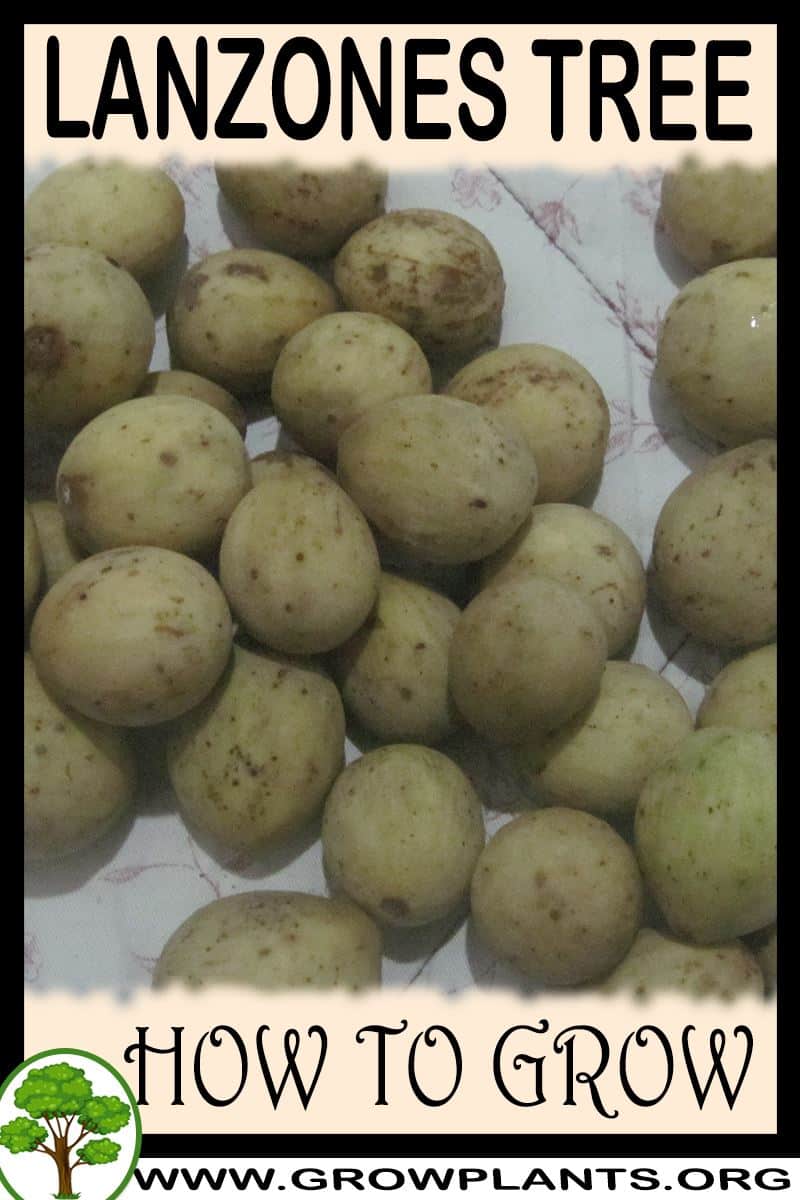
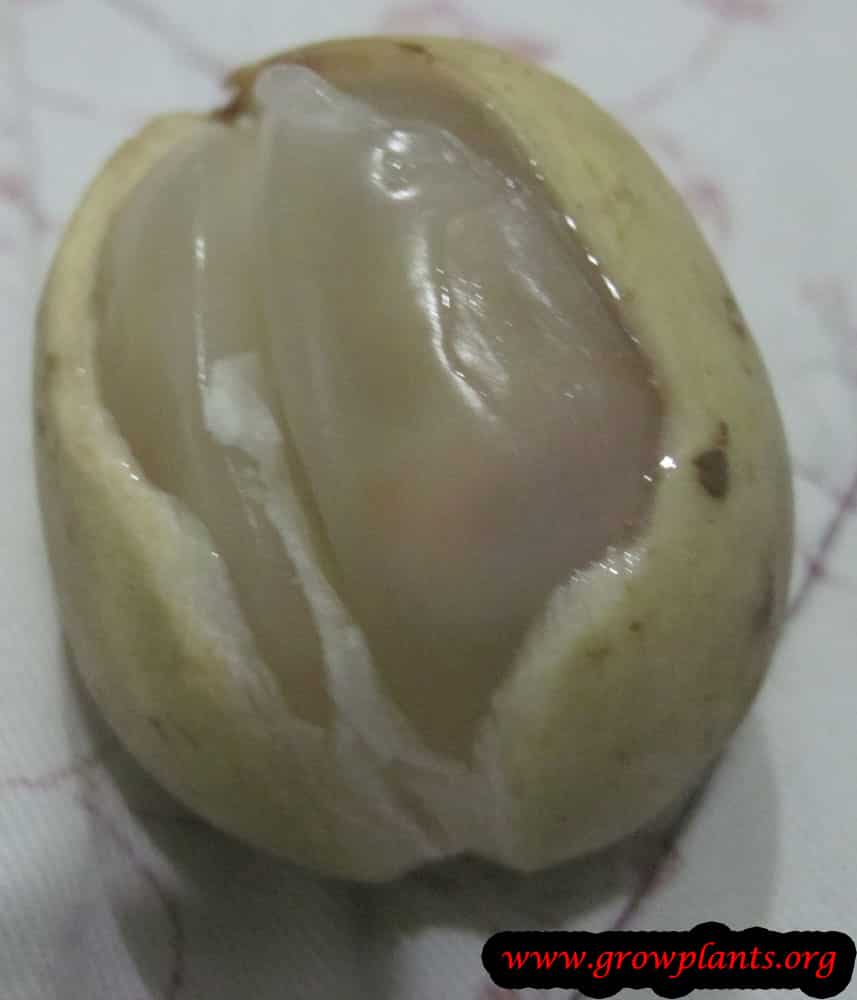
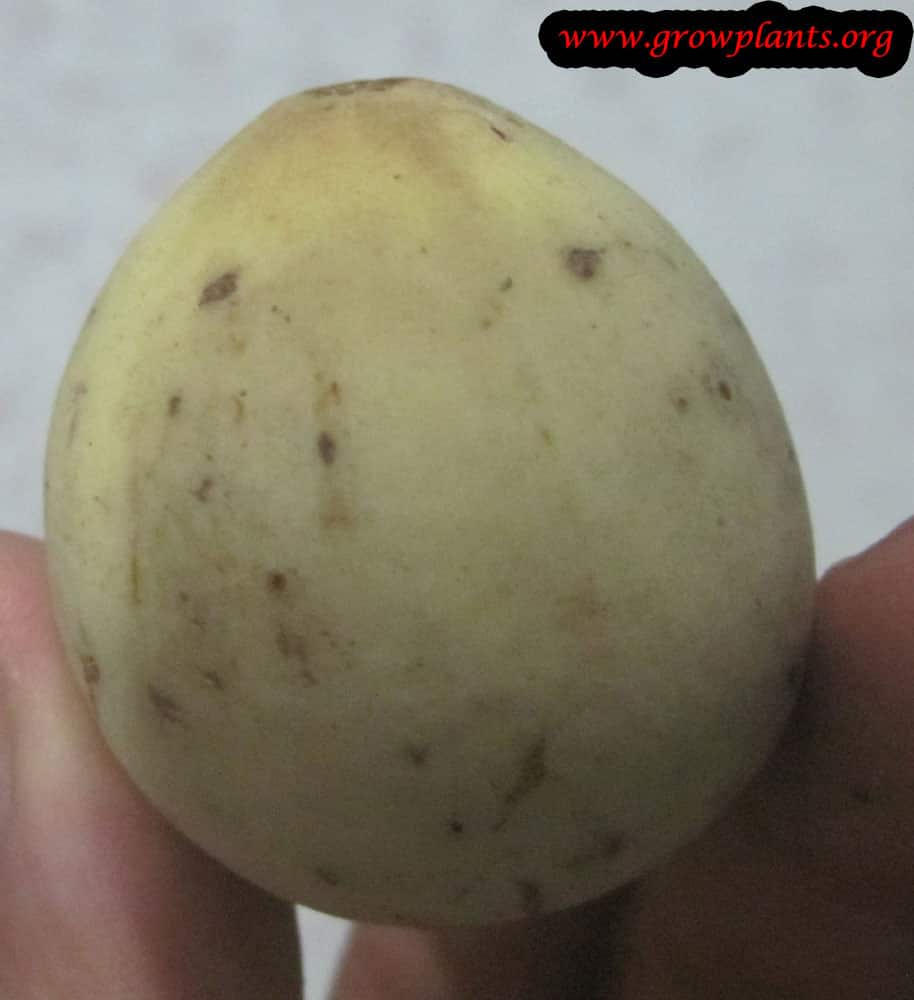
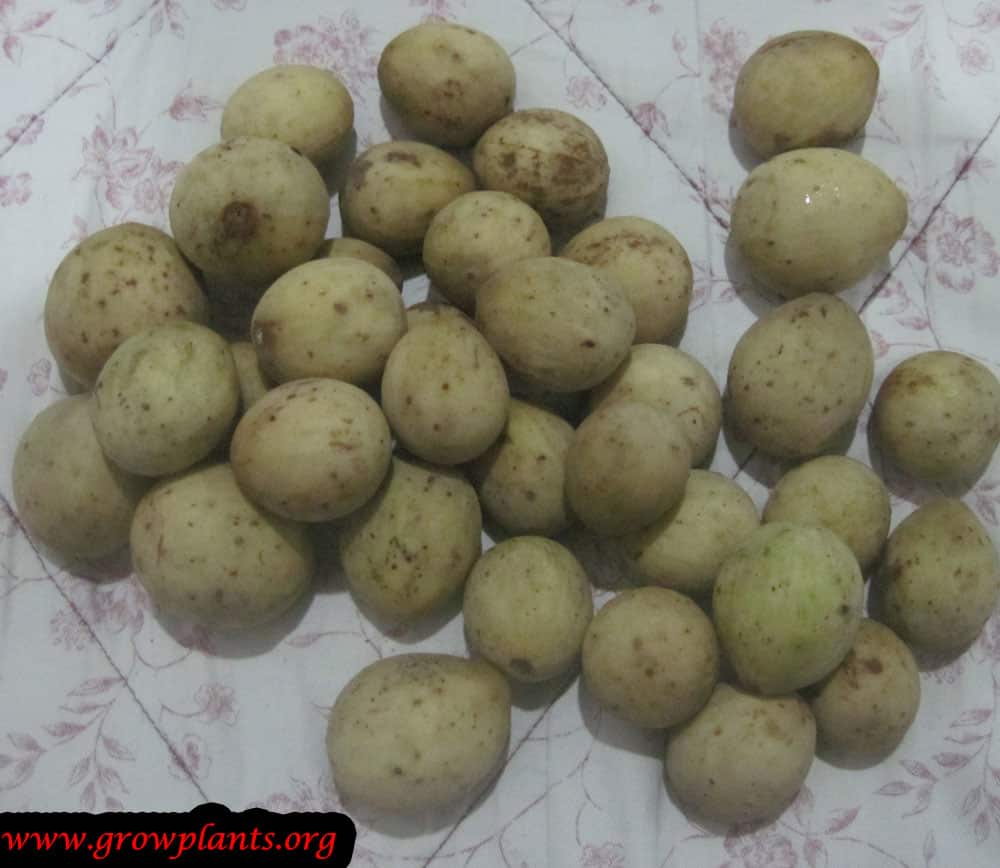
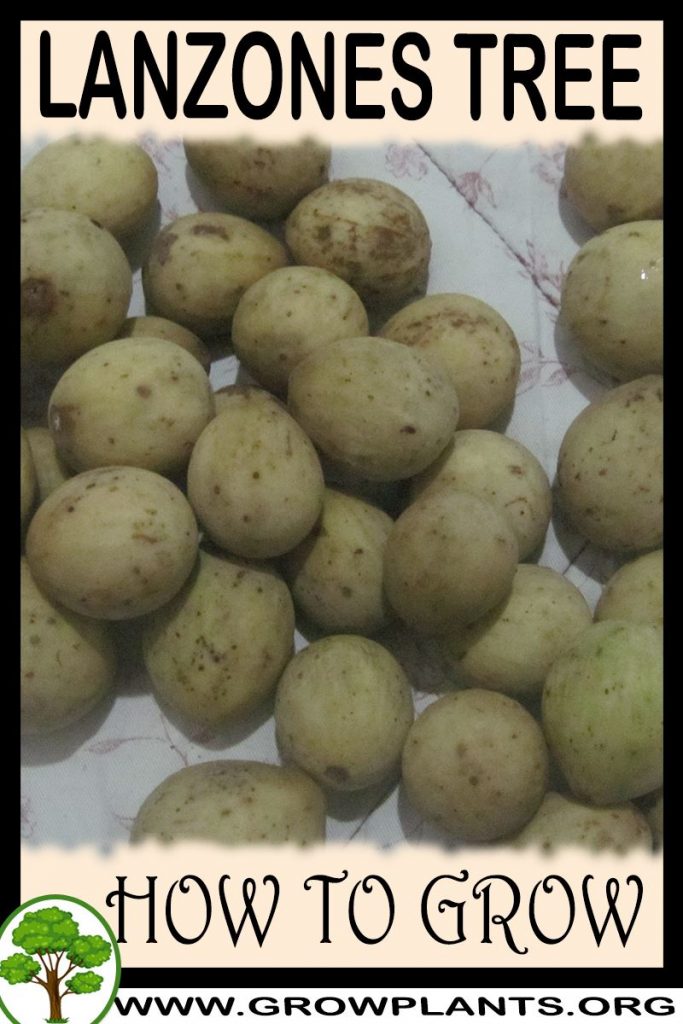
- Fruit Profile: clustered fruit with soft brown-yellow skin and translucent white, lychee-like flesh, holding 0-3 small, bitter seeds.
Primary Uses & Landscape Value
- Edible Uses: fruit eaten fresh, or made into jelly, jam and alcohol.
- Functional & Ornamental Roles: tropical fruit and shade tree.
Care Guide: Planting, Soil & Watering
Overview: Lanzones is a tropical, humidity-loving fruit tree for frost-free climates, growing in full sun (with light shade when young) and needing warmth and moist air. It thrives in rich, humus-rich soil that stays consistently moist yet drains freely.
Quick Care Requirements
| Requirement | Ideal Condition |
|---|---|
| Planting Season | In the warm season, spring through autumn; best in spring in cooler tropical zones |
| Growth Rate | Moderate |
| Soil Type | Rich, humus-rich, moist but well-draining soil |
| Water Need | High – keep the soil consistently moist |
Planting & Establishment
- Best Planting Season: Plant in the warm season from spring through autumn; in cooler, marginal tropical zones plant in spring so the young tree has a full warm season to establish, while in the warmest zones it can go in year-round.
- How to Plant:
- Hole Preparation: Dig a generous hole wider than the root ball and loosen the surrounding soil so roots can spread into rich, moist ground.
- Soil Amendments: Enrich the planting hole with plenty of organic matter to build the rich, humus-rich soil this tree needs.
- Planting Depth: Set the tree with its root collar at soil level; do not bury the trunk.
- Growth Speed & Expectations: A moderate grower that eventually becomes a large tree; grown from seed it is slow to fruit, taking many years to bear.
Soil, Watering & Drainage Care
- Soil Mix & Drainage Needs: Needs rich, moisture-retentive soil that still drains freely, plus high humidity; avoid waterlogging while never letting the soil dry out.
- Watering Schedule & Technique:
- Young / Newly Planted: Keep young plants consistently moist and give them light shade or about 75% sun to protect them while they establish.
- Established: Water generously and regularly to keep the soil moist; this tree prefers ample water and high humidity.
- Seasonal Adjustments: Water more in heat and dry air; in cooler, marginal zones protect young trees over the first few winters.
Climate, Light & Hardiness
Lanzones is a true lowland-tropical tree needing consistently warm, humid, frost-free conditions, growing best in full sun (young trees tolerate some shade). It performs best from about zone 11b upward, with zone 10b as the practical cold limit.
Quick Climate Specifications
| Climate Zones | Tropical |
|---|---|
| USDA Hardiness Zones | 10b–13, doing best at 11b+ |
| Approx. Survival Minimum | approximately 1.7°C (35°F) at the zone 10b boundary, briefly, for an established tree |
| Frost Tolerance | None to Very Low (site data specifies frost-free preferred) |
| Light Conditions | Full Sun (young trees tolerate half shade or about 75% sun) |
Sunlight & Light Exposure
Optimal Light Setup
Full sun for mature growth; young trees can start in half shade or roughly 75% sun.
Direct Sun Requirement
Important for mature trees; young trees benefit from a little protection.
Best Exposure / Orientation
A warm, humid, sunny site.
Temperature Extremes & Hardiness
USDA Hardiness & Regional Limits
Site data spans zone 10b–13 but specifically notes the tree does best from zone 11b upward – treat zone 10b–11a as a marginal, protection-required limit rather than an ideal range.
Cold Damage & Winter Protection
Frost-free conditions are preferred; in marginal zones (10b–11), protect young trees through their first winters.
Frost Sensitivity
Very high; essentially no frost tolerance.
Extreme Heat Tolerance
Good in genuinely tropical heat with adequate humidity.
Wind, Humidity & Microclimate
Humidity Preferences
Needs consistently high humidity for good growth.
Rainfall & Seasonal Moisture
Suited to humid, rainfall-rich tropical climates; rich, moist soil is preferred.
Microclimate Recommendations
A warm, humid, sheltered site is essential, especially in the cooler part of its range (zone 10b–11).
Growing in Pots, Balconies & Indoors
Lanzones (Lansium parasiticum) is a tall tropical tree, potentially 20-30 m (60-100 ft). The grower confirms it is neither a houseplant nor a container plant – it is a canopy tree that needs the open ground in a warm, humid climate.
Quick Details
- Container Size: Only viable while young – a large tub; it far outgrows any pot
- Indoor Suitability: Not suitable
- Best Spot: Full sun when mature; a young tree can take half shade to about 75% sun
- Soil & Drainage: Rich, free-draining mix kept moist
- Watering in Pots: Generous – it prefers plenty of water and steady moisture
Indoors & On the Windowsill
- Houseplant limits: Not a houseplant – it grows into a towering tree.
- Young plants: Seedlings appreciate some shade early on, so a bright spot can suit them for a while, but they need to be planted out to develop.
On a Balcony or Patio
- Young specimen only: A young tree can be grown in a large pot in a warm, sheltered, partly shaded spot for its first years. Keep the mix consistently moist as pots dry fast.
Choosing the Pot, Soil & Long-Term Care
- Pot & drainage: Use a pot with plenty of drainage holes; skip a standing water saucer to avoid root rot. Terracotta breathes and dries faster, while glazed or plastic pots hold moisture longer.
- Potting mix: A well-aerated, organic-rich mix – peat or coir blended with perlite or vermiculite for drainage.
- Feeding: Potted plants need feeding more often than those in the ground, as nutrients leach out with each watering – feed lightly through the active growing season.
- Repotting: Refresh the mix or pot up about every two years; for an established specimen, replace part of the soil and lightly prune the roots and top growth.
Fertilizing & Feeding
Lanzones is a large, strictly tropical shade tree that needs sustained humidity and moisture and takes a long stretch of years to reach bearing age; feeding stays moderate but consistent across a long framework-building period, and this tree is not a realistic container subject.
Quick Fertilizing Specs
| Feeding Level | Moderate; a large tree that needs sustained, consistent feeding rather than a heavy hand. |
|---|---|
| Main Nutrient Priority | Balanced nutrition supporting steady canopy growth over a long pre-bearing period, shifting toward potassium once fruiting begins. |
| Best Feeding Period | Through the warm season while humidity and soil moisture stay high. |
| Organic Options | Rich, well-drained soil built up with organic matter suits this tree’s preference for moist, humid growing conditions. |
| Reduce/Stop Feeding | Ease off if the site turns cool or dry, since this strictly tropical tree does not tolerate frost and stops active growth outside warm, humid conditions. |
Feeding by Growth Stage
Newly planted
Establish a young Lanzones in a warm, humid, frost-free site with rich, well-drained, consistently moist soil.
| Nutrient direction | Light, balanced nutrition focused on rooting in, since this species is unforgiving of dry or cool conditions while establishing. |
|---|---|
| Timing | At planting, in a sheltered spot with reliable humidity. |
| Frequency | A light feeding at planting is usually enough while the young tree roots in. |
| Fertilizer types | A balanced complete fertilizer used lightly, Rich organic matter worked into the planting hole |
| Precautions | Keep humidity and soil moisture consistently high; this tree is far less forgiving of dry spells than of light feeding. |
Young tree, long framework-building phase
Build the canopy of what will become a large shade tree, a process that takes considerably longer here than in most fruiting trees, especially if grown from seed rather than grafted.
| Nutrient direction | A nitrogen-leaning balanced feed sustained over an extended framework-building period. |
|---|---|
| Timing | Through each warm, humid growing season across the tree’s long juvenile phase. |
| Frequency | Regular, moderate feedings spread through each growing season suit this tree’s slow path to bearing age better than a single heavy dose. |
| Fertilizer types | A balanced, nitrogen-forward complete fertilizer, Organic matter and mulch to help retain soil moisture and humidity |
| Routine trace nutrients | iron, manganese, zinc |
| Precautions | A grafted tree generally reaches bearing age sooner than one grown from seed, so feeding here may span a shorter or much longer stretch depending on how the tree was propagated. |
Established, still some years from bearing
Carry a well-established tree through continued canopy growth as it slowly approaches its first small, yellow-green flower clusters and eventual fruit.
| Nutrient direction | Balanced nutrition supporting steady growth of an increasingly large canopy. |
|---|---|
| Timing | Through each warm growing season as the tree matures toward flowering age. |
| Frequency | Steady, moderate feeding through the growing season supports this tree’s long approach to bearing without forcing excess soft growth. |
| Fertilizer types | A balanced complete fertilizer with routine trace elements |
| Routine trace nutrients | iron, manganese, zinc |
| Precautions | Full sun suits a maturing tree best, though young trees often tolerate and even prefer some shade. |
Mature and bearing
Support a large, mature Lanzones through its fruit crop, borne on short stalks along the trunk and branches.
| Nutrient direction | Balanced feeding shifting toward potassium as fruit develops and ripens. |
|---|---|
| Timing | Across the bloom-to-harvest cycle during the warm, humid growing season. |
| Frequency | Moderate, evenly spaced feedings through fruit development suit this tree better than one heavy application. |
| Fertilizer types | A balanced to potassium-leaning complete fruiting fertilizer |
| Routine trace nutrients | iron, manganese, zinc |
| Precautions | Sustained soil moisture and humidity through fruit development matter as much as feeding for a good crop. |
Nutrient Deficiency Signs & Corrections
Leaves yellow between the veins while the veins stay green.
| Possible causes | High soil pH tying up iron, Waterlogged or compacted soil limiting uptake, A genuine iron shortage |
|---|---|
| Appears first on | New growth toward the shoot tips. |
| What to check | Soil pH and drainage, Whether only new leaves are affected, Recent watering pattern |
| Possible correction | Correct drainage and soil pH first, then apply a chelated iron product per its label if yellowing continues. |
Leaves droop, curl, or brown at the edges even though the tree is otherwise well fed.
| Possible causes | Insufficient soil moisture for a tree that needs consistently moist, humid conditions, Low ambient humidity, Root stress from waterlogging rather than true drought |
|---|---|
| Appears first on | Leaf margins and younger foliage. |
| What to check | Soil moisture consistency, Ambient humidity, Drainage at the root zone |
| Possible correction | Address soil moisture and humidity before adjusting feeding; this tree’s water and humidity needs are usually the limiting factor. |
The tree grows well but flowers or fruits little even at an age where fruiting would be expected.
| Possible causes | A seed-grown tree simply not yet at bearing age, which can take considerably longer than a grafted tree, A boron shortage affecting flower and fruit set, Excess nitrogen favoring canopy growth over reproduction |
|---|---|
| Appears first on | Overall flowering and fruit set across the tree. |
| What to check | Whether the tree was grown from seed or grafted, Recent nitrogen-heavy feeding, Tree age and size |
| Possible correction | Confirm the tree’s likely bearing age given how it was propagated, ease back on nitrogen, and consider a boron-containing product per its label if flowering stays sparse. |
Pruning, Training & Seasonal Maintenance
Lanzones tolerates only light, sanitation-focused pruning – it is a large tropical shade tree (potentially 20–30 m) that bears its flowers and fruit in clusters on short stems attached directly to the trunk and older branches (cauliflory), so cutting into that woody surface removes future crop directly rather than just shaping the tree. Where this species is grown at the cooler, more marginal edge of its range (roughly zone 10b–11), a cool, relatively dry stretch of the year is the safest time for sanitation work; in truly tropical, effectively winterless conditions, tie sanitation pruning instead to the drier season or to just after harvest. In either case, the objective stays the same – remove only what is dead or weak, and leave the trunk and branch surfaces otherwise undisturbed.
Quick Pruning & Maintenance Specs
| Pruning Tolerance | Low |
| Primary Pruning Window | Cool/dry season where distinct (subtropical margins); dry season or post-harvest in true tropical climates |
| Typical Frequency | As needed sanitation only |
| Main Objective | Remove dead and weak branches without damaging trunk/limb surfaces that bear fruit |
| Young Plant Priority | Establish a sound framework early, since major corrective cuts later remove productive wood |
| Mature Plant Priority | Sanitation only; leave trunk and major limb surfaces intact |
| Best Tool Type | Pruning saw for dead limbs; pole pruner for out-of-reach deadwood on a mature tree |
| Avoid Heavy Pruning During | Flowering and fruit development |
Pruning by Plant Age & Size
Newly Established
Remove only damaged growth from transplanting; this is the best time to correct any structural fault, since the tree cannot be significantly reshaped later without sacrificing fruiting surface.
Young / Formative
Light structural selection to establish a sound, well-spaced branch framework while wood is still small-diameter and cuts are low-cost; there is no dwarfing or size-control training system suited to a tree of this eventual scale (20–30 m).
Mature / Established
Sanitation only – remove dead and weak branches as they appear. Avoid any pruning aimed at reshaping the tree, since mature trunk and limb surfaces are exactly where the crop is borne.
Flowering & Fruiting Wood
This species flowers in inflorescences borne on short stems that grow directly from the trunk and older branches (cauliflory), not from current-season shoot tips. That means the fruiting surface is the trunk and limb bark itself, built up over years – cutting into or removing sections of that surface permanently reduces future cropping area in a way that pruning a shoot-tip-bearing tree would not. Keep cuts limited to genuinely dead or weak wood rather than any cosmetic shaping of the trunk or main limbs.
Structural Pruning & Training
Beyond early formative selection, structural pruning is minimal by design: removing crossing or rubbing branches is reasonable while the tree is young, but height and spread control by pruning is impractical and not documented for a tree that naturally reaches 20–30 m – site selection, not pruning, is the real tool for managing its ultimate size.
Tools
Pruning saw for removing dead branches of any real size; pole pruner for deadwood beyond reach once the tree is mature and tall. Cuts on a tree of this eventual scale, once mature, are largely beyond routine home-garden tools and may call for a professional arborist.
Tool Hygiene & Disease Risk
Routine risk for sanitation cuts – reported pests are aphids, ants and termites, none of which are noted as spread by pruning tools; clean, sharp tools are sufficient.
Cut Placement & Technique
Cut dead or weak branches back to sound wood just outside the collar; on larger limbs, stage the cut (undercut first) to avoid bark tear down the trunk, which would damage cauliflorous fruiting surface below the cut.
Heavy Pruning & Rejuvenation
Not tolerated and not documented for this species – as a large, single-form tropical shade/fruit tree bearing on trunk and limb surfaces, there is no rejuvenation-pruning practice to recommend; avoid hard cut-backs entirely.
Post-Pruning Care
Keep the tree well watered after any pruning (it prefers a large amount of water); no fertilizing is needed purely to force regrowth, since none is wanted from sanitation cuts.
Common Pruning Mistakes
- Cutting into or removing sections of trunk/limb bark for shaping, not realizing this is the tree’s actual fruiting surface.
- Attempting to control the tree’s height by heading cuts, which this species is not documented to tolerate well.
- Flush-cutting large limbs, risking bark tear down into productive trunk surface.
When NOT to Prune
Avoid pruning during flowering and fruit development, and avoid any cosmetic cutting of trunk or major limb surfaces at any time, since that surface is where the crop is borne.
Recommended Tools (by task)
- pruning_saw – for removing dead or weak branches of real diameter.
- pole_pruner – for deadwood out of reach on a tall, mature tree.
Pruning Troubleshooting
| Problem | Possible Cause | What to Check | Corrective Action |
| Reduced fruiting after pruning | Cuts removed sections of trunk/limb bark where flowers form | Whether recent cuts touched trunk or major-limb surface rather than just deadwood | Limit future cuts strictly to dead/weak wood; let bark surface recover undisturbed |
| Bark tear on a large limb | Single-cut removal of a heavy branch | How the cut was made (single cut vs staged) | Use a staged (undercut-first) technique on any large limb removal |
Propagation Guide
Lanzones grows readily from seed sown fresh and promptly after fruiting, but the site recommends grafting or air layering because it substantially shortens the long wait to fruiting and helps ensure fruit quality compared with seedlings. Propagation is Easy by seed, but Moderate to Specialist for grafting, which the site describes as more precise when done with a grafting machine.
Quick Propagation Specs
| Best Propagation Method | Grafting or air layering (for guaranteed fruit quality and faster fruiting) |
| Alternative Methods | Seed |
| Propagation Difficulty | Easy by seed, Moderate to Specialist by grafting |
| Seed True-to-Type | Variable – fruit quality is not guaranteed from seed |
| Vegetative True-to-Type | Yes |
| Best Propagation Season | Seed: directly after the summer fruit harvest. Grafting: best carried out while the tree is still young. |
| Seed Germination Time | 1–3 weeks |
| Germination Temperature | Warm, humid tropical conditions typical of this species; the site does not give an exact figure |
| Seed Sowing Depth | About 2–4 cm, measured from the top of the seed |
| Graft Union/Establishment Time | A few weeks, until new leaves emerge on the graft |
Growing from Seed
Seed Handling & Viability
Wash the seed free of the fruit’s rind and leftover flesh, then sow quickly – the site notes seed stays viable only about 5–7 days if not sown immediately, and should be kept in moist soil (not dried) in the meantime.
Sowing Season
Directly after the fruit is harvested, since the fruit ripens in summer – sow right away rather than storing.
Sowing Depth & Orientation
About 2–4 cm deep, measured from the top of the seed; the site recommends sowing into separate individual pots rather than a shared bed.
Germination Conditions
High humidity, the long days of summer, and moist, rich soil.
Germination Time
About 1–3 weeks.
Seedling Care
Keep the soil moist and humidity high; in hardiness zone 10b–11, protect seedlings over winter for their first few years.
Grafting & Budding
Why Grafting Is Used
To reduce the long wait for fruit and to ensure fruit quality, compared with growing from seed.
Preferred Grafting Methods
The site emphasizes using a grafting machine for greater accuracy rather than naming a specific hand-graft technique.
Rootstock
A young seedling tree – the site notes grafting is easier and better done while the tree is still young.
Scion Selection
Wood from a tree of known good fruit quality.
Best Grafting Season
No strict calendar season is given; the key timing factor noted is grafting a young tree rather than an older one.
Graft Aftercare
Cover the graft with a transparent nylon bag, then wrap aluminum foil over that, and leave it a few weeks until new leaves grow before uncovering.
Air & Ground Layering
The site lists air layering alongside grafting as a way to propagate a known good tree. General practice for a tree of this type is to wound or girdle a moderately mature branch, wrap it in moist medium, and keep it humid until roots are visible before separating and potting the new plant; the site does not give species-specific timing for this method.
Bloom & Flower Guide
Quick Details
- Bloom Season: Autumn to winter
- Flower Appearance: Tiny (1–3 mm) yellow-green flowers in clusters borne directly on the trunk and older branches
- Edibility: Grown for its edible fruit; the small flowers are not eaten
Detailed Blooming Overview
Lanzones flowers in a way that surprises many gardeners: the little yellow-green blooms appear not at the branch tips but in clusters straight off the trunk and the thicker limbs — a habit botanists call cauliflory. Individually the flowers are tiny, but they are produced in numbers and are well worked by pollinators.
Flower Characteristics
- Very small yellow-green flowers, only a few millimeters across.
- Carried in short-stalked clusters on the trunk and main branches (cauliflory).
Bloom Care & Thinning
- Pollination: Worked by bees and flies.
- Managing the bloom: Little intervention is needed at the flowering stage; the clusters form on the woody framework of the tree.
Fruit & Uses
Caution: only the sweet, translucent flesh of Lanzones (langsat) is eaten — the peel and the bitter seed(s) inside are not eaten and should be discarded, not chewed or swallowed. Once that is understood, the ripe fruit is straightforward fresh eating: peel back the soft brown-yellow skin and pop out the lychee-like segments, spitting out any seed.
Quick Edible Specs
| Edible Parts | Fruit (flesh only) |
| Main Use(s) | Culinary – fresh eating; also jelly, jam, alcohol |
| Eaten Raw or Cooked | Raw (flesh); also processed into jelly/jam/alcohol |
| Preparation Required | Peel; remove and discard seed(s) – do not chew or eat |
| Harvest Season | Spring, summer |
| Time to First Harvest | Notably long for a seedling tree; grafted trees fruit sooner – see Propagation |
| Safety/Toxicity Caveat | Peel and seed are bitter and not edible, and may be irritant/toxic to animals in quantity – eat the flesh only |
Fruit
Ripe fruit resembles a small potato in shape, with a soft brown-yellow peel that is peeled away by hand. Inside, white, lychee-textured flesh is what is eaten — juicy, sweet-tart segments arranged around 0–3 seeds per fruit. Only the flesh is eaten: the seed(s) are bitter and should be spat out rather than chewed or swallowed, and the peel is likewise discarded, not eaten. Fruit can be picked slightly before it is fully ripe, and is harvested through spring and summer; birds are the main pest to watch for on the ripening crop.
Preparation, Uses & Safety
Caution: eat only the peeled flesh. The peel and seed(s) are bitter, are not intended to be eaten, and have historically been associated with toxicity to animals when consumed in quantity — discard both rather than leaving them where pets could get into them. Beyond fresh eating, the flesh is used to make jelly, jam and a traditional fermented drink. No cooking is required for fresh eating.
Pests, Diseases & Troubleshooting
Overview: Lanzones (langsat) is a tropical fruit tree in the mahogany family whose main problems are fruit-attacking insects and warm-humid fungal diseases, plus vertebrate raiders (birds and bats) taking ripe fruit. As with most tropical fruit, orchard sanitation, fruit protection and airflow are the backbone of management. This profile covers the major documented pests; regional pest complexes vary, so verify locally.
Quick Troubleshooting Overview
| Issue / Pest | Main Symptom | Primary Solution |
|---|---|---|
| Fruit flies | Maggots and rot inside ripening fruit | Bait/lure traps; bag fruit; clear drops |
| Bark-eating caterpillar | Silk-and-frass tunnels on bark; branch dieback | Probe/clean tunnels; remove webbing |
| Mealybugs & scale | Cottony/bumpy clusters, sooty mould | Horticultural oil; encourage beneficials |
| Aphids | Sticky, curled new flush | Water jet, soap/oil, beneficials |
| Birds & bats | Ripe fruit pecked or eaten | Net or bag fruit clusters near ripening |
| Anthracnose | Dark sunken spots on leaves/fruit | Airflow, sanitation, copper if needed |
Common Pests & Management
- Fruit flies (Bactrocera spp.):
- Symptoms: Females sting ripening fruit to lay eggs and maggots tunnel the flesh, causing internal breakdown, oozing and premature fruit drop; punctures also admit rot.
- Prevention & Control: Hang protein-bait and pheromone lure traps, bag or sleeve fruit clusters as they mature, and above all collect and destroy fallen and infested fruit to break the breeding cycle. Field sanitation is the single most effective fruit-fly control.
- Bark-eating caterpillar (Indarbela spp.):
- Symptoms: Larvae bore under the bark of trunk and branches, feeding at night beneath protective tunnels of silk, frass and chewed bark; heavy attack weakens limbs and causes dieback.
- Prevention & Control: Locate the ribbon-like frass tunnels, clean them away and probe or inject the burrows to destroy the larvae, and prune out badly bored dead wood. Keep trees vigorous and remove loose dead bark that shelters the caterpillars.
- Mealybugs (Pseudococcidae):
- Symptoms: White, cottony, waxy masses tucked into leaf axils, stem joints and along veins. Feeding weakens the plant, yellows leaves and produces sticky honeydew followed by black sooty mould.
- Prevention & Control: Dab visible colonies with a cotton bud dipped in surgical spirit, and isolate infested container plants. Keep plants unstressed and inspect new arrivals before introducing them. For persistent colonies apply neem or horticultural oil, ensuring the spray reaches into tight crevices where they hide.
- Scale insects (Coccoidea):
- Symptoms: Small, immobile brown, tan or waxy bumps along stems, twigs and leaf veins that scrape off to reveal a soft body. They drain sap, causing yellowing, poor growth, dieback and copious honeydew with sooty mould.
- Prevention & Control: Prune out heavily encrusted twigs and rub off light infestations. Encourage parasitic wasps and predatory beetles by avoiding routine broad-spectrum sprays. Smother the crawler stage and settled adults with horticultural oil, applied thoroughly and repeated, as the waxy coat protects mature scale from contact sprays.
- Aphids (Aphidoidea):
- Symptoms: Small soft-bodied green, black or grey insects clustering on new shoots, flower buds and the undersides of young leaves. They suck sap, causing curled, distorted, sticky (honeydew-coated) growth and can transmit viruses. Look for cast white skins and attending ants.
- Prevention & Control: Blast colonies off with a firm jet of water and pinch out badly infested tips. Encourage ladybirds, lacewings and hoverflies with companion flowers; avoid excess high-nitrogen feeding that produces soft, aphid-prone growth. If populations persist, treat with insecticidal soap or a light horticultural/neem oil, coating leaf undersides and spraying in the cool of the evening to protect pollinators.
Diseases & Fungal Issues
- Anthracnose (Colletotrichum gloeosporioides):
- Symptoms: Dark, sunken spots on leaves, flowers and fruit, sometimes with pink spore masses, causing flower and fruit drop and post-harvest fruit rot in warm, wet, humid weather.
- Treatment & Management: Prune for an open, airy canopy, remove infected leaves, flowers and mummified fruit, and avoid overhead wetting. Harvest carefully to avoid wounds. Protective copper or an approved fungicide during flowering and fruiting helps under persistent humidity.
- Leaf spot & algal spot (Cercospora / Cephaleuros spp.):
- Symptoms: Brown fungal leaf spots, or raised rusty-orange velvety spots of algal leaf spot on leaves and twigs in humid shaded conditions.
- Treatment & Management: Improve airflow and light by pruning, rake up fallen leaves, and avoid dense overcrowding. Copper sprays control both fungal and algal leaf spot where they become significant; usually the damage is minor and cosmetic.
- Stem canker & dieback (Botryosphaeria / Lasiodiplodia spp.):
- Symptoms: Sunken cankers, gumming and progressive twig and branch dieback, often entering through wounds or borer damage in stressed trees.
- Treatment & Management: Prune out cankered and dead wood back to healthy tissue with disinfected tools, protect trees from bark injury and borers, and keep them well watered and fed so they can resist infection. Avoid pruning in wet weather.
- Root & crown rot (Phytophthora / Pythium / Rhizoctonia spp.):
- Symptoms: Wilting despite moist soil, yellowing lower leaves, blackened mushy roots or a rotting stem base, often in heavy, poorly drained or overwatered ground. Lanzones needs well-drained tropical soils and resents waterlogging.
- Treatment & Management: This is a drainage and water-management problem first: plant in free-draining soil or raised beds, never let containers stand in water, and water deeply but only when the surface has dried. Remove and destroy collapsed plants and improve soil structure with grit and organic matter; biological drenches (Trichoderma) help in beds. Chemical fungicides rarely rescue an established rot.
Growing Difficulties & Abiotic Problems
- Fruit drop & poor set (abiotic):
- Cause & Symptoms: Heavy drop of flowers and small fruit, or poor fruiting, from moisture stress, erratic watering, poor pollination or nutrient shortage during the demanding flowering and fruiting period.
- Correction Strategy: Keep soil moisture even (deep regular watering, mulched) especially through flowering and fruit development, feed a balanced program, and provide the partial shade and shelter this understorey tree prefers when young. Avoid drought and waterlogging swings that trigger drop.
- Sunburn / heat & wind stress (abiotic):
- Cause & Symptoms: Scorched leaves and bark on exposed young trees, as lanzones naturally grows as a shaded understorey species and dislikes full exposure when young.
- Correction Strategy: Grow young trees under partial shade or intercropped shelter, protect from strong wind and intense sun, and mulch the root zone. Trees tolerate more sun as they mature and develop a dense canopy.
- Nutrient deficiency (abiotic):
- Cause & Symptoms: Yellowing or poor growth on infertile or leached tropical soils, commonly nitrogen or micronutrient shortages.
- Correction Strategy: Apply balanced fertiliser with micronutrients suited to tropical fruit, maintain organic mulch, and correct soil pH as needed so nutrients remain available. Regular light feeding suits its steady growth.
What Helps — Products & Tools
Lanzones management centres on fruit-fly bait and lure traps, fruit bagging and strict removal of fallen fruit, plus netting against birds and bats. Horticultural oil and insecticidal soap handle mealybugs, scale and aphids; copper fungicide addresses anthracnose and leaf spots. Sharp sanitised pruning tools keep the canopy open and remove cankered wood.
Frequently Asked Questions
How do you plant a lanzones tree?
Plant lanzones in the warm season, from spring through autumn — in cooler, marginal tropical zones plant in spring so the tree has a full warm season to establish, while in the warmest zones it can go in year-round. Dig a generous hole wider than the root ball and loosen the surrounding soil so roots can spread into rich, moist ground, working in plenty of organic matter to build the rich, humus-rich soil this tree needs. Set the tree with its root collar at soil level; do not bury the trunk.
How often should you water a lanzones tree?
Keep young, newly planted lanzones consistently moist, with light shade or about 75% sun to protect them while they establish. Once established, water generously and regularly to keep the soil moist, since this tree prefers ample water and high humidity — water more in heat and dry air, and in cooler, marginal zones protect young trees over their first few winters.
Can lanzones be grown in a pot or container?
Not long-term. The grower confirms it is neither a houseplant nor a container plant – it is a canopy tree that needs the open ground in a warm, humid climate. A young tree can be grown in a large pot in a warm, sheltered, partly shaded spot for its first years, but it must eventually be planted out to develop into the large tree it becomes.
How long does it take for a lanzones tree to bear fruit?
Lanzones is slow to bear: grafted trees fruit sooner, while seedlings take about 8-12 years to bear. This is a key reason grafting or air layering is recommended over growing from seed, since it substantially shortens the long wait to fruiting and helps ensure fruit quality compared with seedlings.
Can you eat the seed or peel of a lanzones fruit?
No. Only the sweet, translucent flesh of Lanzones (langsat) is eaten — the peel and the bitter seed(s) inside are not eaten and should be discarded, not chewed or swallowed. They have historically been associated with toxicity to animals when consumed in quantity, so keep them away from pets.
How should you prune a lanzones tree?
Very lightly, and only for sanitation. Lanzones tolerates only light, sanitation-focused pruning, since it bears its flowers and fruit in clusters on short stems attached directly to the trunk and older branches (cauliflory), so cutting into that woody surface removes future crop directly rather than just shaping the tree. Remove only what is dead or weak, and leave the trunk and branch surfaces otherwise undisturbed.