Plant Profile & Key Characteristics
Overview: Koelreuteria elegans (Flamegold) is a fast-growing ornamental and shade tree reaching 4-15 m, valued for its large sprays of small yellow flowers and showy pink-brown seed capsules. It is evergreen to semi-deciduous in warm climates and is notably drought tolerant once established.
Quick Specifications
| Specification | Attribute |
|---|---|
| Plant Type / Life Cycle | Perennial |
| Foliage Type | Evergreen (semi-deciduous where winters are cool) |
| Mature Size | 4-15 m (12-45 ft) tall |
| Growth Rate | Fast |
| Hardiness | USDA zones 9+ |
Growth Form & Structure
- Height & Spread: 4-15 m (12-45 ft) tall with a broad, spreading canopy; not suited to containers.
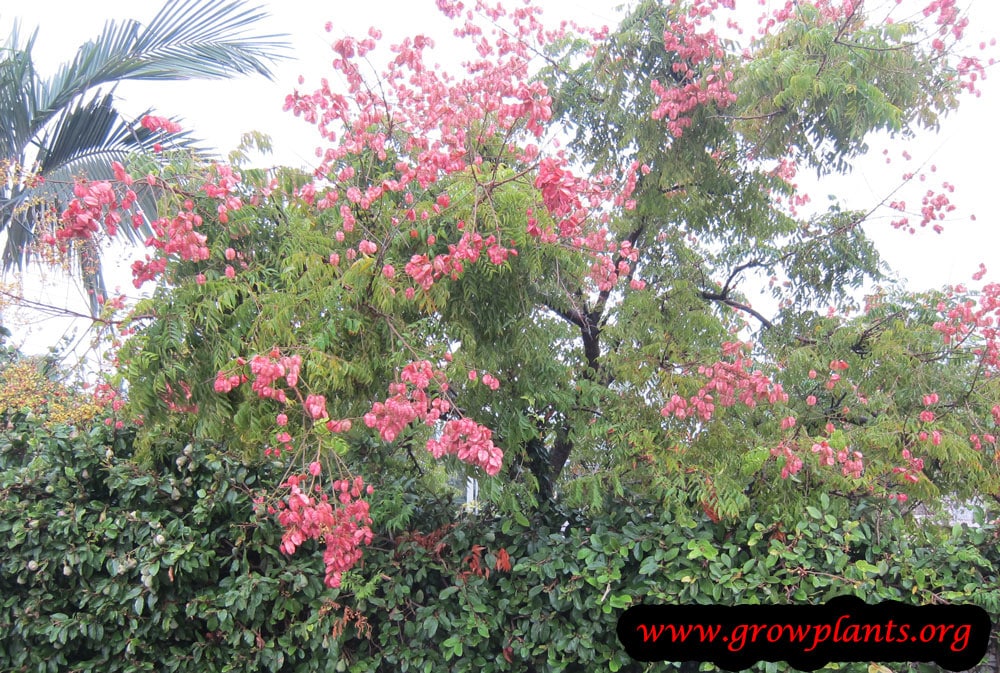
- Growth Habit & Form: single- or multi-stemmed tree with a rounded, spreading crown.
- Lifespan & Maturity: fast-growing and relatively short-lived for a tree.
Anatomy & Physical Features
- Leaves & Foliage: green, elliptic leaflets arranged in large pinnate (feather-like) compound leaves.
- Flower Characteristics: small yellow flowers borne in large terminal clusters (summer).
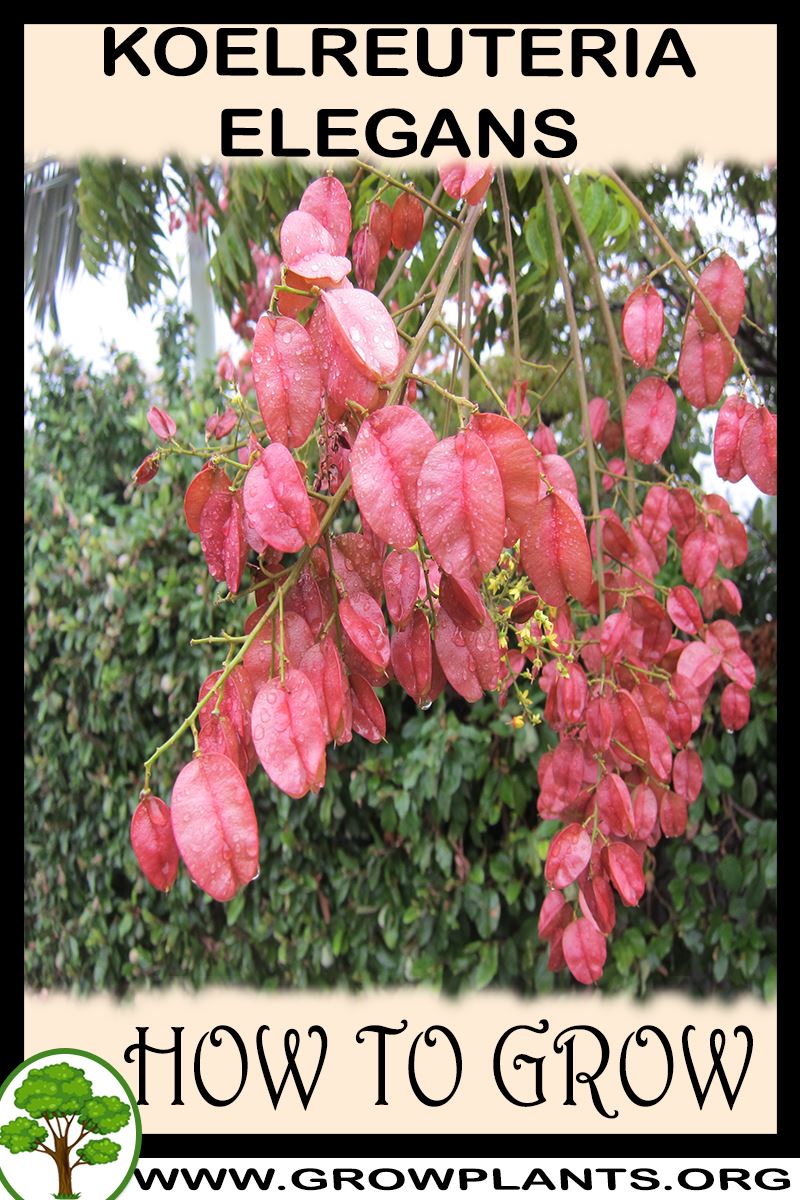
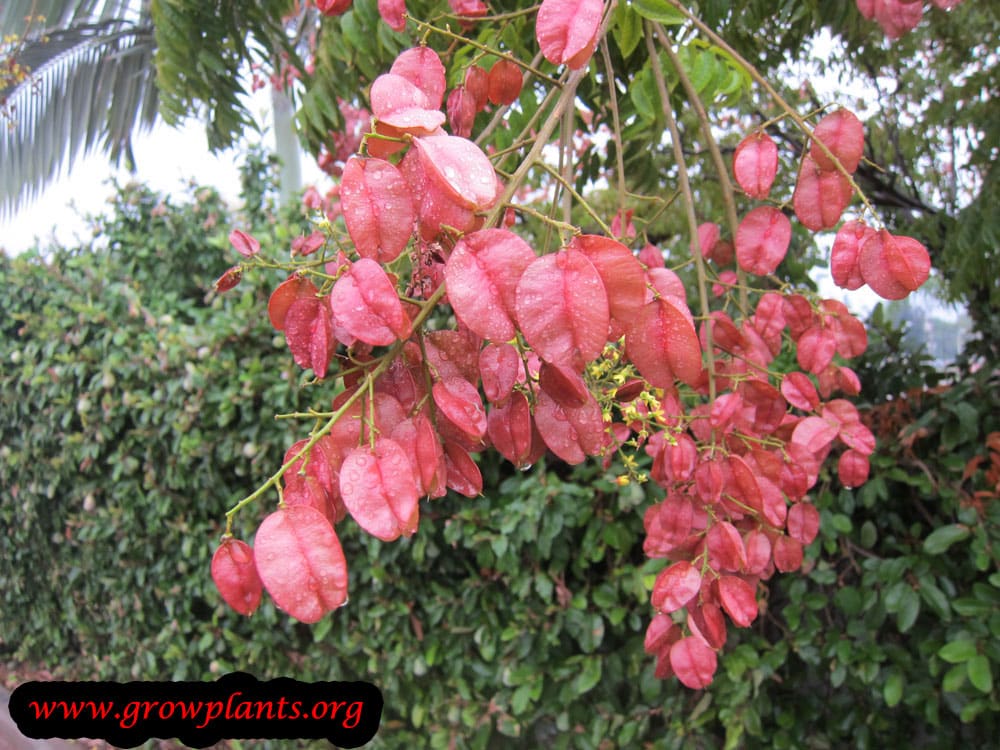
- Fruit Profile: showy, papery, pink-brown inflated seed capsules (three-parted) – ornamental, not edible.
Primary Uses & Landscape Value
- Functional & Ornamental Roles: flowering shade tree, street and specimen tree, drought-tolerant landscape tree.
Care Guide: Planting, Soil & Watering
Overview: Flamegold is a fast-growing, drought-tolerant tree for subtropical to mediterranean climates (hardy roughly zone 9 and up) used for shade and its yellow flowers, in full sun to light shade. It is undemanding on soil provided it drains, and needs only low to moderate watering once established.
Quick Care Requirements
| Requirement | Ideal Condition |
|---|---|
| Planting Season | In spring, summer or autumn during the warm, frost-free season |
| Growth Rate | Fast |
| Soil Type | Well-draining soil; adaptable and drought tolerant |
| Water Need | Low to moderate – water while young, then only in dry spells once established |
Planting & Establishment
- Best Planting Season: Plant during the warm season, from spring to autumn, in frost-free conditions so it establishes before any cold.
- How to Plant:
- Hole Preparation: Dig a hole about twice the width of the root ball and the same depth, loosening the sides so roots spread easily.
- Soil Amendments: A little compost helps a poor soil, but the main need is free drainage; it is not fussy about fertility.
- Planting Depth: Set the top of the root ball level with the surrounding soil, keeping the root collar at grade.
- Growth Speed & Expectations: Fast, quickly forming a broad shade canopy.
Soil, Watering & Drainage Care
- Soil Mix & Drainage Needs: It tolerates a range of soils as long as they drain; avoid waterlogged ground.
- Watering Schedule & Technique:
- Young / Newly Planted: Water young trees regularly for the first season or two to establish a strong root system.
- Established: Once established it is drought tolerant and needs only low to moderate water, mainly deep soakings in extended dry spells.
- Seasonal Adjustments: Water more in the first summers and during drought, and little is needed in the cooler, wetter months.
Climate, Light & Hardiness
Flamegold thrives in subtropical, tropical, and Mediterranean climates as a warm-climate ornamental and shade tree. It performs best in full sun to half shade and tolerates only light cold, generally needing protection or a warm microclimate below its hardiness limit.
Quick Climate Specifications
| Climate Zones | Subtropical, tropical, Mediterranean |
|---|---|
| USDA Hardiness Zones | Approximately 9 and warmer |
| Approx. Survival Minimum | Around −5°C (23°F) for an established tree |
| Frost Tolerance | Low |
| Light Conditions | Full Sun to Half Shade |
Sunlight & Light Exposure
Optimal Light Setup
Grow in full sun for the densest canopy and best flowering; half shade is tolerated, especially for young trees.
Best Exposure / Orientation
An open, sunny spot away from deep shade suits this fast-growing shade tree best.
Temperature Extremes & Hardiness
USDA Hardiness & Regional Limits
Reliable outdoors in USDA zone 9 and warmer; in cooler zones it is best treated as a container or greenhouse specimen or grown only where winters stay mild.
Cold Damage & Winter Protection
Foliage and stems can be damaged by hard freezes; a sheltered site or trunk protection helps young trees through occasional cold snaps.
Frost Sensitivity
Sensitive to hard frost; brief dips to around −5°C (23°F) are typically survived once the tree is established, but younger plants are more vulnerable.
Wind, Humidity & Microclimate
Humidity Preferences
Adapts well to the humid conditions typical of subtropical and tropical climates as well as the drier air of Mediterranean regions.
Growing in Pots, Balconies & Indoors
The flamegold tree is a fast-growing shade tree with showy flowers and papery lantern seedpods. The grower advises against both indoor and container growing – it simply becomes too big, so give it open ground.
Quick Details
- Container Size: The grower does not recommend pots – it becomes a large tree; only a young plant suits a big tub temporarily
- Indoor Suitability: Not for indoors or long-term pots (grower); it grows into a large tree
- Best Spot: Full sun to partial shade; a bright spot with some direct sun is ideal.
- Soil & Drainage: Aerated, organic-rich mix (quality potting mix, or peat/coir with perlite or vermiculite); it must drain freely.
- Watering in Pots: Let the top few centimetres of mix dry between waterings; pots drain fast, so check often, but never leave it waterlogged.
Indoors & On the Windowsill
- Not a houseplant: The grower marks it unsuitable indoors – it is a full-size tree with no place in a room.
- Container-shy: The grower also advises against pots. A young tree can be held in a large tub for a few years, but plan to plant it out.
On a Balcony or Patio
- While young only: Only a young specimen suits a large patio tub, in full sun with good drainage; it will quickly want to be in the ground.
- Vigour: The grower flags it as invasive – it self-seeds freely, so remove seedpods before they scatter, especially in warm climates.
Choosing the Pot, Soil & Long-Term Care
- Pot & drainage: If holding a young tree temporarily, use the largest tub you can with strong drainage; treat pot life as a short-term stage.
- Potting mix: Use a well-aerated, organic-rich mix – quality potting mix, or peat/coir blended with perlite or vermiculite.
- Feeding: As nutrients wash out of pots faster than open ground, feed potted plants regularly through the growing season with a balanced fertiliser.
- Repotting: Rather than repotting on, plant it into the ground once it outgrows a large tub.
Fertilizing & Feeding
A moderate feeder: balanced feeding during establishment and the warm growing season supports canopy fill-in and the summer flower and fruit display on this fast-growing shade tree, with feeding withheld once growth slows.
Quick Fertilizing Specs
| Feeding Level | Moderate feeder |
|---|---|
| Main Nutrient Priority | Balanced feeding with adequate nitrogen for canopy development |
| Best Feeding Period | Spring through the warm active growing season |
| Organic Options | Compost or mulch worked into the root zone |
| Reduce/Stop Feeding | Feeding is withheld once growth slows for cooler weather |
| Micronutrients | Usually met by a complete fertilizer; correct only diagnosed issues |
| Soil pH | Tolerates a wide range of well-drained soils |
Feeding by Growth Stage
Establishment after planting
Encourage strong root and framework development for this fast-growing shade tree.
| Nutrient direction | A balanced feeding paired with organic matter supports steady root establishment. |
|---|---|
| Timing | At planting and through the first one to a few seasons. |
| Frequency | A light feeding at planting is usually enough, repeated as the young tree establishes. |
| Fertilizer types | A balanced complete fertilizer at a gentle rate, Compost or mulch worked into the planting area |
| Precautions | Keep newly planted trees evenly watered while establishing; avoid concentrated fertilizer against the trunk. |
Warm-season canopy growth and bloom
Support canopy fill-in and the summer display of small yellow flower clusters and papery seed capsules.
| Nutrient direction | Balanced feeding with adequate nitrogen sustains this fast grower’s canopy development. |
|---|---|
| Timing | Through the warm active growing season. |
| Frequency | An occasional feeding through the growing season supports steady canopy development. |
| Fertilizer types | A balanced complete fertilizer, Mulch renewed over the root zone |
| Precautions | Avoid overfeeding; this already fast-growing tree can develop weak wood if pushed too hard. |
Cool-season slowdown
Let the tree rest through its slowest growth period without pushing tender new shoots.
| Nutrient direction | None – withhold fertilizer while growth is inactive. |
|---|---|
| Timing | Cooler weather, when growth visibly slows. |
| Frequency | No feeding during this rest period. |
| Fertilizer types | No feeding at this stage; do not fertilize until active growth resumes. |
| Precautions | Withhold fertilizer now; feeding during the slowdown wastes nutrients and can leave tender growth exposed to cold. |
Nutrient Deficiency Signs & Corrections
Canopy foliage pales and canopy fill-in is slower than expected for this fast-growing tree.
| Possible causes | low available soil nitrogen, nitrogen leaching from watering or rain, thin soil low in organic matter |
|---|---|
| Appears first on | older, lower canopy leaves |
| What to check | recent feeding history, soil organic matter, watering and drainage |
| Possible correction | Apply a balanced complete fertilizer with adequate nitrogen during the active growing season. |
New leaves yellow between veins that stay green.
| Possible causes | alkaline or high-pH soil limiting iron uptake, poorly drained or compacted soil, root stress from recent construction or heavy soil disturbance |
|---|---|
| Appears first on | newest canopy growth |
| What to check | soil pH, drainage and compaction, recent root disturbance |
| Possible correction | Correct soil pH toward neutral and improve drainage; apply a chelated iron product per its label if it persists. |
Leaf margins brown or scorch despite adequate watering.
| Possible causes | fertilizer salt buildup in the root zone, over-fertilizing a fast-growing tree beyond what it needs, concentrated fertilizer placed too close to the trunk or roots |
|---|---|
| Appears first on | leaf tips and margins |
| What to check | recent fertilizer amounts and placement, watering consistency, drainage around the root zone |
| Possible correction | Ease off feeding, water thoroughly to flush accumulated salts, then return to lighter, well-spaced-out feeding. |
Pruning, Training & Seasonal Maintenance
Koelreuteria elegans (Flamegold) is a fast-growing evergreen shade tree that ultimately reaches 4–15 m, so pruning priorities shift heavily with age: young trees need real structural training to establish a sound scaffold before they get large and fast-growing enough for weak forks to become a real hazard, while mature trees mainly need deadwood removal, canopy clearance, and occasional thinning. Being fast-growing and noted as invasive/self-seeding, it also tends to produce root suckers that need managing.
Quick Pruning & Maintenance Specs
| Pruning Tolerance | Moderate (structural correction important while young) |
| Primary Pruning Window | Cooler, dormant-ish months for major structural cuts |
| Secondary Maintenance Window | Any time for deadwood/damage/safety pruning |
| Typical Frequency | Frequent light correction when young; occasional maintenance once mature |
| Main Objective | Sound branch structure while young; canopy clearance & safety once mature |
| Young Plant Priority | Central leader development; remove co-dominant leaders/included bark |
| Mature Plant Priority | Deadwood removal, canopy elevation for clearance, light thinning |
| Best Tool Type | Loppers/pruning saw for structural cuts; pole pruner for canopy height |
| Avoid Heavy Pruning During | Peak summer heat and shortly after transplanting |
Pruning by Plant Age & Size
Newly Established
Avoid major pruning right after transplanting beyond removing damaged roots/branches; let the tree focus on establishing.
Young / Formative
Train to a central leader or modified-leader framework: select well-spaced scaffold branches with wide attachment angles, and remove competing co-dominant leaders and included-bark unions early, since fast growth means weak forks develop quickly if left uncorrected.
Mature / Established
Focus on removing dead or crossing wood, elevating the canopy for clearance beneath a shade tree, and light thinning of dense growth rather than any heavy structural rework.
Flowering Wood
The showy yellow flower clusters and the ornamental papery seed capsules that follow are borne in terminal panicles on the current season’s growth. Major structural cuts are therefore best done in the cooler, dormant-ish part of the year rather than right before the summer bloom, so as not to remove developing flower/fruit-panicle wood just as it forms.
Structural Pruning & Training
Correcting co-dominant leaders and crossing branches while the tree is young is the single most important structural task, given how quickly a fast-growing species can lock in a weak fork. On mature trees, canopy thinning can improve light and reduce wind resistance, but should stay light — heavy thinning of a large shade tree stresses it unnecessarily.
Special Growth to Remove
Root suckers are a genuine issue for this species — it is noted as invasive and, like other Koelreuteria, tends to sucker from the roots and self-seed readily; remove root suckers promptly to prevent an unwanted thicket. Watch also for epicormic/watersprout regrowth around any large pruning wounds and thin these out selectively rather than leaving a dense cluster.
Tools
Bypass secateurs for small twigs and root suckers; loppers for medium branches; a pruning saw for larger scaffold limbs; a pole pruner for reaching into the canopy of a mature tree up to 15 m tall.
Tool Hygiene & Disease Risk
Routine — no specific transmissible disease is documented for this species in the available data. As with any large tree, use proper collar cuts on bigger limbs to minimize decay entry at the wound rather than because of a known pathogen risk.
Cut Placement & Technique
Cut outside the branch collar rather than flush to the trunk; for large limbs, use a staged three-cut technique to avoid bark tearing; make heading cuts back to a healthy lateral or bud rather than leaving stubs.
Heavy Pruning & Rejuvenation
Do not top this tree or make large indiscriminate heading cuts to reduce size — that produces weakly attached watersprout regrowth and invites decay in a fast-growing shade tree of this eventual size. If significant size reduction is truly needed, spread selective, targeted reduction cuts over multiple seasons rather than one severe cutback.
Post-Pruning Care
Watch large wounds for decay; if a significant portion of canopy is opened up, previously shaded bark can be vulnerable to sunscald, so avoid over-thinning in one session. Support and monitor watering for young or recently pruned/transplanted trees.
Common Pruning Mistakes
Leaving co-dominant leaders uncorrected while young, setting up future limb failure as the tree grows quickly into a large shade tree; topping or heavy heading cuts on mature limbs, causing weak regrowth and decay; ignoring root suckers and allowing an unwanted thicket to form.
When NOT to Prune
Avoid major limb removal during peak summer heat, avoid heavy pruning right after transplanting, and take care with major cuts near the cooler edge of its hardiness range before a cold snap.
Pruning Troubleshooting
| Problem | Possible Cause | What to Check | Corrective Action |
| Weak, splitting branch forks | Co-dominant leaders not corrected when young | Branch attachment angles and any included bark | Remove or subordinate the weaker of the two leaders promptly |
| Excessive root suckers | Root disturbance, stress, or the species’ natural suckering/self-seeding tendency | Presence of shoots emerging from the root zone | Cut suckers off at their point of origin as soon as seen |
| Dieback or decay after a heavy cut | Large flush cut, topping, or oversized wound | Cut placement relative to the branch collar | Use proper collar cuts and avoid topping; consider arborist consultation for large limbs |
Recommended Tools (by task)
- bypass_secateurs – removing root suckers and small twigs.
- loppers – medium branch and structural correction cuts on young trees.
- pruning_saw – larger scaffold-limb removal on maturing/mature trees.
- pole_pruner – reaching upper canopy growth on a mature tree up to 15 m tall.
Propagation Guide
Koelreuteria elegans (Flamegold) is grown from seed, and the plant does not need grafting or vegetative propagation to come true – it is a straight species rather than a named cultivar. Overall propagation difficulty is moderate, mainly because the seed coat can slow and stagger germination.
Quick Propagation Specs
| Best Propagation Method | Seed |
| Propagation Difficulty | Moderate |
| Seed True-to-Type | Mostly uniform (open-pollinated species) |
| Best Propagation Season | Spring |
| Seed Germination Time | Several weeks; can be slow and uneven |
| Germination Temperature | Warm, roughly 20–25°C (68–77°F) |
| Seed Sowing Depth | Shallow – just covered |
Growing from Seed
Seed Handling & Viability
Seed comes from the papery pink-brown, three-part capsules. Detailed viability data is not documented for this species, so it is safest to use relatively fresh seed and store any extra seed in a cool, dry place.
Dormancy & Pre-Sowing Treatment
As in other Koelreuteria species, the seed coat can be hard and can slow or stagger germination; soaking seed in water for about a day, or lightly nicking the coat, is a commonly used way to improve and even out germination.
Sowing Season
Spring, within the tree's wider spring–summer–autumn planting window.
Germination Conditions
Warm temperatures with a consistently moist, well-drained mix.
Germination Time
Typically several weeks, and can be irregular because of the hard seed coat.
Seedling Care
Grow seedlings on in full sun to half shade, as for established plants. This species is noted as a potentially invasive self-seeder, so watch for unwanted volunteer seedlings once trees are mature and bearing fruit.
Bloom & Flower Guide
Quick Details
- Bloom Season: Summer
- Flower Appearance: Small yellow flowers massed in large branching clusters
- Edibility: Ornamental – not eaten
Detailed Blooming Overview
Flamegold is grown as a fast, drought-tolerant shade tree, and in summer it puts on a bright show of small golden flowers held in large open panicles above the pinnate foliage. The bloom is the tree’s chief ornamental moment before the showy seed structures follow later in the season.
Flower Characteristics
- Individually small and yellow, the flowers gain their impact from being carried in big, airy clusters.
Bloom Care & Thinning
- Managing the bloom: No thinning is needed; simply allow the tree to flower and prune only for shape.
- Light and water: Full sun to half shade with modest watering gives the strongest flowering.
Pests, Diseases & Troubleshooting
Overview: The golden rain tree is a tough, fast-growing ornamental with relatively few serious pests, though it is a favourite host of soapberry (red-shouldered) bugs that swarm on its seed capsules. Most problems are cosmetic; the real threats are root and vascular rots in wet or compacted soil, and weak branch structure. Cultural care and sanitation resolve the great majority of issues.
Quick Troubleshooting Overview
| Issue / Pest | Main Symptom | Primary Solution |
|---|---|---|
| Red-shouldered / Jadera bug | Masses of red-and-black bugs on seeds and trunk | Tolerate; sweep up seeds; hose clusters |
| Scale insects | Bumps on twigs, honeydew, sooty mould | Prune infested twigs; horticultural oil |
| Aphids | Sticky new growth, sooty mould | Water jet, beneficials, soap/oil |
| Root & crown rot | Wilt in wet soil, dieback | Improve drainage; avoid overwatering |
| Verticillium wilt | Branches wilt/die one side | Prune out; no cure; keep vigorous |
| Weak/brittle limbs | Branches split in wind or under weight | Formative pruning for strong structure |
Common Pests & Management
- Soapberry / red-shouldered bug (Jadera haematoloma):
- Symptoms: Large gatherings of striking red-and-black true bugs on the fallen seed capsules, trunk and around the base of the tree, especially as seeds ripen. They feed on the seeds and are a harmless nuisance rather than a threat to the tree.
- Prevention & Control: These bugs cause no real damage, so tolerance is the best policy. Rake up and remove fallen seed capsules to cut off their food supply, and simply hose or sweep away clusters on paving or walls if they become a nuisance near the house. Insecticides are unnecessary and would harm beneficial insects.
- Scale insects (Coccoidea):
- Symptoms: Small, immobile brown, tan or waxy bumps along stems, twigs and leaf veins that scrape off to reveal a soft body. They drain sap, causing yellowing, poor growth, dieback and copious honeydew with sooty mould.
- Prevention & Control: Prune out heavily encrusted twigs and rub off light infestations. Encourage parasitic wasps and predatory beetles by avoiding routine broad-spectrum sprays. Smother the crawler stage and settled adults with horticultural oil, applied thoroughly and repeated, as the waxy coat protects mature scale from contact sprays.
- Aphids (Aphidoidea):
- Symptoms: Small soft-bodied green, black or grey insects clustering on new shoots, flower buds and the undersides of young leaves. They suck sap, causing curled, distorted, sticky (honeydew-coated) growth and can transmit viruses. Look for cast white skins and attending ants.
- Prevention & Control: Blast colonies off with a firm jet of water and pinch out badly infested tips. Encourage ladybirds, lacewings and hoverflies with companion flowers; avoid excess high-nitrogen feeding that produces soft, aphid-prone growth. If populations persist, treat with insecticidal soap or a light horticultural/neem oil, coating leaf undersides and spraying in the cool of the evening to protect pollinators.
Diseases & Fungal Issues
- Root, crown & collar rot (Phytophthora spp.):
- Symptoms: Wilting, sparse yellowing canopy, dieback and dark oozing lesions at the trunk base, typically in heavy, compacted or poorly drained soil, or after prolonged wet conditions.
- Treatment & Management: Plant in well-drained ground and avoid overwatering established trees, which are quite drought-tolerant. Keep mulch and soil pulled back from the trunk flare, relieve compaction, and improve surface drainage. There is no reliable chemical cure once collar rot is advanced, so prevention through drainage is key.
- Verticillium wilt (Verticillium dahliae):
- Symptoms: Sudden wilting, yellowing and death of foliage on one side or on scattered branches, often with dark streaking in the sapwood beneath the bark.
- Treatment & Management: There is no cure; prune out affected limbs well below symptoms, disinfecting tools between cuts, and keep the tree vigorous with balanced feeding and adequate water to help it wall off the fungus. Avoid replanting susceptible species in the same spot.
- Coral spot & canker (Nectria / Botryosphaeria spp.):
- Symptoms: Sunken cankers or pinkish-orange fungal pustules on dying twigs and small branches, usually entering through wounds, frost cracks or dead stubs.
- Treatment & Management: Prune out cankered and dead wood back to healthy tissue in dry weather, making clean cuts and disinfecting tools. Avoid bark injuries and keep the tree healthy so it can compartmentalise wounds; fungicides are not warranted for established trees.
Growing Difficulties & Abiotic Problems
- Brittle wood & branch failure (abiotic / structural):
- Cause & Symptoms: Golden rain trees grow fast and can develop narrow, weakly attached forks and brittle limbs that split in wind or under the weight of the seed display.
- Correction Strategy: Train a strong framework with formative pruning when young, removing narrow-angled and crossing branches and reducing over-long limbs. Prune in the dormant season and avoid heavy topping, which forces weak regrowth.
- Self-seeding & litter (abiotic):
- Cause & Symptoms: Prolific papery seed capsules can seed around freely and create leaf, flower and capsule litter, with K. elegans considered invasive in some warm regions.
- Correction Strategy: Remove spent capsules before seeds shed if self-seeding is a concern, and check local guidance before planting in frost-free areas where it can naturalise aggressively.
What Helps — Products & Tools
Golden rain tree rarely needs sprays: horticultural oil handles scale and aphids, and the soapberry bugs are best simply tolerated or swept up. The most valuable ‘tools’ are good drainage, sharp clean pruning saws and secateurs for structural training and canker removal, and tool disinfectant to avoid spreading wilt.