Plant Profile & Key Characteristics
Overview: Hopbush (Dodonaea viscosa) is a fast-growing evergreen shrub to small tree 3-6 m, drought- and wind-tolerant, grown as an ornamental hedge or screen. Its ornamental value comes largely from decorative papery seed capsules.
Quick Specifications
| Specification | Attribute |
|---|---|
| Plant Type / Life Cycle | Perennial |
| Foliage Type | Evergreen |
| Mature Size | 3-6 m (10-20 ft) |
| Growth Rate | Fast to moderate |
| Hardiness | USDA zones 9+ |
Growth Form & Structure
- Height & Spread: 3-6 m; can be kept as a hedge and grown in containers while young.
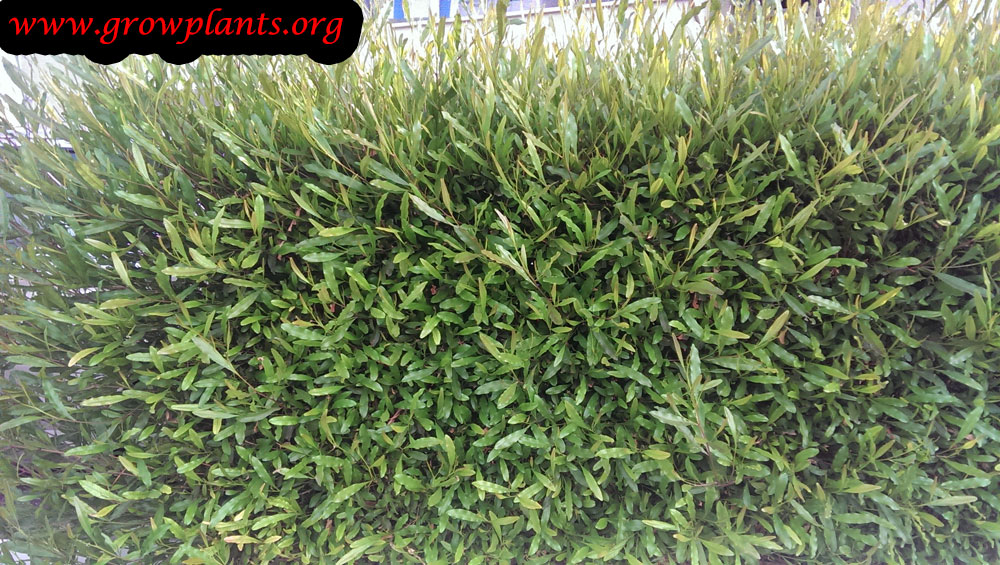
- Growth Habit & Form: Dense, upright shrub to small tree; makes a good windbreak.
- Lifespan & Maturity: Perennial; fast to medium growing.
Anatomy & Physical Features
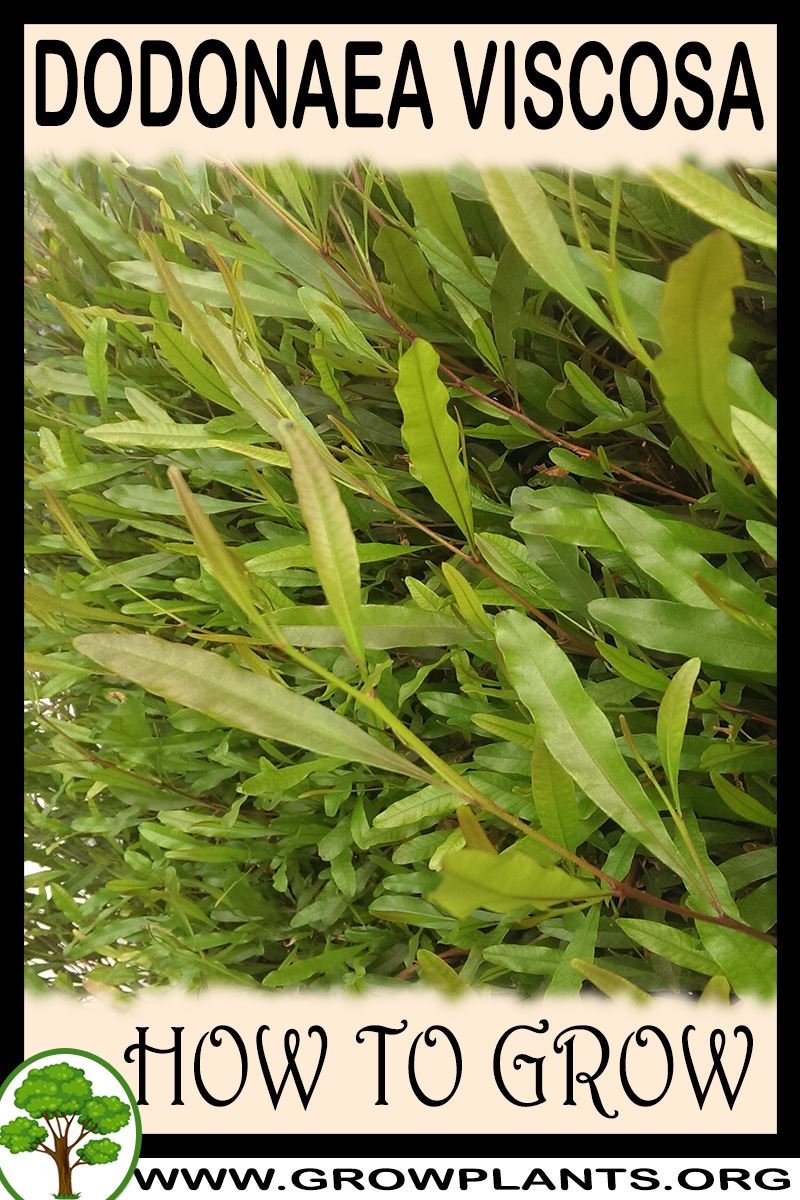
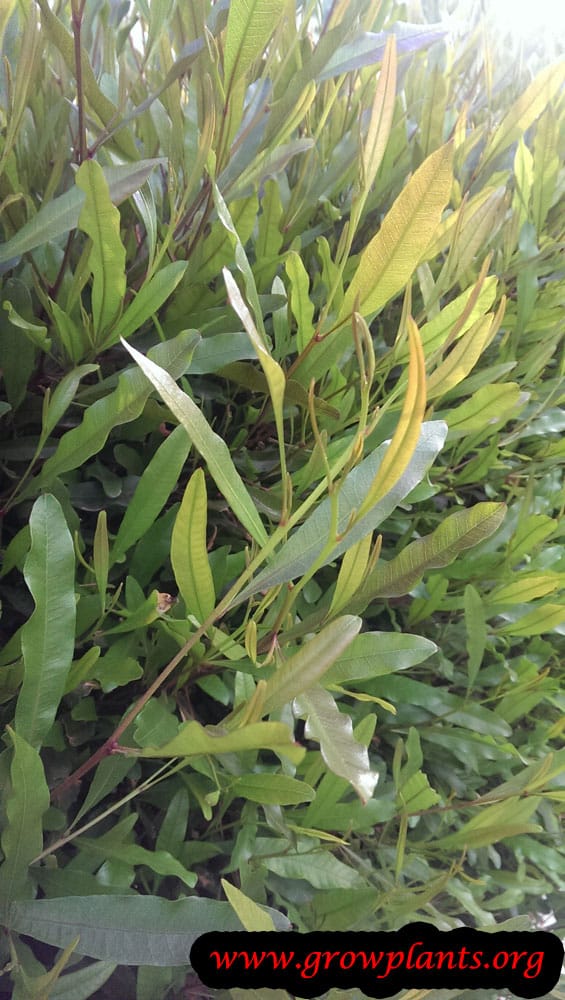
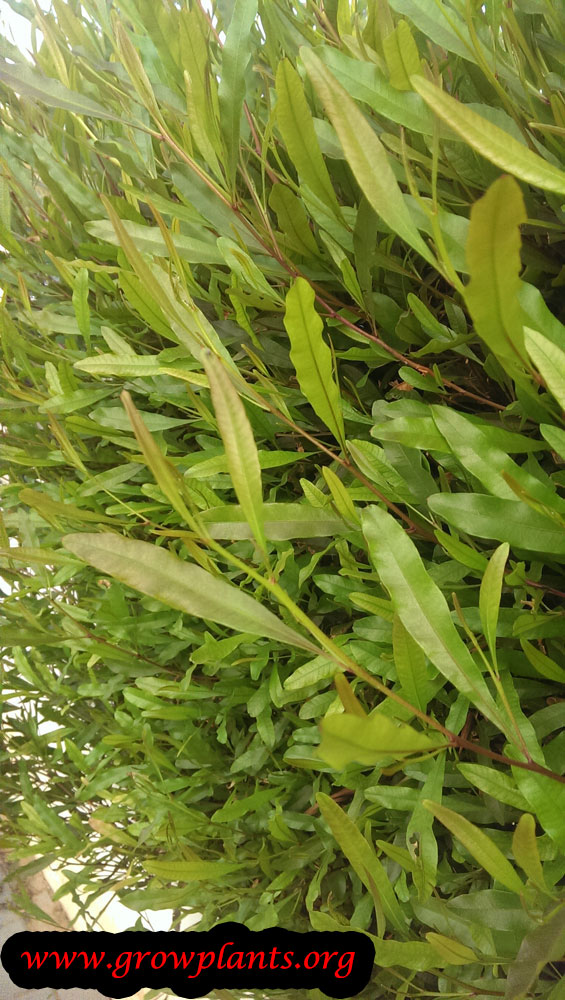
- Leaves & Foliage: Green or purple linear leaves (purple in the ‘Purpurea’ form).
- Flower Characteristics: Small, inconspicuous flowers; the showy red, purple or pink papery winged seed capsules that follow give the plant its ornamental value.
Primary Uses & Landscape Value
- Functional & Ornamental Roles: Drought- and wind-tolerant hedge, screen, windbreak and coastal plant; suited to containers.
Care Guide: Planting, Soil & Watering
Overview: Hopbush is a tough, fast, evergreen shrub or small tree for warm climates (zone 9+) that grows in full sun to half shade and tolerates heat, wind and poor soil. It asks only for well-drained ground and moderate water.
Quick Care Requirements
| Requirement | Ideal Condition |
|---|---|
| Planting Season | Spring or summer |
| Growth Rate | Moderate to fast |
| Soil Type | Well-draining |
| Water Need | Moderate; drought-tolerant once established |
Planting & Establishment
- Best Planting Season: Plant in spring or summer so it establishes in warmth; it is very adaptable to heat and exposure.
- How to Plant:
- Hole Preparation: Dig a hole a little wider than the root ball in free-draining soil.
- Soil Amendments: It tolerates poor soils; add some compost to help it start, but sharp drainage matters more than richness.
- Planting Depth: Set the root ball level with the soil and firm gently.
- Growth Speed & Expectations: A fast grower reaching 3-6 m, quickly forming a screen or hedge that responds well to clipping.
Soil, Watering & Drainage Care
- Soil Mix & Drainage Needs: Undemanding as long as drainage is good; grows in a large container too.
- Watering Schedule & Technique:
- Young / Newly Planted: Water regularly through the first season to establish.
- Established: Drought-tolerant once established – occasional deep watering is enough.
- Seasonal Adjustments: A little extra in extreme summer heat; minimal in winter.
Climate, Light & Hardiness
Dodonaea viscosa (hopbush) is a rugged, warm-climate evergreen shrub that grows across subtropical, tropical, temperate, Mediterranean and desert climates and is one of the best salt- and wind-hardy screening plants. It takes full sun to partial shade and is frost-tender in harder winters, with the site placing it in hardiness zone 9 and warmer.
Quick Climate Specifications
| Climate Zones | Subtropical, tropical, temperate, Mediterranean, desert |
|---|---|
| USDA Hardiness Zones | Approximately 9 and warmer (site data) |
| Cold Damage Begins | Foliage burned by frost; hard freeze cuts growth back |
| Frost Tolerance | Low (light frost only, once established) |
| Light Conditions | Full sun to partial shade |
| Wind Tolerance | High |
| Salt / Coastal Tolerance | High |
Sunlight & Light Exposure
Optimal Light Setup
Full sun produces the densest, most wind-firm hedge and the strongest colour on purple-leaved selections; it also tolerates partial shade.
Direct Sun Requirement
Thrives in intense, direct sun and reflected heat, so it suits exposed, hot and coastal fronts.
Temperature Extremes & Hardiness
USDA Hardiness & Regional Limits
Rated by the site at zone 9 and above; the lower edge of zone 9 corresponds to winter lows around −7 to −1°C (20 to 30°F). Provenance and plant age affect cold tolerance, so use the zone as a general guide.
Cold Damage & Winter Protection
Frost burns foliage and soft growth; a hard freeze may cut the shrub back, though established plants often recover from lower wood in marginal areas. Young plants need more protection than mature ones.
Extreme Heat Tolerance
Very high – it handles fierce heat and dry, arid conditions with ease.
Wind, Humidity & Microclimate
Dry-Air Tolerance
Excellent tolerance of dry, low-humidity air, a key reason for its use in desert and Mediterranean landscapes.
Wind Tolerance
Exceptional wind resistance; a first-choice windbreak and shelter hedge for exposed sites.
Coastal / Salt Tolerance
Highly resistant to salt-laden coastal wind, making it a leading seaside screen. (This is salt-spray tolerance; response to saline soil or irrigation water may differ.)
Growing in Pots, Balconies & Indoors
Hopbush (Dodonaea viscosa) is a vigorous, drought-tolerant evergreen shrub for patios and balconies rather than indoors – the grower does not class it as a houseplant. In a large container it makes a fine wind- and heat-hardy screen or hedge, with handsome green or purple foliage.
Quick Details
- Container Size: Large – start around 15-20 L and pot up toward 40-60 L (10-16 gal), as it can reach 3-6 m if unpruned
- Indoor Suitability: Not a houseplant – an outdoor shrub for patio or balcony pots
- Best Spot: Full sun to half shade; full sun and airflow keep it dense and tough
- Soil & Drainage: Sharp, free-draining mix – it thrives on lean, dry ground
- Watering in Pots: Average and undemanding – let the surface dry between waterings; avoid wet feet
Indoors & On the Windowsill
- Not a houseplant: The grower marks it unsuitable indoors – it needs strong outdoor light, sun and moving air.
- Overwintering: Tender (zone 9+), so where winters are cold a potted plant can shelter in a bright, frost-free place and return outdoors when mild.
On a Balcony or Patio
- A tough screen: Its dense, wind- and drought-hardy growth makes an excellent container hedge or privacy screen in exposed spots.
- Wind & pruning: It handles wind well but grows fast – regular trimming keeps a potted plant to size and bushy.
Choosing the Pot, Soil & Long-Term Care
- Pot & drainage: A large, stable pot with strong drainage holes; skip a standing water saucer to prevent root rot. Terracotta breathes and dries faster, glazed or plastic holds moisture longer.
- Potting mix: A gritty, free-draining mix – potting compost with coarse sand or grit.
- Feeding: Feed lightly through the growing season; it is not hungry, but potted nutrients leach, so a little regularly suffices.
- Repotting: Refresh the mix and pot up every couple of years; regular top and root pruning keeps this fast grower manageable.
Fertilizing & Feeding
A tough, drought-tolerant hedge shrub and a light feeder; a little balanced fertilizer in the warm season keeps it dense, with none needed in the cool season.
Quick Fertilizing Specs
| Feeding Level | Light |
|---|---|
| Main Nutrient Priority | A balanced feed; nitrogen for leafy hedge growth |
| Best Feeding Period | Warm active growing season |
| Organic Options | Compost or slow-release granules |
| Micronutrients | Rarely needed except iron on alkaline soils |
| Soil pH | Well-drained soil; tolerates a wide range |
| Reduce/Stop Feeding | Ease off feeding in autumn and winter |
Feeding by Growth Stage
Newly planted / establishing
Help a young hedge shrub root in and begin steady growth.
| Nutrient direction | A light, balanced feed after the shrub is settled; do not push hard. |
|---|---|
| Timing | After planting in the warm season, as roots take hold. |
| Frequency | A light feeding during the first growing season is plenty. |
| Fertilizer types | A balanced complete fertilizer, Slow-release granular fertilizer |
| Precautions | This is a tough, drought-tolerant plant; avoid heavy feeding. |
Active growth and hedging
Sustain dense, healthy foliage for hedging and screening.
| Nutrient direction | A balanced complete fertilizer in the warm season supports steady leafy growth. |
|---|---|
| Timing | Spring into the warm growing season. |
| Frequency | Light feeding during the active growing season is usually enough. |
| Fertilizer types | A balanced complete fertilizer, Compost or slow-release granules |
| Precautions | Over-feeding can force weak, leggy growth on this fast shrub; keep it moderate. |
Cool-season rest
Allow the shrub to harden off as growth slows in the cool season.
| Nutrient direction | None – withhold fertilizer while the shrub is not actively growing. |
|---|---|
| Timing | Autumn and winter, when growth slows. |
| Frequency | No feeding at this stage. |
| Fertilizer types | No feeding at this stage until spring growth resumes. |
| Precautions | Do not fertilize going into cold weather; wait for active spring growth. |
Nutrient Deficiency Signs & Corrections
Older leaves turn pale and growth becomes slow and sparse.
| Possible causes | Low soil nitrogen, Leaching in sandy or fast-draining soil, Competition from nearby plants or turf |
|---|---|
| Appears first on | Older, lower leaves |
| What to check | soil fertility, drainage and leaching, surrounding competition |
| Possible correction | Apply a light balanced feed and improve organic matter. |
Younger leaves yellow between the green veins.
| Possible causes | Iron uptake limited by high or alkaline soil pH, Waterlogged or poorly drained soil, Root stress |
|---|---|
| Appears first on | Younger leaves |
| What to check | soil pH, drainage, root health |
| Possible correction | Correct pH and drainage; apply a chelated iron product following its label if needed. |
Leaf tips and margins brown and scorch after feeding or in dry conditions.
| Possible causes | Excess fertilizer salts, Drought stress on a drought-tolerant plant, Poor leaching |
|---|---|
| Appears first on | Leaf tips and margins |
| What to check | recent feeding, soil moisture, drainage |
| Possible correction | Water thoroughly to flush salts and lighten feeding. |
Pruning, Training & Seasonal Maintenance
Dodonaea viscosa is the widely grown hopbush – a fast evergreen shrub to small tree, and the species most often planted as a hedge or screen, including the popular bronze-purple ‘Purpurea’. It tolerates pruning extremely well, from routine clipping to hard cut-back, resprouting freely from old wood, so pruning is used to control size, thicken the screen and keep colour and outline. The value is the foliage and the papery winged seed capsules on female plants rather than the tiny flowers, so it can be shaped freely for form.
Quick Pruning & Maintenance Specs
| Pruning Tolerance | High – clips, shears and renovates without sulking |
| Primary Pruning Window | Autumn to winter, after any capsule display and before spring growth |
| Secondary Maintenance Window | Light growing-season tip trims on formal hedges |
| Typical Frequency | 1–2 times a year as a hedge; occasionally as a specimen |
| Main Objective | Screen density, size control, foliage colour and clean outline |
| Young Plant Priority | Set the form (tree vs hedge); pinch for a bushy base |
| Mature Plant Priority | Maintain the face; renew the oldest leggy stems |
| Best Tool Type | Bypass secateurs and loppers; hedge shears for a formal hedge |
| Avoid Heavy Pruning During | Just before frost – soft regrowth is cold-tender |
Pruning by Plant Age & Size
Newly Established
Tip-pinch a young plant to force low branching for a dense hedge; on a specimen, remove only damage and let its naturally upright, arching shape develop.
Young / Formative
Choose the form now. For a small single-trunk tree, keep one leader and clear the lowest shoots; for a hedge or screen, head the tips repeatedly to build a solid, well-furnished base.
Mature / Established
Hold the outline, remove crossing and rubbing stems, and each year cut a few of the oldest, leggiest stems to the base so younger wood keeps the screen dense low down.
Seasonal Pruning Schedule
Dormant / Late-Winter Structural
Objective: framework and size work before the spring flush. Remove: overlong, crossing and tired stems. Do NOT remove: all last season’s growth on females if you want the capsule display. Expected response: strong spring resprouting.
Summer Canopy Management
Objective: keep a formal hedge crisp. Remove: soft tips with a light shear. Do NOT remove: enough to open holes to bare wood. Expected response: quick re-greening.
Ongoing Sanitary
Objective: clear dead twigs and growth damaged by the aphids and spider mites noted for the plant.
Flowering & Fruiting Wood
The small flowers sit on current-season growth and are followed, on female plants, by the ornamental winged capsules. Keep some of the season’s growth on females if you want that display; grown for foliage or as a hedge, the minor flowers can be sheared off without ornamental loss.
Structural Pruning & Training
Select and space main stems, remove crossing and inward wood, and head back the vigorous, sometimes lax shoots to control size. Thinning opens an over-dense specimen to a graceful arching habit; a hedge is kept intentionally dense by shearing.
Special Growth to Remove
- Leggy basal whips – keep for renewal, or remove for a clean trunk.
- Dead and pest-damaged twigs – remove as seen; own-rooted, so no graft suckers.
Container & Small-Space Pruning
Excellent in pots and easily kept compact by tip-pruning; the purple form in particular makes a neat clipped patio specimen. It accepts heading cuts readily, so size and shape are simple to maintain.
Tools
Use bypass secateurs for twigs, loppers for older stems, and hedge shears only for a formal clipped hedge; a pruning saw only when renovating a thick old trunk.
Tool Hygiene & Disease Risk
Routine – no major transmissible disease. Wipe blades between plants only when cutting through heavy aphid or mite infestation.
Cut Placement & Technique
Thinning cuts back to a junction preserve the natural shape; heading cuts to an outward bud build density. Shear only formal hedges, keeping the base wider than the top so lower growth is not shaded out.
Heavy Pruning & Rejuvenation
Well tolerated. A bare-based, overgrown plant can be cut back hard and will resprout strongly from old wood; renovate in the cool season and thin the vigorous regrowth to the best shoots.
Post-Pruning Care
Water after hard cuts in dry or desert settings to fuel regrowth; the soft new growth is frost-tender, so schedule heavy work away from cold snaps rather than feeding to push it.
Common Pruning Mistakes
- Shearing a plant meant to be informal and losing the arching form.
- Hard pruning right before frost, burning the soft regrowth.
- Clipping only the top of a hedge until the base goes bare.
- Removing all female flowering wood when the capsule display was wanted.
When NOT to Prune
Not hard just before frost, and not on a plant under establishment or drought stress.
Recommended Tools (by task)
- bypass_secateurs – twiggy shaping, thinning and sanitary cuts.
- loppers – older, thicker stems in renewal and renovation.
- hedge_shears – only where grown as a formal clipped hedge.
Pruning Troubleshooting
| Problem | Possible Cause | What to Check | Corrective Action |
| Bare, leggy base on a hedge | Only the top clipped; base shaded | Whether the hedge is wider at the top than the base | Taper wider at the base; hard-renew a few basal stems to refurnish |
| Dense soft regrowth after hard cuts | Vigorous resprouting from old wood | Number of new shoots per cut | Thin to the best-placed shoots once hardened |
| Frost-burned new growth | Heavy pruning too close to cold | Timing of the last hard cut | Prune earlier in the cool season; wait out frost risk |
| Weak purple colour on ‘Purpurea’ | Too much shade / very lush soft growth | Light levels and vigour of regrowth | Site in full sun; avoid over-feeding that greens the foliage |
Propagation Guide
Dodonaea viscosa is grown from seed or semi-hardwood cuttings; seed is the usual method for raising many hedge plants, while cuttings reproduce a selected form (for example purple-leaved plants) true to type. It is moderately easy — the key step is scarifying the hard seed coat, and being a dioecious species it needs both sexes to set seed.
Quick Propagation Specs
| Best Propagation Method | Seed (scarified) |
| Alternative Methods | Semi-hardwood cuttings |
| Propagation Difficulty | Moderate |
| Seed True-to-Type | Variable — seedlings differ; leaf-colour selections will not come true |
| Vegetative True-to-Type | Yes — cuttings keep the parent form |
| Best Propagation Season | Sow in spring; take cuttings in the warm season |
| Germination Temperature | About 20–25°C (68–77°F) |
Growing from Seed
Seed Handling & Viability
Seed is small and hard-coated and stores well dry for a long period. Because the species is dioecious (separate male and female plants), seed forms only where both sexes are present.
Dormancy & Pre-Sowing Treatment
The hard seed coat restricts water uptake. Germination is markedly improved by scarifying the coat — a well-documented method is to pour near-boiling water over the seed and let it soak as the water cools before sowing.
Sowing Season
Sow in spring into warm conditions.
Germination Conditions
Keep the mix moist and warm, roughly 20–25°C (68–77°F).
Germination Time
Germination is often irregular and may take several weeks even after scarification.
Stem Cuttings
Cutting Type
Semi-hardwood cuttings of the current season’s growth, taken once it has begun to firm.
Best Timing
The warm growing season (spring to summer).
Rooting Hormone
A rooting hormone is beneficial but not essential.
Rooting Setup & Time
Root in a free-draining, moist medium under high humidity; expect rooting over several weeks. Cuttings are the way to reproduce a selected form, such as the purple-leaved types, which do not come true from seed.
Bloom & Flower Guide
Quick Details
- Bloom Season: Spring, summer and into autumn
- Flower Appearance: True flowers are small, greenish and petal-less; the eye-catching red, purple, pink or white colour comes from the papery, hop-like seed capsules that follow
- Edibility: Ornamental hedge plant – not eaten
Detailed Blooming Overview
Hopbush is a tough, adaptable evergreen grown for hedging and screening, and what looks like its bloom is mostly the seed capsules. The true flowers are small, greenish and without petals, carried on separate male and female plants and pollinated by wind. The showy colour – red, purple, pink or white – comes from the winged, papery capsules that follow, giving a long season of interest from spring into autumn.
Flower Characteristics
- True flowers small, greenish-yellow and petal-less
- Male and female flowers usually on separate plants (dioecious), wind-pollinated
- The showy red-to-pink colour is carried by the papery, hop-like seed capsules
Bloom Care & Thinning
- Enjoying the colour: leave the capsules to develop and colour up rather than trimming them off
- Hedging: time any clipping so it does not strip the developing capsules if you want the display
- Pollination: pollinated by wind, so no insects are needed for the capsules to form
Pests, Diseases & Troubleshooting
Hopseed bush is an exceptionally tough, drought- and salt-tolerant shrub with very few pest problems – occasional aphids and spider mites on stressed or soft growth, and sometimes scale or psyllids, but nothing usually serious. It has almost no significant diseases in the well-drained conditions it prefers; its one real vulnerability is root rot from overwatering or heavy, wet soil. Grown lean and sunny, it is close to maintenance-free.
Quick Troubleshooting Overview
| Issue / Pest | Main Symptom | Primary Solution |
|---|---|---|
| Aphids | Colonies on soft new tips | Water-jet, beneficials, insecticidal soap |
| Spider mite | Stippled, dusty leaves in dry heat | Hose foliage, insecticidal soap |
| Scale | Brown bumps and sooty mould on stems | Prune out, horticultural oil |
| Root rot | Yellowing, dieback in wet soil | Improve drainage, water sparingly |
| Chlorosis | Yellowing on very poor/alkaline soil | Mulch, micronutrient feed |
Common Pests & Management
- Aphids (Aphis / Myzus / Macrosiphum spp.):
- Symptoms: Small soft-bodied insects (green, black or grey) clustering on soft new growth, mainly on young or stressed plants; they suck sap, causing curled, distorted and yellowing growth plus a sticky honeydew that blackens with sooty mould and draws ants. Winged forms spread them plant to plant and can carry viruses.
- Prevention & Control: Blast colonies off with a firm jet of water and pinch out badly infested tips; encourage and protect ladybirds, lacewings and hoverflies, and grow flowering companions to feed them. For persistent outbreaks use insecticidal soap or a light horticultural/neem oil, wetting leaf undersides in the cool of the evening to spare pollinators.
- Two-spotted spider mite (Tetranychus urticae):
- Symptoms: Fine pale stippling that bronzes whole leaves, with delicate webbing on the undersides and growing tips in hot, dry, dusty spells; heavily fed leaves dry and drop. Look for the moving specks with a hand lens.
- Prevention & Control: Raise humidity and hose foliage down regularly, and never let plants suffer dust or drought stress. Introduce predatory mites (Phytoseiulus persimilis) under cover. Treat hot-spots with insecticidal soap or horticultural oil, repeating at 5-7 day intervals to catch newly hatched mites.
- Scale insects (Coccus / Aspidiotus spp.):
- Symptoms: Brown or waxy bumps on stems and leaf undersides with honeydew and sooty mould; uncommon but possible on shaded, crowded plants.
- Prevention & Control: Prune out infested wood, encourage natural enemies, and smother remaining scale with horticultural oil.
- Psyllids (Psyllidae):
- Symptoms: Small sap-sucking insects that can cause slight leaf distortion or pit-like marks; largely cosmetic.
- Prevention & Control: Tolerate minor damage, keep the plant vigorous, and prune out badly distorted shoots; sprays are rarely warranted.
Diseases & Fungal Issues
- Root rot (Phytophthora / Pythium spp.):
- Symptoms: Yellowing, wilting and dieback in heavy, wet or overwatered soil as the roots rot – almost the only disease that troubles this drought-lover.
- Treatment & Management: Plant in free-draining soil, water only to establish and then sparingly, and never leave it waterlogged; improve drainage and remove dead wood on affected plants.
- Leaf spot (Cercospora / Alternaria spp.):
- Symptoms: Occasional minor leaf spots in humid, shaded conditions; rarely significant.
- Treatment & Management: Improve airflow and sun, avoid overhead watering, and remove affected leaves.
Growing Difficulties & Abiotic Problems
- Overwatering / wet feet:
- Cause & Symptoms: A drought- and salt-tolerant pioneer, it is far more likely to be killed by too much water and poor drainage than by any pest or dry spell.
- Correction Strategy: Grow in full sun and sharply drained soil, water only to establish, and avoid irrigated, heavy or boggy sites.
- Chlorosis on impoverished soil:
- Cause & Symptoms: Yellowing can occur on extremely poor or alkaline ground where micronutrients are short.
- Correction Strategy: Mulch with organic matter and, if needed, apply a chelated micronutrient feed; it otherwise thrives on lean soil.
What Helps – Products & Tools
Insecticidal soap and horticultural or neem oil handle the rare aphids, mites and scale this shrub gets. Its health, though, depends almost entirely on cultural ‘tools’ – sharp drainage, full sun and minimal watering – rather than on any fungicide or insecticide.