Plant Profile & Key Characteristics
Overview: An evergreen, iris-like perennial 0.5–1.5 m tall, grown as an ornamental and cut flower in frost-free gardens. It forms clumps of sword-shaped foliage and needs consistently moist soil.
Quick Specifications
| Specification | Attribute |
|---|---|
| Plant Type / Life Cycle | Herbaceous perennial (geophyte) |
| Foliage Type | Evergreen |
| Mature Size | 0.5–1.5 m H (1.6–5 ft) |
| Growth Rate | Moderate |
| Root System | Rhizomatous / bulbous geophyte |
| Hardiness | USDA zone 9 and warmer (frost-free) |
Growth Form & Structure
- Height & Spread: Upright clumps 0.5–1.5 m tall; also suited to planters and containers.
- Growth Habit & Form: Clumping, fan-like habit of linked sword-shaped leaves.
- Lifespan & Maturity: Long-lived perennial, easily increased by division of the rhizomes/bulbs.
Anatomy & Physical Features
- Leaves & Foliage: Green, sword-like leaves growing in linked groups.
- Flower Characteristics: Light-yellow iris-like flowers with a purple-spotted centre and six tepals in two whorls (full detail in the Bloom accordion).
Primary Uses & Landscape Value
- Functional & Ornamental Roles: Ornamental clump and cut flower for moist, frost-free borders and containers.
Care Guide: Planting, Soil & Watering
Overview: The yellow walking iris (Trimezia steyermarkii) is a frost-tender, moisture-loving perennial from warm climates that thrives in fertile soil kept constantly damp. It needs plenty of water and grows well from full sun to light shade, but the soil must never be allowed to dry out.
Quick Care Requirements
| Requirement | Ideal Condition |
|---|---|
| Planting Season | Almost any time of year in frost-free (zone 9 and warmer) climates |
| Growth Rate | Moderate |
| Soil Type | Fertile, moisture-retentive soil |
| Water Need | High — keep the soil constantly moist and never let it dry out |
Planting & Establishment
- Best Planting Season: Plant at almost any time of year in frost-free conditions; avoid cold spells.
- How to Plant:
- Hole Preparation: Dig a hole a little wider than the root ball or rhizome.
- Soil Amendments: Enrich the soil with compost or other organic matter to help it hold moisture.
- Planting Depth: Set the rhizome just below the surface with the crown at soil level.
- Growth Speed & Expectations: Moderate — steady growth in warm, damp, frost-free conditions.
Soil, Watering & Drainage Care
- Soil Mix & Drainage Needs: Rich, moisture-retentive soil that still drains; in pots use a water-retentive mix but ensure excess water can escape.
- Watering Schedule & Technique:
- Young / Newly Planted: Keep constantly moist while the plant establishes.
- Established: Water generously and often so the soil stays damp at all times.
- Seasonal Adjustments: Reduce only slightly in cool weather — never let it dry — and protect from frost.
Climate, Light & Hardiness
Yellow walking iris is an evergreen tropical, Mediterranean and subtropical perennial that needs frost-free conditions and soil that is never allowed to dry out. It tolerates a very wide range of light, from full sun down to full shade with some light in hot weather.
Quick Climate Specifications
| Climate Zones | Tropical, Mediterranean, Subtropical |
|---|---|
| USDA Hardiness Zones | 9+ |
| Frost Tolerance | Very Low |
| Light Conditions | Full Sun / Half Shade / Full Shade with light (in hot weather) |
Sunlight & Light Exposure
Optimal Light Setup
Adaptable from full sun through to full shade, as long as shaded spots still receive some ambient light.
Shade & Heat Management
In hot weather, part or full shade (with some light) helps protect the plant, taking advantage of its wide light tolerance.
Best Exposure / Orientation
Flexible - suited to sunny or shaded beds depending on local heat, provided moisture and frost-free warmth are maintained.
Temperature Extremes & Hardiness
USDA Hardiness & Regional Limits
Hardy outdoors only in USDA zone 9 and warmer.
Cold Damage & Winter Protection
The site's own care overview specifies frost-free conditions; keep it away from any exposure to freezing temperatures.
Frost Sensitivity
Very frost-sensitive, with essentially no cold tolerance.
Wind, Humidity & Microclimate
Humidity Preferences
Its tropical and subtropical origins suit it to humid conditions rather than dry air.
Rainfall & Seasonal Moisture
The site explicitly warns never to let the soil dry out - this species wants consistently available moisture, more typical of humid tropical climates than a dry Mediterranean summer.
Microclimate Recommendations
A humid, sheltered, frost-free spot with reliable year-round moisture - such as near a water feature or in consistently irrigated beds - suits it best.
Growing in Pots, Balconies & Indoors
Trimezia steyermarkii (yellow walking iris) is a moisture-loving iris relative of 0.5-1.5 m that likes plenty of water and tolerates shade in hot weather. The grower does not rate it as a houseplant, though it grows readily in containers and is sometimes kept indoors in warm climates.
Quick Details
- Container Size: 15-30 L (4-8 gal), kept reliably moist
- Indoor Suitability: Not a houseplant per the grower, though it is grown indoors in warm regions in a bright, warm spot
- Best Spot: Full sun, part shade, or light shade in hot weather
- Soil & Drainage: Rich, moisture-retentive but not waterlogged mix
- Watering in Pots: High – keep it consistently moist; it is a thirsty plant
Indoors & On the Windowsill
- Grower’s view: He does not grow it indoors – it wants warmth, moisture and good light that most rooms struggle to provide year-round.
- If you try it inside: Walking irises are sometimes kept as warm, humid houseplants in a bright spot; it tolerates light shade in heat, but flowering is best with strong light.
- Overwintering: Tender to cold – in cool climates keep it warm and frost-free indoors, staying evenly moist, through winter.
- Safety: Irises are toxic if eaten (especially the rhizomes and bulbs) and the sap can irritate skin – site them away from where children or pets might dig or chew.
On a Balcony or Patio
- Light & wind: Give it the brightest spot the balcony offers; shelter exposed plants from strong wind and stake any tall or top-heavy growth. Walls and paving reflect heat, so pots dry quickly – check moisture often in warm weather.
- Practicalities: A filled pot is heavy once watered, so make sure the balcony can take the weight and stand it where drainage runoff will not be a nuisance.
Choosing the Pot, Soil & Long-Term Care
- Pot & drainage: 15-30 L (4-8 gal) with strong drainage holes; skip a standing water saucer so the roots never sit wet. Terracotta breathes and dries fast, while glazed or plastic pots hold moisture longer.
- Potting mix: A rich, moisture-retentive potting mix that still drains – it likes water but not stagnant conditions.
- Watering: Keep it consistently moist; it is thirsty and dislikes drying out, though it does not need to stand in water like a true bog iris.
- Feeding: Potted plants exhaust their soil faster because nutrients leach out with every watering – feed lightly but regularly through the growing season.
- Repotting: Refresh the mix or pot up about every couple of years, teasing out and lightly trimming the roots of established plants.
Fertilizing & Feeding
Yellow walking iris is an evergreen tropical perennial that grows year-round in frost-free conditions, so it benefits from steady light feeding rather than a single seasonal push. It is not a heavy feeder – modest, consistent nutrition keeps its sword-like leaves full and supports its spring flower display.
Quick Fertilizing Specs
| Feeding Level | Light to moderate |
|---|---|
| Main Nutrient Priority | Balanced feeding supports steady leaf growth and reliable spring flowering; a phosphorus-heavy “bloom” formula is not needed |
| Best Feeding Period | Through the warm growing season while leaves are actively expanding and heading into the spring bloom period |
| Soil pH | Not fussy about soil acidity; prefers a consistently moist, humus-rich soil |
| Reduce/Stop Feeding | Ease off feeding if growth visibly slows during cooler weather, resuming as active growth picks back up |
| Organic Options | Humus-rich soil or regular organic matter additions suit this plant’s preference for consistently moist, fertile conditions |
Feeding by Growth Stage
Active leaf and clump growth
Support steady leaf production and clump expansion through the warm growing season
| Nutrient direction | Balanced feeding with adequate nitrogen supports strong, healthy leaf growth |
|---|---|
| Timing | Through the warm growing season, whenever the plant is actively putting out new leaves |
| Frequency | Light, regular feedings suit this plant’s modest overall feeding needs better than infrequent heavy applications |
| Fertilizer types | A balanced, complete fertilizer suited to tropical or subtropical foliage and flowering perennials, A diluted balanced liquid feed worked into consistently moist soil |
| Precautions | Never let the soil dry out, since this plant is noted to do poorly if the soil is allowed to dry; avoid heavy nitrogen applications that favor leaf growth at the expense of flowering |
Spring bloom period
Support the plant through its spring flowering display without pushing excess soft growth
| Nutrient direction | Continue the same balanced feeding carried over from active growth rather than switching to a specialized bloom formula |
|---|---|
| Timing | During spring, as flower stems form and the small yellow, purple-centered flowers open |
| Frequency | Maintain the same light, steady feeding pace used through active growth |
| Fertilizer types | The same balanced, complete fertilizer used through the active growth period |
| Precautions | Full sun to half shade, or filtered shade in hot weather, is important for reliable flowering – feeding cannot make up for a site that is too shaded |
Nutrient Deficiency Signs & Corrections
Leaves look pale, thin, or generally less vigorous than expected for an actively growing clump
| Possible causes | Nitrogen deficiency from infrequent feeding during the active growth period, The soil having been allowed to dry out, which this plant tolerates poorly, Insufficient light limiting overall vigor independent of feeding, A crowded clump competing for nutrients and due for division |
|---|---|
| Appears first on | Older leaves first, with overall clump vigor declining if uncorrected |
| What to check | Recent feeding history through the active growth period, Soil moisture consistency, Light exposure at the planting site, How long since the clump was last divided |
| Possible correction | Resume light, regular balanced feeding and keep the soil consistently moist; if drying soil or overcrowding are the cause, address those directly since feeding alone will not fix them |
The plant produces healthy leaves but few or no flowers when spring bloom is expected
| Possible causes | Insufficient light, since flowering in this plant depends heavily on adequate sun or bright filtered shade, Overfeeding with a nitrogen-heavy product that favors leaf growth over flowering, A young or recently divided clump that has not yet matured enough to flower, Inconsistent soil moisture stressing the plant through its growth period |
|---|---|
| Appears first on | Whole-clump effect rather than a single-leaf symptom |
| What to check | Sun or bright filtered light exposure at the site, Recent fertilizer choice and whether it has been heavily nitrogen-weighted, Age of the clump since planting or last division, Soil moisture consistency through the growing season |
| Possible correction | Improve light exposure first, since feeding cannot compensate for shade; otherwise maintain balanced, moderate feeding rather than a heavy nitrogen product and allow a young clump time to mature |
Pruning, Training & Seasonal Maintenance
Yellow walking iris is a frost-tender, evergreen tropical perennial that grows and flowers almost continuously where it is never allowed to dry out, so unlike temperate irises it has no single dormant pruning window. Maintenance is light and ongoing year-round: removing dead leaves and spent flower stalks. It tolerates cutting back well but has no woody structure to train.
Quick Pruning & Maintenance Specs
| Pruning Tolerance | Moderate–High |
| Primary Pruning Window | Ongoing, all year (no defined dormancy in frost-free conditions) |
| Typical Frequency | Light trimming as needed throughout the year |
| Main Objective | Remove dead leaves and spent flower stalks; sanitation |
| Young Plant Priority | Minimal cutting; let the fan of leaves establish |
| Mature Plant Priority | Continuous light tidying rather than a seasonal event |
| Best Tool Type | Precision snips |
Pruning by Plant Age & Size
Newly Established
Avoid cutting back; remove only visibly dead tissue while the plant establishes and the soil is kept consistently moist.
Young / Formative
No structural training. Begin removing spent flower stalks once blooming starts.
Mature / Established
Ongoing removal of dead leaves and spent flower stalks; no seasonal “event” pruning is needed given the lack of dormancy.
Special Growth to Remove
- Dead leaves – remove as they brown, at any time of year
- Spent flower stalks – a “walking iris” trait: this genus often forms small plantlets at the tip of a spent flower stalk, which bend over and root nearby. Remove stalks for tidiness once flowering and any plantlet formation is finished, or leave them in place if propagating new plants this way.
Container & Small-Space Pruning
Well suited to pots given its frost-tender, moisture-loving habit; keep soil constantly moist rather than letting it dry between waterings, and trim spent leaves/stalks as they appear rather than on a seasonal schedule.
Tools
- Precision snips – dead leaves and spent flower stalks
Tool Hygiene & Disease Risk
Routine – clean, sharp tools are sufficient; no significant transmissible disease is documented for this species.
Cut Placement & Technique
Cut dead leaves and spent stalks at their base without disturbing the linked leaf fans.
Heavy Pruning & Rejuvenation
Hard rejuvenation pruning is not typically needed; a leggy or overcrowded clump is better refreshed by division than by heavy cutting back.
Post-Pruning Care
Keep the soil consistently moist after trimming – this species should never be allowed to dry out.
Common Pruning Mistakes
- Letting the soil dry out after trimming, which stresses this moisture-dependent species
- Removing spent flower stalks before plantlets have had a chance to form, if propagation by this method is wanted
When NOT to Prune
No strong seasonal restriction given the lack of dormancy, but avoid disturbing the plant with heavy cutting while a flower stalk is actively forming plantlets you intend to keep.
Recommended Tools (by task)
- precision_snips – the only tool needed, for continuous light removal of dead leaves and spent stalks
Propagation Guide
Yellow walking iris increases most reliably by dividing its spreading rhizome clumps, which suits its steady, most-of-the-year growth habit as long as the soil is never allowed to dry out. Vegetative division isn’t strictly required to keep the plant going since it also sets seed, but division is by far the easier and faster route for the home grower.
Quick Propagation Specs
| Best Propagation Method | Rhizome/clump division |
| Alternative Methods | Seed (not detailed on site) |
| Propagation Difficulty | Easy |
| Vegetative True-to-Type | Yes |
| Best Propagation Season | Most of the year in frost-free conditions |
Rhizomes, Tubers, Bulbs & Corms
Divide congested clumps of rhizome during the plant’s active growing period, which spans most of the year where it is frost-free; each division should keep a healthy fan of leaves, roots, and a firm section of rhizome. Keep divisions consistently moist immediately after planting, since this plant should never be allowed to dry out. Note: the common name ‘walking iris’ is best known for the related genus Neomarica, whose arching flower stems can root plantlets where they touch soil; Trimezia is not confidently documented to spread the same way, so rhizome division remains the dependable method here.
Bloom & Flower Guide
Quick Details
- Bloom Season: Spring
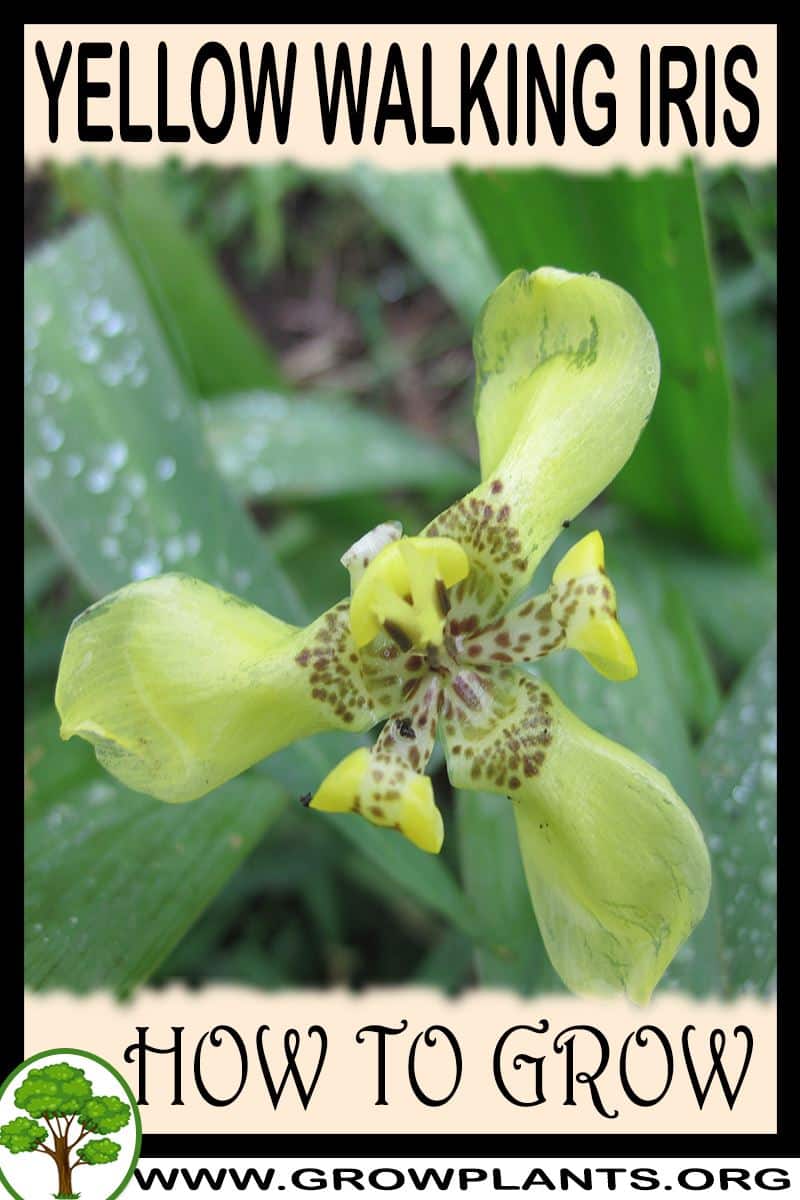
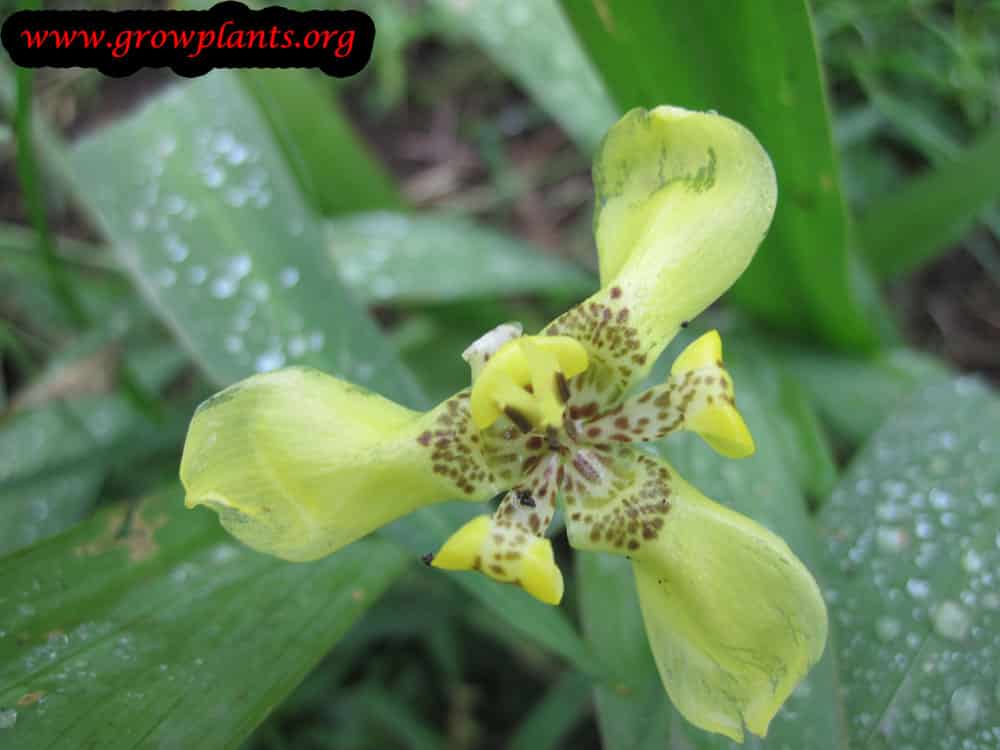
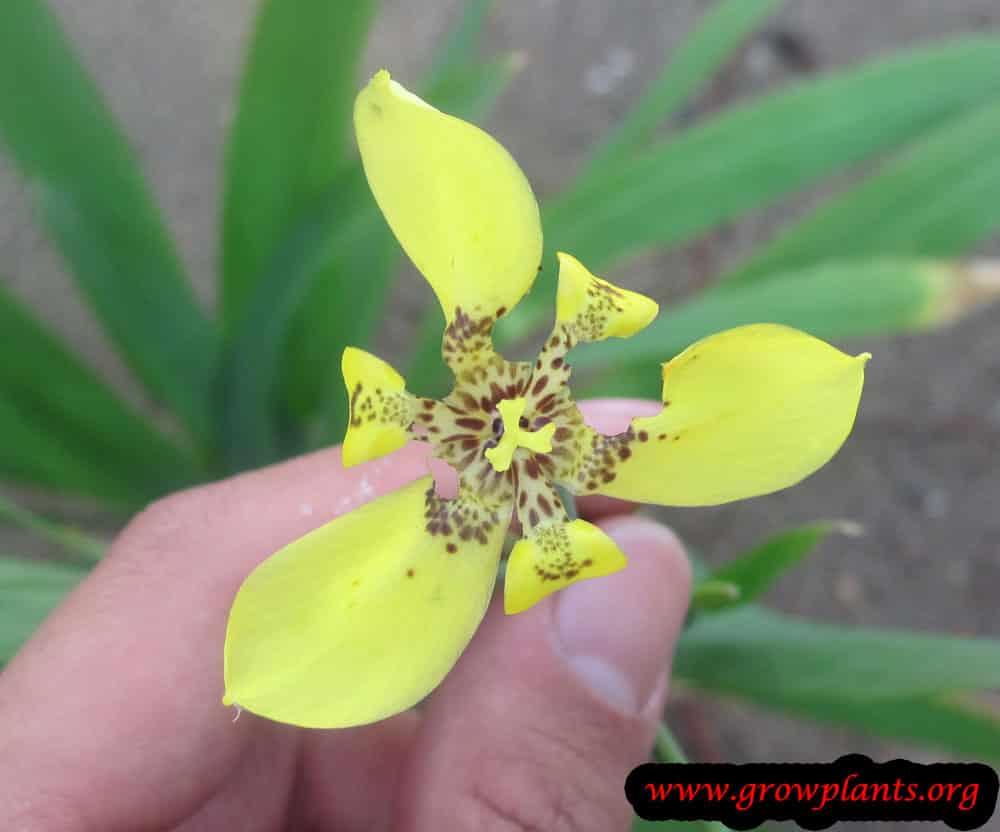
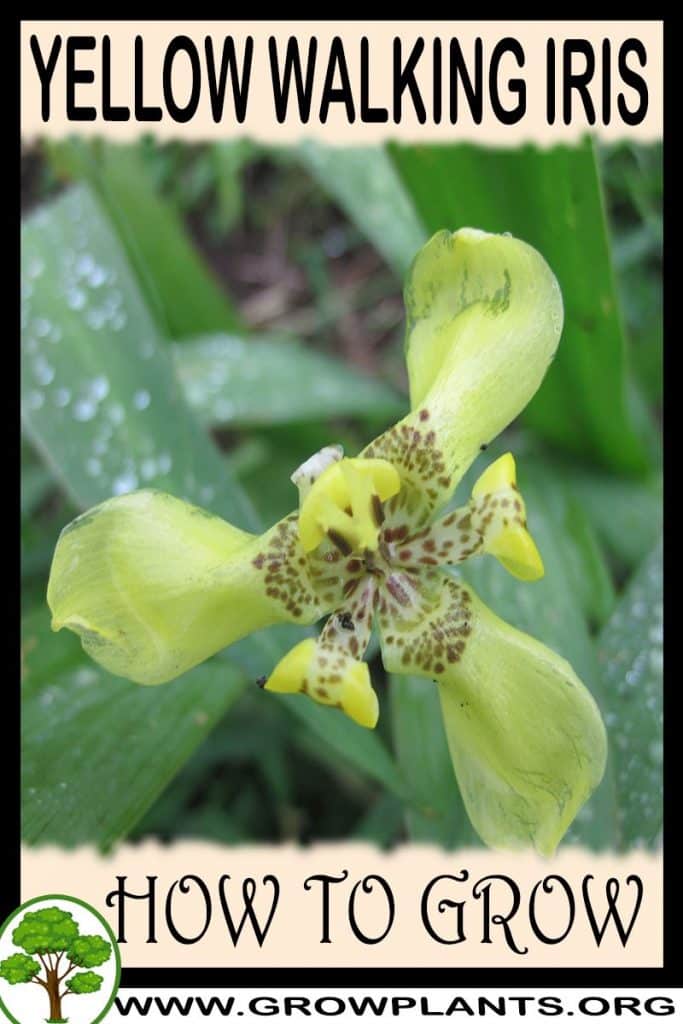
- Flower Appearance: Light yellow iris-like flowers with six segments (three outer, three inner) and a purple-dotted centre
- Edibility: Grown as an ornamental and cut flower; not used for eating
Detailed Blooming Overview
The yellow walking iris flowers in spring, opening cheerful light-yellow blooms marked with purple dots at the centre. Like many in the iris family, each individual flower lasts only a day, but they open in succession over the flowering period. The plant earns its “walking” name by producing plantlets on the flowering stems, which bend down and root where they touch the ground.
Flower Characteristics
- Light yellow flowers with a purple-dotted centre.
- Six segments arranged in two rows – three in the outer ring and three in the inner ring.
Bloom Care & Thinning
- Managing the bloom: Let the flowered stems arch over to root their plantlets, or peg them down to make new plants.
Pests, Diseases & Troubleshooting
Overview: The yellow walking iris is a rhizomatous, iris-family (Iridaceae) perennial that is generally robust and low-maintenance. Its main enemies are sap-sucking insects, molluscs on soft new growth, and rots or leaf fungi where drainage and airflow are poor. Grow it in bright light with free-draining soil and it stays largely trouble-free.
Quick Troubleshooting Overview
| Issue / Pest | Main Symptom | Primary Solution |
|---|---|---|
| Aphids | Sticky, distorted new growth | Water jet, insecticidal soap, beneficials |
| Spider mites | Stippling and webbing in dry heat | Raise humidity, spray undersides, oil |
| Mealybugs | White cottony tufts in leaf bases | Dab with alcohol, insecticidal soap, neem |
| Slugs & snails | Ragged holes in soft foliage | Handpick, barriers, iron-phosphate bait |
| Rhizome / root rot | Yellowing, mushy base, collapse | Improve drainage, ease off watering |
Common Pests & Management
- Aphids (Aphidoidea):
- Symptoms: Soft-bodied green or black insects on flower stalks and young leaves, leaving honeydew, sooty mould and puckered new growth.
- Prevention & Control: Rinse off with water, encourage lady beetles and lacewings, and use insecticidal soap or neem for stubborn colonies.
- Spider mites (Tetranychus urticae):
- Symptoms: Fine yellow stippling and light webbing between the sword-shaped leaves in hot, dry air, with dull, bronzed foliage.
- Prevention & Control: Raise humidity and rinse foliage, especially undersides; treat active mites with insecticidal soap or horticultural oil and avoid drought stress.
- Mealybugs (Pseudococcidae):
- Symptoms: White cottony masses tucked into leaf axils and around the rhizome, with sticky honeydew and weakened, yellowing growth.
- Prevention & Control: Spot-treat colonies by dabbing with alcohol, then spray insecticidal soap or neem, repeating to catch crawlers; encourage natural enemies such as mealybug destroyer beetles.
- Slugs and snails (Gastropoda):
- Symptoms: Irregular holes and notches chewed in soft young leaves and flower stalks, with slime trails, in damp shaded sites.
- Prevention & Control: Handpick at night, clear hiding places, set grit or copper barriers, and use iron-phosphate bait where damage is significant.
Diseases & Fungal Issues
- Iris leaf spot and fungal blotches (Cladosporium / Heterosporium spp.):
- Symptoms: Brown to reddish spots with yellow haloes on the leaf blades, enlarging and merging in prolonged leaf wetness and crowding.
- Treatment & Management: Remove affected leaves, space plants and water at the base to keep foliage dry, clear debris, and apply a copper fungicide if spotting is persistent.
- Rust (Puccinia iridis):
- Symptoms: Orange to brown powdery pustules on leaves with surrounding yellowing.
- Treatment & Management: Cut off infected leaves, improve airflow, avoid overhead watering, and use sulphur or copper fungicide only if it spreads.
- Rhizome and root rot (Fusarium / Pythium / Erwinia spp.):
- Symptoms: Yellowing fans, a soft, foul-smelling mushy rhizome, and collapse where soil stays wet or rhizomes are buried too deep.
- Treatment & Management: Plant in free-draining soil with the rhizome shallow, ease off watering, and lift and cut away rotted tissue, replanting only firm healthy pieces.
Growing Difficulties & Abiotic Problems
- Overwatering and poor drainage:
- Cause & Symptoms: Constantly wet soil suffocates the rhizome and invites rot, showing as yellowing and a soft base.
- Correction Strategy: Use gritty, free-draining soil, let the surface dry between waterings, and never leave pots standing in water.
- Leaf scorch or dull growth from light extremes:
- Cause & Symptoms: Harsh midday sun can bleach and scorch leaf tips, while deep shade gives lax, floppy growth and few flowers.
- Correction Strategy: Give bright light with protection from the fiercest midday sun, and move shade-grown plants into brighter conditions to firm up growth.
What Helps – Products & Tools
Keep a light toolkit: insecticidal soap or neem oil for aphids, mites and mealybugs, horticultural oil for mite outbreaks, iron-phosphate bait and copper barriers for slugs, and a copper fungicide in reserve for leaf spot or rust. Free-draining soil and careful watering are the best insurance against rhizome rot.