

Plant Profile & Key Characteristics
Overview: Iris confusa (bamboo iris) is an evergreen perennial geophyte with cane-like stems, grown as an ornamental for its fans of foliage and delicate spotted flowers. Its rhizomes spread readily to form clumps.
Quick Specifications
| Specification | Attribute |
|---|---|
| Plant Type / Life Cycle | Perennial geophyte |
| Foliage Type | Evergreen |
| Mature Size | 10-30 cm (4-12 in) fans, with taller bamboo-like flowering stems |
| Growth Rate | Fast |
| Root System | Rhizomatous (creeping, can spread aggressively) |
| Toxicity | Toxic if ingested – rhizomes contain irritant compounds; keep from pets |
| Hardiness | USDA zone 9-10 |
Growth Form & Structure
- Height & Spread: 10-30 cm (4-12 in) fans on bamboo-like stems; also grown indoors and in containers.
- Growth Habit & Form: Spreading, clump-forming iris on cane-like stems; can send out new growth without control.
- Lifespan & Maturity: Fast-spreading and long-lived once established.
Anatomy & Physical Features
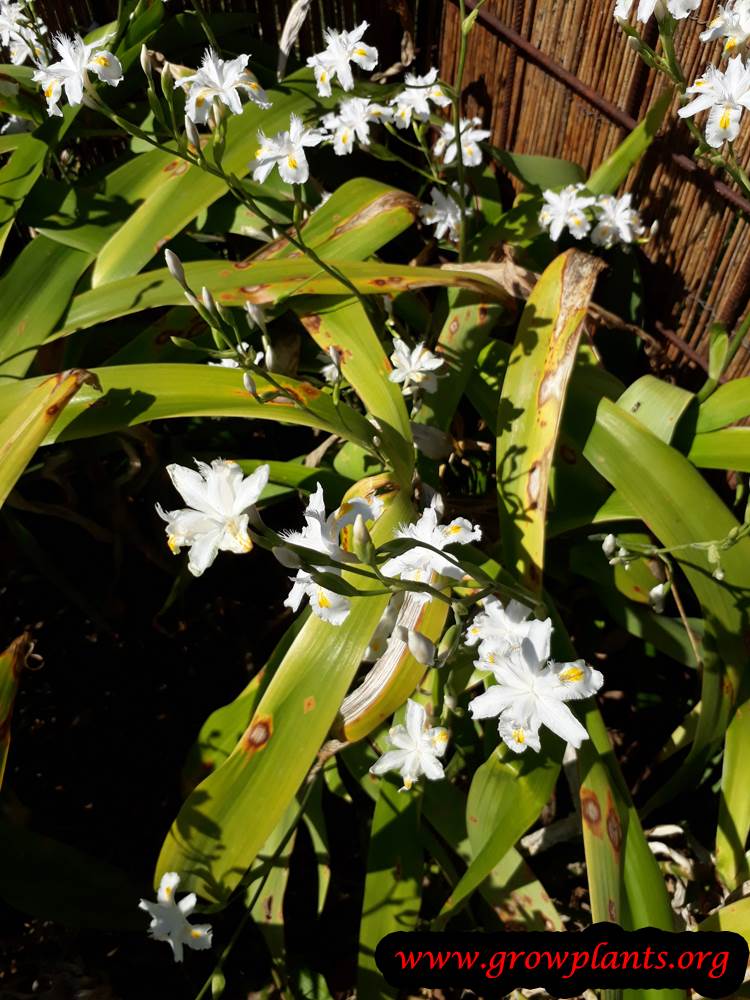
- Leaves & Foliage: Sword-shaped leaves that arch over at the tips, arranged in linked fans.
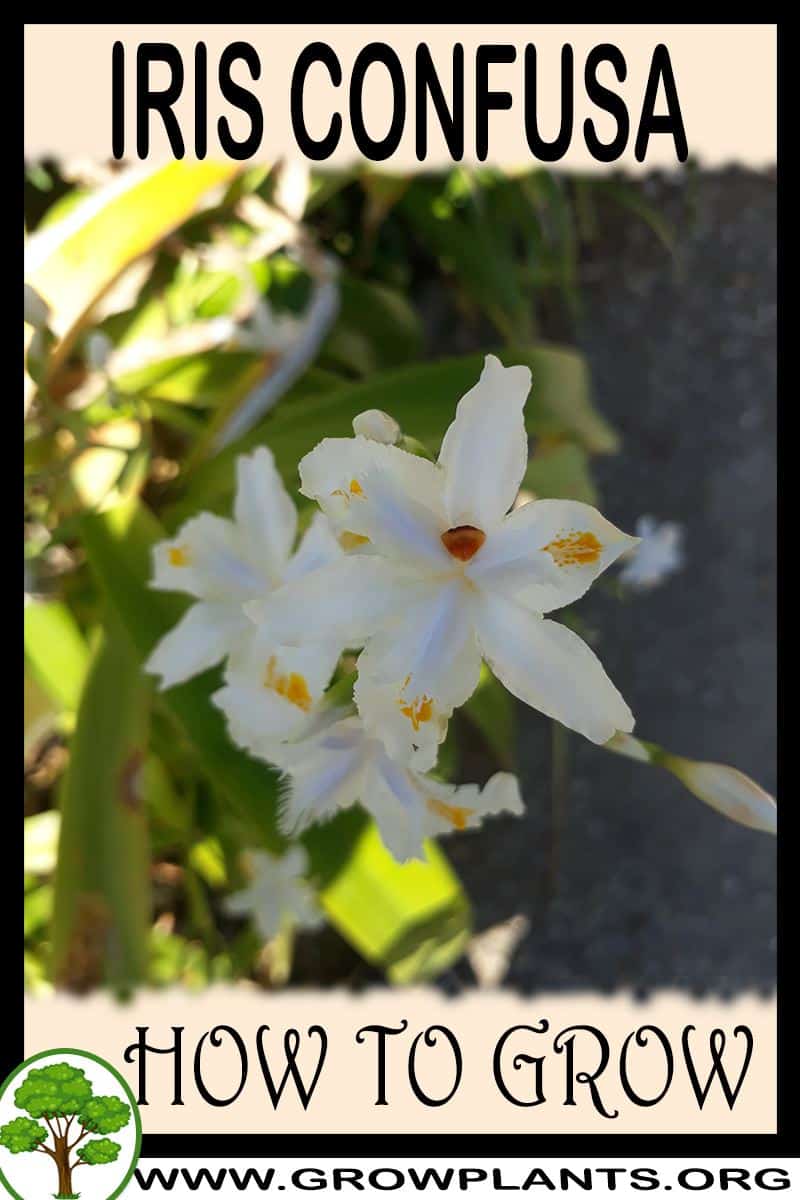
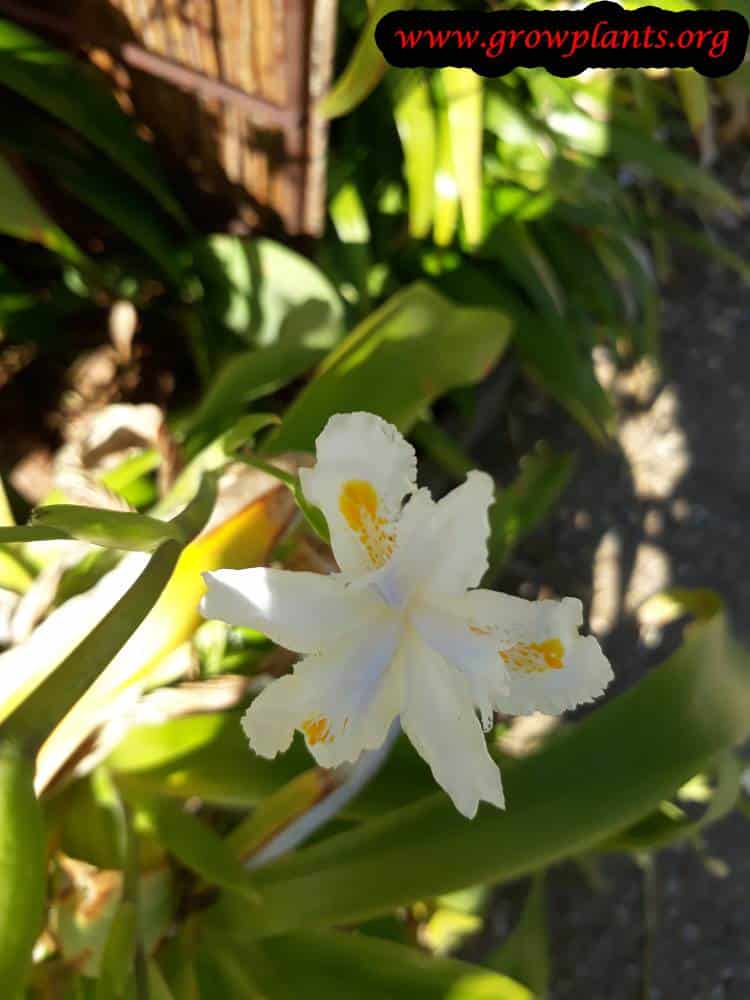
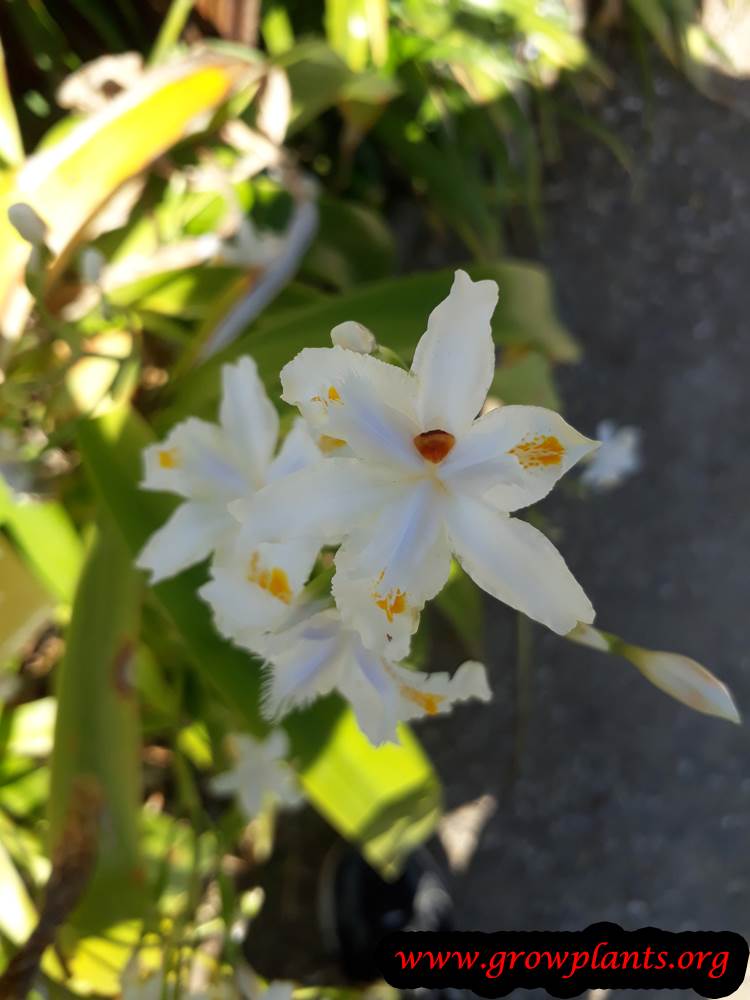
- Flower Characteristics: Light blue to almost-white flowers with orange-purple spots on the falls, borne winter to spring (full detail in the Bloom guide).
Primary Uses & Landscape Value
- Functional & Ornamental Roles: Ornamental clump for shaded borders, woodland gardens and as a houseplant.
Care Guide: Planting, Soil & Watering
Overview: The bamboo iris is an evergreen, spreading iris that grows in full sun to part shade in mild climates, forming bamboo-like flowering stems. It likes rich, moisture-retentive soil and tolerates very wet ground, even brief flooding.
Quick Care Requirements
| Requirement | Ideal Condition |
|---|---|
| Planting Season | In spring, summer or autumn |
| Growth Rate | Fast |
| Soil Type | Rich, moisture-retentive; tolerates wet ground |
| Water Need | Moderate to high; keep consistently moist |
Planting & Establishment
- Best Planting Season: Plant during the growing season, from spring through autumn, giving the spreading rhizomes room to run.
- How to Plant:
- Hole Preparation: Prepare a hole wider than the root mass in rich, moisture-retentive soil.
- Soil Amendments: Mix in organic matter to enrich the soil and help it hold moisture.
- Planting Depth: Set the rhizome shallowly, at the soil surface, and firm gently.
- Growth Speed & Expectations: A fast, vigorous spreader that can colonise a spot and send out new growth freely, so allow space or contain it.
Soil, Watering & Drainage Care
- Soil Mix & Drainage Needs: Unlike most irises it accepts heavy, moist soil and even standing water; keep it consistently damp rather than letting it dry out. It resents cramped pots, so grow it in the open ground where possible.
- Watering Schedule & Technique:
- Young / Newly Planted: Keep the soil moist to wet while it establishes.
- Established: Water generously to keep the ground consistently moist.
- Seasonal Adjustments: More in heat and dry spells; it rarely needs to dry out.
Climate, Light & Hardiness
Iris confusa (Bamboo Iris) is an evergreen, rhizomatous iris for Mediterranean, subtropical, or temperate climates, or indoor culture as a houseplant, growing best in full sun to half shade. At USDA hardiness zone 9–10, it has only moderate winter cold tolerance and is not suited to hard freezes.
Quick Climate Specifications
| Climate Zones | Mediterranean, subtropical, or temperate, or indoors as a houseplant |
|---|---|
| USDA Hardiness Zones | 9–10 |
| Optimal Temp Range | approximately 13–26°C (55–79°F) |
| Cold Damage Begins | Foliage browns once temperatures approach freezing, roughly below 0–2°C (32–36°F). |
| Approx. Survival Minimum | Established rhizomes generally survive through the stated zone range; a hard freeze at the cold edge can kill foliage back, with regrowth from the rhizome possible if it was not also frozen. |
| Frost Tolerance | Low |
| Light Conditions | Full Sun / Half Shade |
| Wind Tolerance | Moderate |
| Salt / Coastal Tolerance | Low |
Sunlight & Light Exposure
Optimal Light Setup
Full sun to light shade both work well; in its native understory-edge habitat it tolerates more shade than typical bearded irises.
Direct Sun Requirement
Not strictly required, though full sun typically supports the strongest flowering on its bamboo-like stems.
Shade & Heat Management
Light shade in hot-summer climates helps prevent leaf scorch.
Best Exposure / Orientation
An east-facing bed or a lightly shaded woodland edge suits it well.
Temperature Extremes & Hardiness
USDA Hardiness & Regional Limits
Reliable outdoors year-round within zone 9–10; elsewhere it is best grown as a houseplant or given significant winter protection.
Cold Damage & Winter Protection
A sheltered site and mulch over the rhizome help it through brief cold snaps at the cool edge of its range; container plants should be moved under cover before hard frost.
Frost Sensitivity
Moderate to high; frost typically damages the evergreen foliage.
Extreme Heat Tolerance
Good with adequate moisture; it is adapted to warm subtropical and Mediterranean summers.
Wind, Humidity & Microclimate
Humidity Preferences
Average; no elevated humidity requirement, though it appreciates consistent moisture during active growth.
Dry-Air Tolerance
Moderate; reasonably tolerant of average garden and indoor conditions.
Wind Tolerance
Moderate; the slender, bamboo-like stems can bend in strong wind but are not especially fragile.
Coastal / Salt Tolerance
Low; not specifically adapted to coastal salt exposure.
Rainfall & Seasonal Moisture
Prefers fairly consistent moisture through the growing season rather than a long, hard dry spell.
Microclimate Recommendations
A warm, lightly shaded, wind-sheltered spot with steady moisture supports the best year-round foliage and flowering.
Growing in Pots, Balconies & Indoors
This is a two-sided plant in the grower’s records: he marks Iris confusa as possible to grow indoors, yet does not recommend ordinary flowerpots or containers for it – because it is an aggressive spreader that sends out new growth without control. Grow it indoors only in a wide, well-contained planter you are prepared to divide often.
Quick Details
- Container Size: Only a wide, contained planter with room to spread – not a small pot (grower advises against ordinary containers)
- Indoor Suitability: Possible as a houseplant (grower), but it needs bright light and firm containment — a grow light can supplement a dim indoor spot.
- Best Spot: Full sun to half shade; bright light indoors
- Soil & Drainage: Free-draining, organic-rich mix
- Watering in Pots: Average to generous – it likes moisture in growth
Indoors & On the Windowsill
- Possible indoors, with a catch (grower): He marks it suitable indoors but does not recommend it for standard flowerpots, as it spreads vigorously from a single spot. Indoors, use a broad, contained planter and expect to divide it regularly.
- Windowsill growing: It needs bright light to stay compact and flower, so a sunny window is best.
- Containment: Because it runs, keep it in its own planter rather than sharing a pot with slower plants it would overrun.
On a Balcony or Patio
- Light & position: A bright, sheltered balcony or patio spot suits it; strong light keeps growth sturdy.
- Spreading habit: Its running rhizomes can escape into beds, so keeping it in a stand-alone planter on hard standing is actually a good way to control it.
- Moisture: Water freely in growth – pots dry faster than open ground.
Choosing the Pot, Soil & Long-Term Care
- Pot & drainage: Choose a wide, sturdy, well-contained planter with strong drainage holes; skip a standing-water saucer to avoid rot.
- Potting mix: A well-aerated, organic-rich mix – peat or coir blended with perlite or vermiculite – keeps roots oxygenated in a pot.
- Long-term care: Divide the spreading rhizomes and renew the mix every year or two to keep it in bounds and flowering; discard excess divisions responsibly.
- Feeding: Potted plants need feeding a little more often than those in open ground, as regular watering leaches nutrients from the mix.
Growing this plant in a greenhouse
A greenhouse can give iris confusa frost protection and cold protection.
Greenhouse at a glance
| Greenhouse suitability | Good - clearly useful |
|---|---|
| Main benefits | frost protection, cold protection |
| Season extension | earlier spring & later autumn |
| Outdoor protection advisable below | about 5°C |
| Maintain greenhouse minimum | around 5°C for active growth |
| Suitable types | unheated greenhouse, polycarbonate greenhouse |
| Heating | Heating is optional - useful mainly for winter growing in cold areas. |
Related greenhouse guides
- Greenhouses: How to Choose the Right Greenhouse
- Polycarbonate Greenhouses: What to Look for Before Buying
Fertilizing & Feeding
Bamboo iris is an easy-care evergreen perennial that responds well to a modest, balanced feeding routine timed around its growth and bloom, rather than heavy fertilizing.
Quick Fertilizing Specs
| Feeding Level | Moderate – light, regular feeding during active growth and bloom |
|---|---|
| Main Nutrient Priority | Balanced nutrition with adequate nitrogen to support foliage and flowering |
| Best Feeding Period | Late winter through spring, tapering off as bloom finishes |
| Soil pH | Tolerates a wide range of garden soils; adjust only if chlorosis appears |
| Reduce/Stop Feeding | Withhold fertilizer during the post-bloom rest period until new growth resumes |
| Organic Options | Compost or aged organic matter worked into the bed supports steady, gentle feeding |
Feeding by Growth Stage
Spring Growth
Support fresh rhizome and leaf growth as the clump breaks from its winter rest
| Nutrient direction | Balanced feeding with adequate nitrogen to fuel new foliage and rhizome expansion |
|---|---|
| Timing | As new growth begins in late winter into spring |
| Frequency | Several light feedings spread across the active growth period |
| Fertilizer types | A balanced, complete fertilizer suited to garden perennials, Compost or aged organic matter worked into the bed |
| Precautions | Avoid heavy nitrogen pushes that encourage rampant rhizome spreading rather than blooming, since this species already spreads assertively on its own |
Winter–Spring Bloom
Sustain flower production through the winter-into-spring bloom window
| Nutrient direction | Continue balanced feeding with adequate nitrogen rather than switching to a phosphorus-heavy bloom blend |
|---|---|
| Timing | Through the winter and into the spring bloom period |
| Frequency | The same light, regular pace used during spring growth |
| Fertilizer types | A balanced complete fertilizer, Diluted liquid feed for container-grown specimens |
| Precautions | Taper off as flowering finishes and prune away the old leaves and spent flower stems, per its usual post-bloom tidy-up |
Post-Bloom Rest
Let the clump rest after flowering before the next growth flush
| Nutrient direction | None – withhold fertilizer during this rest period |
|---|---|
| Timing | After bloom finishes, through the slower part of the year |
| Frequency | No feeding at this stage |
| Fertilizer types | No feeding at this stage; normal soil moisture and routine care are enough |
| Precautions | Do not fertilize until new spring growth resumes; pick the spring feeding routine back up at that point |
Nutrient Deficiency Signs & Corrections
New leaves emerge pale yellow while the veins remain visibly green
| Possible causes | High soil pH tying up available iron, Waterlogged or poorly drained soil limiting root uptake, Root stress from a recently disturbed or compacted planting site |
|---|---|
| Appears first on | Newest leaves at the growing tip |
| What to check | Soil drainage and moisture around the rhizomes, Soil pH if the chlorosis persists, Root condition for rot or physical damage |
| Possible correction | Correct drainage first; if pH is confirmed as the cause, apply a chelated iron product per its label |
Overall leaf color turns pale green to yellow with reduced new growth vigor
| Possible causes | Insufficient nitrogen in depleted garden soil, Heavy irrigation leaching nutrients away from the root zone, Root competition from an overcrowded, undivided clump |
|---|---|
| Appears first on | Older, lower leaves first |
| What to check | Overall vigor and density of the clump, Recent feeding history, Drainage and irrigation frequency |
| Possible correction | Resume balanced feeding during the active growth period and divide overcrowded clumps if root competition is the cause |
Older leaves show yellowing between the veins while the veins stay green, sometimes with marginal scorch
| Possible causes | Magnesium leaching from light, sandy, or heavily irrigated soil, Heavy use of high-potassium fertilizer competing with magnesium uptake, General nutrient depletion in old, unamended garden soil |
|---|---|
| Appears first on | Older, lower leaves |
| What to check | Soil texture and irrigation frequency, Recent fertilizer history for high-potassium products, Whether the pattern is interveinal or whole-leaf |
| Possible correction | Improve soil organic matter, and if confirmed, correct with a chelated magnesium product per its label |
Pruning, Training & Seasonal Maintenance
Iris confusa is a rhizomatous, evergreen crested iris that grows on bamboo-like cane stems, each fan flowering from the top of its cane. Routine maintenance is removing dead leaves and spent flower remains as they occur, but a flowered cane should be cut back only to just above a leaf joint rather than to the ground, since side shoots from that joint can flower again in a following season. Because this species spreads aggressively by rhizome, controlling its spread by removing unwanted rhizome sections is as much a part of its upkeep as leaf grooming.
Quick Pruning & Maintenance Specs
| Pruning Tolerance | Low on individual canes (avoid cutting to the ground); Moderate for spread control |
| Primary Pruning Window | As leaves die and after a cane finishes flowering |
| Typical Frequency | Ongoing light grooming, plus periodic rhizome/spread control |
| Main Objective | Remove spent tissue while preserving canes that may still rebloom, and contain aggressive spread |
| Young Plant Priority | None; let new fans establish |
| Mature Plant Priority | Remove dead leaves and the flower remains from the tip of the cane; dig out unwanted spreading rhizome |
| Best Tool Type | Precision snips for foliage; garden spade for rhizome division/removal |
| Avoid Heavy Pruning During | Do not cut a cane down to the base right after flowering – it removes the joints that would otherwise rebloom |
Pruning by Plant Age & Size
Newly Established
No pruning; let new fans establish before any grooming.
Young / Formative
No formal training system – canes branch and lengthen on their own; monitor spread from the start given this species’ noted aggressive habit.
Mature / Established
Ongoing removal of dead leaves and spent flower parts at the cane tip; periodic thinning/removal of rhizome runners that have spread beyond the intended area.
Seasonal Pruning Schedule
| Ongoing Sanitary | Remove dead leaves as they occur across the year |
| Post-Flowering | Cut the spent flower remains from the cane tip just above the nearest leaf joint, leaving the cane itself intact so side shoots can develop and potentially flower again |
Structural Pruning & Training
The main structural task is containing spread: dig out and remove rhizome sections growing beyond bounds, since this species is noted to expand from one spot without control if left unmanaged.
Special Growth to Remove
- Dead or damaged leaves – remove at the base of the fan
- Spent flower remains – cut just above the nearest joint on the cane, not the whole cane
- Unwanted spreading rhizome – dig out to keep the clump within bounds
Tools
- Precision snips for dead leaves and spent flowers
- Garden spade for cutting through and lifting unwanted spreading rhizome
Tool Hygiene & Disease Risk
Routine – clean, sharp tools are sufficient. Its listed pest, slugs, is not spread by pruning cuts.
Cut Placement & Technique
Cut spent flower stems just above a leaf joint on the cane rather than at the base, to preserve the joint’s ability to produce a new flowering side shoot.
Heavy Pruning & Rejuvenation
Not recommended in the woody-rejuvenation sense; an overgrown clump is better managed by digging out and dividing rhizome sections than by cutting canes hard, which sacrifices future bloom.
Post-Pruning Care
No extra feeding needed after routine grooming. After dividing or removing rhizome, water newly disturbed sections to help them re-root.
Common Pruning Mistakes
- Cutting a flowered cane back to the ground instead of just above the joint, which removes wood that could rebloom
- Letting spreading rhizome go unchecked, given this species’ documented aggressive habit
When NOT to Prune
Avoid cutting canes back hard while they still hold healthy leaf fans that could produce side-shoot blooms.
Recommended Tools (by task)
- precision_snips – clean removal of dead leaves and spent flower tips without damaging the cane’s rebloom joints.
- garden_spade – dividing and removing unwanted spreading rhizome to keep this aggressive spreader contained.
Propagation Guide
Iris confusa (bamboo iris) is propagated by dividing its spreading rhizomes – the site notes it grows aggressively and sends up new growth without control, which is exactly why rhizome division is quick, reliable, and by far the most practical method. Vegetative propagation is the way this species is grown; seed is not the standard route here.
Quick Propagation Specs
| Best Propagation Method | Rhizome division |
| Propagation Difficulty | Easy |
| Vegetative True-to-Type | Yes |
| Best Propagation Season | After flowering, once old leaves die back; also plantable in spring, summer or autumn |
Division, Offsets, Pups & Suckers
This species spreads via rhizomes that readily send up new leaf fans, which is also why the site flags it as aggressive and hard to contain. To divide, lift a clump and separate rooted rhizome sections, each with roots and a few leaves attached; trim away old leaves and spent flower remains at the same time, as the site recommends doing once the leaves die back. Because the species spreads so readily, divisions establish quickly and can be replanted through spring, summer or autumn.
Bloom & Flower Guide
Quick Details
- Bloom Season: Winter to spring
- Flower Appearance: Light blue (almost white) flowers marked with orange-and-purple crests and spots; six segments, carried on tall, bamboo-like stems
- Edibility: Not edible — irises are toxic; the rhizomes and sap can irritate skin and cause stomach upset if eaten
Detailed Blooming Overview
The bamboo iris carries airy sprays of pale, almost white-blue flowers, each dressed up with orange-and-purple crests and spots on the outer segments. The blooms are individually short-lived but open in relay along the tall, cane-like stems, giving a long overall display in late winter and spring.
Flower Characteristics
- Six segments; the three outer ones carry the colorful crests and spots.
- Pale blue to nearly white, borne on branched bamboo-like stems.
Bloom Care & Thinning
- Managing the bloom: Remove spent flowers as they fade; divide clumps after flowering to keep them vigorous.
- Safety: Iris rhizomes and sap are toxic and irritant — handle with care.
Pests, Diseases & Troubleshooting
Overview: Beardless and crested irises are grown from spreading rhizomes and generally suffer fewer problems than bearded types, though slugs and snails relish their soft foliage and flowers, and the rhizomes can still rot in wet, airless conditions. Leaf spot, rust and sap-feeders round out the short list; culture and sanitation handle nearly all of it.
Quick Troubleshooting Overview
| Issue / Pest | Main Symptom | Primary Solution |
|---|---|---|
| Slugs & snails | Ragged holes and slime on leaves and flowers | Iron-phosphate bait, traps, tidy debris |
| Bacterial soft rot | Soft, smelly rhizome | Cut out rot, improve drainage and airflow |
| Iris leaf spot | Brown spots with yellow halos | Remove old leaves, airflow, copper fungicide |
| Iris rust | Orange pustules on foliage | Remove leaves, spacing, sulfur/copper |
| Aphids / thrips | Distorted buds, streaked flowers, honeydew | Insecticidal soap, remove weeds |
| Iris borer | Streaked leaves, rotting rhizome (regional) | Autumn sanitation, cut out grubs |
Common Pests & Management
- Slugs and snails (Gastropoda):
- Symptoms: Ragged holes chewed in the soft leaves and, especially, the flowers, with silvery slime trails; worst at night and in damp, shaded, evergreen clumps.
- Prevention & Control: Keep the crown open and clear of decaying leaves, hand-pick after dark, and set beer or shelter traps. Iron-phosphate bait and copper barriers protect emerging growth reliably.
- Aphids (Aphis / Macrosiphum spp.):
- Symptoms: Soft insects clustering on new growth and buds, causing distortion and honeydew and spreading iris mosaic virus.
- Prevention & Control: Rinse off with water and encourage natural predators. Insecticidal soap or neem clears colonies; controlling aphids also limits virus spread.
- Iris thrips (Frankliniella spp.):
- Symptoms: Tiny insects tucked into leaf sheaths and buds causing silvery streaking and distorted, browned tissue in hot dry weather.
- Prevention & Control: Clear old sheaths and weeds, hose plants, and use blue sticky traps. Insecticidal soap or spinosad, worked into the sheaths, controls infestations.
- Iris borer (Macronoctua onusta):
- Symptoms: Where present (mainly cooler North American gardens), larvae streak the leaves and tunnel into rhizomes, causing collapse and soft rot; less severe on crested and evergreen types than on bearded iris.
- Prevention & Control: Cut down and destroy old foliage in autumn to remove overwintering eggs, squash streaked leaf tissue in spring, and dig out any grubs found in rhizomes.
Diseases & Fungal Issues
- Bacterial soft rot (Pectobacterium (Erwinia) carotovorum):
- Symptoms: Soft, smelly, slimy breakdown of the rhizome following injury or waterlogging; fans yellow and lift away easily.
- Treatment & Management: Cut back to firm tissue with a sanitized blade, let the wound dry, and improve drainage and airflow. Avoid burying the rhizomes too deeply and divide congested, airless clumps.
- Iris leaf spot (Didymellina macrospora):
- Symptoms: Brown spots with yellow or water-soaked halos that merge and brown the leaf tips in warm, wet weather.
- Treatment & Management: Remove spotted and old leaves, thin clumps for airflow, and avoid overhead watering. Copper or mancozeb-type fungicide protects new foliage under heavy pressure.
- Iris rust (Puccinia iridis):
- Symptoms: Orange powdery pustules with surrounding yellowing on the leaves; severe infection dries the foliage.
- Treatment & Management: Remove affected leaves and debris and improve spacing. Sulfur or copper fungicide checks recurring rust.
Growing Difficulties & Abiotic Problems
- Rhizome rot in wet, airless clumps:
- Cause & Symptoms: Dense, undivided clumps in heavy or constantly wet soil rot at the rhizome and thin out in the center.
- Correction Strategy: Grow in moist but well-drained soil (or, for water/bog species, suitable wet conditions), divide congested clumps after flowering, and keep the crowns from being smothered by debris.
- No bloom / sparse flowering:
- Cause & Symptoms: Too much shade, overcrowding or excess nitrogen give leaves at the expense of flowers.
- Correction Strategy: Give plenty of light, divide crowded clumps, and avoid high-nitrogen feeding; a low-nitrogen bloom fertilizer encourages flowering.
- Leaf tip browning / stress:
- Cause & Symptoms: Drought, salt buildup or poor drainage brown the leaf tips and weaken the clump.
- Correction Strategy: Water consistently in dry spells, flush accumulated salts, and improve drainage; site the plant to suit its moisture preference.
What Helps – Products & Tools
Useful tools are a sharp sanitized knife for cutting out borers and rot, slug traps/iron-phosphate bait and copper barriers, insecticidal soap or horticultural oil for aphids and thrips, and – for foliar disease – a copper or mancozeb-type fungicide; systemic insecticide is a last resort for borer where cultural control fails. Bulbous types benefit from a fungicide bulb dip before storage. Always follow the label and protect pollinators.