Plant Profile & Key Characteristics
Overview: Iris unguicularis (Algerian iris) is an evergreen rhizomatous perennial geophyte 20-40 cm tall, prized as an ornamental for its fragrant flowers borne in the cool season. It thrives in dry, alkaline soils.
Quick Specifications
| Specification | Attribute |
|---|---|
| Plant Type / Life Cycle | Perennial geophyte |
| Foliage Type | Evergreen |
| Mature Size | 20-40 cm (8-16 in) |
| Growth Rate | Moderate |
| Root System | Rhizomatous |
| Toxicity | Toxic if ingested – rhizomes contain irritant compounds; keep from pets |
| Hardiness | USDA zone 7-10a |
Growth Form & Structure
- Height & Spread: 20-40 cm (8-16 in) in ground; also grown in planters and containers.
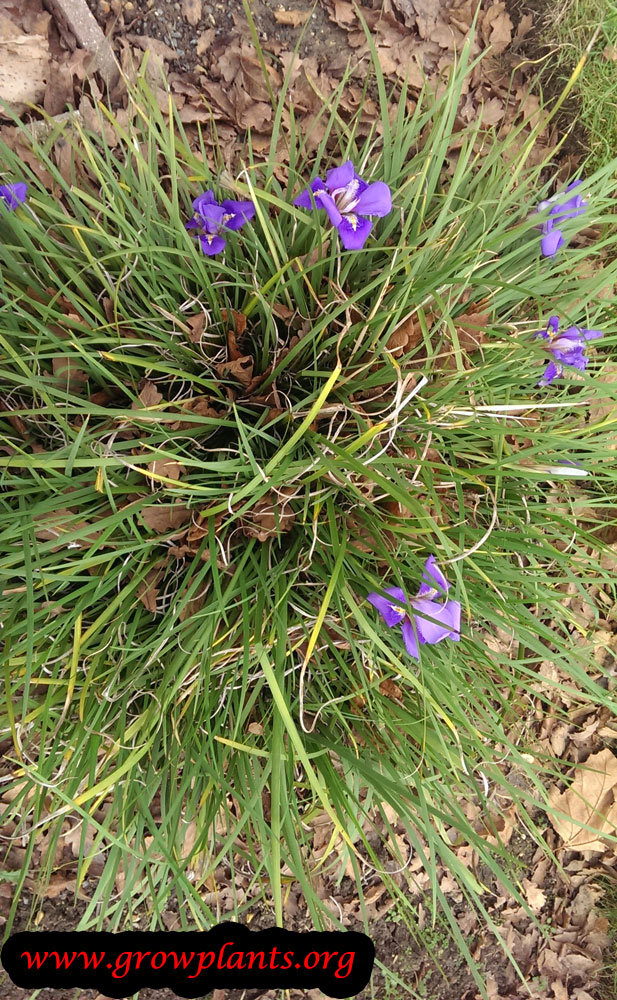
- Growth Habit & Form: Dense evergreen clump of grassy, sword-shaped leaves from a rhizome; can spread.
- Lifespan & Maturity: Long-lived; flowers best when left undisturbed in a warm, dry spot.
Anatomy & Physical Features
- Leaves & Foliage: Green, narrow, sword-shaped leaves in linked groups.
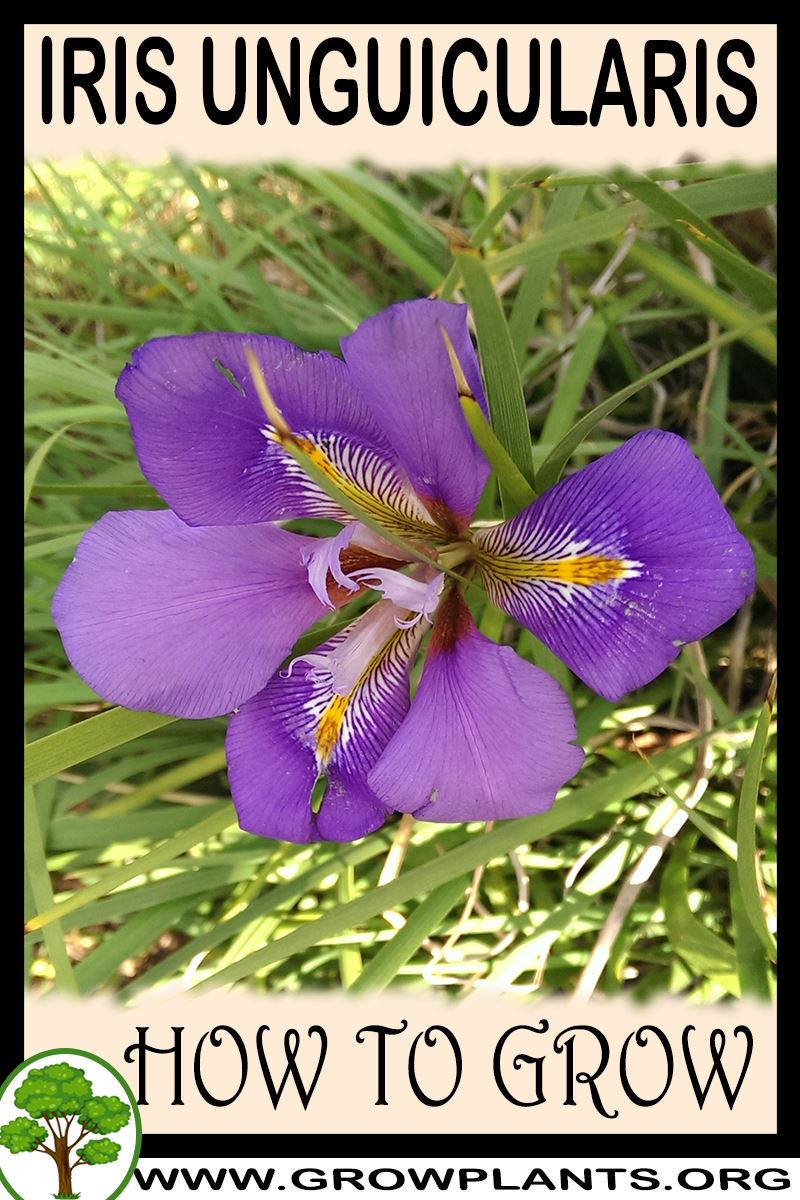
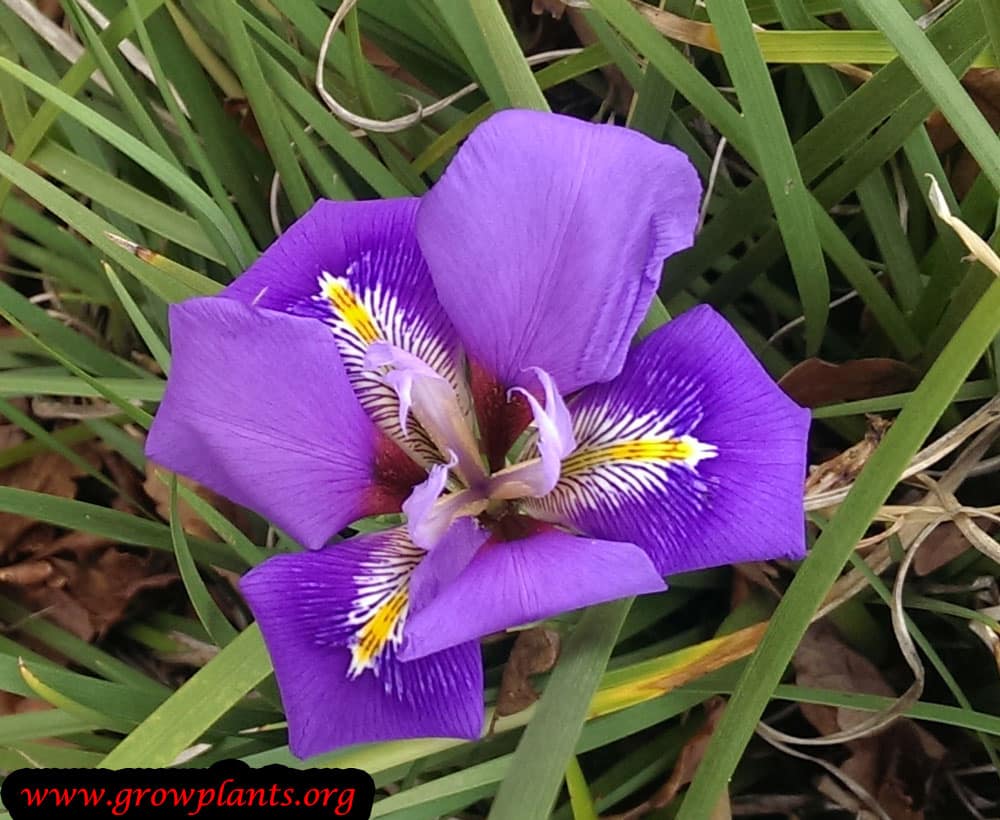
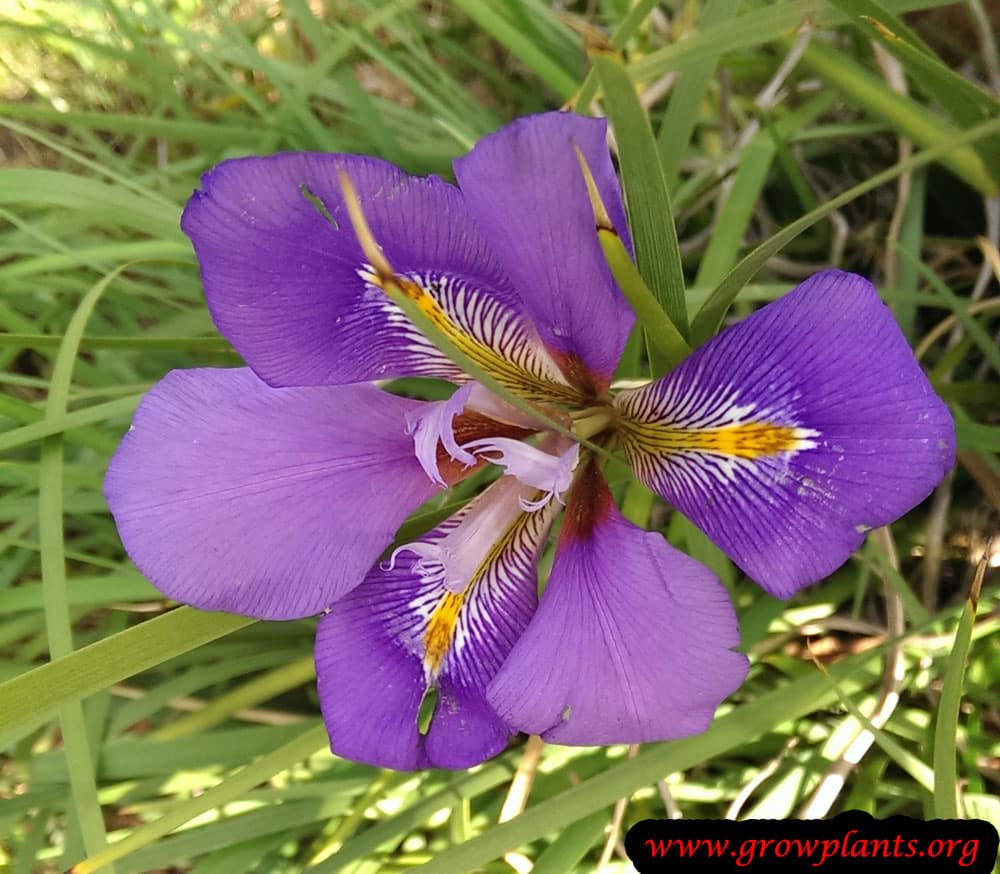
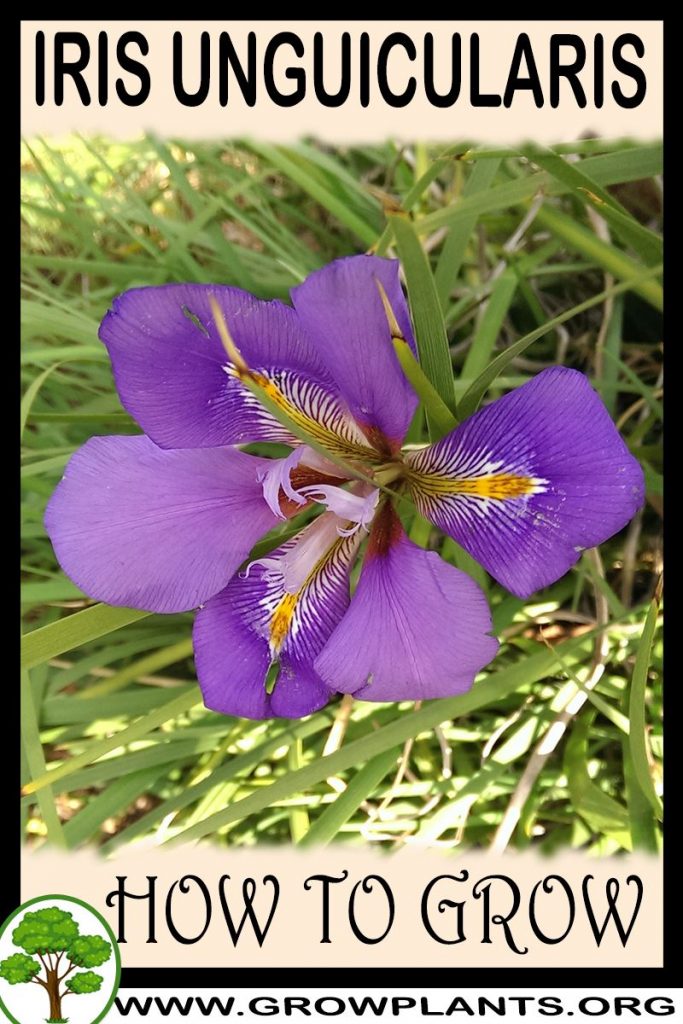
- Flower Characteristics: Purple, six-petalled flowers with a yellow central line and white-and-purple striping on the falls (full detail in the Bloom guide).
Primary Uses & Landscape Value
- Functional & Ornamental Roles: Ornamental for dry borders, gravel gardens and containers; a valued winter cut flower.
Care Guide: Planting, Soil & Watering
Overview: The Algerian iris is an evergreen, winter-flowering iris for full sun to part shade in gritty, alkaline, well-drained soil that is never left too wet. Once established it is tough and drought-tolerant, thriving on a little neglect in a sunny, dry spot.
Quick Care Requirements
| Requirement | Ideal Condition |
|---|---|
| Planting Season | In summer to autumn |
| Growth Rate | Moderate |
| Soil Type | Well-draining and gritty; alkaline |
| Soil pH | Neutral to alkaline |
| Water Need | Moderate; drought-tolerant once established, let it dry between waterings |
Planting & Establishment
- Best Planting Season: Plant in summer to autumn so the clumps settle in before flowering.
- How to Plant:
- Hole Preparation: Dig a hole a little wider than the root ball in free-draining, alkaline soil.
- Soil Amendments: Add grit or coarse sand to heavy ground; a little lime suits its liking for alkaline soil, and avoid rich, moisture-holding mixes.
- Planting Depth: Set the rhizome at the soil surface, with its top barely exposed, and firm gently so it does not sit wet.
- Growth Speed & Expectations: A moderate grower forming spreading clumps; it can be somewhat aggressive once happy.
Soil, Watering & Drainage Care
- Soil Mix & Drainage Needs: Sharp drainage is important, as it dislikes wet feet; keep container plants in a gritty, free-draining, slightly limey mix.
- Watering Schedule & Technique:
- Young / Newly Planted: Water to settle it in and keep the soil lightly moist while establishing.
- Established: Water sparingly and let the soil dry between waterings; it withstands dry spells well.
- Seasonal Adjustments: A little more in prolonged heat, very little in winter.
Climate, Light & Hardiness
Iris unguicularis (Algerian iris) is an evergreen geophyte of Mediterranean, subtropical and temperate climates that grows in full sun to half shade in soil that isn't kept too wet. Its USDA zone 7–10a range gives it moderate winter cold tolerance, and unlike several other bulb irises on this site it stays evergreen rather than going summer-dormant.
Quick Climate Specifications
| Climate Zones | Mediterranean, Subtropical, Temperate |
|---|---|
| USDA Hardiness Zones | 7–10a |
| Frost Tolerance | Moderate |
| Light Conditions | Full Sun / Half Shade |
Sunlight & Light Exposure
Optimal Light Setup
Full sun to half shade both suit this species well.
Direct Sun Requirement
Not mandatory - it flowers reliably in either full sun or part shade.
Shade & Heat Management
Half shade is a comfortable option through the hottest part of its Mediterranean and subtropical range.
Best Exposure / Orientation
An open border position, sunny to lightly shaded, suits this clump-forming evergreen well.
Temperature Extremes & Hardiness
USDA Hardiness & Regional Limits
Hardy outdoors across USDA zones 7–10a, covering true Mediterranean winters with moderate cold as well as milder subtropical conditions.
Cold Damage & Winter Protection
Established plants within its zone range generally need no extra winter protection; as an evergreen, its foliage remains exposed through winter rather than dying back, so it is more visibly affected by hard freezes than dormant bulb irises.
Frost Sensitivity
Moderate frost tolerance, consistent with its zone-7 rating; it is notably grown for winter flowering in mild-winter Mediterranean gardens.
Wind, Humidity & Microclimate
Rainfall & Seasonal Moisture
Prefers soil that is not kept too wet, fitting a Mediterranean climate pattern of a drier season; avoid waterlogged sites.
Microclimate Recommendations
A sunny to lightly shaded, well-drained border position works well across most of its hardiness range.
Growing in Pots, Balconies & Indoors
Iris unguicularis (Algerian iris) is a evergreen clumping iris of 20-40 cm. The grower does not rate it as a houseplant but confirms it for growing in pots or containers, where its watering and dormancy are easy to control.
Quick Details
- Container Size: 15-25 L (4-6 gal)
- Indoor Suitability: Not a houseplant
- Best Spot: Full sun
- Soil & Drainage: Sharply drained, gritty loam-based mix
- Watering in Pots: Average – keep evenly moist in growth, then much drier through dormancy after the foliage dies back; never waterlogged.
Indoors & On the Windowsill
- Not a houseplant: The grower does not grow it indoors – irises need a real seasonal rhythm and strong outdoor light that rooms cannot supply, so they belong on a balcony, patio or in the garden.
- On the windowsill: A windowsill will not give it the light or the cool dormancy it needs; keep it outside in a container instead.
- Dormancy, not overwintering: Rather than needing indoor warmth, it wants a proper rest – after the leaves die back keep the pot cooler and much drier through the dormant season.
- Safety: Irises are toxic if eaten (especially the rhizomes and bulbs) and the sap can irritate skin – site them away from where children or pets might dig or chew.
On a Balcony or Patio
- Light & wind: Give it the brightest spot the balcony offers; shelter exposed plants from strong wind and stake any tall or top-heavy growth. Walls and paving reflect heat, so pots dry quickly – check moisture often in warm weather.
- Practicalities: A filled pot is heavy once watered, so make sure the balcony can take the weight and stand it where drainage runoff will not be a nuisance.
Choosing the Pot, Soil & Long-Term Care
- Pot & drainage: 15-25 L (4-6 gal) with strong drainage holes; skip a standing water saucer so the roots never sit wet. Terracotta breathes and dries fast, while glazed or plastic pots hold moisture longer.
- Potting mix: A free-draining, gritty loam-based mix; sharp drainage matters more than richness.
- Watering: Average – keep evenly moist in growth, then much drier through dormancy after the foliage dies back; never waterlogged.
- Feeding: Potted plants exhaust their soil faster because nutrients leach out with every watering – feed lightly but regularly through the growing season.
- Repotting: Refresh the mix or pot up about every couple of years, teasing out and lightly trimming the roots of established plants.
Fertilizing & Feeding
A very light feeder: this evergreen Algerian iris flowers best in lean, alkaline, well-drained soil, needs only minimal balanced feeding during establishment, and typically flowers worse rather than better if fed heavily.
Quick Fertilizing Specs
| Feeding Level | Very light feeder |
|---|---|
| Main Nutrient Priority | Minimal balanced feeding; lean soil favors flowering over leaf growth |
| Best Feeding Period | During establishment and early growth ahead of the autumn bloom |
| Reduce/Stop Feeding | Stop feeding after bloom and avoid extra fertility generally, which tends to reduce flowering |
| Organic Options | Generally not needed; this species prefers lean, alkaline, well-drained soil |
| Soil pH | Prefers alkaline to near-neutral, well-drained soil that is not kept too wet |
Feeding by Growth Stage
Establishment and leaf growth in lean soil
Support establishment and steady evergreen foliage without over-enriching the lean, alkaline soil this iris prefers.
| Nutrient direction | A light, balanced feeding is usually enough; this species is well known for flowering best in poor, dry soil and can produce excess leaves at the expense of flowers if overfed. |
|---|---|
| Timing | During establishment and the active growth period ahead of the autumn bloom. |
| Frequency | Minimal feeding is usually enough once this iris is established. |
| Fertilizer types | A balanced complete fertilizer, applied sparingly, Lean, well-drained, alkaline-tolerant soil rather than added fertility is the priority |
| Precautions | Avoid rich soil, heavy watering, or generous feeding; all three tend to produce lush leaves and fewer flowers in this species. |
Autumn bloom
Sustain the plant through its complex purple autumn flowers.
| Nutrient direction | Continue only the light, balanced feeding already established for this lean-soil-loving plant; extra fertility tends to produce leaves rather than flowers. |
|---|---|
| Timing | During the autumn bloom period. |
| Frequency | Minimal feeding is usually enough through bloom for an established, lean-soil planting. |
| Fertilizer types | A balanced complete fertilizer, continued at the same light level as before bloom |
| Precautions | Resist the urge to add more fertilizer for bigger blooms; extra fertility tends to reduce flowering in this species. |
Quiet period after bloom
Let the evergreen clump rest with no additional fertility once flowering finishes.
| Nutrient direction | None – withhold fertilizer during this quiet period after flowering. |
|---|---|
| Timing | After flowering finishes, through the rest of the year until growth resumes. |
| Frequency | No feeding at this stage; resume only light feeding as active growth resumes next season. |
| Fertilizer types | No feeding at this stage; hold off fertilizing until active growth resumes. |
| Precautions | Withhold fertilizer now; this lean-soil species performs best without extra fertility outside its light feeding window. |
Nutrient Deficiency Signs & Corrections
Lush foliage forms but few or no flowers appear.
| Possible causes | soil too rich or fertilized too heavily for this species, insufficient sun to trigger flowering, soil kept too wet rather than the lean, dry conditions this species prefers |
|---|---|
| Appears first on | the plant fails to bloom despite otherwise healthy leaves |
| What to check | recent fertilizer and soil fertility, sun exposure, soil moisture and drainage |
| Possible correction | Reduce fertility and watering, and ensure full sun exposure; this species typically flowers best when slightly stressed by lean, dry soil. |
New leaves emerge notably pale or growth is unusually weak.
| Possible causes | very low soil nitrogen in truly depleted lean soil, poor root establishment after division or transplanting, competition from aggressive nearby growth |
|---|---|
| Appears first on | new leaves |
| What to check | soil fertility history, how recently the clump was divided or transplanted, competition from neighboring plants |
| Possible correction | If truly needed, apply only a light balanced feeding; avoid over-correcting given this species’ preference for lean soil. |
Leaf bases soften or rot, or leaf tips brown, despite what seems like reasonable care.
| Possible causes | fertilizer or organic matter making the soil richer or wetter than this species tolerates, soil kept too moist rather than the drier conditions it prefers, salt buildup from over-fertilizing a naturally light feeder |
|---|---|
| Appears first on | leaf bases and tips |
| What to check | soil moisture and drainage, recent fertilizer amounts, planting depth and soil richness |
| Possible correction | Reduce watering and fertility, improve drainage, and avoid feeding beyond this species’ light needs. |
Pruning, Training & Seasonal Maintenance
Algerian iris is an evergreen rhizomatous perennial that flowers in winter from buds formed at the base of its leaf fans, so its pruning is timed around bud ripening rather than around the bloom itself. It tolerates one hard leaf cut-back per year; the objective is to strip old, floppy foliage so the rhizome bakes in full summer sun, which drives strong winter flowering. The safest window is mid-to-late summer, well after the previous winter’s bloom has finished and before the next season’s buds begin forming.
Quick Pruning & Maintenance Specs
| Pruning Tolerance | Moderate–High (one hard annual leaf cut-back is normal) |
| Primary Pruning Window | Mid–Late Summer (post-bloom, pre-bud) |
| Typical Frequency | Once yearly, plus occasional pest-damaged leaf removal |
| Main Objective | Expose the rhizome to sun for winter flower-bud ripening |
| Young Plant Priority | Let fans establish; avoid cutting back in the first year |
| Mature Plant Priority | Annual summer leaf cut-back |
| Best Tool Type | Precision snips / bypass secateurs |
| Avoid Heavy Pruning During | Autumn through spring, while buds are forming and flowering |
Pruning by Plant Age & Size
Newly Established
Avoid cutting back; let leaf fans build up so the rhizome can establish.
Young / Formative
No structural training. Remove only slug- or snail-damaged leaves as they appear.
Mature / Established
One annual summer cut-back of the strappy leaves to expose the rhizome; spent flowers removed individually through the bloom season.
Seasonal Pruning Schedule
Summer
Objective: expose the rhizome to full sun for bud ripening. Cut back tired or floppy leaves once flowering is fully over. Do not delay into autumn or winter – cutting foliage then removes forming flower buds and can ruin that season’s display.
Ongoing Sanitary
Remove snail-damaged leaves as needed (snails are a documented pest of this species); this has no effect on flowering.
Special Growth to Remove
- Old, damaged or floppy leaves – the annual summer cut-back
- Spent flower stems – individual flowers are usually cut for indoor display rather than deadheaded in place
Container & Small-Space Pruning
This iris is more compact and far less spreading than bog-iris relatives, so it suits pots well; use a gritty, sharply-drained mix and apply the same once-yearly summer leaf cut-back rather than in-ground timing shortcuts.
Tools
- Precision snips – individual spent flowers
- Bypass secateurs – the annual leaf-fan cut-back
Tool Hygiene & Disease Risk
Routine – clean, sharp tools are sufficient. Watch for snail damage on cut leaf tissue rather than transmissible disease.
Cut Placement & Technique
Cut leaf fans several centimetres above the rhizome crown to avoid nicking it; cut spent flower stems at their base.
Heavy Pruning & Rejuvenation
The full annual leaf cut-back is itself the rejuvenation practice for this species – unusually hard pruning for an iris, but genuinely beneficial when done in the correct summer window.
Post-Pruning Care
Let the rhizome bake in full sun after cutting back; avoid heavy watering or mulching over the crown, since this species prefers soil that is not too wet.
Common Pruning Mistakes
- Cutting back leaves in autumn or winter, removing the forming flower buds and losing that season’s bloom
- Overwatering or mulching over the crown after cutting back
When NOT to Prune
Avoid cutting foliage from autumn through spring, while buds are developing and flowers are opening.
Recommended Tools (by task)
- precision_snips – removing individual spent flowers through the bloom season
- bypass_secateurs – the annual summer leaf-fan cut-back
Propagation Guide
Iris unguicularis is propagated most practically by division of the rhizome. Seed is also a biological propagation method, but it is slower and is not the preferred way to preserve a selected garden form.
Quick Propagation Specs
| Underground Organ | Rhizome |
| Best Vegetative Method | Rhizome division |
| Seed | Possible |
Rhizome Division
Lift or expose an established clump when the plant can be divided without severe heat or drought stress. Separate healthy rhizome sections that carry viable growth points and roots, discard damaged or diseased tissue, and replant promptly in suitable soil at the normal depth for the plant.
Growing from Seed
Use mature seed when seed propagation is desired. Seed-grown plants take longer to reach flowering size and may vary from selected garden forms.
Aftercare
Water newly divided plants enough to settle the soil and support new root growth, while avoiding prolonged waterlogging.
Bloom & Flower Guide
Quick Details
- Bloom Season: Late autumn through winter – prized as a winter-flowering iris
- Time to First Bloom: Clumps establish over a season or two, then flower reliably each winter
- Flower Appearance: Fragrant lilac-purple flowers; six segments – three outer falls with a yellow central stripe, purple-and-white veining and a reddish base, and three paler inner segments
- Edibility: Not edible – iris rhizomes are toxic and irritant
Detailed Blooming Overview
The Algerian iris is treasured for flowering in the depths of the cool season – from late autumn through winter – when little else is in bloom. Its fragrant lilac-purple flowers rise on very short tubes from a grassy clump of evergreen leaves, the falls marked with a yellow central line and fine purple-and-white veining.
Flower Characteristics
- Fragrant, lilac to purple.
- Six segments; the outer falls carry a yellow midline stripe, purple-and-white veining and a reddish base.
- Three paler inner segments, nearly hidden within the flower.
Bloom Care & Thinning
- Position: Leave clumps undisturbed in a warm, sunny spot to flower well.
- Tidying: Pick or remove spent blooms; the short-stemmed flowers nestle among the leaves.
Bloom Health & Protection
- Slugs and snails: These are the main nuisance, chewing the low-held winter flowers just as they open; hand-picking or a barrier or bait around the emerging buds protects them.
Pests, Diseases & Troubleshooting
Overview: Beardless and crested irises are grown from spreading rhizomes and generally suffer fewer problems than bearded types, though slugs and snails relish their soft foliage and flowers, and the rhizomes can still rot in wet, airless conditions. Leaf spot, rust and sap-feeders round out the short list; culture and sanitation handle nearly all of it.
Quick Troubleshooting Overview
| Issue / Pest | Main Symptom | Primary Solution |
|---|---|---|
| Slugs & snails | Ragged holes and slime on leaves and flowers | Iron-phosphate bait, traps, tidy debris |
| Bacterial soft rot | Soft, smelly rhizome | Cut out rot, improve drainage and airflow |
| Iris leaf spot | Brown spots with yellow halos | Remove old leaves, airflow, copper fungicide |
| Iris rust | Orange pustules on foliage | Remove leaves, spacing, sulfur/copper |
| Aphids / thrips | Distorted buds, streaked flowers, honeydew | Insecticidal soap, remove weeds |
| Iris borer | Streaked leaves, rotting rhizome (regional) | Autumn sanitation, cut out grubs |
Common Pests & Management
- Slugs and snails (Gastropoda):
- Symptoms: Ragged holes chewed in the soft leaves and, especially, the flowers, with silvery slime trails; worst at night and in damp, shaded, evergreen clumps.
- Prevention & Control: Keep the crown open and clear of decaying leaves, hand-pick after dark, and set beer or shelter traps. Iron-phosphate bait and copper barriers protect emerging growth reliably.
- Aphids (Aphis / Macrosiphum spp.):
- Symptoms: Soft insects clustering on new growth and buds, causing distortion and honeydew and spreading iris mosaic virus.
- Prevention & Control: Rinse off with water and encourage natural predators. Insecticidal soap or neem clears colonies; controlling aphids also limits virus spread.
- Iris thrips (Frankliniella spp.):
- Symptoms: Tiny insects tucked into leaf sheaths and buds causing silvery streaking and distorted, browned tissue in hot dry weather.
- Prevention & Control: Clear old sheaths and weeds, hose plants, and use blue sticky traps. Insecticidal soap or spinosad, worked into the sheaths, controls infestations.
- Iris borer (Macronoctua onusta):
- Symptoms: Where present (mainly cooler North American gardens), larvae streak the leaves and tunnel into rhizomes, causing collapse and soft rot; less severe on crested and evergreen types than on bearded iris.
- Prevention & Control: Cut down and destroy old foliage in autumn to remove overwintering eggs, squash streaked leaf tissue in spring, and dig out any grubs found in rhizomes.
Diseases & Fungal Issues
- Bacterial soft rot (Pectobacterium (Erwinia) carotovorum):
- Symptoms: Soft, smelly, slimy breakdown of the rhizome following injury or waterlogging; fans yellow and lift away easily.
- Treatment & Management: Cut back to firm tissue with a sanitized blade, let the wound dry, and improve drainage and airflow. Avoid burying the rhizomes too deeply and divide congested, airless clumps.
- Iris leaf spot (Didymellina macrospora):
- Symptoms: Brown spots with yellow or water-soaked halos that merge and brown the leaf tips in warm, wet weather.
- Treatment & Management: Remove spotted and old leaves, thin clumps for airflow, and avoid overhead watering. Copper or mancozeb-type fungicide protects new foliage under heavy pressure.
- Iris rust (Puccinia iridis):
- Symptoms: Orange powdery pustules with surrounding yellowing on the leaves; severe infection dries the foliage.
- Treatment & Management: Remove affected leaves and debris and improve spacing. Sulfur or copper fungicide checks recurring rust.
Growing Difficulties & Abiotic Problems
- Rhizome rot in wet, airless clumps:
- Cause & Symptoms: Dense, undivided clumps in heavy or constantly wet soil rot at the rhizome and thin out in the center.
- Correction Strategy: Grow in moist but well-drained soil (or, for water/bog species, suitable wet conditions), divide congested clumps after flowering, and keep the crowns from being smothered by debris.
- Slug-eaten winter flowers:
- Cause & Symptoms: Winter-blooming species open their flowers just as slugs and snails are active in cool, damp weather, so blooms are chewed before they can be enjoyed.
- Correction Strategy: Bait or trap around the clumps as buds form, pick flowers to enjoy indoors, and keep the crown clear of the old leaf thatch that shelters slugs.
- Leaf tip browning / stress:
- Cause & Symptoms: Drought, salt buildup or poor drainage brown the leaf tips and weaken the clump.
- Correction Strategy: Water consistently in dry spells, flush accumulated salts, and improve drainage; site the plant to suit its moisture preference.
What Helps – Products & Tools
Useful tools are a sharp sanitized knife for cutting out borers and rot, slug traps/iron-phosphate bait and copper barriers, insecticidal soap or horticultural oil for aphids and thrips, and – for foliar disease – a copper or mancozeb-type fungicide; systemic insecticide is a last resort for borer where cultural control fails. Bulbous types benefit from a fungicide bulb dip before storage. Always follow the label and protect pollinators.