Plant Profile & Key Characteristics
Overview: Iris albicans (cemetery / white flag iris) is an evergreen rhizomatous perennial geophyte 30-60 cm tall, grown as an ornamental for its pure white spring flowers. It is very tough and thrives in dry, alkaline soils.
Quick Specifications
| Specification | Attribute |
|---|---|
| Plant Type / Life Cycle | Perennial geophyte |
| Foliage Type | Evergreen |
| Mature Size | 30-60 cm (12-24 in) |
| Growth Rate | Moderate |
| Root System | Rhizomatous |
| Toxicity | Toxic if ingested – rhizomes contain irritant compounds; keep from pets |
| Hardiness | USDA zone 4-10a |
Growth Form & Structure
- Height & Spread: 30-60 cm (12-24 in) in ground; also grows in planters and containers.
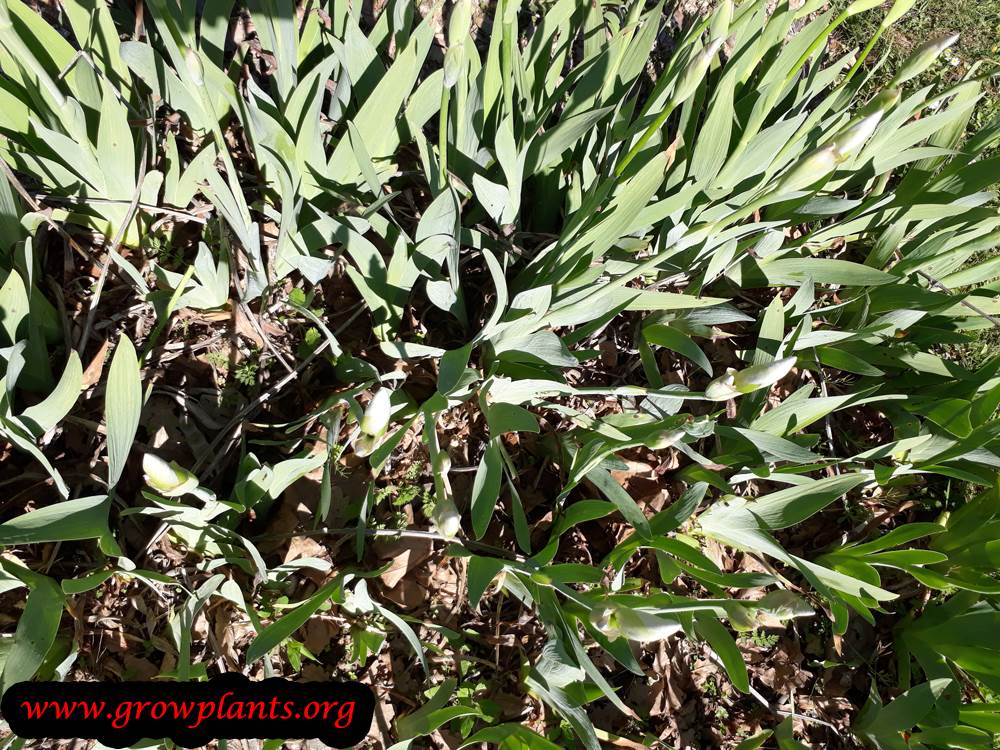
- Growth Habit & Form: Clump-forming fans of sword-shaped leaves from a surface rhizome; can spread.
- Lifespan & Maturity: Long-lived and very drought-tolerant once established.
Anatomy & Physical Features
- Leaves & Foliage: Grey-green, narrow, sword-shaped leaves in linked fans.
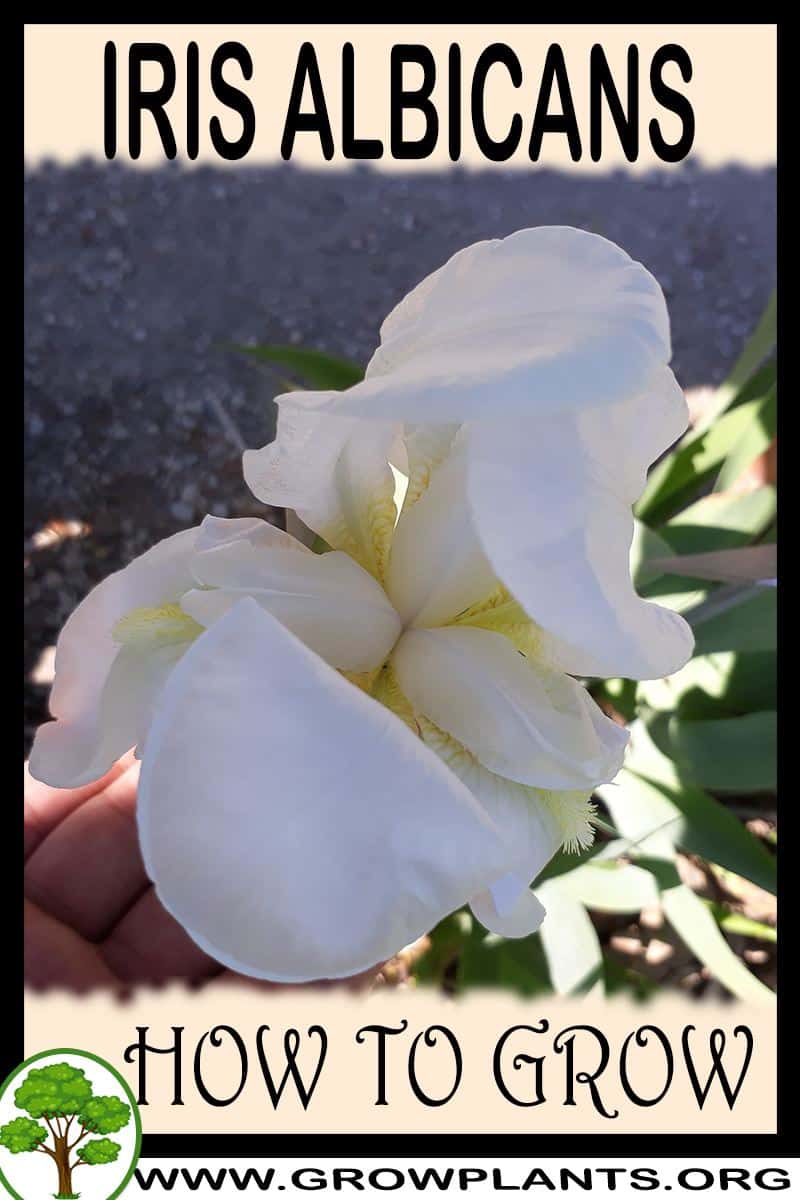
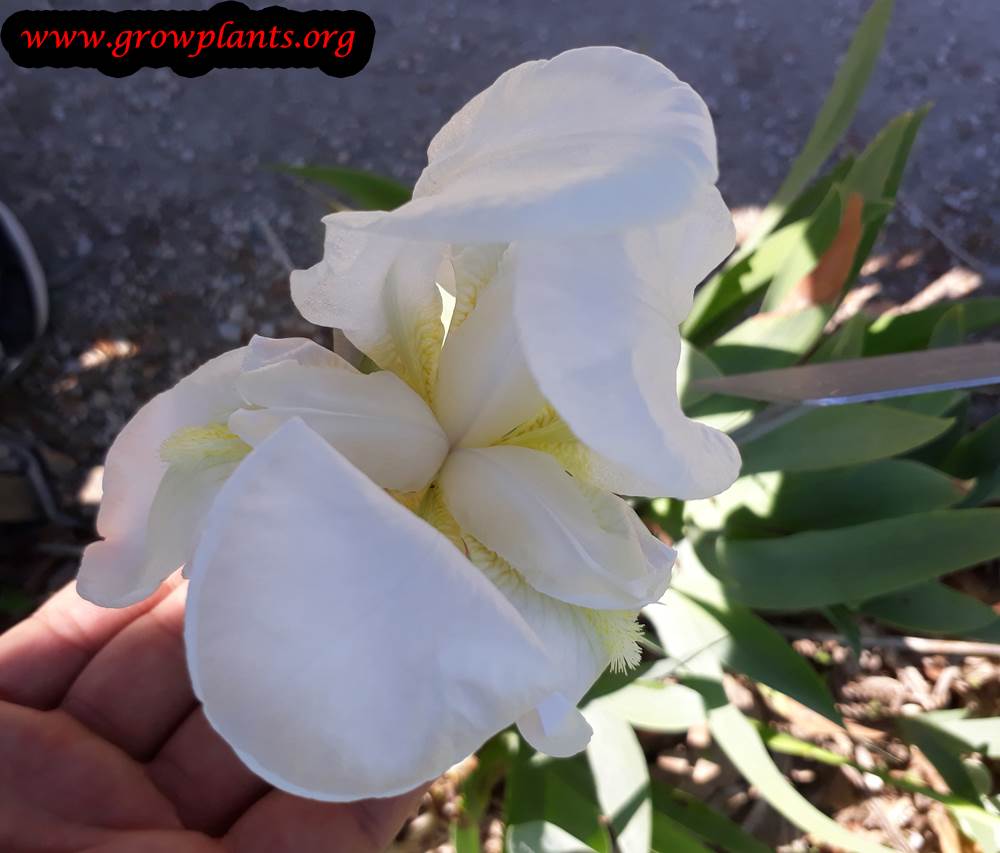
- Flower Characteristics: Pure white, six-petalled bearded flowers borne in spring (full detail in the Bloom guide).
Primary Uses & Landscape Value
- Functional & Ornamental Roles: Ornamental for dry borders, gravel gardens and containers; a tough, drought-tolerant heritage iris.
Care Guide: Planting, Soil & Watering
Overview: The cemetery iris is a tough, bearded-type evergreen iris for full sun to part shade in gritty, alkaline, well-drained soil that stays on the dry side. Famously drought-hardy, it thrives with minimal care once established.
Quick Care Requirements
| Requirement | Ideal Condition |
|---|---|
| Planting Season | In summer to autumn |
| Growth Rate | Moderate |
| Soil Type | Well-draining and gritty; alkaline |
| Soil pH | Neutral to alkaline |
| Water Need | Moderate; drought-tolerant once established, let it dry between waterings |
Planting & Establishment
- Best Planting Season: Plant in summer to autumn so the clumps settle in before flowering.
- How to Plant:
- Hole Preparation: Dig a hole a little wider than the root ball in free-draining, alkaline soil.
- Soil Amendments: Add grit or coarse sand to heavy ground; a little lime suits its liking for alkaline soil, and avoid rich, moisture-holding mixes.
- Planting Depth: Set the rhizome at the soil surface, with its top barely exposed, and firm gently so it does not sit wet.
- Growth Speed & Expectations: A moderate grower forming spreading clumps; it can be somewhat aggressive.
Soil, Watering & Drainage Care
- Soil Mix & Drainage Needs: Sharp drainage is important, as it dislikes wet feet; keep container plants in a gritty, free-draining, slightly limey mix.
- Watering Schedule & Technique:
- Young / Newly Planted: Water to settle it in and keep the soil lightly moist while establishing.
- Established: Water sparingly and let the soil dry between waterings; it withstands dry spells well.
- Seasonal Adjustments: A little more in prolonged heat, very little in winter.
Climate, Light & Hardiness
Cemetery iris is a cold-hardy rhizomatous perennial for Mediterranean, subtropical, and temperate climates, growing best in full sun to half shade in alkaline, well-drained soil that is not kept too wet.
Quick Climate Specifications
| Climate Zones | Mediterranean, Subtropical, Temperate |
|---|---|
| USDA Hardiness Zones | 4–10a |
| Frost Tolerance | High |
| Light Conditions | Full Sun to Half Shade |
Sunlight & Light Exposure
Optimal Light Setup
Full sun to half shade both suit this plant well.
Temperature Extremes & Hardiness
USDA Hardiness & Regional Limits
Hardy across USDA zones 4–10a, tolerating cold winters typical of temperate climates without protection.
Wind, Humidity & Microclimate
Rainfall & Seasonal Moisture
Prefers soil that is not kept too wet, in keeping with its Mediterranean-climate origins; good drainage matters more than consistent moisture.
Growing in Pots, Balconies & Indoors
The cemetery iris is a hardy, sun-loving rhizomatous iris – the grower confirms it is not a houseplant but grows well in containers. Enjoy it in a pot on a sunny patio or balcony rather than indoors; like most bearded irises it needs open air, sun and a cool dormancy it can’t get in a room.
Quick Details
- Container Size: A wide, shallow pot suits the spreading rhizomes; 5-15 L
- Indoor Suitability: Not an indoor plant – it needs full sun and outdoor seasons
- Best Spot: Full sun to light shade, out on a patio or balcony
- Soil & Drainage: Free-draining and rather alkaline; keep it on the dry side, never soggy
- Watering in Pots: Average water; let the surface dry between waterings – wet rhizomes rot
Indoors & On the Windowsill
- Not a houseplant: Won’t succeed as a room plant; it needs strong sun and a natural cool season to flower.
- Windowsill: Even a bright sill is too dim and too warm for lasting success – grow it outside.
On a Balcony or Patio
- Light & drainage: Give it the sunniest spot on the balcony; because pots dry fast and the rhizomes hate wet feet, sharp drainage matters more than frequent watering.
- Habit: It can spread aggressively, so a pot is a tidy way to contain it.
Choosing the Pot, Soil & Long-Term Care
- Pot & drainage: A free-draining pot with strong drainage holes and no standing-water saucer to avoid root rot; terracotta breathes and dries faster, glazed or plastic holds moisture longer; keep the rhizome tops near the surface.
- Potting mix: A gritty, free-draining mix on the alkaline side – add grit or coarse sand.
- Feeding: Potted plants are fed more often than those in the ground, as watering steadily leaches nutrients from the mix – a light, low-nitrogen feed after flowering.
- Repotting: Lift and divide crowded rhizomes every couple of years after flowering.
Fertilizing & Feeding
A light feeder overall – rich feeding or wet, heavy soil does more harm than good by encouraging rhizome rot.
Quick Fertilizing Specs
| Feeding Level | Light feeder |
|---|---|
| Main Nutrient Priority | Light, balanced nutrition – avoid rich or heavy feeding |
| Best Feeding Period | During active leaf growth ahead of and during bloom |
| Soil pH | Prefers alkaline to neutral soil |
| Reduce/Stop Feeding | Stop feeding once bloom finishes and the plant enters its rest period |
| Organic Options | A light compost topdressing suits this modest feeder well |
Feeding by Growth Stage
Active Leaf Growth
Support healthy fan-shaped foliage growth ahead of flowering
| Nutrient direction | A light, balanced feeding direction supports steady leaf and rhizome development |
|---|---|
| Timing | As new leaf growth emerges, ahead of the bloom period |
| Frequency | A light feeding or two as growth resumes is usually enough for this modest feeder |
| Fertilizer types | A light, balanced, general-purpose fertilizer, or a topdressing of compost |
| Precautions | Avoid heavy nitrogen feeding, which can encourage lush leaf growth and rot-prone rhizomes at the expense of flowering |
Bloom Period
Support the plant through flowering without encouraging excess soft growth
| Nutrient direction | Keep feeding light and balanced through bloom; avoid switching to a high-phosphorus ‘bloom booster’ |
|---|---|
| Timing | During the flowering period |
| Frequency | Feeding needs are minimal during bloom itself – rely on the feeding done earlier in the growth cycle |
| Fertilizer types | Little to no additional feeding is usually needed during active bloom beyond what was applied earlier in the growth cycle |
| Precautions | Rich, wet conditions during bloom favor rhizome rot in this alkaline-soil-loving iris – keep feeding and watering light |
Post-Bloom Rest
Let the rhizome store energy and rest after flowering without pushing new soft growth
| Nutrient direction | None – withhold fertilizer after bloom finishes |
|---|---|
| Timing | After flowering ends, through the plant’s natural rest period |
| Frequency | No feeding at this stage |
| Fertilizer types | No feeding at this stage – withhold fertilizer until the next active growth cycle begins |
| Precautions | Do not fertilize after bloom; rhizomes of this iris are prone to rot in overly rich or wet conditions |
Nutrient Deficiency Signs & Corrections
Rhizome bases turn soft and mushy with a foul smell, and fans of leaves collapse
| Possible causes | Waterlogged or poorly drained soil, especially combined with overfeeding, Bacterial or fungal rot organisms entering through wounds, Rhizomes planted too deep or covered with heavy mulch, trapping moisture |
|---|---|
| Appears first on | Rhizome bases and the leaf fan closest to them first |
| What to check | Soil drainage at the planting site, Planting depth and whether rhizomes are exposed at the soil surface, Recent feeding and watering rate |
| Possible correction | Improve drainage, expose rhizome tops at the soil surface, remove and discard rotten tissue, and hold off feeding until healthy new growth appears |
Leaf fans are pale green to yellow and smaller than expected
| Possible causes | Low soil fertility, Overcrowded clumps competing for nutrients, Leaching from heavy rain or watering |
|---|---|
| Appears first on | Older, outer leaves of the fan first |
| What to check | Clump density and whether division is overdue, Feeding history, Soil fertility |
| Possible correction | Divide overcrowded clumps and resume light, balanced feeding during active leaf growth |
New leaves emerge yellow while veins stay greener
| Possible causes | Soil pH outside the range that keeps iron available, though this iris tends to be alkaline-tolerant so this is less common than in acid-loving plants, Waterlogged soil limiting root function, Root stress from recent division or transplanting |
|---|---|
| Appears first on | Newest leaves first |
| What to check | Soil drainage, Recent transplanting or division, Whether yellowing is interveinal |
| Possible correction | Improve drainage, reduce transplant stress, or apply a chelated iron product per its label if a true deficiency is confirmed |
Pruning, Training & Seasonal Maintenance
Iris albicans needs very little pruning: it tolerates only light, mostly cosmetic and sanitary cutting, and the main objective is keeping the rhizome clumps healthy and tidy rather than shaping growth. The safest time to tidy foliage is in summer, after flowering has finished, and pruning has essentially no effect on next year’s bloom as long as the green, sword-shaped leaf fans are left largely intact – they continue photosynthesizing after flowering to build up energy in the rhizome for next season.
Quick Pruning & Maintenance Specs
| Pruning Tolerance | Low (leaf removal only; not a plant to cut back hard) |
| Primary Pruning Window | Summer, after flowering |
| Typical Frequency | A light tidy once or twice a year |
| Main Objective | Remove dead leaves and spent flower stalks; keep clumps tidy |
| Young Plant Priority | Leave newly planted rhizomes largely alone beyond removing damaged leaf tips |
| Mature Plant Priority | Deadhead after bloom; clear out fully dead leaf material as clumps mature and thicken |
| Best Tool Type | Precision snips |
| Avoid Heavy Pruning During | Active bloom, and any time on healthy green leaves |
Pruning by Plant Age & Size
Newly Established
Remove only visibly damaged or browned leaf tips; otherwise leave the young fan alone while it establishes.
Young / Formative
No structural training applies to this rhizomatous geophyte – there is no framework to build, just healthy leaf fans to maintain.
Mature / Established
Cut spent flower stalks down to the base once blooming has finished, and remove fully dead or straw-coloured leaves as the clump thickens with age. Overcrowded clumps benefit from division every few years, which is a propagation task rather than pruning, but is often carried out at the same time as a post-bloom tidy.
Seasonal Pruning Schedule
Post-Flowering
Objective: tidy the clump and remove spent bloom stalks. Remove: faded flower stems cut to the base, and any fully dead or damaged leaves. Do not remove: healthy green leaves, even ones that look untidy – cutting them back reduces the energy the rhizome can store for next year’s flowers. Expected response: continued healthy foliage growth through summer. Flowering impact: none if only dead material is removed; premature leaf-cutting can reduce next season’s bloom.
Special Growth to Remove
- Spent flower stalks, cut back to the base after bloom.
- Fully dead, browned or straw-like leaves, which can be pulled or snipped away at their base.
Container & Small-Space Pruning
In pots, the same light approach applies – tidy dead material after bloom rather than cutting back the whole fan; container clumps tend to need division sooner than ground-grown ones simply because they fill the available space faster.
Tools
- Precision snips for cutting spent flower stalks and removing dead leaf material.
Tool Hygiene & Disease Risk
Routine – clean, sharp snips are sufficient. The plant’s documented issue is snail damage to foliage rather than a disease that spreads through pruning cuts.
Cut Placement & Technique
Cut flower stalks close to their base rather than leaving a tall stub. When removing dead leaf material, cut or pull only the browned portion, leaving any green, living tissue on the fan untouched.
Common Pruning Mistakes
- Cutting back healthy green leaves after flowering for tidiness, which weakens the rhizome’s ability to store energy for the following year’s bloom.
- Leaving spent flower stalks in place indefinitely instead of removing them once faded.
When NOT to Prune
Avoid cutting green foliage while the plant is actively flowering or shortly after, since the leaves are still actively recharging the rhizome for next year.
Recommended Tools (by task)
- precision_snips – the only tool needed, for deadheading spent flower stalks and trimming dead leaf tips on this soft, non-woody rhizomatous plant.
Propagation Guide
Iris albicans is propagated most practically by division of the rhizome. Seed is also a biological propagation method, but it is slower and is not the preferred way to preserve a selected garden form.
Quick Propagation Specs
| Underground Organ | Rhizome |
| Best Vegetative Method | Rhizome division |
| Seed | Possible |
Rhizome Division
Lift or expose an established clump when the plant can be divided without severe heat or drought stress. Separate healthy rhizome sections that carry viable growth points and roots, discard damaged or diseased tissue, and replant promptly in suitable soil at the normal depth for the plant.
Growing from Seed
Use mature seed when seed propagation is desired. Seed-grown plants take longer to reach flowering size and may vary from selected garden forms.
Aftercare
Water newly divided plants enough to settle the soil and support new root growth, while avoiding prolonged waterlogging.
Bloom & Flower Guide
Quick Details
- Bloom Season: Spring
- Time to First Bloom: Established rhizomes flower each spring
- Flower Appearance: White, fragrant flowers with six segments – three upright “standards” and three arching “falls”
- Edibility: Toxic – iris rhizomes and sap are poisonous and irritant; not edible
Detailed Blooming Overview
The cemetery iris opens pure white, softly scented spring flowers on upright stems above fans of grey-green, sword-shaped leaves. Like other bearded irises the bloom has six segments in two tiers – three standards held upright and three falls that arch outward. Tough and long-lived, it often persists and naturalises around old gardens and sites.
Flower Characteristics
- White flowers with three upright standards and three spreading falls.
- Lightly fragrant, carried on stems above linked fans of leaves.
Bloom Care & Thinning
- Encouraging bloom: Grow in full sun with the rhizomes near the surface; lift and divide crowded clumps after flowering to keep them blooming well.
- Safety: All parts, especially the rhizomes, are poisonous if eaten and the sap can irritate skin – handle with care.
Pests, Diseases & Troubleshooting
Overview: Bearded and other rhizomatous irises are tough and long-lived, but their fleshy rhizomes are prime targets for the iris borer and bacterial soft rot, while the sword leaves attract leaf spot, rust and slugs. Sanitation, sun, sharp drainage and shallow planting prevent the great majority of problems.
Quick Troubleshooting Overview
| Issue / Pest | Main Symptom | Primary Solution |
|---|---|---|
| Iris borer | Water-soaked streaks in leaves, then a rotting rhizome | Autumn sanitation, cut out grubs, remove old foliage |
| Bacterial soft rot | Mushy, foul-smelling rhizome | Cut out rot, dry the wound, improve drainage |
| Iris leaf spot | Brown spots with yellow halos on leaves | Remove old leaves, airflow, copper fungicide |
| Iris rust | Orange powdery pustules on leaves | Remove affected foliage, spacing, sulfur/copper |
| Slugs & snails | Ragged holes, slime trails on young growth | Iron-phosphate bait, traps, tidy debris |
| Thrips / aphids | Streaked, distorted flowers and buds | Insecticidal soap, remove weeds |
Common Pests & Management
- Iris borer (Macronoctua onusta):
- Symptoms: Larvae hatch on old foliage in spring, chew water-soaked notches and streaks down the leaves, then tunnel into the rhizome, hollowing it and opening the door to soft rot; the pinkish caterpillar can be 4 cm long inside a mushy rhizome.
- Prevention & Control: The key control is autumn/winter sanitation: cut down and destroy all old foliage and debris where eggs overwinter. In spring squash streaked leaf tissue to kill young larvae, and lift and cut borers out of rhizomes, dusting cuts and replanting only firm sections. Beneficial nematodes and, as a last resort, a systemic insecticide help where pressure is severe.
- Slugs and snails (Gastropoda):
- Symptoms: Ragged holes in young leaves and flowers with tell-tale slime trails; worst in damp, shady, mulched conditions and at night.
- Prevention & Control: Clear debris and keep the crown open and dry, hand-pick after dark, and set beer or shelter traps. Iron-phosphate bait and copper barriers give reliable protection without harming pets or wildlife.
- Iris thrips (Iridothrips / Frankliniella spp.):
- Symptoms: Tiny slender insects hidden in leaf sheaths and buds; feeding causes silvery streaking, distorted buds and browned, gummy leaf bases, worse in hot dry weather.
- Prevention & Control: Remove weeds and old sheaths, hose plants, and hang blue sticky traps. Insecticidal soap or spinosad, directed into the sheaths and repeated, controls active infestations.
- Aphids (Aphis / Macrosiphum spp.):
- Symptoms: Clusters on emerging leaves and buds causing distortion and honeydew; important mainly as vectors of iris mosaic virus.
- Prevention & Control: Wash off with water and encourage ladybirds and lacewings. Insecticidal soap or neem controls colonies; managing aphids also limits virus spread.
Diseases & Fungal Issues
- Bacterial soft rot (Pectobacterium (Erwinia) carotovorum):
- Symptoms: A soft, wet, foul-smelling rot that turns the rhizome to slime, often following borer tunnels or injury; leaf fans yellow, wilt and pull away easily.
- Treatment & Management: Cut out all soft tissue back to firm, clean flesh with a sanitized knife, expose the wound to sun and air to dry, and dust with a disinfectant. Plant rhizomes shallow with the top exposed, in full sun and sharp drainage, and control borers that create entry wounds.
- Iris leaf spot (Didymellina (Mycosphaerella) macrospora):
- Symptoms: Small brown spots with water-soaked or yellow margins that enlarge and merge, browning leaf tips and reducing vigor; worst in warm, wet, humid weather.
- Treatment & Management: Remove and destroy spotted and old foliage, space clumps for airflow, and avoid overhead watering. A copper or mancozeb-type fungicide protects new growth under heavy disease pressure.
- Iris rust (Puccinia iridis):
- Symptoms: Reddish-orange powdery pustules scattered on the leaves, with surrounding yellowing; heavy infection dries the foliage.
- Treatment & Management: Cut off and bin affected leaves, improve spacing and airflow, and clear debris. Sulfur or copper fungicide checks spread where rust recurs.
- Crown rot (Sclerotium rolfsii):
- Symptoms: Fans wilt and topple; a white cottony fungal web with mustard-seed-sized tan sclerotia appears at the crown in warm, humid conditions.
- Treatment & Management: Remove infected plants and surrounding soil, avoid mulching over the crown, and improve drainage. Do not replant irises in the same spot without treating or replacing the soil.
Growing Difficulties & Abiotic Problems
- Rhizome rot from deep or wet planting:
- Cause & Symptoms: Rhizomes planted too deep, mulched over, or grown in heavy, wet soil rot and fail to bloom; irises need their backs in the sun.
- Correction Strategy: Plant with the top of the rhizome at or just above the soil surface in full sun and free-draining soil, keep mulch off the crown, and divide crowded clumps every few years.
- No bloom:
- Cause & Symptoms: Too much shade, overcrowding, deep planting or excess nitrogen produce lush leaves but few or no flowers.
- Correction Strategy: Grow in full sun, lift and divide congested clumps after flowering, replant shallow, and feed a low-nitrogen bloom-type fertilizer rather than a high-nitrogen one.
- Leaf scorch / tip browning:
- Cause & Symptoms: Browning leaf tips can come from drought stress, salt buildup, or the poorly understood ‘iris scorch’ linked to stress and poor drainage.
- Correction Strategy: Water deeply during dry spells, flush salts from the soil, and ensure excellent drainage. Remove and destroy any plant showing sudden reddening and root death.
What Helps – Products & Tools
Useful tools are a sharp sanitized knife for cutting out borers and rot, slug traps/iron-phosphate bait and copper barriers, insecticidal soap or horticultural oil for aphids and thrips, and – for foliar disease – a copper or mancozeb-type fungicide; systemic insecticide is a last resort for borer where cultural control fails. Bulbous types benefit from a fungicide bulb dip before storage. Always follow the label and protect pollinators.