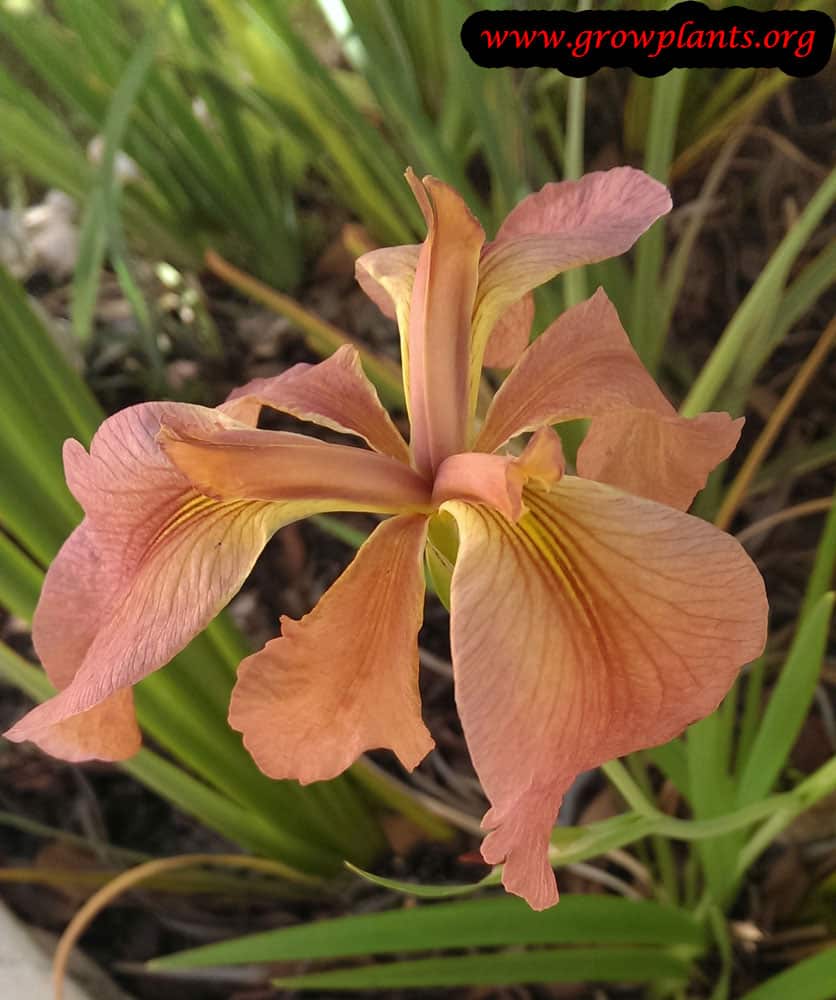
Plant Profile & Key Characteristics
Overview: Louisiana iris (Iris hexagona and its hybrids) is a rhizomatous perennial geophyte 1-1.8 m tall, grown as an ornamental for its large, broadly coloured flowers. It is largely evergreen in mild climates and thrives in wet, heavy soils.
Quick Specifications
| Specification | Attribute |
|---|---|
| Plant Type / Life Cycle | Perennial geophyte (marginal / bog) |
| Foliage Type | Evergreen to semi-evergreen |
| Mature Size | 1-1.8 m (3-6 ft) |
| Growth Rate | Fast to moderate |
| Root System | Rhizomatous (spreading; can be aggressive) |
| Toxicity | Toxic if ingested – rhizomes contain irritant compounds; keep from pets |
| Hardiness | USDA zone 4-10 |
Growth Form & Structure
- Height & Spread: 1-1.8 m (3-6 ft) in ground, pond margins or shallow water; also grown in containers.
- Growth Habit & Form: Tall, clump-forming iris with sword-like leaves from spreading rhizomes; very vigorous in wet ground.
- Lifespan & Maturity: Long-lived and fast to form colonies.
Anatomy & Physical Features
- Leaves & Foliage: Tall, sword-like green leaves in linked groups.
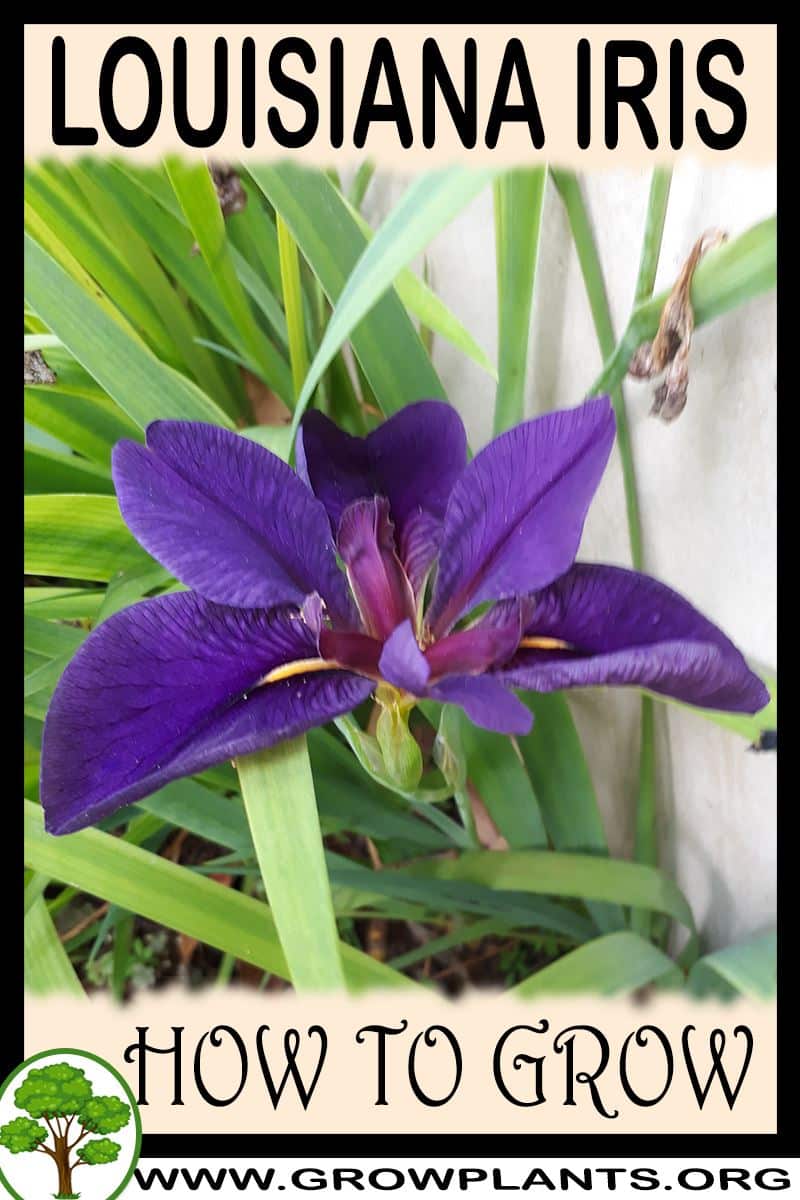
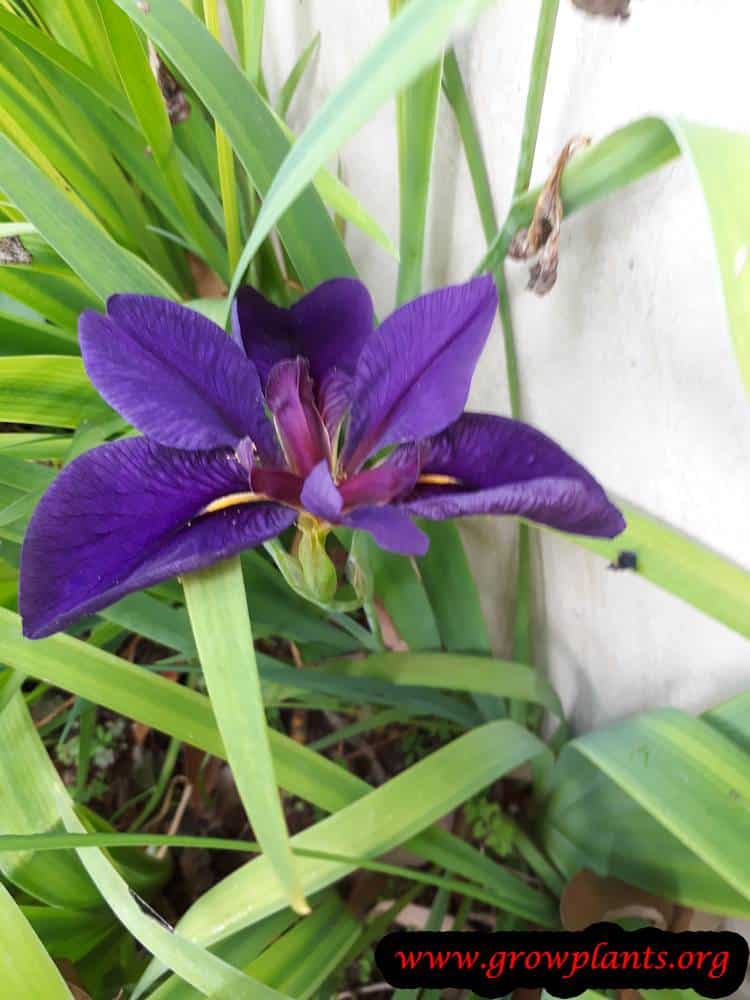
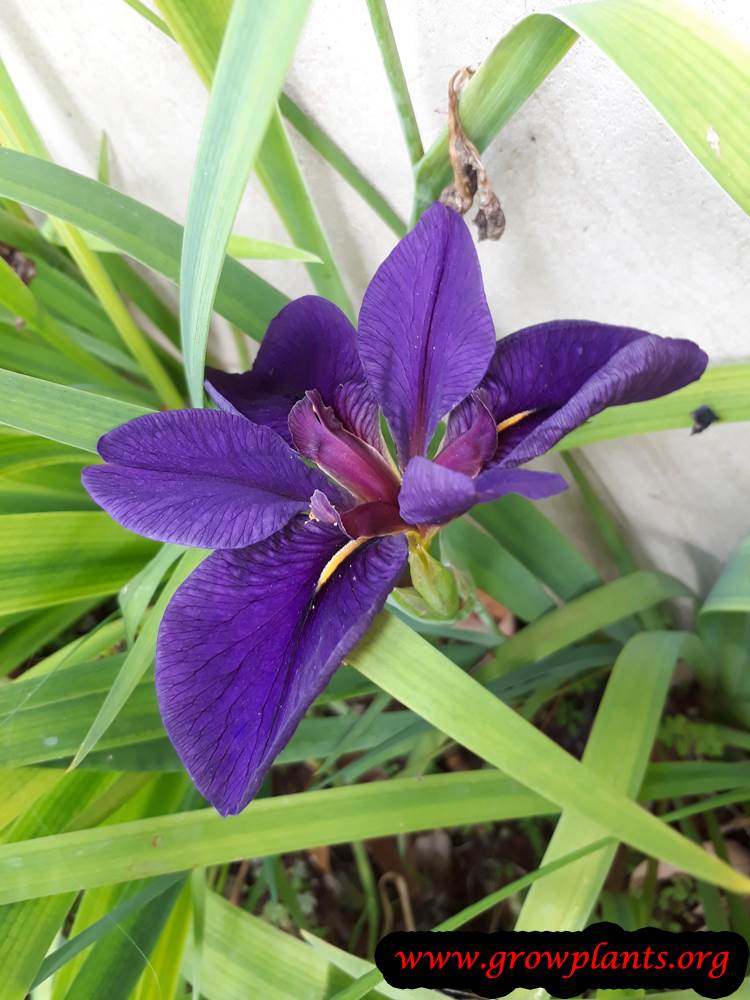
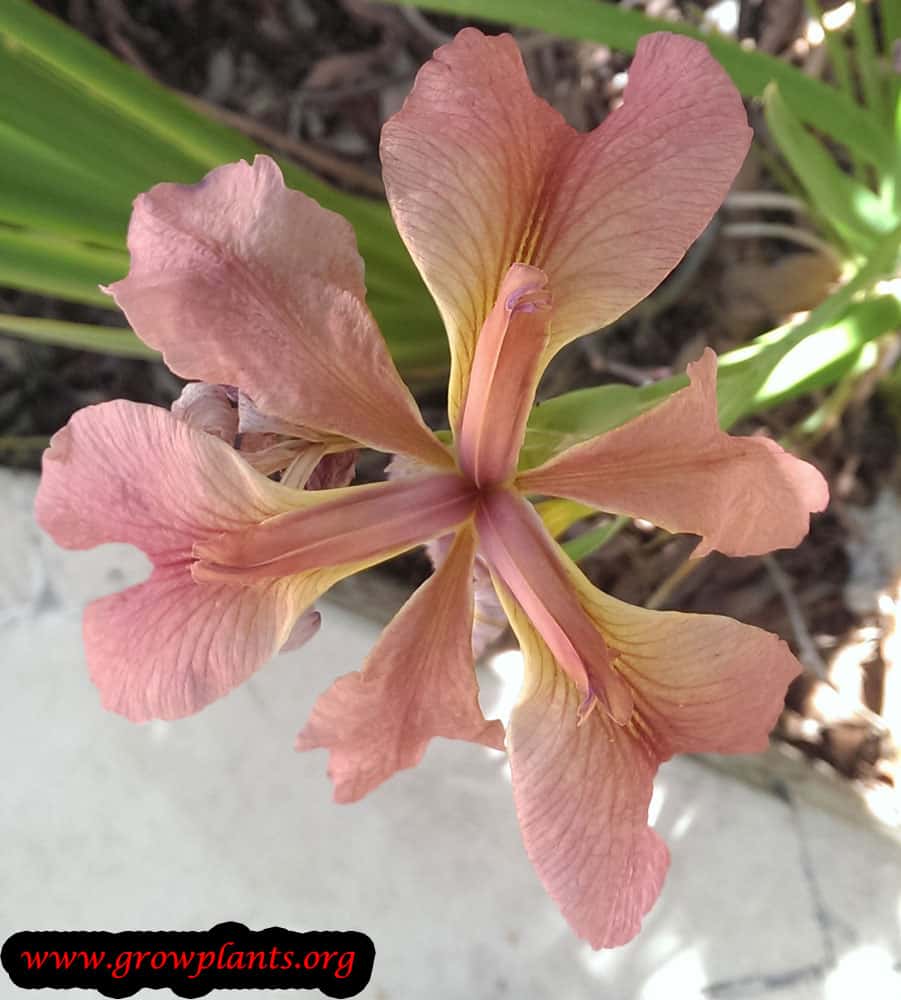
- Flower Characteristics: Large six-petalled flowers in purple, pink, yellow, blue, maroon, white or near-black, often multi-coloured (full detail in the Bloom guide).
Primary Uses & Landscape Value
- Functional & Ornamental Roles: Ornamental marginal/bog and border plant for wet ground, pond edges and rain gardens; a good cut flower.
Care Guide: Planting, Soil & Watering
Overview: Louisiana (swamp) irises thrive in full sun to part shade in heavy, permanently moist to wet soil, and grow well at pond margins in shallow water. They are vigorous marsh plants that reward rich, wet conditions with tall, colourful blooms.
Quick Care Requirements
| Requirement | Ideal Condition |
|---|---|
| Planting Season | Year-round in mild climates, during active growth |
| Growth Rate | Moderate to fast |
| Soil Type | Heavy, rich, moisture-retentive; tolerates boggy ground and shallow water |
| Water Need | High; keep constantly wet |
Planting & Establishment
- Best Planting Season: In mild climates they can be planted year-round; otherwise plant during the active growing season into wet or boggy ground.
- How to Plant:
- Hole Preparation: Prepare a hole in heavy, rich, moisture-holding soil at a pond margin or damp bed.
- Soil Amendments: Enrich with organic matter; these hungry plants relish rich, wet soil and need no added drainage.
- Planting Depth: Set the rhizome at or just below the surface; it tolerates a few centimetres of standing water.
- Growth Speed & Expectations: Fast and very aggressive, spreading strongly, so give it room or contain it.
Soil, Watering & Drainage Care
- Soil Mix & Drainage Needs: A moisture-loving group that wants constant wetness rather than drainage; never let it dry out.
- Watering Schedule & Technique:
- Young / Newly Planted: Keep the soil saturated from planting.
- Established: Keep it constantly wet; standing water is fine.
- Seasonal Adjustments: It stays wet year-round; top up in summer heat.
Climate, Light & Hardiness
Louisiana iris (swamp iris) is an evergreen wetland geophyte of temperate, subtropical and Mediterranean climates that needs full sun and consistently very moist, heavy, swamp-like soil. Its USDA zone 4–10 range gives it excellent winter cold tolerance.
Quick Climate Specifications
| Climate Zones | Temperate, Subtropical, Mediterranean |
|---|---|
| USDA Hardiness Zones | 4–10 |
| Frost Tolerance | High |
| Light Conditions | Full Sun / Half Shade (needs full sun to bloom well) |
Sunlight & Light Exposure
Optimal Light Setup
Full sun is important - the site's own data notes that without enough sun this iris won't bloom.
Direct Sun Requirement
Yes, essential for flowering; half shade is tolerated for foliage but at the cost of bloom.
Shade & Heat Management
Its wetland habitat naturally buffers heat stress, so no special shade management is needed beyond ensuring full sun for flowering.
Best Exposure / Orientation
An open, sunny position at a pond edge, bog garden, or any low, naturally wet spot suits it best.
Temperature Extremes & Hardiness
USDA Hardiness & Regional Limits
Hardy outdoors across USDA zones 4–10, a wide, cold-tolerant range consistent with its origin in wetlands that experience genuine winter freezes.
Cold Damage & Winter Protection
Established plants across its zone range generally need no special winter protection.
Frost Sensitivity
Good frost and winter cold tolerance, consistent with its zone-4 rating.
Extreme Heat Tolerance
Also handles subtropical summer heat well, provided the swamp-like soil moisture it needs is maintained.
Wind, Humidity & Microclimate
Rainfall & Seasonal Moisture
Naturally adapted to swamp and wetland conditions with heavy, consistently moist to wet soil - unlike most irises, it does not want a dry season and is unsuited to fast-draining, dry sites.
Microclimate Recommendations
Pond margins, bog gardens, rain gardens, or any low-lying wet spot in the landscape are ideal; avoid elevated, dry, well-drained ground.
Growing in Pots, Balconies & Indoors
Louisiana iris (Iris hexagona group) is a tall bog iris of 1-1.8 m (3-6 ft) that thrives in wet ground and at the water’s edge. The grower does not rate it as a houseplant but confirms it grows in pots – ideally standing in water.
Quick Details
- Container Size: A large 20-40 L (5-10 gal) tub kept constantly wet
- Indoor Suitability: Not a houseplant – a water-margin plant for outdoors
- Best Spot: Full sun to part shade (needs sun to flower well)
- Soil & Drainage: Heavy, loam-based aquatic mix; it likes rich, wet soil
- Watering in Pots: Very high – keep it constantly wet; stand the pot in a saucer or tray of water
Indoors & On the Windowsill
- Not a houseplant: The grower does not grow it indoors – it is a vigorous water-margin plant that needs full outdoor light and constant moisture no room can offer.
- Windowsill: Not a windowsill plant; it belongs at a pond edge or in a water-filled container outdoors.
- Dormancy: It dies back and rests in the cold season; a hardy marginal, it does not need to come indoors, just keep the crown wet and let it re-sprout in the warm season.
- Safety: Irises are toxic if eaten (especially the rhizomes and bulbs) and the sap can irritate skin – site them away from where children or pets might dig or chew.
On a Balcony or Patio
- Light & water: Give it a bright, warm spot; because it wants constant moisture, stand the pot in a deep saucer or water tray so it never dries out – unlike most container plants, this one should stay wet.
- Practicalities: A water-filled pot is very heavy, so check the balcony can take the load and site it where overflow will not be a nuisance.
Choosing the Pot, Soil & Long-Term Care
- Pot & drainage: A large 20-40 L (5-10 gal) tub kept constantly wet with strong drainage holes; it is happy to stand in a saucer or tray of water. Terracotta breathes and dries fast, while glazed or plastic pots hold moisture longer.
- Potting mix: A heavy, loam-based aquatic or pond mix – this plant likes rich, moisture-retentive soil, not a light free-draining one.
- Watering: Keep it permanently wet; standing the pot in a water tray or in the shallows of a pond is ideal – it will not tolerate drying out.
- Feeding: Potted plants exhaust their soil faster because nutrients leach out with every watering – feed lightly but regularly through the growing season.
- Repotting: Refresh the mix or pot up about every couple of years, teasing out and lightly trimming the roots of established plants.
Fertilizing & Feeding
Louisiana iris is a vigorous, aggressive spreader that grows naturally in wet, heavy soils and rewards steady feeding through its long growing and bloom period with fuller clumps and more flower stalks. It is not a heavy feeder in the way a fruiting crop is, but consistent balanced nutrition through the season outperforms a single feeding.
Quick Fertilizing Specs
| Feeding Level | Moderate |
|---|---|
| Main Nutrient Priority | Balanced feeding through the active growing season supports strong rhizome and leaf growth and reliable flowering; there is no need to favor a phosphorus-heavy formula for bloom |
| Best Feeding Period | Through the active growing season while leaves are green and expanding and flower stalks are forming, easing back as the plant settles into its quieter warm-season rest |
| Soil pH | Naturally grows in wet, heavy soils such as swamp margins and is not fussy about soil acidity |
| Reduce/Stop Feeding | Ease off and stop feeding as the plant enters its warm-season quiet period between growth flushes |
| Organic Options | Working organic matter into the wet, heavy soil this iris favors supports the rich growing medium it prefers alongside regular feeding |
Feeding by Growth Stage
Rhizome establishment and leaf growth
Help a newly planted or divided rhizome settle in and build strong sword-like leaves and root growth
| Nutrient direction | Balanced feeding supports steady leaf and rhizome development while the clump establishes itself |
|---|---|
| Timing | Following planting or division, while the rhizome is settling in and producing new leaves |
| Frequency | Regular light feedings support steady development through this establishment period |
| Fertilizer types | A balanced, complete fertilizer suited to moisture-loving perennials or aquatic marginal plants, Organic matter worked into the wet, heavy soil to support the rich growing medium this iris favors |
| Precautions | Keep the soil consistently moist to wet, since this iris does poorly if allowed to dry out; avoid excess nitrogen that pushes soft leafy growth at the expense of flowering |
Extended bloom period feeding
Support flower stalk formation and a full bloom display through this iris’s long flowering period
| Nutrient direction | Continue balanced feeding through the bloom period rather than switching to a bloom-specific formula |
|---|---|
| Timing | During the extended bloom period spanning the cooler months of the year, when flower stalks are forming and opening |
| Frequency | Maintain the same steady, balanced feeding schedule carried over from establishment |
| Fertilizer types | The same balanced, complete fertilizer continued from establishment, without switching to a high-phosphorus “bloom booster” |
| Precautions | Full sun to half shade is important for reliable flowering – feeding cannot compensate for a site that is too shaded |
Warm-season quiet period
Let the clump rest between its main flush of leaf growth and its next bloom cycle
| Nutrient direction | None – withhold fertilizer while the plant rests between its main growth flushes |
|---|---|
| Timing | During the warmer part of the year, once the main bloom period has passed and before the next flush of active growth begins |
| Frequency | No feeding at this stage |
| Fertilizer types | No feeding at this stage; let the clump rest before the next flush of active growth |
| Precautions | Do not fertilize during this quieter period, since feeding now offers little benefit until active growth resumes; continue to keep the soil from drying out |
Nutrient Deficiency Signs & Corrections
Leaves look pale green to yellowish and overall growth and flowering are weaker than expected
| Possible causes | Nitrogen deficiency, which can develop in wet, heavy soils where nutrients leach or become less available, Insufficient sunlight, since this iris will not flower well in too much shade, A rhizome clump that has become overcrowded and is due for division, Root stress from soil that has been allowed to dry out despite this iris’s preference for consistently wet conditions |
|---|---|
| Appears first on | Older, lower leaves first |
| What to check | Feeding history and whether the clump has been fed through its growing season, How much direct sun the planting receives, How long since the clump was last divided, Soil moisture consistency |
| Possible correction | Resume balanced feeding through the growing season if the clump has been underfed, divide overcrowded clumps, and confirm the site gets adequate sun; feeding will not fix a shade or overcrowding problem |
New leaves emerge yellow between the veins while the veins themselves stay green
| Possible causes | Iron deficiency associated with waterlogged, poorly aerated, or alkaline soil that limits iron uptake, Root stress from prolonged standing water in a poorly draining site, Naturally slower green-up during cool conditions early in the growing season |
|---|---|
| Appears first on | Newest leaves |
| What to check | Soil drainage and how long water stands after rain or irrigation, Soil pH if it is known, Whether the yellowing is limited to new growth |
| Possible correction | Improve drainage where standing water is prolonged; if chlorosis continues in an otherwise healthy, well-fed planting, a chelated iron product applied per its label can help |
Flower stalks are thin or few, and blooming is noticeably reduced compared with a healthy clump
| Possible causes | Insufficient overall feeding through the growing season, Too much shade, which strongly limits flowering in this iris regardless of feeding, An overcrowded clump competing for space and nutrients and due for division, A dry spell that stressed the clump during its growing season |
|---|---|
| Appears first on | Whole-clump effect rather than a single-leaf symptom |
| What to check | Sun exposure at the planting site, Time since the clump was last divided, Consistency of soil moisture through the growing season, Whether balanced feeding was maintained through the growing season |
| Possible correction | Confirm adequate sun and consistent moisture first, since neither is fixed by fertilizer; if those are adequate, maintain balanced feeding through the growing season and divide overcrowded clumps |
Pruning, Training & Seasonal Maintenance
Louisiana iris is a vigorous, rhizomatous bog/marginal perennial grown chiefly for its wide range of flower colors. It tolerates a full foliage cut-back and resprouts readily from the rhizome. The main objectives are deadheading spent flower stalks and clearing old foliage; the safest window is summer into autumn, after flowering has finished, since cutting back green leaves earlier in the season reduces the rhizome’s energy reserves and next year’s bloom.
Quick Pruning & Maintenance Specs
| Pruning Tolerance | High (resprouts readily from the rhizome) |
| Primary Pruning Window | Summer – Autumn (after bloom) |
| Typical Frequency | 1–2 times per season plus spot deadheading |
| Main Objective | Deadheading and clump/spread management |
| Young Plant Priority | Let the clump establish; remove only damaged leaves |
| Mature Plant Priority | Deadhead promptly; divide congested clumps |
| Best Tool Type | Bypass secateurs / precision snips |
| Avoid Heavy Pruning During | Active bloom and while leaves are still green |
Pruning by Plant Age & Size
Newly Established
Do not cut back in the first season; remove only damaged leaves so the rhizome can establish.
Young / Formative
No structural training – a spreading rhizomatous perennial. Begin deadheading once flowering starts.
Mature / Established
Annual deadheading, removal of dried leaves, and clump division every few years as the vigorous rhizome mat becomes congested.
Seasonal Pruning Schedule
Post-Flowering
Objective: tidy the clump and redirect energy to the rhizome. Remove spent flower stalks at the base once blooms fade. Leave green leaves in place – they are still feeding next year’s growth.
Ongoing Sanitary
Trim dried or damaged leaves to the base as they appear.
Structural Pruning & Training
The only structural task is managing clump spread: trim or divide the rhizome mat’s edge periodically so this “very aggressive” grower doesn’t crowd out neighboring bog-bed plantings.
Special Growth to Remove
- Spent flower stems – cut at the base once blooms fade
- Dried or damaged leaves – cut to the base
Container & Small-Space Pruning
In a bog container or pond planter, divide and cut back the root mass every few years once growth becomes congested; this both rejuvenates flowering and keeps the vigorous rhizome contained.
Tools
- Bypass secateurs – flower stalks and thicker leaf bases
- Precision snips – individual dried leaves
Tool Hygiene & Disease Risk
Routine – clean, sharp tools are sufficient; no significant transmissible disease is documented for this species.
Cut Placement & Technique
Cut flower stalks close to the base; cut dried leaves at the base without nicking emerging fans of new growth.
Heavy Pruning & Rejuvenation
A full foliage cut-back is tolerated once the clump is dormant. Rejuvenate a congested, less-floriferous clump by lifting and dividing the rhizome rather than by cutting alone.
Post-Pruning Care
No feeding needed – this species is already vigorous. Maintain consistent moisture and watch for prompt regrowth.
Common Pruning Mistakes
- Cutting back green, still-photosynthesizing leaves mid-season, which weakens the rhizome
- Letting the clump go too many years without division, reducing flower count
When NOT to Prune
Avoid cutting green foliage while it is actively photosynthesizing; deadhead promptly but leave healthy leaves until they yellow naturally.
Recommended Tools (by task)
- bypass_secateurs – cutting flower stalks and leaf bases at the crown
- precision_snips – trimming individual dried leaves
- garden_spade – dividing the rhizome mat for rejuvenation or spread containment
Propagation Guide
Louisiana iris is propagated most practically by division of the rhizome. Seed is also a biological propagation method, but it is slower and is not the preferred way to preserve a selected garden form.
Quick Propagation Specs
| Underground Organ | Rhizome |
| Best Vegetative Method | Rhizome division |
| Seed | Possible |
Rhizome Division
Lift or expose an established clump when the plant can be divided without severe heat or drought stress. Separate healthy rhizome sections that carry viable growth points and roots, discard damaged or diseased tissue, and replant promptly in suitable soil at the normal depth for the plant.
Growing from Seed
Use mature seed when seed propagation is desired. Seed-grown plants take longer to reach flowering size and may vary from selected garden forms.
Aftercare
Water newly divided plants enough to settle the soil and support new root growth, while avoiding prolonged waterlogging.
Bloom & Flower Guide
Quick Details
- Bloom Season: Spring (from late winter in mild climates)
- Time to First Bloom: Divisions planted in late summer or autumn usually flower the following spring
- Flower Appearance: Large, six-segmented flowers in a wide colour range – purple, pink, yellow, blue, wine-red, white, or near-black, often bicoloured
- Edibility: Not edible – iris rhizomes and foliage are toxic and irritant
Detailed Blooming Overview
Louisiana irises, a group of moisture-loving swamp irises and their hybrids, put on a bold spring display in an exceptionally wide range of colours – from purple, blue and wine-red to yellow, pink, white and almost black, often in combinations. Each flower carries three outer falls and three inner standards.
Flower Characteristics
- Large flowers with six segments – three outer falls and three inner standards.
- Purple, pink, yellow, blue, wine-red, white, or near-black, often more than one colour.
Bloom Care & Thinning
- Position: Grow in rich, moist to wet soil in full sun for the best flowering.
- Tidying: Remove spent blooms; divide crowded clumps in late summer.
Bloom Health & Protection
- Iris borer and soft rot: The larvae can tunnel into leaves and rhizomes around growth and bloom time, sometimes leading to bacterial soft rot; removing affected foliage and good garden hygiene help, with an appropriately timed treatment where borer is a known problem.
Pests, Diseases & Troubleshooting
Overview: Water and bog irises thrive in the wet, marshy ground that would rot bearded types, so rhizome rot is far less of an issue; instead they are visited by the iris sawfly, aphids and, in some regions, the iris borer, and can pick up leaf spot and rust. Grown in their proper wet niche they are among the easier irises.
Quick Troubleshooting Overview
| Issue / Pest | Main Symptom | Primary Solution |
|---|---|---|
| Iris sawfly | Notched, ragged leaf margins eaten inward | Hand-pick larvae, tolerate light feeding |
| Aphids | Distorted growth, honeydew, virus spread | Rinse off, insecticidal soap |
| Iris leaf spot | Brown spots with yellow halos | Remove old leaves, airflow, copper fungicide |
| Iris rust | Orange pustules on foliage | Remove leaves, spacing, sulfur/copper |
| Iris borer (regional) | Streaked leaves, rotting rhizome | Autumn sanitation, cut out grubs |
| Slugs & snails | Ragged holes, slime on new growth | Iron-phosphate bait, traps |
Common Pests & Management
- Iris sawfly (Rhadinoceraea micans):
- Symptoms: Bluish-grey caterpillar-like larvae feed along the leaf margins of waterside irises, eating characteristic notches and ragged edges inward, sometimes stripping leaves in early summer.
- Prevention & Control: Hand-pick and drop larvae into soapy water – the simplest and safest control near water. Encourage birds and predatory insects; light feeding is cosmetic and can be tolerated. Avoid insecticides that harm aquatic life.
- Aphids (Aphis / Macrosiphum spp.):
- Symptoms: Colonies on new growth and buds causing distortion and honeydew and spreading iris mosaic virus.
- Prevention & Control: Rinse off with water and encourage predators; near water rely on physical removal and insecticidal soap rather than persistent chemicals.
- Slugs and snails (Gastropoda):
- Symptoms: Ragged holes and slime trails on the emerging leaves and flowers in the damp margin habitat they love.
- Prevention & Control: Hand-pick after dark and use iron-phosphate bait, which is safer around water than metaldehyde; keep the planting edge clear of decaying debris.
- Iris borer (Macronoctua onusta):
- Symptoms: Where the pest occurs (mainly cooler North American gardens), larvae streak the leaves and bore the rhizomes, causing collapse and soft rot.
- Prevention & Control: Cut down and destroy old foliage in autumn to remove overwintering eggs, squash streaked tissue in spring, and dig out grubs from affected rhizomes.
Diseases & Fungal Issues
- Iris leaf spot (Didymellina macrospora):
- Symptoms: Brown spots with yellow halos that spread and brown the leaf tips in warm, humid, wet conditions.
- Treatment & Management: Remove spotted and old foliage and keep clumps from becoming congested. Copper or mancozeb-type fungicide protects new growth where disease is heavy – use with care near open water.
- Iris rust (Puccinia iridis):
- Symptoms: Orange powdery pustules with yellowing on the leaves; heavy infection dries the foliage.
- Treatment & Management: Remove affected leaves and improve spacing and airflow; sulfur or copper fungicide checks recurring rust.
- Bacterial soft rot (Pectobacterium (Erwinia) carotovorum):
- Symptoms: Occasional soft, smelly rot of the rhizome after injury; much less common than in bearded iris because these species suit wet ground.
- Treatment & Management: Cut out affected tissue, remove damaged rhizomes, and divide congested clumps to keep them vigorous.
Growing Difficulties & Abiotic Problems
- Poor bloom in too-dry or too-shaded sites:
- Cause & Symptoms: Water irises grown too dry, too shaded or too crowded flower poorly and thin out.
- Correction Strategy: Grow in reliably moist to wet soil in full sun, divide crowded clumps after flowering, and avoid high-nitrogen feeding that favours leaves over flowers.
- Leaf yellowing / chlorosis:
- Cause & Symptoms: Yellowing between the veins can signal nutrient shortage or stagnant, deoxygenated water around the roots.
- Correction Strategy: Feed lightly with an aquatic-suitable fertilizer, refresh or aerate stagnant water, and ensure the roots are in living, not sour, mud.
What Helps – Products & Tools
Useful tools are a sharp sanitized knife for cutting out borers and rot, slug traps/iron-phosphate bait and copper barriers, insecticidal soap or horticultural oil for aphids and thrips, and – for foliar disease – a copper or mancozeb-type fungicide; systemic insecticide is a last resort for borer where cultural control fails. Bulbous types benefit from a fungicide bulb dip before storage. Always follow the label and protect pollinators.