
Plant Profile & Key Characteristics
Overview: Yellow iris (Iris pseudacorus) is a robust rhizomatous perennial geophyte 1-1.8 m tall, grown as an ornamental marginal water plant and used to stabilise ground and absorb heavy metals. It is largely evergreen in mild climates and thrives in wet, heavy soils.
Quick Specifications
| Specification | Attribute |
|---|---|
| Plant Type / Life Cycle | Perennial geophyte (marginal aquatic) |
| Foliage Type | Evergreen to semi-evergreen |
| Mature Size | 1-1.8 m (3-6 ft) |
| Growth Rate | Fast to moderate |
| Root System | Rhizomatous (spreading; can be highly invasive) |
| Toxicity | Toxic if ingested – rhizomes and sap contain irritant compounds; keep from pets |
| Hardiness | USDA zone 4-10 |
Growth Form & Structure
- Height & Spread: 1-1.8 m (3-6 ft) in ground, pond margins or shallow water; also grown in containers.
- Growth Habit & Form: Tall, clump-forming iris with sword-like leaves from spreading rhizomes; very aggressive in wet ground.
- Lifespan & Maturity: Long-lived and fast to colonise; considered invasive in many wetland regions.
Anatomy & Physical Features
- Leaves & Foliage: Tall, sword-like green leaves in linked groups.
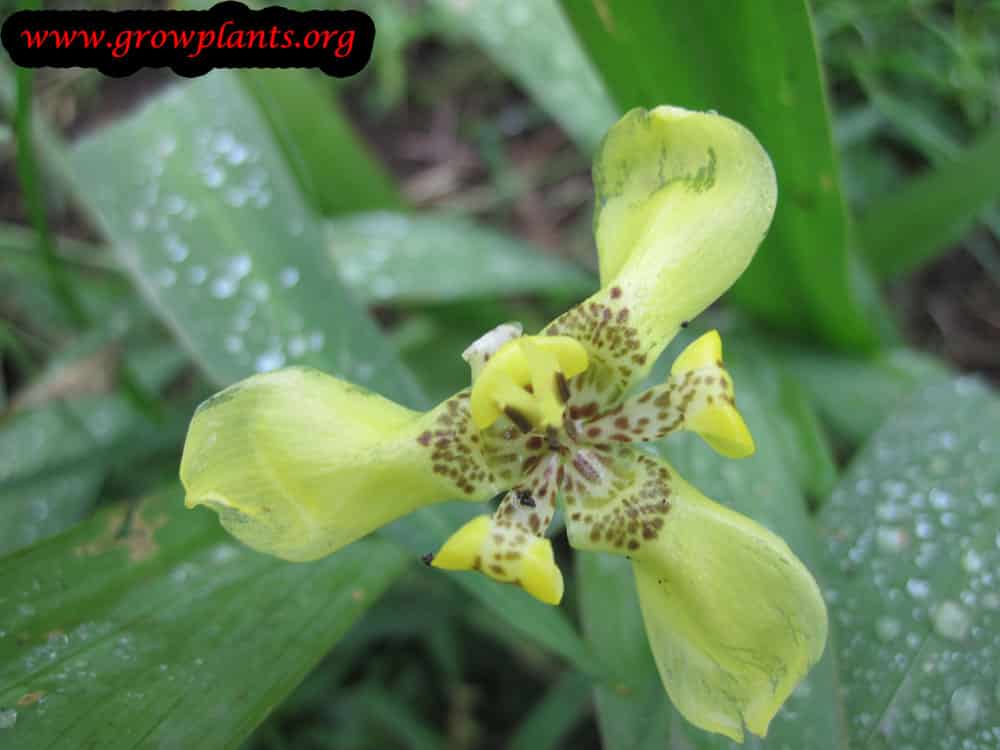
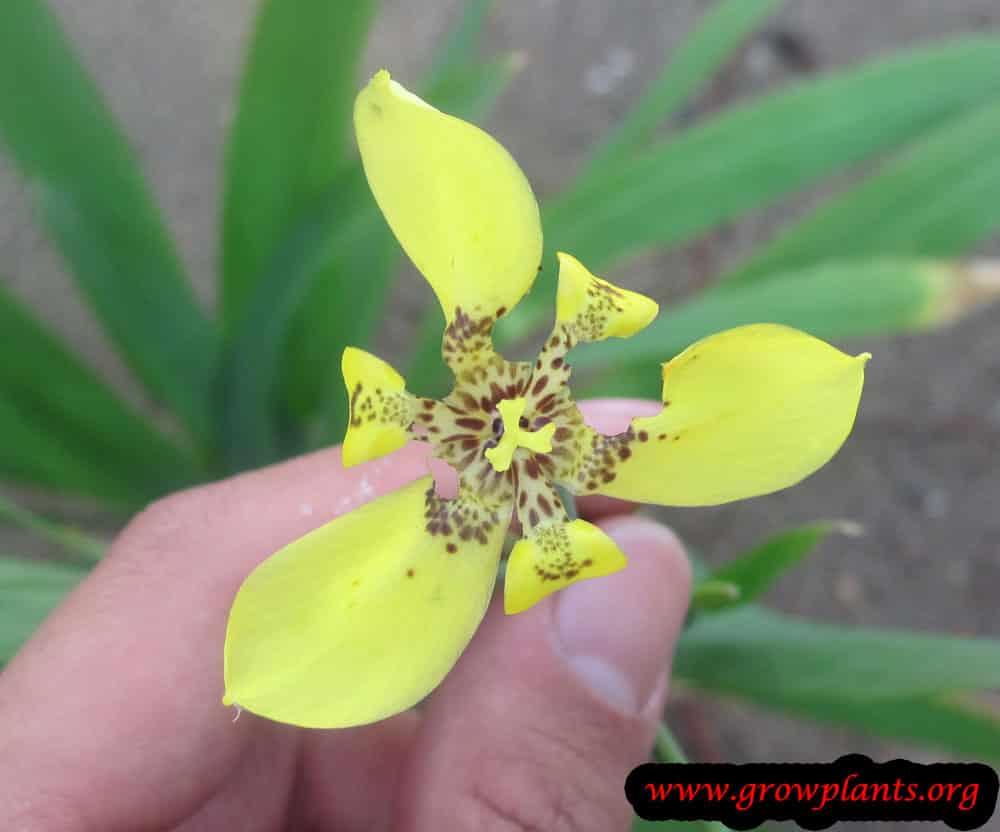
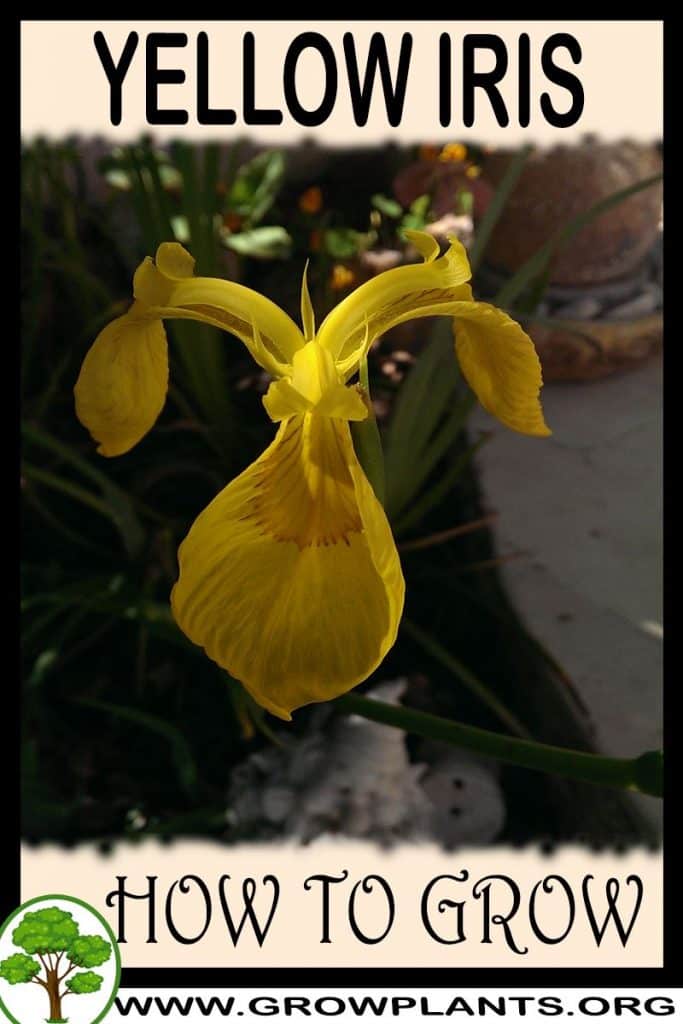
- Flower Characteristics: Light yellow flowers with a red-maroon centre and the typical six-petal iris form, borne in the warm season (full detail in the Bloom guide).
Primary Uses & Landscape Value
- Functional & Ornamental Roles: Ornamental marginal/aquatic and bog plant; used for soil stabilisation and phytoremediation (absorbs heavy metals). Plant with caution due to its invasive potential.
Care Guide: Planting, Soil & Watering
Overview: Yellow flag is a marginal water iris that thrives in full sun to part shade in heavy, permanently moist to wet soil, and even at pond margins in shallow water. It is extremely vigorous and well suited to boggy ground where little else will grow.
Quick Care Requirements
| Requirement | Ideal Condition |
|---|---|
| Planting Season | In spring, summer or autumn |
| Growth Rate | Moderate to fast |
| Soil Type | Heavy, moisture-retentive; tolerates boggy ground and shallow water |
| Water Need | High; keep constantly wet |
Planting & Establishment
- Best Planting Season: Plant during the growing season, spring through autumn, at a pond edge or in reliably wet ground.
- How to Plant:
- Hole Preparation: Prepare a hole in heavy, moisture-holding soil at a pond margin or boggy spot.
- Soil Amendments: Rich, heavy soil is ideal; no drainage improvement is needed, as it wants wet feet.
- Planting Depth: Set the rhizome at or just below the soil surface; it can stand in a few centimetres of water.
- Growth Speed & Expectations: Fast and very aggressive, spreading strongly by rhizome, so contain it or site it where it can be managed.
Soil, Watering & Drainage Care
- Soil Mix & Drainage Needs: This is a bog plant that wants constant moisture rather than drainage; keep it wet at all times, even in standing water.
- Watering Schedule & Technique:
- Young / Newly Planted: Keep the soil saturated from the start.
- Established: Never let it dry out; standing water is fine.
- Seasonal Adjustments: It stays wet year-round, needing extra attention only if a pond level drops in summer.
Climate, Light & Hardiness
Yellow flag iris is a hardy marginal-aquatic perennial (geophyte) for pond edges, bog gardens, and wet soil, growing in full sun to partial shade. The site data lists hardiness zones 4–10: it is very cold-hardy, dying back and overwintering as a tough rhizome, and it is vigorously invasive in wetlands, so it must be sited and contained with care.
Quick Climate Specifications
| Climate Zones | Temperate, subtropical, Mediterranean (wet ground / margins) |
|---|---|
| USDA Hardiness Zones | Approximately 4–10 |
| Optimal Temp Range | ~15–25°C (59–77°F) |
| Cold Damage Begins | Foliage dies back in hard cold; the rhizome is very cold-hardy |
| Frost Tolerance | Foliage low; rhizome high |
| Light Conditions | Full sun to partial shade |
| Salt / Coastal Tolerance | Moderate (tolerates brackish margins) |
Sunlight & Light Exposure
Optimal Light Setup
Full sun gives the best flowering; it grows in partial shade but blooms less without enough light.
Best Exposure / Orientation
An open, sunny pond edge or wet border suits it well.
Temperature Extremes & Hardiness
USDA Hardiness & Regional Limits
Very cold-hardy across zones 4–10; winter cold is rarely the limiting factor.
Cold Damage & Winter Protection
Foliage dies back in cold winters while the submerged or waterside rhizome survives freezing conditions and re-shoots in spring; no special protection is normally needed.
Extreme Heat Tolerance
Good, provided its roots stay wet; it will not tolerate drying out.
Wind, Humidity & Microclimate
Coastal / Salt Tolerance
Moderate - it tolerates brackish water and can grow at estuarine and coastal wetland margins. (This is tolerance of saline water at the roots, distinct from airborne salt spray.)
Rainfall & Seasonal Moisture
Adapted to permanently wet ground and standing water; it thrives where most plants would drown.
Microclimate Recommendations
Because it spreads aggressively in wet ground, grow it in a contained pond basket or a confined wet area, and avoid planting near natural waterways.
Growing in Pots, Balconies & Indoors
Iris pseudacorus (yellow flag iris) is a tall marginal iris of 1-1.8 m that thrives in wet ground and at the water’s edge. The grower does not rate it as a houseplant but confirms it grows in pots – ideally standing in water. Note that it can be invasive around natural waterways, so a contained pot is a responsible way to grow it.
Quick Details
- Container Size: A large 20-40 L (5-10 gal) tub standing in water
- Indoor Suitability: Not a houseplant – a water-margin plant for outdoors
- Best Spot: Full sun to part shade (needs sun to flower well)
- Soil & Drainage: Heavy, loam-based aquatic mix; it likes rich, wet soil
- Watering in Pots: Very high – keep it constantly wet; stand the pot in a saucer or tray of water
Indoors & On the Windowsill
- Not a houseplant: The grower does not grow it indoors – it is a vigorous water-margin plant that needs full outdoor light and constant moisture no room can offer.
- Windowsill: Not a windowsill plant; it belongs at a pond edge or in a water-filled container outdoors.
- Dormancy: It dies back and rests in the cold season; a hardy marginal, it does not need to come indoors, just keep the crown wet and let it re-sprout in the warm season.
- Safety: Irises are toxic if eaten (especially the rhizomes and bulbs) and the sap can irritate skin – site them away from where children or pets might dig or chew.
On a Balcony or Patio
- Light & water: Give it a bright, warm spot; because it wants constant moisture, stand the pot in a deep saucer or water tray so it never dries out – unlike most container plants, this one should stay wet.
- Practicalities: A water-filled pot is very heavy, so check the balcony can take the load and site it where overflow will not be a nuisance.
Choosing the Pot, Soil & Long-Term Care
- Pot & drainage: A large 20-40 L (5-10 gal) tub standing in water with strong drainage holes; it is happy to stand in a saucer or tray of water. Terracotta breathes and dries fast, while glazed or plastic pots hold moisture longer.
- Potting mix: A heavy, loam-based aquatic or pond mix – this plant likes rich, moisture-retentive soil, not a light free-draining one.
- Watering: Keep it permanently wet; standing the pot in a water tray or in the shallows of a pond is ideal – it will not tolerate drying out.
- Feeding: Potted plants exhaust their soil faster because nutrients leach out with every watering – feed lightly but regularly through the growing season.
- Repotting: Refresh the mix or pot up about every couple of years, teasing out and lightly trimming the roots of established plants.
Fertilizing & Feeding
A moderate feeder: this vigorous marginal aquatic plant benefits from balanced feeding, typically via fertilizer tabs placed in the root zone, though its naturally aggressive growth means it rarely needs heavy feeding.
Quick Fertilizing Specs
| Feeding Level | Moderate feeder |
|---|---|
| Main Nutrient Priority | Balanced feeding with adequate nitrogen for vigorous leaf growth |
| Best Feeding Period | Through the active growing season into the autumn bloom |
| Reduce/Stop Feeding | Stop feeding once growth slows in the cool season |
| Organic Options | Aquatic or marginal-plant fertilizer tabs are typically used instead of general compost in wet plantings |
| Soil pH | Tolerates a wide range in consistently wet, heavy soil |
Feeding by Growth Stage
Active growth in wet or boggy soil
Fuel this vigorous, fast-growing marginal plant’s leaf growth in its naturally wet, heavy soil.
| Nutrient direction | A balanced feeding, often delivered as aquatic or marginal-plant fertilizer tabs placed in the root zone, supports this vigorous grower. |
|---|---|
| Timing | During the active growing season while the plant is rooted in consistently wet or boggy soil. |
| Frequency | An occasional feeding is usually enough given this plant’s vigorous, aggressive growth habit. |
| Fertilizer types | Aquatic or marginal-plant fertilizer tabs placed near the roots, A balanced complete fertilizer where grown in ordinary garden soil rather than a pond margin |
| Precautions | Feed modestly; this species is already noted as very aggressive and excess fertility can add to its spread. |
Late-season bloom
Support the yellow, red-maroon-centered flowers, which need good sun to form well.
| Nutrient direction | Continue balanced feeding; adequate overall nutrition and enough sun matter more than any single nutrient for bloom. |
|---|---|
| Timing | During the autumn into winter bloom period. |
| Frequency | Feeding needs stay modest through bloom for an established planting. |
| Fertilizer types | Aquatic or marginal-plant fertilizer tabs, continued at the same modest level |
| Precautions | Avoid heavy feeding during bloom, which favors leafy growth over flowering in already-vigorous plantings. |
Cool-season rest after bloom
Let the planting rest with reduced demand once flowering finishes and growth slows.
| Nutrient direction | None – withhold fertilizer while growth is slow after bloom. |
|---|---|
| Timing | After flowering finishes, through the coolest, slowest-growing part of the year. |
| Frequency | No feeding at this stage; resume once active growth picks up again. |
| Fertilizer types | No feeding at this stage; hold off on fertilizer tabs or feeding until active growth resumes. |
| Precautions | Withhold fertilizer now; feeding a slow-growing planting risks nutrient runoff into surrounding water or soil. |
Nutrient Deficiency Signs & Corrections
Leaves are pale green or yellowish and growth looks weak despite consistently wet soil.
| Possible causes | low available nitrogen leaching away in constantly wet or moving water, nitrogen tied up in heavy, poorly aerated soil, insufficient feeding for this vigorous grower |
|---|---|
| Appears first on | older leaves |
| What to check | feeding history and method (tabs vs. soil-applied), water movement and nutrient leaching, soil or substrate type |
| Possible correction | Use aquatic or marginal-plant fertilizer tabs placed near the roots rather than soluble fertilizer that washes away. |
New leaves show yellowing between green veins despite otherwise healthy-looking growth.
| Possible causes | poor root oxygenation in waterlogged, heavy soil limiting iron uptake, naturally low iron availability in the wet substrate, high soil or water pH reducing iron availability |
|---|---|
| Appears first on | newest leaves |
| What to check | how waterlogged and oxygen-poor the root zone is, water and soil pH, overall root health |
| Possible correction | Improve root zone aeration where possible and apply a chelated iron product labeled for wet or aquatic plantings. |
Flowering is reduced or stems look weak despite abundant leaf growth.
| Possible causes | low potassium relative to this plant’s vigorous nitrogen-driven leaf growth, potassium leaching in constantly moving or wet conditions, overcrowded, aggressive clumps competing for available nutrients |
|---|---|
| Appears first on | flower stems and buds |
| What to check | fertilizer balance used, clump density and whether division is overdue, water movement through the planting |
| Possible correction | Use a balanced fertilizer rather than a nitrogen-only product and divide overcrowded clumps. |
Pruning, Training & Seasonal Maintenance
Yellow iris is a vigorous, evergreen marginal/bog perennial that regenerates readily from its rhizome, so it tolerates a full foliage cut-back well. Because this species self-seeds aggressively and is classed as invasive in many temperate wetlands, the main objective of pruning is control rather than shaping: removing spent flower stems before seed pods split, and clearing old or storm-damaged leaves. The safest window is late summer into autumn once flowering has finished; cutting back green, actively photosynthesizing foliage earlier in the season weakens the rhizome and reduces next year’s bloom.
Quick Pruning & Maintenance Specs
| Pruning Tolerance | High (resprouts readily from the rhizome) |
| Primary Pruning Window | Late Summer – Autumn (after bloom) |
| Typical Frequency | 1–2 times per season plus spot deadheading |
| Main Objective | Prevent seed spread (invasive control) and sanitation |
| Young Plant Priority | Let the clump establish; remove only damaged leaves |
| Mature Plant Priority | Deadhead before seed pods split; contain clump spread |
| Best Tool Type | Bypass secateurs / precision snips |
| Avoid Heavy Pruning During | Active bloom and while leaves are still green |
Pruning by Plant Age & Size
Newly Established
Do not cut back in the first season; remove only frost- or storm-damaged leaves so the rhizome can build reserves.
Young / Formative
No structural training – this is a spreading rhizomatous perennial, not a trained plant. Begin deadheading once flowering starts.
Mature / Established
Annual deadheading, removal of dried outer leaves, and periodic clump/spread control as the rhizome mat expands.
Seasonal Pruning Schedule
Post-Flowering
Objective: stop seed set. Remove spent flower stalks at the base before pods mature and split – the pods float and disperse seed through wet ground, driving this species’ invasive spread. Do not remove green leaves at this stage; they are still feeding the rhizome.
Ongoing Sanitary
Trim dried, yellowed or storm-damaged leaves to the base as they appear; this has no impact on flowering since the tissue is already spent.
Structural Pruning & Training
The only “structure” to manage is the spreading rhizome mat: trim or divide the clump edge periodically to stop it colonizing more of the pond margin or bog bed than wanted.
Special Growth to Remove
- Spent flower stems – remove before seed pods split; the single most important cut for this species
- Dried or storm-damaged leaves – cut to the base
Container & Small-Space Pruning
Growing yellow iris in a planting crate or container is itself a pruning-adjacent containment strategy in ponds and bog gardens, since it stops the rhizome from spreading unchecked. Divide and cut back the root mass every few years once the container becomes congested.
Tools
- Bypass secateurs – flower stalks and thicker leaf bases
- Precision snips – individual dried leaves
Tool Hygiene & Disease Risk
Routine – clean, sharp tools are sufficient; no significant transmissible disease is documented for this species.
Cut Placement & Technique
Cut flower stalks close to the base near the waterline before pods open; cut dried leaves at the base without nicking the emerging fans of new growth.
Heavy Pruning & Rejuvenation
A full foliage cut-back is tolerated once the clump is dormant or after hard frost has collapsed the leaves. Rejuvenate an overgrown mat by lifting and dividing sections of rhizome rather than by cutting alone.
Post-Pruning Care
No feeding is needed – this species is already highly vigorous. Maintain normal water levels and watch for prompt regrowth from the rhizome.
Common Pruning Mistakes
- Leaving spent seed pods on the plant, letting them split and spread seed into surrounding wet ground
- Cutting back green, still-photosynthesizing leaves mid-season, which weakens the rhizome
When NOT to Prune
Avoid cutting green foliage while it is actively photosynthesizing; deadhead promptly but leave healthy leaves until they yellow naturally.
Recommended Tools (by task)
- bypass_secateurs – cutting flower stalks and leaf bases at the crown
- precision_snips – trimming individual dried leaves
- garden_spade – lifting and dividing the rhizome mat for rejuvenation or spread containment
Propagation Guide
Yellow iris is propagated most practically by division of the rhizome. Seed is also a biological propagation method, but it is slower and is not the preferred way to preserve a selected garden form.
Quick Propagation Specs
| Underground Organ | Rhizome |
| Best Vegetative Method | Rhizome division |
| Seed | Possible |
Rhizome Division
Lift or expose an established clump when the plant can be divided without severe heat or drought stress. Separate healthy rhizome sections that carry viable growth points and roots, discard damaged or diseased tissue, and replant promptly in suitable soil at the normal depth for the plant.
Growing from Seed
Use mature seed when seed propagation is desired. Seed-grown plants take longer to reach flowering size and may vary from selected garden forms.
Aftercare
Water newly divided plants enough to settle the soil and support new root growth, while avoiding prolonged waterlogging.
Bloom & Flower Guide
Quick Details
- Bloom Season: Late spring to early summer
- Time to First Bloom: Established plants flower in late spring; divisions usually bloom within a year or two
- Flower Appearance: Bright light-yellow flowers with reddish-maroon markings toward the centre; six segments – three larger outer falls and three smaller inner standards
- Edibility: Not edible – all parts are toxic and irritant; the plant is even used to absorb heavy metals from water and must never be eaten
Detailed Blooming Overview
Yellow flag iris is a vigorous waterside perennial that flowers in late spring and early summer, raising bright yellow blooms – marked with reddish-maroon toward the throat – above sword-shaped leaves. It is so tough that it is used to strip heavy metals from water, and it spreads aggressively, having become invasive in many wetland regions. (The grower listed an autumn/winter bloom; this species in fact flowers in late spring to early summer.)
Flower Characteristics
- Light yellow with reddish-maroon markings at the centre.
- Six segments – three larger outer falls and three smaller inner standards.
Bloom Care & Thinning
- Position: Grow at the water”s edge or in permanently wet soil in sun.
- Managing the bloom: Remove spent flowers to tidy the plant and help limit its aggressive self-seeding.
Bloom Health & Protection
- Iris borer: In many regions the larvae tunnel into leaves and rhizomes around the flush of spring growth and bloom, and can open the way to bacterial soft rot; removing and destroying affected foliage, good garden hygiene, and an appropriately timed insecticide where borer is a known problem all help.
Pests, Diseases & Troubleshooting
Overview: Water and bog irises thrive in the wet, marshy ground that would rot bearded types, so rhizome rot is far less of an issue; instead they are visited by the iris sawfly, aphids and, in some regions, the iris borer, and can pick up leaf spot and rust. Grown in their proper wet niche they are among the easier irises.
Quick Troubleshooting Overview
| Issue / Pest | Main Symptom | Primary Solution |
|---|---|---|
| Iris sawfly | Notched, ragged leaf margins eaten inward | Hand-pick larvae, tolerate light feeding |
| Aphids | Distorted growth, honeydew, virus spread | Rinse off, insecticidal soap |
| Iris leaf spot | Brown spots with yellow halos | Remove old leaves, airflow, copper fungicide |
| Iris rust | Orange pustules on foliage | Remove leaves, spacing, sulfur/copper |
| Iris borer (regional) | Streaked leaves, rotting rhizome | Autumn sanitation, cut out grubs |
| Slugs & snails | Ragged holes, slime on new growth | Iron-phosphate bait, traps |
Common Pests & Management
- Iris sawfly (Rhadinoceraea micans):
- Symptoms: Bluish-grey caterpillar-like larvae feed along the leaf margins of waterside irises, eating characteristic notches and ragged edges inward, sometimes stripping leaves in early summer.
- Prevention & Control: Hand-pick and drop larvae into soapy water – the simplest and safest control near water. Encourage birds and predatory insects; light feeding is cosmetic and can be tolerated. Avoid insecticides that harm aquatic life.
- Aphids (Aphis / Macrosiphum spp.):
- Symptoms: Colonies on new growth and buds causing distortion and honeydew and spreading iris mosaic virus.
- Prevention & Control: Rinse off with water and encourage predators; near water rely on physical removal and insecticidal soap rather than persistent chemicals.
- Slugs and snails (Gastropoda):
- Symptoms: Ragged holes and slime trails on the emerging leaves and flowers in the damp margin habitat they love.
- Prevention & Control: Hand-pick after dark and use iron-phosphate bait, which is safer around water than metaldehyde; keep the planting edge clear of decaying debris.
- Iris borer (Macronoctua onusta):
- Symptoms: Where the pest occurs (mainly cooler North American gardens), larvae streak the leaves and bore the rhizomes, causing collapse and soft rot.
- Prevention & Control: Cut down and destroy old foliage in autumn to remove overwintering eggs, squash streaked tissue in spring, and dig out grubs from affected rhizomes.
Diseases & Fungal Issues
- Iris leaf spot (Didymellina macrospora):
- Symptoms: Brown spots with yellow halos that spread and brown the leaf tips in warm, humid, wet conditions.
- Treatment & Management: Remove spotted and old foliage and keep clumps from becoming congested. Copper or mancozeb-type fungicide protects new growth where disease is heavy – use with care near open water.
- Iris rust (Puccinia iridis):
- Symptoms: Orange powdery pustules with yellowing on the leaves; heavy infection dries the foliage.
- Treatment & Management: Remove affected leaves and improve spacing and airflow; sulfur or copper fungicide checks recurring rust.
- Bacterial soft rot (Pectobacterium (Erwinia) carotovorum):
- Symptoms: Occasional soft, smelly rot of the rhizome after injury; much less common than in bearded iris because these species suit wet ground.
- Treatment & Management: Cut out affected tissue, remove damaged rhizomes, and divide congested clumps to keep them vigorous.
Growing Difficulties & Abiotic Problems
- Invasive spread:
- Cause & Symptoms: Yellow flag is a vigorous coloniser of wet ground and waterways and is regulated or banned as an invasive weed in many regions.
- Correction Strategy: Check local regulations before planting, confine it to contained ponds or bog gardens, deadhead to prevent seeding, and remove escapees. Consider a non-invasive water iris instead where it is a concern.
- Poor bloom in too-dry or too-shaded sites:
- Cause & Symptoms: Water irises grown too dry, too shaded or too crowded flower poorly and thin out.
- Correction Strategy: Grow in reliably moist to wet soil in full sun, divide crowded clumps after flowering, and avoid high-nitrogen feeding that favours leaves over flowers.
- Leaf yellowing / chlorosis:
- Cause & Symptoms: Yellowing between the veins can signal nutrient shortage or stagnant, deoxygenated water around the roots.
- Correction Strategy: Feed lightly with an aquatic-suitable fertilizer, refresh or aerate stagnant water, and ensure the roots are in living, not sour, mud.
What Helps – Products & Tools
Useful tools are a sharp sanitized knife for cutting out borers and rot, slug traps/iron-phosphate bait and copper barriers, insecticidal soap or horticultural oil for aphids and thrips, and – for foliar disease – a copper or mancozeb-type fungicide; systemic insecticide is a last resort for borer where cultural control fails. Bulbous types benefit from a fungicide bulb dip before storage. Always follow the label and protect pollinators.