

Plant Profile & Key Characteristics
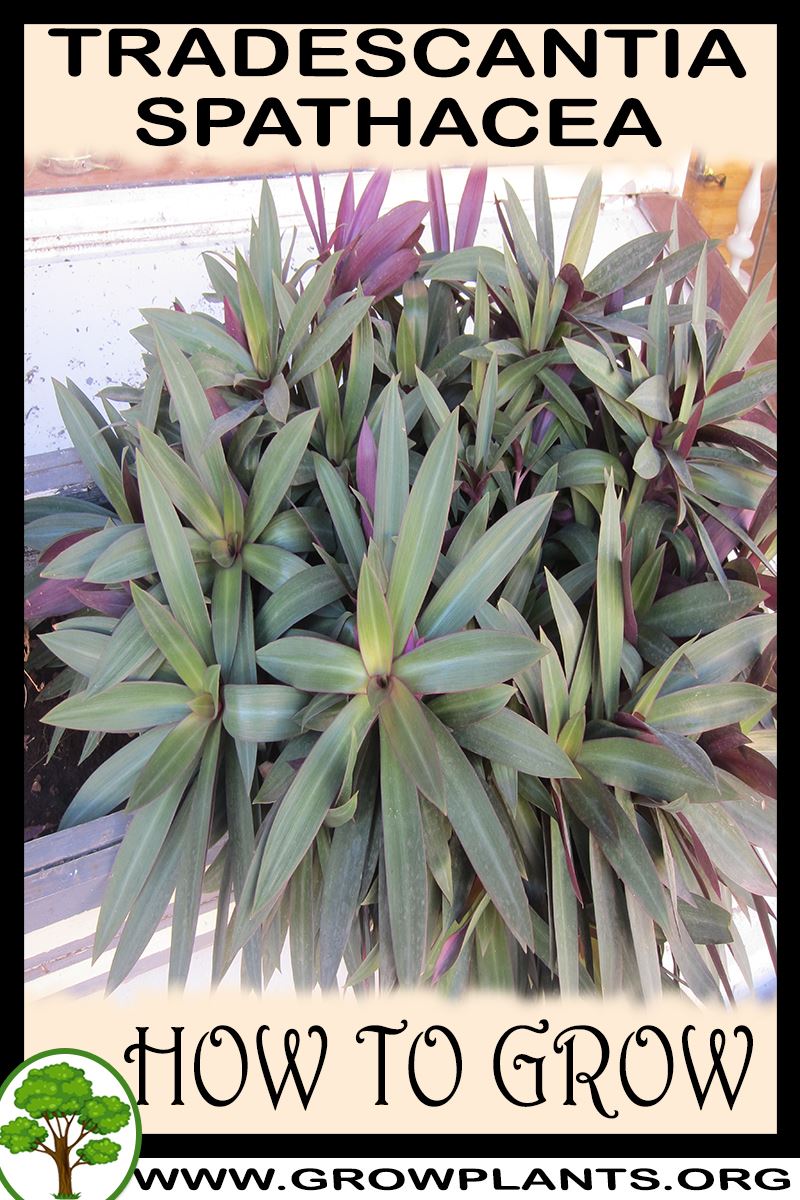
Overview: Tradescantia spathacea is a dwarf, evergreen rosette perennial grown for its glossy green leaves with vivid purple undersides. It is used as an ornamental groundcover, mass bedding and houseplant.
Quick Specifications
| Specification | Attribute |
|---|---|
| Plant Type / Life Cycle | Perennial (grown as an annual or houseplant where winters are frosty) |
| Foliage Type | Evergreen (in frost-free climates) |
| Mature Size | 10-30 cm (4-12 in) tall |
| Growth Rate | Fast (moderate in cool or low-light conditions) |
| Root System | Shallow, fibrous root system; stems root readily at the nodes wherever they touch soil |
| Toxicity | Mildly toxic — the sap can cause skin and mucous-membrane irritation (contact dermatitis) in people and pets; not for consumption |
| Hardiness | USDA 9-11 (frost-tender) |
Growth Form & Structure
- Height & Spread: Forms a rosette 10-30 cm (4-12 in) tall and wide, spreading by basal offsets; in pots use a shallow 5-10 L (2.6-5.2 gal) container as it spreads sideways.
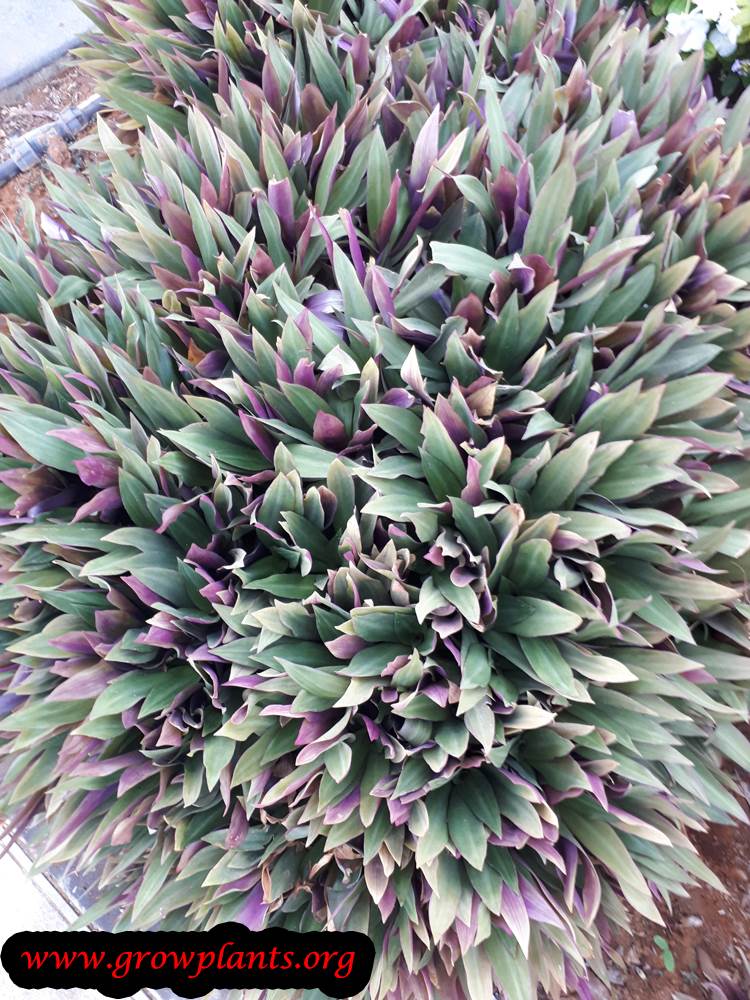
- Growth Habit & Form: Compact, non-trailing rosette of stiff, strap-shaped leaves radiating from a short stem, spreading by offsets into dense low colonies.
- Lifespan & Maturity: Long-lived evergreen perennial multiplying by offsets; can naturalise and become weedy in frost-free areas. Non-fruiting ornamental.
Anatomy & Physical Features
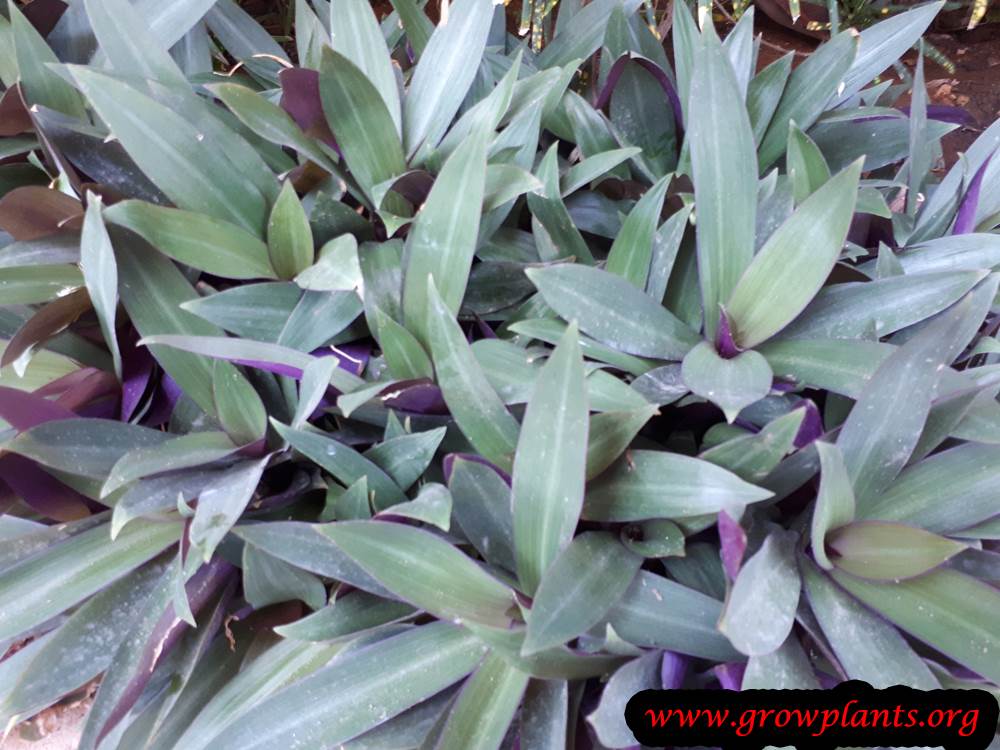
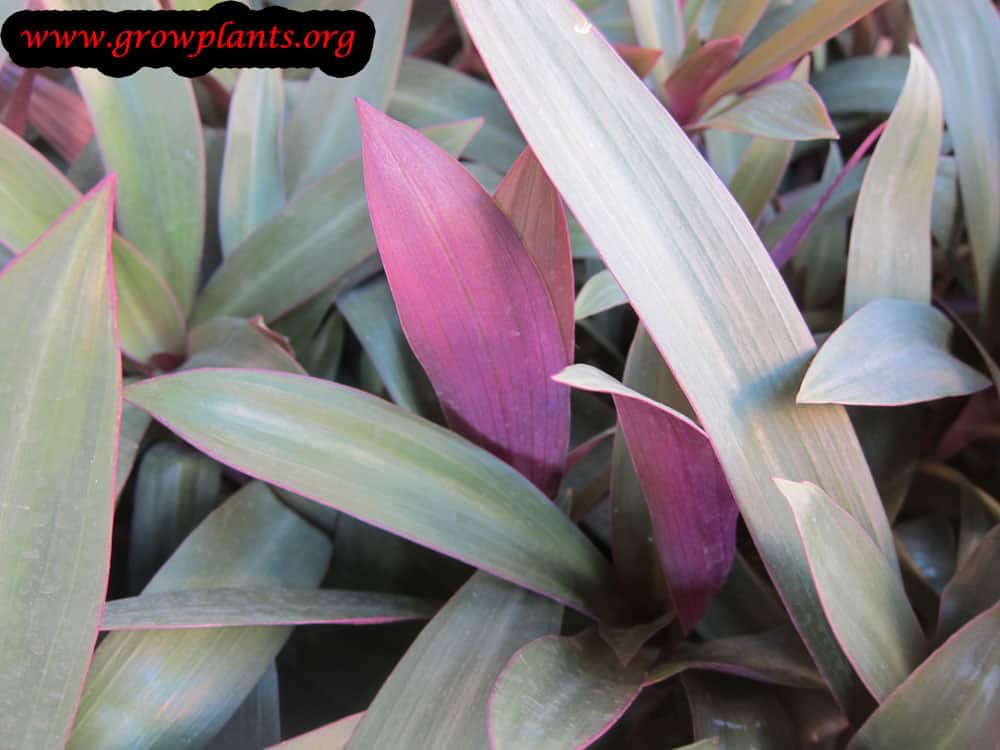
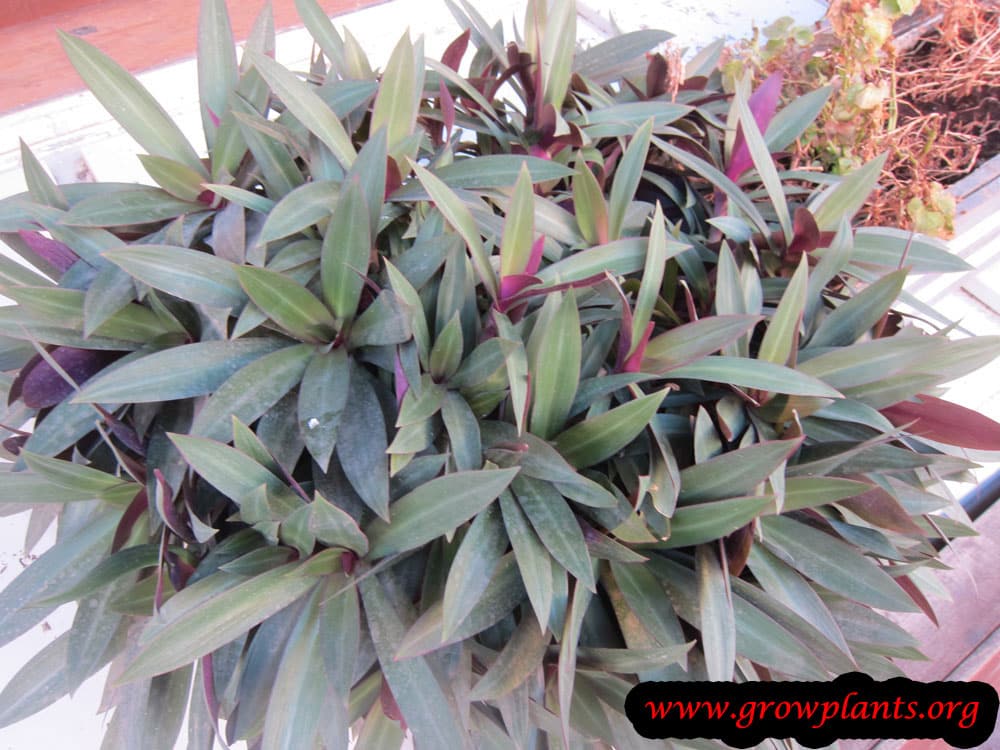
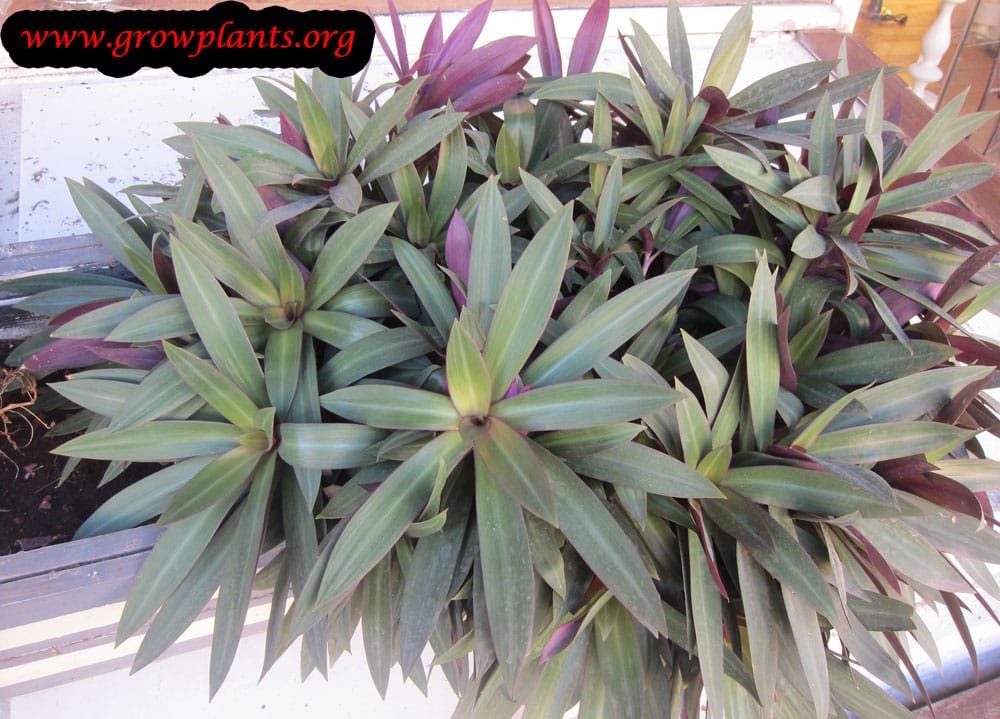
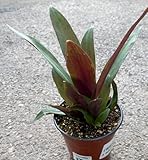
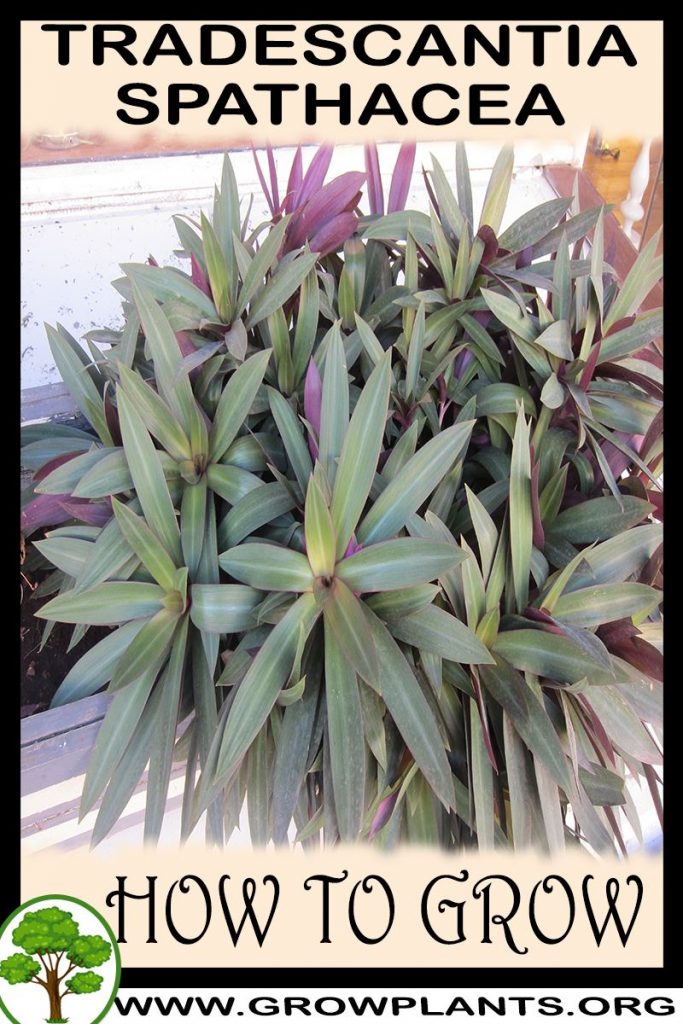
- Leaves & Foliage: Glossy, sword-shaped leaves, deep green above and rich purple beneath; some forms are variegated green and white on the upper surface.
- Flower Characteristics: Small white three-petalled flowers cradled within purple, boat-shaped bracts — the source of the ‘Moses-in-the-Cradle’ name.
Primary Uses & Landscape Value
- Functional & Ornamental Roles: Groundcover and mass-planting in warm climates; container and houseplant; erosion-holding bank cover.
Care Guide: Planting, Soil & Watering
Overview: Moses-in-the-Cradle / boat lily (Tradescantia spathacea) is a tough, fast-growing spreading perennial (grown as an annual in cold-winter areas) valued as ground cover. It is easy-going but grows best in rich, moisture-retentive soil with some humidity and room to spread, in anything from full sun to shade.
Quick Care Requirements
| Requirement | Ideal Condition |
|---|---|
| Planting Season | In spring after the last frost; spring to autumn in warmer zones, year-round in frost-free zones |
| Growth Rate | Fast |
| Soil Type | Rich, moist and well-drained; adaptable |
| Water Need | Low to moderate; keep lightly moist but it tolerates drought |
Planting & Establishment
- Best Planting Season: Plant in spring after the last frost where grown as an annual (to about zone 9); from spring to summer in zone 10a, spring to autumn in 10b-11a, and year-round in the tropics (11b+).
- How to Plant:
- Hole Preparation: Dig a hole a little wider than the root ball and give it room – it is a fast, sprawling grower in light, free-draining soil.
- Soil Amendments: Mix in humus and organic matter to enrich the soil, and mulch around young plants to hold moisture.
- Planting Depth: Set the root ball level with the surface and firm gently; stems that touch the soil root readily.
- Growth Speed & Expectations: A fast, vigorous grower reaching about 10-30 cm and spreading widely – it can be invasive, so contain it or divide it regularly.
Soil, Watering & Drainage Care
- Soil Mix & Drainage Needs: Adaptable, but happiest in rich, moisture-retentive yet free-draining soil; in containers use a potting or peat mix with perlite plus humus and organic matter, mulched to hold moisture, and let the pot base dry out every few days.
- Watering Schedule & Technique:
- Young / Newly Planted: Keep the soil moist while it establishes, and mulch to conserve moisture.
- Established: Water moderately to keep it lightly moist; it is forgiving and tolerates short droughts, though it looks best with steady moisture.
- Seasonal Adjustments: More in summer heat, less in winter (little to none where it dies back or goes dormant).
Climate, Light & Hardiness
Tradescantia spathacea (Moses in the Cradle) is a tender tropical groundcover for tropics, mediterranean, desert, subtropical, and temperate climates, and also does well indoors as a houseplant. It is only reliably perennial in warm, near frost-free regions and is grown as a cold-season annual or brought indoors wherever winters are colder.
Quick Climate Specifications
| Climate Zones | Tropics, mediterranean, desert, subtropics, temperate |
| USDA Hardiness Zones | Perennial in zone 9b+, with overwinter care extending survival into zone 9a; grown as an annual from zone 3+ |
| Cold Damage Begins | Foliage typically damaged around 0°C (32°F) at first frost |
| Approx. Survival Minimum | Established, protected plants may survive briefly to around zone 9a’s winter minimum, roughly −7 to −4°C (20–25°F), though top growth is damaged by frost |
| Frost Tolerance | Low |
| Light Conditions | Full sun, half shade, or full shade |
Sunlight & Light Exposure
Optimal Light Setup
Tolerates full sun through full shade outdoors, and grows well as a houseplant with bright indirect light; the purple-and-green leaf color is most vivid with more light.
Shade & Heat Management
Tolerates full tropical sun once established; part shade suits hot desert conditions and indoor placement away from direct summer sun.
Temperature Extremes & Hardiness
USDA Hardiness & Regional Limits
Grows as a true perennial from about zone 9b upward, with overwinter care extending survival to zone 9a; colder regions require growing it as an annual or houseplant.
Cold Damage & Winter Protection
Foliage is damaged by the first frost; at the zone 9a cold edge, siting in a protected microclimate improves survival odds.
Frost Sensitivity
Frost-sensitive; not suited to open winter exposure outside zone 9a–9b+.
Wind, Humidity & Microclimate
Humidity Preferences
Prefers humid air and consistently moist, rich soil, both outdoors and as a houseplant.
Dry-Air Tolerance
Tolerates average-to-low water and some drought once established.
Microclimate Recommendations
A warm, humid, sheltered spot with rich soil suits outdoor growth; indoors, bright indirect light and steady humidity keep it looking its best.
Growing in Pots, Balconies & Indoors
Tradescantia spathacea is an easy, fast-growing trailing plant that the grower confirms makes a genuine houseplant – it grows happily indoors, though it needs plenty of bright, indirect light to stay full and colourful and will only flower once it is mature. The same pot does just as well on a shaded balcony or patio. At around 10-30 cm (4-12 in), its spreading habit suits shallow pots and hanging baskets.
Quick Details
- Container Size: Start at 5-10 L (2.6-5.2 gal); use a shallow pot wider than the root ball, as it spreads widely
- Indoor Suitability: A genuine houseplant – give it bright, indirect light
- Best Spot: Bright indirect light indoors; part shade to gentle sun outdoors
- Soil & Drainage: Potting mix or peat with perlite, humus and organic matter; free-draining
- Watering in Pots: Average to low – drought-tolerant; let it dry down between waterings
Indoors & On the Windowsill
- A real houseplant: The grower confirms it grows well indoors. Choose a spot with good light – even a little direct sun helps – as ordinary artificial room light alone is not enough; bright indirect light does the job. It will only bloom once mature, so give an established plant room to grow.
- Windowsill & hanging pots: The trailing, spreading stems look their best tumbling from a sill, shelf or hanging basket. Bright indirect light, or a little gentle direct sun, keeps the leaf colour strong.
- Overwintering: It is tender, so in cold-winter climates this is a key reason to keep it potted – bring it inside over winter and keep it on a bright sill until the weather warms.
On a Balcony or Patio
- Light & wind: Part shade to gentle morning sun is ideal; harsh midday sun can scorch the leaves and strong wind tears the soft stems, so give it some shelter. Pots on sunny walls and railings dry fast – check moisture often.
- Practicalities: It is light and shallow-rooted, so it is easy in shallow troughs and hanging baskets; just make sure water drains away freely and never pools under the pot.
Choosing the Pot, Soil & Long-Term Care
- Pot & drainage: A 5-10 L pot, kept shallow and wider than the root ball, with strong drainage holes; skip a standing water saucer to avoid root rot. Terracotta breathes and dries faster, while plastic or glazed pots hold moisture longer.
- Potting mix: The grower’s mix is potting mix or peat with perlite blended with humus and organic matter; a layer of chopped mulch on top helps keep it evenly moist.
- Feeding: Potted plants leach nutrients with every watering, so give a light feed through the growing season to keep growth lush.
- Repotting: It grows very fast – whenever the roots fill the pot, either move up a size or prune the roots and leaves and replant, and refresh the soil every few years, as the grower advises.
Grower’s Container Tip
- Bottom watering: The grower lets the bottom of the pot fill with water, then lets it dry out for a few days before repeating – steady moisture without keeping the roots waterlogged.
Note: Tradescantia sap can irritate skin and the plant is toxic to cats and dogs if chewed – keep it out of reach of children and pets.
Growing this plant in a greenhouse
A greenhouse can give tradescantia spathacea frost protection and cold protection.
Greenhouse at a glance
| Greenhouse suitability | Good - clearly useful |
|---|---|
| Main benefits | frost protection, cold protection |
| Season extension | earlier spring & later autumn |
| Outdoor protection advisable below | about 0°C |
| Suitable types | unheated greenhouse, polycarbonate greenhouse |
| Heating | Heating is optional - useful mainly for winter growing in cold areas. |
Related greenhouse guides
- Greenhouses: How to Choose the Right Greenhouse
- Polycarbonate Greenhouses: What to Look for Before Buying
Fertilizing & Feeding
An easygoing rosette grown mainly for its glossy green-and-purple, sometimes cream-striped leaves. It tolerates neglect and rarely needs heavy feeding; a modest complete fertilizer during active growth keeps the rosette full without pushing it toward plain green leaves.
Quick Fertilizing Specs
| Feeding Level | Light feeder |
|---|---|
| Main Nutrient Priority | A balanced, nitrogen-forward complete fertilizer to support steady leaf and offset production |
| Best Feeding Period | Through the warm active growing season |
| Organic Options | Compost or humus worked into the potting mix at repotting |
| Reduce/Stop Feeding | Ease off as light and temperatures drop and growth slows |
| Micronutrients | Iron and manganese are usually supplied by a complete houseplant fertilizer |
| Soil pH | Tolerates a wide range in a rich, well-drained potting mix |
Feeding by Growth Stage
Settling in after potting or division
Let new or divided rosettes root into fresh mix before asking them to support new growth.
| Nutrient direction | None from feeding at this stage – the fresh, humus-rich potting mix supplies what the rosette needs while roots re-establish. |
|---|---|
| Timing | Immediately after potting, repotting, or dividing offsets. |
| Frequency | No feeding at this stage; hold off until fresh roots are visibly active. |
| Fertilizer types | No feeding at this stage; rely on the humus-rich potting mix until roots re-establish. |
| Precautions | Do not fertilize freshly potted or divided rosettes; tender new roots are easily burned by fertilizer salts before they are established. |
Active leaf and offset growth
Support fresh rosettes and offsets while keeping the plant’s purple-and-green leaf coloring strong rather than pushing plain green growth.
| Nutrient direction | A balanced, nitrogen-forward complete houseplant fertilizer applied lightly; this rosette does not need heavy feeding to fill out. |
|---|---|
| Timing | Through the warm season when the plant is actively producing new leaves and offsets. |
| Frequency | Light feeding during active growth is usually enough for this undemanding rosette. |
| Fertilizer types | A balanced, diluted complete houseplant fertilizer, Compost or humus worked into the mix at repotting |
| Routine trace nutrients | iron, manganese |
| Precautions | Keep feeding light; overly rich feeding tends to green up the leaf coloring and can push soft growth that outgrows its pot quickly. |
Cooler, lower-light slowdown
Avoid forcing growth the plant cannot support when light and warmth drop off.
| Nutrient direction | None – withhold supplemental feeding while growth is minimal. |
|---|---|
| Timing | Cooler months or whenever the plant is kept in low indoor light with little new growth. |
| Frequency | No feeding at this stage; resume only once active leaf growth returns. |
| Fertilizer types | No feeding at this stage; do not fertilize while growth is dormant or minimal. |
| Precautions | Withhold fertilizer during slow growth; unused nutrients simply build up as salts in the potting mix. |
Nutrient Deficiency Signs & Corrections
Older leaves fade toward pale green and overall leaf production slows.
| Possible causes | low available nitrogen in an old or spent potting mix, infrequent feeding over a long stretch, roots crowded and depleted in an under-potted container |
|---|---|
| Appears first on | older, lower leaves |
| What to check | how long since the last repotting or feeding, root crowding in the pot, overall leaf color and growth rate |
| Possible correction | Resume light, balanced feeding during active growth and refresh the potting mix at the next repotting. |
New leaves emerge pale or yellowish while the veins stay comparatively green.
| Possible causes | waterlogged, poorly drained potting mix limiting root uptake, a potting mix or water source that is too alkaline for good iron availability, genuinely low iron in an old, unamended mix |
|---|---|
| Appears first on | new, emerging leaves |
| What to check | how freely the pot drains and whether the mix stays soggy, watering habits and water source, time since the last repotting |
| Possible correction | Improve drainage and correct overwatering first, then apply a chelated iron product per its label if new leaves stay pale. |
Leaf tips and margins turn brown and crisp while the rest of the leaf stays healthy.
| Possible causes | fertilizer salt buildup from consistent over-feeding, mineral or fluoride content in tap water accumulating in the mix, underwatering or low humidity stressing leaf margins |
|---|---|
| Appears first on | leaf tips and outer margins |
| What to check | recent feeding frequency and strength, watering consistency and water source, any visible white salt crust on the soil surface or pot rim |
| Possible correction | Cut back on feeding, flush the potting mix thoroughly with plain water occasionally, and keep watering consistent. |
Pruning, Training & Seasonal Maintenance
Moses-in-the-Cradle grows as a fixed basal rosette that spreads by producing offset rosettes at its base rather than by trailing stems, so there is no stem length to shorten and structural pruning tolerance is low. Maintenance is grooming: removing individual spent leaves and faded flower bracts, dividing crowded offset clumps, and, since this species can throw green-and-white variegated leaves, removing any growth that fades or reverts if a variegated look is being kept. This can be done at any time rather than on a fixed seasonal schedule, since it is not shaping a stem or canopy.
Quick Pruning & Maintenance Specs
| Pruning Tolerance | Low |
| Primary Pruning Window | Ongoing, as leaves/bracts fade – no seasonal shaping window |
| Typical Frequency | Light grooming as needed; occasional offset division |
| Main Objective | Tidy the rosette base, remove spent leaves/bracts, manage offset spread |
| Young Plant Priority | Minimal – let the rosette establish |
| Mature Plant Priority | Base leaf grooming; thin or divide crowded offsets |
| Best Tool Type | Precision snips |
| Avoid Heavy Pruning During | Not applicable – there is no heavy/structural cut to make on a rosette plant |
Pruning by Plant Age & Size
Newly Established
Remove only leaves damaged in transplanting; otherwise let the young rosette settle in undisturbed.
Young / Formative
No structural training applies – growth form is fixed by the plant, not shaped by cuts. The main decision is whether to let offsets spread freely as groundcover or remove them early to keep a single specimen rosette.
Mature / Established
Groom the base by removing dead or browning outer leaves, remove spent flower bracts, and periodically thin or divide congested offset clumps for spacing.
Special Growth to Remove
- Dead or browning lower leaves at the base of the rosette
- Spent flower stems/bracts once the white flowers inside the purple boat-shaped bracts have faded
- Plain, non-variegated reverted leaves if a variegated form is being maintained – unmarked green growth is more vigorous and will otherwise take over
- Excess offset rosettes only where crowding needs relief – otherwise retain, since it is grown as ground cover and spreads by these offsets
Container & Small-Space Pruning
Because the plant grows widely and shallowly, a wide, shallow container suits its rosette-and-offset habit better than a deep one. Prune roots and any crowded outer leaves together at repotting rather than only sizing up the pot, and thin offsets in a container sooner than you would in the ground.
Tools
Precision snips for individual leaves and spent bracts at the base – there is no stem to cut with secateurs, loppers, a saw, or hedge shears.
Tool Hygiene & Disease Risk
Routine: clean, sharp blades are sufficient. Its known problems (aphids, mealybug) are pests, not cut-transmitted pathogens.
Cut Placement & Technique
Cut or pull individual leaves and bracts close to their base rather than leaving stubs among the rosette. When separating an offset for division, cut it free where it joins the parent with a clean, close cut.
Heavy Pruning & Rejuvenation
Not applicable and not tolerated in the usual sense – there is no stem framework to cut back hard. A damaged or unattractive rosette is best removed and replaced by its own offsets rather than cut back.
Post-Pruning Care
After grooming or dividing offsets, keep soil moist and humid as the plant prefers, and avoid heavy feeding right after – organic matter is already recommended just once a year rather than as a post-cut boost.
Common Pruning Mistakes
- Trying to “cut back” the rosette as if it were a trailing Tradescantia – there is no stem to shorten
- Removing offsets indiscriminately when the intended use is a spreading groundcover
- Leaving faded flower bracts in place indefinitely instead of grooming them off
When Not to Prune
Avoid removing healthy leaves purely for tidiness – only spent, damaged, or (where relevant) reverted growth needs cutting. Hold off dividing offsets from a recently transplanted or stressed plant until it is established.
Recommended Tools (by task)
- precision_snips – removing individual spent leaves, faded bracts, and any reverted growth close to the base
Propagation Guide
Moses-in-the-Cradle can be grown from seed with the site’s documented germination of about 2-8 weeks, but most growers propagate it faster by separating the basal offsets (pups) it produces around its rosette, or from stem cuttings once a plant has elongated growth. Where the naturally occurring green-and-white variegated form is being grown, seed does not reliably keep that variegation, so propagation overall is easy but best done vegetatively to preserve a particular leaf pattern.
Quick Propagation Specs
| Best Propagation Method | Basal offsets (pups) |
| Alternative Methods | Growing from seed; stem cuttings from elongated growth; simple layering |
| Propagation Difficulty | Easy |
| Seed True-to-Type | Usually true-to-type for the plain green/purple form; variegated (green-and-white) plants often produce seedlings that revert to plain green |
| Vegetative True-to-Type | Yes |
| Best Propagation Season | Spring to early summer for cuttings/offsets; spring to summer for sowing |
| Seed Germination Time | 2-8 weeks |
| Cutting Rooting Time | Often just one to two weeks in water, a little longer when rooted directly in soil |
| Seed Sowing Depth | 0.5-1cm (0.25-0.5in) |
Growing from Seed
Seed Handling & Viability
Keep saved seed in a dry, dark place, ideally refrigerated, until ready to sow.
Sowing Season
Spring to summer, in a sunny site with good drainage.
Sowing Depth & Orientation
Sow about 0.5-1cm (0.25-0.5in) deep; where sowing a nursery row, space seeds roughly 20x30cm (8x12in) apart.
Germination Conditions
Keep the soil moist with light humidity; water an average amount and avoid letting it dry out or become waterlogged.
Germination Time
Around 2-8 weeks; germination can be uneven, so allow the full range before giving up on a tray.
Seedling Care
Grow seedlings on in full sun with regular watering, keeping the soil consistently moist.
Stem Cuttings
Cutting Type
Stem sections with at least 3 leaves, taken once a plant has developed some stem length beyond the basal rosette.
Best Timing
Spring through early summer.
Cutting Preparation
Cut a section of stem carrying at least 3 leaves.
Rooting Setup
Insert directly into moist soil and keep humidity high, or stand the cutting in a glass of water – changing the water every few days – until roots form.
Rooting Hormone
Not necessary; cuttings root readily on their own.
Rooting Time
Roots typically appear within one to two weeks in water; once a few roots have developed, pot the cutting into soil, or leave it longer in water and begin feeding before potting up.
Air & Ground Layering
Where a stem lies against the soil while still attached to the parent, it can root on its own at the leaf nodes; this can be encouraged by bending a stem down and covering a section with soil, then severing it once rooted.
Division, Offsets, Pups & Suckers
Mature plants regularly produce small basal offsets (pups) around the main rosette. Once a pup has developed its own roots, separate it from the parent with a sharp knife, keeping the roots intact, and pot it up individually; offsets without roots attached are unlikely to establish, so wait until roots are visible before dividing.
Bloom & Flower Guide
Quick Details
- Bloom Season: Nearly year-round in frost-free climates
- Time to First Bloom: Usually within the first growing season once the plant is established
- Flower Appearance: Small white, three-petalled flowers cupped inside purple boat-shaped bracts
- Edibility: Not edible – grown purely as an ornamental. The sap can irritate skin and eyes and the plant is considered toxic to pets, so the flowers should never be eaten
Detailed Blooming Overview
Moses-in-the-Cradle (also sold as Rhoeo discolor) is grown for its bold rosettes of glossy green-and-purple leaves, and among them it tucks small white flowers inside purple, boat-shaped bracts. In frost-free conditions it blooms almost all year, offering a long, understated display.
Flower Characteristics
- Flower colour white, with three small petals.
- Blooms cradled inside purple bract ‘boats’ held low among the leaves – the source of the plant’s common name.
- Foliage glossy green above and purple beneath, sometimes variegated, framing the pale flowers.
Bloom Care & Thinning
- Managing the bloom: Little is needed; tidy away tired leaves and spent bracts to keep the rosettes looking fresh.
- Handling & safety: Wear gloves when trimming – the sap can irritate skin and eyes – and keep cuttings away from pets.
- Pollination: The small flowers are visited by bees and other insects.
Pests, Diseases & Troubleshooting
Overview: Spiderworts are vigorous and generally trouble-free, but their soft, sappy stems make them prone to sap-sucking insects (aphids, spider mites, mealybugs, scale) and, above all, to rot from overwatering. Manage them culturally first — good light, sensible watering and airflow — and reserve soaps, oils and fungicides for real outbreaks. Boat lily / Moses-in-the-cradle is tender and its sap can irritate skin and eyes, so wear gloves when pruning.
Quick Troubleshooting Overview
| Issue / Pest | Main Symptom | Primary Solution |
|---|---|---|
| Aphids | Clustered soft insects on tender shoot tips; sticky honeydew and sooty mould | Blast off with water, encourage ladybirds/lacewings, insecticidal soap if needed |
| Spider mites | Fine pale stippling and delicate webbing on leaf undersides; worst in warm, dry air | Raise humidity, rinse foliage, apply horticultural oil or insecticidal soap |
| Mealybugs | White cottony tufts in leaf axils and along stems; sticky residue | Dab with alcohol, wash plant, treat with neem or insecticidal soap |
| Scale insects | Small brown fixed bumps on stems and midribs; honeydew | Scrape off, prune infested stems, horticultural oil |
| Fungus gnats | Tiny black flies over the pot; larvae in soggy potting mix | Let surface dry, bottom-water, yellow sticky traps, Bti drench |
| Stem / root rot | Soft, blackened, mushy stems and collapse at the base | Cut back watering, improve drainage, re-root healthy cuttings |
Common Pests & Management
- Aphids (Aphis / Myzus spp.):
- Symptoms: Green, black or pink soft-bodied insects massed on new growth and flower stalks; curled tips, sticky honeydew and blackish sooty mould following on. Ants farming them is a give-away.
- Prevention & Control: Knock them off with a firm jet of water and pinch out badly infested tips. Support ladybirds, lacewings and hoverflies. Escalate only if needed to insecticidal soap or a light neem/horticultural-oil spray, coating the undersides.
- Two-spotted spider mite (Tetranychus urticae):
- Symptoms: Leaves look dusty or finely speckled, then bronzed; fine silk webbing spans the undersides and stem joints. Classic in warm, dry indoor air — do not confuse the stippling with normal variegation.
- Prevention & Control: Raise humidity, keep the plant out of hot dry drafts, and rinse the foliage regularly. Treat with insecticidal soap or horticultural oil, repeating every 5–7 days to break the fast life cycle; predatory mites help under cover.
- Mealybugs (Planococcus citri, Pseudococcus spp.):
- Symptoms: White, waxy, cottony blobs tucked into leaf axils, nodes and along succulent stems; stunted, sticky growth. A frequent problem on this genus indoors.
- Prevention & Control: Inspect new plants and isolate them, wipe colonies off with an alcohol-dipped swab, and shower the plant. For persistent cases spray neem or insecticidal soap thoroughly, and repot if roots are infested.
- Scale insects (Coccus, Saissetia spp.):
- Symptoms: Small, immobile brown or tan bumps stuck to stems and leaf midribs, with honeydew and sooty mould. Easily mistaken for part of the plant.
- Prevention & Control: Scrape off with a fingernail or soft brush, prune out heavily crusted stems, and smother survivors with horticultural oil, repeating to catch newly hatched crawlers.
- Whitefly (Trialeurodes vaporariorum):
- Symptoms: Clouds of tiny white flies when the plant is jostled; honeydew and sooty mould on the rosettes.
- Prevention & Control: Use yellow sticky traps, rinse the leaves, and apply insecticidal soap or neem to the undersides on a repeat schedule.
Diseases & Fungal Issues
- Stem & root rot (Pythium, Rhizoctonia spp.):
- Symptoms: The most common killer of spiderworts — soft, water-soaked, blackening stems that collapse at soil level, often after cold, wet, or overwatered conditions.
- Treatment & Management: Let the mix dry between waterings, use a free-draining medium and pots with drainage, and avoid crowding. Cut away all rot and simply re-root a few clean, firm tip cuttings — the fastest recovery for this fast-growing genus.
- Grey mould / Botrytis (Botrytis cinerea):
- Symptoms: Fuzzy grey-brown mould on damaged or crowded stems and leaves in cool, damp, poorly ventilated spots; tissue turns slimy.
- Treatment & Management: Remove affected parts promptly, thin the plant for airflow, water at the base and avoid wetting foliage in the evening. Sanitation and ventilation usually control it without fungicide.
- Leaf spot (Cercospora / bacterial spp.):
- Symptoms: Brown or tan spots, sometimes with a yellow halo, mostly where leaves stay wet or air is stagnant.
- Treatment & Management: Pick off spotted leaves, improve spacing and airflow, and keep foliage dry. A copper spray is only needed in stubborn, spreading cases.
Growing Difficulties & Abiotic Problems
- Legginess & faded colour:
- Cause & Symptoms: Too little light stretches the stems, widens leaf gaps and washes out the purple/silver variegation to plain green.
- Correction Strategy: Move to bright, indirect light, pinch tips regularly to force bushy branching, and start fresh cuttings to rejuvenate old, bare stems.
- Brown, crispy leaf tips & edges:
- Cause & Symptoms: Low humidity, dry soil, salt or fluoride/chlorine build-up from tap water, or harsh direct sun scorch the thin leaves.
- Correction Strategy: Keep the soil evenly (not constantly) moist, raise humidity, flush the pot occasionally to leach salts, and shift out of scorching midday sun.
- Overwatering collapse vs. wilting:
- Cause & Symptoms: Constantly soggy mix yields yellowing, mushy, rotting stems; a bone-dry pot causes limp, curling leaves.
- Correction Strategy: Water when the top of the mix dries, never leave the pot standing in water, and let a wilted-from-dry plant perk up after a thorough drink.
- Cold sensitivity:
- Cause & Symptoms: This tender species is damaged below roughly 10 °C / 50 °F — translucent, water-soaked, then blackened leaves after a chill.
- Correction Strategy: Keep it warm and frost-free, bring it indoors before cold weather, and take insurance cuttings to overwinter.
What Helps — Products & Tools
For this fast, soft-stemmed genus the useful kit is simple: insecticidal soap and neem or horticultural oil for aphids, mites, mealybugs and scale; a magnifier to catch mites early; a humidity tray or mister for indoor plants; yellow sticky traps and a Bti drench for fungus gnats; and, rarely, a copper fungicide for spreading leaf spot. Always follow the label and spray oils in the cool of evening to protect pollinators.
Varieties & Cultivars
- Tricolor — Learn more about Tricolor